 SINGAPORE – Older workers and those with higher educational qualifications took longer to find jobs after they were retrenched last year, compared to other groups.
And the relocation of companies overseas, mainly from the services sector, is at its highest…
Source link
Older PMETs hardest hit as layoffs increase across sectors
Ethnobotany Garden to bloom at S'pore Botanic Gardens
Before rice became a common staple in South-east Asia, the region’s indigenous societies relied on starch from sago palms as their staple.
Sago starch was eaten after being mixed with boiling water, or as a pancake after being baked.
While some traditional societies in Indonesia are still known to consume the sago palm today, it is most widely consumed in Singapore these days as bubble tea pearls.
Nuggets of information on how plants like the sago palm are used by indigenous societies in South-east Asia will soon be on display at a new garden to be developed at the Singapore Botanic Gardens.
Called the Ethnobotany Garden, it will look at how plants are used by indigenous societies and also exhibit plants used in South-east Asian cultures, the National Parks Board (NParks) said on Monday.
When completed late next year, the garden will boast of four zones where plants are categorised according to their traditional uses. These could be in craft and construction, or for domestic, medicinal or spiritual purposes.
Spanning approximately 1ha – about the size of 1¼ football fields – the garden will be the first of its kind in Singapore.
It will be built in the Botanic Gardens’ Bukit Timah Core, complementing the existing gardens in the area such as the Jacob Ballas Children’s Garden and the Trellis Garden.
The new garden’s centrepiece will be a stream, lined with important ethnobotanical species, such as the Water Mimosa, which will be grown at the stream’s edge. The plant is eaten as a vegetable by communities in the region.
Another prominent feature of the new garden will be four shelters that house displays of traditional handicraft. The shelters’ designs are inspired by South-east Asian architecture, and will incorporate the use of traditional materials such as attap thatch and bamboo slats.
These shelters will serve as resting points for visitors, and may also be used as activity spaces.
NParks promises to make visitors’ experience at the new garden an engaging one.
“The Ethnobotany Garden aims to provide visitors with an immersive experience through hands-on activities and tactile displays,” said an NParks spokesman.
It will also offer a range of educational programmes and learning journeys, which will include workshops and guided tours, to provide insights on how various plants were used by cultures in the region.
NParks has called a tender for the development of the garden, and interested parties are required to submit their proposals by May 18. Work on the garden will start in the third quarter of this year.

This article was first published on April 20, 2016.
Get a copy of The Straits Times or go to straitstimes.com for more stories.
Image:

Publication Date:
Thursday, April 21, 2016 – 06:30
Keywords:
Send to mobile app:
Source:
Story Type:
Others
Getting to know Singapore by volunteering at Istana
When Swiss-born Madam Karine Hoffer, 54, moved to Singapore 11 years ago, she took proactive steps to get to know the city better.
The best way, she decided, was to volunteer her time.
The mother of three began conducting tours at the local museums. In 2013, she joined the Istana as a volunteer guide when it began offering guided tours on open house days.
The 147-year-old Istana is open to the public up to five times a year: on Chinese New Year, Labour Day, Hari Raya Puasa, National Day and Deepavali.
“Volunteering has helped me be more accustomed to Singapore culture. It’s a wonderful opportunity to learn about the place you live in, and its people,” Madam Hoffer said. She was among 97 people who attended a tea reception President Tony Tan Keng Yam hosted yesterday at the Istana to thank volunteers who help at its open house.
Dr Tan said the Istana open house is “extremely popular” and the most recent one held during Chinese New Year in February attracted about 21,000 people.
“It’s good to open up the Istana so that people can see the buildings and grounds and learn a little bit about the history as well as the artefacts here. But to do that, we need volunteers to help us. The Istana staff alone cannot do it because of the number of visitors,” he said.
The Istana volunteers include guides from the National Parks Board and National Heritage Board, and the Singapore Scouts Association. They conduct tours of its buildings and the biodiversity found on its grounds, help register visitors, and provide activities like face painting for children.
Dr Tan said he hopes more will come forward to be volunteers, not just at the Istana, but for various causes across Singapore.
“I believe that encouraging Singaporeans to volunteer is good for Singapore, good for volunteers and good for society,” he said. “Everybody can help… If we all do so, it makes Singapore more cohesive.”
Also at the reception was 60-year-old Madam Chia Bee Lian, who, like Madam Hoffer, conducts guided tours of the Istana.
Volunteering at the national monument allows Madam Chia to combine her love for learning, heritage, and mingling with people: “I love to learn about things. Each time I conduct a tour, I will read about the place again. When I conduct tours for young children, they treat me like their grandmother. There’s a personal connection.”
This article was first published on April 20, 2016.
Get a copy of The Straits Times or go to straitstimes.com for more stories.
Image:

Publication Date:
Wednesday, April 20, 2016 – 17:10
Send to mobile app:
Source:
Story Type:
Others
Wax figure of India PM Narendra Modi to feature in 4 cities
The wax figure will take residence in Singapore, London, Hong Kong and Bangkok, says Madame Tussauds Singapore.
Source link
WP town council's release 'misleading': PAP
The People’s Action Party (PAP) town council that manages Punggol East constituency has countered that the Workers’ Party (WP) town council is being misleading, in an ongoing exchange over the transfer of sinking funds.
Mr Zainal Sapari, chairman of the Pasir Ris-Punggol Town Council (PRPTC), yesterday took issue with the Aljunied-Hougang Town Council (AHTC) for implying that his town council had been slow in the transfer of the funds.
The issue arose following a change of hands in the constituency. In 2013, the WP won Punggol East in a by-election. In last September’s general election, the PAP won it back.
Mr Zainal recounted in a Facebook post that PRPTC had made two transfers totalling $18 million in sinking funds to the former Aljunied-Hougang- Punggol East Town Council (AHPETC) within four months of losing Punggol East.
He said this amounted to 80 per cent of the $22.5 million due to AHPETC, renamed AHTC after last year’s election.
His town council made a third transfer of $3 million in May 2014, after submitting the constituency’s audited financial statements.
The final $890,092 was transferred in September 2014, after PRPTC “helped (AHPETC) to understand their queries about the accounts”, he added.
Mr Zainal was responding to AHTC chairman Pritam Singh, who said on Monday that PRPTC had taken more than 20 months to hand over the sinking funds.
Mr Zainal said: “The media release by AHTC is misleading to infer (sic) that PRPTC was slow in transferring the sinking funds to AHPETC.”
The saga started after Punggol East MP Charles Chong said last Thursday that AHTC had not handed over all the sinking funds after last year’s election.
Mr Chong said that AHTC had transferred only an “interim amount” of $10 million, and the exact amount due is being worked out.
Mr Singh replied that AHTC will hand over the sinking funds in several instalments, just as PRPTC had done.
He said AHTC will ensure all sinking funds are transferred to PRPTC “in due course”.
Yesterday, Mr Zainal noted that PRPTC had transferred 80 per cent of the sinking funds to AHPETC within four months of the Punggol East constituency being lost.
“Compare that to the current situation, where PRPTC has received only $10 million of sinking funds from AHTC and it has been more than four months since the handover date,” he said.
He added: “I hope AHTC can get their qualified accounts in order and make the second interim sinking fund transfer as soon as possible.”
This article was first published on April 20, 2016.
Get a copy of The Straits Times or go to straitstimes.com for more stories.
Image:
Publication Date:
Wednesday, April 20, 2016 – 17:00
Send to mobile app:
Source:
Story Type:
Others
Local food manufacturers get help to break into China e-commerce market
Under a partnership between International Enterprise (IE) Singapore and the Singapore Food Manufacturers’ Association, food manufacturers here will get help to set up shop on Chinese e-commerce giant Alibaba’s Tmall website.
Source link
Talent pool is Lee's main focus
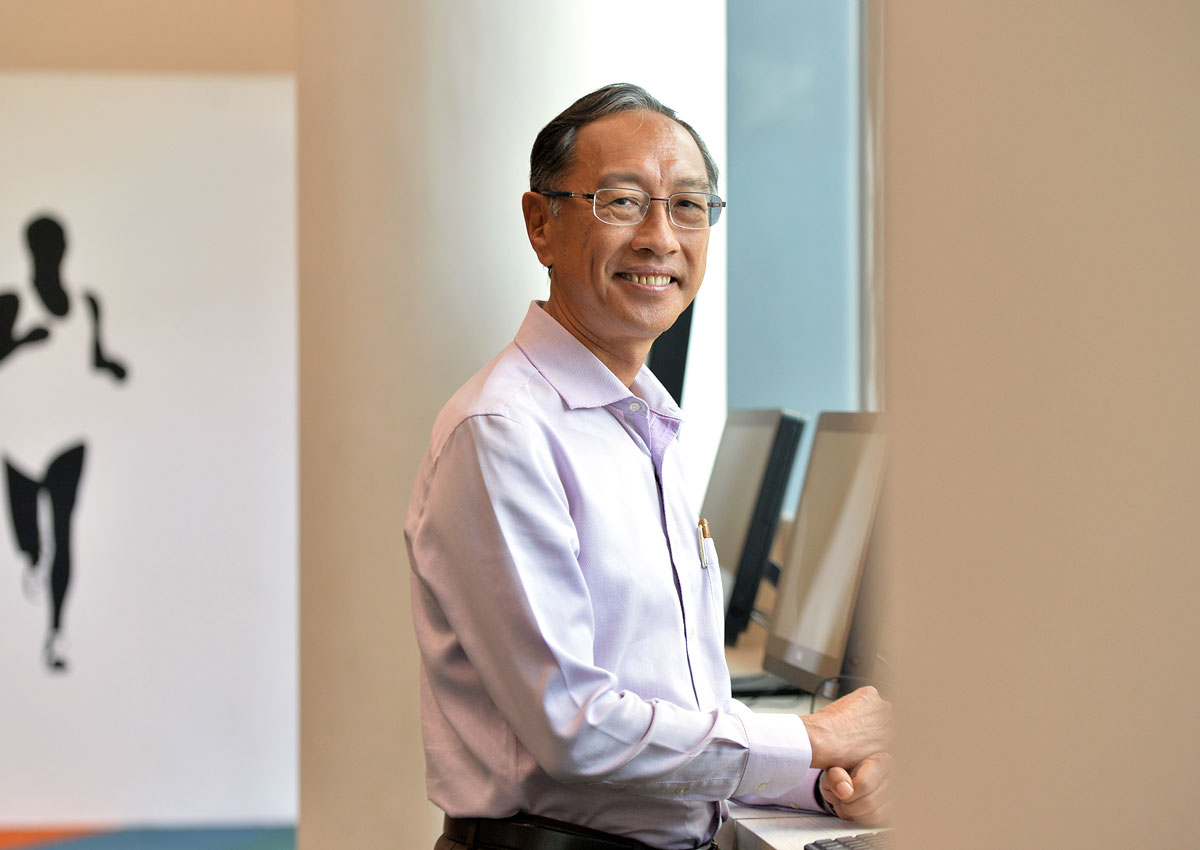
Singapore Swimming Association (SSA) president Lee Kok Choy announced yesterday that he will be standing for re-election to his post this year.
His will shortly complete his two-year term and the election will be held at the next annual general meeting (AGM) which will take place no later than June.
Notification of the AGM will be issued 14 days before it is held, and nominations for the posts will close seven working days before the AGM is held.
Lee, 64, stressed the need to retain athletes when they make the transition from school to the workforce in their 20s.
He said: “How to encourage them to continue training hard even when they start work is one of the things we are trying to do, moving forward.
“In the past we’ve had a lot of active participation and intensive training for the younger junior (athletes competing at the elite levels), but we also want to work on retaining the elite athletes for a longer period of time in active training.
“For example, in water polo right now, the average age of our teams is between 23 to 25 for the last few SEA Games. But the best ages for water polo are between 25 to 30.”
Lee was elected to office in June 2014, after he pipped rival candidate Jessie Phua to the presidency by a single vote, 17-16.
Phua told The Straits Times that she will not stand for the election.
“Things are running smoothly (at the SSA) now, which is wonderful news,” she said.
While Lee’s leadership team have highlighted the drain of athletes at the top, they have seen a healthy growth of talent pools at the base during their two years in office.
For instance, Lee noted the number of swimmers who participated in the national time trials increased from about 770 in 2014 to 1,150 this year, and he estimates that there are about 600 water polo players who actively play the sport.
But more work can be done to enlarge the base, he says.
“We want to build that whole pathway from the beginning – from learn-to-swim level all the way to the top,” said Lee, who is also the country manager of Micron Semiconductor Asia.
” To do this, we will turn a lot of focus in the next term to developing the coaching capabilities and infrastructure in the larger community, not just at the pinnacle but the whole base.”
Yet he noted that it is a challenge to raise participation levels for synchronised swimming and diving.
“The athlete-coach ratio is much smaller than swimming. It’s not so straightforward to have mass participation like swimming. Do I want to have more taking part? Yes. But is it a linear progression going forward? It’s not so straightforward.”
chiazya@sph.com.sg
This article was first published on April 20, 2016.
Get a copy of The Straits Times or go to straitstimes.com for more stories.
Image:
Blurb:
Retaining elite swimmers, water polo players a priority as SSA president seeks re-election. -The Straits Times
Publication Date:
Thursday, April 21, 2016 – 02:00
Keywords:
Send to mobile app:
Source:
Story Type:
Others
Abused maid 'glad to leave devil's home'
When she was sent home after suffering multiple injuries allegedly inflicted by her employer, an Indonesian domestic worker said she was glad to have left the “devil’s house”.
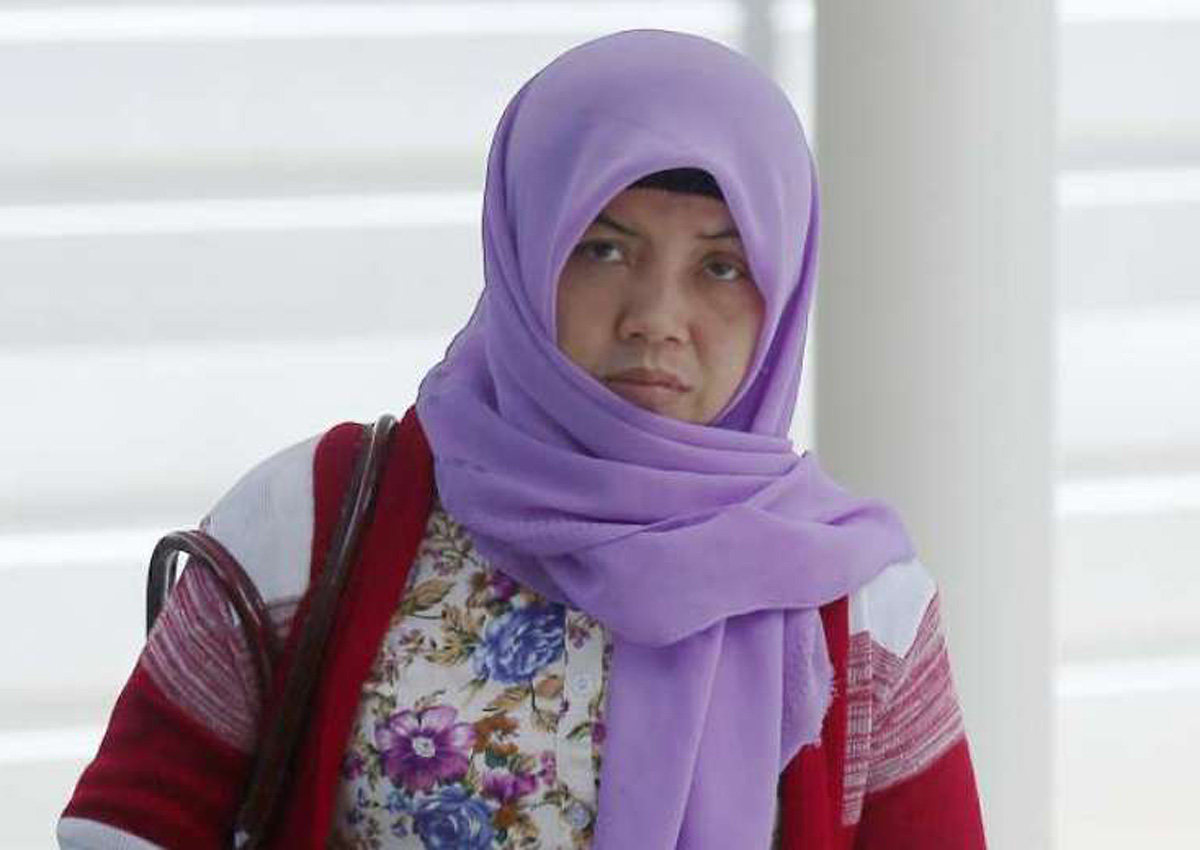
Ms Khanifah, 35, told a court yesterday her employer, Zariah Mohd Ali, 54, gave her a long-sleeved shirt, pants and a tudung to cover the injuries on her head on Dec 19, 2012 – the day she was sent home.
Zariah’s daughter, Ms Atiqah, 18, made up her face to cover her injuries and gave her a pair of glasses to wear, Ms Khanifah said, adding that she then had bruises on her face, blue-black marks below her eyes and injuries on her lips, forehead, nose and ears.
She said she had repeatedly asked to return home because Zariah lied to her that her child had died. When Deputy Public Prosecutor Sharmila Sripathy-Shanaz asked why Zariah decided to send her back in December, Ms Khanifah said: “Because I was due for my second medical check-up.”
Zariah only told her the night before that she would be sent back, said Ms Khanifah, who started work at the household on Nov 30, 2011.
She did not ask for help from immigration officers at the airport as she was “already happy that I am going home and leaving the devil’s house”.
Zariah, who turned up in court in a wheelchair, is accused of hurting Ms Khanifah by dangerous means and causing her grievous hurt by dangerous means, resulting in permanent disfiguration to her head and face between June and December 2012.
Zariah allegedly used an array of weapons – a hammer, chopper, stone pounder, scissors and bamboo pole – to injure Ms Khanifah.
Zariah’s husband, Mohamad Dahlan, 56, is alleged to have hit Ms Khanifah on the head with the cover of a frying pan.
Ms Khanifah said she did not tell her husband about the “torture” that she endured when she met him as she just wanted to meet her children. Her mother noticed the injuries on her head the following morning, she said.
Ms Khanifah said she had to borrow from friends and relatives to pay for her medical expenses. She asked Zariah for money and the latter sent her 1 million rupiah (S$103) for her treatment. Ms Khanifah was warded for 15 days in a Jakarta hospital in January 2013 for her injuries.
In a statement, she stated that she had, among other injuries, two front teeth detached as a result of a hammer attack; a broken left pinkie; very blurred vision in the right eye due to the splashing of liquid detergent; and wrists sliced with a knife.
When she went out while here, she was made to wear a tudung to cover the injuries on her head, and a sweater to cover her hand injuries.
She told the court she could not run away as the windows and doors of the Woodlands flat were locked.
Neither could she call anyone as Zariah claimed the phone was “locked” and no calls out could be made. Whenever the family had visitors, she said Zariah would ask her to hide in the kitchen toilet.
She came back to Singapore on April 27, 2013 – 16 days after an Indonesian Embassy staff member lodged a police report on her behalf.
When asked how she felt about her appearance now, she replied: “I feel sad.. because I am already deformed.”
As for who was responsible for her deformities, she said: “Ma’am should be responsible for it.”
In the afternoon, the couple’s lawyer Jayakumar Naidu told District Judge Luke Tan that Zariah had chest pain and was unable to continue. The hearing was then adjourned till today.
This article was first published on April 20, 2016.
Get a copy of The Straits Times or go to straitstimes.com for more stories.
Image:
Publication Date:
Wednesday, April 20, 2016 – 13:59
Keywords:
Send to mobile app:
Source:
Story Type:
Others
S'pore hopes for day when Israel lives in peace with neighbours
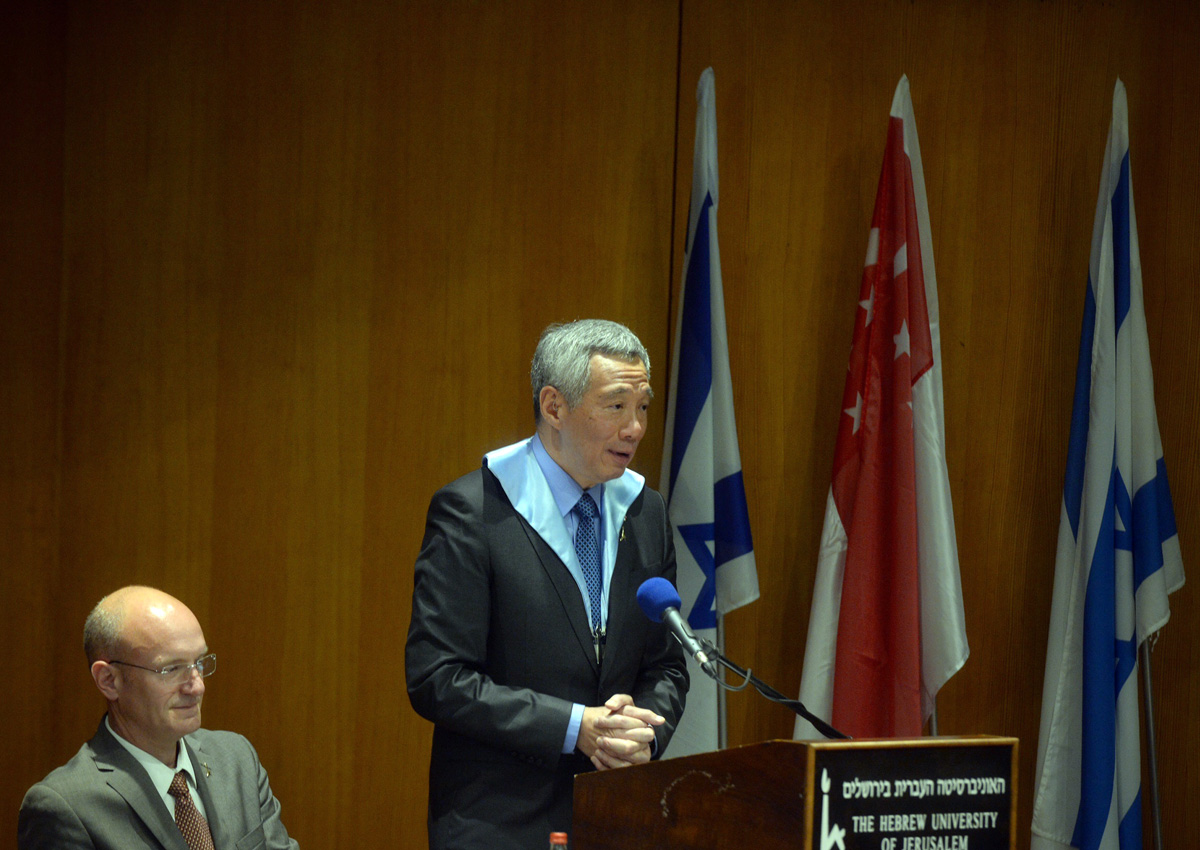
From Israel, Singapore learnt how to be strong and how not to use its strength, Prime Minister Lee Hsien Loong said in a speech at the Hebrew University, which on Monday conferred on him an honorary doctorate.
The earliest Jewish people migrated to Singapore in the 19th century, mostly from Iraq, the Middle East.
One famous visit is intimately linked to the establishment of Hebrew University, and it was the visit which was alluded to earlier, by Professor Albert Einstein in 1922.
He met the Singapore Jewish community and urged them to contribute to the Hebrew University’s establishment.
I thought I had done some research, but I was given a comprehensive presentation on Professor Einstein’s visit to Singapore.
But maybe I found a few facts which you may not have highlighted just now. First of all, the Singapore Jews raised £750 towards the Hebrew University.
Translated to today’s currency, it is US$300,000 (S$403,200), not a bad sum. And the other significant fact is that a week after his visit to Singapore, Professor Einstein got a call from Stockholm, and was awarded the Nobel Prize in physics.
So we have many happy memories.
Today, Singapore is home to a small Jewish community, numbering a few hundred, which has contributed to our society out of proportion to its numbers.
For example, our first Chief Minister, Mr David Saul Marshall, was a Baghdadi Jew.
In recent decades, many more Jewish expatriates, including Israelis, have come to live and work in Singapore, many of them with tech companies.
There are now maybe 2,500 Jewish people in Singapore, enough to sustain one successful kosher restaurant.
A FRIEND IN NEED
In August 1965, when Singapore unexpectedly became independent, the Israeli Defence Forces (IDF) helped us to develop the Singapore Armed Forces (SAF). We asked a number of countries.
We were starting from zero base; we needed to build up an armed forces urgently from scratch.
But only Israel responded to us, and it did so very promptly. Weeks after independence, our Defence Minister, Dr Goh Keng Swee, flew to Bangkok to meet the Israeli Ambassador there, Mordecai Kidron.
He reported back to his headquarters and within a few months – by the end of the year – a team of IDF advisers had come to Singapore. We called them “Mexicans” for operational security, and also because we hoped that their swarthy looks might make the cover plausible.
Within less than two years, by July 1967, guided by the IDF team, the SAF commissioned our first batch of officers from the officer cadet course.
This was a decisive step in building up a credible and professional defence force for Singapore.
It was a time of great uncertainty for us. Britain was withdrawing its forces from the east of Suez, including its bases in Singapore.
Without the IDF, the SAF could not have grown its capabilities, deterred threats, defended our island, and reassured Singaporeans and investors that Singapore was secure, and that Singapore had a future.
Dr Goh would later say that “in retrospect, it’s a minor miracle that we ever got off the ground… without the Israelis, we could not have (done) it”.
We will always be grateful that Israel helped us and stood by us, at our time of great need.
Over the years, our relations have expanded much further beyond defence and security, though, of course, defence and security ties remain.
Our companies are very active in exploring opportunities in both countries. We collaborate in technology and in R&D.
The Singapore-Israel Industrial Research & Development Foundation (SIIRD) has funded about 150 projects over the last 20 years, providing about US$170 million in funding. Our universities and research institutes have regular exchanges, including with the Hebrew University.
We have just witnessed the signing of three agreements: one with the National Research Foundation to manage Hebrew University’s research in Singapore; one with the National University of Singapore; and another one with the Nanyang Technological University, reaffirming the parties’ commitment to deepen research collaboration.
I hope we can build on these foundations and these intents to grow our relations further.
SPIRIT OF ISRAEL
I am especially honoured that the award comes from a renowned university with outstanding strengths in research and innovation.
You have a constellation of outstanding alumni – eight Nobel Prize winners, numerous Israeli presidents and prime ministers, leaders in every field.
You reflect the remarkable human talent, and the indomitable spirit to overcome overwhelming odds.
That is the signature of Israel – whether it is irrigating the desert to make the sand green and agriculture possible, making revolutionary advances in medical technology, or creating outstanding art, music and architecture.
That is the spirit of Israel, and Singapore looks to you and admires you, and we count our similarities.
First, we are both young nations. Israel is less than 70 years old, and Singapore has just turned 50. Second, we have both had to integrate diverse groups to create a common sense of nationhood.
In the case of Singapore, we are a Chinese-majority society, but with significant Malay, Indian and other races as minority communities.
And we have represented in Singapore all the major religions in the world. In Israel, you are a mainly Jewish society, but diverse none the less, with Ashkenazim from Europe; Sephardim from the Middle East; Falashim from Ethiopia; Russian Jews after the collapse of the Soviet Union, one million of them; Sabras, born and raised here; and a significant minority of Israeli Arabs.
Thirdly, both countries were born in adverse circumstances and survive only by our wits, and both are determined to thrive despite our circumstances, and to build a better tomorrow for our children.
But there are also striking contrasts between our countries.
First of all, Israel has the Torah and Talmud, and you trace back 5,000 years of Jewish history, including the Second Temple and Masada. Singapore’s sense of identity is only as a modern state, even though our different races belong to ancient civilisations, but different ancient civilisations.
So therefore following from this, secondly, Israel’s identity is as a Jewish state; Singapore’s identity is emphatically not a Chinese nation, but a multiracial, multi-religious society.
In fact, being multiracial and multi-religious for us is a fundamental ideal that was the reason for our independence and our raison d’etre – the reason for our existence. Thirdly, Israel has had to fight several wars to defend its right to exist.
Singapore has been fortunate never to have been at war with its neighbours, with one exception in the 1960s, when we had to defend ourselves against Konfrontasi, a low- intensity conflict launched by Indonesia against Malaysia at a time when we were inside Malaysia.
We may be different, but Israel’s story is one that resonates with Singaporeans and is a powerful inspiration to us. As a young man, I read a novel: Exodus by Leon Uris.
If you are my age, you will probably know the novel. The story made a deep impression on me. I left the book at home. One day my father happened to pick it up and read it.
I was away, so he wrote a letter to me and he told me this.
His comment was, the novelist did not miss a single opportunity to score a point about the justness of the cause and the passion of those who founded the state of Israel.
When I wrote this up, my people did a bit of research and they discovered that David Ben-Gurion had read the same novel and came to the same conclusion.
His comment was: “As a literary work, it isn’t much. But as a piece of propaganda, it’s the greatest thing ever written about Israel.”
So I recommend the book to you.
It is this passion that has thoroughly imbued the Israeli spirit.
That tenacity and determination of a people, who having suffered the horrors of the Holocaust, resolved never again to be dependent on others.
A people with the determination to solve whatever problems come your way, no matter how intractable or persistent, and have the confidence that you will make tomorrow better, and step by step build a better future.
SWORDS TURN TO PLOUGHSHARES
You will step by step build a better future, but it is a complex story.
Recently I have been reading a book by Ari Shavit – My Promised Land: The Triumph And The Tragedy. It is non-fiction, unlike Exodus.
It is a deeply powerful account of the story of Israel, told through the experiences and reflections of individual Israelis, but also through Arab eyes – the Arab population who lived in Palestine before the settlers arrived; the Palestinians in the occupied territories on the West Bank and the Gaza.
Shavit’s book makes vividly clear how complex and tragic the Israeli-Palestinian problem is, and why a solution is so elusive.
Progress will require enormous imagination, determination and political leadership on both sides, as well as getting the stars aligned in the right places in the firmament, with the great powers supporting you.
On this trip, I am not only visiting Israel, but also the Palestinian National Authority in Ramallah, to signal our friendship with both Israel and the Palestinians; to better understand developments, including the Middle East Peace Process; to express our hope that both sides will take steps to resume direct negotiations and to work towards a just and lasting two-state solution.
Mr Lee Kuan Yew once told a “Mexican” general who had helped start the SAF that Singapore had learnt two things from Israel: how to be strong, and how not to use our strength.
I read a recent interview by Mr Shimon Peres, and was moved by his vision, which he has long held, of Israel in 2048, 100 years after its founding.
He was convinced that 2048 will be a much better world for Israel and for the Middle East. Borders will become less relevant.
Science and technology will transform communities and connect peoples, and force people to become more open-minded to the world. It is an optimistic view from a person who has lived a long life and seen many things.
Today, such a Middle East seems a long way off, perhaps more distant even than 2048, and more distant than it appeared when you started out in 1948. But I sincerely hope that one day, Mr Peres’ vision will be realised.
Swords will be turned to ploughshares.
Israel and your neighbours will live side by side in peace and prosperity. And your friends in Singapore and around the world will rejoice with you too.
This article was first published on April 20, 2016.
Get a copy of The Straits Times or go to straitstimes.com for more stories.
Image:
Publication Date:
Wednesday, April 20, 2016 – 14:00
Send to mobile app:
Source:
Story Type:
Others
China suspends G-20 anti-corruption task force: Sources
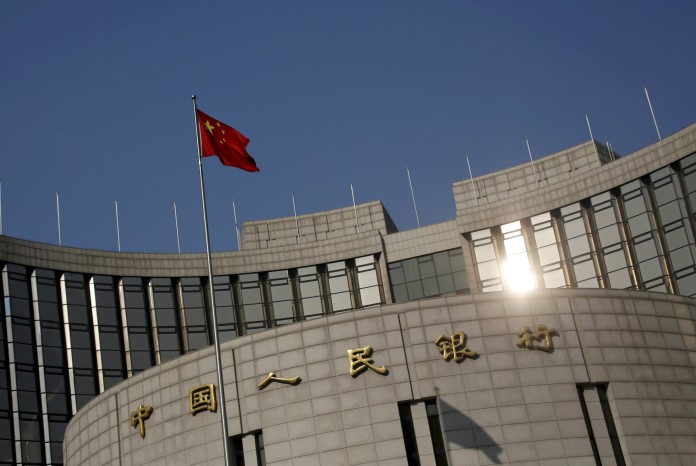
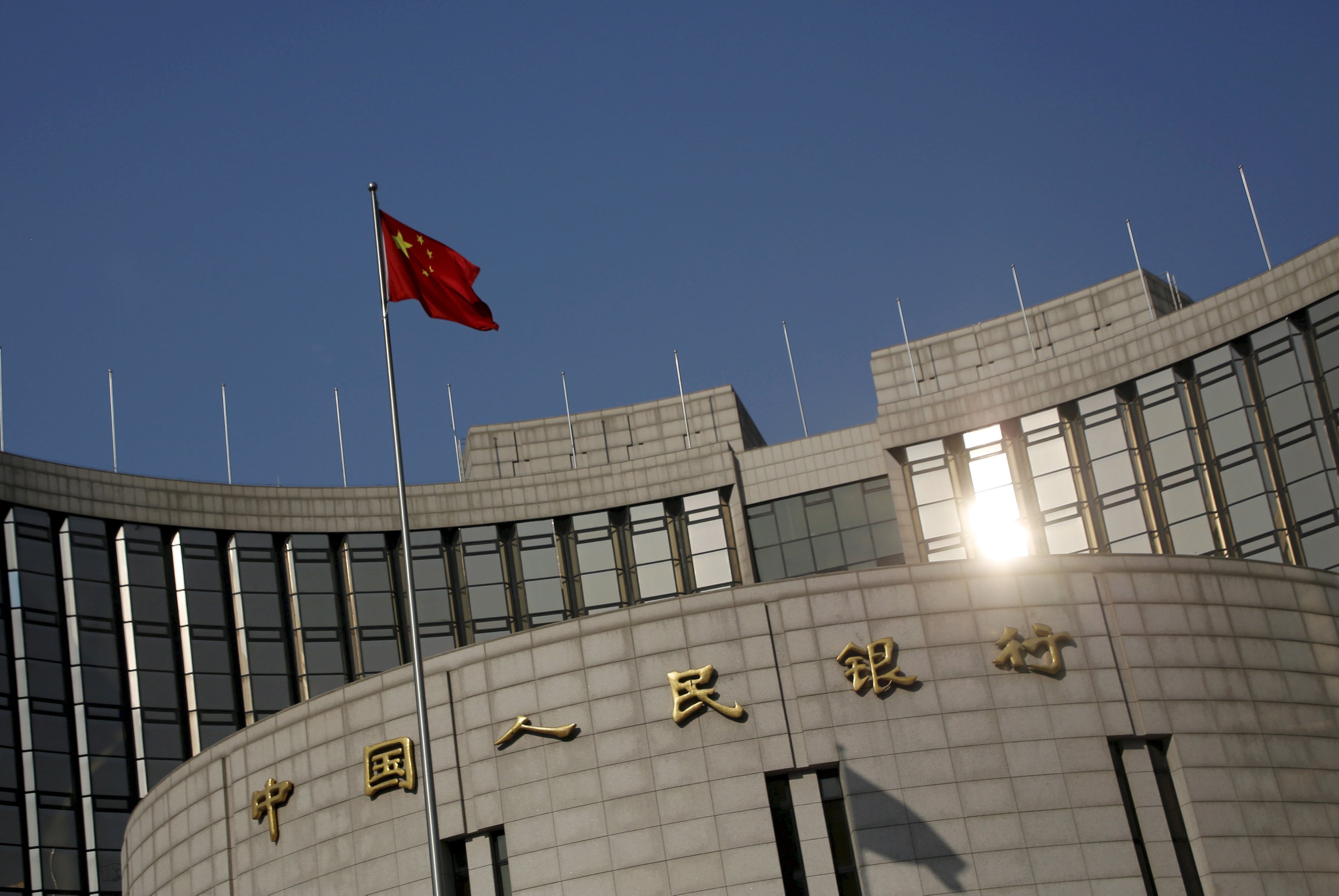
HONG KONG (REUTERS) – China suspended an international anti-corruption task force earlier this year after taking over the Group of 20 (G-20) presidency, according to six individuals in the group, who called it a setback to global efforts to crack down on shell companies used to conceal assets.
The so-called “Business 20” Anti-Corruption Taskforce, comprising businesses and civil society groups, had been drawing up G-20 policies for increasing transparency of offshore financial structures, among other work, but the body was scrapped in late January because Chinese companies declined to participate, according to the sources.
China is one of several countries under pressure to share data on paper companies after the “Panama Papers”, documents from Panamanian law firm Mossack Fonseca, revealed how the rich and powerful use such structures to avoid taxes and in some cases conceal ill-gotten gains.
They were published by German newspaper Sueddeutsche Zeitung and more than 100 other international news outlets.
The B20, the G-20’s business outreach arm, and its various task forces are by convention led by companies from the nation holding the presidency.
The state-run China Council for the Promotion of International Trade (CCPIT), this year’s head of the B20, did not provide an explanation for suspending the anti-corruption task force and did not respond to several emails, faxes and phone calls requesting comment.
But three people who had worked on the task force, who represented international, US and European institutions, said the trade group could not persuade a Chinese company to take on the role of leading the task force, even though around 150,000 Chinese businesses are effectively state-run.
The sources cited the CCPIT as saying a one-off anti-corruption convention to be held later this month would be a sufficient substitute, despite strong counter-lobbying from international businesses and NGOs.
“It’s a disappointing indictment on the environment in China that no company was willing to step forward,” said one of the sources. “This is a critical agenda and we had built up momentum, and this decision has taken the wind out of the sails.”
The Chinese foreign ministry did not respond to requests for comment.
RELUCTANT TO HELP
China has been trying to get increased international co-operation to hunt down suspected corrupt officials who have fled overseas since President Xi Jinping began a war against deeply-rooted graft more than three years ago.
But Western countries have been reluctant to help, not wanting to send people back to a country where rights groups say mistreatment of criminal suspects remains a problem, and also complaining that China is unwilling to provide proof of their crimes.
Some of the participants on the task force, however, said they believed the Chinese government wanted to sharpen its focus this year, and remained committed to clamping down on corruption.
“We are very happy with the functioning of the anti-corruption work-stream within the B20 process,” said Mr Andrew Wilson, global communications director at the International Chamber of Commerce (ICC), which had several executives on the task force.
According to the B20 2016 official web site, anti-corruption efforts would comprise a forum to “continue previous efforts toward enhancing anti-corruption international co-operation, assisting anti-corruption efforts at enterprises and increasing anti-corruption dialogue between G-20 and B20.”
A section on the page called “Taskforce Structure” was left blank.
The three sources and three other people on the task force said they had continued their work behind the scenes in the expectation Germany, the next G-20 president, will revive the body.
A spokesman for Germany’s finance ministry who deals with G-20 matters declined to comment. A spokesman for Bundesverband der Deutschen Industrie, Germany’s representative body within the B20, also did not comment.
Image:
Publication Date:
Wednesday, April 20, 2016 – 13:50
Keywords:
Send to mobile app:
Source:
Story Type:
Others


