Home Blog Page 4130

Cabbies talk of love- hate relationship with Grab and Uber

0

Ask any taxi driver where he takes a break, and he is likely to mention 115 Bukit Merah View hawker centre. And the cabby haunt is also the perfect location for Grab staff to peddle their vehicle booking app.

Many taxi drivers have told The Sunday Times of a love-hate relationship with Grab and its rival Uber. Some, especially the younger ones, use the app to supplement their company’s bookings but feel threatened by the onslaught of private-hire car services that the companies have added to the market.

“There has been a drop in bookings by up to 30 per cent on our company’s systems,” said Mr Dan Lim, 59, who has been driving a taxi for five years. “I have no choice but to use the app to get bookings.”

Mr Ken Ng, 45, who has also been driving a cab for five years, said: “Technology has changed so we have no choice but to change with it.

Let’s be honest, I’m making more because of these apps.”

Apart from the benefits brought about by the taxi booking apps, Grab and Uber have added an unwanted dimension to the market that taxi drivers now have to deal with – private-hire car services.

Despite new rules announced in Parliament to regulate such drivers, the disparity between the standards required to get a Private Hire Driver’s Vocational Licence and a Taxi Driver’s Vocational Licence has angered drivers.

By the first half of next year, GrabCar and Uber drivers will have to attend and pass a 10-hour course, compared with a new 25-hour course for taxi drivers.

But that is not the only factor upsetting cabbies.

Mr Khoo, 54, a cabby of five years who, like some others, did not give his full name, said the minimum age of 30 years should be imposed on GrabCar and Uber drivers too, adding: “Twenty-one years is definitely too young.”

Taxi drivers say they have seen losses since GrabCar and Uber entered the market in 2014 and 2013, respectively, with some having to work harder to make ends meet.

One of those hit is Mr Singh, 59, who has been driving for about six years. “I used to earn about $36,000 annually but that has dropped to about $29,000. It goes without saying that the entrance of private-hire car drivers has affected us,” he said.

Another cabby, Mr Goh – who has a wife and two children – said it is a stretch to maintain his salary as the sole breadwinner.

The 56-year- old, a cabby of 10 years, said: “I drive an extra one or two hours a day on top of my usual shift to make up for the decrease in customers.”

However, a handful feel the introduction of GrabCar and Uber has not taken a toll on their business.

Mr Tan Chong Sing, 52, said: “I haven’t really been impacted, as our advantage over private-hire car services is that we can still pick up passengers by flagdowns and at taxi stands, so we still have a steady customer flow. Relying on my company’s booking system is enough to keep me busy.”

Mr Ong, 57, who has been driving for eight years, admitted the introduction of Uber and GrabCar has had some positive impact: For example, his company has been more lenient on drivers like him.

“In the past, if there was a complaint against us, they would terminate (our services) straight away,” he said in Mandarin.

“Now, they’re more relaxed – they’ll give a warning because they know we can just go and drive somewhere else.”

Many cabbies are weighing up their options now that they have more avenues to ply their trade.

Mr Tan, who is in his 50s, said: “I will consider driving a private-hire car, but not at the moment as I think things are still unstable. Perhaps I can think about it again when the new rules kick in.”

However, others feel they cannot get used to the new systems that Grab and Uber offer. “I’ve been driving (for my company) for so many years,” said Mr Khoo.

Mr Tay, 50, scoffed at the thought of having several phones on display, as he knows some Uber and Grab drivers do. He said: “So many screens, how to keep up?”

With the new rules for private- hire car drivers set to be implemented next year, taxi drivers and companies have grudgingly accepted that the scenario has changed.

Mr Tay added: “We used to complain, but what can we do about it after the new rules have been announced? We can only accept them and move on.”

Mr Tan, 61, a driver of more than 10 years with ComfortDelGro, said: “The standards need to be as strict (for Uber and GrabCar) as (they are for) taxis… We just want the requirements to be fairer.”


This article was first published on April 24, 2016.
Get a copy of The Straits Times or go to straitstimes.com for more stories.
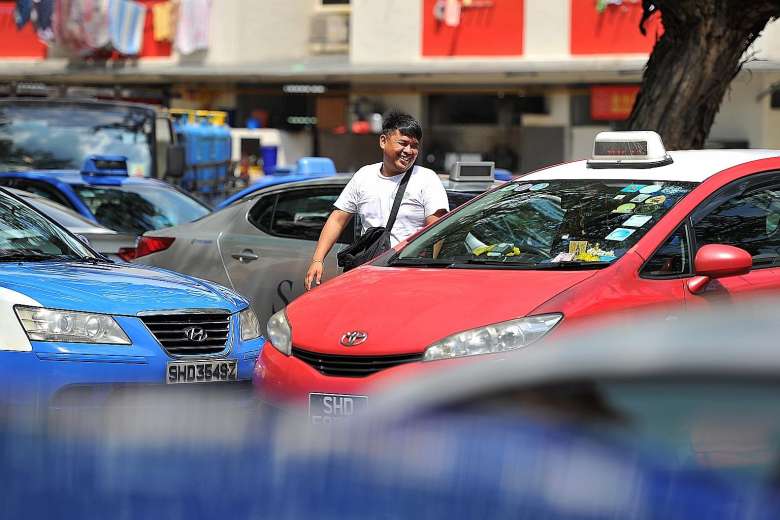

Image: 
Category: 
Publication Date: 
Sunday, April 24, 2016 – 14:00
Send to mobile app: 
Source: 


Story Type: 
Others

Source link

Indonesian V-P's remarks on extradition deal 'incorrect and misleading': MFA

0

Singapore has responded to remarks by Indonesian Vice-President Jusuf Kalla on an extradition agreement between the two countries, with a Ministry of Foreign Affairs (MFA) spokesman yesterday describing them as “incorrect and misleading”.

Mr Kalla had told reporters in Jakarta on Friday that more fugitives could be extradited and jailed in Indonesia if Singapore was willing to sign an extradition agreement with the country, Antara state news agency reported.

It said he made the comment while referring to the case of Samadikun Hartono, who was found guilty of corruption and extradited from China on Thursday.

“If we have an extradition agreement with Singapore, then more fugitives will be arrested. But Singapore never wants to sign it,” the Vice-President was quoted as saying.

Mr Kalla praised the “good co-operation” between Indonesia and China, and added that Jakarta has also signed an extradition agreement with Australia.

“We are grateful. The case of Samadikun has been ongoing for the last 13 years. But thanks to the good co-operation with China, everything has run smoothly,” he said.

“But exactly with a country where the largest number of people had fled, notably Singapore, there is no agreement.

Hopefully, Singapore will change its outlook and will be willing to sign an extradition (agreement),” he added.

Singapore’s MFA yesterday rejected Mr Kalla’s assertions.

“Vice-President Kalla’s comments are incorrect and misleading,” an MFA spokesman said.

The ministry clarified that Singapore and Indonesia had signed the extradition treaty and defence co-operation agreement as a package in April 2007 in Bali, witnessed by then President Susilo Bambang Yudhoyono and Prime Minister Lee Hsien Loong.

“In fact, the agreements were signed when Vice-President Kalla was then also the Vice-President of Indonesia,” the spokesman said.

Both agreements are currently pending ratification by the Indonesian House of Representatives, the MFA noted.

“Singapore is ready to proceed with both agreements once Indonesia is ready to do so. Notwithstanding, Singapore and Indonesia continue to enjoy good bilateral co-operation in law enforcement and in dealing with criminal matters,” the MFA spokesman said.

Singapore on Thursday cancelled the entry permit for 54-year-old securities tycoon Hartawan Aluwi and declared his presence in the country as “unlawful”.

He was a suspect, along with several others in Indonesia, in connection with a financial scandal involving the now defunct Bank Century during the 2008 global financial crisis. Hartawan is now in custody in Jakarta.


This article was first published on April 24, 2016.
Get a copy of The Straits Times or go to straitstimes.com for more stories.
Image: 
Category: 
Publication Date: 
Sunday, April 24, 2016 – 14:00
Send to mobile app: 
Source: 


Story Type: 
Others

Source link

Madrasah student attacks: Man hires lawyer for accused

0

A member of one of Singapore’s oldest Arab-Muslim families has stepped forward to pay for a lawyer for the security officer accused of attacking three madrasah students.

The entrepreneur, who wants to be anonymous, is in his 40s and comes from the Aljunied family – descendants of Singapore’s first Arab settler Syed Omar Ali Aljunied, who built Singapore’s first mosque, and his family.

He told The Sunday Times that he is stumping up the money “purely out of love and compassion”.

Security officer Koh Weng Onn, 48, was charged earlier this month with kicking a 16-year-old girl in the thigh in what court papers called a “racially aggravated” act.

He was also accused of swinging a plastic bag containing a filled 1.5-litre water bottle at two 14-year-old girls in separate attacks, hitting them in the face.

The donor said he made his decision after hearing of Koh’s arrest and got in touch with lawyer Sunil Sudheesan, who will be representing Koh.

He has not met the accused’s family. He said he was inspired by his forefathers, who had built madra- sahs, mosques and churches in Singapore. “I’m sure my forefathers would have done the same (for Koh),” he said.

The father of two children aged 13 and 11 added: “I want to inspire (in) them that ignorance and anger can only be neutralised with acts of compassion and love and mercy.”

In the aftermath of the attacks, government and community leaders of all races have stressed that racially motivated acts of violence will not be condoned, urging communities to stand united against such acts.

The accused’s older brother, Mr Mohammad Johan Koh, said: “I was very surprised to hear this – that a kind person wanted to help.”

He did not expect to find out that the anonymous person was from the Arab-Muslim community.

The 49-year-old relief security guard added that his family hope to send their appreciation to the man, and to thank him in person.

“We know our financial condition; even if we decided to get a lawyer, we might not have been able to pay the legal fees,” he said.

Mr Sudheesan, of law firm Quahe Woo and Palmer, said it is quite rare for an anonymous benefactor to offer to pay for an accused’s full legal representation. He added: “It’s humbling that someone thought well enough of me to recommend me to the benefactor.”

Koh has been remanded for psychiatric observation. The case is scheduled to be mentioned tomorrow.


This article was first published on April 24, 2016.
Get a copy of The Straits Times or go to straitstimes.com for more stories.

Image: 
Category: 
Publication Date: 
Sunday, April 24, 2016 – 14:00
Send to mobile app: 
Source: 


Story Type: 
Others

Source link

Five apply for political donation certificates needed to contest

0

With three days to go before Nomination Day for the Bukit Batok by-election, there remains a chance that the contest might not be a straight fight between Mr Murali Pillai of the People’s Action Party (PAP) and Dr Chee Soon Juan of the Singapore Democratic Party (SDP).

Five applications for political donation certificates were handed in by the time applications closed at 1pm yesterday, the Elections Department (ELD) said. It did not disclose the applicants’ names.

That five people had applied for these certificates opens the possibility of independent candidates standing in the by-election, which will be held on May 7 to fill the seat vacated by former PAP MP David Ong, who resigned on March 12 over an alleged extramarital affair.

Singapore’s election rules require all candidates to submit political donation forms, on which they have to record donations received and declare that the funds are permitted under the law, among other things.

This paperwork is needed to obtain political donation certificates, which ELD will issue ahead of Nomination Day on Wednesday.

Candidates will have to submit these certificates with their nomination papers. They must also have a proposer, seconder and at least four assentors, who must all be eligible to vote in the constituency.

Private-hire car driver Shirwin Eu, 32, who picked up his nomination forms on Thursday, confirmed that he submitted an application.

Former opposition candidate Abdul Rahim Osman, 59, who collected his nomination papers on Friday, declined to say if he had submitted his political donation forms.

However, he told The Sunday Times he had been conducting straw polls among Bukit Batok residents to determine if he should stand as an independent candidate.

Applying for a donation certificate is no guarantee that a would-be candidate will stand.

For the Hougang by-election in May 2012, four candidates applied for and got political donation certificates, but only two contested the poll which Mr Png Eng Huat of the Workers’ Party (WP) won against Mr Desmond Choo of the PAP.

For the Punggol East by-election in January 2013, as many as 14 candidates applied for and received certificates. Only four stood and Ms Lee Li Lian of WP won against Dr Koh Poh Koon of the PAP, Mr Kenneth Jeyaretnam of the Reform Party and Mr Desmond Lim of the Singapore Democratic Alliance.

An ELD spokesman said then: “ELD will leave it to individual applicants to decide whether to and when to make public that they have applied for or received a certificate. This position will apply to all future parliamentary elections as well.”

Meanwhile, in Bukit Batok, Mr Murali and Dr Chee continued walking the ground to reach out to as many of the 25,727 voters as possible. Mr Murali, 48, and Dr Chee, 53, spent the day doing house visits. At night, Mr Murali attended a dinner at the Guilin Combined Temple, while Dr Chee visited coffee shops.

Sales assistant Mary Lim, 45, who has lived in Bukit Batok for 20 years, said she has not met either candidate but has been following their daily updates on social media.

She added that she will be following the nine-day campaign closely before deciding who to vote for.

PAP MPs from neighbouring Jurong GRC also dropped by to meet residents, with Deputy Prime Minister Tharman Shanmugaratnam and Senior Minister of State for Home Affairs and National Development Desmond Lee attending a lunch party at a Bukit Batok Street 21 housing block void deck.

While most other opposition parties have said they are staying away from the race, a spot of controversy emerged online from Singapore People’s Party chairman Lina Chiam. In a Facebook post on Friday, Mrs Chiam took issue with a photo depicting her husband, former opposition MP Chiam See Tong, alongside Dr Chee in the SDP newsletter.

She said Dr Chee did not get permission to use the image of Mr Chiam, who left SDP for SPP in 1996 following a dispute with party leaders shortly after Dr Chee joined SDP.

She added: “Mr Chiam has not given his endorsement to any candidate for the upcoming Bukit Batok by-election.”

The SDP yesterday issued a statement by Dr Wong Wee Nam, who wrote the article beside the photo, clarifying that the image referred to was in The New Democrat’s June 2015 issue.

The piece recounts Dr Wong’s failed effort in 2010 to bring Mr Chiam back to the SDP. “The SDP was not seeking any endorsement from Mr or Mrs Chiam,” said the long-time opposition supporter.


This article was first published on April 24, 2016.
Get a copy of The Straits Times or go to straitstimes.com for more stories.
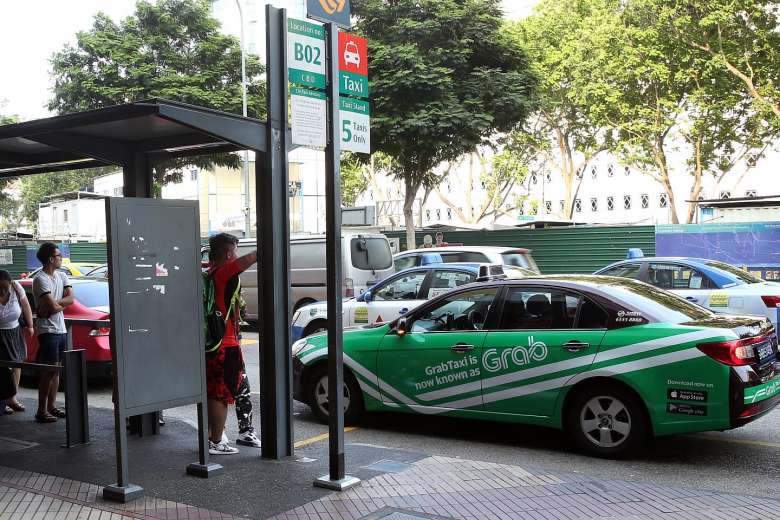
Image: 
Category: 
Publication Date: 
Sunday, April 24, 2016 – 14:00
Send to mobile app: 
Source: 


Story Type: 
Others

Source link

Fare cuts by Uber, Grab will hurt sector: Taxi body

0

The National Taxi Association (NTA) has criticised the recent price cuts by Grab and Uber, saying they not only hit their drivers’ earnings but, if left unchecked, could also hurt the taxi industry and, ultimately, commuters.

“It’s an unhealthy and unsustainable business strategy,” said NTA executive adviser Ang Hin Kee.

On April 14, Uber cut fares for its UberX private chauffeur service by an average of 15 per cent. Four days later, Grab slashed its GrabCar prices by up to 14 per cent, with minimum fares falling from $8 to $4.

Cab firms, which had fares comparable to those of UberX and GrabCar before, are now under pressure, Mr Ang told The Sunday Times.

But a “price war” would mean both private-hire car drivers and cabbies having to do more trips and driving longer to earn the same amount.

“We don’t want to go down this road,” he said.

Mr Ang, who is also an MP for Ang Mo Kio GRC, pointed out how both app companies were still taking their 20 per cent cut from their drivers, despite having shaved fares.

The worry is that if private-hire car firms end up dominating the market, they can then start raising prices, and charge a premium.

“The new players will (first) offer a lot of goodies… But when they have the market share later on, they could exercise the right to earn profits,” said Mr Ang. “What checks and balances do we have to ensure that both commuters and drivers are not taken advantage of?”

Earlier this month, the Government said that by the first half of next year, Uber and GrabCar drivers must be licensed and undergo background and medical checks, and also have to register their cars.

Mr Ang said that while the taxi industry welcomes competition, the playing field is not level, given that cab operators must factor in “compliance costs”.

These include the bulk of cabbies having to meet certain standards set by the Land Transport Authority, such as covering 250km each day and being on the road during peak hours. Fleets also have to be serviced regularly.

“Cab firms hire teams of people to manage this, and these costs are passed down to the taxi drivers through their rentals,” said Mr Ang.

While these yardsticks benefit the public, he believes similar standards should be imposed on the private-hire car business.

Alternatively, have these requirements lifted from taxi firms, he suggested.

Head of Grab Singapore Lim Kell Jay said the fare cuts have led to a “tremendous growth” in passenger demand.

This means drivers are getting more bookings over the same length of time, and bringing home “comparative incomes”. He added that its part-timers and full-timers make a gross average of $30 an hour.

Asked about its drivers’ earnings after the fare cuts, Uber said it would share details later.

Some private-hire car drivers told The Sunday Times that their earnings have been hit by around 20 per cent since the price cuts.

Dr Walter Theseira, an economist at SIM University, said traditional cab operators have a key advantage – they are the only ones allowed to get flagdowns.

Still, they face a tough battle. He said: “App companies are willing to lose some money now to gain market share, but the incumbents wouldn’t want to do this after being profitable for so long.”


This article was first published on April 24, 2016.
Get a copy of The Straits Times or go to straitstimes.com for more stories.
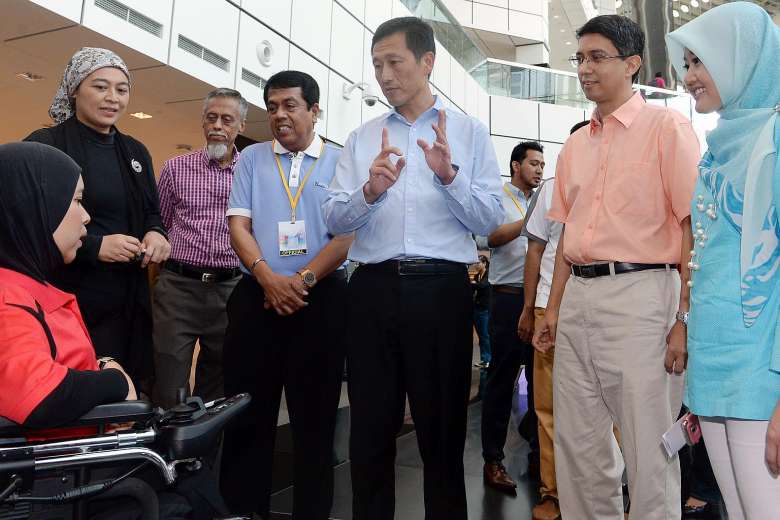
Image: 
Category: 
Publication Date: 
Sunday, April 24, 2016 – 14:00
Send to mobile app: 
Source: 


Story Type: 
Others

Source link

Important to foster sense of belonging: Ong Ye Kung

0

Singapore “cannot just bulldoze and build” as it embarks on its next 50 years. Instead it has to infuse the old with the new, to instil a strong sense of belonging in its people, said Acting Minister for Education (Higher Education and Skills) Ong Ye Kung yesterday.

At a seminar where Malay-Muslim youth discussed Singapore’s future, Mr Ong shared the three characteristics he would like to see in SG100 – attachment to country; as well as to family, friends and fellow countrymen; and a national team spirit.

He said that Singapore is unique when compared to other major cities in the world. “New York has America, London has United Kingdom, Mumbai has India, and Shanghai has China. Singapore has, well, Singapore. This is all that we have.”

And that is why the country cannot just focus on economics, but must also build history, memories and identity. “This is our collective national project.”

To foster that sense of belonging, it is important to preserve memories and heritage. Mr Ong, who is also an MP for Sembawang GRC, highlighted his constituency’s plans to develop the Sembawang Community Hub, which used to house rubber and pineapple plantations and the old Chong Pang market.

Today, it is a forested hill where Admiralty House, a gazetted national monument that was home to the British admiral that oversaw the Sembawang Naval Base, still stands.

“It will be a mistake to clear the entire hill and build it up – it will be full of facilities, convenient and utilitarian, but it will have no character,” he said at the event at Suntec City Convention Centre.

But more important than an emotional attachment to places is the emotional attachment to people, said Mr Ong, and this includes fellow citizens. Common experiences such as schools, National Service, and overcoming crises together help develop these bonds.

Fostering a national team spirit involves going through difficulties together, and sharing prosperity.

Mr Ong, who is also Senior Minister of State for Defence, said: “When we grow our economy and create jobs, it has to be for everyone, or as many Singaporeans as possible. We do not grow the pie just for 1 per cent or 5 per cent (of the population).”

He addressed worries about technology replacing workers with robots and computers. “(The) steamship, automobiles, airplanes, exploitation of oil and gas to power machines, computers, Internet, smartphones – have been transforming our lives and the economy for a long time,” he said. Each time old jobs were destroyed, many more new ones were created.

On why he was optimistic about the future, Mr Ong said: “Because I know that your generation is better educated, more technologically savvy…I know it is a generation with a strong sense of fairness and justice… I know it is a generation which will not judge the success of a person just by the income earned, but by the impact (on) the people around you.”

The seminar, organised by the People’s Association Malay Activity Executive Committees Council, involved 500 young people who exchanged views on technological influences, among other topics.

Dr Faishal Ibrahim, Parliamentary Secretary for Social and Family Development and Education, who chaired a plenary session, said: “The challenges we faced and overcame will be strong reference points and invaluable learning experiences for the younger generation to do even better for Singapore in the next 50 years and beyond.”


This article was first published on April 24, 2016.
Get a copy of The Straits Times or go to straitstimes.com for more stories.

Image: 
Category: 
Publication Date: 
Sunday, April 24, 2016 – 10:49
Send to mobile app: 
Source: 


Story Type: 
Others

Source link

More child abuse cases being investigated

0

For the better part of a year, the storeroom was her home. It was where an 11-year-old slept, ate, studied and used a bucket to relieve herself.

She was so afraid of being punished that she did as she was told, remaining there even though the storeroom was not locked.

She was allowed out only for a daily bath – and to go to school, where she never spoke of her ordeal.

Her mother and stepfather regarded her as a jinx, the cause of all their woes. And they ordered her siblings not to talk to her.

Her case came to light only after the school counsellor noticed that she often reeked of urine, and had changed from being a vocal child to a listless soul.

Better detection of child abuse cases by a host of agencies – from schools to hospitals – has resulted in more cases of serious abuse being investigated by the Ministry of Social and Family Development’s (MSF) Child Protective Service (CPS).

Last year, the CPS received 2,022 reports and inquiries about child abuse. Of this, it investigated 551 that were instances of serious abuse.

This was an increase of about 40 per cent over the period from 2012 to 2014, when it probed between about 380 and 400 cases of serious abuse a year, CPS director Carmelia Nathen told The Sunday Times.

Last year’s 551 serious abuse cases included instances of rape and molestation, and serious injuries inflicted by a family member.

While the CPS assesses all abuse reports received, it may refer the moderate and lower-risk cases to charities, designated as child protection specialist centres, and which are tasked with and equipped to handle such cases.

But for serious abuse, the CPS steps in and has the power to remove the child from the family if necessary – and keep the child away until it is satisfied that the parents have changed their violent ways.

Ms Nathen said the CPS has improved its screening tools and processes. This has enabled those in the child protection system – from teachers to medical staff to social workers – to better spot abuse.

The training of such professionals has led to improved detection, management and reporting of abuse cases.

It is also taking a more proactive approach by looking into some cases managed by professionals outside the ministry to ensure that these children are kept safe.

Overall, the cases can vary from babies who were shaken so violently that they suffered brain injuries, to teenagers molested by their fathers.

The abuser – often a parent – comes from across all income and ethnic groups. In some instances, he is also mentally ill or addicted to some vice, said child protection officer Firdawati Masri.

She had a case of a six-year-old girl with multiple burns and blue black marks on her body – all because her curiosity irritated her alcoholic father, who heated a metal spoon and pressed it against her when he was angry.

Said Ms Firdawati: “She likes to ask questions and wanted his affection but he got irritated with this.”

The girl’s parents are separated and her mother is more interested in her new partner than her daughter’s welfare. The CPS placed the girl in the care of a family friend.

Other parents are overwhelmed by multiple problems and go overboard trying to discipline their children, while some just resented their children, Ms Firdawati said.

In the case of the girl confined in the storeroom, she was placed in foster care for several years.

This was until her parents were helped to change their parenting practices. Their relationship with the girl has since improved and she has moved back to live with them.


This article was first published on April 24, 2016.
Get a copy of The Straits Times or go to straitstimes.com for more stories.

Image: 
Category: 
Publication Date: 
Sunday, April 24, 2016 – 10:46
Keywords: 
Send to mobile app: 
Source: 


Story Type: 
Others

Source link

More fake govt websites phishing for personal data

0

Be careful, the government website you are visiting may not be the real deal. The Infocomm Development Authority (IDA) said it has seen a growing number of fake government websites over the past few years.

The problem has become serious enough for at least five government agencies to issue public advisories in the last six months against phishing.

They include the Immigration and Checkpoints Authority, the Ministry of Manpower (MOM) and the Ministry of Health.

Police reports were made in several cases.

Phishing scams try to trick users into giving their personal or financial information through the use of fake websites or e-mail masquerading as official sources.

Such information can include credit card numbers, account usernames and passwords, and personal data such as identity card or passport numbers.

Police statistics revealed a rise in the number of cases reported under the Computer Misuse and Cybersecurity Act as well. While there were 169 cases reported in 2013, this rose to 278 last year.

“Many of these fake websites appear designed to scam people from overseas who may not be familiar with Singapore government Web services,” an IDA spokesman told The Sunday Times.

“We take a strong stand because such fake websites seek to ride on the good reputation of the Singapore Government and we will take all necessary steps to prevent such abuse.”

The MOM, for example, has posted six notices on its website in the past six months to warn of fraudulent websites, some of which were phishing for visitors’ personal data.

But the fake sites did not affect access to the official MOM website and no data was compromised, it stressed.

MOM urged the public to use only its official website.

A check on MOM Web archives found that it did not put up such notices over the same period a year ago, though it warned users of two fraudulent sites in 2014.

Mr Greg Russell, IBM Asia-Pacific’s head of Trusteer, a unit of IBM Security, said phishing is growing in effectiveness and is inexpensive to carry out.

Malware, or malicious software that can steal data or manipulate online sessions, can be obtained at no cost, or at most US$20,000 (S$27,000), according to IBM data.

In some cases, malware may redirect unsuspecting users to a legitimate-looking website.

Government websites are always a target, he added, as they link to visitors’ personal data.

He added that phishing sites are “rarely, if ever” located in the countries they are targeting. Many originate from Eastern Europe or China. The difficulty of detecting them could also be because “most phishing attacks are effective for 90 minutes”, before the sites are taken off or discovered.

In that time, the damage could already be done, Mr Russell said.

Mr Peter Sparkes, Symantec’s senior director of cyber security services for Asia-Pacific and Japan, said personal data such as identification or passport numbers are more valuable than credit card information as they are “non-perishable”.

“They can replicate your identity, for instance, to start a new bank account in your name… and the information can be sold again and again,” he said, adding that phishing attacks are becoming more targeted and sophisticated.

Besides engineering their tactics to the local context, attacks tend to target a smaller group of users instead of employing mass e-mail.

This makes scams harder to distinguish at a glance.

Increasingly, the people behind the scams are not just going for consumers, but also targeting large financial and e-commerce firms, said Mr David Freer, vice-president of Intel Security’s Asia-Pacific consumer division.

He said Singapore ranked first in Asia-Pacific and Japan, and third globally last year, as a destination for “spear phishing” or targeted attacks.

In Singapore, there were an average of 3.6 cyber attacks for each organisation.

Mr Freer said users could check the domain name of the site and look for “https:” in the address, which indicates a secure connection.

They should also avoid clicking on links in unsolicited e-mail and ignore call-to-action e-mail such as those claiming that “your account will be terminated”.

Victims who shared their e-mail usernames and passwords should change the latter immediately and those who have given out personal information should make a police report, he added.

“Being proactive and staying alert and aware of one’s credit (record) is the best defence,” he said.

Three recent phishing attacks

April 2016

The Immigration and Checkpoints Authority (ICA) warned of a website that was a close replica of its own.

The fake site allows visitors to supposedly submit a visa application online.

When visitors try to make a visa application inquiry, the site asks for their “visa reference number” and “travel document number”.

ICA said access to its official website (www.ica.gov.sg) was unaffected and no data was compromised. It has made a police report.

February 2016

The Agri-Food and Veterinary Authority of Singapore (AVA) alerted the public to a phishing e-mail scam that used its name.

Sent from “info@ava.org.sg”, the e-mail message asked recipients to submit their company details using an attached form.

Its subject line said “AVA Confidential Source Directory Update 2016 edition”, and it appeared to be from an official source. But e-mail addresses of a government agency should have the Internet domain “gov”.

January 2016

The Ministry of Health (MOH) issued an alert over a phishing e-mail message from “HealthCare. gov”.

The message had a subject line: “HealthCare. gov: Important HealthCare Notification”.

It claimed that “in view of the upcoming filing of the 2015 tax returns and the modifications made in respect to health care”, users should “verify (their) health care status immediately”.

It included a link for users to complete the supposed verification. MOH warned users not to respond to the e-mail, or click on any link or attachment within the message.


This article was first published on April 24, 2016.
Get a copy of The Straits Times or go to straitstimes.com for more stories.

Image: 
Category: 
Publication Date: 
Sunday, April 24, 2016 – 10:40
Send to mobile app: 
Source: 


Story Type: 
Others

Source link

Training: Programmatic Precision Targeting Singapore

0

Training: Programmatic Precision Targeting Singapore
Wednesday, March 15, 2017 at 9:00 AM

Singapore

Delfi Orchard, Level 6, Singapore, Singapore

Source link

Fat and proud

0

For a period of time, Miss Anmol Khan Rai drank only water and ate plain bread for her meals.

All because of some anonymous messages she got on social media when she was 15.

She tells The New Paper on Sunday: “I…

Source link