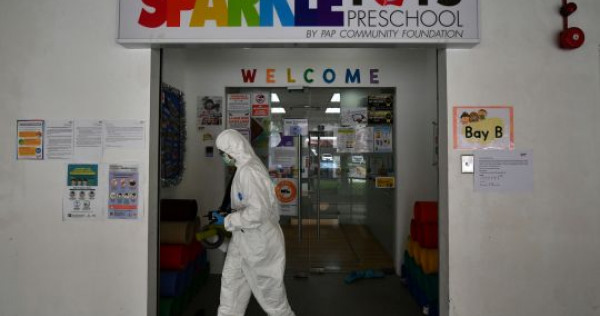
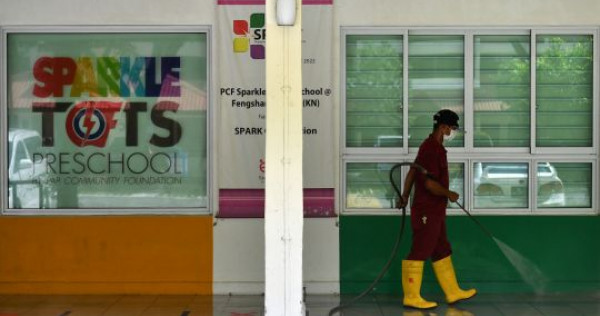
SINGAPORE – All 360 centres under PAP Community Foundation (PCF) will close for four days from Thursday (March 26) after 18 Covid-19 cases were found to be linked to its pre-school in Bedok North.
Those infected were 14 employees at the Fengshan PCF Sparkletots centre, including the principal. The other four were the principal’s family members.
Some of the staff were at work despite feeling unwell, said PCF chief executive Victor Bay in a letter to parents on Wednesday.
“We are sorry for what has happened,” he said. “It is regrettable that measures put in place to safeguard the well-being of children and staff were not strictly followed in that centre.”
Mr Bay said in a media statement that an internal committee of inquiry will be formed to investigate the matter and disciplinary action against employees would be taken where warranted.
The 47-year-old principal was well when she went to work on March 17 but developed symptoms that afternoon.
SINGAPORE: Social isolation measures have been mandated around the world to contain the spread of coronavirus, but these have had undesirable side-effects.
According to Chinese daily The Global Times, the city of Xi’an has seen a record-breaking volume of divorce requests over the past few weeks.
Extended periods of time cooped up with one’s family may inadvertently lead to rising tensions and conflict at home. But self-isolation is putting some people’s lives in serious danger of another kind: Family violence.
Family violence is violent, threatening, coercive or controlling behaviour that occurs in current or former family, domestic or intimate relationships. It encompasses physical abuse, sexual assault, emotional and psychological abuse, economic control, social isolation and any other behaviour that may cause a person to live in fear.
With social isolation measures, victims of family violence are now trapped at home with their abusers to an unprecedented degree. They are also cut off from the respite typically available to them, such as going out to work or school.
This potential secondary effect of the coronavirus crisis has not received the attention it deserves, despite past evidence that family violence rates rise in the wake of emergencies such as natural disasters and disease outbreaks.
Advocates in China, the United States and Italy are all reporting a spike in victims reaching out to family violence hotlines and organisations. In Singapore, AWARE’s Women’s Helpline has seen a 33 per cent increase in February over calls received in the same month last year.
This increase stands in huge contrast to national-level data from 2016 to 2019, which shows family violence on the decline as evidenced by the number of personal protection order applications filed.
(Photo: Unsplash/Kevin Laminto)
Social workers AWARE spoke to recently reported similar increases in family violence cases and agree that isolation may be increasing the incidence of abuse, even as the circumstances and reasons that lead to people reaching out for help remains difficult to establish even under normal circumstances, let alone during crises.
One social worker highlighted that 60 per cent of recent daily referrals had been family violence related, up from 30 per cent last year. Another highlighted a couple of cases they saw that resulted in a sudden escalation in violence when families were given stay-at-home notices.
It is too early to say if this trend will continue, but we should consider how better support to victims can be provided while practicing social isolation or distancing.
Crises like pandemics and natural disasters may be accompanied by an uptick in family violence because of three reasons. These reasons are closely associated with family violence’s roots in power and control.
First, pandemics are typically situations in which people’s lives may seem out of control. This could trigger abusers to lash out against their victims, in order to regain some semblance of control over a situation. An already abusive relationship may therefore worsen.
This may be why economic hardships themselves are a trigger for more abuse in a relationship. A research study on intimate partner violence and the global financial crisis in the US found that unemployment and economic hardship at the household level were positively related to abusive behaviour.
It also found that rapid increases in the unemployment rate increased men’s controlling behaviour towards partners, even after adjusting for unemployment and economic distress at the household level.
Photo illustration of a couple arguing. (Photo: Try Sutrisno Foo)
Second, social support – from family, friends or other sympathetic allies – is critical in helping family violence victims heal and build hope.
Yet containment measures, such as work-from-home arrangements or when workers are put on enforced leave, increase social isolation. Many victims may also feel that they can no longer seek refuge at the home of a friend or relative, especially those with elderly residents or children, for fear they could expose their families to the virus.
Third, the coronavirus crisis is likely going to push the world economy into recession, which will make it even more difficult for victims to leave abusive relationships.
Leaving an abusive partner often involves establishing financial independence – for example, by keeping a secret savings account that the abuser cannot access – but this will be more difficult if victims begin to lose jobs.
Low-income households are particularly vulnerable to such economic shocks.
Increased time spent at home may increase the incidence of family violence, as abusers and victims find themselves in close proximity 24/7.
But being forced to stay at home may also impact a victim’s help-seeking behaviour. Typically, victims call helplines and services when they are away from their abusers, such as at work, or out on an errand.
With more people spending time indoors, victims may be afraid to reach out for help, assessing that their abusers have a higher chance of finding out.
Services themselves might also be impacted as a result of COVID-19. For example, crisis shelters may be taking necessary precautions to close their doors if they deem the risk of infection to be high.
Volunteers in protective suits disinfect a factory with sanitizing equipment, as the country is hit by an outbreak of the novel coronavirus, in Huzhou, Zhejiang province, China February 18, 2020. China Daily via REUTERS
Helplines and social service organisations may be under pressure from increased demand and unable to respond promptly, especially if they aren’t provided the necessary resources to adjust to higher demand.
Already in Singapore, there are reports of social service organisations’ coffers running low, and non-profits seeing a dip in the number of volunteers offering to help.
ADDRESSING FAMILY VIOLENCE DURING PUBLIC HEALTH EMERGENCIES
Lessons from previous pandemics, such as Ebola and SARS (which prompted similar spikes in reported family violence), indicate that vulnerable communities, particularly women, shouldn’t be forgotten during public health emergencies.
Indeed, UN Women has also called on governments to consider the disproportionate impact of the coronavirus pandemic on women, who make up the majority of workers in the health and social sector and the informal economy.
The Singapore Government has done a remarkable job in containing the spread of coronavirus while keeping the public informed of the number of people infected, who they came in contact with, and how they were infected.
As we begin to track the secondary effects of the coronavirus crisis, we must include the impact of family violence, and prioritise services providing crucial support to victims.
Any stimulus package can include specific plans to build the long-term economic resilience of all those who have been affected, especially family violence victims. This will be crucial for them to maintain financial independence from their abusers.
The package can also provide financial and technological support to social service organisations so that they are not forced to scale back operations at this crucial time, and can instead use this as an opportunity to take more of their work online.
If you or someone you know is experiencing family violence, you can reach out to AWARE’s Women’s Helpline (1800 777 5555, Monday to Friday, 10am to 6pm), or to Family Violence Specialist Centres such as PAVE.
Shailey Hingorani is Head of Advocacy and Research at AWARE.
SINGAPORE: With a third of the planet under lockdown, Trade and Industry Minister Chan Chun Sing told CNA that Singapore “certainly can expect some disruption” to its supply chains.
And delays in food deliveries are already happening following the restricted movement order taking effect in Malaysia.
But Mr Chan called on Singaporeans to have every confidence that the Republic can last the distance in the coronavirus pandemic, given the “tenacious” efforts and advance planning to secure the country’s food supplies.
“Some of the vegetables might be in a bit later. Some of the eggs might come in a bit later,” he told the programme Talking Point for an episode that airs tonight (March 26) on Channel 5.
“We’ve been able to have other sources … make up for what’s been disrupted on the Malaysian side. So, by and large, I think the impact on the local markets hasn’t been significant.”
Immigration and Checkpoints Authority officers at Woodlands Checkpoint unloading a truck of food supplies from Malaysia to conduct checks. (Photo: Marcus Mark Ramos)
Singaporeans may have to adjust some of their food purchases by, for example, switching from fresh vegetables to frozen or canned vegetables.
But overall in the main food categories like carbohydrates and protein, Mr Chan reassured the public that there is a sufficient stockpile to “last us quite a while, for us to continuously source for alternative sources”.
There is no need for panic buying, he added as he also spoke publicly for the first time about the audio leak of his comments on some shoppers’ reaction to Singapore raising its Disease Outbreak Response System Condition from yellow to orange previously.
‘COMBINATION OF STRATEGIES’
While this is not the first time Mr Chan and other ministers have pointed to Singapore’s national stockpile and diversified supply chains, the tightening border restrictions around the globe are posing a “daily challenge”, he acknowledged.
“Some of the products that require a bit of manufacturing capabilities will be a bit delayed. Some of the supply chains in terms of transport in other countries are also being disrupted, so that might add some delay,” he cited.
“We must have a plan B, if not a plan C and plan D.”
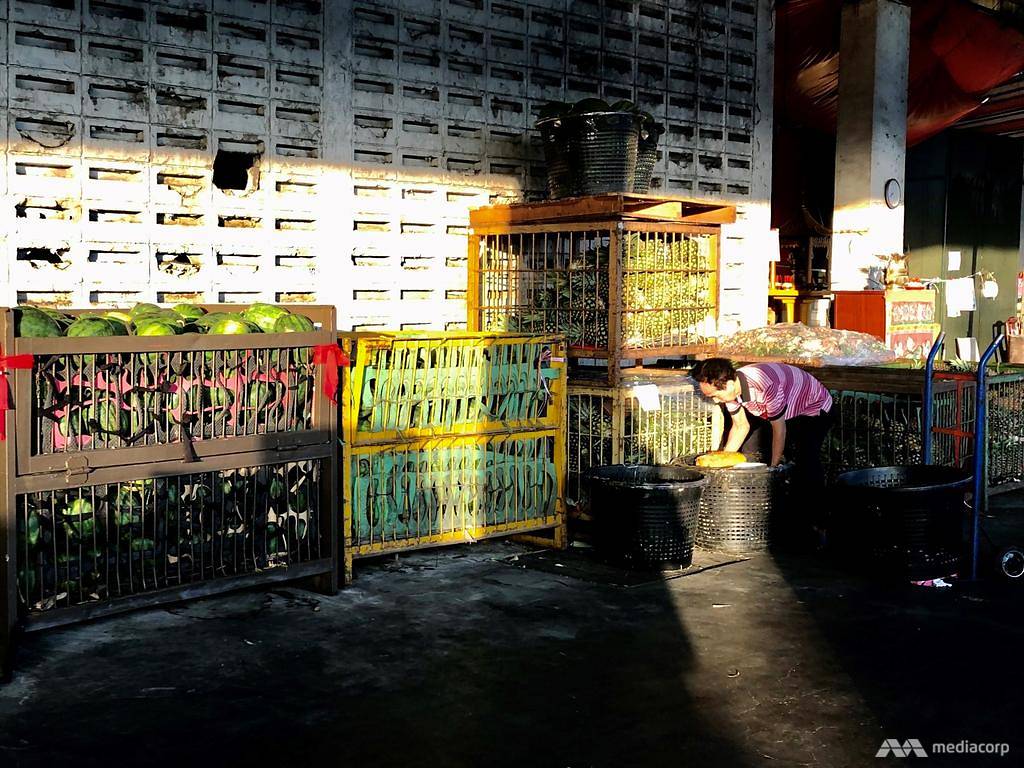
Suppliers at Pasir Panjang Wholesale Centre continued to receive fresh produce imported from Malaysia last week. (Photo: TODAY/Mandy Lee)
While not going into specifics — for strategic reasons to safeguard Singapore’s bargaining position — he outlined in broad strokes how the government is responding.
For example, while Singapore’s stockpile is generally planned on the basis of a “local short-term contingency”, the authorities have since reviewed the numbers “to take into account the potential disruption to supply chains worldwide and also for a longer period”.
“Every item across the entire table of essentials” is being looked at, and that goes beyond food. Among the things kept in stock are medicines and personal protective equipment.
Not only have supplies been replenished, but some orders — such as for multivitamin pills — were also increased more than a month ago in anticipation of possible disruptions.
Mr Chan noted that although some countries have shut their borders to human traffic, they want to remain open to the movement of goods. And Singapore has strategic partners working together to ensure this.
For example, Australia, Brunei, Canada, Chile, Myanmar, New Zealand and Singapore issued a joint statement yesterday to affirm their commitment to ensuring supply chain connectivity.
On a question of food subsidies, he replied: “It isn’t a sustainable way to do such things, because the subsidies would be creamed off by the foreign suppliers.
“There’s no good way to artificially suppress price.”
Helping the Republic’s food importers to diversify their supplies “is perhaps even more important than just subsidising food from a single source, which we can always be held ransom to”, he added.
In the case of vegetables, for example, Singapore has “opened up supply lines” beyond Malaysia, to places like Indonesia, Vietnam, China and Taiwan.
“It’s a very tough job, especially now,” he said. “They must be very tenacious in going out to secure those supplies for us.”
He acknowledged that “we may have to pay slightly more as we diversify”, but Singapore’s “combination of strategies” to keep prices affordable also include ensuring that there are some local production capabilities, notwithstanding constraints like land and manpower.
Mr Chan also identified one other thing the country must do for as long as the pandemic lasts, and that is to “share”.
“If each of us hoards … then you’d certainly jack up the prices. And it would also allow others to charge us more when they see us panicking,” he said.
This is one of the reasons it “hurt” him to see some people “succumb” to panic buying, which gave “a very bad name to all fellow Singaporeans”.
Shoppers at FairPrice Finest in Bukit Timah Plaza reaching for toilet paper even before it got stocked on the shelves. (Photo: TODAY/Raj Nadarajan)
He had given vent to his feelings on this during a closed-door meeting with members of the Singapore Chinese Chamber of Commerce and Industry. His comments were then leaked in an audio clip that went viral.
A month on from the incident, he acknowledged that runs on supplies have also happened in other countries and that this public reaction stems from fear in the face of uncertainty.
But he wants Singaporeans to “distinguish themselves” from the rest of the world in the midst of the pandemic.
“That’ll give others confidence to say that, next time, when they deal with Singaporeans, they’re dealing with a different breed of people: People who are calm, people who are united, people who have a broader sense of perspective,” he said.
“I don’t know whether it’s achievable in the short term, but … we must try because it’s an opportunity for us to do that. Otherwise why would other people want to do business with us, and why would other people have confidence in us?
“You might fault me for it, but I guard this very jealously — the survival and continued success of our country.”
He hopes Singaporeans will feel that they are not alone in this fight against the coronavirus disease 2019, and that they remember the more vulnerable people in society.
“We need to have as many Singaporeans stay calm as possible, and have these fellow Singaporeans help the rest of the Singaporeans who are less confident to overcome their fears,” he said.
“If we can do that collectively, then we’d emerge as a stronger people, rather than having to fear that we have to overcome this individually.”
For more on the interview, tune in to a special episode of Talking Point tonight (March 26) at 9.45pm.
SINGAPORE: A fire broke out in Liat Towers on Wednesday (Mar 25) night.
The Singapore Civil Defence Force (SCDF) said it was alerted to the fire at about 10pm.
“Firefighters, donning breathing apparatus sets, entered the smoke-logged building and conducted firefighting and rescue operations. Forcible entry using hydraulic tools was conducted to enter the affected unit on the 18th floor,” said SCDF in response to CNA’s queries.
The fire, which involved the contents of a retail unit, was extinguished using a water jet, SCDF added.
One person was taken to Singapore General Hospital.
In videos sent to CNA, loud popping noises can be heard as the blaze is seen raging through an open window, sending what onlookers described as debris plummeting from the unit.
Officers from the police and Singapore Civil Defence Force at the scene of the fire on Mar 25, 2020. (Photo: Henry Tan)
Programme manager Celine Foo, 25, said she first noticed the fire when she left a nearby building at about 10pm.
People were seen running across the street to avoid what seemed to be debris from the burning building, as the smell of smoke permeated the air.
“When I first spotted (the fire), there were a lot of firecracker-like sounds,” Ms Foo told CNA. Officers from the police and Singapore Civil Defence Force (SCDF) arrived at the scene of the fire shortly after, she said.
Kelly Chiew, 26, said she heard explosions or loud noises while she was walking in the area, and realised that a fire had broken out.
“There were several onlookers taking pictures, but none of us dared to go any closer as debris was falling from the building,” Ms Chiew said.
Sushi chef Henry Tan, 57, said he saw the fire still burning at about 10.50pm, with the area around it being cordoned off by police and SCDF officers .
“Nobody was allowed to go near [the area], so onlookers stood opposite the road,” he said.
The cause of the fire is under investigation.
This story came from a reader tip-off. If you would like to send in photos or videos of something newsworthy, WhatsApp our Mediacorp news hotline at +65 8218 8281 or message us on Facebook.
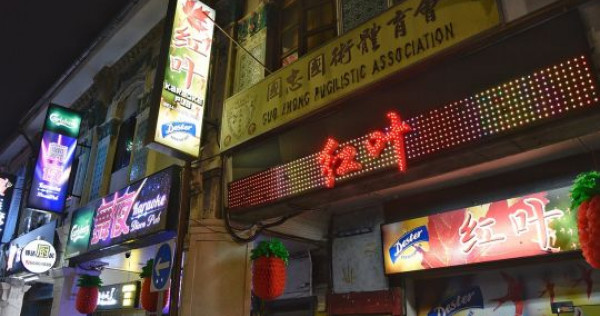
SINGAPORE – The authorities have reminded entertainment outlet operators to continue to implement safe distancing measures if they are planning to hold farewell events on Wednesday (March 25) and Thursday.
They said that they are aware that some nightspots are planning to host potentially large-scale events that could see big groups of people congregating before they close for about a month from Thursday at 11.59pm.
“Events with 250 or more participants must be suspended, while operators of events with fewer than 250 participants must implement all necessary precautionary measures, including ensuring a distance of at least a metre,” said the Singapore Tourism Board, Enterprise Singapore and Singapore Police Force in a joint statement on Wednesday.
The agencies warned that they will deploy officers to monitor the situation and carry out enforcement action over the next two days.
“These safe distancing measures are enforceable,” they said.
Ms Carrie Tan, 37, was a headhunter until eight years ago, when she founded a social enterprise to provide skills training for underprivileged women in India.
Daughters of Tomorrow is now a charity which helps women from underprivileged families here, and Ms Tan, its founding executive director, has been headhunted by the People’s Action Party (PAP), raising speculation that she could be fielded at the coming general election.
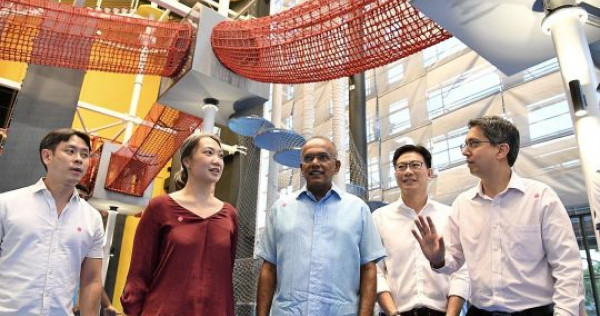
She was seen accompanying Home Affairs and Law Minister K. Shanmugam and other Nee Soon GRC MPs in the constituency yesterday, when a small group toured the recently completed HomeTeamNS clubhouse in Khatib.
Ms Tan was in the Young South-east Asian Leaders Initiative where her work was praised by former United States president Barack Obama. A vocal advocate on issues of inequality and for low-income mothers, she is also the second adviser to grassroots organisations in Chong Pang – the first adviser is Mr Shanmugam – and has been seen recently at constituency events in Tampines West with Minister for the Environment and Water Resources Masagos Zulkifli.
Asked about her potential candidacy, Ms Tan declined to comment.
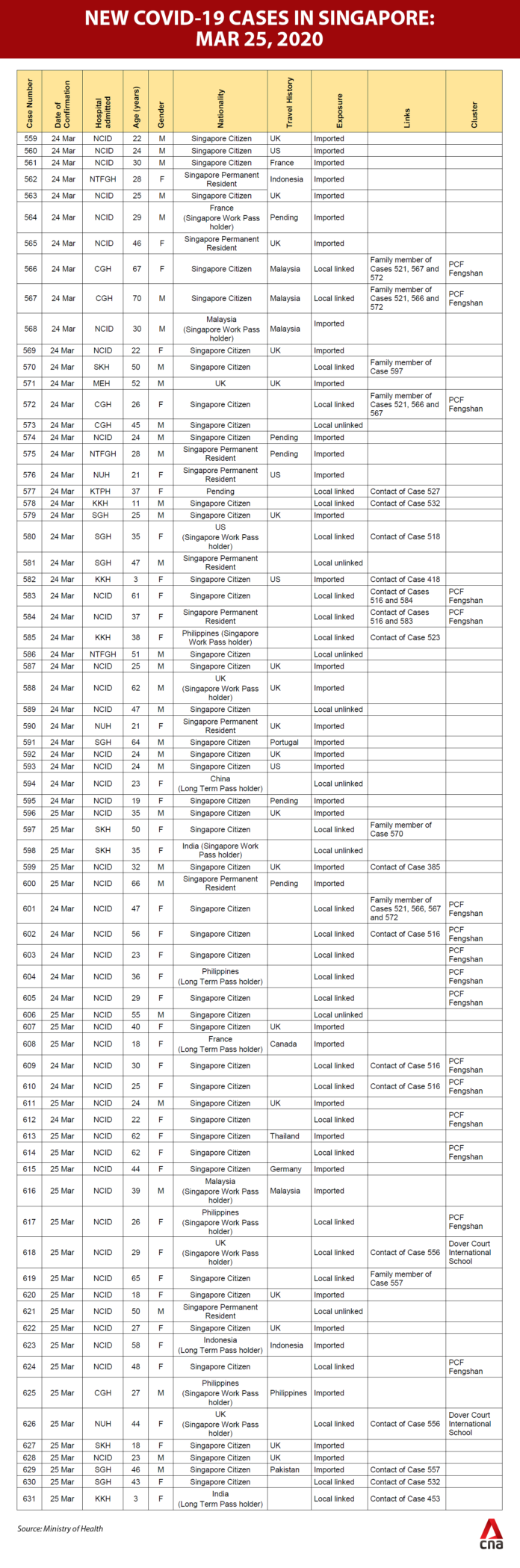
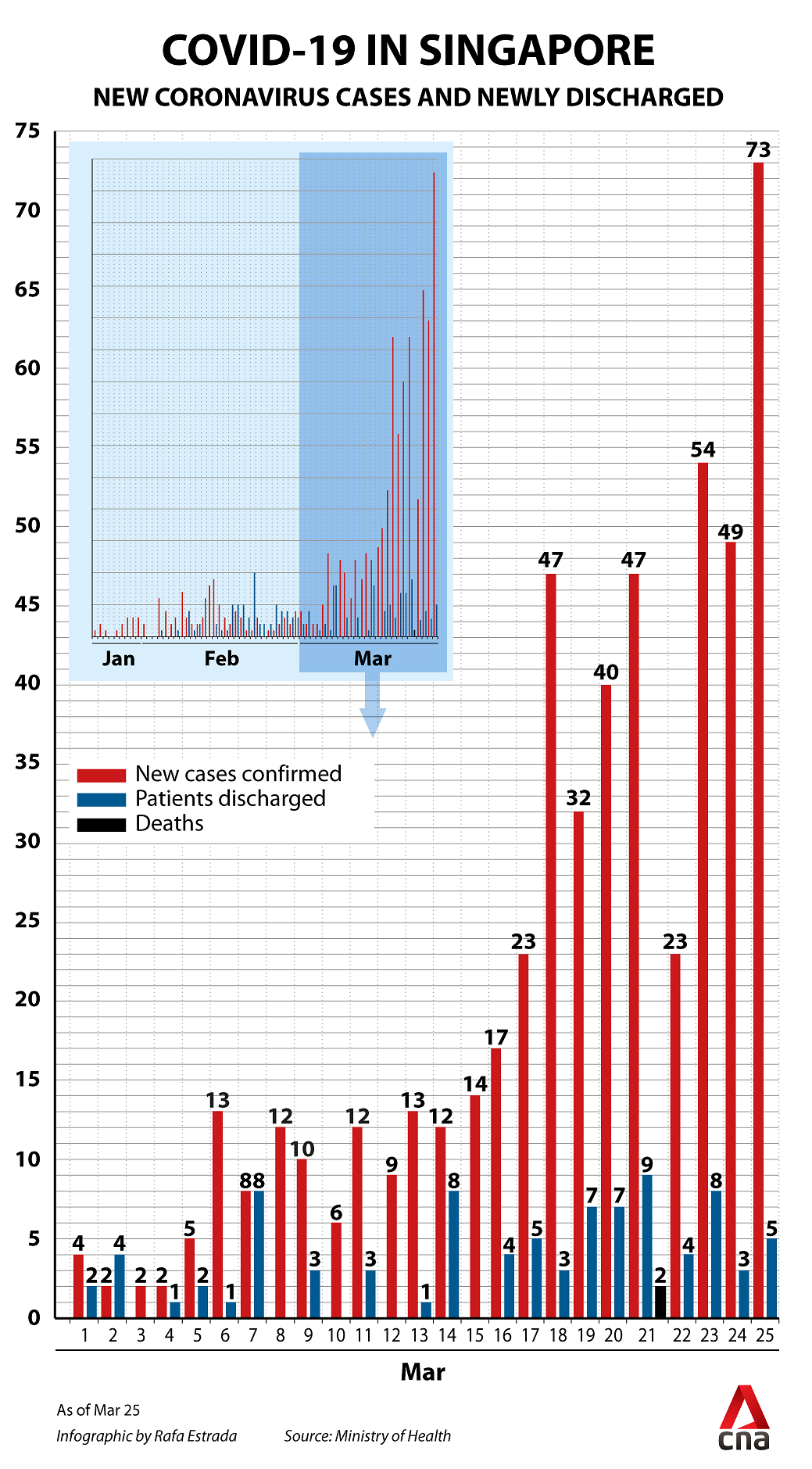
SINGAPORE: Singapore reported 73 new COVID-19 cases on Wednesday (Mar 25) and announced a new cluster involving the PAP Community Foundation (PCF) Sparkletots centre in Fengshan, which is linked to 18 cases in total.
Another new cluster was also announced involving Dover Court International School (301 Dover Road), which is linked to three confirmed cases.
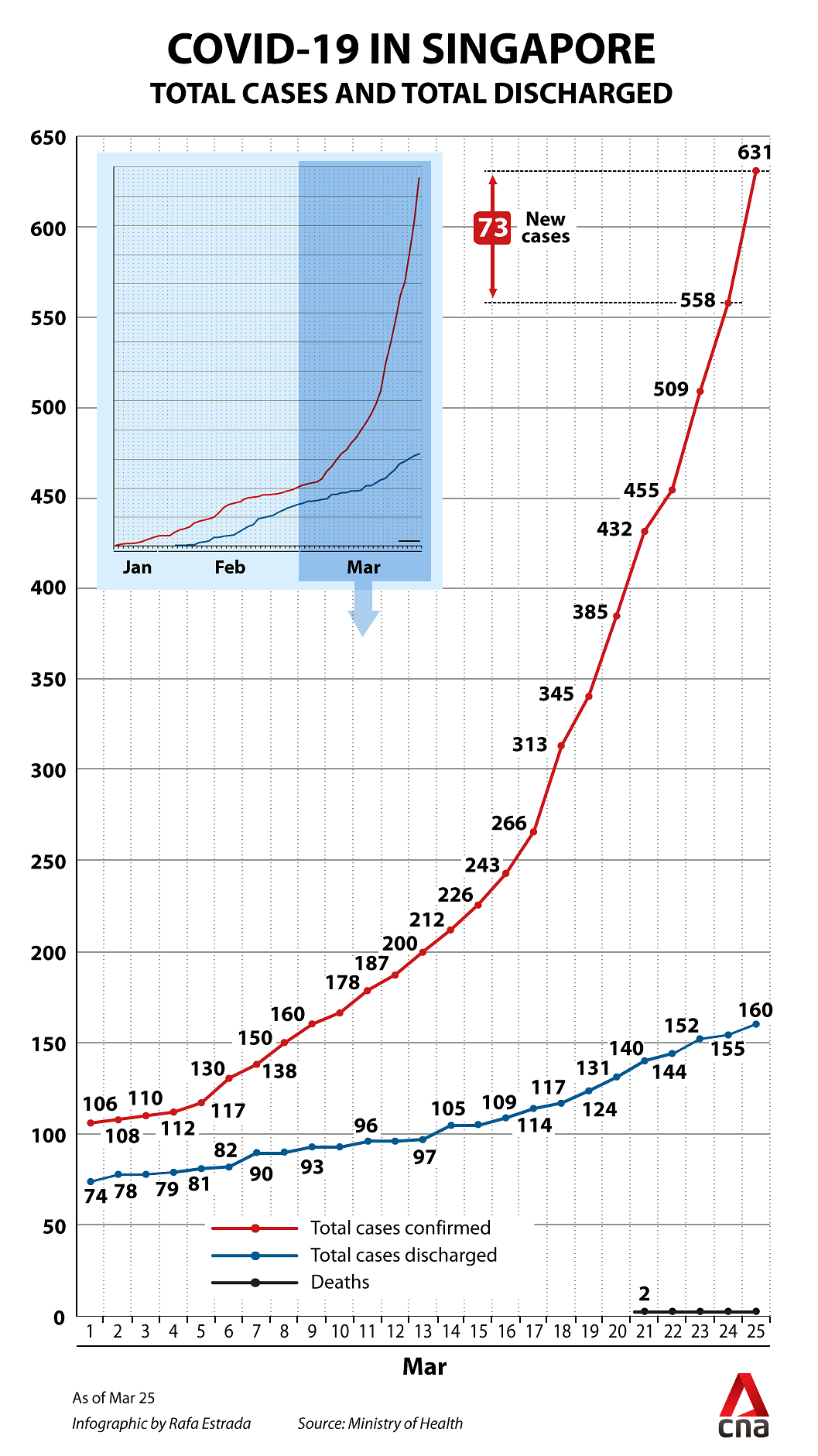
The latest cases bring Singapore’s total number of COVID-19 cases to 631, said the Ministry of Health (MOH) in a press release.
Of the new cases, 38 were imported cases with travel history to Europe, North America, ASEAN and other parts of Asia. All except one were returning residents and long-term pass holders.
Of the new cases, 27 are linked to clusters or previous cases and eight are unlinked.
The new cases include a three-year-old girl who had travelled to the US, another three-year-old girl of Indian nationality who is a long-term pass holder and is linked to case 453, as well as an 11-year-old boy, linked to case 532.
Cases 556, 618 and 626 are linked to the cluster involving Dover Court International School. All three patients are employees at the school.
The 18 cases linked to the PCF Sparkletots cluster are cases 516, 521, 566, 567, 572, 583, 584, 601, 602, 603, 604, 605, 609, 610, 612, 614, 617 and 624. Fourteen of them are employees at the preschool and four – cases 521, 566, 567 and 572 – are family members of case 601.
Five more patients have recovered and were discharged, bringing the total to 160. Two patients died last Saturday.
Of the 404 confirmed cases who are still in hospital, most are stable or improving, and 17 are in critical condition in the intensive care unit.
MOH added that 65 patients who are clinically well but tested positive for COVID-19 have been transferred to Concord International Hospital, Mount Elizabeth Hospital and the Community Isolation Facility at D’Resort NTUC for isolation and care.
National Development Minister Lawrence Wong highlighted in Parliament that there was no need to stockpile food and other essential supplies despite tightened measurements to prevent the spread of COVID-19.
His comments came a day after a slew of initiatives – such as limiting gatherings outside of school and work and closing entertainment venues such as night clubs, karaoke outlets and cinemas – was announced to curb the coronavirus outbreak.
SINGAPORE – Singapore has confirmed 73 new coronavirus cases on Wednesday, bringing the total number of cases here to 631, the Ministry of Health (MOH) said on Wednesday (March 25).
Of the 38 imported cases, all except on were returning residents and long-term pass holders who had travelled to Europe, North America, Asean and other parts of Asia.
There were 27 cases linked to clusters or previous cases, while contact tracing is ongoing for eight cases that are not linked to travel or previous cases.
Have you been putting off doing certain exercises because you didn’t have the tools? Our compilation of great fitness buys from Daiso – including yoga block and resistance bands – will come in handy. You wouldn’t believe they cost just $2 each!
Hand grippers
PHOTO: Shape
Working with hand grips will help build forearm muscles, and increase hand strength and dexterity. Although we don’t immediately think of it, grip strength is required in many areas of daily life – for example, when lifting an object or when opening a bottle.
Daiso has a good range of hand grippers that come in different colours, demarcating resistance levels of 5kg, 10kg, 15kg, 20kg and 25kg.
From one city to the next, Covid-19 has wreaked havoc on people’s lives across the globe, as well as impacted many of their livelihoods.
In Singapore, there is no doubt that retail companies, small businesses and F&B operations are suffering due to the latest protocols to stem the coronavirus spread.
Even before the call for stricter social distancing measures, there were already reports of businesses struggling to stay afloat.
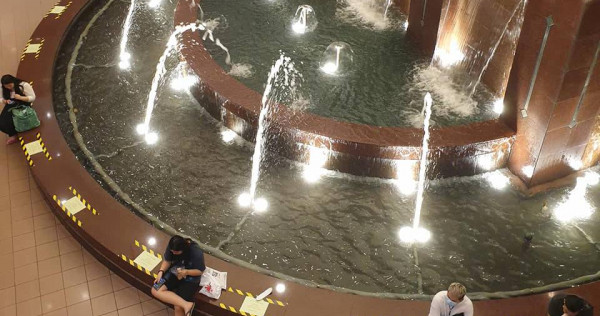
And with the latest implementation for bars, cinemas and other entertainment outlets to close from Thursday (March 26), will local malls be a ghost town soon?
Already, netizens have reported a drastic drop in foot traffic in once-crowded malls here.