The two bundles of heroin – estimated to be worth approximately S$65,000 – were discovered behind the glove compartment of the car driven by a 24-year-old male Malaysian.
Source link
More than S$65,000 worth of heroin seized at Woodlands Checkpoint
Foreign workers' centre running out of funds
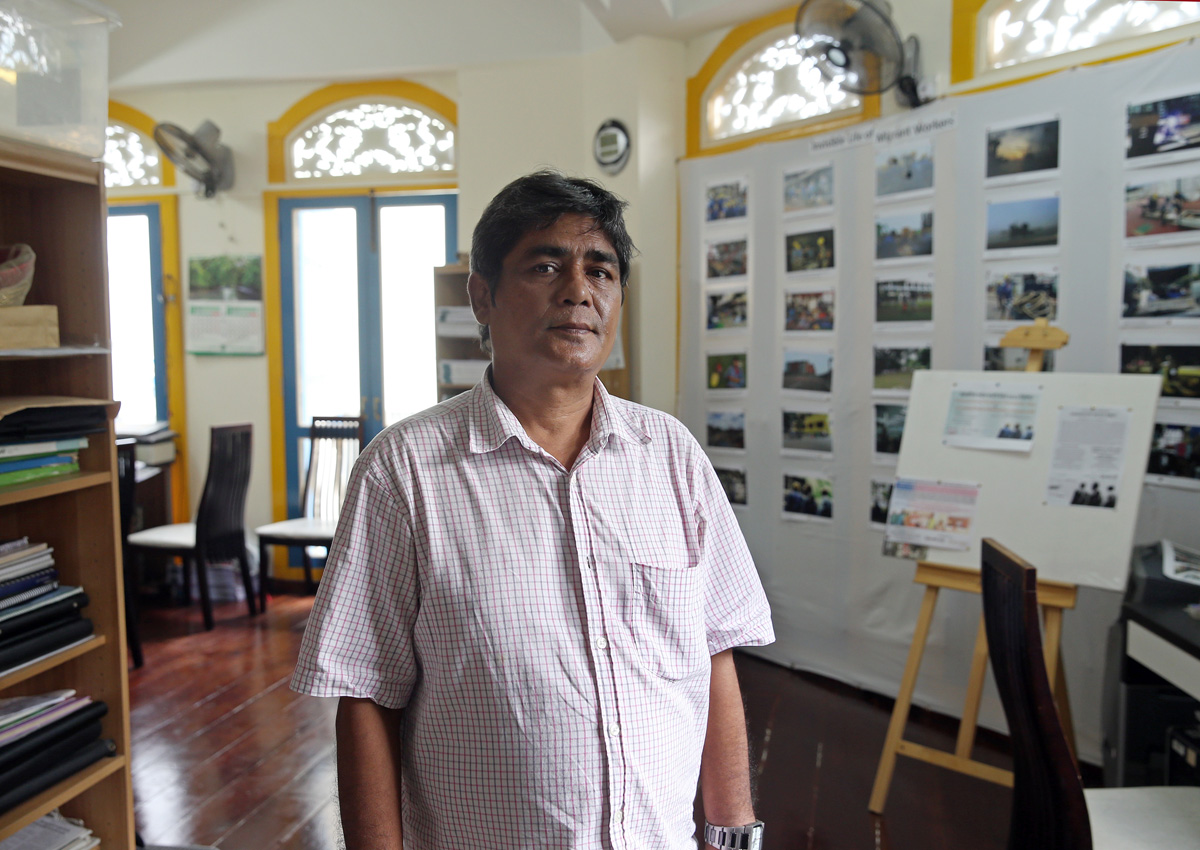
A drop-in centre for blue-collar Bangladeshi workers near Little India will shut down by next month because its owner can no longer afford to pay for its rent and utilities.
“I’m sad to close Dibashram,” said Mr Abdul Khaeer Mohammed Mohsin, 53, who also runs the local monthly Bengali paper Banglar Kantha. “But I have no more savings, and I still have to feed my family.”
The father of three has been paying for the centre and its activities with the paper’s profits of about $5,000 a month. The 600 sq ft second-floor shophouse unit doubles as his office.
Each month, the centre needs about $2,500 for rent and $500 for utilities, said Mr Mohsin, and the remaining $2,000 is used to print Banglar Kantha in Dhaka.
Mr Mohsin takes on freelance work such as translation and interpretation, amounting to about $2,000 a month, to pay for his household expenses. But Banglar Kantha’s advertising revenue has been falling.
“I can run the paper from my home. All I need is a desk and a computer,” said Mr Mohsin, who lives in a three-room Housing Board flat in Kallang Bahru with his wife and their three children.
But he is worried that the closure of Dibashram might spell a dearth of social spaces for the 160,000 Bangladeshi workers in Singapore.
Construction worker Tareq Hasan, 32, said he has been going to Dibashram every week for the past two years to read, talk to other Bangladeshis and write poetry.
“If this place closes, I don’t know where else to go to relax. I like literature, and I don’t know where (to find) Bengali books,” he said.
Dibashram, which means daycare in Bengali, has been running for about five years and also helps workers with free translation and counselling.
It holds events to celebrate the Bengali New Year, Deepavali and Hari Raya.
For Labour Day, it organised a photography exhibition titled The Invisible Life of Migrant Workers, with shots taken by shipyard worker Hasanur Reza Zimy of how workers spend their days here.
Workers drop by Dibashram to read from a selection of Bengali books, play carrom or chess and fiddle with musical instruments such as guitars and goblet drums.
“If I have to move to a smaller place… there won’t be any space for this collection that I built from scratch,” said Mr Mohsin.
National University of Singapore’s Professor Mohan Dutta, who studies migrant workers, said Dibashram is “an anchor” for the local Bangladeshi community and a bridge to help Singaporeans understand migrant workers better and vice versa.
“We will be losing a valuable, reliable resource if Dibashram closed,” said Prof Mohan, who is helping to set up an online crowdfunding site to save the centre.

This article was first published on May 8, 2016.
Get a copy of The Straits Times or go to straitstimes.com for more stories.
Image:
Publication Date:
Sunday, May 8, 2016 – 17:05
Keywords:
Send to mobile app:
Source:
Story Type:
Others
Indonesia's Muslim cyber warriors take on ISIS

A group of Indonesian “cyber warriors” sit glued to screens, as they send out messages promoting a moderate form of Islam in the world’s most populous Muslim-majority country.
Armed with laptops and smartphones, some 500 members of the Nahdlatul Ulama (NU) – one of the world’s biggest Muslim organisations – are seeking to counter the Islamic State in Iraq and Syria (ISIS) group’s extremist messages.”We’ll never let Islam be hijacked by fools who embrace hate in their heart,” tweeted Syafi’ Ali, a prominent member of the NU’s online army, a typical message to his tens of thousands of followers.
They are trying to hit back at ISIS’s sophisticated Internet operations, which have been credited with attracting huge numbers from around the world to their cause.
Internet propaganda is believed to have played a key role in drawing some 500 Indonesians to the Middle East to join ISIS, particularly among those living in cities where it is easier to get online.
The dangers of the growing ISIS influence in Indonesia were starkly illustrated in January when militants linked to the terrorists launched a gun and suicide bombing attack in Jakarta, leaving four assailants and four civilians dead.
It was the first major attack in Indonesia for seven years, following a string of Islamic militant bombings in the early 2000s that killed hundreds.
As well as firing off tweets, the NU members have sought to dominate cyberspace by establishing websites promoting the group’s moderate views, an Android app and web-based TV channels, whose broadcasts include sermons by moderate preachers.
The initiative has been building momentum for a while but started to pick up pace a few months ago. A handful of cyber warriors operate from a small office in Jakarta, while the rest work remotely, and the group mostly communicate with one another over the web.
But it will be an uphill battle and the NU, which has been promoting moderate Islam for decades, conceded they have previously struggled to take on ISIS’s hate-filled messages.
“NU has for a while wrestled with this radical propaganda,” said Yahya Cholil Staquf, secretary general of the NU, which claims at least 40 million followers. “Every time we defeated them, it didn’t take long for them to regain their strength.”
The online drive comes as the NU is set to take its campaign to promote their tolerant form of Islam onto the international stage this week, with a two-day meeting from Monday of moderate religious leaders from around the world.
They aim to showcase their particular brand of the Muslim faith, known as “Islam Nusantara”, to counter the ISIS militants’ radical interpretation of Islam.
Meaning “Islam of the Archipelago” – Indonesia is the world’s biggest archipelago, comprising over 17,000 islands – it is accepting of diversity and stresses non-violence.
It grew up organically in Indonesia, as the religion entered the country gradually and had to mix with existing traditional beliefs such as praying at tombs, making it a naturally tolerant form of Islam.
Nowadays, most of the approximately 225 million Muslims in Indonesia practise a moderate form of Islam.
The NU wants to persuade Muslims from around the world to look for inspiration to Indonesia, where religious minorities and a multitude of ethnic groups mostly coexist harmoniously, rather than to harsher forms of Islam from the Middle East.
The group nevertheless has a long way to go to fight the rising tide of ISIS propaganda.
Despite their good intentions, the NU cyber warriors appear amateur next to ISIS’s well-funded set-up.
The militants, who control huge swathes of territory in Iraq and Syria, have a sophisticated online operation, using social media, apps and slickly produced videos.
They send about 200,000 tweets a day into the United States alone, according to US officials. It even has its own news agency, Amaq, which is often the first to report that ISIS is claiming responsibility for attacks.
In Indonesia, there are two main ways that ISIS propaganda spreads – by supporters posting on websites and apps such as Whatsapp, Facebook, Twitter and Line, and through returnees from the Middle East preaching the group’s radical ideology.
Most of the NU’s online army are volunteers, often reaching into their own pockets to cover costs.”ISIS has oil, while the only oil we have is for hair,” Ali said, explaining the project’s start was delayed for more than a year due to funding problems. Oil smuggling has been a key revenue source for ISIS.
Robi Sugara, a terrorism expert from NGO the Indonesian Muslim Crisis Center, welcomed the NU’s online approach.”It’s a good strategy to make Google searches fill up with moderate Islamic content,” he told AFP.
“The battleground for Islamic ideology has moved to the Internet, and by producing as many moderate websites as they can, they can keep more minds healthy.”
Image:

Publication Date:
Sunday, May 8, 2016 – 16:26
Keywords:
Send to mobile app:
Source:
Story Type:
Others
WIN Super Rugby tickets! 30 pairs for Sunwolves v Stormers up for grabs
2016 Super Rugby is rumbling into town again.
Get ready for action packed Saturday (May 14) as Japan’s HITO-Communications Sunwolves take on South Africa’s giants –…
Source link
North Korea TV airs 'special' Kim Jong Un speech

North Korea flagged a “special” announcement on state television Sunday (May 8), which turned out to be a recording of leader Kim Jong Un’s speech the day before to a rare ruling party congress.
In the past, notice of such a “special and important” announcement has preceded major events, such as a nuclear test or even the death of a top leader.
But at the allotted time, state television simply began airing its recording of Kim’s lengthy report to the congress on Saturday – a transcript of which had already been published by state media.
In his address, Kim unveiled a five-year economic plan and stressed that North Korea was a “responsible” nuclear weapons power with a no first-use policy and a commitment to non-proliferation.
Image:

Publication Date:
Sunday, May 8, 2016 – 15:17
Keywords:
Send to mobile app:
Source:
Story Type:
Others
Bukit Batok by-election: SDP falls short with best shot in two decades
The circumstances were as good as they could have been for Singapore Democratic Party (SDP) chief Chee Soon Juan to finally win at an election. But in the end he still fell short in his fifth bid to enter Parliament.
The Bukit Batok by-election began, after all, with the People’s Action Party (PAP) dented by the resignation of its MP David Ong over an alleged affair.
Since his stepping down on March 12, the SDP has had close to two months to strategise, focus and deploy its considerably experienced political machinery into a geographically compact constituency that would not overly stretch the resources of any sizeable party.
Opposition parties have also previously complained that they are sometimes stopped from undertaking house visits in condominiums. But with over 95 per cent of Bukit Batok residents living in public housing, the SDP had no bar on reaching out to the overwhelming majority of eligible voters.
What Dr Chee also had going for him this time was the so-called by-election effect – where voters have tended to be more willing to back the opposition candidate because the ruling party is in no danger of losing power.
Finally, the PAP, which has long argued that Group Representation Constituencies are needed in order to ensure minority representation in Parliament, took the chance of losing some votes when it opted to field a minority candidate.
Given all these factors, Dr Chee’s 38.8 per cent of the vote last night will come as a disappointment. Despite it being his best showing at the polls, it was a comfortable victory for the PAP – and its first in the three most recent by-elections.
But there are some silver linings for Dr Chee.
He managed to engineer a 12.4 percentage point improvement on the SDP’s performance in Bukit Batok from last year’s general election. Dr Chee’s vote share was also just shy of the SDP’s hopes for a strong performance – of at least 40 per cent or more – so it could have a solid foundation of support to build on for the next general election.
Anything less would have called the electability of the party’s long-time standard bearer into question despite Dr Chee shedding his combative image and adopting a more moderate tone.
But doubts about whether voters would buy into that change began to show at last year’s polls. Even though he drew large crowds to rallies during GE2015 and there were long queues for his book signings, his Holland-Bukit Timah GRC team garnered just 33.4 per cent of votes.
Now just eight months later, he has managed a better showing – in a different constituency and in the absence of last year’s 9.8 percentage point national swing to the PAP – although not quite enough to secure a seat for himself and his party.
Singaporeans vote in Bukit Batok by-election
Click on thumbnail to view photos. Source:
The Straits Times, AsiaOne









































































But it is clear that Dr Chee’s political past and the character issue will not fade, and is something that he will have to contend with in future elections that he contests.
The PAP has shown that it will continue to question his suitability for elected office based on his past actions and brushes with the law.
Even though the SDP labelled these as personal attacks and “character assassinations”, last night’s result suggests that the character issue continues to have some traction with voters.
And he certainly did not help his own cause by misinterpreting government data – such as on jobs for locals – and presenting a skewed picture of employment at his rallies. The episode may have given discerning voters cause to pause and consider that, perhaps, there is some truth in the PAP’s position that voters should not trust him.
The SDP may also rue, on the character issue, that it took the moral high ground rather than go on the attack to ask why this by-election was triggered in the first place.
Although Dr Chee has fallen short at the ballot box once again, the result is unlikely to affect his position as the SDP’s undisputed leader.
There is no one else in the party who has the same degree of visibility and profile with the public. Infectious diseases expert Paul Tambyah, regarded as the next leading figure, has stood by Dr Chee and has not shown any indication that he will mount a leadership challenge.
So, in the end, the status quo of Singapore’s political landscape has been preserved. A win for Dr Chee would have been the first step of a comeback for the SDP, which was once the top opposition party with three elected MPs in the 1990s.
Dr Chee’s presence in Parliament could have made things difficult for the PAP, and for the Workers’ Party (WP), which made a breakthrough in 2011 by winning a GRC.
He repeatedly argued that he should be elected as the House needs an effective opposition voice, implicitly suggesting that the WP’s MPs are anything but.
But with his loss, the WP’s status as the only opposition party with a parliamentary presence stays intact. For now.
This article was first published on May 8, 2016.
Get a copy of The Straits Times or go to straitstimes.com for more stories.
Image:

Publication Date:
Sunday, May 8, 2016 – 15:02
Send to mobile app:
Source:
Story Type:
Others
'By-election effect' led to drop in PAP vote share
Political watchers had expected the People’s Action Party (PAP) to see a drop in vote share at the Bukit Batok by-election.
But the swing of almost 12 percentage points against the ruling party – in just eight months since the last general election – caught some by surprise yesterday.
“It tells you that the residents are quite affected by the David Ong scandal,” said Dr Norshahril Saat of the Iseas-Yusof Ishak Institute.
He added that “the PAP can’t take its good results in the last general election for granted”.
PAP’s Mr Murali Pillai won 61.2 per cent of votes against his opponent, Singapore Democratic Party (SDP) chief Chee Soon Juan, who got 38.8 per cent of votes, his best showing since entering politics in 1992.
By comparison, former PAP MP David Ong polled 73 per cent in last year’s general election, when he was up against the SDP’s Mr Sadasivam Veriyah and independent candidate Samir Salim Neji. Mr Ong resigned from Parliament in March after allegations of an extramarital affair, triggering the by-election.
Dr Norshahril noted that the by-election result “is similar to the 2011 General Election, where the PAP had a 60-40 kind of margin”.
Observers noted that people tend to vote more freely in a by-election, as there is no worry that they may end up toppling the Government.
Institute of Policy Studies (IPS) deputy director for research Gillian Koh, who felt the PAP’s win was remarkable, said: “The opposition has a natural advantage.”
It is made worse for the PAP, as its MP had to resign over an extramarital affair, she said.
Mr Murali was also up against Dr Chee, one of the most well-known opposition politicians. Yet, the PAP won. “The PAP should have lost the seat, but it didn’t,” she said.
In 2013, the Workers’ Party won the Punggol East by-election, which was brought on by the resignation of PAP MP Michael Palmer, who had bagged 54.5 per cent of the vote in 2011.
Singaporeans vote in Bukit Batok by-election
Click on thumbnail to view photos. Source:
The Straits Times, AsiaOne















































“It (Punggol East) was a marginal seat and there was unhappiness towards the Government”, said economist Walter Theseira, who comments on political issues. “These two factors were not present for this by-election.”
There was also some focus on the race of the two candidates, but Dr Theseira did not think fielding an Indian candidate in a constituency where seven in 10 residents are Chinese cost the PAP many votes, although race did matter to some residents.
Mr Murali’s victory signals that race may be a smaller factor than thought, said Dr Norshahril.
Dr Koh of the IPS believes that Bukit Batok voters – mainly heartlanders – would have given careful thought to whether their estate was going to be managed well.
This, said Dr Koh, was why Dr Chee had sought to assure voters “that it would not cost them if they voted for him”. But PAP had an established track record in this regard, she added.
It may be Dr Chee’s fifth defeat, but he still has reasons to cheer, as this is his best showing yet since entering politics in 1992, said former Nominated MP Eugene Tan.
Said Dr Norshahril: “The results tell us that the opposition still has a future in Singapore politics.”
Former Nominated MP Zulkifli Baharudin said the debate on a candidate’s character may have cost the PAP some votes, too.
Prime Minister Lee Hsien Loong probably alluded to Dr Chee when he said a person’s heart and character are crucial if he wants to enter politics. “Of course, focusing on a person’s character is important. But there’s a danger when you go overboard,” said Mr Zulkifli.
This article was first published on May 8, 2016.
Get a copy of The Straits Times or go to straitstimes.com for more stories.
Image:

Publication Date:
Sunday, May 8, 2016 – 14:58
Send to mobile app:
Source:
Story Type:
Others
Mom of 3 but Joscelin Yeo still busy with swimming

She swam at four successive Olympics – Barcelona 1992, Atlanta 1996, Sydney 2000 and Athens 2004.
She flew the Singapore flag at four Asian Games (1994, 1998, 2002 and 2006), winning two bronze medals in the 100m butterfly.
She competed at eight South-east Asia (SEA) Games, making her debut as a 12-year-old in 1991 and, by the time she finished her last one in 2007, she had amassed a startling haul of 40 gold medals, a record that may never be broken.
Joscelin Yeo is now 37.
She retired in 2007 but life is probably as hectic, even if the glamour and excitement of competing and winning are no more.
Yeo is a full-time mother of three and is a vice-president (swimming) at the Singapore Swimming Association (SSA). She also works as a part-time counsellor at her church.
Today, Mother’s Day, will be like any other day for Yeo and her husband Joseph Christopher Purcell, as they do their best to keep up with sons Sean Christopher, David Benjamin and Michael Joseph.
HER BOYS
“With three boys, time passes very fast because they’re constantly moving and doing something; we’re talking about running the entire day,” she told The New Paper, smiling.
“I’m up whenever my kids wake up. Normally, my kids are up by 7 plus then I’ll get them ready for school. I take them to school and, on days I’m working, I’ll go to work from school and I work the full day.
“When I come back, it’s time with the kids but, on days that I don’t work then once they’re done with school, I’ll pick them up and spend time with them.
“They’ll have a short nap in the afternoon, go swimming or play any kind of sport and I’m with them until they go to sleep at night.
“I work out twice a week when they’re taking a nap. I fit my SSA work in between all this and, when there are meetings at night, I don’t get to put my kids to bed.”
Sean is five, David three and Michael is 15 months and one can imagine how mum chases after the three boys every day. Yeo is not slowing down, though.
She will stand for re-election at the SSA annual general meeting next month and wants to fulfil her long-term plan for swimming here.
“We’ve made a lot of changes at the high performance level and, with the grassroots level, we’re just starting,” she said.
“Whenever you start something new, there’s always a bit of inertia, but it’s starting to move along, which is really nice to see.”
Yeo is part of the team led by SSA president Lee Kok Choy who won a close election in June 2014.
The last two years have been stellar for Singapore swimming, with Joseph Schooling winning a bronze in the 100m butterfly at the world championships last year while the aquatics team plundered a record 23 gold medals at the 2015 SEA Games on home soil.
Former swim queen Yeo said the SSA has outlined development pathways for athletes to have a proper training cycle instead of burning out from too many meets.
“When you’re talking about grassroots, the base is much bigger, so it takes a lot longer to put the changes in place,” she said.
“We’ve already started to see a little bit of the success, so the next couple of years will be used to move forward with the plans that we have.”
These are exciting times for swimming, with Schooling and Quah Zheng Wen achieving automatic qualification for the Rio Olympics in August.
Like everyone else, Yeo hopes for a medal breakthrough in Rio, primarily via Schooling.
THE BASE
To keep the talent pool churning, Yeo’s aims to develop coaches and swimmers near the base of the pyramid.
“The base is always important because that’s where the mass come from, so there are gaps in the middle where we are losing possibly very talented swimmers,” she said
“Swimmers can only come up to the level that the coaches are at, and we don’t have enough coaches who are bridging that middle gap.
“Most of them don’t see a future because they don’t know how to move up, so we’re helping to shift the mindsets of coaches and raise their level.”
“There is a very exciting plan, but getting it going is always the challenge; working with different stakeholders and helping them to understand why we do it this way,” she added.
“It takes collaboration from many sectors, like the Singapore Sports Institute, Ministry of Culture, Community and Youth and ActiveSG.”
Yeo credits her husband for his support in all that she does.
“My family is my priority that’s why I work part-time and my SSA job is a volunteer job,” she said.
“Swimming has always been very close to my heart; it’s an opportunity to make a difference in the community.
“There are always elements of sacrifice here and there, but you make sacrifices for the things you value, and it makes your life fulfilling in that sense.”
This article was first published on May 8, 2016.
Get The New Paper for more stories.
Image:

Publication Date:
Monday, May 9, 2016 – 05:00
Keywords:
Send to mobile app:
Source:
Story Type:
Others
Murali to be sworn in on Monday as new Bukit Batok MP

SINGAPORE – Mr Murali Pillai of the People’s Action Party will be sworn in on Monday (May 9) as the new Member of Parliament for Bukit Batok, according to his spokesperson.
This follows his win over Singapore Democratic Party’s Chee Soon Juan at the single…
Source link
Worker stabbed himself to avoid leaving Singapore
When a business fails or a factory shuts down, the last thing bosses want to deal with is labour troubles.
Especially when it comes to foreign workers who are desperate to continue living and working in Singapore.
That is where Mr J. Ravinthiran from UTR Services comes in.
His company specialises in repatriating foreign workers when their contracts, for whatever reasons, have ended.
Says Mr Ravinthiran: “Employers outsource their repatriation to us out of convenience.
“Repatriation can involve a lot of hassle, especially when the worker refuses to return or if the police get involved.”
One such scenario occurred years ago when a factory here closed down and its owners hired Mr Ravinthiran’s agents to send more than 200 workers home. Many were unwilling to leave.
Since he started the company in 1997, Mr Ravithiran has managed to repatriate more than 100,000 foreign workers.
The law states that foreign workers have to be sent home when their work permits expire and cannot be renewed.
For $300 per worker, UTR Services will escort, transport and settle the logistical issues of putting the worker on a flight home.
If his company fails to repatriate the worker, Mr Ravinthiran says he can charge his clients only $100 per worker instead of the full fee.
Last year, only five out of 600 workers were not repatriated on the first attempt.
Each worker is escorted by one of his agents, all of whom have years of experience.
“It is not an easy job at all. The workers try all sorts of methods to stay off the plane,” he says.
The most common method is to overpack their luggage so as to get turned away at the check-in counters because they refuse to pay excess baggage fees.
Some are desperate, perhaps because of debts from loans taken to pay off employment agents in their home countries to get the job here.
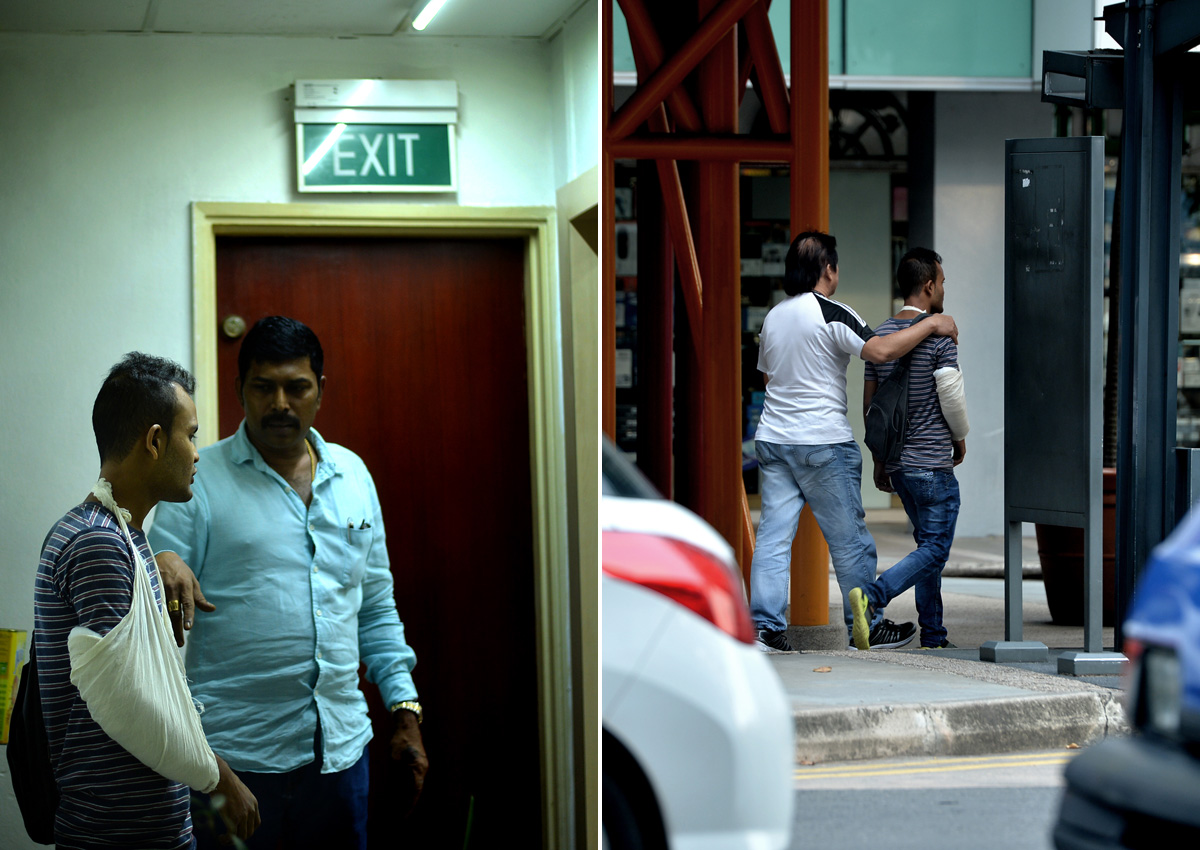
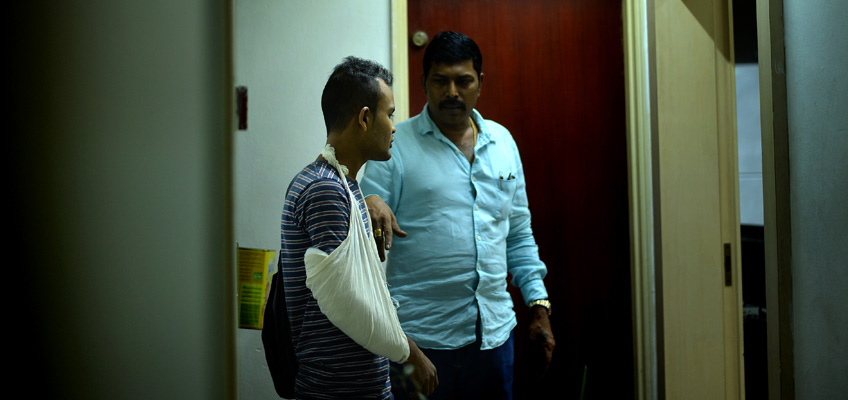
Once, a worker stabbed himself at the airport to extend his stay here, recalls Mr Ravinthiran.
Another time, a worker leapt out of a moving car while his agent was driving to the airport.
Both required medical attention but were eventually repatriated.
A taste of life in an ‘HDB-style’ dorm for workers
Click on thumbnail to view photos. Source:
The Straits Times






















BAD REPUTATION
While he believes that such a service is essential here, he is aware of the bad reputation of the “repatriation market”, with some migrant worker advocacy groups here accusing agents of thuggery and violence.
Says Mr Ravinthiran: “I blame some companies that mislead workers who refuse to be repatriated. They tell the workers that they will hire ‘gangsters’ to change their minds.”
When asked about the accusations by some groups here that his crew sometimes gets physical with foreign workers, Mr Ravinthiran claims that they do not use any violence or force.
If a worker attempts to flee, repatriation agents will not fight him or force him into submission, he says.
Mr Ravinthiran insists: “We simply hand the case over to the authorities.”
According to him, his agents need to build a rapport with the worker and explain the situation and the consequences of overstaying in Singapore without a valid permit, which is a crime.
“Even if we take them to the airport, they might still choose not to board the plane (since the agents don’t follow them past immigration). One worker actually stayed in the transit area for days after missing his flight.”
He is aware of the many issues, such as non-payment of salaries or work injury claims, between foreign workers and their former employers.
In such cases, he has the right to reject jobs from such employers, or refer individual cases to the Manpower Ministry or the police.
“If there are any disputes, we go to the authorities and listen to them before we repatriate the workers. We do so only if the workers do not have any valid grounds to remain in Singapore,” he says.
And he adds: “I cannot be the one to decide who is right and who is wrong. That is not our job to decide.”
SECRETS OF THE TRADE
1. Keep the workers in the loop. It is important to explain to them why they are being sent home, as they may not fully understand the reasons for their repatriation.
2. Some workers will scold you or start fights with you. Be patient and know that the police are on hand to help out.
3. Be well-connected with the foreign worker communities here. It is easier to gain rapport with a worker if you know his friend.
A long walk of shame for these foreign workers
Losing your job is probably one of the most stressful situations you could face in your life.
It can also be humiliating.
Remember the walk of shame often portrayed in movies when someone gets fired and security guards escort the person out as he holds his cardboard box of personal things?
When foreign workers get repatriated, they, too, get their walk of shame.
The difference is that foreign workers can’t simply walk out of a building.
Their walk of shame lasts for six to eight hours as they pack their things and leave the country under the close watch of repatriation agents.
While I cannot say much about the hospitality of Mr Ravinthiran and his agents, it cannot be an easy feeling to be watched over.
Not to mention the looming doom of financial ruin, as many foreign workers who come to Singapore have paid dearly in advance to employment agencies in their home countries, with fees ranging from $8,000 to $20,000.
When we walked into Mr Ravinthiran’s office two weeks ago, we saw a Bangladeshi worker sobbing silently to himself.
He was to be repatriated that day due to a salary dispute with his former employer that led to his work permit being cancelled.
Few things are as heartrending as seeing desperation drive a grown man to tears.
In this worker’s case, he claimed he had paid $9,000 to the agent, after borrowing the sum from his family.
Optimistic that he had a future in Singapore, he thought he would be able to earn it all back.
NOT ENOUGH
But he claimed that in the six months he was here, he earned only around $5,000 – not enough to cover his losses.
“I don’t know what to do when I go home,” he tells me.
If workers don’t earn enough while they are here, they face immense financial pressures when they get home.
Add to that the humiliation of being “escorted” out of the country by Mr Ravinthiran’s agents, and it is no wonder that workers who are being repatriated do their utmost to make his job difficult.
This article was first published on May 8, 2016.
Get The New Paper for more stories.
Image:
Publication Date:
Sunday, May 8, 2016 – 21:00
Keywords:
Send to mobile app:
Source:
Rotator Image:
Story Type:
Others


