Home Blog Page 3947

Vets claim horse was in bad shape, but stable says it was not in pain

A 17-year-old horse was in such a bad condition that three vets – including a former professor in equine medicine – believed it should have been put down.

Sharpy had dead or rotting tissue on its right lower hind leg and was unable to walk. It had also been given inadequate food, water and bedding, the vets told a district court.

However, Gallop Stable’s operations director Thanabalan A. Rengasamy yesterday denied the mare had severe wounds – and insisted it had not been deprived of care, or suffered any pain.

Testifying as the first witness for Gallop on the third day of its trial on a charge of animal cruelty at the State Courts, Mr Thanabalan claimed the dead tissue was scarring caused by an inflammation of Sharpy’s lymphatic system.

Mr Thanabalan said he was first told it had swelling in its hind legs by his company’s Pasir Ris ranch manager in May 2013. Thinking it to be a relapse of lymphangitis, based on photos he saw, he advised that Sharpy be made to walk.

But by May 15, pus was oozing out of sores on its legs, and Mr Thanabalan asked the manager to call a vet.

That was also the day that an Agri-Food and Veterinary Authority (AVA) vet, on an unrelated visit to the ranch, saw Sharpy lying down with flies in its tearing eyes.

Its condition deteriorated further over the next few weeks, before improving.

The charge the company faces is for failing to provide adequate veterinary attention to the horse on or before May 15, 2013.

By the time a private vet saw Sharpy on May 16, it had slipped and fallen in its stable, causing further wounds. However, Mr Thanabalan claimed it had been adequately protected by rubber matting on the stable ground, with wood shavings sprinkled on top.

Mr Thanabalan denied the claims of the vets who testified for the prosecution that Sharpy was unable to stand on its own due to leg wounds, and said it could get up on its own and walk without any problems. He also denied that it was dehydrated or underfed.

Mr Thanabalan told the court that animal cruelty went against the nature of his company, which has some 85 retired race horses.

They would all have been put down, had his company not taken them in.

He also said his company would not euthanise a horse “unless there’s no way the horse would recover and get well”.

But when Deputy Public Prosecutor (DPP) Marshall Lim showed him a statement he had made to the AVA, he admitted suggesting to Gallop Stable’s owners that three horses be put down because it was “not cost effective” to keep them.

One horse was found unsuitable for riding lessons due to having a hollow hoof and flat toe.

“At the end of the day, we still have to look at running a business,” he said.

Mr Thanabalan, however, disagreed with DPP Lim’s suggestion that the reason his company spent time, effort and money on Sharpy’s recovery was that it was already under scrutiny from the AVA.

The court yesterday also heard that Gallop Stable lost its accreditation with the British Horse Society in 2013 because the latter found that the company’s horses and ponies were being kept in unsatisfactory conditions.

DPP Lim submitted to the court a letter from the society to the AVA in support of this, although the contents of the letter were not read out in court.

Mr Thanabalan said he did not know of anyone from the society visiting the company’s ranches.

If guilty of cruelty, Gallop Stable faces a maximum fine of $10,000.

Sharpy, now aged 20, is still with Gallop Stable.

The trial will resume at a later date.


This article was first published on May 14, 2016.
Get a copy of The Straits Times or go to straitstimes.com for more stories.


Image: 
Category: 
Publication Date: 
Saturday, May 14, 2016 – 15:00
Send to mobile app: 
Source: 


Story Type: 
Others

Source link

Zika patient transferred to CDC at Tan Tock Seng Hospital this morning

SINGAPORE – The Republic’s first Zika patient is recovering well, and has been transferred to the Communicable Diseases Centre at Tan Tock Seng Hospital, the Ministry of Health (MOH) said on Saturday (May 14).
The 48-year-old Permanent Resident could take…

Source link

Chinese consortium prepares for Singapore-Malaysia rail bidding

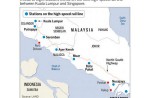
A Chinese consortium is preparing to bid for the high-speed project linking Malaysia’s Capital Kuala Lumpur and Singapore, a source with China Communications Construction Group said on Friday.

The source in Beijing-based CCCG, a major construction enterprise of transportation infrastructure and dredging projects, said that consortium members are discussing details on how to carry out the project.

Sheng Guangzu, general manager of the China Railway Corp, the leading company in the consortium, said it would also involve another 5 companies including China Harbor Engineering Company Ltd. The subsidiary of CCCG will start a three-day visit starting from May 23 to Malaysia to push for the project.

In March China Railway announced it was investing $2 billion to build a regional centre in Bandar, Malaysia, near the proposed site for the terminal of the line, to help promote local railway and road construction projects.

The 350-kilometer railway line, the first high-speed rail project in Southeast Asia, has attracted not only Chinese companies but also Japan’s Kawasaki Heavy Industries, Germany’s Siemens and French company Alstom, all of which said they would bid for the project.

When constructed, the entire trip will take two hours with the train travelling at an average of about 330 km/h.

Experts said on Friday that the Chinese consortium would have an upper hand in bidding for the project especially after China Railway’s acquisition of stakes in Bandar Malaysia, a transit hub, and the terminal of the proposed project.

Malaysian state fund 1Malaysia Development Bhd, or 1MDB, agreed to sell 60 per cent of its property project in Bandar Malaysia to China Railway to ease its debt burden earlier this year.

Liang Haoguang, head of the Capital Development Institute of China, said that China’s railway and construction companies also have an edge over its rivals in terms of technologies and project costs.

“China’s rich experience in large construction projects will help win the rail project, because normally it takes relatively less for Chinese companies to finish the project, and financing is also easier for the cash-rich Chinese companies,” he said.

China is home to the world’s longest and most modern high-speed rail system with over 19,000 km of track.

It has strengthen regional co-operation with construction of many industrial clusters worth billions of dollars in Southeast Asian countries including Thailand, Malaysia and Indonesia.

Liang said that the closer ties among those countries will also pave the way for the bidding, with those ties helping gain trust from local companies.

Image: 
Publication Date: 
Saturday, May 14, 2016 – 13:38
Send to mobile app: 
Source: 


Story Type: 
Others

Source link

New therapeutic garden opens in HortPark

Located at Hyderabad Road, this is the first time a therapeutic garden has been developed in a public park in Singapore. 

Source link

Cheers for move to keep wildlife from becoming roadkill

Wildlife experts and animal welfare groups have applauded proposed changes that will give more creatures in the animal kingdom protection on Singapore’s roads.

The proposed changes to the Road Traffic Act, made in Parliament on Monday, will widen a 53-year-old definition of “animals” – from mainly farm creatures to include cats and wildlife.

Currently, the Act requires only motorists who run over “horses, cattle, a**, mule, sheep, pig, goat or dogs” to stop to help them, or risk being jailed for up to a year or fined up to $3,000. With hundreds of animals, including rare species, ending up as roadkill here each year, animal welfare groups have lobbied for the law to be changed.

“Wild animals in Singapore will continue to explore new habitats,” said Ms Anbarasi Boopal, deputy chief executive of the Animal Concerns Research and Education Society (Acres). “We should take this into consideration as we embark on new developments and make necessary policy amendments.”

She added: “While the habitats of critically endangered species like the Sunda pangolin are protected here, their major threat is becoming roadkill.”

The National Environment Agency had 2,258 pieces of feedback last year on dead animals sighted, whether killed on the roads or otherwise. This is up from 2,198 in 2014.

Animals run over by drivers in recent times include the plantain squirrel, long-tailed macaque, wild pig and deer. On May 8, an otter was almost knocked down in East Coast Park Service Road.

“If you hit an animal, it should be common sense to stop and see if it is alive,” said Nee Soon GRC MP Louis Ng, who is also Acres’ chief executive. He said animals left to die often face a slow and painful death, while those that are rescued have the potential to recover.

Mr Bernard Tay, chairman of the Singapore Road Safety Council, said the amended law can encourage drivers to be more alert, but added: “It is inevitable that some drivers will find it inconvenient to stop.”

Motorists interviewed admitted that they were previously unaware of the Road Traffic Act’s section on animals, or the proposed changes.

Housewife Alice Loo Lay See, 54, said: “The proposed modifications are good, but I think it should be applied to only some animals. I would probably not stop for a rat.”

Engineer Ho Pwee Kim, 59, added: “On the highway it may be dangerous to stop.”

Dr Shawn Lum, president of Nature Society (Singapore), said that while it was “a good idea to review aspects of the law”, the changes should be practical.

Dr Lum suggested potential measures to complement the Road Traffic Act, including reducing speed limits for vehicles near nature reserves and identifying potential hot spots for collisions with wildlife.

Ms Mary-Ruth Low, a research assistant studying the spatial ecology of reptiles at the National University of Singapore, believes an amended definition of “animal” will have a significant impact on mindsets.

“Some people think of snakes as pests, not wildlife. They forget that these animals are part of the nature reserve.”


This article was first published on May 14, 2016.
Get a copy of The Straits Times or go to straitstimes.com for more stories.

Image: 
Category: 
Publication Date: 
Saturday, May 14, 2016 – 15:00
Send to mobile app: 
Source: 


Story Type: 
Others

Source link

Poor hygiene to blame for mass food poisoning case

Poor hygiene practices were the likely cause of a mass food-poisoning incident in February, an investigation by the authorities has found.

Some 231 people fell ill after eating food supplied by Kuisine Catering over three days in February, the National Environment Agency (NEA), Ministry of Health and Agri-Food and Veterinary Authority said in a joint statement. Five of those affected needed in-patient medical treatment.

The caterer’s food was eaten at events including a Chinese New Year gathering and a birthday party between Feb 12 and 14.

The outbreak was caused by a food-borne pathogen, Salmonella enteritidis, which is normally linked to raw poultry products, the agencies said.

The bacterium was “most likely introduced into ready-to-consume food items as a result of poor personal and food hygiene practices”.

Victims suffered from after-effects such as vomiting, diarrhoea and fever, according to media reports. Some even had to be put on a drip. All patients have since recovered.

Upstream food suppliers were not found to be responsible. The agencies investigated firms which supplied food items to the caterer and found no safety lapses.

Before the end of the investigations, Kuisine Catering told the NEA that it would cease business and the NEA cancelled its licence.

After being notified of the incidents on Feb 15, the authorities immediately inspected the caterer’s premises. The NEA instructed it to suspend its operations on Feb 18 and to discard all raw ingredients and condiments. It then instructed the firm to thoroughly clean and sanitise its premises and transport vehicles, and to get a pest control operator to inspect its premises.

Food handlers working at the suspended premises were required to re-attend and pass the Basic Food Hygiene Course.

The NEA also issued warnings for lapses, including expired products and a failure to maintain a temperature-monitoring record of freezers and chillers.

When The Straits Times visited Kuisine Catering’s premises at Jurong Food Hub yesterday, the door to the unit was shuttered and there was no signboard bearing the company’s name to be seen.

Members of the public who encounter food establishments with poor hygiene practices should not patronise such outlets, the agencies added.

Anyone encountering them should call the 24-hour NEA call centre on 1800-225-5632 to provide details for investigation.

Ms Leow Manling, 32, said her relatives and husband suffered ailments like diarrhoea, fever and flu for three to seven days after eating the caterer’s food at a Chinese New Year dinner.

Dishes included chicken, sweet- and-sour fish fillet and beancurd with mushrooms.

Although she was not affected, she said: “Some had to see the doctor a few times. An elderly relative was warded for a few days. My mum had to go to the hospital for a drip. It was quite traumatising for everybody.”

Ms Leow, a healthcare worker at a hospital, added that she hoped the firm would pay attention to hygiene practices if it started a new business: “The workers have to be very conscious of hygiene practices when handling food.”


This article was first published on May 14, 2016.
Get a copy of The Straits Times or go to straitstimes.com for more stories.

Image: 
Category: 
Publication Date: 
Saturday, May 14, 2016 – 14:00
Send to mobile app: 
Source: 


Story Type: 
Others

Source link

Cambodia police crack down on foreign paedophiles

Siem Reap, Cambodia – Using tip-offs, stakeouts and stealth, civilian investigators are playing a crucial role in helping Cambodian police track down foreign paedophiles, as they battle to spread the message that the impoverished nation will no longer be a playground for abusers.

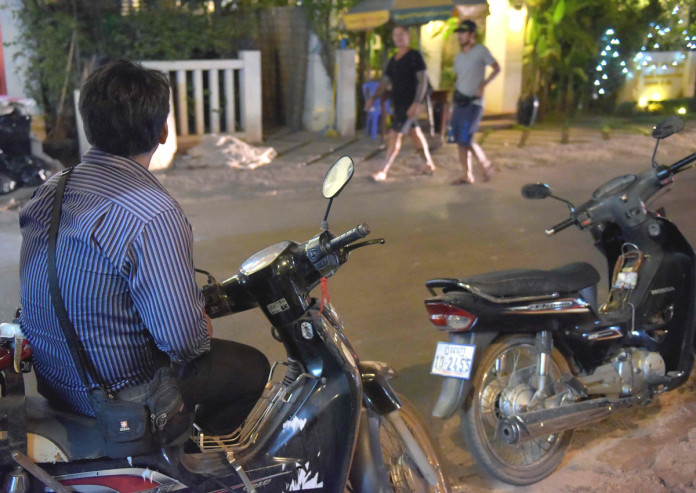
Down a dark side-street off Siem Reap’s boisterous red light district, a Cambodian man sits in the driving seat of an auto-rickshaw, a cigarette hanging from his lips, his eyes fixed on a bar across the road.

But he is not touting for passengers. He is an undercover informant on a stakeout, a concealed notepad and camera the only giveaway of his trade.

His target for the night is a Western man who has raised suspicions because of his behaviour with children, triggering an around-the-clock surveillance operation.

“When there is a suspect, we send our agents down to look at the area, keep an eye out for movement and suspicious activity,” Meas, a 38-year-old investigator who runs a network of civilian informants in the central Cambodian city, told AFP.

Southeast Asia has long been a global epicentre for child sex abuse by both Western and regional tourists.

A landmark study released Thursday by a coalition of nearly 70 child protection agencies looking at child sex abuse by tourists around the world says that while some successes have been made in Southeast Asia, it remains an “enduring phenomenon that has plagued the region for several decades”.

Cambodia has transformed itself from a war ravaged nation into one of Asia’s fastest growing economies and an increasingly popular tourist destination.

But it remains poor and has an unenviable reputation as a sex tourism hotspot, including for paedophiles drawn to a country where children can still be bought and all too often, police also have a price.

Cambodia’s grim reputation as a child sex hub caught global attention when British glam rocker and serial paedophile Gary Glitter was eventually deported in 2002 after years living in the region in impunity.

Enforcement has significantly improved since then, but there are still wide gaps in the safety net and civilians supplement the policing.

Meas, who asked AFP to use a pseudonym, is an investigator with Action Pour Les Enfants (APLE), a charity which specialises in catching paedophiles and caring for their victims.

The year after Glitter was deported, there were just eight paedophile arrests according to government data, but no recent detailed figures have been released.

Last year, APLE’s own investigation led to 22 arrests and the charity says perpetrators and accomplices tend to be evenly split between locals and foreigners.

Meas said he has personally overseen investigations that have busted around 60 people. But investigators know they cannot rest on their laurels.

“While the situation in Cambodia is getting better each year, the fight is not nearly over,” Khoem Vando, APLE’s deputy director of field operations, told AFP.

“Foreign paedophiles are still targeting Cambodia, but their modus operandi has changed,” he said.

Technology is creating new headaches for those trying to stop the abuse as sex tourists can better prepare their journey in advance.

One Thailand-based investigator told AFP that encrypted chat rooms have long allowed abusers to share images and advice.

But now websites such as AirBnB, which allow people to privately rent accommodation, and video messenger apps like Skype are making it possible to locate both victims and privacy before abusers even arrive land in a country.

“Yes that’s happening,” said Meas, “Technology helps them. We have to increase our expertise in this field.”

Over the years Western embassies have ramped up co-operation with authorities in Southeast Asia in a bid to stop their nationals from abusing children.

Most European and North American embassies in Bangkok, for example, have police officers stationed in them dedicated to anti-paedophile work.

But as another foreign Bangkok investigator, who asked not to be named because they work with Thai police, commented, there has been much less co-operation from Asian countries whose nationals visit Cambodia in greater numbers than Westerners.

“There’s been decent co-operation over recent years with some embassies,” the investigator said. “But I can’t say they same for the Japanese, Chinese and South Koreans. And they have a much bigger footprint in the region.”

Voluntourism and orphanages are another risk area, as they give paedophiles a seemingly innocuous route to their victims instead of approaching them on the street.

A former director of APLE was himself jailed earlier this year for abusing 11 children under his care at a Phnom Penh orphanage he ran after leaving the charity in 2005.

He insists he was set up by APLE investigators, a charge the charity denies and the court rejected.

Some blogs in Cambodia, mostly written by foreign expats, have accused APLE of overzealously targeting foreign men who may be innocent and simply trying to help poor locals.

But Meas rejects this. Walking through a Siem Reap park that is a known hotspot, he says legal cases are only brought after lengthy investigations and once compelling evidence has been compiled.

On a bench in the distance a caucasian man is playing a ukelele to two Cambodian children.

“It’s difficult,” he said. “He could be a completely innocent and a good person. But that’s the kind of interaction we must look out for and follow up.”

And with that he calls an agent on his phone.

Image: 
Category: 
Blurb: 
Publication Date: 
Saturday, May 14, 2016 – 13:24
Send to mobile app: 
Source: 


Story Type: 
Others

Source link

Man who posed as Wong Kan Seng's brother to cheat victims of $520,000 jailed

SINGAPORE – A self-employed man who made his victims believe that he was the brother of then Deputy Prime Minister (DPM) Wong Kan Seng was sentenced to 4½ years’ jail on Friday (May 13) for cheating them of $520,000.

Undischarged bankrupt Wong Kok Keong, alias Wong Kock Khiang, 63, is out on $30,000 bail pending his appeal.

He had admitted to three charges, with six others, mostly under the Bankruptcy Act, taken into consideration.

He cheated three directors of Manor Construction in 2007 by deceiving them into believing that he was DPM Wong’s brother, and that a sum of $180,000 representing 20 per cent of an option to purchase a property at Yung Ho Road was payable.

He deceived the company of $240,000 over another business deal.

He has since returned $209,000 to Manor, leaving an outstanding balance of $211,000.

In 2011, he cheated Mr Chiam Teck Hwa, 48, by making him believe that he was DPM Wong’s brother and saying that he would invest the victim’s $50,000 into a company, along with his own money.

Wong has paid Mr Chiam back, as well as to another victim, Mr Tan Teik Chin, but this charge was considered.

In Mr Chiam’s case, Wong claimed he had a project to set up a company to run dialysis centre units in Parkway Group Hospital and in Marine Parade.

After Mr Chiam had given a cheque of $50,000 to Wong, he found out through a search there was no record of the company, Grace Asset Management. He also found out that Wong was not related to DPM Wong and asked for the money back.

Deputy Public Prosecutor Hon Yi had said the amounts involved were substantial, and that Wong was motivated by personal profit.

Calling him a serial cheat, DPP Hon said Wong resurrected his old methods and perpetrated the same scam on the victims. In 2003, Wong was jailed for 53 months for cheating, dishonest misappropriation and obtaining of credit as a bankrupt.

Wong’s lawyer Edmond Pereira said his client’s ill health in recent years has resulted in increasing medical costs. His finances were crippled because his businesses had collapsed due to the adverse publicity. He said the father of three is remorseful and had co-operated with the authorities.


This article was first published on May 13, 2016.
Get a copy of The Straits Times or go to straitstimes.com for more stories.

Image: 
Publication Date: 
Saturday, May 14, 2016 – 13:09
Keywords: 
Send to mobile app: 
Source: 


Rotator Headline: 
Man who posed as Wong Kan Seng's brother to cheat victims of $520,000 jailed 4 1/2 years
Story Type: 
Others

Source link

Ferdinand Marcos fighting for future in Philippines' vice president race

Manila – The son and namesake of late Philippine dictator Ferdinand Marcos was fighting for his political future Friday after a cliffhanger vice presidential election contest against a novice politician.

A win for Ferdinand Marcos Jnr, 58, would have been the family’s biggest political victory since its humiliating downfall in 1986 after a “People Power” uprising ended 20 years of human rights abuses, election fraud and the plunder of state coffers.

It was also widely seen as part of a long-term strategy to become president.

But the count for Monday’s vote has dragged and on Friday Marcos (in photo below) was 217,000 votes behind Leni Robredo, a widow thrust into politics after her well-regarded interior-minister husband died in a 2012 plane crash.

With a million votes left to count Marcos Jnr has refused to concede defeat, while accusing President Benigno Aquino’s government of manipulating the results for Robredo.

“If you add up all the votes that had not been transmitted, it would show that I won by a large margin,” Marcos, an incumbent senator, said this week as his near-one-million lead early in the count evaporated.

Late Thursday he urged the state election body Commission on Elections to investigate the alleged “tampering” of a computer software that received data for the count in Manila.

However the poll body rejected allegations of cheating, saying the fix did not in any way change the result and was meant to add a Spanish letter for some candidates’ names.

Alan Cayetano, who was running third in the race, also dismissed the allegations on Thursday as he conceded victory to Robredo.

Nearly 96 per cent of the votes have been counted.

The remaining one more million have not been counted yet because of a delay in tallying those votes or because some polling booths did not operate on Monday because of violence or technical glitches. Those 2,000 precincts will re-stage their elections on Saturday.


Anti-establishment firebrand Rodrigo Duterte won the presidential vote by a landslide.

The Marcos family fled to US exile after the “People Power” revolution ended the dictator’s one-man rule, in which thousands of critics were thrown in prison.

But his family has made a surprising political comeback, rebuilding its base in his northern bailiwick of Ilocos Norte province.

In Monday’s vote the dictator’s widow, Imelda Marcos (above), swept to a third term at the House of Representatives representing Ilocos Norte.

Her daughter, Imee Marcos, was also elected as provincial governor there for the third time.

Marcos Jnr was elected to the Senate in 2010 and his term runs out on June 30.

Image: 
Category: 
Publication Date: 
Saturday, May 14, 2016 – 12:58
Send to mobile app: 
Source: 


Rotator Image: 
Story Type: 
Others

Source link

FairPrice 1-Day Special Offers (Brand’s, Nescafe Gold, Kleenex & More) on 14 May 2016 |…

Fairprice 1-day offers, valid today only (14 May)

FairPrice 1-Day Special Offers (Brand’s, Nescafe Gold, Kleenex & More) on 14 May 2016 |…

Stretch your dollar and save with NTUC Fairprice’s one-day offers valid only on 14 May featuring Milo, A1 Instant Noodles Abalone, PASAR Norway Salmon Fillet, NESCAFE Gold, BRAND’S Essence Of Chicken, USA Strawberries and more.

Source