 SINGAPORE – Sales of new private homes slipped in April despite more units being launched, with transactions falling 11.6 per cent after a bumper month in March.
Excluding executive condominiums (ECs), developers sold 745 units last month, compared to the 843…
Source link
New private home sales fall 11.6% from March
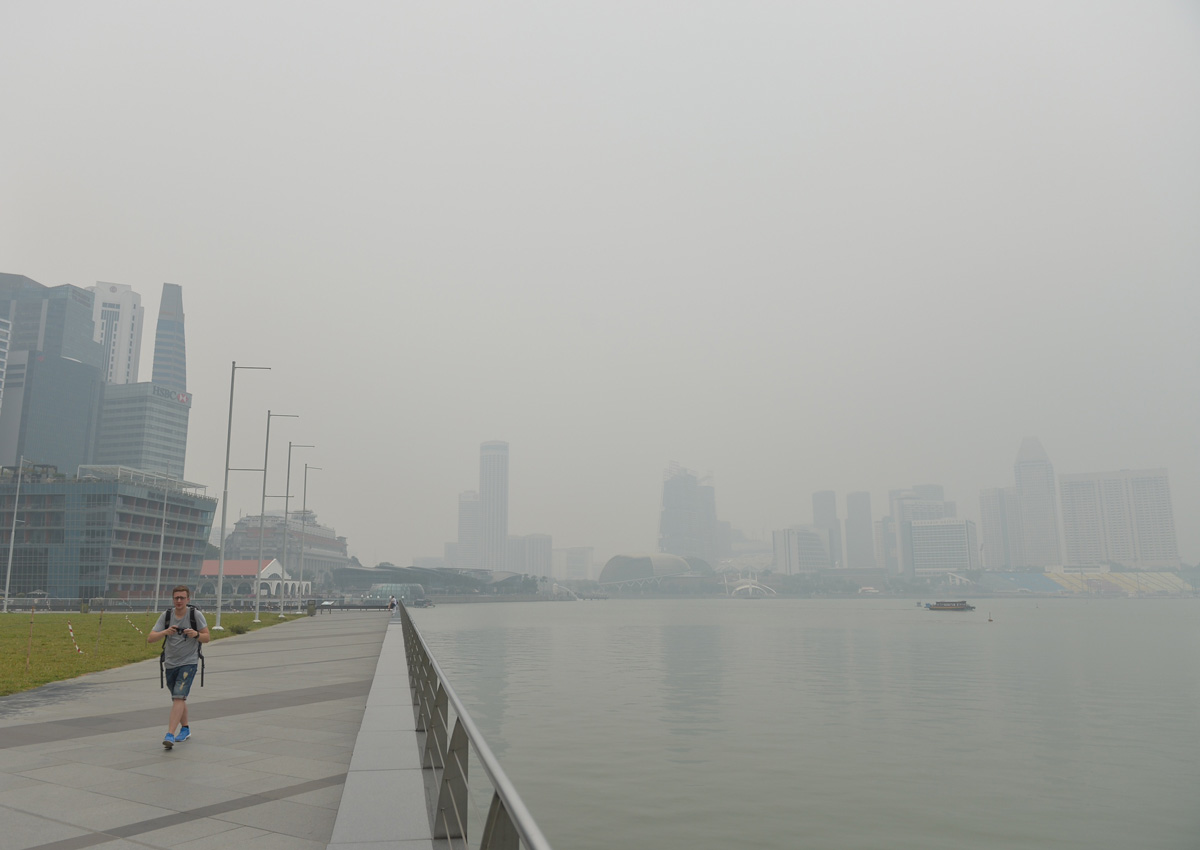
Indonesia reviewing collaborations with Singapore over haze
Indonesia is reviewing existing and proposed bilateral collaborations with Singapore on haze and environment issues, a senior Indonesian official has said.
The confirmation came after Environment and Forestry Minister Siti Nurbaya Bakar told an independent environmental news portal, foresthints.news, that some current collaborations would be terminated while upcoming ones would undergo a “substantial review process”.
“This is a substantial step that needs to be taken. We have a set of clear and measured criteria in this review process,” she was quoted as saying in last Saturday’s report.
Her ministry’s director-general of law enforcement Rasio Ridho Sani told The Straits Times yesterday that an assessment by the ministry’s senior officials is under way.
“Yes, we are reviewing our bilateral co-operation with Singapore related to many issues, not only forests and forest fires but also other environmental aspects,” he said.
Ms Siti said the review is her ministry’s initiative and “not a joint process with Singapore”.
“We are going to only inform Singapore, at a later stage, of the existing bilateral collaborations that are to be terminated as well as those planned collaborations which will not go ahead,” she said.
Singapore’s Ministry of the Environment and Water Resources “has not received any official information from Indonesia” and, therefore, “did not wish to comment”, a ministry spokesman said yesterday, adding that Singapore will continue to play its role in accordance with its laws, the ASEAN Agreement on Transboundary Haze Pollution and the principles of international law.
Ms Siti’s comments came after Singapore’s National Environment Agency (NEA) said last Wednesday that it had obtained a court warrant against an Indonesian company director who failed to turn up for an interview with the authorities in Singapore despite being served a legal notice to do so.
The director, whose name and company were not disclosed, was expected to explain his firm’s measures to tackle fires on its land and prevent a repeat of last year’s haze.
Last Thursday, an Indonesian Foreign Ministry spokesman said a “strong protest” had been lodged with Singapore over “some cases where Indonesian businessmen were interrogated”. But Singapore’s Foreign Ministry said it had not received any representations and added that it found the spokesman’s remarks “puzzling”.
Errant pulp and paper companies have been blamed for wildfires in Indonesia that led to choking haze in the region last year. In line with the Transboundary Haze Pollution Act 2014, the NEA issued notices to six Indonesia- based firms. Two responded.
aarlina@sph.com.sg

This article was first published on May 16, 2016.
Get a copy of The Straits Times or go to straitstimes.com for more stories.
Image:
Publication Date:
Monday, May 16, 2016 – 14:00
Keywords:
Send to mobile app:
Source:
Story Type:
Others
New programme for PMETs to switch to wafer fab industry launched
The professional conversion programme will allow professionals, managers, executives and technicians to acquire skills required in the wafer fabrication industry and make a mid-career switch.
Source link
S'pore army boosts Queensland economy with $2.24b investment
Australia’s second-largest state, Queensland, has seen its fortunes wane and jobs dry up since the country’s mining boom faded.
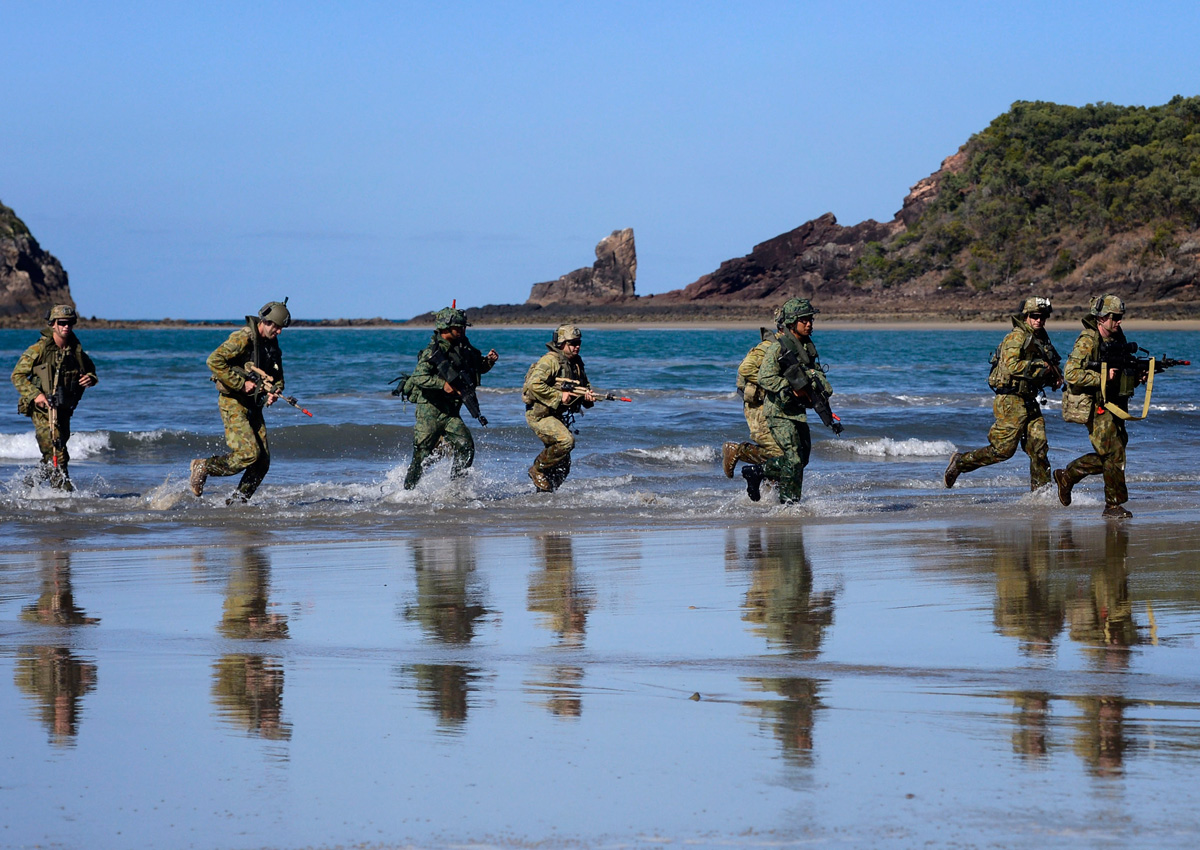
But its future is looking bright again with the announcement of Singapore’s strategic pact with Australia, which will see an influx of 14,000 Singapore troops each year and about A$2.25 billion (S$2.24 billion) worth of investment.
The deal, lasting 25 years, will grant access to Singapore’s soldiers to train for up to 18 weeks a year – up from six weeks currently – and will increase the number who can train from 6,000 to 18,000.
Singapore has agreed to fund the expansion and upgrade of the training facilities near the city of Townsville and at Shoalwater Bay, a vast 51-year-old training area near the city of Rockhampton.
Singapore has trained in the area since 1990 but will expand the site to about 10 times the size of the Lion City.
In Rockhampton, which has a population of about 85,000, the residents have long grown used to the area’s annual influx of Singapore troops.
But the plan to more than double the annual numbers of military visitors has been seen as a welcome opportunity for the region to move beyond the mining years.
The president of the local Capricornia Chamber of Commerce, Mr Peter Fraser, said the deal came just as the area was facing a bleak future.
“Our region has been hit dramatically by the mining downturn,” he told The Straits Times.
“There was also the drought which has decimated our beef industry. All of a sudden this came – it is a massive benefit,” he said.
Australia’s government said the plan is to spend about A$1 billion each on the Townsville and Shoalwater Bay training areas, including on building new training and live-fire combat zones and on upgrading roads, airfields and other facilities.
Australia will be allowed to use the upgraded facilities when they are not being used by Singapore.
Singapore troops are due to train in Queensland twice a year – instead of annually – with exercises from February to May and August to November.
“It is well known in Rockhampton that the Singapore army comes through,” said Mr Fraser.
“We have a lot of restaurants and retail shops that get a huge uplift. It is an enormous opportunity for this to get bigger, to have the Singaporeans coming through and hopefully spending time and have their families spending time here – and hopefully spending money.”
Townsville Enterprise, which seeks to attract investment in the region, said the announcement was welcome after fluctuations in the mining sector and the recent loss of about 550 jobs at a troubled nickel refinery in the area owned by Mr Clive Palmer, a businessman and MP.
“The city is focused on putting the Palmer event behind it and looks forward to working with Defence to ensure that this opportunity succeeds and a long partnership grows between the two countries,” Mr Kevin Gill, Townsville Enterprise’s chairman, told The Australian.
The Singapore-Australia Comprehensive Strategic Partnership, announced on May 6, also comes at a handy time for Australia’s ruling coalition. The announcement came two days before Prime Minister Malcolm Turnbull called an election for July 2, prompting speculation that it was deliberately timed to shore up votes in battleground seats in the state.
Asked about this, Mr Turnbull noted that the deal was announced in both countries.
Proclaiming the benefits of the deal, the MP for Capricornia, Ms Michelle Landry, said Singapore already spent A$35 million a year on training in the area but the new arrangements were “a once- in-a-lifetime boost (by) a foreign country”.
But the Queensland state MP for Rockhampton, Mr Bill Byrne, was more cautious, warning that the expansion of the Shoalwater Bay training facility could potentially pose environmental risks.
He told ABC News he was optimistic about the deal, but added there were a “very large number of questions that need to be answered”.
Ms Landry said the deal would ensure the area remained “clean and pristine” and that any damage or mess would be fixed immediately.
jonathanmpearlman@gmail.com
Image:
Publication Date:
Monday, May 16, 2016 – 14:00
Keywords:
Send to mobile app:
Source:
Story Type:
Others
Show of respect for Heng at harmony event
Finance Minister Heng Swee Keat was due to launch a project to promote harmony yesterday morning.
But when organiser Thye Hua Kwan Moral Society learnt that he had suffered a stroke last Thursday, it decided not to invite another guest of honour.
Instead, the voluntary welfare organisation set up a guest book for well-wishers to pen messages to Mr Heng, who remains in stable condition at Tan Tock Seng Hospital.
“We want to show that we respect our guest of honour. It is not right that just because Mr Heng is now unable to come, we get another person to replace him,” said Mr Lee Kim Siang, the society’s chairman.
“Mr Heng has a very heavy schedule, yet he agreed to come the moment we invited him… He is very good and dedicated,” he added.
Mr Lee said the book will be delivered to the Finance Ministry today, together with a miniature model of a roving Harmony Truck launched at the event at the Singapore Flyer.
The actual truck contains information about the culture and beliefs of the different groups in Singapore, stories of new citizens and foreigners, as well as the racial riots here in the 1960s, and is part of an ongoing effort by the society to educate the public about the importance of racial, religious and social harmony.
It will travel to parks and foreign worker dormitories, among others.
The truck will also be at Bishan- Ang Mo Kio Park on June 19 for a family breakfast event featuring food from different local cultures. On June 25, it will be at the Youth Park in Somerset for a supper event to reach out to young people and help them understand the importance of racial and religious harmony.
Yesterday, Mr Lee also led more than 300 guests at the event in a silent prayer for Mr Heng’s recovery.
In the guest book, he wished Mr Heng a full and speedy recovery, while Sinda chief executive Kumaran Barathan wrote: “Have a speedy recovery. God bless.”
Separately, Communications and Information Minister Yaacob Ibrahim told reporters at a Mendaki event on education issues that Mr Heng is under constant observation.
“We need to give space to the family but, most importantly, let us continue to pray for his recovery because he’s a very important part of the Cabinet. He’s a very important part of our Government in charting the future for Singapore,” he said.
Home Affairs and Law Minister K. Shanmugam told reporters at a HomeTeamNS run that he was also struck by the professionalism of the Singapore Civil Defence Force (SCDF) team that attended to Mr Heng when he collapsed in the Istana’s Cabinet room last week. Prime Minister Lee Hsien Loong had, on Saturday, written to SCDF Commissioner Eric Yap to commend the four officers involved.
Mr Shanmugam said yesterday: “We were standing in the room, PM was there, senior ministers were there, the entire Cabinet was there.
“The SCDF officers – very young people, led by a lady – came in. They ignored all of us, they focused immediately on the patient and it told me that they were professional, they have been well-trained.
“It didn’t matter who the patient was. In fact, they didn’t know who the patient was until they came in.”
Mr Shanmugam noted that the officers even questioned Minister of State Janil Puthucheary, a trained paediatrician, who was already helping to resuscitate Mr Heng, because they felt what he did was different from what they had been taught.
“He said it was right of them to question him. He then explained to them why he was doing it differently because of the circumstances,” Mr Shanmugam added.
“Certainly, they didn’t show any signs of any additional pressure. That is testimony to the professionalism and the training that the SCDF officers get,” he said.
Heng Swee Keat in ICU after having a stroke
Click on thumbnail to view photos. Source:
The Straits Times, The New Paper, Facebook screengrabs

















This article was first published on May 16, 2016.
Get a copy of The Straits Times or go to straitstimes.com for more stories.
Image:

Publication Date:
Monday, May 16, 2016 – 15:00
Keywords:
Send to mobile app:
Source:
Story Type:
Others
WP town council taking steps to fix lapses
Workers’ Party-run Aljunied-Hougang Town Council (AHTC) has taken steps to resolve concerns over related-party transactions and conflicts of interest, a report by auditor KPMG last week showed.
The report comes a month after KPMG flagged the town council’s shortcomings in governance framework and accounting practices.
In its latest report, dated Friday May 13 and released by AHTC on Saturday night, it said work on resolving 15 out of 17 audit points flagged last month is still ongoing.
AHTC chairman Pritam Singh said in a statement that the 15 outstanding audit points “are now subjected to remedial measures” and KPMG is reviewing them.
The town council had submitted the 30-page report to the Housing Board on Saturday, as required by the Court of Appeal. The apex court had directed AHTC to appoint a Big Four accounting firm to establish whether any past payments it made were improper, and ensure it complies with the laws, in the wake of a report by the Auditor-General into the town council’s finances.
HDB told The Straits Times last night that it is reviewing the latest progress report.
“Preliminarily, we note that AHTC has started to introduce some remedial measures to address the audit points previously flagged by the Auditor-General’s Office and AHTC’s auditors in the Town Council’s FY13/14 and FY14/15 financial statements,” an HDB spokesman said.
“However, much work remains to be done as a majority of the audit points (15 out of 17) remain unresolved,” the spokesman added.
KPMG had, in its first report last month, flagged AHTC’s shortcomings in managing related-party transactions. The shortcomings include incomplete disclosure of transactions with the related parties, and waiver of open tenders for services provided by these parties.
In response, the town council has drafted a policy to remedy the incomplete disclosures of transactions with the related parties.
KPMG then reviewed the policy and recommended, among other things, that the document cover a wider range of activities instead of just the tender process, and tighten certain definitions, such as “arm’s- length transaction”.
The town council has submitted its policy on procedures for the calling of tenders and quotations. KPMG said in the latest progress report it is still reviewing the policy, and testing the effectiveness of AHTC’s tender and quotation procedures.
AHTC has also updated its conflict-of-interest policy, which now requires town council staff, including town councillors, to declare any paid and unpaid engagements or employment with external parties, as well as personal financial interests and gifts, KPMG noted.
The policy did not previously cover town councillors.
Other updates include documents defining more clearly the powers of each committee to beef up the town council’s governance framework.
AHTC has also boosted its finance department by hiring a second deputy finance manager and engaging two external consultants.
They are remediating outstanding bookkeeping matters and preparing for the next statutory audit.
In its report last week, KPMG noted that AHTC had transferred a sum of $3,755,044.86 to its Sinking Fund bank accounts on April 29, in time for the January to March 2016 period. KPMG also highlighted a duplicate transfer of $157,141.01 to a Sinking Fund bank account for the October-December 2014 period.
Yesterday, HDB noted that new details had emerged from KPMG’s review on lapses in AHTC internal processes, such as the duplicate Sinking Fund transfer and various weaknesses in internal controls.
“These may have remained unresolved had the court not ordered the TC to appoint auditors to look into its accounts,” it said.
HDB said AHTC must take active and urgent steps to close the gaps, and comply fully with the rules.
“We also expect AHTC to extend its fullest co-operation to the auditors for the other court-ordered checks on whether any past payments were improperly made and ought to be recovered,” it said.
This article was first published on May 16, 2016.
Get a copy of The Straits Times or go to straitstimes.com for more stories.
Image:

Publication Date:
Monday, May 16, 2016 – 14:00
Keywords:
Send to mobile app:
Source:
Story Type:
Others
Philippines' Duterte says communist leader welcome home

Davao, Philippines – The leader of the Philippines’ communist insurgency will be welcome to return home after nearly three decades in exile and participate in peace talks, president-elect Rodrigo Duterte has said.
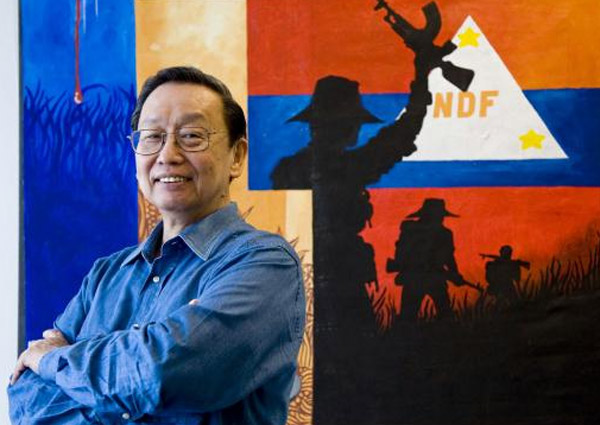
Communist Party of the Philippines founder Jose Maria Sison wrote in a Facebook post last week he hoped to come home following the landslide May 9 election win of Duterte, with whom he has maintained ties while living in the Netherlands.
In his first press conference since it became clear he had won the election, Duterte said late Sunday that Sison’s return to the Philippines would be important in helping to end the rebellion.
The insurgency was one of Asia’s longest and has claimed an estimated 30,000 lives since the 1960s.
“Yes, he is welcome. I am happy with the statement that he is coming home. I would very much want to talk to him about resolving the insurgency problem,” Duterte told reporters in the southern city of Davao where he has ruled as mayor for most of the past two decades.
Click on thumbnail to view photos. Source:
AFP, Reuters


















































Duterte also said communist figures would be considered for cabinet posts.
Sison, now 77, fled to Europe soon after peace talks failed in 1987.
The communists armed wing, the New People’s Army, is believed to have fewer than 4,000 soldiers, down from a peak of 26,000 in the 1980s, according to the military, however it retains support among the deeply poor in the rural Philippines.
Communists killed three soldiers in the central Philippines on Saturday, according to the military, in the first outbreak of deadly violence between the two sides since Duterte’s election win.
Duterte is due to be sworn into office on June 30.
Incumbent President Benigno Aquino revived peace talks soon after taking office in 2010 but shelved them in 2013, accusing the rebels of insincerity in efforts to achieve a political settlement.
The talks got bogged down after the communists demanded the release of scores of their jailed comrades whom they described as “political prisoners”, which the Aquino government rejected.
Duterte, who was Sison’s student at a Manila university in the 1960s, said Sunday he was open to releasing communist prisoners.
Image:
Publication Date:
Monday, May 16, 2016 – 13:26
Keywords:
Send to mobile app:
Source:
Story Type:
Others
Do we expect too much of our ministers and MPs?
On Monday evening, I accompanied a friend to see his Member of Parliament. He had gotten into trouble over a driving issue, and I had suggested he seeks his MP’s help to appeal a decision by the Land Transport Authority.
The Meet-the-People Session (MPS) for his constituency was on Monday, and we made our way down to Jurong West that evening.
Those who have gone to MPS know the process is very much like visiting a busy doctor’s clinic. You get a queue number. You wait for your queue number to be called. Then it’s registration time and you give your particulars. You wait again to be called to see a case worker. Our case worker was a nice, soft-spoken, young woman. She asked some questions earnestly and typed an appeal.
We are told to wait again. There’s Gurmit Singh on television with the game show Don’t Forget To Remember, to entertain constituents waiting their turn. Faster than I’d expected, my friend’s name is called and we are told we can see the MP.
There was a minor mistake in registration, and we were kept waiting a few more minutes. Then Dr Amy Khor came out to greet and welcome us.
She was professional, polite and pleasant. She looked at the LTA penalty and exclaimed at its severity. She called up the case writer’s draft appeal. She asked my friend a few sharp questions on the circumstances. She looked at the details of the correspondence on the issue. And she painstakingly edited the appeal, hammering at the keyboard.
I looked at her from opposite the table of her MP’s office, on which hung photos of events with constituents. I’ve met Dr Khor professionally several times over the years and seen her in action. She is always poised, well-dressed, well-coiffed, with a ready smile.
That evening, her dress was a little rumpled, her make-up a trifle smudged. She still looked well put together, but tired. I hadn’t introduced myself by name. I had said hello and shaken her hand, just as a friend accompanying a constituent.
As a journalist, I knew she had been in Parliament that afternoon. As Senior Minister of State for the Environment and Water Resources, she had addressed questions on the use of styrofoam packaging in hawker centres.
She finished editing the appeal letter and explained what she had written. She had dark lines under her eyes, but when we thanked her sincerely, she perked up visibly.
The exchange took about 10 minutes. It was close to 10pm when we left, and there were still more cases she had to attend to. My friend said he hadn’t realised how hard MPs worked and said he would vote for her if she stood for election again.
Depending on or regardless of how the appeal went? I asked.
My friend is not a fan of the People’s Action Party and had agreed to see his MP, I think mainly because I had promised to accompany him. Even then, he said, “Regardless.”
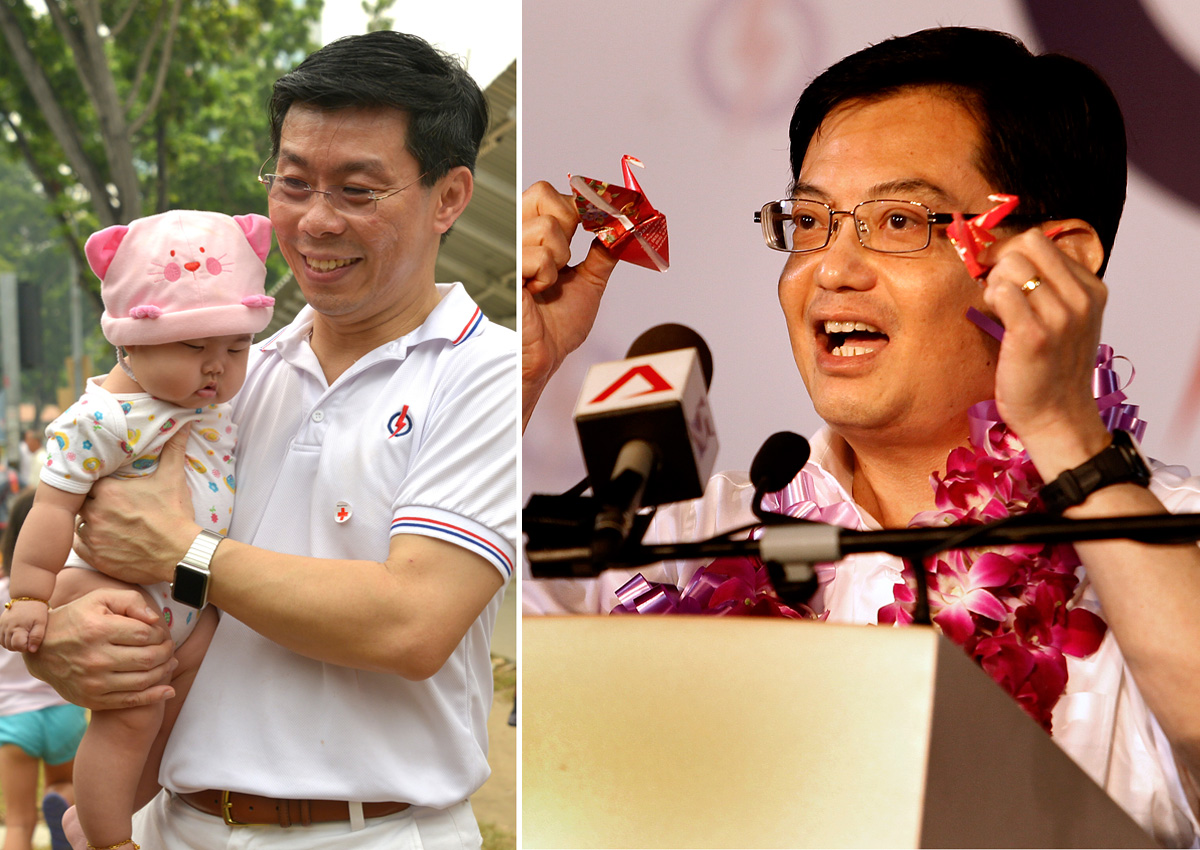
I got to thinking of Dr Khor and how hard MPs worked, when news broke on Thursday evening that Finance Minister Heng Swee Keat had collapsed from a stroke during a Cabinet meeting in the afternoon, and had been rushed to hospital.
The Prime Minister’s Office statement said he “had a sudden stroke due to an aneurysm, which is a localised weakening of a blood vessel. He underwent initial neurosurgery to relieve pressure in his brain due to the bleeding.”
The surgery was reportedly successful in closing off the aneurysm to block further bleeding and Mr Heng was moved to the Intensive Care Unit.
His Cabinet colleague, Law and Home Affairs Minister K. Shanmugam, wrote on Facebook that he had been working closely with Mr Heng on a number of things.
“I could see that he was very tired. I have been telling him that he was overworking so much that it will affect his health.
“He was carrying an incredible load, handling the Finance Ministry, various important projects, including SG50, and the Committee for Future Economy – this Committee has the crucial task of charting our economic future.”
Read also:
Heng was carrying an incredible load
Former MP Sin Boon Ann steps in as second advisor as Heng recovers
Heng Swee Keat in ICU after having a stroke
Click on thumbnail to view photos. Source:
The Straits Times, The New Paper, Facebook screengrabs




I should add at this point that we can’t really tell what the cause of Mr Heng’s collapse is.
It is sometimes hurtful to the very sick and their family members, to suggest that their choice to work hard had brought about their own sickness. This is tantamount to blaming the victim, no matter how well-intentioned. Instead, doctors will drill down into the actual risk factors.
The Mayo Clinic website does not list overwork as a risk factor for brain aneurysm. It cites family history and genetic factors as among the risks present at birth. Other factors are older age, smoking, high blood pressure (hypertension), hardening of the arteries (arteriosclerosis), drug abuse, head injury, heavy alcohol consumption, certain blood infections.
Still, most of us ordinary folks tend to think that working too hard and dealing with too much stress, are debilitating to health.
Last year, Mr Lee Yi Shyan said he had decided to step down from his office-holder position to return to the backbench. “Many of my friends have asked about my health and it is true that I was hospitalised for a mini-stroke in May this year,” Mr Lee said in September last year on his last day as Senior Minister of State for Trade and Industry and National Development.
He said he took their advice to “change gear a little bit” by deciding to “step back and serve in a different way”.
Related: Lee Yi Shyan had a mini stroke
In 2010, then-Health Minister Khaw Boon Wan had coronary artery bypass surgery.
This got me wondering: do we demand too much of our ministers and MPs?
In the past, political leaders had to be both policy wonks (masters of the minutiae of policies) and leaders (who can rustle up ground support for change).
That already required two sets of contrasting skills: intellectual ability and a high emotional intelligence quotient to be able to relate to, and rally, people.
On top of those two sets of skills, the age of social media and the peculiarities of Singapore’s political landscape require ministers here to be many more things.
We want ministers to be leaders, yet likeable. They have to be able to relate to the CEO and the cleaner with equal sincerity and warmth.
We go to MPs with issues that are policy-related, or municipal, or personal. Those seeking a job/a flat/a waiver for a fine/even a spouse (marrying a foreigner) or child (adoption), may camp out at a Meet-the-People Session to seek the MP’s help.
We want the MP to be chief social worker, unrolling family services, help for the low-income, help for the elderly, for at-risk kids.
We want an MP to be a brilliant legislator, to make dazzling speeches in Parliament. We expect office-holders to know the ins and outs of their ministry’s policies, to have at their fingertips arcane figures, and to be able to recount stirring tales of inspiration at will.
In the age of social media, they are on view 24/7. Every utterance, appearance, is captured, shared and scrutinised.
We want them to be available and accessible – we send e-mail to their mailbox or post Facebook comments on their page and expect a personal reply. Fast.
And, at the same time, we expect them to find time to cultivate family ties, to have stable, happy marriages (if married) and to bring up well-behaved children.
As constituents, we want to see them around our neighbourhood. As citizens, we want them to engage us in dialogue, in conversations, to consult widely on some policies, yet be decisive and act quickly on others.
And oh, how swift we often are to blame, to castigate, to mock, when a politician speaks, looks or behaves in a manner that it is off key or disagreeable, and how reluctant we can be to forgive and overlook mistakes.
It all adds up to a very difficult environment in which to be a minister or MP: under constant, intense scrutiny by a demanding, complaining electorate.
I don’t know how they do it, frankly, these politicians. I sometimes think we voters should moderate our expectations, and not expect our MPs and ministers to do so much, and be everywhere.
I also think that citizens should also cut them some slack and not expect them to be word perfect and in control, while being on show all the time.
If you asked me, I would think that MPs and ministers can cut down on the number of VIP appearances they make at events. They also don’t need to conduct so many briefings personally, or engage with people so intensely. That’s what delegation is for; and the junior ministers, even the permanent secretaries and deputy secretaries, should just step up.
The one thing I would be loath for them to give up is the Meet-the-People Session. It is constituents’ direct channel to the powers-that-be, and MPs and ministers’ direct channel to constituents.
Face to face, across a table, you realise, this is not a VIP on stage or just a talking head on television; it is a person doing his or her best. And they can be fatigued, and they have feelings, and they can be hurt.
Read also: Life as a full-time MP
muihoong@sph.com.sg
This article was first published on May 16, 2016.
Get a copy of The Straits Times or go to straitstimes.com for more stories.
Image:
Publication Date:
Monday, May 16, 2016 – 13:21
Keywords:
Send to mobile app:
Source:
Rotator Image:

Story Type:
Others
SMRT, SBS Transit extend train and bus services for eve of Vesak Day
The operating hours for all train services and selected bus services from both companies will be extended on May 20, ahead of Vesak Day.
Source link
Schemes to let people work while studying for degree
The much-vaunted German and Swiss system of apprenticeship – where students take on jobs and study for degrees concurrently – will be tried out at universities here.
Acting Minister for Education Ong Ye Kung, who is in charge of higher education and skills, said the Government is working with universities and selected companies to launch a few pilot programmes combining work and degree studies.
The details are being worked out and will be released later, but Mr Ong said that it will be a “different kind of university programme suited to this century, where businesses do not just offer internships, but step into the university to shape the curriculum”.
Under the Swiss and German schemes and some cooperative education programmes in the United States and Canada, school leavers take on jobs, but participate in a training programme where they alternate between work and studies.
The theory they learn in class is reinforced by practice at work.
Companies, in fields as diverse as advanced manufacturing, IT, banking and hospitality, work with universities in drawing up the curriculum and assigning mentors to guide the students in their training.
Trainees are paid for their time, including in class. And both employer and employee generally hope that the apprenticeship will lead to a career with the company.
Mr Ong, who revealed the plan in an interview with The Straits Times, said that there is an increasing convergence between work and study.
Whereas in the past, apprentices learnt from their masters over several years, companies now offer structured programmes and some have even set up their own corporate universities, he said.
Companies, too, are conducting research and making new discoveries. Knowledge creation is no more the monopoly of universities.
Mr Ong noted that work has also crept into universities. He said: “Universities now have an incubator space where students are teaming up with faculty, working on start-ups, setting up enterprises. So I expect tertiary programmes will increasingly be delivered by both institutions as well as industries.”
Job experts welcomed the apprenticeship schemes at the university level. Human resource expert David Leong, who runs PeopleWorldwide Consulting, said combining work and degree studies will turn out highly productive graduates who can hit the ground running.
“The employee will not only have up-to-date knowledge on his field, he would have also developed all the necessary work skills and absorbed the company culture,” he said.
Mr Leong, who served on the Applied Study in Polytechnics and ITE Review committee two years ago, said such schemes will help workers avoid the problem of “skills mismatch”, or the gap between one’s skills and the job market’s demands.
For such a scheme to work, however, there must be attractive job placements with big companies.
Said polytechnic graduate Sebastian Tan, 20, who hopes to enrol in a cyber security degree programme at a local university next year: “I do see the value of working while studying, especially if you can tailor your degree studies to the knowledge and skills required in the job.”
sandra@sph.com.sg
This article was first published on May 16, 2016.
Get a copy of The Straits Times or go to straitstimes.com for more stories.
Image:

Publication Date:
Monday, May 16, 2016 – 14:00
Keywords:
Send to mobile app:
Source:
Story Type:
Others


