According to NTUC, the U SAFE Award was created to encourage more organisations to proactively build stronger workplace safety and health practices that safeguard their working people.
Source link
16 organisations, individuals recognised for workplace safety and health practices
Comfort Taxis $8 Off Fare Promo Code (6pm to 6am) from 16 – 31 May 2016 | SINGPromos.com
JUST IN: Get $8 off taxi fare when you book via ComfortDelGro app & enter promo code “RIDE8” for taxi rides from 16 – 31 May 2016 (Mon – Thurs), 6pm to 6am
First 500 redemptions only! Share this deal with your friends & family members now

Comfort Taxis $8 Off Fare Promo Code (6pm to 6am) from 16 – 31 May 2016 | SINGPromos.com
Get $8 off your taxi fare when you book via ComfortDelGro Taxi Booking App and use the promo code below. Valid for trips made from 16 to 31 May, from 6pm to 6am.
Tower Transit announces pay increment of 3.5%
The increment will take effect starting May and will benefit more than 700 employees, including bus captains, the transport operator says.
Source link
Scoot and Tiger Airways join alliance of budget carriers to open up networks

SINGAPORE – Eight Asian low-cost carriers including subsidiaries of ANA Holdings Inc and Singapore Airlines Ltd (SIA) have formed an alliance that will open their networks to their respective passengers.
The Value Alliance in a statement on Monday said…
Source link
Rapper Azealia Banks apologizes for racist rant on Zayn

NEW YORK – Rapper Azealia Banks has apologised for a stream of racist and Islamophobic invective against former One Direction heartthrob Zayn Malik that led Twitter to suspend her.
Banks, who has long been notorious for provocative social media postings and has rarely voiced remorse, offered her “sincerest apologies to the world” in a posting on Instagram, where her account remains active.
“Employing racial/sexual slurs/stereotypes in attempts to make fun of or degrade another person or group is not fair or fun for anyone,” wrote Banks, who performed Sunday in Istanbul.
“Allowing my anger to get the best of me, I’ve managed to insult millions of people without reason. And for that I give my deepest apologies,” she wrote late Saturday.
Banks, who is African American, used a series of epithets targeting Muslims in a rant on Twitter late Tuesday against Zayn, whom she accused of copying her style in his new racy look after One Direction.
Banks on one point gloated that the US military would kill the family of Zayn, a Briton who is partially of Pakistani descent and is one of the most high-profile Muslims in Western pop culture.
Twitter suspended her account on Thursday, pointing to its policy against “abusive tweets and behaviour.” Banks initially defended herself, suggesting that she was singled out as an African American woman and saying she was upset that Zayn – who has gone only by his first name since leaving the boy band – refused to engage with her over her criticism.
Banks, who did not mention Zayn by name in her apology, also clarified one point from her insults – she had no problem with curry, one of the terms she used to berate him.
She said she was repeating a joke from her native New York – where nearly half of cab drivers were born in Bangladesh, India or Pakistan – that taxis smelled like curry.
“I feel compelled to clear the air with curry itself because that’s a bridge I don’t want to burn. I still want to be able to enjoy it freely without guilt or judgment,” she wrote.
Banks has previously used homophobic language and called for the burning down of buildings owned by descendants of slave traders, remarks that drew controversy but did not lead to her suspension from Twitter.
She has also raised eyebrows by supporting Republican presidential candidate Donald Trump, a fellow enthusiast of acerbic Twitter postings who has little support among minorities.
Image:

Publication Date:
Monday, May 16, 2016 – 14:41
Send to mobile app:
Source:
Story Type:
Others
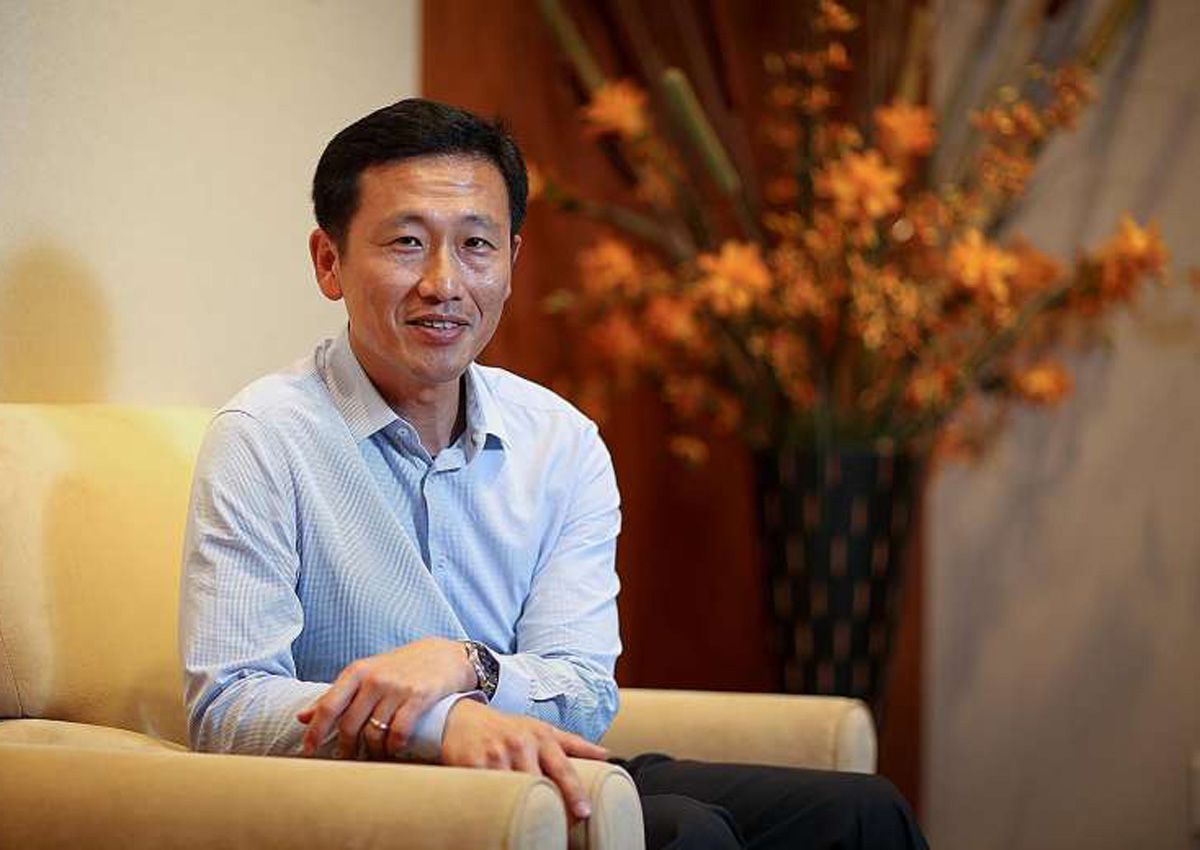
Ong Ye Kung on harnessing aspirations of Singaporeans
First, the good news.
For those eyeing a place in one of Singapore’s six public universities this year, there are 15,500 spots on offer, 500 more than last year – with the majority of the additional places coming from SIM University and the Singapore Institute of Technology which is launching new allied health courses.
Now, the even better news.
Universities are deepening the pool of applicants for several courses, including hard-to-get-into medicine and law. For every one place, two or three are being shortlisted.
Academics will not be the only yardstick; applicants’ interests and aptitude for the course will also play a crucial part in whether they make the final cut.
“Casting this wider net” will mean universities spending more resources and time, but Acting Minister for Education Ong Ye Kung insists this is the way forward to realise the vision of the SkillsFuture movement, which, in a broad sense, aims to provide Singaporeans with the opportunities to develop to their fullest potential throughout life.
“We tell Singaporeans that SkillsFuture is for everybody,” he told The Straits Times in a wide-ranging interview on the changing nature of higher education, jobs and the economy.
“It starts with you… your interests and your aspirations. And if we don’t even take that into account in admissions, then where do we start?”
Aptitude-based admission is big on Mr Ong’s agenda, and worth the effort and time because it works, he said. He points to a study by his ministry comparing polytechnic students admitted because of their aptitude and those who got in because of grades.
The first group performed much better – with more than double the number graduating with a Grade Point Average of 3.5 and above – when compared to other students.
What is more, the study found that they were more likely to go on to pursue a career in their field of study or a related one.
This confirms what may have been intuitive to us all along, said Mr Ong, who oversees higher education and skills. “When you are able to choose and enter a course you are interested in or feel passionate about, you…will likely do better.”
He also stressed that aptitude-based admission is different from discretionary admission, in which a student’s non-academic achievements, in areas such as sports and community work, are taken into account.
“Discretionary admission is fundamentally still based on academic grades. You didn’t meet the grades, so I exercise discretion to let you in, based on your co-curricular activity, or volunteer work.
“Aptitude-based admission is different. I look at you holistically as a person, taking into account your grades but, more importantly, your interests, your experiences, your strengths and weaknesses, and admit you on that basis.”
He is only too aware of the usual complaints over aptitude-based admission – on it being a subjective and opaque process.
Yes, a judgment call has to be made, he said, but people will be surprised at the amount of thought and work that go into assessing students.
He knows because during admissions season, he receives many appeal letters. He sends them on to universities and they reply with detailed notes.
“I am very impressed. They receive tens of thousands of applications. Yet each case is carefully assessed, reasons documented and, overall, yes or no.”
He understands why more and more here are aspiring for a degree. It is only natural as there is a premium in the market for degree holders. But there is a danger, he warns.
“If too many people go for a degree, then it is no longer scarce, the premium disappears, the whole purpose of having a degree gets eroded, and we may find ourselves having difficult underemployment issues,” he said, highlighting the case of countries like South Korea where the unemployment rate for new graduates is as high as 30 per cent.
Can this happen in Singapore as the Government increases the cohort participation rate to give 40 per cent of an age group places in the local universities by 2020?
Add to that another 10 per cent of Singaporeans who are expected to take up degrees on a part-time basis with institutions here.
“It depends on the type of economy we have,” he said with quiet confidence.
“If we engage in high-value-added activities in highly productive sectors, our need for graduates and well-educated, well- trained talent will be high.
“We have been moving in that direction, which is why we could move from a cohort participation rate of 30 per cent to 50 per cent by 2020.
“Our carrying capacity and our need for graduates are increasing. Graduates are needed not just to take up jobs of managers, supervisors and professionals. It’s also in many crafts and trades, where we need people with deep skills who can operate at a very high level of competency. “
He returns to the topic of SkillsFuture and the role it will play in nation- and people-building – including encouraging a high command of skills and developing a meritocratic system that is inclusive and celebrates a diversity of talents.
“But most important of it all, SkillsFuture has to be a personal enterprise undertaken by each and every Singaporean to discover his strengths and talents, pursue his dreams and achieve mastery.”
‘If I were 18 again…’
Mr Ong Ye Kung studied in Maris Stella High and Raffles Junior College before heading to the London School of Economics and Political Science (LSE) on a Public Service Commission scholarship. He is married with two teenage children.
Here he talks about the further education choices he made when he was 18.
Q Why LSE and why economics?
A I very much wanted an overseas education. I liked maths, and also enjoyed economics, particularly macro economics because it explains why the world is as such.
At LSE there was a course in Econometrics and Mathematical Economics, so that looked like an ideal combination. The skills I picked up are actually rather relevant to big data analysis now.
Q If you were 16 or 18 now, what would you choose – junior college or polytechnic? Would you go to university straight after that or work first? Which degree would you pursue?
A It is hard to say. It will depend on my interest. I may well prefer something more hands on, and may pick the polytechnic route which many top students do today.
If I can, I would still want to attend university – to get the “currency” to have access to good jobs.
I will do something interdisciplinary, maybe IT and business, or engineering and business. If I go to a polytechnic, I may choose to work first before getting a degree.
I will get to learn about workplace and industry, and will be more mature and clearer on my interest by the time I embark on a university education.
Q What if your daughters decide to take the polytechnic route? Or decide not to further their education?
A It is really up to them. I just want them to be happy and be who they would like to be. If that means going to an applied institution to learn something hands on, good for them.
If they drop out of school, I’d be upset like all parents if I think they have not tried their best, didn’t muster up the discipline to take school seriously. But if they drop out because they cannot cope with the academic demands or because they have another burning passion, then I will support them on the road less travelled.
The dreams of parents can be a heavy burden for children.
My father didn’t want me to study too much. He believed it was better for me to learn by working. Luckily, I didn’t have to counter that. My mother, the teacher, countered him. They sorted it out among themselves and I went to university.

This article was first published on May 16, 2016.
Get a copy of The Straits Times or go to straitstimes.com for more stories.
Image:
Publication Date:
Monday, May 16, 2016 – 17:00
Keywords:
Send to mobile app:
Source:
Story Type:
Others
Hong Kong man arrested in China for drone disruption plot: Xinhua

HONG KONG – A man linked to Hong Kong’s pro-democratic opposition was arrested in China in connection with a plot to use a drone to disrupt a mainland delegation due to visit the global hub, China’s state news agency reported on Sunday.
The unnamed man, arrested in the southern Chinese city of Shenzhen, was a “sponsor” of Hong Kong’s opposition camp and worked with another opposition figure to obtain the drone, the Xinhua report said.
The purchase was part of a plot to cause “disruptive activities” against the delegation.
Xinhua carried few details on the incident, which comes amid heightened political and social tensions over perceived mainland interference in the former British colony.
Hong Kong was guaranteed widespread freedoms and autonomy under an agreement that saw Britain hand it back to Chinese sovereignty in 1997.
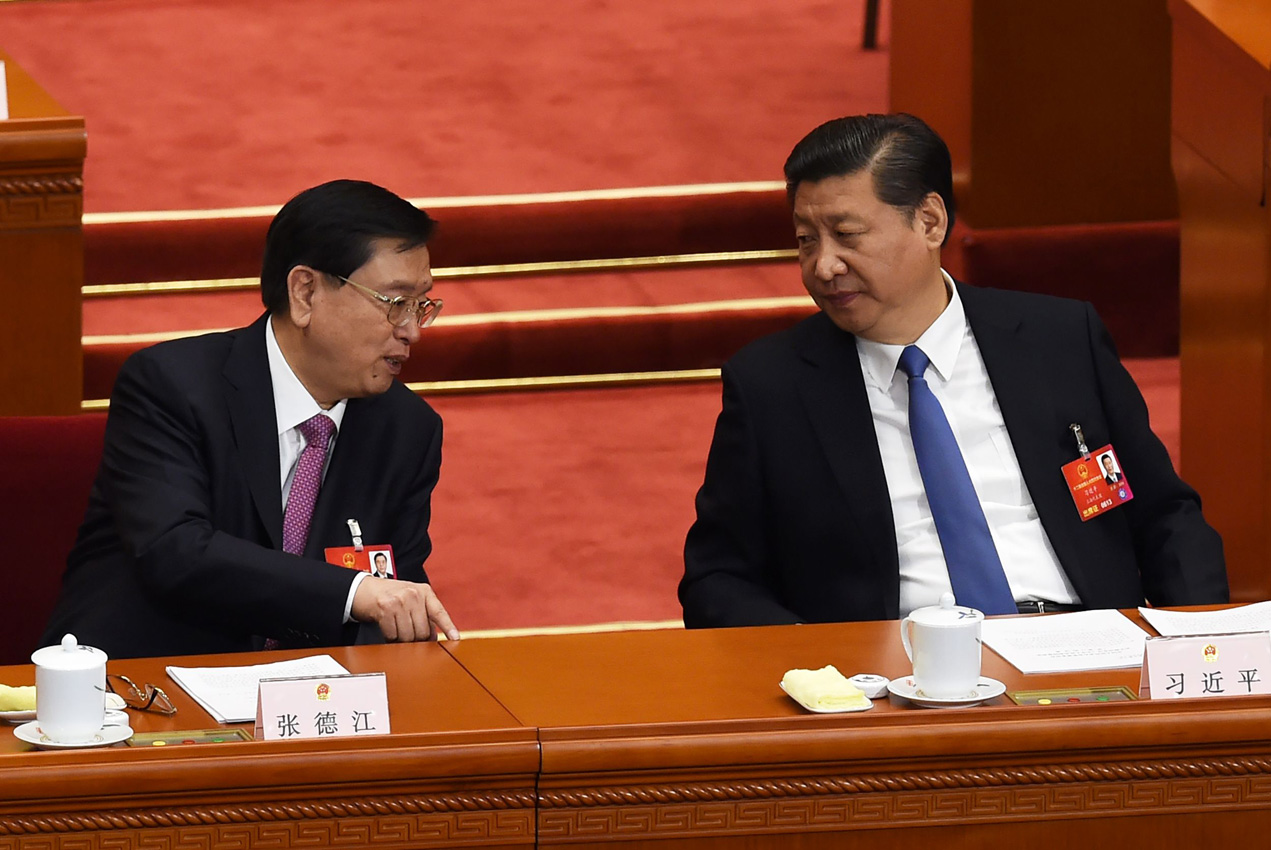
The Xinhua report did not state which mainland delegation was the target, but news of the arrest comes just ahead of the visit to the city on Tuesday by Zhang Dejiang, the chairman of China’s National People’s Congress and the third-ranked member of the ruling Politburo standing committee.
Zhang, who is responsible for Hong Kong affairs, is the highest Communist Party leader to visit Hong Kong since large-scale democracy protests rocked the city in late 2014.
Zhang is due to meet senior government officials and Hong Kong legislators in what is being billed as an inspection trip.
A Hong Kong police spokeswoman told Reuters that they were notified of the arrest by Shenzhen authorities on Sunday morning and had requested further details.
Shenzhen authorities could not be reached for comment.
Hong Kong police have mobilised several thousand police to secure the city for Zhang’s three-day visit, which also comes three months since a night of rioting erupted in the Kowloon district of Mongkok during Lunar New Year celebrations.
Image:
Publication Date:
Monday, May 16, 2016 – 14:33
Send to mobile app:
Source:
Story Type:
Others
PAP's takeaways from the Bukit Batok by-election victory
In this commentary, Chan Chun Sing, an organising secretary of the PAP, provides the ruling party’s assessment of why it managed to win the Bukit Batok by-election.
Every by-election is difficult for the ruling party. A look back at our history will prove this: The People’s Action Party (PAP) has never won a single-seat by-election since 1979.
For example, the PAP lost the 1981 Anson by-election after a 35 percentage point vote swing from just the year before. So we knew Bukit Batok was going to be a hard fight.
Furthermore, the PAP entered this race with some critical disadvantages.
First, there is the so-called “by-election effect”, with voters being more willing to vote for the opposition because there is no risk of a change of government.
The by-election effect can cost the ruling party anywhere from 12 per cent to 35 per cent of the vote.
The outcome of the Bukit Batok race confirmed that Singaporean voters do not take kindly to being treated as stepping stones in someone’s political journey.
In this case, the by-election effect was compounded by the fact that the by-election itself was the direct result of a PAP MP’s personal mistake.
Also, the candidate the PAP fielded, Mr Murali Pillai, a minority, was up against a “full-time politician” with a high national profile and slickly packaged as the persecuted underdog.
Hence, many expected a “reversion to the norm” after the PAP’s stronger-than-expected GE 2015 result.
With all these odds stacked against the PAP, we are naturally happy that Mr Murali won the election. Yet, despite the fact that this was the PAP’s first victory in a single-seat by-election in 37 years, the party should not be exuberant.
It should study the result to understand what matters to our citizens and how we can serve them better.
Singaporeans vote in Bukit Batok by-election
Click on thumbnail to view photos. Source:
The Straits Times, AsiaOne, MediaCorp, Parliament of Singapore





























































































WHAT WE CAN LEARN
The fact that the PAP managed to win back Bukit Batok despite Mr David Ong’s personal mistake reflects that track record and hard work matter. Residents remembered the years of hard work put in by Mr Ong and the Jurong team. As a result, they were prepared to give their trust to Mr Murali, a PAP activist who has served quietly and diligently in the constituency for 16 years.
And as a result of the Jurong team, the party was able to demonstrate continuity of leadership despite the change in MP.
Conversely, the Singapore Democratic Party’s (SDP’s) relative inexperience in managing a town council – and possibly, their weak record when they did manage neighbouring Bukit Gombak Town Council – would not have gone unnoticed. Our citizens are discerning, and will not vote for just anyone who comes along and makes promises.
Second, policies matter. A key thrust of the SDP’s campaign was their policies, which they presented as original and better than the Government’s. In actuality, they are recycled policies that had not worked elsewhere.
Furthermore, it became clear to Bukit Batok voters that SDP was not transparent in its policy presentation: It advertised the benefits of the policies but neglected to explain their costs and possible side effects. Selling a policy without being honest about its trade-offs is not respectful of the electorate’s discernment. SDP must better appreciate that the Singaporean voter is rational and pragmatic.
Finally, motives matter: Singaporeans want leaders who will put them and their well-being first.
The outcome of the Bukit Batok race confirmed that Singaporean voters do not take kindly to being treated as stepping stones in someone’s political journey.
On national issues, residents were able to see through the SDP’s politics of alarm, division and populism. To divide rather than unite is not the brand of leadership that Singaporeans want.
But even as the PAP learns from the SDP’s shortcomings, it is worth examining how the SDP conducted its campaign. Though it lost, I personally think it would be unwise of the PAP to underestimate the progress the SDP has made.
The SDP was able to gain national attention during the campaign. It showed its ability to profile itself in ways that might appeal to a new generation of voters who may be less familiar and more forgiving of Dr Chee’s past.
The SDP’s use of emotional appeals, its social media presence and Western-style rhetoric bear watching. These tactics did not work this time, but they may in the future.
Bukit Batok by-election rally May 3
Click on thumbnail to view photos. Source:
AsiaOne, YouTube screengrabs














CONCLUSION
But at the end of the day, Singaporeans should be heartened that no one gets into Parliament without his character, track record and policy positions being scrutinised.
The by-election made it clear that Singaporeans examine closely both the parties and candidates that offer themselves to the electorate.
Those who serve by putting Singapore and Singaporeans ahead of their personal interests will win the vote of Singaporeans.
This article was first published on May 15, 2016.
Get a copy of The Straits Times or go to straitstimes.com for more stories.
Image:

Category:
Publication Date:
Monday, May 16, 2016 – 14:26
Send to mobile app:
Source:
Rotator Headline:
PAP's Chan Chun Sing: SDP was able to gain national attention in Bukit Batok by-election
Rotator Image:

Story Type:
Others
Small switch pays off for Joseph Schooling
With barely three months to go till the Rio Olympics, Joseph Schooling is pulling out all the stops to ensure a place on the winners’ podium – even if it means tweaking the swimming stroke that propelled him to global notice.
At the Atlanta Classic meet held from Friday to yesterday, the 20-year-old Singaporean adjusted his usual posture such that his head position was higher, in an attempt to keep his body planed out.
He had decided on the change only during his warm-up on the first day of the meet, he revealed to The Straits Times in a phone interview yesterday.
Schooling said: “Something didn’t feel right about my kick. One of the Nitro Swimming club coaches I swim with during the off-season gave me some tips to work on – something I thought about in warm-up for 20 to 30 minutes.”
Keeping an open mind evidently worked, as the University of Texas undergraduate won the 100m butterfly on Friday and followed that with a 200m victory on Saturday.
It was his first race in the longer distance this year and he timed 1:57.37, outlasting Pace Clark (1:58.03) and Kyle Higgins (1:58.83). Though it was some way off his personal best of 1:55.73, it should be noted that he was unshaved and untapered for the meet.
Schooling, who clocked 51.86sec in the 100m fly, the 13th fastest time in the world this year, said of the tweak: “(My kick) felt a little better. It’s something I need to go back and work on… changing the position during the race probably wasn’t the best thing to do.
“It’s not terribly awkward; if you give me a couple of weeks just working on that… I adapt to things pretty quickly, my fundamentals are pretty good for fly.
“A small change could be the difference between a medal and fourth or fifth position. You never know whether you need that added boost, since the competition is so close.”
Outgoing national coach Sergio Lopez, who coached Schooling for five years at the Bolles School in Florida, commented: “His kick is the most powerful (part of his stroke). If he doesn’t work on it, he’ll not be at his full potential.
“He seems excited and happy. I’m not with him every day, but if he feels confident that it works, I don’t see why he should not make the change.”
Overall, Schooling expressed his satisfaction over his performance at the meet.
He said: “I wasn’t sure where I was going to be at in the 200m fly, but the timing was solid, with all the hard practice I’ve been doing.
“I don’t think I’ve ever felt this fit during mid-season. I’m in a good spot; I’m just going to keep the ball ball rolling till Rio.”
This article was first published on May 16, 2016.
Get a copy of The Straits Times or go to straitstimes.com for more stories.
Image:

Publication Date:
Monday, May 16, 2016 – 15:00
Send to mobile app:
Source:
Story Type:
Others
Pavement glued down in Hong Kong for China official visit

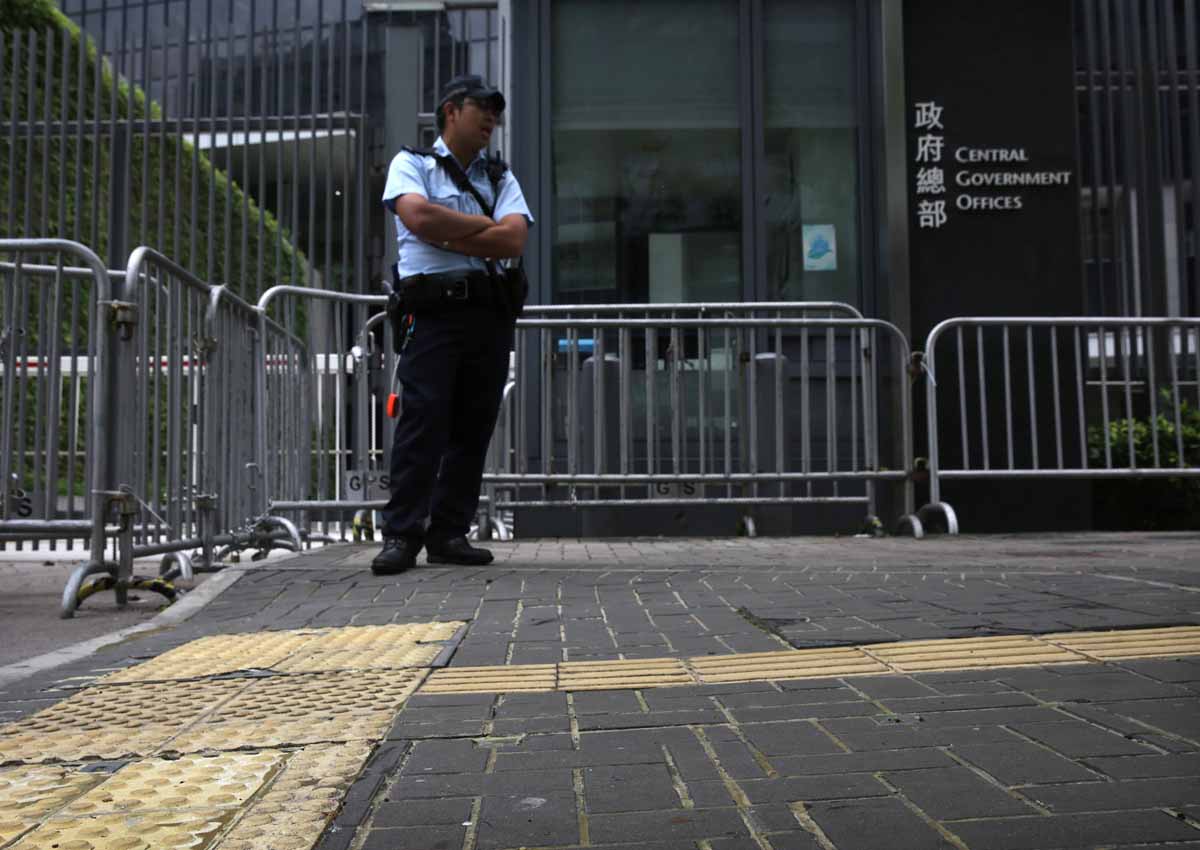
Hong Kong – Paving stones in central Hong Kong have been glued down to prevent protesters using them as missiles, as authorities roll out elaborate security measures ahead of a high-level Chinese visit that could stoke resentment over mainland rule.
The measures, which include barricades in central Hong Kong, come as Beijing tightens its grip on the semi-autonomous city where a fledgling independence movement in recent months has angered China.
Running battles with police in February, which included “localist” protesters in favour of more autonomy for Hong Kong, saw demonstrators dig up bricks from the street and throw them at officers.
Glue has been poured into the cracks between paving stones around the harbourfront convention centre where Zhang Dejiang, who chairs China’s communist-controlled legislature, will speak at an economic conference on Wednesday.
Explaining the decision to glue the pavement, Hong Kong’s highways department said they might be “subject to vandalism”.
A Hong Kong man linked to the city’s pro-democracy opposition was also arrested in China on Sunday over a suspected plot to use a drone to disrupt Zhang’s visit, according to Chinese state media.
Zhang is the most senior official to visit Hong Kong in four years in a trip seen as an attempt to ease tensions and gauge the political temperature – he will meet with a group of pro-democracy legislators during his visit.
But some activists have voiced fury over the ensuing security clampdown, with water-filled plastic barricades and metal fencing cordoning off central roads and flyovers.
“Keeping protesters away is… ridiculous. It makes you feel like you are in North Korea,” said Sham Tsz-kit of Civil Human Rights Front, which organises Hong Kong’s major annual July 1 political rally where residents air their grievances against the government.
“Zhang Dejiang is coming here to understand the situation in Hong Kong but now his eyesight will be completely blocked.” The group says activists will “proactively get close to the convention centre” despite a no-protest security zone set up by police.
Police have termed the security moves “counter-terrorism measures”.
“The security threat is higher than the past,” said a police source.
“Activists have become more violent.” Frustrations have grown among young activists since largely peaceful mass pro-democracy rallies in 2014 failed to bring political reform.
Some now say they will not stop at violence to force change.
Zhang’s visit is also expected to help Beijing assess whether unpopular city leader Leung Chun-ying is a viable candidate for a second term – his current term ends in March.
Hong Kong is semi-autonomous after being handed back by Britain to China in 1997 and enjoys freedoms unseen on the mainland.
But there are growing fears those freedoms are being eroded by Beijing.
The disappearance last year of five Hong Kong booksellers known for publishing salacious titles on Chinese political leaders tapped those deep-seated concerns.
All five men resurfaced on the mainland, where four are facing criminal investigation.
Hong Kong riot police clash with protesters
Click on thumbnail to view photos. Source:
Reuters, AFP, AFP PHOTO / SCMP / EDWARD WONG






























Image:
Publication Date:
Monday, May 16, 2016 – 13:48
Keywords:
Send to mobile app:
Source:
Story Type:
Others


