Home Blog Page 3811

Poll on elderly Singaporeans throws up surprises

Among the elderly, women and the less educated are most likely to live alone, while those with more children and higher education are less likely to do so, a recent local study has found.

It also found that elderly men who live alone are more susceptible to financial and social woes, while elderly women who live with their children but not a spouse, tend to have little outside contact and a low sense of control over their lives.

A total of 4,990 Singaporeans aged 60 and above were surveyed in 2009, while 3,103 of the same people or their proxy respondents were re-interviewed in 2011, in the study done by a team from the Duke-NUS Centre for Ageing Research and Education.

According to the study’s 2009 data, 88 per cent of older Singaporeans live with their spouse and/or children, though a small but growing proportion live with others (6 per cent) or alone (6 per cent).

The results were presented last Thursday at a conference on inter-generational transfer, human capital and inequality at the National University of Singapore (NUS).

While many findings are in line with existing literature, Associate Professor Angelique Chan, one of the study’s lead researchers, said one surprising find was that older women living with their children were not very socially integrated.

“The traditional idea is that older women living with their children are fine, but not having a spouse seems to shrink their social network. Moving into their child’s house may also make them feel like they have to go by their child’s rules, and have less control,” added Dr Chan.

More outreach should be done to this group, she said.

Social worker Danny Chee, a project coordinator at CARElderly Seniors Activity Centre in MacPherson, agrees. Many seniors who frequent the centre seem neglected and lonely, said the 48-year-old.

In MacPherson, nearly half its 28,000 residents are aged 50 and above. Of these, 1,400 live alone.

Earlier this month, it was unveiled as the third dementia-friendly community, after Yishun and Hong Kah North, with the support of the Agency for Integrated Care.

In these communities, volunteers are trained to look out for people with dementia symptoms and offer help. There are designated Go-To Points, such as community centres, where those who seem lost can be linked up with their caregivers.

Madam Rosemary Lim, chairman of the MacPherson Active Ageing Committee, said having this designation formalises work already being done in the community, such as partnering with hawkers and businesses to keep an eye out for those who may have dementia.

Besides having a high proportion of elderly residents, 60 per cent of its residents live in three-room or smaller flats, said Madam Lim, 59.

“Some who are lower income don’t know where to go for help. So we do home visits and give ration packs to those who need them, and refer some to the Social Service Office,” she added.

While programmes for the elderly are popular, more can be done to encourage seniors to leave their homes and be more active, she said.

For some of the area’s older residents, loneliness is a state of mind.

Madam Law Mah Lau, 87, who lives alone in her three-room flat in Circuit Road, said she is happy with her daily routine of taking a stroll to the market, watching TV and preparing dinner. “I don’t like to talk too much,” she said.

Mr Lee Ying Hua, 70, also lives alone, but said he enjoys meeting friends to drink beer and play mahjong. He said: “Every week, someone dies. They just stop coming downstairs. But that’s just the way life is. I don’t feel sad about it.”

tiffanyt@sph.com.sg

Additional reporting by Cheryl Lin


This article was first published on May 30, 2016.
Get a copy of The Straits Times or go to straitstimes.com for more stories.

Image: 
Category: 
Publication Date: 
Monday, May 30, 2016 – 15:00
Send to mobile app: 
Source: 


Story Type: 
Others

Source link

Town councils generally fare well in latest assessment

SINGAPORE – Town councils, including the former Aljunied-Hougang-Punggol East Town Council (AHPETC), have generally fared well in the latest Town Council Management Report. None of them received a “red” banding – the worst out of three bandings.
In…

Source link

Resale prices of private homes down 0.3% in April: Property index

Prices of homes in the central region, excluding small units, led the decline, falling 0.4 per cent from the previous month, according to flash estimates from the Singapore Residential Price Index.

Source link

Evacuated from Nepal after massive quake

When a 7.8-magnitude earthquake hit Nepal in April last year, Singaporean Seumas Yeo was recovering from surgery and lying on a hotel bed in Kathmandu.

The 27-year-old had planned to scale Mount Everest with three friends but his mission was cut short because of an infection in his right thigh. He could walk only with the aid of a trekking pole.

“My first instinct was to run but I couldn’t. I started covering myself with blankets and pillows. I could hear glasses and plates in the restaurant shattering,” Mr Yeo told The Straits Times.

“I thought I would die. I prayed very hard that the building would not collapse on me,” said the Singapore Management University economics graduate.

“When I managed to get out of the building, I could see everyone on the streets. A hotel that was about a two-minute walk away had caved in entirely.”

Telecommunications were intermittent but he managed to contact his parents to say he was safe. His friends were also safe at the Everest base camp.

Said Mr Yeo: “I was completely lost. I was alone and I didn’t know what to do next.

“The airport was in chaos. People were just waiting to get on the next available flight. Planes were also not landing. Every time there was an aftershock, the airport would be shut.”

Mr Yeo spent a night sleeping in a tent at his guide’s house. Having eRegistered with the Ministry of Foreign Affairs, he later received a message about a flight back to Singapore on an RSAF C-130.

“I wanted to continue my journey. But given the circumstances – there was no clean water, electricity or food readily available – I knew I… had to leave.”

Mr Yeo, now an investment analyst, said: “I’m lucky to be alive. If I had no communication with MFA, I think I would have been stranded there.”

Pang Xue Qiang


This article was first published on May 30, 2016.
Get a copy of The Straits Times or go to straitstimes.com for more stories.

Image: 
Category: 
Publication Date: 
Monday, May 30, 2016 – 15:00
Keywords: 
Send to mobile app: 
Source: 


Story Type: 
Others

Source link

Football: Singapore technical director Michel Sablon plots attacking ethos

The Belgian wants to seed a Singaporean style of play in the next five to six years, which he defines as “fast-passing offensive football based on a winning spirit”.

Source link

Harrowing escape from Yemen for mum and kids

It was a harrowing experience for Singaporean Sherin Syed Abdul Ravoof and her children who were escaping from their home in Aden, a port city in conflict-torn Yemen.

Madam Sherin, 38, and her four children were in a vehicle on their way to the port in Aden, where a ship was waiting for them, even as militants roamed the streets.

“We were inching (forward) very precariously. (There was crossfire) and any time we heard gunshots, we had to stop the vehicle and make sure it was all safe,” she said.

“The driver wanted to turn back many times. We had to beg him to carry on because that was our only chance to get out.”

That was in April last year, when Madam Sherin and her children were evacuated to Singapore with the help of the Ministry of Foreign Affairs (MFA).

More than a year after she and her four children, now aged five to 14, escaped the clashes in Yemen between the Iranian-backed Houthi militia and a Saudi-led coalition, she still has not been reunited with her Yemeni husband.

The Singaporean had been living in Aden with her husband since 2008.

When the situation in Yemen became unstable last year, she was the only adult at home as her husband had gone to Saudi Arabia for a pilgrimage before tensions heightened. He was shut out when Yemen closed its borders after the fighting intensified.

Madam Sherin told The Straits Times: “I knew I had to be evacuated fast. Things were getting bad, exponentially. Across the street, we would see something blow up and there were clouds of smoke every day. It was traumatic for my children to be hearing bombs and buildings shaking.”

She contacted the MFA in Singapore, which helped to get places for her and her children on a Chinese naval vessel leaving for the African state of Djibouti the following day.

At the port, they were met by the Chinese consul. They took eight hours to travel to Djibouti, before flying to Istanbul and then Singapore.

Madam Sherin and her children are now living with her mother in Telok Kurau and the children are being home-schooled.

Even though the conflict in Yemen has yet to be resolved, Madam Sherin said she hopes to return to Yemen around September to be with her husband.

But she said: “We will not go back till it’s safe.”

Pang Xue Qiang


This article was first published on May 30, 2016.
Get a copy of The Straits Times or go to straitstimes.com for more stories.

Image: 
Category: 
Publication Date: 
Monday, May 30, 2016 – 15:00
Keywords: 
Send to mobile app: 
Source: 


Story Type: 
Others

Source link

Leadership succession plans in place: Low

The Workers’ Party’s leadership succession plans are on track with more younger members joining its top decision-making body after yesterday’s election, said party chief Low Thia Khiang.

Among them are two who are new to the central executive – Mr Tan Kong Soon, 39, who is Mr Low’s legislative assistant; and Mr Firuz Khan, 49, who contested Marine Parade GRC at last year’s polls.

Voluntary welfare organisation manager Kenneth Foo, 39, who led the Nee Soon GRC team and was co-opted last year, was re-elected.

In all, 21 members vied for the other 12 Central Executive Council (CEC) slots at yesterday’s election. All the party’s MPs and Non-Constituency MPs (NCMPs) succeeded in their bid.

Speaking after the four-hour election, Mr Low, 59, said he was the oldest CEC member: “There is a younger team in place at the CEC – the leadership core – and that’s important. In the process, you will know who will (eventually) take over from me or the chairman and what will happen.”

Mr Low added that the team has experience, as some have been in the CEC for two to three terms. At last year’s general election, he singled out the WP candidates in East Coast GRC and Fengshan constituency for praise, describing them as being at the core of the party’s next generation of leaders.

All of them – NCMPs Daniel Goh, 42; Leon Perera, 45; and shipping lawyer Dennis Tan, 45; and former NCMP Gerald Giam, 38 – were voted in. The exception was Mr Mohamed Fairoz Shariff, 36, who was co-opted last year. The Straits Times understands he had the lowest number of votes among contenders yesterday.

Mr Low also said 28 new cadres – who include include grassroots activists and last year’s candidates Cheryl Loh, Ron Tan, Dylan Ng and Mr Firuz – were given the status last month in recognition of their contributions at the general election. Their addition brought the total number of cadres to 130.

“During the election process, you assess members, you see who are the ones with potential to be elevated to cadre membership… including those new candidates who performed well. They deserve to be recognised,” he said.

Singapore Management University law don Eugene Tan said the WP’s renewal plan was in place, given that the majority of the CEC members were below 50: “What is worth watching is the positions (they) will hold. With no clear successor to Low and Sylvia Lim, we can expect keen competition in the years ahead. All this can add to the dynamism of the party.”

Political observer Derek da Cunha cited Dr Goh and Mr Perera as the ones to watch but said their rise “to one of the top two party positions might have to wait until they become fully elected MPs”.


This article was first published on May 30, 2016.
Get a copy of The Straits Times or go to straitstimes.com for more stories.

Image: 
Category: 
Publication Date: 
Monday, May 30, 2016 – 14:00
Send to mobile app: 
Source: 


Story Type: 
Others

Source link

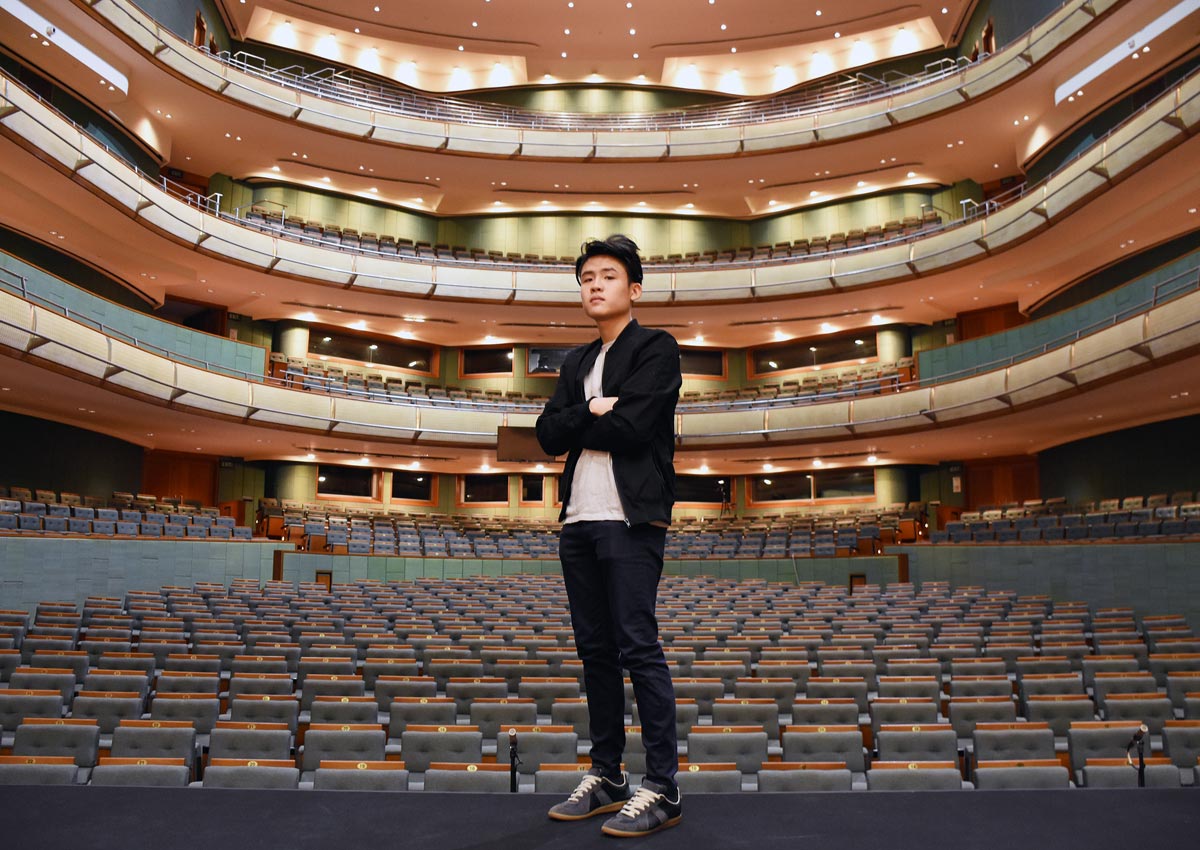
Singapore singer ready to drop out of university for music career

At the age of 22, singer-songwriter Joel Tan, who goes by his stage name Gentle Bones, has racked up achievements that outstrip many of his contemporaries in the Singapore English music scene.

On June 10, he plays his first ticketed solo show at the Esplanade Concert Hall. All 1,500 tickets to the show, which features an opening set by electronic music duo .gif, were sold out within 10 days. A second concert on June 11, with opening act singer-songwriter Linying, was quickly added and tickets to this show are close to selling out too.

His songs are No. 1 on both contemporary music formats, such as the local iTunes digital charts as well as traditional formats such as radio, and his music videos on YouTube rack up hundreds of thousands of views.

Earlier this year, he became the first Singapore artist to win the Super Nova Award at the Hong Kong Asian-Pop Music Festival 2016 and the first to be listed in the inaugural Forbes 30 Under 30 list for entertainment and sports personalities in Asia.

These are feats unheard of for a home-grown act who, until he became the first local artist to be signed on with major label Universal Music Singapore last year, built up his name as an indie artist who ran what might be called a DIY operation.

Tan, also a business studies undergraduate at Nanyang Technological University, has his sights set on more than just music.

He recently launched Geniuses And Thieves, his own fashion line that is a collaboration with fashion retailer Topman. It shares the name with the new single and title track off his upcoming sophomore EP, which will be launched on Friday. The song, which features a new electronica and R&B sheen to his folk-pop sounds, has already gone to No. 1 on local radio station 987FM, while the music video topped the local iTunes video charts.

Universal Music Singapore’s head of strategic development and artists and repertoire, Mr Lim Teck Kheng, 45, says that it is Tan’s singular creative vision and unique attention to detail that make him stand out as an artist.

He adds: “Joel’s exceptional talents, dedication and passion in his music are what attracted Universal Music the most in signing Gentle Bones as a Universal Music artist.”

He is in good company. Globally, Universal Music Group is one of the world’s largest music companies, with legends such as the Beatles and Queen, as well as contemporary pop juggernauts such as Taylor Swift and Rihanna in its stable.

The list of accomplishments comes barely six years after the self-professed shy teenager realised he could sing.

While he always enjoyed singing along to pop hits with his cousins in private, he never thought that he was good enough to perform in public until he was in Secondary 4 in Hwa Chong Institution.

The school was trying out a new programme where each class had to put on a performance for the school assembly. Despite his reluctance, his classmates forced the 16-year-old Tan to join them and sing a song by American pop punk band All Time Low. Tan took on lead vocals because the rest “couldn’t sing in key”.

The audience, his cohort of about 400 to 500 students, loved the set. Having schoolmates come up to him to tell him what a good singer he was suddenly gave him the confidence to pursue music more seriously.

“If that didn’t happen, I probably wouldn’t be doing music today,” he says of that school performance.

His father bought him his first guitar, a budget acoustic model, from Davis Guitar Music Centre in the basement of Peninsula Shopping Complex.

Tan taught himself to play it, regularly looking up chords and tablatures on popular guitar website Ultimate-Guitar.com.

With an eclectic taste in music that spans everything from boybands such as Westlife and pop-punk band Good Charlotte to Mandopop acts such as JJ Lin to singer-songwriters such as Dido, he also started seeing a pattern in chord progression and song arrangements. He began to compose his own songs, starting with a tune he titled The Rarest Of Pleasures.

“The lyrics would be mostly about love or what I imagine love to be.”

He adopted the monicker Gentle Bones, which he says are two random words thrown together, as he found that Joel Tan was too common a name.

Singing and playing acoustic guitar on his own, he adopted a stripped-down, folksy sound informed by the likes of English singer Ed Sheeran and started putting up cover songs and originals online.

At the same time he started singing as Gentle Bones, he was also into post-hardcore bands such as American quartet Emarosa.

Through local music forum Soft, Tan found out that a newly formed local band interested in the same kind of music he was, Andrew Saint, were looking for a singer. He went for an audition and was accepted on the spot.

From 2010, Tan fronted the band at several gigs at venues such as *SCAPE. In 2011, they auditioned for a slot on annual music festival Baybeats’ budding band programme but did not get it.

Due to the nature of the band’s music, he had to adopt a markedly different singing style, one that involved a lot more shouting and screaming. It was not his strongest suit, he admits.

“I wasn’t a very strong vocalist and I realised over time that my voice couldn’t stand above a heavy band,” he says. “I was screaming my lungs out, shouting so loudly and trying to hit notes. But my time with Andrew Saint helped me with my range and forced my vocal chords to stretch out a bit more.”

More importantly, he credits his bandmates for opening his eyes to a more comprehensive overview of making music. “They were sort of my guide in this music journey. They taught me about the idea of creating, recording, putting out music and marketing it.”

In 2013, he left the band to concentrate on his solo music, which by then had included two early singles, Waking Up, released in 2011 and Here’s A Letter, released in 2012. Andrew Saint had also become less active after the bandmates enlisted in national service.

They are still close friends. The band evolved to become alternative rock trio Heir Of Hounds and their debut single, released in March this year, features Tan on guest vocals.

Soon after he left the band, he spent a year building up his audience, mostly through music videos on YouTube. To him, the moving visuals that accompany his songs are as important as the music. His first professionally made music video, for the song Until We Die from his eponymous debut EP, has been viewed more than 700,000 times on YouTube.

One of his proudest achievements is having produced a music video for every single song off the EP. “I’m from the MTV generation. I view music as the entire product, from the videos down to the music, the actual songs,” he says.

In late 2013 and early 2014, Until We Die and another single, Save Me, went to the top of the local iTunes singles chart. Based on pre-orders alone, the full EP that the two songs were taken from went to No. 1 on the local iTunes album chart when it was released in August 2014.

He was also playing major gigs, including the Esplanade’s Mosaic Music Festival in 2012, the SG50 countdown at The Float @ Marina Bay in front of a 25,000-strong audience, opening slots for American acts Christina Perri and Us The Duo at their gigs here, as well as performances in London, part of a series of shows organised by The Music Society, Singapore and the Singapore Tourism Board.

Tan also performed and wrote songs for events such as the SEA Games last year, and contributed a tune, Sixty Five, for the soundtrack of 1965, the local film based on Singapore’s independence released last year. He has also collaborated with other Singapore artists such as DJ-Producer MMXJ.

It was also last year that his rise in the local music scene almost ground to a halt. He was detained by Indonesian authorities in Jakarta from September to December.

Tan was in the Indonesian city to perform with American singer- songwriter Kina Grannis. After their show at Komunitas Salihara, a concert venue in Jakarta, immigration officials took their passports and told them that they did not have performance permits.

The show promoters had apparently failed to secure them.

Tan, Grannis and 12 other musicians and crew were forced to cancel the rest of their regional tour, Tan’s first overseas one. It would have included shows in Hong Kong, Kuala Lumpur and Manila.

To his dismay, he had to cancel his original Esplanade Concert Hall date on Dec 10, a show that had sold out within a month.

Tan and the others stayed in hotels, had visits from friends and family and were free to roam the city.

The experience was the lowest point in his music journey, he says.

“It was a struggle to be there for 99 days. Every week, you were told that you were going to leave the next week,” he says. “But I don’t regret it, it helped me consolidate my thoughts about how I wanted to approach the new music.”

He and the crew coped by trying to work on music as much as they could, communicating with their collaborators online. More importantly, his time there gave him a renewed drive to succeed.

“It gave me motivation to try to make this music thing work and to be able to be significant enough that the promoter will sort out your permits for you.”

The group was allowed to leave on Dec 22, after a court hearing in which Universal Music Singapore paid a fine of $5,000 for Tan and his entourage of four. The concert promoters were fined.

To his close friends, his rising popularity has not changed him.

“Joel is the best person to chill with and have spontaneous fun,” says Sara Pang, 22, a Singapore Management University student and close friend, who has known him since 2010.

“He’s generous and relatable. As a friend, it’s heartwarming to see him experience the success he has today and still remain the Joel Tan I knew from years ago.”

The singer is in a relationship, but declines to say who he is dating. He lives with his parents and two siblings in a condominium in Bukit Timah. His brother, 21, and sister, 19, are waiting to enter university and study law. Their father is a lawyer.

Despite not following in his footsteps, Tan says that his father plays a big role in his life choices.

“My dad is a huge influence on me, he always gives me direction for how I should approach an idea. He understands what I’m trying to do with Gentle Bones. I always talk to him about the business and branding approach that I have to music. He’s the one who encourages me to have longer-term plans.”

The older Mr Tan, 53, who declined to give his full name, says that his son has always been resourceful.

He says: “Joel has always been independent in his thoughts and the ways he goes about things. He appears nonchalant and shies away from competition, but has a keen and intense ambition to succeed in his music.”

His 51-year-old mother, a retired accountant, helps out with his finances.

Tan would not reveal how much he makes, but will only say that his income from live performances, royalties, sponsorships and songwriting fees allows him to live comfortably. It is also enough for him to pay his university fees, which amounts to about $8,000 a year.

Due to his music work, he has a special arrangement with his university and needs to attend school about 1 1/2 days a week. He chose business studies because he feels it will be useful in his career.

“Technically, I am running my own business,” he says.

His time in Jakarta, during which he missed a semester of school, has made him re-think his pursuit of a degree.

“Speaking honestly, if this music thing were to ever work out, I would not be able to finish my degree and I’m willing to forego it.”

His plans to tour the region to promote the release of his new EP might clash with his classes. He says that he is still thinking about whether to take a sabbatical from school or to drop out.

“To break out in the region is something I put a lot of importance on, and if I am able to do that, I would be more than happy to put school off. I want, more than anything, to do this line of work.”

dinohadi@sph.com.sg


This article was first published on May 30, 2016.
Get a copy of The Straits Times or go to straitstimes.com for more stories.
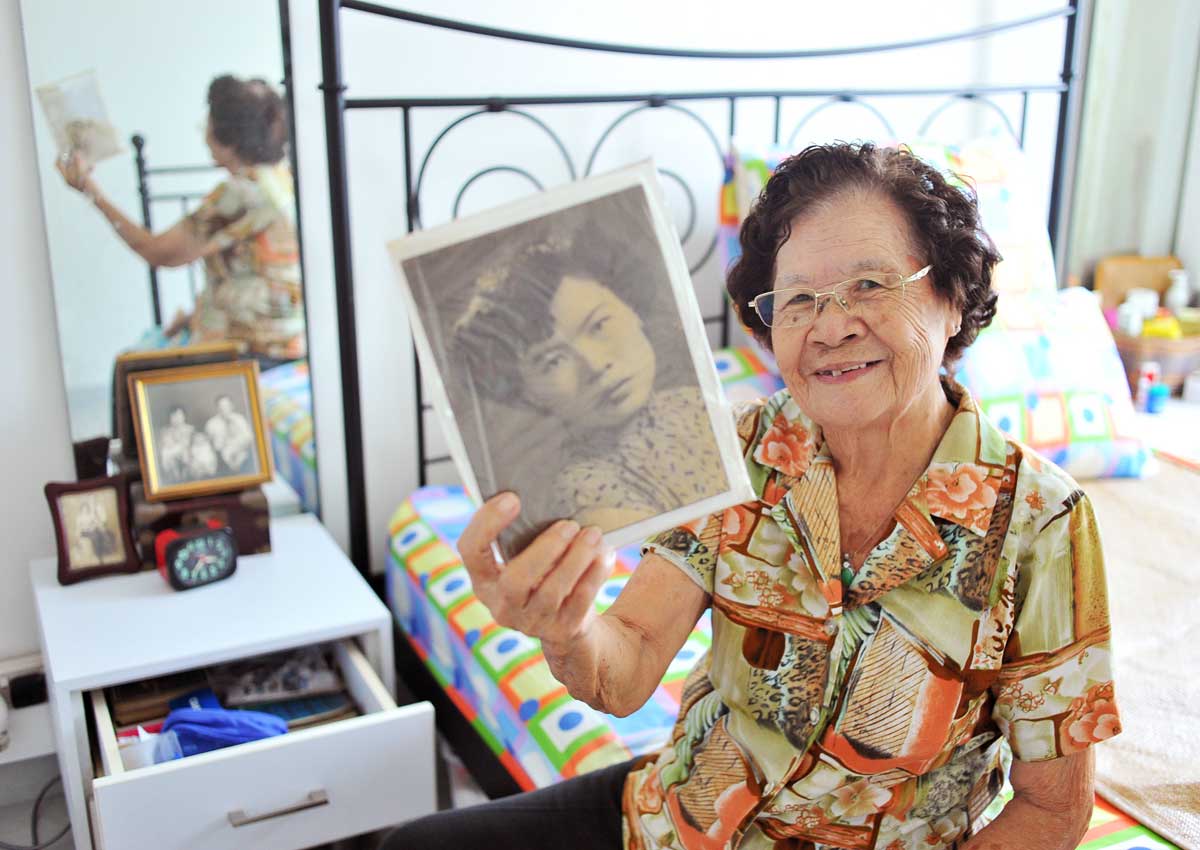

Image: 
Category: 
Publication Date: 
Monday, May 30, 2016 – 17:00
Keywords: 
Send to mobile app: 
Source: 


Story Type: 
Others

Source link

New course certifies maids in eldercare

A new eldercare course for maids was launched yesterday, adding to the suite of courses available here to train maids to care for their elderly charges.

Launched by the Foreign Domestic Worker Association for Social Support and Training (Fast) in association with training provider Care, the new course was announced by Fast president Seah Seng Choon yesterday at an education and health fair for maids.

Singapore is ageing rapidly, and quality eldercare is an urgent need, said Mr Seah.

“It is with this in mind that Fast is launching an initiative to train domestic helpers who have a passion in looking after the elderly to become home-based caregiving specialists,” he said.

There are other eldercare courses for maids available, such as those offered by the Agency for Integrated Care. But these are usually just a few days long.

“The Specialist Certificate in Home-based Eldercare programme aims to be more rigorous, and will help participants earn a certificate which they can use to gain employment in other areas back home,” said Fast executive director William Chew.

The course being piloted comprises 40 sessions of four hours each, and will take place every Sunday from next month. It costs about $12.50 a class, although Fast members can apply for subsidies.

The training will be conducted by medical professionals trained in gerontology from Care – a recruitment agency that specialises in training caregivers who help the elderly or people with disabilities.

Care managing director Satyaprakash Tiwari said participants will undergo a rigorous programme that will help them learn, among other things, how to dress wounds, feed the elderly and communicate with non-verbal cues, such as eye contact and head nods.

“There may sometimes be a communication barrier if different languages are spoken, and non-verbal communication cues are important to demonstrate that the caregiver is listening,” said Mr Tiwari.

Ms Carene Chin, managing director of employment agency Homekeeper, said such courses can help maids gain new skills and increase their competencies, which would benefit the employer.

Indonesian maid Yumiarsih, who goes by one name, believes the course could help her take better care of her employer’s 98-year-old father. Said Ms Yumiarsih, who has been working for the same employer for 13 years: “I learnt to care for Ah Gong by myself, but I hope to learn more about other things which I’m sometimes confused about, like how to help him move.”

Filipina maid Rizalia Quilicol, 35, hopes to take the course as she is keen on helping the elderly. For the past four months, she has been spending her days off volunteering at the Windsor Nursing Home.

“I want to increase my knowledge and learn more about the elderly, and with a certificate, maybe I can work in a nursing centre next time.”

audreyt@sph.com.sg

For more information, call 6262-0868/9150-4488 or e-mail training@carepl.com.sg


This article was first published on May 30, 2016.
Get a copy of The Straits Times or go to straitstimes.com for more stories.

Image: 
Category: 
Publication Date: 
Monday, May 30, 2016 – 15:00
Keywords: 
Send to mobile app: 
Source: 


Story Type: 
Others

Source link

Photos of Fan Bingbing and Li Chen's new luxury house leak online

Image: 
Publication Date: 
Monday, May 30, 2016 – 13:02
Send to mobile app: 
Source: 


Rotator Image: 
Story Type: 
Others

Source link