Home Blog Page 3810

Jay Chou shows off daughter in new music video of song written for her

Taiwan pop star Jay Chou has released a new music video featuring his beloved 10-month-old daughter.

Little Hathaway Chou appears at the end of the three-and-a-half minute video for his new song ‘Lover from the Past’, which was written for her. In Chinese culture, it is common to describe fathers and daughters as lovers in their past lives, as fathers are known to treat their daughters with extra tenderness and care.

In the video, Hathaway can be seen playing a few notes on an electronic mini-keyboard. The same notes were used as part of the tune for the song which describes Chou’s love for his daughter.

Chou says through the video that he is “so proud” of his daughter, and sings of how he would watch her grow and eventually get married in the future.

The doting dad also included Hathaway’s name under the songwriter credits. In a tweet on Monday afternoon, Chou jokingly said he did so to prevent Hathaway from suing him for using her composition.

The short clip of Hathaway’s “performance” is not new. It was first posted online by Chou’s wife, Hannah Quinlivan, on Weibo in November last year. She had said then that the baby, who was just over three months old, was exercising her potential, and cheekily warned Chou to beware of his daughter’s talents.

http://www.weibo.com/1861057780/D2BjLzAT4

Chou’s video, which was released at midnight on May 30, has garnered over two million views on Facebook in a span of just 14 hours.

on Facebook

哎喲~12點快到囉,快回家聽新歌囉!是什麼歌讓Hathaway都偷偷比讚呢?大家還記得幾個月前她在影片中彈了一段旋律嗎?

Posted by 周杰倫 Jay Chou on Sunday, 29 May 2016

ljessica@sph.com.sg

Image: 
Category: 
Publication Date: 
Monday, May 30, 2016 – 14:36
Send to mobile app: 
Source: 


Story Type: 
Rewritten Story

Source link

Survey finds conflicting attitudes towards children with special needs

SINGAPORE – Seven in 10 Singaporeans are supportive of the idea of inclusive education, according to a new survey, though only about half of those polled are comfortable with their children sitting next to a child with special needs in class.
These are…

Source link

Three pillars of Singapore netball

Chen the unsung hero who scores

“Steely determination”, “absolute reliability” and “dynamo up front” were some of the words that came to mind when team-mates and officials were asked to describe former national netballer Chen Huifen.

Playing in goal attack, the 31-year-old was “always making play for the shooters”, “finding spaces and gaps” and “working so hard all the time”, said Netball Singapore chief executive Cyrus Medora.

She might never have been the star of the team, but her solid contribution on the court will be sorely missed now that she has called time on her international career after amassing 109 caps.

Despite doing so much for the team in the offensive third, she was “often unsung”, making a lot of the play in the background even though she “didn’t get a lot of glamour”, added Medora.

Team-mate Nurul Baizura sang high praises of the 31-year-old, saying: “Her determination and focus was amazing. She moved so much on the court, and was probably always tired, but still had the ability to stay very sharp and score.”

A prime example of Chen’s shooting prowess was on display at the 2012 Asian Netball Championship final in Colombo, Sri Lanka.

Playing against the host nation in front of a ravenous crowd, Chen held her nerve to net the last-gasp winner when the scores were tied at 47-all. Her performance in that game is one that is fondly remembered by the netball fraternity here.

Team-mate Premila Hirubalan recalled: “Against horrible odds, (to win) that Asian Champs by one in Sri Lanka at the last-minute, it was perfect.

“It was a tight game, we were neck to neck with the opponents. With 45 seconds to go, Huifen put the ball in, and then we froze the ball.”

Chen added: “We were all smiling as we froze the ball. It was a winning smile, a wide-eyed smile.”

Chen, a physical education teacher at Northland Secondary, also took charge of the attacking department of the team.

“She was very close with her sub-unit, and was a natural leader among them,” noted Baizura.

“She was always very patient with her group of shooters, and always made it a point to give immediate feedback to them for the sake of their improvement.”

In spite of all of her strengths, Chen’s humility showed as she stepped aside to let younger shooters like Charmaine Soh, 25, blossom.

“When Charmaine started to emerge, she took a backseat. However, when there was a crisis, Huifen would take the lead,” said national coach Ruth Aitken.

Chen’s own confidence was developed over hours spent with veterans in the national team.

She said: “When I was a rookie I wasn’t as confident on court, but as the seniors guided me and I was able to deliver the play that was asked of me, I started to have faith in what I could deliver.”

Prem the team joker who plays her aces

When Singapore’s netballers gather for training now, a familiar loud voice will be missing.

Premila Hirubalan, who made her debut in 1999, was “the voice of the team” during her 17-year international career, according to team-mate Nurul Baizura.

With a penchant for jokes and a zest for winning, Hirubalan lifts the team’s spirits. Above all, it was her competitiveness that struck national coach Ruth Aitken the most.

“Prem was fiercely competitive, with the emphasis on fiercely. She is a real extrovert who brought life and energy to the group. She absolutely loves to win, is willing to verbalise it, and works really hard to achieve it,” said Aitken, who added that Hirubalan, who announced her international retirement alongside team-mates Micky Lin and Chen Huifen on May 10, backed up her desire to win by being the boldest player on court.

Although fun and jokes are part of her personality, Hirubalan deliberately took things up a notch when the team needed it, saying: “It’s just me, but it’s also true that I am extra noisy when the girls are nervous or need to loosen up. Laughing and being happy is a cure for anything, and it keeps us close.”

While Singapore’s most-capped netballer (117 appearances) was a force to be reckoned with during competitions, Hirubalan was full of mischief duing trainings.

Baizura said: “At every training there is something that she wants to joke about. She believes that we perform better when everyone is happy, and is committed to lifting the mood of the team.”

Baizura added that the goal defender’s passion was matched by her sporting abilities, saying: “Premila was a player in her own league.

“She had her own gym programme outside of our training, and it gave her the physique and athleticism to stand out on court.”

It is no surprise that Hirubalan was “feared by teams in the region”, according to Netball Singapore’s chief executive officer Cyrus Medora. On the court, the 33-year-old can be a relentless competitor who can dabble in mind games to unsettle her opponents.

As Lin revealed: “(She trash-talked) a lot. You just can’t hear from the sidelines.

Hirubalan’s commitment to the game was also undoubted, as Chen recalled: “We once went for a wedding dinner on a weekday, and she questioned our decision to miss training for it. She made sure we made up for it the next day.”

Before the SEA Games final against Malaysia last year, Hirubalan, a medical officer in the department of anaesthesiology at Singapore General Hospital, made all the players write short phrases on their wrists.

“We wrote things like ‘jump higher’, ‘run faster’,” said Baizura. “At that moment when everyone was tense, we just got distracted from the pressure of the game.”

Minutes later, the team wrote themselves into history, winning the Republic’s first netball gold at the biennial Games with a 46-43 victory.

Micky the captain who makes others tick

Many will know the photogenic Micky Lin as the face of Singapore’s netball team. But the former national defender was also the glue that bound the squad during her time as the team’s captain.

The skipper’s tact in interacting with her team-mates and her willingness to openly discuss issues and consider others’ opinions made her like a “bridge between the players and the coach”, according to Nurul Baizura, who served alongside Chen Huifen as the team’s co-vice-captain.

Netball Singapore’s chief executive officer Cyrus Medora said: “She was very easy-going, very approachable, and she made sure everybody was comfortable with each other.”

National coach Ruth Aitken added: “Micky was always calm and collected. She knew how to handle people very well, and we could see that she was a natural leader for a very long time.”

Aitken noted that the 30-year-old had “empathy” and a “high level of understanding about what makes people tick”.

“She had the ability to get everyone onboard, and was always a positive voice in the team that made everybody look good,” she said.

Her qualities shone through at the Asian Netball Championship final in 2014 against Sri Lanka.

“We played badly in the first few minutes, and were down by eight,” recalled team-mate Premila Hirubalan.

“I get very angry when things don’t go well on court, and I start shouting at people. Micky looked at me and said ‘just look at me and smile’, and I looked at her, kept quiet and played on.

“She is someone you can depend on to make you a better person.”

Leadership was “something that developed over a period of time” for Lin, who was first tested in leadership roles by her coaches when she played in the younger age groups.

She said: “I try to put myself in the shoes of the younger players, and think if they are coming into the team, what would they like? I prefer to look at the human side of things. It’s the small actions that make a difference, like giving the new players a pat on the back after their first training.”

According to Aitken, Lin was key in helping 1.96m-tall basketball player Chen Lili adapt to her new sport when the China-born player joined them in 2010.

“Micky was instrumental in helping Lili to understand the game. She didn’t just tell her what to do, but explained, reinforced, and asked her questions to help her grow into the game,” said the Kiwi.

“I often listened to her as she spoke to Chen on the bench, and she was always very motivating.”

Lin, a digital marketing assistant manager at Deloitte Singapore, bowed out of international netball after 102 caps.

For Aitken, whose decorated career saw her coach New Zealand to the world title in 2003, there is little doubt that Lin was special.

The tactician paid the ultimate compliment: “She is probably the most amazing team player that I have ever coached over the years.”

kenggene@sph.com.sg


This article was first published on May 30, 2016.
Get a copy of The Straits Times or go to straitstimes.com for more stories.


Image: 
Category: 
Publication Date: 
Monday, May 30, 2016 – 17:00
Keywords: 
Send to mobile app: 
Source: 


Story Type: 
Others

Source link

Easing of car loan rules comes with potential downside

OTHER than those hoping for lower Certificate of Entitlement (COE) premiums, it appears that almost everyone else is happy about the revised vehicle financing restrictions.

The Monetary Authority of Singapore’s (MAS) move to relax the loan curbs instituted in February 2013 was good news for many groups of people and at least one country.

From the car buyer who couldn’t scrape together enough for a cash downpayment on a budget model, to the wealthy super sports car buyer who prefers to stretch his repayment schedule, the barriers to entry were lowered on Friday when the loan quantum permitted rose to either 60 per cent or 70 per cent depending on the car price, and the maximum loan tenure raised from five years to seven.

Also from the motor industry, which sees stronger demand and therefore fatter margins by raising prices, to the government whose wallet will be fattened by higher COE revenues.

And most of all, the flagging Singapore economy which will benefit from the stimulus.

In easing the more than three-year-long restrictions, the MAS said that the adjustments were possible with the sustained moderation in COE premiums and resulting inflation. But it also means that COE premiums will probably go back up.

Car dealers are glad for the changes not only because demand for new cars will strengthen but because most genuinely believe the new regulations are more equitable. Like Goldilocks, they thought 50 per cent and five years was too harsh, 100 per cent and 10 years too lax, but 70 per cent over seven years is just right.

At the same time, they are also expecting COE premiums to rebound – not much initially, maybe a few thousand dollars in the first couple of rounds because they had collected orders with relatively low COE thresholds. But very probably a bit more after that.

Any increases could, however, be mitigated by the expanding COE quota. Some expectations put passenger car COE numbers jumping by up to 50 per cent more than last year to over 80,000 units (57,589 cars were registered in 2015).

The ongoing economic uncertainty could cap any premium increases as well. But even if they do, assume the premiums of the COEs which can be used to register a passenger car – Categories A, B and E – rise by an average of S$10,000 over the next 12 months.

If 80,000 such COEs were to be made available, then it could boost the government’s coffers by as much as S$800 million in a very decent revenue-generating effort.

In the recently announced Budget though, the government only forecasts COE premiums from April 2016 to March 2017 climbing to S$5.655 billion from S$5.406 billion the previous year, or a more modest increase of S$249 million. Which is a relief because it could mean it is looking at a smaller appreciation in COE premiums.

But then, there is the question of placing a new car within the means of a bigger group of people than before, at a higher price, with bigger interest payments, in the context of a weaker economy.

Will that cause some marginal owners to overstretch and put at risk the MAS’s efforts to promote financial prudence?

Of course, it must be noted that the default rate here is already very low. But could that change if economic conditions don’t improve soon?

But perhaps more curious is that in addition to serving the longer term purpose of encouraging financial prudence, the MAS states that the loan measures also support efforts to promote a car-lite society.

Given that the COE supply is controlled, how does society become car-lite when the only variable involved here is demand?

Could this be a clue that society will soon be COE-lite too because the quota will be dramatically slashed in the near future? Should we worry that our Singapore love affair with the car will end soon?

Or maybe, instead of trying to read between the lines, we should all just be happy about the new rules and go out and buy a car.

samuelee@sph.com.sg


This article was first published on May 30, 2016.
Get The Business Times for more stories.

Image: 
Category: 
Publication Date: 
Monday, May 30, 2016 – 14:37
Keywords: 
Send to mobile app: 
Source: 


Story Type: 
Others

Source link

Abe tells party official Japan will delay tax hike by 2-1/2 yrs

TOKYO – Japanese Prime Minister Shinzo Abe said he would delay a sales tax hike scheduled for next April by two and a half years, a senior ruling party official said after a meeting with the premier on Monday. “The premier’s determination to postpone the tax increase seems to be very strong,” Masahiko Komura, vice president of the ruling Liberal Democratic Party, told reporters.

Komura’s comments confirm what sources had told Reuters on Sunday as Abe looks to avoid dealing a hammer blow to a fragile economic recovery, with the announcement on the tax decision expected ahead of an upper house election expected in July.

But Finance Minister Taro Aso has voiced opposition, saying that Abe should dissolve the lower house of parliament and call a snap election if he were to postpone the tax hike.

Speculation persists that Abe may call a snap election for the lower house to seek a mandate for postponing the tax increase, after a rise in his support rates following the G7 summit and US President Barack Obama’s historic visit to Hiroshima, site of the world’s first atomic bombing, on Friday.

A survey by the Nikkei business daily published on Monday showed Abe’s support rose three points to 56 per cent, while a Kyodo news agency poll showed a 7 point rise to 55.3 per cent.

But Toshiro Nikai, another senior LDP official who met Abe on Monday, said the premier did not appear to have any plan to call a snap election for the time being.

Expectations the government will delay the tax hike helped push Japan’s Nikkei stock index up 0.9 per cent.

CONSUMPTION REMAINS WEAK

Abe is meeting senior LDP and coalition party officials on Monday to gain consent for his plan to delay the tax increase.

He is expected to formally announce the tax hike delay by the end of the current session of parliament on Wednesday, government officials have told Reuters.

The prime minister is also expected to order an extra budget to boost stimulus measures, just two months into the fiscal year and on the heels of a supplementary budget to fund rebuilding efforts after the recent earthquakes in southern Japan.

Consumption has yet to recover after Japan fell into recession when Abe raised the sales tax to 8 per cent from 5 per cent in April 2014 in an effort to curb government debt.

Data released on Monday showed retail sales fell in April for the second consecutive month, bolstering the argument that next year’s tax hike should be postponed.

Fiscal hawks like Aso have said the tax hike is critical to rein in Japan’s huge public debt and cover ballooning social welfare costs of its fast-ageing population.

Abe has long said he would proceed with a plan to raise the tax rate to 10 per cent next April unless Japan faced a crisis on the magnitude of the Lehman shock.

Image: 
Category: 
Publication Date: 
Monday, May 30, 2016 – 14:21
Keywords: 
Send to mobile app: 
Source: 


Story Type: 
Others

Source link

Proposal for Tanglin Club to be high-rise complex

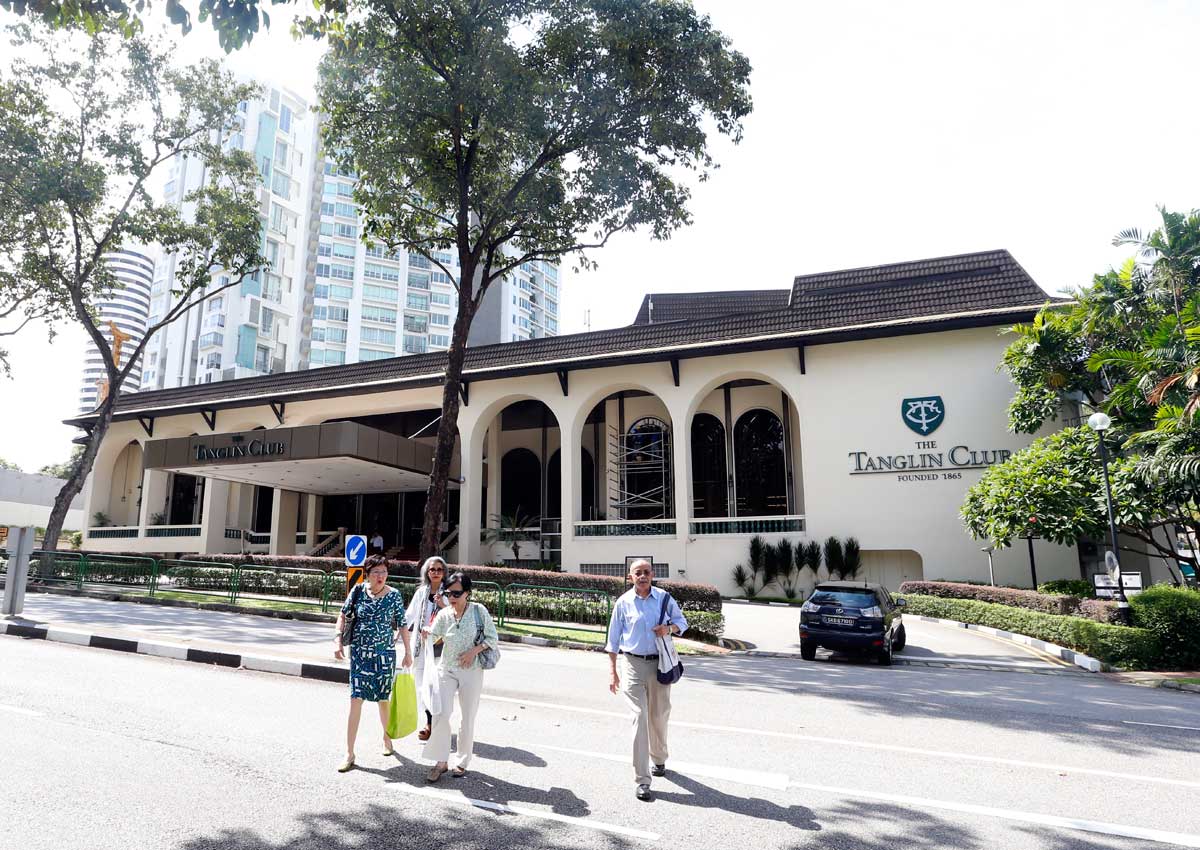
A proposal to redevelop part of The Tanglin Club could add another towering commercial complex near Orchard Road.

The club in Stevens Road will hold its annual general meeting (AGM) today. Among the proposed resolutions is a plan by the club’s development and planning sub-committee to add 11 more guest rooms.

But former club presidents Joseph Chew and Sim Yong Chan have proposed an even more ambitious plan.

In a letter submitted by hand on May 6 to the club’s general manager, Ms Josie Tulipano, they asked the club to consider building a high-rise recreational and commercial development instead.

Should their proposal be included in the AGM agenda, club members will have at least two different redevelopment ideas to consider.

Under the resolution on guest rooms, the additions will complement 16 existing ones, which earned $1.1 million in revenue for the club’s financial year to Jan 31, 2016. The new rooms are to be built on the fifth level of the club’s existing Sports and Recreation Complex, capped at a cost of $2.1 million.

But Mr Chew and Mr Sim have suggested setting up a task force, instead, to look into maximising the potential of the land on which the sports complex, tennis courts and squash courts are located.

The task force will then apply to the Urban Redevelopment Authority (URA) for permission to build a high-rise mixed recreational and commercial development there.

Their proposal is inspired by the redevelopment done by the Hong Kong Club in 1984, when it rebuilt its existing clubhouse – in Jackson Road in central Hong Kong – into a 21-storey mixed recreational and commercial building.

Developers Hongkong Land agreed to bear the costs of demolishing the old clubhouse and constructing the new building in exchange for rental income of the 17 upper storeys in the building for 25 years. The first four storeys were used as the club’s new clubhouse.

In a letter to club members, Mr Chew and Mr Sim said Hongkong Land made about HK$100 million a year during the 25-year period.

The duo added that Tanglin Club’s financial position will be “enviable” if it successfully pulls off a Hong Kong Club-style redevelopment.

They said they got an in-principle approval from URA in 1995 to redevelop a part of the club’s land into a high-rise mixed recreational and commercial building. The approval lapsed as there was no follow-up.

Architect Liu Thai Ker has agreed to be an adviser to the task force, should it be set up, said Mr Chew and Mr Sim in their letter. Mr Liu is now senior director of RSP Architects Planners and Engineers, which has been involved in the design of The Tanglin Club.

Mr Chew and Mr Sim could not be reached for comment.

Property experts said it is too early to assess the market potential of the proposed building as the proposal is still in its infancy.

“There are too many unknown factors to know for certain whether this proposed venture would be profitable,” said Mr Nicholas Mak, head of research and consultancy for SLP International Property Consultants. Factors he cited include the design and size of the building and the allocation of space.

However, Mr Alan Cheong, Savills Singapore research head, said “although the club is not located adjacent to an MRT station, a case can still be made for an office building”.

He said club members who run businesses may also find themselves as tenants, as “renting an office above the club may give them the right setting for a one-two punch to close deals”.

“The use of the site in its present state is not the best way. From a monetary perspective, the inclusion of commercial uses would likely be a benefit,” Mr Cheong added.

vijayan@sph.com.sg

kenggene@sph.com.sg


This article was first published on May 30, 2016.
Get a copy of The Straits Times or go to straitstimes.com for more stories.

Image: 
Category: 
Publication Date: 
Monday, May 30, 2016 – 16:00
Send to mobile app: 
Source: 


Story Type: 
Others

Source link

MFA crisis team had busy year helping S'poreans overseas

When a 7.8-magnitude earthquake struck Nepal on April 25 last year, hundreds of foreigners were stranded at the airport and trying desperately to leave the country.

But consular officer Wang Huihui from Singapore’s Ministry of Foreign Affairs (MFA) had to board the earliest commercial flight into Kathmandu instead.

The 25-year-old was part of a four- member Crisis Response Team (CRT) sent to Kathmandu, whose responsibilities include evacuating Singaporeans in overseas crises, such as natural disasters or terrorist attacks

“When we landed at Kathmandu, the first thing that greeted us was a 6.8-magnitude aftershock while the plane was still on the runway. It was unsettling to feel the aircraft shaking violently,” said Ms Wang.

Last year, the MFA sent the CRT to help Singaporeans in five major overseas incidents, including the Yemen armed conflict in April, the Sabah earthquake in June and the Bangkok bomb blast in August.

The MFA said this “was the highest ever deployed in recent years”.

It said “the frequency and scale of crises have intensified in recent years”, amid an uncertain global security climate and increased frequency of natural and man-made disasters. In the past year, for instance, there were bombings in major cities such as Paris and Brussels.

The CRT was first dispatched in 1997 in response to the SilkAir Flight MI185 crash in the Musi River near Palembang, Indonesia.

In the Nepal earthquake last year, the MFA facilitated the return of 71 Singaporeans. The ministry said it worked under challenging circumstances to contact Singaporeans in Nepal, as it did not have a permanent presence there and telecommunication lines and Internet connections were disrupted.

The CRT set up a registration point at the airport and worked with the Nepalese authorities to secure landing slots for the Republic of Singapore Air Force C-130 aircraft used to evacuate Singaporeans. It also had to trace Singaporeans in the affected area who had registered online with the MFA and to verify the safety of those whose next of kin provided leads.

Emergency travel documents were issued to Singaporeans whose passports were lost or left behind to facilitate their return home.

In Parliament last month, Senior Minister of State for Foreign Affairs Mohamad Maliki Osman urged Singaporeans to stay safe when travelling by “staying in close contact with their next of kin and close friends, taking necessary precautions for their personal safety and planning properly for their travels”.

These include buying comprehensive travel insurance and providing active contact details to the MFA.

Singapore residents make about nine million trips abroad via air and sea each year.

The MFA said not many Singaporeans who went abroad registered online with it. Last year, only about 300,000 travellers did so.

Ms Wang said it was her first encounter with an earthquake and she recalled how she had only a few hours to get ready for the deployment.

“When I got the news, it was the weekend and I was watching a movie. I left halfway to prepare for my trip,” she said.

There was definitely some apprehension about going to Nepal, but “I was reminded of my responsibility to assist Singaporeans who wish to return home safely”, she added.


This article was first published on May 30, 2016.
Get a copy of The Straits Times or go to straitstimes.com for more stories.

Image: 
Category: 
Publication Date: 
Monday, May 30, 2016 – 13:59
Send to mobile app: 
Source: 


Story Type: 
Others

Source link

President Tony Tan, Pope discuss inter-faith harmony

ROME – As an oasis of racial and religious harmony, Singapore has piqued the interest of Pope Francis, who discussed inter-faith harmony with President Tony Tan Keng Yam.

Dr Tan, assessing his state visit to the Holy See, said yesterday that Singaporeans may take the peace between different communities for granted, but this state of affairs is considered exceptional by others.

Singapore has a unique way of maintaining harmony through inter-faith dialogue and sees preventing religious extremism not only as a security issue, but also as a holistic one which involves ideological, social and family issues, he said.

He added that it was something Pope Francis was keen to learn more about during their meeting in the Vatican City last Saturday.

The two men spoke about the vital role of inter-faith dialogue in building a society where people can occupy their own space while sharing common spaces.

They also discussed the terror attacks in Paris and Brussels and the importance of managing religious extremism in the face of terrorism.

“I was able to share with the Pope our experiences in this area, to explain that, for Singapore, racial and religious harmony is fundamental not only to our progress but to our very existence and, from the start, we have placed a great deal of emphasis on building bridges across communities,” said Dr Tan to Singapore media yesterday.

He highlighted the role of the Religious Rehabilitation Group spearheaded by Muslim clerics. The group counsels those who have been affected by radical teachings.

He also pointed to the major role of the Roman Catholic Archdiocese of Singapore in the National Steering Committee on Racial and Religious Harmony.

Still, Singapore is not insulated from the influences of religious extremism and disharmony, particularly because of the make-up of its society, said Dr Tan.

“Racial intolerance, religious intolerance, extremism, is a feature in all countries,” he added, pointing to Europe’s experience.

It is a problem that will need to be worked on for many years, he said.

Dr Tan said he hopes the Pope will visit Singapore to see this in practice once a suitable date is found.

The two also affirmed the friendly ties between Singapore and the Holy See, and agreed that there is potential for more collaboration, such as in the area of cultural exchange.

Dr Tan also discussed regional and international developments with the Secretary of State of the Holy See, Cardinal Pietro Parolin.


This article was first published on May 30, 2016.
Get a copy of The Straits Times or go to straitstimes.com for more stories.

Image: 
Category: 
Publication Date: 
Monday, May 30, 2016 – 14:16
Send to mobile app: 
Source: 


Story Type: 
Others

Source link

Depp's daughter, former partner deny abuse allegations

Los Angeles – Johnny Depp’s daughter defended the Oscar-nominated star on Sunday, after his wife accused him of abuse and filed for divorce.

Meanwhile, Depp’s former partner allegedly said in a letter obtained by celebrity news website TMZ that the claims being made against him are “outrageous.”

Lily-Rose Depp posted a photo on Instagram apparently showing herself as a baby, with Johnny Depp holding her hands and helping her walk.

“My dad is the sweetest most loving person I know, he’s been nothing but a wonderful father to my little brother and I, and everyone who knows him would say the same,” Lily-Rose Depp said in the caption.

Johnny Depp was hit with a temporary restraining order on Friday after his wife Amber Heard appeared in court with a black eye, accusing the actor of assaulting her.

Heard, who filed for divorce in Los Angeles earlier last week and is seeking spousal support from the 52-year-old “Pirates of the Caribbean” star, says she is the victim of repeated attacks by Depp.

Heard submitted pictures to the court showing a bruise on her face that she claims was inflicted during a fight and said she feared Depp might harm her.

Actress-model Heard said in a sworn statement that Depp had been verbally and physically abusive throughout their time together.

Depp and Heard met on the set of the 2011 film “The Rum Diary,” when Depp was still in a relationship with the French actress Vanessa Paradis, mother of Lily-Rose and her brother Jack.

Celebrity news website TMZ on Sunday posted a photo of a handwritten letter that it said it obtained from Paradis, in which she describes her former partner as “a sensitive, loving and loved person.” “I believe with all my heart that these recent allegations being made are outrageous, in all the years I have known Johnny, he has never been physically abusive with me and this looks nothing like the man I lived with for 14 wonderful years,” the note says.

The letter is signed by Paradis, dated Friday in Los Angeles.

Lily-Rose Depp, 17, recently walked the red carpet at Cannes for the premiere of “La Danseuse” (The Dancer), in which she portrayed American dancer Isadora Duncan to mixed reviews.

She is also a model and the teenage face of Chanel.

Image: 
Category: 
Publication Date: 
Monday, May 30, 2016 – 14:13
Keywords: 
Send to mobile app: 
Source: 


Story Type: 
Others

Source link

SMU plans to add X-factor with building for millennials

Even as Singapore Management University’s revamped campus takes shape, it is drawing up plans for another building to optimise degree education for millennials who learn on the go.

The university is in the process of seeking the necessary approvals, but SMU president Arnoud De Meyer said the building, which it hopes to build by 2019, will have classrooms that encourage active and collaborative learning both online and offline.

It will be open 24 hours, seven days a week, and the facilities will include sleeping pods to allow students to work overnight on projects.

Professor De Meyer also gave an update on SMU’s revamped campus plan during an interview with The Straits Times, saying that most of the new facilities, including the law school, the 240-seat amphitheatre and three-storey fitness centre, will be ready for use next year.

As for the new building, it will be named SMU-X after a new programme in teaching and learning that the university piloted last year.

Students in the programme take on projects from industries and organisations. A public policy management course, for instance, may get students to work with a social welfare agency to draw up programmes for disadvantaged families.

Prof De Meyer said the SMU-X programme was a hit with the 600 students who had a taste of it last year. This year, it has been expanded to allow up to 2,000 students to take the courses.

This means every SMU undergraduate will be able to take at least one SMU-X course over their four years of study. Some 150 companies have come in as industry partners.

Prof De Meyer said: “Students work on projects brought in by industry partners. So they are immediately applying what they learn in solving real-life problems.”

Professors and industry mentors guide students through projects. Students earn credits from the semester-long courses and are graded on their participation and the final outcome.

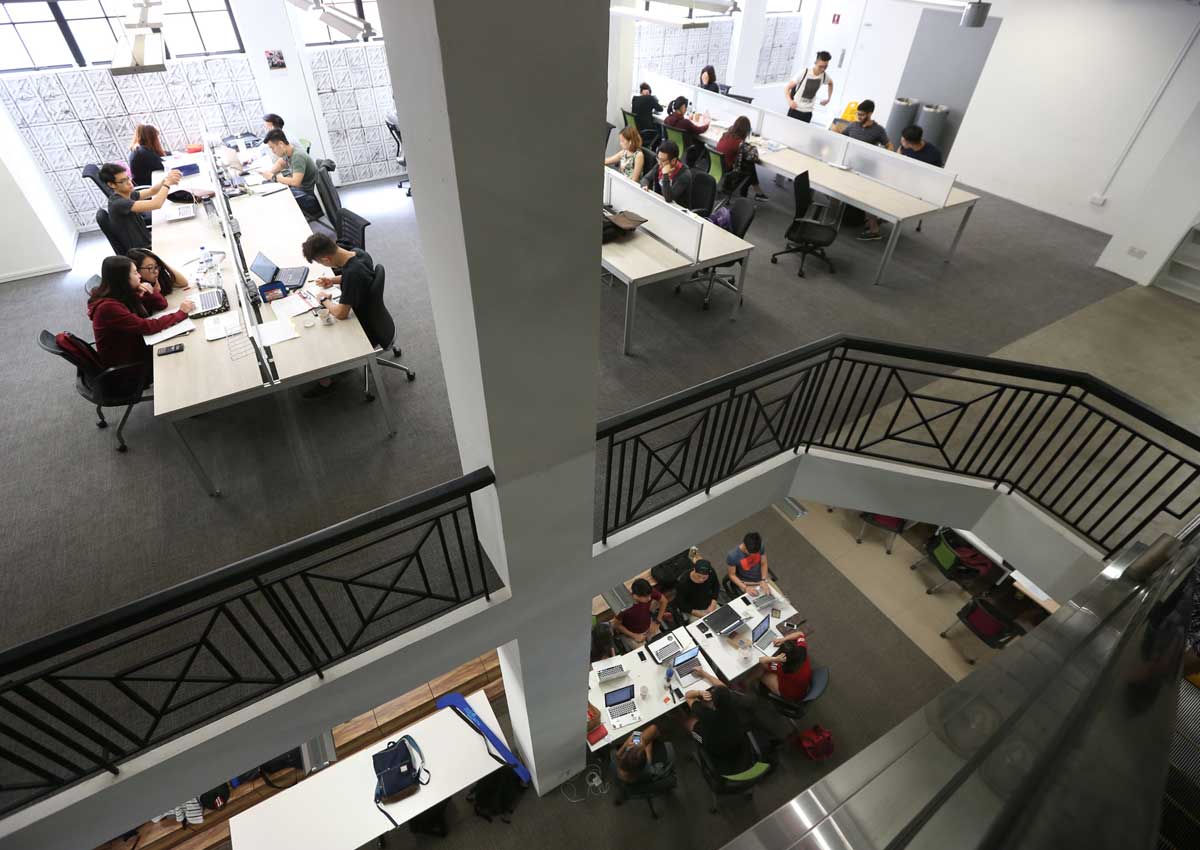
Currently, the SMU-X courses are conducted in a conserved building in Stamford Road which was home to the flagship MPH bookstore until 2003. Prof De Meyer said the facilities in the building were designed to suit the way millennial students learn.

SMU students were involved in the planning and design of the rooms. They held focus group discussions, conducted surveys and went overseas to look at facilities in other university campuses.

The White Room, for example, is a favourite with students for brainstorming sessions. The walls, floors and table can be used for scribbling ideas.

Another room has sofa-beds for power naps, while another is filled with colourful beanbags for small groups to meet.

The university’s facilities have already proven to be a draw for full-time national serviceman Darren Lim, 20, who will enter SMU next year to study business. He said he picked the university over another local institution partly because of its “cool city campus”.

“Before I decided on SMU, I visited two of my ex-junior college mates who were studying there. I especially liked the SMU-X facilities because that’s how I study.”

“But, besides the facilities, I like the idea of learning a course through a project. It will make the course more interesting as you can immediately see how it can be applied to solve a problem.”

sandra@sph.com.sg


This article was first published on May 30, 2016.
Get a copy of The Straits Times or go to straitstimes.com for more stories.

Image: 
Publication Date: 
Monday, May 30, 2016 – 16:00
Keywords: 
Send to mobile app: 
Source: 


Story Type: 
Others

Source link