Home Blog Page 3789

Japan techno duo Boom Boom Satellites end career

TOKYO – Japanese electronic duo Boom Boom Satellites has announced an end to its nearly two decades in music due to the paralysis of one of its members after repeated operations for brain tumours.

Vocalist and guitarist Michiyuki Kawashima, 46, and Masayuki Nakano, 44, a bassist and programmer, debuted in 1997 with Belgium label R&S, building a niche but firm fan base in Europe.

They have also grown in popularity at home with their European techno-influenced songs imported back to Japan.

Boom Boom Satellites, which has performed at major music festivals such as Glastonbury in Britain and Fuji Rock in Japan, is best known for early singles “Dub Me Crazy” and “4 a Moment of Silence”.

Throughout the group’s career, however, Kawashima has suffered recurring brain tumours with the last one, his fifth, discovered in August last year.

Nakano wrote Wednesday on their Facebook page that they had completed “Lay Your Hands On Me,” their latest and, he revealed, last album.

“It is a work befitting of the final, closing curtain of our band’s history,” Nakano wrote.

“This is Boom Boom Satellites final release. Paralysis and other complications with Michiyuki Kawashima’s brain tumour have made it so,” he said.

Image: 
Category: 
Publication Date: 
Wednesday, June 1, 2016 – 15:54
Keywords: 
Send to mobile app: 
Source: 


Story Type: 
Others

Source link

Movie Review: April And The Extraordinary World (PG)

An intriguing premise can only take you so far.

The Franco-Prussian War is averted in 1870 and in the decades that follow, the world’s most renowned scientists mysteriously vanish.

Europe never advances beyond the…

Source link

Singdollar rises above RM3 for first time in over two months

SINGAPORE – The Singdollar has risen above RM3 for the first time since March 15, Bloomberg data showed on Wednesday (June 1).
At 2.15pm (Singapore time), S$1 was trading at RM3.0027. By 3.35pm, the Singdollar had risen further, reaching S$1 to…

Source link

Fiona Xie set to return to Singapore TV after 7 years

Fans of Fiona Xie will be happy to know the Maggie and Me actress is returning to Singapore television this August. 

The 34-year-old will be making her television comeback as a psychiatrist on the new Channel 5 series, Left Behind, and is currently in the midst of filming the seven-episode series.

Fiona told Toggle abstractly: “The stars were aligned, Family Commitments and a Nostalgic Heart”.

This might have been in response to why she wanted to return to acting after retiring seven years before. 

However the abstract nature of her reply does not surprise us at all, as Fiona has always been prone to giving quirky replies.

And this is also evident in the abstract things she posts on her Instagram account.

Despite her long absence from the scene, Fiona has managed to keep a large fanbase – judging from the 107,000 followers on her Instagram account. 

In December 2009, Fiona decided to end her stint at Mediacorp to pursue some of her other interests like art, fashion and photography in Hong Kong and New York. 

Prior to leaving Mediacorp, Fiona had starred in a variety of Channel 5 and Channel 8 dramas over a span of eight years.

In 2001, she was crowned Best Newcomer at the Star Awards for her work in My Genie and she was also nominated in 2001 and 2016 as one of the Top 10 Most Popular Female Artistes in Singapore.

She chose to call it quits at what some considered was the peak of her career. 

So Fiona’s return has brought much delight to her fans who have since welcomed her back on social media. 

These are some of their comments:

Toggle reported that more information on Left Behind will be available at a later date.

mldas@sph.com.sg

Image: 
Category: 
Publication Date: 
Wednesday, June 1, 2016 – 16:30
Send to mobile app: 
Source: 


Story Type: 
Others

Source link

Maid snapped after being hit with plastic tray by socialite employer

She splashed a glass of water on the face of her maid, scolded her and then hit her on the head with a tray.

All because the maid, who had just started working for her, used the wrong tray – plastic instead of silver.

Socialite Nancy Gan Wan Geok, 69, paid with her life for her ill-treatment of her maid on March 19, 2014.

Dewi Sukowati, an Indonesian who was 18 at the time, snapped and attacked Madam Gan at her bungalow in Victoria Park Road, near Farrer Road.

She hit her employer’s head against a wall and a ceramic-tiled step, then dumped her in a swimming pool, where Madam Gan drowned.

Dewi, now 20, was jailed for 18 years yesterday after pleading guilty to one count of culpable homicide not amounting to murder in the High Court.

 Indonesian maid Dewi Sukowati, wearing a red polo T-shirt, in a police car on 20 March 2014. Photo: The Straits Times

The court heard that Dewi began working for Madam Gan, an accomplished pianist and a porcelain artist who donated to charity, just six days before the fatal incident.

Dewi’s lawyer, Mr Mohamed Muzammil Mohamed, told Judicial Commissioner Foo Chee Hock that his client was underage when she came to Singapore to work for Madam Gan.

Foreign domestic workers in Singapore must be at least 23 years old, and Dewi had used a passport with false information.

Mr Muzammil also said in his client’s mitigation that Madam Gan had also assaulted a previous maid and hit Dewi with a broom on her first day of work. (See report on facing page.)

On March 19, 2014, Madam Gan rang a bell after waking up around 7.30am.

When Dewi heard the bell, she brought a glass of warm water on a tray to Madam Gan’s bedroom.

The elderly woman became angry when she saw that Dewi had not followed her instruction and used the wrong type of tray.

It was a minor mistake as Dewi had used a plastic tray instead of a silver one, Mr Muzammil told the court.

SCOLDING

Deputy Public Prosecutor (DPP) James Low said that Madam Gan scolded the teenager in Bahasa Indonesia: “Wrong again, wrong again, very stupid girl, don’t know anything.”

She splashed the glass of water on Dewi’s face and flung the tray on the floor.

When Dewi squatted down to pick up the tray, Madam Gan snatched it from her. She then hit the back of Dewi’s head with the tray.

She told Dewi: “I’ve already told you, you forget again, you make mistakes again, I will cut your salary until it becomes $200.”

Dewi’s monthly salary was not mentioned in the court papers.

DPP Low said that Dewi then lost control of herself. She suddenly grabbed hold of Madam Gan’s hair with both her hands.

She swung her employer’s head against a wall with all her strength, leaving her unconscious and bleeding.

Dewi became worried when she checked Madam Gan and realised she was still alive.

Fearing that her employer would call the police after regaining consciousness, she decided to drown her in a swimming pool located within the landed property.

She dragged Madam Gan to the pool by the hair until they reached a ceramic-tiled step.

DPP Low said: “The accused recalled the deceased’s daily scolding and criticism, and became angry again.”

Dewi then grabbed Madam Gan’s hair and slammed the back of her head against the edge of the step, causing more blood to flow out, he added.

She dragged Madam Gan down a few more steps by her pyjamas until they reached the pool.

She then tipped her employer into the water before throwing the latter’s sandals into the water to give the impression that she had committed suicide by drowning.

After cleaning up blood stains on the floor and walls, and changing out of her blood-stained clothes, Dewi went to a neighbour’s house and rang the doorbell.

Before the neighbour could answer, she saw despatch rider Mohammad Hasri Abdul Hamid passing by and told him: “Help me, my employer is in the swimming pool.”

They went back to the bungalow, and Mr Hasri called the police.

When the police arrived, they arrested Dewi.

Paramedics pronounced Madam Gan dead at 9.07am. The cause of death was found to be drowning, contributed by an injured brain due to a fractured skull.

DPP Low said Dr Kenneth Koh from the Institute of Mental Health found Dewi to have an “abnormality of mind” – acute stress reaction – when she committed the offence.

“Dr Koh noted that the combination of the accused’s young age, lack of exposure… enhanced sensitivity to further (alleged) abuse at the hands of a perfectionist employer… conceivably caused her to have reacted instantaneously without heed of the consequences.”

For culpable homicide not amounting to murder, Dewi could have been jailed for life, or up to 20 years, and fined.

The victim: Hostess who didn’t cook

Socialite and philanthropist Nancy Gan trained as a classical pianist at the Trinity College in London and had been a porcelain artist since 1986.

Her works on landscapes, animals and flowers on fine porcelain and bone china had been exhibited several times and appeared in the magazine The Peak Singapore.

In 1987, four of her porcelain paintings were also featured on the in-flight menu covers of Singapore Airlines.

The daughter of a commander, she grew up in Hong Kong and married Hong Kong politician Hilton Cheong-Leen in 1990.

Madam Gan’s friend who wanted to be known only as Ms Yan told The New Paper that she never had to step into the kitchen.

“She didn’t know how to cook when she met her husband,” Ms Yan said in an interview in 2014.

“But she became known for hosting dinners at home for ambassadors’ wives.”

Madam Gan was also involved in many charities in Singapore, the US, Hong Kong, Japan and Australia.

According to a website named after her, Madam Gan participated in fund-raising activities for the Singapore Association of the Visually Handicapped, Singapore Cancer Society and the Bone Marrow Donor Programme.
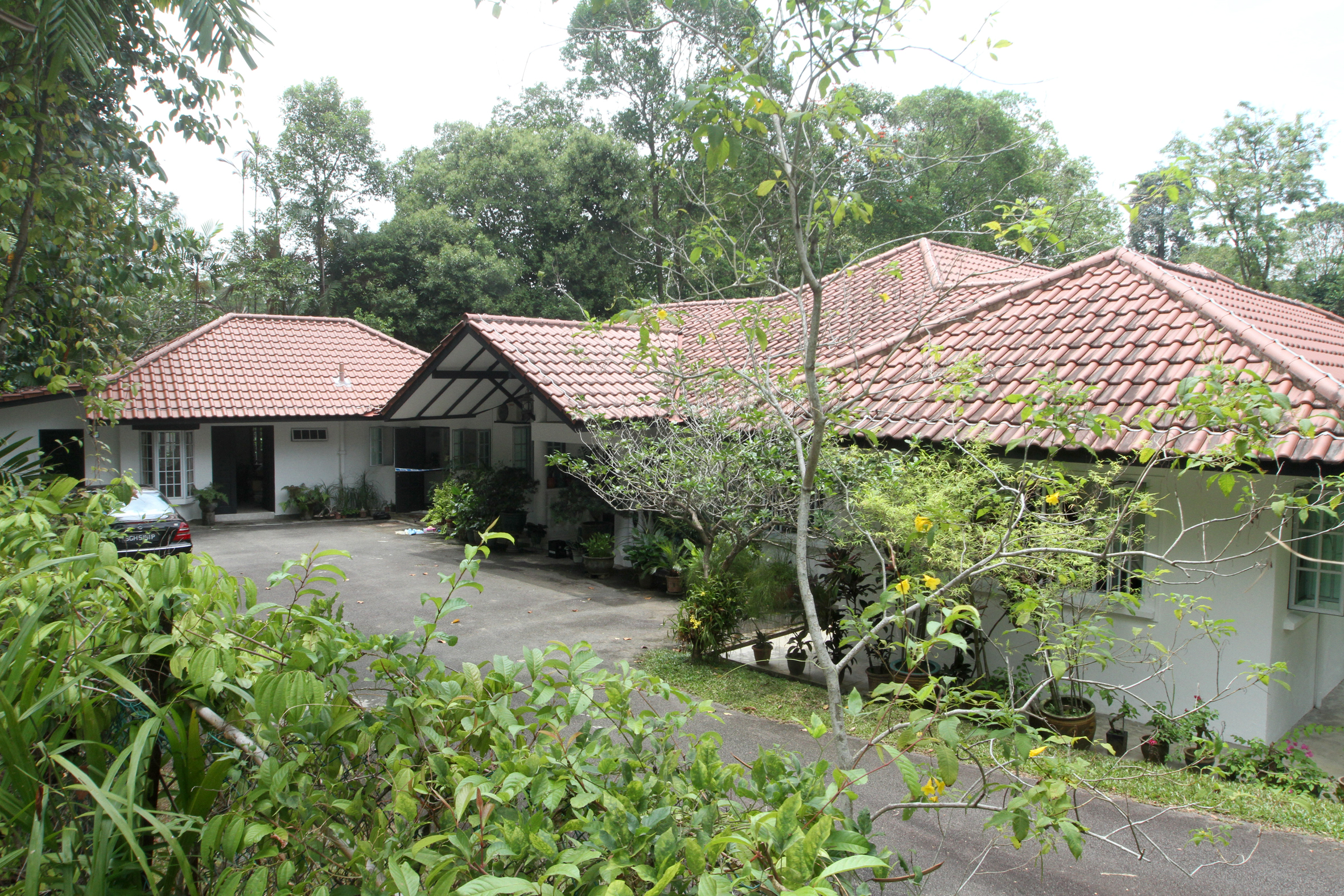
The upscale Victoria Park Road bungalow in Bukit Timah belonging to Ms Nancy Gan. Photo: The Straits Times

The prosecution: Attack was deliberate

The prosecution described Dewi Sukowati’s attack on Madam Nancy Gan as “indisputably deliberate”.

Deputy Public Prosecutor (DPP) Chee Min Ping said that her fatal assault on the 69-year-old victim was made up of three distinct acts.

The first: Grabbing her by the hair with both hands and swinging her head against a wall.

The second: Slamming the back of her bleeding head against the edge of a ceramic-tiled step.

The third: Flipping her face down into a swimming pool.

Urging Judicial Commissioner Foo Chee Hock to jail Dewi for 20 years, DPP Chee said: “After the first act, the accused had 10 minutes to compose herself and calm herself down.”

But she realised Madam Gan was still alive and hatched a plan to drown her in the pool.

While noting that, according to Dewi, Madam Gan had hit her with a tray, DPP Chee said: “Even if the accused had formed the perception that the deceased was at times particular and impatient with her… killing in the context of an employer-domestic worker (relationship) must only be regarded as completely disproportionate and unjustifiable.

“The deceased’s acts in this case fall far short of physical abuse.”

The defence: Maid was physically abused

Dewi Sukowati’s lawyer, Mr Mohamed Muzammil Mohamed, asked the court to jail her for between 10 and 12 years.

In her mitigation, he said that his client had been physically abused by socialite Nancy Gan.

He said that on her first day of work, Madam Gan had poked her on the head and hit her with a broomstick.

Mr Muzammil added that in Dewi’s few days of employment, Madam Gan had kicked her on the back and hit her fingers with a plate.

He told the court that Madam Gan had also hit one of her previous maids.

His legal team managed to track down Ms Nurul Putri Mildanti, who had worked for Madam Gan in 2013, in Indonesia, he said.

“According to Nurul Putri, her said employer was a hot-tempered and very impatient person who threw things like trays and other things within her reach at her if she was angry,” Mr Muzammil said.

“There was an occasion when Nurul Putri was hit and scratched on her hand by Madam Gan.”

He also explained how Dewi, despite being too young to work in Singapore, had managed to circumvent the law.

She had been introduced to a recruiter known only as Pak Bangun, who ran an unaccredited maid employment agency, and he had applied for a passport for her.

When she received the passport from him, she noticed that her date of birth was stated as Aug 5, 1990, even though she was born five years later, Mr Muzammil said.

Pak Bangun told Dewi to lie about her age and date of birth if she was asked about them.

Stressing that his client was an underage worker at the time of the offence, Mr Muzammil said: “The accused was a victim of human trafficking when she came to Singapore to work…

“The accused did not plan or premeditate to cause the death of the victim.”

ashaffiq@sph.com.sg


This article was first published on June 01, 2016.
Get The New Paper for more stories.

Image: 
Publication Date: 
Wednesday, June 1, 2016 – 17:00
Keywords: 
Send to mobile app: 
Source: 


Story Type: 
Others

Source link

Movie Review: A Hologram For The King (M18)

What is it about Tom Hanks that makes him so pleasant to watch?

Even in a movie that has neither climax nor tension, the veteran Hollywood actor makes it very easy to stay on for the entire ride.

Hanks plays Alan Clay…

Source link

Defiant Thai junta leader rebukes 'haters' with power vow

BANGKOK – Thailand’s junta leader swatted away his critics Wednesday vowing to remain in power “despite how much you hate me”, as political tensions simmer ahead of a referendum the military says will pave the way for elections.

Thailand’s mercurial Prime Minister Prayut Chan-O-Cha seized power two years ago from the elected government, promising to heal the country’s bitter decade-long political divide.

But critics say his regime has curbed free speech, outlawed political activities and has penned a new charter to entrench its role in government.

“I won’t go anywhere as long as the country is not at peace and in order. I won’t leave, despite how much you hate me,” Prayut, who is renowned for his often irate outbursts, said in remarks to a forum in Bangkok.

On the surface, Thailand’s political climate has calmed significantly under the junta, after years of competing street protests that often turned deadly.

But disquiet is returning ahead of an August referendum on their charter, despite a new law punishing campaigning in the run up to the vote with 10 years in prison.

The junta has promised elections will go ahead in 2017 but has not clarified what will happen if the charter is rejected in the referendum, raising fears the timetable will slip once again.

On Wednesday Prayut also defended the sweeping powers granted to him as junta chief under a law known as Section 44.

“It is still necessary to use Section 44 to ensure peace and move (the country) towards an election… there are still some politicians expressing their opinions,” he said.

His comments come after the junta appeared to be loosening its grip on the country by lifting travel restrictions on many former politicians and promising to move its “attitude adjustment” sessions — a common punishment for critics — from military camps to government buildings and police stations.

Critics say the junta is bent on dismantling the powerful political network run by former premier Thaksin Shinawatra, whose parties have dominated the polls but are reviled by Bangkok’s military-allied elite.

Analysts say Thailand’s political troubles are exacerbated by the failing health of its 88-year-old monarch Bhumibol Adulyadej as competing elites jostle for power ahead of the succession.

Image: 
Category: 
Publication Date: 
Wednesday, June 1, 2016 – 15:12
Send to mobile app: 
Source: 


Story Type: 
Others

Source link

Hong Kong police in court over 'beating' protester

HONG KONG – Seven Hong Kong police officers were in court Wednesday over the beating of a pro-democracy protester during mass rallies in 2014, an incident which was captured on film and beamed around the world.

On the first day of their highly anticipated trial, the seven men all pleaded not guilty to the attack on Civic Party activist Ken Tsang.

Video footage of the assault, filmed by local media near the city’s government headquarters, shocked residents and dented their faith in the usually trusted police force.

Police have been criticised for their heavy-handed treatment of protesters during the rallies, which brought parts of the city to a standstill for more than two months. The demonstrators were asking for fully free elections for their future leaders.

Pro-police supporters gathered outside court, chanting “Love Hong Kong” and “We support our police force”.

One lone pro-democracy protester set light to a photo of the officers, which was quickly doused by police.

The seven men, including senior officers, are charged with causing grievous bodily harm with intent on Tsang, while one also faces an allegation of common assault.

They were suspended from duty after their arrests.

The case is likely to centre around identification of those involved, whose faces were not completely clear in the dimly lit televised footage.

In a short first-day hearing, prosecution lawyers said five videos would be shown as evidence.

The defence have said they would challenge the authenticity of the videos.

Footage captured by local network TVB showed a group of men hauling a handcuffed Tsang to a dark corner in a public park, where he was beaten.

One man stood over him punching him while three others were seen repeatedly kicking him.

The accused officers sat stern-faced in court Wednesday, wearing suits and striped ties, speaking only to enter their pleas.

The hearing was cut short when lawyers said they needed time to study a new statement given by Tsang, who was not in court.

The trial will resume Thursday and is likely to take 20 days.

Tsang was himself sentenced to five weeks in prison Monday for assaulting and resisting officers after he splashed liquid on police on the same night he was beaten.

Tsang, who denied the charges, has said accusations against him were to distract attention from his case against the police.

The two incidents took place at the height of the mass protests.

Nearly 1,000 people were arrested during the rallies, including student pro-democracy leader Joshua Wong, who faces two protest-related verdicts in June.

The cases come as tensions remain high in the semi-autonomous city, with fears growing that Beijing is tightening its grip.

Hong Kong was returned to China in 1997 under a “one country, two systems” agreement and enjoys much greater freedoms than in mainland China, but there are concerns those freedoms are being eroded.

Image: 
Category: 
Publication Date: 
Wednesday, June 1, 2016 – 15:06
Send to mobile app: 
Source: 


Story Type: 
Others

Source link

CPF recovers $516 million in arrears in 2015

More than 360,000 people in Singapore had their Central Provident Fund (CPF) savings put in order last year after arrears by their employers were settled.

The CPF Board recovered about $516.0 million in CPF arrears owed to them by their employers in 2015, said the board in a statement today (June 1).

The arrears were due to underpayment, non-payment and late payment of CPF contributions by employers.

About $15.2 million were recovered from cases of underpayment or non-payment by 1,840 employers for the accounts of 14,708 people.

One interesting case saw the board recovering about $2 million in CPF arrears over eight years for 70 drivers working for a logistics company.

It came to light after a driver complained to the board It then found that the company had wrongly classified its drivers under a contract for service, and hence did not pay them CPF contributions.

About $500.8 million recovered were late CPF contributions from an average of about 5,600 employers each month in 2015.

Most of the late payments were settled within a month.

The CPF Board group director of Employer Collections and Enforcement Mr Ng Hock Keong said: “To facilitate the timely payment of CPF contributions, we are constantly improving the payment process for employers. More than eight in 10 employers are submitting their contributions to us electronically.”

Close to 90 per cent of them use CPF e-Submit@web, which auto-computes the CPF contributions. The recently introduced CPF e-Submit@mobile enables employers of small companies to submit their CPF contributions via their mobile devices.

The board piloted CPF e-Submit@mobile in the Google Play Store in end-January 2016. The application was made available in the Apple App Store in April 2016.

It allows employers with 10 or fewer employees to submit their CPF contributions via their mobile devices, with secure payment options via e-NETS or OCBC ATMs.

chenj@sph.com.sg

Image: 
Category: 
Publication Date: 
Wednesday, June 1, 2016 – 14:57
Send to mobile app: 
Source: 


Story Type: 
Rewritten Story

Source link

Students in IP schools more confident of getting degree at least

Secondary school students in Integrated Programme (IP) schools are 2½ times more confident of attaining at least a university degree, compared to their peers in other schools, according to a new study.

It also found that parents’ expectations played a more important role in children’s confidence in pursuing higher education, compared to other factors such as type of school.

The study, which also pointed to some extent of class differences between schools, was commissioned and conducted by the Singapore Children’s Society (SCS) and completed in April. The society offers a range of services for children, youth and families. It also does research on related social trends.

Its principal investigator is Ms Ong Xiang Ling, an SCS research officer, and its research adviser is Dr Cheung Hoi Shan, a post-doctoral fellow at the National University of Singapore (NUS).

Their research findings were presented last Friday at a global conference hosted by NUS’ Centre for Family and Population Research.

Ms Ong said the study’s key aim was to find out if students from different schools have varying educational aspirations, and how differently they perceived their academic abilities. She added that there has not been much research or data on social stratification in local schools.

From September to December last year, 601 students aged between nine and 17 were surveyed, along with their parents.

The students came from a spread of housing estates and schools across Singapore. They were divided into three school categories.

Type 1 comprised IP schools, which allow students to skip the O levels, and primary schools which offered the Gifted Education Programme. Primary schools affiliated to IP schools were also in this group.

Type 2 were government-aided schools and autonomous schools which did not offer the IP, and Type 3 were government schools.

The study involved 31, 48 and 111 schools from the three categories respectively. The researchers randomly selected housing estates nearest schools, after identifying geographical areas with the highest make-up of Primary 4 to Secondary 4 schoolchildren based on national census statistics.

Ms Ong said the sample size is representative of Singapore’s population in terms of gender, ethnic composition and housing type. To ensure a fair representation, not more than 15 students were picked from a single school.

Door-to-door surveys were conducted by interviewers from a local research company. Parents and children were interviewed separately.

The interviews covered topics such as parents’ and children’s aspirations, and how confident they were of their academic abilities. They were also asked to indicate socio-economic status (SES) information such as if they lived in private housing, if any parent is a university graduate and if their monthly household income exceeded $10,000.

Ms Ong said the study threw up a few significant findings. First, children from Type 1 schools were more likely to have high educational aspirations. For instance, about 80 per cent of Type 1 secondary school students were highly confident that they could get at least a university degree, compared to 54 per cent and 42 per cent for Type 2 and 3 students respectively.

There was no difference in confidence levels for primary school pupils, perhaps because parents feel primary school is less important than secondary school, said Ms Ong. “Confidence levels get a boost when students are in Type 1 secondary schools. Parents tend to believe that if the child is in a good secondary school, he or she will be more likely to achieve good results at the national exams, which are high- stakes exams that determine the child’s tertiary pathways.”

In secondary school, students’ school type and SES influenced their aspirations but parents’ expectations played a more important role, according to the study.

About 88 per cent of parents whose children attend Type I secondary schools were highly confident of their children’s ability to attain a degree, compared to 70 per cent and 52 per cent for Type 2 and Type 3 respectively.

Similarly, among the multiple factors, only parents’ expectations made a difference in primary school pupils’ confidence.

Ms Ong said: “It is not so much the type of school that matters. Parents should not judge their children’s abilities based on the secondary schools they are in. If they can do this, it will help the confidence of children in non-elite secondary schools.”

Ms Ong and Dr Cheung are now working on a research monograph, or a compilation of their study’s results, to be made public this year.

More findings from the study will be released next month.

Study: Kids from affluent families more likely in IP, GEP schools

Children from higher socio-economic backgrounds are more likely to attend Integrated Programme (IP) secondary schools and their affiliated primary schools, as well as those that offer the Gifted Education Programme (GEP).

This was a key finding of a recent study that examined class stratification in schools and if students from different schools had different levels of educational aspirations.

The study was done by Ms Ong Xiang Ling, its principal investigator who is a Singapore Children’s Society research officer, and Dr Cheung Hoi Shan, a post-doctoral fellow at the National University of Singapore.

Their work pointed to a disproportionate number of students from affluent backgrounds in IP and GEP schools.

In the study, schools were divided into three groups and about 200 students from each group were polled. Type 1 were IP schools, their affiliated primary schools, as well as primary schools which offered the GEP. Type 2 were government-aided schools and autonomous schools which did not offer the IP, and Type 3 were government schools.

Data showed that nearly 41 per cent of Type 1 secondary school students came from families with a monthly household income that exceeded $10,000, compared to 7 per cent in Type 3 schools. About 31 per cent of Type 1 students lived in private homes, compared to 2 per cent in Type 3. About 54 per cent of Type 1 students had at least one parent with university education, compared to 17 per cent in Type 3.

The fact that there is a significant disparity in secondary schools, where entry is supposed to be by merit, points to a possible perpetuation of class differences in schools, said the researchers. Dr Cheung said: “The observation from many news reports… does point to some form of social stratification in our schools; so in elite schools you tend to have families represented by higher socio-economic status (SES) and in other neighbourhood schools you tend to have the reverse.”

She added: “We see SES differences also in secondary schools, where entry is supposed to be determined in large part by the children’s results in the PSLE. Entry is not about distance or alumni associations, yet we also see marked SES differences in elite secondary schools. So it may point to a perpetuation – if you started off with high SES, chances are because you have more resources, you are better prepared for PSLE, so you are more likely to get into good secondary schools.”

Said Ms Ong: “Higher SES children are more likely to be in Type 1 schools, and being in Type 1 schools makes them more likely to have high confidence in attaining at least a university degree. Then it would mean that there could be a perpetuation of class differences, because research has shown that if you have high confidence of attaining a university degree, you are more likely to actually get a university degree.”

ateng@sph.com.sg


This article was first published on June 01, 2016.
Get a copy of The Straits Times or go to straitstimes.com for more stories.

Image: 
Category: 
Publication Date: 
Wednesday, June 1, 2016 – 15:00
Send to mobile app: 
Source: 


Story Type: 
Others

Source link