Home Blog Page 3756

Completing the climb

KOTA KINABALU – Almost a year after a deadly earthquake struck Mount Kinabalu in Malaysia, 20 Singaporeans who lost loved ones in the disaster began their own ascent up the mountain.

They are making the climb to finish what the victims could not, and pay tribute to those who perished on this day last year. Ten Singaporeans died, of which seven were Primary 6 pupils from Tanjong Katong Primary School (TKPS).

Donning white T-shirts with the tag Omega Challenge Braveheart, the group did a cheer and said a prayer with family members of the late Sabah trainers before setting off from Kinabalu Park headquarters yesterday morning to Timpohon Gate, the starting point for the trek.

They will take part in a ceremony on the mountain this morning at 7.15am – the exact time the earthquake hit – and plan to reach the summit tomorrow. The team, comprising former schoolmates, parents and relatives of the victims, remained energetic during the hike.

Mrs Karen Jhala, 49, whose daughter Sonia was among the victims, said the team wanted to “complete what was left incomplete”.

“This has brought the family together,” said Sonia’s uncle, Mr Trilok Jhala, 57, who is also on the climb. “We are trying our best. We have been training for some time.”

The commodity trader said the family trained mostly at MacRitchie Reservoir and at a Housing Board block to practise climbing steps. Mr John Quok made the trip with his son Elliot, a former TKPS pupil.

The 45-year-old, who works in investment, said he has been training for nine months. “What I want to achieve is to retrace what the children had started,” he said. The group declined to speak at length to The Sunday Times, citing an exclusive contract for a documentary.

During yesterday’s climb, they split up into several groups. Those ahead left encouraging messages for the others at rest stops along the way. The first climbers arrived at Laban Rata, where they will rest for the night, at 3.45pm yesterday. The last members arrived at night.

They are not alone in this journey.

Mr James Ho, 46, whose daughter Rachel died in the quake, has been corresponding with the group members since they arrived. “The families, as a whole, have been supporting one another and giving one another strength,” said the banker, who did not go on the trip.

Mr Ho added that Sonia’s father, Mr Jaidipsinh Jhala, 49, has been asking if he would like to pass on any messages to Rachel. “He has been really big-hearted in doing things for us, since we are not there.”

Pastry chef Hazreen Hussain, 39, had pulled out from the climb in February at her daughter Hanis Umairah’s request.

Hanis was on the school trip last year and lost her best friend Peony Wee in the quake. With the anniversary of the incident approaching, Madam Hazreen said Hanis started having flashbacks last week.

Although she could not be with the climbers, Madam Hazreen is glad the others made it. “I appreciate it so much that they want to complete the journey for the kids.”

Malaysian trainers Valerian Joannes (left) and Ricky Masirin were among those who died while guiding the pupils of Tanjong Katong Primary School up Mount Kinabalu in June last year. (Photo: Mountain Torq)

Trail rerouted to avoid damaged areas

A part of the Via Ferrata trail that the Tanjong Katong Primary School pupils were on when the earthquake struck last June has been rerouted to avoid the damaged areas on Mount Kinabalu.

The Walk the Torq route, located 3,520m above sea level, was partly damaged by falling rocks set off by the quake and closed for several months to allow for repair works and the diversion. Equipment lost or destroyed then has also been replaced.

Since its reopening in January, the upgraded route receives about 100 climbers weekly, down from about 150 previously.

Ms Quek I-Gek, marketing director of Mountain Torq, which operates the Via Ferrata trail on Mount Kinabalu, said: “We rerouted the trek as it was too close to the original summit trail where most of the rocks landed during the rockfall.”

The trail, which takes about one to two hours to complete, is designed for beginners and family groups, and caters for individuals aged 10 and above. It is also peppered with spots for visitors to take pictures and enjoy views of the picturesque mountain.

A new hanging ladder feature has been introduced on the route, which also boasts other highlights such as a two-cable monkey bridge.

Mountain Torq also runs another Via Ferrata route, known as the Low’s Peak Circuit, which is designed for those with above average fitness. Several safety features have been added to this circuit.

For instance, a new clip system on a single continuous line has been installed along the circuit. Typically, climbers on the Via Ferrata trail have to clip and unclip their harnesses every few metres as they progress along the rock.

The new system means hikers can move along the rock face more quickly in an emergency.

Priorities change – it’s more time with family

Every day, banker James Ho, who lost his daughter when an earthquake struck Mount Kinabalu one year ago, looks forward to a simple dinner with his family after work.

For Mr Ho, 46, those intimate moments over dinner are “the highlight of the day for me now”.

His daughter, Rachel, 12, was one of seven Primary 6 pupils from Tanjong Katong Primary School (TKPS) who died in the earthquake on June 5 last year. Two teachers from the school and a Singaporean adventure guide on the TKPS expedition also lost their lives.

Every day, banker James Ho, who lost his daughter Rachel in the earthquake, looks forward to returning home after work to have a simple dinner with his family. He is seen here with his wife Peh Lay Ling, 46, sons Ryan (right) and Raphael, and a painting of Rachel and her mother. (Photo: The Straits Times)

Mr Ho, 46, told The Sunday Times that Rachel’s death has given him a new perspective – that there is more to life than his career. The bubbly girl left behind her parents and brothers, Ryan, 16, and Raphael, eight.

“Life is so fragile that spending time together as a family is a luxury,” he shared. “Just having the kids come home every day, telling us highlights and seeing them smile, is by itself a fulfilling day for us.”

On this day last year, a 5.9-magnitude quake hit the western side of the 4,095m-high mountain, dislodging boulders and rocks – some the size of houses – and hurtling them down onto climbers. The disaster claimed 18 lives, including the 10 Singaporeans, and injured many others.

One year on, family and close friends of the Singaporeans who went on that fateful trip have found ways to cope and made adjustments to their lives.

Some have reordered priorities to place their families first, while others find comfort in meeting up with the families of other victims. A few have become more spiritual, and at least one family has relocated overseas.

“Most people have found their comfort zone,” Mr Ho said. “We’ve left Rachel’s things, such as her toys, where they are, making us feel that she is always there for us.”

When Rachel was alive, Mr Ho would sit by her bedside every night until she fell asleep. The young girl, who played for the TKPS netball team and dreamt of representing Singapore, would share secrets with him.

“I miss those chats we had and also seeing her grow up. I’d have loved to see her blossom into a young lady and get married one day,” he said.

The Ho family will spend the most part of today together, looking through old photos and sharing memories Rachel has left for them.

“It isn’t going to be an easy first anniversary. It is never easy losing a child,” Mr Ho noted. “But it will be a day for us to celebrate her life.”

Altogether, 29 Primary 6 pupils and eight teachers, accompanied by three guides from Singapore, had gone on the trip last year.

Many of the children were budding athletes, and were selected for the trip as part of the school’s annual leadership programme, called the Omega Challenge.

Some pupils returned home last year with injuries such as torn ankle tendons and fractured arms.

Among them was Emyr Uzayr, 13, who suffered a fractured skull, among other injuries. He now attends Tanjong Katong Secondary School.

Emyr Uzayr, who suffered a fractured skull, now attends Tanjong Katong Secondary School. “Education and grades are not the No. 1 priorities any more,” says his father. (Photo: The Straits Times)

Emyr’s father, operations manager Sadri Farick, 37, said: “Education and grades are not the No. 1 priorities any more. We didn’t give him any stress when he was studying for the PSLE. Now, being in the company of family is much more important.”

In the initial months following the quake, the families of the pupils got closer, sharing their ups and downs. Through messages and meet-ups, they drew strength from one another.

Now, most families are moving on, said Mr Sadri, as the children progress on to secondary schools.

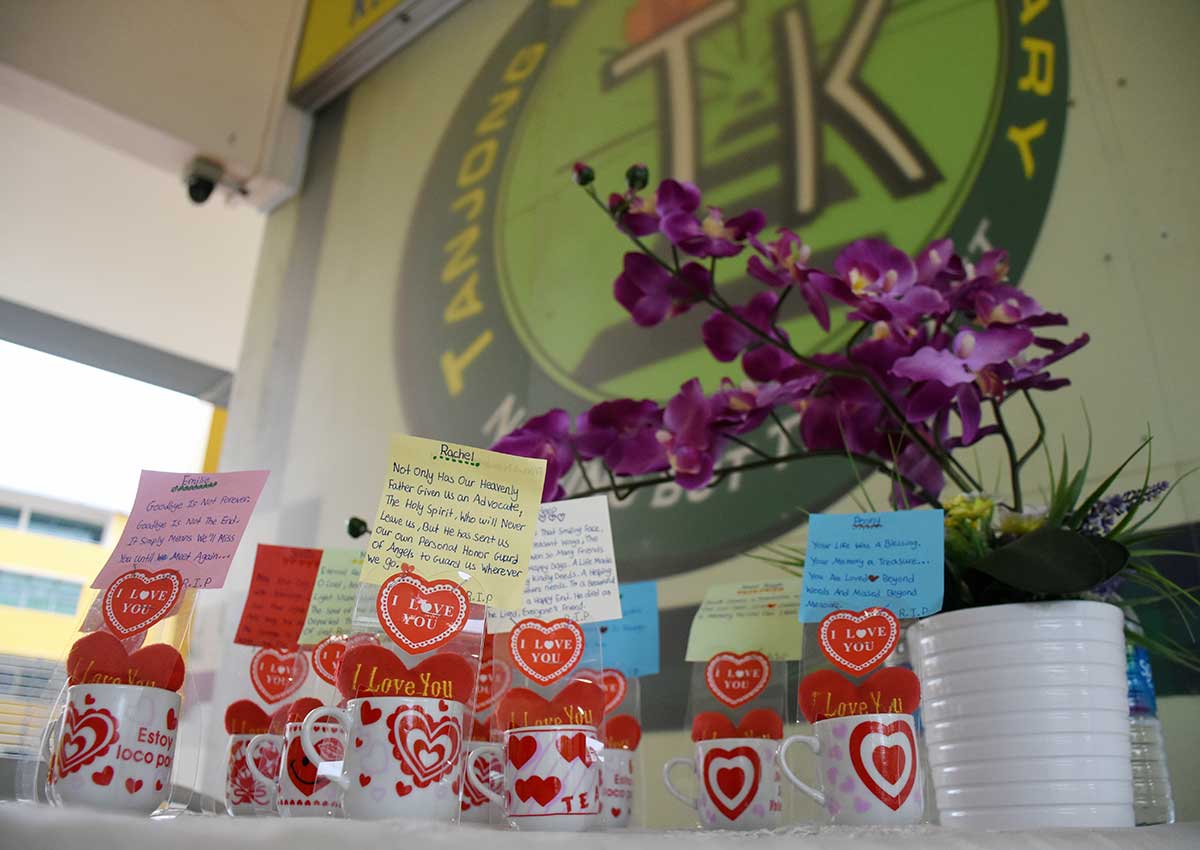
The tragedy last June happened more than 1,500km away in Sabah, but plunged Singapore into mourning. Then, the Prime Minister’s Office declared June 8 a day of national remembrance. State flags at government buildings were flown at half-mast. That week, TKPS set up a tribute site at its canteen for people to leave mementoes and pen their condolences.

When the school reopened for the new term, pupils and teachers returned to the sober reality that their peers were not coming back.

For TKPS teacher Ashiq Hashim, 36, the desk next to his – once occupied by the late Mr Mohammad Ghazi Mohamed – remains empty.

He had lost a cherished friend of 22 years. They met as 13-year-olds at Victoria School, and went on to become teachers at TKPS. Mr Ghazi, who left behind his wife Khalidal Huda Sukaimi and children, was remembered by many as a teacher with a sense of humour.

“I miss our conversations, and having him around as my confidant,” Mr Ashiq said. “But life has to go on.”

Camp Challenge instructor Muhammad Daanish Amran, one of the three adventure guides accompanying the group, also lost his life. Mr Daanish, 22, left behind his parents and two younger siblings.

Drafter Farizah Jasin, 25, said Mr Daanish was a jovial person who would often go out of his way to help others.The close friends had promised to attend each other’s polytechnic graduation. But that agreement was not to be. “I felt sad because he wasn’t there, but I believe he is in a better place, a happier place, now,” she said.

Several pupils and parents, including those whose children died in the quake, intend to scale the mountain on the anniversary of the tragedy. Plans to trek up Mount Kinabalu came about a month after the disaster.

Among those making the climb are Mr Jaidipsinh Jhala and his wife Karen, both 49. Their daughter Sonia, one of the seven pupils killed in the quake, had worked hard to be selected for the expedition. Mrs Jhala told The Sunday Times last year that the trip would bring some closure for her family.

“We want to finish what Sonia couldn’t finish, to be where she would have been.”

Baby on the way, but dad still misses late daughter

A year after losing their daughter Peony in the earthquake on Mount Kinabalu, Mr Alson Wee, 52, and his wife will be welcoming a new addition – a baby boy – to the family.

The boy is due on June 9, four days after the one-year anniversary of the quake.

Mr Wee, who works in shipping, is looking forward to having a son, but still misses his daughter. “I still miss hearing her cheerful voice,” he said. “I miss talking to her.”

Peony, named after the flower, was one of 10 Singaporeans killed in the quake last June. The Tanjong Katong Primary School (TKPS) pupil would have been 13 this year.

Peony was adventurous and loved the outdoors. (Photo: The Straits Times)

Mr Wee had objected to his daughter going on the school trip.

But her mother, Madam Luo Jin, 44, had given Peony permission after the girl pleaded.

Peony was adventurous, loved the outdoors and often helped out at her mother’s traditional Chinese medicine centre in her spare time. She left behind a 15-year-old brother and a three-year-old sister.

She doted on her sister, often taking her to the playground during her free time.

Peony’s aunt, Mrs May Mah, 45, said there were tough moments for the family over the past year – such as on Peony’s birthday on April 30.

She makes an effort to spend more time with the family.

“I would talk to them, play with the kids and keep Peony’s mother company whenever she wants to meet up,” she said.

Together with the family of TKPS pupil Rachel Ho, another victim in the tragedy, the Wee family will be praying for the girls at a temple in Punggol today.

Both girls played in the school’s netball team and were good friends. In death, their urns were placed side by side.

She lost her hero, who saved pupils during quake

They had been due to marry last November. But for nurse Jessica Veronica Sikta, 26, that promise would never be fulfilled.

Her fiance, adventure trainer Valerian Joannes, was among those who died in the earthquake that struck Mount Kinabalu last June.

Ms Sikta still wears their engagement ring. Mr Joannes was one of the trainers guiding pupils when the quake hit last June. The two were set to marry last November. (Photo: Jessica Veronica Sikta)

Ms Sikta, who still wears the engagement ring – a simple silver band – given to her by Mr Joannes, told The Sunday Times: “I can only imagine how life could be brighter with him, a caring, loving responsible future husband and father to our children.

“Even though it won’t happen, it still brings a smile to my face just thinking about it.”

Mr Joannes, who would have been 28 this year, was one of the five adventure trainers guiding the pupils through a Via Ferrata trail on June 5 last year when the quake hit, killing him and colleague Ricky Masirin.

Ms Sikta said: “It was the darkest day of my life. Even now, I still can’t believe it happened.”

As a nurse, she is trained to perform last offices but had Mr Joannes’ family go ahead and handle the procedures. “I’d never have imagined doing it for my beloved fiance. It was a lot to handle,” she said. For his final send-off, Mr Joannes was dressed in a white shirt – the one he wore during their engagement.

The couple, who were engaged in December 2014, knew each other when they were still teens in 2003. They met at the St Pius X Catholic Church in Bundu Tuhan, at the foothills of Mount Kinabalu. Mr Joannes was a drummer in the church band.

From best friends, they became lovers. “He taught me to be kind to others and forgiving towards another. He also taught me to love selflessly,” she said. “I’m thankful for the love we shared.”

Over the past year, Ms Sikta has found peace in reminiscing their tender moments together and devoting time to prayer. She also spends her weekend with her family and Mr Joannes’ family.

“I miss his jokes. I miss him when he laughs at my jokes too,” she said. “I miss the way we would just sit and discuss the future.”

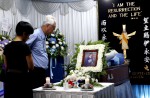
Mr Joannes was given a hero’s send-off at his funeral, which was packed with mourners who came to pay their last respects.

The fallen adventure trainer, who worked with Mountain Torq that operates the Via Ferrata routes on Mount Kinabalu, had reportedly shielded the Tanjong Katong Primary School pupils from the falling rocks during the quake.

“He was my hero, and he proved to be our hero too,” Ms Sikta said. To remember her fiance, she will be scaling Mount Kinabalu on the anniversary of the disaster to finish one of his unfulfilled requests.

“To share a moment together on top of Mount Kinabalu was one of the items on Valerian’s wish list,” said Ms Sikta, who hopes to visit the trek where Mr Joannes used to work and observe a moment of silence. ‘I would like to complete his wish, even though it would only be me without him.”

It’s been hard but trainers coping well

Moments before an earthquake shook Mount Kinabalu on June 5 last year, adventure trainer Hilary Hendry Augustinus from Malaysian mountaineering company Mountain Torq recalled the Tanjong Katong Primary School (TKPS) pupils in his group taking selfies and chatting happily among themselves.

That morning, the 35-year-old, who had been tasked with taking pictures for his employer’s Facebook page, was leading the first of five groups of pupils up a simplified Via Ferrata route on the mountain when disaster struck.

A 5.9-magnitude earthquake sent rocks – some the size of houses – raining down on the group.

Later, Mr Augustinus, who injured his back and right knee, found out that his friends and colleagues Valerian Joannes and Ricky Masirin, who were among the five trainers leading the TKPS expedition, had been killed. Two other trainers – Mr James Maikol, 30, and Mr Hajiris Sulomin, 41 – had survived.

It has not been an easy year since for Mr Augustinus, whose livelihood was affected when Mount Kinabalu closed for a few months following the disaster. The mountain was fully reopened only in December last year.

But the Malaysian is thankful for the support from many people, including strangers from Singapore. He said: “It makes me want to be better and stronger for them.”

Like him, other mountain guides and trainers are slowly moving on. In the aftermath of the quake, they have received support in various forms such as the Sabah Earthquake Fund, set up in response to requests from the public here. From the donations collected, a portion, or $100,000, was split between the Mountain Torq trainers and Sabah mountain guides.

Trainer Hilary Hendry Augustinus (right) speaking with quake victim Sonia Jhala’s parents Karen and Jaidipsinh at TKPS last year. (Photo: The Straits Times)

Mountain Torq trainers told The Sunday Times that they are touched by the concern from Singaporeans. Mr Sulomin will use the donations to support his wife and children, while Mr Augustinus and Mr Maikol will keep the money for future needs. Right now, the trio are focused on adjusting back to work.

When contacted, the families of the two Mountain Torq trainers who died in the quake said they are coming to terms with their loss. Student Jennifer Masirin, 28, whose brother Ricky was among those killed, said: “I miss having him around, but I believe he is now an angel watching over us.”

According to Sabah Parks, climbers have been trickling back to Mount Kinabalu since it fully reopened in December. There were more than 3,300 climbers in April, up from around 2,000 a month between December and February. Before the closure, it saw 5,000 to 6,000 climbers a month.

Kinabalu Park manager Yassin Miki said that since the quake in June last year, about 140 aftershocks have been recorded.

But these have not stopped tourists from scaling the mountain, he said. “I believe more tourists will come, especially when the visitor facilities are back in full operation.”

Mountain Torq marketing director Quek I-Gek, 43, said its trainers, who take groups only through the Via Ferrata routes, are coping well.

“They were really happy when the mountain reopened. It meant that they could return to earning their livelihood as their families depend on them for financial support. Plus, they like living on the mountain. For them, life goes on,” she said.


This article was first published on June 5, 2016.
Get a copy of The Straits Times or go to straitstimes.com for more stories.

Image: 
Category: 
Publication Date: 
Sunday, June 5, 2016 – 15:07
Keywords: 
Send to mobile app: 
Source: 


Story Type: 
Others

Source link

Win VIP, Standard tickets to Singapore Coffee Festival 2016

This weekend sees a celebration of the office worker’s favourite beverage with Singapore Coffee Festival 2016, running from Jun 9 – 12 at the F1…

Source link

2015 Sabah quake: Tanjong Katong Primary remembers perished pupils, teachers

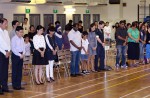
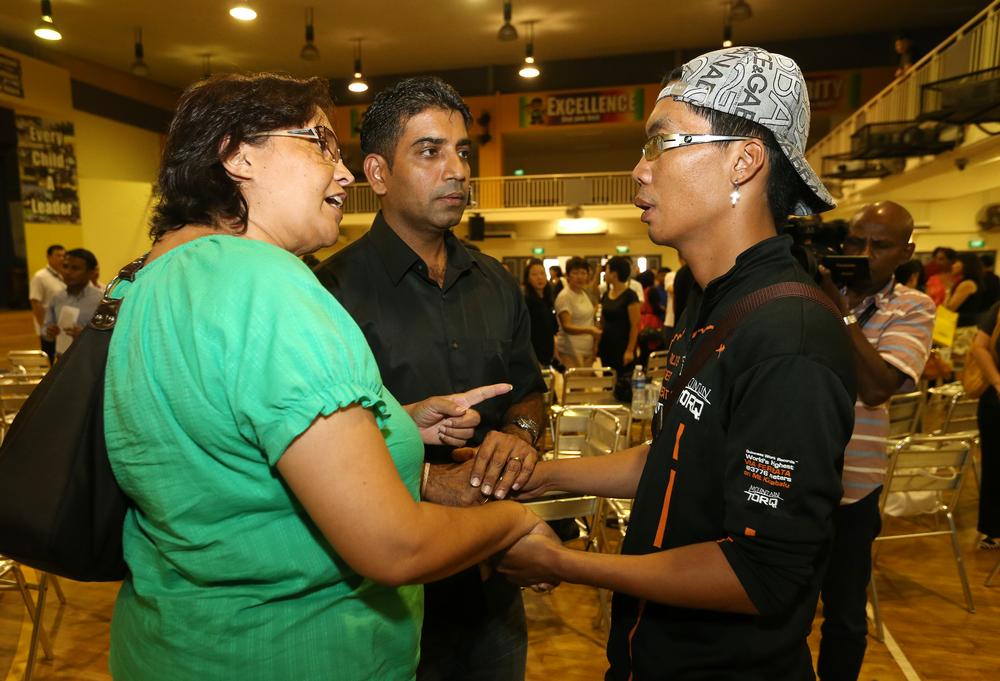
SINGAPORE – A minute of silence was observed at Tanjong Katong Primary School (TKPS) at 7.15am this morning (June 5), marking exactly a year after a deadly earthquake shook Mount Kinabalu and killed seven pupils and two teachers from the school.

The closed-door memorial event was attended by teachers and families of the victims, and lasted under 10 minutes, The Straits Times reported.

Principal Caroline Wu said it was “a very emotional morning”, as some wept and others exchanged hugs.

A memorial football match was also held for the late TKPS pupil Ameer Ryyan Mohd Adeed Sanjay, who was among those killed in the quake.

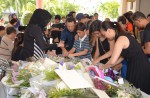
In Sabah, families, ex-schoolmates and former teachers gathered at Laban Rata Resthouse on Mount Kinabalu to remember the victims.

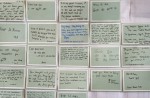
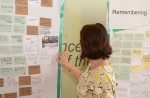
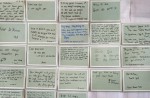
They lit candles and lay painted pebbles on a table where they gathered, and read messages written by the the victims’ loved ones and TKPS pupils.

The TKPS group was on a learning trip called Omega Challenge.

At 7.15am today, 20 Singaporeans started climbing Mount Kinabalu as part of Omega Challenge Braveheart, to pay tribute to the victims.

huizhen@sph.com.sg

Image: 
Category: 
Publication Date: 
Sunday, June 5, 2016 – 13:59
Keywords: 
Send to mobile app: 
Source: 


Story Type: 
Rewritten Story

Source link

Indonesian activists 'denied entry' into Singapore

The Singapore Embassy in Jakarta has refuted claims that a group championing the cause of the current Jakarta governor to run as an independent candidate was detained at Changi Airport. 

Source link

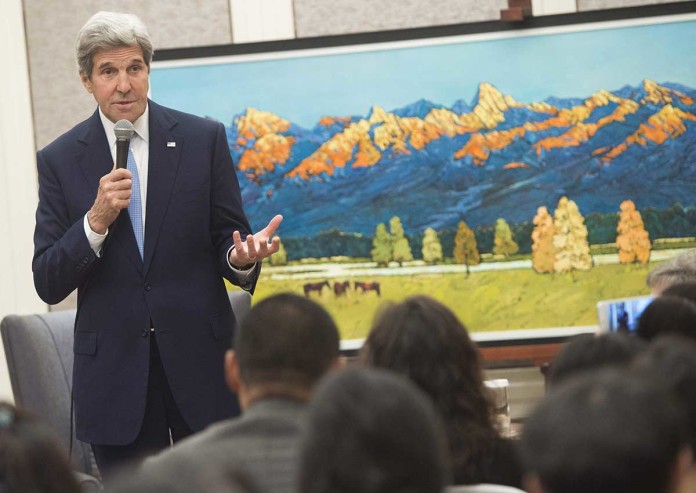
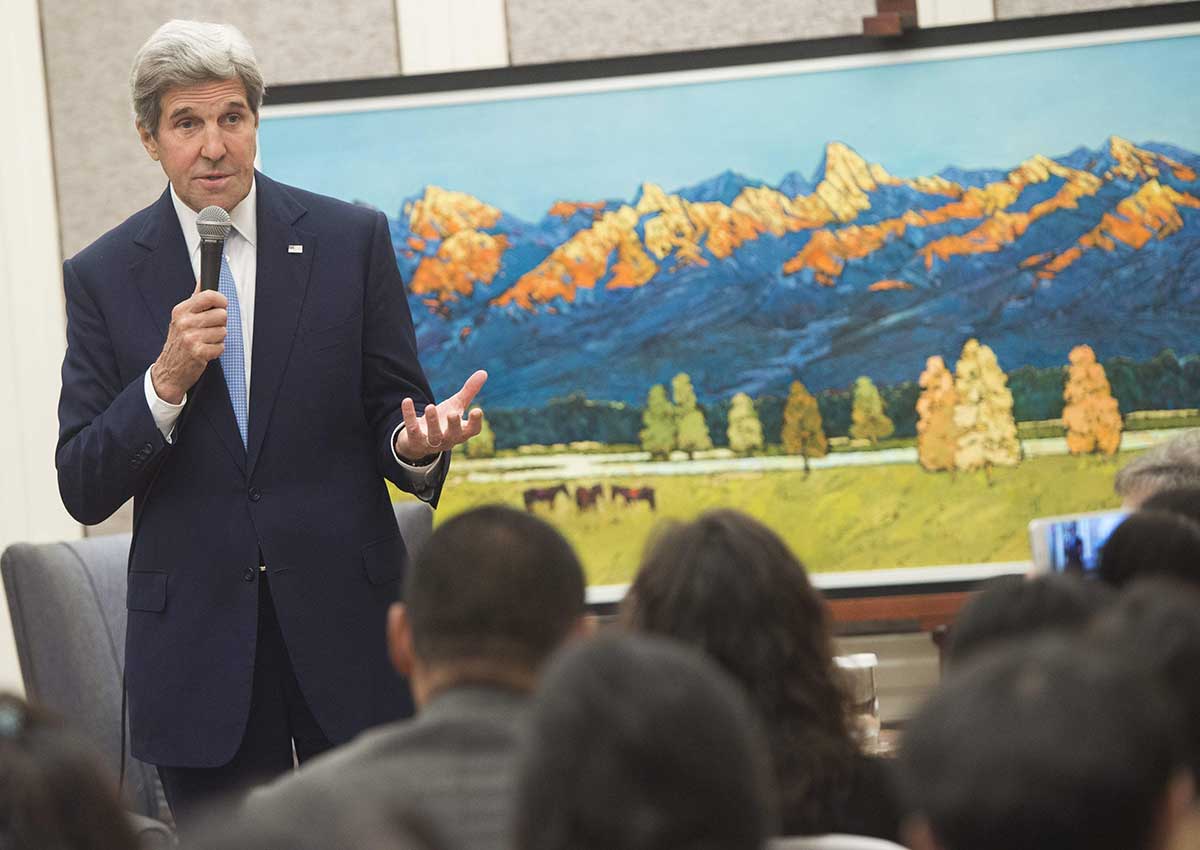
US Secretary of State Kerry visits'‘plucky' Mongolia

ULAN BATOR – US Secretary of State John Kerry arrived in Mongolia Sunday, the latest senior US official to make the trip to the mineral-rich country neighboured by Russia and China.

Kerry will stop in the capital Ulan Bator for several hours, where he is scheduled to meet with President Tsakhiagiin Elbegdorj, launch a new USAID programme and attend a festival of horse-racing and Mongolian wrestling.

“I think the label that attaches itself pretty naturally to Mongolia is ‘plucky democracy’,” a senior State Department official said ahead of Kerry’s visit.

Mongolia is “in a very, very tough neighbourhood”, the official added, noting the country depends on Russia for three-quarters of its oil and China for about 90 per cent of their trade.

“So it’s not an easy place to operate,” the official said, adding “Mongolia is a terrific partner to the United States and a good friend”.

Former secretary of state Hillary Clinton and US Vice President Joe Biden are among other top officials to have visited the country in recent years as America “pivots to Asia”.

The former Soviet nation of about three million people possesses enormous mineral resources and deposits of gold, copper and uranium, still largely untapped.

Its mineral resources saw the country achieve over 17 per cent growth in 2011, but that has since drastically fallen to under 3 per cent last year along with plummeting metal prices and capital flight.

Anglo-Australian mining giant Rio Tinto, one of the country’s key investors, has been hit by rising nationalist sentiment among Mongolians concerned about the growth of foreign firms as well as environmental damage from mining.

In 2012 the country passed a strict law on investment in “strategic” sectors and foreign direct investment collapsed. Parliament has since cancelled the controversial law.

In May Rio Tinto announced it would start work on an expansion of its giant gold and copper Oyu Tolgoi mine after years of gridlock, a huge project requiring a US$5.3 billion (S$7 billion) investment.

The State Department official acknowledged, in an answer to a question posed by a member of the press, that a US bid for the Tavan Tolgoi coal mine several years ago was hampered by a very slow process. The bid ultimately went to a Chinese contractor.

“We think that the regulatory environment and the legal environment in Mongolia needs to be improved,” the official said, after he was asked about transparency within the key sector.

Image: 
Category: 
Publication Date: 
Sunday, June 5, 2016 – 12:58
Send to mobile app: 
Source: 


Story Type: 
Others

Source link

Only Rio matters, says Schooling after beating Phelps

Singapore’s medal hopeful enjoys huge psychological boost ahead of Rio Olympics

In his biggest statement yet, Singapore swimming star Joseph Schooling ousted his childhood idol and the greatest Olympic gold-medal machine in history yesterday morning (Singapore time).

Schooling (above) clocked 51.58sec to beat record 18-time Olympic gold medallist Michael Phelps (51.65) and won the men’s 100m butterfly final at the Longhorn Aquatics Elite Invite.

It was at the same venue – the Lee and Joe Jamail Texas Swimming Center in the University of Texas – where a 15-year-old Phelps clocked his first world record, in the men’s 200m butterfly in 2001.

Records weren’t written there yesterday, but Schooling scored a psychological boost with victory over the American, just two months away from the Rio Olympics.

Schooling admitted it “felt great” to get his first win over Phelps, but he noted that the US great was still in hard training before the US trials and not in peak racing form. Phelps will be in at the US trials in Omaha later this month and Rio de Janeiro in August.

WILLPOWER

Said the 20-year-old: “It was great. My first time racing him was in 2011; five years later, finally I can get one up on him and what better, it’s 2016.

“But I’ve got to be even better in two months.”

Desire and talent, along with the unwavering support of parents Colin and May, brought Schooling to the US to study and train, and last year’s world championship bronze medallist used sheer willpower to touch home first in yesterday’s race.

Phelps, who will turn 31 on June 30, holds the world record for the 100m butterfly at 49.82sec, set in 2009.

Schooling’s national record for the event stands at 50.96, which he clocked at the 2015 world championships, and in an interview with US website Swimming World, the Singaporean said he had messed up his race yesterday, despite the win.

“I felt fine the first 25m; I was trying to find my stroke but I just never found it, so I just put my head down and tried to muscle it more,” said the Singaporean, who was third in the heats with 53.40sec.

“It started to hurt the last 20m or 25m, I saw Jack (Conger, who finished third) and Michael coming in, so I was trying to keep my head down and get my hand to the wall.

“I didn’t do a good job with my finish – I took like three kicks underwater and one stroke to get to the wall. It was pretty pathetic,” said the 2014 Asian Games 100m butterfly champion, who will also be racing in the 200m butterfly today.

Schooling is certain Phelps will be much faster in a couple of months, after the effects of his high-altitude training in Colorado have kicked in – the American also competed and won the men’s 100m freestyle before the butterfly race – and the Singaporean would have to improve in the last two months before Rio, as well.

Schooling has qualified for four events at the Olympics – the 100m butterfly and 200m butterfly, as well as the 100m freestyle and 200m freestyle.

In two weeks, he will join up with the national team in Florida for a 14-day training camp, before returning to Texas ahead of the Rio Olympics, which is scheduled from Aug 5 to 21.

Asked by Swimming World if he had set a time target for Rio, Schooling said: “Timing becomes irrelevant at that level. It’s all about who can win and right now we just all have to race tough, that’s the most important thing.”

“The seventh-fastest time in the world for an ‘in season’ (swim) isn’t bad at all. I’m confident of my ability going into this summer,” he told The New Paper.

“But we (Phelps and Schooling) are both in different places now, so it matters only in Rio (where we finish).”

SCHOOLING’S SIGNIFICANT MILESTONES

NCAA 2016

  • Won the 100 yard fly with a new US Open record of 44:01sec
  • Won the 200 yard fly with a new US Open record of 1min 37.97sec
  • Named Big 12 Conference’s Men’s Swimmer of the Year
  • Shared the College Swimming Coaches Association of America Division I Men’s Swimmer of the Year award with Ryan Murphy and Caeleb Dressel

FINA WORLD CHAMPIONSHIPS 2015

  • Clinched bronze in the men’s 100m fly with a new national and Asian record of 50.96sec
  • South Afrcian star Chad le Clos won the event in 50.56, while Hungarian great Laszlo Cseh was second with 50.87

SOUTH-EAST ASIA GAMES 2015

  • Won all nine events he competed in, including three relays
  • Set new Games records in all six individual events he won.

NCAA 2015

  • Won the 100 yard fly in 44.51
  • Won the 200 yard fly in 1:39.62
  • Named Big 12 Conference’s Newcomer of the Year

ASIAN GAMES 2014

  • Won men’s 100m fly gold in new Games record time of 51.76
  • Also clinched silver and bronze in the 50m fly (23.70) and 200m fly (1:57.54), respectively

COMMONWEALTH GAMES 2014

  • Clinched silver in the men’s 100m fly with 51.69
  • Le Clos clinched gold with new Games record of 51.29, while England’s Adam Barrett (51.93) was third.

What they say…

Congratulations to Team Singapore swimmers Joseph Schooling and Quah Zheng Wen! Joseph beat the legendary Michael Phelps in the men’s 100m butterfly at a swim meet in Austin. Zheng Wen did well too, finishing second in the 100m butterfly at an Indianopolis swim meet. This is fantastic news and shows how hard they have been training for the Olympics. All the best! – Minister for Culture, Community and Youth, Grace Fu

It really doesn’t mean anything at this time because it’s not the Olympic Games yet. The one thing Joseph will have in that Olympic Games 100m fly final is that he has gone head to head with Michael Phelps and beaten him before. Not many people have that psychological edge. – Two-time Olympian and respected local coach, David Lim

To clock 51.5 at this time of the year is very good, regardless of who he beat to win the race. This is especially since he did not taper for it, and it shows that he is on the right track towards the Olympics. Of course, to beat Phelps will be a big confidence booster towards the Olympics. – Acting national swim coach and two-time Olympian, Gary Tan

As Singaporeans we will take the win, no matter the occasion. After all, how many people can say that they have beaten Michael Phelps? It shows that he has a very positive momentum going (in his Rio preparations), and he and his coach know what he has to do. On our part, we will do whatever we can behind the scenes to provide him and the rest of the team all the support they need. – Singapore Swimming Association secretary-general and 1984 Olympian Oon Jin Teik

sayheng@sph.com.sg


This article was first published on June 5, 2016.
Get The New Paper for more stories.

Image: 
Category: 
Publication Date: 
Sunday, June 5, 2016 – 14:00
Send to mobile app: 
Source: 


Rotator Image: 
Story Type: 
Others

Source link

PM Lee launches Hari Raya light up

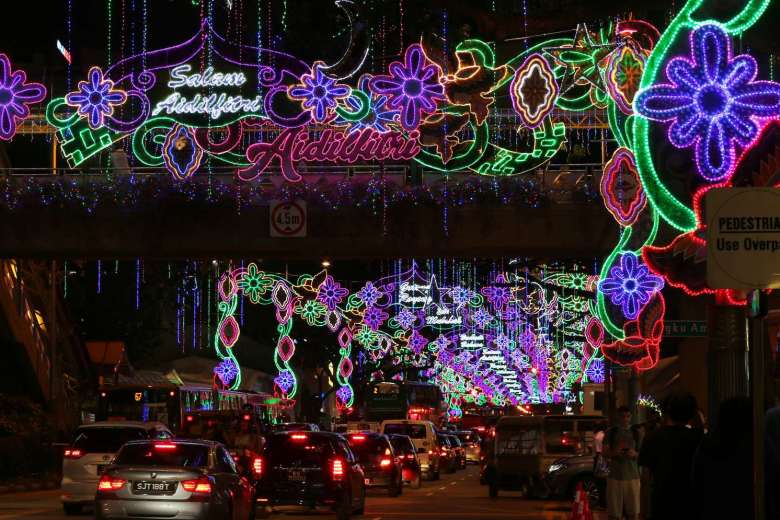
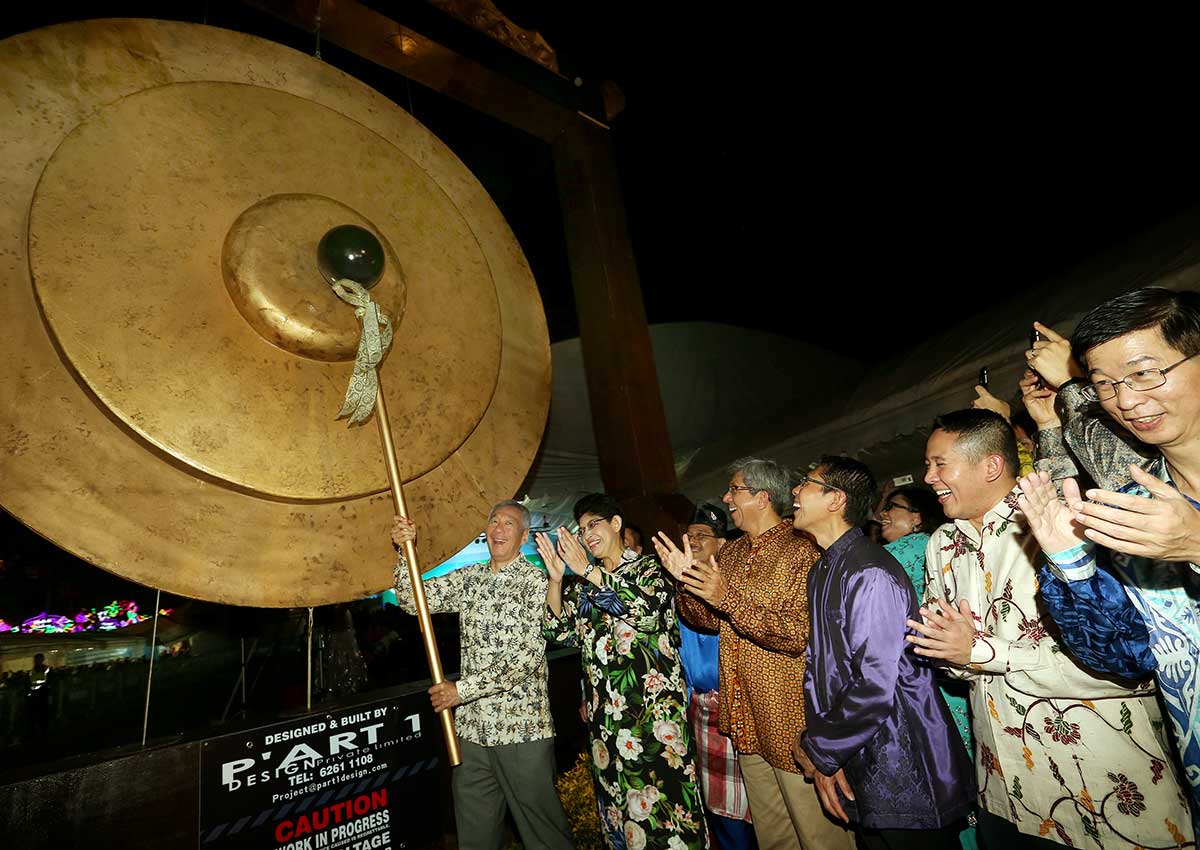
SINGAPORE – Geylang Serai came alive in a dazzling display of lights and colour as the annual Hari Raya light-up there was launched on Saturday (June 4) night.

Despite a slight drizzle, 1,000 residents gathered on the field at Engku Aman Road to join in the festivities as Prime Minister Lee Hsien Loong launched the event marking the start of Ramadan, the Muslim holy month of fasting and prayer which begins on Monday.

(Photo: The Straits Times)

This year, the 2.8km stretch of lights and decorations features traditional and modern batik designs, and weave patterns of Malay crafts.

Themed “deepening our kampung spirit”, the light-up includes a life-sized, kampung-style pavilion.

Concert hall officer Mohamed Zailani Muhamed Said, 54, brought four generations of his family to the light-up – from his 84-year-old mother to his 10-month-old grandnephew.

“Although we now live in an advanced society, it’s important to keep gotong royong (the kampung spirit) alive,” he said, adding that he invites his neighbours, friends and colleagues of all ethnic groups to his house for Hari Raya.

Marine Parade GRC MP Fatimah Lateef said the the light-up reflects Singapore’s multicultural nature, and is a good chance for more to “understand why we fast and what Hari Raya is all about”.

It is supported by all communities, including by Chinese temples and and Indian groups, she added .

In a brief speech, she encouraged Singaporeans to move beyond tolerating different cultures to embracing them like family.

During his speech, PM Lee recited a traditional Malay poem, known as a pantun, about the kampung spirit.

He told the crowd that he had last officiated the light-up launch in 2004, but had been there to “jalan jalan” (Malay for walk about) two years ago and was glad to be back.

Encouraging Singaporeans and tourists to enjoy the light-up, he said: “It’s the way we grow in Singapore, it’s the way we celebrate our multicultural heritage and richness in Singapore, the way we come together and enjoy each other’s important days and come together more closely as one Singapore.”

He added: “To all of you Malays, Muslims and non-Muslims, I wish you a happy Ramadan and a happy Hari Raya.”


This article was first published on June 4, 2016.
Get a copy of The Straits Times or go to straitstimes.com for more stories.

Image: 
Category: 
Publication Date: 
Sunday, June 5, 2016 – 12:18
Keywords: 
Send to mobile app: 
Source: 


Story Type: 
Others

Source link

Till debt do they part: Couples borrowing heavily for lavish wedding

Couples are borrowing heavily to splurge on lavish weddings. The result: frayed marriages once the big day is over

One couple’s $110,000 wedding left them with a bill that took four years to pay off.

Another spent over $50,000 and their marriage almost ended.

Weddings are supposed to be memorable, not give the couple nightmares. But extravagant weddings are adding to the stress newly-weds face.

Mr John Vasavan, 56, a marriage counsellor for over 20 years, shared an example of a couple he had encountered in the early 2000s, who held a lavish wedding that almost cost them their marriage.

The couple held a 50-table wedding dinner that cost over $50,000.

As a result, they started their married life in debt, says Mr Vasavan, who is from Congruence Counseling Service Singapore.

Mr Vasavan, who has counselled over 50 couples, tells The New Paper on Sunday: “The wife described the wedding cost as ‘exorbitant’ and the couple were in debt right after the wedding.

“Despite that, they went ahead to buy a five-room HDB flat, changed cars three times over five years and also had a child.”

Within five years, they had accumulated over $250,000 in debt.

“To avoid the wife’s nagging, the husband borrowed from loan sharks and that led to a lot of complications.”

The couple were on the verge of divorce before they sought marriage counselling.

Unusual? Not so, say other counsellors.

Mrs Chang-Goh Song Eng, head of Reach Counselling, says that while wedding costs are usually not the main cause of a divorce, they can lead to detrimental effects in the long run.

Read also: The real cost of a wedding in Singapore – $10,000 or $50,000?

FOUR-YEAR DEBT

Then there are the Lees.

This August, Mr Cayden Lee and his wife will be paying the last instalment of a four-year loan of $110,000 for their 2012 wedding. TNPS first reported their debt situation in 2014.

Mr Lee, now 35, had told TNPS then: “This is the real regret. We struggle from month to month just to make ends meet.”

The hefty wedding bill was a strain on their marriage.

Mr Lee, who is an insurance agent, had said: “We have had more fights since our wedding than in the six years that we were dating.

“Most times, it was over money… and we’d end up blaming each other for the situation.”

How did it all go so wrong?

They were smitten when they saw the glossy pictures and glitzy wedding must-haves in magazines.

They wanted a dream night, which included a bridal arch made with 999 fresh tulips from Holland, complete with a tulip-shaped balloon, for their wedding march-in. The arch cost nearly $12,000.

The bulk of the cost was the wedding banquet at a six-star hotel in the Marina Bay area – each of the 45 tables cost $1,688, before taxes.

The total bill? A whopping $110,000.

They had to top up their savings of $20,000 with a $45,000 loan from a financial institution with a repayment period of two years. Another $4,000 was borrowed from a licensed moneylender and $11,000 from a relative.

They also charged a total of $30,000 to their credit cards, says Mrs Lee, 30.

The housewife had said then: “When we first did our calculations, we were confident we could afford it. We gave ourselves a year or two, at the maximum, to work things out.”

As a result of their debts, they had to put off their plans to start a family.

Mrs Lee recently tells TNPS: “That upset my in-laws greatly. They started to put pressure on me, instead of their son. It got to a point that I actually walked out for three months and even considered a divorce.”

During the break in their relationship in March last year, she went to live with her maternal grandmother in Johor Baru.

“But Cayden came almost every day to visit and started wooing me all over again, with love notes.” she recounts.

“In the end, I decided to give our marriage a chance.”

The rising cost of loving

Wedding costs increase by up to 10 per cent each year, say wedding planners

Is it really that expensive to get hitched here?

Wedding planners The New Paper on Sunday spoke to say that a wedding costs an average of $50,000.

At the upper end of the spectrum, Singaporeans spend more than $110,000.

But even for the average couple, we’re paying close to what Americans are paying, which a recent study has actually found to be extreme.

A 2015 study by US wedding planner The Knot found that Americans are spending six times more than Europeans – an average of US$32,641 (S$45,000) – on their weddings.

WHY SO MUCH?

Ms Michelle Poh, co-founder of Singapore wedding planning company Hitched Weddings and lecturer at the Institute of Certified Wedding Planners, says the price of a banquet table here increases by $100 every year.

“Ten years ago, the average cost of a table was less than $1,000 and now, it could cost between $1,500 and $2,000 on average,” she says.

Industry players say prices have been going up by five to 10 per cent yearly due to rising food costs, inflation and standard of living.

But Ms Poh says that while wedding costs are increasing every year, Singaporeans are still willing to pay as it is the norm to hold weddings at hotels.

Another reason is that hotels tend to be able to accommodate the average number of guests at a typical Chinese wedding.

Ms Poh says: “Not many people can make do with a close and intimate wedding because our tradition is to invite all our relatives, even if they are distant relatives.”

In the US, it is tradition for the bride’s family to pay for the wedding, according to US bridal websites. But here, a young couple is expected to pay for their own wedding and hope for red packets to cover the cost.

Mr Vasavan says: “Every parent must be mindful that if they ask their children to invite a number of their relatives, it’s only fair (that they) fork out some money… The reception is to tell the whole world that the couple is getting married.

“You can do it in a restaurant for a few hundred dollars per table, but we choose to do it in hotels for thousands because we Asians are more ‘face-conscious’.”

But he adds that the couple must discuss and consider what their parents want.

Mr Vasavan says: “At the end of the day, the most important thing is communication and striking a balance between the couple, family and in-laws.”

Read also: 4 ways young Singaporean couples are keeping their wedding affordable

Wedding prep stressful for couples: Counsellor

Mrs Chang-Goh Song Eng, head of Reach Counselling, says holding a wedding can really test a couple’s relationship.

She says: “Just like other big-ticket items such as buying a house and a car, wedding costs can also cause a lot of stress.

“The wedding preparation is a time where many decisions need to be made, such as the budget, photography, dinner, gown and honeymoon.

“For couples, this is the time where the differences may surface.”

There are couples who still bring up their wedding woes during arguments with their spouses many years later, she adds.

“It’s sad to see couples planning a huge event to celebrate their love and end up ruining their relationship because of the disagreements.”

It’s the same in the US.

In 2014, two economics researchers from Emory University in Atlanta conducted a study to determine if there was a link between wedding expenses and marriage duration.

The study had a sample of 3,000 married, or previously married, couples.

They found evidence that marriage duration is inversely related to the amount spent on the engagement ring and wedding ceremony. In short: The higher the cost of the wedding, the shorter the marriage lasts.

To prevent the marriage from souring, Mrs Chang-Goh advises couples to “set it right from the beginning and balance out what they need and what they can do without”.

She recommends that couples go for marriage preparation programmes before their wedding.

“We’ll always remind couples to go back to the basic financial principles because these are crucial,” she says.

“If they want the wedding to be memorable, does it necessarily have to cost a bomb?

“Sometimes they have to understand that the wedding lasts for a day but the marriage lasts for a lifetime.”

To save money for flat, they ‘got the basics’

They needed to save money to eventually buy a flat and renovate it.

So that meant forgoing a hotel venue for their wedding and having it at a HDB multi-purpose hall.

Customer service officer Nurul Haziqah Abdul Rahman, 26, and civil servant Mohammed Zahid Anuar, 27, spent more than $33,000 on their nuptials last Sunday in Bukit Batok.

Ms Haziqah tells The New Paper on Sunday: “My husband and I decided to hold a simple wedding so that we could save up for the renovation and flat.”

The couple applied for a Build-To-Order flat three times but were unsuccessful.

They hope to get a four-room HDB flat in about six years and plan to get a HDB loan.

They have already started saving for the renovations, which they estimate would cost about $40,000.

So when it came to the wedding, they had to stint on some areas.

Ms Haziqah says: “I believe it’s good to invest in a good photographer and videographer even though they cost about $2,000 each because the pictures will remind us of the happy memories.

“But for other things like decorations and food, we got the basics, nothing too extravagant.”

The couple hosted 1,500 guests. They paid $800 over three days for the venue rental, and over $23,000 for food and decorations. Door gifts cost another $2,000.

Ms Haziqah bought one outfit for the solemnisation ceremony and rented another two for the wedding ceremony.

These three outfits and her husband’s attire cost over $2,500.

PARENTS

Thankfully, her parents helped to pay for part of the catering cost.

She says: “If I had to fork out everything myself. I don’t think it would have been possible.

“The toughest part comes when they (vendors) ask for payment… It’s like our hard-earned savings are gone in a flash.”

No need for loan, they’ve saved enough

Last month, Ms Liong Kai Wen, 26, and Mr Ronnie Tan, 31, walked into Carlton Hotel and booked their wedding lunch for next March.

Ms Liong says: “We’ve been working for about three to four years now, but this wedding will consume most of our savings.”

“It’s really expensive because everything goes by the thousands.”

The couple opted for a wedding lunch because it is $200 cheaper per table, which means savings of about $6,000 for 30 tables.

Their wedding banquet costs over $30,000.

The other costs: about $4,000 for hiring a photographer and videographer, over $5,000 for the outfits and pre-wedding photo shoot, $2,000 for a photo booth and $2,000 for decorations and wedding favours.

Their total estimated wedding bill? Between $40,000 and $50,000.

The couple have saved enough and will not need to take a loan.

Mr Tan, a defence engineer, says: “We have to understand that this wedding is not just for us, but for our families too.

“Hopefully the red packets can cover the cost of the banquet.”

The couple have applied unsuccessfully for a Build-To-Order flat five times over the last three years but hope to get a flat soon.

Ms Liong says: “Basically, the wedding (is the first of) other costly milestones.

“We still have to think about the renovation costs of over $50,000 when we get a flat, as well as the cost of having children.”

seowyr@sph.com.sg


This article was first published on June 5, 2016.
Get The New Paper for more stories.

Image: 
Publication Date: 
Sunday, June 5, 2016 – 14:00
Send to mobile app: 
Source: 


Rotator Image: 
Story Type: 
Others

Source link

Boxing: Hero, legend… villain? Ali's ugly feud with Frazier

LOS ANGELES – A beloved icon. A fighter who transcended his sport. A symbol of heroism, courage and defiance.

Muhammad Ali was all of these things and more to countless millions of admirers around the world during his remarkable life and times.

Yet for Joe Frazier, the overwhelming adoration given to Ali during and after his career would always be hard to stomach.

Frazier, who died in 2011, was to be Ali’s greatest rival in the ring, the two men fighting three blood-curdling battles that culminated with their epic 1975 collision in Manila.

But the noble nature of Frazier and Ali’s rivalry inside the ropes masked an ugly feud, stoked by Ali, that was to leave Frazier nursing a grudge for decades after the two men finally hung up their gloves, a far cry from the time in the 1960s when they had been friends.

During Ali’s exile from boxing following his refusal to fight in Vietnam, when he was stripped of his title and widely ostracized in mainstream America, Frazier lent Ali money and lobbied then president Richard Nixon to allow him to box.

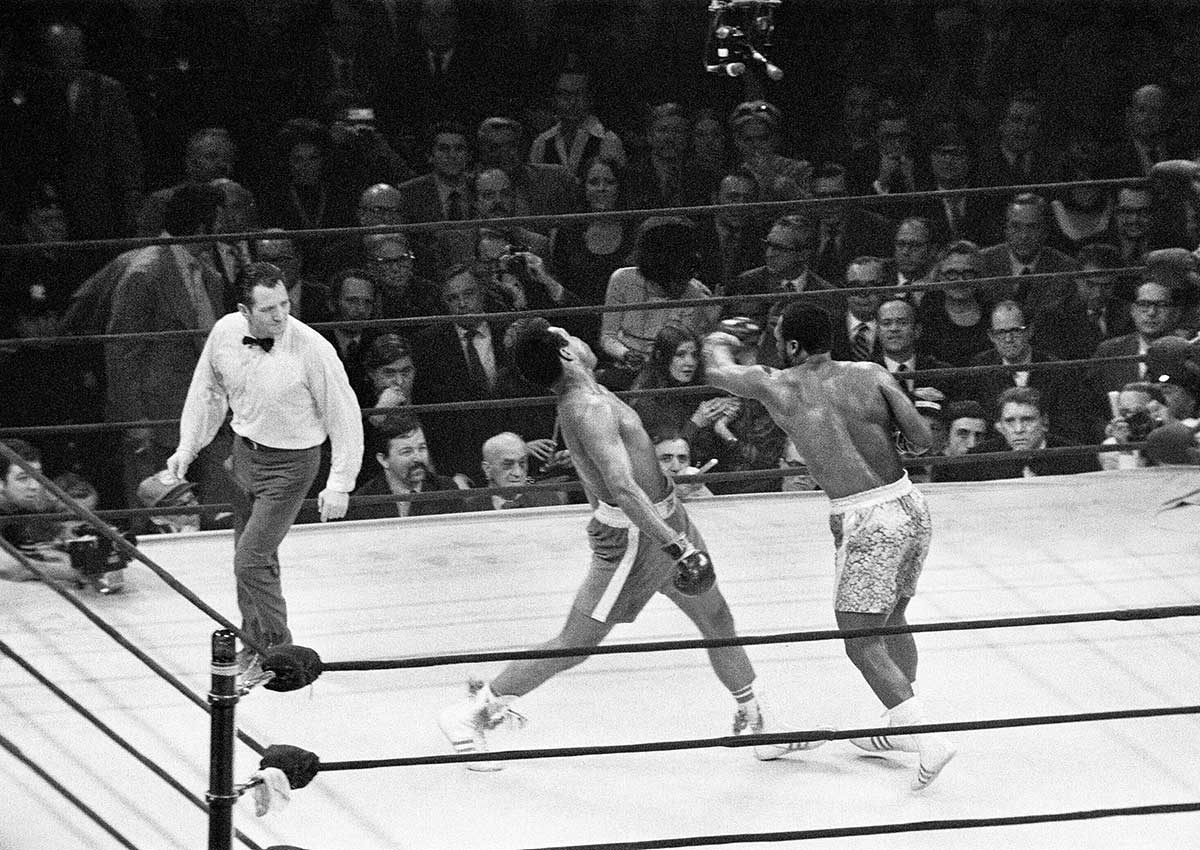
The friendship soured when Ali returned to boxing, and his “Fight of the Century” against Frazier was set for March 8, 1971 in Madison Square Garden.

Ali, a hero of the black civil rights movement, relentlessly portrayed Frazier in offensive terms, painting him as an “Uncle Tom”, a passive, inarticulate pawn of the “White Establishment.”

“Joe Frazier is an Uncle Tom. He works for the enemy,” Ali taunted.

Whether an early example of promotional trash-talk or genuinely held sentiment, Ali’s words stung Frazier – the son of Alabama sharecroppers who had been subjected to racism in his youth – to the core.

In his 1996 autobiography, Frazier described Ali’s verbal salvos as a “cynical attempt to make me feel isolated from my own people.” “He thought that would weaken me when it came time to face him in that ring. Well, he was wrong. It didn’t weaken me, it awakened me to what a cheap-shot son of a b**** he was,” Frazier wrote.

Frazier exacted a measure of revenge by flooring Ali in the 15th round of their first fight before going on to take a unanimous decision victory.

The animosity of that first fight came to define Ali and Frazier’s relationship thereafter.

Following a second bout won by Ali in 1974, the invective took an uglier turn in the build-up to the “Thrilla in Manila” the following year, with Ali zeroing in on Frazier’s physical appearance, repeatedly referring to him as a “gorilla.”

“Joe Frazier should give his face to The Wildlife Fund! He’s so ugly, blind men go the other way. He not only looks bad, you can smell him in another country. What will the people in Manila think? That black brothers are animals. Ignorant. Stupid. Ugly and smelly,” Ali told reporters.

Frazier responded by stating that he wanted to “take Ali’s heart out” and in metaphorical terms over the course of the fight that followed, he nearly did.

Ali eventually triumphed after 14 grueling rounds when Frazier, eyes swollen to near-blindness, retired before the 15th round.

“Don’t let me ever again hear anybody put Joe Frazier down,” the shattered Ali said.

“He is the toughest man in the world. If I’d taken the punches he took in there, I’d have quit long before he did. He is a man.” Ali’s paean to Frazier’s bravery did little to heal the rift however.

In his autobiography two decades later, Frazier laid bare his resentment, suggesting that Ali’s Parkinson’s disease was divine retribution.

“People ask me if I feel sorry for him. Nope. Fact is, I don’t give a damn. They want me to love him, but I’ll open up the graveyard and bury his a** when the Lord chooses to take him,” he wrote.

In 2001, though, Ali apologised during a New York Times interview.

“In a way, Joe’s right. I said a lot of things in the heat of the moment that I shouldn’t have said,” Ali reflected. “I apologise for that. I’m sorry.” By the end of the decade, Frazier’s bitterness had finally begun to subside.

“I forgive him, sure,” Frazier told Britain’s Daily Telegraph in a 2008 interview.

After Frazier’s death from liver cancer in 2011, Ali was among the mourners at a private family service.

“The world has lost a great champion,” Ali said.

“I will always remember Joe with respect and admiration.”

Image: 
Category: 
Publication Date: 
Sunday, June 5, 2016 – 11:23
Send to mobile app: 
Source: 


Rotator Headline: 
Hero, legend… villain? Ali's ugly feud with Frazier
Story Type: 
Others

Source link

Parents, survivors hold emotional Sabah Quake memorial on Mount Kinabalu

Messages of love and inspiration pour out in a tribute ceremony involving 20 former students and family members of those who died in the Jun 15, 2015 earthquake.

Source link