Home Blog Page 3755

Singlish: Friend or foe?

I don’t think we should celebrate Singlish, but there’s no escaping how it identifies and brings Singaporeans closer together

I’ve not seen my sister for nearly four years, which is why I’m looking forward to the next two weeks.

We have planned a family holiday in Edinburgh and London.

She, her husband and two children will be flying in to Heathrow Airport from the United States to meet my mother, H and me. H’s daughter from Wales will also be joining us.

We’ve booked two Airbnb houses with kitchens, so I’m packing some Singapore goodies that we can cook and eat there.

I’ve bought Prima Taste Singapore Curry mix and will be getting Bengawan Solo pineapple tarts, Ya Kun kaya, Bee Cheng Hiang bak kwa and Spring Home frozen roti prata.

There’s nothing like the taste of Singapore to bond two Singaporean sisters, right?

Actually, it’s more likely going to be the sound of Singapore – Singlish – that does it.

This is probably going to be the conversation at the airport:

Me: Hey hi, how you?

She: Okay lah.

Me: Wah, haven’t seen you for so long!

She: Ya, I know!

Me: The flight, how?

She: Okay lah. Tiring.

Me: Ya, we’re tired too. We came at 5.30am. So sian lah, waiting so long for you guys to come out.

She: Sorry lah.

Me: It’s okay. Why delay until like that?

She: I left something on the plane.

Me: Aiyah, blur lah you. You guys hungry or not? Want to ta pau back to the Airbnb?

If we are to speak proper English, the conversation would go like this:

Me: Hey hi! How have you been?

She: I’ve been well.

Me: It’s been years since I saw you!

She: I know!

Me: How was the flight?

She: It was all right, but tiring.

Me: Ya, we’re tired too. We arrived at 5.30am and it’s been exhausting waiting so many hours for you guys to arrive.

She: Sorry about that.

Me: It’s all right. What caused the delay?

She: I left something on the plane.

Me: Oh dear, you’re such a muddlehead, aren’t you? Are you guys hungry? Shall we do a takeaway for dinner back at the Airbnb?

I wouldn’t say my sister and I are hardcore Singlish speakers. We’re not fans of Singlish because we don’t regard it as proper English and believe we should be speaking standard English.

Most times, we make sure our sentences are properly structured, that we use the correct tenses and avoid words that only Singaporeans understand. She has to do so in any case, or people in America won’t be able to understand her.

But we do speak Singlish and, when we do, it’s like a guilty pleasure, akin to wearing a favourite pair of tatty pyjamas around the house the whole day.

We do it as a half-proud, half-mocking signifier of how Singaporean (and special) we are. It’s a secret code which locks the rest of the world out.

More pragmatically, we also use it to save time. A key feature of Singlish is how verbs are dropped and single words loaded with meaning. It is a curt, staccato language suited for the linguistically lazy.

My niece says Singlish is “like a foreign language – I can understand some of it, but not all”. Singlish, she adds, is “something you’ve got to really be a part of the culture to appreciate”.

My nephew finds Singlish a hoot and does a good imitation of it. Some years back, when we went ice-skating and H fell down while showing off some moves, my nephew shocked us by shouting “yaya papaya”.

H’s daughter, too, finds Singlish hilarious and cracks us up whenever she acts out how a Singaporean speaks.

Singlish is not standard English. Native English speakers like my nephew, niece and H’s daughter find it incomprehensible and funny, as in silly-funny. (Guess they liak bo kiu, huh?)

Linguists define Singlish as an English creole, or a language that originated as a mixed language. In Singlish’s case, we’re talking English jumbled with words and syntax from native languages such as Malay, Mandarin, Chinese dialects and Tamil.

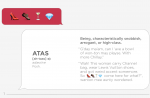
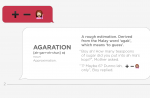
Singlish has its own vocabulary (kena/Malay, kiasu/Hokkien, see first/English). It loves particles (lah, leh), but doesn’t like verbs (You bad boy). Vowels are shortened (feet becomes fit) and sentence structures borrowed from Mandarin and Chinese dialects (She eat already? He go where?)

The pro-Singlish and anti-Singlish camps have strong views which they have voiced loudly over the years.

Proponents see it as something unique that binds the different cultures and gives Singaporeans an identity. Interestingly, many can switch effortlessly from fluent English to Singlish and I have yet to come across anyone advocating Singlish as a written language.

Opponents – including the Government – say Singlish impedes the learning of standard English, which is the country’s working language and which gives Singaporeans a competitive advantage. Already, some say, the level of standard English has dropped and Singlish will drag it down further.

They point out how large swathes of Singaporeans can speak neither standard English nor standard mother tongue. They are monolingual in Singlish, which makes you worry about how they compete in the working world.

It is unlikely the two camps will agree, or that Singlish will disappear and die.

What we should aim for is a higher standard of English all around, so more people know when and how to switch between that and Singlish.

It has to start in schools, where Singlish remains prevalent and, in fact, passes off as English. Teachers speak it (How can you answer like that?) and students speak it (Teacher, can give model answer or not). At home, parents speak it too (Boy, why your results like that?)

More must be done to improve the teaching of English. I don’t mean students should be taught fanciful words or an accent. Rather, basic things like how to speak in proper sentences and how to get the subject-verb agreement right and the idioms correct. The differences between English and Singlish should be made clear.

Like it or not, and speak it or not, Singlish will be around.

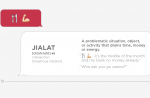
We just have to make it work better for us and try not to quarrel about it, because it’s really jialat when Singaporeans fight over old issues.

sumiko@sph.com.sg

Follow Sumiko Tan on Twitter @STsumikotan


This article was first published on June 5, 2016.
Get a copy of The Straits Times or go to straitstimes.com for more stories.

Image: 
Publication Date: 
Sunday, June 5, 2016 – 17:42
Keywords: 
Send to mobile app: 
Source: 


Story Type: 
Others

Source link

Doing without domestic help

For mother-of-two Rajalakshmi Sambasivan Bindu, work starts well before she steps into her office at the National University of Singapore in Kent Ridge.

On weekdays, the 44-year-old wakes up at 5.30am to make breakfast and take her daughters, Anjitha, 17, and Nikhita, 15, to school.

After putting in a full day at the university as an industry relations and contracts assistant manager, more work awaits when she returns to her home in Tanjong Pagar at 6pm.

She prepares dinner and tackles household chores with their help.

Welcome to how one family manages without a live-in maid.

The family used to have a maid, from 2001 to 2006. The maid then returned home to take care of her elderly mother.

The family opted out of getting new help, and decided to share the load.

Reflecting on what life was like with a maid, Mrs Bindu says: “When we have an external member in the family, it is hard to make sudden decisions like dining out.

“I also feel it is hard to find someone trustworthy who can understand my family’s needs.”

Mrs Bindu says what works for them now is a “routine, disciplined lifestyle” that “helps me keep track of my work and household responsibilities”.

Her husband, Mr Ramesan Panicker, 47, is an engineer who often travels abroad for work. When he is away, mother and daughters distribute the household chores among themselves. Mrs Bindu says: “The girls have their studies to focus on, but they help me sometimes, especially by going to the market to buy groceries.”

Both parents believe sharing household chores teaches their children to be independent and self-reliant.

Mrs Bindu adds that Indonesia’s intention to stop sending new live-in maids abroad will be detrimental to households in Singapore. She says: “Parents face considerable pressure at work and long working hours which are not flexible. In the case of young parents, they depend on live-in maids to give constant care to their infants or toddlers at home.

“Without the full-time help, they may find it hard to cope with household chores.”

mmala@sph.com.sg

See also: Can Singaporeans do without maids?

See also: 10 years on, helper is very much part of family


This article was first published on June 5, 2016.
Get a copy of The Straits Times or go to straitstimes.com for more stories.

Image: 
Category: 
Publication Date: 
Sunday, June 5, 2016 – 17:02
Send to mobile app: 
Source: 


Story Type: 
Others

Source link

10 years on, helper is very much part of family

Ten years ago, while living with her in-laws, and with three children to look after, Mrs Ivy Tan decided to hire an Indonesian domestic helper .

Today, that helper, Ms Mintarsih Nursin, 48, still works for Mrs Tan and is considered part of the family.

The Tan family celebrates Ms Mintarsih’s birthday every year, and she joins them at the table for dinner. She also takes part in family milestones such as birthdays and weddings.

Ms Mintarsih, who has a 27-year-old son, has often invited the Tans to her home in Indonesia.

“I am very happy here,” she says. “I like my madam, she likes me, the children like me.

“The children eat anything I cook, which makes it very easy for me, too.

“Sometimes, they call me when they are out of the house. They will ask me if there is anything I want to eat and will buy it back for me.”

For Mrs Tan, having a maid involves mutual respect.

“From the beginning, I taught my children to respect Ms Mintarsih as a human being,” she says.

“I would also tell Ms Mintarsih not to do things that my children can do by themselves, such as getting something to drink or taking the dishes to the kitchen.”

The freelance family guidance trainer adds: “My children grew up with this mindset (of respecting those around them) so they don’t order her around, and they really appreciate her.

“She does her work well, and I am grateful to her because I am able to leave the house in her care.”

Mrs Tan also helps Ms Mintarsih by paying her salary in advance when needed, for example.

Once, for instance, she gave her an advance so that her family in Indonesia could buy motorcycles and a rice-harvesting machine.

Mrs Tan says it is possible for Singaporeans to live without maids. But some aspects of their lives will be affected.

“Now, when Ms Mintarsih goes home for a month every year, I can manage. But I have no time to sit down with my family,” she says.

“There are a lot of chores to do. I won’t say that it can’t be done; it is possible if everyone helps out, but there will be no end to housework.”

royannen@sph.com.sg


This article was first published on June 5, 2016.
Get a copy of The Straits Times or go to straitstimes.com for more stories.

Image: 
Category: 
Publication Date: 
Sunday, June 5, 2016 – 16:56
Send to mobile app: 
Source: 


Story Type: 
Others

Source link

Can Singaporeans do without maids?

With the Indonesian government declaring that it will stop sending its citizens to work as live-in maids in Singapore from next year, the possibility of Singaporeans coping without domestic helpers is once again being discussed. Insight at The Straits Times looks at how we have become dependent on maids, and whether we can cope without them.

Maids: Essential, or a luxury?

Rachel Au-yong

From a wealthy family’s substitute parent figure to the working couple’s indispensable home help, Insight looks at the changing role of the domestic helper.

When Indonesia said last month that it intended to stop sending new live-in maids abroad from as early as next year, alarm bells sounded for some employment agents and families in Singapore.

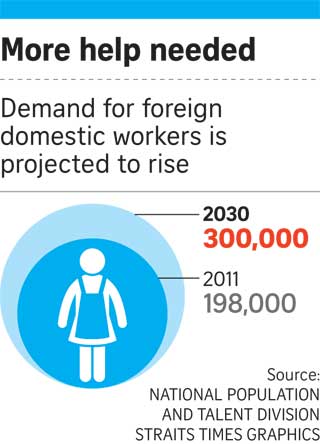
Indonesia, after all, is the biggest source of domestic helpers, with more than 125,000 women here.
And over the years, maids have become integral to the smooth running of many Singaporean households. They pick up after the children, fetch them from school, accompany their elderly charges to the hospital and keep homes tidy, among their many roles.

For adults who work irregular hours, the maids’ presence at home is a special boon. And, of course, they are relatively more affordable to employ than getting specialised home and eldercare services.

A spokesman for maid agency Express Maid says: “The salary of our helpers starts from $500 a month. It’s slightly higher than a once-a-week cleaning package, but a live-in helper can do many other things, like take care of young children.”

But others say that the Indonesian proposal has some merit, as they see some Singaporeans becoming a pampered lot.

“There are some who really need maids, especially those with sick, aged parents. But for the rest, it’s possible to do without them if you adjust expectations about neatness and work a little harder, like waking up early to make breakfast for the family,” says pastor Andy Goh, 40, a father of three.

The very nature of the relationship between maids and employers also has consequences. This includes how families and other Singaporeans – who interact with maids in homes, at neighbourhood centres and parks, and on public transport – view and regard the countries which domestic helpers come from. Countries that Singapore sources its maids from include the Philippines, Sri Lanka and Myanmar, as well as Indonesia.

And the attitude of Singaporeans towards these foreign nationals – including how such attitudes are perceived in the foreign capitals – can impact on policies.

Myanmar, which has about 30,000 maids here, has over the past two years imposed bans preventing its women from working as maids here and in Hong Kong, citing ill-treatment and abuse. The Philippines in the past has also banned citizens from being maids overseas, as has Indonesia.

Another factor in the maid equation here is households having to adjust to having a non-family member in the home – with needs to be addressed.

How did Singapore grow so reliant on maids? And can Singaporeans do without them?

FROM AMAHS TO MAIDS

From the 1930s to 1960s, employing live-in help was the domain of expatriates and wealthy local employers. This was the time of the legendary amahs, women hailing mostly from Guangdong province in China and distinctive due to their plaited hair and “uniforms” comprising white blouses and black pants.

Regarded as part of the family, they were figures of respect. Most families gave their amahs the leeway to discipline the children, allowing them to function as another “parent”.

But when Singapore industrialised from the late 1960s, more Singaporean women took up jobs in factories and offices, sparking a need for paid domestic help to look after the home.

So the Government introduced the Foreign Domestic Servant Scheme in 1978, enabling women from neighbouring countries, including the Philippines, Sri Lanka and Thailand, to be employed as paid domestic help.

From a base of about 5,000 in the late 1970s, the number has grown, and there are about 227,100 foreign domestic workers here today.

The labour force participation rate of married Singaporean women comprising citizens and permanent residents, meanwhile, has increased from 14.7 per cent in 1970 to 63.2 per cent last year.

Unlike the much-loved amahs, maids today are treated by many families as an employee who happens to live in their home, say representatives of migrant workers’ groups.

In extreme situations, some employers even install Web cameras to keep an eye on them, as is the case for a 33-year-old maid from Batia in the Philippines who wishes to be known only as Niva.

“I work from 6am to 11pm. I don’t eat meals on time and there are cameras everywhere except in the toilet. There isn’t enough freedom,” she says.

The skills required of a maid are also higher today. Some are expected to help children with ever-demanding homework and to have the computer skills to assist them; care for the elderly, which has become more complex in terms of nursing skills; and run the home, which involves operating sophisticated appliances and being able to cook according to dietary demands.

And Singaporeans get all these comparatively cheaply. The services of a live-in Indonesian maid start from $815, taking into account her salary and the monthly $265 levy, but excluding costs of insurance, food and medical care. There are levy concessions for families with young children and elderly parents.

In contrast, a bundle of specialised services – for homecooked catered meals, weekly cleaning and caregiving for the elderly or children – could easily add up to more than $2,000 a month.

Yet, vestiges of the notion of maids having a role in the family beyond that of a mere labourer continue. For example, maids do not come under the Employment Act, as the engagement of domestic labour is considered a private contract between the maid and the employer.

Furthermore, under the Employment of Foreign Manpower Act, foreign domestic workers must live with their employers at the addresses stated on their work permits.

A WAKE-UP CALL FOR SINGAPOREANS?

However, into this existing situation come the Indonesian authorities, who want their domestic workers to live separately from their employers in dormitories, work regular hours and get public holidays and days off.

The move is part of Indonesian President Joko Widodo’s plan to professionalise informal employment.

However, having domestic helpers live away from home poses logistical and financial challenges. Some worry that this defeats the purpose of hiring someone to provide ready care for aged parents or children. Others wonder if they would have to pay for accommodation and transport to and from their homes.

Some welcome the proposals, saying that Singaporeans are pampered and it is high time they learnt to cope independently.

Reader Jason Charles Ingham, in a letter to The Straits Times’ Forum page last week, noted that Singaporeans seem to be delegating the care of their children and parents to domestic helpers. “When our children cry in the middle of the night, should we, the parents, not be the ones who go to comfort them? How can we reasonably expect an employee to care for our offspring?” he asked.

Domestic helper Sheila Paspe, 29, who left the Philippines four years ago, also thinks some Singaporeans may have become overdependent: “Friends say employers can be lazy, like asking them to turn on a light in another room before they walk in,” she says.

Then there are others who are concerned about possible problems that could arise from how Singaporeans treat fellow South-east Asians who work in their homes, doing jobs that some will perceive as menial tasks.

There is also concern about the potential effect that the attitude and behaviour of parents and grandparents towards maids can have on the young. Are there those who grow up thinking that Singaporeans are superior to others from the region, non-governmental organisations (NGOs) ask.

How parents talk about the role of the helper makes all the difference, says National University of Singapore sociologist Paulin Straughan. “A lot of parents are really negligent about that. Their own prejudices flow through, which become a generalised prejudice towards people of certain countries.”

Ms Flora Sha, who manages maid agency United Channel, puts it more bluntly: “We remind our clients that maids need space to destress. We can do more to change our reputation of Singapore being a modern slave trader.”

Then again, the situation is not helped by policies like the $5,000 security bond imposed by the Ministry of Manpower, says Mr Jolovan Wham, executive director of migrant workers group Humanitarian Organisation for Migration Economics. “The bond makes you feel responsible for the workers, and so there’s this sense of ‘ownership’, not just over their labour, but also their bodies, whereabouts and who they socialise with,” he says.

Some employers speak harshly to their maids or restrict freedoms, like confiscating their phones. Others treat maids as invisible strangers, neither to be seen nor heard by the rest of the family, say NGOs.

The maids’ common complaints are about long hours, not having time off and being overworked, they add.

Several maid agents said that when mandatory days off – or payment in lieu of days off – were increased from monthly to weekly in 2013, many employers worried they could not cope.

Others feared the extra time would lead to their maids coming under the influence of the wrong crowd while out and about.

One way to improve attitudes is to recognise the skills that good domestic workers bring to the table, and compensate them accordingly, says Ms Yorelle Kalika, chief executive of Active Global Specialised Caregivers, an agency that brings in foreign home nurses. “The source countries are trying to professionalise their workforce. (They) may be more expensive than a normal maid, but it is win-win: You are getting a professional,” she says.

Over at the recently launched Centre for Domestic Employees, which is run by the National Trades Union Congress, its chairman Yeo Guat Kwang says it is working on a clearer fee structure, so Singaporean employers and maids will not be saddled with high recruitment fees, and on qualifications so higher-skilled maids get better compensation.

But Mr Yeo does not think Singapore can go without maids just yet.

“As a unionist, I am happy to see more women joining the workforce. And if it’s because of that that we need to get domestic helpers, then my job is to make sure that the employment arrangement is more transparent, and the skill set is one we can trust,” he says.

For many couples sandwiched between taking care of young children and elderly parents, having a maid is a necessity, especially when alternatives are in short supply.

Dr Lily Neo, an MP for Jalan Besar GRC, says: “We don’t have enough retirement homes, and we can’t make family members give up their jobs to take care of their parents. The elderly person falls or has a stroke – having a maid could make the difference between life and death.”

It will be difficult to become an entirely maid-less society.

Certainly, Singapore can take steps to having fewer maids, using technology and outsourcing. And this will be yet a further step away from the commanding, devoted amah who was part of the family.

rachelay@sph.com.sg

Additional reporting by Royanne Ng

See also: 10 years on, helper is very much part of family

See also: Doing without domestic help

The household: Cleaners, catering can help

Royanne Ng and Rachel Au-Yong

Apart from having them look after children and the elderly, Singapore families also rely on maids to keep their homes spick and span and to cook meals.

Even after the children have grown up or the elderly parents have died, many households still retain their maids.

How can they be weaned off the need for helpers, or at least make more efficient use of them?

ALTERNATIVE SERVICES

Using services like food catering and cleaning is one possibility.

Ms Angie Koh, director of Amahs On Wheels, a cleaning service that started in 1999, says: “There are many dual-income families with children who are grown up.

“Having a live-in helper does not really make sense for them. All they want is to come home to a clean house and ironed clothes, and we take care of that. We clean and we go.”

There are more than 20 house-cleaning services in Singapore. Ms Koh’s firm charges around $90 a cleaning session for a four-room flat in its once-a-week package.

More than 30 companies offer catered home meals. Most require customers to purchase daily meal packages for 10 to 20 days.

Food is delivered to their homes in tiffin carriers or plastic boxes.

Ms Agnes Tam, general manager of Hong Choo Catering Service, says: “Our service for meals at home has seen around a 50 per cent increase in demand compared with the last three or four years.”

According to Ms Tam, many families use the service even though they have maids.

“The family can get tired of eating the same kind of food every day, or the food the helper cooks may not suit their taste,” she says.

TECHNOLOGY

Today, many household items have also tapped technology to lessen the burden of housekeeping.

Take robotic vacuum cleaners.

With inbuilt sensors, these automatic cleaners navigate obstacles in the house while picking up dirt.

Smart refrigerators and ovens can remind owners to stock up on items, display recipes and tell them when the food is ready.

Pet owners can use automatic pet feeders, which allow their animals to take the right amount of food on time without human supervision.

RELAX MAID REGULATIONS?

Now, a maid can work only at the residential address stated in her work permit. She is not allowed to take on any part-time work.

But some employers argue that such a system is not an efficient use of manpower. Despite the penalties, a black market of moonlighting maids exists.

An educator in her 50s, who hires her sister’s Indonesian maid to clean her house once a week for $40 to $50 each time, says: “Both my sister and I live with just our husbands as the kids have moved out.

“So her maid has a lot less to tidy up now, and fewer people to cook for. Plus she knows me, so why can’t she help?

“I understand it’s about protecting the helpers, but couldn’t contracts be expanded to include multiple families?”

Childcare: Teach life skills, tap community for help

Rachel Au-Yong and Royanne Ng

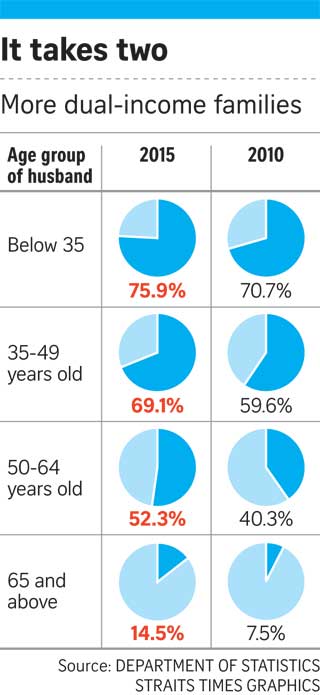
About 70 per cent of married couples where the husband is aged 35 to 49 earn dual incomes. Here are ways such couples with children can manage without a live-in maid.
NURTURING LIFE SKILLS

In 2011, there was an uproar when a photo of a maid carrying an army recruit’s pack went viral online.

It sparked debate about a softer generation of Singaporeans, who are waited on hand and foot. Posters argued this made the young less resilient and independent.

One way around this is to lay down ground rules early. Human resource manager Shauna Lin, 39, says her daughters, aged six and nine, have to make their own beds and wipe their worktables. She and her husband, a 42-year-old lawyer, engage a part-time cleaner twice a week.

“We don’t want our girls to grow up spoilt,” she says. “The same rules apply when we visit friends with maids. The older girl knows she has to at least offer to take the dirty dishes to the kitchen.”

OLDER NANNIES

Companies providing babysitting services boast that their nannies are more experienced and culturally aligned than maids, because most are older women from Singapore or Malaysia.

“There are few cultural differences and no language barriers. Most of our nannies are grandparents themselves, so they know how to take care of children. A lot of maids are in their 20s, so they might not have enough experience,” says Mr Alex Chua, who owns Super Nanny.

Nanny services do not come cheap, and most companies stress that their employees do not do housework.

Mr Chua says his clients – about 80 per cent of whom are Singaporean – pay about $2,300 a month for both daycare and 24-hour care services. Mr Adrian Ng of BBNanny says monthly fees range from $800 to $1,650, depending on length of service required and the child’s age.

In contrast, monthly wages for a maid start at $450 if she is a new hire from Myanmar.

Mr Chua hopes that the Ministry of Manpower can relax the rules covering Malaysian nannies, who make up about 80 per cent of his staff. Eligible Malaysians work as confinement nannies only until the child is 16 weeks old.

“Some mothers need help looking after children who are six months to a year old,” says Mr Chua. “The parents might have health problems, or just need an extra hand, but our hands are tied.”

TURNING TO NEIGHBOURS

One of the buzzwords that MPs, grassroots leaders and academics have been throwing about in recent years is “gotong royong”, or community spirit. When it comes to childcare, why not turn to neighbours – retirees with zest or stay-at-home mothers looking for extra income?

National University of Singapore sociologist Paulin Straughan says that while the Government could do more to plug the gaps in childcare services, it is time to “bring back the kampung spirit and have people provide mutual support”.

Retirees could tap their $500 SkillsFuture allowance to keep up to date on childcare, she notes.

Management assistant officer Clara Hong, 45, looked among her neighbours to find a nanny for her children 18 years ago. She made fliers and dropped them into mailboxes. A woman who lived a block away became her daughter’s nanny, and she found a nanny for her son just next door.

Eldercare: More home and daycare services

Rachel Au-yong
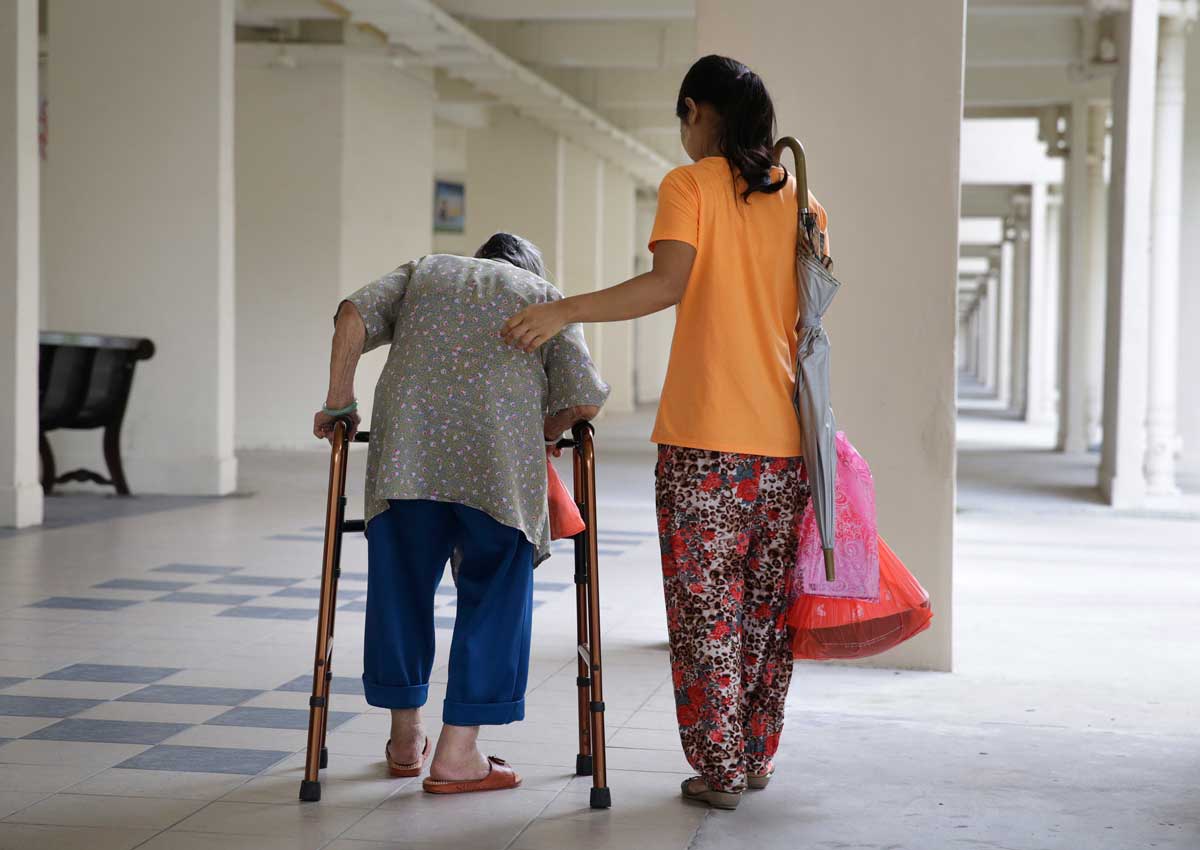

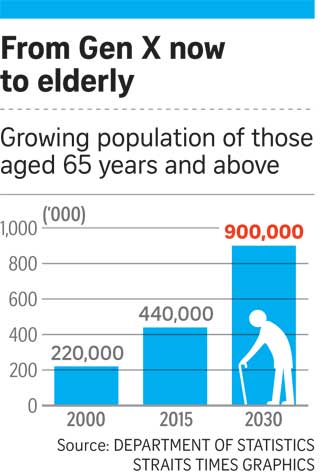
Nearly one in three people in Singapore will require some form of eldercare by 2030. There will be a need for more facilities and healthcare workers, but robotics and smart home technology could offer solutions too.

Or how about an Uber-like service to tap nurses, caregivers? Robots are an idea too

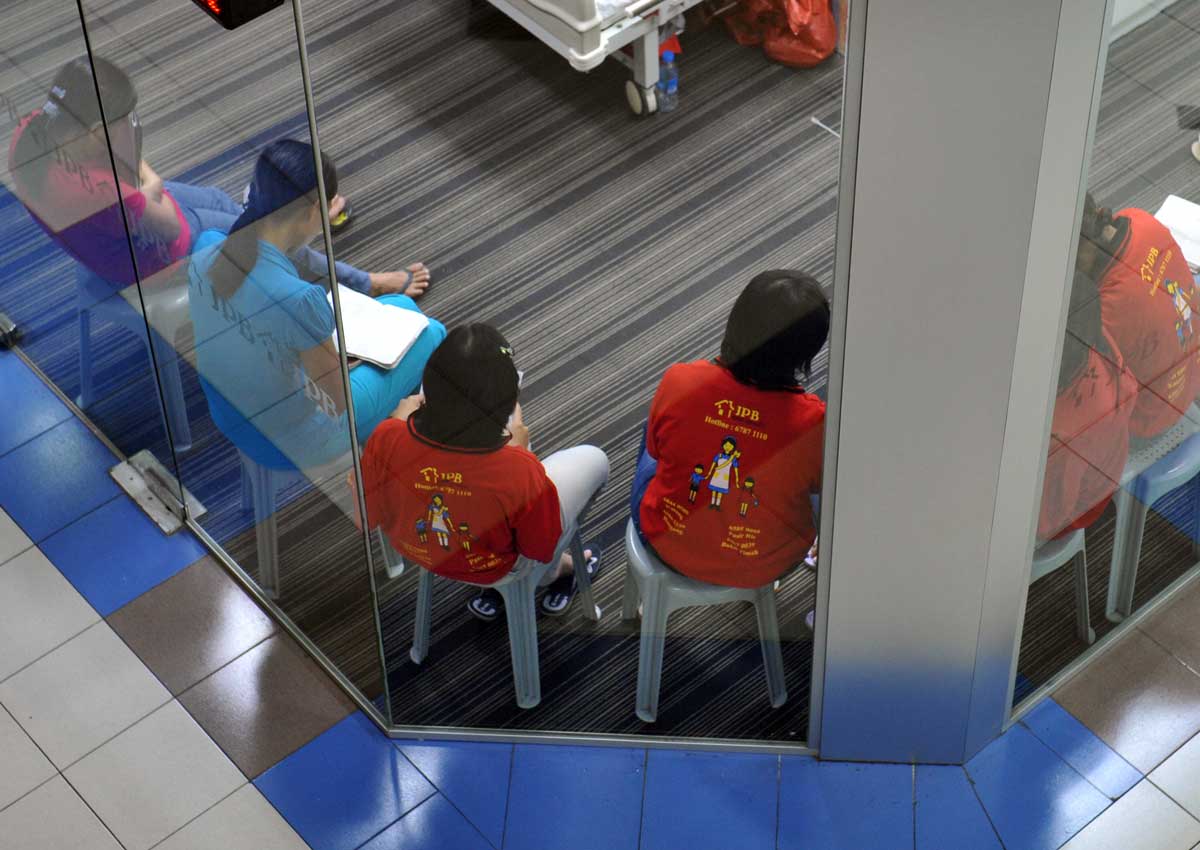
Walk into a hospital on a weekday and it won’t be long before you see a domestic worker pushing her elderly charge in a wheelchair to his next appointment.

Several employment agents The Sunday Times spoke to say that up to 70 per cent of the Singapore families who hire maids do so because they need help taking care of ageing parents.

For adult children who live in a different house or work late, having a maid to keep an eye on their ageing parents brings some peace of mind. So what alternatives are there?

HOME CARE AND DAYCARE SERVICES
Options include community-based home care and daycare services, which the Government is encouraging to ease the rising need for hospital and nursing home beds.

Home care services range from someone hired to prepare meals, to a physiotherapist who assists with physical rehabilitation, to a nurse who can change urinary catheters or feeding tubes – all in the elderly person’s own home.

On the Singapore Silver Pages website by the Agency for Integrated Care, home care services that provide personal care such as personal hygiene, assistance with medication and simple maintenance exercises range from $22 to $30 an hour, while medical visits start at $140 per session, all before subsidies. Eligible clients enjoy up to 80 per cent in government subsidies.

Daycare services are provided at integrated facilities that not only give seniors a chance to interact, but also offer services such as community nursing and rehabilitation in one location. Elderly clients return to their own homes in the evening. Prices can range from $250 to $600 a month, before subsidies.

However, such facilities are in short supply. In April, MP Lily Neo (Jalan Besar GRC) even went so far as to say in Parliament that “our home care services are almost non-existent at present”.

As for daycare spots, there are only 3,500 – a figure that the Government is pushing to increase. By 2030, almost a million people will be above 60. Nearly one in three people will need some form of eldercare service by then.

Another problem is the lack of healthcare workers and caregivers in the eldercare sector.

Speaker of Parliament Halimah Yacob, an MP for Marsiling-Yew Tee GRC, says more should be done to attract Singaporeans to work in the eldercare sector. She suggests that the Government set up a central employment agency to recruit and train staff and plan their career development.

The eldercare sector’s negative image also needs to change, she says, noting “low wages and a lack of career opportunities as it is largely dominated by VWOs (voluntary welfare organisations)”.

She adds: “As more foreigners are employed in this sector, it further reinforces the negative image that this is not an exciting sector to join.”

Meanwhile, the private sector can be tapped as well, to help with eldercare in sometimes less obvious ways.

For example, already there are several companies marketing wearable panic buttons that elderly users can press to alert their family members if they fall.

And with the silver market expected to expand, from $9 billion in 2014 to $16 billion by 2030, what is stopping enterprising entrepreneurs from creating the eldercare equivalent of Uber (a private-hire car firm) for nurses or caregivers?

ROBOTICS AND TECHNOLOGY

Technology is another area that Singapore can examine to reduce the reliance on maids for eldercare.

Foreign Affairs Minister Vivian Balakrishnan said during a visit to Japan in April that it was worth studying how that country had extensively used robotics in nursing and caring for senior citizens.

Japan is an ageing country – those over 65 are expected to make up 40 per cent of its population by 2060 – and also has strict immigration laws, so it is delving into the world of robotics to find solutions.

For example, Japanese firm Cyberdyne produces mechanical limbs and “exoskeletons” – wearable machines that support a user, giving them mobility and strength – for patients with spinal difficulties. Such devices could allow frail seniors to take care of themselves.

And certainly, in Singapore, the Government has shown an eagerness to embrace technology with its Smart Nation drive.

It has also earmarked more than $450 million for the National Robotics Programme over the next three years, to help firms adopt robotics technology and boost productivity.

Already, the Housing Board and the Health Ministry have initiated pilot projects to develop and install elderly monitoring systems in flats occupied by lone elderly residents. These systems can monitor residents’ activity levels and trigger an alert to a caregiver, for instance, when there is extended non-movement, which could point to a fall.

Dr Tan Hwee Pink, an associate professor of information systems at Singapore Management University, says the next step is to find a way to have eldercare technology run seamlessly with other home automation systems, so as not to overload the user with too many systems.

His goal in the meantime? “To ensure that technology does not replace, but triggers when needed, the human touch, as with a live-in maid, so the elderly can still enjoy their privacy (by living in their own home).”

rachelay@sph.com.sg

See also: 10 years on, helper is very much part of family

See also: Doing without domestic help


This article was first published on June 5, 2016.
Get a copy of The Straits Times or go to straitstimes.com for more stories.


Image: 
Category: 
Publication Date: 
Sunday, June 5, 2016 – 16:23
Send to mobile app: 
Source: 


Story Type: 
Others

Source link

Singapore, Indonesia embassies say political group supporters not detained here

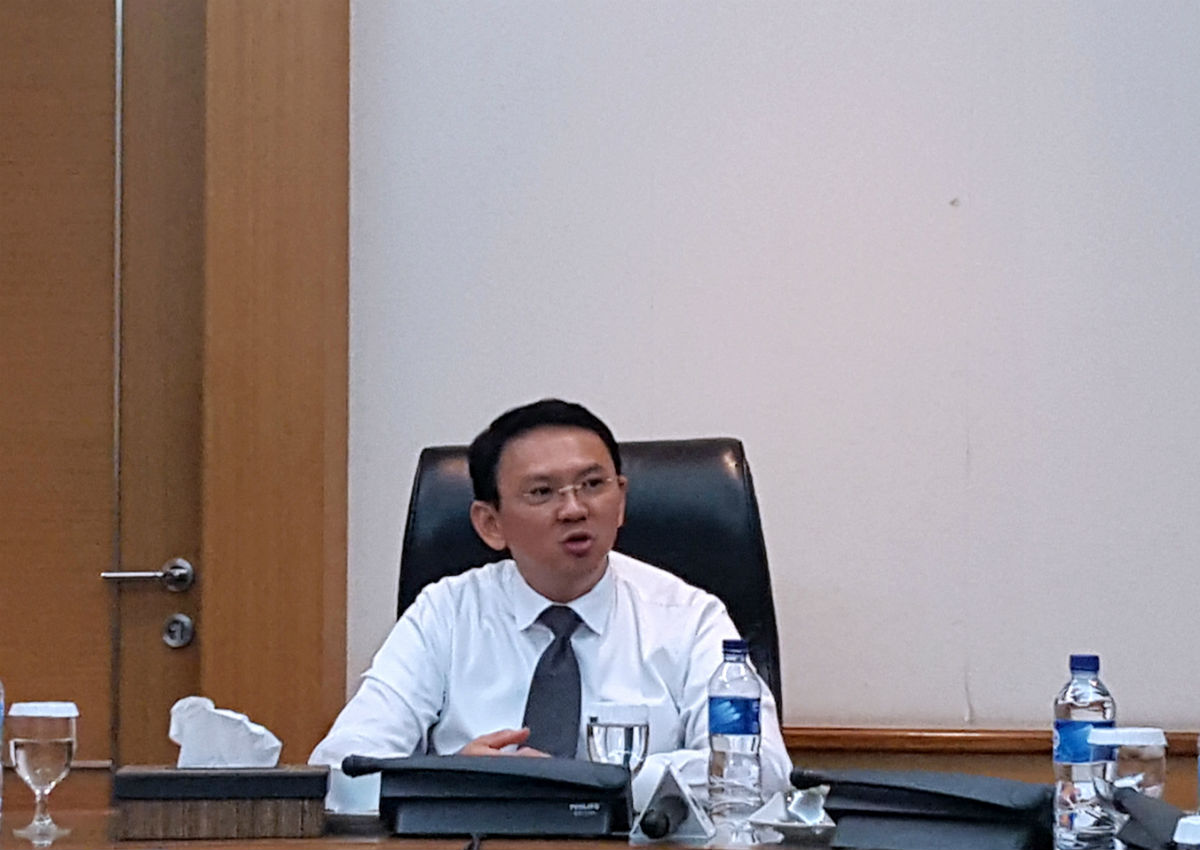
The Indonesian Embassy in Singapore has refuted claims by supporters of Jakarta Governor Basuki “Ahok” Tjahaja Purnama grouped under Teman Ahok ( Friends of Ahok ) that two of its fellow supporters were detained by the Singaporean official during their visit to the country on Saturday.

The claim, which went viral through social media and media outlets on Saturday, said two Teman Ahok supporters, Amalia Ayuningtyas and Richard Handris Saerang, were detained after arriving in the neighbouring country on Saturday.

Teman Ahok coordinator Aditya Yogi Prabowo said that ” the Indonesian embassy was unable to meet with them”. He warned Singaporean authorities to release the supporters, otherwise Teman Ahok would use “all of its resources” to swarm the detainment centre.

However, in a press statement, the Indonesian Embassy in Singapore said it was aware of the case and that the two Indonesian citizens were merely interviewed by Singaporean authorities in relation to their activities in the country.

“The Indonesian Embassy coordinated with the Singaporean authorities to help them get on their flight on June 4. But due to technical issues, they were unable to depart for Jakarta on their Garuda Indonesia flight, so we secured seats for them on Garuda’s first flight on June 5,” the embassy stated on Sunday.

The embassy underlined that the Singaporean immigration office accommodated the Teman Ahok supporters with proper facilities and services while waiting for their flight.

“The supporters were not detained, as rumored on social media,” the statement said, highlighting that Singaporean law prohibited foreign political activity in the country, and that this rule should be respected.

Meanwhile, the Singaporean embassy in Indonesia said the two members of ‘Teman Ahok’ were not detained. They were denied entry into Singapore because their visit was to conduct political activities including raising campaign funds.

on Facebook

STATEMENT BY SINGAPORE EMBASSY IN JAKARTA

In response to media queries on the alleged detention of ‘Teman Ahok’ members…

Posted by Singapore Embassy in Jakarta on Saturday, 4 June 2016

“They were aware that they were not allowed to conduct any political activities in Singapore but nevertheless still decided to travel to Singapore. They have left Singapore in the morning of 5 June. The Indonesian Embassy was kept informed of this matter and allowed consular access to the two activists,” said the embassy in the statement.

Image: 
Publication Date: 
Sunday, June 5, 2016 – 16:38
Send to mobile app: 
Source: 


Story Type: 
Others

Source link

Study examines S’porean and M’sian priorities and values

SINGAPORE – An study released on Friday (June 3) explores “what it truly means” to be Malaysian or Singaporean.
The online study surveyed 1,059 Malaysians and 1,050 Singaporeans on their beliefs and values. It was jointly conducted by Ipsos, a market research…

Source link

IKEA $20 Swedish Midsummer Buffet Early Bird Tickets Available from 1 – 19 Jun 2016

IKEA Midsummer Buffet dinner early bird tickets now available at Restaurants till 19 Jun

IKEA $20 Swedish Midsummer Buffet Early Bird Tickets Available from 1 – 19 Jun 2016

Enjoy a feast the Swedish way at the IKEA Midsummer Buffet happening on 24 June 2016, 5.30-7.30pm and 8-10pm. Tickets are available for purchase only at the IKEA Restaurant.

Source

Yang Yin duped accountant into preparing sham firm's financial statement

Former China tour guide Yang Yin was convicted last week of 120 charges of falsifying receipts and company accounts, and duping the authorities into granting him permanent residency and his wife a long-term visit pass. Court papers named several people whom he came into contact with in Singapore – a former business partner, an accountant and a form writer. The Sunday Times tracks down two of them.

The accountant

Former tour guide Yang Yin was a foreigner who knew Singapore “very well”, said the accountant who was deceived into preparing financial statements for his sham firm.

He knew how the authorities worked and what documents would be needed for a company’s financial statements, she said.

The receipts, which were falsified in order to make his company Young Music and Dance Studio seem legitimate, appeared genuine.

They also contained details such as the name of the person supposedly making payments to his firm, as well as the reasons for the payments.

“Everything was in order,” said the accountant in her 30s, who spoke to The Sunday Times on condition of anonymity.

“Nothing was fishy. He had all the bills, receipts, his employment pass and even a company secretary.”

Yang was convicted of three cheating charges last Tuesday for dishonestly inducing the accountant to prepare financial statements based on falsified receipts made to his sham company.

The prosecution added that such acts were likely to cause damage to her reputation as an accountant.

She has a Science degree in Applied Accounting from Oxford Brookes University and became a member of international accounting body Association of Chartered Certified Accountants in 2003.

She was one of the 11 witnesses the prosecution had lined up when the hearing for Yang’s case started.

Yang first approached her to prepare financial statements in 2010. Her aunt knew the former tour guide, and referred her to him.

“When he first called me asking for help, I didn’t agree immediately,” she said, adding that she was not paid for helping him with the statements.

“I thought about it for at least two weeks before I agreed.”

Between March 1, 2010 and May 24, 2011, Yang presented the accountant receipts which included payments made to his company for piano tuition, “sound tuition” and training classes to prepare for singing competitions.

There were also bank account statements and cash deposit slips, which showed deposits made into the company’s account.

Subsequently, the accountant told Yang that she did not want to help him further but he insisted.

“I was doing him a favour but, subsequently, I told him that he should look for another firm,” she said.

However, Yang went back to her saying that he could not find anyone else to help him and that his accounts were simple to do.

And so she agreed to help him again with financial statements for his company dated May 27, 2013 and Aug 18, 2014.

It was only at end-2014 that she came to know of the case after the immigration authorities approached her for more information on what had happened.

“I didn’t read the newspapers and didn’t know about him… After ICA (the Immigration and Checkpoints Authority) approached me, I tried calling him but I couldn’t locate him,” she said.

In court papers, it was mentioned that had she known she had been deceived, the accountant would not have helped the 42-year-old.

kcarolyn@sph.com.sg

The form writer

It has been nearly five years since Mr Aik Nam San first met former China tour guide Yang Yin, but the form writer remembers the meeting vividly.

“He came to see me at around 11am to noon and I was very busy,” said the 69-year-old. “When it came to his turn, the first thing he said was, ‘Uncle, go for lunch first if you are hungry’.

“He was very polite. Other people would have said, ‘Fill in my form first’,” Mr Aik told The Sunday Times. “And the way he called me Uncle, dragging out the ‘cle’ – it was so seductive.”

According to court papers, Yang sought Mr Aik’s help on or before Sept 1, 2011 to fill in an application form for permanent residency (PR). It was his second try.

A year earlier, Yang had applied for PR through consultancy company Rikvin but the application was rejected by the Immigration and Checkpoints Authority (ICA).

Speaking at his office in Kitchener Complex last week, Mr Aik said he was not aware of how Yang came to know of his form filling service.

At that time, he was renting space at the Jalan Besar Community Club for $500 a month where he ran a form filling service using a table and two chairs. “I spent about 40 minutes with him and charged him $30,” said Mr Aik.

He recalled that Yang had all the proper paperwork, including a payslip. Besides the PR application form, Mr Aik also helped Yang fill in an annex to the form which the PR applicant’s boss had to complete.

“He told me he was applying for PR and he was also the boss of the company, so I can help him fill up that part of the form,” Mr Aik said.

In the PR application, Yang falsely declared that his company had a turnover of $75,080 in 2009 and $135,952 in 2010.

When asked if he suspected at that time the information Yang provided was fake, the veteran form writer of 14 years replied: “No.”

After that PR application was submitted and approved, Mr Aik saw Yang two more times – in August 2013 when Yang sought his help again to apply for a long-term visit pass (LTVP) for his wife Weng Yandan, and a year later when the LTVP was up for renewal.

“I can’t remember how much I charged him the second and third time,” Mr Aik said. “It should be $30 each time. But I remember that he was always carrying a slingbag strapped across his shoulder.”

Mr Aik was one of the 11 witnesses the prosecution had lined up last week when Yang’s trial started.

“The ICA asked me to stand by,” he said. But he was not called because Yang pleaded guilty to 120 charges.

Mr Aik’s nondescript office has a sign that says he is a “former ICA form writer”. He said: “I helped people fill in forms at ICA from 2002 to 2008. There were seven of us.”

In 2008, the ICA stopped having form writers at its premises and Mr Aik moved to the Jalan Besar CC. He moved to a small office about the size of a parking space in Kitchener Complex last year.

Mr Aik was previously a civil servant at the Environment Ministry and an assistant manager at Sembcorp, before becoming a form writer in 2002. He helps mostly foreigners and locals who married foreign spouses with their forms. “They do not know how to fill in the forms because they are in English.”

He gets about one or two clients a day and charges them about $30 each, but work is not regular.

Mr Aik was unable to estimate the number of forms he had filled in over the past 14 years. “Must be in the thousands,” he said, adding that he hopes to retire in one or two years.

He has not followed the Yang Yin saga in the media, but he said he recognised him immediately after the news of the case broke in September 2014.

tohyc@sph.com.sg


This article was first published on June 5, 2016.
Get a copy of The Straits Times or go to straitstimes.com for more stories.

Image: 
Publication Date: 
Sunday, June 5, 2016 – 15:22
Send to mobile app: 
Source: 


Rotator Image: 
Story Type: 
Others

Source link

Two Indonesia activists denied entry to S’pore

SINGAPORE – Singapore has denied entry to two Indonesian activists who were planning to enter the country to conduct political activities, including raising election campaign funds.
“Singapore has always taken a strong stand against the importation of foreign…

Source link

6,132 cars get COEs extended in 1st quarter

Figure nearly six times the number from same period last year, cutting scrap car total by 20 per cent

More than 6,100 motorists extended the lifespan of their cars in the first quarter of this year – nearly six times the number in the corresponding period last year.

That translates to one in five cars which had reached the end of their 10-year tenure during the period.

Each certificate of entitlement (COE), which motorists must secure via a fortnightly auction before they can own a vehicle in Singapore, lasts for 10 years.

If owners want to keep their vehicles for a longer period, they must revalidate their COEs by paying the prevailing quota premium – an average of prices in the preceding three months.

The latest available data from the Land Transport Authority showed that 6,132 cars had their COEs revalidated in the first three months. In the same period last year, 1,056 car COEs were revalidated.

The number is almost two-thirds of the full-year total for last year, and almost three times the annual average for the past 10 years.

If the trend continues for the rest of the year, about 25,000 cars would cross their 10th year, in effect doubling the population of such old cars on the road.

Dr Walter Theseira, an economist at SIM University, said the trend is driven by consumer expectations.

“The expectation is that COE prices will soften considerably within the next few years, and the cost of revalidation is expected to be less than the potential difference in COE prices,” he said.

“Of course, this behaviour, while individually rational, may not lead to the expected outcome in aggregate because if everyone revalidates his COE, the COE supply from deregistrations shrinks dramatically and the expected fall in COE prices will not occur.”

Dr Theseira said the economic consideration has not been a strong motivation for revalidating COEs historically “because of the significant social premium placed on owning newer cars”.

“Yet, owning an older car is the norm in most car-owning societies, with the average age of a car being close to 10 years or even older in many countries,” he added.

SIM University senior lecturer Park Byung Joon said COE revalidation is “an attractive option”.

“Today’s cars can last longer than 10 years. You can drive your car for five more years for less than $25,000.

“After factoring in the scrap value of your previous car (which is forgone in a revalidation), the annual depreciation can be as low as $6,000.”

Dr Park added that the uncertain COE market may drive more people to revalidate.

“We all thought COE prices would gradually drop as COE supply grows. However, the surge in the private-hire car business and recent policy changes in car loans are causing an unexpected upward pressure on COE prices,” he noted.

“By extending their COEs, consumers gain much more flexibility on when they will replace their cars.” But more extensions mean fewer COEs available for future car buyers, he added.

Indeed, the 6,132 revalidations in the first quarter cut the number of cars scrapped in the period by 20 per cent. In other words, one in five motorists with cars which had reached the end of their 10-year tenure chose revalidation over buying a new car.

Motorist Joe Ng said the trend may slow down, though. He said the recent surge in revalidations was due to the high down payment car buyers needed to fork out.

“Coming up with $50,000 down payment is a tall order for most people,” the 54-year-old insurance agent said, referring to the Monetary Authority of Singapore’s previous car loan curb, which was relaxed last month.

“With the recent easing of MAS rules, things may change,” Mr Ng said. He added that he would not revalidate his COE unless premiums plunged.

The record year for COE revalidation was 2007, when commercial vehicle owners extended the lifespan of nearly 30,000 vans, trucks and buses after a sustained crash in the commercial vehicle premium.

The crash was triggered by a premature roll-out of the Euro 4 emission standard for diesel vehicles. All the major sellers could not meet the deadline, and did not have any Euro 4-compliant models to sell.

The overnight drying up of sales caused premiums to crash to $1 for six consecutive tenders up to March 2007.

christan@sph.com.sg


This article was first published on June 5, 2016.
Get a copy of The Straits Times or go to straitstimes.com for more stories.

Image: 
Publication Date: 
Sunday, June 5, 2016 – 14:53
Keywords: 
Send to mobile app: 
Source: 


Story Type: 
Others

Source link