Home Blog Page 3738

Lancome concert cancellation good for business: Chinese media

BEIJING – Cosmetics giant Lancome showed “wisdom” in cancelling a Hong Kong concert featuring a local activist, a nationalistic Chinese paper said Tuesday, warning that political disagreements with the mainland made for bad business.

The French company faced an online firestorm after axing a promotional concert that was to feature pop singer Denise Ho, a Hong Kong activist who has expressed support for Tibet and been critical of China.

It announced late Sunday that it had abandoned the June 19 gig for “possible safety reasons”, sparking anger and boycott threats from Hong Kong netizens.

The Global Times – a newspaper known for its nationalistic rhetoric – scoffed at the explanation, writing in an editorial: “the real reason is self-explanatory”.

“Apparently Lancome has given more consideration to the sentiment of the mainland public, because the mainland boasts a much larger market than Hong Kong,” it said.

“As a commercial company, it is bound to seek commercial gains, a wisdom it is supposed to have under complex situations,” the statement added.

Mainland consumers, it continued, have realised how to wield their influence to push their political agendas and will increasingly shun companies with ties to celebrities who “tarnish China’s image”.

Businesses hoping to profit from the country “must not harm China’s national interests, no matter if they are in or outside China,” it concluded.

The cancellation followed criticism of the company by the Global Times, a series of events that many in Hong Kong saw as more than a coincidence.

Some threatened to boycott the company on social media.

On Saturday, the paper said on social media that Lancome was cooperating with a “Hong Kong poison” and a “Tibet poison” – a reference to Ho’s praise for the Dalai Lama.

Hong Kong returned to China in 1997 under a “one country, two systems” agreement and enjoys greater liberties than the mainland.

But there are growing fears its freedoms and semi-autonomous status are being eroded as Beijing tightens its grip.


Image: 
Category: 
Publication Date: 
Tuesday, June 7, 2016 – 16:35
Keywords: 
Send to mobile app: 
Source: 


Rotator Headline: 
Lancome's cancellation of concert with activist makes business sense: Chinese paper
Hermes ID: 
2 350 054
Hermes ID String: 
PKLANCOME07
Hermes Author: 
PRABUKM
Story Type: 
Others

Source link

Can Singapore stay clean when banks play dirty for wealthy clients?

Being a private banking hub exposes the city-state to tainted money, analysts tell Money Mind. But bankers have been sent a strong message to play by compliance rules – or else.

Source link

Singapore-born actor nominated for Golden Horse at 13: I wasn't aware of how big it was

When Joel Lok was 13, he became the youngest person to win Australia’s Inside Film Award for Best Actor.

The accolade was for his debut performance in the 2007 Australian-Singapore film The Home Song Stories.

Chinese-American actress Joan Chen and Singapore-based Chinese actor Qi Yuwu co-starred in the film.

Lok got a Best Supporting Actor nomination at the Golden Horse Awards for his role.

“I was quite young at the time. The awards were all just a lot of fun,” Lok, now 22, told The New Paper over the phone from Melbourne.

“For the Golden Horse Award, I wasn’t aware of how big it was.” The Australian actor has roots in Singapore – like a growing crop of stars on the small screen.

Lok was born here in 1994 and moved to Melbourne with his family when he was two years old.

Almost a decade after The Home Song Stories, he is back on our radar with his lead role as geeky student Andy Lau in the first two seasons of Australian TV series Nowhere Boys.

Currently airing on Channel 5 at 11.59pm on Saturday, the fantasy adventure follows Andy Lau, goth Felix Ferne (Dougie Baldwin), all-rounder Sam Conte (Rahart Adams) and jock Jake Riles (Matt Testro) as they get lost on a school trip and find themselves transported to an alternate reality in which they were never born.

Lok reprised his role in the film adaptation Nowhere Boys: The Book Of Shadows, released earlier this year.

CHALLENGE

But he admitted it’s still a challenge to break into the Australian entertainment industry as an Asian actor.

“Others (actors on Nowhere Boys) seem to be getting a lot more auditions (than me),” he said.

The roles he gets are problematic as well.

Lok said: “To be honest, every single role I’ve done has been that of a stereotypical Asian or started off as such.”

In Nowhere Boys, his character is a nerd who grows “out of his shell” as the series progresses.

In the upcoming Australian TV series Barracuda, he has a small role as a bullied student.

Lok is currently focusing on his studies at RMIT University in Melbourne and will give more thought to his acting career after graduation.

He said: “I have considered acting in Singapore and China. I’m open to anything.”

Lok used to visit Singapore every year until 2010 to keep in touch with his extended family.

He said of his trips back: “Food was definitely the highlight. I enjoyed going to hawker centres as a kid.”

Lok caught the acting bug in primary school, where he performed in yearly plays at Camberwell Grammar School, and made his film debut when he was 11 for The Home Song Stories.

“Yuwu’s great. He was almost like an older brother to me at that time. We played a lot of games on set,” he said.

He added that it was nice to be around someone connected to Singapore and to hear the familiar accent during filming.

Lok said he does not follow the local entertainment scene or keep in touch with Qi. It was through his parents that he learnt that Qi married local actress Joanne Peh two years ago.


This article was first published on June 7, 2016.
Get The New Paper for more stories.

Image: 
Category: 
Publication Date: 
Wednesday, June 8, 2016 – 00:00
Send to mobile app: 
Source: 


Story Type: 
Others

Source link

Centrepoint 1-for-1 Deals (Thu-Sun) at Gelare, Chicken Up & More from 9 – 26 Jun 2016

Centrepoint 1-for-1 deals from Thurs-Sun till 26 June

Centrepoint 1-for-1 Deals (Thu-Sun) at Gelare, Chicken Up & More from 9 – 26 Jun 2016

Here’s some delectable deals just for you! Take your tastebuds on a gastronomic journey around the world with delectable 1-for-1 deals from Thursdays to Sundays at The Centrepoint from now till 26 June 2016.

Source

On the trolley trail: Crowdsourcing app helps supermarkets track down trolleys

The Municipal Services Office (MSO) has received 600 notifications about abandoned supermarket trolleys since launching a crowdsourcing function in April. 

Source link

Singapore 'went to sleep'

A complete breakdown in extra time saw Singapore lose 0-3 to Vietnam in the AYA Bank Cup final yesterday, as V. Sundramoorthy’s men came up short at the Thuwunna Stadium in Yangon.

Having defended resolutely for 90 minutes, the team inexplicably switched off and conceded three goals in 30 minutes of extra time.

Within 30 seconds of the restart, Vietnam were ahead, Le Cong Vinh latching on to a Nguyen Van Quyet pass and firing past Hassan Sunny.

The duo combined to make it 2-0 eight minutes later, as Vinh’s shot was deflected into Quyet’s path, and he finished from close range.

Dinh Thanh Trung made it 3-0 on the counter as Singapore poured forward in search of a goal.

The collapse was uncharacteristic, especially with Sundram known for setting up well-organised sides.

The Singapore coach said: “Vietnam are a good team, and I felt that we held (up) well for 90 minutes.

“In the first minute of extra time, we went to sleep and the game changed totally. Ninety minutes of hard work, after that they just took their foot off the pedal. We can do a lot of work on that.”

“In football, we need to stay focused. This is something they must be mentally ready (for). When they switch off for a few seconds, it’s where you get punished. It’s about the mental strength.”

It also means Singapore have failed to beat their Vietnamese rivals in their last 12 meetings, their last win a 1-0 victory coming in the 1998 Tiger Cup final.

As was the case in their 1-0 win over Myanmar last Friday, the Lions were happy to sit back and hit on the counter, ceding possession to a dominant Vietnam side.

Coach Nguyen Huu Thang’s side had much of the ball but struggled to create any clear-cut chances in normal time.

But the Lions also struggled in attack. Midfielder Safuwan Baharudin, who started up front as the lone striker, was a peripheral figure with his best effort a header off Madhu Mohana’s 74th-minute long throw that was cleared off the line.

It was clear Sundram was holding out for penalties, and it was going to plan for his side until their shocking extra-time meltdown.

After two games in charge, what is also clear is the football style that will define Sundram’s Singapore.

Against both Myanmar and Vietnam, the Lions showed they are a well-drilled unit, one prepared to surrender possession and defend deep with two banks of players.

In fact, it was not unusual to see the entire Singapore team in their own half denying their opponents space and time on the ball.

Even if opponents find a way past the Lions’ backline, there is goalkeeper Hassan, who pulled off top-drawer saves in both games.

Goals will likely come from counter-attacks, launched by long passes from midfielders Izzdin Shafiq and Azhar Sairudin to find wingers Faris Ramli and Gabriel Quak.

Set pieces will also be an important source.

Against Vietnam, Quak had a golden opportunity to put his team ahead after a well-worked free-kick routine, similar to Afiq Yunos’ goal for Sundram’s former team Tampines Rovers against Mohun Bagan in the Asian Football Confederation Cup.

In all, it is similar to Sundram’s 2013 Malaysia Super League-winning LionsXII side, one which conceded just 15 goals in 22 games.

That said, Singapore were missing the bite up front provided by Khairul Amri, who is still finding his form after a long injury layoff.

Playmaker Shahdan Sulaiman, nursing a hairline fracture in his right fibula, could provide composure in midfield.

But it seems Sundram, appointed 10 days ago, has a lot on his hands as he strives to get the team ready for the Asean Football Federation Suzuki Cup in November.

Earlier, hosts Myanmar, who will co-host the Suzuki Cup with the Philippines, beat Hong Kong 3-0 in the third-place play-off.

siangyee@sph.com.sg


This article was first published on June 7, 2016.
Get a copy of The Straits Times or go to straitstimes.com for more stories.

Image: 
Category: 
Publication Date: 
Wednesday, June 8, 2016 – 06:00
Send to mobile app: 
Source: 


Story Type: 
Others

Source link

Singapore bird trade numbers don't add up, says study

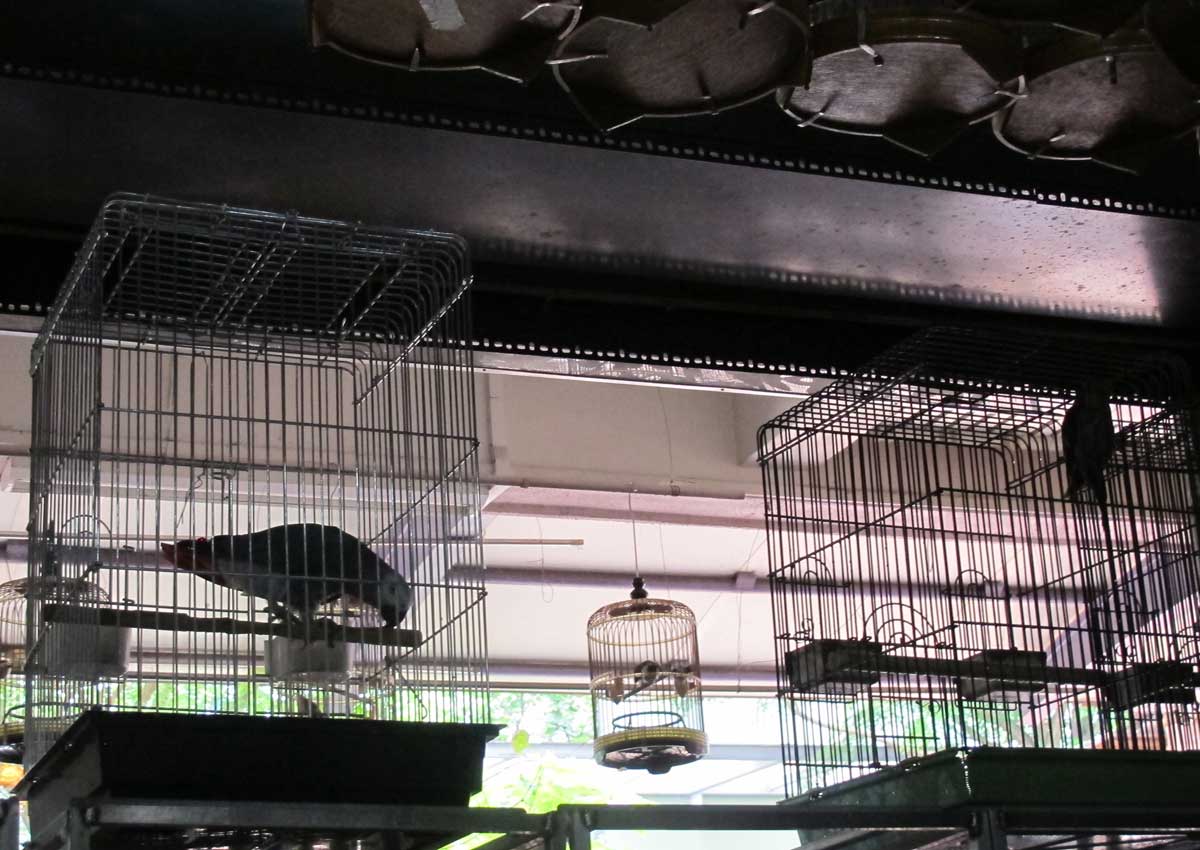
Singapore’s international standing as a free trade and shipping hub may not come without its drawbacks, it appears, after a recent study shone a spotlight on large quantities of threatened birds being shipped through the country’s ports.

The study – published in April this year by researchers from the Wildlife Conservation Society (WCS) and wildlife trade monitoring network Traffic – highlighted a discrepancy of about 86,000 birds in the number imported into Singapore and that exported.

It is unlikely the birds that are unaccounted for are intended for the domestic market, given the scale of the discrepancy, said the study.

The Agri-Food and Veterinary Authority (AVA) said a possible reason for the discrepancy is that exported birds are not necessarily those imported in the same year – they could have remained in Singapore for a few years before re-export.

AVA said other reasons could be several bird farms in Singapore that breed birds, and the possibility of import permits that have been issued but not used.

In a report to the United Nations Environment Programme’s World Conservation Monitoring Centre, Singapore said it imported 225,561 birds and exported 136,912 from 2005 to 2014, making it a major global aviculture transit hub.

About 210 species from 35 countries were imported, and 195 species were exported to 37 countries.

Singapore imports birds from places like the Solomon Islands, Holland, Taiwan, the Democratic Republic of Congo and South Africa, while export destinations include Taiwan, the United Arab Emirates and Japan.

African grey parrots make up the bulk of the trade. They are popular for their intelligence and speaking ability but, as a result, their numbers have been decimated in parts of their native range in Africa.

Conservationist Steve Boyes, who works with parrots in Africa, told The Straits Times that poachers catch the birds using fishing nets, or by using a long stick with a perch that is smeared with glue.

“Calling birds” are used to lure them close enough for poachers to catch them.

Dr Boyes, who was in Singapore last month to speak at the INK Asia conference, said: “Poachers put 50 or 60 birds in one sack, and they are all on top of and injuring one other.”

Under the Convention on International Trade in Endangered Species of Wild Fauna and Flora (Cites), to which Singapore is a signatory, trade in animals on the Cites list is prohibited without a permit.

The WCS-Traffic study said some of the countries from which Singapore imported Cites-listed birds had a history of abuse of Cites permits, among other things.

The study said Singapore needed to exercise greater caution in ensuring that specimens are imported and exported in accordance with Cites, and to “adopt a policy of greater transparency concerning its role in the regulation and monitoring of wildlife trade”.

An AVA spokesman said that while the agency continues to enforce regulatory measures, illegal trade in endangered animals is fuelled by demand and poaching. He added that a concerted effort by the international community is required to tackle the problem.

linyc@sph.com.sg

audreyt@sph.com.sg


This article was first published on June 07, 2016.
Get a copy of The Straits Times or go to straitstimes.com for more stories.

Image: 
Category: 
Publication Date: 
Tuesday, June 7, 2016 – 17:00
Send to mobile app: 
Source: 


Story Type: 
Others

Source link

19-year-old arrested for alleged loansharking

Youth suspected to be involved in several loansharking activities in Bedok and Bishan

Source link

Two plots to be kept in forest marked for clearing

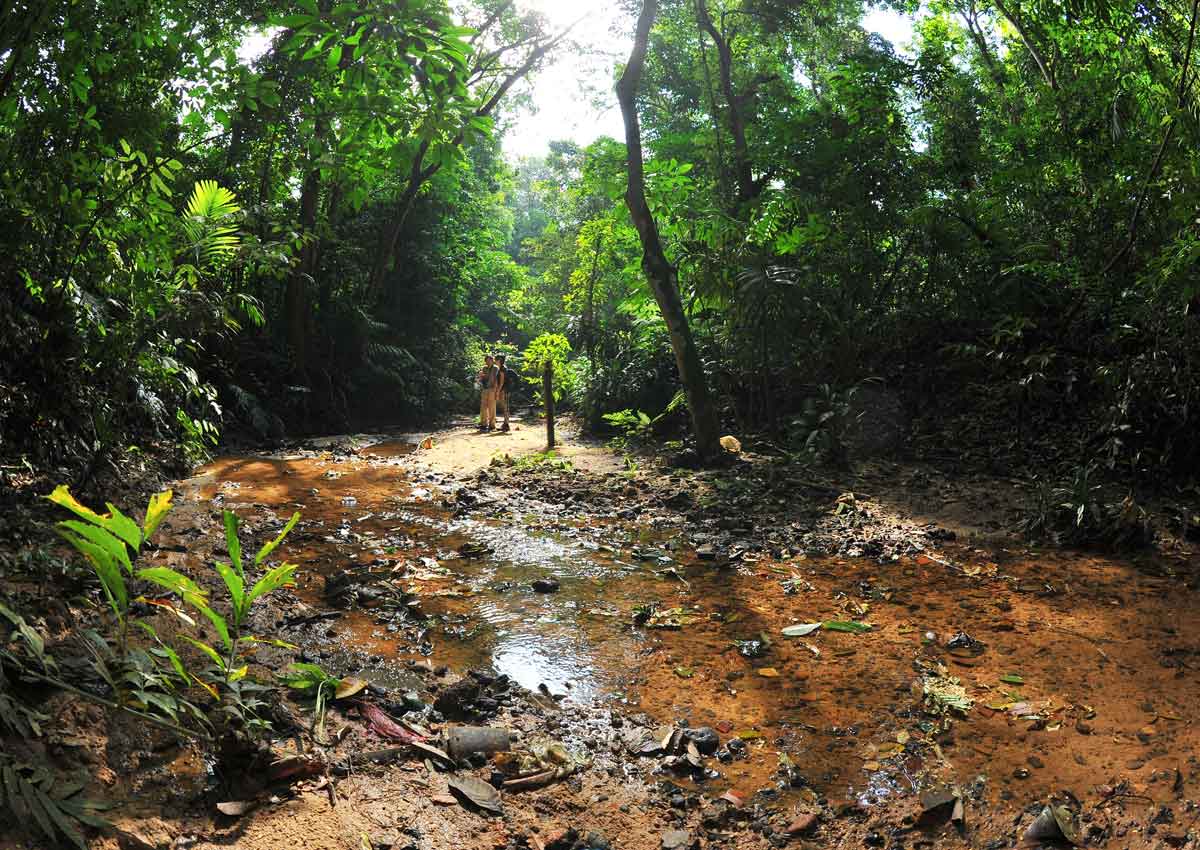
The authorities have agreed to keep two green plots in a 30ha secondary forest in Lentor which will be cleared later this year to make way for private homes.

The areas adjacent to Munshi Abdullah Walk will be temporarily kept for at least five years. The decision was made following discussions with residents and the Nature Society (Singapore) or NSS, which had hoped that the lifespan of the green lung could be extended.

But the rest of the forest, through which two rare freshwater streams run through, will be cleared. Works to facilitate the introduction of supporting infrastructure such as drains, sewers and roads will start in the third quarter of this year and is expected to take five years.

But a wildlife management plan will be implemented before the works begin to ensure animals in the area can be safely guided to the Central Catchment Nature Reserve in the west, or the forested area in the north, The Straits Times has learnt.

The Urban Redevelopment Authority (URA) has also worked with the National Parks Board to salvage and relocate plant species of varying conservation statuses, a URA spokesman told ST.

Plans to develop the area were first laid out in URA’s Master Plan 2014. In December last year, residents of Teacher’s Estate received URA fliers informing them that works to clear the forest bordering the estate would start before Chinese New Year. This alarmed residents, many of whom enjoy living near the greenery, they said. After talks between URA and the residents, the works have been delayed to the third quarter.

Apart from keeping the two green areas, URA said other suggestions from the community, such as plans for a park, canal and natural landscape features such as plants, will also be incorporated to soften the surroundings.

NSS also submitted a 10-page position paper to URA, pointing out the rich biodiversity in the area. Rare animals like the critically endangered Sunda pangolin and banded leaf monkey have been spotted there.

The society proposed that the area be developed in four stages instead of being cleared at one go, to extend the lifespan of the forest.

But URA, which said it has studied the proposal in detail, said it was not feasible “due to the need to holistically introduce the supporting infrastructure required for the new neighbourhood”.

Dr Ho Hua Chew, NSS’ conservation committee vice-chairman, said it is disappointed with the decision. “The two lovely forest streams, Tagore and Lentor – rare outside the nature reserve – will be canalised or wiped out, along with the green corridor for wildlife movement from the Central Catchment Nature Reserve to the Tagore forest.”

Chemical consultant and Munshi Abdullah Walk resident Kwan K.M, 64, said: “We understand that the Government has a plan, but maybe some plans can be re-looked, especially with developments such as the Paris Agreement on climate change, which focused on the role of forests.”

audreyt@sph.com.sg


This article was first published on June 07, 2016.
Get a copy of The Straits Times or go to straitstimes.com for more stories.

Image: 
Category: 
Publication Date: 
Tuesday, June 7, 2016 – 17:00
Send to mobile app: 
Source: 


Story Type: 
Others

Source link

Japanese boy leaves hospital after forest ordeal

TOKYO – A seven-year-old boy who survived for nearly a week after being abandoned by his parents in a forest left hospital on Tuesday, capping a 10-day drama that captivated Japan and sparked a national conversation about child discipline.

Wearing a black baseball cap, Yamato Tanooka stopped to smile and wave to a throng of journalists and onlookers as he emerged from Hakodate Municipal Hospital on the northern island of Hokkaido.

He surveyed the crowd as he waved with one hand and held a baseball crafted out of paper that appeared to carry written messages of support with the other.

Asked by a journalist if he looked forward to returning to school, he replied enthusiastically, “I want to go!” After a few minutes, which included applause, his father ushered him into a van and they drove off.

The boy survived for six nights alone after his parents left him on a mountain road in bear-inhabited woods on May 28 as punishment for misbehaving.

Many in Japan were angry at the couple, who said they had forced their son out of the car to teach him a lesson after he had thrown stone at cars and people.

They had originally told police that he got lost while on a family outing, but later admitted they lied because they feared social censure. 

The case sparked a debate in Japan about discipline, with some voices calling for understanding of parental frustration in making their kids behave, though most condemned the extent to which the boy’s mother and father acted.

And though some have called for them to be prosecuted, police said that they will not face charges, a local officer said Tuesday.

“We plan not to regard it as a criminal case,” a Hokkaido police spokesman told AFP, indicating it would be referred to social services.

Toru Numata, a lawyer who handles abuse and domestic violence cases, told AFP: “Considering the factors behind the case, the chances of making it a prosecutable one are extremely slim.” Numata said that the focus is likely to shift to the boy’s mental care, focusing on possible trauma from the ordeal.

Rescue workers and soldiers spent days scouring the mountainous forest – where bears are known to roam – after Yamato went missing 10 days ago.

He was finally discovered on Friday by a soldier, sheltering in a hut on a military drill field around five kilometres (three miles) from where he was abandoned.

The boy was found to be suffering from mild dehydration and was sent to the hospital.

On Monday, police questioned him for about an hour in hospital, accompanied by his mother and doctors, the Tokyo Shimbun reported.

He was quoted by the daily as telling police: “I walked alone and met no one”, adding that he sometimes stopped to rest and arrived at the hut in the dark.

Yamato kept himself warm there in the chilly northern nights by sleeping between two mattresses and drank water from an outside tap, though had nothing solid to eat.

He was lauded on social media for his endurance, with some even suggesting his survival skills could make him a future candidate for Japan’s military.

His father, 44-year-old Takayuki Tanooka, said in comments broadcast Monday that he apologised to his son and that the boy had forgiven him.

Image: 
Category: 
Publication Date: 
Tuesday, June 7, 2016 – 14:51
Keywords: 
Send to mobile app: 
Source: 


Rotator Headline: 
Japanese boy who was abandoned in forest by parents leaves hospital smiling
Rotator Image: 
Hermes ID: 
2 349 696
Hermes ID String: 
PKFOREST07
Hermes Author: 
PRABUKM
Story Type: 
Others

Source link