Home Blog Page 3694

Cleaners and disabled workers share stories of mistreatment by customers

0

A video of a woman lashing out at a disabled cleaner has gone viral. Sunday Life talks to cleaners and disabled workers about the treatment they receive from customers

If you have visited the 12,000 sq ft premises occupied by non-profit organisation Bizlink in recent years, chances are you would have met Ms Ng Hwee Sze.

The bubbly 36-year-old is cheekily referred to by her colleagues as the unofficial “face of Bizlink”, given that her role as the front-desk recep- tionist means she is the first point of contact for anyone calling or visiting the premises.

Bizlink provides job employment and assessment services for people with disabilities.

Ms Ng has Apert syndrome, a genetic disorder that causes the premature fusion of certain bones in the skull as well as fingers and toes, for which she has had 13 operations.

But no matter her physical handicap, her bosses say she does her job with pride, just like the growing number of Singaporeans with special needs who hold front-end positions that require frequent interaction with members of the public.

From retail staff to customer service crew to baristas, Singapore employers – including the local arm of global conglomerates such as Starbucks, KFC and Uniqlo – are hiring people with disabilities. Government agency SG Enable was also set up in July 2013 to enhance employability and employment options for those with special needs.

But despite the positive policy and prescriptive changes, it seems the mindset of the Singaporean public still has some catching up to do.

Just a week ago, a video, showing a woman giving a deaf and mute foodcourt cleaner a tongue-lashing for clearing her food prematurely, went viral.


Related: Woman apologises for scolding deaf-mute cleaner

In a survey released last month by Singapore philanthropic house Lien Foundation, findings suggest that Singaporeans are tolerant towards, rather than accepting of, those with special needs – with 64 per cent of the more than 1,000 people polled saying they believe Singaporeans are willing to share public spaces but not interact with the special needs community.

And a survey of 1,000 people with disabilities, released earlier this month by the National Council of Social Service, found that 62 per cent do not feel they are included, accepted, given opportunities to contribute or reach their potential by society.

For special needs people such as Ms Ng, it seems that proving they can do their job well despite their handicap is yet another challenge they have to face.

Ms Ng, who graduated from Ngee Ann Polytechnic with a diploma in accountancy in 2006, recalls a particularly painful instance when she was badly scolded by a client because a Bizlink employee whom the client had gone down multiple times to meet with, was not around.

The daughter of a company director and a housewife says: “When she was shouting at me, I felt very helpless, but I could do nothing other than to apologise. I was made to feel as though I hadn’t done my job because of my handicap, even though I had passed on her messages as asked.”

Read also: Verbally abused deaf-mute cleaner intends to quit
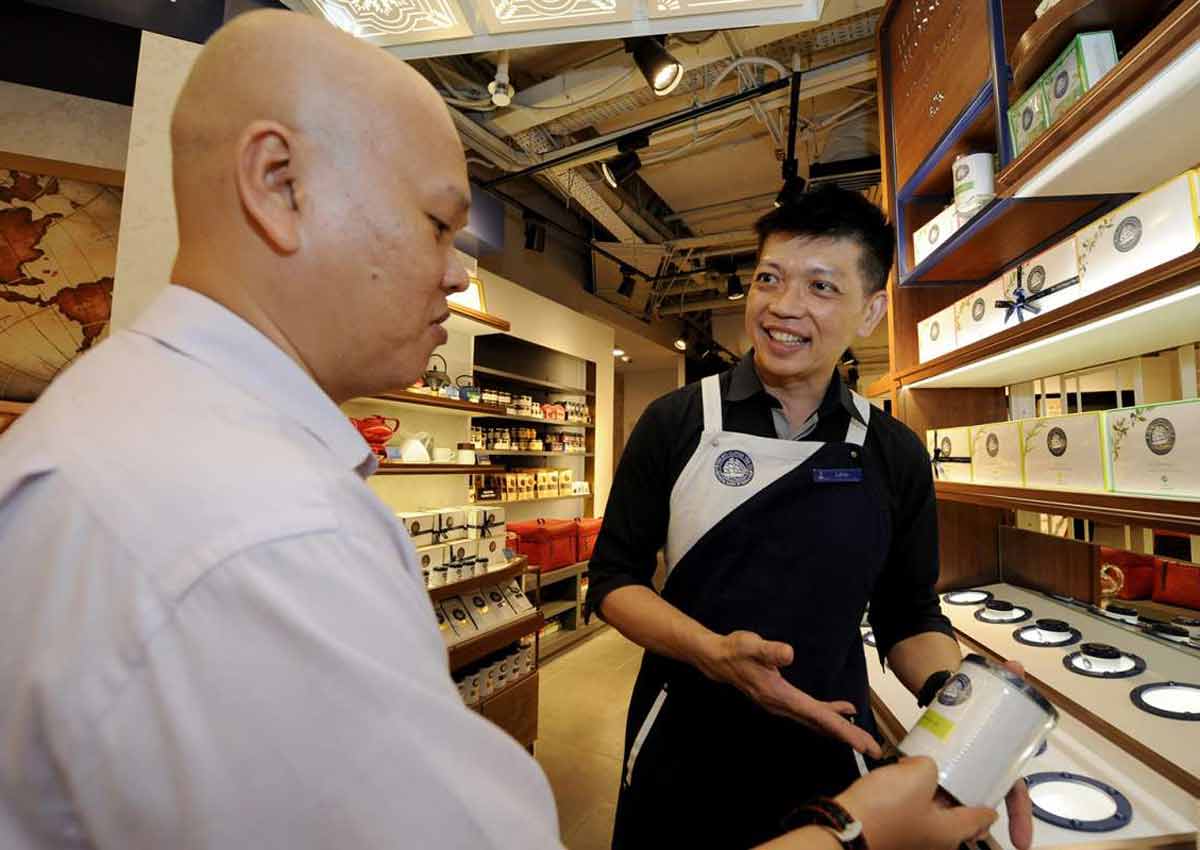
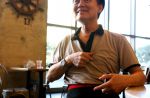
Leroy Lee (right), who has partial visual impairment, works as a retail sales associate where he introduces tea brands to customers. 

Others like Mr Leroy Lee, a visually impaired retail promoter at 1872 Clipper Tea Co. at Tangs, say dealing with impatient Singaporeans is part and parcel of their customer-facing roles. He suffers from glaucoma, and relies only on faint vision in his left eye after becoming completely blind in his right eye 10 years ago.

“I have definitely dealt with one or two impatient customers in my work,” the 52-year-old says. “On my part, I have to find ways and processes to overcome my disability so I can do my best to help my customers.”

This latent discrimination is perhaps why many special needs staff choose not to wear badges or tags that identify them as having a disability.

Ms Jacelyn Lim, deputy executive director and head of the Employ- ability and Employment Centre at the Autism Resource Centre, says: “While the purpose of such identification is the hope that members of the public will treat the person with a disability with more patience, tolerance and kindness, there is also the possibility it may lead to them becoming a target to be taken advantage of.”

For 21-year-old Starbucks barista Ng Jian Yang, choosing to not wear a badge that identifies him as autistic is based on a decision to focus on his job instead of his special needs.

“If I encounter rude or impatient customers, I just focus on making their drink quickly and moving on to the next one,” he says.

Another autistic sales and customer service staff in her 20s, who declines to be named, adds that identification of disabilities can influence people’s perceptions of her. “Even if I wear a tag, people may still misunderstand me,” she says. “I would rather they not see my disability and focus on my abilities instead.”

Despite the challenge of dealing with unsympathetic members of the public, all the workers with disabilities interviewed for this report say their overall experiences in their front-end roles have been positive, bolstered in large part by encouraging co-workers and employers.

Deaf marketing executive Jorena Tan, 36, says her colleagues at public relations firm Affluence PR always prepare PowerPoint slides for their weekly office meetings so she can stay abreast of what is being discussed. They also learn sign language from her every Monday so they can communicate better with her.

Mr Lee says his customers help him read the small print on packaging labels if he has difficulty doing it himself.

And at the Braddell branch of KFC, deaf team member Wendy Wong, 46, has even had some regular customers learn basic gestures so they can indicate whether they want to eat their food at the restaurant or have it to go.

It is positive experiences like these that make special needs employees like Ms Ng not regret choosing jobs that involve so much interaction with members of the public.

“While I do hope that people can be nicer and more understanding towards those with disabilities, why should I be shy and work in a back-end job just because I have a handicap?” she says.

“I love meeting new people, which is why I hope to stay in my job for a long time. I am an extrovert, okay!” – Ankita Varma


‘We do the diry work for you’

In his first year working as a cleaner in a foodcourt 10 years ago, Mr Rick Lee, 48, accidentally knocked into a patron and splashed gravy from a bowl on the middle-aged man’s white shirt.

The patron was livid and shouted at Mr Lee: “This is branded, you know? I paid $200 for it. I was going to a nice dinner, but you dirtied my shirt. You have to pay for it.”

The stain was the size of a golf ball, and Mr Lee believed it would be removed after a wash. But the patron was insistent, so Mr Lee bought him a new shirt that cost about $50, took the dirty shirt off the man’s back and got it dry- cleaned by the next day.

Mr Lee and other cleaners tell The Sunday Times that they and their co-workers have encountered unreasonable behaviour from customers.

He says: “We have to ‘lower’ ourselves and apologise, even if it is not our fault. We have no choice. That’s the way it is in the service industry.”

The spotlight has been cast on the verbal abuse cleaners are sometimes subjected to, following an incident that happened about a week ago at Jem mall’s foodcourt. A deaf and mute cleaner, Mr Png Lye Heng, 64, was yelled at by a woman because he cleared her food before she had finished her meal.

A video, which later went viral, shows the woman lashing out at a manager of the company providing cleaning services to the foodcourt when he tried to explain that his worker was deaf and mute.

Operations manager Winson Soh of cleaning firm Horsburgh Engineering says confrontations between patrons in hawker centres or foodcourts and deaf cleaners are quite common.

He explains that while deaf cleaners have no speech impediments, they are used to communicating with grunts or by gesticulating.

“But the patrons cannot see anything wrong with them, so they get offended and wonder why the cleaner can’t just speak to them properly and ask to clear their food,” Mr Soh, 40, adds.

Some patrons then end up shouting at the cleaners in anger. Mr Soh says he watches such employees closely and intervenes quickly when a negative situation arises.

Able-bodied cleaners also get scolded for clearing patrons’ food when they are not done.

Mr Lee, now a cleaning supervisor employed by Sergent Services, says cleaners are instructed to clear food that is left unattended for 10 to 15 minutes. But some patrons leave their food at the table to buy drinks, which sometimes takes a while.

“They get angry when they return and find their food gone. Some demand that we replace the meal,” he says, adding that he has done so in the past.

Cleaners say they also often find themselves on the receiving end of unkind remarks and allegations.

Once, Mr Lee heard a woman telling her son when he was cleaning their table: “If you don’t work hard, you will end up like him.”

He was hurt, but let it slide. “I tell myself that I am earning an honest living. I am not begging or stealing,” he says.

When things go missing, however, cleaners say they are the first to be accused.

Mr Thomas Lee, 48, manager of cleaning firm Friendly Supplies, says: “The question, ‘Did you take my things?’, is offensive to my staff.”

Cleaning managers say the accusers usually do not apologise after the cleaner is found to be innocent.

The cleaners find different ways to deal with the challenges at work.

Madam Soh Ai Kim, 60, recounts that an office employee told her not to touch her bag when cleaning the area because her hands were not clean. “I was hurt, but I just wore a pair of gloves after that,” she says.

Those who are told that they have body odour try to change their uniforms multiple times a day.

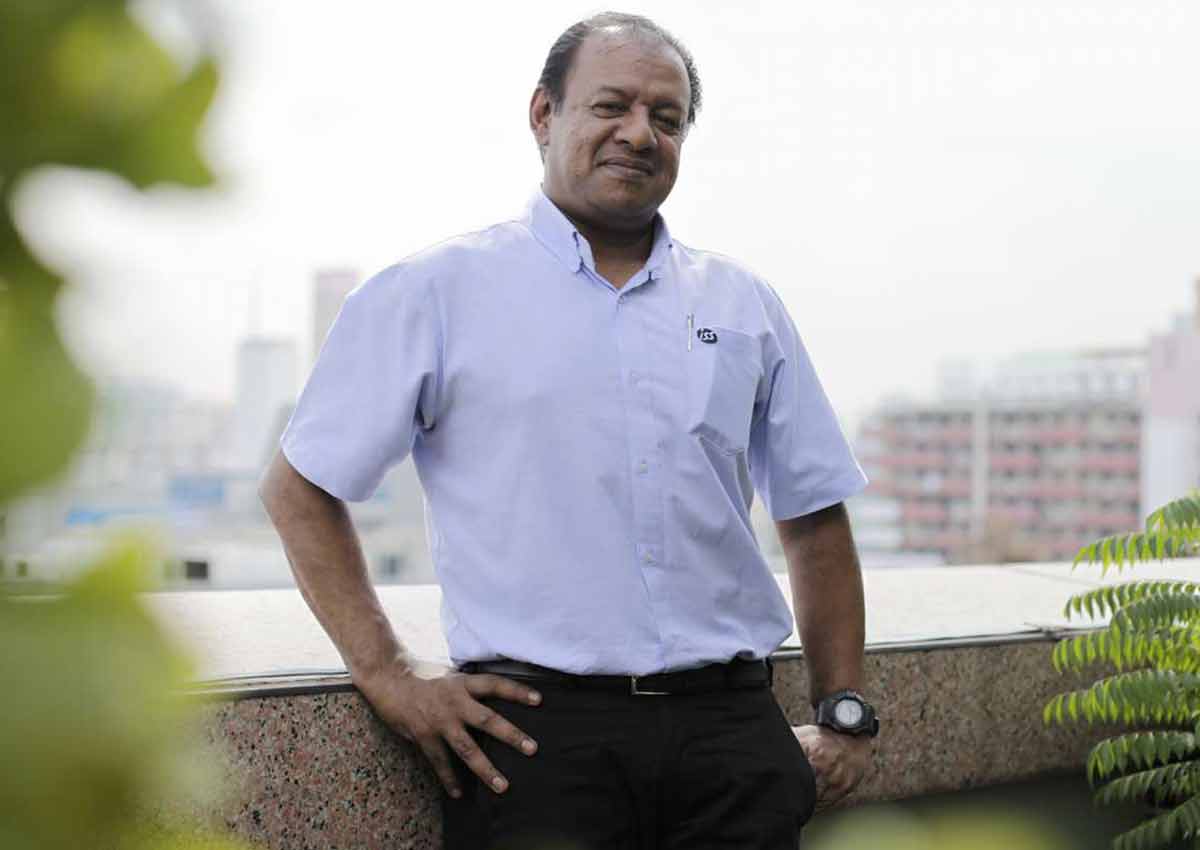
Mr Mohamed Kahir, 52, who is now in a supervisory position with cleaning firm ISS Facility Services, says he simply nods quietly and smiles when the other party is being unpleasant or unreasonable.

“I try to be humble, and I never go into a direct challenge,” he says.

His positive attitude has paid off. He has won awards and certificates of commendation from customers. “I’m proud of the work I do,” he says.

“Cleaners are important to the society. We do the dirty work for you that you do not do yourself.” – Bryna Singh


This article was first published on June 12, 2016.
Get a copy of The Straits Times or go to straitstimes.com for more stories.
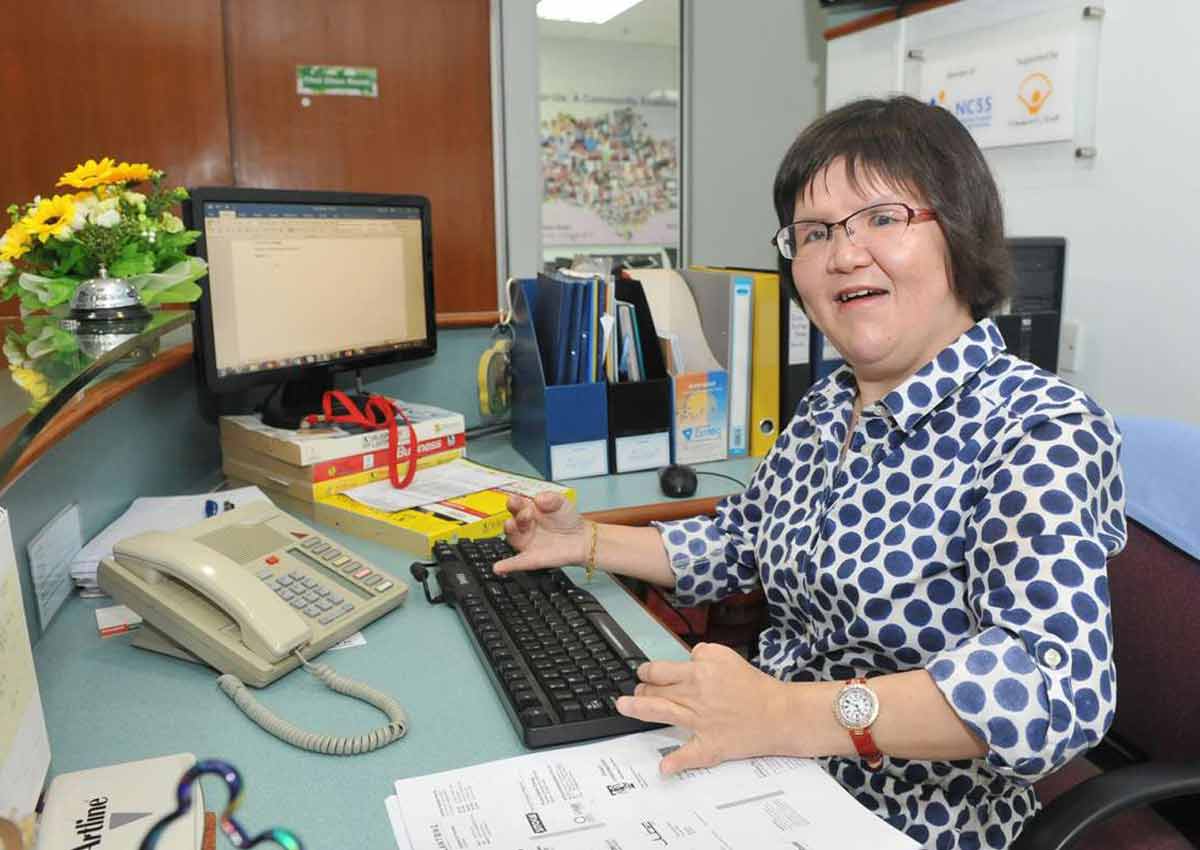

Image: 
Category: 
Publication Date: 
Sunday, June 12, 2016 – 17:00
Send to mobile app: 
Source: 


Rotator Image: 
Story Type: 
Others

Source link

At least 3 hurt after explosion at Shanghai airport

0

At least three people have been injured from an explosion at an airport in Shanghai on Sunday (June 12), according to online reports.

According to Chinese state broadcaster CCTV, the incident occurred at about 2.42pm at Terminal 2 of the Shanghai Pudong International Airport.

The blast happened when suspected home-made explosives suddenly went off, the Shanghai Airport Authority said on their official Weibo page.

According to Sina News, there were a total of two explosions about five seconds apart that came from two pieces of luggage. The area where the blast occurred has been cordoned off by authorities.

Two people were reportedly badly hurt in the blast, while another sustained minor injuries. All three have been rushed to hospital.

More to come.

seanyap@sph.com.sg

Image: 
Category: 
Publication Date: 
Sunday, June 12, 2016 – 16:24
Send to mobile app: 
Source: 


Rotator Image: 
Story Type: 
Rewritten Story

Source link

Ex-ST editor Han Fook Kwang compiles his best columns in new book

0

On his first working day at The Straits Times on Feb 20, 1989, Mr Han Fook Kwang did not even have a table to write at.

“It was a big change,” recalls the former civil servant who, as an Administrative Service officer, had his own room and personal assistant at the Ministry of Communications, with its no-nonsense, hands-on Permanent Secretary Sim Kee Boon as his mentor.

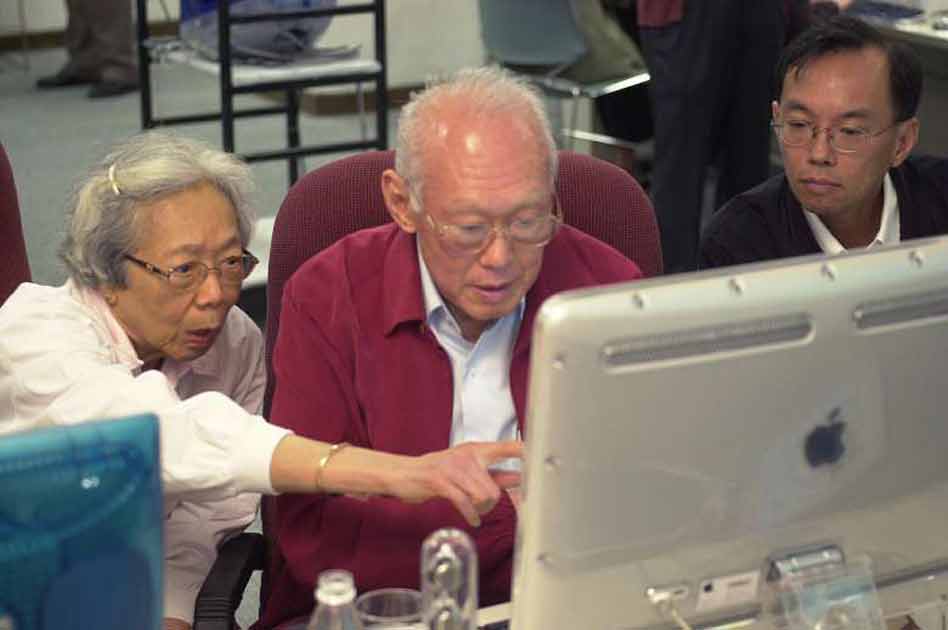
After that unsettling start as ST’s senior leader and feature writer, his bosses – Singapore Press Holdings executive chairman Lim Kim San and editor-in-chief Cheong Yip Seng – chose Mr Han, “for some strange reason” he says, to collaborate with founding Prime Minister Lee Kuan Yew on his first book, Lee Kuan Yew: The Man And His Ideas.

That book, which he wrote with his colleagues Warren Fernandez and Sumiko Tan – who are now ST’s editor and deputy editor, respectively – became a best-seller, with close to 100,000 copies sold since its launch in 1998.

In January 1995, while writing the book, Mr Han became the paper’s political editor.

Then in September 2002, he was made its editor, a position he held until Valentine’s Day 2012, when he went on to be managing editor.

That year, after a 10-year hiatus, he returned to column-writing on “hard questions” that mattered to everyone here, such as how Singapore could continue to be successful amid rapid, roiling change everywhere.

The flood of e-mail he got from readers after what he penned in 2012 – much more than he ever got when he first wrote his Thinking Aloud columns in 1989 – spurred him to write every other week.

Four years later, he is still at it, a probing, pellucid voice of the Singapore conscience.

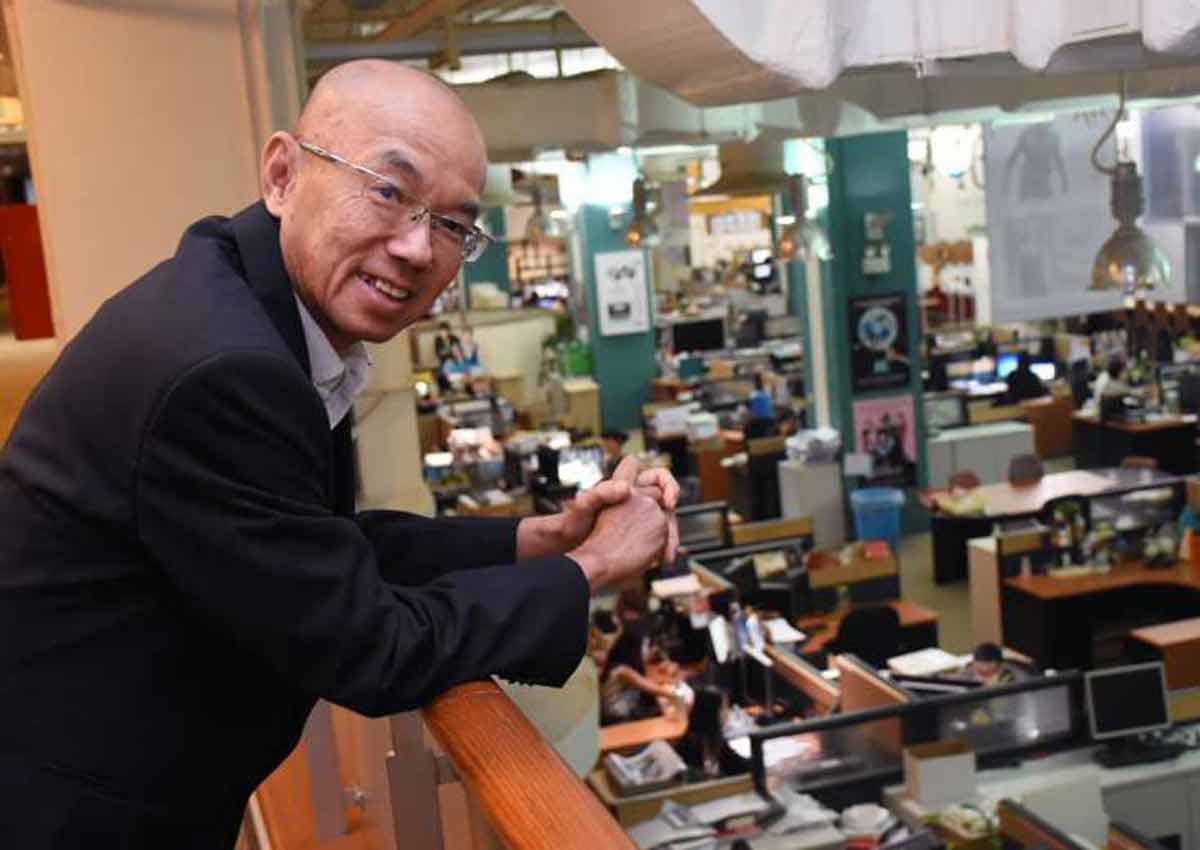
On May 27, he turned 63 and was to have retired from the paper. But he accepted ST’s offer to stay on as its Editor-at-Large, albeit one free to pursue his own projects.

His new book, Singapore In Transition: Hope, Anxiety And Question Marks, is out in bookstores.

It comprises 40 of the columns he likes best, plus fresh pieces written to introduce each of the book’s sections, that is, on politics, the economy, society, transport and what he calls “odds and ends”.

Among these odds and ends is a call close to his heart: the need for Singaporeans to strengthen their sense of community, be it looking out for one another or keeping everywhere clean.

“This is how developed societies get to where they are today,” he notes in this interview.

“In places like Western Europe, they are not afraid to tell you off if you don’t behave properly and show you are a responsible member of the community.”

That, he adds, is how these societies “move up and become the advanced societies that they are”.

But in Singapore, he argues, free market forces “pull people apart” because some move up the economic ladder at the expense of others, resulting in “a tendency to be smug and complacent, to feel that we have done it and are so much better than many other societies”.

But you need only look at the abandoned meal trays cluttering tables at hawker centres to know that that is not the case, he says.

Unlike people with a sense of community, he points out, “the fellow who’s waiting for a table here won’t say, ‘Hey, why are you leaving all this mess on the table?’ “

Looking out for others has to start in school, during a child’s formative years, he adds.

He was, for instance, “absolutely floored” recently by a video of schoolchildren in Saitama, Japan, on their hands and knees, scrubbing various areas in their school.

You can watch it on https:// www.youtube.com/watch?v=hL5mKE4e4uU.

In a note to Mr Han, Deputy Prime Minister Tharman Shanmugaratnam wrote: “I agree with you that it’s this culture, the everyday interactions and quality of relationships, starting from when kids are growing up, that’s at the heart of the future we want – the mastery of skills, and deep solidarity among Singaporeans.”

Mr Vincent Loo, 57, a commodities sales and relationship manager at financial news and data provider Bloomberg, who has been following Mr Han’s writing since his first Thinking Aloud columns, says: “His writing has touched a lot of raw nerves here, which is good because he is not about criticism for criticism’s sake. Most of the time, he puts a positive spin on his constructive criticism, which shows us what mature thinking is like.”

THAT’S OUR KARMA

Mr Han grew up without a television set in his home, and his first articles for ST in 1989 ran in a newspaper that was all black-and-white, as colour pages were introduced only a few years later.

But by the time he became its editor in late 2002, very powerful political, social and technological forces were conspiring to do in newspapers and, in many cases in the United States, did.

With a far more vocal populace here, and the media scene changed forever by technology in split seconds, he recalls: “Although we tried very hard to produce the best paper we could every day, it didn’t satisfy everybody. And I would be the first to admit that that was the case.

“In a way, it’s not surprising. Society is changing very fast. Different people have different expectations of a newspaper.”

Tapping away at the leg of the coffee table in his office, as he often does when he is pondering something, he muses: “One of the challenges of being an editor is that it’s unlike producing a bottle of Coke, where once you get the formula you don’t need to tweak it.”

“There were areas we fell short. We could have done better,” he then says, declining to cite examples.

Asked what he thought of the view that ST reflects the Government’s position, he says evenly: “That’s our karma. That’s part and parcel of who we are. It doesn’t mean that we can’t be professional and credible and produce a good paper for our readers. But it’s a perception that will be very hard to shake off, given our history and the strong influence the Government has.”

As to navigating that strong influence, he says: “Every editor in ST has had to navigate this, including the present editor. I did my best navigating it; I will leave it to others to judge how well I did that.”

With local opposition political parties given greater coverage on his watch than ever, did speaking truth to the powers that be dent his career advancement?

“Well,” he says wryly, “I was already editor of the paper.”

He adds: “You have to decide for yourself how you want to do it for the paper. You have to be very sensitive, but you can’t always be looking over your shoulder and be afraid of the consequences if you did it one way or another. You have to trust your judgment and you take counsel from your senior editors.

“You have to approach it as professionally as possible, and if you don’t do it this way, you’re going to lose the readers or put the paper in an untenable position and you’re not just going to lose your readers but lose the respect of your colleagues in the newsroom.”

KOPITIAM KIA

Mr Han is married to public relations consultant-turned-homemaker Frances Chua, and they have a son, Isaac, and two daughters, Yushan and Yushi.

Mild-mannered, kindly even, he insists he is “a very simple person” with “very simple interests” such as reading a good novel.

At present, he is leafing through Walden by Henry Thoreau and Malgudi Days by R. K. Narayan.

He grew up in his paternal grandfather Han Keng Juan’s coffee shop in Joo Chiat Road, with his then five-member family squeezed into a room upstairs, all sleeping on the floor. Across the road was Joo Chiat Community Centre, which had a little library.

Mr Han recalls his father, textile salesman Han Eng Min, “kicking up a big fuss” because librarians there would not issue his son a library card at first, as he was only four.

After Presbyterian Boys’ School and Raffles Institution, where he edited its self-funding magazine, the Rafflesian Times, Mr Han left Singapore for the first time for the “perpetually grey skies” of Leeds, Britain, on a Colombo Plan Scholarship.

He returned with a mechanical engineering degree in 1975, did his national service with the Republic of Singapore Air Force, and then joined the Economic Development Board (EDB) in 1978, having decided that he wanted nothing to do with engineering.

While at EDB, he learnt that the Government was short of Administrative Service officers, so he signed up to become one and spent the next nine years crafting policies to back the introduction of the MRT and ERP systems. He also obtained his master’s degree in public administration from Harvard University’s Kennedy School of Government.

ST offered him a job after being suitably impressed with his replies to readers on its Forum page.

With his foot tapping away at the coffee table, one of two tables in his room, he says: “Sometimes, I come across as critical of the way we do things and all that. But that’s my little contribution to this attitude which I think the Old Guard leadership had, which was to confront our problems openly and honestly, and where we fall short, to say so.”

What it was like to work with Mr Lee

In his new book Singapore In Transition: Hope, Anxiety And Question Marks, ST’s Editor-at-Large Han Fook Kwang recalls what working with the late Mr Lee Kuan Yew was like:

“Once he had decided to do something, whether it was writing a book or securing Singapore’s future, he was impossible to shake off.

“When he called me one night in August 2008 to do another book, I wasn’t thrilled at the prospect. I was then the editor of The Straits Times, with my hands full running the paper. The editor’s job was demanding, the hours long, and I did not relish doing another book on top of that.

“But it was impossible to say no after he said he had only two to three years left and he wanted to put across his views on some of the issues that troubled him: the call for more political openness, the backlash against foreigners and the challenges facing Singapore in a rapidly changing world.

“Given his failing health, it might well be his last book. When I took some time to get back to him on the concept of the book, he urged haste, telling me in an e-mail: ‘Don’t let the grass grow under your feet.’

“Finally, when we had settled on how the book should be done, he was impatient to start, and wrote: ‘Try it the way you propose. Outline the subjects to be covered and draft a few chapters. Then, let’s try your vigorous probing and challenging of my positions.’

“The book, Hard Truths To Keep Singapore Going, was two years in the making. When we finally launched it in 2011, his health had deteriorated significantly after the death of his wife.

“Indeed, he loomed large in my professional life.”

• Singapore In Transition: Hope, Anxiety And Question Marks by Han Fook Kwang is available at $25 with GST at leading bookstores. Meet Mr Han at noon today, when he talks about his new book at the first-ever Singapore Coffee Festival, in the ST Reading Room, Level 3 Food & Drinks Zone, F1 Pit Building.


This article was first published on June 12, 2016.
Get a copy of The Straits Times or go to straitstimes.com for more stories.

Image: 
Category: 
Publication Date: 
Sunday, June 12, 2016 – 17:00
Send to mobile app: 
Source: 


Rotator Headline: 
Ex-Straits Times editor on what it was like to work with Lee Kuan Yew
Rotator Image: 
Story Type: 
Others

Source link

Workers' Party's core of next-gen leaders takes shape

0

What are the calculations behind installing its two youngest elected MPs, Pritam Singh and Faisal Manap, in key posts?

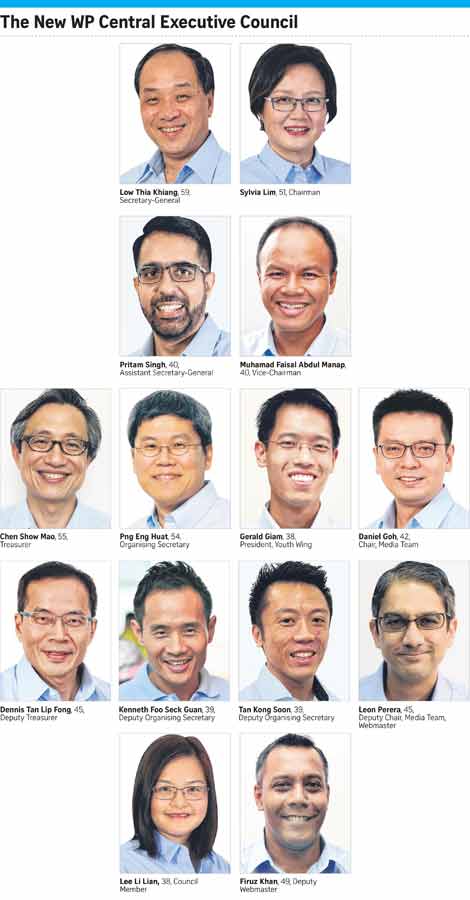
The Workers’ Party’s (WP) two youngest elected MPs – Mr Pritam Singh and Mr Muhamad Faisal Abdul Manap – are now in key party positions following last month’s internal elections.

Mr Singh, 40, was named the WP’s assistant secretary-general (ASG), while fellow Aljunied GRC MP, Mr Faisal, also 40, was appointed vice-chairman.

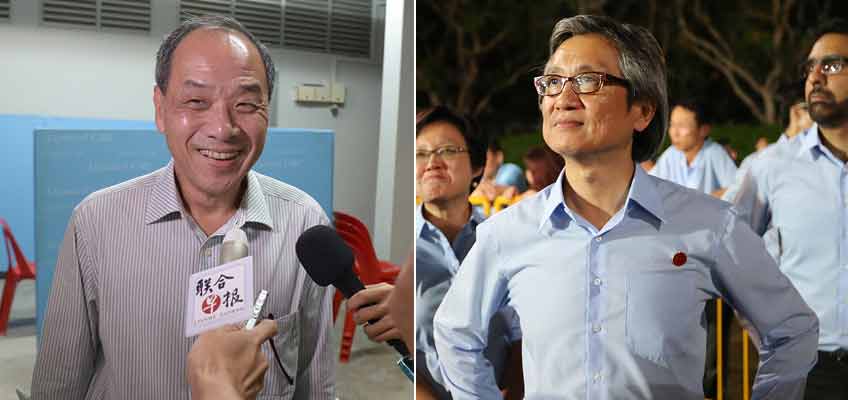
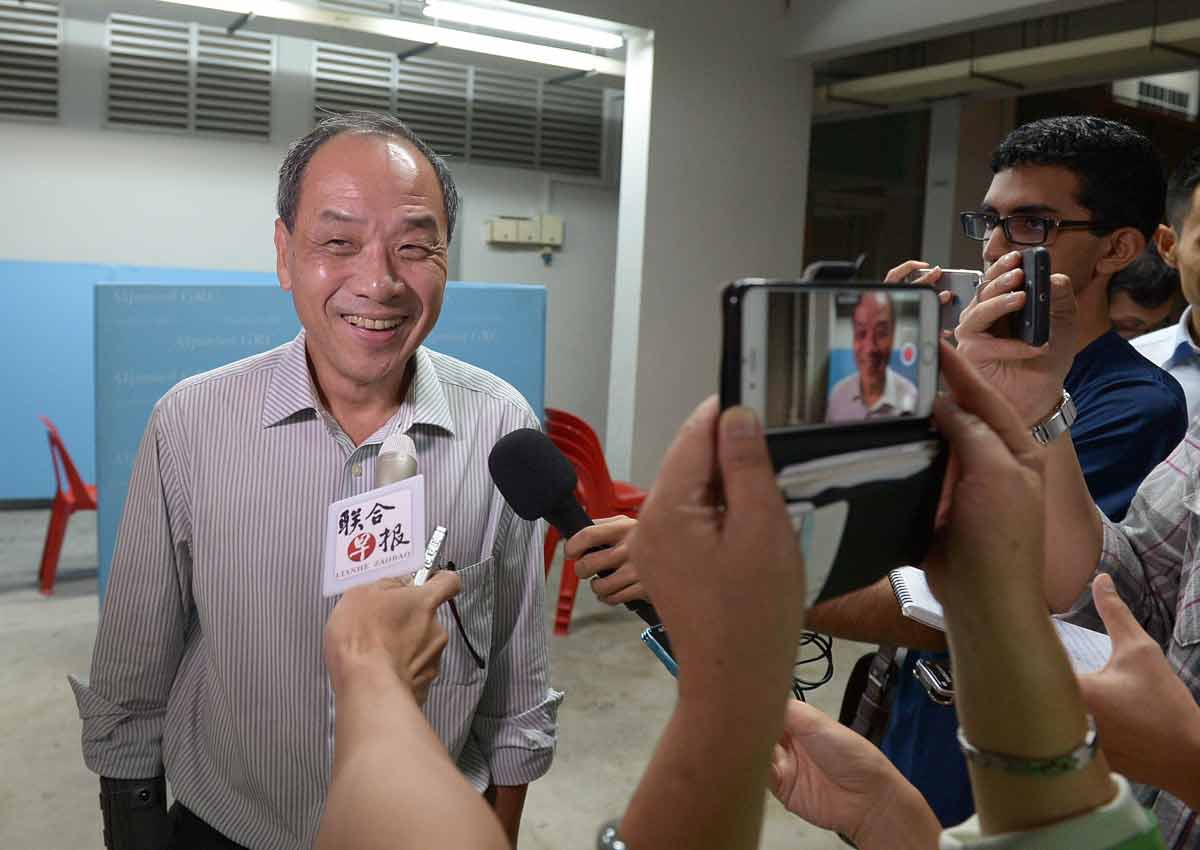
Even though Mr Low downplayed the significance of Mr Singh’s appointment as assistant secretary- general – pitching it as being part of the party’s renewal process – analysts say that filling a position that was long dormant is a strong signal of who Mr Low wants to succeed him when he steps down.

The assistant secretary-general post was left vacant for 10 years.

It appears to have been a symbolic gesture not to anoint someone from the next generation of leaders to be first-among-equals. Until now.

Mr Singh is also climbing the party’s leadership structure in a similar way as Mr Low once did. Mr Singh was previously the organising secretary, a post Mr Low himself once held before becoming secretary-general in 2001.

Analysts say that in deciding who to elevate within the WP leadership, Mr Low has made a shrewd move. By shining the light on Mr Singh and Mr Faisal – both second-term MPs – he is essentially saying the WP wants to vest its future in those with a track record in constituency work, and who are able to contest and win elections.

This blunts the argument among some disgruntled quarters of the party that Mr Low has, in recent years, sidelined older, more experienced members to make way for untested newcomers.

Mr Low himself pointed out that Mr Singh is “suitable” for the assistant secretary-general’s post, given the duties he shouldered thus far.

“He’s been chairman of a town council, has experience in managing town council, and he has been active in the grassroots work, Parliament,” said Mr Low. “So if you consider in terms of the totality, I think Mr Singh is suitable to be the ASG.”

What was left unsaid was Mr Singh’s solid performance in GE2015: His Eunos ward attained the highest vote-share for the WP of Aljunied GRC’s five wards.

As chairman and the de facto face of the Aljunied-Hougang Town Council, Mr Singh has also had ample opportunity to spar with PAP and government types outside the relative safety of Parliament.

While party insiders concede that the town council’s woes may have cost the WP votes in GE2015, many were of the view that Mr Singh acquitted himself well despite numerous challenges and showed stamina for a protracted fight, and they noted that the town council is on track to solve its financial woes with the help of audit firm KPMG.

Political scientist Bilveer Singh points out, though, that the appointment as assistant secretary-general is no guarantee that he is the successor. Rather, it is a signal that his ability to lead will now be closely scrutinised. “It is not surprising that he is now positioned as the ASG. But he must now perform as a party leader and not just as a party worker,” said Dr Singh.

“He is key in the driving seat and he is a front runner. But by no means has the decision been made. For that, we must wait for the next GE.”

Mr Low, 59, said it is essential for his successor to have the support of the party, something which Mr Singh certainly has. He was re-elected to the CEC with the most number of votes at the May 29 election.

While he declined to provide a timeline for when the baton will be passed, he hinted that it could happen sooner rather than later.

Mr Low told the media that the assistant secretary-general’s position was left vacant for the past decade “because we were still developing, we were still cultivating, moulding the new leadership core”.

But the new core now appears to have taken shape: Aside from Mr Singh and Mr Faisal , four fresh faces have been tasked to understudy more experienced WP leaders. They include deputy organising secretary Kenneth Foo, 39, who led the Nee Soon GRC team in GE2015, and Non-Constituency MP (NCMP) Leon Perera, 45, who has been appointed deputy chair of WP’s media team.

That both men were co-opted into the decision-making body in 2015 and re-elected last month signalled that the challenge for the WP’s top job did not derail the party’s planned succession process.

Other new faces who made the cut also add to the narrative that Mr Low does not want the WP to regress to the state it was in when he took over in 2001. That year, the party was able to contest only two seats in the general election.

NCMP Dennis Tan, 45, one of the best performers among those who lost in GE2015, was named deputy treasurer, while chocolate factory boss Firuz Khan, 49, was appointed deputy webmaster.

“The line-up has shown that the party has successfully cultivated a younger leadership core which will be able to succeed the older leadership when the time comes,” said Mr Low. Even as he played it coy when asked when the deputies would take over key portfolios, the decision to seed them into the CEC showed that Mr Low recognises the importance – and urgency – of getting the next- generation leaders and his identified successors out in the open.

This is so that they can be assessed and accepted not only within the party, but also by the public.

“Whoever succeeds me as party leader, for that matter anyone who becomes (part of the) leadership core, will need to have a favourable public opinion so that the public will continue to support the WP,” said Mr Low. “We are a political party, so that’s a reality.”


This article was first published on June 12, 2016.
Get a copy of The Straits Times or go to straitstimes.com for more stories.

Image: 
Category: 
Publication Date: 
Sunday, June 12, 2016 – 16:50
Send to mobile app: 
Source: 


Story Type: 
Others

Source link

Pioneer Generation to get S$190m in Medisave top-ups this year

0

SINGAPORE – As part of the Pioneer Generation Package, the Government will be giving out about S$190 million in Medisave top-ups this year to those born in 1945 or earlier.
From the coming week, these Pioneers will receive letters to tell them how much they…

Source link

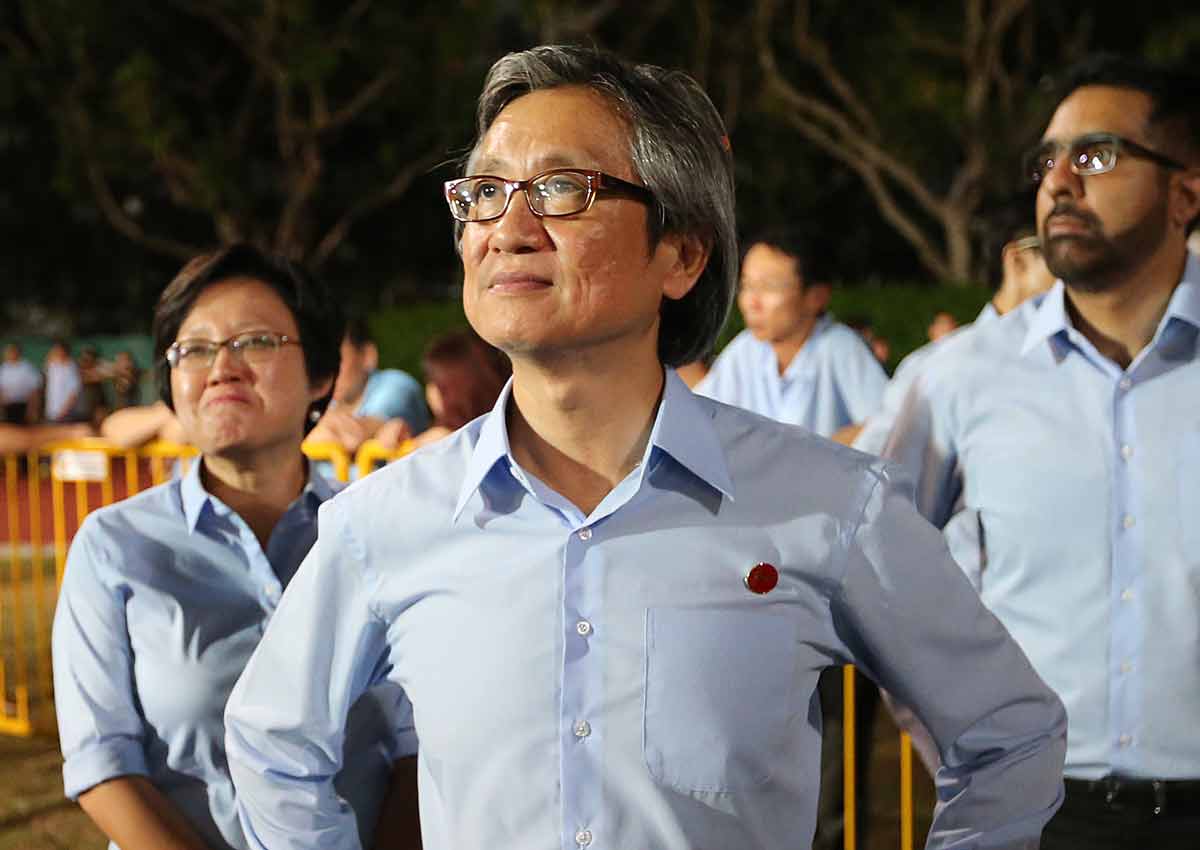
Chen Show Mao's leadership bid in WP has longer-term consequences

0

Chen Show Mao may have considered a challenge in 2014 but decided against it after doing the numbers, say insiders. So why now, and what was his plan?

Ever the enigma, Mr Chen Show Mao has kept his reasons for mounting a leadership challenge close to his chest.

When asked by reporters a day after his failed bid why he had stood for the post of secretary-general, he first gave a non-specific reply: “It gave us an opportunity to exercise our democratic rights.”

But, in words hinting at possible discontent among some quarters in the Workers’ Party (WP), he added that the Central Executive Council (CEC) election gave members a chance to “choose how to govern ourselves for the next two years”.

Mr Chen’s thinking when he decided to accept the nomination for secretary-general may also have been foreshadowed much earlier – in his maiden parliamentary speech in 2011.

He noted then that Singaporeans told him there were political fault lines here, and that such divisions were not conducive to unity and the country’s development.

Speaking in Mandarin, he asked: “But how are these divisions caused? Is it because different voices have emerged in society or is it because we cannot accommodate different voices?”

Related: What leadership renewal means for WP and voters

Party insiders say Mr Chen could have been contemplating a challenge in 2014, when the WP last held its CEC election.

But he, or his backers, decided to hold off after doing the maths and realising there would not be enough votes to prevail, they add.

The May 29 election, on the other hand, was a favourable time for a challenge for three reasons, say these well-placed WP members.

First, a win by Mr Chen now would give him a clean slate to build his record for the next general election. It would not have been the case if he had done so and won in 2014. With a GE then looming, Mr Chen would have had to lead the WP while hoping that Mr Low’s past stewardship would still rub off on voters – an awkward position for a new party chief to be in.

Second, a challenge in 2014 – near the end of an electoral cycle – would have given rise to public and voter concerns about the WP’s internal stability. Had he mounted a challenge it might also not have translated into the kind of results the WP achieved nationally in GE2015. Even if he had won the post, he would have had little time to consolidate his position ahead of the national polls.

Lastly, the WP believed it was on a trajectory where voters were willing to vote for the opposition. And if the WP was confident of retaining and building on its gain of Aljunied GRC, a failed leadership challenge in 2014 could have translated into Mr Chen being dropped from the WP slate in GE2015.

But by mounting a challenge now, Mr Chen has a good gauge of his level of support among WP cadres. And should he decide to do so again in 2018, it will not come as a shock to members.

The question for Mr Chen, say observers, is this: What’s next?

Party members tacitly acknowledge that his performance in Parliament has been lacklustre. Support within the party may also have weakened. Both members who put him up for party chief – Mr John Yam and Mr L. Somasundaram – lost their re-election bids. Yet fresh faces aligned to Mr Low Thia Khiang were elevated to the CEC.

In a fresh response yesterday to The Sunday Times on his decision to contest, and to what members said about his performance, Mr Chen would only say: “I considered whether to contest and finally decided to accept the nomination as I believe the party ought to stand tall enough to undergo this open democratic process, and that WP leadership will emerge the stronger for it. Now that the elections are over, much remains to be done and we in the WP stand behind the elected CEC under Thia Khiang’s leadership.”

Analysts believe that while he and Mr Low has struck conciliatory tones, Mr Chen’s challenge has lasting consequences.

Given that he garnered 42 per cent of the vote in a party known to value internal discipline, National University of Singapore political scientist Bilveer Singh says the WP is now likely to close ranks and work towards having a more predictable CEC election come 2018.

“This will probably be the last time you see this type of ‘democracy’ as WP leaders will solidify the party so that the public will not doubt it as a united party of the future,” he says.

Related: WP’s core of next-gen leaders takes shape


This article was first published on June 12, 2016.
Get a copy of The Straits Times or go to straitstimes.com for more stories.

Image: 
Category: 
Publication Date: 
Sunday, June 12, 2016 – 17:00
Send to mobile app: 
Source: 


Rotator Image: 
Story Type: 
Others

Source link

Philippines arrests suspect in kidnap of Italian ex-priest

0

Pagadian, Philippines – Philippine authorities have arrested a man accused of kidnapping an Italian businessman who was held hostage for six months by Islamic militants, the military said Sunday.

Retired Catholic priest Rolando Del Torchio, was abducted at his pizza restaurant in the southern city of Dipolog on Mindanao island last October. He was released unharmed on the Abu Sayyaf stronghold of Jolo island in April.

Sehar Muloc, also known in the area as Commander Red Eye, helped the kidnappers select and stalk their Italian target, regional military spokesman Major Filemon Tan told AFP.

“He (Muloc) is linked with the Abu Sayyaf. We have no information on whether he is also a member,” Tan said referring to the kidnap group, which is also blamed for the deadliest bombings in the Philippines.

Muloc was arrested near the town of Naga, about halfway between Dipolog and Jolo, early Sunday and will be charged with kidnapping, Tan added.

Authorities had earlier said they suspected Del Torchio was abducted by local gunmen who handed him over to the Abu Sayyaf group in Jolo, 230 kilometres (143 miles) to the southwest.

Del Torchio, then 56, had worked as a missionary for the international organisation PIME in the south from 1998 before retiring in 2000 to set up his restaurant, colleagues told AFP shortly after he was abducted.

The Abu Sayyaf murdered a Canadian hostage in April but subsequently released 18 Indonesian and four Malaysian captives.

The group still holds another Canadian man, a Dutchman and a Norwegian, along with five Filipinos, the military said.

The kidnappers have threatened to kill either the Canadian or the Norwegian if a multi-million-dollar ransom is not paid by Monday.

Category: 
Publication Date: 
Sunday, June 12, 2016 – 15:16
Send to mobile app: 
Source: 


Story Type: 
Others

Source link

Workers' Party leadership renewal: What it means for the S'porean voter

0

It was two hours into the Workers’ Party’s (WP) biennial conference on Sunday, May 29, and party cadres had sat through lengthy reports from office-holders such as the secretary-general and treasurer.

The next item on the agenda – electing the party’s top two leaders – was supposed to be quick and routine.

Ever since Mr Low Thia Khiang took on the mantle of secretary-general in 2001 and Ms Sylvia Lim became chairman in 2003, no one has challenged their positions.

The election of the chairman was up first and, as expected, Ms Lim was returned unopposed.

But when it came to the secretary-general’s post, a hand shot up from among the 100 or so cadres gathered at a rented conference room in Cecil Street.

Deputy treasurer L. Somasundaram nominated outgoing treasurer Chen Show Mao for the position. This was promptly seconded by Central Executive Council (CEC) member John Yam.

There was a stunned silence.

One cadre said it “lasted just seconds but felt like a minute” .

The challenge came out of the blue to many who were there. But to some, it was not a total surprise.

One senior party member, who asked not to be named, revealed to The Sunday Times that, prior to the meeting, he had been consulted extensively about a leadership fight by some of those who backed Mr Chen.

Yet Mr Chen kept his cards so close to his chest that this senior member, among others, did not know until that very moment if Mr Chen would follow through and actually throw his hat into the ring.

Ms Lim was the first to react and asked Mr Chen if he would accept the nomination.

Yes, came the reply, and he asked to speak to the cadres.

Ms Lim said it was against protocol, but Mr Chen managed to squeeze in a few words of thanks for the nomination.

A few cadres then tried to question the impending contest, but Ms Lim again cited rules and proceeded with a vote.

After the voting was over, and Mr Low prevailed with 61 votes to Mr Chen’s 45, a section of the room broke out in applause and cheers.

Mr Low then addressed the cadres, saying he was prepared to accept any outcome, as he revealed that he had abstained from voting.

If he had done so, he would have nudged his winning margin to 17 votes.

Turning then to his opponent, he thanked Mr Chen for giving the cadres a chance to cast their ballots for the party chief for the first time in 15 years.

ASSESSING THE IMPACT

The challenge for the secretary-general’s post, not surprisingly, grabbed the headlines and the public’s attention. But it is polls for 12 other positions within the CEC, which took place immediately after that, which arguably has the more lasting impact on the party.

The WP, under Mr Low’s stewardship, began to emphasise leadership renewal in recent years.

And this new CEC now has more younger leaders in the line-up than the previous one.

In the September 2015 General Election, Mr Low earmarked candidates standing in the Fengshan single-seat constituency and in five-man East Coast GRC as future leaders of the party.

All of them, except for former librarian Mohamed Fairoz Shariff, were successfully elected into the CEC on May 29.

Both of those who nominated Mr Chen for the party chief’s post – Mr Somasundaram, 53, and Mr Yam, 54 – lost their CEC re-election bids.

This means the WP’s top decision-making body now appears to be more aligned with Mr Low and his vision for the future of the party.

Mr Low’s confidence that his succession plans remain on track is also reflected in his move to revive the post of assistant secretary-general after a 10-year absence.

He explained last week that he did not see the need for the post this past decade because the party was still moulding a new leadership core.

But it has now successfully cultivated one.

And so despite the challenge to Mr Low’s position, the party’s overall direction has not wavered.

SIZEABLE DISCONTENT

Still, Mr Chen’s 45 votes show there is a significant number who disapprove of Mr Low’s leadership or are at least displeased enough to vote against him.

Indeed, Mr Low’s 61 votes appears to be a lacklustre endorsement considering that the party inducted 28 new cadres – members with the right to vote for the CEC – in April, an unusually high number.

These new cadres were believed to be mostly supportive of Mr Low’s style of running the party.

Which raises the question, so who backed Mr Chen?

Some of those who voted for Mr Chen, who did not want to be named, told The Sunday Times that they are stalwarts who have become disgruntled over several issues.

They believe their long party membership should be recognised and they want to be consulted on weighty party matters such as crafting the election manifesto and selecting electoral candidates.

Currently, they say, Mr Low consults only a small band of people – his inner circle – and he also has the final word on who gets fielded in elections.

Some also suggested that the party has favoured those with professional qualifications such as lawyers and academics in recent years, and neglected those with a more grassroots background.

Additionally, they feel that Mr Low mishandled the Aljunied-Hougang-Punggol East Town Council saga, where a special audit by the Auditor-General’s Office in February last year uncovered governance and financial lapses.

They claim that they had asked the party leaders to explain themselves on several occasions, but did not get satisfactory responses.

The town council is in the process of fixing these issues with the help of audit firm KPMG.

These cadres feel that this controversy in its crown jewel – Aljunied GRC – provided the ruling People’s Action Party with ample opportunity to discredit the WP, reflected badly on the party and impacted on the party’s performance in the 2015 General Election.

Mr Low’s allies, however, counter that the party rewards those who contribute their time and effort tangibly.

The number of years someone chalks up as a party member does not count for much without recent active participation.

They also point out that there were candidates in last year’s and previous general elections who were from “humble” backgrounds and not mainly those who work in professional fields.

Also, they noted, if the grievances of this group were truly about there being too many professionals, then it was ironic that they hitched themselves to Mr Chen – the opposition party’s star catch in 2011, who was a Rhodes Scholar and is a high-flying corporate lawyer.

WHAT NOW?

Are these differences deep enough to splinter the party, as has happened with a number of other political parties here when their leaders fell out with each other?

For now, that is an unlikely scenario as most of the prominent members of the WP are firmly in Mr Low’s camp.

Mr Chen also has his parliamentary seat to consider, as he will lose his status as an MP should he quit the party. The public backlash that could ensue for weakening Singapore’s only opposition party with a parliamentary presence could also be unforgiving.

The challenge, coming this early in the general election cycle, could limit any potential damage to the party. Given that the next national polls must be held by January 2021, there is ample time for factions to sort out differences.

This includes putting to rest perceptions that a split exists between Mr Chen and his fellow Aljunied GRC MPs, and that if this is unresolved, it could weigh negatively on voters’ minds the next time they go to the polls.

But even if Mr Low and his supporters believe, looking ahead, that their path is what is best for the party, in the short term they still have to face the inconvenient truth that there appears to be a rift between themselves and a group of cadres which they must try and bridge.

After all, the party chief held on to his position with 57.5 per cent of the vote. Mr Chen, or anyone with sufficient ambition for that matter, could feel emboldened enough to mount a second leadership challenge at the next conference of cadres in two years’ time.

Such a move would rock the stability of the party even further at a time when the next general election would be on the horizon.

The WP retained Aljunied GRC with a razor-thin margin at last September’s polls and can ill afford to have any continued signs of disunion between Mr Low and Mr Chen – or between any two opposing camps for that matter.

Whether there will indeed be a second challenge also depends on Mr Chen’s motivation for contesting against Mr Low in the first place – something that he has not responded to despite repeated questioning from the press.

If he is truly politically ambitious and in it to win it, then he would feel encouraged that he has to persuade only about 10 cadres to switch sides.

But he could also be merely flexing his political muscle to gain more bargaining power and say within the party. Mr Chen has, after all, consistently been one of the top vote-getters in party elections since he joined the WP.

So if Mr Low proves to be receptive to the signalling, Mr Chen could be happy not to run for the secretary-general’s post in 2018.

PUBLIC UNITY

For now, Mr Low and Mr Chen are downplaying the leadership contest and making a public show of unity.

Moments after the May 29 party conference, both portrayed the challenge as a simple case of democracy in action.

But beyond what was said to reporters, perhaps what was more telling was that they appeared before the press separately.

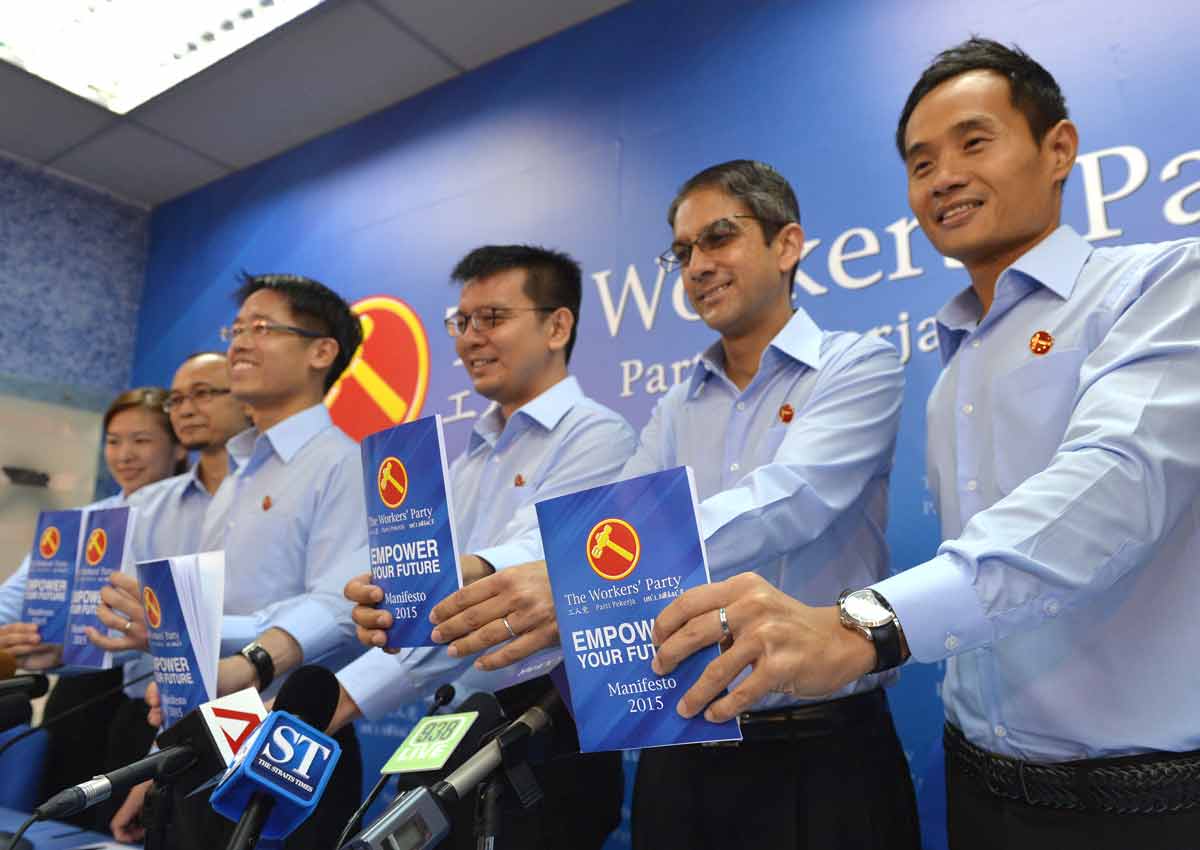
Mr Low was flanked by the chairman, Ms Lim, and Mr Pritam Singh, who was appointed assistant secretary-general on June 7, nine days after the party conference.

Mr Chen, on his part, offered only brief remarks to the media as he made a quick exit before Mr Low emerged.

Mr Somasundaram and Mr Yam, the duo who had backed his failed bid for the party leadership, were also one of the first cadres to leave the conference venue.

Contest just a footnote in WP chief Low Thia Khiang’s long political career

When Workers’ Party (WP) chief Low Thia Khiang was first elected secretary-general in 2001, he was the youngest member of the Central Executive Council (CEC).

Two weeks ago, after seeing off his very first challenge for the same post, he observed with satisfaction that he was now the oldest.

The circumstances in which he took over the WP explain his emphasis on party renewal and the need to bring in fresh blood to its leadership ranks.

In 2001, Mr Low was taking over the reins of a WP that had enjoyed electoral success in having won the Anson by-election in 1981, and having earned two Non-Constituency MP seats over the years.

But the party was also stagnating, failing to attract enough promising new leaders, while its previous secretary-general J.B. Jeyaretnam, was mired in expensive libel action.

Over the next 15 years, Mr Low shaped the WP into Singapore’s leading opposition party by paying attention to the finest details – even playing fashion police by making party activists don more formal attire at outreach activities to give them a more respectable and serious image.

However, the spectre of a political party filled with ageing members continued to haunt Mr Low, and two weeks ago, he described how it was a “very scary” prospect for a party to be without clear succession plans.

It appears that he is ready to enter the next phase of party renewal, having described the current CEC as being the best team he has assembled so far.

Beyond the WP’s rejuvenation, Mr Low also played a crucial role in breaking the People’s Action Party’s (PAP) monopoly on GRCs.

This crowning achievement came in the 2011 General Election, when he left the safety of his Hougang single-member constituency to contest and win Aljunied GRC.

Political observer Derek da Cunha feels that the party’s electoral success under Mr Low is enough for him to secure and cement his place in Singapore’s political history.

“Ultimately, the only standard – and it is a standard applied around the world – by which one should judge the leader of a political party is the number of seats his party secures in the legislature. Everything else is secondary,” he says.

He goes on to point out that Mr Low’s predecessor, Mr Jeyaretnam, could secure only one elected seat for the WP in Parliament at any one time during his 30 years as party chief.

“On the other hand, Mr Low secured six fully elected MPs in GE2011, which was a decade after he took over the helm of the WP,” he adds.

“If a party leader consistently fails to secure parliamentary seats for his party, then the convention around the world is that such a person should step down as leader. Clearly, this is not an issue that applies to Mr Low.

“The WP has nine parliamentarians – six MPs and three Non-Constituency MPs. It does not share the parliamentary limelight with any other non-PAP party.”

Seen in this light, the leadership challenge by fellow Aljunied GRC MP Chen Show Mao may warrant just a footnote in Mr Low’s long and storied political career.

But the contest could still cast a pall on Mr Low’s legacy should it lead to disunity within the Aljunied team and ultimately cause them, and the party, to lose at the polls.

In the meantime, Mr Low has moved to close ranks publicly and has refused to be drawn into commenting on Mr Chen’s leadership challenge. Mr Chen has also retained his position as party treasurer, a move which National University of Singapore political scientist Bilveer Singh says makes Mr Low look good and accommodating.

“I do see a purge and marginalisation of those opposed to Low taking place, even though this is going to be a ‘slow burn’ to show Low’s magnanimity and not vengeance,” he adds.

MILESTONES

1957: The Workers’ Party (WP) is formed by former chief minister David Marshall. It takes part in its first election and wins four out of five seats it contests in the City Council.

1971: Lawyer J. B. Jeyaretnam takes over as secretary- general, a post he holds for 30 years.

1981: The WP wins the Anson by-election, the first time the opposition wins a seat since Independence. But Mr Jeyaretnam loses the seat in 1986 after being fined $5,000 for making a false declaration on WP accounts in 1982.

1991: Mr Low Thia Khiang wins the Hougang seat, which he would hold for 20 years.

2001: Mr Jeyaretnam quits the party and Mr Low takes over as secretary-general.

2011: The WP wins Aljunied GRC, the opposition’s first victory in a group representation constituency.

2012: The party retains its Hougang seat in a by-election.

2013: The WP wins the Punggol East by-election, thus having a total of seven elected seats in Parliament, the highest number held by an opposition party since Independence.

2015: The WP retains the Aljunied and Hougang constituencies but loses Punggol East. The results give the party six elected MPs and three Non-Constituency MPs, establishing it as the only opposition party with a parliamentary presence.

2016: Aljunied GRC MP Chen Show Mao challenges Mr Low for the secretary-general position, the first time the post is contested in 15 years. Mr Low prevails with 61 votes to Mr Chen’s 45.


This article was first published on June 12, 2016.
Get a copy of The Straits Times or go to straitstimes.com for more stories.

Image: 
Category: 
Publication Date: 
Sunday, June 12, 2016 – 17:00
Send to mobile app: 
Source: 


Story Type: 
Others

Source link

33 Singaporean investors cry foul over land buys in India

0

They sank their savings into undeveloped land in India, drawn by visions of gleaming villas, upcoming infrastructure and returns of more than 100 per cent. That was between 2007 and 2011.

Now, the 33 Singaporean investors – who spent more than $780,000 – own land of questionable value, which is hard to sell.

They are crying foul at Singapore-registered KMGM International which sold them the land.

They claim it has not been developed and has hardly risen in value. They want to sell it back.

About 20 of them staged a walk-in on May 5 to confront KMGM director S. Gulam at the firm’s Bukit Merah premises, demanding assurances that they could sell back their land.

He was not there, but assured them by telephone that he would meet them on May 16 .

But on May 13 they received letters saying that the matter would be handled through his lawyers at Advaitha Law Corporation.

Advaitha director G.B. Vasudeven told The Sunday Times that his client was ready to obtain valuations for each of the investors’ land parcels, but declined to disclose any further course of action.

He added that he has written to the 33 to say that if they try to enter KMGM’s offices again, they will be reported to the police as trespassers.

Twenty investors have since gone on to make police reports against KMGM.

The group of 33 had bought 45 plots of land, each a few thousand sq ft in size, in Chennai .

They are mostly in their 50s and 60s, and they said they trusted KMGM because it is a Singaporean firm and its directors, lawyer R. Kalamohan and Mr Gulam, a former journalist, are well-regarded members of the Indian community.

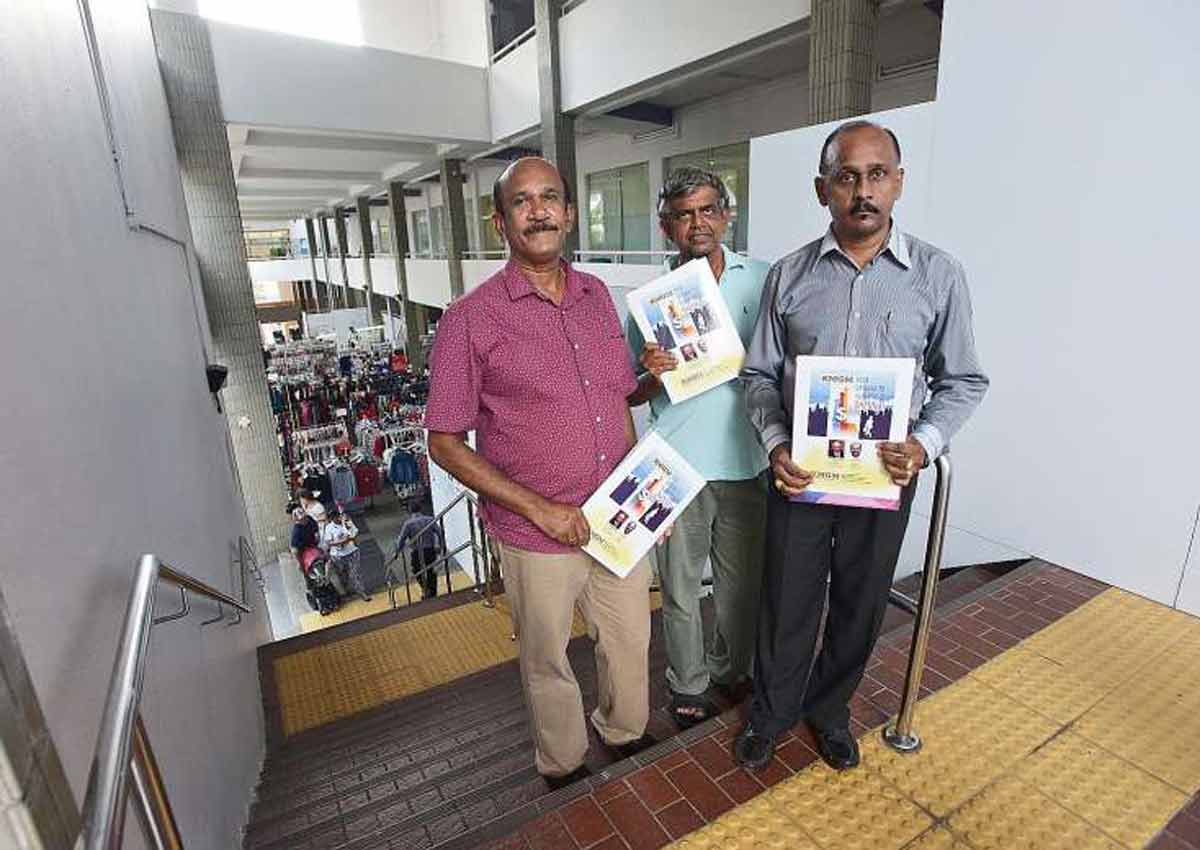
Retired navy officer Anandam Thomas, 62, bought two plots of land for about $41,470 in 2008.

“My father was from India, and I wanted a little piece of India for myself,” he said.

After payment, he and the other buyers were flown to Chennai to see the land and receive their sale deeds.

Last year and in April this year, he went back on his own to check and found the land was still undeveloped and occupied by squatters.

He said that after his attempts to sell the land back to KMGM failed, he decided to gather fellow investors in the same situation.

Mr Gulam, 54, told The Sunday Times by telephone that he was not out to cheat anyone and meant to help the investors sell the land.

However, he said it was impossible to sell it at a profit right now because the Indian rupee had fallen drastically in the last few years and the property market was in a slump.

He said: “When you invest overseas, you must take a risk.

“If you buy a house now and the price goes down, can you tell the developer you want your money back?”

Mr Kalamohan, 68, who left KMGM in 2014, said: “There was nothing more to sell and I was of no use to the company, so I thought it was time to leave.”

He added that there was nothing wrong with the investors’ documents, which he had examined, and all the purchases were valid.

Of the 45 contracts among the group, 24 had a clause guaranteeing they could sell the land back to the company after three years “at the best prevailing market price”.

However 27 contracts lacked a “patta”, an Indian land ownership document.

New Delhi-based lawyer Alok Tewari, a senior partner with Indian law firm Kochhar & Co, said: “Legally it may be possible to sell the property without a patta.”

He added, however, that sometimes the authorities may demand to see a patta to register a sale deed.

Property experts said overseas landbanking is fraught with risk.

Mr Alan Cheong, Singapore research head for real estate firm Savills, advised investors to check whether the country’s legal framework is solid and can be enforced even by an overseas national, as well as the reputation of the property agency marketing the product.

Retired civil servant Manokaran Ramasamy, 64, and his late wife spent $129,510 on four plots of land in 2008.

His wife died from cancer in March. He said all he wanted was some form of closure from KMGM.

“Even in the pain of her last days, she would go back to them to ask about selling the land. I don’t understand why they didn’t entertain her,” he said.

“I don’t think they can honour the agreement. They owe it to us to fill in the blanks.”


This article was first published on June 12, 2016.
Get a copy of The Straits Times or go to straitstimes.com for more stories.

Image: 
Category: 
Publication Date: 
Sunday, June 12, 2016 – 14:18
Keywords: 
Send to mobile app: 
Source: 


Rotator Headline: 
33 S'porean investors of India land find villas and 100% returns turn out to be empty promises
Rotator Image: 
Story Type: 
Others

Source link

MOM probes claims that foreign worker was locked up by boss

0

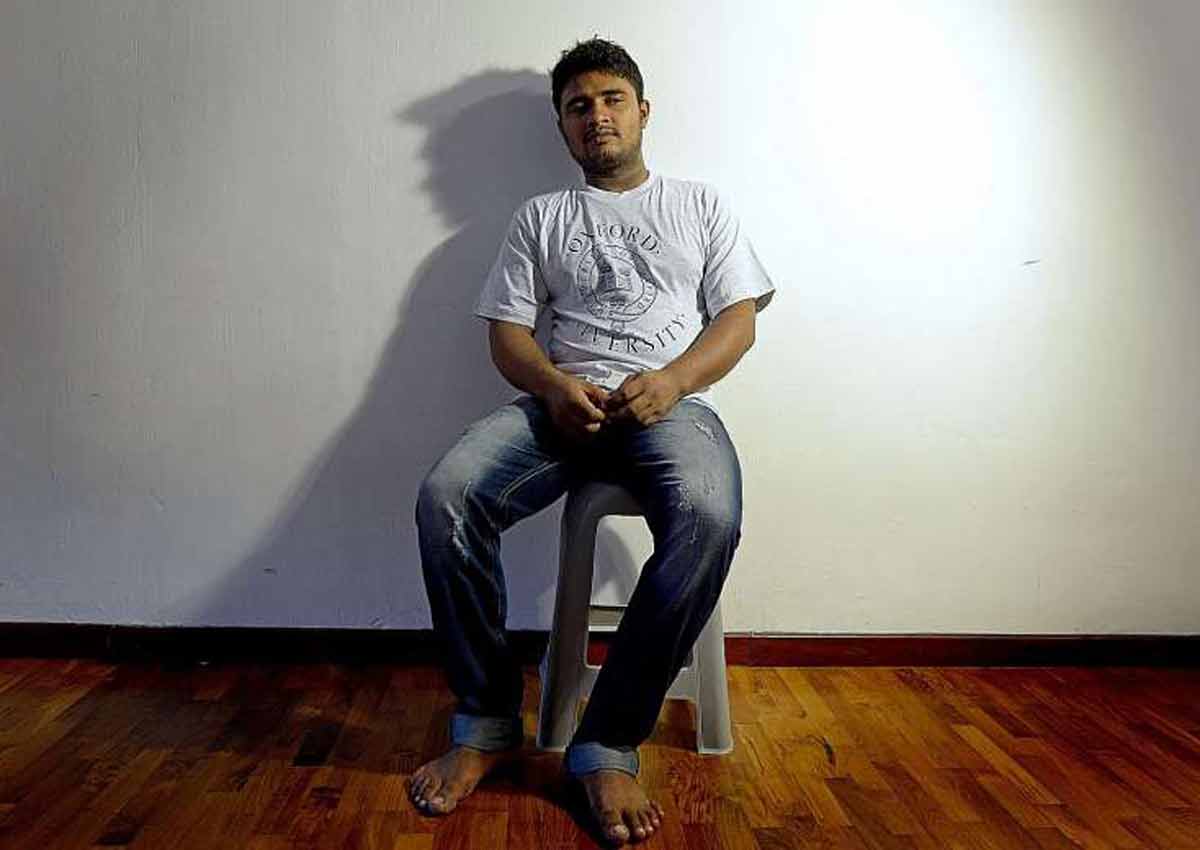
The Ministry of Manpower (MOM) is investigating claims by a Bangladeshi construction worker that he was locked up by his employer and threatened with repatriation after he sought his own medical treatment for a workplace injury.

Migrant worker advocacy group Transient Workers Count Too (TWC2) wrote in a widely shared Facebook post last Wednesday that it had “rescued” Mr Molla Shahjahan from a Tuas dormitory on Tuesday. The 29-year-old had called for help, saying his employer was holding him against his will and would send him home the next day.

But Mr Shahjahan’s boss denies locking him up and threatening to repatriate him. He also insists Mr Shahjahan never indicated how severe his injury was and sought medical treatment without consulting the company.

Mr Shahjahan said he fell while carrying tiles at work on May 25. He hit his thumb, causing it to swell, and also hurt his back.

He said he informed his employer and was sent to a clinic the next day where he was given a day of medical leave and medicine for his thumb. But he added: “My back was still painful and I could not walk or sleep properly.”

After another visit to the clinic, he went to Alexandra Hospital on June 4, where he was diagnosed with lower back pain, warded for three days and given 18 days of medical leave. But when he was discharged, he said he was grabbed by two men who took him to the Tuas dormitory.

There, he said, he was locked in a room for four hours while his employer told him he would be sent home the next day. The employer denied this when contacted by The Straits Times, saying Mr Shahjahan had told the firm only about his thumb injury. He added that the worker had vanished for a few days without telling the company, forcing it to terminate his work pass and make a police report.

It later found out he had been warded, racking up a bill of over $5,000 which the firm is liable for.

An MOM spokesman said: “We are looking into the worker’s claim that he was injured due to work, and also the employer for repatriating their worker before his employment issue is settled.”

She added that employers are not allowed to send back workers with outstanding employment-related claims, and that workers in such situations should approach immigration officers at the airport, who will refer them to the MOM.

Mr Shahjahan is staying at TWC2’s shelter while the incident is being investigated.

TWC2 treasurer Alex Au said that the group hears of cases of “confinement with intent to repatriate” about once or twice a month.

Read also: Foreign worker stabs himself to avoid leaving Singapore


This article was first published on June 12, 2016.
Get a copy of The Straits Times or go to straitstimes.com for more stories.

Image: 
Category: 
Blurb: 
Publication Date: 
Sunday, June 12, 2016 – 14:02
Keywords: 
Send to mobile app: 
Source: 


Rotator Headline: 
Injured foreign worker claims he was locked up by boss and threatened with repatriation
Rotator Image: 
Story Type: 
Others

Source link