Home Blog Page 3693

Forget school holidays, kids are hothoused in latest tuition trend

0

He used to count down the days to June, because the holidays meant spending time away from books.

It was a time when he would travel with his family or go out with his friends. But this year, there is no escape for 12-year-old Jack (not his real name).

While his friends are out playing and enjoying the down time, Jack tells The New Paper on Sunday (TNPS) that he spends his weekdays studying, just as he would during term time.

The only difference? He does it at a tuition centre, attending intensive study sessions that have been dubbed cram or hothousing sessions.

Jack’s mother, hoping to give Jack an edge in the upcoming Primary School Leaving Examinations (PSLE), signed him up for hothousing programmes for three subjects.

Jack is not the only one. Hundreds of parents have signed their children up for these hothousing sessions that learning centres have opened up just for the June holidays, from May 25 to June 26.

These classes, which are available for students from primary school all the way to junior college, are designed with one thing in mind – the examinations. Tutors focus on topics likely to appear in the exam and teach students how to craft the perfect answers, based on past-year examination papers.

Hothousing is typically carried out over one to eight classes. These classes take the form of small-sized seminars, usually capped at about eight students. Parents who sign their children up for hothousing see it as a push for children to do well, with some tuition centres even guaranteeing good results.

This year, Mrs Violette Yeo enrolled her 10-year-old son Matthew into a hothousing programme for English, which she says is his weakest subject.

Over the span of two weeks, Matthew will attend four classes, each lasting about two hours. Mrs Yeo says that she has always wanted to send her son for enrichment classes to improve his English, but his packed schedule as a competitive swimmer keeps him busy.

The 45-year-old graphic designer says: “He has the time now, so I thought I might as well sign him up for this. “He needs it and we get to focus on his area of weakness.”

INTERACTIVE

Mrs Alattas, an engineer in her late 30s, also signed her child up for a cram school session. Her 12-year-old daughter, who is taking the PSLE this year, attends an intensive revision programme for Science and goes for a three-hour class twice a week.

She says: “These sessions are more interactive than school and I hope her grades will improve.”

The fees for hothousing sessions range from $200 to $600, depending on the subjects and the reputation of the learning centres. The learning centres that TNPS spoke to say that demand has been rising over the past few years and many of them have made more classes available.

Some even have parents on wait lists. One such centre is Schoolplus, which has been conducting June holiday hothousing sessions since 2013.

Its chief executive officer Neo Zhizhong, 33, says the centre had only two classes and 16 students when it first started these sessions. Demand has risen sharply and this year, the centre has more than 120 students attending 14 holiday cram school sessions.

Mind Learning Cove said that enrolment for its “Intensive Revision Boot Camp” for PSLE students tripled, compared to last year. It has 10 students on its wait list.

Miss Jess Low, a teacher at Mind Learning Cove, explains why parents are keen, saying: “As the class size is small, the lessons are more targeted. The sessions allow time for students to practise and reflect on the concepts taught.”

But experts say these cram schools might not be a good idea. Dr Lim Boon Leng, a psychiatrist at Gleneagles Hospital, says that hothousing force feeds a lot of information into students in a short amount of time.

But the children might not have the cognitive vitality to retain what they learn, since they are still growing. He says it is important for children to rest during their holidays, because the down time relaxes them and prevents behavioural problems from developing.

“They might get more stressed out and more anxious, which could lead to anxiety behaviour in the long run,” he says.

Dr Carol Balhetchet, Singapore Children Society’s senior director for youth services, agrees that the holidays should be a time for children to “rest and play”.

She says: “Force-feeding children to learn during their holidays might cause them to develop a resistance to it. This is why some children have low resiliency levels and they eventually don’t want to study.”

Jack, 12, in his own words

We would always go on holidays in June and December, for as long as I can remember.

But in May, when I asked Mummy where we were going in June, I heard the bad news. She said she was worried and stressed because I had done badly for my term one papers, getting only Bs and Cs.

“We’re not going anywhere,” she said. “You have to study.”

I feel her decision is unfair because I know how to manage my time. She wants me to get in the school of her choice through Direct School Admission (DSA) – that is why she insisted that I must still continue with my piano and wushu lessons on Sundays.

I used to have tuition only for Mother Tongue and Maths. Now, plus all that, I have to go for intensive study sessions for Mother Tongue, Maths and English.

But Mummy does not know that having different teachers makes it more confusing for me. I cannot focus and they both tell me different things, so I don’t know how to answer the questions best. I wish we could travel as a family.

I’m sad that we are not travelling this time. Travelling could have been a fun time for me to recharge and then I can focus on the BIG PSLE.

I know Mummy has my welfare and well-being in mind, but it is also hard to pretend that I do not mind. Just yesterday, I asked if I can have one day free before the holidays are over to go to Universal Studios Singapore (USS) and she said very angrily: “NO.”

She said that I do not know how to prioritise my needs. I feel she is unfair. She keeps telling me it is “just for a few months”.

But June is just one month, and it is the holidays. Anyway, I hope I can get into DSA so my suffering can be lessened and Mummy will take me on a holiday after PSLE.

She told me I have to set a good example for Mei Mei (Mandarin for sister). I hope I can.


This article was first published on June 12, 2016.
Get The New Paper for more stories.
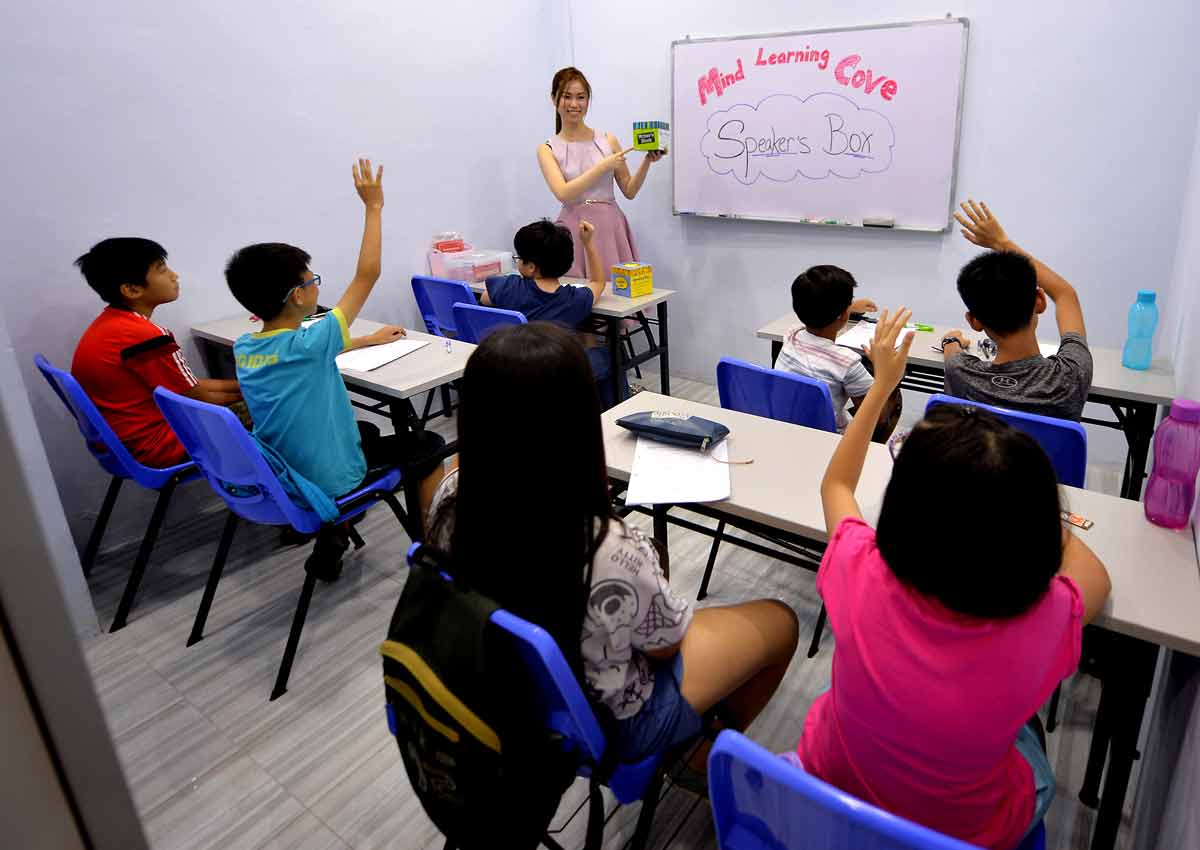
Image: 
Publication Date: 
Monday, June 13, 2016 – 08:20
Keywords: 
Send to mobile app: 
Source: 


Rotator Image: 
Story Type: 
Others

Source link

'Who you gonna call?' Fans gather in Singapore to catch Ghostbusters stars

0

An attempt will also be made to set a new Guinness World Record title for the “Largest Gathering of People Dressed as Ghosts at a Single Venue”.

Source link

2 in 3 S'poreans admit to social networking and internet addiction

0

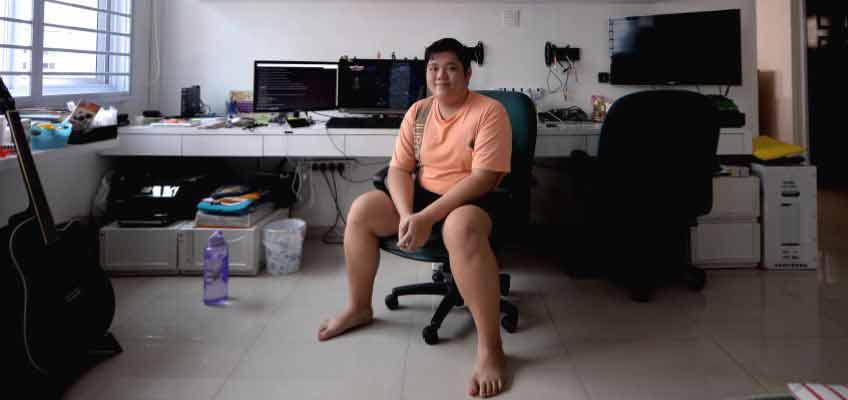
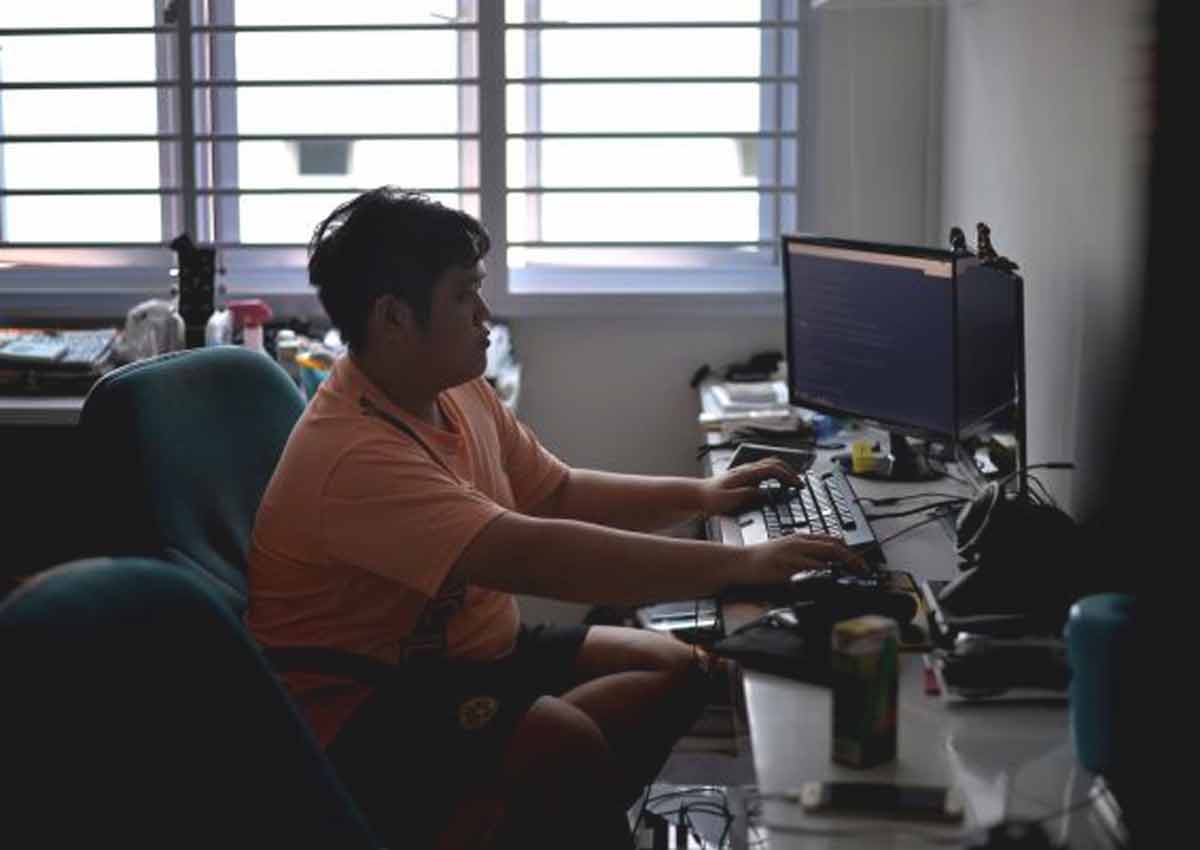
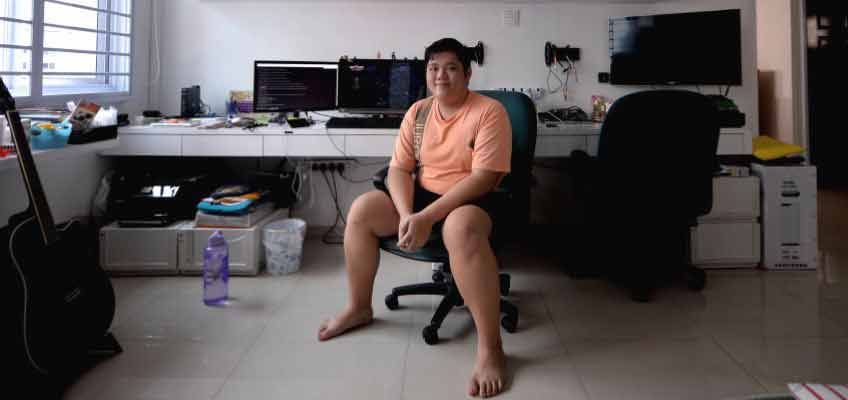
He gets up only at noon and the first thing he does is switch on his computer.

As the two – yes, two – screens come alive, Mr Aloysius Kee, 19, starts on his daily routine.

One screen is for watching videos and the other, for playing games.

He does both concurrently online for about six hours a day and leaves his seat only when he needs a toilet break and when his stomach growls.

Mr Kee says: “I’ll play until the wee hours of the morning and regret it, but it’s still worth it.”

He is one of the many young people here who lead a sedentary and unhealthy lifestyle.

Singapore placed ninth out of 15 countries across the region in insurer AIA’s 2016 Healthy Living Index Survey. China came in first as the healthiest, while Hong Kong ranked last.

Of the 10,316 regional respondents, 501 are Singaporeans and most of them say they spend too much time online, whether it is on their mobile phones or computers.

Two in three say they have difficulty breaking away from their screens.

And almost the same number admit they spend too much time on social networking websites and the Internet.

While the regional average is three hours daily for non-work usage, Singaporeans spend 3.7 hours.

Mr Kee’s average is almost double that. The Singapore Polytechnic graduate, who is waiting to enlist into NS, weighs 100kg, partly because of his online addiction.

He fell in love with gaming after his father bought him his first PlayStation when he was five.

He says: “I didn’t know what a PlayStation was at that time, but once I started, I couldn’t stop.

Read also: Mother nearly loses daughters because of her internet addiction

HOOKED

“I also had many friends who would play MapleStory (an online game) with me in primary school, and that got me hooked on computer games.”

Mr Kee, an only child, often felt lonely.

He says: “I can’t remember why my father bought me games, but they definitely helped with my loneliness.”

Mr Kee was also drawn to how video games allowed him to explore a whole new universe.

“When I’m gaming, I have the freedom to be an adventurer who explores different worlds.

“I love to see new things in a fantasy setting because there are no such things in real life,” he says.

He bought four more gaming consoles over the years and now has more than 100 video games.

As he went on his gaming binge, his weight rose from 70kg in 2009 to 100kg in 2014.

The excessive use of digital devices leads to a lack of sleep, change of diet, and mood swings, counsellors and psychiatrists tell The New Paper on Sunday.

Again, Mr Kee says he can relate to the perils of gaming.

When he was living in a three-storey semi-detached house, he would fill his room with snacks and drinks to avoid climbing the stairs.

And when his supplies ran low, he enlisted the help of his helper.

Mr Kee says: “At least back then, there were physical education lessons. Without them, the only exercise I would have got was running after the bus in the morning.”

In 2012, his family of three moved to a five-room HDB flat.

Now, his gaming devices are installed in the living room and it takes just 10 steps for him to go to the kitchen or toilet.

He does not leave his home much and he says he has not taken on a job after graduating.

He says: “I go out once or twice a week with either my mother or some of my friends.

“I’d go for badminton or a swim with a few friends once a month, but I wouldn’t join them if it’s too early.”

Mr Kee goes to bed at around 3am every day and turns down any outings that start before 11am.

His mother Madam Lim, a nurse, says: “I’ll tell him to cut down on the number of hours he plays and to go to bed early.”

But despite her pleas, he says he cannot quit his love for gaming because “it’s very relaxing”.

He rarely weighs himself unless it is compulsory, saying: “If I don’t remind myself of my weight, I wouldn’t have to worry about it.

“I want to shed weight, but I don’t have the motivation because gaming helps to take my mind off things.”

But he hopes “things will change within these two years… Hopefully, I’ll get in shape after NS”.

Spending eight hours online affects his weight

He goes to bed at 6am and gets up at noon.

His friends often call him a sloth because he rarely moves, choosing instead to spend about eight hours daily on his laptop watching YouTube videos and playing online games.

Read also: Parents seek help for addicted kids

Jerome, 19, describes the online world as an avenue for stress relief.

The Ngee Ann Polytechnic graduate, who will be enlisting into NS in a month’s time, says: “I go online to pass time and play with my friends.

“It helps to forget any worries in real life.”

He sees gaming as a form of escape from thinking about the future, such as furthering his education and finding a job.

Jerome explains that his gaming habit has led to him having irregular meal times too.

“I’d have lunch at 7pm and dinner at 3am sometimes.

“I like it when everyone has fallen asleep because it is peaceful,” he says.

“After everyone sleeps, I feel more awake because I get my own alone time in isolation.”

His irregular eating pattern has affected his weight. Despite being 1.7m tall, Jerome weighs only about 56kg.

Read also: Time to wake the Internet zombies

SLEEP

His parents used to tell him to sleep earlier and cut down on the time he spends gaming, but they recently have been more accepting of his habit as he will be enlisting soon.

But keeping those hours can affect Jerome’s mood.

He says: “Sometimes, I’d wake up after four hours and won’t be able to fall back asleep.

“I’d get very agitated and moody throughout the day.”

Excessive online use is bad: Experts

Excessive gaming and Internet use not only lead to addiction but other health issues too.

They include sleep deprivation, mood swings, and weight gain, experts say.

Dr Carol Balhetchet, senior director for youth services at the Singapore Children’s Society, says: “The games are filled with very attractive and vibrant colours.

“After excessive usage of digital devices, our senses are heightened, and it gets harder to fall asleep.”

She says that physically, it takes us about an hour to get into a relaxed state to fall asleep. It is therefore important to stop using digital devices before we go to bed.

Dr Lim Boon Leng, a psychiatrist in private practice, says sleeping late leads to a delayed sleep phase that does not fit in with normal routines such as having lunch.

He says: “Young people like to play through the night when everyone’s sleeping, and wake up late in the morning. They also tend to skip meals because of the delayed sleep phase.

“Sometimes, they will skip breakfast and just have lunch and dinner because they woke up too late.”

OBESITY

Family counsellor John Vasavan says excessive Internet use and online gaming results in young people being desk-bound.

He says: “The youth of the past often played in the rain or ran around in fields, butthey are nowadays more desk-bound, and lack exercise.”

According to the Ministry of Education, obesity in school children has steadily increased from 10 per cent in 2000 to 11 per cent in 2013 and 12 per cent in 2014.

Mr Vasavan says the digital addicts tend to pick food that does not interfere with their gaming frenzy. “Buying fast food makes them happy because they can eat with one hand and game with the other. This is how they become obese over time.”

Dr Lim and Mr Vasavan say the lifestyle hurts the young people’s interpersonal skills.

“As children grow up, there are certain age groups to learn different sets of social skills.

“So if a child spends his time playing games all the time, he is very likely to miss out on cultivating the important social skills, which leads to a vicious cycle of resorting to playing even more games because he has no friends,” says Dr Lim.

He adds that the serious cases often lead to truancy and poor academic results in school.

“Overall, it’s a very bad lifestyle, because not only do they skip meals, but the lack of having daylight activities and enough sleep results in psychological problems as well.”

Read also: Man used brother’s credit card to feed $15,000-a-year addiction to mobile game

About the survey

The AIA survey found that excessive screen time has affected the health of children.

Children do not get enough exercise due to spending too much time online and playing video games.

And their parents know it too, with 67 per cent of them admitting that their children do not get sufficient exercise because of those reasons.

The survey also found that Singaporeans are aware that prolonged time online is bad for them.

•69 per cent say it prevents them from getting adequate exercise. Singaporeans spend 2.6 hours a week exercising, compared to the regional average of 3 hours.

•69 per cent say it prevents them from getting sufficient sleep. Singaporeans sleep 6.4 hours, versus the regional average of 6.9 hours.

•69 per cent said it also affects their posture.


This article was first published on June 12, 2016.
Get The New Paper for more stories.
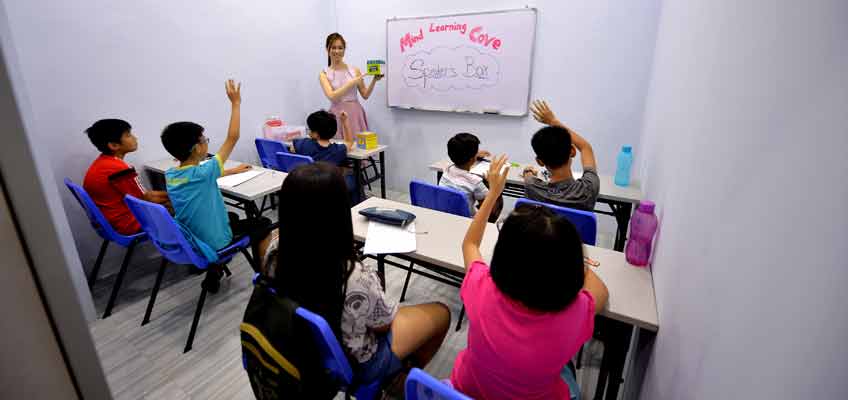
Image: 
Publication Date: 
Sunday, June 12, 2016 – 21:00
Send to mobile app: 
Source: 


Rotator Image: 
Story Type: 
Others

Source link

Grab a free GrabCar ride worth up to $15 on Monday, 13 June

0

CONTINUES: Free Grab ride worth $15 tomorrow (13 June)

Remind your friends by sharing this & let them enjoy a free trip too!

Grab a free GrabCar ride worth up to $15 on Monday, 13 June

Beat the Monday blues with Grab’s fourth anniversary promotion. Enjoy a free ride (up to $15 off) on Mondays for the month of June 2016 when you use the promo code below and pay with a credit card

Source

Mentors to help students get into top unis

0

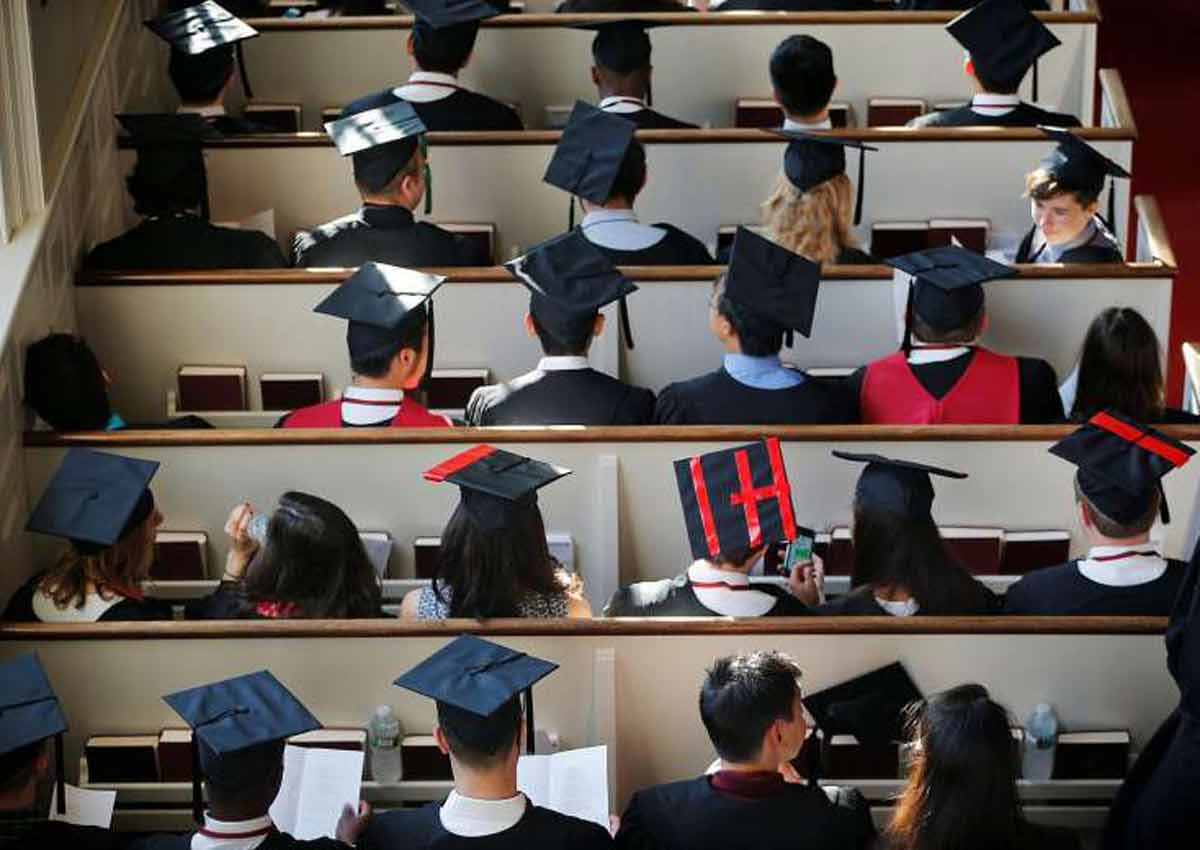
Students from junior colleges and polytechnics that are under-represented in top British and American universities now have a network of mentors to help them get into such institutions.

Singaporean students at the University of Oxford launched the non-profit Project Access in Singapore officially on June 4.

The initiative matches prospective students with mentors in their desired schools based on their fields of study. More than 50 Singaporean students in universities such as Oxford, the London School of Economics (LSE) and Harvard University have signed up as mentors. They come from a variety of pre-university backgrounds and will be matched with prospective students with similar backgrounds.

One such mentor is Mr Sim Jing En, 23, who graduated from Ngee Ann Polytechnic with a diploma with merit in Tourism and Resort Management. He is now a first-year law student at Cambridge.

He said: “I received guidance from career counsellors provided by Ngee Ann on my applications to the law faculty of NUS and other local schools when I graduated. I applied to Cambridge on a whim in my second year of national service, without any guidance from Ngee Ann.

“Some of my juniors told me they didn’t include Oxford or Cambridge because they wanted to be realistic about their limited choice of five schools which they can put in the UCAS application system.”

The Universities and Colleges Admissions Service (UCAS) is a Britain-based centralised portal for applications to universities there.

Mr Sim attributes his acceptance to luck, as he had nobody to vet his entrance essays or coach him for the Cambridge law entrance examination and interview.

He had been happy with the offer to study law at the National University of Singapore and just wanted the rejection letter from Cambridge to show that he had tried.

Instead, he got in and his “mental barriers” collapsed. He said many more polytechnic students could enter top foreign universities if they get over the idea that it is impossible.

He is part of the core Singapore team of Project Access and is in talks with all five polytechnics here to hold sessions to share information about the application process and life at Cambridge from the perspective of a polytechnic student.

Beyond giving essay comments and interview tips, mentors will also share their personal experiences in applying to their universities.

Mr Charig Yang, 19, who completed his A levels at Nanyang Junior College last year, was among the first to benefit from Project Access.

He got into an engineering course at Oxford with the help of Mr Lim Jian Hong, a senior from the same JC who is also studying engineering there.

Mr Yang, who has signed up to be a mentor, said: “He told me what to work on for the admissions test as some British syllabus topics are not taught here. He also shared the past year paper’s answers, which was really helpful because Oxford publishes only the question papers.”

Project Access is an international collaboration based in Oxford. Last year, it was launched in six countries besides Singapore, including Pakistan, Poland and Denmark.


This article was first published on June 12, 2016.
Get a copy of The Straits Times or go to straitstimes.com for more stories.

Image: 
Blurb: 
Publication Date: 
Monday, June 13, 2016 – 08:10
Send to mobile app: 
Source: 


Story Type: 
Others

Source link

'Kaypoh' strangers can make a difference as extended family network disappears

0

Close the door, shut the windows, set our social media pages to private; we want strangers to butt out when we are caught up in something too nasty to describe with just a sad-face emoji.

When family fights and lovers’ quarrels get heated in the still, humid air of a Singapore night, strangers sometimes cannot help overhearing the squabbles from a nearby block. With family sizes shrinking here, and with fewer relatives to help mediate between loved ones, can we survive the sudden bad fights without the kaypoh-kindness of strangers?

When out and about by ourselves, can we depend on strangers to speak up for us when we are unable to defend ourselves?

Earlier this month, a video of a woman seen railing at a deaf-mute cleaner and his manager was posted online by Facebook user Euphemia Lee. She was at a Jurong East mall’s foodcourt when she witnessed the incident. The Straits Times reported that she said no one intervened as the manager seemed to be handling the situation.

But let’s say if it were just the cleaner facing the angry woman, who was with her husband, would a stranger put down his or her chopsticks and go over there to try to calm things down or look for a supervisor to do so?

The Straits Times reported that the share of households made up of nuclear families has dipped from 56 per cent in 2000 to 49 per cent in 2014. These are two-generation families in which a couple live with parents or children.

At the same time, the share of one-person households and those headed by a married couple who are childless or not living with their children has risen – from one in five in 2000, to one in four in 2014.

American urbanist Joel Kotkin told National Public Radio that the trend “where family is sort of beginning to become maybe a choice, certainly not the normative force” was a very powerful one. He is the primary author of the 2012 report, The Rise of Post-Familialism: Humanity’s Future?, which was published by the Civil Service College, Singapore.

Prof Kotkin, a presidential fellow in urban futures at Chapman University in California, said: “What’s scary is in much of East Asia, in the United States in the future and in Europe, there are no uncles. There are no aunts. And so that whole extended family network, which still exists for the current generation, may not exist in the future…”

So as our aunties and uncles fade out of our lives, will this make us want even more than ever to build a different kind of “family”, a society of kind strangers? Of course, there are good pals and friendly neighbours for us to call on in our time of need, but can we depend on the nearby stranger to quickly respond to the terrified cry in the middle of the night?

When I do hear one of those screams, I think about the possibility of misunderstanding the situation and calling the authorities unnecessarily, I think of the privacy people want, and I think: “I don’t want to be a kaypoh (busybody).”

(I think some diners at the Jurong foodcourt could have hesitated in these ways as they listened to the shrill cries of the angry woman. And then there’s always sheer indifference, which I am way too familiar with because I am horribly, selfishly more interested in looking after myself than anyone else.)

Blood-curdling shrieks one dawn from a neighbour’s home made me stumble towards the door before I fully woke up. A girl’s sudden wails on a different day made me and my hair stand up abruptly. And, in the wee hours during one night, a man yelling at and shoving a lover on the street stopped me in my tracks.

I listened carefully to the neighbour’s cries in case there was a need to call the cops. I looked over to make sure the child wasn’t in difficulties in the pool and that her mum was nearby. I spoke to the guy pushing the woman roughly.

I was okay with being a kaypoh in the neighbour’s case, as it appeared that there were no broken bones, just sadly, a broken heart.

I was not happy with being a kaypoh in the child’s case, as we’ve got to try to give dads and mums some leeway to parent their kids. I observed the mother chatting with another woman as her little girl, wearing a pink float, screamed-sobbed “mummy, mummy” non-stop in the swimming pool.

Perhaps one approach parents take is to let the tiny tornadoes blow up until their fury is spent. When it went on for longer than was bearable for another stranger in the shared space, he called out to them to please do something about it.

There’s a saying, “It takes a village to raise a child”. As the extended family network fades into the past, will future dads and mums think it is a pain if the kampung is kaypoh about something as personal as how their children are raised?

I found the idea of “group reliance” attractive when I read an article by CityLab/The Atlantic magazine last year about how “in Japan, small children take the subway and run errands alone… The kids are as young as six or seven, on their way to and from school, and there is nary a guardian in sight”.

Mr Dwayne Dixon, a cultural anthropologist who wrote his doctoral dissertation on Japanese youth, offered this explanation to The Atlantic: “(Japanese) kids learn early on that, ideally, any member of the community can be called on to serve or help others.”

In the case of where I saw a man shoving a woman, I was tense but okay with being a kaypoh, as I no longer could give them their privacy (on a public street) when he pushed the whimpering woman hard enough for her to stagger backwards.

I asked: “Are you okay?” The man shouted at me: “You call the police, lah!” “What a lovely suggestion,” I thought. The woman later grabbed a cab and left him standing in the street.

I didn’t intend to do some sort of rescue. It was more like a verbal version of first aid until the experts, like the police or social workers, were called in if necessary. I hoped to at least put the escalation of violence on pause.

Meanwhile, another passer-by walked on briskly. I didn’t blame him for doing so. I felt like running away when the man looked daggers at me. I figured that if I sprinted like I had a demon clawing at my back and if I didn’t fall into a longkang, I could make it to a nearby fire station for help in minutes.

In less stressful times, I unkindly shy away from the tough work done by wonderful civic groups and selfless volunteers who tackle social problems. But meaner strangers like me can sometimes resist the urge to run away long enough to offer quick help in the streets.

As we become related by blood to fewer people in the world, can we afford to not build social capital with strangers in our society?

Even if we are still surrounded by family in the real world, when we go online, we operate in a sense as one-person households and are at risk of being bullied in the virtual world. We need kaypoh-kind strangers to step in before the situation blows up, and help pity the trolls together.

Last week, Ashvin Gunasegaran, 12, was honoured by the Singapore Civil Defence Force for helping car accident victims.

The Straits Times reported that he had rushed to help victims in Yishun because, he said, other passers-by were “too busy taking pictures with their phones instead of helping”.

Now, more than ever, we need to open the door to a kind stranger like him if we want to be stronger.


This article was first published on June 12, 2016.
Get a copy of The Straits Times or go to straitstimes.com for more stories.

Image: 
Blurb: 
Publication Date: 
Monday, June 13, 2016 – 08:00
Send to mobile app: 
Source: 


Story Type: 
Others

Source link

New gas hobs come with two safety features

0

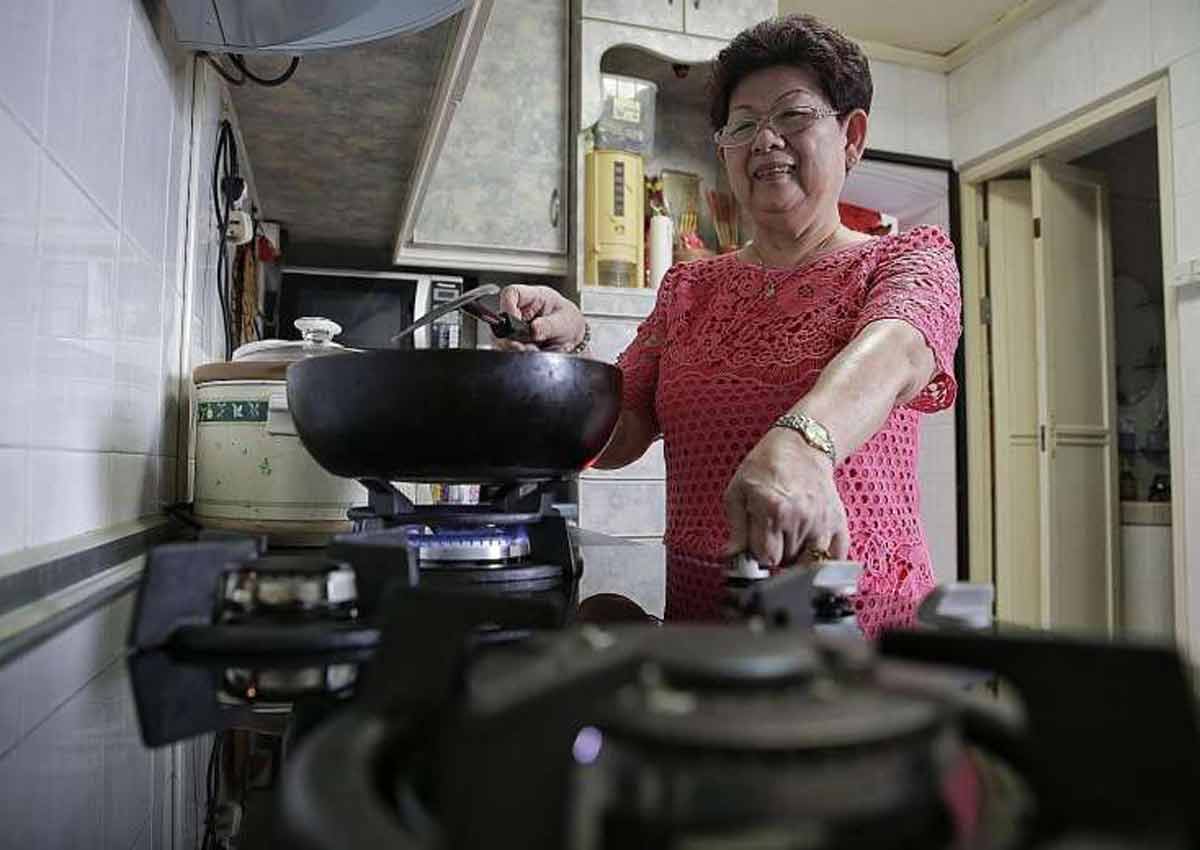
Madam Lim Kim Choo used to either return home to a strong smell of gas, or rush into a smoke-filled kitchen from her room to salvage a burning pot of food on the stove.

“I am getting older and more forgetful so that can happen once every month,” said the 67-year- old retiree in Mandarin, who has thrown out five to six pots in the last few years.

Damaged pots aside, her forgetfulness could have cost her her life. On average, there was at least one fire, caused by unattended cooking, every day last year.

Fires involving unattended cooking accounted for the second largest source of fires in residential buildings last year. These fires rose by 7 per cent to hit 396 last year, reversing the declining trend observed for such fires since 2011.

Many of these fire or gas leak cases involve forgetful elderly users, said City Gas, the sole provider of piped gas in Singapore. To address these safety concerns, City Gas has come up with a new series of gas hobs, the first of its kind here.

The hobs come with a flame failure device that cuts the gas supply if the flame goes out, is blown out by strong winds or when boiling water and soup overflows and extinguishes the flame. The fear is if the gas continues to flow even when the flame goes out, a fire may result if a spark ignites it.

The hobs also have a digital timer that can be pre-set to up to 120 minutes. When the time is up, the gas supply cuts off automatically and an alarm alerts the user. This allows the user to do other things while the food is being cooked, instead of standing by the stove.

A City Gas spokesman said: “The hobs are also useful for busy people who tend to multitask and forget about the pot that is bubbling away at the stove, or get their cooking times wrong.”

With the time-controlled gas hobs, gas wastage and energy use can also be reduced. However, the new hobs cost about $500, twice the price of a basic version.

The new type of hobs was rolled out late last year. They were developed by City Gas in partnership with home appliance company Aerogaz and schools such as Republic Polytechnic and Anglo-Chinese Junior College .

On average, one such hob is sold every day.

City Gas currently delivers gas to over 750,000 households. Other households here use cylinder gas or electricity. Some electric hobs do come with the timer function.

City Gas is now working with North West Community Development Council to install the new gas hobs for free for 50 needy residents in the precinct by year end.

Madam Lim, who lives with her son and daughter-in-law in a four-room HDB flat, got the new hob last year. Now, she can set the timer when cooking and not worry about forgetting to return to turn off the gas.

Instead of waiting by the stove, she waters the plants or watches television in the living room.

“Sometimes, I forget that I am cooking something and I have even gone out to shop for half a day but, thankfully, things are fine when I get back because it switches off automatically,” she said.


This article was first published on June 12, 2016.
Get a copy of The Straits Times or go to straitstimes.com for more stories.

Image: 
Category: 
Blurb: 
Publication Date: 
Monday, June 13, 2016 – 07:40
Send to mobile app: 
Source: 


Story Type: 
Others

Source link

Singapore, Mexico sign MOUs to boost ties

0

Visiting Singapore President Tony Tan Keng Yam and his Mexican counterpart Enrique Pena Nieto witnessed the signing of agreements here designed to boost links between the two countries that established diplomatic relations just over 40 years ago.

During their meeting at the Palacio Nacional and a state lunch afterwards, Dr Tan noted that reforms by Mr Pena Nieto’s administration, including to strengthen Mexico’s economy, competitiveness and institutions, will provide more opportunities for investment, trade and co-operation between the two countries.

Both leaders noted the progress made in the bilateral relationship and agreed on the value of seizing opportunities to strengthen and deepen this partnership.

Dr Tan, the first Singapore President to make a state visit to a Latin American country, received a ceremonial welcome at the national palace in the historic centre of the city.

Mr Pena Nieto, speaking here on Friday afternoon – early Saturday morning in Singapore – said few economies had achieved development as successfully and rapidly as Singapore. He noted that both sides agreed to deepen ties, “expand our relationship on the basis of our competitive advantages and strengths”, and promote links between their respective regions.

Their meeting came on the fourth day of Dr Tan’s trip to Mexico. He arrived here on Tuesday evening and he and the accompanying Singapore delegation had meetings with officials and businesses and attended events, including launching the inaugural Singapore Film Festival in Mexico.

Ahead of the state luncheon on Friday, both leaders discussed issues ranging from developments in Singapore and Mexico to the progress in bilateral relations, and presided over the signing of three Memorandums of Understanding (MOUs).

The MOU between the Agri-Food and Veterinary Authority and Mexico’s Ministry of Agriculture, Livestock, Rural Development, Fisheries and Food “will pave the way for enhanced co-operation in areas including agriculture science and technology, food security, and food safety,” Dr Tan noted.

Another agreement between Singapore’s and Mexico’s Ministry of Foreign Affairs will see both sides collaborate in training and technical assistance for developing countries, particularly in Latin America, in areas such as urban development and water management.

The third MOU, on education, encourages both countries to exchange information on education as well as academic staff, including with Singapore’s teacher training institute, the National Institute of Education.

Three more MOUs were signed earlier in the week, including by the Singapore Business Federation and trade agency International Enterprise Singapore with their Mexican counterparts. The agreements promote trade and investment at the private and public levels.

Both Dr Tan and Mr Pena Nieto also spoke at the lunch about the importance of the Trans- Pacific Partnership (TPP) and the enhanced opportunities it will provide.

Singapore and Mexico are among 12 Pacific Rim nations that signed the TPP, a multilateral trade agreement. It will come into force only after it has been ratified.

Dr Tan later met Dr Miguel Angel Mancera, head of government of Mexico City, at the Antiguo Palacio del Ayuntamiento, or City Hall, where he received the Key to Mexico City. Dr Tan is scheduled to leave Mexico for Singapore this morning (Singapore time).


This article was first published on June 12, 2016.
Get a copy of The Straits Times or go to straitstimes.com for more stories.

Image: 
Category: 
Blurb: 
Publication Date: 
Sunday, June 12, 2016 – 18:23
Keywords: 
Send to mobile app: 
Source: 


Story Type: 
Others

Source link

Famed eateries pay the price of popularity

0

More than a decade ago, the area around Bedok Road was nowhere near as hip. It was home to a handful of hardware shops and a few eateries offering traditional Malay and Indian Muslim dishes, say residents and shopkeepers there.

Today, it has surged in popularity among young diners and families as it offers a much wider range of food, including fusion fare.

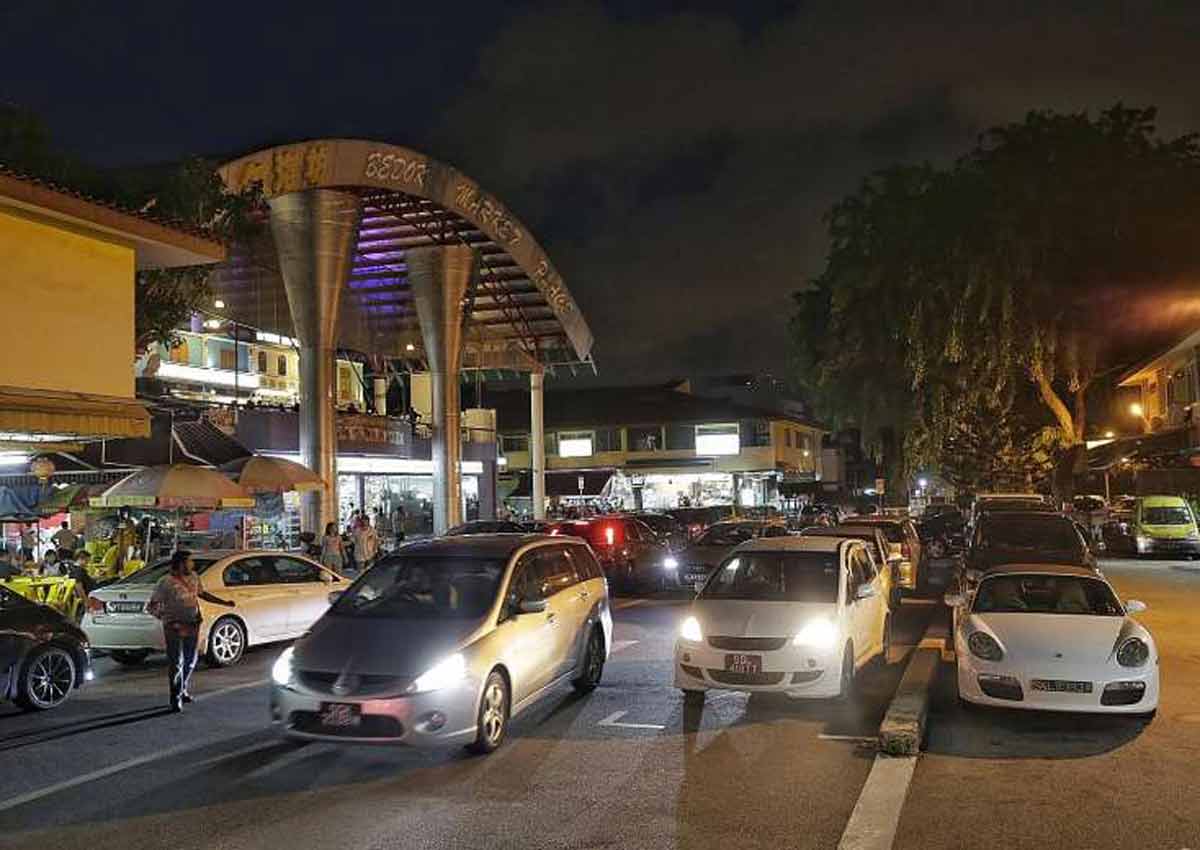
But fame has a price – traffic congestion becomes a nightmare during dining hours on weekends.

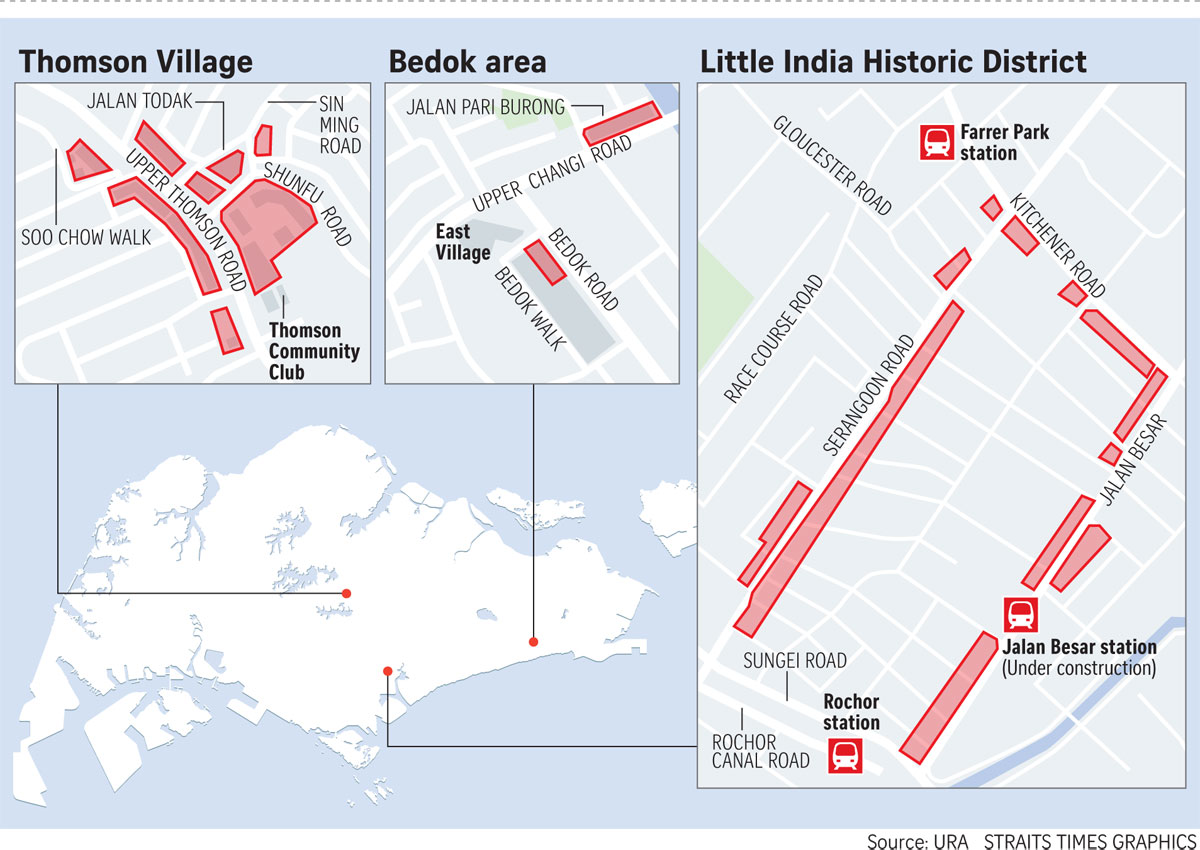
To prevent the situation from getting worse, the Urban Redevelopment Authority (URA) two weeks ago placed the area, along with Thomson Village and Little India, on a list of spots where new eateries have been banned from setting up.

The URA said this was “to address the traffic and indiscriminate parking concerns from the residents there due to the existing eating houses in the area”.

Simpang Bedok, there are halal stalls, such as Spize which offers Western and Mediterranean food, and Tang Tea House which sells dim sum. Bedok Marketplace, which re-opened in late 2014, is filled with hipster-type stalls selling a variety of food, from Vietnamese cuisine to meat-centric grills.

Across the road sits East Village which sprang up about two years ago. There are about 20 food-and-beverage options there.

Just three minutes away is the Jalan Pari Burong stretch which has about seven eateries. Customers said they are drawn to the area because of the food choices available.

Mr Jason Ning, 43, who runs Momoya Japanese Restaurant and Thai Table in Jalan Pari Burong, said he moved to the area about six years ago. The draw? Free parking around the area which he thought would be attractive to customers.

Now “everyone is fighting for space”, he said.

Diners start streaming in around 6pm. Most parking spaces were filled by nightfall when The Sunday Times visited over three nights.

Spize restaurant stall assistant Ayu Samaei, 37, said the open-air carpark in Simpang Bedok is at its most crowded around 8pm. “Our customers tell us that they have a hard time finding parking.”

It gets even more chaotic during special occasions like Mother’s Day, shop owners said.

Related: No new F & B outlets at 3 dining hot spots

But the URA’s move did not sit well with all.

“The URA should not have a blind ban of all eateries because it will cause the variety of food stalls available to decrease,” said Mr Jeremy Han, 24, owner and chef of The Burning Oak at Bedok Marketplace. “It may need to consider the cuisine and nature of the business before saying no to them.”

Meanwhile, when The Sunday Times visited the Upper Thomson Road area on Friday around 8pm, it was a hive of activity, with eateries such as Roti Prata House almost fully occupied. Parking spaces on both sides of the road were fully taken. This situation carries over to even the weekdays, said shop owners.

The URA has banned additional eateries from opening in shophouses in sections along Jalan Todak, Soo Chow Walk, Sin Ming Road and Shunfu Road, as well as Upper Thomson Road.

There are already some 30 eateries in Thomson Village. Owners of businesses there said the lack of parking space has affected their business. Customers often complain about how hard it is to find parking spaces and say that, as a result, they dine elsewhere.

Mr John Chua, who owns Pasta J, said that the shortage of parking spaces along Upper Thomson Road is the “main obstacle” for his restaurant. Unlike other eateries which cater to the younger crowd, most of his customers drive to the area.

“We’ve had regulars who disappear for a while and when they come back, they say: ‘It’s the parking. I give up’,” said Mr Chua, 46, whose restaurant opened more than two years ago.

“I think the ban will prevent the problem from getting worse but not really improve things.”

Mr Alam Shah, director of Cafe Etc, said he decided to set up his restaurant in Upper Thomson as the area is known for good food and can draw in crowds. But parking for customers is now a question of luck.

Some eateries have tried to come up with solutions.

Big Eater seafood, which opened in Jalan Pari Burong eight years ago, has been offering free valet services since. Its manager, Mr Y.K. Sim, 40, said: “We did it for customers’ convenience so they don’t have to wait in their cars for so long before they get to eat.”

• Additional reporting by Clarice Teo


This article was first published on June 12, 2016.
Get a copy of The Straits Times or go to straitstimes.com for more stories.

Image: 
Category: 
Publication Date: 
Sunday, June 12, 2016 – 19:00
Send to mobile app: 
Source: 


Story Type: 
Others

Source link

Pioneer generation to get Medisave top-ups in July

0

Each pioneer can expect to receive from S$200 to S$800 as part of the Pioneer Generation Package, says the Ministry of Finance.

Source link