“MAS is resolved to ensure that Singapore remains a clean and trusted financial centre,” says Ravi Menon, the managing director of the central bank.
Source link
MAS sets up dedicated departments to combat money laundering, strengthen enforcement
Alleged match-fixer Dan Tan’s ex-wife found guilty of lying to CPIB officers
District Judge Lee Poh Choo says she found Guan Enmei to be “an evasive and unreliable witness” who lied on the stand.
Source link
Singapore Zoo’s proboscis monkey in international spotlight

SINGAPORE – One of Singapore Zoo’s 13 proboscis monkeys became the 6,000th species to be photographed under an effort by the National Geographic to create portraits of every animal under human care, marking the project’s halfway mark.
The endangered primate…
Source link
Thousands march through central Seoul in pride parade
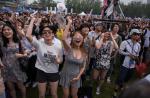
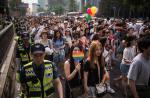
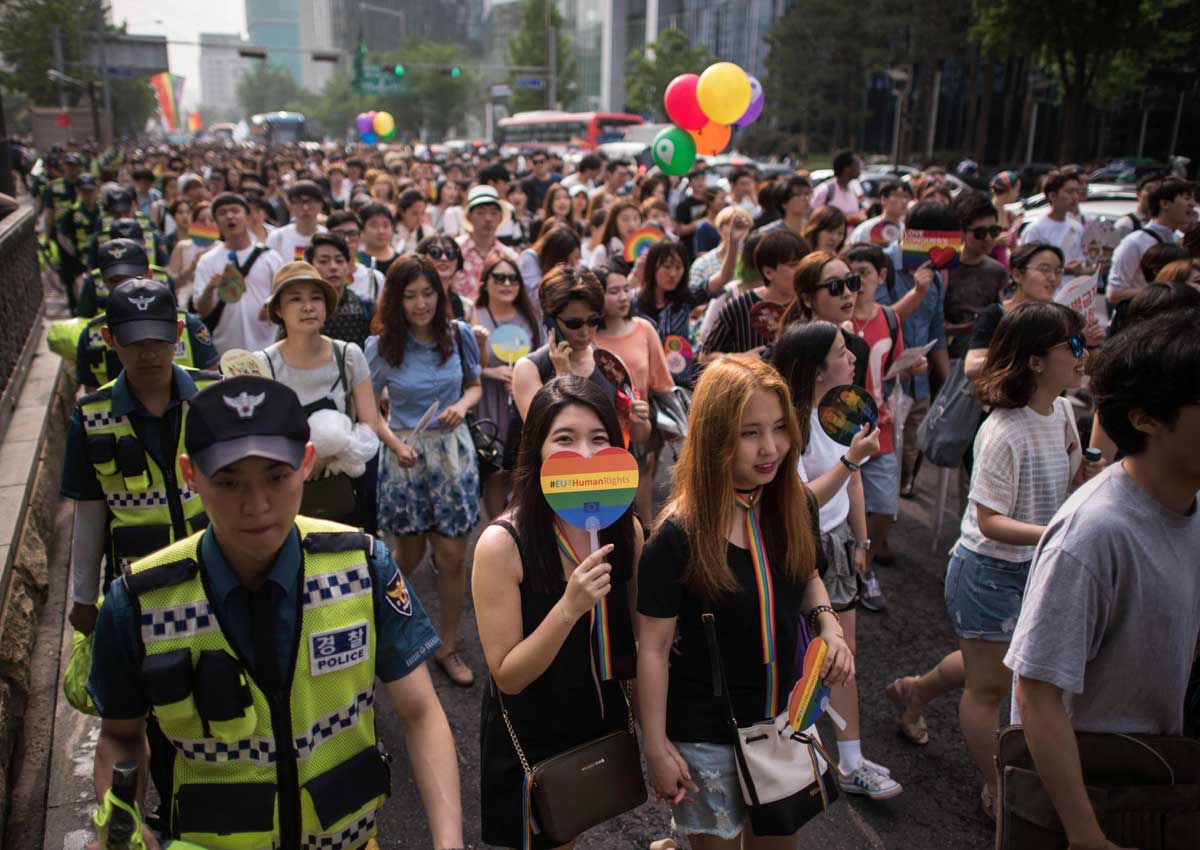
Thousands of people marched through central Seoul on Saturday to stand up for equality and respect for sexual minorities in South Korea’s biggest-ever pride parade, despite vocal opposition from antigay protestors.
An estimated 50,000 lesbian, gay, bisexual and transgender people, along with their supporters, turned up at Seoul Plaza to demonstrate their pride and fight homophobia under the slogan “Queer I Am.”
The slogan embodies the organizing committee’s determination to stay the way they are, despite prevailing hatred and discrimination against sexual minorities in society.
Click on thumbnail to view photos. Source:
The Korea Herald/ANN, AFP
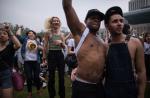


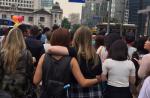
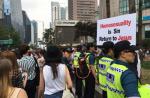
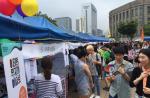
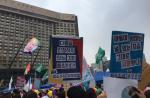
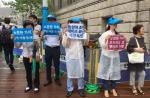
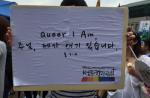
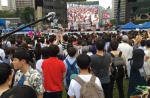
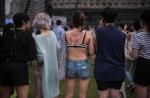


“I am so proud of being gay, being myself,” Han Beom-yong, 18, told The Korea Herald in excitement as he participated in the festivities.
“I am just so happy! I can finally feel free as most of the people here don’t care about my sexuality!”
“My only wish is that people would respect sexual minorities and accept us as human beings without prejudice,” the student said, adding that he could not come out to his parents in fear that the revelation might damage the relationship with his family.
“But anyhow my mother would have to accept it. I was born this way, which I never regret.”
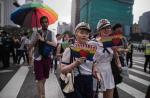
Following a two-hour opening event for this year’s Queer Cultural Festival, participants marched 2.9 kilometers following seven decorated trucks, dancing to the music blaring from the trucks and waving rainbow-colored flags and fans.
Some same-sex couples were seen displaying affection in public.
Rain poured at times in the afternoon, but did not stop participants from enjoying the festival and parading through Seoul.
Goo Soo-hyun, a 21-year-old university student, came all the way up from Daejeon with her lesbian friend to attend the parade.
“I have always been afraid of being discriminated against for being a lesbian. But here, among all this crowd, I can feel proud of being myself.”
The big day for local LGBT community came nearly three weeks after the Seoul Western District Court dismissed a petition filed by gay filmmaker Kim Jho Gwang-soo and his partner Kim Sung-hwan seeking legal status for their same-sex marriage.
The couple openly tied the knot in 2013.
The court stated in the ruling that a separate legislative step is needed because marriage by law should be seen as a union between a man and woman who can give birth to sustain society.
Goo, who came out of the closet two years ago, slammed the recent court’s ruling against same-sex marriage.
“Social awareness of the LGBT community is growing, but the country still has a long way to go,” she said.
“I hope that the country can someday accept same-sex marriage, with more and more sexual minorities coming out and asking their marriage to be legally recognized.”
The participants often confronted antigay campaigners who stood on the sidewalks of major streets shouting at marchers and holding placards reading “Homosexuality! Your children are in danger” in Korean or “Homosexuality is Sin. Return to Jesus” in English, but the revelers mostly kept their smiles, cheered and clapped in the faces of their opponents.
“I came here to support my lesbian daughter,” said mother of film director Lee Young, waiting in a line to join the parade.
“I always thought of homosexuality as someone else’s story, not mine, so I felt uncomfortable when she came out 10 years ago. But nothing changes the fact that she is my daughter, who has never disappointed me in any way, who never did anything to be blamed for.”
The nine-day Queer Cultural Festival kicked off at 11 a.m., with more than 100 human rights groups, political parties, embassies from 14 countries and global companies having set up their booths to campaign for equal rights for sexual minorities, as well as to sell food items and goods.
“As a bisexual person, living in this country sometimes feels dangerous.
I heard of homophobic attacks last year on some of my friends, so sometimes I just feel like I can’t show my pride around certain places,” said Jacqueline Carrillo, a 30-year-old English teacher from the United States.
“The festival was just truly amazing and the energy inside it was just so full of love and positivity.”
“But protestors made us feel uncomfortable with their peering eyes,” she said, lamenting that an antigay protestor spit on her face over the fence in front of City Hall while she was selling drinks at the booth for LGBTQIA and Allies of Korea.
On the other side of the festivities, hundreds of anti-LGBT campaigners, mostly right-wing and Protestant groups, staged protests against the Queer Festival at three locations surrounding the Seoul Plaza.
The majority of them signified their opposition to homosexuality, collectively praying while wailing and singing religious songs.
Asking participants to “repent,” they held up placards reading “Anti-discrimination Act Out, Islam Out” or “Homosexuality is neither genetic, nor human rights” in front of the booth set up to collect signatures for a petition to outlaw homosexuality in Korea.
Some even condemned Seoul Mayor Park Won-soon for permitting the festival organizing committee to host the event and United Nations Secretary-General Ban Ki-moon for advocating sexual minorities.
Some 4000 police officers were stationed around the plaza and along the parade route to separate LGBT advocates from their opponents.
No major clashes were reported.
“I think that homosexuality goes against the order created by God and thus has negative impact on society. Not only are LGBT people unable to reproduce but they also cause tax burden on society,” said Jang Dong-nam, a 30-year-old graduate school student and member of the opposing crowd. “The LGBT community should not be allowed to host this kind of festival, make noises and create ruckus in central Seoul.”
But some Protestant churches opposed the antigay movement and stood in solidarity with the LGBT community.
“I am enjoying the festival with my gay friends. The festival is a lot bigger than last year, with more people and performances,” said Kim Jeong Woong-Ki, a freelancer in his 40s.
As a protestant himself, Kim said that he was “ashamed” by the churchgoers protesting against sexual minorities, describing them as being full of hatred.
“I believe that Jesus taught us to respect others and coexist together in society just like a rainbow.”
A 32-year-old office worker, who only wanted to be identified by his surname Jung, said he had dropped by the event out of curiosity and had been scared by the unfamiliar scene.
“But as I spent some time here looking at these people, I got used to it and started to enjoy the whole thing. Putting aside my personal feelings, I think all people should be entitled to being who they are.”
As the performance of a pro-LGBT church choir announced the opening event at 2 p.m., spectators erupted in cheers and waved rainbow-colored fans in the sweltering heat.
A variety of performances by LGBT musical bands and dance teams followed.
Kang Myeong-jin, head of the event organizing committee, said in an opening speech that hosting the event at Seoul Plaza carries a greater meaning in that the LGBT community can freely communicate with Korean citizens and talk about diversity.
Last year’s pride parade, which had the slogan “Queer Revolution,” drew 30,000 citizens to the heart of Seoul, hitting record high attendance numbers that were easily topped this year. The annual event first took place in Seoul in 2000, when it was located in Daehangno.
The Queer Festival will last until June 19, with a couple of photo exhibitions taking place in Seoul.
Nearly 60 films from 23 countries will be featured in the Korea Queer Film Festival from June 16-19 at Lotte Cinema in Sinsa-dong, southern Seoul.
Image:
Publication Date:
Monday, June 13, 2016 – 16:19
Keywords:
Send to mobile app:
Source:
Story Type:
Others
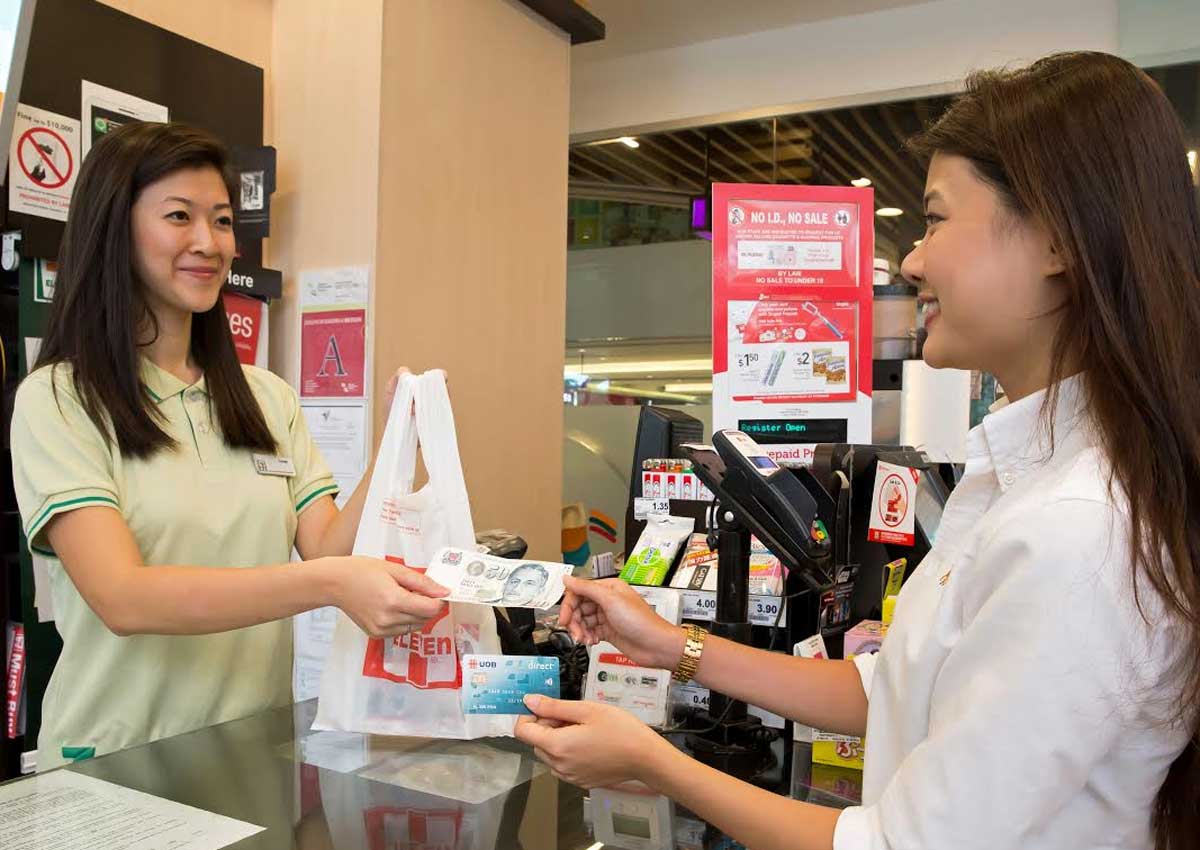
Cardholders of all 3 local banks now able to withdraw cash from 7-Eleven outlets
Image:
Publication Date:
Monday, June 13, 2016 – 16:12
Keywords:
Send to mobile app:
Source:
Story Type:
Rewritten Story
Crime on rise in Seoul's foreign towns
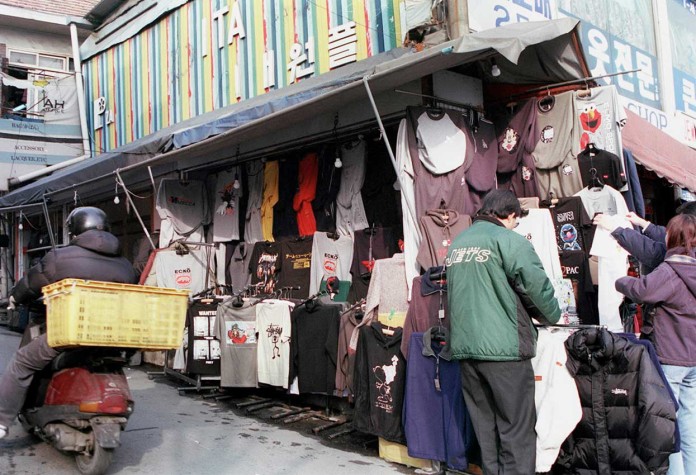
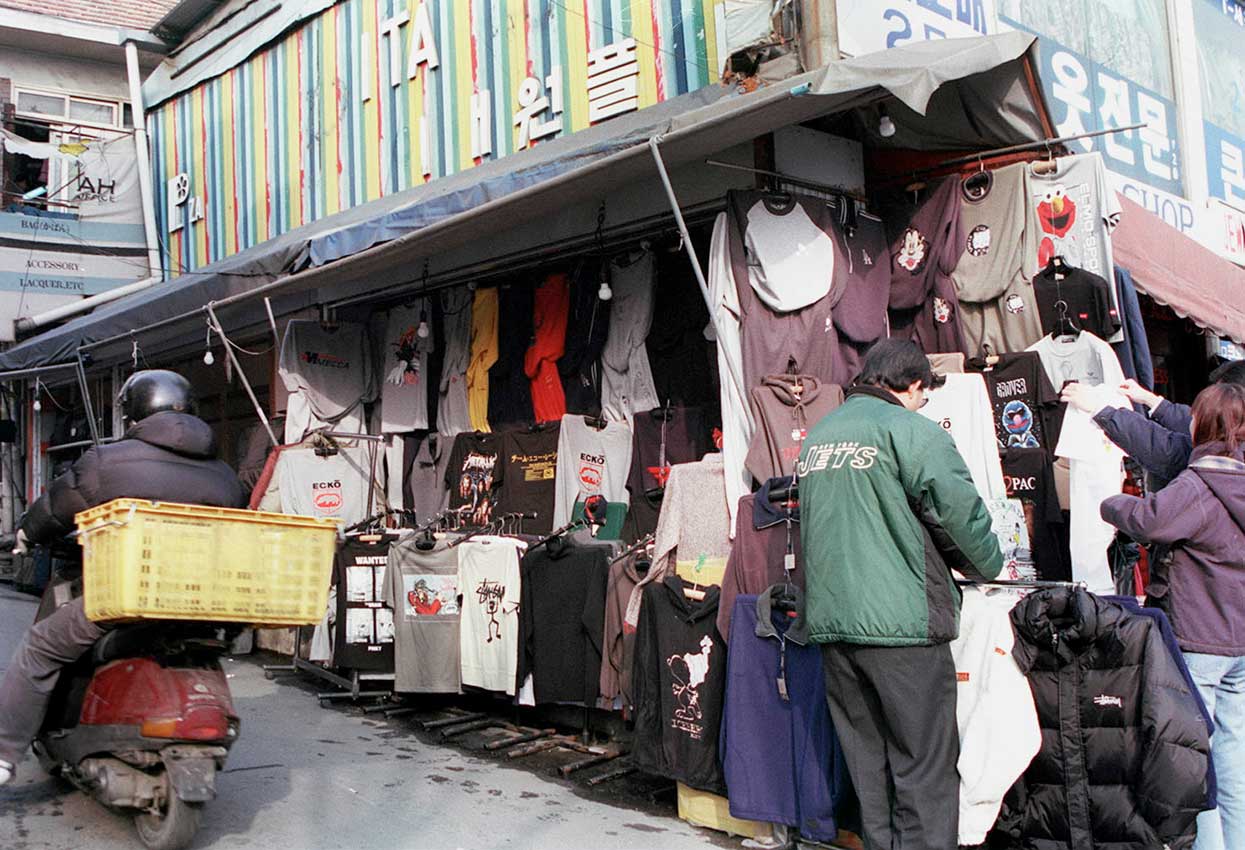
For many Seoulites, a visit to Daerim-dong or Yeonnam-dong would mean a stop in the district’s Chinatown for exotic menus featuring lamb skewers or bubble tea. It is also in such ethnic zones that Chinese immigrants tend to search for an affordable home in their new country.
These tight-knit foreign communities are also found in other areas of the city, including the Vietnamese town in Wangsimni, Nepalese town in Changsin-dong and Mongolian town in Gwanghui-dong. In Itaewon is an Islamic town stretching down the alleys and in Hyehwa-dong a Filipino community market is held every weekend.
The Jongno-gu district office once tried to close down the Filipino market, citing pedestrian inconvenience, but has now turned to protecting the event — not only for the sake of nostalgic immigrants, but also for the tourist attraction for visitors.
The immigrant towns started to appear here back in 1985, when a group of French people living in Seoul gathered near Banpo-dong after the French International School relocated its building in the neighborhood. The Seorae Village, meaning “those coming from the West,” has since then been dubbed “Little France.”
The number of foreign residents in these regional clusters is quickly burgeoning. According to Yeongdeungpo-gu, where one of the biggest Chinatowns is located, at least 66,000 Chinese residents were tallied to live in the district as of last year.
Kim Seung-su, 28, says that the increasing variety of ethnic food alleys is a big attraction for Koreans who wish to “experience the original taste of foreign countries.”
“I came across a Sichuan-style pork dish in Daerim-dong in Yeongdeungpo-gu, very similar to one I tasted when I was in southwestern China,” Kim told The Korea Herald with his mouth watering.
“I am thrilled to have access to all these original dishes from different parts of the world here in Seoul.”
According to mobile app Poing, a restaurant app for foodies in Seoul, the soaring Thai, Philippine and Vietnamese restaurants have been garnering popularity especially among women in their 20s and 30s. Poing showed that at least 98 such restaurants are scattered around the capital.
But with the rising popularity, the destinations have also become increasingly exposed to crimes.
The Seoul Metropolitan Police Agency said Sunday it would designate an alley in Jayang-dong in Gwangjin-gu near Konkuk University as a special safety zone, making it the fourth such district after Daerim-dong, Garibong-dong and Itaewon.
The “lamb skewers alley” in Jayang-dong has become notorious for the increasing frequency of thefts, blackmail and frauds by Chinese immigrants residing in the vicinity.
“(Although I am Chinese) I am worried about the low security level, so avoid going to those areas at night,” said 28-year-old Lu Han-yen, a Chinese student who has been living in Seoul for five years.
Officials said they are set to tighten their regular patrol, as well as the inspections of suspicious passersby. Supervision on prostitution will also be reinforced.
Some, however, point out that intensified police supervision may not be an appropriate solution to the security issue in foreign towns.
“I think that the measure may be discriminatory against foreign residents in the corresponding areas,” Pao Yuan Chang, a 33-year-old Chinese-Korean, told The Korea Herald.
Police argued that the proportion of crimes by foreigners in these areas under police control is in fact on a downturn, contrary to general wariness.
According to police data, foreign criminals in special safety zones of Seoul stood at 27.7 per cent last year, down from 30.8 per cent in 2013 and 29.9 per cent in 2014.
Image:
Publication Date:
Monday, June 13, 2016 – 16:05
Send to mobile app:
Source:
Story Type:
Others
Taiwan opposition slams former leader's travel ban to Hong Kong
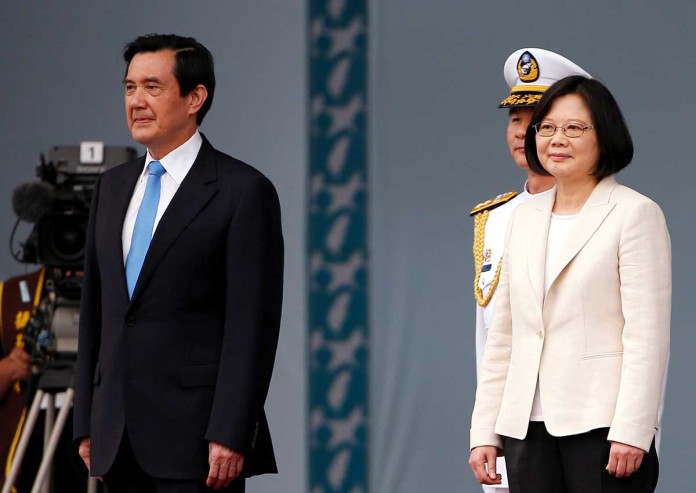
TAIPEI – Taiwan’s opposition Nationalist Party slammed the island’s new government as “suppressive” for barring former president Ma Ying-jeou from travelling to Chinese-controlled Hong Kong on the grounds of national security.
Ma’s China-friendly Nationalists lost landslide elections in January to President Tsai Ing-wen and her Democratic Progressive Party (DPP), which has traditionally leant towards independence from China.
It said barring Ma from visiting the former British colony of Hong Kong was “completely unhelpful for Taiwan’s internal political reconciliation and social harmony”. “This suppressive style of the just-sworn-in DPP government is naked to all the people,” it said.
Tsai’s administration said on Sunday it had barred Ma from travelling to Hong Kong to give a speech at a media awards ceremony. “Based on the international situation faced by Taiwan and in consideration of national security and interests, Hong Kong is a highly sensitive area (when it comes to) maintaining our national security,” the Presidential Office said in a statement, adding that it would be difficult to control the risks of such a visit.
It added that the decision was made in after a review by a government committee that included foreign, defence, justice, China affairs and senior security officials and was in line with the island’s national security regulations.
China has claimed sovereignty over Taiwan since 1949, when Mao Zedong’s forces won the Chinese civil war and Chiang Kai-shek’s Nationalists fled to the island. Communist Party rulers in Beijing have vowed to bring Taiwan under its rule, by force if necessary.
Hong Kong returned to Chinese rule in 1997 under a “one country, two systems” formula which guarantees wide-ranging autonomy for the financial hub but was the scene of lengthy and sometimes violent anti-China street protests in 2014 calling for fully democratic elections.
China had put forward the “one country, two systems” formula as a model for Taiwan to follow, which island leaders have rejected.
China has also repeatedly warned Taiwan of negative consequences if they fail to recognise Taiwan is a part of China under Beijing’s “one China” principle.
Tsai has said she will maintain the status quo with China, but has not repeated the “one China” principle.
Image:
Publication Date:
Monday, June 13, 2016 – 15:55
Keywords:
Send to mobile app:
Source:
Story Type:
Others
Duterte, last hope for family of Filipina Abu Sayyaf hostage
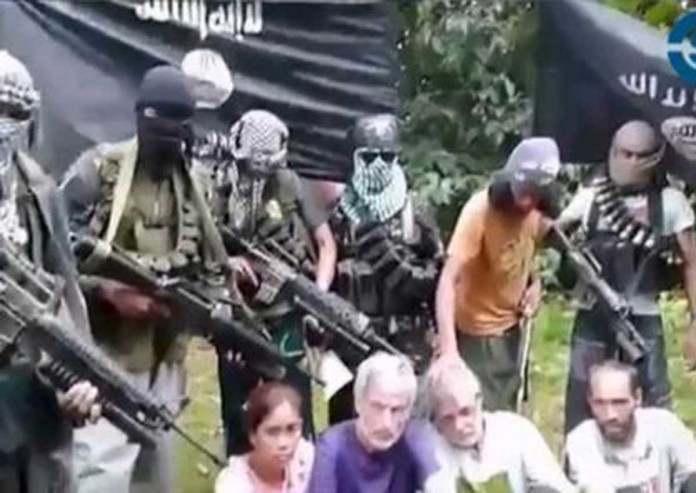
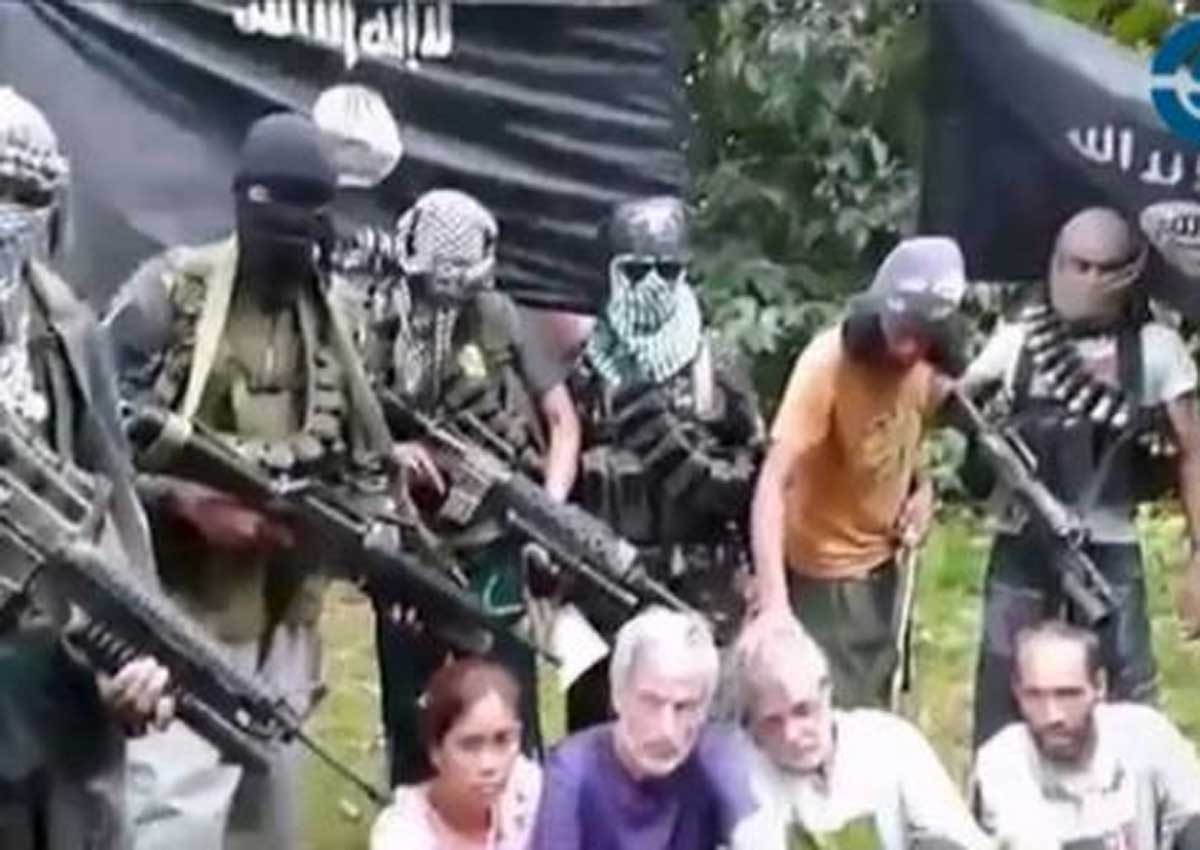
DAVAO CITY, Philippines – With only hours before the deadline for payment of ransom expires on Monday afternoon, the only hope now for the family of a kidnapped Filipina is incoming President Rodrigo Duterte.
Flordelisa Flor, mother of 38-year-old Tess Flor, told the Inquirer on Monday morning that they were losing hope as the clock slowly moved to 3 p.m.
“We are now totally leaving our daughter’s life in the hands of Duterte. I hope he can save her,” Flor told the Inquirer by phone.
Flor said they were told by government agents who visited their home in Bukidnon that apart from the efforts of the present administration, Duterte was also trying to help the kidnap victims.
“There is still hope for my daughter and the other victims. I am pleading Duterte to please do everything to save them,” Flor said.
Flor’s daughter was one of the four victims taken from a marina on the Island Garden City of Samal in Davao del Norte on September 21 last year.
Aside from Tess, also kidnapped were her Canadian boyfriend Robert Hall, another Canadian John Ridsdel and Norwegian resort manager Kjartan Sekkinstad.
Ridsdel was beheaded in April this year after the deadline for his ransom expired.
The Abu Sayyaf released a very graphic video of his beheading threatening that the same would happen to the others if their deadline was not met.
The Abu Sayyaf is demanding a P600-million (S$17.69 million) ransom in exchange for the release of the three captives.
Image:
Publication Date:
Monday, June 13, 2016 – 15:39
Keywords:
Send to mobile app:
Source:
Story Type:
Others
Filipino netizens amused after Facebook's Independence Day greeting shows the Philippines' flag upside down

MANILA – Does Facebook know something that Filipinos don’t?
Netizens were surprised when Facebook gave them an unusual greeting to commemorate the country’s 118th Independence Day on Sunday (June 12).
The Philippine flag, which accompanied the “Happy Independence Day” greeting, showed that the red side of the flag was on top.
If the Philippine flag is flown with its red side on top, this means that the country is at war.
Filipinos took to social media to comment on this blunder.
Twitter user @mnugaspar said: “Facebook has the Philippine flag upside down. If this is a sign of things to come…”
Another Twitter user @econcepcion said: “Dear @facebook: It’s not a happy Independence Day if our flag is like this. Like seriously.”
#jezpot5000 said: “Hahahaha,@facebook something’s wrong with this PH flag… ALTHOUGH you might know something we don’t (?)”
The Inquirer has reached out to Facebook for comment, but has not received a response as of the time of posting.
Image:

Publication Date:
Monday, June 13, 2016 – 15:09
Keywords:
Send to mobile app:
Source:
Story Type:
Others
WSQ course slammed for workplace discrimination was meant to promote respect for diversity
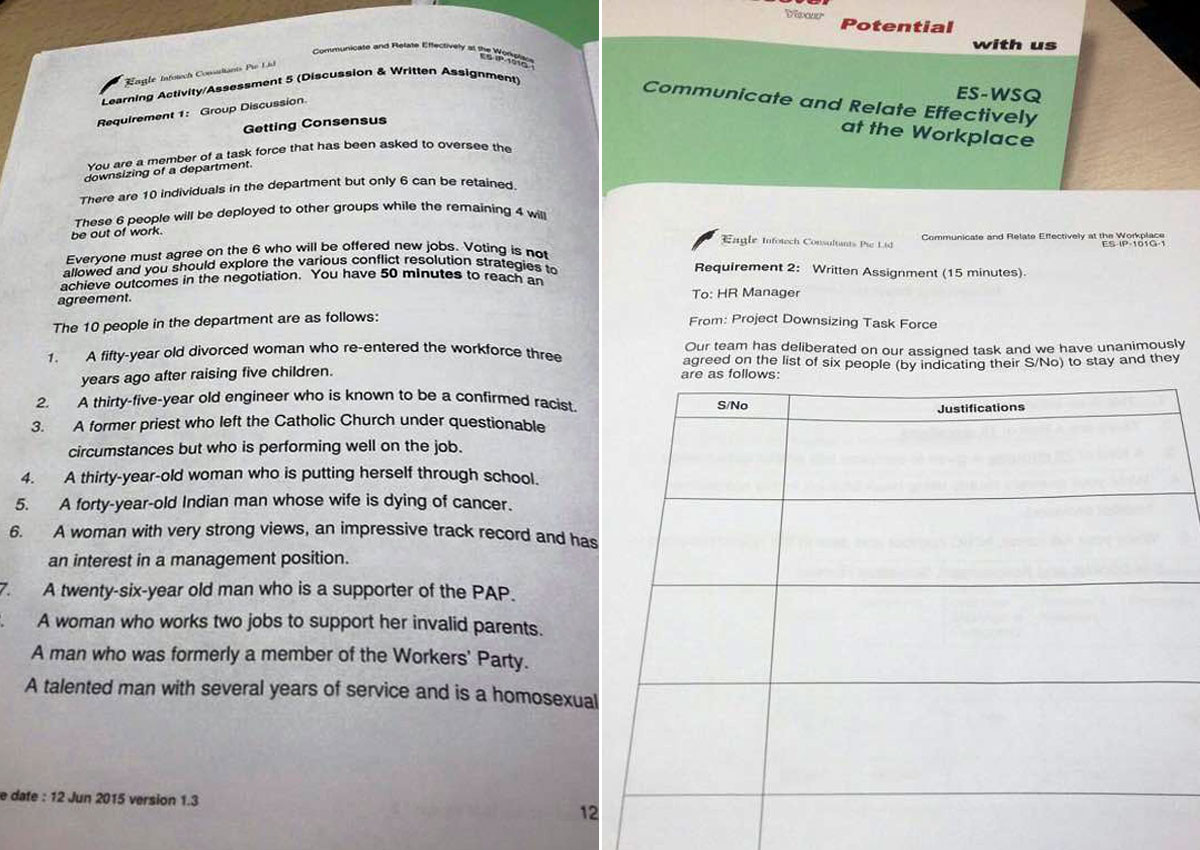
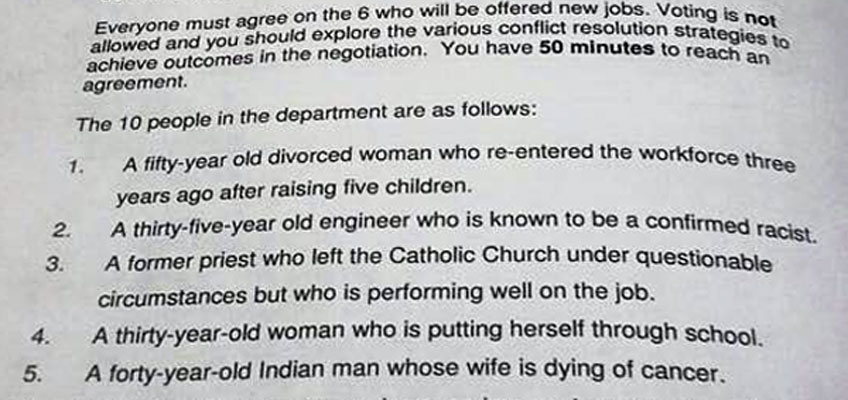
SINGAPORE – Who would you retrench at the workplace? A forty-year-old Indian man whose wife is dying of cancer, or a talented man with several years of service and is a homosexual? Or maybe someone who was formerly a member of the Workers’ Party?
In an exercise on getting consensus at the workplace, participants of a Workforce Skills Qualifications (WSQ) course on effective communication were asked to deliberate on who, out of 10 people described, should be retrenched.
Instead of telling participants to consider how well these people are doing in their jobs, the course material asked for a decision to be made using information like how one man is a supporter of the People’s Action Party and how a woman is working two jobs to support invalid parents.
A photograph of the questionable material was posted on Facebook on June 10 and has already been shared more than 80 times. It was temporarily removed on Monday (June 13) morning.
One Facebook user who saw the post called the material the “holy grail” of workplace discrimination.
The netizen who posted the photo had said that a friend attended the WSQ course and was “appalled” by the material. The course instructor decided to “fail” his friend when he decided not to participate in the discussion, the poster claimed.
From the photo, the course is listed as “Communicate & relate effectively at the workplace“, a “softskill course” conducted by external course coordinator Eagle Infotech Consultants under the WSQ Employability Skills Framework.
The course was last conducted on June 7 and 8, according to information found online.
Eagle Infotech told AsiaOne on Monday that the material was taken “out of context” in the post. In fact, participants would have just learnt about diversity at the workplace and respect for people of different backgrounds before embarking on the exercise.
The assessment exercise would thus have been about respecting diversity and about being objective – the direct opposite of what it has been accused of – even though the information provided in the course material is insufficient for participants to make judgement calls on who to let go based on company needs and work performance.
Eagle Infotech also said that the participant who allegedly complained about the exercise had actually taken part in the assessment, contrary to what was claimed in the Facebook post, and had “passed”, meaning the instructor deemed him having learnt the core lessons of this exercise.
It added that it has conducted the course for years, and has not received a complaint before this.
The Singapore Workforce Development Agency, which manages the WSQ system, has said that it will respond to media queries later on Monday.
sinsh@sph.com.sg
Image:
Publication Date:
Monday, June 13, 2016 – 18:00
Send to mobile app:
Source:
Rotator Headline:
Which to retrench: Talented homosexual or Indian with cancer-stricken wife?
Rotator Image:
Story Type:
Original Story


