Image:

Publication Date:
Tuesday, June 14, 2016 – 11:03
External URL:
Send to mobile app:
Source:
Story Type:
Others
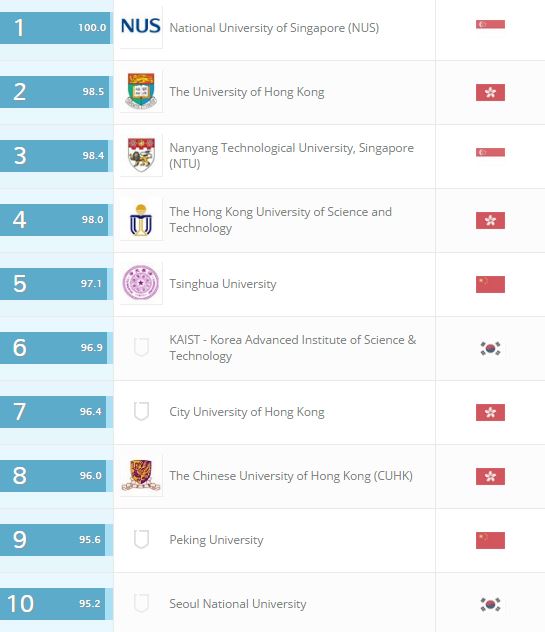
THE National University of Singapore (NUS) continues to reign supreme among higher education giants in Asia, clinching the top spot in the QS Asia University Rankings for the third consecutive year.
NUS president Tan Chorh Chuan told the Straits Times that strong government support has encouraged local universities to push for excellence.
“At NUS, our priority is in preparing future-ready graduates and developing top talent, driving innovation and forging strategic collaborations with academic and industry partners, and delivering impact from world-class research,” he said.
QS University Rankings: Asia 2016. Image via topuniversities.com
The 2016 ranking, which was released on Tuesday, also saw another Singaporean university, Nanyang Technological University (NTU), take third place, moving one spot up from the previous year.
In the QS World University Rankings 2015/16, NUS and NTU are ranked at #12 and #13, respectively.
NUS attained a perfect score in four metrics: academic reputation; employer reputation; citations per paper; and international faculty.
NTU also got a perfect score in four metrics: employer reputation; citations per paper; international faculty; and the proportion of outbound exchange students.
However, Hong Kong universities dominate the top 10, with four institutions listed among Asia’s academic cream of the crop – the University of Hong Kong (#2); the Hong Kong University of Science and Technology (#4); City University of Hong Kong (#7); and the Chinese University of Hong Kong (#8).
SEE ALSO: Singapore leads Asia in QS World University Rankings 2015
London-based education and career consultancy Quacquarelli Symonds (QS) said for this year, it expanded the top Asian universities list to include the region’s 350 best universities – 50 more than last year.
In order to measure excellence among Asian universities, QS uses 10 key performance indicators to compare institutions, including academic reputation, employer reputation, faculty-student ratio, papers per faculty, the proportion of international faculty and students, and proportion of inbound and outbound exchange students.
For 2016, QS included a new metric – staff with a PhD – in order to add another dimension to its analyses of teaching quality.
Alongside the Asian rankings, QS released the top university lists for the Latin America, Arab, and Emerging Europe & Central Asia (EECA) regions.
The post Singapore’s NUS ranked Asia’s top university for third consecutive year appeared first on Asian Correspondent.
BEIJING – China’s sports system has been enormously successful since the country returned to the Olympic fold in 1980, culminating with the host nation topping the medals’ table at the 2008 Beijing Olympics with only a slight dip into second place behind the United States in London four years later.
And yet, with the Rio de Janeiro Games less than three months away, the system is beginning to break down due to the shifting demographics of a more prosperous nation.
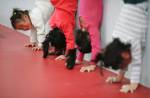
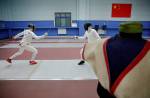
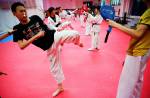
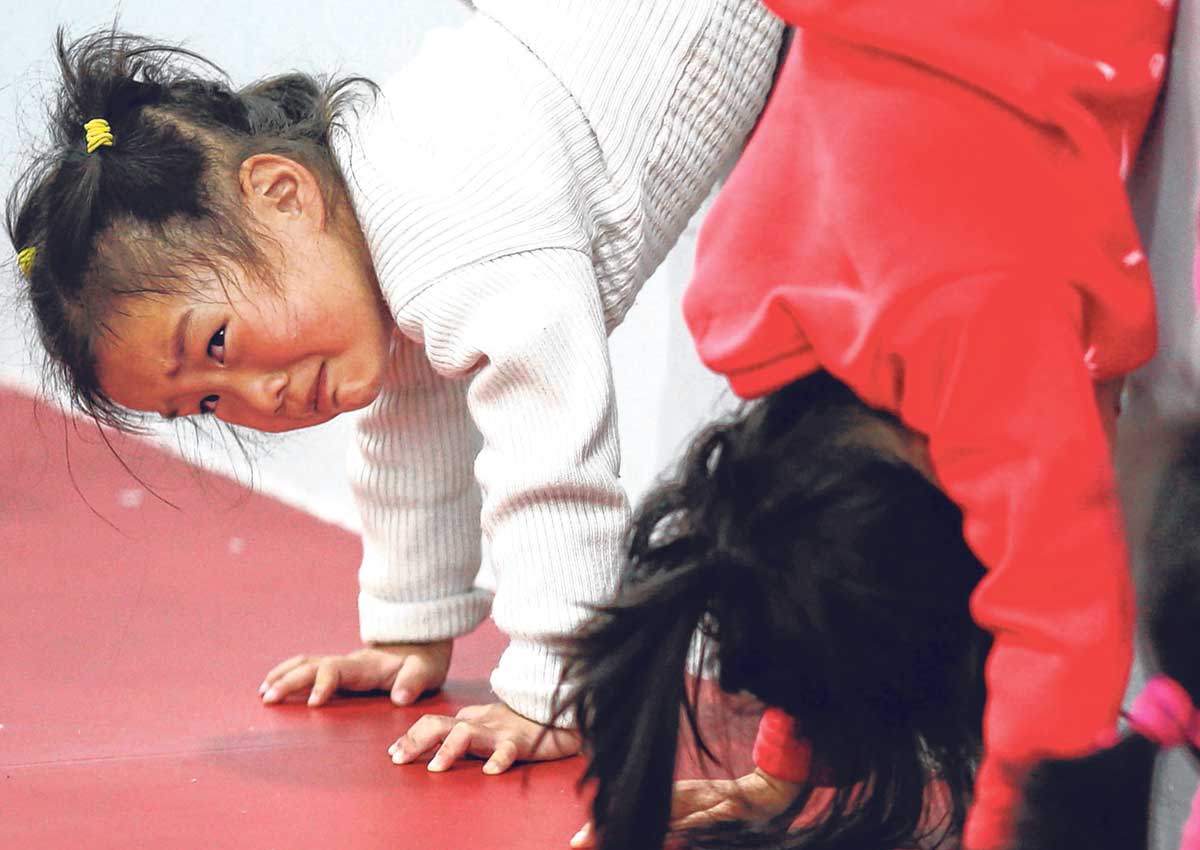
Change is unfolding at Shanghai’s No. 1 Children’s Sports School Pudong New Area, a small cog in a state-run machine that has churned out Chinese Olympic champions for 31/2 decades.
The institution is one of 2,183 around the country producing 95 per cent of its Olympians.
Fewer parents are willing to let their children endure gruelling training routines from as young as six years of age, leading to a fall in student numbers.
Some schools have closed and others are adjusting the way they work. The number of sports schools is down from 3,687 in 1990, government numbers show.
“In the 1980s and 1990s, schools like ours were extremely attractive,” said Mr Huang Qin, the school’s party committee secretary, recalling a time when families were poorer and generous sports subsidies were more highly prized.
The school’s alumni include former Olympians such as hurdler Chen Yanhao and female footballer Xie Huilin.
“(But) parents are less willing now to send their child to sports schools if they perform fairly well in exams… The source of students for sports schools has shrunk as society places more importance on cultural education.”
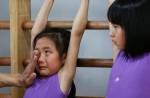

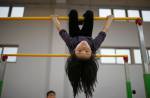
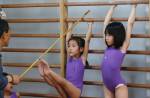
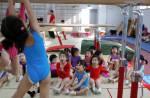
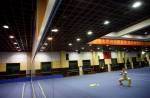


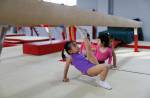
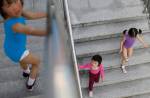
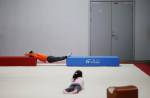
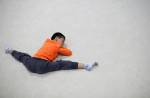
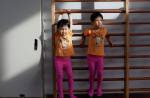
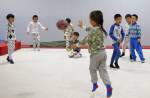
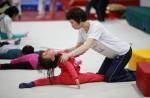








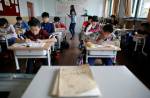
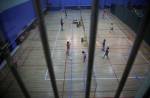
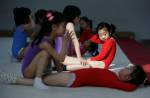
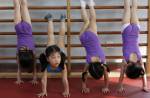
Debates about the continued relevance of the sports school system began to emerge around the 2008 Beijing Olympics, Mr Huang and other schools said, as emerging tales of difficulties facing retired athletes jarred against rising expectations of education standards among China’s booming middle class.
The country’s declining birth rate as a result of China’s one-child policy has not helped either, along with its cut-throat education system, which sees Chinese students spend twice as much time on homework a day compared with the global average. |
A BETTER WAY
Beijing responded to these concerns in 2010 by issuing a new policy, known as Document 23, ordering sport schools to improve teaching standards and to give more support to retired athletes.
At the No. 1 Children’s Sports School Pudong New Area, Mr Huang said it had improved its teacher training. Three years ago, it also relaxed a 40-year tradition of requiring its entire student cohort to study, train and live full-time on campus. Now, more than half of the school’s 700 athletes study at other schools as well. Of its remaining 300 or so full-time students, about 10 per cent live off-campus.
Other schools, like the Shanghai Yangpu Youth Amateur Athletic School, are going into kindergartens to advertise gymnastics as an after-school play-time activity to parents.
“We call it happy gymnastics,” said principal Zhu Zengxiang.
At Beijing’s Shichahai, its walls adorned with posters extolling the feats of former students turned Olympic champions, vice-head Zhang Jing said the school offers “comprehensive development” and equips athletes with the skills needed for life after sport.
The Shanghai Sports School, whose alumni include former Olympic swimming champion Liu Zige, began in 2012 to reject athletes that did not pass its academic entrance exams, and tells parents it wants to use sports training to educate rather than as an end-goal, according to principal Sheng Maowu.
“A lot of sports schools are moving in this direction… but this is a painful process,” he said.
“At present, the existing thought is that education and training are two different routes – if you want to be a world champion, you cannot study. This belief is wrong… and, at the end of the day, very few become champions.”
The government does not publish student enrolment at its sports schools, but there are signs that the changing landscape has already begun to impact China’s pool of sporting talent.
In April, the China Sports Daily reported that the number of Chinese athletes training to be table tennis players had fallen by almost a quarter since 1987 to 23,266.
“In this changing situation, we must re-examine the traditional training system and model for competitive sports,” Mr Liu Shaonong, head of the table tennis and badminton centre of China’s General Administration of Sport, was quoted as saying.
Reform, however, is proving slow to take root. In March, a government survey found that some schools inspected across nine cities and provinces did not spend enough on education, and some local education departments paid little attention to making improvements in line with Document 23, according to state media.
But athletes like Wang Linwen, a 25-year-old former professional athlete who represented Shanxi province in wushu, a martial art, said reforms, no matter how little, were crucial for those still willing to enter sports schools.
For five years until she retired in 2009, her weekdays were spent training, with only the weekends for studying, she said.
“I lost a lot because I didn’t experience the education system,” she said. “(Reform) is good. That way, sports school students won’t come out knowing nothing.”
SINGAPORE – With its glossy brown fur and long, pendulous nose, Cyrano the proboscis monkey cuts a striking figure in front of the camera.
Its haunting gaze sums up the threats faced by its species: proboscis monkeys are being driven to extinction when they are hunted for food and medicine, and when they are driven out of their homes in the coastal forests of Borneo, the only place in the world they can be found.
These monkeys are endangered in the wild. But last Thursday (June 9), Cyrano – one of the Singapore Zoo’s 13 proboscis monkeys – was immortalised in a photograph that would tell future generations why they should pay more attention to the plight faced by its species.
Cyrano was being photographed by National Geographic Fellow and photographer Joel Sartore, who is on a mission to highlight the plight of various threatened species, even those that may not be as charismatic.
“Under Joel’s lens, all of them are portrayed as equally worthy of our concerns and protection,” said the Singapore Zoo in a statement on Monday (June 13), adding that the Singapore Zoo is the only place in the world where the animal can be seen under human care.
Cyrano was the 6,000th species to be photographed by Mr Sartore under the National Geographic Photo Ark, a project which aims to document 12,000 species of birds, fish, mammals, reptiles, amphibians and invertebrates in all.
The picture of Cyrano marks the halfway point for the project. SPH Foundation is the sponsor for the SPH Foundation Conservation Centre and the proboscis monkeys at the Singapore Zoo.
During his 13-day stint in Singapore, Mr Sartore also photographed the critically endangered Singapore freshwater crab, black-winged starling and southern river terrapin. He took photographs of more than 150 animal species in all, at the zoo, the Jurong Bird Park, the Night Safari and the River Safari.
Those interested in viewing the images can do so at : http://nationalgeographic.org/projects/photo-ark/
audreyt@sph.com.sg

This article was first published on June 13, 2016.
Get a copy of The Straits Times or go to straitstimes.com for more stories.

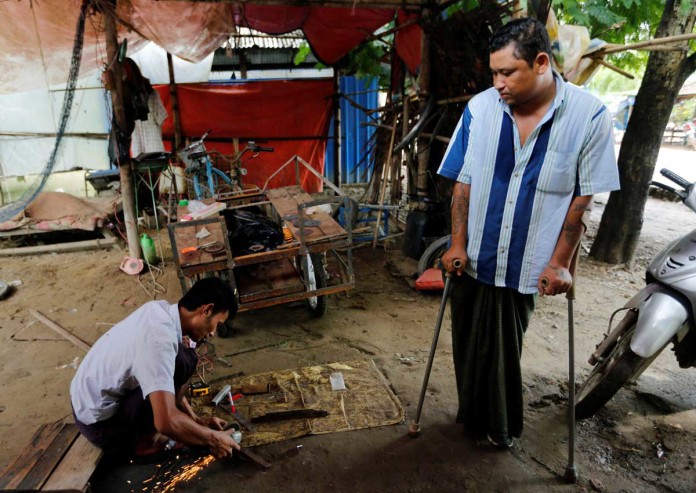
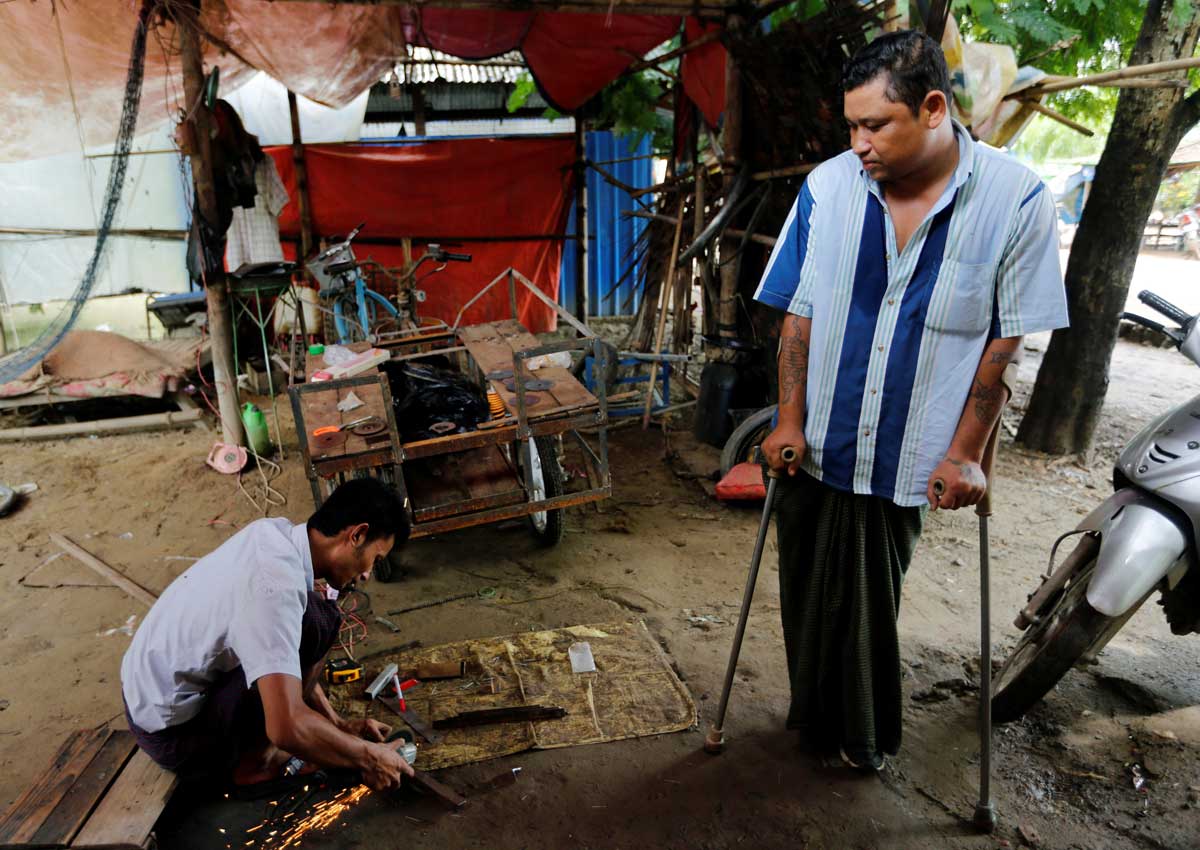
YANGON – Disabled and collecting fees to use a public toilet in a busy Yangon market was not how Kyaw Kyaw Oo imagined the life of a soldier when he lied about his age to join the Myanmar army at 16.
Four years later, a landmine blast tore through his legs during fighting in the country’s east. He nearly died from an infection after an eight-day journey to hospital and lost both his legs.
Discharged in 1999, he was unemployed and living at home, relying on his aging parents for support. In 2008 he moved to Yangon, the country’s largest city, where an official “had pity”on him and helped him get a job at the market.
For some 60 years, Myanmar has been in a state of perpetual civil war, with multiple ethnic armed groups killing and maiming unknown thousands of soldiers. With military casualties a closely guarded secret, wounded veterans were kept largely out of public view. “If we didn’t have someone to depend on, like parents, things would have been very bad for us,” said Kyaw Kyaw Oo.
Now, amid rapid economic and social reforms that began in 2011, the cost of years of fighting is slowly being revealed.
Wounded former soldiers, with few job opportunities, are reliant on a veterans’ assistance scheme that offers minimal medical care or financial support.
A new government led by Aung San Suu Kyi’s National League for Democracy (NLD) knows it must work with former foes from the military high command, who remain powerful under a constitution written by the armed forces.
But rank-and-file veterans of Myanmar’s long-running conflicts fear being left on the margins of the transformation taking place around them.
ARMY RULE
Myanmar’s military ran the country from a coup in 1962 until it relinquished direct control in 2011.
Many top junta members amassed great wealth, visible now in high-end enclaves of Yangon, where mansions rise behind barbed-wire topped walls, and the sprawling compounds in the capital Naypyitaw.
Aung Gyi, 56, who also lost both of his legs to a landmine in 1979 battling communists, lives a drastically different life.
Like Kyaw Kyaw Oo and around 50 other wounded soldiers, he was given his home a 45-minute drive outside Yangon in 2012.
The neighbourhood, bureaucratically titled, “Ward-6, Agriculture and Livestock-1”, has provided the wounded veterans who live there with a sense of community, residents said.
On a recent day, a barber with an aging artificial leg visible beneath his longyi – a traditional sarong worn by men – sat outside his shop chatting with friends. Another man limped behind a toddler running down the road.
But the single room homes lack indoor toilets and have no special features to accommodate the residents’ disabilities.
Aung Gyi, who shares his with five family members, receives 40,000 kyat (S$45) per month from the military.
He recognises, nonetheless, that he is more fortunate than most. “There are many wounded veterans who still don’t have a place to live,” he said.
FUNDING SCARCE
The NLD, which faces sky-high expectations that it can rapidly transform a country impoverished by decades of junta rule, is unlikely to find much extra cash for veterans. “We don’t have any special plan giving any assistance to the disabled veterans, we only help former political prisoners,” Han Tha Myint, an NLD central executive committee member, told Reuters. “We can’t afford to do much.” An official from the Myanmar War Veterans Organisation in Naypyitaw, which oversees veterans’ affairs, said there were currently 250,000 veterans registered with the group.
Around 10,000 were wounded in combat, said the official, who asked not to be named because he was not authorised to speak to the media, adding that funding remained a “major problem”.
The MWVO had tried to stop some homeless veterans begging or selling used book on the streets in Yangon, the official said. “We invite them to join our organisation so that we can help with whatever assistance we can afford,” said the official.
Kyaw Kyaw Oo lost his job at the market in 2013, when the officer who helped to get him hired left. He began selling lottery tickets from his homemade wheelchair, but struggles to travel between downtown Yangon and his home outside the city. “I think we deserve more assistance from the state,” said Kyaw Kyaw Oo, who had followed his father and two uncles into the army. “I believe my family and I sacrificed a lot for the country.”

SINGAPORE – The Agri-Food and Veterinary Authority (AVA) is investigating the death of a cat at Redhill Close. According to a Facebook user, the cat was allegedly thrown down from a HDB unit.
The incident occurred at Block 89 Redhill Close last Saturday (June…
Source link
NUS retains its title as Asia’s best university, while NTU rises one place to take the regional bronze medal. SMU enters the rankings in 60th place.
Source link
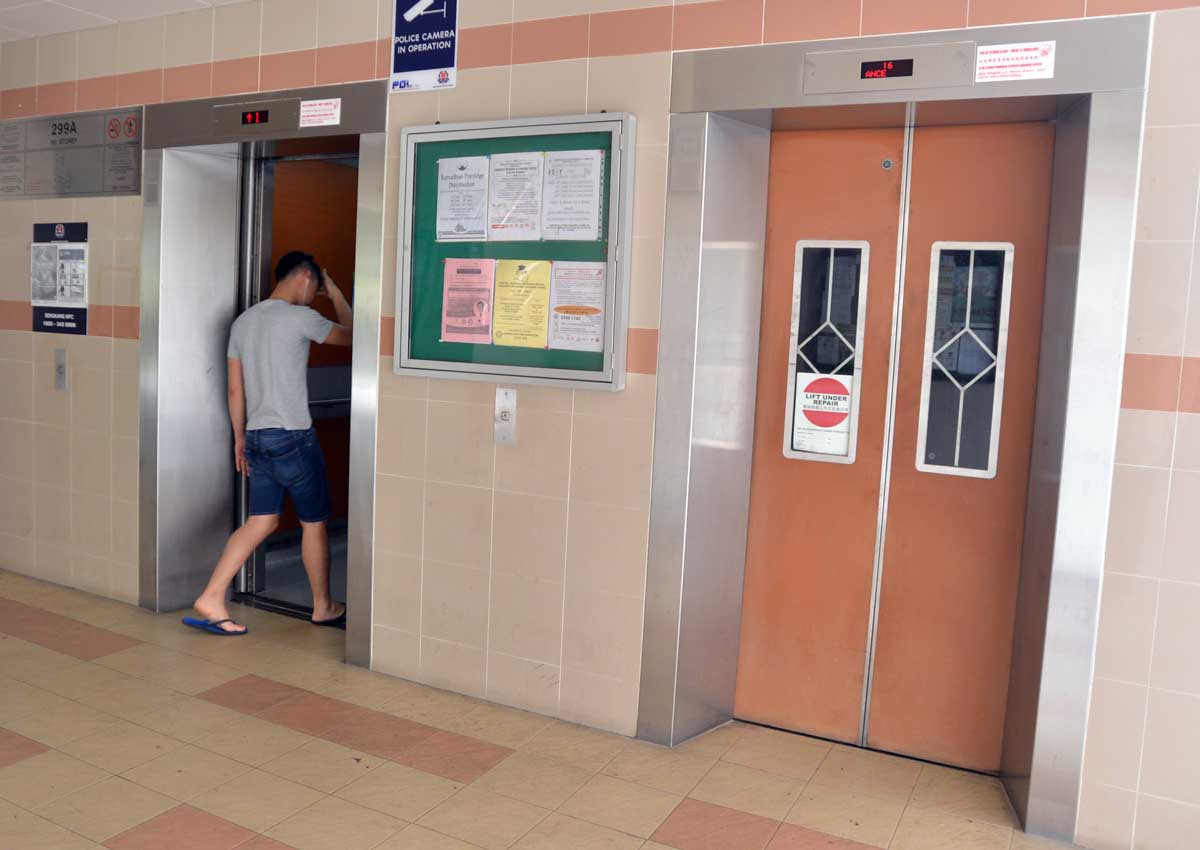
A malfunctioning lift in Sengkang has been shut down for safety checks as the authorities decide not to take any chances in the wake of a series of injuries from lift accidents this year.
The decision was made after residents reported problems with the lift at Block 299A, Compassvale Street last weekend.
Last Friday, a resident of the block, assistant safety manager Tan Joo Jin, 45, told The Straits Times that the lift had stopped randomly between floors and dropped suddenly. Another resident ran into problems with the same lift on Sunday afternoon, Channel NewsAsia reported.
She was heading to her apartment on the ninth floor when the lift jerked and stopped midway for a few seconds before opening at the fifth floor.
When asked, the Pasir Ris-Punggol Town Council said its lift engineer and contractor tested the lift on Friday, Saturday and Sunday.
MP Zainal Sapari, chairman of the town council, said no issues were detected after last Friday’s report, and that they suspected the problem might be intermittent.
The town council added that its lift engineer and contractor did not experience a jerk and midway stop.
But it shut down the lift on Sunday to do a more thorough check yesterday.
During the check, the lift jerked and stopped for a while before moving again.
The Building and Construction Authority (BCA) has since suspended operation of Lift C for further investigations. The town council has to appoint an independent authorised examiner to inspect the lift, recommend rectification works and submit the findings to BCA, it said.
“The investigation and required rectification works must be carried out to the satisfaction of BCA before the lift will be allowed to resume operations,” said a spokesman.
The town council added that its lift engineer and lift contractor are “troubleshooting and trying to trace the fault, and will arrange for rectification work once they confirm which faulty parts need replacement”. It will also arrange for other lifts with similar feedback to be checked.
Said a spokesman for lift contractor Sigma: “We are aware of this incident and are working to gather more information as quickly as possible.”
During a visit to Block 299A yesterday, some residents said they had experienced jerking and other problems with at least one of three lifts servicing their 17-storey block.
Herman Omar, 36, who lives on the fourth floor, said his housing agent was unable to press any of the buttons in another lift in the block around two months ago. The Institute of Technical Education lecturer added: “Sometimes, in the morning, the lift doesn’t stop at all on our floor. The waiting time can be more than 10 minutes.”
Close to 6pm on Sunday, second-floor resident Almazan Edward Siguerra, 46, said the affected lift stopped at his floor although its display showed it was under maintenance. A notice on the ground floor said: “Encountered lift drop issue at 4.10pm!! Do not use lift C.”
“The problem is, they just put it on the ground floor. They should put it on all the floors,” added the senior field service engineer.
The BCA said there have been 12 lift incidents that led to injuries since 2013. Five lift incidents were reported in the past eight months.
byseow@sph.com.sg

Get MyPaper for more stories.

OSAKA – AN AIR purifier that filters out not only airborne pollutants, but also mosquitoes, is drawing attention in Japan.
The dual-function device, released by Sharp, has been selling exceptionally well.
Called Katori Kusei, the air purifier works by sucking in mosquitoes along with pollen and dust.
It has an ultraviolet light to lure mosquitoes and an adhesive sheet that traps them.
Advance orders for the product were 10 times more than what the firm usually receives.
This is despite the lack of TV commercials for the product since it was released on April 23. The company had been tightening its purse strings due to financial issues.
To cater to the unexpected demand, Sharp has now trebled its production from the initial 3,000 units a month.
One unit retails for around 50,000 yen (S$639) plus tax.
The model was initially targeted at customers in South-east Asia, such as Malaysia and Singapore, where mosquitoes are a nuisance.
In Japan, the sales of air purifiers tend to taper off once the hay fever season of early spring is over.
But the Katori Kusei has bucked the trend. It was a hot topic online immediately after Sharp announced the product on March 17.
The firm usually gets up to 200 advance orders for conventional air purifiers but the demand for Katori Kusei had shot up to 2,300 units the day before its release.
According to Yodobashi Camera’s Umeda Store in Osaka, customers in their 50s and 60s show the most interest in the product.
The in-store display, which demonstrates the mosquito-catching function, appears to attract many customers who stop and look out of curiosity.
But another leading home appliance maker downplayed the product’s popularity, saying: “It was simply because the release coincided with social anxiety over Zika virus.”
Get MyPaper for more stories.

Indonesia had taken issue with Singapore’s attempts to act against companies responsible for the haze-causing forest fires that choked parts of Indonesia and the region.
Source link


