Home Blog Page 3658

His 3-in-one trip

0

Attending one major sporting event in France was not enough for Mr Ko Chong Tat.

Not only did he attend the Formula 1 Grand Prix De Monaco 2016, he also caught the Roland Garros – The 2016 French Open, and is in the midst of enjoying the Uefa Euro 2016.

The 27-year-old said: “I have always been a fan of sports, and the Monte Carlo track circuit as well as the clay tennis court are things one can’t experience in Singapore.”

“It was also a good opportunity for me to catch all three events within three weeks.”

He was fortunate to have escaped the Euro 2016 violence that took place between the fans before, during and after the England versus Russia match on Saturday in Marseilles, France.

He had left the country for the day for a friend’s wedding in Germany.

“I count myself lucky as although I wanted to be at the match, I had to be at my friend’s wedding in Germany and thankfully avoided the fights.”

He is expected to catch the match between France and Albania early this morning in the very stadium in Marseilles where the fan violence had broken out just days before.

He attributed the violence to the alcohol that fans drank, but added that the majority of the fans at the four matches he had caught so far were friendly and welcoming.

SECURITY

But he said the security was not as tight as he would have liked.

Although there were more policemen and heavily armed national guards deployed to patrol the stadiums and the areas that lead to the metro stations, Mr Ko felt that the checks on fans were not as thorough.

He said: “To my surprise and horror, there were no metal detectors used during the Euro 2016 and there were only two rounds of checks.”

The race and tennis match have also left a big impression on him.

During the F1 race in Monaco, Mr Ko saw driver Max Verstappen crash right in front of him during the qualifying rounds.

And at the French Open, he was able to get into the VIP area of the court and meet professional tennis player Kei Nishikori.

“On the first day of the French Open, I got a selfie with Milos Raonic, and a used towel from Kei,” he said.

Mr Ko, a bank analyst, spent between $10,000 and $14,000 on his 24-day trip.

The money came from his savings, which he puts $1,000 into each month, beginning last year.

His boss was fully supportive of his trip and allowed him take a month of paid leave, he said.

“He’s a fan of football and he understood why I wanted to do this,” Mr Ko said.

He will be back home on June 20 after he catches a preview show of Harry Potter and the Cursed Child in London.

“I managed to catch the tail end of the World Cup in 2014, so I wanted to watch the opening matches of Euro 2016 to experience how the teams play differently.

“I was also lucky enough to get tickets to the Harry Potter play as I heard that it is sold out,” he said.

Mr Ko hopes this will not be the last of such trips for him.

“It is very hard to get the three sports events, my friend’s wedding and the Harry Potter play to all fall nicely into place, and I doubt it would happen any time soon again.”

His trip has inspired his friend to take a trip to Europe.

Mr Andre Natanael, 28, said: “I definitely want to be in his place. I’m planning a trip to Europe, too, for about two to three weeks.”

“He posted pictures of Paris on Facebook, and that kind of influenced me to want to go there.”

mgovin@sph.com.sg


This article was first published on June 16, 2016.
Get The New Paper for more stories.

Image: 
Category: 
Publication Date: 
Thursday, June 16, 2016 – 15:30
Keywords: 
Send to mobile app: 
Source: 


Story Type: 
Others

Source link

Movie Review: Last Days In The Desert (M18)

0

The simplest of films can be the most meaningful.

This historical drama is stripped bare to its essentials and dramatises the temptation of Jesus Christ with a straightforward plot and bite-sized cast.

Yet it offers…

Source link

Facebook page accused of violating poll ban

0

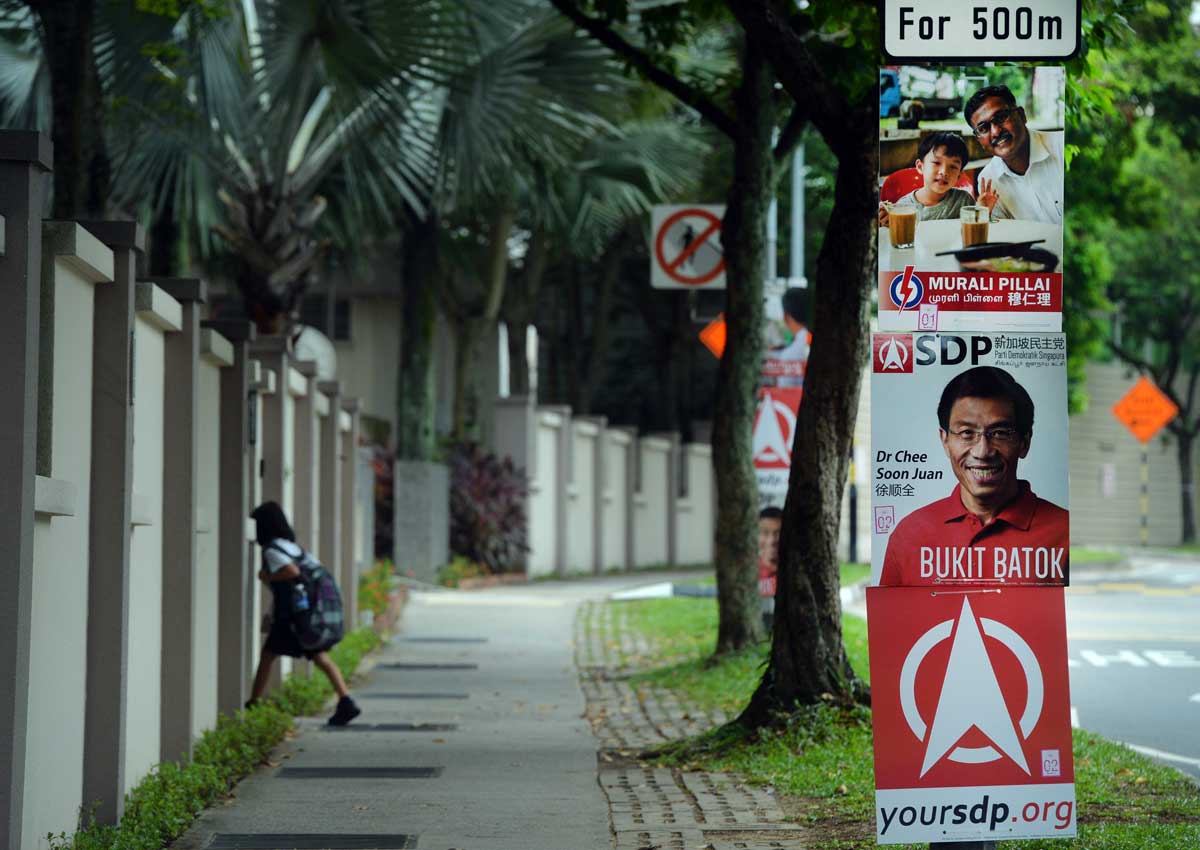
A man has made a police report against a pro-government Facebook page for violating a ban on election advertising during the Bukit Batok by-election.

Mr Augustine Lee accuses Fabrications About The PAP of publishing two Facebook posts on May 7, which was Polling Day.

He alleged that one post had asked people to vote for People’s Action Party (PAP) candidate Murali Pillai, and the other post had criticised Mr Murali’s opponent, Singapore Democratic Party chief Chee Soon Juan.

Police confirmed yesterday that a report was made and said they are investigating the matter.

This comes nearly three weeks after an Elections Department officer made a police report against blogger Roy Ngerng, former political detainee Teo Soh Lung and socio-political website The Independent Singapore over online posts made on May 6, Cooling-Off Day, and Polling Day.

In his police report, made on Monday, Mr Lee said one of the posts allegedly said: “Vote Murali because he’s working for you. Not because you are part of a political journey.”

The other allegedly had a quote from former presidential candidate Tan Cheng Bock, “which criticises… Dr Chee”, said Mr Lee, who sent the police report to the press yesterday.

The posts have been taken down.

Election advertising, which includes posts intended to enhance the standing of a party or candidate or to promote their electoral success, is prohibited on Cooling-Off Day and Polling Day.

The ELD had said this is meant to give voters time to reflect rationally on issues raised before they vote.

Posting election advertising on those days is an offence under the Parliamentary Elections Act. A person found guilty of doing so may be fined up to $1,000, jailed for up to 12 months, or both.

yanliang@sph.com.sg


This article was first published on Jun 16, 2016.
Get a copy of The Straits Times or go to straitstimes.com for more stories.

Image: 
Category: 
Publication Date: 
Thursday, June 16, 2016 – 16:00
Send to mobile app: 
Source: 


Story Type: 
Others

Source link

Bukit Batok by-election: SDP outspent PAP by $5k on campaign

0

The two candidates who contested the Bukit Batok by-election spent a total of $169,291 on election expenses, with Singapore Democratic Party chief Chee Soon Juan spending more than Mr Murali Pillai of the People’s Action Party.

Dr Chee spent $3.39 per voter, while Mr Murali, who won the polls, spent $3.19 per voter.

In all, Dr Chee’s expenses reached $87,200.

His biggest expenditure – at least $38,280, or almost 45 per cent – went to printing and distributing traditional campaign materials such as posters and newsletters, according to receipts submitted to the Elections Department, which made them available for public inspection for six months, starting yesterday.

Another big-ticket item was the holding of four rallies: They cost at least $33,673.

These two items made up about 85 per cent of his total expenditure.

Mr Murali’s bills came up to $82,091.

Like Dr Chee, his rally logistics and campaign materials formed a huge part of his total cost.

The two rallies he held cost $28,590, while his expenses on traditional campaign materials added up to $27,331.

The May 7 by-election, triggered by the resignation of MP David Ong in March, was won by Mr Murali with 61.23 per cent of the votes against Dr Chee’s 38.77 per cent.

During the campaign, Mr Murali hired local production company Freeflow Productions to film and edit three videos, including one that had him speaking in Mandarin and asking residents to call him “Ah Mu”. This cost him $9,630.

The SDP spent $3,852 on postage for 10,793 letters. It also paid engineering company Multi Wall Engineering $14,659 to distribute 28,000 fliers and deliver equipment to rally sites.

In contrast, social media expenses were much lower.

Dr Chee, who had said at last year’s general election that social media helped change people’s perception of him, spent $646 on Facebook advertising against Mr Murali’s $317.

Dr Chee also dished out more than half of what Mr Murali spent on food for his activists and volunteers: $5,369 versus $2,356.

Dr Chee’s bill, however, included a $2,354 thank-you dinner for 100 volunteers after the by-election.

A PAP spokesman said Mr Murali had a volunteer who cooked many of the meals.

A three-page-long grocery bill amounting to $454 showed such items as 50kg of rice and six cans of luncheon meat. In between, receipts showed that his volunteers enjoyed McDonald’s nuggets and Old Chang Kee curry puffs.

Both candidates’ bills for the by- election were within the $102,908 legal limit, or $4 for each of the 25,727 registered Bukit Batok voters.

The law requires candidates to submit their election expenses to the Elections Department after the polls.

Besides election expenses, the candidates also had to declare the donations they received.

Mr Murali said he received $82,091 from the PAP headquarters, a sum that covered all his election expenses. Dr Chee said he did not receive any donation.

rachelay@sph.com.sg


This article was first published on June 16, 2016.
Get a copy of The Straits Times or go to straitstimes.com for more stories.

Image: 
Category: 
Publication Date: 
Thursday, June 16, 2016 – 16:00
Send to mobile app: 
Source: 


Story Type: 
Others

Source link

Primary 1 registration for 2017 to start on June 30

0

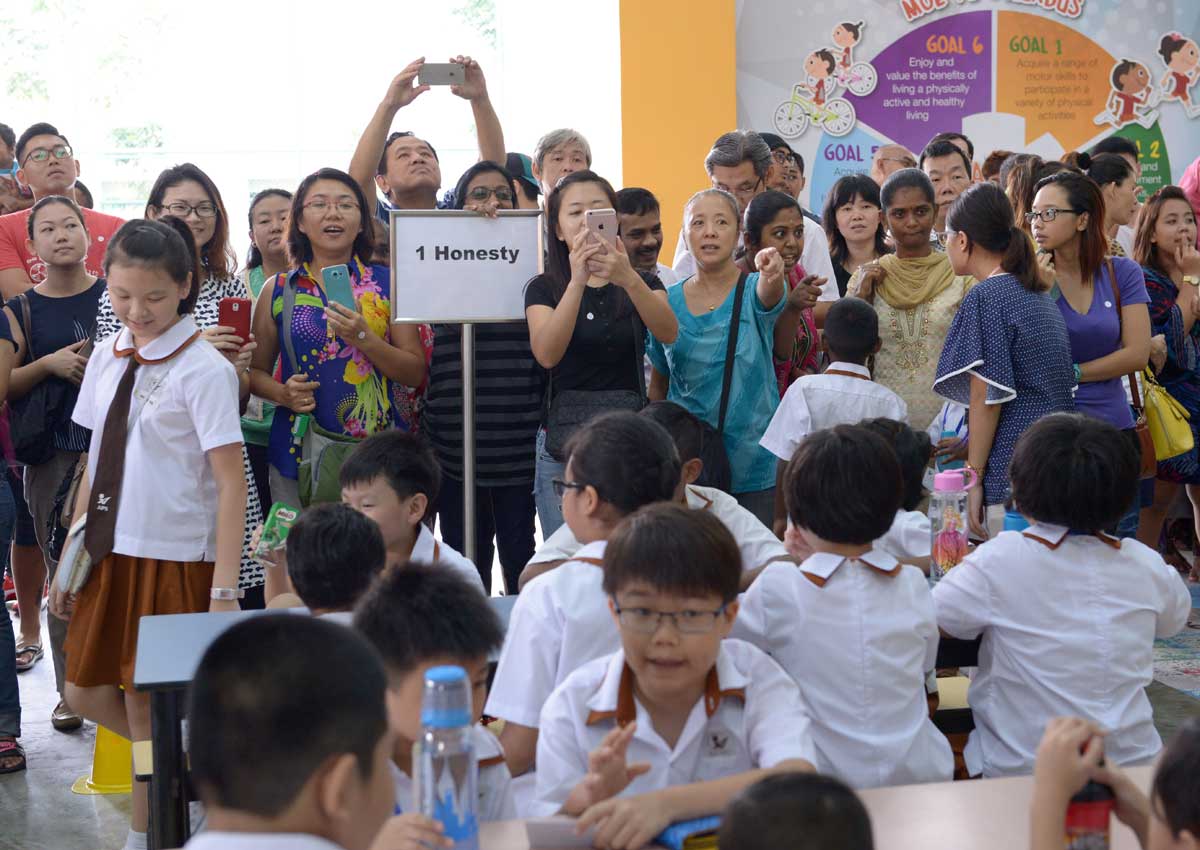
SINGAPORE – The Ministry of Education (MOE) announced on Thursday (June 16) that the registration for Primary 1 pupils next year will begin on June 30 and end on Aug 26.

According to a press statement by MOE, all primary schools will open for registration from 8am to 11am and from 2.30pm to 4.30pm from Mondays to Fridays during the registration period.

Children born between Jan 2, 2010 and Jan 1, 2011 (both dates inclusive), have to be registered at this year’s registration exercise for admission next year.

Parents can find more details on the list of primary schools and vacancies available on the Primary 1 registration website.

Those who wish to register online are required to use their SingPass.

stephluo@sph.com.sg

Image: 
Publication Date: 
Thursday, June 16, 2016 – 13:38
Keywords: 
Send to mobile app: 
Source: 


Story Type: 
Rewritten Story

Source link

I didn't know Hong Kong was so dangerous: Former Taiwanese president Ma

0

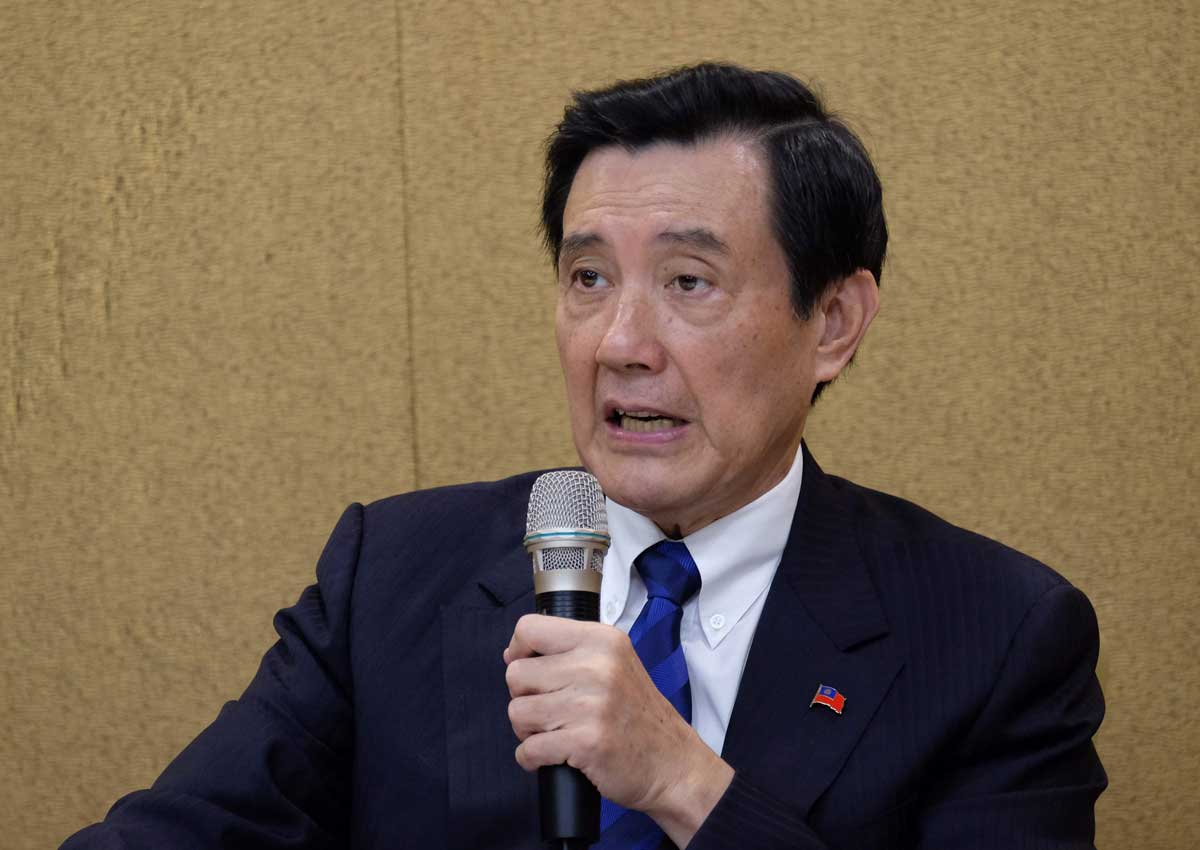
TAIPEI, Taiwan – Former President Ma Ying-jeou Wednesday ridiculed the government’s decision to bar him from attending a Hong Kong event over security concerns, delivering instead a video-taped speech in which he humorously warned his audience of being in a “dangerous city.”

“I didn’t know that Hong Kong was such a dangerous city,” Ma said in the video-taped keynote speech delivered at the Society of Publishers in Asia (SOPA) award dinner that he had been invited to attend.

“Ladies and gentlemen, you’d better be careful,” said Ma, in the introduction to his speech, recounting the reasons that the Taiwan government had given for banning him from traveling to Hong Kong.

Ma said he found it strange that the new government – of President Tsai Ing-wen – thought his visit to Hong Kong would be a national security issue involving his personal safety and a possible leak of state secrets.

Ma, who stepped down on May 20 after an eight-year stint as Taiwan’s president, said he asked for permission to make a seven-hour trip to Hong Kong but “unfortunately the Presidential Office rejected it.”

According to the Presidential Office, as Ma has only recently left office, there would not be sufficient time to prepare for a visit to a territory that had not worked with Taiwan on security on such a level.

The Presidential Office also said the new government had yet to discover what kind of classified information Ma had access to and whether he had returned all those documents and completed clearance procedures.

Ma told his Hong Kong audience that whether the reasons that the Presidential Office had given for the refusal were convincing or not, he, as a former president, would do his best to serve the country.

He said he respected the power with which his successor Tsai made the decision.

He offered an apology to the audience for being unable to attend the dinner, although he maintained it was not the case he should be apologizing – another apparent dig at Tsai.

Image: 
Category: 
Publication Date: 
Thursday, June 16, 2016 – 13:11
Keywords: 
Send to mobile app: 
Source: 


Story Type: 
Others

Source link

Primary 1 registration to start on Jun 30

0

Children born between Jan 2, 2010, and Jan 1, 2011, have to be registered at this year’s P1 Registration Exercise for admission to primary school next January.

Source link

Too much of a security blanket?

0

Separating Web surfing from computers that are plugged into classified information systems is a practice entrenched in many operations, including those in the banking sector and the military.

Yet, a heated online debate ensued, with keen interest shown by international media, after The Straits Times reported last Wednesday on the Singapore Government’s impending move to hive off Web surfing from public servants’ work computers.

The move, which will take effect next May across 100,000 computers, is aimed at plugging potential leaks from work e-mail and shared documents amid heightened security threats.

It is particularly striking in its breadth.

Everyone in the public service – except teachers, as they are plugged into a separate internal network – will be affected.

Public servants who need to surf the Internet for work will get to do so on dedicated Internet terminals, which will be provided.

Public servants can also surf on their personal mobile devices, and forward non-classified e-mail from their work computers to personal accounts.

In adopting such a sweeping policy, Singapore is outdone only by Russia, whose intelligence services in 2013 went back to using manual typewriters to thwart alleged spying by the United States.

The German government had also reportedly said it was considering going back to typewriters and ditching e-mail completely for the same reason.

The suggestion was met with strong opposition from parliamentary committee members, who called it “absurd”.

The German government had also in 2013 instructed its MPs to use only encrypted mobile phones for sensitive calls.

In Britain’s civil service, a handful of computers in highly sensitive departments are already cut off from the Internet, but this is not markedly different from the current practice in Singapore.

Here, the Ministry of Defence and the Ministry of Home Affairs, for instance, have had the no-surfing rule on work computers for years.

Camera phones are also not allowed into restricted military premises.

The questions now are: Why must such separation apply broadly to all 100,000 public service computers? And could the move have been more finely calibrated?

SMART YET SECURE

The argument for it stems from Singapore’s ambition to be a smart nation, where government agencies become more connected to one another to up the ante on e-citizen services.

As Singapore’s Cyber Security Agency (CSA) chief executive David Koh said: “We can’t be a Smart Nation that is trusted and resilient if our systems are open and vulnerable.”

After news broke of the planned public service Internet restriction, Prime Minister Lee Hsien Loong said from Yangon, where he was on an official visit, that with the rising sophistication and number of cyber threats, it was time to introduce measures that require public servants to use separate computers for work e-mail and Internet access.

“Otherwise, one day you find all your NRIC numbers, addresses and income tax returns for sale on the Internet… how will the Government explain?”

The Government also recognised the limitations of even the latest technologies against new threats.

Mr Koh said that a firewall could filter, at best, half of all malware.

This is because the tool – typically the first line of defence for most systems – works well only on known malware, and is less effective against new ones.

Over the past year, 16 attacks against the Singapore Government’s networks made it past firewall systems, CSA revealed.

Most networks are also designed to have other basic protections such as anti-virus software as well as intrusion detection and prevention systems, which work like firewalls.

But these tools are unable to identify fresh malware.

This is because hackers know how to disguise malicious programs as benign-looking installer apps, for instance, to escape detection.

Hackers also frequently change a malware’s distribution location to avoid detection and blocking.

Some hackers also design malware to stop snooping temporarily when anti-virus software is scanning a computer.

“This extends the life of the malware in its undetected state,” said Mr Vitaly Kamluk, global research and analysis director of the Moscow-based security systems specialist Kaspersky Lab Asia-Pacific.

All it takes is one click by a curious individual on malware embedded in a Web link or an e-mail attachment to put an entire network in the hands of a hacker.

MORE CALIBRATION

However, some people have wondered why a more calibrated approach is not being taken in Singapore’s move.

Security software firm Fortinet Asia-Pacific’s vice-president, Mr George Chang, said current identity and access control technologies, for instance, are able to limit the information one can receive or view based on an employee’s job scope.

A calibrated approach would have less of an impact on the productivity of public servants, and thereby make more sense.

Under the proposed new arrangements, a social media specialist in public service, for example, would have to lug two laptops home to receive e-mail on one computer and surf the Web for research work on the other.

As classified e-mail messages cannot be forwarded to personal e-mail accounts, the Web links embedded in these classified e-mail would have to be typed out in full on a mobile tablet or another device just to view the Web page.

Text on the Web page also cannot be copied if any reference needs to be made to it – and must be typed out – in the e-mail reply.

Banks also face a tremendous amount of threats from hackers and cyber thieves. But they have so far not issued a blanket separation policy.

The Straits Times understands that many banks give only some personnel – such as analysts, sales staff and corporate communications employees – Internet access on their work stations, recognising that online research is key to their role.

But specific file-sharing, Web-hosted e-mail and pornography websites are blocked.

The fear is that staff may download malware accidentally from dodgy websites, or share sensitive documents online.

Mr Patrick Chew, head of operational risk management at OCBC Bank, said the bank has no plans to change its graduated approach at the moment, although it frequently reviews its policies.

“So far with our existing measures, we are able to balance our business needs without compromising the requirements for security,” he said.

Banks have also disabled the USB ports of employees’ computers to prevent any information leak or malware from entering the system when storage drives are inserted.

And yet, “authorised” storage drives will be allowed on government computers.

It is unclear what makes a drive an authorised one in this instance.

But commercial software is available to block certain models of drives, and regulate access to USB devices by the time of day and week. Security software can also capture logging activities, such as what files are copied onto what sort of devices.

Arguably, a USB port – especially when it is not disabled – is as much of a security gap as Web surfing is on public servants’ computers.

After all, what brought down Iran’s nuclear plant in 2010 was a malicious computer worm delivered via an unassuming piece of technology: the USB drive.

An Iranian double agent working for Israel reportedly plugged the deadly USB drive into a computer in Iran’s Natanz nuclear facility.

The malware quickly propagated and knocked the facility offline, temporarily crippling Iran’s nuclear programme.

Also, as safe as manual typewriters may seem, top secret documents can still be photocopied and the information leaked to the photocopier’s serviceman who has access to stored images.

They could also be photographed on a mobile phone.

There is no such thing as foolproof protection.

There are pros and cons for various approaches. A more finely-calibrated approach, however, will allow the Government to strike a better balance between productivity and security in the public service.

If banks can reach an equilibrium between securing their systems and delivering cutting-edge online convenience, then perhaps the public service’s blanket policy is worth a second look.

itham@sph.com.sg


This article was first published on June 16, 2016.
Get a copy of The Straits Times or go to straitstimes.com for more stories.

Image: 
Publication Date: 
Thursday, June 16, 2016 – 15:00
Send to mobile app: 
Source: 


Story Type: 
Others

Source link

German football coach caught putting hands down trousers and then sniffing them

0

Germany’s national football manager Joachim Low is a legend, having led his country to the holy grail of World Cup glory two years ago.

But at the ongoing European Championships during his team’s opening match against Ukraine, Low was caught engaging in some embarrassingly unsanitary behaviour.

Low appeared to shove his hands down the front of his pants to readjust it, before raising it towards his nose to smell it. He then did the same with his hands down the back of his trousers.

Ewwww.

Unfortunately for Low, the entire incident was in full view of television cameras, and the footage was posted online and quickly went viral.

As Britain’s Daily Mail put it, rival managers at the tournament might now be reluctant to shake his hand after seeing him touch his private parts.

On social media, reactions ranged from disgust to amusement and nonchalance.

One user joked that Germany should be threatened with disqualification if he was caught doing it again, a reference to the Russian and English teams being threatened with disqualification for fan violence after their match.

According to the Associated Press, Low has since apologised for the incident. “You’re full of adrenalin and full of concentration and the things that happen then can’t be consciously taken as real. From now on I’ll try to conduct myself differently,” he said.

But this is not the first time Low’s anti-social antics has been broadcast to the world.

A short video on Twitter from 2014 appears to show Low picking his nose with his right hand, before immediately extending it to shake the hand of Portugal superstar Cristiano Ronaldo.

Previously, he has also been caught on video sticking his fingers in his nose, and then putting them in his mouth.

Once again, Ewwww!

seanyap@sph.com.sg

Image: 
Category: 
Publication Date: 
Thursday, June 16, 2016 – 12:48
Send to mobile app: 
Source: 


Rotator Headline: 
German football coach caught sniffing hands after putting them down trousers
Rotator Image: 
video embed code: 
<iframe width="100%" height="355" src="https://www.youtube.com/embed/kf_zYTBGd5I" frameborder="0" allowfullscreen></iframe>
Video Media: 
Other Video Media
Story Type: 
Rewritten Story

Source link

S'pore targeting private firms, not national sovereignty

0

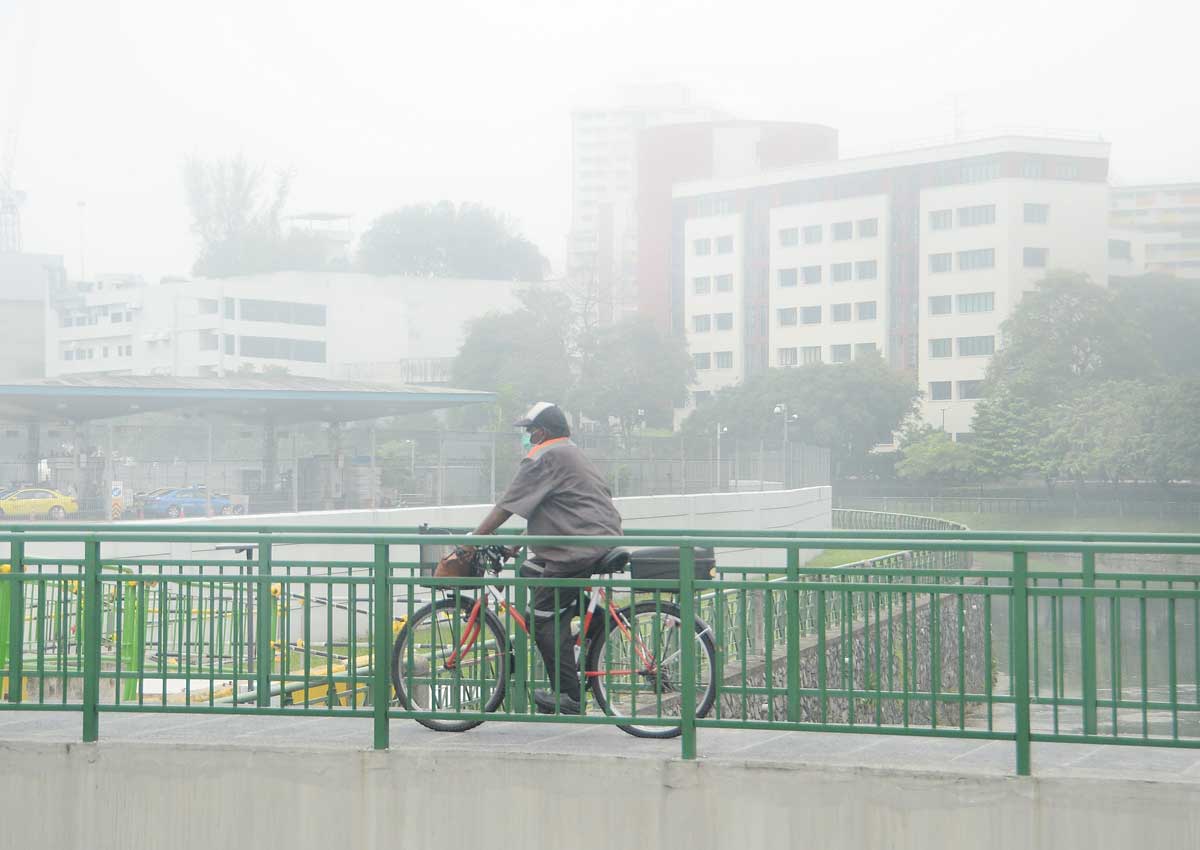
Singapore’s move to go after companies linked to fires in Indonesia that led to last year’s haze is not an issue of sovereignty or national dignity, said a Ministry of the Environment and Water Resources (MEWR) spokesman yesterday.

The ministry said its actions under the country’s Transboundary Haze Pollution Act (THPA) was aimed at deterring and prosecuting entities that are responsible for transboundary haze pollution.

“The THPA was drafted with advice from experts in international law and complies with international law,” added the spokesman.

“It is not directed at any individual nor company based on nationality.”

MEWR was responding to comments in recent days by Indonesian Vice-President Jusuf Kalla as well as the country’s Environment and Forestry Minister Siti Nurbaya Bakar about Singapore’s decision to take court action against an Indonesian company director via the THPA.

Mr Kalla said that Singapore cannot take action against its citizens responsible for last year’s forest fires, while Ms Siti accused the Republic of not exercising “mutual respect” by invoking the THPA.

She said the Asean agreement on transboundary haze pollution is a multilateral one, and not a bilateral pact between Singapore and Indonesia. As such, “Singapore cannot step further into Indonesia’s legal domain”, she added.

Ms Siti also said the THPA remains a “controversial” law that is still being debated among Asean officials from Singapore, Brunei, Indonesia, Malaysia and Thailand.

That is why she feels that Singapore’s action under the law against errant firms in her country is not a show of “mutual respect”.

MEWR, however, said the key driver of the recurring transboundary haze is commercial.

It said companies’ blatant disregard for the environmental and social consequences of the haze, which affects millions of people in the region, should not go unchecked.

“The phenomenal amount of greenhouse gases also emitted during the burning of peatland will have a profound effect on climate change that the world is battling to slow,” said the spokesman.

“This is therefore not an issue of sovereignty or national dignity.”

The ministry emphasised that Singapore respects Indonesian sovereignty and it is for that very reason that Singapore has repeatedly requested local authorities to share information on companies suspected of illegal burning in Indonesia.

Fires burning on concession land owned by private companies are said to have caused the haze crisis which affected many countries in South-east Asia.

The smoke from fires last year sent air pollution to record levels, resulting in at least 19 deaths from haze-related illnesses and more than half a million Indonesians suffering from respiratory infections.

The World Bank estimates that the fires and haze caused at least US$16 billion (S$21.7 billion) in economic losses for Indonesia alone.

Indonesian officials, however, do not expect a repeat of the crisis this year, though that may be due more to favourable weather than progress in addressing the underlying causes of the blazes, reported Bloomberg News yesterday.

Satellite imagery detected about 730 hot spots so far this year, down from more than 2,900 in the first six months of last year, according to government data.

Mr Raffles Panjaitan, the Environment and Forestry Ministry official tasked with overseeing fire prevention, said integrated fire patrol teams have been deployed in villages where forest fires are an annual occurrence.

“Normally forest fires are quite rampant in February and March, but there are no fires in villages where patrols are deployed,” he said.

tkchan@sph.com.sg


This article was first published on June 16, 2016.
Get a copy of The Straits Times or go to straitstimes.com for more stories.

Image: 
Publication Date: 
Thursday, June 16, 2016 – 14:00
Send to mobile app: 
Source: 


Story Type: 
Others

Source link