Home Blog Page 3631

Grey areas in rule against 'foreign sponsorship' of Pink Dot

0

On June 4, Hong Lim Park played host to the Pink Dot rally, an annual event to support the lesbian, gay, bisexual and transgender (LGBT) community.

A few days after the event, on June 7, the Ministry of Home Affairs (MHA) issued a statement that said: “The Government’s general position has always been that foreign entities should not interfere in our domestic issues, especially political issues or controversial social issues with political overtones. These are political, social or moral choices for Singaporeans to decide for ourselves. LGBT issues are one such example.

“This is why under the rules governing the use of the Speakers’ Corner, for events like the Pink Dot, foreigners are not allowed to organise or speak at the events, or participate in demonstrations.”

The statement has drawn a flurry of criticism online and in mainstream media. I must confess it got me a bit puzzled too.

First, when is a foreign entity foreign, and when is it resident?

This year, there were 18 corporate sponsors of Pink Dot.

They included Google, Barclays, Goldman Sachs, JP Morgan, Twitter, Facebook, Apple and Microsoft. Local sponsors included PS.Cafe and Cavenagh Law.

Pink Dot’s organisers have stated that its sponsors are all registered and incorporated in Singapore.

As writer George Hwang put it pointedly in a commentary on The Online Citizen website: “You cannot consider MNCs’ locally incorporated subsidiaries as ‘Singaporean’ for tax purposes and as alien for Speakers’ Corner.”

The issue of what is “foreign” when applied to Pink Dot sponsors is one grey area.

Another grey area is what constitutes “interference”.

If sponsoring an event constitutes interference, then why do iconic summits organised by Singapore government agencies seek sponsorship from companies, including foreign ones?

The World Cities Summit and Singapore Energy Summit, for example, both have foreign sponsors.

In the cities summit, there is a discussion on whether culture matters in a city – a potentially sociopolitical issue.

The Singapore International Film Festival includes Swiss watch manufacturer IWC Schaffhausen as official time partner, and Marina Bay Sands, a subsidiary of Las Vegas Sands Corp, as present- ing sponsor.

Movies too can feature “controversial social issues with political overtones” – as we know from the Government’s periodic moves to ban the public screening of films such as Tan Pin Pin’s To Singapore with Love.

Will the ban on foreign sponsorship be extended beyond the pro-gay Pink Dot event, to film and other cultural events and even conferences on socio-political themes?

If not, why single out Pink Dot as an event that cannot get foreign sponsors?

Or perhaps the concern about Pink Dot is over law and order, given its rising popularity.

Attendance rose from 2,500 in its first year in 2009 to 28,000 last year.

Gay pride parades in Turkey and Russia, among others, have sparked riots, sometimes when anti-gay protesters clashed with gay pride marchers.

Last week’s horrific mass shooting at a gay nightclub in Orlando highlights the potential for violence over this polarising issue.

But if law and order were a concern, MHA should say so explicitly and offer solutions that make sense from a security point of view, not restrict foreign sponsors.

In making the arguments above, I am merely trying to sketch out the anomalies and contradictions that ensue when one tries to apply the rule that “foreign entities should not interfere in our domestic issues, especially political issues or controversial social issues with political overtones”.

To be sure, the rule on no foreign interference in domestic politics is not a new one.

I think most Singaporeans would support the line in the sand against foreign meddling drawn by this Govern- ment. I, for one, certainly do.

We want to evolve our political system at a pace we are comfortable with.

We do not want, or need, foreign democracy activists or human rights groups – some with dubious sources of funding – to push our tiny, fragile and extremely beloved island-nation down paths we will find hard to turn back from.

What is unsettling about the MHA statement is its addition of the category of “controversial social issues with political tones” to the list of off-limits issues for foreigners.

This definition is so widely written that it can become a trawler net to catch any issues that become embarrassing or inconvenient to the Government.

Already, activist group Aware has asked if its advocacy work – such as on workplace harassment, and support for single parents – will be affected by the rule.

Citing the latter issue, Aware executive director Corinna Lim wrote in The Straits Times’ Forum page: “If a group objects to this and floods the Government with letters of complaint, would it become a ‘controversial’ social issue? Would any support we might have from foreign entities thus be deemed ‘interference’?

“We are troubled by these potential implications of MHA’s statement, which is ambiguous, leaves too much open to possibly arbitrary interpretation, and seems to go much further than previous pronouncements.”

Ms Lim has a valid concern.

Singapore is at a transition point.

We have a Committee on the Future Economy to chart our economic blueprint.

We are rethinking our school and training model, to integrate in-school and after-school learning better.

We are concerned about the limits of our meritocracy system, and want to broaden our social safety net.

We should not close ourselves off, mentally or culturally, from the rich debates raging worldwide on many issues of social equity that have a bearing on the challenges we face.

These range from income inequality to disruptive technologies and the impact these will have on jobs and incomes, to the equity of health systems, and to the continued relevance of our industrial-model education system.

Many of these issues can all justifiably be described as “controversial social issues with political overtones”.

What does keeping out foreign interference in these issues then mean?

No foreign sponsors , even from local subsidiaries of foreign firms? No foreign academics allowed to speak at a conference on these issues?

What is a “foreign academic” anyway? Does a foreign lecturer at a local university count?

There are many grey areas and questions arising from this loosely written rule against foreign interference in “controversial social issues with political overtones”.

Keeping debate on difficult social issues entirely local hinders our ability to learn from the experiences of others.

An open, inclusive attitude can help us better reach a national consensus on difficult issues.

As for LGBT issues, they are certainly contentious and emotionally charged because they deal with people’s freedom to love without breaking the law, and some religions have clear teachings against homosexual practices.

Debate on these issues will be fractious. They may even be “controversial social issues with political overtones”.

Pro- and anti-gay camps may want to tap foreign sponsors and foreign groups (such as churches, universities, organisations) to talk to Singaporeans about such issues.

To be sure, it makes for a messier socio-political environment.

But do LGBT issues fall under the category of domestic politics that is core to Singapore’s interests and identity as a nation, and from which foreign participation and sponsorship of events should be banned? I do not think so.

Singaporeans are a nationalistic lot.

We will support a government that ringfences our political system and domestic political contests from foreign interference.

But Singaporeans are also a probing, sceptical bunch.

If the Government wants to keep out foreigners from some debates and events, yet include them in others, we need more convincing on why, and how.

muihoong@sph.com.sg


This article was first published on June 19, 2016.
Get a copy of The Straits Times or go to straitstimes.com for more stories.
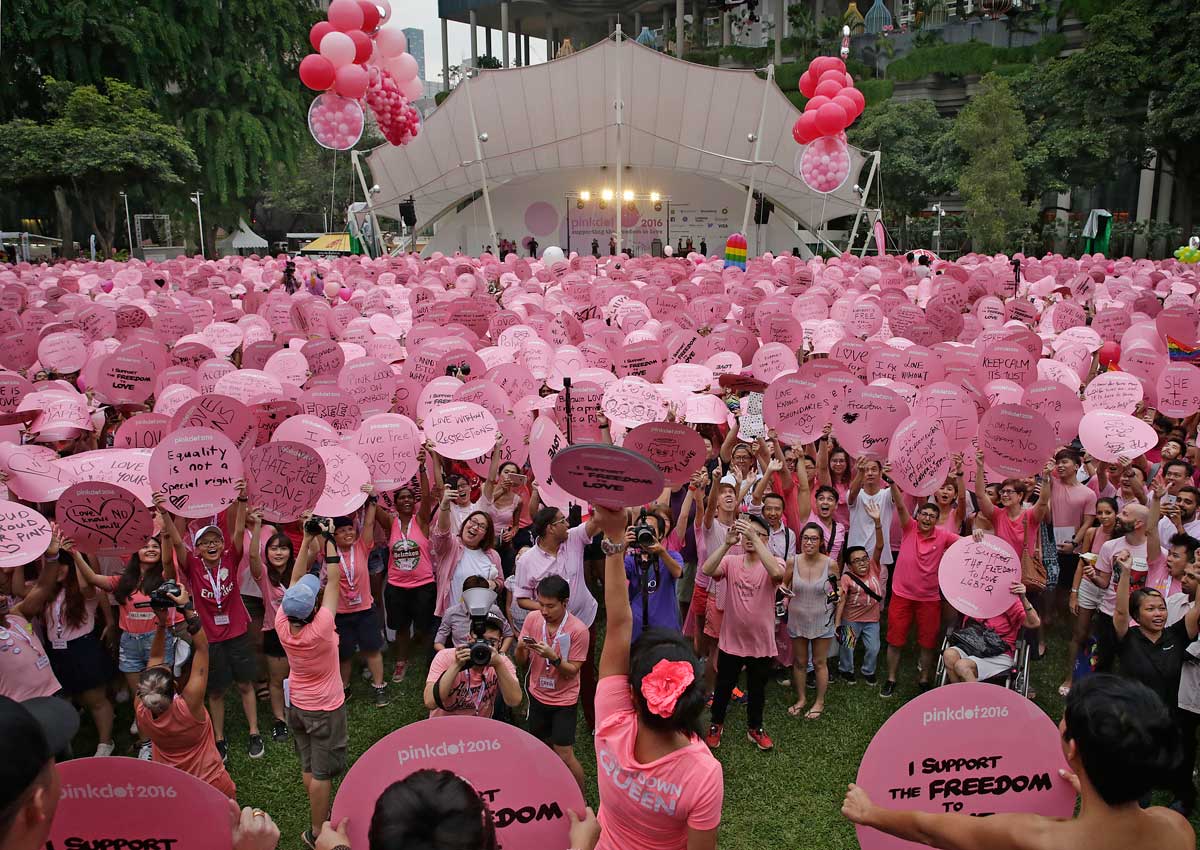
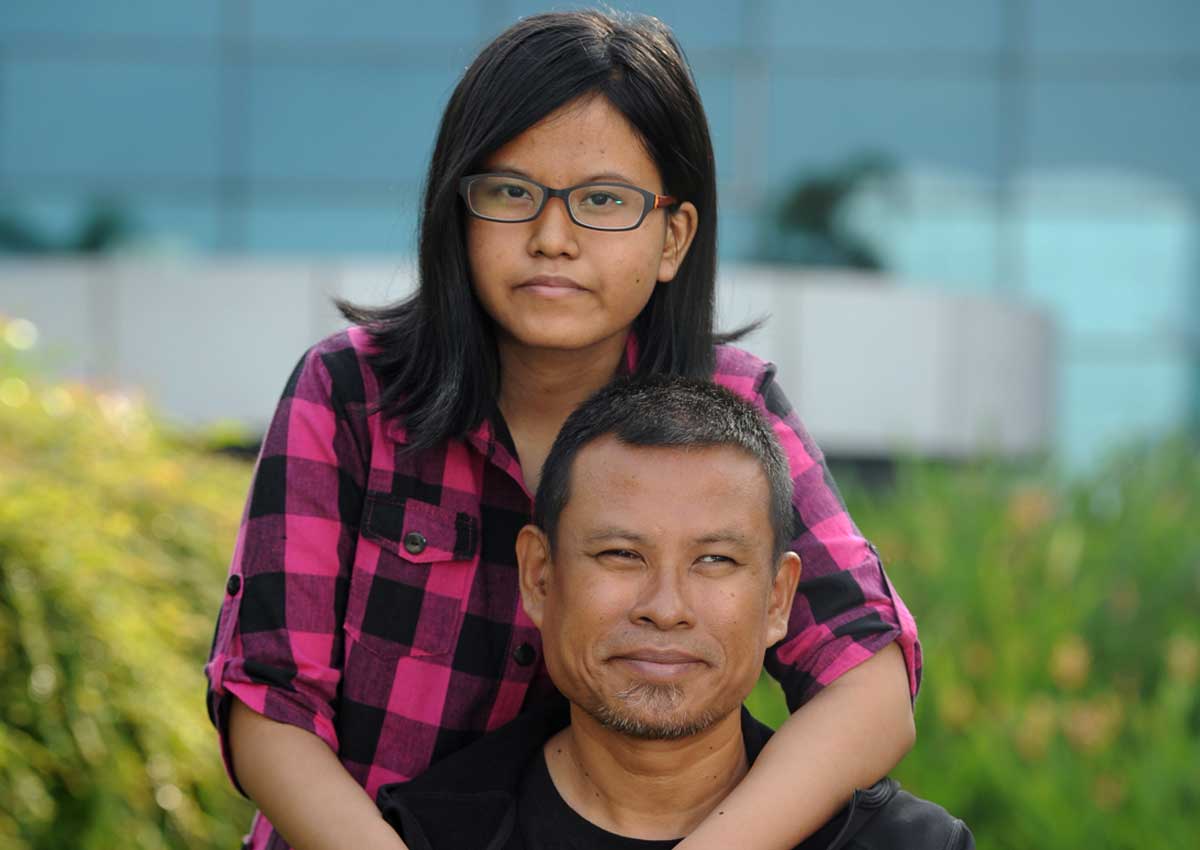
Image: 
Publication Date: 
Sunday, June 19, 2016 – 19:00
Keywords: 
Send to mobile app: 
Source: 


Story Type: 
Others

Source link

Amputee's marathon effort brings cheer to daughter living with illness

0

Born without a left foot, Mr Shariff Abdullah had his left limb amputated below the knee in 2008 because of a skin infection.

Three months later, he took up running and, since then, has completed nearly 25 marathons, including the Boston Marathon.

But one race eludes him – the gruelling Tenzing-Hillary Everest Marathon. Known as the world’s highest marathon, it begins at 5,184m above sea level close to Everest Base Camp in Nepal, before taking the runner though 42km of rough mountain trails.

The 47-year-old inspirational speaker, who called off his attempt last year because of the Nepal earthquake, tried again last month.

He trekked about 65km from Lukla in Nepal to the starting point of the marathon, but the tough conditions forced him to turn back.

He had hoped to raise $5,000 for the Club Rainbow charity through the run.

Still, his daughter could not be more proud.

“I feel happy that my father did this for me,” said 16-year- old Nur Athirah Md Shariff Abdullah.

Since she was a baby, she has been living with liver cirrhosis, a disease that slowly prevents the liver from functioning properly.

Her condition can cause complications such as reduced oxygen in the blood, increased risk of infection, excessive bleeding and bruising and, in serious cases, kidney failure.

She had to take a year off from school recently due to her condition, and goes for monthly check-ups at KK Women’s and Children’s Hospital.

“Sometimes, I get scared when I have to go to the hospital, but I know that my father will always support me,” said Athirah.

The Secondary 4 student from NorthLight School is also part of Club Rainbow, which helps children suffering from chronic and life-threatening illnesses.

To help Athirah, her family – including her mother Rozana Shariff, 54, and siblings Nur Anisaa, 21, and Nur Atiqah, 23 – makes sure there is always someone at home with her. Ms Atiqah is studying graphic design at the Nanyang Academy of Fine Arts (Nafa), while working part-time as a sales assistant.

She is close to Athirah and often takes time off from her busy schedule to take care of her when she falls ill. Athirah wants to follow in her big sister’s footsteps and study at Nafa.

Mr Shariff said: “As a father, all I can do is to tell Athirah to be positive. I want her to be happy and to be able to do what she loves in the future. Although she is sick, and goes through so much hardship, she’s just like any other teenager.

“She loves K-pop and Korean dramas and she has goals and dreams just like everyone else.”

He was told originally that his daughter had leukaemia.

He said: “Knowing that this isn’t the worst case for her, I already feel grateful. The best Father’s Day present would simply be her love and happiness.”

As for his attempt at the Everest marathon, he said: “My daughter was my biggest motivation. When I was up in the mountains, all I could think about was making her proud.

“Everything I do, I do for her.”

sabrinaf@sph.com.sg


This article was first published on June 19, 2016.
Get a copy of The Straits Times or go to straitstimes.com for more stories.
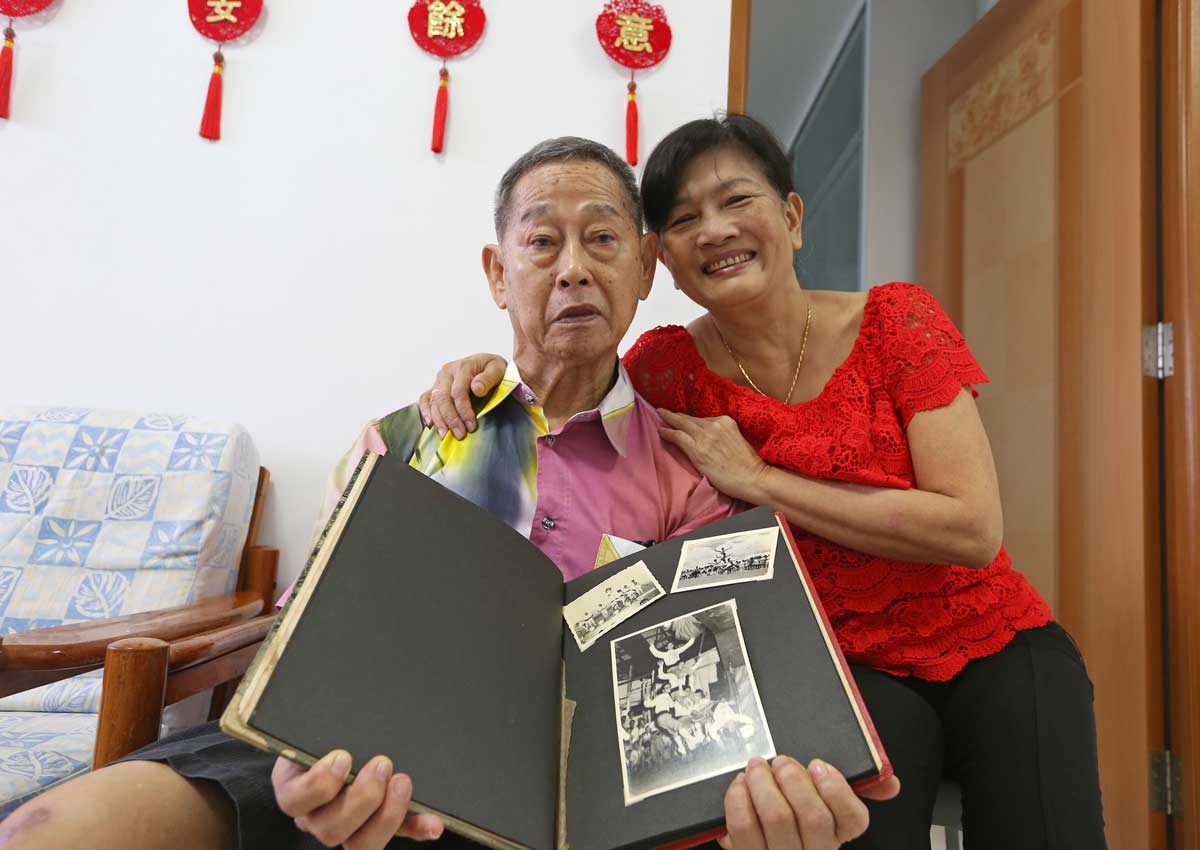
Image: 
Category: 
Publication Date: 
Sunday, June 19, 2016 – 17:00
Keywords: 
Send to mobile app: 
Source: 


Story Type: 
Others

Source link

Father's Day special: Pioneer acrobatic cyclist's photo a heritage boon

0

Mr Chia Kum Loke, 74, has a photo album that he likes taking out at family gatherings to show off – in it are pictures of him and his wife dating in their younger days.

But the pictures that have really wowed the younger members of his family are those of Mr Chia performing gravity-defying stunts on bicycles, said his daughter Judy, 37, a media presenter.

In his glory days, the now-wizened Mr Chia was part of the Kong Chow Clan Acrobatic Cycling Troupe, one of the best known troupes of its kind here in the 1980s.

The Kong Chow Wui Koon or clan association is a Cantonese clan group based in Chinatown, and one of the oldest clan groups here.

The clan’s acrobatic troupe, which was formed in 1957, trained more than 100 acrobatic cyclists over three decades.

They would perform at the National Day Parade, Chingay procession and other charity and community events.

The pictures have recently been loaned by the family to the National Heritage Board (NHB), where they have been digitised for posterity.

Tomorrow, they will be uploaded on the NHB’s roots.sg portal – a website on Singapore’s heritage and history.

Speaking to The Sunday Times, Ms Chia said the family decided to hand the pictures to the NHB because they felt the photos were a part of Singapore’s heritage.

“My dad was one of the pioneering members of this acrobatic troupe, and these photographs will serve as a great memory for the next generation,” she said on her father’s behalf as he has Parkinson’s disease and cannot speak.

Despite this, Mr Chia perked up when looking at his old pictures with The Sunday Times in his three-room flat in Bendemeer yesterday.

Pointing to a picture of himself sitting on the handlebars of a bicycle perched atop two short ladders, he laughed as he savoured the memory.

His wife, Madam Ong Sui Kim, 62, a housewife, said this stunt was particularly difficult because the bicycle would keep moving.

Said Ms Chia: “My father always said it was important to learn how to fall safely – so each time you fall, you can get up and continue training.”

Mr Chia joined the troupe when he was 15 and mastered all of the 20 or so acrobatic stunts that involved both unicycles and regular bicycles.

He would train in his spare time, after he finished his day-time work as a welder.

One of the most difficult routines was “Pile-up Arts”, where nine men would clamber one atop the other in a pyramid formation on a single moving bicycle.

The Kong Chow Clan Acrobatic Cycling Troupe disbanded in the 1990s after young people here lost interest in the acrobatic stunts.

Mr Alvin Tan, NHB’s assistant chief executive (policy and community), said the board was intrigued by the little-known story of the troupe.

Thanking the family for the photos, he said: “They provide us with rare visual insights into an early form of entertainment offered by the clan.”

dansonc@sph.com.sg


This article was first published on MONTH DAY, 2016.
Get a copy of The Straits Times or go to straitstimes.com for more stories.

Image: 
Category: 
Publication Date: 
Sunday, June 19, 2016 – 17:00
Keywords: 
Send to mobile app: 
Source: 


Story Type: 
Others

Source link

Thai king continues treatment for 'water on the brain': Palace

0

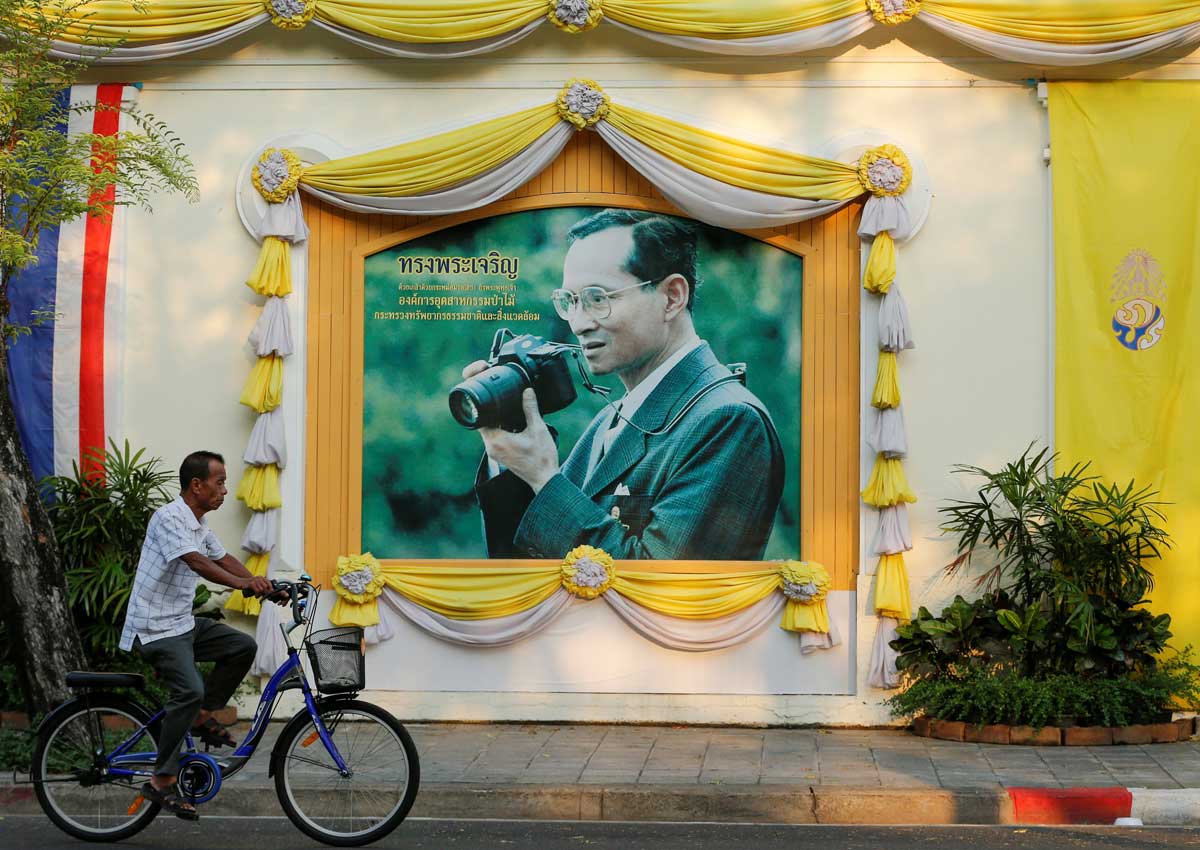
BANGKOK – Thailand’s 88-year-old King Bhumibol Adulyadej, the world’s longest reigning monarch, has shown signs of improvement following treatment for “water on the brain”, the Royal Household Bureau said in a statement on Sunday.

The king has been treated for various ailments during a year-long hospitalisation in the Thai capital. He was last seen in public in January, when he spent several hours visiting his Bangkok palace.

The king, who celebrated 70 years of his reign on June 9, is seen as a unifying figure in a country that has faced decades of often deadly political upheaval. On a few occasions he has stepped in when events threatened to plunge the country into crisis.

Nervousness over his health and the succession has formed the backdrop to more than a decade of political crisis in Thailand, where the military took power in a coup more than two years ago.

The royal palace said the medical examination of the king showed he had more “water on the brain”, or hydrocephalus, a build-up of the cerebrospinal fluid that surrounds the brain.

Fluid was drained from the king on Saturday with”satisfactory results”, the palace said in a statement.

In a June 12 statement, the palace said the king had shown signs of improvement following surgery for narrowing of the arteries.

News about the royal family is tightly controlled in Thailand. Laws protecting the royals from insult make it a crime to defame, insult or threaten the king, queen, heir to the throne or regent.

Image: 
Category: 
Publication Date: 
Sunday, June 19, 2016 – 15:53
Keywords: 
Send to mobile app: 
Source: 


Story Type: 
Others

Source link

Zero tolerance for hate speech, says Shanmugam

0

Inflammatory comments on race and religion have no place in Singapore, and the Government will continue to have zero tolerance against such divisive statements.

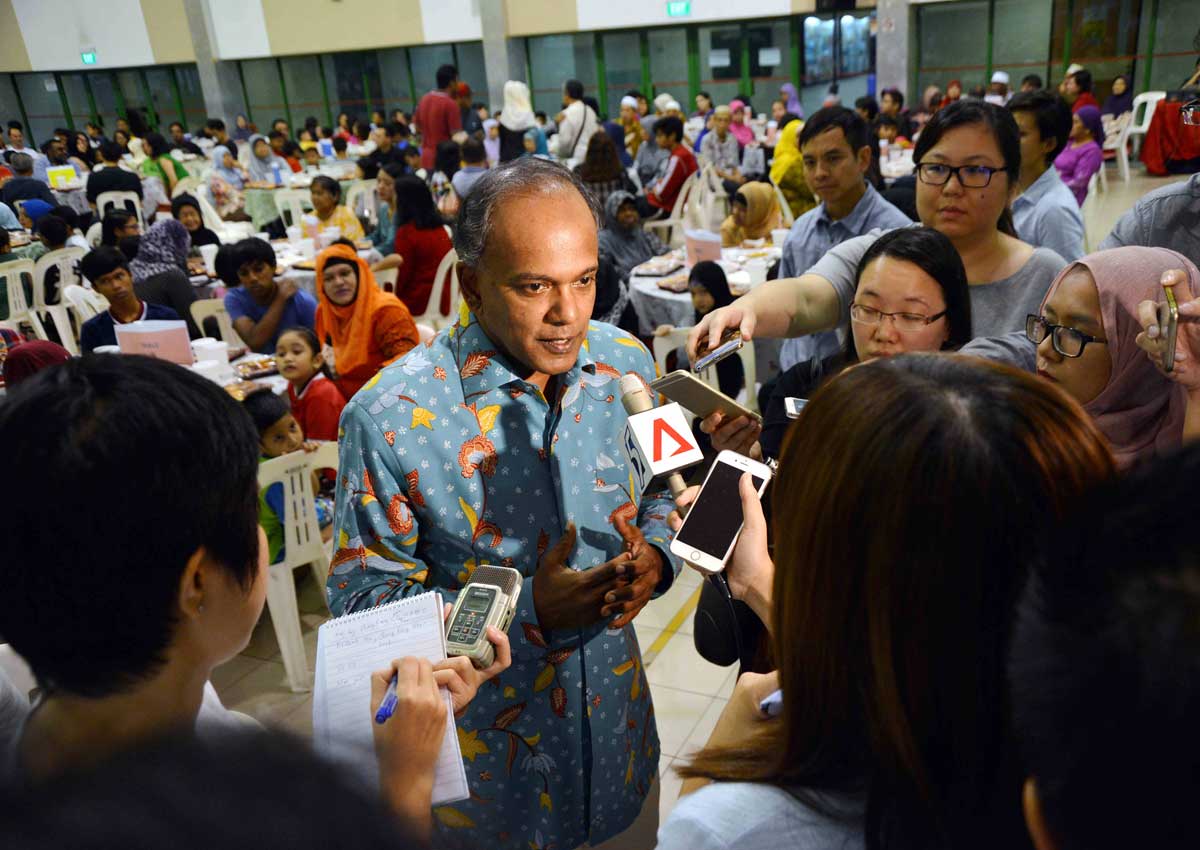
Describing Singapore’s racial and religious harmony as “fragile, but precious”, Home Affairs and Law Minister K. Shanmugam said yesterday that the country needed to reject intolerant teachings, and continue to strengthen trust and understanding between its communities.

He was speaking to reporters before the iftar at the Chong Pang Community Club yesterday, where more than 400 residents broke fast together.

He explained that Muslim communities both here and abroad were concerned by the rhetoric from US presidential hopeful Donald Trump.

Just last week, a senior Muslim cleric had asked him what he thought about the presumptive Republican nominee’s comments.

“They are concerned as to what is happening,” said Mr Shanmugam, who is an MP for Nee Soon GRC.

Mr Trump renewed his anti-Muslim campaign in the wake of last Sunday’s shooting at a gay nightclub in Orlando, Florida, in which 49 people were killed and 53 injured.

The gunman, Omar Mateen, a US citizen, allegedly pledged allegiance to the Islamic State in Iraq and Syria during the massacre.

Last Monday, Mr Trump responded to the attack by repeating his call for a temporary ban on Muslims entering the country and for certain mosques to be put under surveillance.

“This is a major figure, a presidential candidate, who is saying these things,” said Mr Shanmugam, who also pointed to the rise in the use of anti-Islamic rhetoric by extremist parties in Europe.

“Why was it said? For political benefit, pure and simple. If there are votes in it, people will do it.”

But playing on race and religion for political profit and stoking fears is “really unacceptable and I think morally reprehensible”, he added.

“Muslims as a group were characterised negatively. Islam was equated with terror… People aspiring to leadership positions should not do this – dividing their societies and alienating their Muslim communities.”

Last month, US President Barack Obama also criticised Mr Trump at the Group of Seven summit in Japan, pointing out how world leaders had been rattled by him.

“A lot of the proposals he has made display either ignorance of world affairs, or a cavalier attitude, or an interest in getting tweets and headlines, instead of actually thinking through what is required to keep America safe and secure and prosperous, and what’s required to keep the world on an even keel,” he said.

What is happening in the US and Europe shows how quickly political debate can go along racial and religious lines, said Mr Shanmugam.

“In the US, their idea of free speech means you can burn the Quran, attack Muslims, attack others. Here we have zero tolerance for people who make bigoted, divisive statements,” he added.

“If a person makes such statements, the ISD (Internal Security Department) will talk to him, and where necessary take further action. You burn the Quran, or any other holy book, you go to jail – no two ways about it…

“We have built something precious, fragile but precious. And we try hard to strengthen trust, deepen understanding between the races, religions, and reject religiously intolerant teachings.”

dansonc@sph.com.sg


This article was first published on June 19, 2016.
Get a copy of The Straits Times or go to straitstimes.com for more stories.
Image: 
Category: 
Publication Date: 
Sunday, June 19, 2016 – 17:00
Keywords: 
Send to mobile app: 
Source: 


Story Type: 
Others

Source link

Husband leaped to death with son: She taps into grief to help others heal

0

Ms Aneez Fathima is momentarily stumped when she cannot remember the name of the college where her late husband graduated with a degree in computer science.

“I’m starting to forget him,” she says, her eyes turning teary.

“For seven years, I couldn’t forget him. My counsellors and friends have been telling me to bury him but it’s so hard,” says the 39-year-old.

Their advice is understandable, for Mr Mohamed Farook left her in the most painful manner.

On April 24, 2009, the then 36-year-old jumped off a block in Bukit Batok East Avenue 3, taking with him their only child Faheem, seven.

In suicide notes he left behind, the software engineer said he did it because of health problems and he wanted to spare his wife the burden of bringing up Faheem, who was autistic.

The tragedy upended Ms Aneez’s life, turning her into an emotional wreck.

It took six long years before her faith and loved ones pulled her out of her pit of paralysing misery.

Today, she channels her grief into helping others.

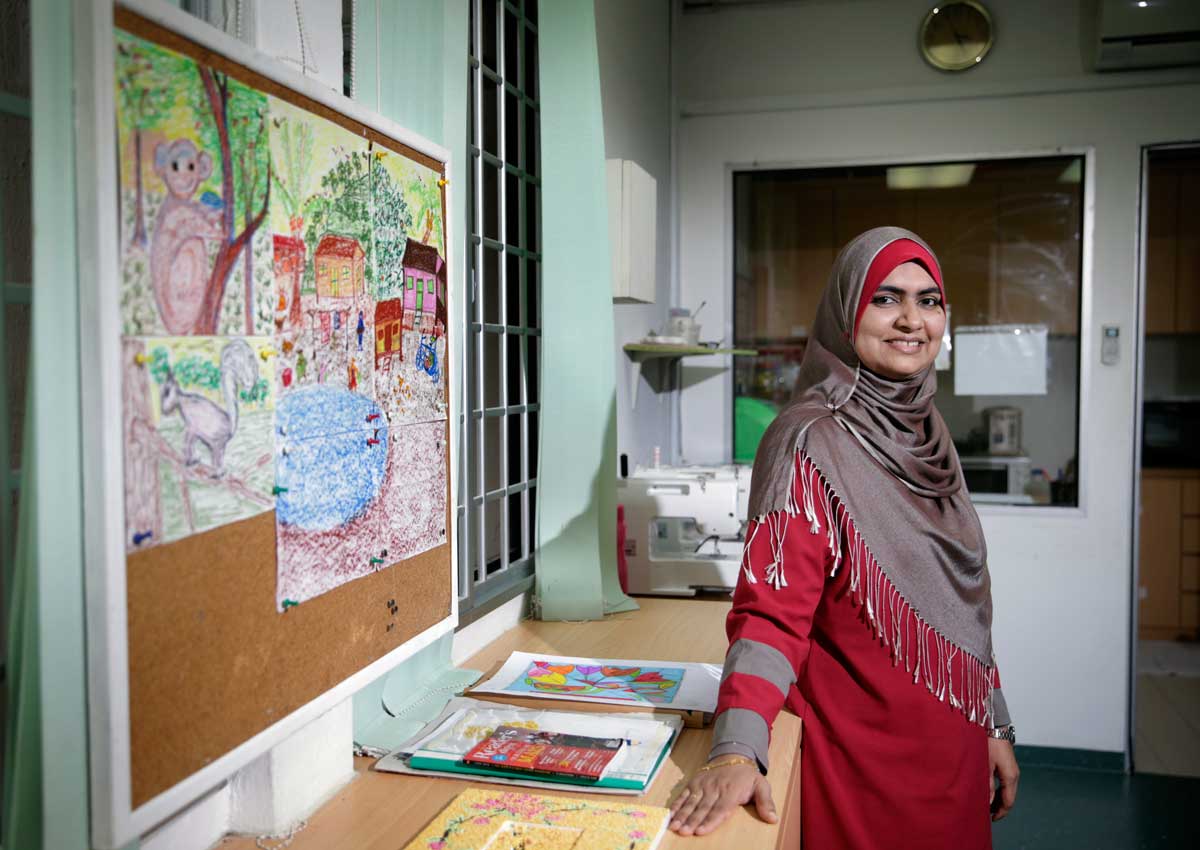
She works as a para counsellor at Club Heal, a charity offering rehabilitation and counselling services to those suffering from mental illness.

Her biggest dream, however, is to start an initiative giving emotional and psychological support for caregivers with autistic children.

Shy but bubbly, the 1.68m English Literature graduate was born the youngest of three children in Thuckalay, a town in Tamil Nadu, India.

Her late father was a public servant and her mother, a housewife.

“My father was very loving but very strict. He was a very religious man. He never took us to the cinema, and there was no TV at home although there were a lot of books and magazines,” says Ms Aneez who shied away from the company of boys when she was growing up.

“The only men I knew were my father and brother-in-law. My father didn’t even allow me to talk to some of my male cousins.”

After obtaining her Higher Secondary School Certificate – India’s equivalent of the A levels – she read English Literature at the Sree Ayyappa College for Women.

Her father was keen on her pursuing her master’s degree when she graduated, but again at a women’s college.

However, her brother- in-law, who is a senior civil servant as well as a poet and writer, encouraged her to do it at a co-ed university. “He said he would take care of my father who respected him a lot,” she says.

That was how she ended up at Scott Christian College in Nagercoil.

“My father said: ‘If I hear of you doing anything with boys, I will stop your studies’,” she recalls with a giggle. “I was already 22 but it took me three months before I could talk to a boy. I was so shy.”

An attempt to find her a suitable husband fell through after she graduated, so her father sent her to Kerala instead to sit the highly competitive Civil Services Examination.

Known as the “mother of all examinations”, it determines who is good enough to get into the premier Indian Administrative Service.

Ms Aneez took nine months to prepare for the exam, as well as another one set by the University Grants Commission which would allow her to teach at an Indian university.

She did not make it through the first, but passed the second.

While waiting for the results for both exams, she secured a lecturin

g job with the Muslim Arts College in Thiruvithancode, a small town in Tamil Nadu.

But she gave it up barely six months into the job: A suitable groom had been found for her.

The marriage proposal came through a family friend. Ms Aneez’s sister and brother-in-law travelled 400km to Jegathapattinam to check out Mr Mohamed Farook, a software engineer then working for Seagate, an American data storage company, in Singapore.

Except for a barely discernible upward curve on the left corner of his mouth, Mr Mohamed Farook received a glowing report from her sister.

She says: “My sister said he had a good smile and seemed to be a good man from the way he behaved with his parents. She liked him.”

His background was a good match too.

A computer science graduate from the Adhiyamaan College of Engineering, he had worked in Chennai and Muscat in Oman before Singapore.

“My brother-in-law also told me he probably didn’t smoke because he had very rosy lips. I was very happy to hear that because I prayed for a man of good character: not a rich man or a handsome man but a man with no bad habits.”

The marriage was arranged within a week, and took place on Valentine’s Day in 2001.

They spent five days together before he came back to Singapore to work.

“I was supposed to come with him but my passport was not ready. I had to wait another month but he would call me every day and I would cry,” she says.

In March 2001, she finally arrived in Singapore. Home was a flat in Bukit Batok shared with her husband’s elder brother and his wife.

Plans for her to get a job were abandoned when she got pregnant four months later.

Because her pregnancy was a difficult one, she went back to India where her mother could look after her.

“My mother could not come to Singapore because my father was not well,” says Ms Aneez who gave birth to Faheem in India in April 2002.

Mother and son returned to Singapore six months later.

All was well at first.

Faheem was a chubby baby who skipped crawling and started walking when he was nine months old.

“I thought it was a miracle. He could also say several words like milk and mama,” she says.

In 2003 when Ms Aneez’s father died, her mother came to visit.

“My mother noticed that he was not listening and didn’t make eye contact. He was hyperactive, liked to throw things at people and it was hard to make him eat. She was concerned,” she recalls.

After their son turned two, she and her husband sent him for various assessments all over Singapore and in India.

The couple were told that Faheem had developmental delay problems.

Ms Aneez threw herself into helping her son.

She sent him for Eipic (Early Intervention Programme for Infants and Young Children) as well as speech, occupational and social therapy.

She even learnt yoga so that she could teach him when she heard that yoga could help children with special needs.

Although these helped to calm him somewhat, he was deemed too disruptive for several childcare centres, which told his parents they could not admit him.

When he was seven, Faheem was officially diagnosed as having Asperger’s syndrome, which is on the high functioning end of the autism spectrum.

Asperger children have difficulty with social interaction, have restricted interests and are prone to repetitive behaviour.

A psychiatrist suggested that he be enrolled at Bukit View Primary School, which had resources for a special needs teacher.

“It was heartbreaking to hear other kids calling him mad or stupid because he was not stupid. He was very good in Tamil and spelling and could spell ‘stethoscope’ when he was six,” she says.

His behaviour in school stressed her out. “‘You’re Faheem’s mother? Faheem did this, Faheem did that.’ I’d get complaints from parents, pupils and teachers all the time,” says Ms Aneez, adding that the lack of understanding and emotional support often reduced her to tears.

She had a meltdown one day when she was summoned to school.

Faheem – after completing his Tamil test accurately and in record time – had gone around disturbing his classmates, and even poked one of them with a pair of scissors.

She took him home and cried her heart out.

A couple of days later, on a Friday, she received a call from the school to take her son home.

She was told she needed to take him out of school.

Her husband returned home to comfort her. “He told me to be patient and to give him three months because he was working with a US-based company. He said he would ask for a transfer to the US so that our son could get better help,” she recalls.

He then told her to rest, and that he would take Faheem to the mosque.

“I told him not to because people would ask why Faheem was not in school and I didn’t want him to lie on Friday, a holy day.

He then said he would go and buy briyani,” she says.

When father and son did not return after a while and her husband did not return her calls, she set out to look for them.

That was when she found out that her husband and son had fallen from the 24th floor of a housing block.

She became hysterical and inconsolable, and was admitted to Alexandra Hospital where she had to be sedated and tied to her bed.

Police later found several suicide notes in his desk addressed to his wife and siblings.

Besides giving her instructions on property and financial matters, he also told her to be brave and remarry.

“He said that he had chest pains and if something happened to him, things would get difficult for me so he wanted to take Faheem with him. I don’t believe it; I don’t think he had chest pains,” she says quietly.

The trauma was so debilitating that she had to see a psychiatrist and be on anti-depressants for several months.

To forget the past, she worked as a trainer in a recruitment company for more than a year.

Because she could not shake off the pain, she returned to India where she spent two years with her family.

The love and support of her family and her faith brought her back from the brink.

When she received a letter from the HDB telling her that she could not rent out her flat, she saw that as a sign.

In October 2013, she returned to Singapore. She started taking religious classes and also began volunteering at Darul-Arqam, the Muslim Converts Association of Singapore.

There, she met pharmacist Siti Maimunah who she credits for helping to turn her life around.

Madam Siti says: “I got her to tell me her story only after a while. I could feel her pain. She had such a deep love for her husband but I told her that no man in his right mind would do what he did to her.

“She said that if anyone else had told her that, she would have punched them. I told her that maybe God wants her to use her pain to help others.”

The pharmacist took her to attend a workshop at Club Heal. One thing led to another.

Ms Aneez started as a healing friend at the charity and felt so at home that she took a counselling course.

Today, she is a full-time para counsellor.

“When I came to Club Heal, I could understand the feelings of those struggling with mental illness. They have to fight stigma; they want love and affection. I told myself: ‘This is my place. This is where I should be helping’,” says Ms Aneez, who shared her story at an autism symposium earlier this year.

But her job, she says, is not done. She hopes to learn more about autism and take up courses to help caregivers of autistic children. “I want to give them the emotional and caregiving support I didn’t have.”

kimhoh@sph.com.sg


This article was first published on June 19, 2016.
Get a copy of The Straits Times or go to straitstimes.com for more stories.
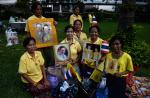
Image: 
Category: 
Publication Date: 
Sunday, June 19, 2016 – 15:34
Keywords: 
Send to mobile app: 
Source: 


Story Type: 
Others

Source link

Actor Shaun Chen shares adorable family photo on Father's Day

0

Shaun Chen is excited to be celebrating his first Father’s Day as a new father.

The 38-year-old welcomed his daughter into the world on Dec 5 last year with his Malaysian wife.

The actor posted a cute photo of his family wearing matching tees on his Facebook page today (June 19), wishing all fans and followers, “Happy father’s day!”

on Facebook

Happy father’s day! 父亲节快乐!

Posted by 陳泓宇 Shaun Chen on Saturday, 18 June 2016

Several netizens left comments on the photo, wishing Shaun a happy Father’s Day and commenting on how beautiful his wife is and how cute his daughter looks.

One netizen commented: “Finally saw Shaun[‘s] full family photo!!!! Wife so pretty.”


Go to Lollipop for more stories.

Image: 
Category: 
Publication Date: 
Sunday, June 19, 2016 – 15:35
Send to mobile app: 
Source: 


Rotator Image: 
Story Type: 
Others

Source link

Sembawang: Gateway to Singapore's WWII past

0

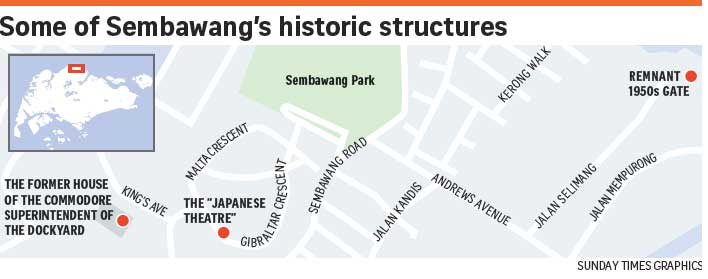
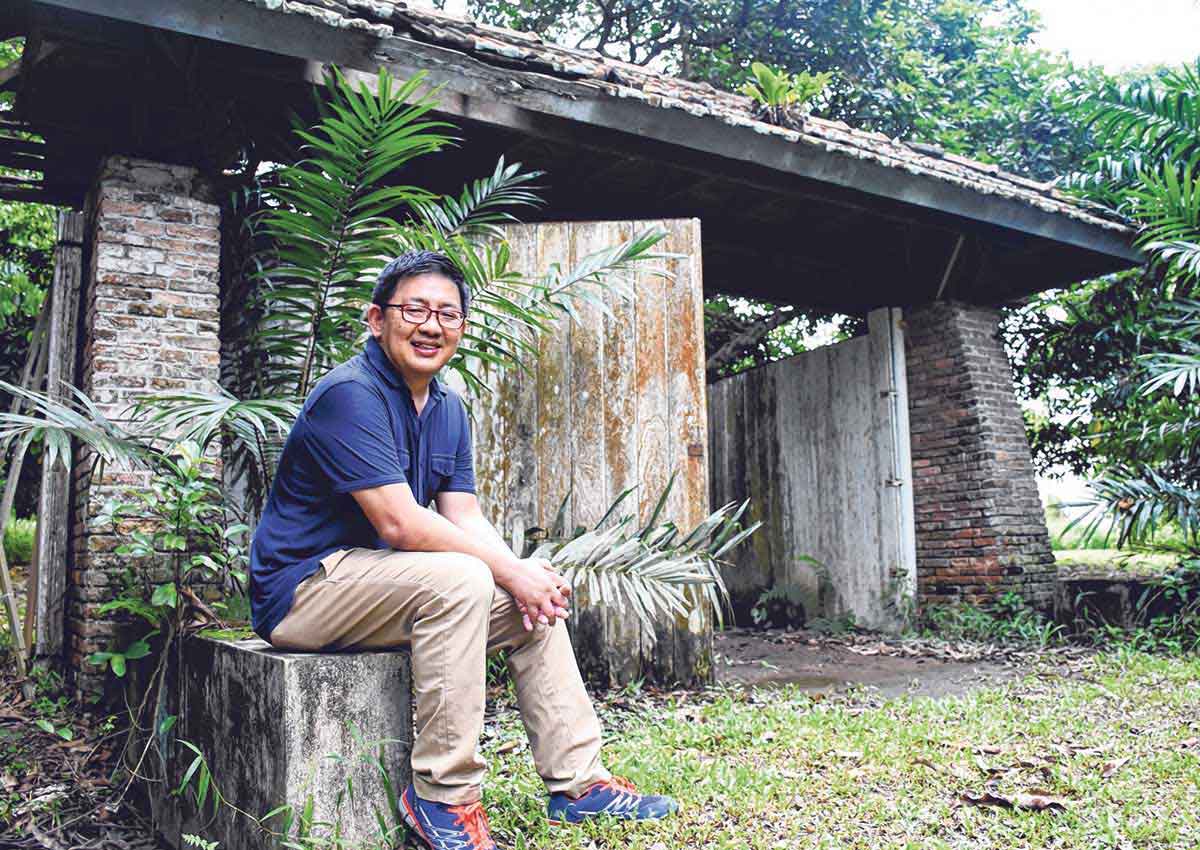
In a quiet, forested area near the coast in Sembawang lies a 1950s or 1960s covered gateway supported by two brick lamp posts.

The gateway, located at a clearing in Jalan Mempurong off Andrews Avenue, was most likely the entrance to the seaside bungalow of the late Cycle & Carriage boss Chua Boon Peng, who in 1951 clinched the Mercedes-Benz sole distributorship for what was then Malaya.

Architect Alisdair Ferrie, 60, whose father James bought a property in the area in 1979, said there were four bungalows in total.

The Ferries sold theirs before the Government acquired the land more than a decade later.

All the homes are now gone, but the gate reminds one of a time when living by the sea did not come with a multimillion-dollar price tag, said heritage blogger and naval architect Jerome Lim, who has mapped the area’s historic naval and military structures.

He said seafront homes were not restricted to Europeans but also included a sprawling network of at least five villages such as Kampung Wak Hassan.

The National Heritage Board (NHB) told The Sunday Times it is now conducting additional research into the area to refresh its heritage trail of Yishun and Sembawang.

The board said it will be expanding content on the World War II structures found in Sembawang, once home to the British naval base.

To support the naval base, which was constructed to defend Singapore in 1938, surrounding structures including more than a dozen World War II bunkers, air-raid shelters and storehouses were built.

They are likely to be part of a complex and yet-to-be-discovered underground network.

Remnants and hints of their existence are hidden under Semba- wang’s hilly terrain.

They include two partially exposed pillboxes in Bermuda Road, complete with ditches.

The pillboxes had slots for machine guns.

A more well-known structure is the air-raid shelter on the grounds of Admiralty House, now gazetted as a national monument.

Yet another underground shelter sits at 291 Durban Road. Evidence of its existence comes from the two ventilation shafts sticking out of the ground; what lies underneath is unclear.

NHB said its existing Yishun-Sembawang heritage trail features military-related structures such as St Andrew’s Community Chapel, built by the British Royal Navy, a concrete bunker now engulfed by a banyan tree, the former Singapore Naval Base, and streets related to the Royal Navy.

NHB assistant chief executive of policy and community Alvin Tan said the board will be including new and updated information about Sembawang in its trail brochure, map and mobile app when the refreshed trail is launched.

Other significant and little-known buildings in Sembawang include a one-storey wooden building at 318-2 Gibraltar Crescent.

It used to be called the Japanese theatre, and there are differing accounts of what it was.

Some say it might have been used to screen propaganda films during the war.

Others suggest it was built after the war by Japanese prisoners-of-war (POWs).

Mr Lim hopes the NHB study can shed more light on the area’s historic structures.

He said: “Sembawang has retained most of its original landscape, compared with the rest of the country. It deserves our recognition as it played a role in Singapore’s development, offering employment for locals at the naval base.

“It has a unique identity that integrates nature with history and has an old-world feel to it.”

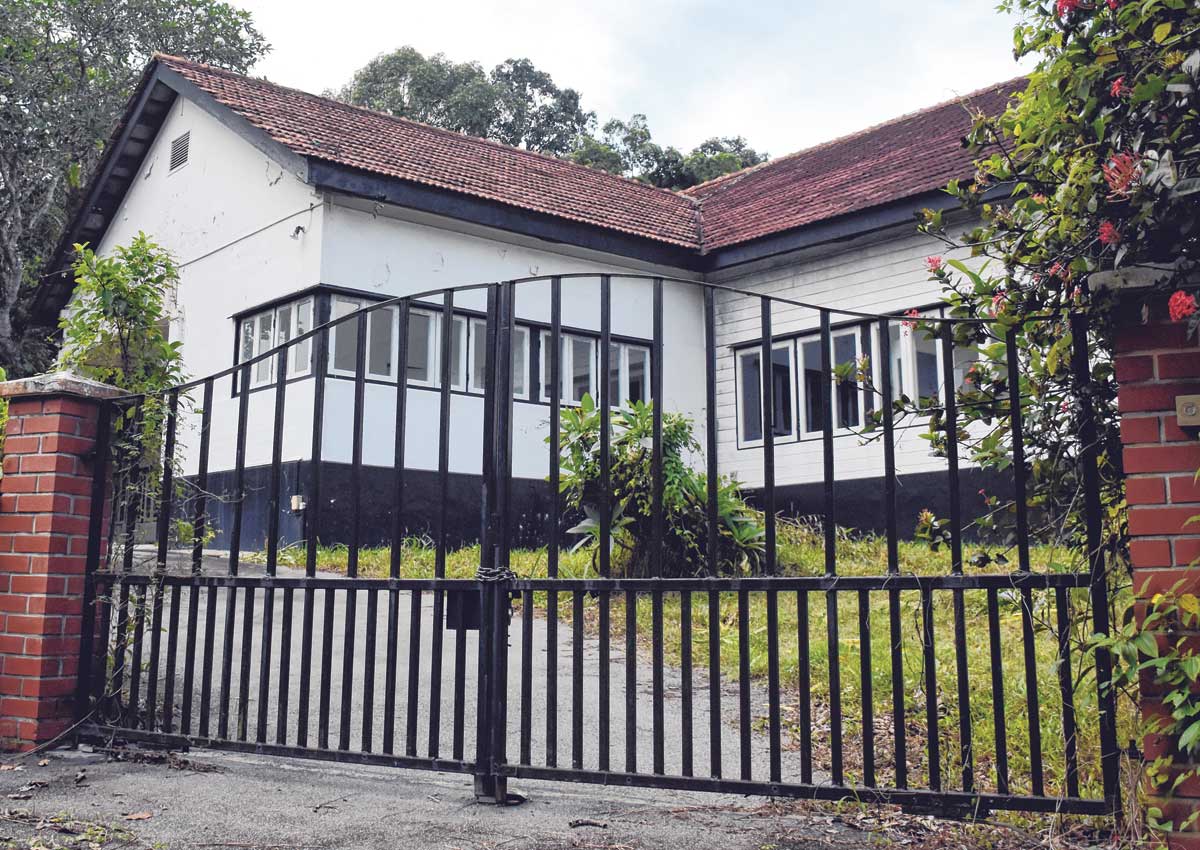
Sembawang is also home to about 50 black-and-white buildings that are managed by the Singapore Land Authority (SLA).

Some of them used to house senior officers of the dockyard.

The homes have balconies and were often located on higher ground to offer a vantage point and lookout into the dock.

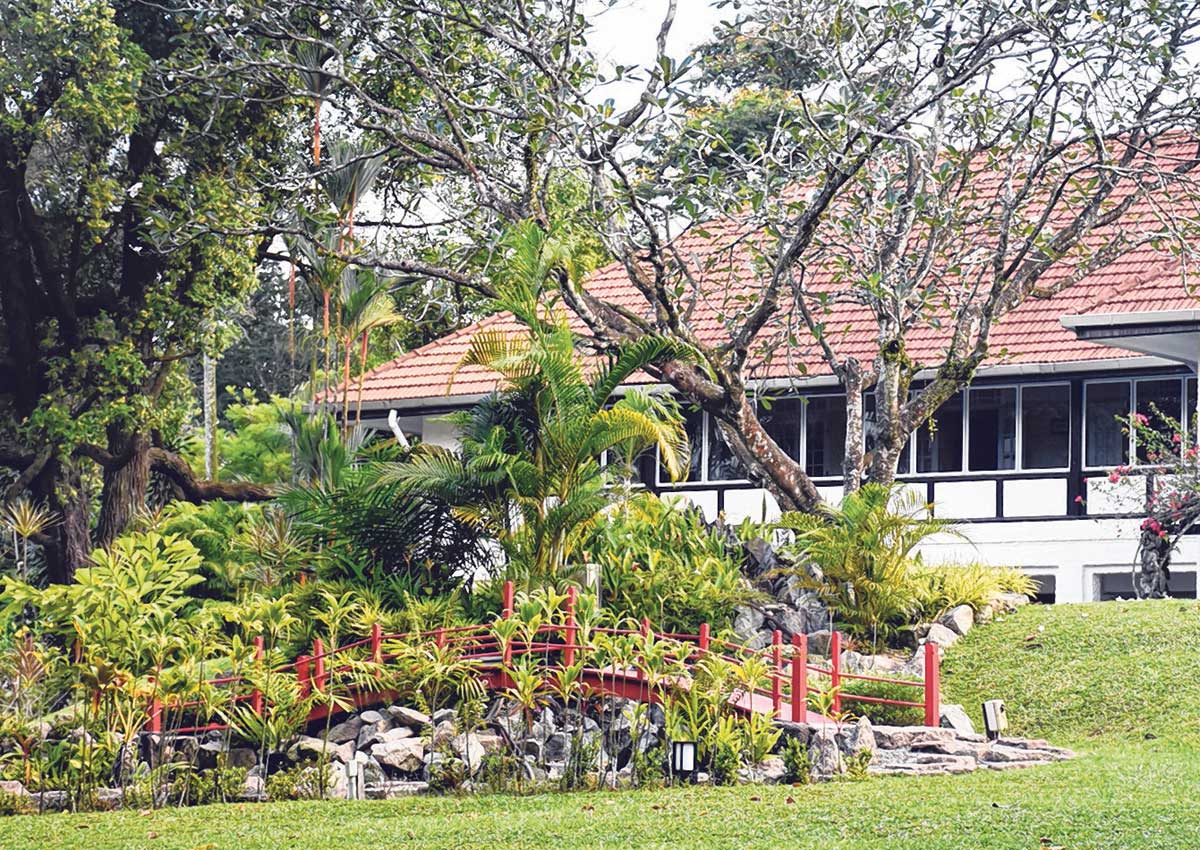
Among them is the house of the Commodore Superintendent of the Dockyard at 128 King’s Avenue.

On its lawn lies an ornamental red bridge that was built by Japanese POWs after World War II, said Mr Lim.

This building is currently leased for residential use.

An SLA spokesman added that plans for 318-2 Gibraltar Crescent are currently under study.

The roads in the area were also named after former British colonies and existing territories such as Lagos, Delhi, Canberra, Bermuda and Pakistan.

A former navy man, Briton David Ayres, 71, who was based in Singapore for three years in the 1960s, shared stories of the area with The Sunday Times when he returned to Singapore last month for his first visit in decades.

He said there had been a milk bar on the naval base. “It was a little shop with a juke box that sold drinks such as Fraser and Neave’s orange soda,” he said.

Mr Ayres also documented 1960s Sembawang on his Miranda SLR film camera.

Among his pictures is one of the Aggie Weston Sailors’ Rest – a recreation centre just outside the dockyard in Canberra Road where navy folk unwound. It had a swimming pool and fitness centre.

It still stands today as HomeTeamNS Sembawang Clubhouse.

Mr Ayres also captured local dockyard workers exiting the gates of Sembawang Road and riding home on their bicycles as the siren from the shipyard sounded to signal the end of the day.

This scene is still repeated in Canberra Road in the evenings today as Sembawang Shipyard workers ride home on their bicycles, although the road has become a dual carriageway.

melodyz@sph.com.sg


This article was first published on June 19, 2016.
Get a copy of The Straits Times or go to straitstimes.com for more stories.

Image: 
Category: 
Publication Date: 
Sunday, June 19, 2016 – 15:15
Keywords: 
Send to mobile app: 
Source: 


Story Type: 
Others

Source link

US man stabs himself to death in Taiwan court after drug conviction

0

A 41-year-old American man stabbed himself in the neck at the court in Taiwan after after being convicted of possession of marijuana and sentenced to four years in prison.

According to Taipei Times, the man – identified as US citizen Tyrel Martin Marhanka – was rushed to a local hospital, where he was later pronounced dead.

According to witnesses, after the Changhua District Court judge read his ruling, Marhanka turned to the translator, who told him the sentence, before Marhanka was heard saying: “Four years?”

The translator told Marhanka that he could appeal the decision, but he replied: “I don’t want to appeal.”

He yelled, “I don’t want to live anymore,” took out two metal objects, and with one in each hand stabbed himself on both sides of the neck, making blood gush out.

Court officials said Marhanka had smuggled in a pair of 21cm scissors, which he had separated into two sharp metal blades.

Marhanka was arrested in April last year and charged with possession of marijuana and other narcotics, after police found more than 200 cannabis plants, 195 dried cannabis plants and 10 opium poppies at a rented house.

At the time of his arrest, Marhanka told police officers he grew the plants as a “hobby” and that they were all intended for his own use.

Marhanka had lived in Taiwan for more than 15 years, and had a Taiwanese wife and two children – a son in second grade and a daughter in kindergarten.


Visit STOMP for more stories.

HELPLINES
Samaritans of Singapore (SOS):1800-2214444
Singapore Association for Mental Health:1800-2837019
Sage Counselling Centre:1800-5555555
Care Corner Mandarin Counselling:1800-3535800

Image: 
Category: 
Publication Date: 
Sunday, June 19, 2016 – 15:06
Send to mobile app: 
Source: 


Story Type: 
Others

Source link

Online site charges $59.95 monthly for 'VIP' members

0

A $20 pair of shoes from an online site ended up costing swimming instructor Charmaine Cheong $240.

Ms Cheong, 29, bought the pair from myglamorous.sg in December for $19.95, after seeing its advertisements on Facebook and other sites.

But she realised three months later that $59.95 was being charged monthly to her debit card for being the shop’s “VIP”.

She contacted the site and was told that she had an option to log in every month and check a box that said “Skip this month” if she did not want to have her card charged.

“I don’t think it should be done this way. It’s very misleading,” she said, adding that it was hard to remember to log in every month to do so.

When she tried to cancel her account by e-mailing the site, this was not done and money was still deducted the next month.

Her problem got solved only when her card expired in April.

She did not get her money back but was told it could be used as credits to buy shoes.

She wrote about her experience on her Facebook page earlier this month to warn others about the site.

In response to queries from The Sunday Times, the site’s founder, Mr Olivier Magaud, said a small portion of customers sometimes “misread” the service terms.

“It comes unexpectedly as the terms of membership and pricing details are clearly stated in several locations on the website and along the purchase flow.”

He said they are on the first page all the way to the payment page where customers must agree to the terms of service by opting in. They are also stated in a confirmation e-mail and purchase receipts.

Ms Cheong’s complaint is not the first against the site.

The Consumers Association of Singapore (Case) has received 10 complaints about Fashion Interactive, the company that runs the site, since it opened in November last year, Case executive director Seah Seng Choon said.

In one case, where a complaint was lodged formally, Case helped a customer get a full $240 refund for VIP fees.

Mr Seah said Fashion Interactive may have breached the Consumer Protection (Fair Trading) Act, under which using small print to conceal a fact from the consumer or to mislead a consumer as to a fact in such sales is an unfair practice.

In a similar case last year, Case investigated online site StreetDeal for the way it charged consumers a “hidden” premium membership fee.

Case received 201 complaints about StreetDeal’s membership fees from January 2014 to October 2015.

The site later did away with its default membership, and sent a letter of apology to those affected.

In the current case, Mr Seah said Case has met Fashion Interactive.

“They have agreed to look into each complaint lodged with Case and work towards an amicable settlement,” he said, advising customers of the site with unresolved disputes to file their complaints with Case.

jalmsab@sph.com.sg


This article was first published on June 19, 2016.
Get a copy of The Straits Times or go to straitstimes.com for more stories.
Image: 
Publication Date: 
Sunday, June 19, 2016 – 14:54
Keywords: 
Send to mobile app: 
Source: 


Story Type: 
Others

Source link