Calling the opening of the depot a “milestone”, Go-Ahead said it had “every intention” to bid for the third bus package under the Government’s new bus contracting model.
Source link
Go-Ahead Singapore opens Loyang depot, sets eyes on Seletar bus package
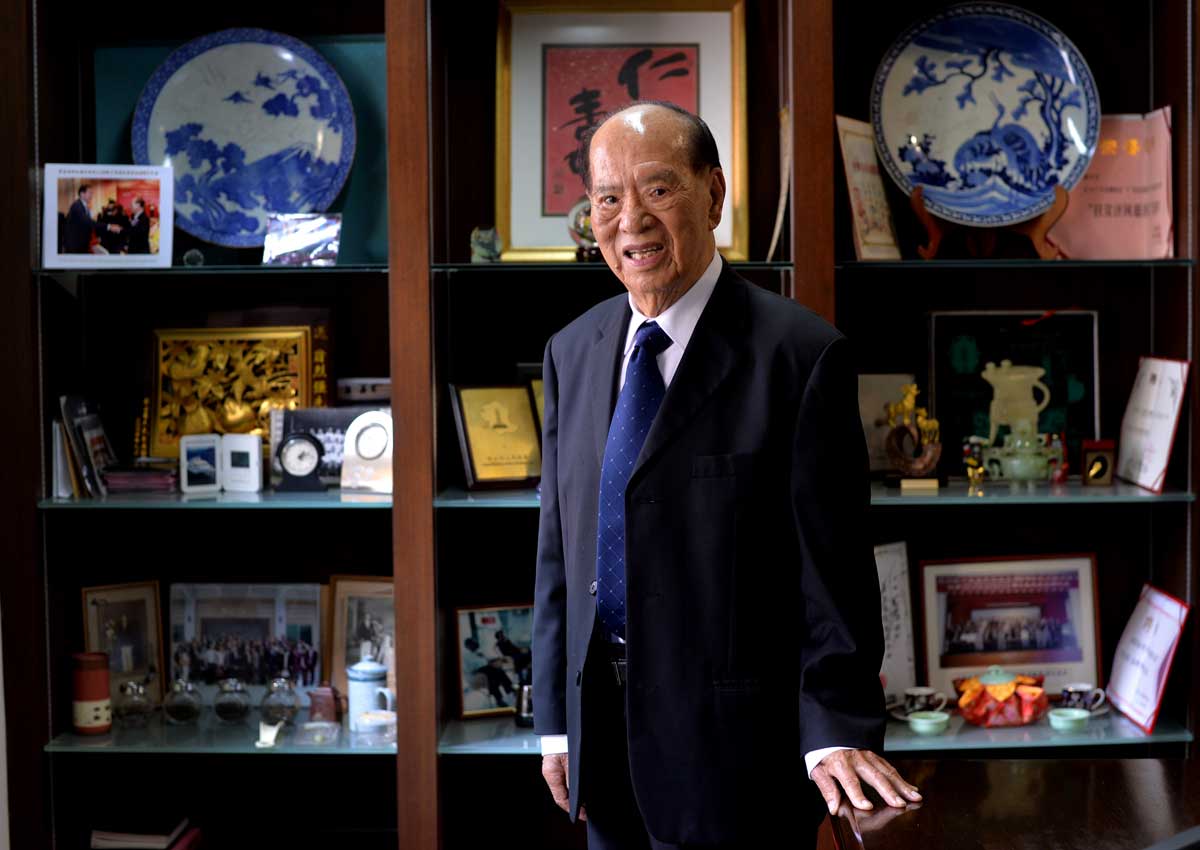
At 98, Sin Heng Chan group chairman still turns up for work every day
Image:
Publication Date:
Monday, June 20, 2016 – 00:00
Keywords:
Send to mobile app:
Source:
Story Type:
Others
KOI Cafe $1 Medium Drink for UOB Cardmembers from 20 – 24 Jun 2016

STARTS TOMORROW: Koi Cafe $1 Medium Drink w/ Apple Pay or UOB Mighty App payments (20 – 24 Jun) ??
KOI Cafe $1 Medium Drink for UOB Cardmembers from 20 – 24 Jun 2016
Enjoy S$1 medium size drink (worth up to S$4.90) at KOI Cafe from 20 – 24 June 2016 when you pay with UOB Mighty App or Apple Pay
Confessions of a window inspector: One fallen window is one too many
When windows fall, they can injure like a fragmentation grenade.
“They don’t need a direct hit to injure because they shatter. A window is sharp, heavy and made of glass,” says Mr Lee Koon Peng.
He emphasises: “And if it does hit a person directly, the consequences will be very, very bad.”
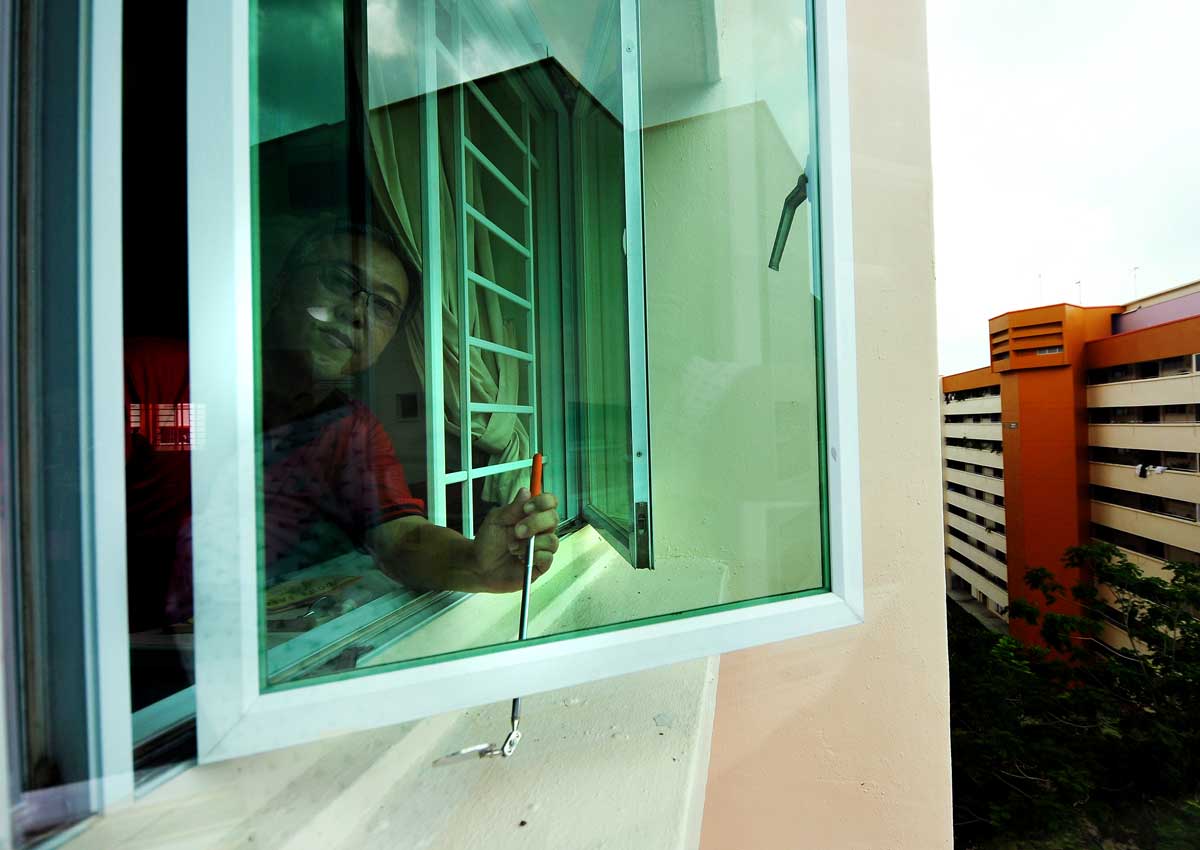
Mr Lee, 55, knows his windows well. He is a senior associate engineer at the Building and Construction Authority (BCA) and has seen it all in the over 12 years of inspecting windows.
He recalls a case from 2010, when he attended to an incident involving a coffee shop cleaner.
She was injured after an upper-storey window hit a parapet on the second storey even though it landed away from her.
The glass shattered and the shards cut her leg, but thankfully, the injuries were minor.
In 2013, a falling window hit a parked car and smashed its rear window. The car was unoccupied.
In both cases, the home owners were not around.
Even office buildings and skyscrapers are not spared from poor window maintenance.
In 2009, a large window panel fell from one of the upper storeys of AIA Tower, crashing into the crowded CBD street below during office hours.
Again, thanks to pure luck, no one was seriously hurt.
Mr Lee reads out this list of incidents with a sense of familiarity.
He had attended to all these cases as it is his job to find out why it happened and how to stop it from happening again.
If necessary, the authorities can mete out severe penalties to homeowners whose windows fall due to the lack of maintenance – up to a year in jail and a $10,000 fine.
Each memory is a reminder that dangers are aplenty in high-rise Singapore and why there are lives that depend on him to do his job well.
Mr Lee says: “Even when I visit my relatives’ and friends’ homes during Chinese New Year, I will be checking their windows to see if they are okay. It has become a habit.”
SMALL TEAM
He and his small team of seven engineers in BCA’s special functions group have responded to more than 600 incidents of falling windows in Singapore since 2005.
On average, Mr Lee visits about 20 units in a day.
This involves safety inspections and blitz operations on entire blocks to check for windows that are not up to code, often acting on feedback from the public, the police and HDB.
Under the Building Control (Retrofitting of Casement Window) Order 2004, homeowners are required to engage an approved window contractor to retrofit the aluminium rivets of casement windows with stainless steel rivets or screws.
This applies to windows in all residential units except for those in landed properties and the ground floor of buildings.
But while most homeowners cooperate, Mr Lee confesses that it can be difficult trying to convince some to change.
Last year, he encountered a casement window that was dangling.
“The homeowner was an old lady who lived alone and did not want to speak to us. Her town council cordoned off the common area below, while social services officers and the woman’s relatives were called in to convince her,” he says, adding that it took a month before she complied.
He has even seen “creative” solutions, such as a Pasir Ris home owner who duct-taped a corroded window, claiming that it was always closed.
Laughing at the recollection, Mr Lee says it took a while to remove the tape.
“There is no guarantee that someone may not open the window in future,” he explains.
But there is a positive spin at least.
Ten years ago, there were over 100 cases of falling windows yearly.
That number dropped to 34 last year.
In the first five months of this year, there were 16 – 11 were casement windows and five were sliding ones.
Mr Lee says: “While there have not been any cases of injury due to fallen windows in the past five years, just one fallen window is one too many and it’s an accident waiting to happen.
“I will only feel happy when there are zero cases.”
SECRETS OF THE TRADE
1. There is no shortcut to the job.
Be sure to check every rivet and screw as a single loose part can lead to terrible consequences.
2. Always carry your tools around.
This includes an extendable mirror to help you peek around hard-to-reach corners of a window, and a brush to remove dust that may obscure a corroded screw.
3. When you encounter an angry or uncooperative home owner, do not lose your cool.
Explain why you have to do the checks and know that the law will back you up too.

This article was first published on June 19, 2016.
Get The New Paper for more stories.
Image:
Publication Date:
Monday, June 20, 2016 – 00:00
Send to mobile app:
Source:
Story Type:
Others
Go-Ahead Singapore officially opens Loyang Bus Depot, unveils Bus Capt uniforms

SINGAPORE – Almost 3,000 visitors attended Go-Ahead Singapore’s official opening and community carnival on Sunday (June 19).
The opening of the 8.3ha Loyang Bus Depot was officiated by Guests-of-Honour, Mr Zainal Bin Sapari, Member of Parliament for Pasir…
Source link
Thousands protest US bases on Okinawa after Japan woman's murder
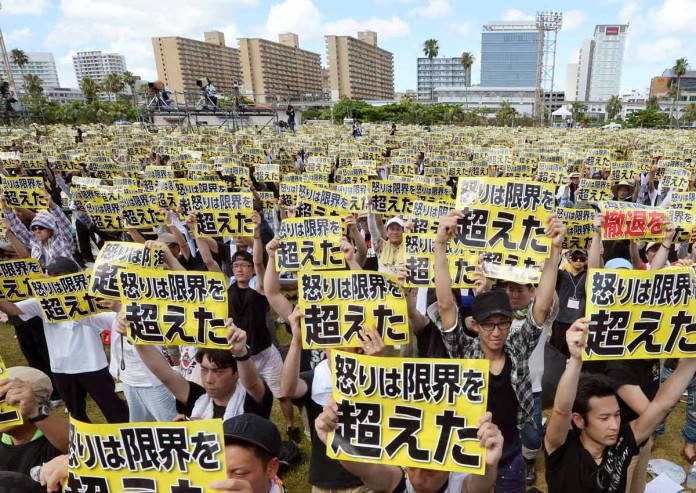
NAHA, Japan – Thousands of people gathered on the Japanese island of Okinawa on Sunday in one of the biggest demonstrations in two decades against US military bases following the arrest of an American suspected of murdering a local woman.
The protest marks a new low for the United States and Japanese Prime Minister Shinzo Abe in their relations with the island and threatens plans to have the US Marines Futenma air station moved to a less populous part of the island.
The United States and Japan agreed in 1996 to close the Futenma site, located in a residential urban area, after the rape of a 12-year-old Japanese schoolgirl by three US military personnel spurred mass demonstrations against the American presence.
That plan has been on hold since residents living near the proposed relocation site protested against the move, worried about noise, pollution and crime.
Okinawa assembly members opposed to the move won a majority in the prefectural assembly election this month, providing renewed support for Okinawa Governor Takeshi Onaga’s plan to have the base move elsewhere.
Okinawa hosts 50,000 US nationals, including 30,000 military personnel and civilians employed at US bases.
The site of some of the bloodiest fighting between US and Japanese forces in World War Two, Okinawa remained under American occupation until 1972 and around a fifth of its land is still under US military control.
Yet, with the United States and Japan looking to contain China’s growing might in the East China Sea, the Okinawan island chain, which stretches close to Taiwan, is becoming strategically more valuable to military planners.
Japan’s Self Defence Force, which is pivoting away from defending its northern borders from a diminished Russian threat, is fortifying the region with radar bases and anti-ship missile batteries.
Last month’s arrest of the 32-year-old US civilian working at a US base prompted the US military to announce a 30-day period of mourning for the victim and restrict off-base drinking on the island in a bid to assuage local anger.
But relations were further frayed by the subsequent arrest of a US sailor on Okinawa on suspicion of drunk driving following a car crash.
Image:
Publication Date:
Sunday, June 19, 2016 – 16:36
Keywords:
Send to mobile app:
Source:
Story Type:
Others
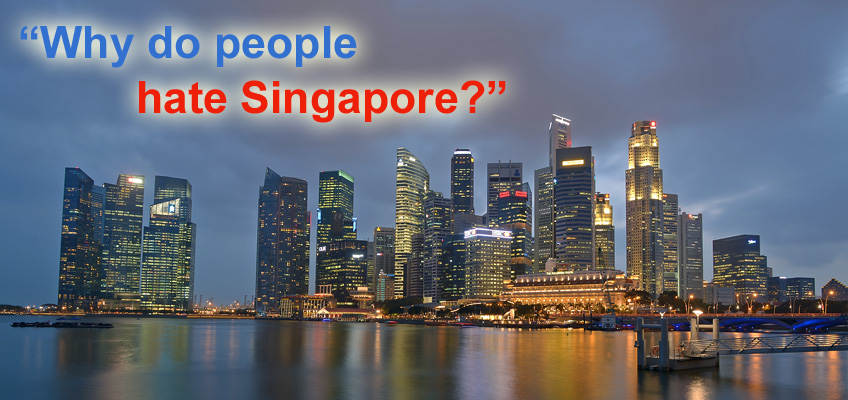
'Ang Moh' explains why people hate Singapore
Haters gonna hate.
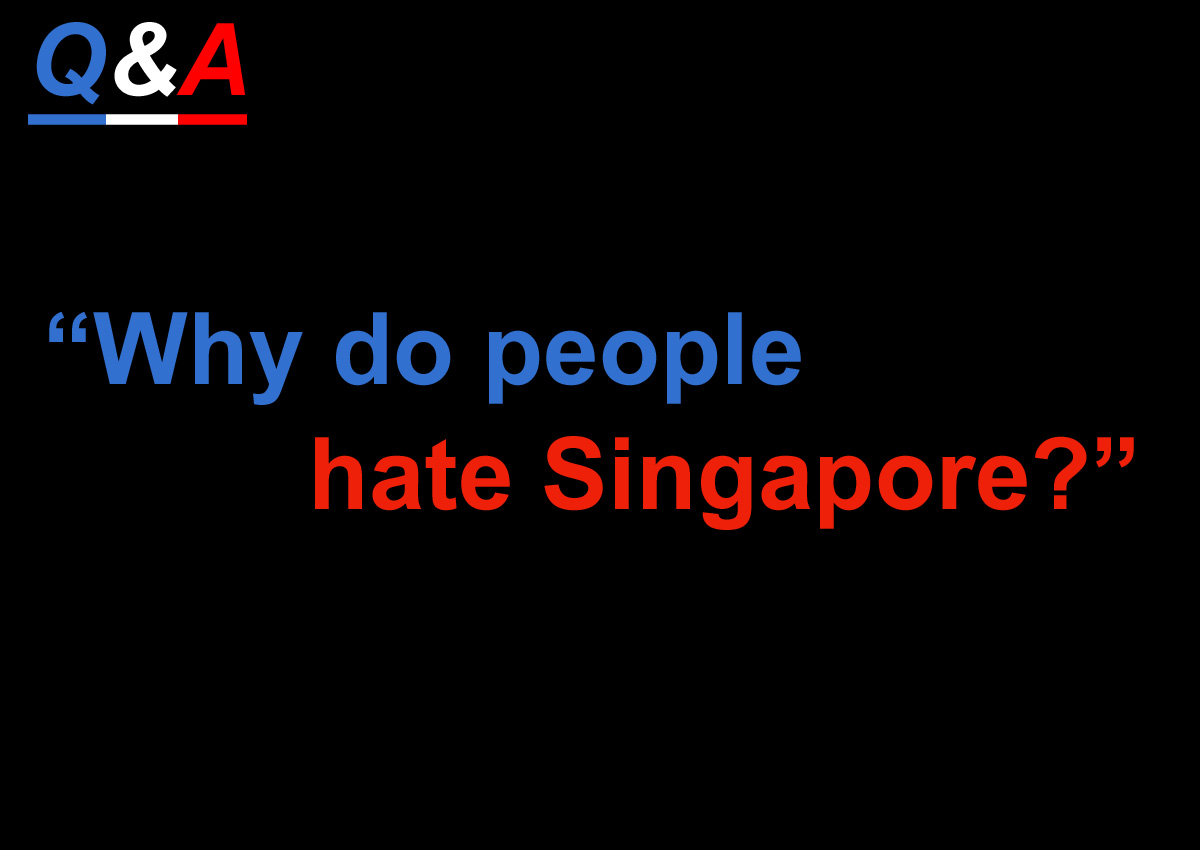
SINGAPORE – An ‘Ang Moh’ who has been staying in Singapore for 10 years gave his take on ‘Why do people hate Singapore?’ on Saturday (June 18), attracting nearly 100,000 views on question-and-answer website Quora within 24 hours.
As a ‘foreign talent’, Theodore Shawcross described Singapore as ‘the closest you can get to a near perfectly run country’.
“I’m saying this objectively, because amid all the freedom, the welfare, the ‘quality of life’ that Singaporeans seem to admire about Scandinavian countries, or for some odd reason, the US and the UK, I sincerely doubt that any person with the desire to be in a competitive, fast-paced, ultra modern, yet clean, safe and economically solvent country would have any other options other than Singapore,” Mr Shawcross wrote.
In his 2,064 -word answer, Mr Shawcross touched on the common sore points by detractors of Singapore, such as freedom of speech, cost of living and the cost of cars.
While largely praising Singapore for its efforts to address these issues, Mr Shawcross noted that there are still areas for improvement, such as laws against homosexuality.
Mr Shawcross, who is an economist, noted that many of the angst against Singapore are typical in many modern metropolitan cities.
“People need to understand one thing, if you want to demand the government to do something about your problems, please make sure you’ve done enough academic research about whether or not your problems are essential problems, or are they problems that are just characteristic of a modern metropolitan city, for if they are, there’s really no solution to many of those problems,” he wrote.
Here is his speech in full:
I’ve read all the answers here and I’d just like to give my opinion on this, as a “foreign talent” as an “angmoh” and as someone who grew up in England, eventually moved to the US for my PhD, and then chose to raise my family in Singapore.
As a person who grew up in the west, there’s nothing that gives more credence to the phrase “the grass is greener on the other side” than when a caucasian chooses to move to a predominantly asian country.
It gives me great pride to say that I could somehow travel 10 years back in time to that moment I made this decision to move to Singapore with my wife and 5 month old boy, I will choose Singapore again in a heartbeat.
Singapore is an amazing country. That sentence is perhaps more of an understatement than any of the understatements in history, because although many Singaporeans like to rant about its imperfections, Singapore is the closest you can get to a near perfectly run country. I’m saying this objectively, because amid all the freedom, the welfare, the “quality of life” that Singaporeans seem to admire about Scandinavian countries, or for some odd reason, the US and the UK, I sincerely doubt that any person with the desire to be in a competitive, fast-paced, ultra modern, yet clean, safe and economically solvent country would have any other options other than Singapore. Singapore has lived up to all my expectations of enabling my children to receive a world leading education, to grow up in a country bereft of violence, misconduct and disorder, and enabling me to work alongside one of the most highly educated and skilled pool of talent that happens to speak in my native tongue, to enable my wife and I to mingle with people from all around the world in a tight knit environment, to live in an essentially equal country without overt racism because to be Singaporean is to accept that anyone can be Singaporean, regardless or race and religion, now that’s priceless. The US has always claimed to be an inclusive country where people of different walks of life can live freely and ironically “safely”, it might be a surprise to some folks because they never really found out how to get that done.
Racial Equality
This country has its flaws, but I’m an economist, therefore I know firsthand that whatever you choose, there is always going to be something you give up. Freedom of speech is something that has become very controversial in recent Singaporean history given the persecution that Amos Yee had to face by posting a seemingly “harmless” video. It has become a theme now that young Singaporeans are becoming increasingly enchanted with Western ideas of freedom and yet they’ve not actually lived in those countries long enough to get an idea of what that sort of freedom is about. Singapore is undoubtedly multiracial, and to maintain this heterogeneity comes at a huge price, it’s a price that the founders of this country felt it was worth paying, and it did pay off. I come from a country riddled with hate crime. Although I’ve never really experienced it firsthand on the tube or on buses, but everyone in England will always have that friend with a story to tell about racial conflict in public places. I’ve also lived for more than half a decade in the US, essentially a country still deeply ensconced in racial tensions, especially in southern states. Singapore is a country that has essentially solved that problem.
Click on thumbnail to view photos. Source:
Lian Cherngzhi's Instagram











Cost of Living
I understand through volunteer work and community service in Singapore that there are people choking under the increased stress that Singapore is becoming too expensive for the poor. I don’t like to diss this as a problem we cannot solve, but I would say that it is a very difficult problem to solve. Singapore is an entrepôt nation, add that to the fact that it is one of the most densely populated modern metropolises in the world. Being born in this country has its disadvantages if you weren’t born into a well-to-do family, I get that. To keep any economy stable, solvent, and growing, there will be positive selection from other countries, it’s inevitable. The rich, the highly qualified, the highly skilled will always find a reason to get their asses to this island. I’m a living breathing example of that. People will always move to the place, the job, the field or the country they feel they can be most productive in, it’s just economics. Now the only way the government can solve this problem, is to increase spending in welfare, how? Well the only way is to increase taxes isn’t it? But wait, isn’t the only thing keeping Singapore such an attractive location for startup businesses and highly skilled professionals is the relatively low taxes? Singapore is too small a country to be dilly-dallying, that I can assure you. It needs to stay competitive, it needs to keep growing, otherwise it wouldn’t last long, and I do mean, the country will crumble if its economy falters.
There are many things keeping this country economically strong, many components, many attributes, I believe the current government understands that and it’s difficult to compromise those components to improve the cost of living. The cost of living of any metropolitan city is bound to be high, Google the rent on flats in New York, or London, or Tokyo, or Sydney, and I’ll find something to keep your jaws from dropping. With the exception of Tokyo and maybe Sydney, most of the capital cities in the world are filthy, dangerous, crime-infested and their public transport systems are failing ALL THE TIME. And I do mean “all the time”, not the once a month kind of deal that we have to deal with SMRT. I will not in a million years expect Singapore to be any less expensive to live in than any of these cities, and yet it holds up pretty well. Singapore can be affordable, which is one of the great triumphs of the Singaporean government, which is to make relatively high quality public housing available and provide financial aids to afford them.
It’s impossible to go out for a proper meal in London without having to spend more than 50 SGD on your meal, whereas I can take a train to any shopping mall with a food court and spend less than 10 SGD on a full meal, sitting in clean seats and an air-conditioned environment.
Singapore has a lot to give, and I can imagine being in the shoes of the government, because the people never seem to be satisfied with what they have. It’s a really tough job.
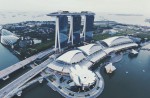
Local photographer captures drone’s eye view shots of Singapore
Click on thumbnail to view photos. Source:
Instagram / idroneman















Cost of Cars
Something that’s linked quite closely to the Singaporean notion of “quality of life” is car ownership. Yes cars are bloody expensive in Singapore, more expensive than any other country perhaps. The government seeks to solve this problem through making public transport a viable option, by constant expanding their coverage and making it very affordable. Barring the relatively infrequent breakdowns. In America car ownership would be something of a necessity, because apart from it being virtually impossible to travel without having a car. I drove an hour from where I lived to the Stanford campus every day for 5 years. However, you can only imagine the traffic congestion I have to deal with on the I-80 every day. Making cars affordable in Singapore is just going to make the roads more congested, at which point it’s not make sense to own a car anymore.
Freedom of Expression
I believe I touched a little on this topic, so now I’m going to clarify that freedom of expression has never meant freedom to say anything you want without consequences. You may think there is freedom in just about any modern developed country so why can’t Singapore have it, but you have to also take in account the laws that these countries have against racism such as the Crime and Disorder Act in Britain. There is absolutely no country in which you can just say anything to incite violence, disorder, or possibly terrorism without being persecuted. The US is a very unique situation wherein everyone can practically say anything they want without being held for trial, but that doesn’t mean you can defame anyone you like without being sued.
Yes, the US probably has the freedom of expression that most young, naive Singaporeans are asking for, but look at the state of the country, and look how they were able to regulate racism. I really wonder if that is what Singaporeans want, the freedom to go on any MRT train and call an Indian or a Malay person out based on the colour of their skin. This toxic right belittles the very equality that the founding fathers of this country fought for. I thought Singapore left Malaysia because they weren’t able to promise the sort of racial equality that Lee Kuan Yew had asked for. People may argue that this wouldn’t happen, and that education is the only solution to racial tolerance, but how many people in Singapore are actually educated to the level that would make them impervious to racial hate? The last I checked, the leader of the Ku Klux Klan, David Duke is a university graduate. Humans cannot be realistically be given the ability to run their mouths in hopes that education can be an effective restrictor, because it is obviously not. Only the law can protect the rights of the people from being offended, racially or religiously. The question on whether the right of being protected from emotional harm or the right to be able to express our ideas freely has an obvious answer. People want to be able to say what they want, but they aren’t willing to bear the consequences that being emotionally fragile human beings, violence is just one step away from offensive remarks with racial or religious undertones. This brings us to the question of “is prevention better than cure”. Do we want to let loose the darkest sides of our psyches in hopes that Singapore will continue to be an inclusive society?
I’m not going to sugarcoat the bad things about Singapore, because there are some pretty strict laws that must be changed, like laws against homosexuality, which I think will, in time, be abolished. But people need to understand one thing, if you want to demand the government to do something about your problems, please make sure you’ve done enough academic research about whether or not your problems are essential problems, or are they problems that are just characteristic of a modern metropolitan city, for if they are, there’s really no solution to many of those problems. No country has been able to keep housing affordable in their capital city relatively to their suburban or rural areas. Singapore has no suburban areas, the closest thing we have to a countryside is Malaysia, where houses are by the Singaporean definition, affordable and cheap. As I have said about freedom of expression, there’s a huge price we have to pay for it. Not everyone is educated, not everyone is inherently tolerant. If we allow that to happen, may I refer you to the countless of videos on UK, US and Aussie racism that happened regardless of the laws imposed against racial remarks in the UK and Australia. If Singapore starts to lax its laws against freedom of expression then the fundamentals of what made this country great will crumble.
So why do people hate Singapore you ask? Well my only answer is blame Hollywood, and blame ignorance. Young people are a pain in the a**, we’ve all been through that phase. They just need to grow up and realise that you cannot always get what you want, you should not always get what you want.
Singapore is in good hands, and I’m proud to stay on, contribute to the economy, create jobs for Singaporeans, do community and volunteer work, all in the name of preserving my choice to come live here.
Majulah Singapura.
Image:
Publication Date:
Sunday, June 19, 2016 – 16:13
Send to mobile app:
Source:
Rotator Image:
Story Type:
Rewritten Story
HK Disneyland tries to retain its charm as Shanghai beckons

Better service and shorter queueing time are some of the reasons mainland Chinese tourists gave for visiting Hong Kong Disneyland, even though a much bigger one has opened back home.
Many of them said they did not want to “squeeze in the crowd” or queue for hours to get into the attractions at Shanghai Disneyland, which was officially opened last Thursday.
The US$5.5 billion (S$7.4 billion) theme park, which took five years to build, is three times bigger than the one in Hong Kong.
“As it’s newly opened and with so many people flocking to it, I don’t expect the service to be good,” Ms Jenny Zhao told The Sunday Times.
The 35-year-old tourist from Tianjin city said she spent 30,000 yuan (S$6,160) on a four-day trip specially to take her six-year-old son to visit Disneyland.
Despite its continued appeal to mainland Chinese tourists, however, analysts say the Hong Kong theme park could face a further hit with the opening of Shanghai Disneyland, after suffering a 23 per cent slump in mainland visitors last year.
Highly dependent on mainland tourists, the park, which is 53 per cent owned by the government, reported a loss of HK$148 million (S$25.7 million) last year and had to lay off staff earlier this year.
“The next two years will be very challenging,” its former managing director Andrew Kam had told reporters in February this year before his sudden resignation the following month.
Mr Joseph Tung, executive director of the Travel Industry Council which regulates travel agents in Hong Kong, said: “Disney has to think of something to differentiate itself from what Shanghai is offering.”
Mr Tung and other industry observers say it is time that Hong Kong’s tourism industry began its soul-searching on how to get its groove back.
For a start, while the city’s theme parks cannot compete with those in Shanghai in terms of size, it can build on its competitive edge over China in terms of service.
“Hong Kong people have to be more polite and upgrade their services, so that visitors from the mainland will feel they are welcome in Hong Kong,” said Mr Tung.
As one of the key pillars of the city’s economy, tourism accounts for 13 per cent of total employment in Hong Kong and contributes to 5 per cent of its gross domestic product (GDP). The government has allocated HK$240 million to give the industry a boost.
Hong Kong’s Secretary for Commerce and Economic Development Gregory So told reporters at a travel event on Thursday that the city will be holding more events and festivals to appeal to a different mix of tourists.
New hotel attractions will also be built at Disneyland and Ocean Park, a marine life theme park.
By upgrading its tourism infrastructure, Hong Kong would be able to attract tourists from sources other than mainland China in the long run, said OCBC Bank economist Tommy Xie.
However, in the short term, it would be difficult for the industry to regain traction given the stronger Hong Kong dollar, he added.
Instead of building another Disneyland or adding another cross- region bridge, tourism analyst Jennifer So of China Securities International said that “we should diversify our tourism offerings such as organising community- based travelling”.
joycel@sph.com.sg
This article was first published on June 19, 2016.
Get a copy of The Straits Times or go to straitstimes.com for more stories.
Image:

Publication Date:
Sunday, June 19, 2016 – 19:00
Keywords:
Send to mobile app:
Source:
Story Type:
Others
Defiant Hong Kong bookseller likens China detention to 'Cultural Revolution'
.jpg "hkpublisher1.jpg")
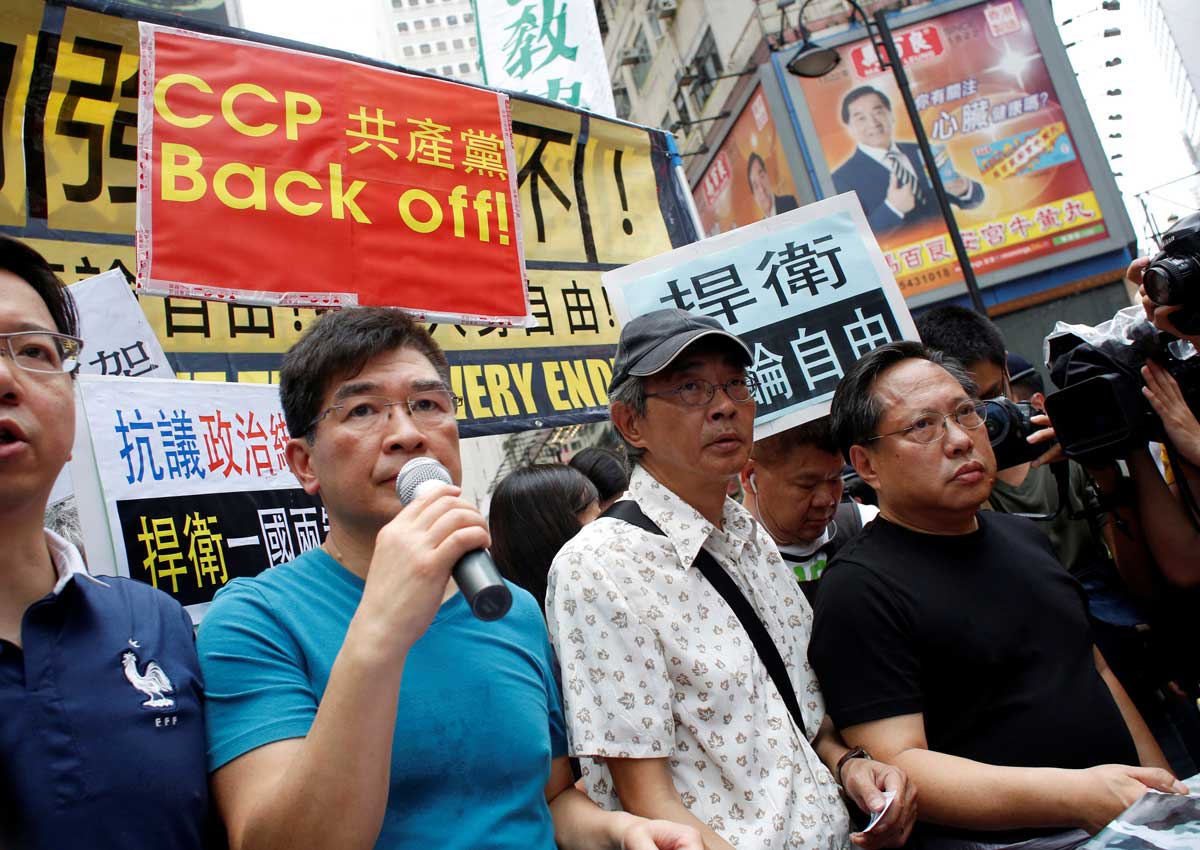
Hong Kong – The Hong Kong bookseller who broke silence earlier this week about being blindfolded and interrogated in detention in China likened his ordeal to Cultural Revolution repression in an interview with AFP Sunday.
Lam Wing-kee is one of five booksellers who went missing last year – all worked for a Hong Kong publishing house known for salacious titles about leading Chinese politicians.
His story sent chills through Hong Kong where the booksellers’ case has heightened fears Beijing is tightening its grip on the semi-autonomous city.
He told Thursday how he was detained for months after being picked up in the southern mainland city of Shenzhen in October on a visit to see his girlfriend.
Lam, who was placed on suicide watch during his detention, broke bail Thursday and is refusing to go back over the border, where he is under investigation for bringing banned books into the mainland.
Dressed in a neat blue shirt and cap, the 61-year-old told AFP how he felt terrified during his detention, where he was threatened with 30 years in jail and was harangued by two men who said they had come from Beijing.
Click on thumbnail to view photos. Source:
AFP, Reuters


“They made me feel it was a Cultural Revolution denunciation,” he said, referring to the decade of torture, executions and public vilifications carried out under communist leader Mao Zedong across mainland China from 1966.
“They said we published, sold and mailed books to demean the state leadership. We are reactionaries. (They told me) I could be jailed for 20 to 30 years until I die.
“It was made clear to me that their power was huge and does not require legal means.
“I was just sitting there watching them. When I said one thing they would say 30 things…banging the table.” Lam says he was told that a “special investigation unit” was dealing with his case.
He was allowed back into Hong Kong for the first time Tuesday on the condition that he pick up a hard disk listing bookstore customers and return to the mainland Thursday. Instead he decided to cut loose and break his silence.
“If the worst comes to the worst, I could die. (But) ‘civilians do not fear death, why threaten them?’,” said Lam, quoting an ancient Chinese idiom often used to describe fearless defiance of repressive regimes.
“I am a free man.” Lam is staying with a relative and says he has not asked city authorities for protection.
“There is no use,” he said. “They cannot protect me forever.” He has also turned down an offer from a pro-democracy politician to help him seek asylum in another country, saying he wants to remain in Hong Kong and continue to speak out.
Critics have accused the Hong Kong government of being a Beijing puppet that can no longer protect its own citizens, and are demanding to know what the authorities have done to try to help the booksellers.
Click on thumbnail to view photos. Source:
Reuters, AFP
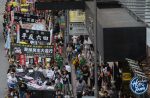

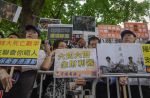




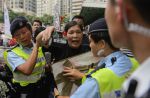

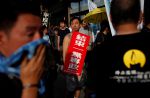
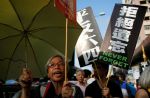
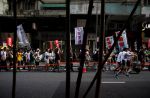
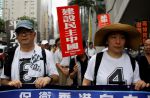
Lam led more than 1,000 protesters through the city centre Saturday over his detention.
He told AFP the Mighty Current publishing house, where the five booksellers worked, and its outlet the Causeway Bay Bookstore – which Lam managed – had been targeted as part of a wider crackdown to deter Hong Kong from putting out political titles.
During his interrogation he was asked to hand over details of authors and customers, he said.
The case has spooked some Hong Kong bookshops into removing controversial titles from their shelves – but Lam says he will continue to sell them if he can.
“There are no banned books in Hong Kong,” Lam said.
“It’s a place with freedom of publication…there is a market.” Since Lam went public, three of the other booksellers have cast doubt on his story.
One of them, Lee Bo, the only one of the group to have disappeared on Hong Kong soil, refuted Lam’s claim that he had told him he was taken to the mainland against his wishes.
The two other booksellers who questioned Lam’s version, Lui Por and Cheung Chi-ping, were quoted by pro-Beijing media as speaking from the mainland, where they are believed to still be under investigation.
Lam says he sympathises, describing them as “under threat”.
The fifth bookseller, Gui Minhai, is in detention – his family is demanding his release.
Lam has been hailed a role model by those in Hong Kong who feel Beijing is suffocating its cherished freedoms.
But he says he is nothing special.
“I am not a hero,” he told AFP.
“The people of Hong Kong are heroes …as long as we keep fighting there is hope.”
Image:
Publication Date:
Sunday, June 19, 2016 – 16:16
Send to mobile app:
Source:
Story Type:
Others
Will Govt's 'follow-the-money' formula work in changed landscape?
Does the Singapore Government work in mysterious ways?
You might think so going by two recent events which caught quite a few people by surprise.
First was the Home Affairs Ministry’s statement earlier this month about foreign sponsorship of the annual Pink Dot event at Speakers’ Corner in Hong Lim Park.
The ministry said it was taking steps to make sure foreign entities do not fund, support or influence these activities which involve members of the lesbian, gay, bisexual and transgender (LGBT) community.
The move made many see red as foreign companies have been sponsoring the annual gathering for several years without any problems, including the likes of Google, Apple and Facebook.
Then, there was the news that from next year, public servants will no longer be able to access the Internet through their work computers, but have to use their mobile devices or dedicated terminals to reduce the risk of hackers infiltrating the system and stealing or damaging information.
There was disbelief all round over what many saw as an over-reaction on the part of the authorities and it had to take the Prime Minister to explain why it was acting like a fortress under siege.
So, what to make of all this?
Has the Government suddenly turned its back on the world?
In fact, the issue is an old one for Singapore: how to operate an open economy with one of the most connections to the rest of the world, but still keep a tight lid on unwanted elements and what it considers to be undesirable influence detrimental to the country’s well-being.
This has been a continuing challenge for the country because while its livelihood depends on it being open, the political instincts of the Government have tended towards management and control.
The easiest fights have been when the enemy was clearly foreign and evil.
When traffickers from the region, which is one of the world’s largest producers of opium and heroin, threatened to make Singapore their transit point, the country introduced one of the toughest anti-drug laws in the world, imposing the death penalty on offenders.
This position has remained unchanged even in the face of mounting criticism from international human rights groups.
Singapore isn’t afraid to be different on issues that threaten its security.
Sometimes, what’s being kept out was at first welcomed with open arms – like foreign money looking for safe havens.
When it poured into the property market here in the 1990s, it was actively sought and encouraged because the plan then was to make the city attractive to the super wealthy.
But too much of a good thing can be hazardous to one’s well-being.
When prices went through the roof, and a property bubble developed, measures were introduced to cool down the hot market.
They are still in place today.
Banking laws have had to be tightened to prevent money laundering through Singapore.
Indeed, the Monetary Authority of Singapore announced last week it wanted banks to tighten even more.
These examples show that the Government believes it is possible for Singapore to square the circle, operating a free and open economy while selectively shutting out unwelcome visitors.
The move to protect public service computers from foreign hackers is the latest variation of this thinking.
Expect the Government to hold the line even if it proves unpopular among civil servants.
But what if it is ideas it is attempting to shut out, like “political issues or controversial social issues with political overtones”, which the MHA statement said were off limits to foreigners.
Will a people educated in some of the best universities in the world, connected to the World Wide Web in one of the most wired countries which is home to some of the leading lights of the digital economy, accept they need protection from foreign influence by a Government which believes it knows best?
The improbability of the challenge might deter some governments, but not the one here.
In fact, it has had much practice on this front, going back to the 1970s when it laid down the rule that foreign magazines and newspapers had no role to play in Singapore’s domestic politics.
Those were bruising political battles with some of its fiercest critics, including publications like Time magazine, the Asian Wall Street Journal and the Economist.
One by one, though, they were forced into submission, and the policy was entrenched.
Can the same approach work today, even if the world – and Singapore – has changed irrevocably?
There is one unspoken strategy the Government has used to much effect at every encounter: Follow the money.
Whether it’s the foreign media, alternative news websites, or LGBT causes, it believes that if it is able to trace the source of their funding and shut or squeeze it, even the toughest will eventually comply.
During its fights with the foreign media, it restricted the circulation of offending publications, hurting their pockets.
In the more recent moves to regulate online media, it required those of a certain size to declare their funding sources, with financial penalties for offenders.
In clamping down on foreign funding of LGBT events, it is following the same script, going where the money trail leads.
End of story?
For these specific battles, I have no doubt the Government will prevail, as it has repeatedly done.
But it will be a very narrow victory because the foreign ideas that have had the biggest impact on Singaporeans, for better or worse, have long stormed the Singapore gates.
The most powerful ideas – and they mostly originated outside – are neither overtly political nor controversial.
They simply change fundamentally the way people think and, in doing so, disrupt and destroy the old way.
The Internet and social media overturned traditional concepts of hierarchy and attitudes towards authority.
Disruptive technologies like Google and Facebook revolutionised the media industry, making it impossible for governments to control information.
Indeed, it is because these ideas have changed the world that causes like those associated with the LGBT community have gained so much traction worldwide, including in Singapore.
Politics might remain off limits to foreigners.
But the politics itself has already changed.
hanfk@sph.com.sg
Image:

Category:
Publication Date:
Sunday, June 19, 2016 – 19:00
Keywords:
Send to mobile app:
Source:
Story Type:
Others


