Home Blog Page 3615

Are there cheaper alternatives to hiring a domestic helper?

0

Domestic helpers have almost become a ubiquitous part of our lives.

Many Singaporeans hire a helper to take care of their chores, become a replacement parent children and aged or disabled person in the household.

Indonesia announced that they intend to stop sending new live-in maids starting as early as next year.

Singaporeans dependent on maids or looking to get one will worry about how this would affect them.

With 125,000 Indonesian helpers, we can expect that the impact to be significant.

A domestic helper shortage will give maid agencies a reason to increase their agency fee for maids from other countries like Philippines, Myanmar, and Sri Lanka.

Cost Of Hiring A Live-In Domestic Helper

Monthly Salary

The monthly salary of a domestic helper can start at around $500 for a helper from The Philippines.

An Indonesian maid, however, will cost more because the Indonesian Embassy mandated that their maids must be paid a minimum $550 a month.

Foreign Domestic Worker Levy

The government uses the levy to regulate the number of foreign workers here.

When we seek to hire a domestic helper, the levy would be an area of concern.

Its mechanism is like a CPF contribution, but instead of it going to the maid, it is a tax collected by the government.

Hence, it is wise to find ways to make use of the concessionary levy instead of paying the full amount.

Here is the breakdown of the levy, provided by the Ministry of Manpower:
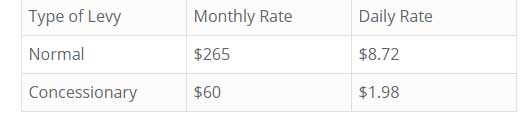
You qualify for a concessionary levy ($60 per month) when you are under these schemes:

  • Young child or grandchild scheme (the child must be a Singapore citizen under 16 years old, and is living at the same address as you)
  • Aged person scheme
  • Persons with disabilities scheme

Payment of the levy seems affordable on its own.

However, without the concessionary levy, the $265 paid on top of a salary of at least (and likely much more in future) $550 will take a chunk out of your pay.

In Singapore, the average salary is $3949 (including CPF) as at 2015.

After deducting 20% for CPF contribution, the median pay would be around $3160.

You Pay More Than Just Wages And Levies

Hiring a maid will therefore be at least $610 (assuming you are hiring an Indonesian maid on the concessionary levy basis).

There are more costs than the compulsory insurance and maid agency fee.

Your helper’s living expenses must be budgeted too.

Examples include food, utility bills, transportation (including her airfare when she visits home), to name a few.

If you include your helper’s living expenses, it can easily exceed $1000. That is more than 30% of your salary.

If you have other financial obligations like paying for enrichment lessons or servicing car loans, spending more than $1000 in total for a maid may be unsustainable.

Other Alternatives

It is uncertain how much the average minimum wage of a maid here would increase in 2017.

If you think the cost to you would be unsustainable, you might want to consider the following alternatives.

Childcare Centre

Enrolling a child to a childcare centre is expensive. It can range from $300 to over $1000.

It is typical of private operators to command fees of more than $1000, as parents have to pay a premium for a low child-to-teacher ratio.

This means their child will probably get more attention from their teacher.

A childcare centre may be one of the cheapest options, but some parents do not get a peace of mind, as they may question the cleanliness of the centre and the quality of the service there.

Nannies

You can find a nanny to look after your children after school, or hire someone to take them out (the latter is more popular with expatriates).

The rates depend on many factors.

Some examples are qualification level (e.g. university graduate), specialized qualification (e.g. early childhood), work experience, languages spoken and written, and other tasks required (whether the nanny needs to help with laundry and other chores).

A babysitter’s rate can start from $1200 per month for part time to $1800 per month for fulltime.

Grandparents

Grandparents will certainly be the best option for working parents.

They give you the ultimate peace of mind, because after all, they raised you.

Grandparents will probably be the most economical option because they don’t require a monthly fee.

Perhaps the only costs you can compensate is your monthly allowance to them, and some extra cash for your child’s expenses.

A Career Sacrifice

Letting your career take a backseat may be the next best alternative if the aforementioned options are not viable.

It will be a more prominent option if your company does not have a family-friendly work policy, such as flexible work hours.

If other family members are unable to help, perhaps the only choice is to look after your child full time.

Many excuses may arise such as “we need the dual income to support the family,” “how are we going to afford our annual vacation?”

The wonders of looking after your own child can be priceless.

From the quality time spent, to the proper supervision and home cooked meals, your child will enjoy your company.

That said, making a career sacrifice is a personal choice that takes a lot of financial planning with your spouse before making the big decision.

After Thought

Childcare centres are costly, and hiring nannies are even more expensive.

While new Indonesian maids may live in dormitories instead of our homes, it may be worth a try.

Nonetheless, nothing can replace the love and comfort a family member can provide for your child.

That is something no amount of money can buy.


DollarsAndSense.sg is a website that provides bite-sized and relevant articles to help Singaporeans make better financial decisions.

Image: 
Category: 
Publication Date: 
Tuesday, June 21, 2016 – 11:56
Send to mobile app: 
Source: 


Story Type: 
Others

Source link

Fewer apply for taxi-driving license

0

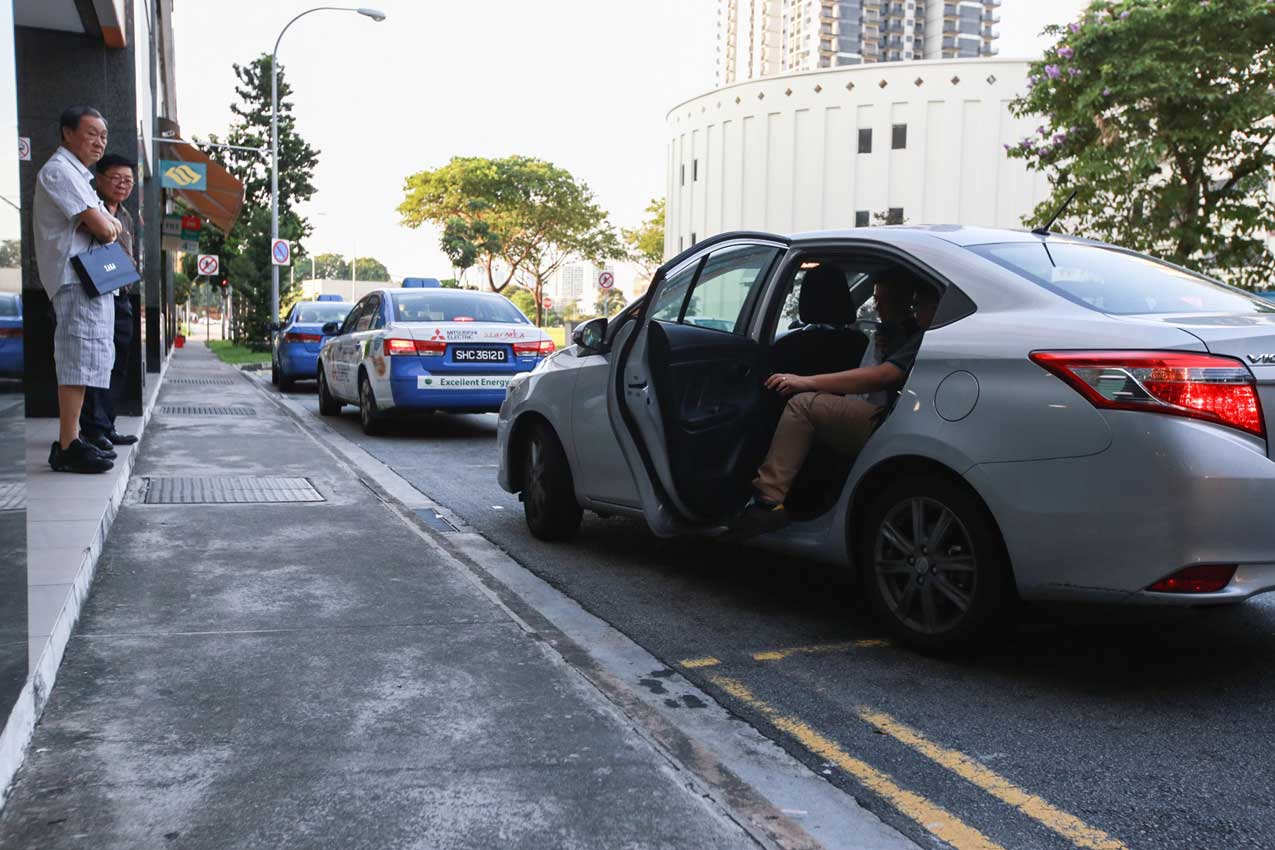
Fewer people are applying to be taxi drivers as the lure of private-hire alternatives such as Uber and Grab grows stronger.

According to the Land Transport Authority (LTA), the number of applications for taxi-driver vocational licences fell from 9,094 in 2013 to 7,968 last year.

That translates to a 12.4 per cent drop in just two years since Uber and Grab entered the market in 2013. Between 2010 and 2012, the number of applicants averaged 9,105 a year.

The development comes as no surprise to taxi industry players, which have been facing rising competition from the private-hire sector.

Mr Neo Nam Heng, chairman of diversified motor group Prime, which has both taxi and private-hire businesses, said: “This definitely is just the beginning.

“The taxi industry will eventually not have enough drivers to replace those who are retiring.”

Premier Taxi managing director Lim Chong Boo said that with the proliferation of private-hire fleets, “people don’t need to be taxi drivers today”. “As a taxi operator, my only request is, please level the playing field. Start by taking away all the quality of service standards and taxi availability standards.”

Mr Lim was referring to standards measuring safety, taxi drivers’ conduct and response to call bookings. Taxi operators can be penalised if these standards are not met.

In 2013, the LTA also rolled out taxi availability standards, in response to persistent complaints from commuters that it was difficult to get a cab despite Singapore having the most taxis per capita among developed cities. This was partly because there were cabbies who were casual drivers and did not spend enough time on the road.

Taxi operators said private-hire drivers do not have to meet such requirements. National Taxi Association executive adviser Ang Hin Kee said: “The playing field is fairly uneven. But with close to 100,000 taxi-driver vocational licences issued, having more licence holders does not necessarily generate a more active driving pool.”

Cabby Alan Tang, 53, said: “Some of my taxi-driver friends have jumped ship, but most of us are adopting a wait-and-see approach.”

Veteran taxi driver Fred Wu, 70, said it has become more difficult to meet his target earnings of $120 to $150 a day. “It’s not as good as before. You have to drive a bit longer,” he said. But he said he would stick to driving a cab because the costs are more certain.

The Taxi Academy, which offers courses to train, test and certify taxi drivers and which is directly affected by the lower intake, was not available for comment.


This article was first published on June 21, 2016.
Get a copy of The Straits Times or go to straitstimes.com for more stories.

Image: 
Category: 
Publication Date: 
Tuesday, June 21, 2016 – 14:00
Keywords: 
Send to mobile app: 
Source: 


Story Type: 
Others

Source link

Ah Meng and family get new free-ranging hangout at Singapore Zoo

0

The area, which features hammocks and interconnecting vines, will give orangutans like Ah Meng a new place to hang out. 

Source link

Gelare 50% OFF Regular Waffles on 21 June 2016

0

Gelare half-price off all regular waffles today at all outlets (21 June)

Gelare 50% OFF Regular Waffles on 21 June 2016

Enjoy 50% Off all waffles at Gelare on Tuesdays. If you haven’t heard, Geláre has been certified Halal by MUIS

Source

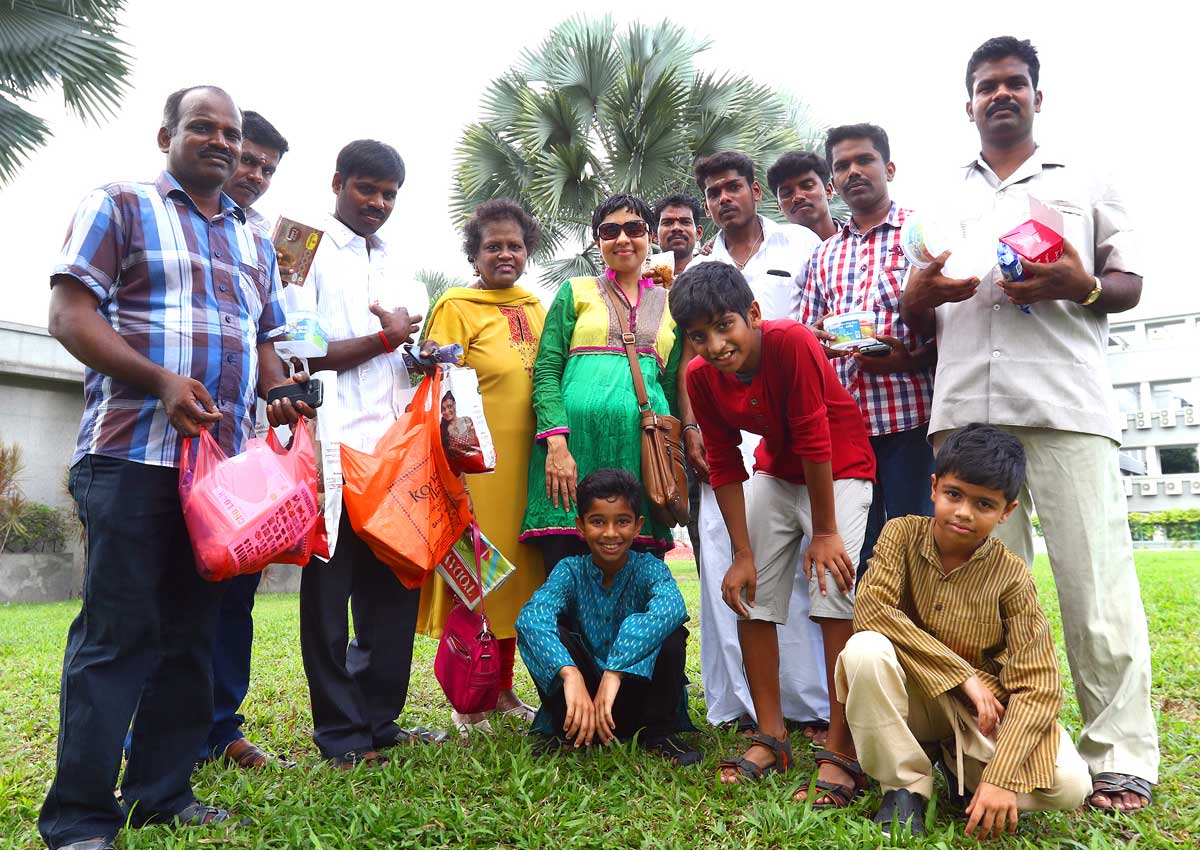
After seeing migrant workers shivering in a downpour, she sets out to help them – rain or shine

0

Unless you’ve been out of the country the past two weeks, you would have probably noticed that there has been heavy downpours throughout the day all over Singapore.

That’s right, the monsoon season is back, and is expected to last up until September.

While most of us cozy up in the confines of our comfortable offices during our work hours, there are others who are not as fortunate in their working conditions.

One group in particular are the migrant workers who are extensively involved in outdoor labour for most of their working hours.

You may be familiar with this video posted on Facebook by Familiar Strangers that has been making its rounds since January.

In a reaction video format made famous by the #meantweets series on Jimmy Kimmel Live, the videos basically documents the responses of migrant workers upon reading comments being left by Singaporeans online – both negative and positive.

Truth be told, we sometimes forget that that they are people too.

These are people who have been away from their families for years on end, all in hopes to provide them a better future by gaining employment in Singapore.

Don’t Let The Rain Ruin Our Humanity

Dipa Swaminathan is much like most of us, a working professional with a family to take care of.

In 2014, as she was driving home during a heavy downpour, she noticed a group of construction workers, due to being devoid of protective rain clothing, stranded and shivering in the cold.

Realising how fortunate she was, she invited them into her car and drove them home.

Upon arrival, she gave them hot drinks and dry clothing for them to change into.

This was thus how #itsrainingraincoats came to be.

Until today, Dipa still keeps raincoats in her car in the off-chance that she comes across workers who may be in need of them in the rain, but that incident triggered the start of something so much more.

From simply distributing raincoats, it has grown to also include the donation of everyday basic necessities such as clothing, shoes, toiletries, and even off-the-counter medication like Panadol.

As she shares the origin story of #itsraningraincoats in an online article for The Pride, there was a much larger concern weighing in at the back of her heart – the unjust practices of companies when dealing with the welfare of their migrant workers.

Advocating Companies To Take Better Care Of Their Workers

A key mission of #itsraningraincoats is to educate companies about introducing improved welfare conditions for workers in a bid to change perspectives, and hopefully help them understand the situation on the ground where their workers toil.

Dipa also personally undertakes individual cases of migrant worker troubles, and helps to solve them while also being in constant contact with the relevant government agencies to highlight the plight of migrant workers.

There were of course, good and bad endings to each story she embarked on.

Her very first case, and many others of which had good outcomes for the migrant workers makes for the happy memories.

On the flip side, there were also cases where she wasn’t able to get a favourable outcome, citing the example of one who ended up being sent back to his home country.

Even then, the setbacks have not deterred her from continuing her crusade to make these workers’ lives better in any way she can.

Most recently on last Saturday (18 June), she was getting coffee at a Starbucks outlet at Singapore Polytechnic and she noticed that the staff were beginning to clear food from behind the counters for disposal.

Sensing the wastage that this would have brought about, she kindly asked the staff if she could have the food instead, so that she could pass some to migrant workers.

After which, she immediately handed the pastries and sandwiches to some construction workers she bumped into while making her way back.

How Can You Help?

As you’ve seen from the example of Dipa, it takes no superhuman amount of effort to help out migrant workers.

Giving them a raincoat when it’s pouring, or giving food to them is something that anyone can do.

If you would, however, like to be more actively involved as a volunteer, there are many ways to do so.

You may approach Dipa at #itsrainingraincoats, Migrant Workers Awareness Week, and Singapore Kindness Movement among many others.

Migrant workers are as much a part of Singapore as we are, so help make their time here away from their families a little more bearable by spreading a bit of kindness wherever you can.

As Dipa puts it – #itfeelsgoodtodogood

Vulcan Post is all about living life with a digital edge, up and coming startups, and people who inspire conversations.
Visit Vulcan Post for more stories.

Image: 
Category: 
Publication Date: 
Tuesday, June 21, 2016 – 10:53
Keywords: 
Send to mobile app: 
Source: 


Story Type: 
Others

Source link

Singapore's first dental clinic for elderly, special needs patients opens

0

The Geriatric Special Care Dentistry Clinic at the National Dental Centre Singapore is also designed with age-friendly features.

Source link

Chinese man tried to kill his intersex baby 3 times

0

The father of an intersex baby in Henan province was detained by police on suspicion of attempting to murder the newborn.

The baby was born on May 13 in Anyang. After it was found to be an intersex baby, his father and grandfather attempted to kill it three times before the mother contacted authorities, the police said.

The father was detained and the grandfather was released pending trial, according to the mother.

“We thought we would have a girl. But soon we were told the ‘girl’ is actually a boy, with an atrophic sex organ. We panicked and got concerned,” said the mother, Yang Xiaoqing, adding that her husband attempted to smother the baby because “he is neither a boy nor a girl”, but a “monster”.

According to Zhengzhou Evening News, the father at first attempted to cover the baby’s face with a wet towel. Yang heard the baby’s crying and stopped her husband.

“When I heard my son cry, I was in pain. My wife cried and I gave up,” the paper quoted the father as saying.

Three days later, he again attempted to smother the infant, covering his face with a wet towel and diapers, and wrapping him up in a blanket, Yang said, and she stopped him again.

“He could not bear to kill his own flesh and blood after all, and my father-in-law took over,” Yang recalled.

She found her baby was missing and called police.

The police said they later discovered the baby’s grandfather had abandoned him outside the village.

“After he was found, he did not eat for 12 hours. I was holding the baby. My heart is broken. He may be a monster to others, but to me, he is and will always be my sweetest baby,” the mother said.

The couple also have a daughter.

“We are in a difficult situation. My husband was locked up, my parents have health issues and the two children need someone to take care of them. But what I worry about most is that my son may suffer discrimination when he grows up,” Yang said.

Police in Linzhou, Henan province, where the father was detained, did not responded to China Daily’s interview request.

“Intersex cases are extremely rare. Surgery depends on diagnoses,” said Li Jianning, director of the Department of Plastic Surgery at Beijing University Third Hospital.

“It is still a stigma in Chinese society. They are being labelled as neither male nor female,” Li said.

According to the Intersex Society of North America, “If you ask experts at medical centres how often a child is born so noticeably atypical in terms of genitalia that a specialist in sex differentiation is called in, the number comes out to about 1 in 1,500 to 1 in 2,000 births. But a lot more people than that are born with subtler forms of anatomical variations, some of which won’t show up until later in life.”

Unusual sex characteristics

Intersex people are born with sex characteristics that do not fit typical notions of male or female bodies, including genitals and chromosome patterns. According to experts, between 0.05 per cent and 1.7 per cent of the population is born with intersex traits. Remedial surgery depends on diagnoses.

Image: 
Category: 
Publication Date: 
Tuesday, June 21, 2016 – 10:49
Send to mobile app: 
Source: 


Story Type: 
Others

Source link

Children's television show Hi-5 launches first pre-school in Singapore

0

SINGAPORE – Children’s television programme Hi-5 introduced its early childhood learning programme at its first House of Learning pre-school in Singapore this month.

Registration for the school’s term starting in July is open, and parents may visit its premises in Hoe Chiang Road or schedule a tour of the school from Monday (June 20).

Its pupils, who will be aged between 18 months and six years, will be able to enjoy the Hi-5 experience through play and discovery learning.

The House of Learning will incorporate clips, songs and stories from the popular Australian programme to “encourage delight in learning and create a rich and stimulating learning environment”, it said in a press release.

The school will offer programmes for different ages as well. These include pre-nursery, nursery and kindergarten one and two.

Kindergarten pupils will be on a more structured programme to allow a smooth transition to Ministry of Education or international primary schools.

Specific skill sets and tasks will be targeted to ensure all Primary One assessment areas are included.

Parents will also be engaged, with specific homework tasks they can perform with their children.

The medium of communication will be English as the first language and Mandarin, the second language.

The school’s education facilitators have developed an inquiry, play-based curriculum that develops higher order thinking skills through self-regulation, it added.

Daily areas of learning include music, creativity, mathematics, world knowledge and physical development.

“Using the strengths of the television series and… theories of child development, the (House of Learning) will focus on specific Hi-5 movement songs, dances, finger plays, games and rhymes to teach developmentally appropriate topics and subjects for each age group,” said early years educator and consultant for the school, Ms Jennifer Rowe.

Added its director of operations, Dr Christoper Pereira: “With the many centres for House of Learning in Singapore to come, we will equip children with the social skills to manage the demands of day-to-day living and interactions to ensure all round educational development catering to current and future social and academic demands.”

The first Hi-5 pre-school opened in Kuala Lumpur last year.


This article was first published on June 20, 2016.
Get a copy of The Straits Times or go to straitstimes.com for more stories.

Image: 
Publication Date: 
Tuesday, June 21, 2016 – 10:17
Keywords: 
Send to mobile app: 
Source: 


Story Type: 
Others

Source link

Treasure hunters cause havoc in small village, but rocks are worthless

0

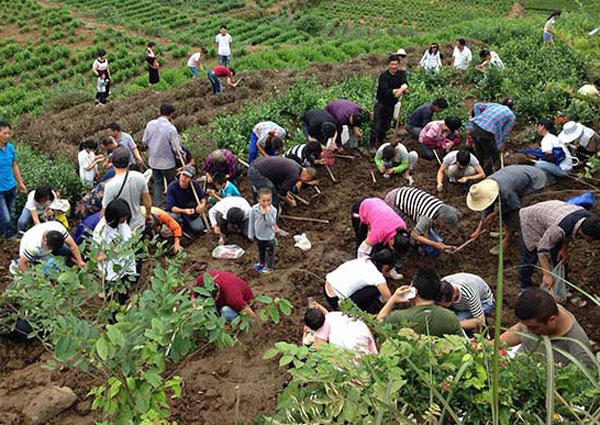
Thousands of people have turned a small village in Zhejiang province upside down in a search for what they believe are precious red rubies. However, a senior official said that the so-called rubies are worthless rocks.

In recent days, many visitors carrying pickaxes, shovels and flashlights have flocked into Houzhang village in Pan’an county, about a three-hour drive from Hangzhou, Zhejiang’s capital.

Qianjiang Evening News, a local newspaper, reported that the treasure-hunting fever was triggered by rumours circulating on WeChat. Some claimed rubies were dug from the village and a small one could bring 50,000 yuan (S$10,210) or even 250,000 yuan.

Shi Zhao’an, deputy director of the Land and Resources Bureau of Pan’an county, said the rocks were tested and found to be siliceous rocks and not worth much money.

“Many heard the same conclusion from experts after they sent rocks for testing. However, the rumour has moved so fast that people are still coming to the village,” Shi said.

According to Qianjiang Evening News, the treasure hunters are not just from local villages, and they are digging at night because they believe it is easier to find rubies then. Children and the elderly have joined the search.

Pan Xihao, a 47-year-old from Wushi village, Pan’an county, told Qianjiang Evening News that he came on Monday morning but in three hours had only found two small rocks.

“It is too exhausting,” Pan said. “There are rocks, but they are too small. I gave up. But I sold my pickax to another visitor for 20 yuan before I left.”

Since Sunday morning, local police have been sent out to keep order. Villagers also shut the only road to the village. But people are still finding their way in.

Pan Yuwen, a 57-year-old accountant from Houzhang, said that residents heard similar rumours when they were children.

“About 40 years ago, a geological prospecting team from the province came to our village. The team came here twice and stayed about two months,” Pan said.

Shi of the Land and Resources Bureau of Pan’an county said there are still 500 people digging in the village.

“Some have treated this as a trip, and kill time by digging for rubies with their friends,” Shi said. “However, constant digging will destroy the village’s ecosystem and disturb resident’s lives. Many village officials are wasting their time by being force keep order.”

Image: 
Category: 
Publication Date: 
Tuesday, June 21, 2016 – 10:13
Keywords: 
Send to mobile app: 
Source: 


Story Type: 
Others

Source link

20 dead after torrential rain in Chongqing

0

Torrential rain across nine provinces and Chongqing municipality in central and southern areas of China has left more than 20 people dead and forced tens of thousands from their homes.

Fifteen people have been reported missing since the heavy downpours started on Saturday, the State Flood Control and Drought Relief Headquarters said on Monday.

It said nearly 268,000 people have been relocated and 324,000 hectares of crops have been damaged, leading to direct economic losses of 6 billion yuan (S$1.2 billion).

In Chongqing, five people died, 1,197 were forced to leave their homes and 66 houses had been destroyed since Saturday, the city’s flood control and drought relief office said.

In neighbouring Sichuan province, four people died on Sunday after heavy rainfall and landslides caused their homes to collapse, according to the provincial flood and drought disaster relief authority.

Three people died in Anhui province, 26,000 were relocated and nearly 1,100 homes were destroyed, the provincial civil affairs department said.

In the southwestern province of Guizhou, nine people died last week in disasters caused by heavy rain.

Rescuers are working to free eight workers from a coal mine shaft, which was flooded after torrential rain fell on Sunday, the provincial civil affairs department said.

Flooding and hail killed two people and displaced 13,000 in the northwestern Xinjiang Uygur autonomous region after the area was affected by bad weather from Thursday to Sunday. One person is still missing, the Ministry of Civil Affairs said on Monday.

The National Meteorological Center issued a yellow alert on Monday for heavy rainfall in southern areas. From 2 pm on Monday, storms were expected across a vast area along the Yangtze River, including Anhui, Jiangsu and Hunan provinces.

Image: 
Category: 
Publication Date: 
Tuesday, June 21, 2016 – 10:07
Keywords: 
Send to mobile app: 
Source: 


Story Type: 
Others

Source link