Home Blog Page 3614

At least three dead in Japan landslides, floods

0

At least three people have died and three are missing after landslides and floods hit an area of Japan that was recently battered by major earthquakes, officials said Tuesday.

Rescue workers are searching for three people in southern Kumamoto prefecture, where nearly 2,000 residents were already forced to evacuate their homes after two huge earthquakes in April.

The 6.2-magnitude and 7.0-magnitude tremors were followed by more than 1,700 aftershocks, which broke up the ground in many areas, officials said.

Several days of torrential rain have subsequently triggered widespread landslides and flooding, officials added.

A 92-year-old man died after a landslide hit his house in Kamiamakusa city, a local disaster management official said on condition of anonymity.

A 79-year-old man drowned in a flooded ditch in the town of Kosa, they added.

The local government said in a statement that a third person had died, but did not provide details.

According to media reports, the victim was a 66-year-old man whose house was hit by a landslide in Uto city.

Public broadcaster NHK also reported a fourth possible victim, a woman who was taken to a hospital Tuesday morning and was pronounced dead.

The central government, which is supporting post-quake rebuilding efforts in Kumamoto, has beefed up its crisis management department.

“We will take thorough measures to deal with this,” Chief Cabinet Secretary Yoshihide Suga said.

The Japan Meteorological Agency has issued heavy rain and thunderstorm warnings for Kumamoto and surrounding areas on Kyushu Island.

The massive tremors that hit the region in mid-April left 49 dead and caused widespread damage.

Image: 
Category: 
Publication Date: 
Tuesday, June 21, 2016 – 13:18
Send to mobile app: 
Source: 


Story Type: 
Others

Source link

Watsons 1-Day Sale 1-for-1, Up To 60% Off & More for DBS/POSB Cardholders on 22 Jun 2016

0

ONE DAY ONLY: Watsons 1-for-1, up to 60% off & more for DBS/POSB credit/debit cardholders & Watsons members (22 Jun)

Watsons 1-Day Sale 1-for-1, Up To 60% Off & More for DBS/POSB Cardholders on 22 Jun 2016

Watsons will be having a sale on 22 June at 62 stores only exclusively for DBS/POSB Credit/Debit cardmembers and Watsons members. Up to 60% off hot buys. many 1-for-1 offers, Spend & Redeem Freebies and more

Source

Children with intrusive parents more likely to be overly self-critical: NUS study

0

The 263 children tested who demonstrated higher levels of self-criticalness also had elevated symptoms of anxiety and depression, according to an NUS study of primary school children.

Source link

Early entry to poly for early childhood courses

0

Candidates who have the aptitude to work with children can apply early for full-time early childhood education courses offered by Ngee Ann (NP) and Temasek (TP) polytechnics.

They are offering more than 300 places in three such diploma programmes, in an Early Admissions Exercise (EAE) starting tomorrow.

The EAE, which began this year, allows students to secure a place in a diploma course of their choice even before they sit the O-level exams. It caters to students with abilities and interests in a specific course, as well as those with talent in other areas such as sports and community service.

Up to 12.5 per cent of the polytechnic intake can be admitted through this scheme, which replaces the Direct Polytechnic Admissions (DPA) exercise, and folds in the Joint Polytechnic Special Admissions Exercise (JPSAE).

To meet the demand for trained pre-school teachers, the polytechnics have been expanding their full-time early childhood education courses – taking in a record 590 students this year, a 74 per cent increase from last year.

Of these, 265 were admitted through the DPA or JPSAE. They plan to take up to 680 next year.

NP offers the Diploma in Early Childhood Education and the Diploma in Child Psychology and Early Education. TP offers the Diploma in Early Childhood Studies.

NP principal Clarence Ti said in a joint statement yesterday the polytechnics “hope to see more students who have the aptitude and interest in early childhood education be given priority in gaining admission to courses in this field” through the EAE.

Mr Ang Teck Hua, director of TP’s Centre for Child Study, said: “In our selection process, applicants would have an opportunity to observe unobtrusively the working environment of TP’s laboratory preschool.”

This gives applicants a better appreciation of what the early childhood profession entails, he added.

Instead of one-to-one interviews, assessment of applicants will be based on their participation in group interviews and activities to gauge how suitable they are for working with children.

EAE applications will close next Wednesday and shortlisted candidates will be required to go for interviews from July 4 to Aug 16.

The Early Childhood Development Agency (ECDA) is also supporting successful EAE applicants, who will automatically be offered a Training Award (TA).

Prior to last year, students had to apply separately for the award, which is worth up to $40,000 for a three-year course, and includes full sponsorship of tuition and an $800 monthly allowance.

ECDA has set aside more than $10 million over the next three years to sponsor the award, which can be taken up by students in any of their three years of study.

Each year of sponsorship comes with a corresponding year of service to the early childhood sector.

Mr Eugene Leong, ECDA’s chief executive officer, said: “The early childhood sector has seen rapid expansion in recent years. This presents many rewarding and meaningful opportunities for students to play a direct role in giving every child a good start in life.

“ECDA is happy to collaborate with our polytechnics to support our TA recipients and help them prepare for successful careers as early childhood professionals.”


This article was first published on Jun 21, 2016.
Get a copy of The Straits Times or go to straitstimes.com for more stories.

Image: 
Category: 
Publication Date: 
Tuesday, June 21, 2016 – 17:00
Send to mobile app: 
Source: 


Story Type: 
Others

Source link

Ex-Harry's COO fined $40k over hiring scheme

0

Facing a manpower shortage, a former chief operating officer of a well-established bar and dining chain hatched a plan to hire foreign workers who were subject to a quota by pretending they were employment pass hires which are not subject to a quota.

In June 2012, Parmjit Kaur, 49, told employment agents for Harry’s International to look for foreign workers, who would be offered a monthly pay of $3,100. However, these workers would have to return more than half of their salaries as “reimbursements” for transportation and meal expenses.

Kaur, who was also a Harry’s director, wanted to bring the workers in on employment passes supposedly to circumvent the quota for work permit holders, who are lower-skilled and draw less salary.

Yesterday, Kaur was fined $40,000 after she pleaded guilty to five charges under the Employment of Foreign Manpower Act.

She admitted to 15 other counts of the same charge and these were considered in sentencing.

A district court heard that Kaur had first asked an assistant human resource manager to declare in the company’s employment pass applications that the foreign employees would be given a fixed monthly salary of $3,000.

This was, at the time, the minimum salary requirement for employment pass holders, who are foreign professionals, managers and executives. Approval was not granted for the applications, so Kaur instructed that a higher sum of $3,100 be declared.

Between April and September 2013, Harry’s falsely declared to the Controller of Work Passes that 20 foreign workers would be hired as restaurant chefs de partie at a fixed salary of $3,100 each.

Employment passes were issued to 20 Indian nationals.

The workers’ pay was credited into their bank accounts on the first day of every month, but they had to return $1,600 to Harry’s finance department the next day.

Meals and transportation were provided for only some workers and, even when provided, did not add up to $1,600.

In October 2013, a Ministry of Manpower employment inspector discovered the offences after receiving a tip-off.

Kaur, who was charged in November last year, could have been fined $20,000 and jailed for two years on each charge.

Harry’s International is wholly owned by F&B Asia Ventures. Kaur is no longer with the company.


This article was first published on Jun 21, 2016.
Get a copy of The Straits Times or go to straitstimes.com for more stories.

Image: 
Category: 
Blurb: 
Publication Date: 
Tuesday, June 21, 2016 – 17:00
Send to mobile app: 
Source: 


Story Type: 
Others

Source link

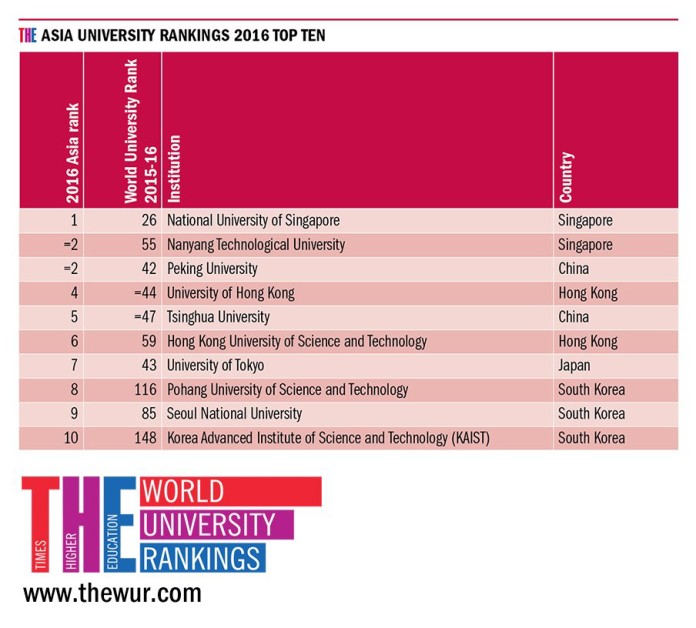
Singapore universities claim top 2 spots in THE’s 2016 Asia rankings

0

THE National University of Singapore (NUS) is on a roll this year, as it gets to put another feather in its cap after claiming the top spot in yet another ranking of Asian universities on Monday.

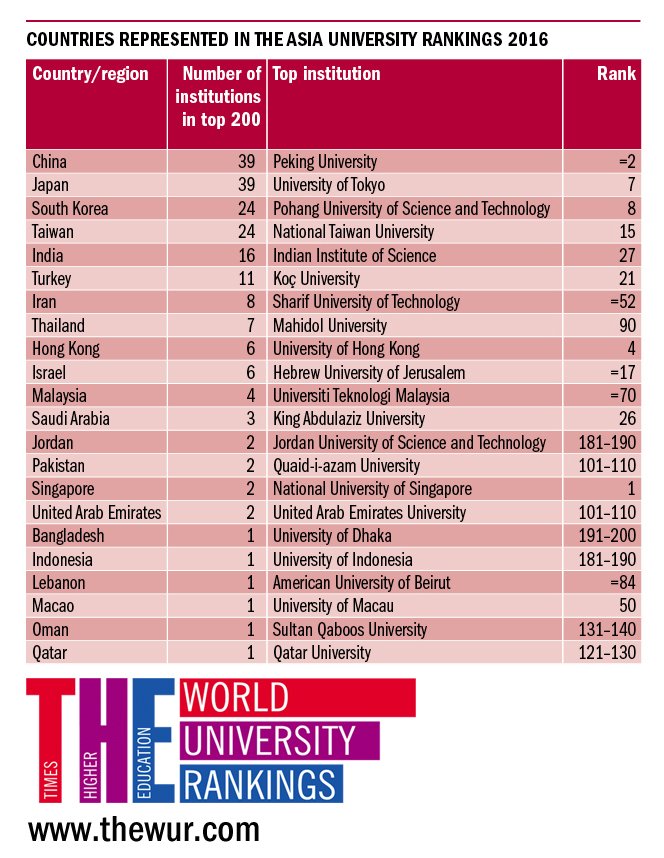
Times Higher Education (THE) released its Asia University Rankings 2016, revealing the region’s top 200 institutions from 22 countries.
Pic: Times Higher Education

Pic: Times Higher Education

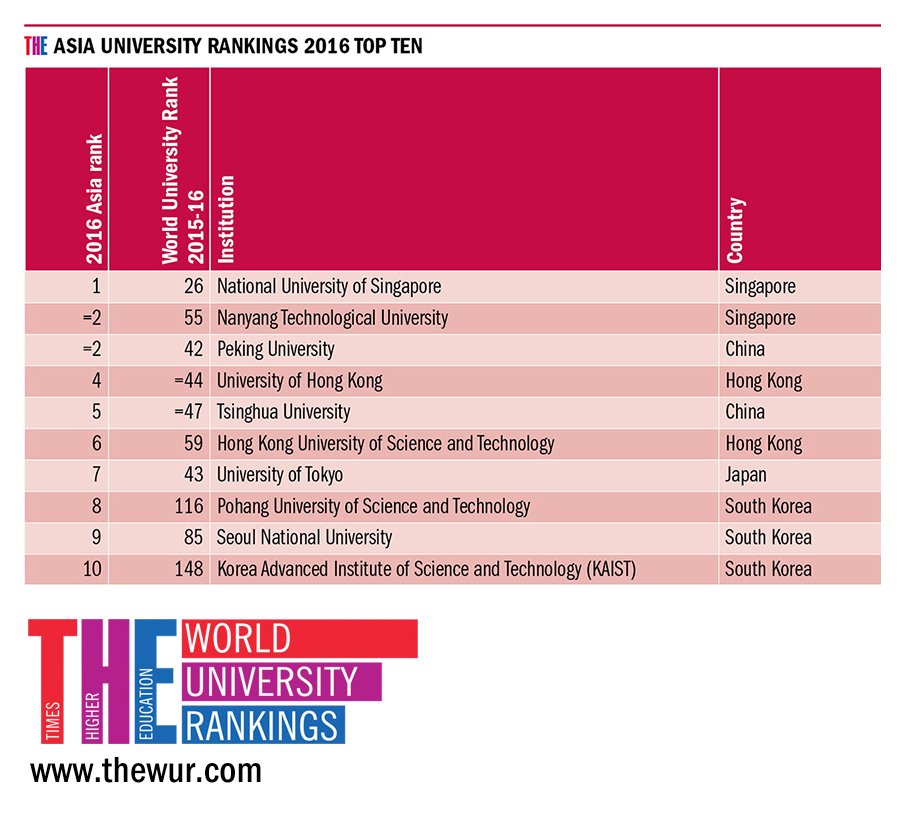
For the first time in the rankings’ four-year history, Singapore’s two ranking universities – NUS and Nanyang Technological University (NTU) – obtained their highest positions in the list, securing the top two spots, with NTU sharing second place with China’s Peking University.

NUS unseated the University of Tokyo, which had previously been number one for the last three years. This year, the University of Tokyo fell six places to seventh place.

Just last week, NUS was also named Asia’s top university in the QS Asia University Rankings 2016.

NUS president Tan Chorh Chuan said that based on the university’s experience in attaining excellence, there are several key factors that contribute to an institution’s development, including institutional agility and drive; recruiting and nurturing top-class talent; innovation and differentiation; and global partnerships.
Pic: Times Higher Education

Pic: Times Higher Education

Overall, universities in China and Japan have maintained a strong presence on the list, with each having 39 institutions making the top 200. South Korea and Taiwan are close behind, with 24 institutions each.

However, when it comes to the number of institutions which made the top 100, China has the upper hand, with 22 universities in the top half of the table (including two in the top 10) to Japan’s 14 institutions.

This year’s list includes eight more countries than last year’s, with several countries, including Bangladesh, Indonesia and Qatar, being represented for the first time.

According to THE’s rankings editor Phil Baty, the Southeast Asia region is “one of the most exciting and dynamic regions in world higher education and research today”.

“Not only is it home to Asia’s top two universities (both in Singapore), it is also at the center of significant initiatives to drive up the quality of universities – and to put them at the heart of the region’s economic growth,” he added, as quoted by the Malay Mail Online.

“This new data release shows that Malaysia, Thailand and Indonesia have universities able to stand up to rigorous performance benchmarking against the Times Higher Education’s performance indicators.”

Malaysia made a return to the top 100 since 2013, with Universiti Teknologi Malaysia placing 70th in the table.

However, Thai universities have taken a tumble in prestige, with Baty commenting: “It is disappointing that only seven Thai universities make this list of Asia’s best universities and that the country has not made more of a dent in the top half of the table.”

“Although the nation’s institutions have a stronger international outlook than many of their regional rivals, they score poorly on research environment,” he said, according to the Nation.

The lack of progress made by Thai universities has partly been attributed to the recent political crisis of 2013-14, which had resulted in less investment in higher education by the government.

“The country’s political crisis in 2013-14 has held back the nation’s universities and the government has been less committed at investing in higher education than its fellow ASEAN member Singapore.

“This ranking is full of rising stars that are beginning to challenge many of the Western elites; Thailand cannot afford to get left behind,” warned Baty.

Simon Marginson, a professor of international higher education at University College London’s Institute of Education, agreed with Baty’s assessment, and said that Thailand’s universities have been “held back by years of political turmoil, and lack of genuine governmental enthusiasm about funding”.

According to THE, its Asia University Rankings use the same 13 performance indicators as the World University Rankings; however, they were recalibrated to reflect the attributes of Asia’s higher education systems. The performance indicators are grouped into five areas: teaching, research, knowledge transfer and international outlook.

Main image via Flickr

The post Singapore universities claim top 2 spots in THE’s 2016 Asia rankings appeared first on Asian Correspondent.

Source link

Woman feeding wild boars sparks praise and concern

0

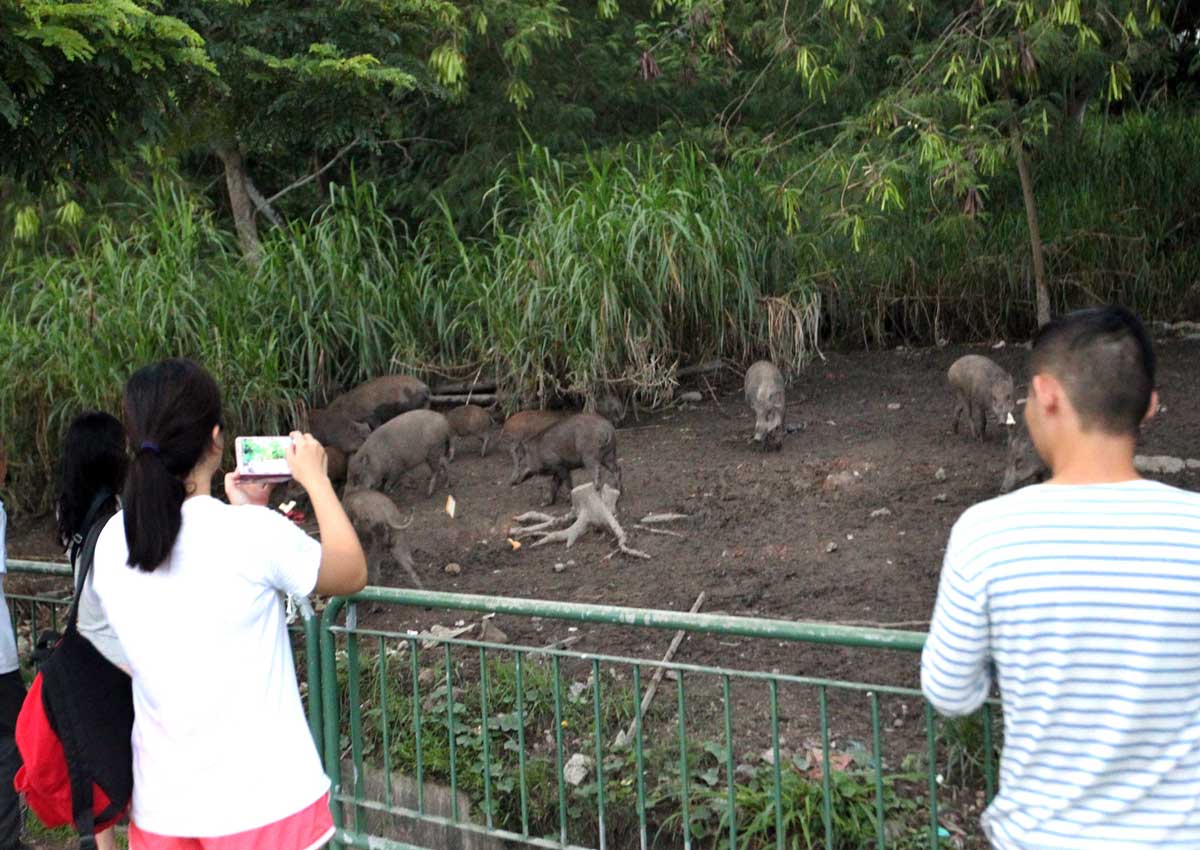
Some wild boars that inhabit the area around the Lorong Halus Jetty in Pasir Ris have been getting fed by members of the public, and raising concerns among others.

A video and photos of one woman feeding the animals were posted on a Facebook group for cycling enthusiasts on Sunday.

The video, posted by a user on the Facebook group Love Cycling SG, shows about 10 boars of different sizes at a muddy, barren patch of land. A woman is also seen nearby, emptying out the contents of several plastic bags, which the boars then eat.

The user was cycling past the jetty when he saw the woman and the animals. He later saw the woman remove the plastic bags after feeding the animals.

Several people praised the woman’s actions, with one person calling it a “lovely and heartwarming sight”.

Others, however, expressed concern that feeding the boars might cause them to come into closer contact with humans in their search for food. A wild boar reportedly chased and injured a boy in Punggol last month. The Agri-Food and Veterinary Authority of Singapore (AVA) on June 1 said it has received 27 complaints about wild boars so far this year.

Feeding the boars might indeed cause them to associate humans with food, said Ms Anbarasi Boopal, deputy chief executive at the Animal Concerns Research and Education Society (Acres).

“Feeding should be stopped… If not, they might approach humans in the future, and people may report them as a nuisance, resulting in them being culled,” she told The Straits Times.

Wild animals can also be unpredictable, so it is best to look at them from a distance, added Ms Boopal. “They will have enough food in their habitat to survive,” she said.

A national serviceman, who gave his name as Aziwan, 20, said he has fed the boars at the jetty for nearly three years, and they typically do not come around after 6pm or 7pm, evening newspaper Shin Min Daily News reported yesterday.

“These wild boars are all very gentle, they won’t attack people. And there is a fence surrounding the area, as long as people don’t cross it, it should be safe,” he said.

About 30 people were seen by Shin Min feeding the boars in the span of an hour, including some who drove to the jetty with their children.

According to an advisory on the AVA website, people should not try to feed wild boars and should keep a safe distance from them.

“Wild boars are unpredictable animals and can be dangerous. Their teeth can inflict serious injuries. Female wild boars, especially, are dangerous when protecting their young,” said the advisory.

The public is also advised to not provoke wild boars by taking photographs with the flash turned on.


This article was first published on June 21, 2016.
Get a copy of The Straits Times or go to straitstimes.com for more stories.

Image: 
Category: 
Publication Date: 
Tuesday, June 21, 2016 – 14:00
Keywords: 
Send to mobile app: 
Source: 


Story Type: 
Others

Source link

Bitter row over N. Korea defectors moves to Seoul court

0

SEOUL – Tensions between the two Koreas switched focus Tuesday to a Seoul courtroom, and a closed-door hearing on the status of a dozen North Korean defectors who Pyongyang insists were abducted.

The hearing will pit officials from South Korea’s spy agency, the National Intelligence Service, (NIS) against a group of human rights lawyers who contend the 12 women are being illegally detained.

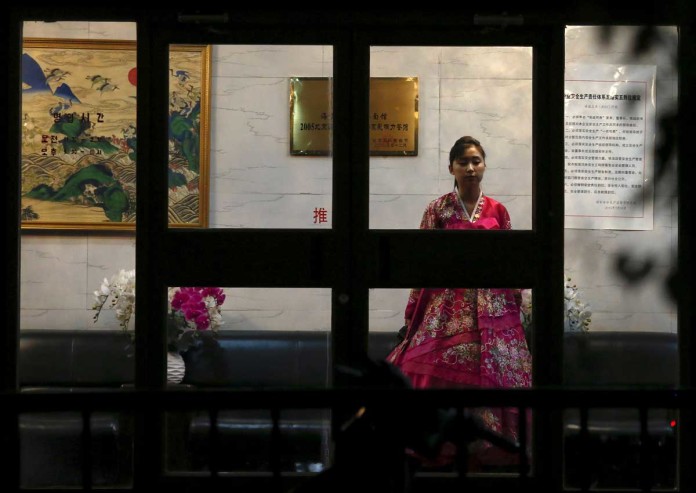
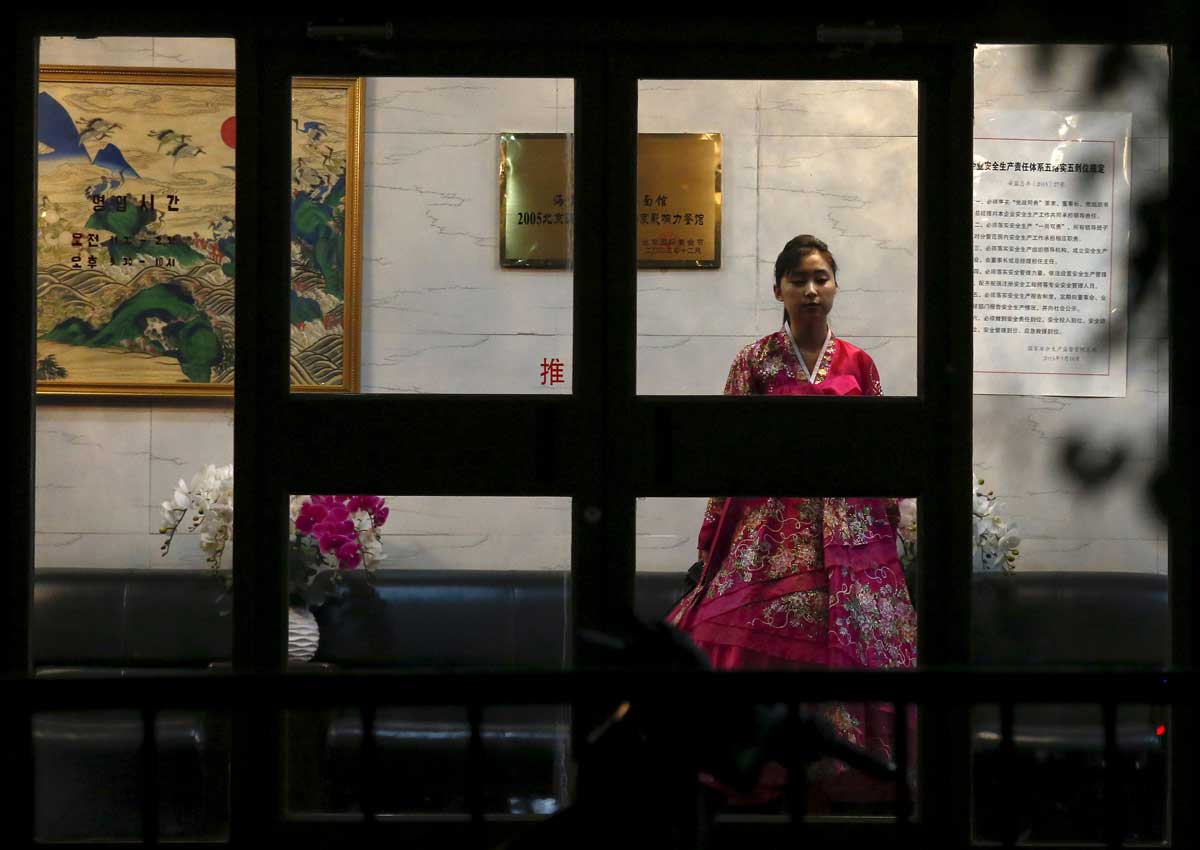
All 12 were waitresses at a North Korean-run restaurant in China who arrived in the South in April, making headlines as the largest group defection in years.

While Seoul insists they escaped of their own free will, Pyongyang claims they were kidnapped by NIS agents and has waged a campaign through its state media for their immediate return.

The campaign has included emotional video interviews with the women’s relatives in the North, angrily denouncing the South Korean authorities and demanding a meeting with the defectors.

Seoul has rejected all such advances and insists the women are being held incommunicado for their own protection while they go through a resettlement process.

For all North Korean defectors, life in the South begins with intensive NIS interrogation which can last for months and is aimed at weeding out possible spies.

They are then given three months in a government centre where they learn basic survival skills, such as riding the subway, using a mobile phone and buying goods in a supermarket.

Tuesday’s court hearing was ordered at the request of a liberal South Korean legal association called Lawyers for a Democratic Society, who managed to obtain power-of-attorney from the defectors’ families in the North.

The court had ordered the 12 waitresses to appear in person, but the NIS said they were unwilling to testify because of personal safety concerns and would be represented by legal counsel.

As well as challenging the NIS version of events surrounding the defection, the Lawyers for a Democratic Society said they would push the court to allow direct access to the women.

Nearly 30,000 North Koreans have fled poverty and repression at home to settle in the capitalist South.

But group defections are rare, especially by staff who work in the North Korea-themed restaurants overseas and who are handpicked from families considered “loyal” to the regime.

The South Korean government estimates that Pyongyang rakes in around $10 million every year from about 130 restaurants it operates – with mostly North Korean staff – in 12 countries, including neighbouring China.

There have been reports of staff not being paid, with restaurants pressured into increasing their regular remittances to Pyongyang.

Earlier this month, South Korea announced that another three waitresses from a separate restaurant in China had arrived in Seoul after defecting.

Image: 
Category: 
Publication Date: 
Tuesday, June 21, 2016 – 12:13
Send to mobile app: 
Source: 


Story Type: 
Others

Source link

Chinese boss publicly spanks employees' buttocks for "not working hard enough"

0

Image: 
Category: 
Publication Date: 
Tuesday, June 21, 2016 – 11:51
Keywords: 
Send to mobile app: 
Source: 


Rotator Image: 
Story Type: 
Rewritten Story

Source link

NUS, NTU top Asia's best universities list

0

Just last week, Singapore’s two most established universities were ranked first and third in a ranking of Asian universities.

This week, they have seized the top two spots in another list of Asia’s best universities.

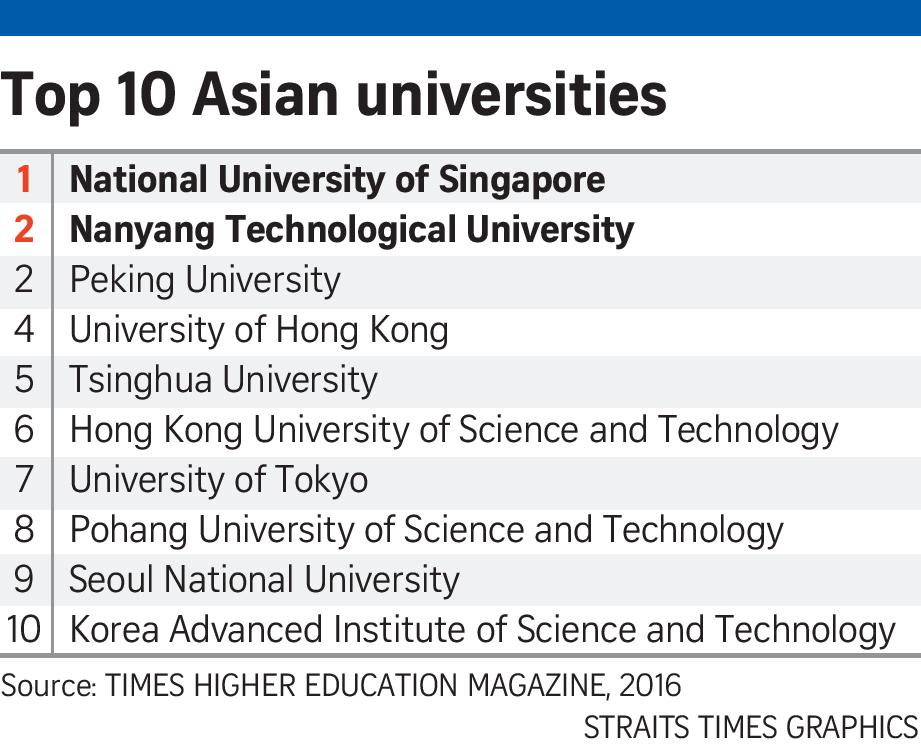
The National University of Singapore (NUS) took first place, while Nanyang Technological University (NTU) was placed second with Peking University in the London- based Times Higher Education Magazine rankings for Asia.

The University of Hong Kong took the fourth position, while China’s Tsinghua University was ranked fifth, in the rankings that are being released this morning.

Last year, NUS came in second, while NTU was placed 10th.

Times Higher Education rankings editor Phil Baty said: “Singapore has sealed its place as one of Asia’s top university nations.”

He noted that Singapore’s rankings success comes from focused strategies and substantial and sustained higher education funding from the Government, citing the $16.1 billion that the Singapore Government pumped in under the last Research, Innovation and Enterprise Plan from 2011 to 2015.

He said: “This ranking cements Singapore as a prime case study of how to challenge elite Western institutions and become a rising university star.”

NUS president Tan Chorh Chuan said he was delighted at NUS’ good showing but said the university will need to be even more strategic and adaptive in the coming years, given the massification of higher education and the shifting nature of jobs.

Commenting on the two latest rankings, NTU president Bertil Andersson said both lists show that NTU has moved swiftly in recent years to innovate in teaching and produce research with a far-reaching global impact.

He added that the Times ranking shows that Singapore is now the top city in Asia for higher education.

The Times ranking uses 13 key performance indicators to reflect a university’s strengths in five areas: teaching, research, citation, industry income and global outlook.

The indicators used are the same as those used in the magazine’s World University Rankings, but with a difference in the weighting given to various indicators.

Times Higher Education said that following consultation with universities across Asia, it decided to place less emphasis on reputation elements but emphasise industry income and research income, as well as productivity, in terms of publications. Mr Baty said NUS did well in all the measures but its strength in research really stands out.

NTU, he said, is no doubt one of “the most exciting – and closely watched – universities in the world”.

In the rankings released last week, London-based education consultancy Quacquarelli Symonds placed NUS first and NTU third.

Singapore Management University entered the rankings for the first time in 60th place.

University league tables have proliferated in recent years and university officials say parents and students are increasingly referring to them. In some countries, governments use them to make funding decisions.


This article was first published on June 21, 2016.
Get a copy of The Straits Times or go to straitstimes.com for more stories.

Image: 
Category: 
Publication Date: 
Tuesday, June 21, 2016 – 14:00
Send to mobile app: 
Source: 


Story Type: 
Others

Source link