Home Blog Page 3604

Former sex worker: I worried I would get beaten up

0

Sherry Sherqueshaa, 25, was once pushed to the ground while soliciting on the street after some disagreement with a potential client.

It may sound minor, but to her, it brought back memories of abuse stories she had heard from fellow sex workers.

“Friends told me that clients had choked them, punched them or pinned them down to the ground… I felt so vulnerable.

“When (he pushed me down) I felt that was the first step of what he could do to me,” she said.

Figures from sex workers rights’ group Project X revealed that the number of abused sex workers has increased over the years.

Sherry, who is now a researcher and writer with Project X, said: “Every day at about 4am or 5am, when I went back home, I would wash myself thoroughly just to cleanse myself of whatever was said to me or done to me, then sleep it off.

“Then, the next day, I would brace myself and go through this all over again just to earn a living.”

DISRESPECT

Project X classifies abuse into a few categories, but Pearlyn (we are not revealing her real name to protect her identity), a sex worker of six months, said there is one consistent theme among all types of abuse – disrespect for sex workers.

“I think (clients) don’t respect that sex work is essentially work. That’s why they actually have that audacity to (abuse) us because they know that we are not going to report it to the police…

“Not as if we will be taken seriously, because no one respects us anyway,” the petite 20-year-old student said with a resigned smile.

Although Sherry and Pearlyn have not had to suffer severe physical abuse, the emotional abuse can leave deep scars too, they said.

“Emotional abuse – you carry it in your subconscious,” Pearlyn said.

“Clients will just disrespect you – pull your hair, call you names and degrade you, view you as an object rather than a person.

“After calling you names, they would then slap you… and then they will put up post-sex pictures online (with derogatory comments). It’s very degrading. You become nothing more than a sex toy,” she said.

Sherry, who is transgender, recalled how a client once called her “dirty” for her gender orientation.

“It made me wonder if I was so dirty that people couldn’t accept me any more… It made me feel less worthy,” she said.

There was also a fear that plagued Sherry every night as she worked the streets – something common among sex workers who conceal their identities with several names and phone numbers.

“I worried that I would get beaten up.”

Sherry eventually moved on from the sex trade to work for Project X.

She hopes to help sex workers learn how to protect themselves from being abused.

But for Pearlyn, the “relatively good money” she earns from the trade as compared to a part-time F&B job outweighs the emotional toll that sex work has taken on her.

The student said that she does what she does “to resolve my financial problems”.

She said: “It’s tough for people to understand my motives for doing so and I hope (this job) will just be a passing phase.”

‘Lots of abuse goes unreported’

The number of reports of abuse among sex workers has gone up over the years, figures from non-governmental organisation (NGO) Project X show.

Last year, 72 cases were reported to the organisation, which works with about 200 sex workers here.

In comparison, there were 40 cases in 2014 and 10 in 2013.

However, only 17 of the 72 cases last year were reported to the police.

The figures were gathered from their website that allows workers to report abuse online.

The trend echoes a recent report by NGO Amnesty International that sex workers globally lack protection, even in countries with strong human rights laws.

Amnesty’s senior director for law and policy Tawanda Mutasah said: “In too many places around the world, sex workers are without protection of the law, and suffering awful human rights abuses. This situation can never be justified.”

MORE PROACTIVE

Project X’s programme coordinator Vanessa Ho, 28, said that one reason the numbers rose here could be that there is more awareness about reporting the abuse.

She told The New Paper: “What it does mean is that we are more proactive in getting people to report to us and spreading the message that we are here to listen and to support you if you are intending to seek justice.”

Ms Ho conceded the NGO only reaches out to a “sliver” of the estimated 15,000 sex workers here.

Last year, she saw about 200 of them, mostly locals and Malaysians, and she fears that a lot of abuse goes unnoticed and unreported.

Former sex worker Sherry Sherqueshaa said that verbal assaults were almost a daily affair for her.

On a WhatsApp chat group with fellow sex workers, she also read about others who were abused, or details of potential clients to stay away from.

“Commonly, what I’ve heard from my friends is that clients will choke them, pin them down, slap them, have rough sex and stuff like that,” Sherry told The New Paper.

Part of the problem lies in the tendency for sex workers to ignore the abuse and move on so that things don’t escalate, said Ms Ho.

“This is what’s quite heartbreaking, in that people will say ‘No lah, this is part and parcel of my life, I need to accept it’.

“No, you do not deserve any form of violence, stigma or discrimination. You deserve what everyone else deserves – dignity and respect as a human being.”

On June 28, Project X will be launching an e-store to raise funds for its cause.

fjieying@sph.com.sg

Read also:

Landscape architect likely serial killer of prostitutes

Economics of prostitution in Geylang


This article was first published on June 22, 2016.
Get The New Paper for more stories.
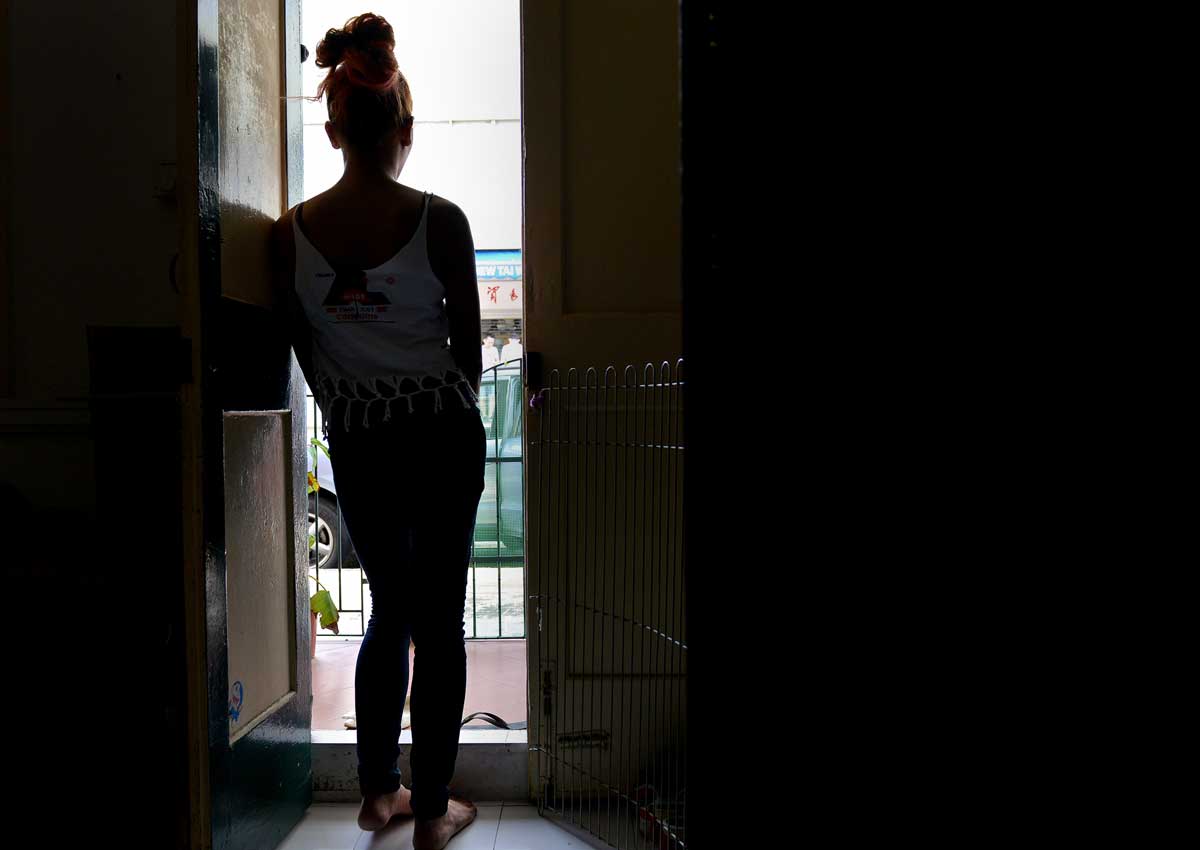
Image: 
Category: 
Publication Date: 
Wednesday, June 22, 2016 – 21:00
Keywords: 
Send to mobile app: 
Source: 


Rotator Image: 
Story Type: 
Others

Source link

Power outage hits 40-storey Dover Crescent HDB block

0

The power outage meant that all four lifts serving Block 28B Dover Crescent went dark, with residents saying this lasted for about an hour.

Source link

Alternative route for basic skilled construction workers to become higher skilled

0

SINGAPORE – In a bid to grow a pool of workers experienced in workplace safety and health matters, the Ministry of Manpower will allow these work permit holders to qualify for re-categorisation as higher skilled workers from October, which will lower their…

Source link

Two dental clinics suspended from Community Health Assist Scheme after filing non-compliant claims

0

SINGAPORE – The Ministry of Health (MOH) will be suspending two dental clinics, Phoenix Dental Surgery clinics at Ang Mo Kio and at Marine Parade, from participating in the Community Health Assist Scheme (CHAS) after they were found to have continuously made…

Source link

Prince lost consciousness on flight days before death: Report

0

WASHINGTON – Prince was having dinner on a flight home from his final public concert when he suddenly lost consciousness, according to the first published account Tuesday of the pop icon’s health crisis six days before his death.

The April 15 episode prompted an unscheduled landing of his private plane and an emergency room visit, raising a sudden alarm over the state of Prince’s health.

Judith Hill, an artist and protege of Prince who worked closely with him during the past two years, said in a New York Times interview that the two were chatting over pasta and vegetables as they flew from Atlanta to his home near Minneapolis.

Hill, 32, noticed that “his eyes fixed” just before he seemed to nod off shortly after 1 am (0500 GMT).

“Thankfully, I happened to be looking into his face,” and realized he was unconscious and not asleep, Hill was quoted as saying.

Hill and the only other passenger on the jet, Prince’s friend and aide Kirk Johnson, tried unsuccessfully to wake up the 57-year-old.

They alerted the pilot, who radioed air traffic controllers in Chicago to report an unresponsive man on board.

“We knew it was only a matter of time; we had to get him down,” Hill was quoted as saying. “We didn’t have anything on the plane to help him.” The plane landed in Moline, Illinois, met by an ambulance on the tarmac.

Prince was revived with an injection of Narcan, a drug used to treat opioid overdoses, the report said. He was taken to a hospital for several hours before being released and traveling home.

Publicly, Prince blamed the emergency landing on a bout of flu.

Although initially reluctant to seek help following the scare, Prince undertook tests with a local doctor and connected with an addiction specialist in California, The New York Times said.

“He did it because he was concerned, and he wanted to do the right thing for his own body,” Hill said. “And that’s the part that breaks my heart, because he was trying. He was trying.” Prince was found dead at his Paisley Park estate on April 21. His death was ruled an accident caused by an overdose of fentanyl, a powerful opioid used to treat severe pain.

He had appeared healthy and was legendary for his marathon performances. But the artist underwent hip surgery in 2010.

Hill said that despite her close relationship with Prince, she had no idea he was in pain, calling the circumstances of his death “very shocking.”

Image: 
Category: 
Publication Date: 
Wednesday, June 22, 2016 – 14:14
Keywords: 
Send to mobile app: 
Source: 


Hermes ID: 
2 387 322
Hermes ID String: 
PKPRINCE22
Hermes Author: 
PRABUKM
Story Type: 
Others

Source link

Uber begins recruitment for its carpool service UberPool

0

SINGAPORE – Uber has begun recruiting drivers for UberPool – the biggest indication to date that the carpool service will be arriving soon in Singapore.
In a SMS sent out to Uber drivers on Wednesday (June 22), and seen by TODAY, the ride-hailing app invited…

Source link

'Many options' for future development of S'pore

0

Underground power substations?

Underground reservoirs?

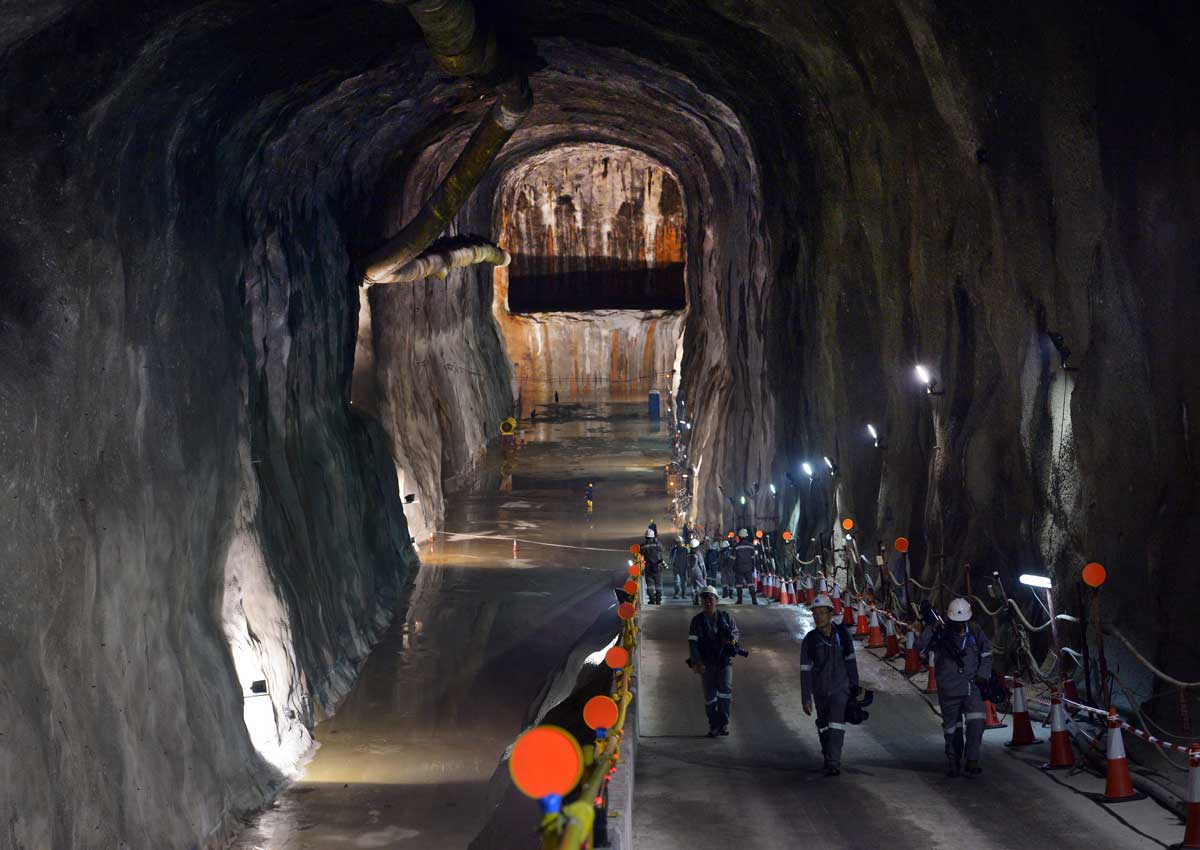
Singapore still has many options for development despite its physical constraints, and one way is to build more infrastructure underground.

This subterranean potential is among the plans the Committee on the Future Economy (CFE) is studying to make Singapore a vibrant global city and competitive economy, Minister for National Development Lawrence Wong said yesterday.

“We’re always looking at how we can expand our land and space options – and we have them. We have reclamation projects, indeed the Tuas mega port will be on reclaimed land. But we can also go underground,” he said.

With projects like the Jurong Rock Caverns – a liquid hydrocarbon storage 150m below ground – Singapore is only “starting to scratch the surface of the potential for underground development”.

“There is a lot more that we can do beyond Jurong Rock Caverns. For instance, the utility or power substations that you see around – a lot of them can go underground. It will cost more, but also free up surface land for development.”

He cited national water agency PUB’s interest in building an underground reservoir as an example.

Mr Wong, who co-chairs CFE’s future city sub-committee, was speaking at the annual general meeting lunch of the Singapore International Chamber of Commerce (SICC).

Building underground facilities has been in focus as the Government looks for long-term solutions to overcome land scarcity here.

In March, an underground district cooling network – which produces chilled water for air-conditioning for nearby areas – was launched at Marina Bay.

The Government also hopes to deploy more innovative technologies, such as driverless vehicles to transport goods across industrial estates, replacing the huge fleets of trucks on the roads today, he said.

“We can go beyond that to people-mover systems. In 15 to 20 years’ time, I think it’s very possible to have housing estates with mover systems taking people from where they live to the nearest MRT station,” he said, adding that these systems can also be built underground.

Other large-scale projects are under way.

The consolidation of port facilities in Tuas will free up land to develop the Greater Southern Waterfront, a new central business district.

Another new CBD, the Jurong Lake District, is also in the pipeline.

“These plans will take several terms of government to implement. These are not five-year plans. But this is also our competitive advantage, because we can plan long term. That’s the way Singapore was built for the past 50 years.”

For all these initiatives, a strong public-private partnership is important, he told around 260 guests attending the lunch yesterday.

SICC, celebrating its 179th anniversary this year, will focus on being relevant to member businesses amid the structural headwinds here, chief executive Victor Mills told reporters at the lunch.

Cost pressures have certainly taken a toll, he said, adding: “Anecdotally, for every one expatriate family being posted to Singapore for work, there are between seven and 12 leaving.

“But Singapore as a brand remains highly trusted for business services. We are still a hub for finance, for contracts, for arbitration. That element of Singapore brand will always be important.”

whwong@sph.com.sg


This article was first published on June 22, 2016.
Get a copy of The Straits Times or go to straitstimes.com for more stories.

Image: 
Category: 
Publication Date: 
Wednesday, June 22, 2016 – 16:00
Keywords: 
Send to mobile app: 
Source: 


Story Type: 
Others

Source link

73 suspects arrested in multi-agency joint enforcement blitz

0

The 73 arrested are suspected of being involved in vice activities, public gaming, drug and immigration offences, say police. 

Source link

Her drawing skill helped her get into course of choice

0

Her interest in art began in secondary school, and that passion later prompted Ms Chia Ke Xin, 21, to apply for a place in the space and interior design diploma programme at Nanyang Polytechnic.

She graduated from the course last month with a near-perfect grade point average (GPA).

But the former Kranji Secondary School student might not have secured a spot in the course if not for the Direct Polytechnic Admissions (DPA) scheme.

The DPA allows polytechnics to select students based on criteria other than academic results, such as their suitability for certain courses and how they fare in an interview.

The DPA exercise is now being replaced by the Early Admissions Exercise.

Ms Chia, who took her O-level examinations in 2012, scored two B3s, one B4, one C5 and two C6s. Had she applied via the normal admissions route, her L1R4 score of 21 points – for English and four relevant subjects – would have put most of the courses out of her reach.

She said: “I can draw well and I felt that the poly route would suit me because of its hands-on learning approach. With my O-level score, it would have been difficult to get into a course of my choice via the normal route. The DPA was a safer route for me to get into a polytechnic.”

During her secondary school years, she had progressed on to the Normal (Academic) stream from the Normal (Technical) stream, but had struggled with the change.

She said: “I also had difficulty in English, which affected my grades.”

Encouraged by her form teacher, she applied for her desired course via the DPA four years ago.

After undergoing tests and interviews, during which she was quizzed about her interests, she was granted a place in the three-year diploma programme.

She graduated with a GPA of 3.82 out of 4. She also snagged a place to study project and facilities management at the National University of Singapore.

She said: “I think that as long as I have the right mindset… I can achieve my goals. The DPA route gave me an opportunity to enter a polytechnic and excel in something I love.”


This article was first published on June 22, 2016.
Get a copy of The Straits Times or go to straitstimes.com for more stories.

Image: 
Publication Date: 
Wednesday, June 22, 2016 – 16:00
Keywords: 
Send to mobile app: 
Source: 


Story Type: 
Others

Source link

Much scope for Singapore to grow its soft power further

0

When the argument is made about global power shifting from West to East, it is primarily based on Asia’s remarkable economic rise, although China’s steady build-up of military and naval capability is also regularly cited.

But a new authoritative study suggests that it is not just in hard but also soft power where Asia is fast making gains.

The second edition of The Soft Power 30 illustrates how Asia’s appeal around the globe is expanding.

We may finally be at the tipping point when Asia starts to translate its growing economic might into soft power, and with it the global appeal that will give Asia new levers of international influence.

Using a composite index that combines objective data with international polling, The Soft Power 30 – compiled by Portland and Facebook – assesses countries based on a range of their soft power assets, including global engagement, higher education, culture, enterprise, government and even digital diplomacy metrics, which is becoming a much more critical component of soft power.

Professor Joseph Nye, who first coined the term, has called the study “the clearest picture of soft power to date”.

As with the 2015 rankings, only four Asian countries made the top 30 this year.

However, three of those four, Japan, Singapore and China, have all made progress climbing up the table.

In contrast to this progress, the majority of European countries in the rankings have fallen, as the continent is gripped by challenges and divisions.

Besides the United States and Canada moving up the rankings, the real soft power momentum in 2016 seems to reside in Asia.

There is no better example of this trend than Singapore.

It was, by far, the smallest country (by territory) to place in the inaugural top 30 last year.

And the new ranking has seen Singapore improve its position further by two places to 19th, putting it above major emerging powers such as Brazil, China, Mexico, Turkey and Russia.

Breaking down the data, we see that Singapore moved one spot up to top the Enterprise category, cementing its position as the most attractive country for business.

But it’s not just Singapore’s economic model that accounts for its global appeal.

Singapore ranked sixth in the Digital category, underpinned by Prime Minister Lee Hsien Loong’s savvy approach to digital diplomacy through social media.

The Prime Minister has managed to engage effectively with both citizens and people around the world.

There is no reason, either, why Singapore could not do better in the future.

Writing in The Soft Power 30 report, Professor Tommy Koh, Ambassador-at-Large at the Ministry of Foreign Affairs, highlights three reasons for optimism.

He says Singapore’s harmonious society built from a diverse population, an economy free from corruption and the country’s model of well-planned, sustainable living all make for a strong platform from which to project global influence.

Ambassador Koh is absolutely right that these are three areas where Singapore is leading by example.

Importantly, for a world in which societies are struggling increasingly with divisions, where prosperity has stalled and there is increased pressure on the environment, they are also challenges that will have a stronger resonance every year.

The way Singapore has systematically developed solutions to these challenges makes it an example for the rest of the world.

In fact, I suspect Singapore’s improved showing in the 2016 index is partly a result of increasing global awareness of what the country has achieved.

Last year saw two momentous events in the country’s history – the 50th anniversary as an independent nation and the passing of its founding father, Mr Lee Kuan Yew.

Both events rightly led to great displays of national cohesion, solidarity and pride.

In some ways, this was unusual as Singapore is a country that prefers to let its achievements speak for themselves.

It is not part of the national character to boast or draw attention to successes.

But there was a great deal of international attention surrounding these two moments of celebration and mourning.

It is why I believe, if the country sheds (some of) its natural modesty, there is greater scope for Singapore to further develop its soft power in the future.

Of course, Singapore must avoid the appearance of lecturing or talking down to its neighbours.

However, there is a great deal of interest in Singapore’s experience and expertise in sustainable urban planning, maintaining social cohesion, economic development and good governance.

But there is more to Singapore’s soft power than technical excellence.

The country’s rich culture and creativity remain something of a secret in the wider world.

To much of the outside world, Singapore retains the stereotype of functional but boring.

Anyone who has ever paid a visit to Singapore knows this label to be outdated, unfair and even puzzling.

A stronger push to introduce Singaporean culture to the world would help dispel the stereotypes.

The new National Gallery is certainly an impressive asset that could be more aggressively leveraged to promote the cultural appeal of Singapore – and even the wider region.

Singapore’s economic success has been the foundation of its soft power to date.

Combining this with a push to promote its dynamic cultural offering, and a more confident approach in helping others learn from its experience and success, would all help Singapore build on the soft power gains made over the last year.


This article was first published on June 22, 2016.
Get a copy of The Straits Times or go to straitstimes.com for more stories.

Image: 
Publication Date: 
Wednesday, June 22, 2016 – 16:00
Keywords: 
Send to mobile app: 
Source: 


Story Type: 
Others

Source link