The 17 injured were passengers on one of the lorries, and all suffered minor injuries, Channel NewsAsia understands.
Source link
17 injured in accident involving two lorries and bus
German rock band Scorpions to play in Singapore in Oct
The band, described as Continental Europe’s most successful rock band, will be in town as part of their 50th Anniversary World Tour.
Source link
Changi Water Reclamation Plant to be expanded
To be completed by end-2019, the expanded plant will add another 44 million gallons a day to the treatment capacity of the plant, says PUB.
Source link
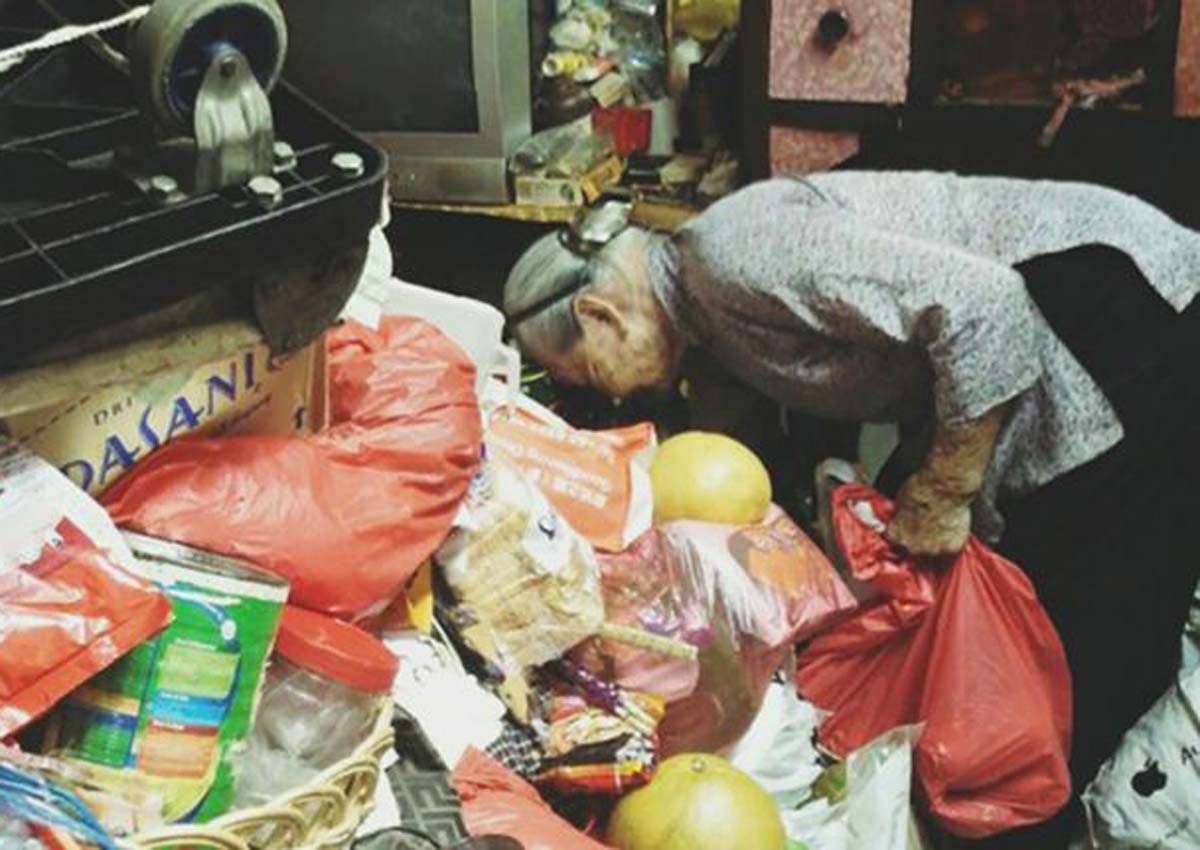
95-year-old cardboard collector's positivity puts us all to shame

A Facebook post from Tuesday night by user Ashley Chen has garnered over 176 shares at time of writing:
In it, she shares a recent encounter she had with an old lady who collects cardboard for a living, and how in spite of her cramped living conditions and exhausting cardboard-collecting job, her positivity in life and generosity shines through.
The invisible generation
Among the 5.5 million people living in Singapore, an estimated 440,000 are aged 65 and above, and the problems that come with an ageing population are prevalent.
Prime Minister Lee Hsien Loong was even quoted saying, “Based on trends, if we project into 2050, even with immigration, the population pyramid will be inverted. We are going to be growing old faster than any society in the world.”
In spite of the numbers, the elderly remain largely an ‘invisible’ generation, with many either staying indoors due to a lack of mobility or working low-wage jobs that we often overlook.
A recent opinion piece on The New York Times sheds light on the writer’s observation of the similarly ageing workforce around her, usually working in low-paying jobs. After speaking to them on why they’d rather work than enjoy their golden years, most cited not wanting to be a burden, keeping active and wanting to contribute to society as reasons.
Elderly cardboard collectors in Singapore
Click on thumbnail to view photos. Source:
The Straits Times, The New Paper, The Business Times

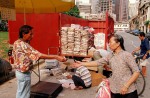




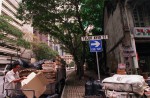



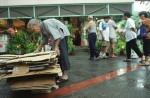










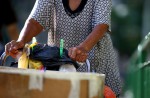

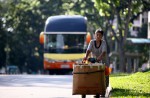


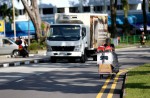
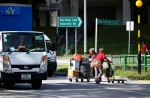
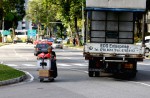
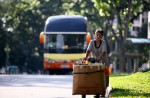


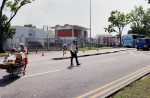
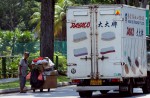



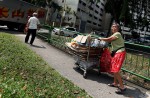
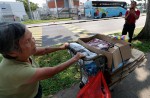
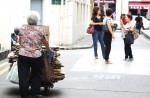
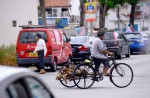
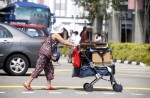

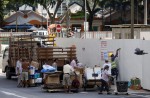
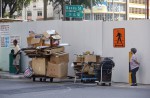
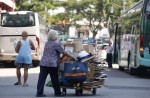

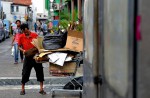
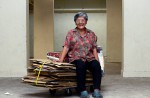
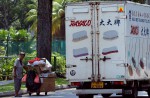
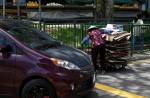

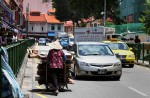
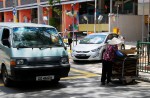



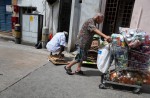

In our busy lives, we tend to neglect the elderly around us and the lessons they can teach us from their years of experience.
The Facebook post comes as a call for us to look out for not only our elderly parents and relatives, but also those we encounter in our daily lives – from the ones who restock our supermarket shelves, to the ones who lug around our discarded goods to sell for a meager amount.
While as individuals, we might not be able to alleviate all of their problems, we can make their days brighter by giving them a warm smile, or even a heartfelt “thank you” when they clear our bowl-ridden tables.
Vulcan Post is all about living life with a digital edge, up and coming startups, and people who inspire conversations.
Visit Vulcan Post for more stories.
Image:
Publication Date:
Thursday, June 23, 2016 – 10:39
Keywords:
Send to mobile app:
Source:
Rotator Headline:
95-year-old cardboard collector earns $0.10 for 1kg of cardboard but says she has enough
Rotator Image:

Story Type:
Others
World's first Japan Rail Cafe coming to Singapore
Image:

Publication Date:
Thursday, June 23, 2016 – 14:00
External URL:
Send to mobile app:
Source:
Story Type:
Others
NTUC to give discounts on healthier food options at supermarkets

SINGAPORE – NTUC Social Enterprises launched an initiative on Thursday (June 23) to encourage healthy eating choices with discounts for FairPrice household items such as rice and cooking oil.
The Healthy Eating and Living Initiative hopes to encourage…
Source link
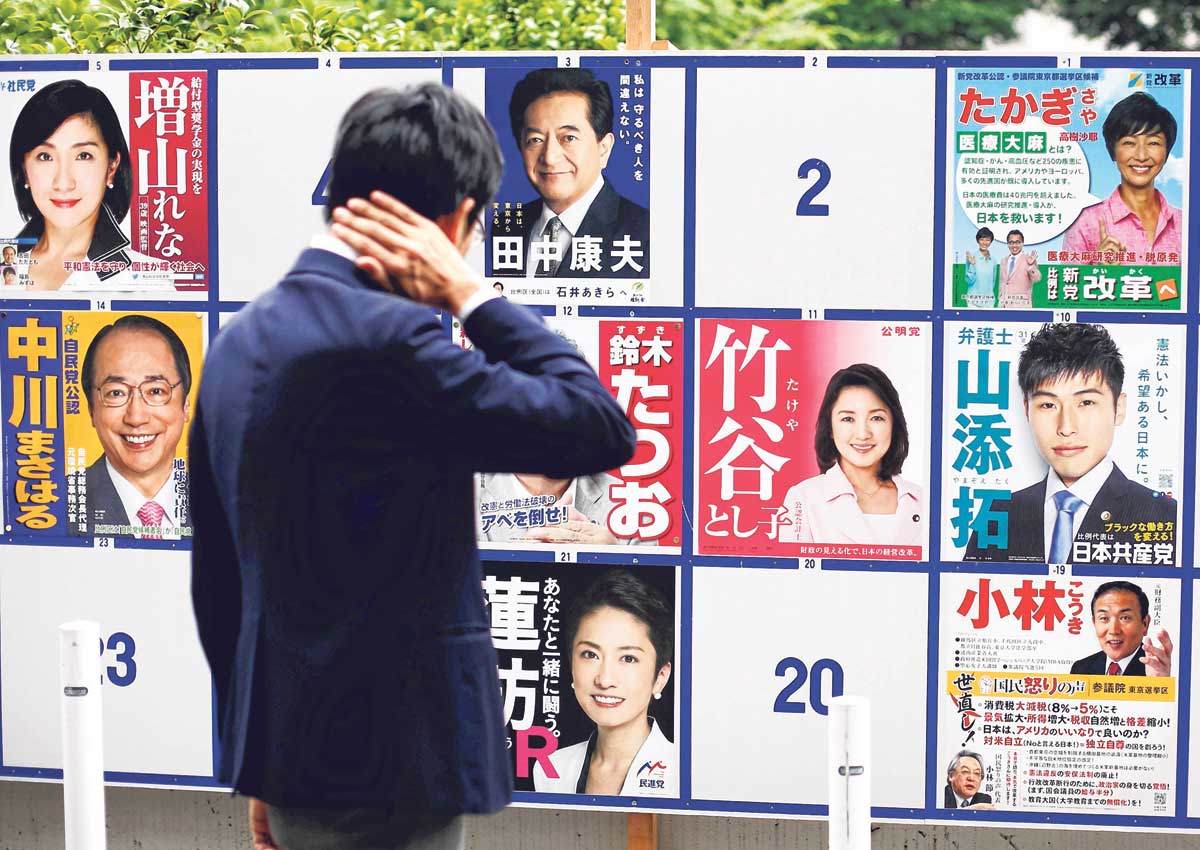
Voters to judge Abenomics in upper house election

Wednesday marked the official start of the 18-day campaign for the 24th House of Councillors election, which will culminate in voting on July 10.
The upper house election is the first full-scale national election since the inauguration of Prime Minister Shinzo Abe’s third Cabinet in December 2014.
The key point of contention is whether a majority of voters support Abenomics, the prime minister’s economic policy package. Candidates are likely to spar over how best to restore the government’s fiscal health in light of Abe’s decision to postpone an increase in the consumption tax rate to 10 per cent.
The prime minister has expressed his intention to seek a public mandate from voters over the postponement of the consumption tax hike, and to set the ruling camp’s threshold for victory at 61 seats, or a majority of the 121 contested seats.
Another focus of attention is whether the ruling parties and those among the opposition parties and independents who favour amending the Constitution will be able to secure at least two-thirds, or 162, of the seats in the upper house – the number needed to propose constitutional amendment.
The revised Public Offices Election Law went into effect Sunday, lowering the minimum voting age from 20 to 18.
The upper house election is the first national election since the change of the minimum voting age. About 2.4 million youths aged 18 and 19 are now eligible voters.
If, as is generally the case in upper house elections, the length of this year’s campaign had been set at 17 days, the start of campaigning would have begun on June 23.
However, as that date falls on Okinawa Memorial Day, the government moved forward the schedule by one day to avoid having the two events on the same day.
In this summer’s upper house election, a total of 121 seats, half of all the seats in the upper house, are being contested. A total of 73 seats are being contested in electoral districts and 48 in proportional representation.
There are 389 candidates – 225 in the electoral districts and 164 in proportional representation. The deadline to accept candidacies was 5 p.m. Wednesday.
In the previous upper house election in 2013, the number of candidates totaled 433 – 271 in electoral districts and 162 in proportional representation.
Starting on Wednesday morning, leaders of political parties began delivering their first speeches of the election cycle.
Abe, who is also president of the Liberal Democratic Party, chose to open his party’s campaign in Kumamoto, a city that was severely damaged by the Kumamoto Earthquake in April.
Katsuya Okada, leader of the Democratic Party, chose Kofu as his party’s launching point. Kofu is a core city in the Yamanashi electoral district, one of 32 electoral districts across the nation where only one seat is being contested.
Abe eyes majority of contested seats
Prime Minister Shinzo Abe will define “victory versus defeat” in the July 10 House of Councillors election as whether the ruling bloc acquires the majority of seats up for grabs. Official campaigning kicked off Wednesday.
To achieve that goal, the Liberal Democratic Party and its junior coalition partner Komeito must win more than 59 seats, their current combined strength among the seats being contested in this election.
The two parties won 76 seats in the previous upper house election in 2013.
Regarding amending the Constitution, Abe proposed Sunday that the commissions on the Constitution in both houses of the Diet resume their discussions during an extraordinary Diet session in autumn, to launch talks on specific items for revision.
The key to realizing this plan is whether four parties – the LDP, Komeito, Osaka Ishin no Kai and the Party for Japanese Kokoro – and pro-amendment independent policymakers can win a total of 78 seats. This is the minimum figure essential for them to acquire two-thirds, or 162 seats, in the upper house, including the uncontested seats held by those who support their position.
If the LDP wins 57 seats or more, it will regain a single-party majority of at least 122 seats for the first time in 27 years. It lost its single-party majority in the 1989 upper house election held shortly after the consumption tax was introduced.
Image:
Publication Date:
Thursday, June 23, 2016 – 10:18
Send to mobile app:
Source:
Story Type:
Others
SGX hikes margins amid Brexit volatility

HONG KONG – The Singapore Exchange (SGX) says it has raised the amount of cash firms must pledge to cover trading positions due to an expected rise in market volatility linked to Britain’s vote on whether to exit the European Union.
SGX is the first exchange…
Source link
East Japan Railway to open cafe in Singapore

SINGAPORE – Japanese train operator East Japan Railway (JR East) will be opening a cafe here in less than five months, and it will feature a ticketing counter where prospective tourists can get their rail passes before setting off to the land of the rising…
Source link
Singdollar at one-year high against USD

SINGAPORE/TORONTO – The Singapore dollar was at a one-year high against the US dollar on Thursday morning (June 23) as a reduced likelihood of the UK voting to leave the European Union returned focus to Federal Reserve policy makers’ concern about economic…
Source link


