In 2015, Credit Counselling Singapore counselled 4,675 people, of which about 11 per cent were aged 30 and below, it says. People aged 31 to 40 make up more than one third of the total.
Source link
Flashy lifestyles hide hints of credit card woes
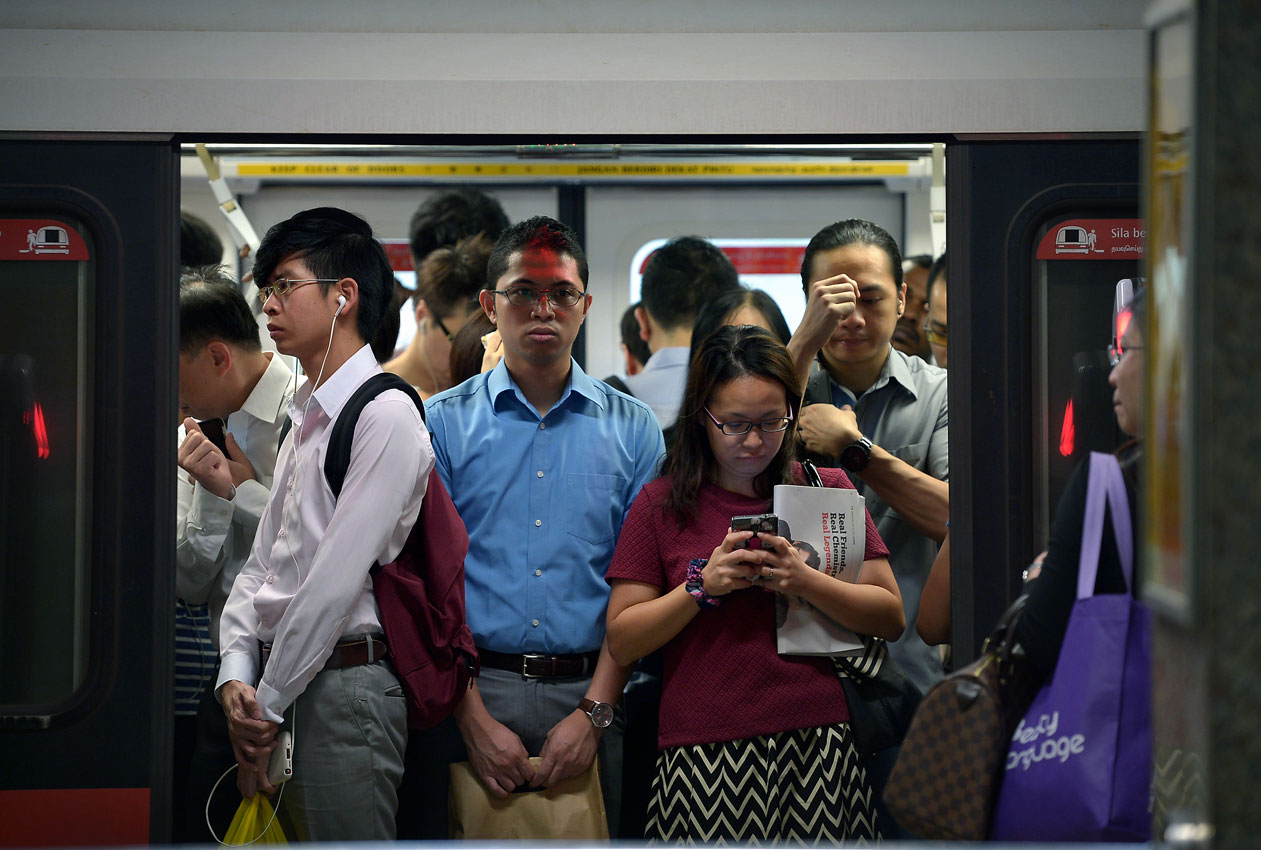
Get up early for free MRT rides? Yawn
Commuters to the city in the morning rush hour are not keen to travel earlier to get free train rides because the allure of any money saved and more space on the train is outweighed by an extra hour of sleep, according to those interviewed.
Many also said it was pointless to go in earlier as there would be no work to do, or they are afraid of appearing to outdo their colleagues by getting in early.
The Land Transport Authority (LTA) announced on Thursday that it would continue a scheme that gives free rides to 18 MRT stations before 7.45am on weekdays.
Commuters who arrive at those stations, which include Dhoby Ghaut, Marina Bay and Telok Ayer, between 7.45am and 8am will also get up to 50 cents off their fare.
The scheme is aimed at easing peak-hour congestion on trains.
The LTA said 7 per cent of commuters have consistently switched away from travelling during the morning peak hours. But of the 40 commuters The Straits Times spoke to over two days, only five changed their routine for the perk. The other 35 either already go to work early or are not enticed by the scheme.
“If I go in early, I can get more work done but everyone comes in and leaves at the same time. Why spoil the market?” said Mrs Esther Goh, an accountant in her 30s, using the local phrase for making others appear less hard-working.
But some agreed they would get up earlier if their employers encouraged and recognised the effort and let them leave early, or if they felt it would serve a good cause.
Mr Daryl Tan, 23, who takes the train to Raffles Place to get to his bank job, said he would travel earlier if he felt he was “saving the environment”. But for now, he has no motivation to change his routine.
“To take advantage of the scheme, I have to tap out (of the station) before 8am. That’s one hour earlier than the time I need to reach the office. Sacrificing one hour of sleep is not worth saving the $1.50 on my fare,” he said.
The main factor in getting more people to travel early is co-operation from companies, said recruitment firm owner Alvin Ang. Employees who are not allowed to leave early even if they start early have no incentive to change their habits.
An Asian work culture that glamorises working late also exacerbates the situation, he added.
Some form of job redesign to support a change may be necessary, said Mr David Ang, director of corporate services at human resources firm Human Capital Singapore, but industries that deal with overseas markets may have less flexibility.
One commuter who has made the switch is operations manager Vincent Teng, 31. “I started (doing so) because it cut my transport cost, but it’s also less of a hassle to travel before the peak hours,” he said.
“I don’t know about companies that give their employees early time out for coming in early, but it would be encouraging for more people to use the early trains if more companies do so.”
Ms Charlene Sia, 28, has been taking advantage of the free travel for about a year. Instead of going for yoga sessions in the evening, the tax associate attends early morning classes. “I feel more alert at work now because the exercise helps. Also, I used to be too tired to exercise after work, so this is a good way for me to make sure I do it,” she said.
She has saved about $100. She used to spend about $5 a day taking a private bus from her home in Pasir Ris to her office in Raffles Place.

This article was first published on June 25, 2016.
Get a copy of The Straits Times or go to straitstimes.com for more stories.
Image:
Publication Date:
Saturday, June 25, 2016 – 17:00
Send to mobile app:
Source:
Story Type:
Others
Kanye's 'famous' video features nude Donald Trump, Taylor Swift and Caitlyn Jenner

LOS ANGELES: Kanye West premiered a shocking new video on Friday night for fans in Los Angeles.
The NSFW (Not safe for work) video for “Famous,” his latest single off of “The Life of Pablo,” features a portrait of 12 nude celebrities in bed together.
The celebrities include West, himself, and wife Kim Kardashian lying in bed nude with Donald Trump, Taylor Swift, George Bush, Bill Cosby and Caitlyn Jenner, among others.
It’s unclear which of the celebrities, if any, actually appeared nude in the video or whether it was all visual effects. It’s also unknown if West got permission from any of the celebs to use their likeness.
advertisement Trump’s camp denied the GOP candidate’s involvement in the shoot.
Other nude celebrities in bed include Rihanna, Chris Brown, Anna Wintour and West and Kardashian’s exes Amber Rose and Ray J.
See the NSFW photo from the video below: Courtesy of Tidal “It’s not in support or anti any of (the stars in the photo). It’s a comment on fame,” the rapper told Vanity Fair.
He said he previewed the video for celebrity friends.
“Guess what the response is when I show it to them?” he said. “They want to be in the bed.” Tidal live-streamed the unveiling of the “Famous” video at the Forum in L.A. The music streaming service will offer the video for subscribers after an encore screening Friday night at 11 p.m.
Image:

Publication Date:
Saturday, June 25, 2016 – 15:08
Keywords:
Send to mobile app:
Source:
Story Type:
Others
Punggol to get its own visitor centre to showcase achievements
The Housing Board (HDB) town of Punggol has notched several firsts as a model new town and now it can count its own visitor centre as among them.
To open in the later part of this year, the three-storey visitor centre in Punggol Town Plaza will house a gleaming showcase of the area’s development and boast a top-floor deck with a panoramic view of the Punggol Waterway.
The centrepiece, on the ground floor, will be an interactive 3D scale model of Punggol Town, with features such as key public housing projects, its transportation network as well as greenery and water bodies that can be lit up at the touch of a button.
Touchscreens will offer more information about the town, its iconic projects, such as the eco-friendly Treelodge@Punggol, and the upcoming smart and sustainable housing district in Punggol Northshore.
The centre will be open to the public as well as for organised visits.
The HDB called a tender last month for its design and development. It closed last week.
In response to queries, the HDB said the visitor centre would “enable residents and visitors to learn about the transformation of Punggol – from its early days as a fishing village to a sustainable waterfront town”.
It said that as the youngest HDB town, Punggol was “a good opportunity” for the Housing Board to “demonstrate sustainable urban planning and design, green technology adoption and active community partnership”.
For instance, Punggol Northshore is slated to be Singapore’s first smart and sustainable public housing district.
The “smart-enabled” homes will come with abundant digital infrastructure such as data ports so that home owners can easily install smart home features if needed, and public areas will have features such as sensor-controlled lighting.
The town has more than 40,000 units of public housing, and will have 96,000 homes when development is complete.
MP for Pasir Ris-Punggol GRC Sun Xueling said having a centre such as this would “chronicle Singapore’s housing journey”.
“I am delighted Punggol has been chosen to showcase this,” she said.
“I hope the visitor centre will present a vision of what the creative cluster in Punggol will look like as this is something we look forward to,” Ms Sun said, referring to plans for grouping commercial activities.
While some residents said the centre could help them learn about the history of their town, there are others who do not see the need for a permanent display.
Stay-at-home father Brian Chee, 42, said: “Unless they keep updating the exhibits, it’s not somewhere we can go to again and again. I’d rather spend more time at the Punggol Waterway Park.”
Financial services ambassador Siti Nuraini Roslan, 31, said she would drop in if it hosts activities. She added: “I’m more interested in the upcoming facilities in our town. Hopefully, they will show more of that.”
This article was first published on June 25, 2016.
Get a copy of The Straits Times or go to straitstimes.com for more stories.
Image:

Publication Date:
Saturday, June 25, 2016 – 17:00
Keywords:
Send to mobile app:
Source:
Story Type:
Others
Transboundary haze law do permit extraterritorial jurisdiction in some cases
In 2014, Singapore enacted the Transboundary Haze Pollution Act, which came into force on Sept 25, 2014. Essentially, the Act makes it an offence for any entity to engage in conduct, or to condone conduct, causing or contributing to haze pollution in Singapore. Apart from criminal liability, the Act also creates statutory duties and civil liabilities.
The Act is unusual but not unprecedented in targeting conduct that occurs outside Singapore, and which causes or contributes to haze pollution in Singapore.
Foreign Minister Vivian Balakrishnan, speaking in Parliament in August 2014, said the Act “is not intended to replace the laws and enforcement actions of other countries, but it is to complement the efforts of other countries to hold companies to account”. He added that “we, in Singapore, cannot simply wait and wishfully hope that the problem will be resolved on its own. The Singapore Government would want to send a strong signal that we will not tolerate the actions of errant companies that harm our environment and put at risk the health of our citizens”.
EXTRATERRITORIALITY AND INTERNATIONAL LAW
There were mixed reactions to this law in Indonesia. Some parties expressed support for Singapore’s law. Others, including some Indonesian ministers, criticised the law on the grounds that it was a violation of Indonesia’s sovereignty. A typical comment was: “As it happened in Indonesia, it is part of Indonesia’s jurisdiction. If Singapore could easily try Indonesian citizens, it could be a violation of Indonesia’s sovereignty.”
The Singapore Government responded that the law was consistent with international law. It was drafted with the advice of international law experts and did not violate the sovereignty of any country.
The issue is whether it is permissible for a country to enact legislation that would have extraterritorial reach. The answer to this question turns on a proper understanding of the established principles of international law.
The general principle in international law is that states exercise jurisdiction on a territorial basis, namely, over persons, property and acts within its territory. However, there are exceptions to this principle.
One exception is a group of crimes that attract universal jurisdiction. Examples are piracy, genocide, torture, slavery, crimes against humanity and serious war crimes. For instance, under this exception, it is permissible for an Indonesian or Singapore court to try persons accused of committing piracy, such as Somali pirates, even if the acts of piracy occurred outside their respective maritime jurisdictions.
Another exception involves crimes committed outside a state’s territory but which have harmful effects on the state concerned.
There are many examples, including bribery and corruption, terrorism, cybercrimes and cyber attacks and pollution. Such an exercise of extraterritorial jurisdiction can be justified under several principles of international law, notably the “objective territoriality principle”.
To argue that states cannot exercise such jurisdiction would mean that states are powerless to deal with a variety of situations where individuals, groups and corporations can, with impunity, carry out acts outside their territories which have harmful effects and consequences on them.
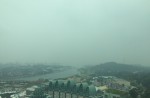
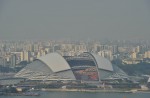
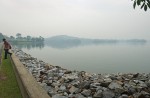
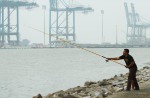
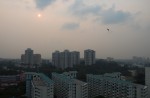
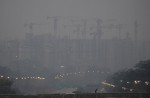
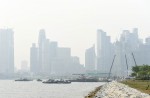
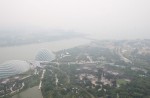
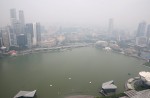
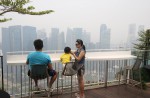
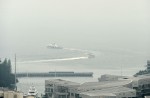
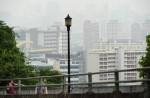
Schools in Singapore shut as regional haze reaches unhealthy levels
Click on thumbnail to view photos. Source:
AFP, Reuters, The Straits Times





















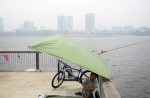
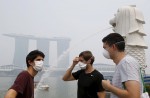

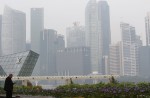
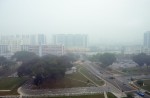
























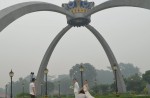

INTERDEPENDENT WORLD
Indeed, the United Nations International Law Commission (ILC) 2006 Report stated that “today, the exercise of extraterritorial jurisdiction by a state with respect to persons, property or acts outside its territory has become an increasingly common phenomenon”.
The ILC said this phenomenon is due largely to increased movements of persons beyond national borders, the growing number of multinational corporations, globalising of the world economy, increased transnational criminal activities, increased illegal migration and increased use of the Internet for legal or illegal purposes.
To that, we will add the growing interdependence between nations, and the undeniable fact that we live in a fragile environmental ecosystem, where harmful polluting activities in one country can cause serious harm, not only to its own people but to the people of other countries. The nature of transboundary offences necessarily means that multiple states do have a legitimate interest in bringing the offenders to justice.
It cannot therefore be said that any of these states would be acting in contravention of the offending state’s sovereignty by enforcing its own laws. Such a violation of sovereignty would arise in some cases, such as, for example, if a state were to send its firefighters into the territory of another state, without its consent, to put out a fire.
Clearly, Singapore’s legislation does not seek to do this. The law is enforced only when the party accused of causing the harmful act enters Singapore and comes within Singapore’s jurisdiction.
We should add that Indonesia itself has enacted laws that have extraterritorial reach, such as its laws on corruption and on electronic transactions.
Click on thumbnail to view photos. Source:
Reuters, AFP, The Straits Times, Berita Harian






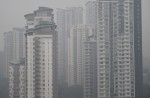
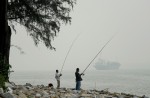
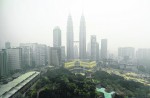








CONCLUSION
In a previous contribution to The Straits Times, (“The haze, international law and global co-operation”, Oct 6, 2015), we discussed the principle of international law that a state has the sovereign right to exploit its natural resources, including its forests. However, that sovereign right is limited by a second principle, namely that a state has the responsibility to ensure that activities within its jurisdiction or control do not cause damage to the environment of other states.
We explained that there is a clear rule in international law that acts committed in one territory that cause environmental harm to the territory of another state constitute a legal wrong. It is, therefore, consistent with international law for Singapore to hold accountable individuals and companies that have caused the fires in Indonesia or elsewhere for that matter, and which have, in turn, caused the haze pollution in Singapore.
Singapore and Indonesia are close friends and partners. We are two of the founding members of ASEAN. Under Article 2, paragraph 2 of the ASEAN Charter, ASEAN and its member states are committed to adhering to the rule of law and upholding international law.
Indonesia insists that the haze issue be resolved under the ASEAN Agreement on Transboundary Haze Pollution. We agree that we should use the ASEAN agreement, as well as other bilateral, regional and international agreements, to solve this problem. However, such agreements cannot curtail Singapore’s right to take actions that are in compliance with international law.
Singapore’s Transboundary Haze Pollution Act is consistent with international law. It does not violate Indonesia’s sovereignty.
On the contrary, Indonesia should welcome Singapore’s law, which complements Indonesia’s efforts to hold accountable those errant companies and individuals that have acted in blatant disregard of the serious harm they have caused to the people of Indonesia as well as those of its neighbours.
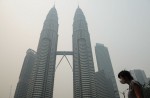
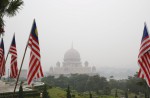
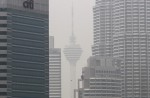
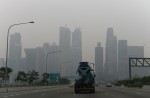
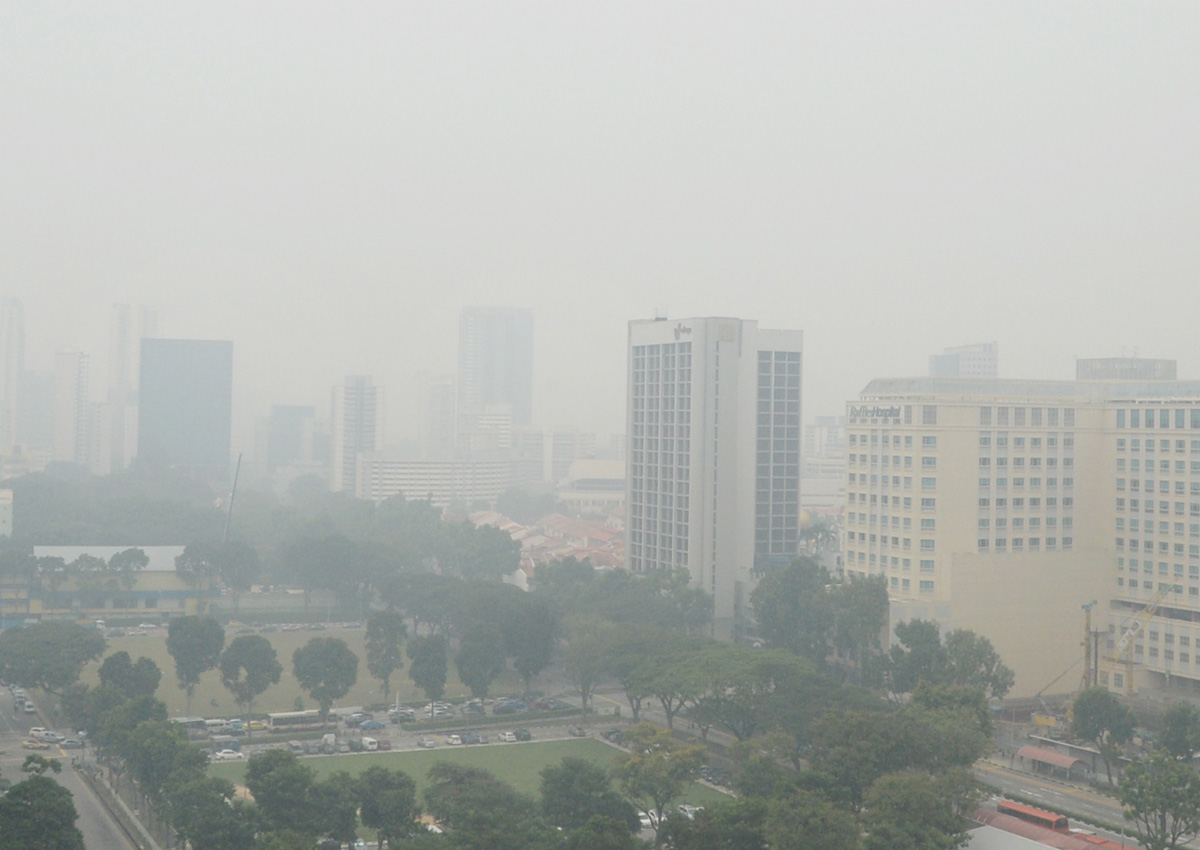
Haze hits the region again in 2015
Click on thumbnail to view photos. Source:
AsiaOne, Reuters, AFP, Berita Harian, The Straits Times, Khoo G Vui




























This article was first published on June 25, 2016.
Get a copy of The Straits Times or go to straitstimes.com for more stories.
Image:
Category:
Publication Date:
Saturday, June 25, 2016 – 16:00
Keywords:
Send to mobile app:
Source:
Story Type:
Others
China says has stopped communication mechanism with Taiwan

BEIJING – The Chinese government said on Saturday (June 25) it had stopped a communication mechanism with Taiwan because of the refusal of the self-ruled island’s new government to recognise the “one China” principle, in the latest show of tension between the two.
China, which regards Taiwan as wayward province, is deeply suspicious of Taiwan President Tsai Ing-wen, who took office last month, as they suspect she will push for formal independence.
Tsai, who heads the pro-independence Democratic Progressive Party, says she wants to maintain the status quo with China and is committed to ensuring peace.
Taiwan president-elect Tsai Ing-wen’s inauguration
Click on thumbnail to view photos. Source:
Reuters, AFP


















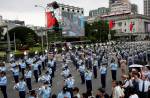

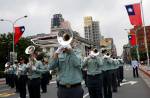

















But China has insisted she recognise something called the”1992 consensus” reached between China’s Communists and Taiwan’s then-ruling Nationalists, under which both agreed there is only one China, with each having their own interpretation of what that means.
In a brief statement carried by the official Xinhua news agency, China’s Taiwan Affairs Office said that since May 20, when Tsai took office, Taiwan has not affirmed this consensus.
“Because the Taiwan side has not acknowledged the 1992 consensus, this joint political basis for showing the one China principle, the cross Taiwan Strait contact and communication mechanism has already stopped,” spokesman An Fengshan said.
The announcement came as Taiwan expressed anger at Cambodia’s deportation of 25 Taiwanese nationals wanted on fraud charges to China on Friday, ignoring attempts by Taiwanese officials to have them returned to the island.
Taipei has accused Beijing of kidnapping when other countries such as Kenya and Malaysia have deported Taiwanese to China, also in fraud cases.
Taiwan’s Mainland Affairs Council said on Friday it had expressed its concerns to the Taiwan Affairs Office about the Cambodia case using the communication system.
That system had been ushered in following a rapid improvement of ties under the rule of Taiwan’s then-president Ma Ying-jeou, who took office in 2008 and signed a series of landmark trade and tourism deals with China.
Tsai is currently on her first trip overseas as president, visiting diplomatic allies Panama and Paraguay, with transit stops both ways in the United States.
Defeated Nationalist forces fled to Taiwan after a civil war with the Communists in 1949, which has never formally ended. China has also never renounced the use of force to bring Taiwan under its control.
Taiwan elections 2016: As KMT weeps, DPP celebrates
Click on thumbnail to view photos. Source:
AFP, Reuters




















Image:

Publication Date:
Saturday, June 25, 2016 – 14:36
Keywords:
Send to mobile app:
Source:
Rotator Image:

Hermes ID:
2 395 784
Hermes ID String:
PKTAIWAN25
Story Type:
Others
Malaysian designers open to exclusive Singapore collections
Kree is among a growing group of Malaysian fashion labels that are recognising a rise in demand from its Singaporean consumers.
This Hari Raya, its co-founders Reni Diana Sulaiman and Norhalida Sahar, designed a special…
Source link
Malaysian designers open to exclusive S'pore collections
Kree is among a growing group of Malaysian fashion labels that are recognising a rise in demand from its Singaporean consumers.
This Hari Raya, its co-founders Reni Diana Sulaiman and Norhalida Sahar, designed a special…
Source link
'Delighted' that Heng Swee Keat has been discharged from hospital: PM
Several ministers and Members of Parliament have taken to social media to cheer the news that Finance Minister Heng Swee Keat has been released from hospital.
Source link
McDonald's goes gourmet at Marine Cove outlet
Image:

Publication Date:
Saturday, June 25, 2016 – 15:00
Keywords:
External URL:
Send to mobile app:
Source:
Story Type:
Others


