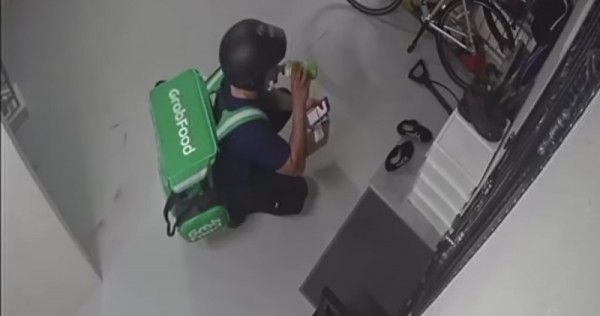
It’s a little bit harder to be one during the circuit breaker and Ramadan, when Muslim workers have to juggle increased delivery tickets while also fasting from dawn to dusk with no food and water in between.
A local mum knew this perfectly well and thought it to be a perfect opportunity to simultaneously spread some kindness and instil some exemplary ethos in her kids. Posting on Facebook after iftar (the evening meal to break the fast) yesterday (April 29), Aneesa Mahamud shared her good deed to encourage others to do the same for other couriers who need to break fast in the middle of their tasks.
According to Aneesa, a GrabFood deliveryman arrived at her home last night to pick up an order five minutes after the evening call to prayer, the time when Muslims can break their fast.
Singapore has taken the fight against the coronavirus to the next level, with a major effort to determine the extent of Covid-19 infection among the population and where weak links exist.
A key focus is to find out how many have been infected but did not show any symptoms, and were therefore not tested for the virus.
The National Centre for Infectious Diseases (NCID), which is spearheading the initiative, said this is being done using what is referred to as serology tests to analyse a person’s antibodies to determine whether or not someone had been infected.
Singapore is believed to be among the first in the world to use such tests on a large scale, to hopefully show whether precautionary measures, such as safe distancing and mandatory mask wearing, are effective and adequate.
The results would also help policymakers understand how different groups, such as front-line healthcare workers, have been affected.
And since these tests can identify those who had been infected but showed mild or no symptoms, they give an insight into the extent of under-diagnosed cases of Covid-19.
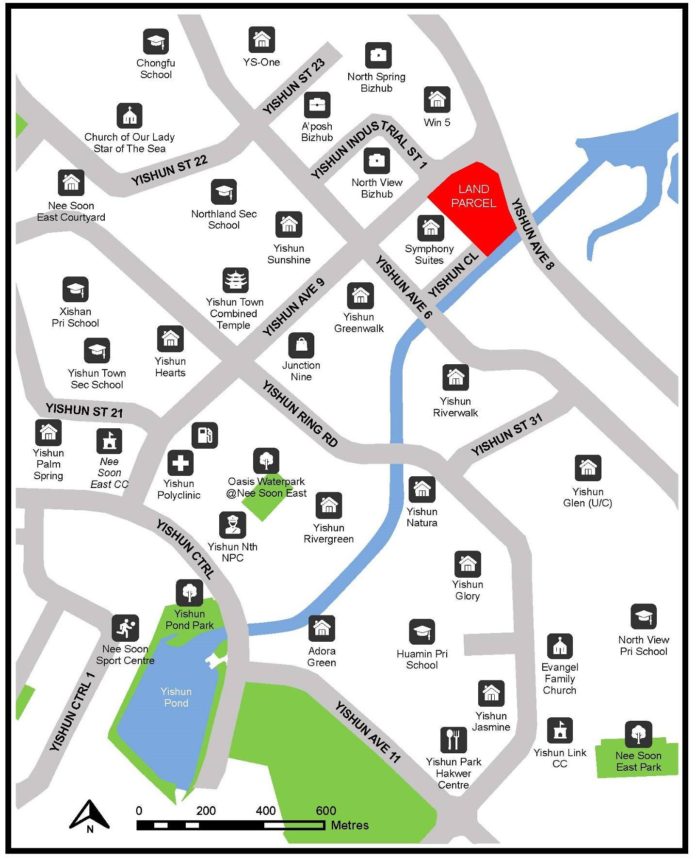
SINGAPORE: A executive condominium site in Yishun has been released for sale by public tender.
The 99-year leasehold site is located at Yishun Avenue 9 and can potentially yield about 600 homes, said the Housing and Development Board (HDB) in a press release on Thursday (Apr 30).
The 21,514 sq m site has a maximum permissible gross floor area of 60,240 sq m
To provide developers with additional time to make their assessment in view of the current COVID-19 situation, HDB said it will offer a longer tender period of six months with a deadline of 12pm on Oct 29.
Location plan for the land parcel at Yishun Avenue 9. (Image: Housing and Development Board)
The land parcel was put up for sale under the Confirmed List of the Government Land Sales (GLS) Programme for the first half of this year.
Land parcels on the Confirmed List of the GLS programme are put up for sale regardless of market interest, while those on the Reserve List are triggered for tender only if a developer commits to bid at a price acceptable to the land sale authorities.
Construction projects are expected to be delayed amid a manpower crunch during the COVID-19 outbreak.
Thousands of foreign workers in Singapore – a number of whom work in the construction industry – have contracted COVID-19, making up a majority of the country’s cases in recent days.
Since Apr 7, all construction work has been halted as part of the Government’s circuit breaker measures to minimise further spread of the virus.
More than half of Singapore will have 5G mobile network coverage by end-2022, offering surfing speeds more than 20 times what the current 4G networks offer, with the need to upgrade digital infrastructure driven home by the present partial lockdown.
Singtel and a joint venture between StarHub and M1 won the rights to build the Republic’s two nationwide networks yesterday and will have to scale up to provide nationwide coverage by 2025.
Meanwhile, Singapore’s four telcos – Singtel, StarHub, M1 and TPG Telecom – will also be allowed to operate smaller 5G networks that provide spot coverage using airwaves that are in abundance.
Nationwide coverage is limited to only two networks because of the scarcity of certain 5G airwaves for islandwide reach. Also, the far-reaching 3.5GHz airwaves that make it possible only become available from next year.
The sector’s regulator, the Infocomm Media Development Authority (IMDA), made its decision after considering detailed business proposals from the four telcos. Singtel and newcomer TPG submitted solo bids, while StarHub teamed up with M1 in a joint bid.
SINGAPORE – Grab has slashed the pay of its senior management by up to 20 per cent and encouraged its staff members to take voluntary no-pay leave.
It has also warned that it might no longer be able to give drivers more financial help if the current circuit breaker measures to combat the Covid-19 outbreak extend beyond June 1.
The technology firm is the largest private-hire and food delivery operator in Singapore. It is also a major e-payments player.
In a note to drivers on Wednesday evening (April 29), Grab Singapore’s head of transport Andrew Chan said the firm has been badly hit by the coronavirus outbreak.
Mr Chan said: “As our revenues continue to fall, senior Grab leaders have taken a pay cut of up to 20 per cent and Grab staff have also been encouraged to take no-pay leave voluntarily.
“We had been hopeful that the stricter circuit breaker measures would be lifted next week and people can resume their daily lives. Instead, the circuit breaker period was extended to June 1.
“We may no longer be able to provide extra financial support if the circuit breaker is extended past June 1.”
SINGAPORE: The recovery of Singapore’s aviation and tourism sectors in the wake of COVID-19 will be painfully slow.
But eventually, the market will fully recover and Singapore could emerge as an even stronger hub over the long term due to strong government support.
This is in spite of the bleak short-term outlook for Singapore – bleaker than other countries due to Singapore’s lack of domestic air transport and domestic tourism markets.
COUNTRIES WITH LARGE DOMESTIC MARKETS HAVE AN ADVANTAGE
Countries with large domestic markets will have an advantage in the first phase of the recovery as it will take time for borders to reopen and for travellers to be comfortable again with international travel.
China’s domestic market already started recovering in March. Other domestic markets in Asia Pacific could start recovering over the next two months.
The domestic recoveries will be gradual. Some domestic markets could reach pre-crisis levels later this year, with domestic travel even potentially surpassing pre-crisis levels, if local virus containment is successful but lingering issues abroad lead to a higher-than-normal portion of residents holidaying in their own countries.
In the Asia-Pacific, Australia, China, India, Indonesia and Japan have an advantage. Each had more than 60 million domestic passengers in 2019.
FILE PHOTO: A woman wears a protective mask at the Suvarnabhumi Airport before boarding a repatriation flight, in Bangkok, Thailand on Apr 21, 2020. (Photo: REUTERS/Jorge Silva)
In Southeast Asia, Malaysia, Philippines, Thailand and Vietnam also have sizeable domestic markets with at least 25 million annual passengers.
Southeast Asia’s top four airports – Bangkok Suvarnabhumi, Jakarta Soekarno-Hatta, Kuala Lumpur International and Singapore Changi – are similarly sized, each handling between 60 and 70 million annual passengers before this crisis.
Changi is by far the largest in terms of international traffic as it is 100 per cent international compared to 81 per cent for Suvarnabhumi, 72 per cent for Kuala Lumpur and only 23 per cent for Jakarta.
In Australia, prior to the crisis international accounted for 38 per cent of total passenger traffic at Sydney and 31 per cent at Melbourne.
A domestic led recovery will not result in any major airport’s overall traffic returning to pre-crisis levels.
But it could help some major airports in Asia-Pacific limit traffic declines to as little as 10 per cent or 20 per cent while Changi’s traffic could remain down by over 90 per cent.
At the moment, the pain Changi is feeling is similar or only slightly worse than other major airports globally – with the exception of China, where the domestic recovery phase has already started.
Changi reported a 98 per cent drop in passenger traffic for the last week of March, driving a 71 per cent decrease for the full month to 1.7 million and a 33 per cent decrease for the first quarter to 11.0 million.
A Singapore Airlines plane sits on the tarmac at Singapore’s Changi Airport on Mar 11, 2020. (Photo: REUTERS/Edgar Su)
The Singapore Airlines (SIA) Group, which includes Scoot and SilkAir, also reported a 65 per cent drop in passenger traffic for March to 1.1 million passengers.
SIA did not provide a traffic figure for the last week of March but the group has been operating less than 4 per cent of its normal passenger flight schedule since the end of March.
For at least a few months, we can expect a prolonged trough with Changi passenger traffic remaining at around 2 per cent of normal levels.
The recovery of international markets will enable a higher passenger throughput for Changi than the current dismal figures.
However, that start hinges on the reopening of borders and the success of virus containment efforts.
Even if Singapore’s circuit breaker measures, which have been extended to Jun 1 , are effective enough for Singapore to consider opening up again, there needs to be enough confidence the virus is contained elsewhere.
Australia and New Zealand are already talking about a possible bubble allowing travel between the two countries. This would provide a significant boost to their aviation and tourism sectors, enabling when combined with domestic recoveries their passenger traffic and tourism numbers to come closer to pre-crisis levels.
If Singapore could join the Australia-New Zealand bubble and create its own bubbles this could allow a faster start to Singapore’s recovery phase.
In addition to Australia and New Zealand, potential bubbles could be formed with China, Hong Kong, Japan, Malaysia, South Korea and Taiwan. These are all key source markets for Singapore’s tourism industry.
A near-empty terminal at Beijing Capital International Airport, where flights have been drastically reduced. (Photo: AFP/NICOLAS ASFOURI)
Australia, China, Hong Kong, Japan, Malaysia, New Zealand, South Korea and Taiwan combined accounted for 45 per cent of total visitor arrivals at Changi in 2019 and 20 per cent of Changi’s total passenger traffic.
The latter figure increases to roughly 30 per cent when also including travel by Singaporeans to these eight countries.
Visitors to Singapore accounted for 44 per cent of total traffic at Changi in 2019. The remaining 56 per cent was split roughly evenly between outbound Singapore residents and transit traffic.
Top 15 inbound markets for Singapore Changi Airport in 2019
Rank
Markets
Visitor arrivals by air
Per cent of total
1
China
2,572,931
17.3
2
Indonesia
1,864,817
12.5
3
India
1,136,530
7.6
4
Australia
1,027,296
6.9
5
Malaysia
973,119
6.5
6
Japan
783,253
5.3
7
Philippines
683,713
4.6
8
US
637,742
4.3
9
Vietnam
517,116
3.5
10
UK
512,503
3.4
11
South Korea
487,674
3.3
12
Thailand
460,634
3.1
13
Hong Kong
417,289
2.8
14
Taiwan
331,773
2.2
15
Germany
293,859
2.0
Source: Singapore Tourism Board visitor arrival data and Sobie Aviation
Opening up to select markets would be unprecedented and perhaps politically controversial yet necessary in order for Singapore’s tourism and aviation sectors to start recovering.
However, it is too early to say when any bubbles may be pursued or if the comfort level on both sides will be sufficient to even consider any partial openings prior to the eventual total reopening of borders.
What is certain is the pace of the international recovery – whenever it finally starts – will be slow and it could take a few years for international traffic to fully recover.
Until international passenger traffic and international tourism recovers, Changi Airport and Singapore’s tourism industry will be at a disadvantage because of the lack of a domestic market.
The bubbles with select countries would only kickstart the initial recovery and provide a framework for Changi traffic to be temporarily down by 50 per cent to 80 per cent instead of over 90 per cent.
Changi’s recent decision to close Terminal 2 for 18 months from May 1 recognises traffic will be significantly down until at least 2022.
The closure of Terminal 2 temporarily reduces Changi’s capacity from 85 million to 63 million annual passengers. Changi will not have to operate at overcapacity – although that would be a good problem to have – as traffic will not likely again exceed 60 million until at least 2022.
A man walks past the Solari board at Changi Airport Terminal 2 departure hall (Photo: Jeremy Long)
Terminal 4, which has capacity for 16 million passengers, may also be closed for a few months. However, Terminal 4 would reopen in the first part of the recovery phase.
WHY OUTLOOK FOR SINGAPORE’S AVIATION SECTOR REMAIN BRIGHT
Over the long term, the outlook for Singapore’s aviation and tourism sectors remain bright. The international market will eventually recover and Singapore’s position as a hub could strengthen due to consolidation.
Several Asian airlines will permanently shrink following the COVID-19 crisis and some may cease operations entirely, reducing or eliminating the hub status of the airports they are based at.
Singapore’s financial support of the aviation industry ensures it will be a winner and in position to take advantage of any consolidation.
While some other Asian countries will similarly support their aviation industries, few if any will provide the level of support offered by Singapore. Some countries will not provide any support of significance, leaving their airlines and airports in a potentially vulnerable position.
Singapore’s support for the aviation industry includes a S$750 million aid package that was unveiled in March, comprising a S$400 million job support scheme and a S$350 million enhanced aviation support package, expanding on an initial S$113 million package announced in February when the COVID-19 crisis was limited to China.
The Jobs Support Scheme is providing the aviation sector with a 75 per cent wage offset for the first S$4,600 of monthly wages from April to October.
The enhanced aviation support package is providing a 100 per cent rebate on aircraft parking charges, 10 per cent rebates on landing charges and 50 per cent rental relief on lounges and offices located within Changi’s terminals.
CAAS is also allowing airlines to defer the payment of fees between April 2020 and March 2021; this benefit has a value of S$140 million but is not included in the S$750 million.
FILE PHOTO: People wearing protective face masks walk at Singapore’s Changi Airport, following the outbreak of the coronavirus disease (COVID-19) March 30, 2020. REUTERS/Edgar Su
In addition, Temasek Holdings and SIA announced a rights issue that will raise S$8.8 billion to S$15 billion. The rights issue includes S$5.3 billion in new shares and S$3.5 billion in mandatory convertible bonds plus an option to issue another S$6.2 billion in convertible bonds.
This ensures SIA will have enough liquidity even if the current trough of 98 per cent reductions in passenger traffic continues for several months and if a full recovery takes a few years.
Overcoming the disadvantage of a domestic market requires a war chest that is large enough to ensure survival until there is an international recovery.
The short-term outlook for SIA is extremely challenging and even bleaker than other airlines due to the lack of a domestic market but the staggering amount of cash it has raised will enable SIA to ride out the storm and be ready to pounce when it is time to come out of hibernation.
The SIA Group is now in a very strong long term position relative to the overall Asian airline industry and may be able to take advantage of opportunities that arise from this crisis by acquiring other airlines and accelerating expansion.
The latter would create a stronger hub over the next several years, helping justify Singapore’s massive investments in additional capacity at Changi.
Singapore remains committed to the mega Terminal 5 project, which will be completed around 2030 and expand Changi’s capacity to 150 million passengers annually.
As we sit in the middle of the worst crisis to hit the aviation industry and acknowledge that it could be 2023 before we return to 2019 levels, it is hard to fathom an airport handling twice as many passengers than pre-crisis levels.
However, Singapore is doubling down on aviation and its airline group as it is confident that with the right policies, strategies and support its role as an aviation hub can be maintained and strengthened.
Brendan Sobie is the founder of Singapore-based independent aviation consulting and analysis firm Sobie Aviation. He was previously chief analyst for CAPA – Centre for Aviation.
SINGAPORE: I can barely remember the last time I took my dog out for leisure.
Like many other aspects of life we used to take for granted, my dog walking routine has been upended by the COVID-19 pandemic in the name of safe distancing.
I accept that and have made various modifications to ensure I play my part in breaking the chain of transmission.
For instance, I have deliberately shifted my dog walking to late night hours when there are fewer people jogging around my HDB neighbourhood. I also make it a point to walk my 10-year-old dog as briskly as his weakening knees will allow.
We no longer linger out in the open pre-circuit breaker style, and I definitely keep a wide berth should we pass by another person.
From what I can tell, other owners in my neighbourhood are likewise following the guidelines for physical distancing as they too are careful not to let their pets get too close.
I suspect all these poor animals are feeling confused at being trotted quickly away without being allowed to stop and sniff their friends, but there is little any of us can do about this for now.
At least most of us are cooperating by maintaining a safe distance while still going about the daily business of ensuring our pets get to stretch their legs after being cooped up in small apartments for the whole day.
(Photo: AFP/Raul ARBOLEDA)
To those that are not, I’ll say what my mother would have: The safe-distancing ambassadors are watching.
THAT RULE ABOUT NO PET-WALKING IN PRIVATE AREAS
Still, I can empathise with owners living in condominiums who felt blindsided by the by the regulation that pet walking will no longer be permitted within the property’s common areas. Instead, residents are now only permitted to walk their dogs on public paths and areas outside the condominium’s premises.
Just like closing all sports and recreational facilities and not permitting residents to exercise in common areas, the aim of this no-pet rule is to reduce crowding within the gated compounds by spreading out dog walkers in a public space.
It does make some sense, especially in smaller developments with minimal facilities like gardens or pathways.
But as someone who has friends with dogs of all sorts, I know this rule will make it incredibly challenging for owners who have older dogs that have multiple conditions, including partial blindness, arthritis and more.
For these creatures with poor mobility, while they need more space than our small apartments provide, the area downstairs is as far as their legs can take them. Some condominiums are also so large, getting to the exit may be when it’s time to head back.
Practically, there are dogs that need to head out a few times a day to relieve themselves. This essential activity has sometimes been misconstrued by others as a recreational walk.
Some dogs may develop behavioural problems if they do not go outdoors for their daily exercise so that walk can’t be skipped.
Barring special exemptions for exceptional cases, it will be a tricky, painful logistical challenge for some dog owners as long as the circuit breaker is in place. Most Singaporeans are law-abiding citizens who have been brought up to follow the letter of the law.
The playground and swimming pool at Terrasse condominium in Yio Chu Kang, on Mar 30, 2020. (Photo: Alison Jenner)
At least, the Building and Construction Authority has clarified that owners may walk their pets out of the condominium compound (as opposed to carrying or driving their dogs), so that should at least provide some relief to the majority of Singaporeans who abide strictly to the rules.
Still, it has thrown up questions on the minutiae of the law, like if dog owners walk their dogs on the path toward the condominium gate with the intension of heading out, only to have to head back after for one reason or another, will they be fined? Then again, why should intent matter if the objective is to abide by the letter of the law?
There are no easy answers in a time when we must follow these circuit breaker restrictions.
EVEN WALKING OUTSIDE WITH YOUR DOG REQUIRES PRECAUTIONS
The other challenge actually is ensuring people do spread out when they walk their dogs outside the premises of their condominiums – and keep to the spirit of the law.
Some neighborhoods in Singapore have a higher proportion of condominiums and dog owners. Compelling them all to walk their pets in nearby public spaces could see crowds in the evening.
There is also the matter of having to share space with other people who are jogging or cycling – surely adding dog walkers to the mix will end up increasing the crowd density in public spaces and the potential for inadvertent violations.
DOG OWNERS SHOULD EXERCISE COMMON SENSE TOO
At the same time, there is no excuse for owners to spend hours outside the home playing fetch with Rover.
Nor should those walking dogs use this as a way to congregate or chat with other people they may encounter while out and about. Such egregious violations should be called out, with enforcement action taken.
Instead, common sense should prevail. No matter where you live, it would not hurt to adjust one’s dog walking schedule to off-peak hours when there are fewer people outdoors.
File photo of a dog in a home. (Photo: Unsplash/Andrew Neel)
Or simply take a look out of your window to ensure it is quiet outside before leashing up your pet. If you have the ability to take your dog to a more sparsely populated public area, please do so for the greater good.
Ultimately, the implementation of rule upon rule, some of which can be confusing to uphold, will still come second to the public’s exercising of good sense, in helping to stop the transmission of this virus.
And the sooner everybody contributes to doing so, the sooner we might be able to return to a semblance of normalcy.
It should go without saying that Covid-19 has hit Singapore’s food and beverage industry pretty hard.
With food being a driving force in the country’s economy and culture (enough to spark regional feuds), the circuit breaker has made it a wee bit tougher to indulge in the national hobby: snitching finding the next best makan hotspot.
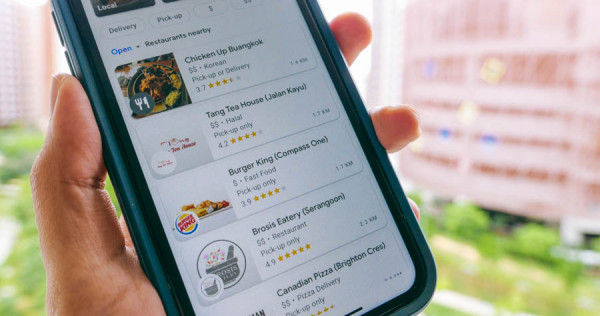
As makers of a search engine that compiles the world’s information, Google has got you covered. The Google Pay app has added an isolation-friendly feature that lets users browse the menus of 250 eateries (and counting) across the island.
If you’ve been sick of eating the same food over and over again, or are hoping to switch up your meals with something that’s a little more special or unique… » READ MORE
SINGAPORE: Amid the grim economic forecast, Singapore’s first quarter employment figures were better than expected, said analysts, although they cautioned that the labour market will continue to weaken due to the COVID-19 pandemic.
In its latest labour market report released on Wednesday (Apr 29), the Ministry of Manpower (MOM) said that the overall unemployment rate rose over the quarter in March from 2.3 to 2.4 per cent. Retrenchments also rose from 2,670 in the previous quarter to 3,000. These figures remains lower than in previous downturns, noted the ministry.
Total employment, meanwhile, fell by 19,900 in the first quarter of this year, due to a significant reduction in foreign employment.
The figures outperformed their forecasts, economists said, given that the unemployment rate and retrenchments only saw a slight increase from the previous quarter.
However, they warned of worse to come.
“The peak of the labour market downturn will only come a few quarters later,” said HL Bank’s senior treasury strategist Jeff Ng, who had estimated a 2.5 per cent jobless rate.
He pointed to downturns during the 2003 SARS outbreak and the financial crisis in 2008 and 2009 as indicators of how COVID-19 will damage the labour market.
Overall unemployment rates spiked from 3.7 per cent in March 2003 to 4.8 per cent in September that year. During the financial crisis, the unemployment rate rose from 2.3 per cent in September 2008 to 3.3 per cent a year later.
Economists said that the Budget policies this year – particularly the Jobs Support Scheme – have helped most enterprises reduce or delay job cuts.
But even with these measures, companies are facing more severe economic headwinds in the second quarter – and possibly beyond, said Professor Kim Sun Bae of the NUS Business School.
This comes as the Monetary Authority of Singapore (MAS) said in a report on Tuesday that Singapore is expected to slide into a recession this year, possibly its worst. Economic growth may fall below the forecast range of -4 to -1 per cent.
“Circuit breaker” measures in the second quarter of the year have put more than 1.3 million workers in “hibernation” and left companies under severe cash flow pressures, said Maybank’s senior economist Chua Hak Bin. He and his colleague Lee Ju Ye had previously predicted 200,000 retrenchments in Singapore this year.
While the Government will subsidise 75 per cent of wages for April and May, allowing many companies to keep their workers during this period, layoffs are likely to jump when the wage subsidies fall to 25 per cent for most sectors after the circuit breaker, Mr Chua said.
“Firms will have to scale their actual staff needs to the new economic reality, without the protective shield of wage subsidies,” he said.
Mr Chua added that employment will likely contract by about 80,000 to 100,000 in the second quarter – at least four time more than the first quarter – and will remain high in the third quarter.
WHICH INDUSTRIES WILL FACE GREATEST JOB LOSSES?
The service sector, which accounts for about 75 per cent of total employment in Singapore, will see the greatest impact, said Prof Kim, especially retail trade, hospitality, food services, as well as transport businesses.
Employees in industries where working remotely is off the table, like those in wholesale trade and transport and storage, will also be badly affected as business effectively comes to a standstill, said Mr Ng. Those in the energy sector may lose their positions as oil prices have plunged.
“Even the construction and manufacturing sectors are also impacted since only essential services are still operating under the ongoing circuit breaker,” said OCBC Bank’s head of treasury research and strategy Selena Ling.
In wake of COVID-19, Changi Airport has seen much lesser human traffic. (Photo: Jeremy Long)
“And with many economies also in lockdown mode both globally and regionally, there has been disruption to the global supply chains and manpower,” she added.
On the other hand, the healthcare, public administration, professional services and technology sectors will remain resilient during this crisis, the economists said.
ARE WAGE SUBSIDIES ENOUGH?
While the Jobs Support Scheme has done much to buoy companies so far, it will be impossible to eliminate job losses, they said.
A weekly poll by MOM showed that 77 per cent of companies polled between Apr 13 and 17 indicated they would not reduce their headcount over the next two months, a decline from 84 per cent of companies polled between Mar 23 and Mar 27.
Over the same period, the proportion who indicated they have no intention of reducing salaries also fell from 85 per cent to 71 per cent.
A separate report conducted by professional services firm Aon in April found that 4 per cent of the 196 organisations surveyed have reported layoffs, while another 21 per cent are considering letting people go.
Similarly, 8 per cent of the companies have furloughed employees and 21 per cent are looking to do so, the study showed. And about a fifth of them are delaying or cancelling salary increments, and 30 per cent have frozen hiring.
For some industries like aviation, wage subsidies are not enough to cushion them, said Mr Ng. Unlike other industries, it will take aviation at least a year to recover. While this sector will continue to get a 75 per cent wage subsidy from the Government under the Jobs Support Support Scheme, aviation companies will still be tight on cash if they have to pay the remaining 25 per cent of wages as revenue has fallen to near-zero figures.
Travel demand might take about two to three years to recover to levels seen before the COVID-19 outbreak, said Mr Chua.
The Jobs Support Scheme is also designed to retain local employees, Prof Kim noted. Non-resident employees, who account account for nearly 40 per cent of Singapore’ labour force, will bear the brunt of layoffs.
This was already seen in first quarter’s total employment figure, which shrunk largely due to a reduction in foreign employment, MOM reported.
If the circuit breaker period is further extended beyond Jun 1 but without government aid, employers will inevitably have to let some people go, especially among smaller firms, said Ms Ling.
WILL EASING LOCKDOWNS HELP?
Even as countries around the world begin to lift restrictions, it will still take time for business activities to pick up, the economists said.
For one, lockdown measures are being removed gradually. Most employers will likely tread carefully in the current landscape until the COVID-19 spread is under control.
A Grab food delivery person walks along Raffles Place on the first day of Singapore’s “circuit breaker” period. (Photo: Jeremy Long)
And even if production is ramped up, consumers might hold back, Mr Ng said, citing China as an example where consumers are still wary to go outside although borders are reopening.
Business sentiments will continue to remain fragile if private consumption does not recover in the second half of 2020, Ms Ling said.
Mr Ng said that the Government has already made a comprehensive effort to protect jobs through its three rounds of budgetary support.
What is primarily needed now is beyond the employers’ control – to contain the virus, and to successfully develop a vaccine.
“Even if you give temporary support … it still doesn’t solve the underlying issue, which is that if the cases continue to climb or the situation doesn’t (abate), there will be a lot of pessimism ahead,” he said.
The good news is that most forecasts, including MAS’, see the economy bottoming out in the second quarter of this year, followed by a pickup in the second half of the year, said Prof Kim.
This is also the current baseline or consensus forecast for other economies, including the US and China, he added.
A recovery – and therefore mitigating retrenchments – will depend on how the global economy performs, said Alexander Krasavin, Aon’s partner and chief commercial officer for human capital solutions for Asia Pacific and Middle East.
“I hope with our diversified economy we can bounce back quickly, especially in the services sector,” he said. “As countries open up again, Singapore will benefit.”
What workers can do now, Mr Krasavin said, is to tap training programmes including those offered under Skillsfuture Singapore.
Technology knowhow, as well as “soft” skills in leadership and communication are always in demand, he said.
“Invest in yourself … it’s short-term pain but (produces) long-term rewards.”