Home Blog Page 352

‘We can’t afford to make any mistake’: Inside a COVID-19 testing lab in Singapore

SINGAPORE: For years, since the 2003 outbreak of severe acute respiratory syndrome in Singapore ended, Tan Tock Seng Hospital’s department of laboratory medicine had been planning for another outbreak like it.

The plan was to equip the lab to do 500 tests per day at full capacity, in support of the National Centre for Infectious Diseases (NCID).

But in March, even before Singapore’s daily cases of Coronavirus Disease 2019 (COVID-19) peaked, the Ministry of Health asked the hospital to look into doing 3,000 tests a day, said TTSH head of laboratory medicine, Adjunct Assistant Professor Partha Pratim De.

It has been difficult, however, for the department to go from 500 tests a day to even 800, which is its maximum capacity now “with the amount of staff and equipment that we have”.

Adjunct Assistant Professor Partha Pratim De is Tan Tock Seng Hospital’s head of laboratory medicine

Dr Partha Pratim De.

“We’re trying to get staff from here, there and everywhere. We’re trying to get equipment from here, there and everywhere,” he added. “It’s very time-consuming and tiring, but everybody’s working hard in this situation.”

Ramping up testing capabilities is just one of the challenges faced by his lab since the start of the COVID-19 outbreak.

With testing taking place 24/7, staff fatigue is another. And according to lab staff, the process itself is “quite tedious” as CNA Insider discovers in an inside look at how COVID-19 testing is done in TTSH.

“When you’re dealing with hundreds of samples in the middle of the night, every night, it’s very, very difficult,” said Partha De.

Inside one of the Tan Tock Seng Hospital laboratory rooms, where testing for Covid-19 is done.

IT TAKES AT LEAST THREE HOURS

Singapore’s COVID-19 testing capacity has risen from a daily average of 2,900 tests early last month to more than 8,000. There are now a number of places — from hospitals to public and private labs — where samples are being tested.

At TTSH, the samples can come from nursing homes, some of the polyclinics and the Institute of Mental Health.

But the bulk come from across the road: Each day, porters carry hundreds of swab specimens in cooler boxes from the NCID to TTSH.

Once the samples are in the lab, “every step” taken by the staff becomes “crucial”, said Partha De. And it starts with ensuring that the label for each sample matches the patient in the lab’s information system.

“You get the wrong sample from the wrong patient at this stage, (and) it’s a complete disaster,” added the doctor.

The test itself, called the reverse transcription-polymerase chain reaction (RT-PCR) test, is more than 99 per cent accurate in detecting the presence of the novel coronavirus (Sars-CoV-2). But it still requires every stage of the process to be executed properly.

The first stage is the extraction of nucleic acid from the samples. In the room where this is done, the samples are placed in biosafety cabinets that allow only inward airflow to keep any virus particles inside.

Lab staff operating the extractors must also wear personal protective equipment. Their safety tends not to weigh on their minds, however, as the extraction of viral material is a manual process that takes about 90 minutes and requires full concentration.

TTSH lab staff operating the extractors to test for Covid-19 must wear personal protective equipment

The material must be extracted into a liquid, which is pipetted into a tube where chemicals known as reagents are used to isolate the COVID-19 viral genome, if it is present.

“Every step of the way, there are protocols to follow,” said medical technologist Nur Ain Lokman from the hospital’s microbiology lab. “Very small volumes of liquids to add … and such, so one small mistake can affect the result.”

The second stage of the test is the detection phase, which takes another 90 minutes. Here, the extracted samples are mixed with another set of reagents and put in a machine where they are heated up and cooled down.

If the sample has the virus, a reaction would occur that results in the amplification of the viral genome, and thus a positive result is detected.

The RT-PCR machine amplifies the genome of the novel coronavirus (Sars-CoV-2) up to a billion times.

The machine amplifies the viral genome up to a billion times.

There are now four machines, each of which can test up to 96 samples. But because the swabs do not arrive all at once, some waiting may be needed and the time needed to report a test result ranges from three to eight hours.

Often, however, there are more samples coming in than the amount that can be tested immediately — a situation that medical technologist Tan Yong Wen described as “mentally taxing’.

“We have to get results fast for the clinicians,” he said. “When it’s a positive (result), it’s faster for them to do contact tracing, and so minimise the spread of the clusters.”

The testing work includes preparing the “master mix” of chemicals to load into the machine, which cannot be contaminated and must be calibrated according to the number of samples.

The testing work includes preparing the “master mix” of chemicals to load into the machine.

Adding the “master mix” to the samples.

When the workload is heavy, every detail requires even more focus. “The worst is when it’s 4am and you still have to concentrate very hard — because we really can’t afford to make any mistakes,” said medical technologist Chua Xian Da.

SMALL TEAM, SUPPLY LIMITATIONS

Ordinarily, the TTSH department of laboratory medicine receives samples mostly from patients to test their blood chemistry, for example, besides testing for communicable diseases like influenza and the Middle East respiratory syndrome, or for viruses such as Zika.

This routine lab work continues, although it has been scaled down from business as usual in tandem with the rest of the hospital’s services to focus on COVID-19.

At the start of the outbreak, TTSH had 13 lab technologists who were trained in the general PCR technique. But they needed training to do a specific PCR test for Sars-CoV-2 after China provided its exact genome sequence.

Tan Tock Seng Hospital's laboratory team at work in the fight against Covid-19.

The team at work.

This diagnostic test, called the Fortitude Kit 2.0 and co-developed by the hospital and the Agency for Science, Technology and Research, was approved on Feb 7.

Soon, the workload at the lab went from a daily average of 250 tests to 370 for a brief period.

“That was roughly the second week of February, around Valentine’s Day, which everybody remembers for the wrong reasons in this hospital,” recalled Partha De.

The 12-hour night shifts were especially tiring.

“At that time … the roster was such that (there was) one molecular medical technologist, alone, to process the samples throughout the night,” said Nur Ain. “That required a lot of endurance to sustain yourself, to be able to concentrate throughout.”

"It’s not as simple as just testing that swab," said TTSH medical technologist Nur Ain Lokman.

“It’s not as simple as just testing that swab,” said Nur Ain Lokman.

The number of night shifts they work has doubled to around four a month, said her colleague Chua. But the staff on duty at night has also doubled, which he reckoned is “better”.

Over the past three months, the team trained to run the RT-PCR test has gradually increased to 22. These include staff within the department, such as junior medical microbiologists, and volunteers with a lab background from other departments.

The training for each of them takes no less than two weeks. “It’s extremely specialised testing,” explained Partha De, who has also hired four polytechnic graduates to be rostered only for the night shifts.

Referring to how the RT-PCR is different from rapid serology test kits launched in the market, he pointed out that the latter are blood tests.

“They detect the infection, but after 10 to 14 days of symptoms. That’s too slow,” he said. “The gold standard is still the PCR.”

Dr Partha Pratim De and a colleague from the TTSH laboratory check the results of the PCR test.

Checking the results of the PCR test.

Increasing testing capacity is not, however, all about having trained manpower. Many countries, including Singapore, are facing a disruption in the availability of extraction reagents required for COVID-19 testing, with supply shortages mainly in Europe and the United States.

“It’s an international problem. The MOH and the Agency for Logistics Procurement and Supply are now coordinating nationally to distribute extraction equipment and reagent supplies,” said Partha De.

“We’re switching strategy to China, where they have more secure supply lines now that their epidemic problem isn’t as bad. And they’re able to restart factory production for reagents.”

Meanwhile, there has been a reduction in testing of NCID in-patients, who were previously “tested almost every day”, even if they had symptoms.

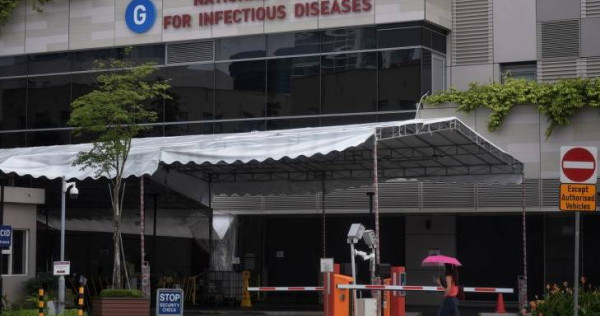
The National Centre for Infectious Diseases (NCID) in Singapore

The National Centre for Infectious Diseases (NCID) in Singapore on Apr 3, 2020. (Photo: AFP/Roslan Rahman)

“Because as soon as they’ve had two negative swabs, they can be discharged and the bed can be freed up for someone else. But we’ve had to help reduce that,” he added.

“We’re also changing practice based on evidence, so … we can almost predict when the best time to take a swab is.”

Last month, his department tested a daily average of 420 samples for COVID-19, with the all-time high of 750 tests coming earlier, on March 23.

The lab is now getting more machines and trying out new automations to cut testing times, increase capacity and reduce some of the work done now, such as to manually open each sample tube and add the reagent mixture.

“Otherwise … we’d begin to see staff fatigue and burnout quite rapidly,” said Partha De.

Read about Singapore’s COVID-19 screening centre, on the front line against the disease.
Source link

Coronavirus in Singapore: 932 new cases reported today

[ad_1]

The Ministry of Health (MOH) has reported 932 new coronavirus cases in Singapore as of 12pm today (May 1). 

Out of these, there are five cases in the community involving Singaporeans/PRs, with the majority being Work Permit holders residing in foreign worker dormitories, said MOH in its statement. 

The total count of coronaviruses cases in Singapore now stands at 17,101. 

Friday’s number is the highest in recent days, but marks the eighth day in a row that coronavirus cases in Singapore have dipped below 1,000. On Thursday, there were 528 new cases in Singapore.

ALSO READ: 58-year-old Singaporean woman who visited Europe dies from Covid-19 complications

More details to come.

[ad_2]

Source link

KFC: Get $5 off your next order when you spend $30 over this long weekend (1 – 3 May ’20)

Get $5 off your next order when you spend $30 over this long weekend enjoying KFC at home!

Available for online takeaway or delivery orders made through the KFC Singapore App or kfc.com.sg.

Redemption is valid from 4-18 May 2020, other T&Cs apply.

#KFCsg #KFC #MayDay #LabourDay

Find your nearest KFC outlet here or order KFC Delivery here

FairPrice Warehouse Club: Open House – NO membership required till 27 May 2020

NTUC FairPrice’s Warehouse Club is now open to ALL customers till 27 May 2020, NO membership will be required during this period

Visit them at FairPrice Hub, Level 3 (next to Joo Koon MRT Station).

Discover unique products and enjoy great savings from multi-packs. Find special quality imports such as Kirkland Signature US, Carrefour France, Tesco UK, Cheesecake Factory US and Frosch Germany.

During this period, the public is invited to shop with NO membership card needed. T&Cs apply. Check in-store for details. Membership price is $10 for 1 year (for NTUC Union members, FairPrice members & shareholders) and $20 for 1 years (Non-Union members)

Free delivery for a minimum purchase of $500. $30 delivery fee applies for purchases below $500. Delivery is available for all items including electronics and groceries, and excludes fresh, chilled and frozen items.

Explore over 36,000 sqft of great buys. With the low frills environment, Warehouse Club saves costs and passes the savings on to you. Be surprised by special finds with every visit.

Check out some of the featured buys

Warehouse Club Opening Hours

  • 9.00 AM – 10.00 PM (Mon – Sun)

Address

1 Joo Koon Circle (next to Joo Koon MRT Station)
Level 3
Singapore 629117
+65 6710 4584

For more info, visit www.warehouseclub.com.sg

Stay-home notice for foreign workers, dependants in construction sector extended to May 18

[ad_1]

SINGAPORE – The stay-home notice that is being served by around 180,000 foreign workers in the construction sector and their dependants will be extended by another 14 days as a precautionary measure to stem the spread of Covid-19, the authorities said on Friday (May 1).

The workers, who are work permit and S Pass holders, will now serve their stay-home notice (SHN), initially slated to end on May 4, until May 18, 11.59pm.

In a joint statement, the Ministry of Manpower (MOM), Ministry of Health (MOH) and the Building and Construction Authority (BCA) said that the number of infected construction work pass holders who are living in premises that are not purpose-built dormitories has continued to rise.

“Their incidence/prevalence remains noticeably higher than the general community. This suggests that transmission at construction worksites among such workers had occurred before the start of the SHN period,” the agencies said.

[ad_2]

Source link

More employees eligible for Covid-19 support grant; application start date pushed back: MSF

SINGAPORE – More Singaporeans are now eligible for financial help if their jobs have been affected by the Covid-19 outbreak and the measures taken to contain it.

The Ministry of Social and Family Development (MSF) said on Thursday (April 30) that the Covid-19 Support Grant would be expanded to include more Singaporean and permanent resident workers here.

The grant application has also been pushed back from May 1 to May 4 or 11, depending on the employee’s situation.

The grant was originally meant to support only those who had lost their jobs due to the Covid-19 situation.

The MSF said it will now also cover employees placed on involuntary no-pay leave for at least three consecutive months and employees who have had their salaries reduced by at least 30 per cent for three consecutive months.

These changes in employment or salary should have occurred after Jan 23, when the first Covid-19 case was detected in Singapore, said the MSF in a statement.Source link

COVID-19: Singapore’s recovered foreign workers to be housed on SuperStar cruise ships

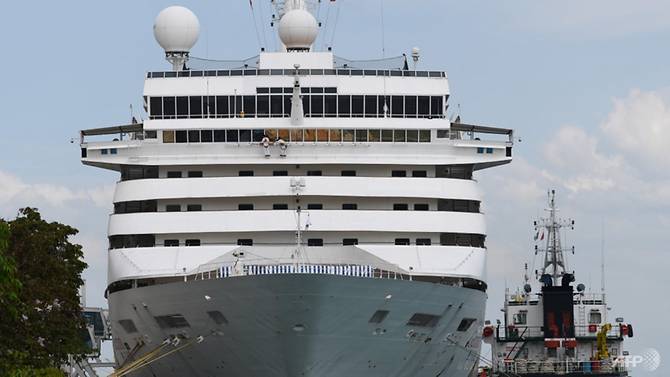
The SuperStar Gemini cruise ship is seen docked in Singapore on Apr 17, 2020. (Photo: AFP/Roslan Rahman)

SINGAPORE: Some foreign workers who have recovered from COVID-19 in Singapore will be temporarily housed on two SuperStar cruise ships, Genting Cruise Lines said on Friday (May 1).

SuperStar Gemini and SuperStar Aquarius have “completed stringent evaluation checks” by the Government and will provide accommodation for the workers, it said in a press release.

The number of COVID-19 cases among migrant workers living in dormitories has surged in recent weeks, and now make up about 85 per cent of Singapore’s 16,169 cases.

Many workers who are well have been moved out of the tightly packed dormitories to other living quarters, such as military camps and vacant HDB flats.

READ: Singapore COVID-19 cases cross 16,000 mark, with 528 new cases reported; 15th person dies

On Apr 27, National Development Minister Lawrence Wong said that authorities have an “extensive” plan to house recovered foreign migrant workers, involving new sites.

Earlier, the Singapore Tourism Board (STB) had said that the two cruise ships were being assessed as they have readily available rooms and en-suite toilets to minimise person-to-person contact.

The assessment considered factors such as the ship’s ventilation systems, security protocols and infection control measures, said STB. The two ships together can accommodate up to 2,000 foreign workers.

READ: Migrant workers with COVID-19 symptoms isolated before getting tested to prevent potential transmission

“Every effort will be made to uphold the health and welfare of Singapore’s foreign workers while on board the ship, which include observing the highest standards of safe distancing and preventive measures at all timess,” said Genting Cruise Lines.

SuperStar Gemini (3)

The SuperStar Gemini cruise ship is seen docked in Singapore on Apr 17, 2020. (Photo: AFP/Roslan Rahman)

“We are pleased that our on board facilities, as well as preventive and safety standards meet Singapore’s strict requirements for this initiative,” said Mr Michael Goh, president of Dream Cruises, adding that there have been no reported cases of COVID-19 among its guests or crew to date.

The SuperStar Gemini arrived on Apr 17 from Hong Kong, and is berthed at Marina Bay Cruise Centre Singapore. SuperStar Aquarius arrived in Singapore on Apr 25, according to marinetraffic.com.

BOOKMARK THIS: Our comprehensive coverage of the coronavirus outbreak and its developments

Download our app or subscribe to our Telegram channel for the latest updates on the coronavirus outbreak: https://cna.asia/telegram

Source link

Malaysians working in Singapore fear getting fired

[ad_1]

JOHOR BARU – Malaysian workers, who chose to remain in Singapore during the present lockdown, are now living in fear as there are cases of bosses looking for excuses to terminate their employment.

This includes not wearing facemasks, loitering or gathering around their hostel and not practising social distancing.

This has led some to believe their employers were just looking for an excuse to terminate them without paying them adequate compensation during the present Singapore lockdown known as circuit breaker – which has been extended until June 1.

Those found not adhering to the circuit breaker, which included not wearing facemasks outside or not practising social distancing, face a S$300 (RM900) fine, and foreign workers may have their employment pass revoked.

[ad_2]

Source link

Remembering those who labour on Labour Day

[ad_1]

Prime Minister Lee Hsien Loong started his May Day message this year by referencing a particularly poignant story of a migrant worker who is a COVID-19 patient at Sengkang General Hospital, and a resident of the S11 dormitory in Punggol, Singapore’s largest COVID-19 cluster.

“One worker who was hospitalised told his doctor that he had laid the tiles in the ward he was staying in. The Sengkang Hospital medical team were moved. They were happy to be able to give back directly to the workers.” he said.

Indeed, these are challenging times, especially so for our friends working tirelessly on the front lines, and those performing essential services (cleaners, rubbish collectors, public transport workers etc).

So as most of us enjoy the long weekend, let us keep in mind those who continue to labour on Labour Day in order to keep us safe, and keep our country going.

Here’s a post from Tan Tock Seck Hospital showing how hospital staff help Muslim migrant worker patients observe Ramadan with the help of care packages and goodwill donations from the community:

[ad_2]

Source link

Facing Ramadan like never before: How SG muslims cope

[ad_1]

Muslims around the world are experiencing a different kind of Ramadan amid the Covid-19 pandemic. Here in Singapore, the extended circuit breaker measures will carry over the fasting month, which started last Friday.

With all places of worship closed and social gatherings prohibited, Singapore’s highest Islamic authority Mufti Nazirudin Mohd Nasir has urged Muslims to keep to the holy month’s core activities of fasting and helping those in need through alms giving. But in what other ways will they be affected?

[ad_2]

Source link