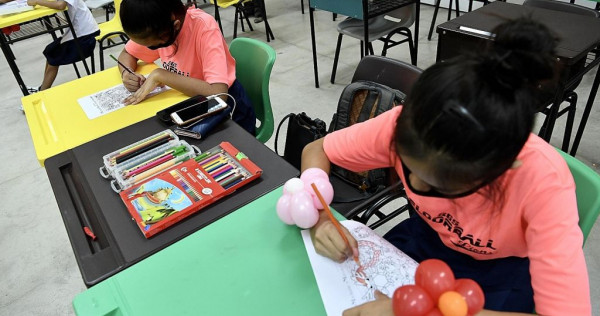
Before home-based learning (HBL) kicked in, schools were worried that children who came from disadvantaged homes would start lagging behind their peers.
They prepared accordingly, finding out which students needed laptops and tablets, and whether they had stable Internet connections.
Schools dug into their stockpile of devices and sourced for more.
Teachers also made arrangements for a small number of children who, for various reasons, wanted to do their learning in school.
A month on, schools say that the “learning” part of the equation has turned out to be the least of their problems.
The bigger issue, for most of their students, is that real life has intruded.
Some children have shared their anxieties over their parents losing jobs.
With the loss of income, others have had to fret about going hungry.
Others, whose parents are in front-line jobs, worry about the risks from the coronavirus.
In many of these cases, their teachers – instead of merely helping them with their lessons – also become their confidants and counsellors.
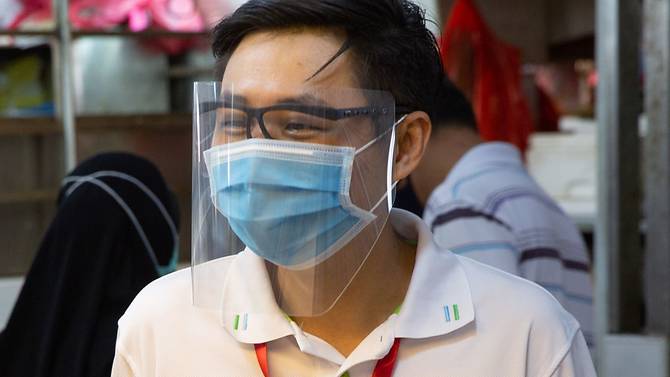
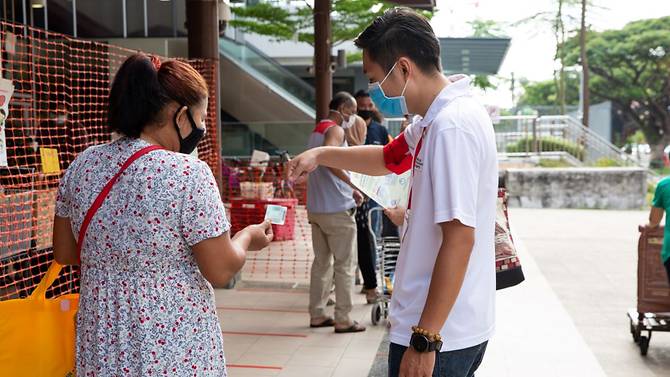
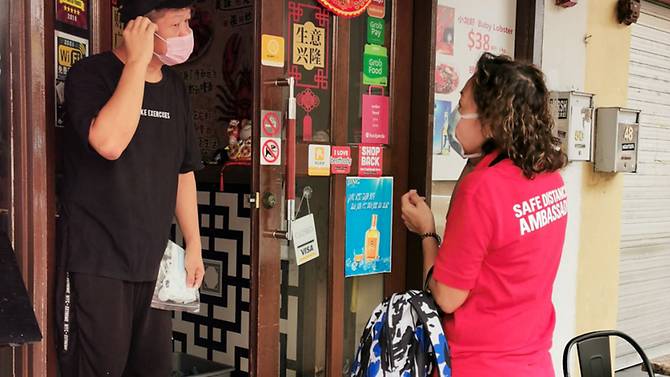
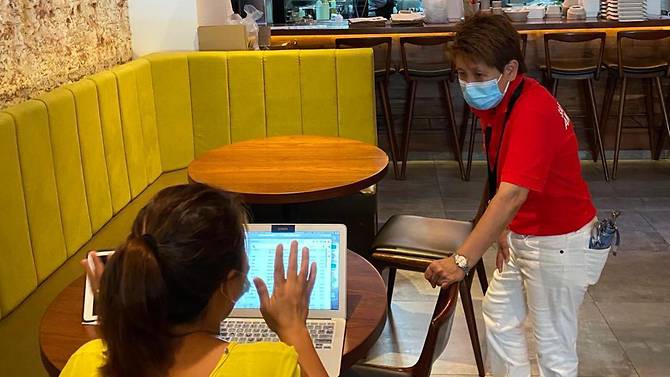
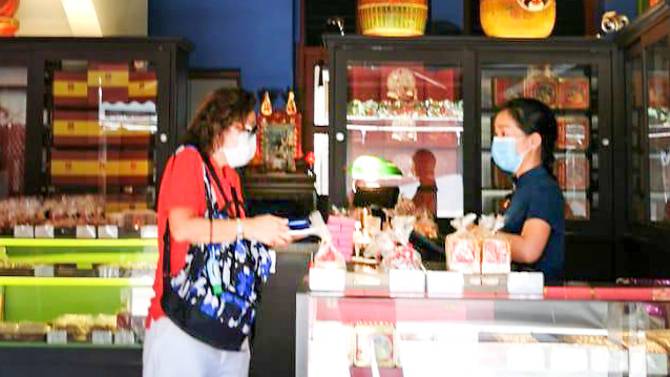
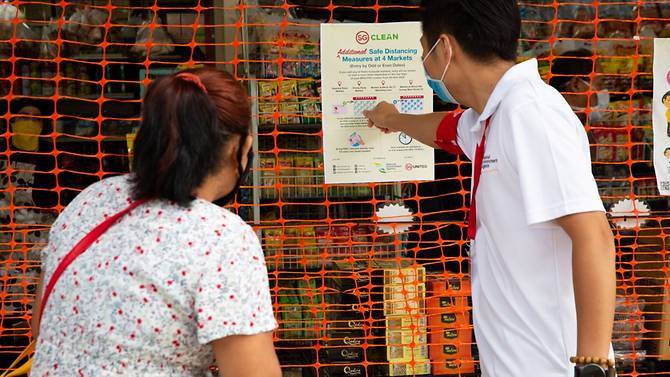
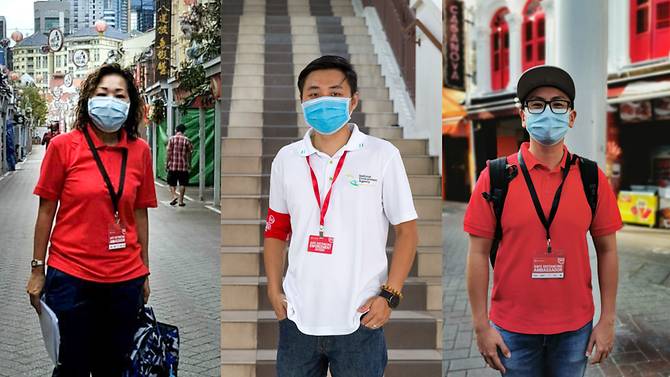
One of them was slapped across the face. Another spent days persuading a hawker to wear a mask. (Photo credit: STB, NEA)
SINGAPORE: The one day Chow Kai Wen was deployed as an enforcement officer by the National Environment Agency (NEA), a member of the public slapped him.
Chow, who was with a colleague, had approached the man when they noticed him eating at a table in a hawker centre, in breach of regulations during the “circuit breaker”.
After identifying themselves, they informed him that he had committed an offence and asked for his particulars. But he ignored them, so they had to call the police for assistance.
When he finished his meal and tried to leave, the duo stopped him. That was when he slapped Chow on the left cheek, causing his mask to tear.
“It was pretty unexpected,” said the 38-year-old. “My first thought was that he has to be dealt with by the law. We don’t deserve this.
“Thankfully, the police arrived soon after.”
Chow Kai Wen. (Photo: NEA)
This man was the only one Chow had to issue a fine to in his short stint as an enforcement officer, a role that entails patrolling and looking out for breaches of safe distancing measures.
The NEA senior assistant director (tenancy management) usually oversees operations of markets and hawker centres, which includes crowd control and managing entry into these areas. But that day, he was covering for a colleague.
The team of enforcement officers he oversees has told him stories aplenty of verbal abuse and resistance among members of the public. He himself has been on the receiving end of complaints, besides being slapped.
“People would be frustrated with us, saying: ‘Why are you so stupid to implement this? Why are you doing this to inconvenience us?’” he cited. “We may feel affected, but we still need to remain calm.”
Chow with a member of the public. (Photo: NEA)
Since the start of the circuit breaker on Apr 7, these officers and the safe distancing ambassadors have faced many people. And it has been a steep learning curve, even as most of their encounters have been positive.
THE ‘LIGHT TOUCH’ APPROACH
Around 3,000 enforcement officers and ambassadors have been deployed daily to public places and Housing and Development Board estates.
They come from around 50 public agencies and also include volunteers and non-public servants, such as those from the hospitality and aviation sectors, stated the Ministry of the Environment and Water Resources last month.
Cindy Tay, for example, is a former tourist guide with 32 years’ experience whom the Singapore Tourism Board (STB) roped in to be a safe distancing ambassador when her tour group bookings started drying up as the COVID-19 situation escalated.
Cindy Tay on the job. (Photo: STB)
The same thing happened to another tourist guide, 32-year-old Jeff Tan.
“I like to be outdoors, so when this opportunity arose, I thought on the one hand, I can assist Singaporeans and businesses in following any new guidelines; on the other … I’m allowed to go out and walk around while carrying out the duties,” he said.
The two are part of a group of 12 stationed in Chinatown, where they patrol assigned areas in pairs. They work shifts — three days on, three days off — beginning at 11am and ending at 8pm, with a two-hour break in between.
When they see violations, they take pictures where possible and share them with STB officers. They also return during their shift to see if there is compliance. If the person has still not complied, they inform the officer-in-charge, who would then log a case with enforcement for follow-up action.
A safe distancing ambassador at work during Singapore’s COVID-19 circuit breaker. (Photo: STB)
But both Tay and Tan stressed that they take a “light touch” approach, which they said is perhaps influenced by their background in tourism.
“We handle guests from all over the world, so we’re able to understand or look at their body language and see if they misunderstood us or if they’re uncomfortable,” said Tan. “Then we’d try to clarify.”
He added with a laugh: “In general, we’re also more patient.”
Empathy plays a part too, for example when Tay must get senior citizens sitting in groups to disperse.
“They’ve been there for 30 to 40 years, sitting there playing chess and chit-chatting … You’re telling them to change overnight. I think we have to exercise a lot of compassion,” said the 57-year-old.
“I tell them, please, it’s for your health, and the government really takes care of you guys.”
Tay is licensed to guide in English, French and Italian. She can also speak local dialects. (Photo: STB)
She also offers them “other possibilities”. “If they tell me they’re very bored at home, I tell them to come down at staggered timings,” she cited.
She added that she pays attention to her body language, making it a point not to approach them “like I’m going to summon (them)”. She approaches with a smile instead, which she hopes is visible behind her mask, she quipped.
And she always greets them first. “After all, we aren’t enforcement officers,” she said.
THE MAJORITY ARE CO-OPERATIVE
But enforcement officers can also be mindful of the way they deal with people.
Chow, who is often at the Geylang Serai market, where the NEA restricts entry based on the last digit of the patron’s identification card number, said he can understand the frustrations of some of the people he has turned away.
Chow points out the restricted-entry rule at the Geylang Serai market. (Photo: NEA)
They include the elderly, who might have made the trip to the market despite having difficulty travelling. Then he would educate them about the need to comply with regulations. He stressed to CNA Insider the importance of remaining professional and firm.
The key difference between enforcement officers and the ambassadors is that the latter do not have the power to issue fines. Their task is simply to remind people of measures such as wearing a mask and leaving sufficient space when queuing.
But they can come in the firing line too.
Nat, an SG Clean ambassador in his 40s, has been patrolling a food court since mid-April. On his first day, he encountered a stallholder who refused to wear a mask owing to the heat at her stall and complained that the government has “no idea what they go through”.
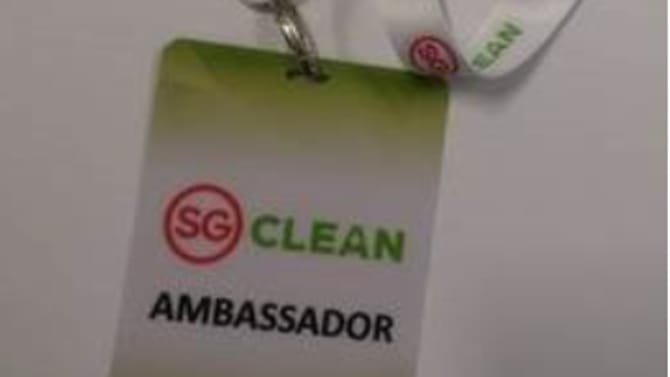
An SG Clean Ambassador pass. (Photo: MEWR)
She also insisted, he recounted, that NEA officers “come and stand in her stall to see what it’s like”. He said it took a lot of patience, multiple conversations with her — and the efforts of different colleagues — before she complied.
“In cases like this, we’d try not to be too hostile and try to be in their shoes,” added Nat, who requested that he be identified by a pseudonym.
“I wish I could tell them to relax a bit, but unfortunately, the law is the law.”
Nonetheless, he estimates that “95 to 97 per cent” of the people who breach the regulations would comply immediately when he approaches them. The others whom CNA Insider spoke to agreed — the majority of the people they approach are co-operative.
‘PLEASE DON’T CATCH ME’
The four of them are immediately identifiable as they walk around their assigned areas: Nat in a white polo shirt and lanyard; Chow with a red armband and lanyard; and Tay and Tan in red polo shirts.
This, they said, has made them cautious about the scrutiny they receive from the public.
“All of us have a very high self-awareness,” said Tan. “We’d remind each other to put on a mask, even when we’re taking breaks in our break rooms and not eating.”
He also ensures that he keeps a safe distance from his teammate as they do their patrols — which he said was not instinctive at the beginning.
“When you go out with a colleague, you’d tend to walk closer,” he said. “So we really try to be spaced apart, and have one person walk in front and the other behind.”
In general, said Nat, people eye them with curiosity. Some people ask where he is from and why he is there, while others are wary or appear “slightly unhappy” that they are being “monitored”.
There was once, he recalled, when he approached a group of elderly people, and before he could open his mouth, they jumped up with their hands in the air as one of them exclaimed: “Please don’t catch me!”
“I learnt never to approach people from behind,” Nat said, chuckling.
Another incident that amused him happened when he was off duty and had gone into a fast food restaurant to buy dinner without changing out of his uniform.
“The moment I walked in, the manager shouted into the kitchen to remind everyone to put their mask on,” he recounted.
Tay, too, finds it amusing that the elderly regulars she encounters on her patrols have given her team a nickname for the colour of their polo shirts.
“They say the ‘red ants’ are coming when they see us,” she said. “I enjoy the nickname.”
To her, it is a sign of the rapport she has with the people she meets regularly, and a sign that “they know what they’re supposed to do”.
“The mood’s definitely different,” she said. “If they know they’ve done the right thing, they don’t have to be afraid of us walking around.”
INCREASED AWARENESS OF REGULATIONS
Over the weeks, all of the four CNA Insider spoke to have observed people taking the situation more seriously and generally being more aware of the regulations.
“At the start, it was very crowded within the market, and they’d crowd around the stalls to pick their produce,” said Chow.
“But now, they’d queue up … Even the stallholders would assist us in guiding them to keep a safe distance from one another.”
For Tay’s part, seeing the elderly try their best to comply with the regulations is “very heartening” and one of the “biggest satisfactions” of her job. “They’re improving slowly,” she said.
She is encouraged by the fact that being on the ground has proved to be more pleasant than she had expected.
“When I signed up, I told my family that I’m going to be scolded and snapped at,” she said. “Anyway, we have a very thick skin.
“But so far, we haven’t had any very nasty or rude people, touch wood.”
In fact, she has encountered random acts of kindness, she said — such as people offering them snacks or herbal tea as they go about their rounds.
The same goes for Chow. Stallholders have offered him bottled water, and even a surgical mask when a stallholder saw him using a reusable mask.
He also recounted an incident in which an elderly man came up and encouraged him after witnessing a patron scolding him for introducing the crowd control measures.
“I felt touched by his concern,” he said. “It motivates us to do our work.”
Another source of motivation is their families. Tay, for example, initially had worries about possibly being exposed to the coronavirus, but she was encouraged to go ahead by her husband and two children, who told her not to worry.
“They made fun of me,” she said. “They said things like, ‘Since you like to talk, it’s best for you to go out and talk instead of nagging at us at home’ …. and ‘When you come back at night, we’ll have a meal ready for you’.”
She admitted that she misses being a tourist guide, telling stories about Singapore and meeting people from all over the world who are excited to learn about this country.
But then she thought of her family, the improvements she has seen on the ground and, most of all, she said, being part of a nationwide effort to stamp out the virus.
SINGAPORE: Pre-COVID-19, I was what a young person would call a “noob” when it came to ordering things online. I did not have a single Lazada, Shopee or Redmart account and I didn’t order a meal on an app either.
My general aversion to embracing online shopping was based on a most boomer-esque observation: I found the whole process rather tedious.
If I were looking for one item, I had to scroll through reams of pages because there are so many options. And then I had to wait for someone to deliver it so I had to be home to receive it.
Plus, I will be the first to admit to countless forgotten passwords and have had so many pages hang on me, I simply gave up.
It just didn’t seem worth the trouble to get a bunch of grapes and a loaf of bread online when it was just easier to hop on the bus, get into a mall, and pick up what I wanted.
When it came to food, I was even more circumspect. I didn’t understand why I had to pay S$8 for a bowl of fish soup via a delivery platform when I could get it for S$5 if I simply walked 500m to the hawker centre.
My views and behaviour were in direct contrast to my sons – ultra millennials who are capable of not moving an inch from their rooms and have things delivered to them constantly.
They know all the hacks, have loyalty points and can place any order in under a minute (it legitimately takes me many more painful minutes).
My doorbell rings on a regular basis where a friendly person delivers all manner of things – burritos, guitar picks, shoes, headphones – I wouldn’t be surprised if a little hamster shows up at my door.
(Photo: Unsplash/Charles Deluvio)
All that lazy and classist consumerism vexed me endlessly but clearly, this is quite common among young people. In our last episode of Heart of the Matter podcast. The Soup Spoon founder Andrew Chan spoke of how his young staff order food.
“In my corporate office, I have a hawker centre right downstairs and I will see some of my younger staff ordering food delivery for lunch and I am like, ‘but the hawker centre is just downstairs and the food is probably at half the price!’” he says, adding that this is the new reality and a sign of things to come.
But now, thanks to COVID-19, everyone has joined the big online bandwagon in quite a rush.
A spirited conversation between two experienced players in the food industry has laid bare a new truth to this movement of ordering online.
Everyone ordering via apps and on websites are now part of this eco-system that creates and sustains hundreds of thousands of livelihoods and has become, whether we like it or not, a central part of a future economy.
Our other guest, Mr Jakob Angele, CEO of Foodpanda APAC, confronted the bad press delivery platforms have been getting for charging up to 30 per cent of commissions from F&B players.
Food delivery companies foodpanda (left) and Deliveroo. (Photos: foodpanda, Tang See Kit)
His point is worth bearing in mind: That delivery platforms are part of the critical food economy and they too have bottom lines to worry about and employees to feed.
“The margins on food delivery are extremely challenging too (especially on small purchases). We need to run a business which is economically viable too. Expectations need to be realistic. It is a very challenging situation for all of us and everyone needs to move together – the owners, the government, landlords and delivery platforms,’’ he says.
He makes it clear that he sees delivery platforms as part of the engine that’s keeping the food economy moving – by keeping restaurants open, by supporting riders with a stable income and watching their own bottom lines too. It is in their interest to help restaurants – and they have been working hard to do just that, he says.
On the matter of commissions, Mr Angele was clear: Reducing them means cutting into rider earnings (and delivery platform margins) – so the trade-offs are not insignificant.
On the other side of this food fight are restaurant owners. For years, they have been operating using a simple formula – make good meals, have people come in to their restaurants and “dabao” directly if they wanted to. Discounting hefty rental fees, manpower and other costs, the best of them managed to get by rather nicely.
COVID-19 hit these guys like a hurricane – when your customers cannot come to you, you have to go to them. Unless you rolled up your sleeves and re-oriented your manpower with your own vehicles, you had to rely on delivery platforms.
Like so many bits and pieces of our lives, once the dust settles, it will be time to review some of these practices and hopefully, the duel between the delivery businesses and restaurant owners can be less painful, enabling both to earn decent wages and keep Singapore fed.
This discussion also has to take into account landlords and their rates too as both men rightly point out.
Grab delivery cyclists ride past each other in Singapore on Apr 20, 2020, as the number of food deliveries has surged since restrictions were put in place to halt the spread of the COVID-19 coronavirus. (Photo: AFP/Roslan Rahman)
THE FUTURE OF FOOD
For a few weeks now, I had been missing my favourite Hokkien prawn noodles and happened to see a post online about ordering directly from the hawker.
I texted the number to ask: “I just need two packets. Can I come and pick it up?” The reply was curt: “We deliver, please stay at home.”
So I ordered two servings which came up to S$10. My delivery fee: S$10. The frugal boomer in me sighed but the millennial emerged to say, hey, you are supporting local. You are keeping a business alive. You are helping to ensure the wheels of the food industry keep turning. Plus, it was utterly delicious.
Could this be our food future? I am not sure I like it very much. I would rather sit at a harshly lit coffeeshop or a busy hawker centre, see families chatting and old uncles drinking beer and complaining about life – that to me is soaking in the Saturday vibe.
I put it down to my experiences growing up – food was a social activity and going out was half the fun.
But in what I see as the great “dabao divide” I am not sure my millennial sons will live that way, not all the time anyway. It might be entirely possible they will skip all the tediousness that getting out of the house entails.
And instead, with a few clicks on their phone, have their food delivered to them. Afterwards, they will “meet” their pals through the computer, chatting, eating, listening to music and soaking up a different kind of Saturday vibe.
COVID-19 might leave a vastly different food economy in its wake and young people will embrace it heartily, like a good plate of Hokkien prawn noodles.
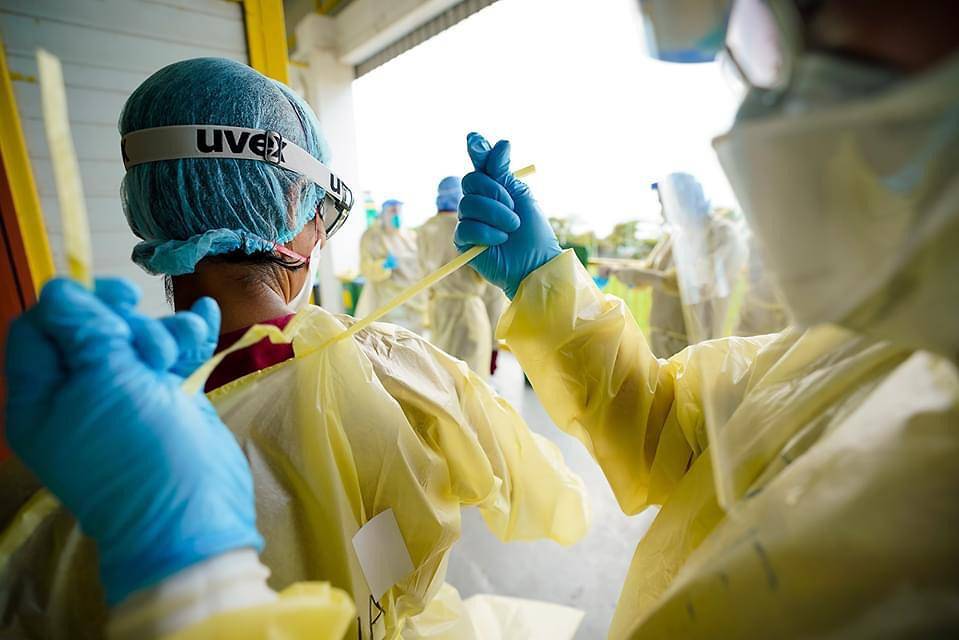
SINGAPORE: Gowns, gloves, goggles, masks and shields – they’re girded for battle against an invisible coronavirus that can slip through the slightest gap in their defences.
It’s necessary, but it’s also hot, stifling work and to the migrant workers they are caring for, it can seem intimidating.
Learning to communicate with them through the layers of plastic and latex, and despite language barriers, has been one of the challenges of working at migrant worker dormitories, said Dr Maleena Suppiah from Jurong Health Campus, which is under the National University Health System (NUHS).
“We learned to smile with our eyes – being masked up, there was no way they could see our lips or our teeth and a lot of empathy has to be communicated when we care for them,” she told CNA in an interview on Monday (Apr 27). “We slowly learnt to communicate with our eyes and certain pictorials for example.”
Dr Maleena Suppiah (right) with another volunteer, Assoc Prof Zubair Amin, at Tuas View Dormitory on Apr 17, 2020. (Photo: National University Health System)
Dr Maleena, 55, was trained as a food scientist and heads the training and education team at the JurongHealth Simulation and Clinical Education Centre.
She now spends three days a week volunteering at migrant worker dormitories where the number of COVID-19 cases has surged.
As of Friday, COVID-19 cases among workers living at dormitories have reached 14,776, and make up the majority of the 17,101 cases detected in Singapore so far.
Teams which include police officers and military personnel have been sent to these to help with dormitory operations.
On Apr 14, the Health Ministry said that medical teams would be deployed to all 43 purpose-built dormitories to tend to the workers who are unwell and swab those who have coronavirus symptoms. About 200,000 workers live at these dormitories, authorities have said.
Many healthcare professionals willingly stepped forward for these duties, director of medical services Kenneth Mak said then.
Dr Maleena has done swabbing duty at a number of dormitories, including Tuas View Dormitory, Westlite Toh Guan and Toh Guan Dormitory. She was part of the team that set up the swabbing operations at Tuas View Dormitory from Apr 16, and also trains new staff volunteers on how to swab patients.
COVID-19 testing at the dormitories has increased substantially since the first few cases were detected around end-March. About 25,000 migrant workers have been tested for COVID-19 since the start of the outbreak here, authorities said on Friday.
To help run the swabbing and other medical operations, about 215 staff members from Ng Teng Fong General Hospital volunteered, she said. Across NUHS, more than 800 medical and non-medical staff have stepped forward and it has recently sent out a public call for more volunteers.
Before day one of operations at Tuas View, Dr Maleena and a core team of volunteers worked with the dormitory operators, military officers and police officers to figure out how to run the medical stations to avoid contamination and also arrange for medical supplies, swab kits, water and refreshments.
“I know colleagues stayed up till late at night for preparatory work so that in the morning, everything will be perfect. They put in a lot of hard work and hours,” she told CNA.
Dr Maleena Suppiah at a daily morning briefing with other volunteers at a dormitory before donning personal protective equipment. (Photo: National University Health System)
Away from the familiar setting of a hospital, everything at the dormitory had to be set up from scratch, she said: “With temperatures reaching 38 degrees, we had to conserve our energy and tend to as many patients as possible.”
One example of how the teams have adapted: Patients are asked to take the same chair they sit on while in the queue from station to station, before returning it at a designated collection point for disinfection. This cuts down on time spent sanitising chairs – which is required whenever a new patient sits down.
As they tend to the workers, they would be soaked in sweat “right up to (their) shoes” after working for just two hours without air conditioning – a “humbling experience” because it’s what the migrant workers experience in their daily work, she said.
A colleague helps Dr Maleena Suppiah don her personal protective equipment at Tuas View Dormitory on Apr 18, 2020. (Photo: National University Health System)
Besides swabbing, medical posts have been set up to provide primary healthcare to the migrant workers who cannot leave the dormitories.
Dr Djoni Huang, a family physician at the National University Polyclinics, runs the clinical operations for two of the dormitories in the west and has been helping out at Sungei Tengah Lodge, Acacia Lodge and Tuas View Dormitory. The workers come to them for conditions like headaches, back pain or to top up medication, he said.
“Those with acute respiratory infection will be offered the COVID-19 swab test. If they are medically unwell, we will refer them to the hospital for further assessment,” he said.
Besides the welfare of the workers, he is also one of the doctors in charge of ensuring the well-being of the medical team volunteers, and looks into areas such as their safety, rostering and ensuring that there is sufficient medical equipment.
Dr Djoni Huang (right) and other volunteers from National University Polyclinics in PPE gear. (Photo: National University Health System)
Making sure that the volunteers comply with personal protective equipment or PPE safety is most important, he said.
“Sometimes your PPE can be dislodged accidentally, your glove may tear. So it’s important that we actually help to remind each other that we have to change, as well as when we feel dehydrated, we need to de-gown and take a sip of water,” he said.
It’s not the first time the 47-year-old doctor has volunteered in an outbreak, having been involved in work for the Severe Acute Respiratory Syndrome while he was in the UK, and during the H1N1 outbreak in Singapore in 2009. His family is supportive of his current decision to volunteer in quarantined zones, an opportunity which he “seized”, he said.
“Migrant workers play an important part to help built Singapore to where we are today,” he said.
He recalled how one of the patients who came to the medical post appeared distressed and did not seem to know why he was there. He spoke very little English, so Dr Huang asked another doctor, who could speak his language, to communicate with him.
“Finally we could see a smile on his face and he was more reassured,” he said. “After the consultation, he came back to me and said ‘thank you for helping me’. That word of ‘thank you’ really hit me on my heart and it’s enough to feel being appreciated, to be there for them.”
She was discharged from Tan Tock Seng Hospital on Friday (May 1).
Madam Yap was among 16 residents and staff at the Lee Ah Mooi Old Age Home who caught the virus – a cluster that led to a ban on visitors to all nursing and old folks’ homes in April.
Lee Ah Mooi stated on Facebook on Friday afternoon: “Today is a day of happiness as we welcome home our residents who fought hard to recover and overcome the Covid-19 virus.
“They were discharged from the hospitals and are now resting well at the home. We thank the heroic and selfless efforts of our front-line healthcare colleagues who nursed them back to health.”
SINGAPORE: In all her life, Republic of Singapore Air Force (RSAF) Lieutenant (LTA) Christabel Chai, 24, had never jumped out of a plane.
So when she was required to do so by herself, not once but five times, while attending the United States Air Force Academy (USAFA) in Colorado, fear naturally set in.
To overcome this, LTA Chai thought of the numerous road marches she endured as a recruit during Basic Military Training (BMT) back in 2015, carrying heavy packs and trudging for kilometres in the sweltering heat.
These marches “definitely gave me an edge in my US Jump Wings experience in terms of mental resilience and not giving up even when I was afraid, tired, and unsure”, she told CNA in an email interview on Friday (May 1).
LTA Chai said she eventually mustered the courage to do the solo jumps, relying on her training and building her confidence to make decisions in unpredictable weather conditions.
“While this may seem like an individualistic activity, teamwork was extremely crucial in every step of our preparation and training in order to eventually earn my US Jump Wings,” she added.
GRADUATING WITH FLYING COLOURS
But the coveted badge LTA Chai got last November was not the only accolade to come out of her four years at USAFA.
She also graduated in the top 10 per cent of her cohort of close to 1,000 cadets from around the world, including from countries like Georgia, Japan and Macedonia.
Cadets are assessed on their academic excellence, military performance and athletic ability.
LTA Chai wearing the US jump wings awarded to her in November 2019. (Photo: MINDEF)
The Singapore Embassy in Washington DC, in a Facebook post on Apr 21, congratulated LTA Chai for being honoured as a distinguished graduate. The post also featured a photo of her holding up a Singapore flag at the graduation ceremony.
According to the US Embassy in Singapore, LTA Chai is also the first woman from Southeast Asia and the Singapore Armed Forces (SAF) to be selected for the prestigious programme.
Cadets applying to the programme must be nominated by a congressman, and even then the acceptance rate is a meagre 10 per cent.
Those who are accepted undergo stringent military training to learn operational and expeditionary skills, as well as subjects like aeronautical engineering and political science.
To be clear, it is like Singapore’s Officer Cadet School (OCS) and a university education rolled into one.
“It is not merely an academic college programme, but also incorporates many aspects of professional military training,” LTA Chai said.
“This includes dedicated focus on character building and leadership training, an understanding of the rules and regulations within the military to maintain good order and discipline.”
LTA Chai with with her course mentors (left) US Marines Air Officer Commanding Major Christopher Sherwood and US Air Force Air Military Trainer Master Sergeant Jessica Pendergraph. (Photo: MINDEF)
LTA Chai said the programme also exposed her to Air Force operations such as flying planes and gliders, launching satellites into space and solo free-fall jumps.
Cadets graduate with a Bachelor of Science degree and are commissioned into the US Air Force or US Space Force.
LTA Chai, already a commissioned Air Warfare Officer (Air Battle Management) directing RSAF aircraft during air combat missions, said she was initially hesitant to apply for the overseas programme.
But she decided to go for it with the encouragement of her uncle, an F-16 fighter pilot in the RSAF.
“I think that the military academy programmes … produce a very elite corp of individuals and commissioned officers for the military, who will dedicate their lives to serving their country,” she said.
GETTING SELECTED
Getting accepted wasn’t easy.
LTA Chai got recommendations from her commanders, submitted numerous applications and tackled three rounds of interviews to first get nominated by Singapore.
Then she went through the USAFA selection and a series of interviews with the US Defence Attaché in Singapore. She believes the process also assessed her leadership experiences, academic and training course grades, as well as fitness tests and extra-curricular activities.
LTA Chai recalls running on the treadmill one afternoon when she got the good news.
“Honestly, I am very honoured and humbled that I was trusted with the opportunity to represent not just the SAF and Singapore, but also the female population at large,” she said.
MISSING HOME
LTA Chai started her programme in 2016 majoring in behavioural sciences with a focus on sociology, but it wasn’t all smooth sailing through the four years.
She admitted it was not easy being away from her family and friends in an unfamiliar culture and environment. She also put “immense pressure” on herself to “fly Singapore’s flag high” while she was there.
On the ground, she had to juggle the rigours of her academic schedule with the need to keep exceptionally fit.
She also had to balance other responsibilities, from holding leadership positions, like when she became Squadron Commander or Group Director of Operations taking charge of more than 100 and 1,000 cadets respectively.
LTA Chai at a Guard of Honour march-past where she took over as Squadron Commander leading over 100 cadets. (Photo: MINDEF)
LTA Chai said her training in the SAF, including her experience in leadership roles at OCS, taught her how to manage her time well, pay attention to details and prioritise the needs of others above her own.
“Those experiences allowed me to make certain decisions that benefitted the Squadron and Group that I would not have made, if I did not have prior experience in the SAF,” she said.
On a personal level, she relied on the support of her family, friends and SAF commanders back home, as well as her US sponsor family and USAFA friends and commanders.
These bonds “were pivotal in my ability to find comfort in a challenging and unfamiliar environment”, she said.
FLYING THE FLAG
At the graduation ceremony, LTA Chai brought a Singapore flag along to show how proud she was to be a Singaporean international cadet at USAFA.
She said the moment made her cry tears of “pride, joy and gratefulness”, a reflection of four years of “blood, sweat and tears”.
US Air Force Academy Class of 2020. (Photo: Facebook/U.S. Air Force Academy)
“I did not plan for that photo but was actually too overwhelmed by emotions,” she said, dedicating her achievement to everyone who supported her on her journey.
“I wanted to show the world the Singapore flag, which caused me to stand up on the chair while waving the flag proudly.”
But it was only when LTA Chai was leaving the US for Singapore that she discovered she had graduated with flying colours.
“Since I first came to USAFA, I knew that I wanted to always try my very best to be the best version of myself at all times, and to achieve as much as I could, so that I will not disappoint the people who supported me,” she said.
“I definitely felt a huge sense of accomplishment and relief that I was in the top 10 per cent of my class, as this has been a goal that I have been striving toward since my freshman year.”
NEXT CHAPTER BECKONS
For now, LTA Chai is already back in Singapore and will continue her operational training in the same role for RSAF.
“I am very excited to go back to my squadron to learn and hone my competencies as a controller, as well as my leadership skills as an officer, and continue to do my part to defend Singapore’s skies,” she said.
“I hope to utilise my skills, leadership and knowledge gained over the past years to better lead the airmen and women under my wings.”
It is just the next step in a career that began when she enlisted in 2015, after graduating from Anglo-Chinese Junior College, where her interest in history spurred her decision to join the military.
“I was offered the SAF Merit Scholarship and thought it was a good opportunity to be in an unconventional and unique career field, while serving my country and protecting everything I value,” she said.
The United States Air Force Academy campus in Colorado Springs. (Photo: Facebook/U.S. Air Force Academy)
LTA Chai advised young Singaporean women looking to forge a career in the military to always be humble and hungry.
“Never forget the people who helped you to get to where you are, and become the person you are today,” she added.
“Never lose the drive to improve and learn from those around you, as well as from your own mistakes.”
Indeed, this drive pushed LTA Chai through her time at USAFA.
“The opportunity to just be able to represent Singapore in an overseas military academy, and donning the Singapore flag on my uniform, makes it worth every single sacrifice,” she said.
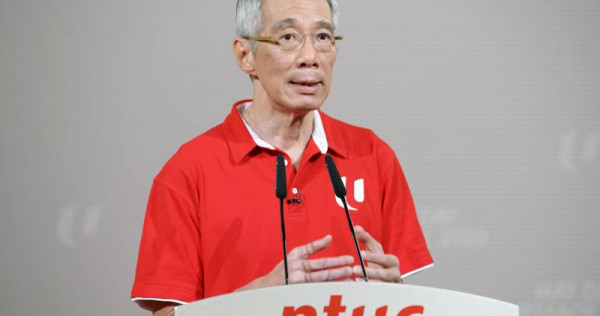
SINGAPORE – Restarting Singapore’s economy after the Covid-19 pandemic will not be straightforward and some sectors will need to wait longer to reopen, said Prime Minister Lee Hsien Loong on Thursday (April 30).
Meanwhile, the country needs to step up testing for the virus, speed up contact tracing and proceed cautiously with safeguards so that infection numbers do not rise again, he added.
The Prime Minister made this point in his annual May Day speech to workers, in which he also laid out his strategy for getting Singapore through the immediate crisis and adapting to longer-term structural changes in the economy.
Essential services have been kept going, he said, “but the rest of the economy will have to open up step by step, and not all at once”.
He added: “Some industries will open up earlier than others, and recover sooner… Other sectors will have to wait, especially those which attract crowds, or involve close contact with other people, such as entertainment outlets and large-scale sporting events.”
SINGAPORE – When workplace activities gradually resume after the circuit breaker lifts, the Government will need to put in place new guidelines and standards to ensure that they remain safe from potential Covid-19 outbreaks, National Development Minister Lawrence Wong said on Friday (May 1).
Speaking at a virtual press conference, Mr Wong said that these guidelines will build upon existing measures to ensure safe distancing in workplaces for workers in essential services, such as wearing masks at work or not having workers socialise among themselves.
These guidelines, which will be part of new workplace safety standards, will also be complemented by a testing regime as well as some form of technology that can ensure better tracking and monitoring should a confirmed case emerge in the workplace.
“These are a whole series of new protocols and measures that we are already planning, and we will put in place as we get nearer the end of the circuit breaker,” said Mr Wong, who co-chairs the multi-ministry taskforce tackling the Covid-19 outbreak.
SINGAPORE – Foreign workers who have recovered from Covid-19 have started moving into the cruise ship SuperStar Gemini after it passed an assessment by various agencies.
The Singapore Tourism Board (STB) said in a Facebook post on Friday (May 1) that the first workers boarded the ship on Wednesday (April 29) from Marina Bay Cruise Centre.
There are en suite toilets, in-cabin dining and strict infection control and safe distancing measures aboard the ship, as well as Wi-Fi, in-cabin entertainment and scheduled outdoor time.
“Fresh air is piped into the ship, and no air will be re-circulated between cabins and common areas,” STB added.
“These are part of the Government’s efforts to transfer workers to alternative living areas to reduce the spread of the virus within their dormitories.”
Another cruise ship, the SuperStar Aquarius, has also passed evaluation checks and is ready to receive more workers.
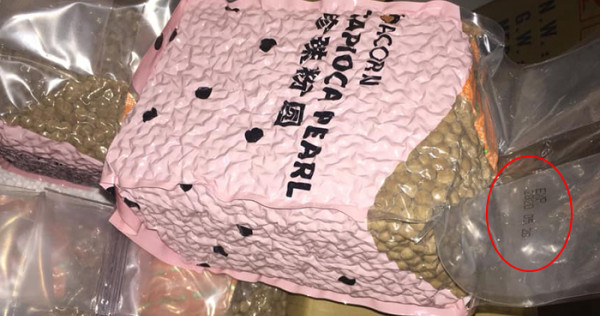
A woman bought almost 20kg of tapioca pearls from a local distributor so that she could share them with loved ones to make bubble tea, but later realised that they were expiring in three weeks instead of six months.
Facebook user Samantha Rachel shared her experience with local firm Acorn, a supplier of beverage and dessert ingredients.
In a <a href="
So after many bubble tea shops closed due to the circuit breaker, I decided to buy tapioca pearls online to share with…
 One of them was slapped across the face. Another spent days persuading a hawker to wear a mask. (Photo credit: STB, NEA)