The police said they received a call for assistance at 8am. Upon arrival, they found the man lying motionless on the ground. He was pronounced dead by paramedics on the scene at 8.11am.
Source link
Police investigating 'unnatural death' at Geylang Lorong 23
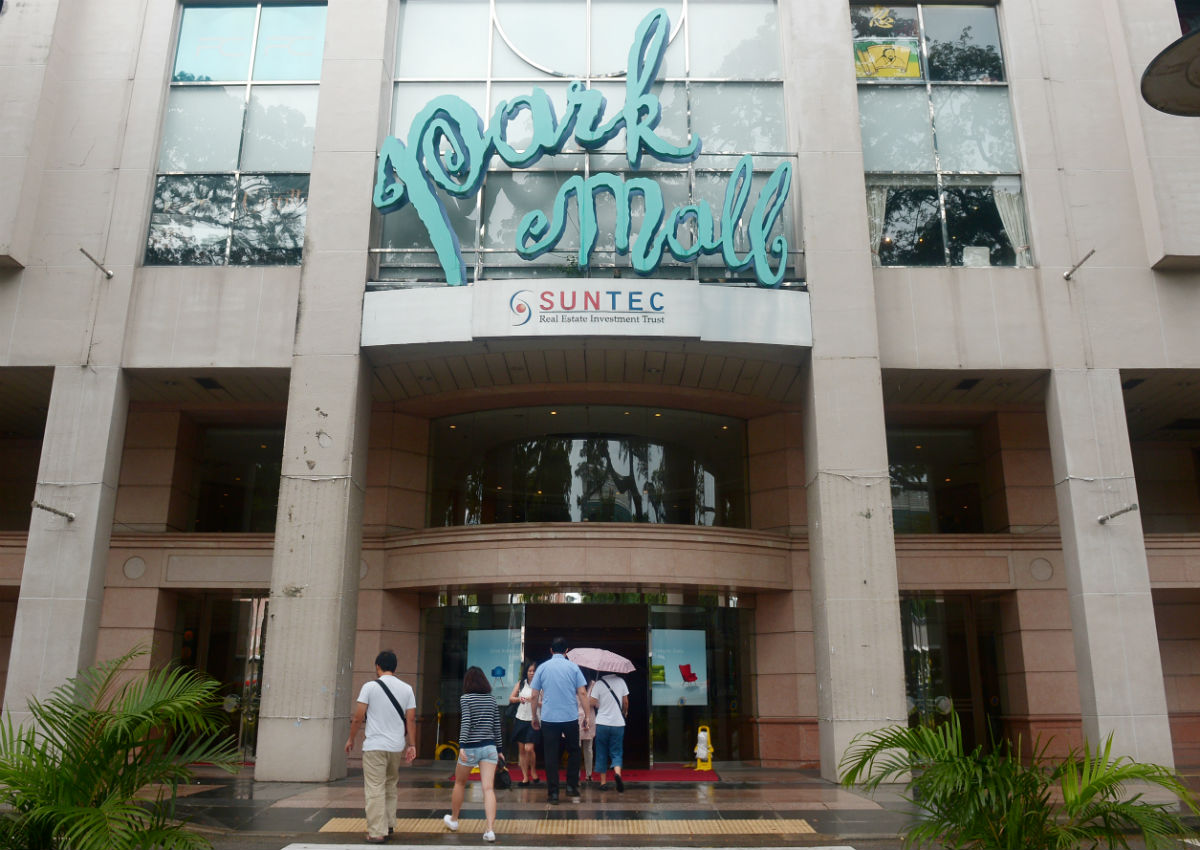
Park Mall to shut at end of September
Park Mall, the popular destination for home furnishings in Penang Road, will put up its shutters for good come end of September.
Many of its retail tenants have already found new homes while signs stating “Moving Out Sale” hang in the windows of some stores.
Park Mall’s closure comes after it was bought for $411.8 million by a joint venture group last December. Suntec Real Estate Investment Trust, which acquired the mall in 2005 and also owns Suntec City, is part of the joint venture company.
Park Mall to shut at end of September
Click on thumbnail to view photos. Source:
The Straits Times, The Business Times



The mall, which sits just outside the main Orchard Road shopping belt, will be demolished after its tenants move out. Two office blocks with a retail component will be built in its place. Besides furniture stores, Park Mall also has other businesses, such as clinics and offices, spread beyond the retail floors from the sixth to 15th level. There are also eateries on the first four levels and in the basement.
Furniture retailer Xtra, one of Park Mall’s oldest and best-known tenants, which sells American office furniture brand Herman Miller, among others, will move to a single-level 13,000 sq ft store in the new wing of Marina Square in September.
Kith Cafe, which is next to Xtra on the first level at Park Mall and has been there since 2012, will share part of the new Marina Square unit.
Moving out of Park Mall is bittersweet for Xtra’s founder, Mr Lim Choon Hong, who opened his store there 23 years ago.
Friends had advised him against going to the mall, which was positioned as a fashion mall. “But I went in anyway as an electronics store called Peter Chew did a roaring business,” said Mr Lim, who has another Xtra store nearby in Killiney Road.
The mall became furniture-focused in 1995, and many tenants said that positioning has worked to its advantage.
Mr Au Da Yu, 35, the Asia-Pacific director for The Bear Knows, which sells high-quality made-in-Europe furniture, said: “It is quieter than the lifestyle malls like Ion Orchard or VivoCity but shoppers who come to Park Mall are very specific. They are looking only for furniture.”
The Bear Knows will move into a 2,500 sq ft store at The Centrepoint in Orchard Road in September.
Ms Kerine Yong, marketing and country manager at modern contemporary furniture store Cellini Design Center, which has had an outlet in Park Mall for more than a decade, said: “Park Mall is our best-performing store. As it’s in town, we also get the expatriate crowd. It’s close to the MRT station and easy to find. It might be difficult to draw these customers if we were elsewhere.”
Cellini Design Center has five other outlets aside from Park Mall. There are no plans to replace the Park Mall store for now.
At least one retailer, lighting shop Blackhole Lighting, is moving its operations online from next month.
For now, many tenants are ending their run at Park Mall with moving-out sales. Brands such as Castilla, which sells Italian and German luxury furniture; home-grown label Scanteak which moved into the mall in the mid-1990s; Blackhole Lighting; Cellini; and Xtra are all selling furniture and accessories at discounted prices.
One regular customer, Mr Randy Yeo, 32, who owns a chain of food outlets, is sad to see the mall go. He said: “Park Mall is a one-stop solution for everything…I will miss it. There’s no other furniture place like this.”
From fashion haven to furniture hub
Park Mall has made the furniture retail business its calling card over the past 21 years, but the ageing mall went through several reinventions and a few owners before finding its niche.
The current 15-storey building opened in 1971. It was then known as Supreme House.
Back then, its anchor tenant, department store Metro, drew the crowds. Skillets Coffee House – a 24-hour cafe that was renamed Silver Spoon in 1980 – was also popular before its lease was not renewed in 2003.
The first change of owners for the mall came when Supreme Holdings sold the building to property and lifestyle company Wing Tai Holdings for $168 million in 1989.
Wing Tai renamed it Park Mall and positioned it as a fashion haven. After a 15-month, $40 million refurbishment, the mall reopened with Style Singapore, an umbrella retailer for leading local independent fashion designers, as one of its biggest tenants. It closed in 1994 after incurring losses of $2 million.
In 1995, the mall’s owners decided to focus on furniture and home furnishings.
Danish concept store Bolig became Park Mall’s anchor tenant, only to give way to others such as Xtra,Living & Giving, a company specialising in home accessories, and Studio Line, which sold beds from Germany.
The switch to a furniture hub proved a good move. Wing Tai hit its $100 million target that it had projected for itself.
In 2005, Suntec Reit acquired Park Mall from Wing Tai for $230 million. Last December, a joint venture acquired Park Mall for $411.8million.
The 45-year-old mall will be demolished and redeveloped into two office blocks with a retail component, though plans have yet to be finalised.

This article was first published on July 9, 2016.
Get a copy of The Straits Times or go to straitstimes.com for more stories.
Image:
Publication Date:
Saturday, July 9, 2016 – 14:02
Send to mobile app:
Source:
Story Type:
Others
New BCA rules to ensure safety of escalators
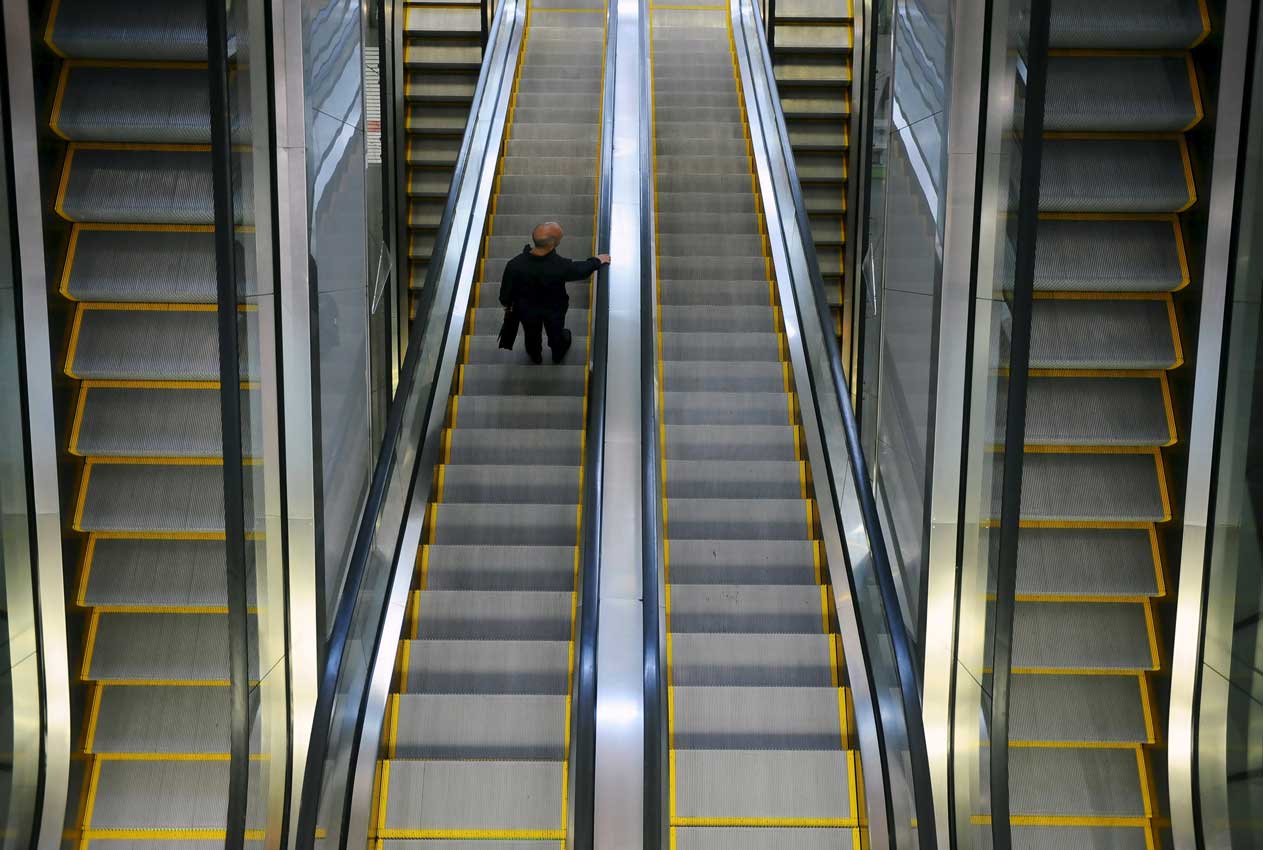
New regulations are being introduced to ensure escalators undergo maintenance at least once a month.
Their owners must also apply for a permit to operate (PTO), and report any incident involving death, injury or malfunction of any safety- critical part to the Building and Construction Authority (BCA).
This is part of the new escalator regulatory regime – similar to regulations for lifts – announced yesterday by the authority.
BCA chief executive John Keung said “not that many” escalator accidents have been reported in Singapore, but there have been some abroad. In July last year, a woman died in China when she fell through a floor panel at the top of an escalator. “That’s why we are concerned. Let’s make sure we do all that we can to prevent such accidents,” Dr Keung said at a media briefing.
Current standards already require escalators to have monthly maintenance, he said. “But we want to formalise this and put it in our regulations.” There are about 6,000 escalators in Singapore.
From Nov 1 this year, all escalator owners must engage a BCA-registered escalator contractor to do maintenance of their machines every month. The contractors will have to achieve 10 specified maintenance outcomes, such as checking that the emergency stop switch is working.
For some owners, this will not require much change. CapitaLand Mall Asia head of operations for Singapore Jason Loy said: “We (already) engage registered contractors to carry out monthly servicing and maintenance of the lifts and escalators in our shopping malls.”
Escalators will also have to undergo annual testing by a registered contractor in the presence of an independent authorised examiner.
Once it is certified that an escalator is in good working condition, the owner will use this certification and other documents to apply for a PTO from the BCA.
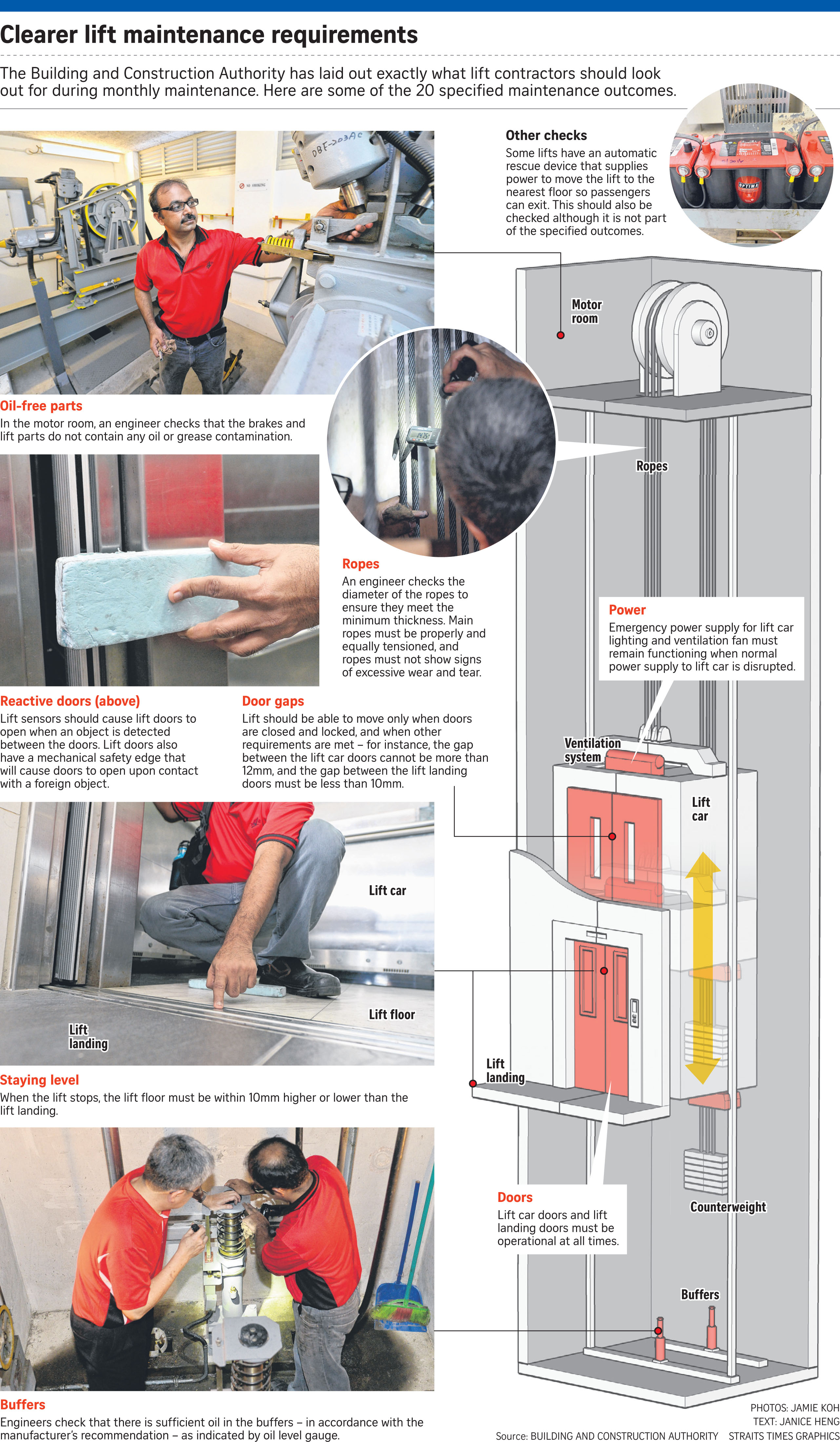
Yesterday, the BCA also gave details of previously announced stricter lift regulations, including the full list of 20 maintenance outcomes that lift contractors must achieve.
Eighteen are part of existing standards, but the BCA has made some of them more detailed. For instance, existing standards simply state that the lift’s traction machine, brake and gearbox are “to be maintained”. The new rules specify, among other things, that brakes must not be contaminated or at risk of being contaminated by oil or grease.
There are two new requirements. Lift cars should be allowed to move only when the doors are closed and locked, and various conditions are met – for instance, the gap between lift car doors must not be larger than 12mm. The lift must also stop such that the car floor is within 10mm of the lift landing. In May, an elderly man using a mobility scooter died after falling over when he was backing out of a lift that was not level with the landing.
The BCA is stepping up audit checks to ensure that lift contractors achieve the outcomes, having made 40 to 50 such checks a month for the past few months. If requirements are not met, the BCA can issue a notice to maintain the lift or to suspend service, or prosecute the lift contractor. If convicted, the contractor can be fined up to $5,000.
It will also be mandatory for owners and registered contractors who carried out the most recent servicing work to promptly tell the BCA when an incident involving death or injury to passengers or malfunction of safety-critical parts occurs.
This article was first published on July 9, 2016.
Get a copy of The Straits Times or go to straitstimes.com for more stories.
Image:
Publication Date:
Saturday, July 9, 2016 – 15:00
Send to mobile app:
Source:
Story Type:
Others
Man who allegedly caused dad's death: Paramedic found him 'in a daze'
He did not respond when he was asked repeatedly to help move his unconscious dad
Businessman Mark Tan Peng Liat had sat “in a daze” and in shock as a paramedic tried to resuscitate his father, a court heard yesterday.
He did not respond when Singapore Civil Defence Force (SCDF) paramedic Elroy Chan asked more than once for help to move Mr Tan Kok Keng, 67, who was lying on the floor, unresponsive.
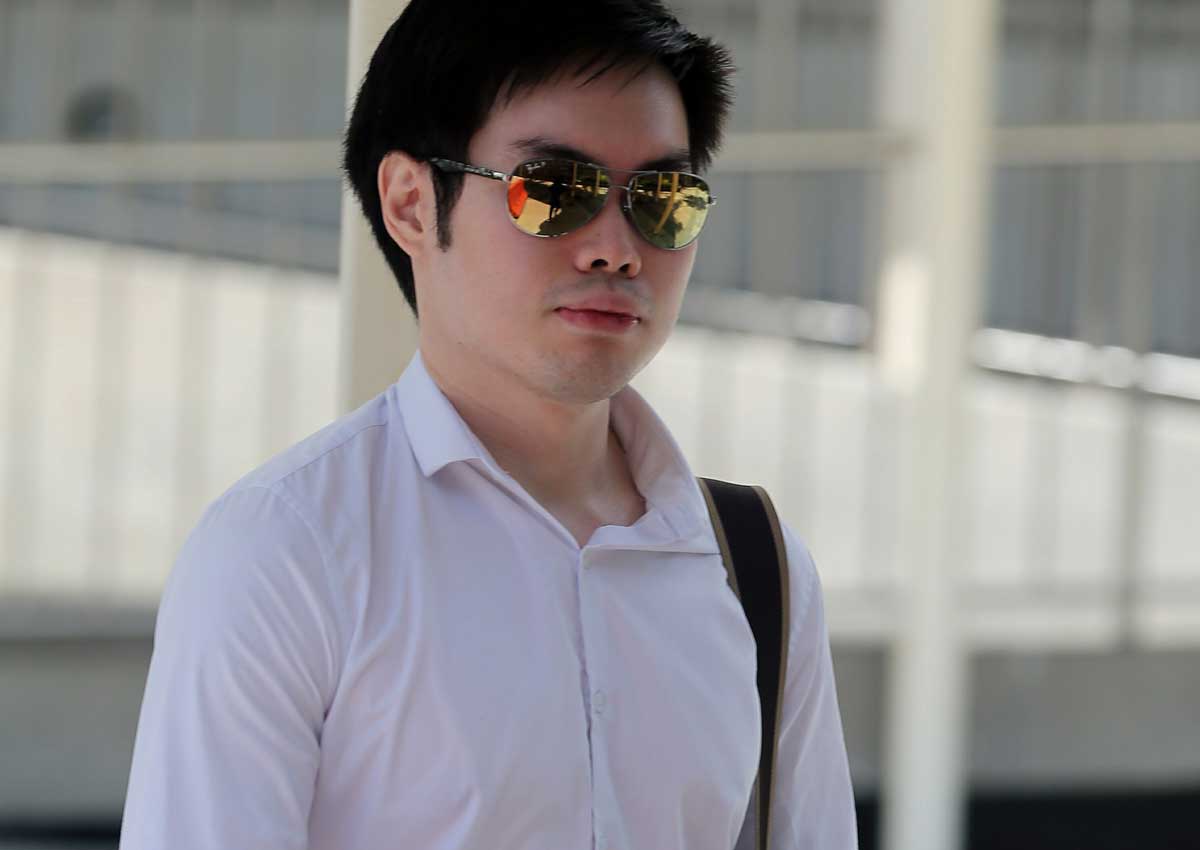
Tan, 30, has been charged with culpable homicide not amounting to murder for the death of his father. He was originally accused of murder.
He was said to have put his father in a headlock and chokehold after a quarrel between the pair at their West Coast Rise home on Feb 10 last year. The senior Mr Tan was pronounced dead an hour after he was taken to the National University Hospital.
Man accused of putting father in fatal headlock during argument
Click on thumbnail to view photos. Source:
Lianhe Wanbao, The Straits Times, The New Paper, Facebook screengrabs


















Testifying on the second day of Tan’s trial yesterday, Mr Chan said the accused had sat on a chair “in a daze”, and did not help to move his father’s body when asked. He stood up when asked a second time but still did not help. Tan also had a belated reaction when asked what happened earlier, Mr Chan added.
“What surprised me was, people are usually very pro-active in providing history because it (involves) their loved ones,” he added.
After further questioning, Tan told the paramedic he had a quarrel or fight with his father and had pinned the older man on the floor.
After that, he stopped breathing.
When the ambulance arrived, the senior Mr Tan had been lying on the floor in the second-level master bedroom, his face bluish.
Mr Chan said this could mean there was deprivation of oxygen due to the patient not breathing for a while, which could be the result of his heart stopping.
On Thursday, Tan’s paternal aunt, Madam Tan Hoon Choo, 72, recounted in court how the elder Mr Tan’s maid had gone to her house “hysterical” and crying and asking for help around 5.40pm.
Tan was “pale” and looked “bewildered and lost” outside the house when she hurried over. Both men had a “very good relationship”, she added, saying that the elder Mr Tan, who had a black belt in taekwon-do, was proud of his son.
He was also “extremely sensitive” about money matters, said Madam Tan. He had a joint account with his two children containing money left by their late grandfather, but she found out from her niece after the elder Mr Tan’s death that his son had not received the money.
The Straits Times understands the accused’s position is that his father’s death was “accidental” and he had been trying to restrain the older man, who had become violent.
See also: West Coast murder: Mum breaks down in court
This article was first published on July 9, 2016.
Get a copy of The Straits Times or go to straitstimes.com for more stories.
Image:
Publication Date:
Saturday, July 9, 2016 – 14:00
Keywords:
Send to mobile app:
Source:
Rotator Headline:
Man who allegedly caused dad's death waas found 'in a daze'
Story Type:
Others
Man jailed for molesting woman on train
A mechanical and electrical supervisor was jailed for seven months yesterday for molesting a woman on an MRT train on the East-West Line.
Kyaw Myo That, 33, a Myanmar national, was convicted after a two-day trial last month of touching the 22-year-old woman’s bra area under her left armpit.
The victim had testified that she boarded the train in Boon Lay on the morning of May 8 last year, and found a seat to the left of a priority seat at Buona Vista station. Kyaw sat to her left.
She had her handbag on her lap with the handle resting under her left armpit .
She noticed Kyaw moving closer to her but did not think much about it. Later, she felt the left side of her bra move. Thinking it was her bag handle, she moved the strap to the front.
However, after the train left Tanjong Pagar station, she felt the movement again. She looked at her left armpit area and saw Kyaw had three fingers on her breast. He then smiled at her.
When the train left City Hall station, she stood up and exited at Bugis station. Kyaw followed her.
Terrified, she called her cousin and asked her to stay on the phone with her. Kyaw followed her all the way until she reached her workplace before turning back.
She called her elder brother who had to calm her down for 20 minutes as she was crying. She made a police report the next day.
Kyaw denied touching her intentionally as he was sleeping intermittently. His case was that if he did touch her, it was accidental.
Convicting him last month, District Judge Eddy Tham said Kyaw gave a very clear account of the incident in his police statement. He had stated that he was feeling sleepy inside the train when he folded his arms across his chest, with his left hand under the right armpit. This was consistent with the woman’s version.
But in court, Kyaw departed from this to bolster his defence that he could not have done it, said the judge, adding he therefore “(had) no problem” finding the accused did indeed touch the victim.
He agreed with Deputy Public Prosecutor James Low that such offences in public transport must be strongly deterred as it was difficult for victims to ascertain whether the touch was accidental or not. The victim in this case had given Kyaw the benefit of the doubt at first.
Kyaw, defended by Mr Nirmal Singh, could have been jailed for up to two years, fined, caned or received any combined punishment.

This article was first published on Jul 09, 2016.
Get a copy of The Straits Times or go to straitstimes.com for more stories.
Image:

Blurb:
Publication Date:
Saturday, July 9, 2016 – 15:00
Keywords:
Send to mobile app:
Source:
Story Type:
Others
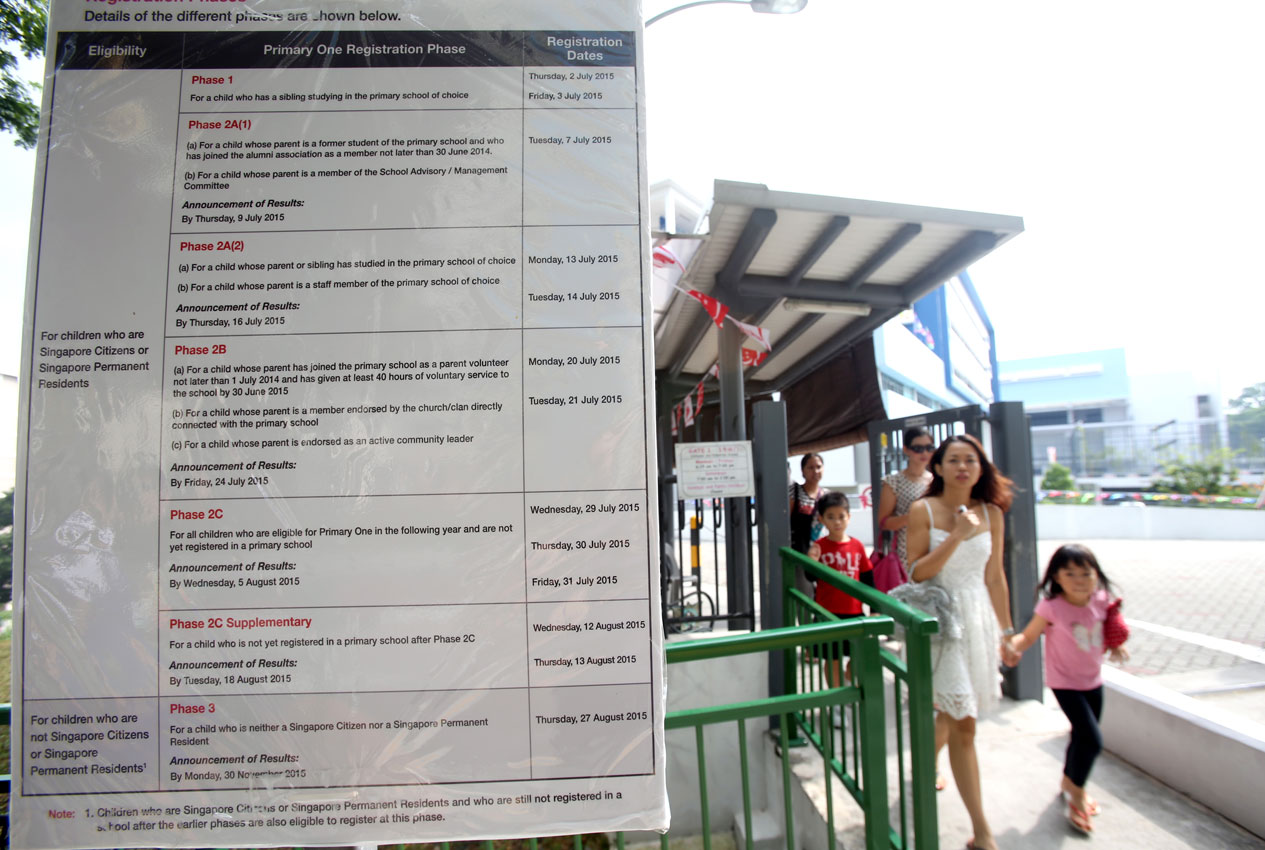
Primary 1 registration: Balloting in 2A2 likely at 5 schools
Parents hoping to place their six-year-olds in five of the most popular primary schools this year may face a ballot next week.
These schools are Anglo-Chinese School (Primary), CHIJ St Nicholas Girls’ School, Catholic High School, Henry Park Primary and Nanyang Primary.
A total of 19 schools were left with fewer than half of their vacancies after Phase 2A1, the second of seven Primary 1 registration stages, closed yesterday. This is about the same number of schools as last year.
The phase, which follows Phase 1 for children with siblings currently studying in the school, is for children whose parents had joined the school alumni association at least one year ago, or are on the school advisory committee.
The next phase, 2A2, is for children whose parents or siblings are former pupils, or whose parent is a staff member at the school.
A rule introduced in 2014 which requires all primary schools to set aside 40 places for children in the later stages may also put a squeeze on places available for the next phase. The 40 places will be split equally between children registering in Phases 2B and 2C.
Phase 2B is for children whose parents are school volunteers, active community leaders or have ties with church or clan associations directly connected with the schools; Phase 2C is for children with no ties to schools.
In the past two years, balloting has been taking place at an earlier stage of the exercise, partly as a result of this new rule. Last year, parents of 73 children hoping to enter CHIJ St Nicholas Girls’ School had to go through a ballot for 68 available places at Phase 2A1 – the first time a school has been oversubscribed so early since the phase was introduced in 1999.
After reserving the 40 places, ACS (Primary) has only seven spots left for Phase 2A2, after 119 children registered this week.
Henry Park Primary and CHIJ St Nicholas Girls’ School each have 20 places left for Phase 2A2, while Catholic High and Nanyang Primary have 28 and 29 spots left for Phase 2A2 respectively.
Last year, parents of 24 children had to ballot for 22 spots at Catholic High during this phase.
Public servant David Lim, 41, successfully registered his son at ACS (Primary) earlier this week.
“It was a close call for us. We almost thought we had to end up balloting at this phase. We chose ACS because the secondary schools that it is affiliated to offer a full gamut of options for different academic paths, from the normal stream to the International Baccalaureate,” he said.
This article was first published on Jul 09, 2016.
Get a copy of The Straits Times or go to straitstimes.com for more stories.
Image:
Publication Date:
Saturday, July 9, 2016 – 15:00
Send to mobile app:
Source:
Story Type:
Others
Rising violence in Bangladesh: what's behind it?

NEW DELHI – Bangladesh has been hit by a surge in Islamist attacks in the past three years that reached new heights last weekend when 20 hostages were murdered in Dhaka.
The wave of attacks has been notably brutal with many of the victims, including the hostages, hacked to death with machetes.
One week on from the end of the siege at an upmarket cafe in the capital, AFP looks at some of the factors fuelling the attacks, who might be responsible and how the government is reacting: Bangladesh has been blighted by unrest since it broke from Pakistan in a war of independence in 1971 and has witnessed more than a dozen coups.
Islamist groups such as Jamayetul Mujahideen Bangladesh (JMB) and the newer Ansarullah Bangla Team have long posed a challenge to authorities, with the JMB killing at least 28 people in a bombing campaign in 2005.
The group, blamed by the government for the Dhaka siege, was banned after the 2005 attacks and is seen as a largely spent force following the subsequent arrest and execution of its leaders.
While the 2005 attacks were largely indiscriminate, the recent killings have had specific targets, including secular bloggers and gay activists.
Members of minority groups such as Hindus, Christians and Sufi Muslims have also been victims, with many of them hacked to death.
Although a handful of foreigners had previously been killed, last weekend’s siege was by far the deadliest attack. The victims included nine Italians and seven Japanese.
Experts point to several factors behind the recent violence, including the execution of top Islamists over their role in the independence war.
Hundreds of thousands of people took to the streets in 2013 to protest at the guilty verdicts handed down by a domestic tribunal that critics say was intent on neutering opposition to Prime Minister Sheikh Hasina.
The Supreme Court then barred the biggest Islamist political party Jamaat-e-Islami from contesting the 2014 general election, disenfranchising millions of supporters.
27 radicalised Bangladeshis arrested under ISA
Click on thumbnail to view photos. Source:
Ministry of Home Affairs


























The main opposition Bangladesh Nationalist Party – allied to Jamaat – subsequently boycotted the polls. What was then effectively a one-horse race was held against the backdrop of firebombings across the country.
Many observers say the lack of genuine democracy has made Bangladesh a fertile ground for extremists.
“There is a lot of support for the organisations (Hasina) is trying to quash,” said C. Christine Fair, associate professor at Georgetown University in Washington and South Asia expert.
“The country is torn. She is essentially silencing, politically, half the country.” Both the Islamic State (IS) organisation and the competing Al-Qaeda in the Indian Subcontinent (AQIS) have claimed many of the attacks.
However, the government insists international jihadist networks have not got a foothold in Bangladesh and that local extremists are culpable.
There is little evidence that IS trains and funds attackers in the country, although it has recruited Bangladeshis to fight in Syria.
More likely, analysts say, is that radicalised youths are being inspired by the group and pledge allegiance – a murky line in the age of social media.
During the cafe siege, IS was sent gruesome pictures of the carnage by the attackers, which it immediately distributed via its affiliate news agency Amaq.
Al-Qaeda may have more of a claim of presence in Bangladesh, with Bangladeshi fighters aiding the anti-Soviet mujahedeen in Afghanistan as far back as the 1980s.
“The ties to AQIS are much more credible. South Asia is Al-Qaeda territory,” said Fair.
The use of machetes has become a chilling hallmark of the murders and nearly all the slain hostages were attacked with sharp blades, even though their killers had automatic weapons.
Some experts say a lack of access to suicide vests or car bombs explains the prevalence of machete attacks but others see a more deliberate reason behind the brutal killing style.
“They wanted to show the world that they can go to any extent for jihad,” said K. G. Suresh of New Delhi’s Vivekananda International Foundation think-tank.
Bangladesh is intensely politically polarised, characterised by a poisonous rivalry between Hasina and the main opposition leader Khaleda Zia that stretches back decades.
Although around 90 percent of Bangladesh’s 160 million-strong population is Muslim, mostly Sunni, the nation is officially secular.
Creeping popular support for fundamentalism has led to mounting calls for Islamist representation in government and public life.
One recent study found around 47 percent of Bangladeshis say suicide bombing is justifiable to defend Islam, higher than other Muslim-majority nation in South and Southeast Asia.
Image:

Publication Date:
Saturday, July 9, 2016 – 13:30
Keywords:
Send to mobile app:
Source:
Hermes ID:
2 429 862
Hermes ID String:
VLBANGLADESH9
Story Type:
Others
Loud shattering sound as condo pool's glass panels crash down
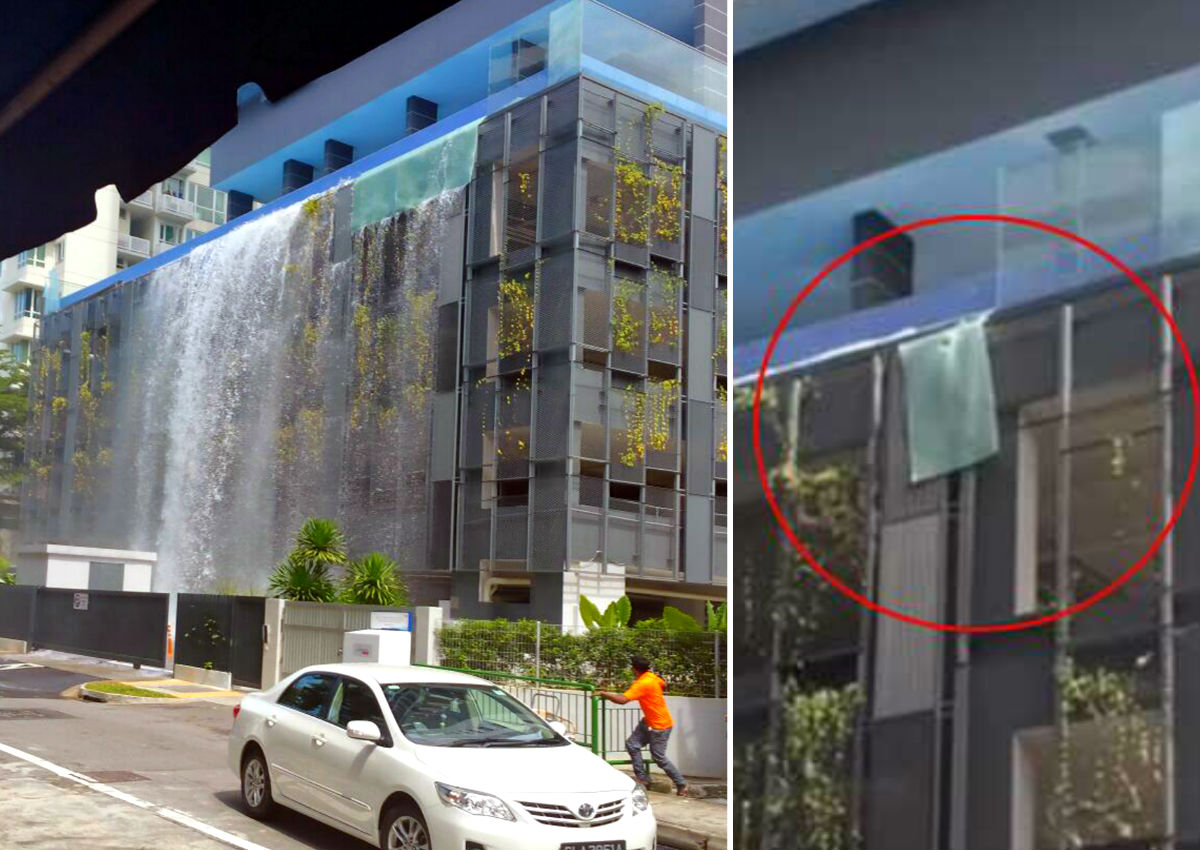
Glass panels in front of a fifth-storey infinity pool at a condominium in Whampoa came crashing down yesterday, sending water raining to the ground.
Those who were near the Cradels condominium in Lorong Limau said they heard a loud shattering sound as a number of glass panels fell at about 2.30pm.
Some of the bystanders were taking their lunch at Tian Tai Eating House, less than 100m away. When they looked up, they saw water pouring down the front of the building.
Glass panel falls from 5th floor swimming pool of Whampoa condominium
Click on thumbnail to view photos. Source:
The Straits Times, Video screengrabs, Thomas Cher


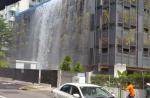

Mr Muhammad Khalid Alimad, 84, a hawker at the coffee shop, said he thought a house had collapsed. “There was someone who looked like he was heading into the condo but when he saw the glass falling and water gushing, he moved away from the entrance. It was quite dangerous,” he said.
Mr Lit Wai Yeap, 47, a contractor who works near the condominium, said each panel of glass fell as a whole piece. “The centre of the glass railing fell first and then the water gushed out, which made the rest of the glass panels fall.”
Teacher Shuli Sudderudin, 31, who lives in the condominium next door, said she heard a crash, like a “big metal thing falling”, while she was at home. When she went out half an hour later, she could hear the sound of “a small waterfall” as water was still pouring down the building.
“Water sprayed everywhere over the road in front. It was quite dramatic. I was standing there and people came rushing out and yelling and telling me not to stand there as another glass panel had shattered,” she said.
No injuries were reported, said the Singapore Civil Defence Force, which sent a fire engine down.
The Building and Construction Authority (BCA) said its engineers found that a row of glass panels that acted as a safety barrier for a stretch of maintenance ledge on the outer edge of the swimming pool “had fallen off from the fifth floor”. It added that the glass “does not contain the water in the swimming pool”.
BCA has given instructions for the entire fifth floor, as well as the affected area below the fallen glass panels, to be closed. A spokesman said that “glass that is used as a safety barrier must be laminated glass and designed to withstand horizontal loading determined in accordance with prescribed standards”.
When The Straits Times visited the condominium at 3.15pm, workers were seen clearing the debris from the ground floor. The water had flowed out onto the road in front.
Melrose Land, the developer of the year-old condominium, said that an infinity pool has one or more walls at water level.
The wall holding the water slopes downwards away from the pool, creating a waterfall effect. Water falls into a catch pool, which is a basin that contains a drain. The water is then collected and pumped back into the main pool.
Melrose Land said the glass panels are additional safety barriers outside of the catch pool and not meant to hold water. However, it noted that even if the drain overflows or is choked, there should be a system in place to remove the excess water in the catch pool.
Glass experts said that infinity pools have become more popular in recent years. The accident could have been caused by a design or construction flaw, they said.
Mr Gary Lee, business development manager of Singapore Safety Glass, said the problem could be due to poor glass quality or an inferior pool system.
Residents have been moving into the high-rise development, which has 125 units, since February last year. A resident, who declined to be named, said he was concerned about the structural integrity of the pool. “People who go to an infinity pool would normally want to be at the edge of it to get a good view but it can be dangerous if the glass suddenly gives way,” he said. “I don’t think I will be using the pool again.”
This article was first published on July 9, 2016.
Get a copy of The Straits Times or go to straitstimes.com for more stories.
Image:
Publication Date:
Saturday, July 9, 2016 – 14:01
Keywords:
Send to mobile app:
Source:
Story Type:
Others
Holland village bank robbery: Teller followed safety protocols
A teller who handed over about $30,000 in cash to a robber at Standard Chartered Bank’s Holland Village branch on Thursday did the right thing, according to the bank, which has tightened security there with a security guard.
Yesterday, an islandwide manhunt continued for the Caucasian man who had brazenly walked into the bank around 11.25am, slipped the teller a piece of paper with his demands, then got away with the money on foot.
The branch did not have a security guard then, but a bank spokesman said it had “in-branch security measures” such as closed-circuit TV cameras and staff “are well trained to respond to such situations”.
The teller acted in line with the bank’s protocols and “in the best interests of our customers and our colleagues”, the spokesman added. “Everyone was safe.”
She also said the bank has taken immediate action to further enhance security, without giving details, citing ongoing investigations.
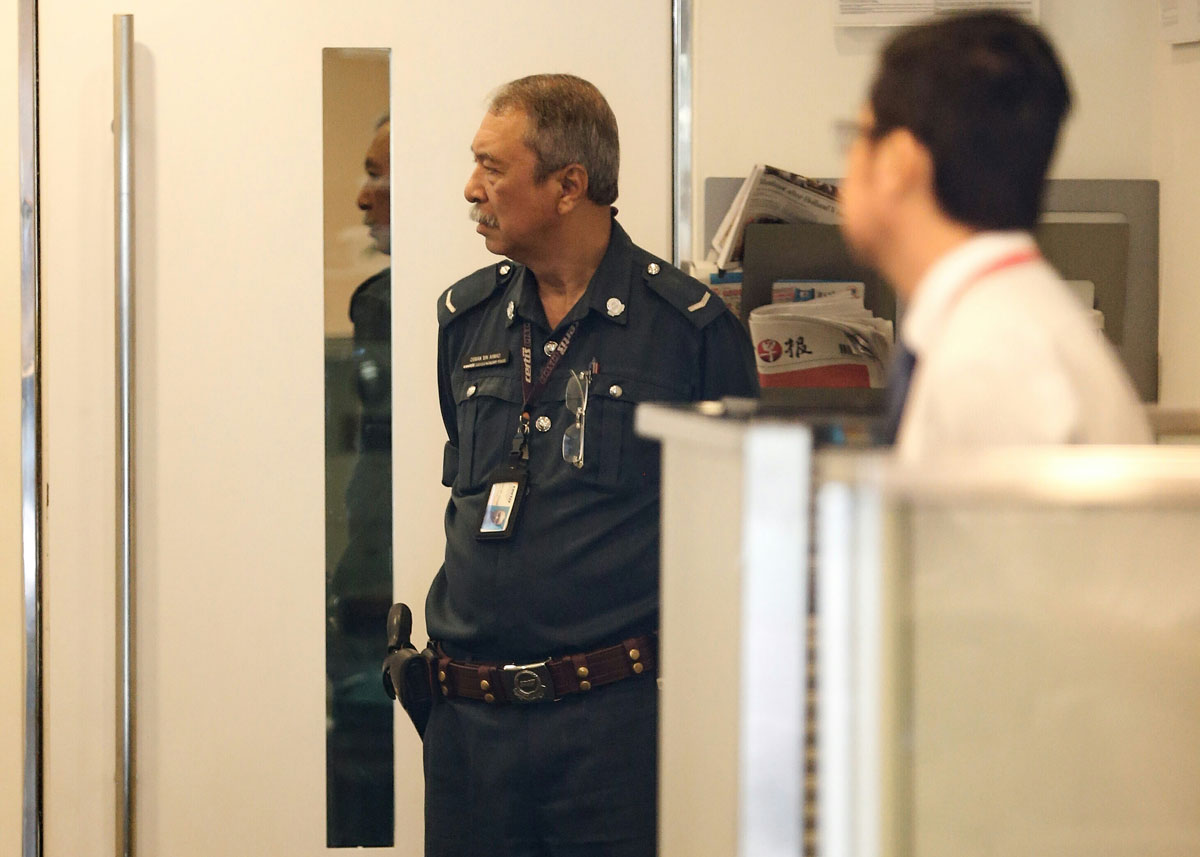
Yesterday, a Certis Cisco security guard was present at the Holland Village branch, but this is understood to be a temporary measure.
Banks contacted said it is not mandatory for banks to have security guards, although many do.
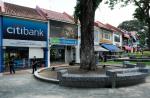
The Straits Times observed yesterday that of the six banks – HSBC, StanChart, OCBC Bank, DBS Bank, Citibank and Maybank – in that stretch of Holland Village, the last two were the only ones that appeared not to have a security guard.
Maybank responded to say that it has Certis Cisco armed guards stationed at all its 22 branches islandwide, including the one at Holland Village.
“In addition, we have standard in-branch security measures such as CCTVs. We have also provided training to our staff to handle such situations and our policy is always to prioritise customer and staff safety,” said the Maybank spokesman.
An industry source said bank staff are instructed to hand over money peacefully during a robbery so as not to endanger the safety of staff and customers.
“We always tell staff – don’t attempt to bring attention to the robbery. You don’t want to agitate the robber or antagonise him. What if he pulls out a gun and it turns into a hostage situation? That’s even worse,” he said.
Most banks that The Straits Times contacted yesterday said the latest incident has not prompted a review of their security measures, since these are regularly updated.
DBS said its branches are “equipped with robust security systems and features”.
A spokesman for OCBC said it has measures such as round-the-clock surveillance cameras and Certis Cisco guards. United Overseas Bank said its branch employees and security personnel have been reminded to be extra vigilant.
It is understood that the police are studying CCTV footage from the vicinity of Holland Village to identify the suspect, who was described as a Caucasian wearing a grey hoodie and mustard trousers. No weapon was seen during the robbery, which was over in minutes.
Business returned to normal yesterday along the stretch where the StanChart branch is located. Before the bank opened at 10am, customers were already waiting in line.
Retiree Daniel Liu, who is in his 60s, said he does not think another robbery will happen. “Singapore is very safe and has a good reputation.”
Another retiree in his 60s, Mr Johnny Shing, said: “These things don’t usually happen. I think there is no cause for alarm.”
More people streamed into the bank during lunchtime, with many seen carrying out transactions at the automated teller machines and making inquiries at the counters.
Outside the branch, a few curious passers-by peered through its glass entrance.
Some customers wondered if the robbery would have happened if a guard had been present.
“I think it would’ve made a difference,” said Mr Willy Lau, 43, who is self-employed.
Bank robbery at Holland Village Standard Chartered Bank
Click on thumbnail to view photos. Source:
The Straits Times, Twitter






























Robbery ‘a serious offence even if no weapons used’
Even if he did not show or use a weapon, the Holland Village bank robber could still face serious charges that attract a severe punishment under the Penal Code, criminal lawyers here say.
They note that a robbery is a serious offence in Singapore, even if no weapons were used.
What remains crucial are the elements of threat and fear, which they say were both present when a man robbed $30,000 from a Standard Chartered Bank branch in Holland Village on Thursday.
The suspect, who is still at large and believed to be a Caucasian man, had passed a slip of paper to the female teller with his demands and she complied. No weapons were seen during the robbery, which lasted minutes.
“Even if he did not show a gun or knife, it must have been something that he said or wrote on the note that instilled enough fear in the teller for her to hand over the money,” said criminal lawyer Shashi Nathan.
“This would be an extortion, even if there was no one hurt,” he said, adding that the suspect would face up to 10 years’ jail and at least six strokes of the cane if convicted.
Agreeing, criminal lawyer Amolat Singh said: “A person would not ordinarily hand over the money unless there was some reasonable form of fear.”
Another criminal lawyer, Mr Sunil Sudheesan, believes that a lesser charge of theft is unlikely, as there was interaction between the teller and the suspect.
If the threat had been made using a deadly weapon, such as a knife or gun, the offender would get at least 12 strokes of the cane for armed robbery, Mr Singh said.
For unlawful possession of firearms or offensive weapons, he may also face possible charges under the Arms Offences Act and Corrosive and Explosive Substances and Offensive Weapons Act.
If found guilty of carrying any offensive weapon in public places, he could be jailed for up to three years and caned.
Mr Singh said using a fake weapon to commit a crime would not be treated lightly under the law. “The law does not tolerate fake weapons, because the intention is still to instil fear with violence,” he said.
A 22-year-old Kazakhstan national was jailed for 15 months in June 2014 for using criminal force to steal from a Japanese woman in Claymore Hill.
Using a toy gun, he threatened to kill her if she did not give him her money.
Unlike a case of snatch theft, robberies are more severe as they involve “more planning and premeditation, with an approach to rob an institution”, Mr Nathan said.
In December 2004, a man armed with a fruit knife walked into a POSB branch in West Coast Drive and made off with $37,000. The suspect remains at large.
This article was first published on July 9, 2016.
Get a copy of The Straits Times or go to straitstimes.com for more stories.
Image:
Publication Date:
Saturday, July 9, 2016 – 14:30
Send to mobile app:
Source:
Story Type:
Others
China holds combat drill in the South China Sea

SHANGHAI – The Chinese navy conducted combat drills near its southern island province of Hainan and the Paracel islands in the South China Sea, the Ministry of Defense said on Saturday.
The drills come ahead of a July 12 ruling by the Hague-based Permanent Court of Arbitration on a case brought by the Philippines disputing several of China’s territory claims in the South China Sea.
Ships from China’s northern, eastern and southern fleets participated in Friday’s drills, which focused on air control, surface operations and anti-submarine warfare, among other training exercises, the ministry said in a website statement.
China claims nearly all the South China Sea, but its claims overlap in part with those of Brunei, Malaysia, the Philippines, Taiwan and Vietnam.
China has repeatedly said it does not consider any decision reached by the arbitration court to be legally binding. “China adheres to the position of settling disputes through negotiation and consultation with states directly concerned,”state news agency Xinhua said in a commentary on Saturday. “This has always been China’s policy, and it will never change.”
Image:

Publication Date:
Saturday, July 9, 2016 – 13:24
Keywords:
Send to mobile app:
Source:
Hermes ID:
2 429 857
Hermes ID String:
VLSCS9
Story Type:
Others


