Home Blog Page 3455

7 scams that are happening in Singapore now

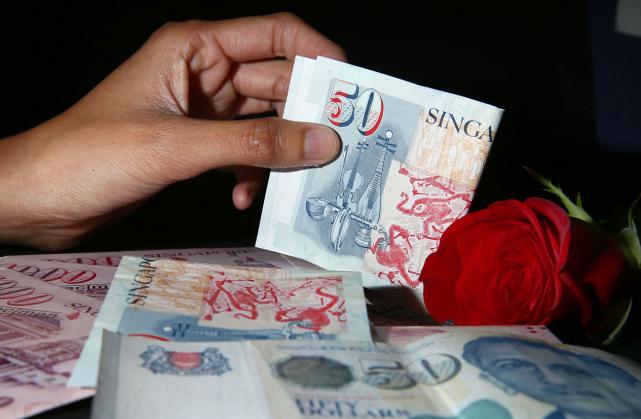
Think you are too alert to be scammed? You’ll be surprised.

While the elderly are stereotyped as easy targets, statistics show that younger, educated people are susceptible to being scammed as well. In fact those aged between 20 and 49 years old comprise 67 per cent of victims who have fallen prey to scams involving fake Chinese police officers.

Here are seven types of scams that are happening in Singapore right now:

1) SP Services scams

The newest scam tactic, as reported by AsiaOne on Friday (July 8), involves phone scammers pretending to be from Singapore Power Services. These scammers try to con their victims by claiming that their utilities accounts are in arrears or that their electricity meters need to be changed.

The victims are then asked to make payment to a designated bank account.

SP Services said on its website that it did not make these calls, and that those who receive such calls should contact SP Services at 1800 222 2333.

2) ‘999’ Scams

If you happen to miss a phone call with numbers that begin with ‘999’ on your mobile phone, you may be the target of another phone scam.

The Singapore Police Force (SPF) said on Wednesday (July 6) that some people have received such calls, and when they returned the calls, they found themselves calling the police emergency hotline instead.

In an advisory released on Facebook, police urged the public to ignore such calls and contact the police at 1800-255 0000 should they have any related information to the case. The emergency hotline at ‘999’ should be used only if urgent Police assistance is required.

on Facebook

POLICE ADVISORY ON UNKNOWN MISSED CALLS, STARTING WITH THE NUMBERS ‘999X XXXX’, ON MOBILE PHONES

The Police are aware…

Posted by Singapore Police Force on Tuesday, 5 July 2016

3) Internet love scams

According to the Singapore Police Force, Internet love scams have resulted in the highest amount lost by scam victims from January to May this year. Together, victims of such scams have lost $8.9 million in just five months.

Those who carry out such scams usually claim to be foreigners, and seek out those who are looking for love or companionship online. The swindlers then cook up stories that they are in trouble, and ask the victims to transfer money to them.

In a report, The New Paper said that there has been a 294 per cent increase in such cases as compared to the same period last year. One woman even went into debt when a man she met on Facebook cheated her of $1.2 million.

The Scam Alert! website set up by the National Crime Prevention Council (NCPC) to educate Singaporeans about scams says that you should exercise caution when befriending strangers online.

Do not send money to people you do not know well, even if they have spent a long time building an online relationship with you. You should also contact the police if you are asked to send money to someone claiming to be in trouble overseas.

4) China officials impersonation/ parcel phone scams

Also known as the “DHL scam”, this seems to be one of the most common scams in recent months, with over $4.9 million reportedly scammed from victims from January to May.

In such cases, victims receive calls from individuals claiming to be authorities from China. The perpetrators tell the victims that there are illegal items in parcels under their names.

They are then told they have to make a payment, usually through remittance of money, or face jail time.

Just this week, AsiaOne reported that two different victims were nearly scammed of $180,000 and $25,000. Fortunately for them, alert employees at remittance agencies called the police when they noticed the victims had no good reason to transfer such large sums abroad.

According to the Scam Alert! website, scammers are now also asking victims to download certain applications onto their mobile phones. These applications may be infected with malware to allow third parties to access private information on their victims’ phones.

Those who receive such calls should protect themselves by not following the caller’s instructions, and safeguard their personal information by not divulging their name, identification number and other details.

5) Credit-for-sex scams
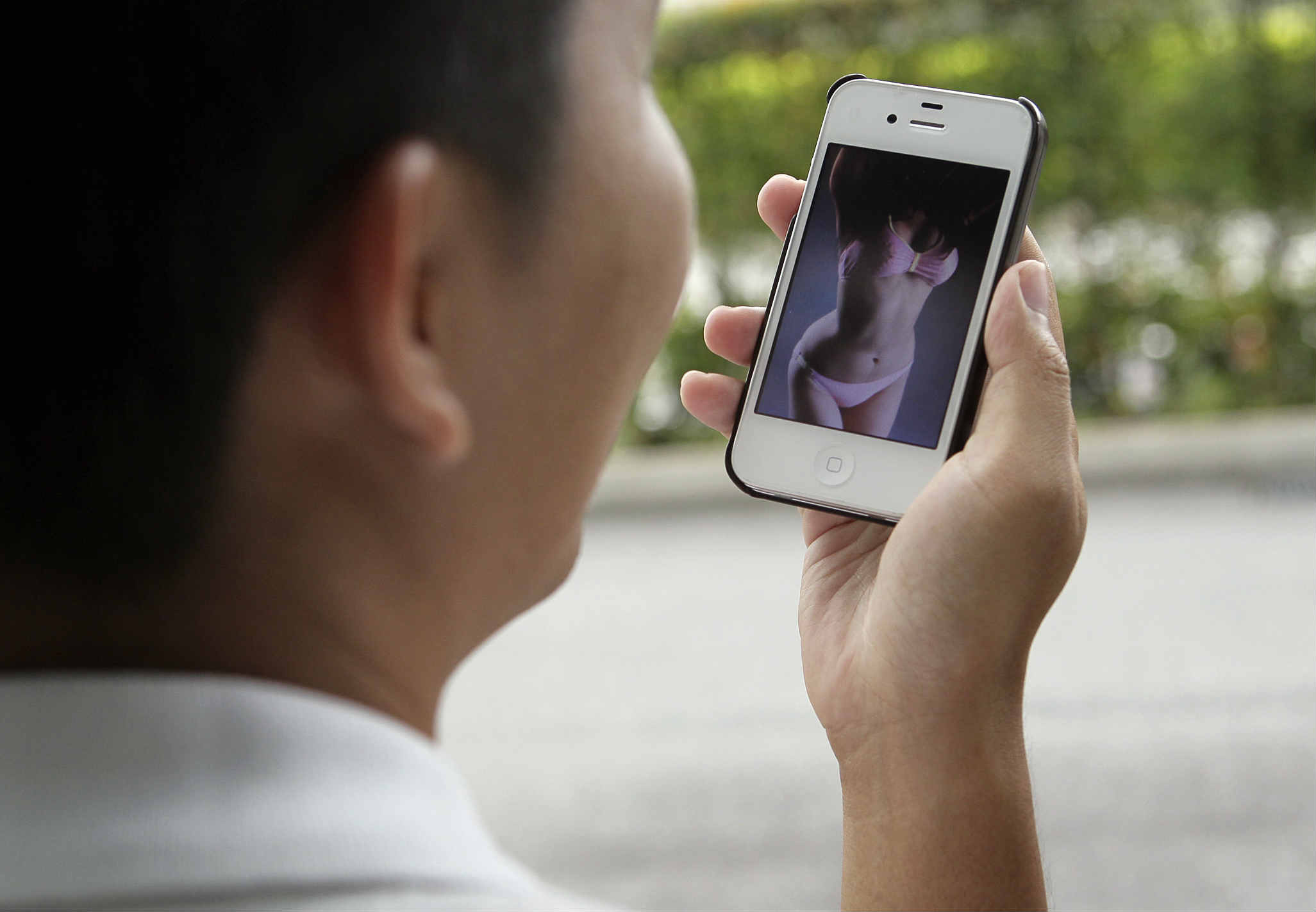
In such cases, swindlers befriend their victims on social media and convince them to buy transfer cards or online shopping credits, with the promise of sexual services or dates in return. These meet-ups never materialise and victims realise they’ve been scammed only when it is too late.

In April this year, it was reported that more than 200 men had already fallen prey to such scams since the start of 2016. In May it was revealed that up to $646,900 has already been lost by victims of credit-for-sex scams since the start of the year.

Those who befriend strangers online should be wary of any escort, massage or sexual services offered. You should never provide personal details in online engagements, and do not share any payment receipts with personal information with people you do not know.

6) Online purchase scams

It’s a case of too good to be true.

Victims of such scams usually respond to online advertisements selling electronic gadgets at low prices. They are then told to make advance payment, but find that they have been conned when the items fail to arrive. In some cases, victims have also been told to make payment for duties and delivery charges.

From January to May this year, a total of $623,500 was lost in such scams.

To protect yourself from such scams, make sure you are purchasing from reputable vendors and do not make advanced payments to people you do not know or trust. If you do need to make a payment, make sure you have the seller’s contact number and can verify his/her identity and track record.

7) Authority impersonating scams

Victims in such scams usually receive calls from individuals claiming to be officers from various government or authority bodies such as the police, Immigration & Checkpoints Authority or Ministry of Foreign Affairs.

The impersonator will then ask the victim for his/her personal information such as their bank account numbers, and may even tell them to transfer money to absolve themselves of involvement in made-up cases.

According to the police, over $100,000 was lost in such scams in the first four months of 2016.

Similar to the DHL scam, those who receive such calls or messages should ignore them and refrain from transferring money to the caller. You should also call ‘999’ should you receive calls from individuals pretending to be government officers.

ljessica@sph.com.sg

See also:

Hacker talks like Singapore man on Facebook, asks his family for money

Plucky salesgirl helps customer escape $4,000 parcel scam

For more tips and information on other types of scams in Singapore, go to Scam Alert!
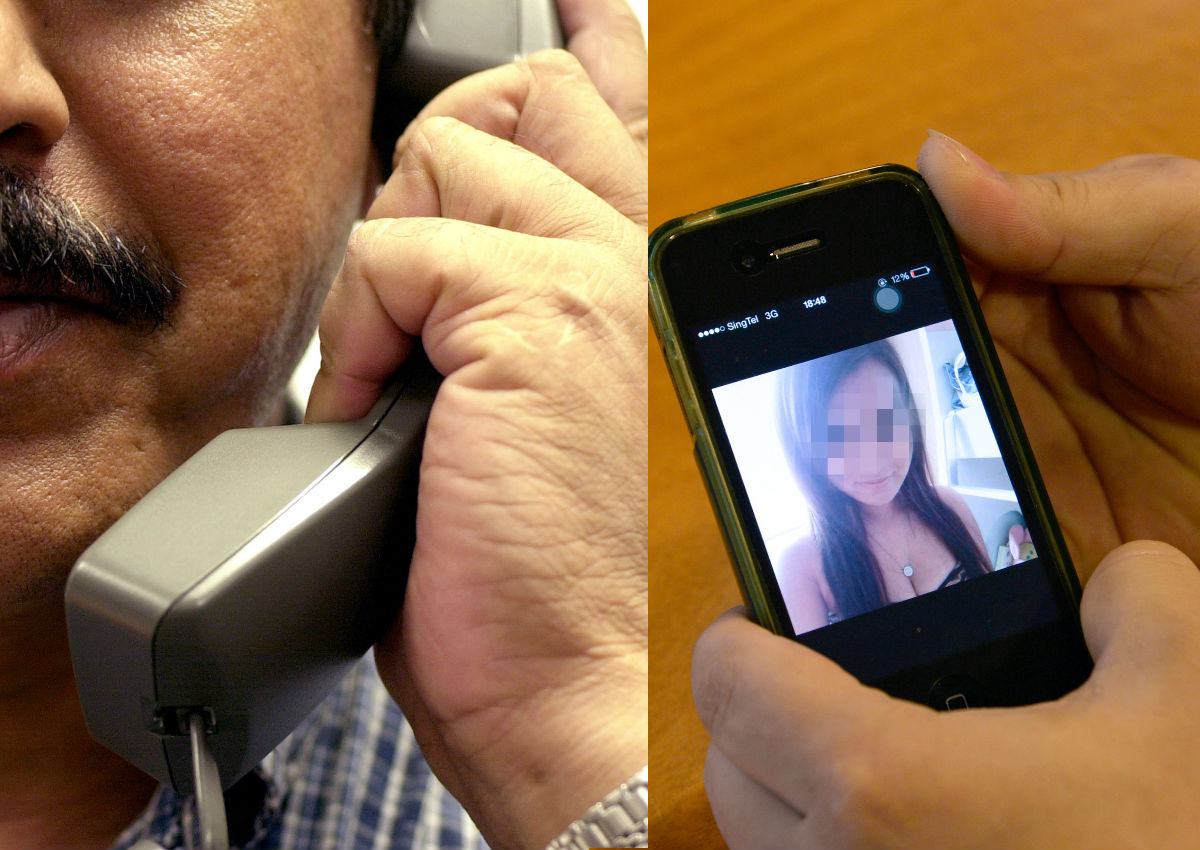
Image: 
Publication Date: 
Saturday, July 9, 2016 – 14:31
Send to mobile app: 
Source: 


Rotator Image: 
Story Type: 
Assignment

Source link

Young parents today better equipped to help children learn Mandarin: Teo Chee Hean

“Building a foundation in the language from young is important because it will allow you to build up proficiency to the level that you choose, later in life,” the Deputy Prime Minister said at the launch of this year’s Speak Mandarin Campaign. 

Source link

K-pop star Rain's drama suffers poor ratings

When K-pop superstar Rain’s latest drama Come Back Alive aired in South Korea from February to April, it suffered a clear defeat at the hands of Descendants Of The Sun (DOTS), which went on to take the world by storm.

Both TV series were in direct competition – they were aired in the same time slot on different channels.

But they had quite different fates.

Week after week, Come Back Alive, a heartwarming fantasy comedy about a goofy deceased soul inhabiting the body of a handsome man played by Rain, to fulfil his wish of seeing his wife (Lee Min Jung) for the last time, was pummelled in the nationwide ratings department.

The 16-parter eventually averaged just 4.8 per cent in South Korea, a paltry figure next to DOTS’ stunning average of 26.27 per cent.

In an e-mail interview with The New Paper, Rain – best known internationally for his roles in Hollywood action flicks Speed Racer (2008) and Ninja Assassin (2009) – declined to answer any questions about the show’s poor performance or address comparisons to DOTS.

But at the press conference of Come Back Alive in Seoul in February, the 34-year-old actor-singer hinted that he was not too concerned about viewership.

“I didn’t take on this project with the intention of getting anything out of it,” he said.

“I did it as I know this is one drama that would stay in my heart for a long, long time.”

AVAILABLE

Come Back Alive is available for viewing free of charge with English and Chinese subtitles on viu.com and the Viu mobile app.

Rain told TNP he was drawn to Come Back Alive’s storyline, which was based on Japanese novel Mr Tsubakiyama’s Seven Days by Jiro Asada.

“The original work itself that Come Back Alive was based on is very well known and I found great pleasure in reading the script,” he said.

“I chose this drama because it’s my honour to work with an amazing director, writer and my fellow actors.”

One of Come Back Alive’s highlights was the sight of Rain’s sculpted torso and flawless abs.

When asked if he had to work out specially for the scenes where he flaunted his muscular body, Rain said: “I always work out. But I made it a point to exercise even more, so that I could get in shape for Come Back Alive.”

It is no secret that most of his fans adore him for his suave image and wicked dance moves.

But Come Back Alive showed his wacky and hilarious side, although he stressed that he is no stranger to comedy.

“Some of my previous shows like Sang Doo! Let’s Go to School (2003) and Full House (2004) had comical elements, so I had a lot of fun doing this drama too,” he said.

Does he plan on making a return to Hollywood?

His last US movie was gangster thriller The Prince (2014), which co-starred Bruce Willis and John Cusack.

“Till now, Hollywood continues to contact me,” Rain said. But there are no concrete projects in the works.

Having recently completed his concert tour The Squall, which included cities such as Beijing, Tokyo, Hong Kong and Macau, he said he hopes to take it to South-east Asia next.

He said: “After establishing my own company, RainCompany, last October, I’m giving my attention to different fields (of work)… I’m planning on working on an album. We are discussing other projects as well.

“I hope everyone will support my future career and future rookies from my company.”


This article was first published on July 9, 2016.
Get The New Paper for more stories.

Image: 
Category: 
Publication Date: 
Sunday, July 10, 2016 – 01:00
Send to mobile app: 
Source: 


Story Type: 
Others

Source link

Singapore travellers unfazed by alleged Batam terror threats

Fliers and letters containing alleged terror threats on Batam have been circulating, but Singapore travellers seemed unperturbed.

When The New Paper contacted hotels in the nearby Indonesian destination, they said they had received calls from concerned travellers, but there were no cancellations.

Mr Vico Alfarin, a sales executive with Batam View Beach Resort, said: “There is a tour group that is re-considering their stay here, but none has cancelled so far.”

Harmoni One Convention Hotel & Service Apartments marketing executive Nadya Setoresmi also confirmed that although many had called in, none of them cancelled.

“The issue cropped up yesterday, and many called to ask whether the ferry terminal is safe, and whether our hotel has ramped up our security measures. However, we have yet to receive any cancellation,” said Ms Setoresmi.

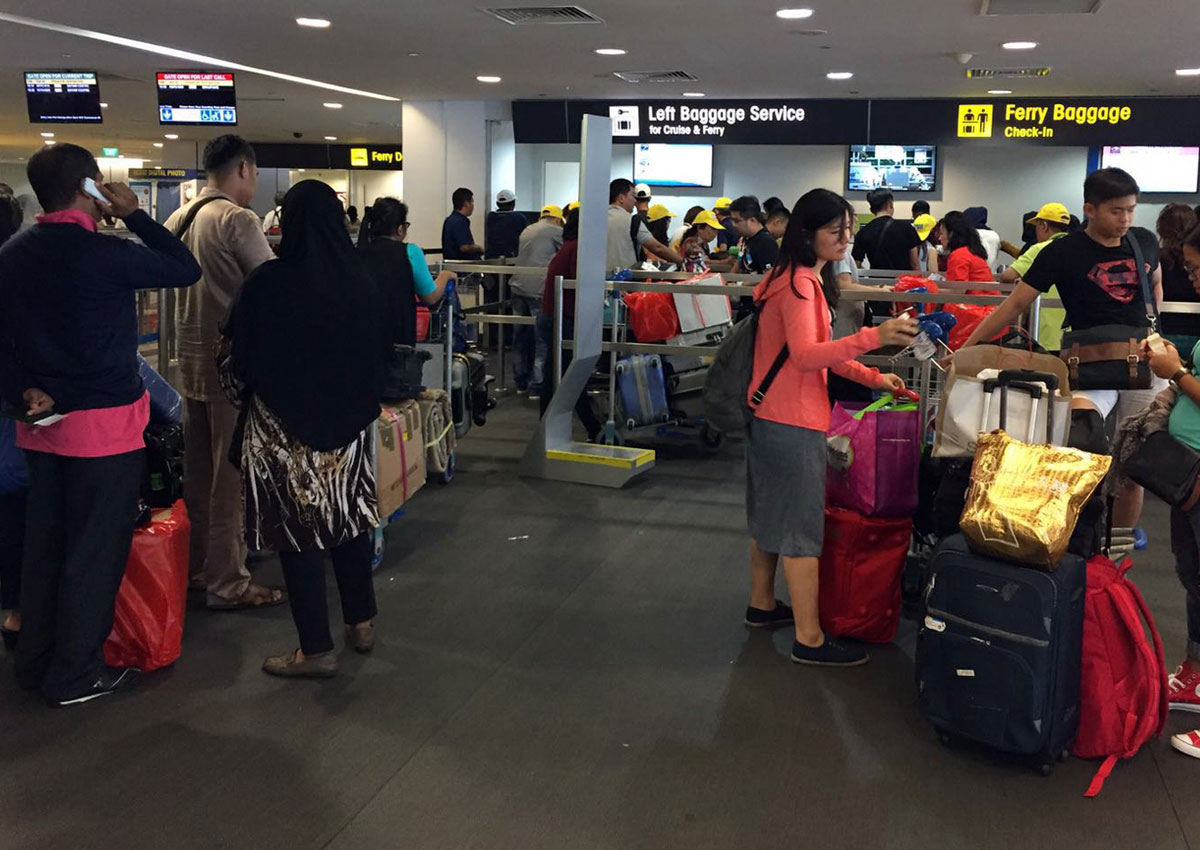
At the Singapore Cruise Centre, crowds were spotted waiting for their weekend getaway to Batam.

One woman, who wanted to be known only as Ms Tan, 50, said: “When I heard about it, I got a little unsure if I should still go. But I have booked the tickets and everything else, so I’m just going to go.”

BatamFast, one of the ferry operators, was running its usual 14 trips to Batam.

“We haven’t seen a decrease in passengers and we don’t expect to as it is the peak period,” said its general manager, Mr Chua Choon Leng.

The fliers and letters warned of bomb attacks in popular Bintan and Batam.

They also warned of attacks specifically targeted on Singaporean and Malaysian tourists.

SECURITY STEPPED UP

According to news reports, security in Batam has been stepped up.

Hotels also said they were increasing checks and being more thorough.

Harmoni One Convention Hotel & Service Apartments, for instance, has doubled the number of security guards at its entrance.

Harris Resort Waterfront Batam sales executive Bayu Tarigan told TNP: “We are keeping things as per normal, but our safety checks are now more thorough and detailed.”

But one traveller decided against her trip to Batam.

Ms Audra Chow, 44, was looking forward to a spa trip with her friends on July 24, but they chose to cancel their plans.

“We decided against the trip as a precautionary measure,” said the housewife.

Ms Chow’s fear is not unfounded as Indonesia has seen two terrorist attacks this year.

Jakarta was rocked by bombings and gunfire, which killed seven, on Jan 14.

On Tuesday, a suicide bomber blew himself up outside a police station in the city of Solo, Central Java.

Read also: Blasts are just the beginning of IS attacks in South-East Asia, expert says


This article was first published on July 9, 2016.
Get The New Paper for more stories.

Image: 
Category: 
Publication Date: 
Saturday, July 9, 2016 – 21:00
Send to mobile app: 
Source: 


Story Type: 
Others

Source link

Phase 1 of Ang Mo Kio walking and cycling completed

The first phase of works to transform Ang Mo Kio into the country’s first walking and cycling town has been completed, the Land Transport Authority (LTA), National Parks Board (NParks) and Urban Redevelopment Authority (URA) announced on Saturday (Jul 9).

Source link

Buffet Town: $50 NETT for Two Pax Weekday Buffet at Raffles City from 11 Jul – 4 Aug 2016

Lunch buffet at only $50 NETT for two pax ?

Buffet Town: $50 NETT for Two Pax Weekday Buffet at Raffles City from 11 Jul – 4 Aug 2016

Bringing more than 300 buffet items over 29 item categories, Buffet Town is the buffet destination in town for everyone. For the month of July & the first week of August, enjoy lunch buffet at $50 NETT for two pax & dinner buffet at $75 NETT for two pax

Source

More in HK want to emigrate than in S'pore, Shanghai: Poll

Three cities, three outlooks.

And it seems that Hong Kongers are the most gloomy about their homes, compared with Singaporeans and Shanghainese.

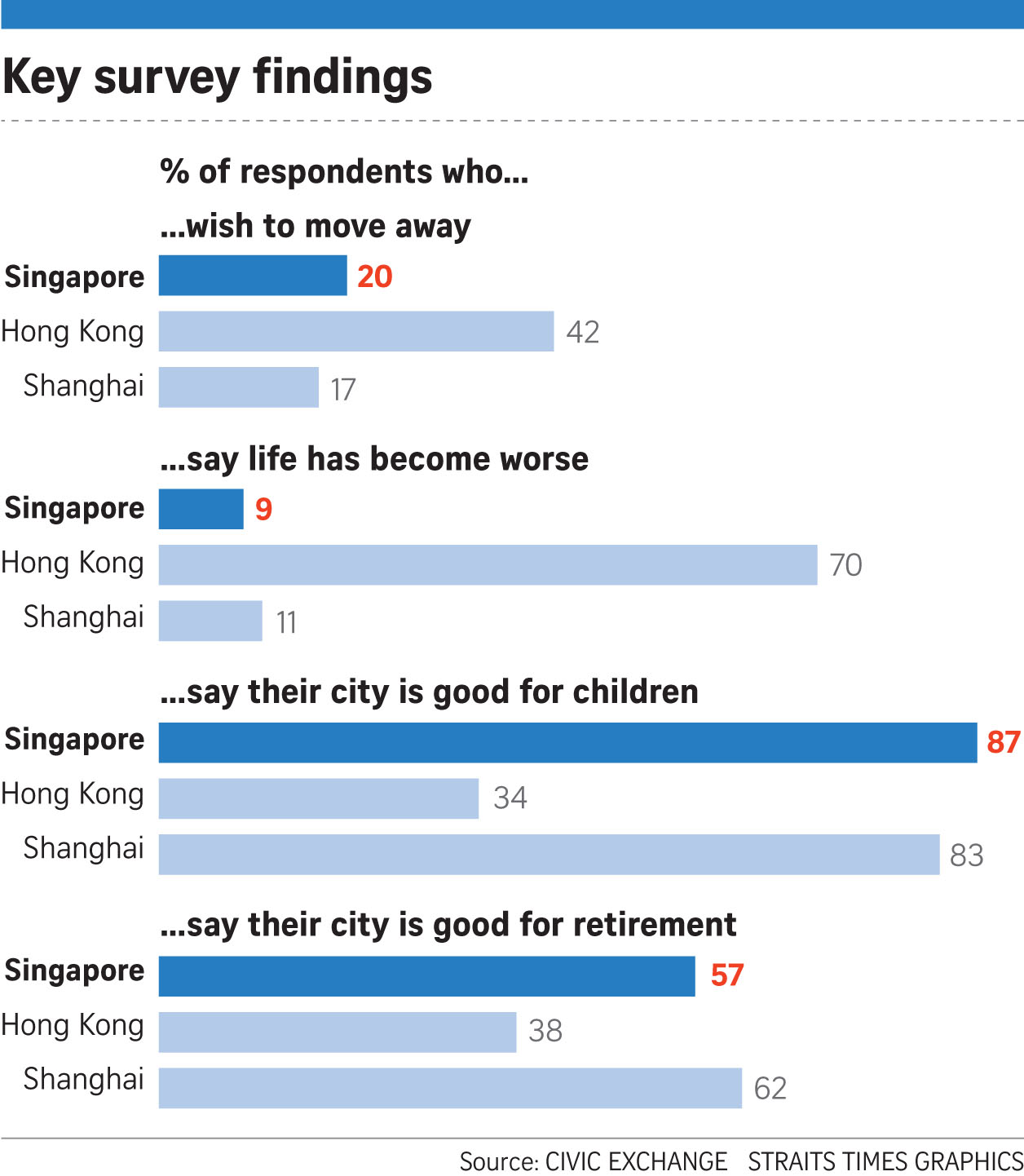
A recent survey conducted by the city’s top policy think-tank Civic Exchange has found that nearly half of Hong Kongers would emigrate if they have a choice.

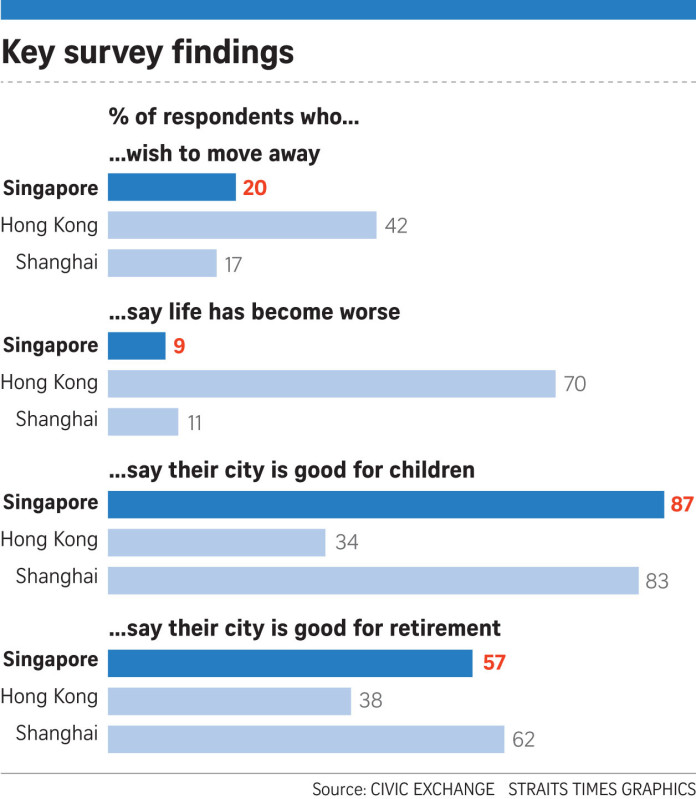
Singapore fared better, though a substantial minority – 20 per cent – would up sticks if they could.

Shanghai retains the greatest appeal for its people: Only 17 per cent would leave.

Whether people want to stay or go strongly correlates with perceptions of whether their home has become a better or worse place to live in, according to the survey findings released this month.

The poll conducted between last August and January this year questioned 1,500 respondents in each of the three cities. Singapore and Shanghai have often been pitted as potential rivals to Hong Kong as regional hubs.

A clear theme from the results: Hong Kongers are by far the unhappiest. An overwhelming majority – 70 per cent – say the city has become a worse place to live in. Their top concerns are: housing, followed by education and quality of government, and then medical care.

Co-author Carine Lai says the fact that quality of government is tied in second place is particularly worrying. “People don’t focus on quality of government unless several issues have gone wrong and they point to the government as the common cause.”

She adds: “The findings obviously point to a very serious dissatisfaction – something is not going right. Policymakers have to improve their ability to meet people’s needs and what they care about.”

In Singapore, the top concern is medical care, followed by work and business opportunities, and then housing. Transport ranks surprisingly low, in the seventh spot, despite widespread unhappiness over multiple MRT train breakdowns.

Just 9 per cent in Singapore and 11 per cent in Shanghai say that life has become worse. Huge majorities – 87 per cent and 83 per cent respectively – believe their cities are a good place for children to grow up. About one-third of Hong Kongers feel this way.

But more are doubtful about what it would be like to retire in these cities – an important issue, given that Singapore and Hong Kong in particular are grappling with ageing populations, says Ms Lai. More than one-third in both Singapore (39 per cent) and Shanghai (37 per cent) say their cities are not a good place to retire in, while 61 per cent in Hong Kong have that view.


This article was first published on July 9, 2016.
Get a copy of The Straits Times or go to straitstimes.com for more stories.

Image: 
Category: 
Publication Date: 
Saturday, July 9, 2016 – 17:00
Send to mobile app: 
Source: 


Story Type: 
Others

Source link

Stiffer penalties for motorists who evade tolls, fees at checkpoints

SINGAPORE – Motorists who evade tolls and fees on entering or leaving Singapore at the Woodlands or Tuas checkpoints will have to pay a composition sum of S$50 from Aug 1, up from the current S$10 administration fee, said a statement from the Land Transport…

Source link

More HK people giving up passports

A few months ago, a 36-year-old European national gave birth to a boy in Hong Kong. All went smoothly but she and her husband faced one quandary.

Given that the woman is of partial Chinese ethnicity – her mother is a Chinese Malaysian – her son would have been entitled to a Hong Kong passport. China’s nationality law allows those of Chinese descent who are born on Chinese soil to get one.

But she and her husband decided not to take up the option, even though Hong Kong allows for multiple citizenship.

China, she fears, could “lay claim” to her son, such as if “he is in a sticky situation in China and is treated as Chinese rather than European”.

The recent saga of the five Hong Kong booksellers, whomany believe were abducted by mainland agents for trading in gossipy books about Beijing leaders, cemented her decision.

One of the booksellers, Mr Lee Bo, holds both Hong Kong and British passports. When Britain sought access to him, China’s Foreign Minister Wang Yi’s retort was: He is “first and foremost a Chinese citizen”.

To the European woman, who has lived in Hong Kong for eight years, the situation is “just too precarious for me to want my child to be a Chinese citizen”, she told The Straits Times.

A sense of disquiet about Hong Kong’s future is giving both locals and parts of the overseas community here pause for thought, as they ponder what lies ahead for themselves and their families.

Questions are being raised about whether the “one country, two systems” framework that allows the special administrative region to operate autonomously from the mainland is being eroded. Signs indicate increasing interference by Beijing: Mr Lee, the bookseller, was reportedly nabbed by mainland agents within Hong Kong in what would then be a breach of the formula. His colleague Lam Wing Kee said he was denied access to lawyers and family during his eight-month detention on the mainland.

Partly driven by such fears, an increasing number of Hong Kongers are giving up their Hong Kong passports, reported local media.

In the first quarter of this year, 56 people renounced it, compared to 33 per quarter in the past five years.

Immigration agencies also say an unprecedented number of Hong Kongers are contemplating emigrating, since the 1997 handover from British rule. This is in line with a recent survey that shows that nearly half would leave if they could, many also citing quality of life issues such as unaffordable housing .

Ms Mary Chan of Rothe International Canada says a key turning point was the 2014 Occupy movement, when protesters tried – and failed – to agitate for more freedom to elect their leader.

The number of enquiries she received doubled from a daily average of one or two. Other agencies, Paul Bernadou & Co and Luxe Legal Group, report similar trends.

The actual numbers remain low though, compared to the exodus after the bloody crackdown on Tiananmen Square protests in 1989, leading up to 1997.

Statistics from the Security Bureau show that in 1995, 43,100 Hong Kongers emigrated. Last year, just 7,000 did so – a small increase from 6,900 the previous year. The top three destinations are the United States, Australia and Canada.

Mr Paul Bernadou, the founder of the migration consultancy, explains that the most recent figures reflect a lag as families take time to finalise their decisions and wait for the applications to be processed.

A 40-year-old man, who wants to be known only as Mr Cheung, is among those applying to emigrate. He began the process last June and expects to move his family to Canada next year.

While firmly part of the city’s middle class – he and his wife, both public servants, have a joint monthly income of HK$160,000 (S$27,800) – he believes that prospects for their children, aged six and three, are dim.

He reels off a litany of concerns: education, property prices, food safety, overcrowding. He also fears Hong Kong’s freedoms are being stifled, citing the booksellers episode.

“The freedoms of the Hong Kong people are diminishing,” he asserts. “When people speak up, Beijing thinks its authority is being challenged. And it will take steps to make you shut up.”

He adds: “Before, we loved Hong Kong. Now we are just disappointed about what it’s become.”

Such perceptions are also creating jitters among foreigners here who hold the dark-blue Hong Kong passport with the People’s Republic of China emblem, as well as their original passports.

While China does not allow for dual nationality, Hong Kong does. And the Hong Kong passport remains a highly desirable one, ranking 20th, with visa-free access to 154 countries. It also grants easy access to mainland China, a burgeoning economy .

But the booksellers episode has raised an issue that is rarely discussed: To what extent are dual nationals accorded the diplomatic protection of their second passport when in China, including Hong Kong?

It varies according to the country, says law professor and associate dean (research) Simon Young, of the University of Hong Kong.

The Hong Kong immigration website says that Chinese nationals holding a second passport will not be entitled to consular protection from that country.

But for some countries, it depends on which travel document one uses. Canada had inked an agreement with China indicating that as long as a dual national enters using his Canadian passport, he will be considered a Canadian, assured of all the consular access and protection of Canada.

The British government takes a different stance: Dual nationals cannot get diplomatic help when they are in the other country where they hold citizenship, it states on a website. “For example, if you hold both British and Chinese citizenship, you can’t get diplomatic help from the UK when you’re in China.”

The United States does not put it as starkly, but writes: “When a US citizen is in the other country of their dual nationality, that country has a predominant claim on the person.”

In Singapore, dual nationality is not allowed. But a child of Singaporean parents who is born overseas – in places such as Hong Kong or the US that grant nationality to eligible babies born on their soil – may gain a foreign passport by birth. He or she has to renounce it by age 18 or face the possibility of being stripped of the Singapore citizenship. Singapore has not stated its consular policy for such dual nationals.

At any rate, such details may not be the deciding matter when China decides to take action, notes some observers.

Another bookseller, Mr Gui Minhai, was taken away in Thailand, not China. He is Swedish, having renounced his Chinese citizenship. But he remains detained in mainland China and Sweden’s request to meet him so far has been rejected.


This article was first published on July 9, 2016.
Get a copy of The Straits Times or go to straitstimes.com for more stories.

Image: 
Category: 
Publication Date: 
Saturday, July 9, 2016 – 17:00
Send to mobile app: 
Source: 


Story Type: 
Others

Source link

Different ways to set up SingPass' security feature

If you have yet to sign up for SingPass’ new two-factor authentication (2FA), fret not.

The original July 4 deadline has been extended, the Infocomm Development Authority (IDA), which administers SingPass, announced on Monday.

Users have one month – which will kick in once they log in for the first time from July 5 – to register and activate the 2FA. This means the one-month deadline is different for different users.

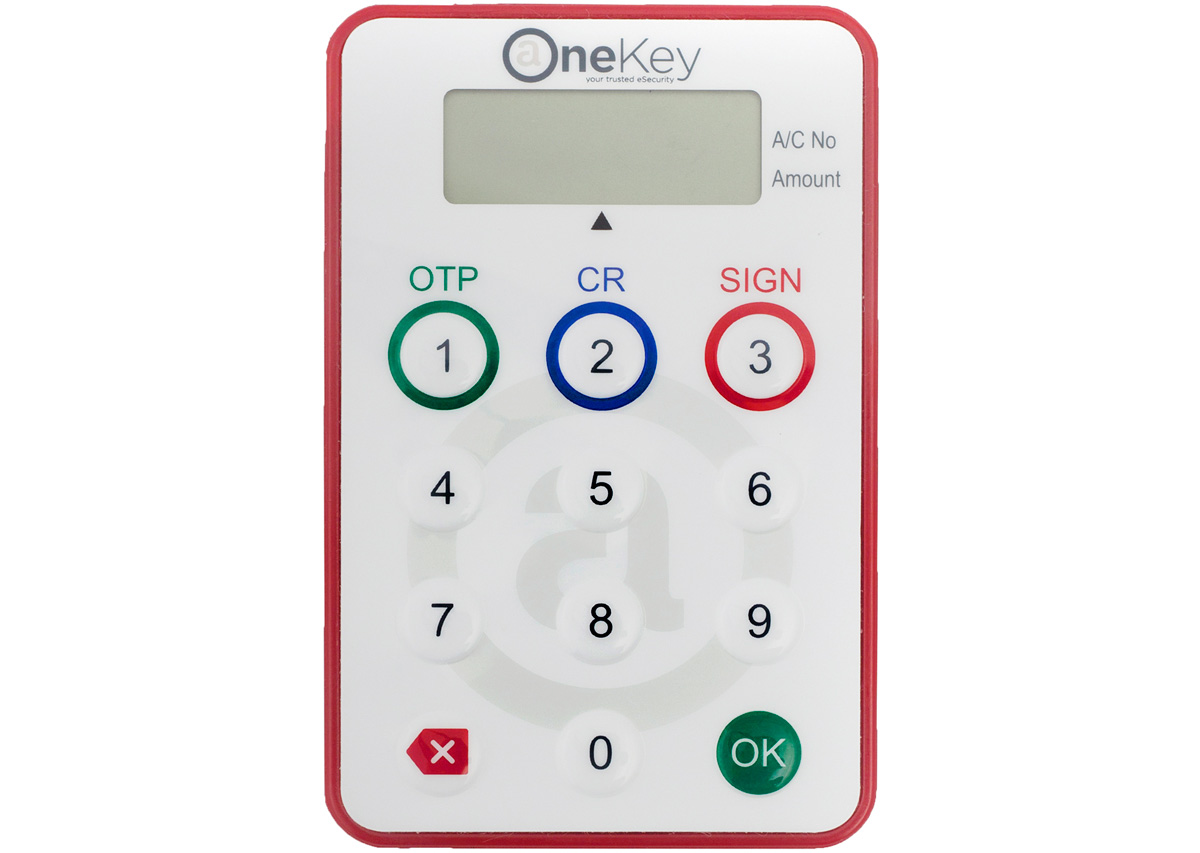
The 2FA feature, launched last July, uses a randomly generated one-time password (OTP) delivered via SMS or a OneKey token that looks like a mini-calculator. The OTP must be entered together with the usual SingPass requirements of a password and NRIC number for accessing e-government services.

For those who encounter problems signing up, here are the answers to some commonly asked questions.

Q I didn’t get the PIN mailer. What should I do?

A The most common feedback on The Straits Times Facebook page is about the missing PIN mailer. Some people have reportedly asked for it multiple times.

The PIN must be entered together with one’s NRIC number on the website of IDA’s subsidiary, Assurity Trusted Solutions, which supplies the 2FA system.

Those with Singapore mobile numbers registered on the SingPass website can also activate their 2FA via SMS.

To receive the mailer, users must first update their mobile numbers and address on SingPass’ website before requesting it. The missing PIN mailer might have shown up at your old address if you had moved recently.

Even so, fret not. Users can still ask for a new PIN mailer. Simply send an SMS to 78111 from the registered mobile number with this message: Resend pin mailer(space)NRIC(space)Postal Code. The mailer will take up to seven days to arrive.

If you are still unsure, you can make inquiries at helpdesk @assurity.sg.

Q Is it compulsory to sign up?

A No. It depends on whether you need e-government services. Registering for 2FA is only for people who need to regularly transact on government websites, including filing their income tax returns and paying carpark fines.

The Central Provident Fund Board, Inland Revenue Authority of Singapore, Ministry of Manpower and Accounting and Corporate Regulatory Authority are among the government agencies that require 2FA for sensitive transactions. Even so, many physical counters have been set up islandwide – including at community centres – to help members of the public with their SingPass queries and 2FA registration problems.

Go to our online story athttp://str.sg/4igA for the list of 2FA counter locations. They are closed on public holidays.

Q I wasn’t given the option of SMS for receiving the OTP. Why is that?

A The sign-up process involves users updating their particulars on the SingPass website and then selecting either SMS or token as the medium for receiving the OTP.

Your mobile number must be registered on the SingPass website before the SMS option is given. A mobile number can be tied to only one individual. No sharing of mobile numbers is allowed.

Existing OneKey users may need to update their mobile numbers at www.onekey.sg too, using their SingPass credentials.

Q Can existing OneKey users opt for SMS as the medium for receiving the SingPass OTP?

A OneKey is already being used by 600,000 online investors and members of the National Trades Union Congress. Existing users of OneKey can use the same token to access e-government services as part of the enhanced SingPass. They may also opt for SMS to receive their OTP by updating their mobile numbers at www.onekey.sg too, using their SingPass credentials.


This article was first published on July 9, 2016.
Get a copy of The Straits Times or go to straitstimes.com for more stories.

Image: 
Publication Date: 
Saturday, July 9, 2016 – 17:00
Send to mobile app: 
Source: 


Story Type: 
Others

Source link