A new committee will be set up by the National Association of Travel Agents Singapore to develop a step-by-step guidebook to educate travel agents on how to adopt suitable new business models for their firms.
Source link
Travel industry rolls out new roadmap to boost digital capabilities
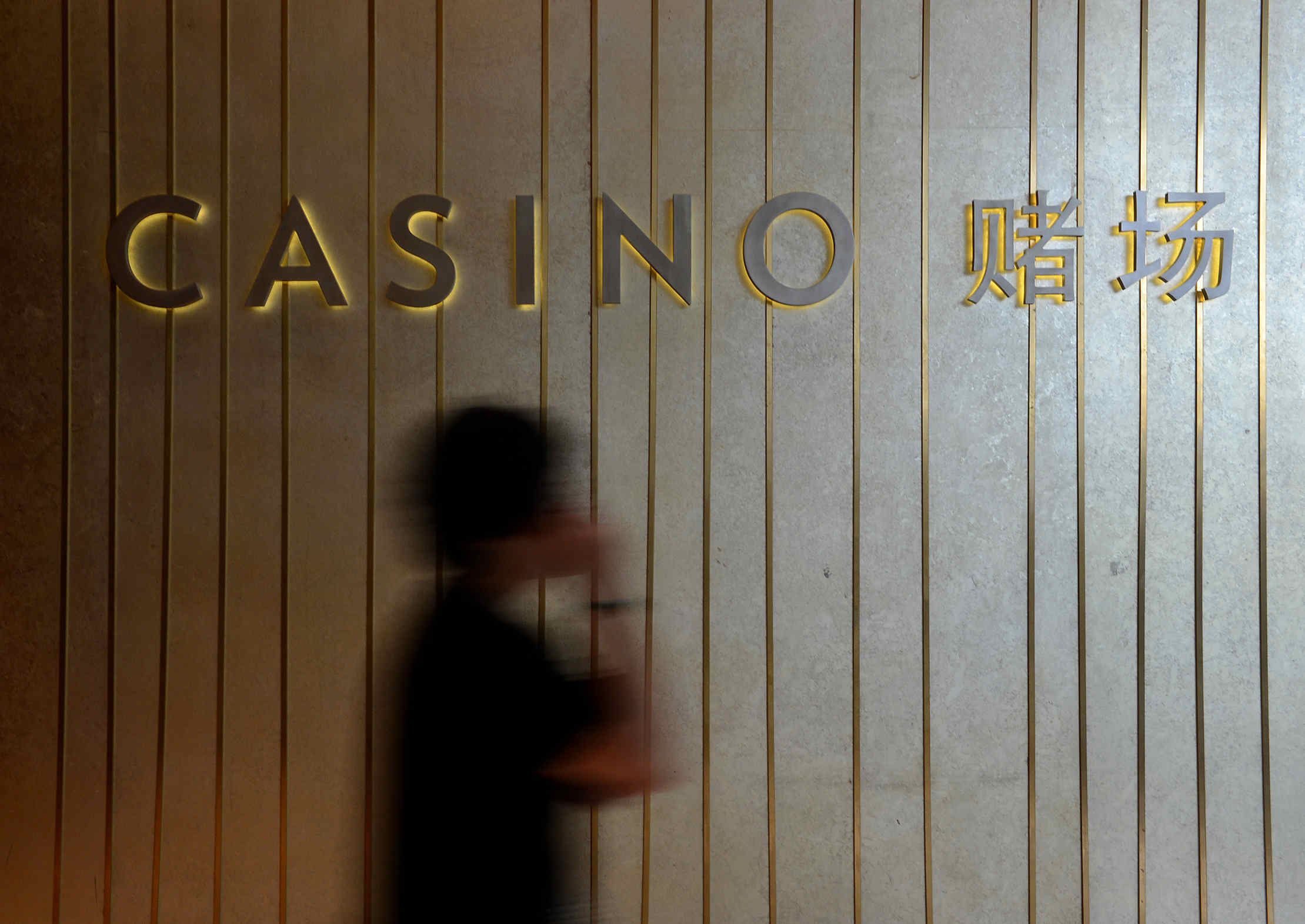
Woman jailed for fake casino chip scam at MBS
They would exchange some counterfeit $1,000 casino chips for genuine ones of a smaller value, mix the real chips with additional fake ones and exchange the whole lot for cash at Marina Bay Sands (MBS).
To evade detection, the runners of the transnational syndicate were told not to cash in more than $5,000 worth of chips at a time.
MBS detected the scam only a week later and recalled all its $1,000 casino chips. It suffered losses of more than $1 million.
Yesterday, one of the runners, beautician Tang Shiwei, 26, who had conspired with her cousin and two men to pass the fake chips off as real, was jailed for seven months.
Tang, a Chinese national who is a Singapore permanent resident, exchanged a total of 30 pieces of fake $1,000 chips for $30,000 on Nov 22 last year. She got $600 in return.
The mother of two was one of the runners recruited by the syndicate to exchange more than a thousand $1,000 denominated casino chips at the casino in Bayfront Avenue that day.
She admitted to one of 12 charges of abetment in a conspiracy to use as genuine casino chips that she had reason to believe to be fake.
Deputy Public Prosecutor Tan Zhongshan said runners were told to first exchange a few counterfeit chips at gaming tables for genuine ones of smaller denominations, mix the real chips with the remaining fake ones before exchanging them for cash at the cashiers’ counters.
Each would then hand the cash to the recruiter, and receive a sum of money as a reward.
In early November last year, Toh Hock Thiam, 54, asked Chia Wai Tien, 47, to recruit people to exchange counterfeit casino chips at the MBS casino.
Chia’s girlfriend and Tang’s cousin, Fang Chao, 40, told Tang that Toh was unable to enter the casino and needed someone to help exchange the chips, in return for a commission.
Tang agreed to help.
On Nov 22, Chia took the two women and two others to MBS and handed a bag containing 20 fake $1,000 MBS chips to each of them.
Although Tang had reason to believe that the chips were not genuine, she exchanged some counterfeit chips for those of smaller denominations, mixed them together and cashed out the lot at different counters.
After exchanging all 20 fake chips in her bag, she handed over $19,600 to Fang after deducting $400 as her reward.
Subsequently, she received another 10 fake $1,000 chips and exchanged them for cash. She kept $200 and handed over $9,800 to Fang.
The case against Fang, Chia and Toh is pending.
Tang, represented by Mr Sunil Sudheesan, cried when her lawyer was mitigating on her behalf and seeking the court’s mercy.
She could have been fined up to $150,000 and/or jailed for up to seven years for the offence.

This article was first published on August 2, 2016.
Get a copy of The Straits Times or go to straitstimes.com for more stories.
Image:
Publication Date:
Tuesday, August 2, 2016 – 16:00
Send to mobile app:
Source:
Story Type:
Others
Commuters frustrated after SMRT hit by 3 track faults in a day
Transport operator SMRT was hit by three train delays in the span of a day, after two track faults occurred on the North-South Line and one on the East-West Line on Tuesday (Aug 2).
Source link
Widow had intended to bequeath everything to him ‘as a gift’, claims Yang Yin

SINGAPORE – Taking the stand for the first time after changing his mind about pleading guilty, former tour guide Yang Yin claimed today (Aug 2) that Madam Chung Khin Chun had spoken to him about her decision to draw up a will to leave him with “all her…
Source link
Level the playing field for adopters of electric vehicles in Singapore
The case for electric cars is now more compelling than ever, given the global commitment to improve air quality and reduce pollution-related costs, especially with the move towards achieving the goals of COP 21 (the 2015 Paris Climate Conference).
Singapore is steadfast in this commitment too, as is evident from its vision for a “car-lite” city-state coupled with the decision earlier this year to install 2,000 charging stations islandwide and the recent announcement to roll out an all-electric taxi fleet to further decarbonise the transport sector.
Electric vehicles, especially cars and buses, are key enablers to help close the gaps in Singapore’s commitments to COP 21, by reducing or eliminating the use of the internal combustion engines on Singapore’s roads.
In this context, it is important that current policies affecting the ownership and deployment of such vehicles be either tweaked, revamped or extended to ensure that these low-carbon (or zero-emission) technologies operate under a policy regime that promotes a level playing field (versus the incumbents) for all modes of transportation.
This is to ensure fair play so that low-carbon technologies can emerge as an alternative for deployment in Singapore’s transport landscape. This is the reality: According to Singapore’s National Climate Change Secretariat’s business-as-usual scenario, the transport sector will contribute 14.5 per cent of greenhouse gas (GHG) emissions in Singapore by 2020.
In simple terms, this means that high carbon emissions will continue to prevail in Singapore unless some strategies are changed. Emissions reduction in the key transport sector is therefore crucial to Singapore’s commitment to reduce GHG emissions per GDP (gross domestic product) dollar by 36 per cent by 2030, compared to 2005 levels.
Emissions from the transportation sector are among the largest contributors to urban pollution. Even with the technological improvements of engines and emission standards for conventional fossil-fuel engines, tailpipe emissions are constantly under regulatory watch. This begs the question: Does Singapore have the right framework and infrastructure to ensure a level playing field for adopters of electrical vehicles?
Currently, electric vehicles (EVs) and plug-in hybrid electric vehicle (PHEVs) face disadvantages because of the formulae used to calculate CEVS (Carbon Emission-based Vehicle Scheme) rebates and road taxes. EVs offer many advantages, including the lowest carbon emissions among car models in the market.
Hence, a level playing field in the CEVS can only be created by granting an equitable – that is, levelling-up – incentive to EVs compared to higher-emitting hybrid car models. The emissions envelope (ie generation-to-end-use) of EVs is expected to fall further in the coming years as Singapore continues to expand the use of natural gas and renewables for electricity generation – justifying the need for more banding in the lowest emissions end of the CEVS.
Currently, the CEVS aims to differentiate vehicles based on the CO2 emissions per kilometre. However, it does this quite poorly, since it cannot distinguish in advance between a vehicle that is driven primarily in stop-and-go CBD traffic (such as a delivery vehicle) and one that undertakes uninterrupted highway journeys (such as regular commutes across the island).
We believe one solution around this is to consider scrapping the capital expenditure-based CEVS and replacing it with operating expenditure-based (Opex-based) schemes. A key advantage of replacing CEVS with an Opex-based scheme is that it eases traffic congestion by increasing the variable cost of driving versus using public transport.
The existing cost structure of car ownership is too heavily weighted on fixed acquisition cost, which encourages people to use their cars, even for “trivial” journeys, because variable costs linked to fuel and parking are so low. Alternatively, the Preferential Additional Registration Fee value of cars which receive the CEVS rebate should be based on the Additional Registration Fee value before the rebates, not after.
An opportunity to further reduce our GHG emissions while leveraging the electrification of buses and cars is to set up a regional testing centre with full test facilities for battery and charging infrastructure that would ensure that all vehicles are tested by one common standard and process. This will help accelerate the deployment of EVs, while growing regional demand will ensure the centre is economically viable.
The government currently owns the entire public bus fleet, one that runs on fossil fuels. In time to come, we may well have an electric-bus fleet, which would require adequate charging infrastructure. When this fleet conversion takes place, the government would not need to undertake the construction and operation of the charging stations itself. It can tender out the charging facilities to private operators, to reap benefits such as lower cost and higher quality of service arising from market competition.
The government should also lead a cost-benefit study with industry participation to determine the additional requirements for power distribution infrastructure and look into how the costs can be split among users. The study could serve as a test-bed whereby key data could be collected and analysed for future adoption.
Building codes such as the Building and Construction Authority’s Green Mark take into account EV lots but do not quite promote easy installation of EV charging infrastructure post-building completion.
To ensure a future-ready building infrastructure and in line with the drive towards a Smart Nation, building codes should include the needs of EV charging for both the projected current population and future expansion of EV-ready car lots.
Green Mark can evolve to promote this change and could allocate more points for EV-readiness. Such policies will encourage developers to ensure that buildings are future-ready, equipped to embrace the full advantages arising from our drive to create a Smart Nation.
– The writer is a council member of the Sustainable Energy Association of Singapore and programme director, Energy Research Institute @ NTU (ERI@N), at Nanyang Technological University.

This article was first published on Aug 02, 2016.
Get The Business Times for more stories.
Image:

Category:
Publication Date:
Tuesday, August 2, 2016 – 14:11
Keywords:
Send to mobile app:
Source:
Story Type:
Others
'Time needed' to review varsity orientation camps
The National University of Singapore (NUS) is fully committed to comprehensively address the problem of sexualised activities at its orientation camps, but needs the time and space to do so over the next few weeks and months.
In his first public comments on the furore over such activities, NUS president Tan Chorh Chuan said there are a wide range of issues to consider and it has called “a time-out” on student-organised orientation activities for now.
Read also: Sexualised orientation games: NUS suspends all student-organised activities
NUS had announced the suspension of orientation activities last Friday, after it was reported that some students had complained about being pressured into taking part in risque orientation activities.
These included the alleged re- enactment of an incestuous rape scene and a dunking incident involving Sheares Hall students.
Yesterday, Prof Tan stressed that NUS does not approve of these.
Read also: ‘Sexualised’ uni camps spark fierce debate
Addressing freshmen at the 2016 Freshmen Inauguration Ceremony yesterday, he said: “We make our stand very clear: We do not condone behaviour, games and activities that denigrate the dignity of individuals and that are sexualised.
“It is very disappointing that a few in our student community have clearly not internalised this.”
While noting that NUS does not intend to do away with orientation, he said that it does expect “orientation activities to be fully respectful of the dignity of all those participating” and has put in measures to help ensure this in recent years.
NUS suspends student-led orientation activities
Click on thumbnail to view photos. Source:
Video screengrabs, Stomp















Prof Tan also told the freshmen that he was “very sorry that your first days at NUS have been clouded by the controversies”.
Meanwhile, the NUSWhispers Facebook page is still abuzz with comments about the controversy.
Read also: What NUS students say about orientation camp debacle
A female freshman, who is “thankful” orientation week is cancelled, said: “I doubt I’ll be able to enjoy a camp where I have to be in perpetual fear of being forced to do immoral deeds or have them rendered upon me.”
But another student said: “I was really looking forward to O (Orientation) week but now that it got cancelled, my freshman experience is really bad.”
NUS undergraduate Charlie Woo, 24, suggested a more consultative planning process. “Perhaps, in future, the university can have closer co-operation with student leaders to review student-led activities before they are carried out,” he said.
When asked, an NUS spokesman declined to say how long the ban on orientation activities would last, but said faculty-led activities such as welcome receptions would go on.
One activity that will proceed is the annual NUS Students’ Union Rag and Flag today. Thousands of NUS students will take to the streets to raise funds for the needy.
This article was first published on Aug 02, 2016.
Get a copy of The Straits Times or go to straitstimes.com for more stories.
Image:

Publication Date:
Tuesday, August 2, 2016 – 14:00
Keywords:
Send to mobile app:
Source:
Story Type:
Others
Millionaire widow 'left all she had to me, it was a gift': Yang Yin
Taking the stand in court on Tuesday, former tour guide Yang Yin rejected allegations that he had misappropriated S$1.1 million from wealthy widow Madam Chung Khin Chun.
Source link
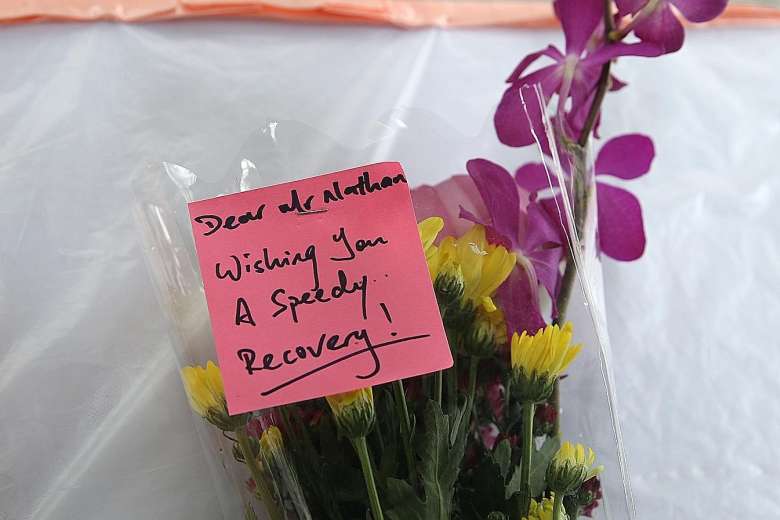
Friends visit former president S R Nathan as get-well wishes pour in
Get-well wishes for former president S R Nathan continued to stream in from visitors yesterday, a day after he was hospitalised for a stroke.
Among the many leaders, senior civil servants and long-time friends who went to see him at Singapore General Hospital were the chairman of the Council of Presidential Advisers J. Y. Pillay, Deputy Prime Minister Tharman Shanmugaratnam and Home Affairs and Law Minister K. Shanmugam.
Others who were there included historian Wang Gungwu, Foreign Affairs Ministry’s Second Permanent Secretary Albert Chua, Singapore’s Permanent Representative-designate to the United Nations Burhan Gafoor and Ms Claire Chiang of Banyan Tree Holdings.
Ms Chiang, a former Nominated MP, said she last met Mr Nathan, 92, about 10 days ago at his home.
“He was standing at the door, greeting us without any support, not even a walker,” said Ms Chiang, adding that Mr Nathan told her to visit him more often.
She had promised to give him some extra spicy tom yam at their next meeting, as his taste buds have dulled. “So I told him just now, ‘Abang (Malay for brother), wake up. There’s mee siam, samosa and spicy tom yam waiting for you.’
“He’s a foodie.”
Professor Wang, chairman of the East Asian Institute at the National University of Singapore, told reporters: “Of course, we are hoping for the best.
“Nathan is someone with a lot of fight in him. I was told he was just here at the hospital on Friday for his regular dialysis.”
Carpet shop owner N. J. Doshi, 85, who has known Mr Nathan for more than a decade, said after his visit: “He’s a decent man and you seldom meet someone like that in your life. We wish him well and we are praying for him, but we know that he is in critical condition.”
Other Singaporeans continued to express their hopes for his recovery on social media.
Facebook user Elias Sandy said: “He’s a very down-to-earth person, even when he was the President… Let’s all keep him in our prayers.”
Separately, Professor Cham Tao Soon, President Emeritus of Nanyang Technological University, wrote to The Straits Times yesterday to join Singaporeans in wishing Mr Nathan a speedy recovery.
“As one who was twice his Proposer for the election of the President, I am glad to be associated with him as he was a great President loved by many Singaporeans,” he said.
This article was first published on Aug 02, 2016.
Get a copy of The Straits Times or go to straitstimes.com for more stories.
Image:
Publication Date:
Tuesday, August 2, 2016 – 14:00
Keywords:
Send to mobile app:
Source:
Story Type:
Others
Bin centre was a complicated project: NAC
The National Arts Council (NAC) has defended the high fees paid to consultants of a centralised refuse collection project in the Civic District, saying it was “not a simple bin centre to build”.
There were many technical challenges to consider, as well as the need to ensure traffic nearby was smooth and the buildings were conserved, it said on Government website Factually, which aims to correct misinformation posted online.
The $410,000 it paid for a study on the project alone is nearly 90 per cent of the cost of actually building the bin centre, which was another $470,000.
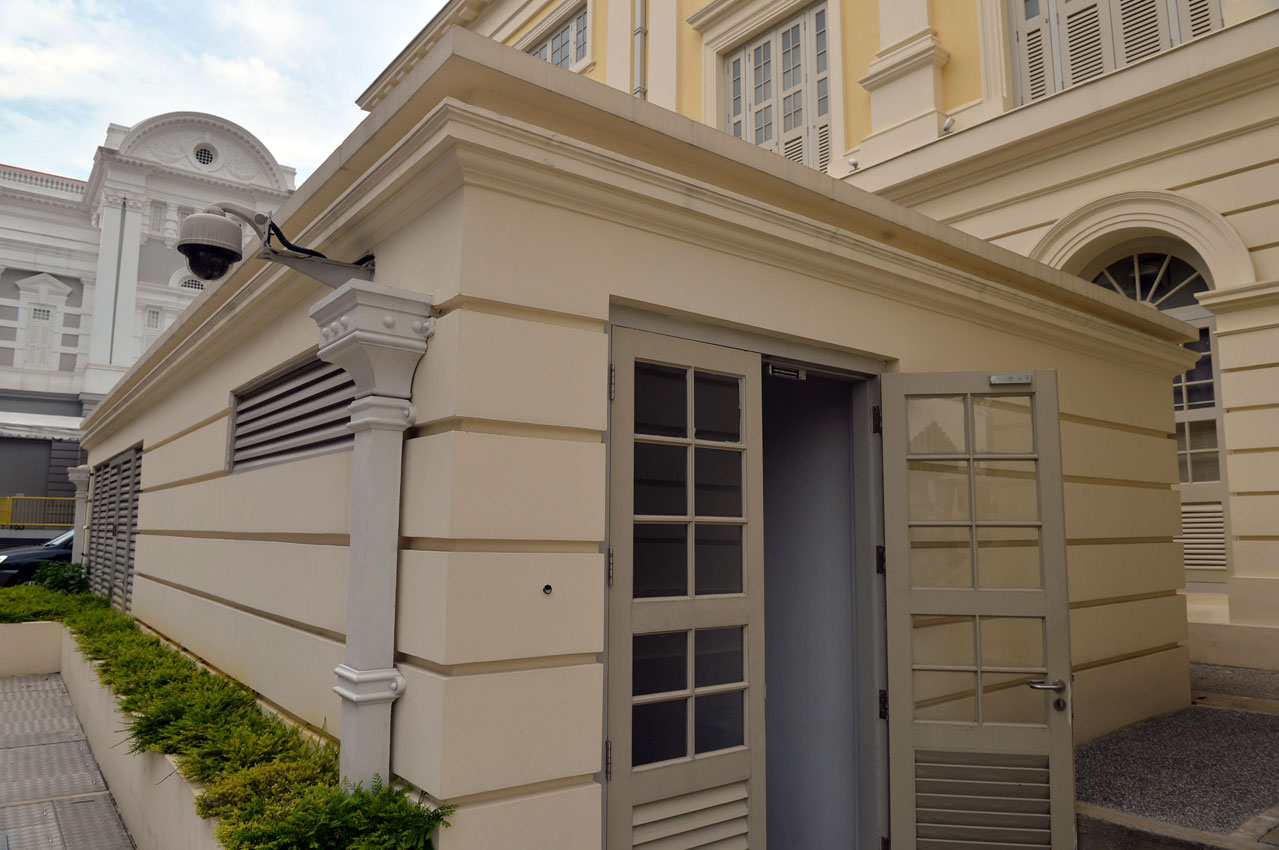
The bin centre stands above the basement of the Asian Civilisations Museum’s (ACM) outhouse and is for the rubbish from Victoria Theatre and Victoria Concert Hall as well as the nearby ACM and Old Parliament House. Previously, each had its own bin centre.
The issue drew sharp criticism, particularly online, after the Auditor-General’s Office singled out the high consultancy fees in its annual report released last week.
Responding, the NAC acknowledged and accepted that the cost assessment for building the centre should have been more robust.
The council, which comes under the Ministry of Culture, Community and Youth, said that in future, it would decide whether consultancy fees were reasonable by looking at the quoted fee as a proportion of the project’s construction cost.
It had not used this method for the bin centre when seeking approval for funds to pay the consultancy fee. Instead, it compared the quoted fee against fees for other complex projects. This was the reason it was not clear that the consultancy fee was exceptionally high, said the AGO report.
The report also said NAC had directly engaged the Victoria Theatre and Victoria Concert Hall consultants to provide these additional consultancy services. It did not call for a separate tender.
NAC said this was because the consultants – who were not named – were selected based on an open tender for the project as a whole.
The NAC, in its reply, also said there could be some misunderstanding about the reasons for building the bin centre. It was not a standalone project, but part of the redevelopment for the Civic District, which the NAC said was “an important cultural and heritage area for Singapore”.
Building the bin centre would improve operations and enhance the area’s aesthetics, it said.
It also said the construction cost was less than 1 per cent of the development cost of the Victoria Theatre and Victoria Concert Hall.
The project, it said, was complex for several reasons.It involved structural and reinforcement works as it was above the ACM basement.
Mechanical and electrical services had to be accounted for, and existing underground services had to be diverted. The project also had to include ventilation so that foul smells would not escape from it as the bin centre stands next to the ACM offices.
Other considerations included preserving the aesthetics of the historic area, and studying the impact of the bin centre on the ACM loading and unloading bay.
“Consultancy services were necessary because of the complexity of the project,” said the NAC.
The consultancy services included a feasibility study taking into account the various requirements of the three buildings, which house three separate institutions.
This article was first published on August 2, 2016.
Get a copy of The Straits Times or go to straitstimes.com for more stories.
Image:
Blurb:
Publication Date:
Tuesday, August 2, 2016 – 15:00
Send to mobile app:
Source:
Story Type:
Others
Canada rejects refugee protection bid by S'porean exempted from NS
A Canadian judge has turned down a Singaporean’s bid for refugee protection in Vancouver, finding his claims of alleged potential persecution in Singapore to be unfounded.
Jedidiah Ian Tan, 23, who was exempted from national service on medical grounds after serving two months, had claimed the exemption was revocable and that he had no redress in Singapore except military justice.
“A refugee claimant must adduce clear and convincing evidence that is both relevant and reliable, and sufficient to convince the tribunal that state protection is inadequate,” said Justice Cecily Y. Strickland in decision grounds last week.
The Canadian Federal Court judge noted that the Singapore authorities had “acted reasonably and expeditiously” in exempting Mr Tan from national service.
” The documentary evidence indicated that the safety of conscripts is taken seriously and failures to do so often receive considerable public scrutiny,” she said.
“Additionally, evidence concerning similarly situated persons demonstrated that Singapore has measures in place to deal with physical and mental incapacity of national service members and their mistreatment by others in the military.”
Mr Tan had applied to the court in British Columbia for a judicial review of the decision last year by the Refugee Appeals Division (RAD) of the Immigration and Refugee Board of Canada, which had rejected his case for protection as a refugee.
Entering Canada in January last year, he had first successfully applied in May last year to the country’s Refugee Protection Division (RPD) to qualify as a refugee in need of protection. He claimed that he faced persecution in Singapore as a male who was granted medical exemption from military service.
But that decision was quashed on appeal by the RAD, which led to the present court application.
The RAD was not convinced that “Singapore would not be reasonably forthcoming with adequate state protection should (Mr Tan) seek it”.
He was medically diagnosed as suffering from spinal curve problems. He suffered back pains, had difficulty walking and could not sit down for long periods of time.
But he was found fit for service and reported for training in December 2013.
He claimed the training was difficult and caused him to suffer psychologically and physically. After a series of medical consultations, he was notified on May 23, 2014, that he had been exempted from service.
He claimed he was exempted on psychological grounds. But subsequent to his exemption, Mr Tan claimed that he and his father received phone calls and text messages from several SAF officers of his former platoon threatening to have him returned to continue military training.
Mr Tan also claimed he feared his exemption would be revoked and he would face job discrimination as he is required to disclose his military history when applying for jobs here.
The RAD, in rejecting Mr Tan’s claim, found that as he is no longer a serviceman because of the exemption, he was entitled to redress from the civilian authorities should the military authorities consider revoking his exemption.
Documentary evidence also showed that Singapore “had effective mechanisms in place to address abuse and corruption in the police and armed forces,” noted Justice Strickland.
She ruled that there was no procedural unfairness on the part of the RAD just because it viewed some of the same evidence differently from the RPD. The RAD had pointed to potential avenues of protection in Singapore against job discrimination and had not been unreasonable, she added.
This article was first published on August 2, 2016.
Get a copy of The Straits Times or go to straitstimes.com for more stories.
Image:

Keywords:
Send to mobile app:
Source:
Rotator Headline:
Canada rejects refugee protection bid by Singaporean exempted from NS
Rotator Image:

Story Type:
Others


