 SINGAPORE – Fishball fans will now have one less option to satisfy their cravings. The popular Song Kee Fishball Noodle, located at Upper Serangoon Road, has closed its doors.
Announcing its closure on Facebook on Monday (Aug 1), the owners said that the…
Source link
Goodbye Song Kee Fishball Noodles
Indian filmmakers tackle sexism with edgy videos

Mumbai – From “The Period Song” to “How I Raped Your Mother”, one all-women Indian production team is challenging conservative attitudes with no-holds-barred satirical videos that are causing a stir online.
Mumbai-based filmmakers “Girliyapa” have released a series of hard-hitting clips that tackle misogyny, with subjects ranging from marital rape, which is not a crime in India, to social stigmas surrounding menstruation cycles.
“Our videos aren’t preachy but laced with humour and to the point, which drives the message home rather effectively,” group head Tracy D’Souza told AFP in an interview.
The five videos, which vary from music and dance sequences to mini-sitcoms, have received more than five million total views since the first one was uploaded onto YouTube last October.
But the ten-member Girliyapa team have also faced plenty of online sexist abuse from anonymous critics wanting to silence them.
Their skits are the type that never screen on India’s main television networks, dominated by soap operas whose sari-clad female characters almost always play traditional roles of mother and housewife.
Girliyapa is one of several filmmaking teams taking the internet by storm, tackling social issues, but also tapping into a growing desire among India’s youth for a more modern portrayal of women on screen.
India’s massive Hindi film industry has been regularly criticised for depicting women as meek and subjecting female characters to aggressive methods of wooing by dominant male leads.
Critics point to Bollywood superstar Salman Khan’s controversial comment recently that his heavy training schedule for wrestling movie “Sultan” left him feeling “like a raped woman”, as an insight into attitudes in the industry.
In “How I Raped Your Mother”, a play on the title of hit American sitcom “How I Met Your Mother”, Girliyapa tackles old-fashioned familial attitudes towards marital rape, which is not illegal under Indian law.
In the 13-minute satirical video, a daughter complains to members of her family that her husband has been sexually abusing her. The mother says it’s just part of marriage while the father terms it “intense love-making”.
“Political statements aren’t solving the real issue. So we decided to make the video to highlight rape and violence against women,” Ratnabali Bhattacharjee, a Girliyapa scriptwriter who plays the role of the mother, told AFP.
Indian filmmaker Paromita Vohra also deals with the subject of consent in a short online sitcom entitled “The Amorous Adventures of Shakku and Megha in the Valley of Consent” uploaded on YouTube in March.
It’s part of her project called “Agents of Ishq”, meaning love in both Hindi and Urdu, which aims to create awareness about women’s rights and sex education through videos and animated graphics.
And both sitcom web series “Girl in the City”, on youth television channel Bindass, and “Ladies Room” are also proving a massive hit online with their 21st century depictions of independent-minded women.
“Girl in the City” is about a 21-year-old who moves to financial capital Mumbai to follow her dream of being a fashion stylist.
“Ladies Room” sees two female protagonists discuss subjects ranging from relationships to pregnancy, all while in a women’s washroom. In one episode they even smoke drugs, something rarely seen on Indian television.
Girliyapa’s “The Period Song” celebrates the menstruation cycle, a taboo subject in deeply patriarchal India where women are often banned from religious sites and even rooms in their own home during their periods.
Another of their videos deals with young women buying condoms, while trying to navigate internet dating is the subject of one of their other productions.
Analysts say the videos are playing an important role in overturning gender biases.
“Digital media can help educate, advocate and encourage people to adopt attitudes and behaviour that promote gender equality,” Mumbai-based women’s safety activist Elsa D’Silva told AFP.
However it’s also online where women are being subjected to misogynistic trolling, including sexual slurs and threats of rape, all in a bid to shame them into silence.
The Girliyapa team say they have faced such attacks every time they have released a new video, but remain determined in their quest to change attitudes.
“We won’t stop telling our stories. People will have to accept the narrative despite all their inherent inhibitions,” co-writer Shruti Madan told AFP.
Image:

Publication Date:
Tuesday, August 2, 2016 – 17:57
Keywords:
Send to mobile app:
Source:
Rotator Headline:
'How I Raped Your Mother' video challenges conservative attitudes in India
Story Type:
Others
TNP tries: Michelin-starred Bak Chor Mee
Our mission was to try the best Bak Chor Mee (pork noodles) in Singapore.
The best had been decided last month by the gourmet guide giant Michelin and those who got stars were not just the high-end places of Puck, Ramsay and…
Source link
ISA detainee's family rebuts reasons behind arrest
The family of Zulfikar Mohamad Shariff says statements from Singapore Government and ministers on his arrest are not representative of his position on “many issues”.
Source link
Fitz and The Tantrums: From soul to pop success with 'Handclap'

New York – Fitz and The Tantrums won acclaim with its brand of infectious retro soul but when it came time to write new material frontman Michael Fitzpatrick was at a loss.
Tasting mainstream success for the first time yet exhausted by years of incessant touring, Fitzpatrick — who had also become a father — suffered four to five months of debilitating writer’s block.
“I was literally going to bed on the verge of tears with my wife trying to prop me up and console me,” the singer, known to all as Fitz, told AFP.
Then he had an epiphany — go pop. One day at 11:00 am, the band wrote “HandClap,” a lusty track with pulsating electronica, and finished in 15 minutes. Fitz and The Tantrums quickly recorded it and left Fitz’s original vocal take.
“I was feeling this massive wave of relief after so many months of hitting a wall. Every time I tried to recut the vocals, they never had that kind of raw excitement,” he said.
“HandClap,” which has been streamed more than 11 million times on Spotify, became the kernel for the band’s third album, the self-titled “Fitz and The Tantrums” which came out in June.
Fitz — whose voice called to mind 1980s New Wave on the band’s 2013 hit “Out of My League” — on the latest album goes into hip-hop delivery with touches of reggae in the music.
But mostly it is smooth-around-the-edges pop — and Fitz makes no apologies for it.
“I love pop music and I don’t know why so many people choose to think of it as a dirty word,” Fitz said.
The band for the first time turned to outside producers including Sam Hollander, who co-wrote One Direction’s hit “Rock Me,” and Joel Little, the New Zealander best known for his work with Lorde.
Fitz hailed the quality of DJs, producers and songwriters who increasingly work in studios with artists.
“I think there has never been a more exciting time in music in recent history than today,” he said.
Not everyone shares Fitz’s joy about the pop world. Some reviews of the album have been scathing, calling the sound overproduced; Rolling Stone wrote that Fitz and The Tantrums “have lost their soul — literally.”
Fitz takes the criticism in stride, saying that the band — known for its energetic concerts — was heartened by fans’ reception.
Fitz said it was a mistake to pigeon-hole the band as Motown revival or indie soul, some of the more common descriptions of its early work.
“For me, pop has always been a huge part of our vocabulary, and pop to me just means a real eye and focus on great melodies that are infectious,” he said.
Fitz, 46, himself worked for years in music in the low-key role of a sound engineer. His breakthrough came when, while distraught over a romantic breakup, he finagled a discarded church organ into his apartment for $50.
In one of his life’s other “lightning in a bottle” moments, as he calls them, he immediately wrote on his organ “Breakin’ the Chains of Love,” a soulful track with a psychedelic edge.
The song opened the 2010 debut album by Fitz and The Tantrums, “Pickin’ Up the Pieces.”
Fitz traces his artistic sensibilities to his upbringing. While raised in Los Angeles, he was born in France to a French mother and went back every summer as a child to live with his grandparents.
“From a very early age, I never felt completely American. And Lord knows when I went to France they reminded me that my accent was not good enough and busted my chops about it day in and day out,” he said.
“So it was this weird thing where I felt partially French and partially American and not fully accepted by either one,” he said.
Fitz recorded a French-language version of “Out of My League.” But the bigger influence on Fitz was not so much French music itself but a desire to merge cultures.
“The biggest dream I’ve ever had as Fitz and The Tantrums is to make something that is truly cross-genre, that mixes so many influences,” he said.
“I think as a musician that is one of the harder things to achieve — in a way that feels authentic and organic and truthful.”
Image:

Blurb:
Publication Date:
Tuesday, August 2, 2016 – 17:44
Keywords:
Send to mobile app:
Source:
Story Type:
Others
Taiwan's temple factory

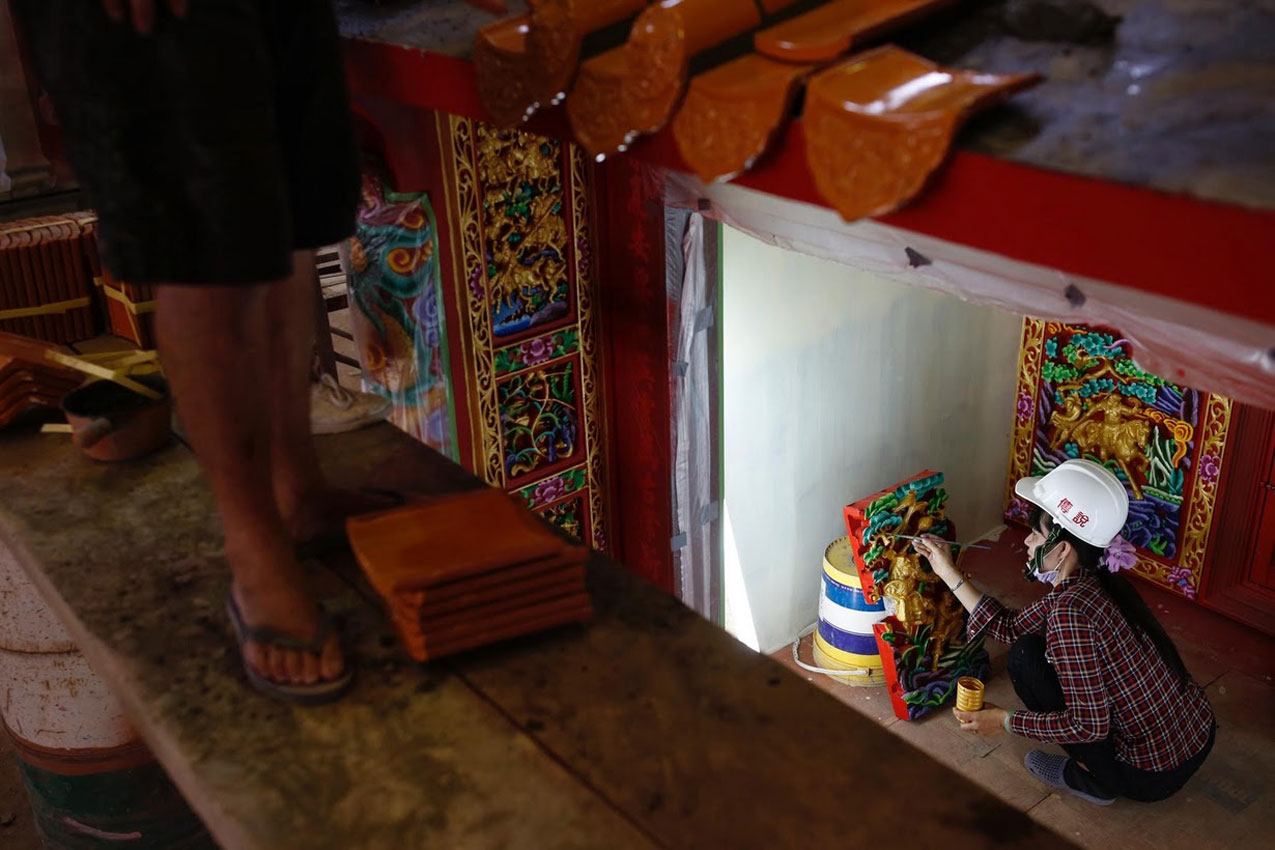
Some companies in Taiwan spend months building temples with bricks and cement, but Lin Fu-Chun’s firm simply pours concrete into a giant mould and waits for it to dry.
The 78-year-old Lin said his temple factory, Chuanso, needed just over six weeks to finish a building that normally took six months with conventional methods – and moulding was 40 per cent cheaper.
Lin oversees up to 20 builds at a single time at his vast indoor facility in Taiwan’s southern county of Pingtung, employing around 100 people to fill the demand for prefabricated temples of different sizes, as well as statues of deities.
The items are also exported, mainly to overseas Taiwanese who want to bring a piece of their culture to new homes in China, Singapore and elsewhere in Asia.
“It’s more convenient for some people, who need a smaller temple where they can worship,” said Lin, who has worked in temple construction for almost 50 years.
Taiwan’s temple factory
Click on thumbnail to view photos. Source:
Reuters










Lin started his temple business in 1993, prior to which he sculpted and painted the dragons and phoenixes that feature atop Taiwanese temples. But now he employs others to do that work.
Many of Liu’s staff are farmers, who work part-time to help during different phases of the concrete construction method that he says rival firms have copied.
The builds are painted in bright colours and decorated with ornaments before being dispatched around the country on trucks by delivery staff, who add any finishing touches requested by buyers.
Prices range from $1,250 (S$1,700) to $62,500, depending on the size of the temple and the detail work required, with the ‘God of Earth’ and the ‘God of Wealth’, which are among Taiwan’s most widely worshipped deities, proving popular.
Image:
Publication Date:
Tuesday, August 2, 2016 – 17:31
Send to mobile app:
Source:
Story Type:
Others
Ex-PCF principal fined S$8,000 for pocketing fees
Bavani V R Kumaran, 39, was found out when her colleague became suspicious and arranged for an internal audit.
Source link
Headphones for loan at Asia’s first fully-owned Sennheiser store in S’pore

 SINGAPORE – Audiophiles keen to buy Sennheiser headphones can now loan them free-of-charge for a week at the newly launched Sennheiser Brand Store at Marina Square.
The store, which launched on Tuesday (Aug 2), is Sennheiser’s first ever fully-owned store in…
Source link
Headphones for loan at Asia’s first fully-owned Sennheisser store in S’pore
SINGAPORE – Audiophiles keen to buy Sennheiser headphones can now loan them free-of-charge for a week at the newly launched Sennheiser Brand Store at Marina Square.
The store, which launched on Tuesday (Aug 2), is Sennheiser’s first ever fully-owned store in…
Source link
Airport chaos after typhoon Nida hits Hong Kong
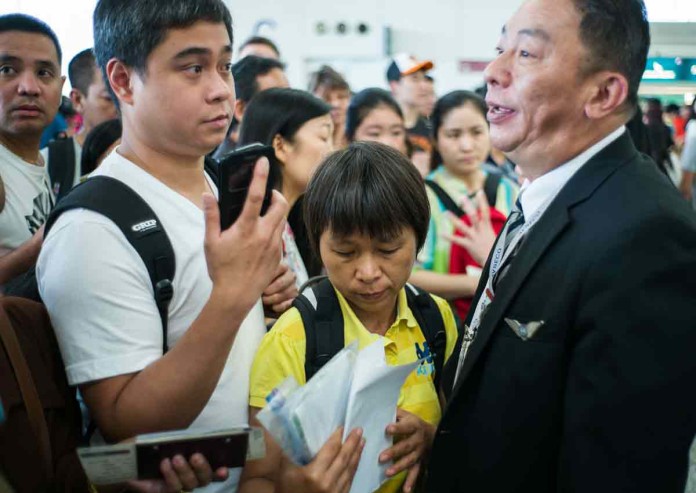
Hong Kong – Hordes of angry passengers stranded after Typhoon Nida pummelled Hong Kong crowded the airport on Tuesday, desperately seeking flights as the city emerges from lockdown while the storm swept across southern China.
Hundreds of flights were cancelled, schools and shops shut and the stock market closed for the day as the storm brought violent winds and torrential showers.
Gusts of 151 kilometres (93 miles) per hour whipped the city and rain lashed down during the night, leaving three people injured and a trail of fallen trees and torn-down scaffolding.
The storm triggered a Typhoon 8 signal — the third-strongest category — which was taken down a notch around midday Tuesday as winds eased and the typhoon passed onto mainland China.
But as the city’s deserted streets began to come to life as buses and train services resumed, Hong Kong’s Chek Lap Kok airport was inundated with stranded passengers.
An airport authority spokesman told AFP only 500 flights would run between 6:00 am and midnight local time on Tuesday (2200 GMT on Monday to 1600 GMT). On a normal day, the airport would handle 1,100 flights.
More than 150 flights were cancelled Monday as Nida approached, leaving stranded passengers to sleep on the floor in the departure hall.
Hong Kong’s flagship carrier Cathay Pacific and its subsidiary Dragonair cancelled all of their flights in and out of Hong Kong for 16 hours, from 10:00 pm Monday until 2:00 pm Tuesday.
Security guards prevented passengers without flights from reaching check-in desks Tuesday, redirecting them to another part of the airport to seek help from staff.
Some complained that airline staff had not given them food vouchers or emergency accommodation despite lengthy waits.
“The airline was giving inconsistent information. There was no announcement whatsoever about accommodation, food or the weather situation. It’s chaotic,” one passenger told local channel TVB.
Another passenger from the Philippines told AFP he had not been provided with food or accommodation, despite being at the airport since 7:00 pm Monday. His flight has been rescheduled for 10:00 pm Tuesday.
After sweeping past Hong Kong, Nida made landfall early Tuesday in the southern Chinese city of Shenzhen, with winds still blowing at up to 151 kilometres per hour.
It was the strongest typhoon to hit the Pearl River delta in 30 years, the China News Service cited experts as saying.
Shenzhen issued a red alert over rain — the highest in a four-tiered warning system — after the downpours reached more than 80 millimetres, China’s meteorological bureau said.
Pictures showed roadside trees blown over, murky brown water filling the streets and a skyscraper with several glass panels blown off.
The city’s port and the Shenzhen Bay Bridge connecting the mainland to Hong Kong were temporarily closed, CCTV said, with around 140 flights cancelled at its airport.
In neighbouring Zhuhai, rainstorm warnings were upgraded to orange, the second-highest alert level, on Tuesday. Work was cancelled, scenic spots closed and city bus services stopped, the Guangzhou Daily said.
A few people were still taking selfies on the oceanside boardwalk, prompting the provincial meteorological bureau to post on social media: “Warning once again that the wind is strong and the waves high by the seaside — don’t go out to the beach to play!”
Nida brought strong winds and torrential rains to the northern Philippines over the weekend, while southern China has already been hard-hit by storms this summer.
Super Typhoon Nepartak left at least 69 dead in July in the mainland’s eastern province of Fujian — despite being downgraded to a tropical storm.
Image:

Blurb:
Publication Date:
Tuesday, August 2, 2016 – 15:23
Keywords:
Send to mobile app:
Source:
Rotator Headline:
Angry passengers and chaos at airport after typhoon Nida hits Hong Kong
Story Type:
Others


