Covid-19 may have turned our world upside down, but life still goes on. Though it’s not quite business as usual, repurposing existing resources and talent has proved to be an efficient way of coping with this crisis. Here are some ways we’ve adapted as a society.
Repurposing talent
With the ongoing CB lockdown, many people have found themselves unable to continue working during this period, especially if their job isn’t one that can be done from home.
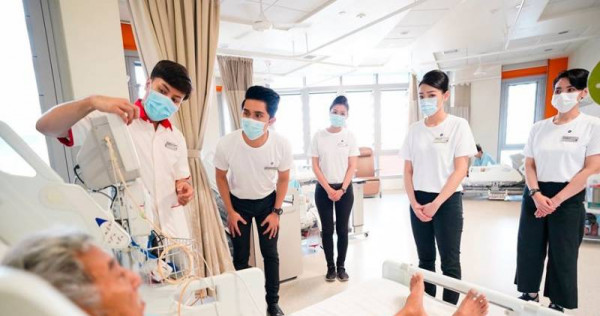
However, some have instead found their skillsets being repurposed for much-needed manpower during this Covid-19 crisis. For example, cabin crew from now-grounded airlines like Singapore Airlines, SilkAir and FlyScoot are being trained as Care Ambassadors for hospitals.
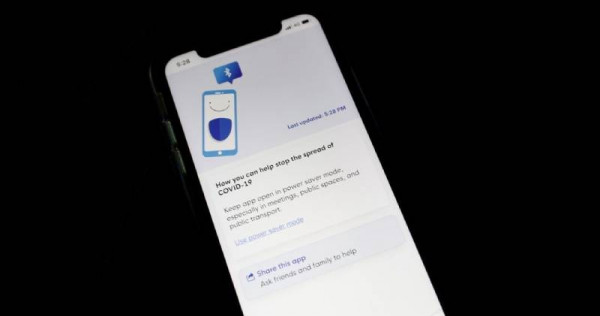
For Zhu Yong Quan, 25, concerns about his personal data being used by the government for surveillance purposes have stopped him from downloading Singapore’s contact-tracing app to combat the spread of the coronavirus.
The final-year student at the National University of Singapore remains wary even though the authorities have outlined the types of data they would collect, and how this would only be used to contact those potentially infected by the Covid-19 disease.
“If I sign up for the app, I am afraid of how it could potentially reveal locations that I have visited, and what it might disclose about my movement,” he said.
Like Zhu, many of Singapore’s 5.6 million residents have held off downloading the TraceTogether app, which was launched at the end of March and leverages short-distance Bluetooth signals between mobile phones to detect other participating users within the vicinity.
SINGAPORE: It is common for Grab driver Roy Lee to receive “curious looks” from other motorists when he pulls up next to them at the traffic lights.
He is, after all, decked out in personal protective equipment (PPE), comprising a mask, goggles, yellow gown and gloves.
“I’d just smile and wave,” Lee said with a grin. “They may not be able to see me smile, but maybe they can see my eyebrows.”
Since the end of March, the 39-year-old has been driving for GrabResponse, a dedicated non-emergency transport service that ferries suspected COVID-19 cases to hospitals.
He estimates that he has completed more than 45 trips over the past month and a half, picking up people such as those on a stay-home notice, returnees to Singapore as well as foreign workers.
Roy Lee. (Photo: Grab)
Both he and Wong Leng Pheng, another GrabResponse driver, were among the first few to volunteer for GrabResponse. It did not take long for what they were doing to make an impact on them.
The first passengers Wong picked up were a mother and her two young children, and he remembers the mother talking to them about “what would happen if (they) test positive”.
“I can’t do much (except) drive them safely to hospital … When (they) alighted, I could only say, ‘Don’t worry — just take care.’ I said, ‘I’ll pray for you,’” recounted the 54-year-old.
“I sympathised with them and felt a little sad that this COVID-19 has affected many people’s lives in a way, especially those young ones.”
Until now, his first time driving suspected COVID-19 patients to hospital was the most impactful to him. (Photo credit: Wong Leng Pheng)
HOW IT WORKS
The GrabResponse service, piloted in late March, is part of a Ministry of Health (MOH) initiative that ropes in drivers of private-hire vehicles and taxis to convey “stable and clinically well” people suspected of having COVID-19 to hospitals.
This, said the MOH in response to queries from CNA Insider, is meant to complement existing ambulance services. Besides Grab, these drivers come from other operators like SMRT subsidiary Strides Transportation and, more recently, ComfortDelGro.
Their vehicles are reserved for the MOH’s use and are despatched by call centre operators for the 993 ambulance service. They are unavailable for public booking when they are part of the MOH fleet.
In total, more than 500 trained private-hire and taxi drivers are on standby. As of May 15, these transport operators have made more than 1,300 trips, said the MOH.
Grab drivers undergoing training to ferry suspected COVID-19 cases. (Photo: Grab)
From Grab, more than 250 drivers have volunteered and have been trained for the service; and they have made more than 460 trips, according to Grab.
It was previously reported that about 70 drivers were deployed from Strides Transportation, while about 20 ComfortDelGro cabbies are now providing the service, according to ComfortDelGro group chief corporate communications officer Tammy Tan.
They work in teams of five, she said, and each team is scheduled to provide transport service twice every week. They started on Apr 29 and have completed more than 40 trips.
“Cabbies who expressed interest to be part of this transport service team attended a four-hour-long training on medical and safety protocols conducted by the Singapore Civil Defence Force (SCDF) before they were deployed,” she added.
Drivers are required to put on PPE for every trip, and taxis are disinfected after each trip.
A cabby disinfecting his taxi. (Photo: ComfortDelGro)
This is also the case for Grab. According to the company, the SCDF’s “comprehensive training” covered topics like reporting guidelines, the donning and doffing of PPE and the handling of used and potentially contaminated PPE, including safe discarding and decontamination.
Grab Singapore managing director Yee Wee Tang said it has also developed a “concierge booking web portal”, which allows MOH despatchers to book rides on behalf of suspected COVID-19 cases.
This allows them to make multiple, concurrent bookings remotely and gives them the flexibility to manage every booking and assigned ride through a live monitoring dashboard.
Despatchers are then able to share booking details with passengers for live tracking of their ride, while drivers can communicate with passengers to verify their identities.
The concierge booking web portal available to Ministry of Health despatchers.
There is also a WhatsApp group chat manned by Grab employees to deal with any queries or issues faced by drivers or despatchers.
As for ComfortDelGro’s system, Tan said its call centre receives the job details from the MOH’s telecentre and then despatches them to taxis via its Mobile Data Terminal.
Six days a week, Lee works eight hours starting from 8am. But his day starts earlier, as he must travel from his home in Lakeside to Marymount to pick up his vehicle, a HDT electric taxi, from his company’s office.
He could previously drive his taxi home, but this is no longer the case, he said, because GrabResponse drivers are not allowed to use their vehicles for any purpose other than ferrying suspected patients.
A screenshot of the dashboard used by MOH despatchers and Grab to monitor rides. (Credit: Grab)
To begin his shift, he drives his taxi to a designated waiting area — in his case, a car park in an industrial area near Toa Payoh Polyclinic — where he turns on his driver app to wait for calls.
Once a call comes in, it is standard procedure as he puts on his PPE in careful order: First, his mask, then his gown and finally the gloves and goggles.
“It took a little while to get used to it,” he said. “From the second week onwards, it was like a daily routine.
“In the initial stage, some of us drivers were on standby together, so we helped (each other) put on the PPE, (such as) the gown (and) tied the knots.”
GrabResponse drivers at a Singapore Civil Defence Force training session before the “circuit breaker”.
The drivers would be sent on their way with wishes for good luck and reminders to stay safe, he added. “These are things we do to encourage each other.”
There is still much to do after changing into the PPE and heading to the pick-up point: Contacting the passengers, verifying their identity — and ensuring that they wear a mask, stressed Wong. If they do not have a mask, the drivers can provide one.
After he drops off a passenger, Wong drives to a decontamination area at the hospital to sanitise his vehicle.
“We use sanitising solution to clean up the seats, handles, belts … the whole vehicle actually, before we remove the PPE,” he said, adding that the PPE must be placed in a bag and disposed of in a biohazard bin.
WATCH: I drive COVID-19 patients to the hospital in my car (3:45)
The process of picking up and dropping off a passenger takes, on average, about an hour. Then the drivers return to their standby area to await the next call.
A TAXI INSTEAD OF AN AMBULANCE?
In their time with GrabResponse, both drivers highlighted the surprise of passengers and clinic staff alike upon seeing their vehicles pull up at the pick-up points.
Besides a small sign attached to their windshield identifying their vehicles as an MOH conveyance service, there is nothing else to distinguish them from the other taxis on the road.
“In the earlier stages, when I picked up patients from clinics, the nurse would come out and say, ‘No, no, no taxi!’” Lee recalled with a laugh.
“So I’d have to explain to them that I’ve been engaged by MOH to bring the patient to the hospital.”
Passengers often express surprise because they are expecting an ambulance – and a longer wait, said Wong.
“The doctors and nurses tell them they have to wait for an hour for an ambulance to arrive … so sometimes when I call them to tell them I’ve arrived, it’s been 15 to 20 minutes, and they’re sitting there having coffee and not ready yet.”
Sometimes, Lee says he would call passengers to tell them in advance that he was driving a green taxi.
But as the weeks went by, he started becoming a familiar sight, particularly when he had to make repeat trips to the same place to pick up passengers.
“There was once I had to pick up five patients from the National Centre for Infectious Diseases (NCID) in a day,” he said. “After a while, the nurses there just went, ‘Oh, it’s you again.’”
While the majority of trips are made to ferry passengers to the hospitals, there are a few occasions when drivers also pick up passengers from the hospitals.
They are also distinctive figures on the roads because of the PPEs they are wearing, attracting curious stares from motorists and pedestrians alike. But besides making them stand out, wearing and driving in the PPE can be challenging.
“For the first 15 minutes it’s fine,” said Lee. “But then … you start to perspire, your goggles start to fog up, and it becomes more of a challenge to stay focused and alert.”
The windows must be wound down when there are passengers, to ensure air circulation. But that means hot air blowing in, and “when that happens”, he said, “I feel like I’m in a pressure cooker”.
“All my respect goes to the healthcare workers,” he added. “For me, it’s a matter of half an hour or an hour, I complete my job and I can stay in the car with the cool air to stop myself from perspiring.”
Surprise, discomfort and amusing anecdotes aside, there is another set of emotions that permeate his taxi when he is ferrying passengers.
“I can sense their anxiety,” he said. “They won’t talk to me, but they’d make calls to their family members, and I can feel that uncertainty.”
DWINDLING CALLS
A Grab driver since 2015, Lee “didn’t have to think twice” before signing up with GrabResponse. “The good thing is that I still have a job to do when so many people are losing their jobs,” he said.
“At the same time, I feel that I’m helping to ease the burden of all the paramedics and ambulance drivers which may be required for more serious cases.”
Both drivers were affected financially when COVID-19 hit and demand for private hire services dropped. Wong, for example, admitted that his fare takings dropped by about 40 per cent in March.
But as he receives a fixed weekly salary as a GrabResponse driver, he has been able to get back to about 95 per cent of his usual salary.
But at the back of his mind, there is the constant worry about being exposed to the virus – and bringing it home to his wife. “It’s only natural to think about the ‘what-ifs’,” he said. “Even though we’re fully geared.”
To that end, he takes extra precautions to keep his wife safe, making it a point to decontaminate his vehicle again after his shift ends, and sanitise his hands before he returns home.
Once he arrives home, he will head for a shower immediately, and soak his clothes in detergent for two hours before washing them.
It has been a busy month and a half for both, who have had to adjust to their new routine as GrabResponse drivers. But recently, the number of calls they receive have been dwindling.
While Lee used to receive about 10 to 15 calls a week, he estimates that it has since dropped to about 3 to 4 a week, and he did not receive any call in one of the weeks.
His time is spent in the vehicle, watching shows on Netflix or reading the news and e-books he borrows from the library.
He does not leave the vehicle except to visit the toilet, get lunch or to stretch his legs sometimes. But he remains online regardless.
It is a different type of fatigue, he said, waiting for calls that do not come in.
“It can get a bit demoralising,” he added. “I went from getting tired from going to too many places, to getting tired from sitting in the car and doing nothing, but remaining alert and on standby.”
But he stressed that the declining number of calls he’s been receiving is a good sign – and a reflection of the declining numbers of cases in the community.
“Hopefully, in time to come, I might not have to be a GrabResponse driver any more.”
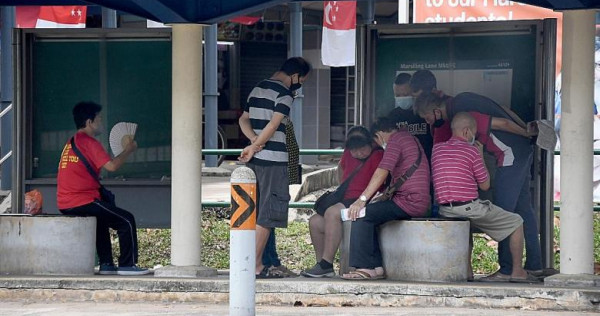
Groups of people were found to be flouting safe distancing measures after they were spotted gathering at a bus stop in Marsiling for suspected gambling activities, Chinese daily Shin Min Daily News reported.
At around 2pm on Sunday, about 40 men and women were seen gathering in groups around the bus stop near Block 20 Marsiling Lane’s hawker centre, located along Admiralty Road.
Some were sitting and standing by the roadside, while others clustered in groups at an open space in front of the hawker centre, most of them glued to the screens of their mobile phones.
A bus driver, who wanted to be known only as Mr Wang, said the same groups of people have been gathering there since the start of April and would usually stay from noon to 7pm.
Mr Wang said: “It is not the first time they have gathered and flouted safe distancing regulations.
“I have reported the matter to the police twice.
“They shouldn’t gather as it will increase the chances of spreading the virus.”
Shin Min also reported that seven or eight people, including a woman counting notes and collecting money, were gathered at a bench.
With Hari Raya Aidilfitri arriving in less than a week, you might have already seen various banners getting unfurled in residential estates. You know, the ones involving local MPs wishing their Muslim constituents Selamat Hari Raya.
Wearing traditional Malay costumes as part of their Hari Raya shout-out is pretty standard too, regardless of the politician’s ethnicity. But it was one particular image that had netizens raising their eyebrows: a banner with Lee Bee Wah wearing both a kebaya and a hijab, the headscarf worn by Muslim women in accordance with Islamic standards of modesty.
On social media, reactions towards her outfit have been pretty mixed, though it’s clear that people have strong opinions about the MP’s decision to do so. Some questioned why the MP needed to have a picture of her in the hijab, bringing up issues of cultural appropriation.
SINGAPORE: With flights cut and planes grounded, the impact of COVID-19 on commercial aviation has had a knock-on effect on the aerospace industry which supports it.
Eighty-five per cent of Singapore’s aerospace industry is involved in maintaining and repairing aircraft, and local companies also play a “small but critical” role in the global supply chain, said the Association of Aerospace Industries (Singapore) (AAIS).
“Today, more than 60 per cent of the global aircraft fleet has been grounded by the pandemic,” the association said. “As Singapore has 10 per cent of the global maintenance market share, this has resulted in a direct impact on aerospace businesses here.”
Parts manufacturers and suppliers here have also suffered, after Boeing and Airbus cut production in the United States and Europe.
“Made-in-Singapore aircraft engines, engine cases, fan blades, avionics and electrical systems are installed in many new Boeing and Airbus aircraft,” AAIS said, pointing to the “key role” played by small and medium enterprises in Singapore for services such as maintenance, repair, overhaul and manufacturing.
According to figures from the Economic Development Board, Singapore’s aerospace sector employs more than 22,000 people, with the industry’s output surpassing S$11 billion in 2018.
SIA Engineering – the maintenance, repair and overhaul (MRO) arm of Singapore Airlines – said there has been an immediate impact on its line maintenance unit, noting the 50 per cent drop in the number of flights it handed at Changi Airport in March.
“An extended period of flight restrictions will also have consequent impact on our other businesses,” it said.
This photograph taken on Mar 16, 2020 shows Singapore Airlines planes parked on the tarmac at Changi International Airport in Singapore. (Photo: Roslan RAHMAN / AFP)
During its annual general meeting on Friday (May 15), ST Engineering said it expects a slowdown in its aerospace unit due to MRO services being deferred, as well as original equipment production rates being lowered.
Collins Aerospace, which just three months ago opened a 10,000 sq ft innovation hub in Singapore, said it is “monitoring the evolving market conditions very closely”.
Rolls-Royce, which has a facility in Singapore that assembles and tests Trent aero engines, said operations have been scaled down.
“We are still continuing our operations to meet the production deliveries in our civil aerospace business, though operations have been scaled down in line with revised demands and the circuit breaker requirements,” said Dr Bicky Bhangu, Rolls-Royce’s president for Southeast Asia, Pacific and South Korea.
“MRO has slowed as planes are parked around the world, technicians are laid off or furloughed or shops have had to close because someone tested positive,” said Matthew Driskill, editor for industry publication Asian Aviation.
Meanwhile, original equipment manufacturers such as Boeing and Airbus are trying to survive by “saving cash, reducing production (and) raising money if they have to”, he said, pointing to Boeing’s US$25 billion bond sale last month.
He believes some companies may go bankrupt during this time, although he added that it is likely there will a greater move towards more consolidation in the sector, pointing to how manufacturers such as Boeing and Airbus have moved into servicing as well.
“So consolidation has been happening and will likely increase in the 12 to 18 months ahead,” said Mr Driskill.
In a report last month, consulting firm Accenture said that in light of challenges brought about by COVID-19, firms in the aerospace and defence sectors need to “assess permanent market shifts” and reorganise so as meet the needs of the market.
Amid the downturn, major players in the aerospace industry are trying to keep busy.
In addition to providing airlines with disinfection fogging service, SIA Engineering said it has deployed staff to perform aircraft preservation and preparation of aircraft for parking overseas.
“We are engaging airlines to schedule maintenance checks during this period of lull traffic,” the company said.
“During this time, we are also scheduling our staff for technical and soft-skill training courses to strengthen our position and readiness to seize opportunities when the aviation industry recovers and business returns.”
Singapore Airlines and its low cost subsidiary Scoot airline planes are parked on the tarmac Changi International Airport in Singapore on Mar 16, 2020. (Photo: Roslan RAHMAN / AFP)
Even while it takes measures to ensure the health and safety of employees, Collins Aerospace said it is “taking necessary actions to reduce costs and to ensure we maintain a position of financial strength and market leadership so that we can emerge from this crisis stronger”.
AAIS noted that it has formed a COVID-19 taskforce for the aerospace sector here.
The taskforce has been working to collect industry feedback to support government policy making, facilitating information and experience sharing, as well as extending assistance to the association’s members.
Dr Bhangu said he believes that the aviation industry will recover from its significant downturn. He noted that Rolls-Royce’s defence and power systems businesses, which service military industrial and civil markets, are helping support the firm during the aviation sector’s downturn.
“Our focus is on the longer-term – we will continue to invest in digitalisation, automation and smart manufacturing technologies, which we believe will put us in good stead for the new normal post-pandemic,” he said.
SINGAPORE: Some restaurants in Roberston Quay have been told to stop selling takeaway alcohol in order to prevent gatherings from taking place in the area, said the Urban Redevelopment Authority (URA) on Monday (May 18).
“During our safe distancing patrols at Robertson Quay, our officers found the majority of operators and individuals to be compliant with safe distancing measures,” said URA.
“However, we observed that some restaurants in the area were selling takeaway alcohol to patrons, which had contributed to more individuals gathering around these premises.”
To prevent such gatherings from taking place, URA issued a written direction to these restaurants “to cease the sale of takeaway alcohol with immediate effect”.
“Any contravention of such directions is an offence and we will not hesitate to take such parties to task,” the authority said.
It added that it will not hesitate to take further enforcement action against business operators for other infringements of safe distancing measures.
People seen talking around standing tables. (Photo: Facebook/Lectress Pat)
POLICE INVESTIGATING “A NUMBER OF INDIVIDUALS”: MASAGOS
On Monday night, Environment and Water Resources Minister Masagos Zulkifli said that the Singapore Police Force (SPF) has traced “a number of the individuals” who had gathered in the area.
“These persons are non-Singaporeans, and are currently under police investigation,” he said in the Facebook post.
He added that URA will continue to monitor the area with the police to ensure compliance of safe distancing measures by both operators and individuals.
The minister reminded the public that the “circuit breaker” can “only work when everybody plays their part”.
“The circuit breaker has been ongoing for almost six weeks. We have about two more weeks to go. We are seeing progress from our collective efforts,” he said, adding that the fight against COVID-19 is “far from over” and urging people to stay at home.
On Saturday, Facebook user Lectress Pat posted photos of crowds gathering outside F&B outlets along Robertson Quay.
“Staff of these F&B establishments did nothing to stop these people from drinking at their premises nor did they remove the standing tables,” wrote the user.
In the photos, people are seen seated on a flight of stairs close to each other, and also standing together around tables.
As of Monday night, the post had more than 2,000 shares.
The extended circuit breaker in Singapore has resulted in many friends and couples being unable to meet in person. Nevertheless, people have found alternatives such as communicating via video chat and sending one another food via delivery services as a perk-me-up.
Most of us would probably be touched to receive a surprise delivery from our loved ones. Keyword: Most.
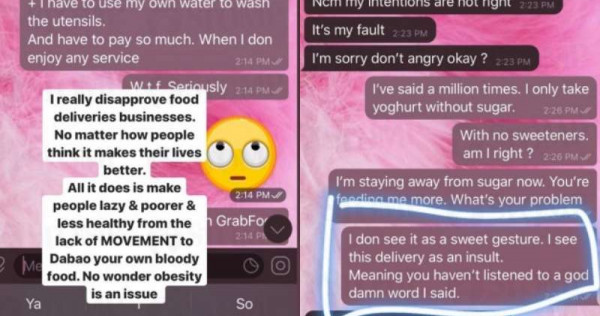
Stomp contributor Tan was appalled to see a girl scolding her boyfriend via text for sending her desserts despite knowing that she was avoiding sugar in her diet.
The girl had posted screenshots of their conversation on Instagram Stories and also ranted about food delivery services.
Tan said: “I was browsing Instagram on Saturday evening (May 16) and saw this unappreciative girlfriend. She was raging on Instagram because her boyfriend surprised her with sweet food.
“After that, she asked the boyfriend to transfer her cash instead?!?!??!”
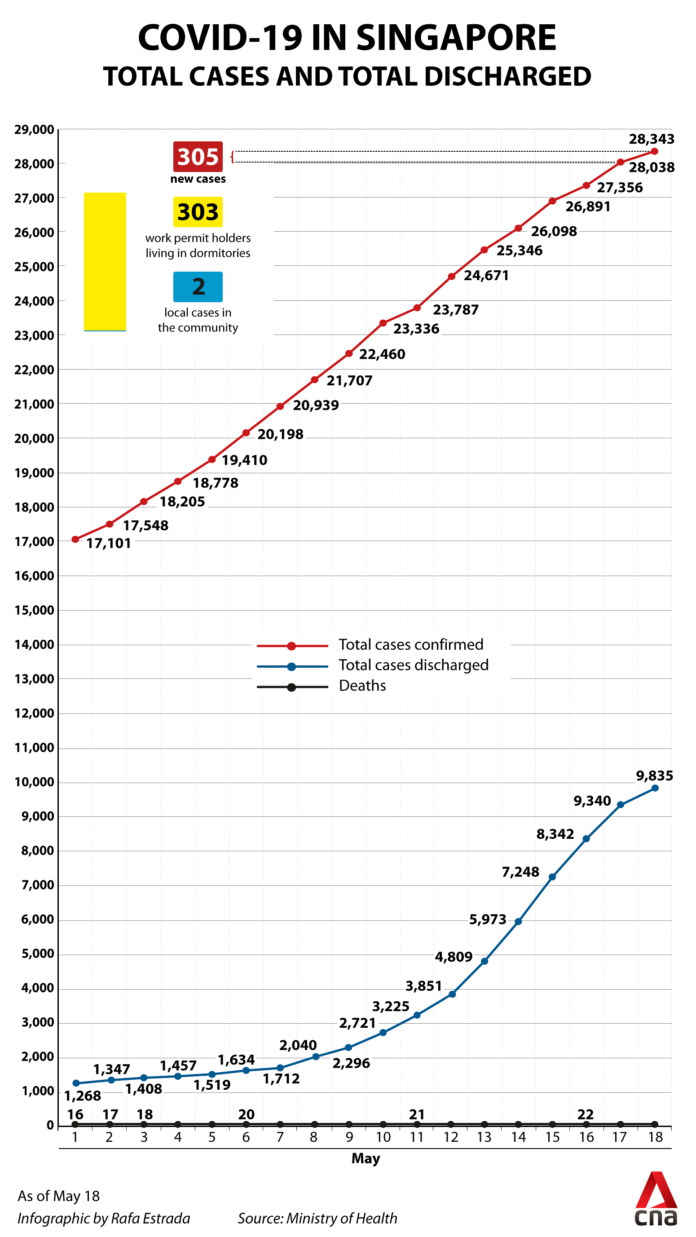
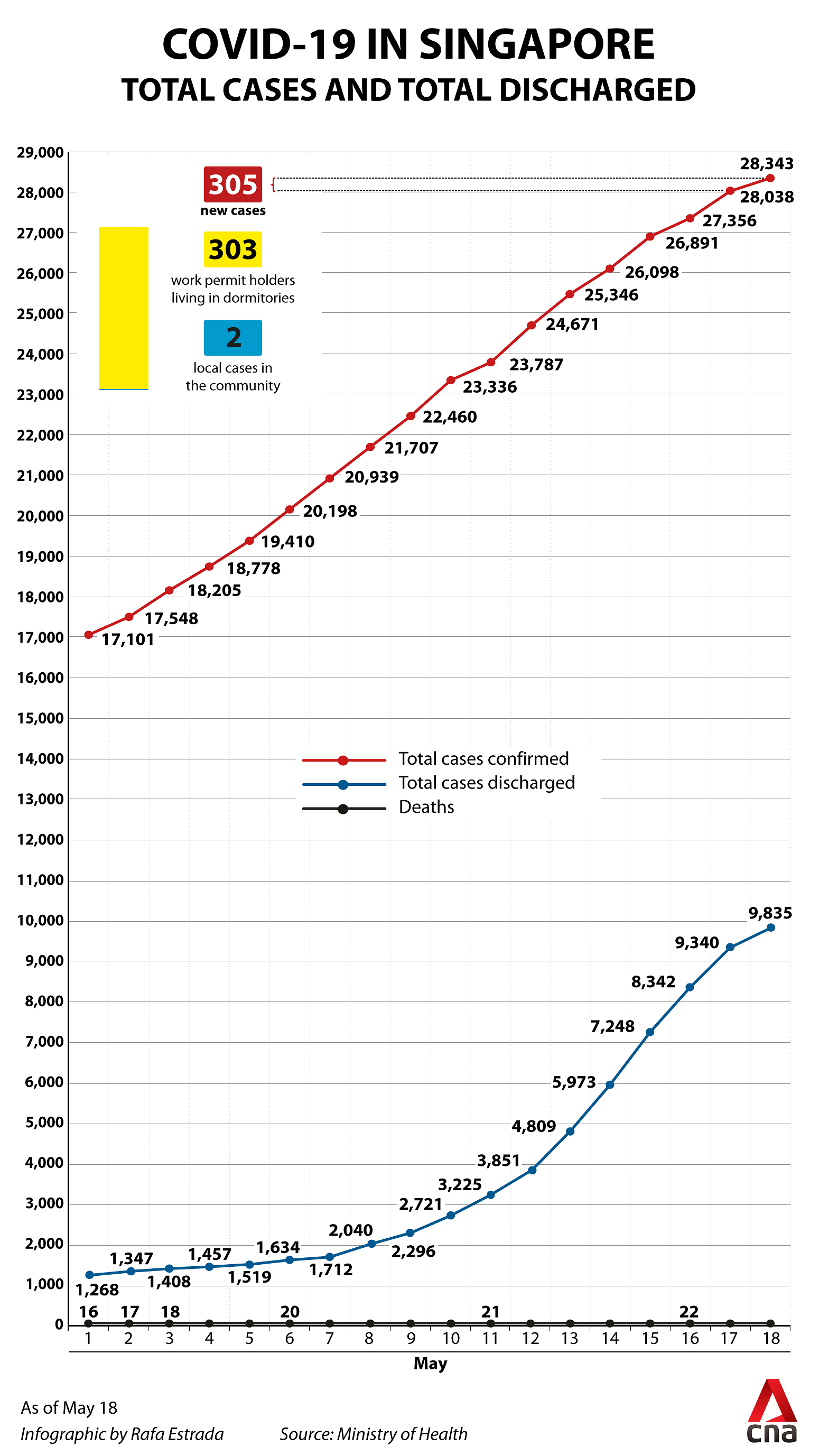
SINGAPORE: Singapore confirmed 305 new COVID-19 cases as of noon on Monday (May 18), including a woman who had gone to work at Bishan MRT station.
She was one of the two Singaporean cases reported on Monday.
The 58-year-old woman is an unlinked case, said the Ministry of Health (MOH) said in its daily update. She had gone to work at the MRT station after the onset of symptoms on May 14, and tested positive for the coronavirus on May 17.
The other Singaporean patient, a 50-year-old man, went to work at 1020 Tai Seng Avenue. He is linked to the cluster there, which now has 125 confirmed cases.
Singapore now has a total of 28,343 COVID-19 cases.
Of the 305 new cases reported on Monday, 303 patients are work permit holders residing in foreign worker dormitories.
“The lower number of cases today is partly due to fewer tests being processed as one testing laboratory is reviewing its processes following an earlier apparatus calibration issue, and will need time to ramp up its testing capacity,” said MOH.
The majority of the new cases, or 99 per cent of them, are linked to known clusters. The rest are pending contact tracing. MOH added that in the past week, it has uncovered links for 13 previously unlinked cases.
A total of 495 more patients have been discharged. In all, 9,835 have fully recovered from the infection and have been discharged from hospitals or community care facilities, said the ministry.
There are currently 1,036 confirmed cases who are still in hospital. Of these, most are stable or improving, and 12 are in critical condition in the intensive care unit. A total of 17,450 are isolated and cared for at community facilities.
Four new clusters have also been identified. They are at 2 Kampong Ampat, 43 Tuas View Close, 117 Tuas View Walk 1 and Woodlands Industrial Park E1.
Meanwhile, a cluster at ABC Hostel located at 3 Jalan Kubor has been closed after no new cases were linked to it for the past two incubation periods.
With two weeks left before “circuit breaker” measures are expected to be lifted, the number of new cases in the community has decreased to an average of three per day in the last week, from seven per day in the week before.
The number of unlinked cases in the community has remained at an average of two per day in the past two weeks.
Over the weekend, Singapore recorded its 22nd death linked to the virus – a 67-year-old Singaporean man with pre-existing conditions.
SINGAPORE – Singapore should be fully prepared that many of the current restrictions and circuit breaker measures in place will continue for some time even after June 1, said National Development Minister Lawrence Wong.
This is to keep people and their loved ones safe after the circuit breaker ends, he said in a Facebook post on Sunday (May 17).
“It won’t simply be a return to life before the circuit breaker,” he said, noting the Government will adopt a careful and calibrated approach as the country resumes normal activities at work, schools, and in social settings.
The Government is preparing for the next phase and considering what activities can resume in a safe manner, said the minister, who co-chairs the multi-ministry task force tackling the Covid-19 outbreak.
“A controlled and phased exit from the circuit breaker will require patience and discipline from all of us,” he said.
“We must all do our part to control the spread of the virus and ensure that it does not flare up again. Otherwise all our efforts and sacrifices during this circuit breaker period would have been made in vain.”