A part-time cleaner who assaulted his domestic helper with a walking stick was ordered to undergo 24 months of mandatory psychiatric treatment on Thursday (Aug 11).
Source link
Man who assaulted maid ordered to undergo psychiatric treatment for depression
Pokemon Go players cry foul over 'spoofers'
The Pokemon Go craze landed in Singapore just five days ago, but some new players have had their experiences soured by others who gained an unfair advantage by getting to the game earlier using third-party methods.
The problem persisted through the week, as new players found themselves matched against higher-level players, which disrupted their gameplay and left them unable to earn in-game currency.
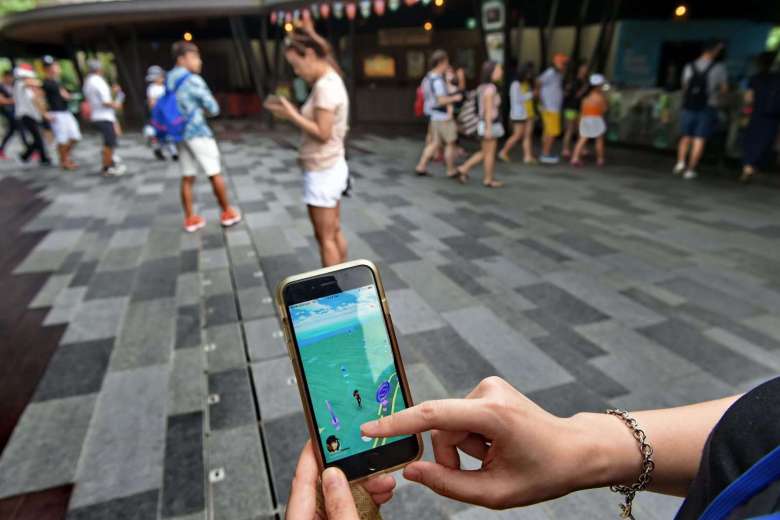
Players of the mobile app have to capture virtual creatures known as Pokemon by walking to different locations where various types will spawn.
But there is also a combat element in the game whereby players battle with each other to gain control of various “Gyms” located on the island, usually at landmarks or points of interest like the Singapore Zoo or Mount Faber.
Gotta catch ’em all: Pokemon Go now in Singapore
Click on thumbnail to view photos. Source:
The Straits Times, Facebook / RSAF, Facebook/SPF, AsiaOne, Capitaland






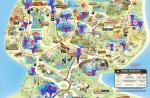

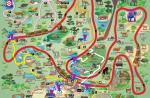



























Captured Pokemon have varying degrees of Combat Power (CP) for the battles that range from 10 to over 3,000.
The higher the player’s level – which means the more time spent playing the game – the higher the chances of catching a Pokemon with a high CP. More playtime also contributes to players earning more items that can be used to increase their Pokemon’s CP.
Yet within hours of the game’s release last Saturday, many Gyms were dominated by Pokemon with CP that was physically impossible for new players.
“It’s annoying to start the game and immediately be on an uneven playing field,” said student Gavin Chen, 19. “They are so far ahead, we can’t compete with them.”
Players could gain early access to the game – which was first launched on July 6 in Australia, New Zealand and the United States – by installing GPS apps on their phones.
These apps tricked the game’s servers into thinking the player was geographically located somewhere else. Using this method of “spoofing” the game, they could get around the region-lock imposed by game developer Niantic.
Thus, some players were able to catch Pokemon from the comfort of their couch as they could “walk” around by using the app to manipulate their GPS.
This gave them an unfair advantage over those who waited for the game’s official launch – one of the biggest complaints about the game’s late release here.
Pokemon Go: A beginner’s guide
Click on thumbnail to view photos. Source:
The New Paper













However, not all high-level players controlling Gyms are “spoofers”. Some say they played the game legitimately while overseas.
There were calls by players to report the spoofers to Niantic by taking a screenshot of their impossibly high levels and attaching it to an online report form, which can result in such accounts being banned.
One former spoofer, Mr Arron Lee, 22, said he did so as he was eager to play the game early.
“It felt unfair to wait while players in other countries could play well ahead of us, so I gave up waiting and spoofed,” said the full-time national serviceman.
But ever since the game’s official release here, Mr Lee has shelved his GPS app for walking shoes, to play the game as it was intended.
In an unusual twist, Mr Lee said he and some other players who used to spoof are now siding with new players to reclaim Gyms. They use their high-level Pokemon to defeat other spoofers in Gyms. But instead of claiming that Gym for themselves, they leave it empty for players at a lower level to gain control and thus earn in-game currency.
“We want to make a small difference to the gaming community to be fair to new players,” said Mr Lee.

This article was first published on Aug 11, 2016.
Get a copy of The Straits Times or go to straitstimes.com for more stories.
Image:
Publication Date:
Thursday, August 11, 2016 – 15:00
Keywords:
Send to mobile app:
Source:
Story Type:
Others
Three cheers for Rio, it's a good job so far

Forget swimming, athletics or gymnastics, the strongest competition for any medals at this Rio Olympics will be for cribbing.
It is not just the swimmers who have been wagging disapproving fingers – albeit at each other – as the city, and Brazil, have come under heavy fire for what some commentators have called, the “worst Games in history”.
But that would be grossly unjust.
Every major multi-sports Games come with their share of problems.
I’ve been to three and none were perfect.
But even as there were issues with infrastructure (2009 Vientiane SEA Games), security (2010 New Delhi Commonwealth Games) and transport (2011 Jakarta/Palembang SEA Games), these problems were also mostly exaggerated.
Read also: 5 quirky things you might have missed during Week 1 of the Rio Olympics
Click on thumbnail to view photos. Source:
Reuters, AFP






Granted, the spotlight on the Rio Games, with an expected five billion television audience, is more intense and with a reported US$12 billion (S$16 billion) budget, expectations are naturally inflated.
Some of the complaints are justified.
There are 85,000 security personnel – an Olympic record – deployed but reports of stray gunfire, at the equestrian media tent and at a bus transporting journalists, plus a bomb scare at cycling, are disconcerting.
Other fears however, are looking disproportionate.
The threat of Zika is largely minimal given the mosquitoes have mostly disappeared due to the cold temperatures – nights here do get chilly in winter (below 20 deg C) – and I’ve yet to see anyone use the bug spray given in the media kit.
Aside from the surreal sight of a green diving pool at the Maria Lenk Aquatics Centre, many sailors have played down the scale of water pollution at Guanabara Bay.
Rowing at Lagoa Rodrigo de Freitas has been affected but due to adverse weather conditions and there has been no other major disruption after six full days of competition.
Complaints about long queues to board buses and enter stadiums or overcooked burgers and a lack of chilli sauce – the endless gripe of the spectator in front of me as we queued for a hot dog at the rowing venue – really do belong under the hashtag of First World problems.
The apartments at the Games Village may be spartan but as Venezuela’s Olympic fencing champion Ruben Limardo told me, these are the Olympics, not a holiday.
Read also: Things you didn’t know about the Rio 2016 Olympics
Click on thumbnail to view photos. Source:
AFP, Reuters, The Straits Times











6.jpg)















Hosting the Olympics is an incredibly complex endeavour.
Even the 2014 Sochi Winter Games in Russia were beset by infrastructure issues in the days leading up to it.
Rio may have organised the 2007 Pan American Games but that involved about half of the 10,500 athletes from 206 countries and territories who are here.
Throw in 25,000 journalists and the scale becomes even more substantial.
While Brazil staged the 2014 World Cup, that was a single sport in a country, and population, that is football-crazy.
The stadiums, the best practices, the passion, were already mostly in place.
Many of the venues for these Olympics are in purpose-built arenas and the facilities are world class; both the Olympic Shooting Centre and the aquatics facility are wonderful amphitheatres for sport and while enthusiasm from the locals is a slow burner, it is building up nicely.
These were never going to be the perfect Games but South America’s first Olympics are set in a bustling city accompanied by some of nature’s most spectacular scenery.
It is a worthy backdrop for the planet’s finest athletes and it is time to show them, and Rio, some love.
Rio Olympics 2016: Opening Ceremony Highlights
Click on thumbnail to view photos. Source:
Reuters, AFP































This article was first published on August 11, 2016.
Get a copy of The Straits Times or go to straitstimes.com for more stories.
Image:
Category:
Publication Date:
Thursday, August 11, 2016 – 14:00
Keywords:
Send to mobile app:
Source:
Story Type:
Others
'Otterly' cute National Day gift on YouTube
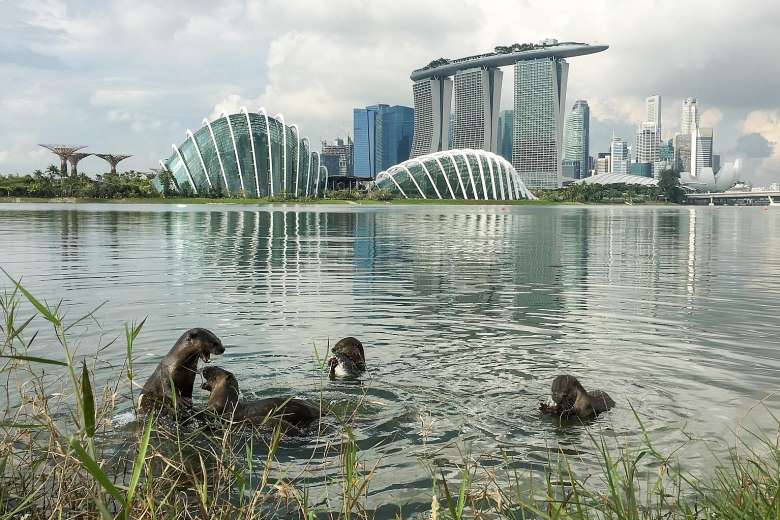
Can’t get enough of cute animals on the Internet? A new YouTube video to commemorate National Day has provided a further glimpse into Singapore’s wild otter population in their natural element.
Produced by otter watcher Jeffery Teo, 45, the five-minute clip combines footage taken by fellow enthusiasts over the past year.
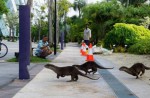
It opens with Bishan’s now famous otter family – fondly named the Bishan 10 – gambolling about in the Bishan-Ang Mo Kio Park and swimming in its river.
It also captures other less well- known otter families in Tanah Merah, Serangoon and Pulau Ubin. In a poll earlier this week, The Straits Times’ readers chose Bishan’s otter family as their pick for the 51st object that best represents Singapore in its 51st year.
Said Mr Teo, a senior director in the financial service sector: “I couldn’t be more delighted that the Bishan 10 has received so much recognition ever since they appeared on the public’s radar last year.
“It shows Singaporeans have truly learnt to embrace the wildlife living in our midst, and to appreciate nature more.”
Mr Teo, who spent three weekends putting together the video, said he hopes it will educate the public on the other otter families which call Singapore home. The otter population in Singapore is estimated to be about 50.
Mr Sean Yap, 24, an environmental biology student who frequents the Bishan-Ang Mo Kio Park and has seen three pups there, said: “Singapore prides itself on being a city in a garden, and the otters are a testament of the country’s ability to develop while preserving what is left of our native biodiversity.”
Otters in Singapore
Click on thumbnail to view photos. Source:
The Straits Times, NParks, facebook, Jeff Tan YouTube
































He sees the clip as a good opportunity to expose Singaporeans to the animals that they share the island with, and also the potential problems posed by them.
“While they may be cute, we have already seen the results of human familiarisation of wild mammals such as macaques and wild pigs, where increased feeding and interaction has led to human-wildlife conflict. This often leads to culling or some other drastic measure.”
There have been media reports of the otters eating fish, such as koi and tilapia, from homes and hotels. Owners and breeders of these fish have resorted to using measures such as electric fences to keep the mammals out.
But Mr N. Sivasothi, a senior lecturer with the Department of Biological Sciences at the National University of Singapore, said: “There is a lot of interest in otters’ ecological role as top predator now in rivers. They may be able to help reduce alien fish which may allow native fish recovery.
“Overall, Singaporeans are still very receptive to the otters and are enjoying this unique experience.”
This article was first published on Aug 11, 2016.
Get a copy of The Straits Times or go to straitstimes.com for more stories.
Image:
Publication Date:
Thursday, August 11, 2016 – 15:00
Send to mobile app:
Source:
Rotator Headline:
Animal lover produces video about S'pore's wild otters to commemorate National Day
Rotator Image:

Story Type:
Others
Joseph Schooling not fussed about missing 100m free final as he focuses on the big one
He was sixth fastest in the afternoon heats, obliterating his national record as he stormed into the semi-finals.
It was his first time in earnest battle at the 2016 Rio Games, and Joseph Schooling seemed to be in a real hurry to earn his spot in the final of the men’s 100 metres freestyle at the Olympic Aquatics Centre.
Some nine hours later, the 21-year-old Singapore swim star (left) finished last in the first semi-final (yesterday morning, Singapore time) and missed the opportunity to make history.
He clocked 48.70sec, well off the 48.27 from the heats and slower than his previous national standard of 48.58.
He failed to become the first Singapore man to take his spot in an Olympic swimming final.
It was a rare opportunity missed, but he was hardly flustered, only relaxed.
“It was an alright swim,” he said, surprisingly easily, when he stopped to talk to the Singapore press minutes later.
“I feel warmed up for the 100 fly now. I don’t train for this (100m freestyle) and it’s nice to be in the top-16.
“Now I’ll rest up and be ready.”
No one knows if he was actually disappointed, because Schooling simply doesn’t give anything away.
Grinning, he claimed he plunged into the pool and almost took a butterfly stroke.
This is an athlete in perfect sync with the moment, knowing which buttons to push as he approaches the biggest swim of his career.
He’s a contender in the 100m butterfly and he was not about to show any sign of weakness to rivals like American Michael Phelps, South African Chad le Clos and Hungarian Laszlo Cseh.
Instead, in the heat of battle, he simply hinted at how fast he could go when he actually trained for an event.
Click on thumbnail to view photos. Source:
AFP, Reuters, The Straits Times














PRELUDE
And for effect, he added: “It’s good that I got out there and had a taste of what it’s like swimming at night.
“Now I know the kind of atmosphere and what to expect.”
The sprint butterfly heats are scheduled here this afternoon (tomorrow morning, Singapore time) and Schooling said yesterday he was going to watch videos and just chill, until the moment arrives.
It will be his final act of the 2016 Olympics, it is what he has been training so hard for.
Teammate Quah Zheng Wen will start in Heat 3.
Hungary’s Cseh will go in Heat 4, South Africa’s le Clos in Heat 5.
Heat 6 will feature Phelps in Lane 4, and Schooling a close neighbour in Lane 5.
Quah’s qualifying time is listed as 52.25sec.
Only Cseh, le Clos, Phelps and Singapore’s fastest flier own qualifying times under 51 seconds, with Schooling ranked fourth.
Schooling, whose national record is 50.96, belongs in elite company, he knows it, it is why he is confident.
An American journalist asked him if he would watch the 200m butterfly final and he said, “Nah.”
Phelps was remarkable as he propelled himself to gold in the event, but Schooling already knows what lies ahead.
“My butterfly is looking smooth. I did one before coming here and clocked 51.4,” he revealed.
“Swimming here, in an atmosphere like this, with the likes of Michael, I believe I can go faster.”
History beckons, the stars will be out in force, the greatest will nudge his shoulder, and Schooling’s primed.
Read also: Schooling keeps the spirit up in Rio

This article was first published on Aug 11, 2016.
Get The New Paper for more stories.
Image:

Publication Date:
Thursday, August 11, 2016 – 14:00
Keywords:
Send to mobile app:
Source:
Story Type:
Others
How Pokemon GO has taken over our lives so far

Pokemon GO has been available in Singapore for a mere 5 days (4 full days, if you want to be exact), but it has already become an integral part of conversations on media and among Singaporeans.
Scrolling through my feeds on various social media these days is just an extension of the Pokemon GO craze, and even the most ‘un-gamer’ friends and acquaintances I have seem to be showing off their catches of the day.
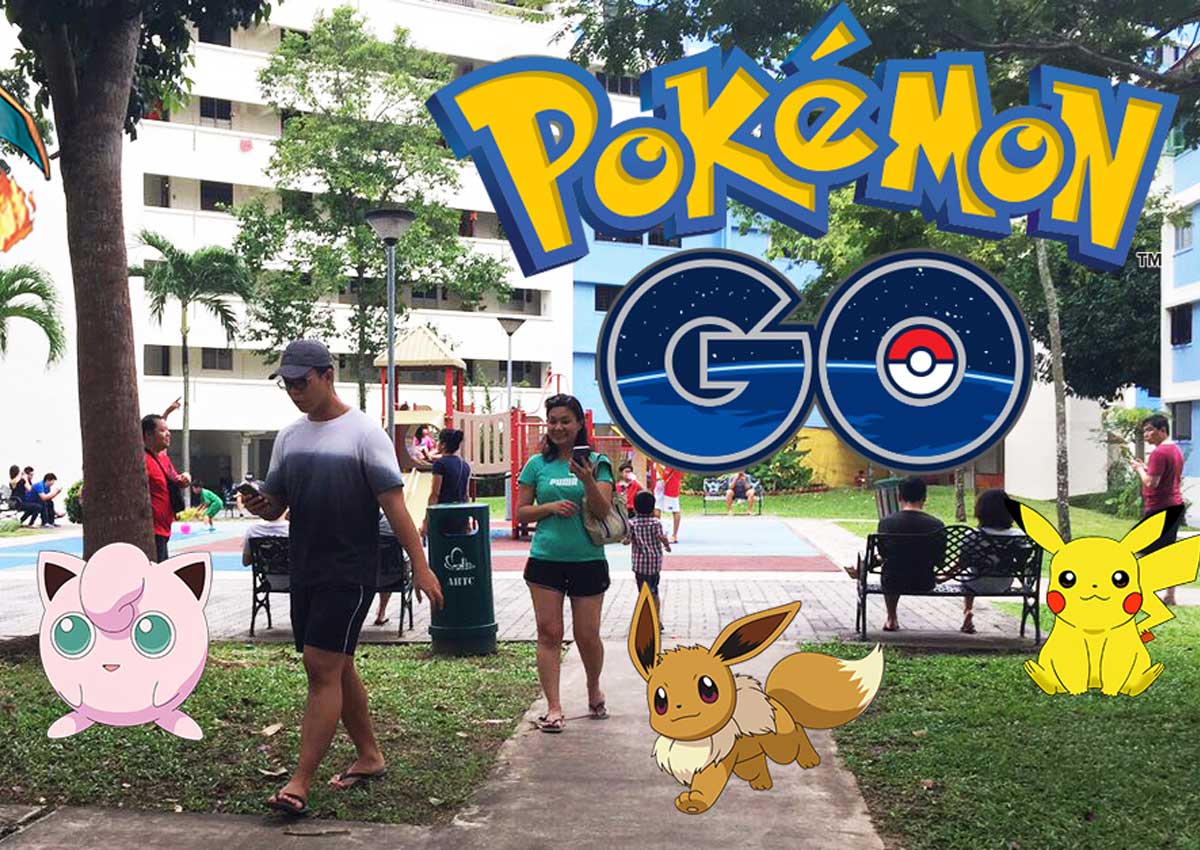
Over the weekend and National Day holiday, I was greeted by players hanging around at different corners of malls and playgrounds, all with one hand clutching to their phones, and their eyes stuck onto their screens.
Admittedly, I was one of these people too – I just happened to look up more.
Regardless, Singaporeans love their trends, and we are unabashed about queuing and travelling far and wide for them. From cheese tarts to limited edition clothing, FOMO (fear of missing out) is real here.
Here’s a look at what the phenomenon has brought onto Singapore so far.
Massive crowds everywhere
Previously, we published an article on hotspots that players can go to maximise their Poketrips. These were both a mix of outdoor and indoor locations, some of which had lures purposefully set to increase footfall.
Not only malls like ION Orchard, but even Resorts World Sentosa and Wildlife Reserves Singapore were setting lures and making their attractions even more attractive with promise of Pokemon and maps detailing where Stops and Gyms are:
Hopping onto the National Day holiday, Razer, popular local gaming device company, also organised a “PokeCrawl“, which brought participants along the main stretch of Orchard Road – well-known to be insanely Pokemon-populated.
With the strong following Razer has, the event was inevitably well-received, with CEO Min-Liang Tan proudly stating that the Crawl had attracted over 300 people:
In fact, the crowd was so massive that a participant said: “It was so crowded till we got chased away by the ion security staff, sigh”; to which Tan responded in his typical “rockstar” manner: “It’s not a Razer event unless too many people turn up and the security gets concerned! :D”
Pokemon GO group PokemonGo SG Hunt had also released lures at the National Stadium yesterday, inviting all players to participate and benefit from the event.
Not only as a business strategy, individuals who were generous (and also hungry) enough also purchased and set lures at locations in housing estates.
I remember being amazed at the crowds gathering at neighbourhood playgrounds and parks which are usually empty, save for a few young children and their caretakers.
What took the cake, though, was the turnout at Yishun Park:

With many players still lacking the full range of Pokemon available, and the desire to literally “be the very best”, there’s no sign that the crowds will be dying down soon.
Enterprising Businesses
The game has also brought up some of the most enterprising of Singaporeans, not only those setting lures at their retail outlets.
Just on Monday, we published an article about car rental and hire services popping up for hunting Pokemon.
Not only limited to those in the rental and hire business, even players themselves have been offering carpool services for rates at around $30 an hour so that they can cover as much ground as possible with like-minded companions.

Popular ride-hailing app Grab also hopped on for the ride, and released a Pokemon GO map of Singapore with both spawn points, nests and Gyms. They have also provided access discounts for rides to certain landmarks, as a means to make sure that their strategy also translates to more business.
Besides these services, businesses, especially those caught in Stops and Gyms, are also ramping up discounts for players in a bid to entice them to patronise the stores.
There’s actually a dire need to do so, because as The New Paper had reported on Monday, even though footfall at ION Orchard had increased due to the lures, many of these players still do not buy anything from the stores.
Said an employee at Topman, “They also go into the fitting rooms to just catch Pokemon, and after they finish, they leave.”
Accidents And Incidents
Fortunately, Singapore hasn’t had its share of Pokemon GO-related accidents (touch wood!), however, that doesn’t mean the experience has been without shocking discoveries.
On the morning of 7 August, the second day that the game was released, a player stumbled upon a dead body during his hunt at Woodlands Waterfront Park.
This isn’t the first time that a hunt led to a grisly discovery, with a player in Wyoming, USA, also stumbling across a body in a river and another group finding a body in a San Diego park.
Yesterday morning, The New Paper also reported on a driver’s apparent “swiping on gadget” bringing about what could potentially be Singapore’s very first Pokemon GO-related car accident.
According to an eye witness, the car was observed to be “starting and stopping abruptly and was moving slowly”, and the driver and 2 passengers were “taking out their electronic devices and making swiping actions on their devices”. The car behind them crashed into a curb when trying to overtake it.
Queenstown Stadium, which was just a minute’s drive from the accident’s location, is also a known PokeStop.
While the official cause of the accident has not been announced, the eye witness and a number of citizen detectives have instigated that it was due to Pokemon GO.
Taiwan, which got the app on the same day as us, has been reported to have fined about 350 Taiwanese motorists (mostly motorcyclists) for playing Pokemon GO while travelling on the road so far.
Perhaps the Singapore Traffic Police’s strict laws have been keeping such instances low in Singapore?
 Spoofers – Gotta Catch ‘Em All
Since its launch here, Pokemon GO has also brought out the ugly side of the game – the cheating, or, “spoofing”, that’s rampant at Gyms.
These spoofers usually possess Pokemon with high Combat Power (CP) and are incredibly high level in spite of the game just being released in Singapore.
As a player myself, I can vouch that getting to the next level and owning a Pokemon (either through catching one, or training/evolving one) doesn’t happen overnight, so there is definitely something fishy about domination of Gyms by level 30 players with Pokemon having CP in the thousands.
This issue has been brought up by local Pokemon GO players, which were frustrated that these spoofers are ruining the fun and hard work that goes into the game by having unfair advantages.
To take matters into their own hands, players have banded up to report these spoofers to Niantic:
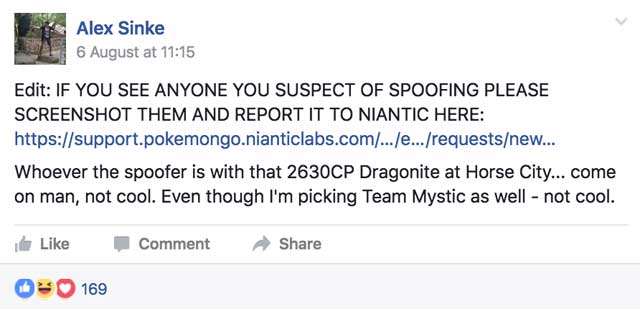
Being competitive is one thing, but cheating is another.
“Being the very best” should not translate to having unfair advantages, but instead, dedication and skill should be the deciding factors.
One People, One Nation, One Love For Pokemon GO
Pokemon GO has probably been more effective than most nationwide campaigns in uniting Singaporeans for a common cause.
Gotta catch ’em all: Pokemon Go now in Singapore
Click on thumbnail to view photos. Source:
The Straits Times, Facebook / RSAF, Facebook/SPF, AsiaOne, Capitaland
Not only has it brought Singaporeans out of their houses and to populated places, but the community (especially online) and friendships that have been forged through love of the game is not to be underestimated.
Sure, at its core, Pokemon GO is just a game, but it’s heartening to see Singaporeans coming forward to offer tips and tricks, and sharing their lures with absolute strangers on groups such as the 44,473-strong (and growing) Pokemon GO Singapore.
Correct me if I’m wrong, but Pokemon GO could be one of the best National Day presents this year.
This article was first published on Aug 10, 2016.
Vulcan Post is all about living life with a digital edge, up and coming startups, and people who inspire conversations.
Visit Vulcan Post for more stories.
Pokemon Go: A beginner’s guide
Click on thumbnail to view photos. Source:
The New Paper
Image:
Publication Date:
Thursday, August 11, 2016 – 12:25
Keywords:
Send to mobile app:
Source:
Rotator Headline:
The APokelypse – How Pokemon GO has taken over our lives so far
Rotator Image:
Story Type:
Others
Water in pool turned green because of drop in alkalinity: Rio organisers
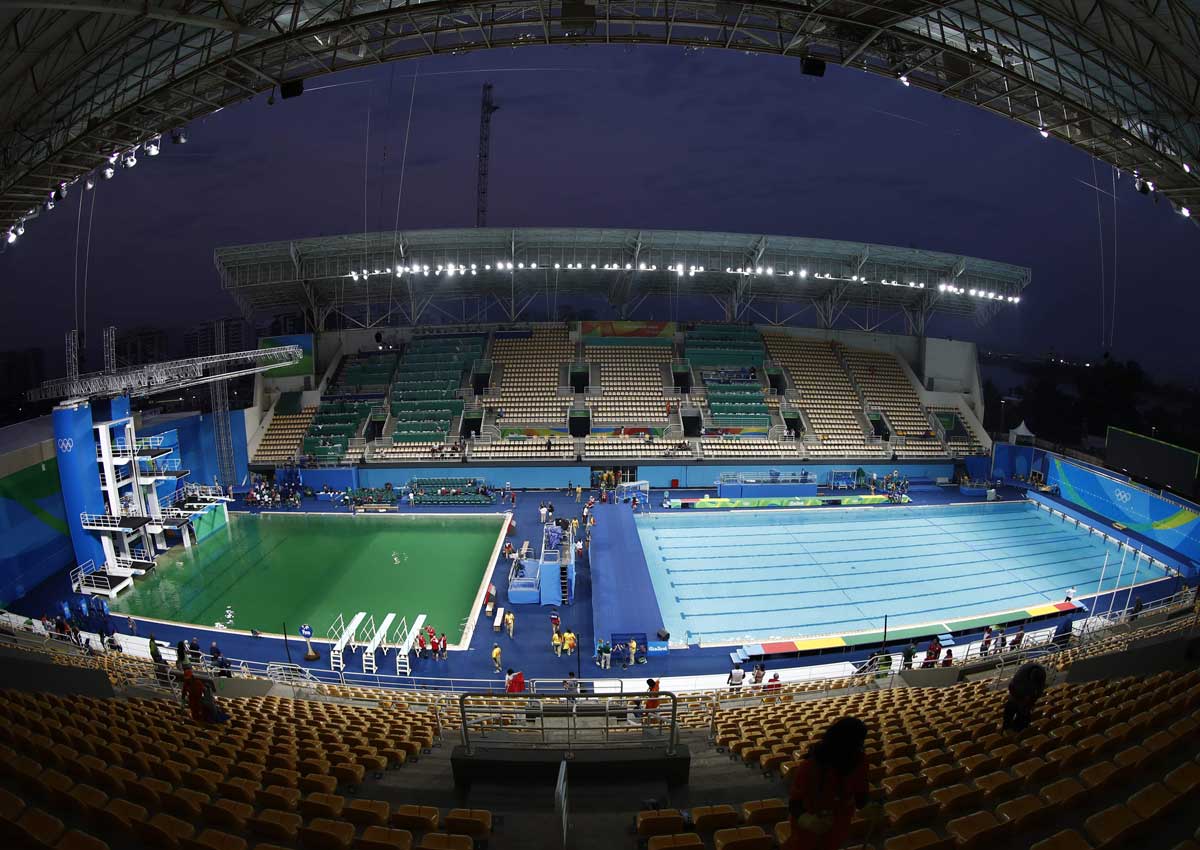
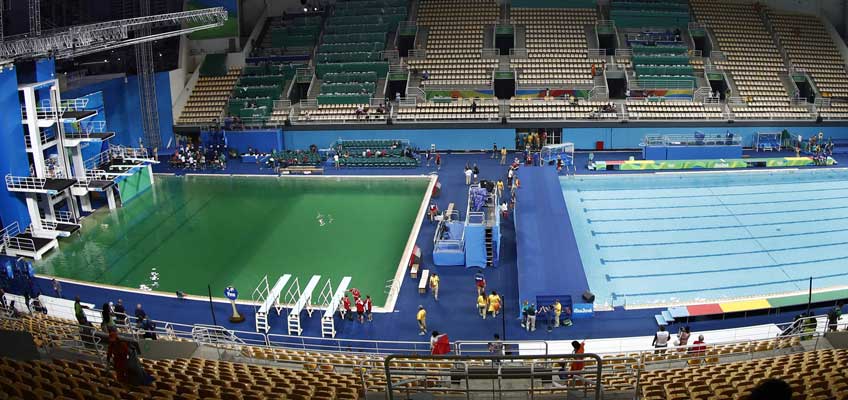
RIO DE JANEIRO – The Rio Olympics diving pool will be back to its blue colour later on Wednesday (Thursday, Aug 11, Singapore time), Games organisers assured, blaming a drop in alkalinity levels for an uninviting green hue during competition on Tuesday.
The water in the pool was bright green on Tuesday, baffling competitors in the women’s 10 metre synchronised event, who said they could not see their partner underwater.
The mysterious shade of the water, which contrasted sharply against the blue of the water polo pool beside it, was also clearly visible on television to millions of viewers around the world, many of whom joked about algae and dye on social media.
The international swimming federation (FINA) blamed a lack of chemicals in the system.
“FINA can confirm that the reason for the unusual water colour… is that the water tanks ran out some of the chemicals used in the water treatment process,” it said in a statement.
“As a result, the pH level of the water was outside the usual range, causing the discolouration.”
Click on thumbnail to view photos. Source:
Reuters, AFP
Organisers said tests at the Maria Lenk Aquatic Centre’s diving pool were conducted regularly and the quality of the water was no threat to the divers’ health.
“There was a sudden decrease of alkalinity,” said Games spokesman Mario Andrada. “We probably failed to note that with more athletes the water could be affected.”
The water in the pool gradually turning green during the waterpolo game between Italy and Montenegro on Wednesday. Photo: New York Times
He assured divers the water posed no health risk and despite the rain slowing down the process of turning the water blue, this would happen some time later on Wednesday.
“There is absolutely no risk to anybody. The independent group (charged with checking the water quality) confirmed the measures to bring the pool back to its normal colour,” Andrada said.
“The rain affected a bit the changes in the state of the water. It should go back to classic blue colour during the day.”
Athletes were unaffected by the change in colour but Mitch Geller, chief technical officer of Diving Canada said the team had brought in a pool expert to help.
“He arrived this morning from Canada, he’s assisting with the hosting group to try to get it back under control,” Geller told reporters.
“We don’t think it is dangerous or we wouldn’t have our athletes in the water. But we are going to monitor to see if anyone is getting red eyes here, if their ears start hurting, we’ll be dumping a whole lot of anti-biotics into them.”
The problem comes on top of worries over dangerous levels of pollution in Rio’s Guanabara Bay and concerns that floating garbage could damage or slow sailors.
Organisers are also struggling with major transportation, ticketing and security issues in the first five days of the competitions.
Click on thumbnail to view photos. Source:
AFP, Reuters, The Straits Times














Image:
Publication Date:
Thursday, August 11, 2016 – 12:42
Keywords:
Send to mobile app:
Source:
Rotator Headline:
Olympics pool turned green due to drop in alkalinity: Organisers
Rotator Image:
Story Type:
Others
AsiaOne on air: Dance to house, hip hop or Brazilian music at these 5 venues this weekend

It’s going to be a weekend full of dance with our Party Girl as there are plenty of options especially for those into house, dub step and hip hop music.
Friday features Rewind at kyo with local DJs Ramesh K and Kenneth F.
Cover is free before midnight if you RSVP, if not it’s $28 with two drinks.
Over at Canvas on Saturday, Icicle who is a DJ from UK (not Iceland), will be on decks playing dub step and some electronica.
Entry is $30 on the door with a drink and dress code is “come as you are”.
Also on Saturday, over at Altimate, DJ Adam Sky is back for his monthly residency here.
Expect a mish-mash of house and hip hop music. You can also RSVP for free entry and get on the guestlist for this event.
It says “dress code and door rules apply” which usually means dress up nice and get on the guestlist for easier entry.
Another one on Saturday is over at Blu Jaz Cafe.
For hip hop heads like me, The Fever is back for some fresh beats and R’n’B tunes.
Cover is $10 from 10pm, free before.
And for those watching the Olympics and getting some Brazilian feels, head to Hard Rock Cafe for some samba and capoeira performances.
It’s on Saturday too and cover is $27.
If you don’t know, now you know.
To catch the Party Girl, listen to her on OneFM‘s #1 Breakfast Show with Glenn Ong and The Flying Dutchman on Thursday mornings.
Find out what she gets up to on AsiaOne’s social media! Follow @sphasiaone on Instagram, Facebook and Twitter, and @RasbiSG on Snapchat.
spanaech@sph.com.sg
Image:

Publication Date:
Thursday, August 11, 2016 – 15:11
Send to mobile app:
Source:
Rotator Headline:
Dance to house, hip hop or Brazillian music at these 5 venues this weekend
Rotator Image:

Video Media:
Other Video Media
Story Type:
Original Story
Pokemon gone wrong? Players risk lives by dashing across road
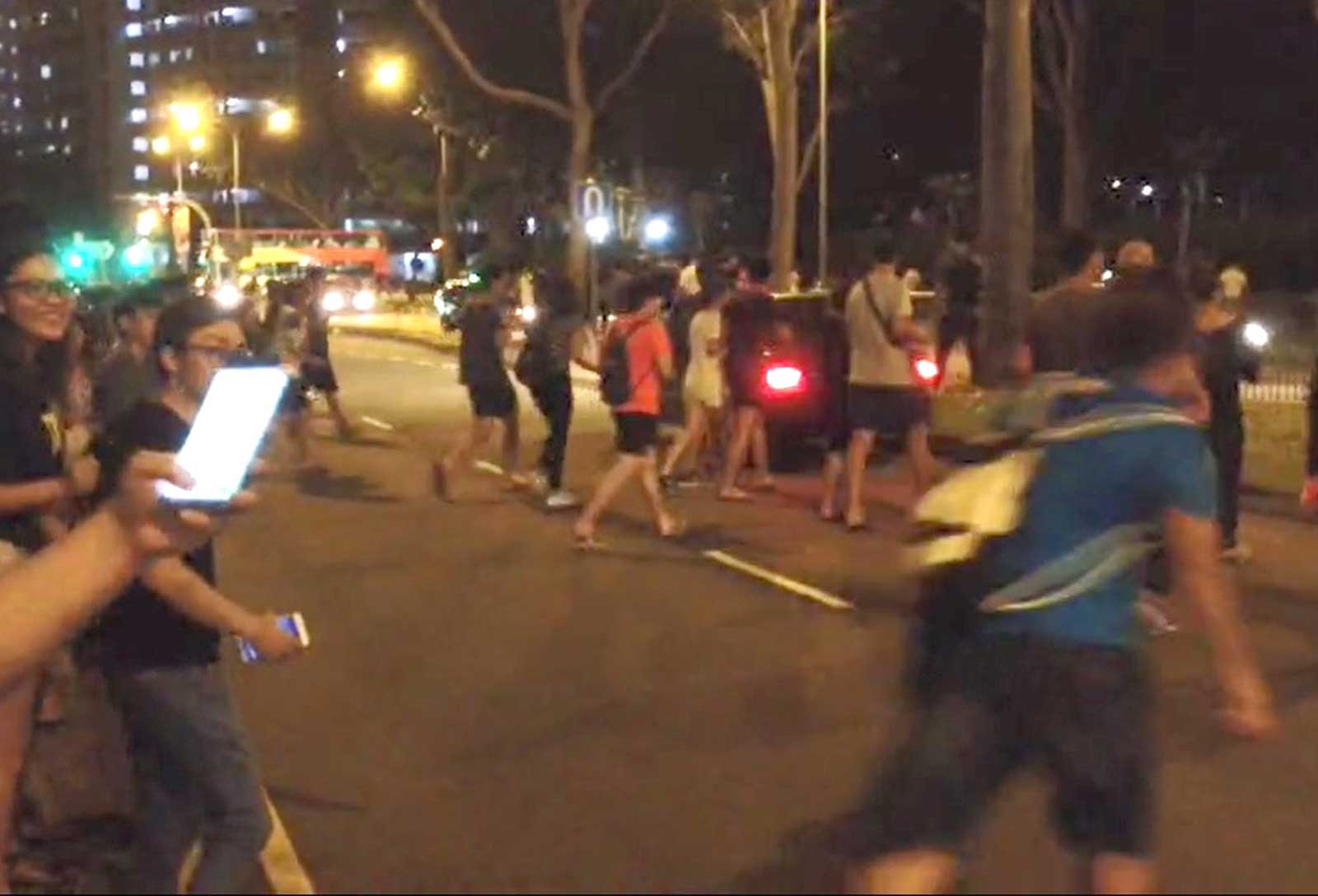
It looked like a festive gathering, with families and couples sitting around and chatting while glancing at their mobile phones.
Then they suddenly sprang to their feet and most of them dashed across the road, forcing some vehicles to brake to avoid hitting them.
The reason? A rare and powerful Pokemon called Snorlax had just been spotted.
Gotta catch ’em all: Pokemon Go now in Singapore
Click on thumbnail to view photos. Source:
The Straits Times, Facebook / RSAF, Facebook/SPF, AsiaOne, Capitaland
This was the chaotic scene near Block 401, Hougang Avenue 10, at 9.25pm yesterday as scores of Pokemon Go players risked their lives in their haste to try to catch a prized Pokemon.
As they left the amphitheatre near Block 401 to head to Punggol Park, where the Snorlax had been seen, many of them ran across Hougang Avenue 8 without checking for oncoming traffic first.
SCARY
Ms Jasmine Wee, 30, a property agent who was at the scene, told The New Paper: “It was quite scary how people just dashed across the road with no regard for their own and other people’s safety.
“Cars had to brake suddenly to avoid knocking them down. It was crazy.”
A player, student Edwin Lim, 24, told TNP: “One group started running (towards Punggol Park), so everyone just followed.
“It was only along the way that I heard it was a Snorlax. When my friends and I got there, it was still there. Some of us caught it in one try, but some missed it.”
Hundreds of players had gathered at the amphitheatre daily since Saturday when Pokemon Go was launched in Singapore because four PokeStops equipped with lure modules are located there.
Mr Saiful Rizan, 26, a warehouse assistant who lives at Block 414, about 50m from the amphitheatre, said: “The crowd is just amazing. I’ve been living here since 1999 and I have never seen such a huge crowd at 1am.”
The crowd grew as the night progressed, with one resident estimating that there were about 400 people at 8pm.
The resident, who wanted to be known only as Mr Kwek, 22, said the area was so packed, he had difficulty finding his sister.
“She was playing Pokemon Go, and it took me quite a while before I could spot her,” he said.
He also said he had to wait to get a parking space in the carpark near his block, which was unusual.
“I saw cars queueing up just to get a parking lot at around 8pm.”
Residents also complained about the rubbish left behind by the players.
Ms Irene Lim, 55, a resident of Block 415, said: “It’s usually dirty after the gatherings. But there was this secondary schoolgirl picking up trash at about 5pm on Monday.”
Another resident at Block 415, who wanted to be known as Ms Loga, said: “I was shocked when I saw this number of people. It’s quite interesting, but there were lots of rubbish the morning after.”
Pokemon Go fever
Click on thumbnail to view photos. Source:
Reuters, AFP
























































Residents said the crowds managed to keep noise to a minimum.
Mr Saiful, who lives on the second storey of Block 414, said: “The only time people shouted was when a rare Pokemon appeared.”
It was good news for shops in the area as sales at nearby businesses have jumped as a result of these daily Pokemon Go gatherings.
Ms Tan Meng Kee, 57, who works at KTM 11 Supermart, which is next to the amphitheatre, told TNP its sales have increased by 20 per cent to 30 per cent since Saturday.
“We now close the shop at 2am instead of the usual 11pm,” she added.
The 7-Eleven shop next door has also seen its sales double since Saturday.
Yishun Park, which boasts a Pokemon Go gym and four PokeStops, was also teeming with players at 4.30pm yesterday.
There were also concerns about road safety there.
A 36-year-old resident, who wanted to be known only as Mr Hairul, said: “I was just driving by the park and people were not looking at the traffic lights when they crossed the road.”
Another resident, Mr Peter Wang, 50, who was cycling with his two sons, said: “It can be quite dangerous when some of them play their games while riding scooters.”
Pokemon players
Fancy adding a Dragonite to your collection on Pokemon Go without the trouble of evolving a Dratini?
Now you can pay someone to do it for you, or just buy one online.
Some enterprising gamers see the launch of Pokemon Go in Singapore last Saturday as an opportunity to make money by offering Pokemon-related services.
Mr Darrell Theseira, 21, is one of them.
He told The New Paper that he went on a 24-hour spree playing Pokemon Go with his friends after the game was released here.
The group of five travelled all over Singapore to catch Pokemon, visiting popular landmarks such as Orchard Road, Mount Faber, Changi Airport, Punggol Waterway and Sentosa.
SPOOFERS
During his hunt for Pokemon, Mr Theseira noticed that a good number of gyms in Singapore had been taken over by spoofers.
Spoofers are those who use other means such as apps to hide their GPS location so they could play the game before its Singapore launch. Their head start of about a month means they have acquired or grown stronger Pokemon.
Mr Theseira, a Nanyang Polytechnic graduate waiting to serve his national service, said: “Spoofers have an unfair advantage, and new players are unable to fight at gyms because spoofers store their strongest Pokemon there.”
He is offering to help beginners by catching rare and strong Pokemon for them – for $35 an hour.
Mr Theseira declined to reveal any details about his customers.
But he claimed he has received 40 requests since listing his services on marketplace application Carousell three days ago.
“I just want to help the community grow faster,” he said.
Pokemon trainers-for-hire have made headlines in the US, where Pokemon Go has been available since July 6.
Ms Ivy St Ive, editor-in-chief of a Brooklyn-based magazine, advertised her services as a Pokemon trainer for US$20 (S$27) an hour on Craigslist, the New York Observer reported last month.
This is just one of many Pokemon-related services.
Here, there are countless listings on Carousell of people offering car rentals and chauffeur services, and offering to level up your Pokemon Go account.
A single rare Pokemon can cost $3 to $20, and paying someone to level up your account to level 30 can knock you back between $30 and $50.
You can even buy a Pokemon Go account filled with rare and powerful Pokemon for $25 to $80.
Most of the time, these services are not done legitimately – by travelling around physically to catch Pokemon – but through hacks, spoofing, and third-party websites, which is against developer Niantic’s terms of usage.
For example, there are websites that can show you the exact locations of specific Pokemon around the world.
A seller on Carousell, who declined to be named, told TNP: “It’s not legitimate, but the risk of getting banned is maybe less than 1 per cent.”
Pokemon Go: A beginner’s guide
Click on thumbnail to view photos. Source:
The New Paper
Glossary
Poke Balls: Used to catch wild Pokemon. As players level up, they can get stronger balls.
PokeStops: Real world locations where you can get Poke Balls and other items.
Gyms: Teams fight for control over these real world locations.
Lure Modules: Attach them to a PokeStop to lure wild Pokemon to that area. They benefit everyone around the PokeStop.
Incense: To lure wild Pokemon to your location for 30 minutes. This benefits only the player.
Combat Power (CP): Measurement of a Pokemon’s attack strength that affects how they perform in battle.
Eggs: Pokemon hatch from them after the required walking distance is fulfilled. The player does not know what type of Pokemon is in the egg.
Lucky Eggs: Activate them to double experience points for 30 minutes.
Egg Incubator: A device required to hatch the egg.
Candy: Acquired by capturing Pokemon, hatching eggs and transferring Pokemon to the Professor. They are used to power-up and evolve Pokemon.
Stardust: Acquired by capturing Pokemon and hatching Eggs, needed to power-up a Pokemon.
Razz Berries: Feeding Razz Berries to wild Pokemon allows players to catch them more easily.
Potions: Used to restore a Pokemon’s health.
PokeCoins: In-game currency purchased using real money to buy items such as Poke Balls or Lure Modules.
This article was first published on Aug 11, 2016.
Get The New Paper for more stories.
Image:
Publication Date:
Thursday, August 11, 2016 – 14:00
Keywords:
Send to mobile app:
Source:
Story Type:
Others
Malaysia Airlines: Fr $114 all-in return Fares to over 50 Destinations from 10 – 24 Aug 2016

MALAYSIA AIRLINES: Fr $114 all-in return fares to over 50 destinations till 24 Aug
Malaysia Airlines: Fr $114 all-in return Fares to over 50 Destinations from 10 – 24 Aug 2016
Travel to over 50 destinations from just $114 all-in with Malaysia Airlines latest promotion now till 24 August. Valid for travel till 31 Jan 2017


