A 22-year-old victim was nearly cheated out of S$8,500, but the scam attempt was foiled by staff of Zhongguo Remittance.
Source link
Remittance company foils 3 scam attempts
Machine churns out 'lucky' lottery numbers at Maxwell food centre
To the Chinese here, there are two types of ghosts that emerge during the 7th lunar month:
1) The so-called ‘hungry ghosts’ surfacing from the underworld to prowl for food.
2) The ‘gambling ghosts’ or habitual human punters who are on a heightened look out for lucky numbers.
When the ‘Hungry Ghost’ month begins, celebration organisers would display scribbled lucky numbers at altar urns after picking the numbers at random from folded pieces of paper following a prayer.
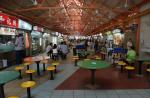
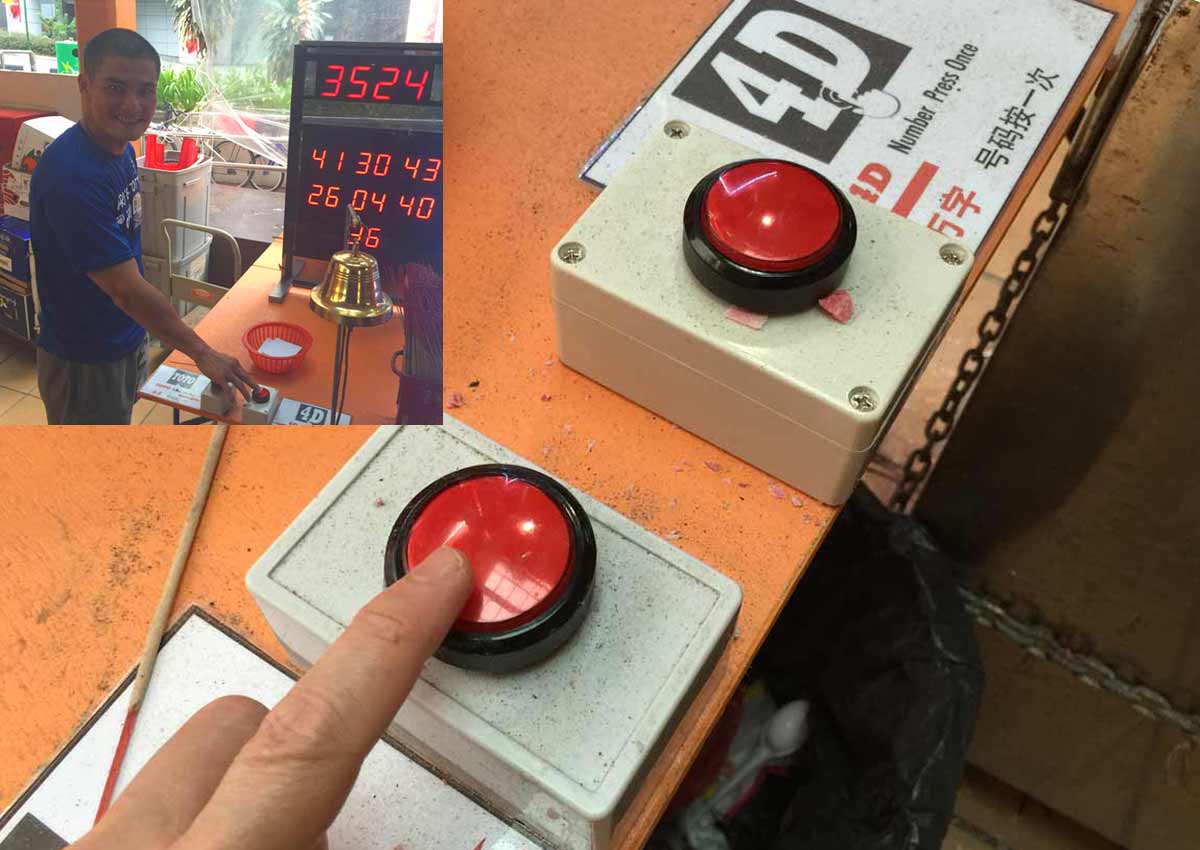
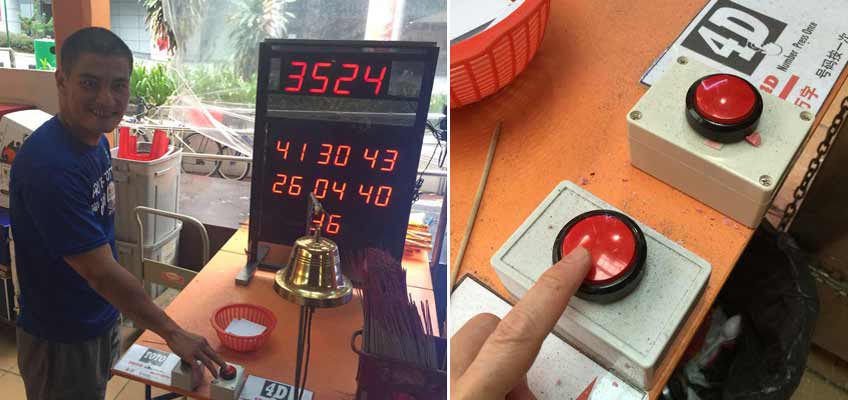
For the 7th month only, there is even a high-tech machine at Maxwell Road food centre that selects lucky numbers for you.
All you have to do is hit the buttons to get 4D numbers and a series of Toto numbers.
It’s up to you whether you want to pray to the Goddess of Mercy before you press the button.
Machine at food centre offers quick pick of ‘lucky’ numbers
Click on thumbnail to view photos. Source:
Chen Jingwen, The Straits Times









The hawker committee in charge of 7th month celebrations at the popular food centre had the machine custom-made about seven years ago, said Mr Ng Kok Hua who runs China Street Fritters stall.
“It was to add interest to our 7th month celebrations apart from having the getai and dinner,” said the stallholder who sells Hokkien-style ngoh hiang rolls.
“During lunch time, you can see more people having a go at the machine. We also adjusted the machine to include number 49 when the Toto format was changed in 2014,” he added.
So has anyone struck the lottery with the Maxwell quick pick?
Mr Ng believes there were winners, judging from the discovery of 50 dollar notes stuffed into the donation box for the 7th month activity fund at the altar area.
“The committee noted this when the box was opened. Usually the Chinese punters would return to give thanks by donating some of their winnings. But they won’t openly reveal that they have won,” he said.
But now, it’s the stallholders themselves who are in dire need of more luck.
The closing of the centre’s entrances at South Bridge Road for the construction of the Thomson-East Coast line has affected their business by about 20 to 50 per cent, reported The Straits Times in December last year.
The hoarding has given the impression to tourists that the food centre is no longer there. Customers coming from South Bridge Road have to walk around the construction site to Maxwell Road to get to the food centre.
The stall-holders also hope the Urban Redevelopment Authority would extend more parking facilities to the public at its nearby URA Centre after office hours and on weekends.
The hawker centre houses about 100 stalls, including the famous Tian Tian Chicken Rice. But some stalls have closed shop in recent months, according to stall holders there.
chenj@sph.com.sg
Image:
Publication Date:
Friday, August 12, 2016 – 13:11
Keywords:
Send to mobile app:
Source:
Rotator Image:
Story Type:
Original Story
Tax deductible donations up by more than 24% in 2015
Tax-deductible donations hit S$1.4 billion in 2015, according to the annual report by the Office of the Commissioner of Charities (COC) released on Friday (Aug 12).
Source link
If athletes want to be understood, they have to talk

On lazy Sundays in September when my friends ask me about Rio, I might start with Jennifer Abel and Pamela Ware.
Early 20s. Canadians. Classy.
They lost diving bronze in the 3m synchronised springboard by .87 of a point and Abel cried and Ware was distraught and this was sport at the Olympics: Just another heartbreak in public.
Except they then composed themselves, marched to the mixed zone and talked.
To their press, to The Straits Times, to whoever asked, about mistakes they made and chances lost.
Ernest Hemingway should have been there: He’s the one who described guts as “grace under pressure”.
Or maybe I’ll tell my pals about the Russian, Yulia Efimova.
Gunning for glory
Click on thumbnail to view photos. Source:
The Straits Times, The New Paper, Zaobao, SINGSOC, Singapore Sailing Federation





















People called her a cheat, she got booed at the pool, she wept at the mixed zone. Then she turned up at the press conference only to receive disdain from an American rival and a relentless interrogation from the media.
She had to know that questions on doping and bans were inevitable and yet she came.
I’m a journalist, so obviously I like athletes who face questions and talk.
I also understand that athletes are human and different and are allowed to be furious, dejected and stomp off and kick a chair out of sight.
Sometimes you don’t want to talk; sometimes it’s just one of those awful days.
Though when Roger Federer has them, he still shows up. To talk. To print, TV, radio. In a ridiculous amount of languages.
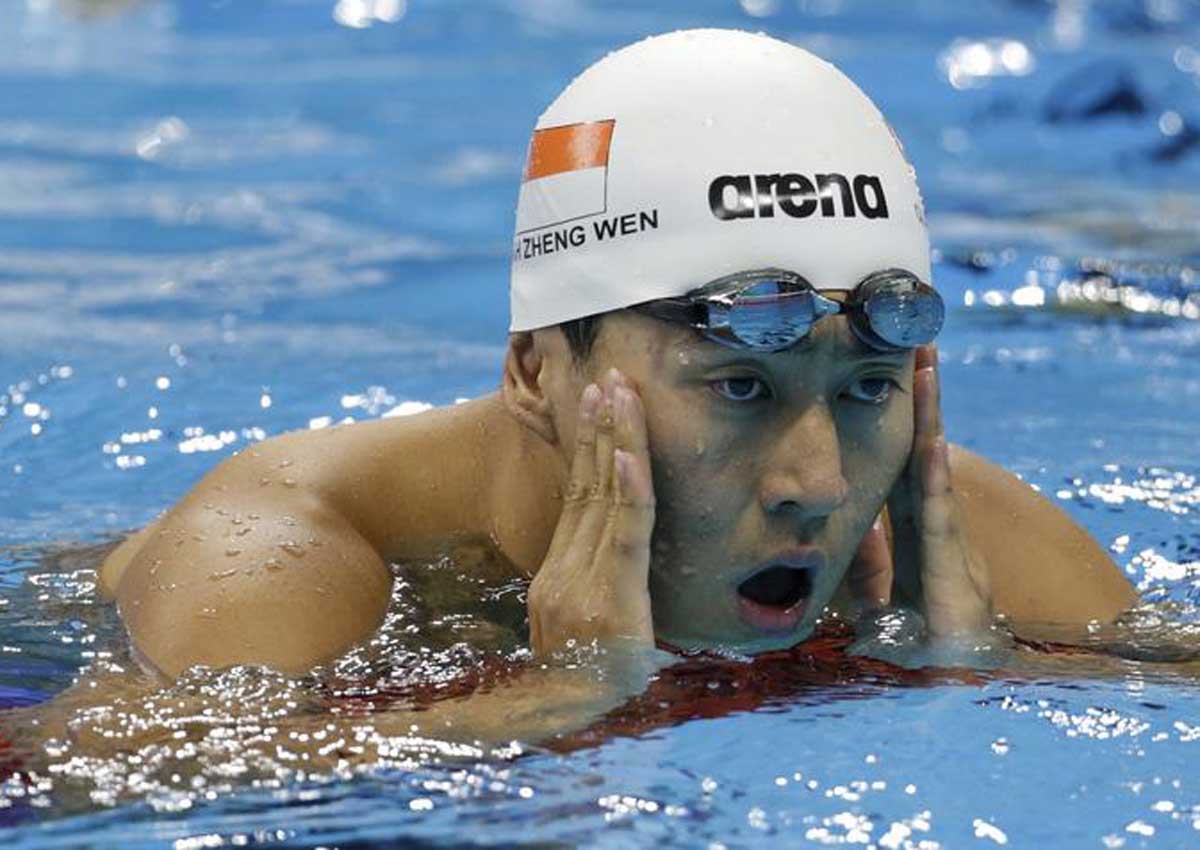
There’s no doubt that swimmer Quah Zheng Wen, whose silent walk past the media a few days ago in Rio has become an issue, was having a tough day.
I respect that. I’ve also met Quah, 19, a few times and found him to be feisty, tough, ambitious, hard-working, likeable and smart. He clearly knows how to talk. And so I wish he had spoken.
Talking isn’t a favour, it’s simple professionalism, it’s part of their job and ours.
Yu Mengyu lost, covered her face, composed herself and then talked.
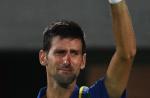
Novak Djokovic lost, cried like a man and then talked like one.
On the ATP Tour, tennis players get fined if they don’t talk after every match and they play close to a hundred every year.
Athletes don’t want the media to speculate on how they feel and guess what they’re going through.
Fair enough.
Click on thumbnail to view photos. Source:
AFP, Reuters, The Straits Times











6.jpg)






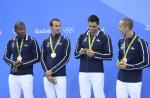






Our interpretation can be flawed because we don’t always know the details: That they slept badly, their goggles filled with water, their fever spiked and the fire alarm went off at 2am.
Want to fix that?
Talk.
Talk like the Indian shooter, who was deeply upset and terse at times but told his media that his sight broke before his event.
It wasn’t an excuse but just information which gave his day some perspective.
Athletes have told me that we, the media and the public, don’t know *&^ per cent about their sport, don’t appreciate its nuances and its intricacies, don’t comprehend what it’s like for dreams to die, what a crowd at an Olympics can do to your nerves and how hard they train.
They’re right, sometimes we don’t know.
How to fix that?
Talk.
Talk like Teo Shun Xie who told my colleague Jon that she felt fine before her 10m air pistol event, her sighting was good, and then they called “start” and she “suddenly didn’t feel good” and briefly forgot what she had practised.
This was insight, this was honest, this was how we comprehend pressure.
Athletes sometimes grouse about the inadequate attention they get: “You guys don’t care about our sport.”
They’re not always wrong either.
In Singapore, the media and the public are devoted to football which means less time on TV and inches in newspapers for everyone else.
In England, hockey players are ignored and in India, judokas must sulk.
Very few people care, watch, write on them.
How to (partially) fix this?
Talk.
At the risk of repeating a tale, one of my favourite interviewees was a world chess champion who brought his laptop along and spent an hour explaining his art to me.
And so, especially when major events occur, and TVs switch on, athletes should draw attention to their sport and their struggle by talking.
Even for a minute.
People may not know how divers clasp their hands when they enter the water. They may not understand why swimmers speak of “holding the water”.
If the athlete won’t tell us, we’ll never know.
Quah was hurting that day, no question, but how deeply we didn’t know.
Silence is not necessarily eloquent.
Debate on this subject will continue, but picking on a young swimmer or flagellating the journalist who first commented on him is pointless.
Bullying is never tasteful.
It’s more fun talking about Michael Phelps, who has won 21 golds but is still a half-dressed swimming preacher who uses the press conference as a pulpit.
By the time he finished his 200m butterfly the other day and then won another gold in a relay, it was 1.15am.
He’s 31, he has a tough schedule in Rio, he was exhausted and yet he still came.
To talk.
Rio Olympics 2016: Opening Ceremony Highlights
Click on thumbnail to view photos. Source:
Reuters, AFP




























This article was first published on August 12, 2016.
Get a copy of The Straits Times or go to straitstimes.com for more stories.
Image:
Publication Date:
Friday, August 12, 2016 – 14:00
Keywords:
Send to mobile app:
Source:
Rotator Headline:
If athletes want to be understood, they have to talk
Rotator Image:
Story Type:
Others
4 dead as string of blasts hit Thai tourist resorts

HUA HIN, Thailand – A string of bomb attacks targeting Thailand’s crucial tourism industry have killed four people, authorities said Friday, sending authorities scrambling to identify a motive and find the perpetrators.
Prime Minister Prayut Chan-O-Cha called for calm and said he did not know who was behind the attacks, while analysts tentatively pointed the finger at Muslim insurgent groups in the south who have for years been fighting the Thai state.
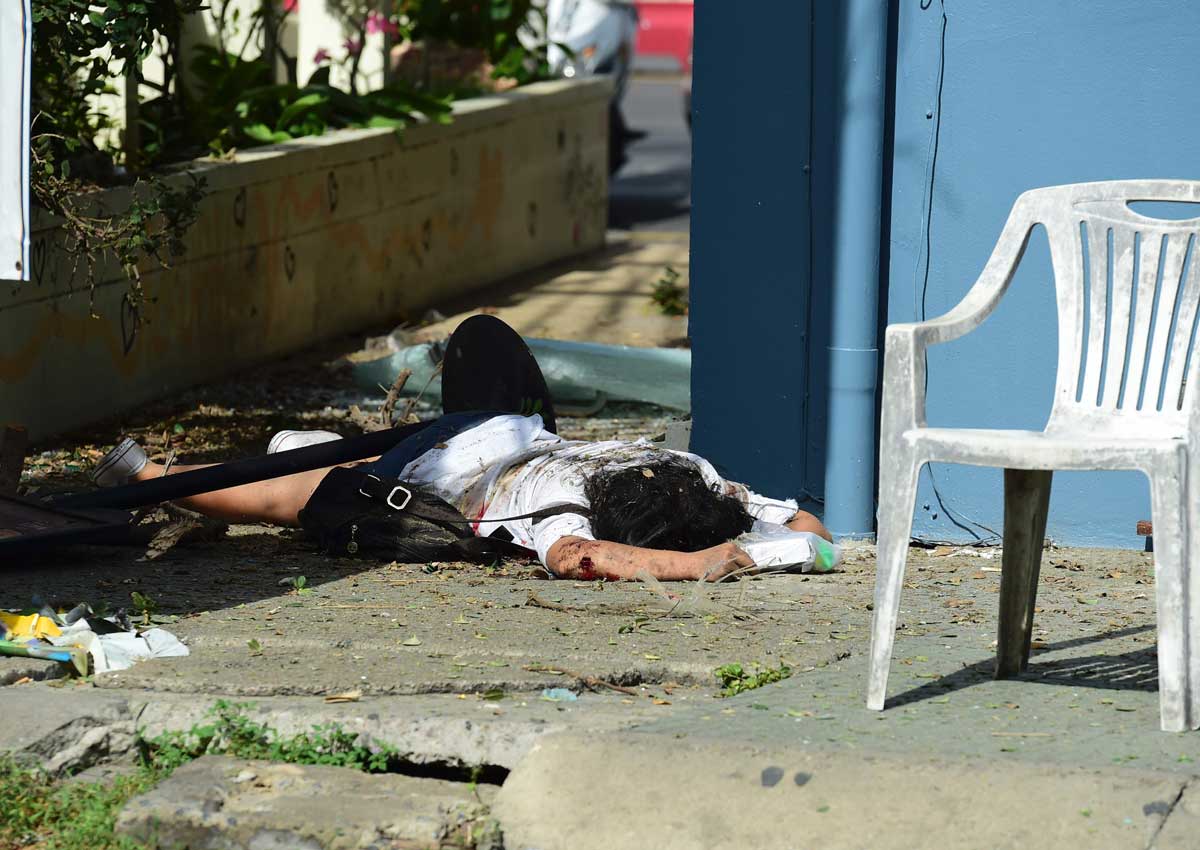
Twin bombs exploded in the upscale resort of Hua Hin late Thursday, killing one woman and wounding more than 20 others, including nine foreign tourists, and were followed by two more on Friday morning that killed another person.
Click on thumbnail to view photos. Source:
Reuters, Twitter, AFP



















AFP journalists saw injured and bleeding people lying on the pavements shortly after the latest explosions, as emergency workers rushed to the scene and took them away in ambulances.
A further two blasts struck Friday at Patong Beach on the popular tourist island of Phuket, while two more bombs were reported in the southern towns of Trang and Surat Thani, in each of which one person was killed.
“The bombs are an attempt to create chaos and confusion,” Prayut told reporters. “We should not make people panic more.” “Why have the bombs occurred as our country is heading towards stability, a better economy and tourism – and who did it? You have to find out,” he added.
The two bombs that went off in Hua Hin on Thursday were hidden in potted plants and went off within 30 minutes of each other in the bar district of the popular beach town.
While small bombings are common in the kingdom during periods of heightened political tension, there have been few such incidents in the past year and it is rare for tourists to be targeted.
Britain and Australia reacted by advising their nationals to avoid public places.
Hua Hin is home to the Klai Kangwon (Far From Worries) summer palace of Thailand’s revered royal family, and the firsts blasts came on the eve of Queen Sirikit’s 84th birthday and just ahead of the first anniversary of a Bangkok shrine bombing that killed 20.
Hua Hin’s district chief, Sutthipong Klai-udom, told AFP that the first bombs were detonated by mobile phone. Staff at local hospitals said German, Italian, Dutch and Austrian nationals were among the wounded.
“It was very shocking. There was a loud noise and police were running everywhere, it was terrible,” said Michael Edwards, an Australian tourist staying in a guest house close to where the second bomb detonated.
“I was just surprised that it happened here… now I’m thinking if it’s worth staying,” he told AFP.
Hua Hin is an upscale resort town about 200 kilometres (125 miles) south of Bangkok, popular with both local and foreign tourists.
The palace there has for years been favoured by King Bhumibol Adulyadej, the world’s longest reigning monarch.
The 88-year-old is currently hospitalised in Bangkok for a number of health issues, a source of anxiety for many Thais and a key factor in the kingdom’s past decade of political turmoil.
Paul Chambers, an expert on the Thai military, said rebels from the south were prime suspects in the blasts.
“The culprits are most likely Malay-Muslim insurgent groups fighting the Thai state in the deep south,” he said.
“The attack on Hua Hin seems like a direct affront at the Kingdom of Thailand. Hua Hin is home to a royal palace… also, the bombing comes on the queen’s birthday.” Zachary Abuza, an expert on Southeast Asian militant groups, said that although the southern insurgents had not carried out coordinated attacks for years, “it’s not that they haven’t or couldn’t, it’s just been a while”.
“Whoever has perpetrated these wants to do serious damage to the Thai economy. That is where the junta is the most vulnerable.” Thailand’s military rulers, who seized power in 2014 after a decade of at times violent political unrest, have touted an increase in stability in the kingdom as a major accomplishment of its rule.
The junta on Sunday saw its new version of the constitution approved in a referendum, although the three insurgency-hit provinces rejected the controversial statute.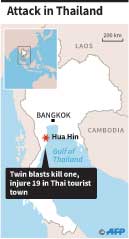
Thailand’s reputation as the “Land of Smiles” has suffered in recent years from political unrest and a number of high-profile crimes against foreigners.
But tourists continue to flock to its white, sandy beaches and Buddhist temples.
The kingdom is expecting a record 32 million visitors in 2016, with the tourism industry a bright spot in an otherwise lacklustre economy.
The latest blasts came just days before the first anniversary of the last major attack on tourists in Thailand – an August 17 bomb that killed 20 people, mostly ethnic Chinese tourists.
That blast ripped through a crowded Hindu shrine in the heart of Bangkok and stunned the kingdom as the deadliest assault in recent history.
Two Uighur men from western China have been accused of the attack and are due to go on trial later this month. Both have denied any involvement.
Image:
Publication Date:
Friday, August 12, 2016 – 12:40
Keywords:
Send to mobile app:
Source:
Rotator Headline:
Multiple blasts at Thai resort towns kill 4 and injure more than 20, including tourists
Story Type:
Others
Singapore banks’ outlook: What does it mean for investors?
With profit growth likely to remain under pressure given the banks’ exposure to the struggling energy sector and an economic slowdown in China, Channel NewsAsia assesses the implications for investors.
Source link
S Korea looks to generate buzz for edible insects
Image:
Publication Date:
Friday, August 12, 2016 – 12:37
External URL:
Send to mobile app:
Source:
Story Type:
Others
Different kinds of leases for new HDB flats under consideration: MND
With 80 per cent of Singaporeans living in HDB flats, the Government will continue to improve the quality of public housing, while ensuring that it remains affordable, said Mr Lawrence Wong.
Source link
Olympics: Singapore's Joseph Schooling makes history; through to the 100m butterfly finals
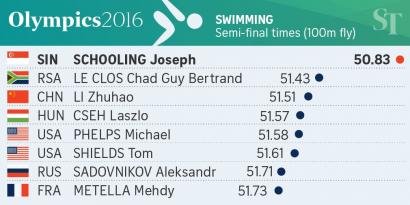
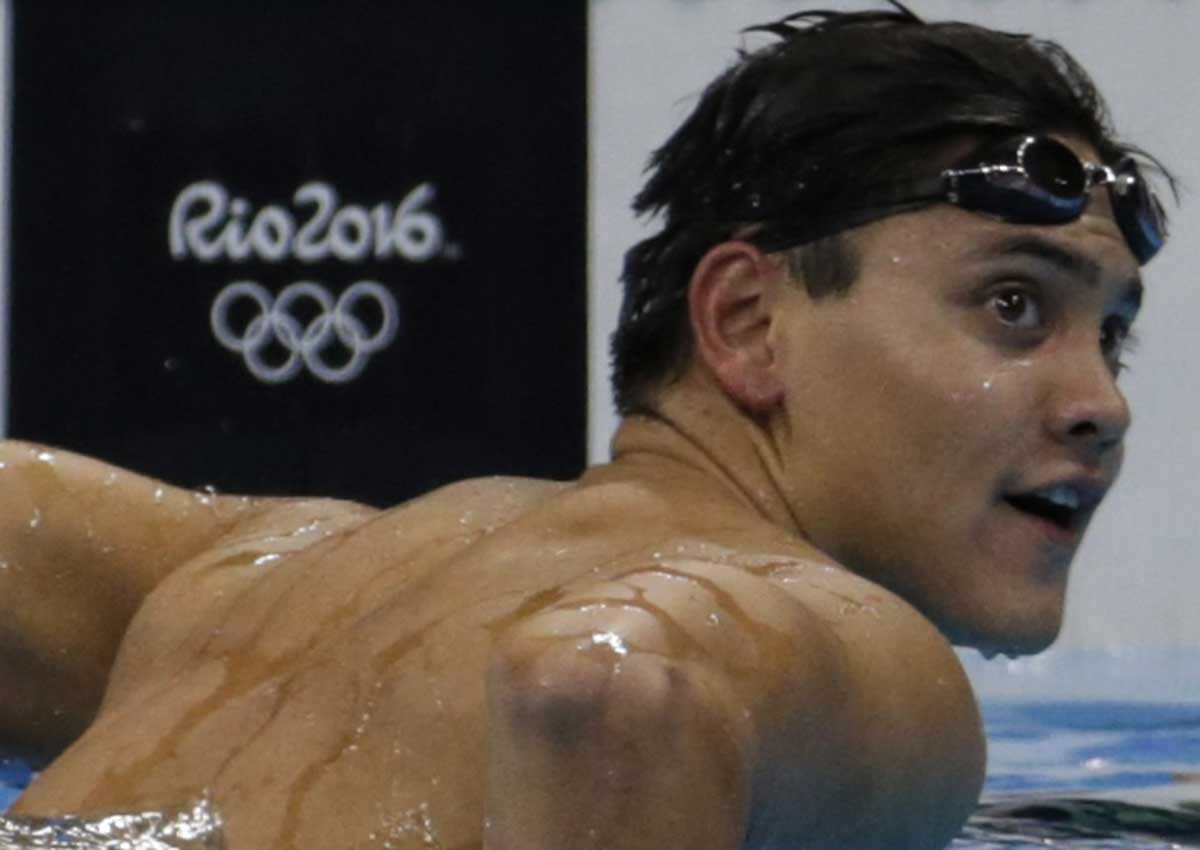
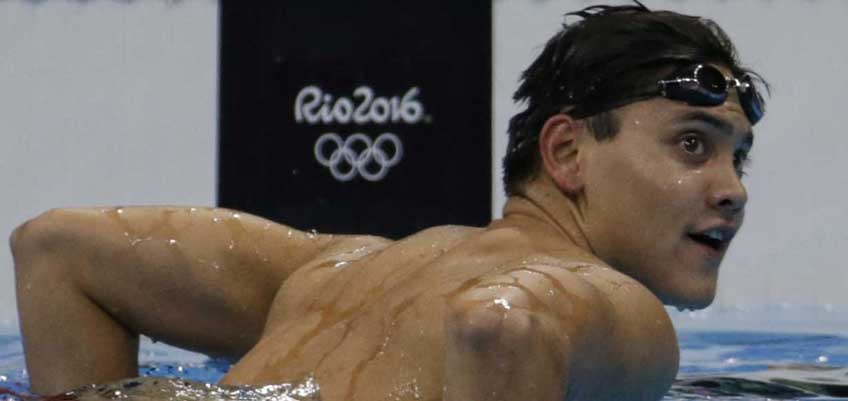
Singapore swimmer Joseph Schooling has made history as the fastest Asian to glide his way to a record time of 50.83sec in the 100m butterfly semi-finals event at the 2016 Rio Olympics.
This means that the 21-year-old, whose timing is also the world’s best so far this year, is through to finals on Friday night in Brazil (9.12am Singapore time on Saturday) the first ever Singaporean to do so.
His record time in the second 100m butterfly semi-finals was the fastest among the top eight swimmers who made the finals.
His latest timing is also a new national record for Schooling, whose previous personal best was 50.96sec, which he clocked at the world championships last year. He walked away with the bronze medal at the event.
Fellow Singapore teammate Quah Zheng Wen earlier missed out on the 100m butterfly final after finishing with a time of 52.26sec, coming in 8th in his semi-final event.
Gunning for glory
Click on thumbnail to view photos. Source:
The Straits Times, The New Paper, Zaobao, SINGSOC, Singapore Sailing Federation
sujint@sph.com.sg
Image:
Publication Date:
Friday, August 12, 2016 – 11:29
Keywords:
Send to mobile app:
Source:
Rotator Image:
Story Type:
Original Story
Joseph Schooling into the finals, has Olympic gold in his sights
One’s 21, and a world championship bronze medallist who seems destined for big things.
The other’s 19,…
Source link


