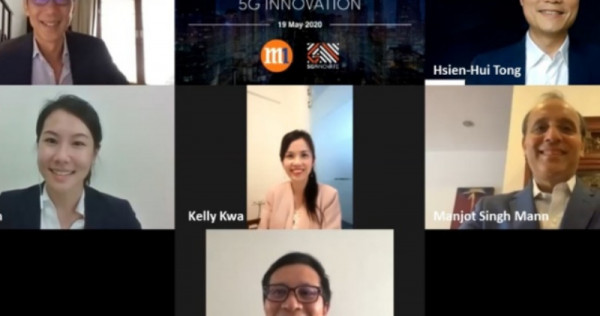
M1 and SGInnovate today announced that they have signed a memorandum of understanding (MOU) to connect start-ups with potential corporate partners, provide technical support, and promote 5G capabilities.
5G technology will significantly improve the speed of data transfer with its ultra-fast latency and high-speed connectivity.
M1 will identify corporate partners keen to explore the benefits of 5G use cases for their business.
SGInnovate’s role is to primarily identify Singapore-based start-ups, and international start-ups where relevant, and match them to relevant 5G use cases for B2C or B2B2C solutions.
Dr Lim Jui, Chief Executive Officer of SGInnovate said they are looking forward to working with start-ups to further breakthroughs in innovation and discover new use cases of 5G.
Ready with a POC
The collaboration is expected to benefit start-ups with a Proof-of-Concept or commercially ready products to showcase how they could work with 5G.
For example, healthcare-based solutions where seconds saved could be the difference in saving a person’s life.
He had just started his pre-dawn meal at home when an orange glow and black smoke from the opposite block caught his attention.
Without hesitation, Warrant Officer Nasiruddin Ghaffor, 33, sprung into action, fighting a blaze that had engulfed a HDB unit.
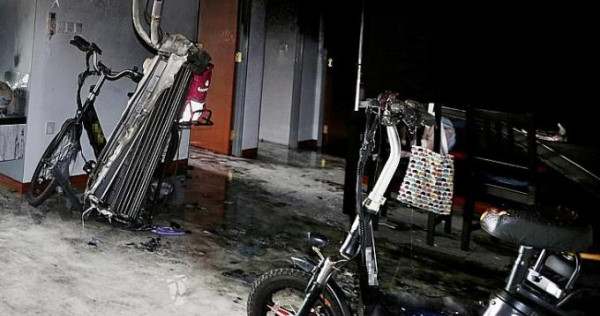
The fire, which happened at around 4.50am on the seventh level of Block 502A, Yishun Street 51, caused about 80 residents to evacuate.
Speaking to The New Paper hours after he battled the flames yesterday, WO Nasiruddin said: “I saw this big orange glow and black smoke from a unit in the opposite block and immediately knew it was a huge fire.”
Grabbing his emergency ready bag he had prepared at home, the off-duty officer, who is an instructor at the Civil Defence Academy, dashed to the unit with only a fire-resistant hood over his head as protection.
Seeing the front door open, he began to fight the fire using a hose reel that was close by.
“The fire was really huge – it had engulfed almost the whole living room,” he said.
“I inched my way in slowly to control the fire from spreading to the other parts of the unit. After a while, I managed to extinguish the fire.”
SINGAPORE: Twitter announced last week they will allow some staff to work from home (WFH) forever. No doubt killing the risk of a coronavirus spread in the office was a key reason behind the move.
Still, the public reaction has been really strange. People have been asking for WFH forever but now we’ve actually tried it, that idealised dream of WFH is looking less like the object of our desire.
The reality is that we’ve woken up from the fantasy of being able to do anything anytime anywhere.
We are also realising the office had some pretty amazing perks, and WFH comes with a whole host of hidden costs and challenges.
At the same time, now that we have had a taste of the new possibility of flexible work, most of us want the power to choose where and how we work, less so the sole option of WFH permanently.
WORKPLACES CAN BE GOOD FOR MENTAL HEALTH AND COLLABORATION
Research shows being able to go to an office may be good for our mental health and well-being.
We are social creatures. Being around others – whether collaborating, sharing a meal, or simply having a watercooler chat – provides us with a sense of belonging, connecting and being understood, and directly buffers against the stresses of work and life.
Having a dedicated workplace also allows for clearer boundaries between work space and home space, and can help individuals manage their workloads better and prevent burn-out.
The other thing is a well-designed office space sparks collaboration and drives productivity, which people value.
“After working from home for nearly two months, I really miss the office, manufacturing floor and discussions with colleagues in corridors and the canteen … There is nothing like being in a meeting room together with a physical flip chart to get all the great ideas together and come out with a solution together,” Rajnish Narula, Director of Business Excellence at Pfizer
The happenstance element of bumping into people and having random conversations is also a boon for creativity and innovation.
“Somehow a Zoom meeting doesn’t quite cut it. I have gotten stories for my newsletters just by serendipitous pantry conversations,” Eleanor Tan, Global Head, Corporate Communications at The China Navigation Company tells me.
WORKPLACE ARE GOOD FOR ATTRACTING AND DEVELOPING TALENT
The best workplaces play a crucial role in attracting and retaining talent.
In our experience running the career centre at the National University of Singapore, one of us often came across students exchanging notes on the look and feel of the offices they interviewed at, with some of the brightest turning down job offers because they couldn’t imagine themselves locked in “McCubicles”.
On the other hand, when you walk into a thoughtful office – say the lobby of the Economic Development Board for example, where you see a giant electronic display with real-time trade routes, the stunning views over the city and the intimate discussion areas scattered everywhere, you immediately and intuitively understand that this is a place where bright minds gather to solve problems in innovative ways.
Inspiring organisations also celebrate learning and have multi-functional spaces for developing talent – vital when constant reskilling and training is the new norm. We know people learn best when they learn together.
WE WANT DIVERSITY AND CHOICE
Perhaps it’s not about either working in the office or at home but having all options.
(Photo: Mimi Thian/ Unsplash)
In a survey we carried out with more than 170 people across diverse occupations, only 17 per cent said they wanted to work from home primarily. The vast majority wanted the ability to choose.
“People have always wanted diversity and choice in their workplace experience. Even before COVID-19 hit, ‘work’ had left the building and social media had entered, creating a disruption in people’s expectations and a desire for new forms of leadership and social engagement at work,” Tamagin Blake-Smith, principal at Hassell, an architecture, design and urban planning practice told us.
Technology has enabled us to work anywhere. Working from home is really just one option. People want to work in the train, in the park, in coffee shops and coworking spaces.
Having a flexible employer open to WFH signifies trust, support and provides agency. Workers may ultimately choose not to use the option to WFH. But when they feel safe, listened to and engaged, they are motivated to work harder.
THE UNDERLYING MOTIVATION FOR WFH
Perhaps the way to look at this is to ask yourself why WFH is important to you. Do you want to WFH because you are attracted to the advantages, for instance, because you are more productive when you have control over your hours, or find your home office more suitable for your type of work?
Or do you want to WFH because you want to get away from someone or avoid something at the office – like annoying colleagues, critical bosses or giving presentations?
The ultimate avoidance is choosing to work from home because you don’t quite feel engaged in your role yet haven’t gotten the courage to change jobs or take steps to fix the underlying issue.
Some people like their work spaces to be messy. (Photo: Unsplash/Fred Kloet)
DOES WORK FROM HOME WORK FOR YOU?
The litmus test whether working from home is suitable for you, is whether it makes you more engaged with your work or less.
There is no one-size-fits all answer. We all have different communication styles and drivers of motivation. WFH is not necessarily a good fit for everyone.
But here is a quick and dirty psychology-based checklist of questions we have put together to help you assess your suitability:
Mental health: Are you at risk for depression or prone to anxiety or loneliness? Social support is an important factor in staying mentally well, especially if you have a history of mental health issues.
Self-motivation: Are you (and do others describe you as) self-motivated, structured and disciplined? Do you have a history of setting good routines for yourself, for instance, have you always had a consistent bedtime or exercise routine?
Distractability: How good are you at managing distractions at home whether they are external (kids, the draw of the fridge or Netflix) or internal (distracting thoughts or anxiety)? Research on attention has shown that about half the time, we are not focused on what we do in the present moment.
Boundaries: Can you put in place time and space boundaries to contain your work so that you avoid burnout? How separate is your work space from your relaxation space? Can you stick to set work hours and go offline after work or do your work thoughts creep into every waking hour of the day when you’re working from home?
Home relationships: Are you capable of being present and off duty with the people around you so that you still maintain strong relationships as a spouse, parent and family member?
Communications: Are your communication skills up to the task? WFH requires sophisticated communication skills, both written and verbal. Without cues like subtle facial expressions, body language and tone of voice, messages can get lost in translation or misinterpreted.
Support from bosses: For WFH to work, there must be a baseline of genuine trust between employer and employees. Employees need to feel safe, supported and assured their performance is based on output rather than hours spent sitting at a desk. Employees also need to be good at asking for help because WFH may make it difficult for bosses to get a sense of what support people need.
OPPORTUNITY TO INCREASE GENUINE ENGAGEMENT
COVID19 has forced companies to rethink the importance of working arrangements and employee welfare.
Two colleagues in a discussion. (Photo: Unsplash)
Never before have we seen so many companies introduce measures to prevent burnout, perhaps inspired by leading brands such as Google and Johnson & Johnson announcing days off for employees to combat work from home stress.
Our hope is this pandemic provokes companies to take a more human-centric approach towards work, and value employee engagement and well-being as much as profits.
What is clear is that employees want three things – flexibility, the feeling of trust from their employer, and for work to become outcomes-based rather than output-based.
The smart employers will understand the psychology of employee engagement and move fast to give talent what it wants.
Download our app or subscribe to our Telegram channel for the latest updates on the COVID-19 outbreak: https://cna.asia/telegram
Human Capital expert Crystal Lim-Lange and clinical psychologist Dr. Gregor Lim-Lange are the authors of Deep Human– Practical Superskills for a Future of Success and the co-founders of Forest Wolf, a leadership training and talent development consultancy.
A total of 570 new coronavirus cases have been confirmed in Singapore today (May 19), but there is an increase in the number of community cases from yesterday.
In a statement by the Ministry of Health (MOH), they announced that of the new cases, eight are community cases while the remaining cases come from Work Permit holders living in dormitories.
The eight community cases consist of two Singaporeans/Permanent Residents, one Work Pass holder and five Work Permit holders.
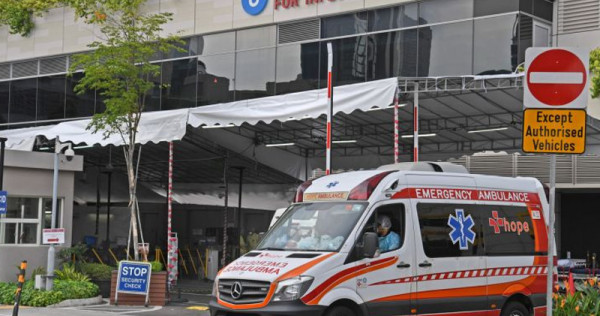
A public healthcare staff is one of the community cases and she is a 30 year-old female Filipino national Work Pass holder who has no recent travel history to affected countries or regions. She was confirmed to have Covid-19 infection on May 19, and is currently warded at the National Centre for Infectious Diseases.
She is employed as a nurse at Ren Ci Community Hospital but had not gone to work since onset of symptoms.
Another community case identified is a 57-year-old Singaporean male who went to work at Kranji Lodge 1 after developing symptoms. Kranji Lodge 1 is an existing cluster with 511 confirmed cases.
SINGAPORE -Allegations of profiteering and corruption in relation to the development of the community care facility (CCF) by Surbana Jurong at the Singapore Expo Convention and Exhibition Centre are “false and malicious”, said the Ministry of Health and Ministry of National Development on Wednesday (May 20).
In a joint statement, the two ministries said the Government had asked sovereign wealth fund Temasek to help set up a CCF for those with mild or no symptoms of Covid-19 and recovering patients. This was because Temasek had the necessary resources to do so at short notice through its subsidiaries.
“Temasek agreed to assist, and also agreed that the work done by Temasek and its linked companies, would be done at cost recovery basis, and in some cases, below cost. There will be no profit made by Temasek and its linked companies for the work done,” the ministries said.
Temasek had asked other companies, including PSA International, Singapore Technologies Engineering and Sheares Healthcare to help. External vendors such as Parkway Pantai, Resorts World Sentosa and Certis Cisco were also roped in.
My former coach used to tell me, “An athlete has to have CPF: commitment, perseverance and focus.”
It’s a quote I live by, and the reason why I still compete today!
I recently won the gold and silver medals for the high and long jump events at the 2019 Asia Masters Athletics Championships (veteran athletes aged 70 and above) in Kuching, Sarawak.
It was fun, and beating my competitors gives me an adrenaline rush. PHOTO: Her World OnlineI trained for this at the Kallang Practice Track every day.
I’m proud to say that I cleared a clean 0.85m for high jump this time – not far from my previous high-jump win (0.92m) at the 2013 International Gold Masters in Japan.
Competitions give me the opportunity to carry on the skills I learnt and have excelled in.
I switched from sprints to jump events in 2004 to try something new.
The number of new Covid-19 cases in the community may be petering out but something a little more insidious has been spreading online.
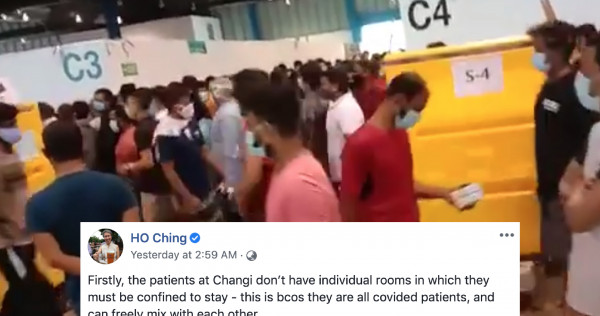
Responding to various posts and videos accusing migrant workers of being “unhygienic”, Temasek chief executive and executive director Ho Ching took to Facebook on May 19 to speak up for the workers, calling the claims “rubbish”.
An unverified message attributed to the friend of an ‘ex-nurse’ working at a local community care facility made its rounds on the internet earlier this week, alleging that migrant workers were “disgustingly unhygienic”, had “all sorts of illnesses” and did not want to recover in order to continue enjoying their “comfortable stay”.
SINGAPORE: Allegations of profiteering and corruption over the development of COVID-19 community care facilities at the Singapore Expo and Changi Exhibition Centre by Surbana Jurong are “false and malicious”, the Government said on Wednesday (May 20).
“The Government accepts that legitimate questions can be raised about the spending, and is fully prepared to explain why and how money was spent,” said the Ministry of Health (MOH) and Ministry of National Development (MND) in a joint press release.
“However, the Government will respond firmly and appropriately to any scurrilous allegation of corruption.”
On Tuesday, Surbana Jurong had also refuted “unfounded accusations of profiteering and corruption in some social media posts” about the setting up and running of community care facilities, but did not specify which posts it was referring to.
The company said it would not hesitate to take legal action against “any perpetrator who continues to make scurrilous attacks” against it.
CONVERTING SINGAPORE EXPO INTO A COMMUNITY CARE FACILITY
The ministries said that the development of community care facilities was part of a “comprehensive strategy” by the Government to care for COVID-19 patients at different stages of their infection and based on their needs for different types of treatment.
Community care facilities house COVID-19 patients with mild or no symptoms, or recovering patients who have been discharged from hospital.
These facilities include D’Resort, Singapore Expo and Changi Exhibition Centre.
Other types of facilities, including additional Government Quarantine Facilities and Community Recovery Facilities for those released from hospitals, had to be “built and prepared quickly, in a matter of days”.
The Government asked Temasek, the parent company of Surbana Jurong, to help “at short notice”, the ministries said.
“Temasek was approached because it had the necessary resources, to be marshalled, at short notice, through its subsidiaries,” they added.
“Temasek agreed to assist, and also agreed that the work done by Temasek and its linked companies, would be done at cost recovery basis , and in some cases, below cost.
“There will be no profit made by Temasek and its linked companies for the work done. The Temasek linked companies agreed with these arrangements.”
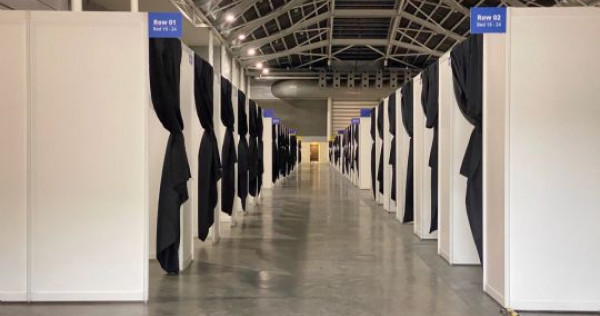
The Singapore Expo was then identified by Temasek as a suitable venue for a community care facility. It asked Surbana Jurong to convert it into Singapore’s first large-scale community care facility.
A community isolation facility has been set up at the Singapore Expo. (Photo: Ministry of Defence)
Temasek also asked other companies to help with the Singapore Expo development, including overall project co-ordinator PSA International, Singapore Technologies Engineering and Sheares Healthcare.
External vendors such as Parkway Pantai, Resorts World Sentosa and Certis Cisco also contributed to the development of the Singapore Expo community care facility.
MOH worked with Temasek and the other entities on the healthcare requirements and needs for the community care facility site.
Once these were confirmed, MND liaised with the entities on the payments for the development of the Singapore Expo community care facility.
“This is because MND has also been liaising with other parties to pay for the provision of other facilities, like the dedicated stay-home notice facilities,” the press release added.
GOVERNMENT WILL RESPOND “FIRMLY AND APPROPRIATELY” TO ALLEGATIONS
Temasek did not charge any management fees and has only invoiced MND for expenses paid to third parties, the ministries said.
The Temasek-linked companies, including Surbana Jurong, will only charge for “direct expenditure”, at cost.
“Some aspects were charged at below normal cost,” the release said.
The Government was told by Temasek that SingEx Venues, which manages the Expo, will not charge the full capex cost.
“The Ministry of Manpower and the Minister for Manpower were not involved in the selection of Surbana Jurong (or any of the parties) to participate in the development of the Singapore Expo community care facility, and were not involved in the process of managing the costs of the project,” said the ministries.
Minister for Manpower Josephine Teo’s husband is Mr Teo Eng Cheong, the Chief Executive (International) of Surbana Jurong.
The Community Isolation Facility for COVID-19 patients at the Singapore Expo and Max Atria. (Photo: Ministry of Health)
“Surbana Jurong worked with the other partners to complete the development of the Singapore Expo community care facility in a very short time,” MND and MOH said.
“It was able to leverage its sourcing processes to obtain construction and other needed materials on an urgent basis.
“Despite the tight timelines and extensive work that was required, Surbana Jurong provided its expertise to develop the Singapore Expo community care facility at cost, without any profit or management fee.”
The Government said it accepts that legitimate questions can be raised about spending and was “fully prepared” to explain why and how the money was spent, and that it would respond “firmly and appropriately to any scurrilous allegation of corruption”.
MOH and MND thanked the parties involved in the fight against COVID-19, including Temasek companies, private sector companies, and other Singaporeans.
“We are grateful to all who have worked hard and around the clock to set up the Singapore Expo community care facility under extraordinary circumstances.
“This is a testament to the whole-of-society effort that has made it possible for us to combat and manage the COVID-19 virus.”
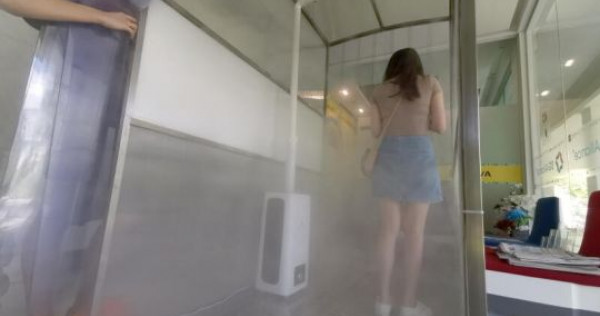
SINGAPORE – Experts have warned against the use of disinfectant tunnels that many countries, including Singapore, are setting up to spray on people as they enter certain premises.
The idea is for people to walk through these tunnels or chambers and be disinfected to reduce the risk of them spreading Covid-19.
However, the experts say these tunnels not only do not help to curb the spread of the coronavirus, but could also cause harm to people using them.
A report in the British-based Occupational Medicine journal warned: “A chemical may be safe when applied topically in liquid form, but extremely toxic when atomised and inhaled.”
It studied a range of nine disinfectants commonly used in such tunnels, and said: “Direct aerosol contact with the cornea can cause irritation and irreversible damage. Skin irritation and damage are also common.”
In a multicultural society like Singapore, it’s not unheard of to have different accents, which in turn, affects one’s pronunciation.
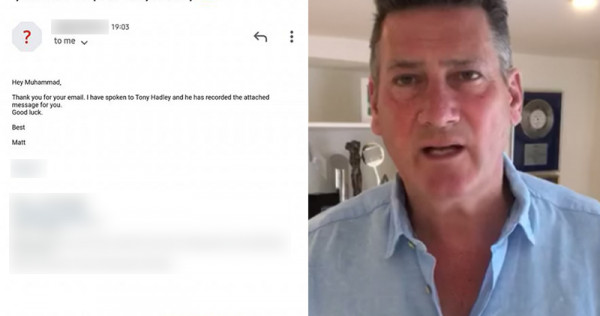
But what happens when your accent costs you $10,000? Well, Facebook user Muhammad Shalehan called out local radio station Gold 905 for passing him over as the winner of their competition Celebrity Name Drop earlier this month.
Gold 905 declared that he had mispronounced the last name of British singer Tony Hadley because he said “Head-ley” while the winner pronounced it as “Had-ley”. PHOTO: Screengrab from FacebookIn this competition, listeners tune in to Gold 905 on weekdays and call when they hear the cue to do so. They’ll listen to a clip containing various celebrities’ voices, and have to accurately guess their identity in the right order to win $10,000.