Home Blog Page 3140

I was almost recruited by terrorist group

0

Six men were arrested in Batam on Aug 5 in connection with the terror plot against Singapore.

One of them was released later. He says he was just in the wrong place at the wrong time.

Mr Tegar Sucianto’s friend Hadi Gusti Yanda, 20, was one of the five Indonesians picked up by anti-terror police and later taken to Jakarta.

The pair were on the way to work when both were surrounded, pinned to the ground, had hoods placed over the heads and were bundled into a van.

Hours later, Mr Tegar, 19, learnt that his friend was a member of a terror cell group that had sworn allegiance to Islamic State in Iraq and Syria (ISIS).

He tells The New Paper on Sunday that he was shocked, but also horrified that his friend had been actively trying to recruit him. And he had little clue.

Until the arrest, he thought he knew everything about the friend he had first met in secondary school seven years ago.

They grew up playing video games and football and both lived in the Batu Aji neighbourhood on Batam.

They even worked at the same Asus factory after they graduated last year.

Mr Tegar says: “Hadi seemed like a normal teenager, we were good friends.

“When we were growing up, I never noticed anything strange about him.”

But Hadi changed last year and Mr Tegar says his friend would talk often about suicide bombers, Syria and ISIS.

He thought Hadi was just more religious than him.

“Hadi would always remind me to pray when I was lazy. It made sense that he knew all the news he talked about, I thought he was just keeping me up-to-date,” he says.

But then Hadi invited him to meet a religious group to learn more about Islam.

Mr Tegar resisted at first.

“Why should I go? I wasn’t really interested in all this religious knowledge.

“But Hadi would keep on asking,” he says.

Mr Tegar finally relented late last year. He agreed to travel with Hadi to the Nurul Islam mosque in the Muka Kuning district, about a 30-minute drive from their village.

Mr Tegar believes the hour-long meeting was the first time members of the terror cell Katibah Gonggong Rebus met.

There were six people at the meeting, but Mr Tegar says nobody knew each other.

“They had only communicated via chat groups in WhatsApp and other apps. It seemed like they were all meeting for the first time,” he says.

UNCOMFORTABLE

As the group introduced themselves and dwelled on religious issues, Mr Tegar became uncomfortable.

“I had no interest in what they were talking about and told Hadi I wanted to go home,” he recalls.

Before they left, they were all instructed to download the Telegram messenger app, says Mr Tegar.

He did as he was told and was added into a chat group.

Mr Tegar says he received hundreds of messages daily over the next few days.

He tried to ignore the conversation by muting the chat.

“I didn’t read it, there were so many messages. From what I saw, it was just a lot of things about Islam, like tips about how to pray and how to be a better Muslim.”

He claims he did not participate in the conversation and was kicked out of the group a week after he joined.

“I was surprised, but I was fine being kicked out without warning,” he says.

He deleted the Telegram app from his phone and the two friends never talked about the group again.

On Aug 5, Mr Tegar was giving Hadi a ride to work on his motorcycle when they were boxed in by several police vehicles.

The officers approached Hadi first, handcuffing him and blindfolding him before doing the same to Mr Tegar.

Mr Tegar says: “It was all happening so fast, I had no idea what was going on and I was panicking.”

The two were taken to the Brimob special police headquarters for questioning. Later, Hadi was taken away while Mr Tegar was made to wait in a police car.

“The officers were nicer to me than to Hadi.

They spoke to me in a friendly way and even apologised for arresting me,” he says.

Mr Tegar was released that evening after questioning and was home at 8pm. He was embraced by his worried mother, 42-year-old shop owner Desi Fitrianti.

She says: “I hugged him so tight because I was scared.

“All of a sudden in the afternoon that day, there were all these reporters knocking on my door, asking me if I knew that my son was a terrorist.”

He says of the experience: “Nobody’s really scared of me because they know that I’m innocent. Some people stare and ask me, but I’m honest with them, there’s no reason to be scared if I’m telling the truth.”

But he says of the man he thought was his friend: “I guess you never know people really. I never thought he would be someone like that.”

Indonesian authorities arrested a total of five suspects in an anti-terror swoop after preliminary investigations showed they were part of a little-known cell called Katibah GR or Cell GR. Hadi, along with the remaining four suspects, Gigih Rahmat Dewa, Trio Syafrido, Eka Saputra and Tarmidzi, were later taken from Batam to Jakarta for investigations.

They trained openly in public field

The terror cell did more than just try to build a rocket.

Reports say the Katibah GR was a coordinated group, with its own command structure, and it also conducted training sessions.

Led by 31-year-old Gigih Rahmat Dewa, the five-man group had a field coordinator in Trio Syafrido, 46, and weapon assemblers in Eka Saputra, 35, and Tarmidzi, 21.

Hadi Gusti Yanda, the youngest of the group at 20, was its treasurer.

With the exception of Syafrido, a bank officer, the Indonesian authorities say the men were factory workers.

The group had trained openly with replica guns in a public field near the Nongsa district, located in the north of Batam.

Batam District Police Chief Helmi Santika says they used the field for shooting practice, complete with mock guns to simulate real-life battles.

Mr Helmi says: “Unlike other terror groups, which train in the forests, they exercised and practised handling airsoft guns (a type of replica gun) in a field near a housing estate.”

SEIZED

These guns, including one fashioned to resemble an AK-47, were seized by police and taken to Jakarta for investigations.

The police also seized bomb-making materials, a laptop and other weapons from the homes of the suspects, including a bow and arrow set.

The five men from the KGR are also accused of sheltering two suspected Uighur militants.

Police are now tracking down other members of Gigih’s cell on the island as well as in other parts of Indonesia.

The New Paper on Sunday met Hadi’s father on Aug 10 at his village.

Other foiled terrorist plots

CHANGI AIRPORT PLOT

Jemaah Islamiah (JI) terrorist and leader of a group of Singaporean JI members, Mas Selamat Kastari Mas Selamat (above), plotted to hijack a commercial aircraft in Bangkok and crash it into Changi Airport.

The 2002 plot was thwarted by Singapore intelligence.

In 2001, Mas Selamat had escaped the dragnet through which several JI members were arrested.

He fled Singapore after authorities uncovered a JI plot to launch terrorist attacks on Yishun MRT station and American naval vessels in Singapore.

To retaliate against the JI arrests, he hatched a plan with JI commander Hambali in southern Thailand to hijack a plane and crash it into Changi Airport.

Mas Selamat and other JI members bought tickets for an Aeroflot flight from Bangkok to Singapore.

His plan was to storm the cockpit before landing and crash the plane into the Changi airport tower.

But their plan was disrupted when authorities got wind of it.

Mas Selamat and his team decided not to board the plane when their identities were exposed in the Thai newspapers.

Mas Selamat knew it would be dangerous for him to arrive at the airport.

A fellow JI member, Mohammad Hassan, a Singaporean, also revealed to a South Jakarta District Court that they backed out after the media uncovered details about their plot.

BOMB PLOT

In 2001, some JI members planned to bomb several targets in Singapore, such as the US and Israeli embassies, the Australian and British high commissions, Sembawang Wharf and Changi Naval Base.

Singapore’s Internal Security Department (ISD) foiled the plans.

Fiah Musa, one of JI’s cells, was approached by foreign terrorists to assist in a plan to bomb these targeted locations in Singapore.

The foreigners went by the code names of “Sammy” and “Mike”.

Along with cell members, they conducted surveillance of several targets.

The footage was downloaded onto a VCD that was labelled “Visiting Singapore Sightseeing”, a title used to evade suspicion.

Sammy and Mike told Fiah Musa that they wanted 21 tonnes of a chemical, ammonium nitrate, to make the bombs.

As they had already procured 4 tonnes in Malaysia, they wanted the cell members to help obtain the remaining 17 tonnes of the chemical.

Ammonium nitrate is a commonly used fertiliser that can be used in the manufacture of explosives.

The men planned for trucks to hold the ammonium nitrate.

But the men’s attempts to order the nitrate gave them away and alerted the Government to the extremist group’s plans.

A Fiah Musa member tried to obtain the nitrate through a local vendor. But he was arrested before he could settle the deal.

Through data mining and investigative legwork, the ISD identified Mike as an Indonesian named Fathur Rohman al-Ghozi, and Sammy as a Canadian named Mohammed Mansour Jabarah.

From investigations, the ISD suspected that Mike could have possessed a Philippine passport and it informed the Philippine authorities.

The Philippine authorities arrested Mike.

Three hundred detonators, 1.2 tonnes of TNT and six rolls of detonating cords were discovered following his capture.

Fathur revealed that the explosives were meant to be used on Singapore.


This article was first published on August 14, 2016.
Get The New Paper for more stories.
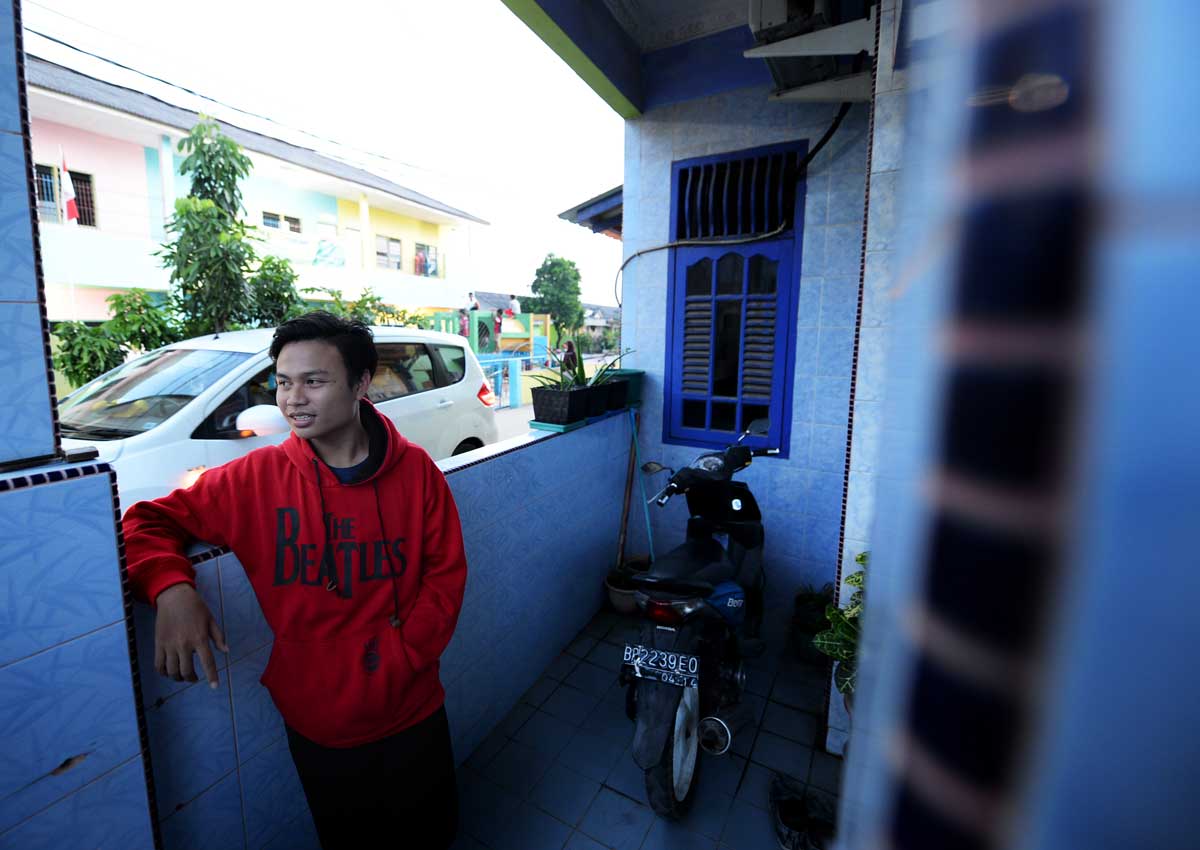
Image: 
Category: 
Publication Date: 
Sunday, August 14, 2016 – 14:36
Keywords: 
Send to mobile app: 
Source: 


Rotator Headline: 
Indonesia teen shocked by friend who tried to recruit him into ISIS
Rotator Image: 
Story Type: 
Others

Source link

Japan to develop missile as tensions with China mount: report

0

Tokyo – Japan will develop a new land-to-sea missile as part of plans to beef up its defence of remote southern islands, as tensions with China increase over the disputed territory, a report said Sunday.

The two countries are locked in a long-running dispute over the uninhabited islets known as the Senkaku in Japan and the Diaoyu in China.

The report comes after repeated protests by Japanese foreign ministry officials over what Tokyo calls “intrusions” by Chinese ships in the territorial and contiguous waters of the rocky islands.

Tokyo plans to deploy the weapon, which reportedly will have a range of 300 kilometres (190 miles) on islands such as Miyako in Okinawa prefecture, the top-selling Yomiuri Shimbun newspaper said, without citing sources.

The range will cover the disputed island chain, the Yomiuri said, adding that the deployment is expected by 2023.

Officials at the Defence Ministry could not be reached for comment.

“In light of China’s repeated acts of provocation around the Senkaku islands, Japan aims to increase deterrence with improved long-range strike capability,” the newspaper stated.

The missile will be developed by Japan and will use solid fuel, the Yomiuri said, referring to the technology that allows for weapon’s long-term storage and capacity to be launched at short notice.

Japan also protested in June after it said a Chinese navy frigate sailed close to territorial waters near the islands for the first time.

Tensions over the islands have been a frequent irritant and strained bilateral relations, though tensions had markedly relaxed over the past two years as the countries held talks.

Image: 
Category: 
Publication Date: 
Sunday, August 14, 2016 – 13:44
Send to mobile app: 
Source: 


Story Type: 
Others

Source link

The story of Schooling

0

The New Paper’s DAVID LEE charts the rise and rise of Singapore’s first Olympic gold medallist.

2006

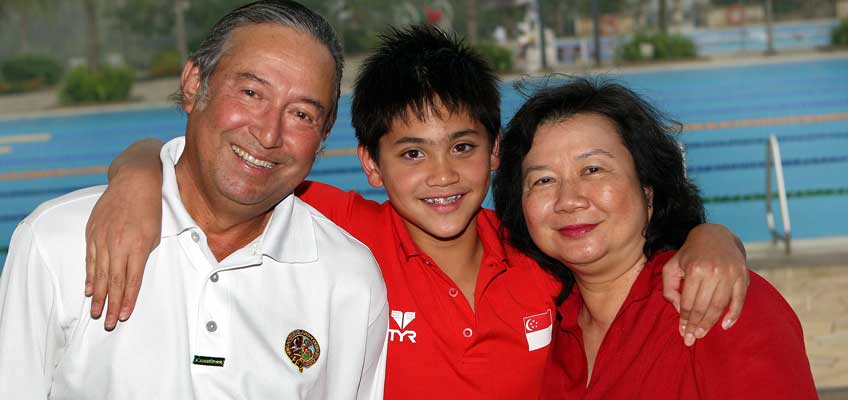
Curious to know how far their child could go in the sport, the Schoolings send Joseph for a bone age test. The test, which determines growth potential, revealed that he should hit around 1.90 metres, an optimum height for top swimmers. He now stands at about 1.88m.

2008

A 13-year-old Schooling sets a personal best in the 200m butterfly, which is faster than the US age-group mark by some three seconds.

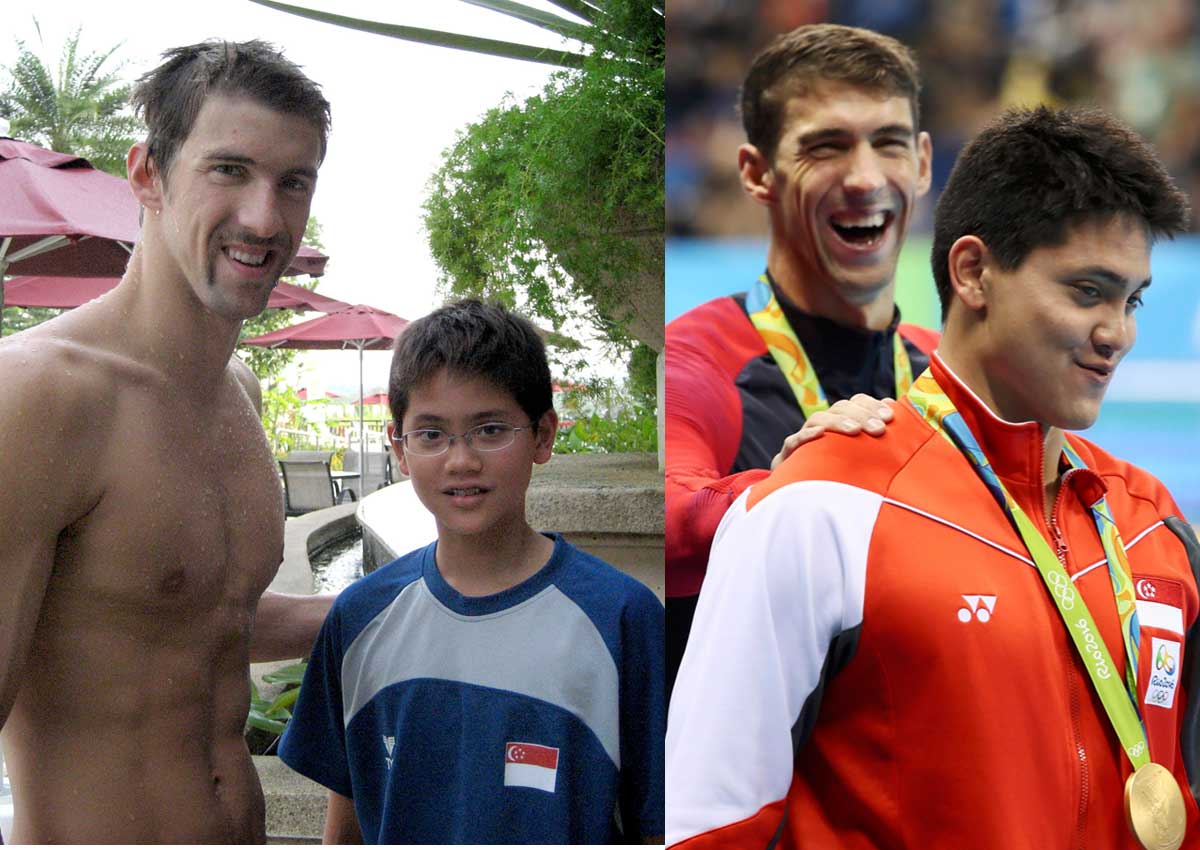
He also gets further inspired by a meeting with idol Michael Phelps when the American great was here to prepare for the Beijing Olympics in 2008.

2009

The former Anglo-Chinese School (Independent) student joins The Bolles School in the United States.

Still more than two months away from his 14th birthday, Schooling smashes Singapore’s oldest junior record – the Under-14 200m butterfly – with a time of 2:10.56, almost three seconds faster than Tan V-Meng’s mark set in 1987.

The youngster also eclipses his own 100m butterfly time by almost a second, clocking 59.40.

He said then: “I’m sacrificing my childhood – my time with friends, but I want to look back after I’ve reached my goal and be able to say that I made it.”

2010

Barely a year since moving to Florida, working with former Olympics bronze-medallist Sergio Lopez is beginning to bear great fruit, as the 1.82m teenager is ranked the fastest in the US for his age in the 100 yards butterfly (short-course).

2011

FEBRUARY

Schooling, 15, is part of a school relay team which shatter America’s age-group (15-16) 4×100 yards medley relay record by almost six seconds, but it was not acknowledged as a new national record because he is not a US citizen.

JUNE

Sets three new national records in the 100m butterfly (54.19), 200m butterfly (2:00.05), and 200m individual medley (2:05.07) at the National Swimming Championships.

JULY

At this point, he owns the 50m (24.95) 100m (53.71) and 200m butterfly (1:57.95) national records with timings clocked at the ASEAN School Games.

NOVEMBER

Schooling, 16, announces his arrival in senior international competition with impressive swims at the SEA Games in Palembang, winning the 200m fly in 1:56.67, a new Games and national record which was also under the London 2012 ‘A’ qualifying mark.

He also sets new national marks in the 50m fly (24.06), 200m IM (2:04.85) and 100m fly (53.18).

DECEMBER

At the US Short-Course Junior National Championships, the Singaporean surpasses American superstar Michael Phelps’ age-group (15-16 years) time by nine-hundredths of a second in the 100 yards butterfly (short course) by clocking 47.06.

2012

APRIL

Father Colin creates swimming aids for his son and delivers them to Florida.

These include the drag chute, which is attached to the swimmer’s waist via a cord and builds strength and endurance through resistance.

This is also Colin’s most elaborate masterpiece since he started customising swimming devices when Joseph was just a young child.

MAY

Aged 16, Schooling becomes the youngest winner of the Sportsman of the Year award for his exploits in 2011.

JULY

Making his Olympic debut, Team Singapore’s youngest member at London 2012 has a rare nightmarish outing, as his swim cap and goggles are rejected before the 200m butterfly heats as they fail to meet Olympic regulations.

After scrambling to find replacements, he clocks 1:59.18, and does not make the semis.

Schooling also fails to make the semi-finals of the 100m fly, with his time of 53.63 some way off his personal best of 53.18.

2013

MARCH

Schooling swims 54.71 to beat 12-time Olympic medalist American Ryan Lochte (55.20) to win the 100m butterfly (long course) final at the Speedo South Sectional Championships in Florida.

JULY

Schooling misses out on the World Championships 200m butterfly final, but his time of 1:56.27 is a new national record.

He also becomes the first Singapore swimmer to go below the two-minute barrier in the 200m IM, when he clocks 1:59.99 in Barcelona.

OCTOBER

Schooling is granted deferment from National Service to allow him to prepare for the 2016 Rio Olympics.

He also agrees to join the University of Texas at Austin to go under the tutelage of Eddie Reese, the legendary assistant coach of the US men’s team at the London Olympics.

DECEMBER

It becomes clear that Schooling is a big fish in the small ASEAN pool as he collects six gold medals from the SEA Games in Naypyidaw.

2014

JULY

Schooling wins Singapore’s first-ever Commonwealth Games swimming medal, a silver behind South African star Chad le Clos in the 100m butterfly in 51.69.

Despite finishing seventh in the 50m butterfly final, his 23.43 set in the heats is a new Asian record.

SEPTEMBER

Schooling claims the full complement of medals at the Asiad, where he wins silver in the 50m butterfly, bronze in the 200m butterfly and gold in the 100m butterfly to become the first male swimmer to win an Asian Games gold since Ang Peng Siong in 1982.

2015

JUNE

Extending his amazing streak at the SEA Games, Schooling takes gold in all nine events he entered for on home soil, setting new Games records in each of them, including the 50m freestyle (22.47) which was previously held by Ang (22.69) for 33 years.

AUGUST

It gets even better for Schooling, who becomes the first Singaporean to medal at the World Championships when he wins bronze in the 100m butterfly in 50.96, a new Asian record. Le Clos wins in 50.56, while Hungarian Laszlo Cseh requires a national record of 50.87 to take silver.

2016

JUNE

He claims his first win over Phelps when he out-touched the American by seven hundredths of a second in the 100m butterfly at the Longhorns Elite Invite in 51.58.

AUGUST

He “warms up” at Rio 2016 by clocking a new 100m freestyle national record of 48.27 in the heats, before finishing last of 16 swimmers in the semi-finals.

But it is in the 100m butterfly that Schooling truly dazzles.

A time of 51.41 is good enough to top the 43-swimmer field in the heats and he goes on to set another Asian record as his 50.83 in the semi-finals is 0.6 seconds faster than the next best performer le Clos.

on Facebook

#Rio2016: “Son, I love you. You’ve done the nation very proud,” says Colin Schooling on our FB live video (5 minute mark).

Posted by The Straits Times on Friday, 12 August 2016

AUG 13

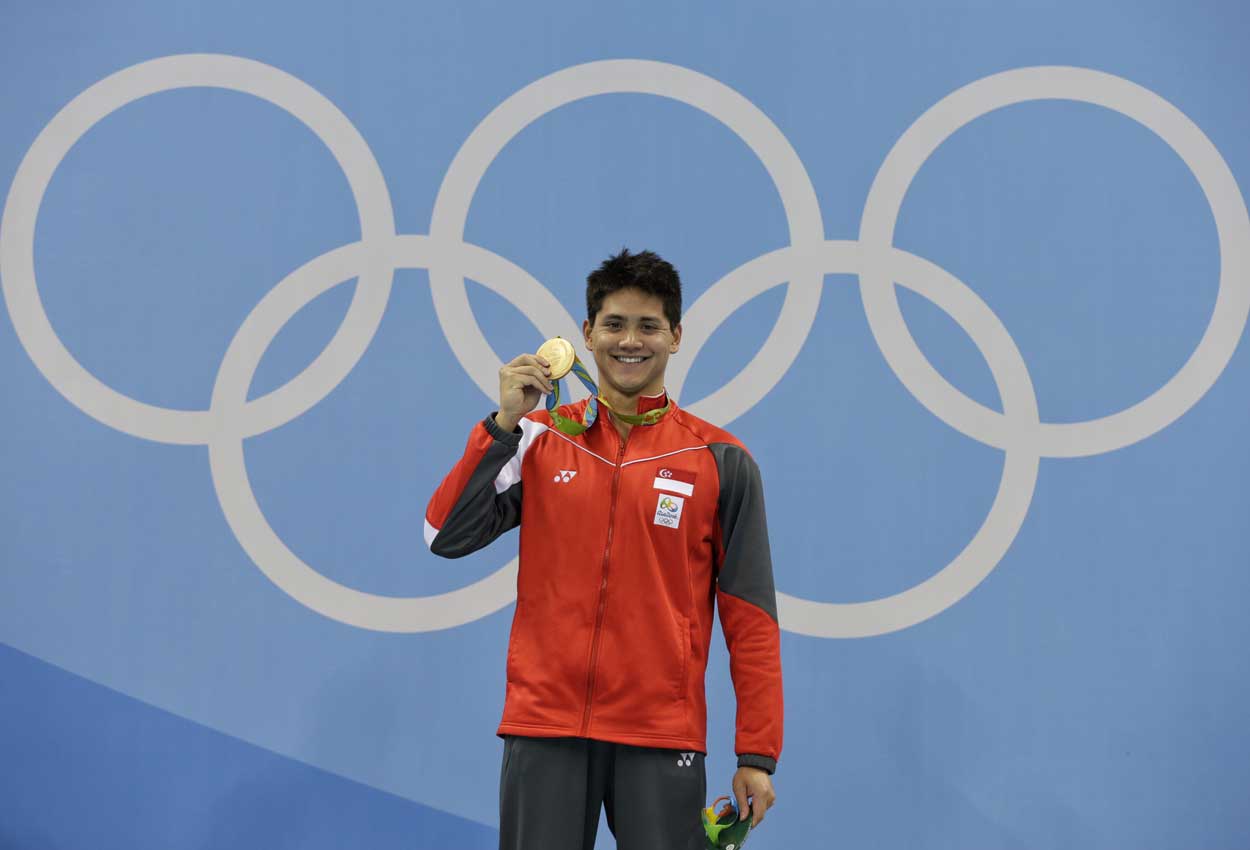
History is made when Schooling touches the wall first in a new Olympic record of 50.39 in the 100m butterfly final to win Singapore’s first-ever Olympic gold, beating Phelps, le Clos and Cseh into a dead-heat silver by 0.75 seconds.


This article was first published on August 14, 2016.
Get The New Paper for more stories.
Image: 
Category: 
Blurb: 
Joseph Schooling's dad created swimming aids for him and delivered them to Florida
Publication Date: 
Sunday, August 14, 2016 – 14:15
Send to mobile app: 
Source: 


Rotator Headline: 
Joseph Schooling – the road to Olympic gold
Rotator Image: 
Story Type: 
Others

Source link

Grab: $3 Off GrabCar Rides to/fro Swimming Complexes from 14 – 31 Aug 2016

0

GRAB: $3 off GrabCar rides to/fro swimming complexes (till 31 Aug)

Grab: $3 Off GrabCar Rides to/fro Swimming Complexes from 14 – 31 Aug 2016

Grab a ride to/from the swimming complexes! Still buzzing from Joseph Schooling’s Olympic gold medal? From 14 – 31 Aug, enjoy $3 off your next 3 GrabCar rides when you travel to or from 23 public swimming complexes in Singapore.

Source

Feng to the fore again

0

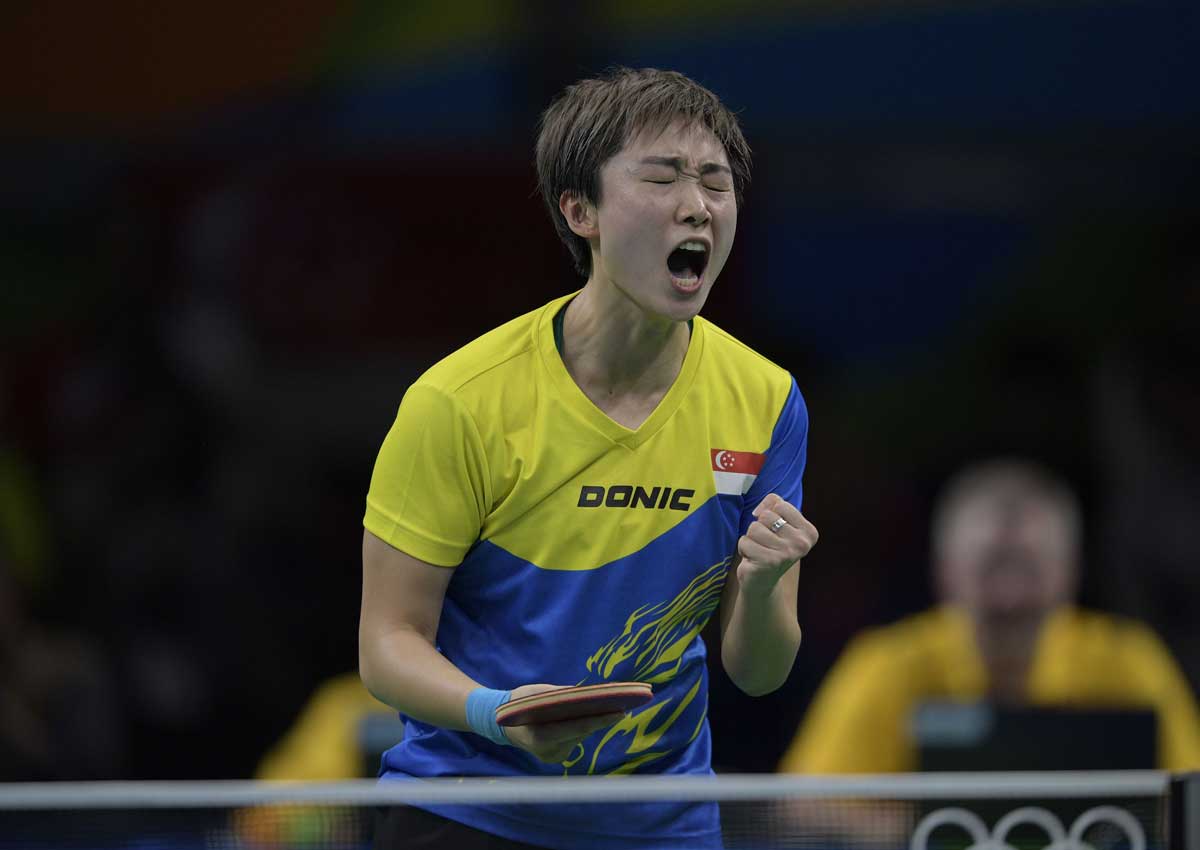
Summoning their fighting spirit, the Republic’s women’s table tennis team claimed a dramatic 3-2 quarter-final win over South Korea yesterday in Brazil.

So often cast as the country’s table tennis heroine, Feng Tianwei reprised that role with a decisive contribution in the come-from-behind victory at the Riocentro Pavilion 3.

The world No. 4 won both her singles ties, book-ending the best-of-five match that lasted almost three hours to send fourth-seeded Singapore into a last-four clash against powerhouses China, who strolled to a 3-0 win over North Korea in the other morning match.

The women’s national captain got Singapore on the scoreboard with a 3-0 (11-2, 11-9, 12-10) win over Suh Hyo Won but the seventh-seeded Koreans immediately levelled the scores.

World No. 11 Jeon Ji Hee dispatched Singapore’s Yu Mengyu 3-1 (11-8, 11-4, 9-11, 11-6) in the next tie.

The 13th-ranked Yu, then partnered Zhou Yihan in the following doubles tie. The pair quickly found themselves facing a two-game deficit, losing the opening games 7-11, 4-11 inside 11 minutes.

But the Olympic debutantes fought back 11-4, 12-10 before finally succumbing 7-11 and losing 3-2 overall to Jeon and her partner Yang Ha Eun in a gripping 40-minute encounter.

The Koreans, who were beaten by Singapore in this team event at the 2008 Beijing and 2012 London Games, sensed their chance for revenge.

Despite being the lowest-ranked paddler of the six women, Zhou defied her world No. 32 ranking to stun Suh, ranked 14 spots higher, with a 3-0 (11-8, 11-9, 11-8) win to stave off elimination and restore parity in the match.

Feng had fallen in the quarter-finals of the women’s singles and was determined not to suffer a similar fate in the team event.

Facing world No. 26 Yang in the deciding tie, Feng kept her nerve and prevailed 3-1 (11-3, 9-11, 16-14, 11-4) which included a tense 14-minute third game to ensure Singapore remain in the medal hunt.

Table tennis has been the country’s most successful sport at the Summer Games, bringing home one silver and two bronze medals from the last two editions.

jonwong@sph.com.sg


This article was first published on August 14, 2016.
Get a copy of The Straits Times or go to straitstimes.com for more stories.

Image: 
Category: 
Publication Date: 
Sunday, August 14, 2016 – 14:15
Keywords: 
Send to mobile app: 
Source: 


Rotator Headline: 
Olympics: Singapore beats South Koreans 3-2 in women's table tennis q-finals, faces China in semis
Story Type: 
Others

Source link

Schooling learnt to be fearless from first coach

0

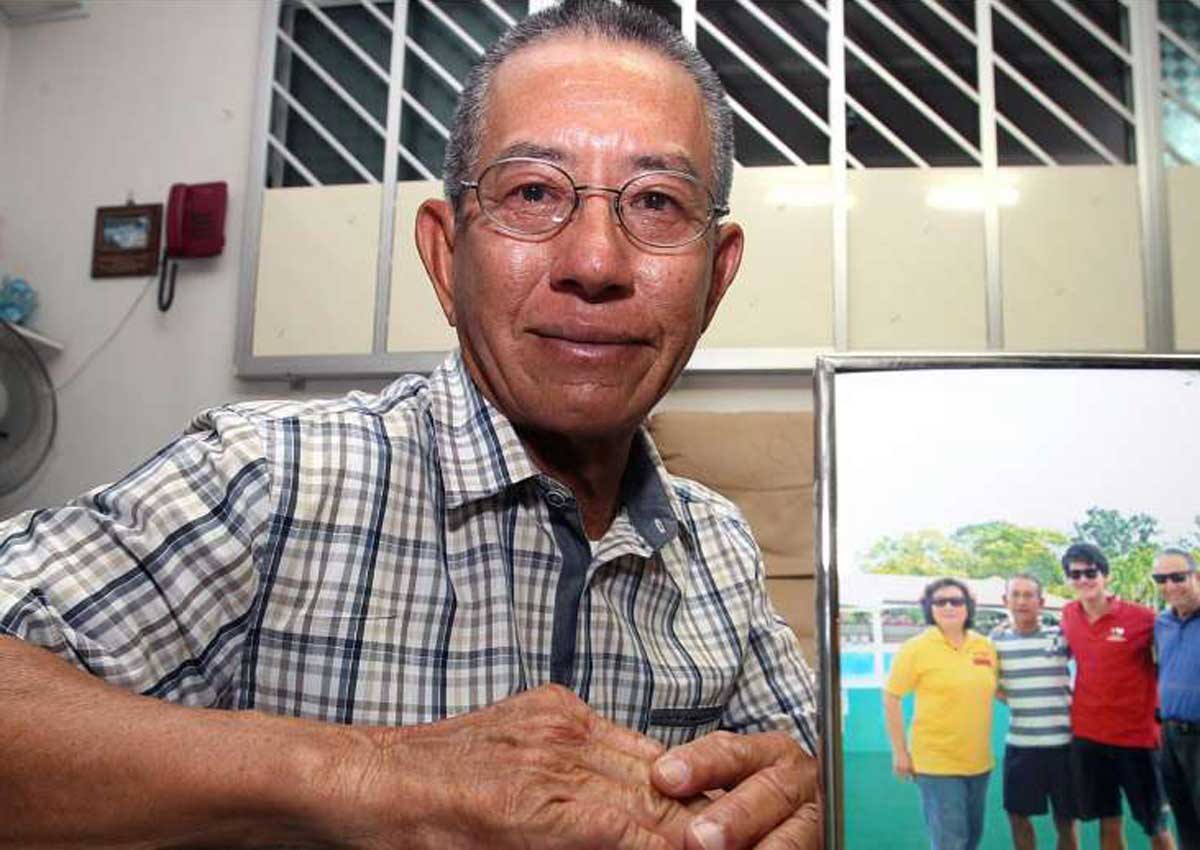
His hands were tied but his spirit was free. He became a part of history without even getting his feet wet. Mr Vincent Poon got up at 7am yesterday as usual, but could do nothing for his former student Joseph Schooling other than willing him on.

He put his classes on hold to watch, on TV, his former student win Singapore’s first Olympic gold medal.

Mr Poon, who is Schooling’s first swimming coach, told The Sunday Times: “My heart was beating faster and faster before the race. We (he and his wife) were clapping and cheering. It’s so unbelievable.

“I thought to myself before the race: Bronze would be very good. But Joseph wanted gold and he was so confident he could do it.”

The 70-year-old first taught Schooling, then aged three, at Tanah Merah Country Club.

“He worked really hard and listened. There was a difference with Joseph and you could tell he would be a good swimmer,” he said.

To Mr Poon, Schooling’s quest to win was evident early. During the four years of tutelage, the coach would pit him against older and bigger boys.

Thus, yesterday morning must have brought a sense of deja vu for Schooling when he stood on the block next to Michael Phelps, 9cm taller and 10 years older.

“I remember a 50m butterfly race and this boy stood beside (Joseph) and he was so much taller and bigger,” Mr Poon recalled.

“Joseph didn’t want to swim. He didn’t want to lose but I told him size didn’t matter that much. He must have the right mindset and be fearless and try his best.” Schooling won that race.

“Now he has that mindset. He’s so confident of himself. The learning process he’s gone through shows,” the coach said. Mr Colin Schooling, Joseph’s father, agreed that Mr Poon showed his son the way. He said: “Vincent inculcated that hunger in him to win.

“Joseph is not only a swimmer but also he’s a racer. There’s a difference. There are thousands of swimmers in the world but only a few of them can be called racers.”

Champ will always be his Auntie Yolly’s ‘waterboy’

Coaches, teammates and rivals may have seen the evolution of Joseph Schooling the swimmer.

But very few would have witnessed the boy-to-man story of Singapore’s Olympic champion from diapers to the Mizuno trunks who went prospecting in Rio de Janeiro and struck gold.

Ms Yolanda Pascual, or “Auntie Yolly”, is Schooling’s loyal domestic helper who has seen him through his formative years to adulthood, although in her loving eyes he is always her “waterboy”.

In a Sunday Times phone interview yesterday, she said: “I’ve always believed in him. I was watching and shouting for him. I cannot express how happy I am… I was jumping and crying after he won.”

Still working for the Schooling household after 19 years, the pair have always been close. The 21-year-old Olympic gold medallist has even called her a “second mum” in a YouTube video made by Singtel, where he showed his appreciation for her support.

She said: “When I miss him, I read our messages (on the phone). He’s like my own son.”

The Filipina started working for Schooling’s family in 1997. She recalled: “He was playful like all boys, but (has) always been loving and caring and a very good boy. He never shouts at me or anybody.”

The 56-year-old has a file filled with newspaper clippings of him. She said: “He’ll always say ‘I want to be No. 1’. I remember once we were watching (Michael) Phelps on TV, he told me he wanted to be there and be like him, and I knew he could do it. He has a very strong will; if he wants something, he’ll get it.”

But he never quite had a normal childhood – a sacrifice he made to get into the record books. “When friends asked (him) to go out, he usually couldn’t because he had practice early the next day,” said Ms Pascual, who is married with two daughters.

When he experienced lows, she would always be there, behind the scenes, to pick him up.

She said: “He told me when he was very tired, and I’d give him a massage. Even now, when he comes back, he still asks for massages and he’s still like the young boy he was before he left.”


This article was first published on August 14, 2016.
Get a copy of The Straits Times or go to straitstimes.com for more stories.

Image: 
Category: 
Publication Date: 
Sunday, August 14, 2016 – 14:15
Send to mobile app: 
Source: 


Story Type: 
Others

Source link

Time stops… then a nation celebrates

0

The island yesterday felt the full power of sports as a unifying force. For 50.39 seconds, shortly after the clock struck 9.13am, the Republic stood still, gripped and enthralled by a flying fish, a son of Singapore, who won the country’s first Olympic gold medal.

Some screams were louder than others at the different locations that The Sunday Times visited. But uniformly, across the island, Singaporean hearts swelled with joy and pride as they gathered to watch Joseph Schooling make history.

At the HDB Hub in Toa Payoh, more than 150 people had their eyes glued to a large LED screen as the 21-year-old touched home first to win the 100m butterfly final.

And, in a typical sign of the times, they applauded and whipped out their smartphones to capture the moment.

Their celebration of the Republic’s first Olympic gold medal was a quiet one, but the smiles on their faces spoke volumes about what Schooling’s feat meant to them.

Engineer Chandra Segaran, 58, who was beaming from ear to ear after the race, said: “I thought qualifying for the finals was a big achievement, but for a tiny nation like Singapore to get a gold medal at the Olympic Games… it is fantastic.”

At the OCBC Aquatic Centre, about 50 Singaporeans erupted into loud cheers as Schooling finished ahead of the United States’ Michael Phelps, South Africa’s Chad le Clos and Hungary’s Laszlo Cseh, to win gold in a new Olympic record time.

Former national swimmer Joscelin Yeo, who was at the centre with her family, said: “I am at a loss for words; I am just so happy, so proud of him.”

She and other supporters stood at attention and sang as the Singapore National Anthem was played at the medal award ceremony. At the Chinese Swimming Club, a group of 60 – mostly young swimmers after their morning training, and their parents – roared in unison.

Methodist Girls’ School student Gan Ching Hwee, who is a fan of five-time Olympic gold medallist Katie Ledecky, is now a convert. The 13-year-old said: “He (Schooling) was about a body length ahead of the rest, and I was cheering him on. He did Singapore proud. My goal is to go for the 2020 Olympics, and I hope I can win like him.”

Football coach D. Ramanathan, 44, who joined a crowd of 120 at Woodlands Stadium for a screening, added: “This is going to have an impact on Singapore like we have never seen before. Previously, when we won the Malaysia Cup (in 1994), every boy started to play football. It is going to be the same thing.”

Prime Minister Lee Hsien Loong congratulated Schooling in a Facebook post, saying: “My heartiest congratulations to Joseph Isaac Schooling for his historic gold medal win, and Olympic record of 50.39 seconds for the 100m butterfly! This is Singapore’s first Olympic gold medal ever, and also our first medal for #Rio2016.

“It is an incredible feat to compete among the world’s best, stay focused, and emerge victorious. Congrats once again to Joseph, you made us very proud today.”

cnicole@sph.com.sg

Additional reporting by Yogaraj Panditurai, Jean Iau and Alvin Chia


This article was first published on August 14, 2016.
Get a copy of The Straits Times or go to straitstimes.com for more stories.

Image: 
Category: 
Publication Date: 
Sunday, August 14, 2016 – 14:00
Send to mobile app: 
Source: 


Rotator Headline: 
Time stops… then a nation celebrates Schooling's Olympic victory
Story Type: 
Others

Source link

Drug killings to be investigated, Philippines tells US

0

Manila – The Philippines has vowed to investigate reports of a wave of extrajudicial killings, the government said Sunday, after Washington warned military aid to its Asian ally was dependent on respect for human rights.

According to media reports, nearly a thousand people have been killed since President Rodrigo Duterte won a landslide election victory in May largely on a pledge to kill tens of thousands of criminals.

The US embassy warned the Duterte government on Friday that millions of dollars of military aid alloted to the Philippines was tied to adherence to the rule of law, due process and respect for human rights.

“We are concerned by reports regarding extrajudicial killings of individuals suspected to have been involved in drug activity in the Philippines,” it said.

“We strongly urge the Philippines to ensure its law enforcement efforts are consistent with its human rights obligations,” the embassy added.

A Philippine foreign department statement sent to AFP on Sunday said that it took note of US views on the issue, adding Manila was focused on the eradication of drugs in society.

“Nevertheless, while pursuing this objective, the Philippine government is committed to the rule of law, and the protection of human rights for all.”

It added: “We do not condone any unlawful killings and Philippine authorities have been instructed to immediately look into these incidents and bring the perpetrators to justice.”

Philippine police said Friday they had killed 550 drug suspects while arresting nearly 8,000 others since after the May election.

However, ABS-CBN, the country’s largest broadcaster, said more than 400 other people have been killed since then by shadowy assassins who leave cardboard signs beside their victims accusing them of narcotics crimes.

Police said that while it was investigating these other killings, no suspects had been arrested.

Image: 
Category: 
Publication Date: 
Sunday, August 14, 2016 – 12:45
Send to mobile app: 
Source: 


Story Type: 
Others

Source link

A seven-year struggle to Olympic glory

0

Before the euphoria of making history in the pool yesterday, the Schoolings had to first endure seven years of toil on the road to the top of the Olympic podium.

It began with the difficult decision of sending their only child halfway across the world in 2009 to the United States, in pursuit of the training environment that could mould him into the world-beater he is today.

Joseph Schooling, just 14 then, was the one who pleaded to go. His parents were the ones hesitant to take the leap of faith.

Hours before Schooling’s historic swim yesterday, his mum May recalled to The Sunday Times how the swimmer’s obsession with competing at the Olympics began after meeting his grand-uncle Lloyd Valberg, coincidentally Singapore’s first representative to the Games at the 1948 London edition.

To help Joseph fulfil his dream, they sent him to the Bolles School in Florida, but endured a trying start. The champion himself said yesterday of those early days: “I wasn’t the easiest guy to train. I didn’t want to be there.”

Husband and wife took turns shuttling between Singapore and Florida to take care of their young son, each staying months at a time.

It meant the family of three were separated more than they were together, spending an average of just three weeks together a year.

Said Mrs Schooling, her voice hoarse from days of cheering her son on from the stands: “I have got to take care of two households on both sides of the world.

“It has been tough. Tough because we are not getting any younger,” said the 60-year-old.

“As it is now, I am finding it more and more difficult to get over the jetlag of long haul. Age is catching up.”

She is a chartered accountant, while husband Colin, 68, is a businessman. He was not in Rio as he was not feeling well.

But after watching the live telecast from the home of Joseph’s good friend Teo Zhen Ren, a fellow national swimmer, Mr Schooling’s first words to his son were: “I love you. Son, you have done the nation very proud.”

In Joseph’s build-up to the Olympics, Mrs Schooling travelled to Austin, Texas, where he is now based, to make sure that his meals and needs were well taken care of.

Financially, it has also drained the family. Tuition, accommodation, transport and other expenses over the years has required a hefty investment of nearly US$1 million (S$1.35 million).

Joseph is also a Sports Excellence scholar. The scholarship supports elite athletes with up to $90,000 in median annual stipend to train and compete at the highest level.

Mrs Schooling said: “It is tough on family life, missing each other. Financially, it has also been a big juggle, using up all our reserves and having to budget like crazy.

“It has been tough on all of us, but he wants it.”

maychen@sph.com.sg


This article was first published on August 14, 2016.
Get a copy of The Straits Times or go to straitstimes.com for more stories.

Image: 
Category: 
Publication Date: 
Sunday, August 14, 2016 – 14:00
Send to mobile app: 
Source: 


Story Type: 
Others

Source link

Thai police 'know who was behind' tourist town bombings: spokesman

0

Bangkok – Thai police said Sunday they “know who was behind” a recent wave of bombings that rattled tourist destinations across the south, shattering a surface calm imposed by the kingdom’s military junta.

No one has claimed responsibility for at least 11 small explosives and series of suspected arson attacks that ripped across core tourist hubs Thursday night and Friday morning, killing four locals and wounding dozens, including European tourists.

The bombs, most of them detonated in twin blasts, struck holiday resorts during a long weekend, including the seaside town of Hua Hin and the island of Phuket.

“Our investigation is progressing. We know who was behind it,” deputy police spokesman Piyapan Pingmuang told AFP Sunday.

He repeated the military government’s stance that a domestic group was behind the coordinated attacks but refused to provide further details.

“I reaffirm that it was an act of local sabotage, not terrorism. We do not have terrorism in Thailand,” he said.

Two people have been detained for questioning in Hua Hin – rocked by four bombs – and one arrest warrant has been issued over a suspected arson attack in Nakhon Si Thammarat province, the spokesman said.

Thai authorities have not provided a possible motive behind the assault, but officials have been quick to downplay speculation that it was the work of Muslim rebels fighting a long-running insurgency against state troops further south.

The conflict zone – the only Muslim-majority area in Buddhist Thailand – sees regular bombings and shootings, but the violence rarely leaks outside the three provinces bordering Malaysia.

The recent blasts, many of them detonated in pairs by mobile phones, came as an affront to a junta that prides itself on bringing a measure of stability to Thailand since its 2014 power grab.

The kingdom has weathered a decade of political turmoil amid a bitter power struggle.

The conflict broadly pits ex-premier Thaksin Shinawatra and his rural supporters against a Bangkok-based elite that backed his ouster in 2006 and the recent coup that toppled his sister’s administration.

The recent blasts came only days after the junta won a referendum vote on a new charter it drafted.

The document, which the Shinawatra clan opposed and said would make Thailand less democratic, was approved by voters living in the bomb-hit provinces.

The only regions to reject it were the Shinawatra strongholds in the north and northeast, plus the three insurgent-torn provinces in the deep south.

Rights groups said the junta’s harsh bans on campaigning ahead of the poll prevented it from being a free and fair vote.

Image: 
Category: 
Publication Date: 
Sunday, August 14, 2016 – 11:54
Send to mobile app: 
Source: 


Rotator Image: 
Story Type: 
Others

Source link