Home Blog Page 3082

Japan protests as China ships sail near disputed isles

0

TOKYO – Tokyo protested to Beijing Sunday after Chinese coast guard ships sailed into territorial waters surrounding disputed islands in the East China Sea, Japan said.

Four Chinese vessels entered the waters surrounding islets, called the Senkaku in Japan and the Diaoyu in China, around 10.00 am local time (0100 GMT), according to Japan Coast Guard.

They left the territorial waters within an hour, the coast guard said.

The two countries are locked in a long-running dispute over the uninhabited islets.

Tokyo has lodged at least 32 protests through diplomatic channels since August 5 over what it says have been about 30 intrusions by Chinese vessels in the territorial waters.

The director general of the Japanese foreign ministry’s Asian and Oceanian affairs bureau, Kenji Kanasugi, issued a protest Sunday to the Chinese embassy in Tokyo, saying that the ships’ “incursion” violated Japan’s sovereignty, the ministry said in a statement.

“Despite Japan’s repeated strong protests, the Chinese side has continued to take unilateral actions that raise tensions on the ground, and that is absolutely unacceptable,” the statement added.

China is also involved in maritime disputes in the South China Sea with countries including the Philippines, but a UN-backed tribunal has ruled that Beijing’s claims were invalid.

Image: 
Category: 
Publication Date: 
Sunday, August 21, 2016 – 17:18
Send to mobile app: 
Source: 


Hermes ID: 
2 538 386
Hermes ID String: 
VLJAPAN21
Hermes Author: 
GRONGLOH
Story Type: 
Others

Source link

S Korea warns of possible N. Korean assassination squads

0

SEOUL – South Korea warned Sunday of possible North Korean assassinations and kidnappings in revenge for recent high-profile defections to the South.

With tensions also high before a large-scale South Korea-US military exercise starting Monday, the Unification Ministry in Seoul said Pyongyang was bent on provocation.

A ministry official told reporters the defection to Seoul of North Korea’s deputy ambassador to Britain and his family had put the North in “a very difficult situation”.

“Considering (North Korean leader) Kim Jong-Un’s character, it is very dangerous,” the official said on condition of anonymity.

“It’s highly likely that North Korea will make various attempts to prevent further defections and unrest among its people.” The official cited assassination attempts and terror attacks against defectors in the South as well as the abduction of South Koreans abroad as possible provocations.

He noted attempts to assassinate Hwang Jang-Yop, the North’s chief ideologue and former tutor to previous leader Kim Jong-Il, who defected to the South in 1997 and died of natural causes in 2010.

The official also said Kim Jong-Un had dispatched squads to the Chinese border “to harm South Koreans” following the defection in April of a group of North Korean overseas restaurant workers.

Deputy ambassador Thae Yong-Ho was believed to have worked at the embassy in London for 10 years before his defection announced last week.

The South said he was driven by disgust for the Pyongyang regime, admiration for South Korea’s free and democratic system and concerns for his family’s future.

North Korea, in a vitriolic response Saturday, claimed that the “human scum” had embezzled state funds, raped a minor and spied for the South and had fled “for fear of legal punishment for his crimes”.

The 12 waitresses and their manager had been working at a North Korea-themed restaurant in China. They made headlines when they arrived in the South in April as the largest group defection for years.

While Seoul said they fled voluntarily, Pyongyang claimed they were kidnapped by South Korea’s National Intelligence Service and waged a vocal campaign through its state media – including interviews with family members – for their return.

Seoul said last week the 13-strong group was now free to settle in South Korean society after the intelligence service completed investigations into their case and allowed them to leave custody.

A spokesman for the North’s emergency committee set up for “rescuing” abductees described that announcement as a “mean plot” aimed at “covering up the truth behind the group abduction”.

“Keeping them hidden from the public… citing ‘safety reasons’ shows that the puppet government’s announcement is a complete fabrication,” he said.

“We will continue fighting until we can rescue and bring back our female citizens.” Nearly 30,000 North Koreans have fled poverty and repression at home to settle in the capitalist South.

But group defections are rare, especially by staff who work in the North Korea-themed restaurants overseas and are handpicked from families considered “loyal” to the regime.

On Monday Seoul and Washington begin their annual joint Ulchi Freedom Guardian (UFG) exercise involving tens of thousands of troops.

“With the start of the UFG drills tomorrow, we ask all citizens to be on guard for North Korean terror threats and co-operate with the government’s efforts,” said the unification ministry official.

The two-week drill is one of a number of annual joint exercises viewed as provocative rehearsals for invasion by Pyongyang.

On Sunday a spokesman for North Korea’s Committee for the Peaceful Reunification of Korea said Pyongyang’s determination to retaliate “will only grow stronger” if such exercises continue.

“It is our firm position that we will mercilessly attack the threats of invasion and provocation from the enemies with our nuclear deterrence,” the spokesman said in a statement on the North’s official KCNA news agency.

Image: 
Category: 
Publication Date: 
Sunday, August 21, 2016 – 17:14
Keywords: 
Send to mobile app: 
Source: 


Hermes ID: 
2 538 218
Hermes ID String: 
VLASSASS21
Hermes Author: 
GRONGLOH
Story Type: 
Others

Source link

Indonesia investigates suspected militant plot to attack Bali

0

JAKARTA – Indonesian authorities are investigating whether a suspected militant arrested last week was plotting an attack on the resort island of Bali, police said.

Bali, a popular tourist destination, saw a number of attacks by homegrown militants in the early 2000s, the deadliest being a nightclub bombing that killed 202 people, mostly Australians.

Police found a bomb and “high (impact) explosive materials”during a raid on the suspect’s house on the western island of Sumatra, media said.

The man, whom police have yet to identify, was arrested on suspicion of having links with extremist group Islamic State and of being involved in planning a suicide bombing at a police station in the central Javanese city of Solo last month.

The Solo attack only killed the bomber himself and wounded one police official.

Edy Hartono, chief of the counter-terrorism police unit, said police were looking into the suspected Bali plot. “It was still just a plan,” he told Reuters, declining to elaborate.

The arrest in Lampung, Sumatra, was among a series of terrorism-related arrests across several cities in Indonesia last week as authorities intensify a security crackdown in the world’s largest Muslim-majority country.

Indonesia saw its first Islamic State-linked attack in January when four militants mounted a gun and bomb attack in a busy commercial district in the capital Jakarta. Eight people were killed, including the militants.

Image: 
Category: 
Publication Date: 
Sunday, August 21, 2016 – 16:26
Keywords: 
Send to mobile app: 
Source: 


Hermes ID: 
2 538 202
Hermes ID String: 
VLINDO21
Hermes Author: 
GRONGLOH
Story Type: 
Others

Source link

How did California Fitness get into such bad shape?

0

In its heyday, California Fitness revolutionised the fitness scene in Singapore. Almost 20 years later, the chain has gone bust. Jalelah Abu Baker traces the rise and fall of the once-popular mega-gym.

California Fitness was once the talk of the town with three floors of top-notch equipment in the heart of Orchard Road, and those cool glass walls which gave gawkers a chance to admire the lean bodies exercising within.

Introduced here as a tie-up between American fitness guru Ray Wilson and a Hong Kong-based property company, it was considered revolutionary when it entered the Singapore market in January 1998. The mega-gym made fitness fashionable.

Close to 20 years later, the chain, which had four branches in Singapore, has completely shut down as its owner, JV Fitness, lacked the finances to keep it running, according to officially appointed provisional liquidators.

JV Fitness had chalked up losses of more than $25.6 million as at June 30 this year, said a report by its provisional liquidators Ferrier Hodgson. JV Fitness was already $21.7 million in the red in January last year, and had been losing money since 2013, financial statements show. But it kept the chain going by signing new members and getting them to pay their fees up front.

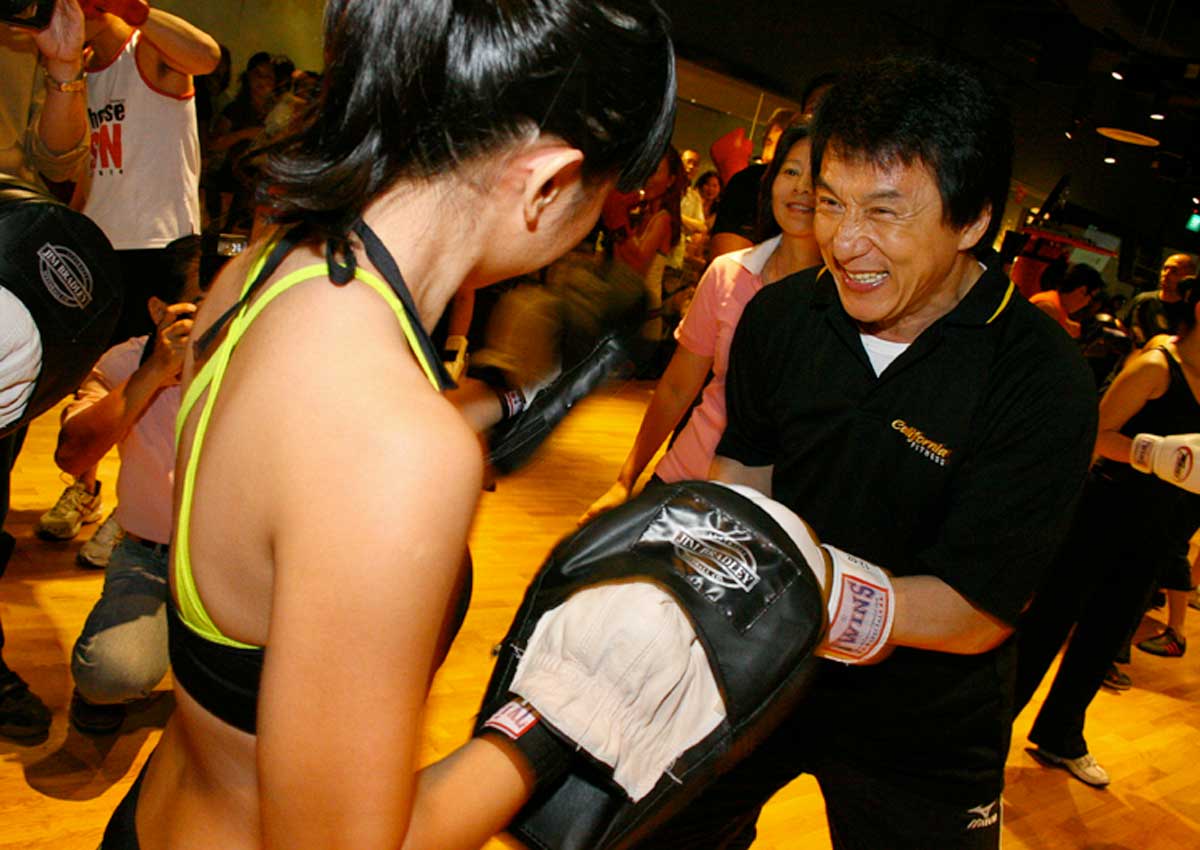
Two of its branches – in Orchard Road and Raffles Place – closed abruptly earlier this year. Its two remaining branches, in Novena Square and Bugis Junction, which were opened officially by action star Jackie Chan in the mid-2000s in a tie-up with the famous Hong Kong actor, shuttered on July 20.

A report in Hong Kong newspaper South China Morning Post(SCMP) on the same day said that a branch in Beijing was the only one still in operation, but on a temporary basis.

Up until its closure, California Fitness here had kept mum about any financial difficulties. In fact, a spokesman, responding to queries, said in March: “We have been in Singapore for more than 18 years and we have strong financial backing. We are proud of our stability and will continue to offer reliable and quality services for our members.”

Financial troubles plaguing the company became public knowledge, however, when all 12 branches in Hong Kong were shut amid a winding-up petition and other court action. It is estimated that the firm owes HK$130 million (S$22.5 million) in rent and other operating costs, said SCMP.

California Fitness’ history in Asia started when Canada-born Eric Levine founded the first branch in the region in Hong Kong in 1996. At the time, he had just sold off a chain of fitness centres he had built, which had gained mainstream appeal particularly in California, according to a report by Forbes in 2008.

He focused his attention on Asia, opening branches in Singapore, Hong Kong and China. At one point, the chain had expanded to two dozen health clubs across Asia.

The chain reportedly broke even in just two months of its opening in Singapore, with 4,000 members, according to Mr Levine then. While it is not clear when he exited the chain in Asia, it appears to have changed hands along the way.

Most recently, it has been run by JV Fitness, whose Singapore business registration lists a JV Fitness (BVI) Limited under a British Virgin Islands post office box .

Hong Kong media reported that problems had plagued the finances and sales tactics of the chain months before its closure.

In Singapore, as early as May 1998, The Straits Times reported on two customers’ claims that the gym pressured them to sign up. Their claims were followed by several similar ones over the years.

There were also other criticisms levelled against the chain – cancellation of lifetime memberships, random membership terminations, overcrowding and misrepresentation. Business experts have pointed to poor cash flow management and failure to keep up with fitness trends as possible reasons for the eventual demise of the chain.

California Fitness’ practices – which have now left consumers high and dry following the chain’s closure – prompted the Consumers Association of Singapore (Case) to call them “questionable”.

Said the consumer watchdog’s executive director, Mr Seah Seng Choon: “Case will discuss with the (Government) and the relevant stakeholders to look into protection for consumers’ pre-payment.”

GYM CHAIN’S FORTUNES OVER THE YEARS

  • January 1998: The first California Fitness gym opens here in Somerset, in a tie-up between a Hong Kong property company and American fitness guru Ray Wilson.
  • April 1999: The second outlet at Republic Plaza opens.
  • October 2005: Well-known Hong Kong movie star Jackie Chan opens Bugis outlet, known as a California Fitness Jackie Chan Sport Centre, to fanfare after investing in the chain.
  • November 2006: The second California Fitness Jackie Chan Sport Centre opens.
  • February 2011: California Fitness’ Orchard branch moves from Somerset to Ngee Ann City.
  • February 2016: Its Orchard branch on the eighth level of Ngee Ann City ceases operation due to “variable business strategies and decisions”.
  • July 16, 2016: California Fitness closes its Raffles Place outlet “until further notice”. The Sunday Times learnt that the unit was repossessed due to failure to pay rent.
  • July 20, 2016: Provisional liquidators from insolvency management firm Ferrier Hodgson send a media statement that California Fitness’ owner, JV Fitness, “does not have adequate liquid resources to continue its operations and therefore all outlets in Singapore will be closed from today until further notice”.
  • Aug 12, 2016: JV Fitness was already $21.7 million in the red in January last year, according to a liquidation report presented to court. It is also revealed that around 27,000 members are owed $20.8 million in unused gym access and unredeemed personal training sessions.

jalmsab@sph.com.sg


This article was first published on Aug 21, 2016.
Get a copy of The Straits Times or go to straitstimes.com for more stories.

Image: 
Publication Date: 
Sunday, August 21, 2016 – 15:48
Send to mobile app: 
Source: 


Story Type: 
Others

Source link

Renovation nightmares in Singapore

0

Only just over half of complaints filed with Case resolved last year, compared to 78 per cent in 2014

A couple were due to move into their new Telok Kurau condominium apartment in April, but four months on they are still living in rented accommodation, and $63,000 out of pocket.

Mr Matthew Alan, a permanent resident and his Singaporean wife, hired an interior design company to renovate their newly-bought condominium unit on Feb 2, shortly before their daughter was born.

When they visited the flat just before its expected completion date in April it looked more like a demolition than renovation, Mr Alan said. Debris from knocked-down walls littered the floor, cabinets lay uninstalled and wooden panels were stacked haphazardly.

They are not alone in their misery. The Consumers Association of Singapore (Case) received 1,447 complaints against renovation contractors last year, just 15 fewer than in 2014.

Home renovation contractors were the fourth most complained about industry here last year, behind the vehicle, electrical and electronics, and beauty industries.

What is worse – among the cases filed with Case, only slightly over half were resolved last year, compared to 78 per cent in 2014.

Case executive director Seah Seng Choon said the fall was down to “more complaints involving higher contractual value and complex issues where parties were unable to reach a settlement” as well as “complaints where companies decline mediation as a means of dispute resolution”.

The most common complaints pertained to failure to honour contractual obligations and unsatisfactory services.

Affected homeowners told The Sunday Times they believed that the contractors knew that their clients would not take legal action against them because of the expense involved.

From January to July this year, Case received a total of 800 complaints – including one from Mr and Mrs Alan.

The couple say they paid 90 per cent of the total cost of $70,000 to interior designers from Sense Ideas Design progressively over four weeks. The renovation was due to last six to eight weeks.

Mr Alan, 33, a podiatrist, said: “We shortlisted five companies and we didn’t choose this one because it was the cheapest. It was because they seemed to get our concept.”

They had wanted to be able to move into the home to give their daughter a conducive “health conscious” environment to play in, complete with a small gym area and a rock-climbing wall.

The interior designers initially asked for an extension in the completion of the project, but eventually sent a text to the couple saying they were in financial difficulty, and could not continue, said the couple.

Making a police report, visiting the Member of Parliament for their area and going to Case did not help their situation. They turned to a debt recovery company, but have yet to receive a cent back, they added.

Mr Alan’s 33-year-old wife, a sales manager, who did not want to be named, said: “The first couple of weeks, we had sleepless nights. There was tension. But now, it’s like we have to move on.”

Mr Alan said they have sent a letter of demand to the company through a lawyer and are waiting to hear back from them. They extended their lease on the Guillemard Road condominium apartment that they have been renting.

On top of the monthly rent, they have had to fork out close to another $50,000 to get another contractor to finish the job. Calls and e-mails to the interior designers by The Sunday Times went unanswered.

Another homeowner, who wanted to be known only as Ms Kasthuri, 27, a regulatory affairs specialist, lost $28,000 to a renovation contractor, who she did not want to name.

She and her husband had been referred to a contractor and arranged to meet him at a showroom. However, when they got there, only his colleague was there, so they discussed their ideas with him.

The man they spoke to left the company shortly after, but as he already knew what they wanted and was able to give them a quotation to do the job within their budget of $30,000, they hired him.

For the first month, they would check on the progress of their flat in Sembawang after work and see progress.

“A month later, everything seemed to stop. We saw the same loose wire hanging in the kitchen every time we went,” she said.

They set up an appointment with the contractor, and started getting suspicious when one day, after arranging to meet, the contractor did not turn up, despite many calls.

Eventually, the contractor told them that he could not continue as he was taking care of his fiancee’s father, who was was dying, even sending photos of the patient in hospital.

“We felt sorry, but that didn’t mean he could just not complete what was in our contract,” she said.

When the couple took him to the Small Claims Tribunal, the judge told the contractor to pay the couple $6,000, which he allegedly did not.

Ms Kasthuri’s parents-in-law eventually paid another contractor $20,000 to complete the renovation.

Mr Adrian Wee, a commercial litigation lawyer, said that every month, his firm sees three to four cases of homeowners whose renovation contractors go missing or leave the project incomplete.

He said that when those who have lost $40,000 or less check with him, he would ask them to reconsider, as the legal fees may not justify the risk and cost.

He advises being stricter in payment terms.

“For example, if the work is 40 per cent done, you’d want to have paid 45 or 50 per cent, at the maximum, not 80 per cent.”

Advice for home owners

The Consumers Association of Singapore (Case) gives this advice to home owners looking to protect themselves against errant contractors.

  • Consider an accredited contractor from CaseTrust (www.casetrust.org.sg). While this does not guarantee that there will not be any problems, consumers are assured of the availability of dispute resolution measures.
  • Consider using a model agreement, such as the one on Home Renovation provided by Case (https://www.case. org.sg/pdf/model_renovation per cent20(1).pdf).
  • Payment for services should be rendered progressively as the renovation continues. Do not make full payment upfront.
  • Know your dispute resolution avenues. Besides Case, consumers can also lodge a claim via the Small Claims Tribunals. Note details like claim amount limits and one-year time limits.
  • The contract agreement should reflect clear, itemised billing and listing of products and services.
  • Obtain different quotations before committing to a service package so that you will be less vulnerable to misrepresentation, overcharging and pressure sales tactics.

jalmsab@sph.com.sg


This article was first published on Aug 21, 2016.
Get a copy of The Straits Times or go to straitstimes.com for more stories.

Image: 
Category: 
Publication Date: 
Sunday, August 21, 2016 – 15:00
Keywords: 
Send to mobile app: 
Source: 


Story Type: 
Others

Source link

Calling for a national agenda

0

Schooling’s gold a highlight for Team Singapore but CDM Low says more can be done to bring further success

REPORTING FROM RIO

He opened the briefing by reiterating the unique challenges posed by an Olympic Games held in South America for the first time.

He described swimmer Joseph Schooling’s triumph as a “remarkable breakthrough”, and hoped it would lead to what he called a “national agenda”, so that Singapore can continue to win on the biggest sporting stage of all.

In the traditional post-Games wrap-up press conference here yesterday morning (Singapore time), chef de mission Low Teo Ping was happy with the performance of the 25 athletes who flew the Republic’s flag in Rio and reserved glowing praise for Schooling (right) after his gold medal in the 100m butterfly, which surely was a big reason for his A+ grade for Team Singapore.

“Joseph Schooling’s phenomenal performance in the 100m butterfly and his Olympic record time were the highlights for Team Singapore,” said Low.

“It was a remarkable breakthrough.

“He carried the Singapore flag higher than at any other Olympic Games and ensured we walked the Games Village with our heads held high.

“We are generally pleased with the performance of all the athletes despite some not being able to perform beyond their personal bests, bearing in mind that they were competing with the world’s best in their respective disciplines.”

While Schooling made world headlines after beating Michael Phelps to win Singapore’s first Olympic gold, the women’s table tennis team returned home without a medal for the first time in three Games.

Flanking Low on the rostrum at the Catira Room at the Main Press Centre, Singapore National Olympic Council secretary general Chris Chan acknowledged a less than ideal build-up for the table tennis team prior to the Games, citing the change of coaches and the need to play in more competitions to improve their rankings.

“I think the table tennis team need a break right now and find their bounce again,” said Chan.

“Feng Tianwei looked drained here from so much table tennis and the effects of so many injuries.

“She’s already said she wants to play in the 2020 Olympics and that’s good. The team need to rest and then start again.”

Sixteen of the 25 athletes made their debut at these Olympics, and 22 qualified on merit, which is a sign of progress, insisted Low.

MORE SUPPORT

Singapore were represented in rowing for the first time and Saiyidah Aisyah finished 23rd overall out of 32 in the women’s singles sculls event.

Contingent chief Low called for more support for Aisyah.

“I’ve spoken to her at the Games Village a few times. She is enthusiastic, knows what she wants, has the drive and energy,” he said.

“I’ve also met her Aussie coach, Alan Bennett, who is excellent.

“They know what they want. I know she does not get much support from the national sports association, and I think Aisyah deserves a boost as she works towards the 2018 Asian Games.”

Loh praised the crucial support work of the Singapore Sports Institute, which has now become a key player in the quest for high-performance athletic success.

The team had to grapple with issues like the Zika threat and other health concerns, security and potential transport complications.

At the Games Village, “hot water, cold water, no water, and no lights”, also had to be fixed.

Low praised the local organisers for fixing the problems promptly and, at a time when the United States Olympic Committee was dealing with the shameful behaviour of four of their swimmers, including star Ryan Lochte, he was pleased to call the Games “incident free” for Team Singapore.

Looking ahead to the 2020 Olympics in Tokyo and beyond, Low said: “The road to success is obviously not easy. It’s tough.

“Look at the Japanese here, they have been very successful because they have a national agenda.

“We need to have a national narrative, a national agenda, to continue to be successful, rather than depend on one or two athletes to suddenly come along.”

leonardt@sph.com.sg


This article was first published on Aug 21, 2016.
Get The New Paper for more stories.

Image: 
Publication Date: 
Monday, August 22, 2016 – 07:45
Send to mobile app: 
Source: 


Story Type: 
Others

Source link

Joseph Schooling: Pain behind the glory

0

In chasing his dream, the young swimmer experienced homesickness and setbacks

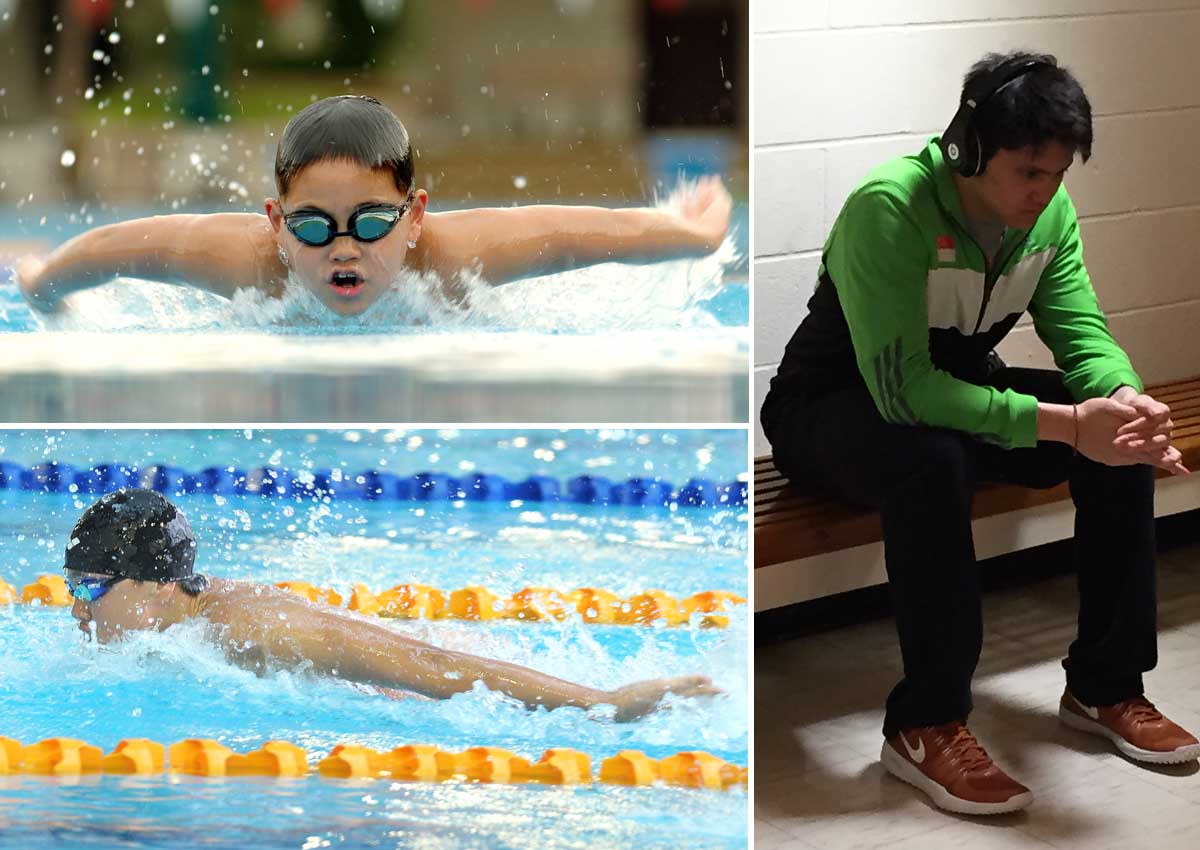
When he was younger and wanted to swim faster, Olympic 100m butterfly champion Joseph Schooling would imagine a shark coming after him.

In hindsight, the image is apt.

His – and his parents’ – journey to Olympic glory has been far from a smooth one in calm waters. In fact, it felt at times like danger also lurked around the corner.

While many can picture that glorious moment when he stood atop the podium, Majulah Singapura playing, not many know about the turmoil the Schoolings faced, and the pain they had to put up with, for him to succeed.

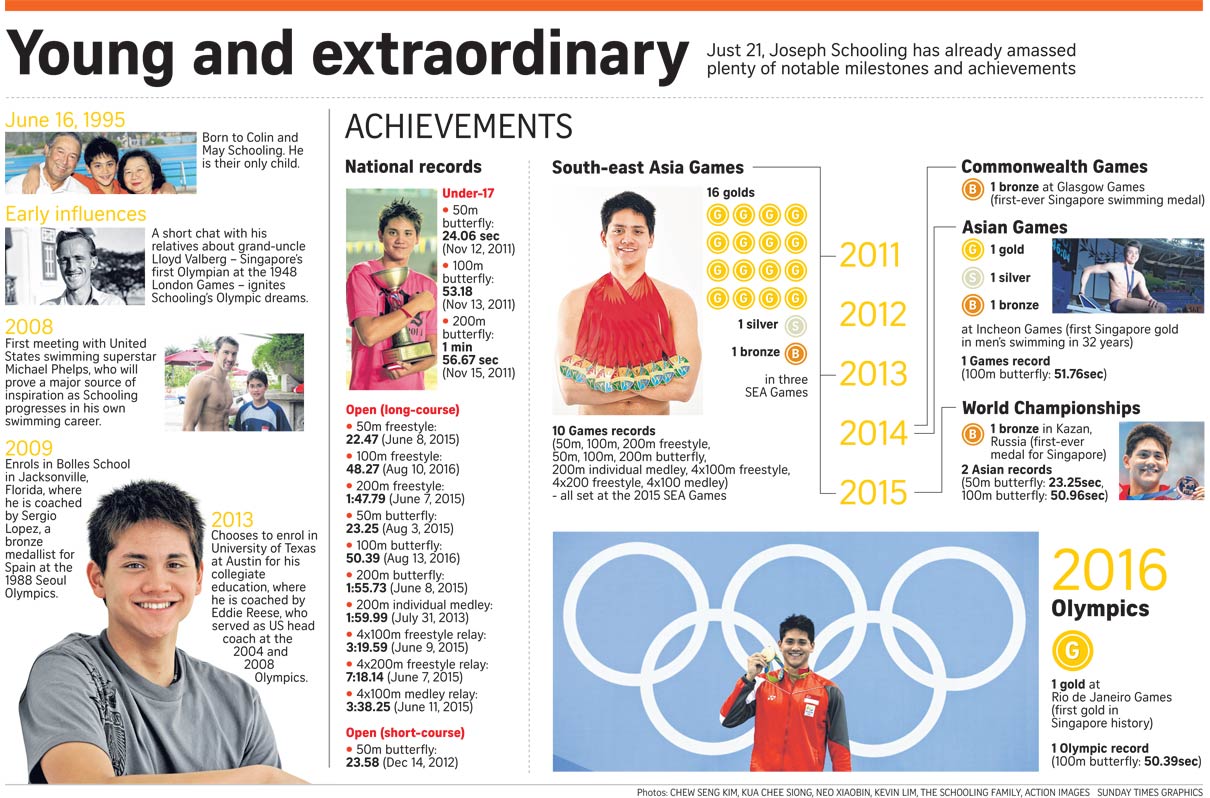
His road to Rio began during a family gathering some time in the mid-1990s, recalled his mother May, when Joseph’s grand-uncle Lloyd Valberg had a chat with him.

Valberg, a high jumper, became Singapore’s first Olympian when he took part in the 1948 Olympics.

Till this day, May and her husband Colin believe that that was when the seeds of Joseph’s Olympic dreams were sowed. “Joseph knew from a young age that he wanted to go to the Olympics, and I think it started from that conversation with his grand-uncle Lloyd,” she told The Sunday Times previously.

“But when a kid comes to you and says he wants to go to the Olympics, you think, okay,” she said, rolling her eyes.

Schooling’s natural affinity in the pool was evident from a young age. Close friend and national swimmer Teo Zhen Ren, who is a year older, recalled how, even as a nine-year-old, Joseph was always the favourite whenever he raced.

“At that time, everyone already knew about him. He was beating boys older than him in almost every stroke,” said Teo, a freestyle specialist. “I remember losing to him in a 50m freestyle race and being very upset.”

There is also the now famous story of how Joseph woke his father up in the wee hours while on holiday in Malaysia, because he wanted to go swimming. From then, Colin, a businessman, took his son’s aspirations seriously.

But he also told Joseph in no uncertain terms: “If you want to choose this lifestyle, you better be serious about it and give 100 per cent.”

But it wasn’t just Joseph who had to commit to that journey towards Olympic glory. His parents were very much part of the ride.

For them, support has meant more than just paying lip service to that dream.

“It’s important to also participate,” Colin, 68, said. “It’s not just taking them to training. So we always try to be there for his training and watching his races, we read up on the sport so we can understand what he’s going through.”

This is why Colin’s office is a vault of swimming books, filled with titles such as Championship Swim Training by Bill Sweetenham and John Atkinson, which looks at stretching a swimmer’s potential.

There are also folders meticulously filled with results from each of Joseph’s races, so they can track every single personal best and meet record that Joseph sets.

Colin even created some training aids to help his son early on. This included a drag chute, attached to a swimmer’s waist, to build strength through resistance training.

There was also a contraption with a rubber ball which was supposed to condition Joseph to tuck his chin in when he surfaces to breath.

Being supportive also meant parting with their only child in 2009, when the Singapore Swimming Association closed its Centre of Excellence (COE), a programme which brought the nation’s best talent together to train.

The Schoolings were already contemplating sending him abroad. With the COE’s closure, they decided to take the plunge and send him to the Bolles School in Florida. Even if it was part of the greater goal, the change was hard to take, with May fiercely against the decision at first.

There was also the matter of finances. Flights, accommodation, living expenses and school fees totalling more than $1 million would sap the Schooling’s finances. May practically exhausted her savings and they had to sell an overseas property to finance Joseph’s dreams.

Pointing to the pants she was wearing, May said: “We save where we can. I’ve been wearing this pants for almost 30 years.”

Joseph recalled those early years: “It was really hard, I was homesick all the time. I would call and say I want to come home. They give unconditionally and I couldn’t have two better role models to help me on my life forward. “

They decided one parent would be with Joseph at any one time. Slowly, he got used to life in the US, blossoming into a star while training alongside future Olympic champions Ryan Murphy and Caeleb Dressel, and under the world-class coaching of Sergio Lopez at the Bolles School in Florida.

Joseph seemed on track to shine at the 2012 Olympics, when he was the only swimmer to qualify for the Games on merit.

Yet, in London, he would hit the lowest point of his nascent international career. Moments before his 200m fly heats, his caps and goggles were deemed to have flouted competition rules and he had to scramble for new ones.

It rattled him and he clocked more than two seconds off his then-personal best time of 1min 56.67sec.

Teo said the incident hurt his friend. “Joseph was definitely affected by that. He had massive expectations not only from the public but also himself. He was planning to qualify for the final actually.”

Joseph sunk to what he called the “lowest point of my life”. He hated swimming, he said “nasty things” to Lopez and he was unmotivated. “Sergio should’ve given up on me but he didn’t. He stuck with me. He, my family and close friends dug me out of that hole,” he said.

Joseph clawed his way back bit by bit. At the 2013 World Championships, he set two national records and reached the 200m fly semi-final. That same year, he was granted national service deferment till the Rio Olympics.

If that put more pressure on the youngster, it rarely showed. At the 2014 Commonwealth Games, he clinched a silver in the 100m fly, Singapore’s first swimming medal at the quadrennial meet. A month later, he won three medals at the Asian Games, including Singapore’s first men’s swimming gold since 1982.

The next year saw a flawless SEA Games when he swept nine golds from nine events in front of an expectant home crowd. Any doubts about his world-class ability were erased at the World Championships last August, when he finished third with a new Asian record time of 50.96 seconds, confirming one thing – that the bigger the stage, the better he swims.

Then came the Olympics, where, as a dark horse, he was the top qualifier from the heats and the semi-finals. Yet, there was still lingering doubt just before the final.

But he remained focused on his mission, dedicated to realising his childhood dream to emerge victorious.

These days, he need not fear sharks. He is now the big fish.

siangyee@sph.com.sg


This article was first published on Aug 21, 2016.
Get a copy of The Straits Times or go to straitstimes.com for more stories.

Image: 
Category: 
Publication Date: 
Sunday, August 21, 2016 – 14:09
Send to mobile app: 
Source: 


Story Type: 
Others

Source link

Remember Howe Liang, please

0

While we soak in Schooling’s sensational swim, spare a thought for our first Olympic medallist

There were three pairs of trackshoes in the common corridor outside his abode at his brother-in-law’s HDB flat at Tampines Avenue 5.

One pair was his, worn out through his regular walks in the nearby park.

There was also a bicycle, also his, but one that has been unused for almost a year.

It reminded me about his mode of travel from his former residence at Kampong Arang to the National Stadium when he was working in the gym at the Singapore Sports Council in Kallang in the Nineties.

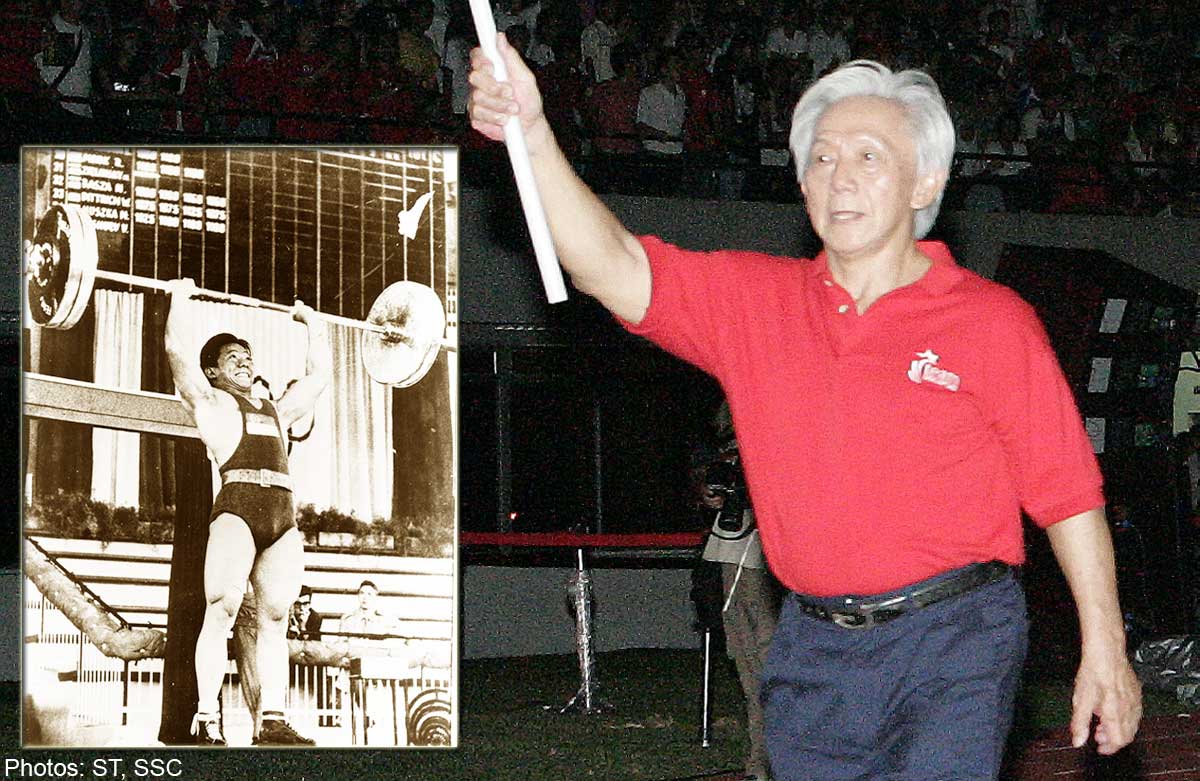
Once the nation’s greatest athlete, Tan Howe Liang is now a forgotten man.

In the wake of swimmer Joseph Schooling’s historic gold-medal feat in the 100 metres butterfly event in Rio, I decided to check on our first Olympic medallist last week.

Tan achieved the weightlifting honour at the Rome Olympics in 1960 in dramatic fashion – after an eight-hour ordeal at the Palazetto Dello Sports Hall in the Italian capital.

In the lightweight category (60-67.5 kg) competition, Russia’s Viktor Bushuev had already won the gold by breaking the world record. It was down to Tan and Iraq’s Abdul Wahid Aziz for the silver medal.

After just one clean and jerk lift left, Tan felt pain in his legs and the doctors advised him to return to the Athletes’ Village for treatment.

This would mean a withdrawal from the competition, but battle-hardened Tan was not prepared for that.

He bore the suffering, continued to compete and eventually claimed the silver medal, ahead of 33 rivals.

Schooling won gold in Rio in also dramatic circumstances, beating three world-class swimmers – including his idol Michael Phelps – to consign the trio to joint-silver medals with an outright triumph in Olympic record time.

Like Tan’s historic first, Schooling’s fascinating story will be told, and retold, in print, on social media and over television.

But the duo’s current lives are a stark contrast, sadly.

While Schooling, 21, is the rave of the moment and is looked upon in awe by Singaporeans and the world, Tan, 83, has been consigned to history.

To the recesses of our memories.

And remembered and recognised only by his close buddies who occasionally take him out for a hawker centre meal or a chit chat over coffee.

Tan lives off his savings – slightly bloated by the sale of his three-room Kampong Arang flat two years ago – a lifelong Public Assistance allowance and monthly pocket money from his teacher-daughter.

ODD-JOBS

He also helps himself financially by doing odd-jobs, but even they have become rare these days because of a right knee operation that did not turn out too well.

A walking stick comes in handy when pain arises from joint-aches, some resulting from his overindulgence with weights during his competitive days of yesteryear.

However, it was nice to see Tan (who once said: “I hope someone wins gold so that reporters will stop interviewing me every Olympic year”) sharing in Schooling’s success.

He was all praise for the Singapore son who rocked the swimming world, saying: “He worked hard, did himself and the country proud. I like him, I admire him, and his achievement was better than mine.”

The similarity lies in that both feats were historic firsts, recognised by big celebrations and victory parades.

The means to the two ends were wrapped in a work ethic soaked in true dedication, never-say-die determination and an innate desire to excel.

But the sad truth is that on a day (last Thursday) when poster-boy Schooling was placed on a nation’s pedestal and paraded through some streets of Singapore, bow-legged Tan was stretched out on a sofa in a lonely world.

Surely thinking, what it should have been.


This article was first published on Aug 21, 2016.
Get The New Paper for more stories.

Image: 
Category: 
Publication Date: 
Monday, August 22, 2016 – 07:07
Send to mobile app: 
Source: 


Story Type: 
Others

Source link

Joseph Schooling: Entering a brave new world

0

As new-found fame comes his way, the Olympic champion faces a challenging road ahead

The athlete watches videos on technique, dissects his rivals and hones his body. He is ready for anything, but never fame, for it comes like an avalanche without warning. One moment he’s a boy in a cap and goggles. Next minute – 50.39sec precisely – he’s a star requiring a security detail.

A nation wants to shake his hand, say his name and embrace him. It is touching, humbling, affecting, extraordinary, and it can also, in the months down the road, be unsettling. Fame gives the athlete so much and yet it will steal from him, too: It is going to be hard for Joseph Schooling to ever be himself any more. He’s not just a human; he’s now a hero.

The Mint in Brazil manufactured 2,488 medals, of which 812 were gold, and now one belongs to Schooling of Singapore. Each medal is 500g – but in truth, its impact is hard to gauge.

Perhaps it is best to let a weightlifter educate us. As the Georgian over-105kg champion Lasha Talakhadze said: “I can assure you it is easier to lift a weight than carry the meaning of the medal.”

The medal is only 85mm in diameter, yet it brings a fame as wide as the borders of a nation. The medal signals the end of one adventure and the beginning of another: Greatness has been achieved and yet now greatness must be worn. As Chad le Clos, three years Schooling’s senior at 24 and a conqueror of Michael Phelps in 2012, told The Sunday Times, fame isn’t an easy business.

“The small advice I can give,” he said, “is that it’s a lot harder than you think.”

Everything changes for the celebrated athlete with an Olympic gold medal. He can walk into any over-booked restaurant and find a table and choose any sponsor he wishes. It is fun but it is permanent. He cannot ever return to being nobody.

“You can’t prepare for the fame,” said le Clos, who has one Olympic gold and three silvers. “In my country, I was a national hero and I’m pretty sure he (Joseph) is going to be a huge hero in his country. (My advice is) just be yourself and don’t let people change you. Don’t let the money or the success, or the girls… don’t let that change you. Just stay true to yourself, to your family.”

Everybody hangs onto the hero’s every gesture and waits for his every word. They’ll tape it, Facebook it, discuss it. People can be forgiving if he errs and yet flame him for the mildest comment.

As the legendary Alexander Popov, the Russian swimmer with four Olympic golds and five silvers from 1992 to 2000, told The Sunday Times: “Being an Olympic champion is a huge responsibility. What you say, what you do, how you behave, everything is counted.”

Popov, an Omega ambassador like le Clos, hunches his massive, blue-suited frame in Rio and explains what occurs with the winning of a first Olympic gold: “First of all, your status changes. Your behaviour should be according to the new level that you have achieved in sport. Quick changes, for better or for worse I’m not sure, in life are not so easy to handle. Because of the pressure, you lose focus and everything. He (Joseph) has to concentrate on his swimming.”

Nations wear gold differently and so do athletes. In China, with so many champions, one gold creates a ripple; in Singapore, waiting for its first gold, it generates a marvellous wave.

Champions, too, digest victory differently: Some fancy fame, swim with it, wear it easily; but many find gold a difficult weight and are initially overcome by victory. At 21, a life’s purpose has been achieved. Now what?

For le Clos, it was a struggle initially: “After the Olympics you kind of lose that hunger to train, you have that post-Olympics depression as they call it. I’m sure he (Joseph) will feel that.”

Then the South African smiles and adds: “But he must keep pushing through because I want him to be in good form next year when I race him again.”

From the day he won the 100m butterfly, a label has been affixed to Schooling’s name: reigning Olympic champion. Every story he appears in, every function he shows up at, it will be mentioned. It makes him the one to chase for an autograph and also to hunt down in the pool. Beating him will be the pre-training vow of every butterflier on the planet.

Schooling will probably enjoy this, being at the pinnacle, being challenged, and he knows that champions don’t sun themselves forever in the spotlight; they sweat.

As Popov says, the focus has to be on training and swimming “because from now on, (Schooling) cannot swim poorly. You have to produce quality now instead of quantity. Quality in training, in competition, in results. You have to be steady, reliable, and you have to be a benchmark for everyone else”.

This is the pressure, to perform, to go faster, to win, to repeat.

“There’s always pressure,” said le Clos. “I don’t worry too much about what people think about how I swim and how I’m swimming. I have a lot of critics, I have a lot of haters but I feel like there’s so many people out there who support me. If you swim for something greater than yourself, it can help you achieve great things.”

The smart athlete finds a balance; he shakes the public’s hands, manages the media, does appearances and trains. He surrounds himself with a team, which will assist him not indulge him, which will be there for him in hard times and yet tell him tough truths at all times.

Schooling is lucky for he has fine people in his corner: his parents, his mentor Sergio Lopez, his coach Eddie Reese – all of them proud, protective and plain-speaking.

But Schooling’s finest ally right now is his own, unspoilt self. He has an easy smile and a modest manner and a desperation to go faster – now he wants the world record – that will sustain him.

If he has been fashioned quickly by us into a role model, he should find some for himself. From tennis’ Roger Federer to golf’s Tseng Ya-ni, there are fine champions out there whose behaviour and perspective are worth imitation: For all the pressures they face, they never forget that, in a planet so full of suffering, they are the fortunate ones.

Yet Schooling is also going to need help, from his people and his nation. Singapore has been delighted by him and is now devoted to him, and a nation’s affection is a glorious thing. And yet, as the years roll on, the greatest gift a nation can give him is to let him be himself.

To not imprison him with worship as other countries do to their athletes, wherein they cannot even walk their city streets. To allow him his privacy, to not judge him too harshly, to let him make mistakes, and to enjoy what he has done instead of only waiting for what he might do next. He’s our hero but he’s also only human.

Schooling has returned to America and also to the place where he was made, where he will chase the future and where he will always find escape: The swimming pool. Half-submerged in liquid, with only the black line at the bottom for company, life will begin again for him. No cameras, no talking, no smiling. All he will hear in the silent waters is the familiar sound of his own ambition.

rohitb@sph.com.sg
maychen@sph.com.sg


This article was first published on Aug 21, 2016.
Get a copy of The Straits Times or go to straitstimes.com for more stories.


Image: 
Category: 
Publication Date: 
Sunday, August 21, 2016 – 14:00
Send to mobile app: 
Source: 


Rotator Headline: 
Entering a brave new world
Story Type: 
Others

Source link

Joseph Schooling: Coping with life in the fast lane

0

Amid a whirlwind week, Schooling has hardly had time to breathe, let alone take in the reality of his new superstar status

Speed is Joseph Schooling’s game. But even he has difficulty keeping pace with what has been a whirlwind week after That Win.

The world’s fastest 100m butterfly swimmer ever in a textile suit told The Sunday Times last Thursday that the events of the past week had gone by in a blur – “crazy, like zero to hundred”, was how he put it.

At that time, it had been just five days since his win at the Rio Olympics made him the first Singaporean to earn an Olympic gold medal.

Amid flying back home within 40 hours of his win, being honoured in Parliament, taking photographs with Cabinet ministers and meeting endless fans, sponsors and the media, Schooling hardly has had time to breathe, let alone take in what had happened.

“It hasn’t sunk in yet. I couldn’t fathom all this happening,” says the 21-year-old during a rare quiet moment, ahead of a victory parade on an open-top bus.

“I just need to chill and have some time to myself to digest everything.”

He admits he is unsure just how exactly the medal will change his life.

But what is certain is that it will change. Life will not be as simple as the one he had when he was a mere student at the University of Texas at Austin.

It is also unlikely that he will continue to be mobbed like he was every day when he was back in Singapore. Reality is likely to be somewhere in between – and also one in which he will forever be judged and reminded of that 50.39-second swim that changed his life.

A multiple SEA Games winner, an Asian Games champion, a Commonwealth Games and World Championships medallist, Schooling was already on the radar of world swimming prior to Rio.

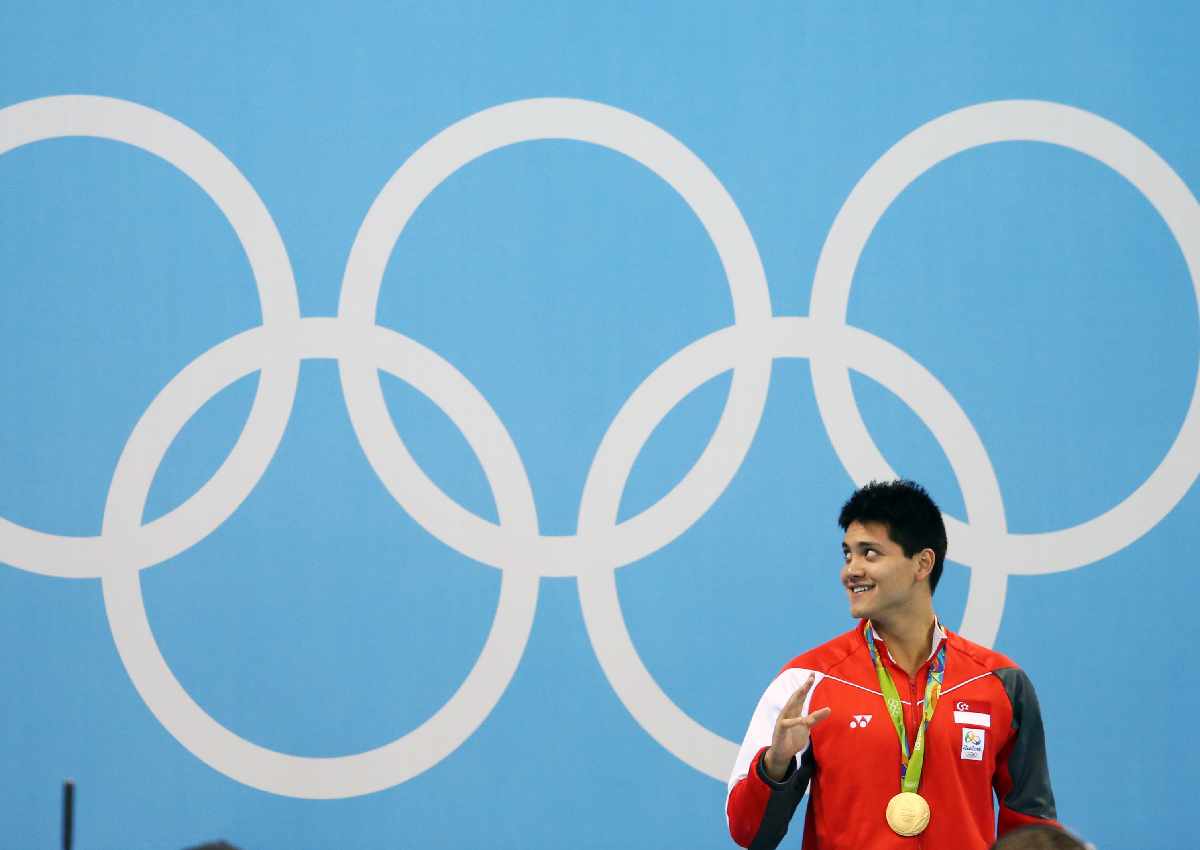
But when you beat Michael Phelps and in an event the greatest Olympian had yet to lose in over a decade, you get noticed. You also get noticed when you beat not only Phelps, but also Chad le Clos and Laszlo Cseh – together three of the greatest butterfly specialists of all time – and relegate all of them to a joint second spot. The victory ceremony involving all four on the Olympic podium – a first in the history of the Olympics – is now immortalised in pictures and will forever be a reminder of the magnitude of what he achieved.

That Schooling did it in an Olympic record, in the third-fastest ever time known to man, puts him instantly among the sport’s big names.

It is little wonder that he has become somewhat of an international star overnight. The following on his Facebook page has grown from 8,000 to 116,000.

On Instagram, his followers shot up from 25,000 to 150,000. English Premier League club Chelsea even got their star player Eden Hazard to send him a personal congratulatory video message – he had made known how he is a fan of the club.

The world’s media has also taken notice, and not only of his swimming. British newspapers The Telegraph and Daily Mail ran a story of how a user on dating app Tinder claimed she was matched with Schooling before the Olympics.

She ignored him, only to find out later that her match became the man who beat Phelps.

Several online sites ran stories about his supposed love interest, American student Casey Shomaker, something Schooling has been coy about. He has been generally relaxed about the interest in his personal life. But he draws the line when online comments attack those who are close to him.

His long-time nanny and helper, Ms Yolanda Pascual, 56, was among those credited as having played a key role in his success. Ms Pascual, who has been looking after Schooling for the last 19 years, was subjected to online criticism, with some saying she was riding on his success.

He appeared on a Filipino news show, GMA News TV, to defend her.

Calling her his “second mum”, he said: “I think whoever said that should be shot. That’s stupid.

“That really pissed me off. That’s not true at all.”

Sergio Lopez, 48, who played a major role in Schooling’s development, coaching the young swimmer at Bolles School from 2009 to 2014 and who is joining Auburn University’s swimming and diving team as associate head coach, has some advice for his former charge.

The former Olympic bronze medallist in swimming said: “I told him not to be too trusting and to be careful with what he writes and the way he says things.”

At least back home in Singapore, the attention, while intense, has not been vicious. In the last week, he has grown accustomed to screaming girls and doting aunties.

He even took it in his stride when strangers found out where he lived and made their way to his apartment, leaving everything from flowers to cups of Milo dinosaur outside his door.

Many have been impressed by how well-mannered and patient he has been with the adoring Singapore public. When he arrived at Changi Airport after a 30-hour journey, he spent over an hour taking pictures and signing autographs with fans.

On his victory parade, he was always smiling and greeted well-wishers with a “thank you, uncle; thank you, auntie” or “I love you guys”.

But he realises that he might need help moving forward.

The Schoolings are looking at putting a team in place to manage his image as well as any potential commercial deals. Also on the cards is training on how to carry himself in interviews and in public.

And there’s the swimming, of course. Training will have to be stepped up in the pool.

Under the stern gaze of Eddie Reese, his coach at the University of Texas, Schooling will make it his goal to break Phelps’ 100m butterfly world record of 49.82 seconds, set seven years ago in a rubber suit that is now banned.

That, as well as taking on more events at the Tokyo 2020 Olympics, will be on the top of his list now that he has flown back to the United States for studies and training, and the familiar whiff of chlorine and the 5am alarm.

“I’m only 21. I’ll hit my peak in four to five years, so I have a lot of time,” he said last Thursday.

“I just need to stay focused and keep finding ways to get better. My goal is to be the best in the world and I train every day to put myself in that position.” He continues: “I like having people chase me. I like being the fastest… I tried to make a statement with the other guys saying ‘you (want) to catch me, you have to come and take it’.”

As is often the case with those living life in the fast lane.

siangyee@sph.com.sg


This article was first published on Aug 21, 2016.
Get a copy of The Straits Times or go to straitstimes.com for more stories.

Image: 
Category: 
Publication Date: 
Sunday, August 21, 2016 – 14:00
Send to mobile app: 
Source: 


Rotator Headline: 
Coping with life in the fast lane
Story Type: 
Others

Source link