Home Blog Page 3074

No room for self-pity, but a fighting spirit

0

A few months ago, Ms Kwan Yuling got her pocket picked while checking out some stalls on her way to a neighbourhood coffee shop in Serangoon North.

She was probably an easy target, the 34-year-old says with a sigh.

An operation to remove a brain tumour three years ago has affected her mobility, and she has to move around with a walking stick.

“Whoever did it probably took advantage of my condition. I didn’t realise it. But I lost my IC, ATM card and $170 in cash meant to settle my utilities bill,” she says in Mandarin.

It is a small fortune to Ms Kwan who earns just over $300 a month, working part-time in a social enterprise.

“My heart ached but I don’t hate the pickpocket. Everyone makes mistakes.

“Anyway, I can always earn the money back,” she says simply.

The absence of rancour is admirable for someone who has been dealt so many bad cards in life that griping should be her birthright.

Fair, bespectacled with hair cropped neat and short, Ms Kwan is sitting at the void deck of an HDB block in Serangoon North Avenue 1. Home, which she shares with her mother in a nearby block, she says shyly, is too messy to receive visitors.

She grew up in a one-room flat in Bukit Merah, the younger of two children of a contractor and a factory worker.

“I was five years old when I was diagnosed with leukaemia,” she says, referring to the cancer which usually starts in the bone marrow.

Although her memories of this period are hazy, she remembers frequent trips to the hospital where she was subjected to a whole host of treatments, from bone marrow extractions to radiation therapy.

Home was not exactly a happy haven for the former student of Serangoon Garden South Primary.

Her brother – older by a decade – was a ruffian and no stranger to boys’ homes.

Quarrels often erupted between her mother and her father, who did not believe in sparing the rod when she did not do well in her exams.

“He owed a lot of money to loan sharks and also had another family,” she says.

Things came to a head when Ms Kwan’s health woes landed her in hospital when she was 14.

“My mother was visiting me one day when the hospital served me my meal. She ate it instead, but choked on a piece of fish,” she says.

This apparently led to a stroke, and her mother spent a couple of years rehabilitating in hospital.

During this time, her father and brother left the home. “I’ve never seen them since,” she says.

No relatives stepped forward to help. “They looked down on us,” says Ms Kwan, who spent two years at the Institute of Technical Education in Geylang Serai studying English and basic electrical skills after completing her primary school education.

Social workers placed her in a girls’ home in Marymount, where she spent two years helping out in the kitchen.

“I didn’t have any friends. The other girls didn’t like to talk to me,” she says, adding that she went home to live with her mother after the latter was discharged from a rehabilitation hospital in Ang Mo Kio.

To get by, mother and daughter found work at McDonald’s in United Square, working alongside each other six hours a day for $3.50 an hour.

Her next gig, secured with the help of the girls’ home, paid more: $1,200 a month as a sales assistant at Metro department store, first at Marina Square and later at Paragon.

Friends were not easy to come by.

“I just did my own thing. I didn’t have time for friends,” she says quietly, trying to sound cavalier to mask her hurt. “After work, I’d just go home for dinner and watch TV.”

Jobs were not easy to keep either, probably because she has only primary school education and was self-conscious and shy. However, she felt no bitterness.

“I wasn’t sad. If I lost a job, I just told myself I had to jia you (try harder in Mandarin).

“I’d look through the newspapers or approach sales promoters in shopping centres to find out if they needed sales assistants,” she says.

Over the next decade, she worked at a number of sales jobs, pushing everything from strollers to babies’ clothes to shoes. Things took a bleak turn in 2013 when she was working as a shoe promoter in Hougang Mall.

She was on a ladder, getting a pair of shoes from a high shelf when she lost her balance and fell 2m, hitting the side of her head.

Unknown to her, two tumours had grown in her brain causing a build-up of fluids – probably a late effect of the radiation she had when she was a child.

This in turn affected her vision and caused frequent migraines, as well as mobility issues on the left side of her body. “My left arm and leg didn’t have any strength but I didn’t see the doctor,” she says.

Her fall saw her admitted to Tan Tock Seng Hospital (TTSH), where doctors inserted a tube from her brain to her stomach to drain the fluid build-up in her head.

The next month, she went through a seven-hour operation during which doctors took out the bigger of her two tumours, roughly the size of a golf ball.

She could not eat, drink, walk or talk for a couple of months after the procedure and had to be fed through an intravenous tube.

Ms Eileen Ho, a senior medical social worker with TTSH, says Ms Kwan was more concerned about her mother’s well-being than her own condition during this period.

“Because she was not able to work, she constantly requested social assistance to support her mother. She was afraid her mother would not be able to cope,” says Ms Ho.

Ms Kwan’s concern for her mother also propelled her to work hard at her rehabilitation, which took several months. “I told myself I had to recover. I wanted to be normal like everyone else,” she says.

Her fighting spirit impressed Ms Zhou Lifeng, a nurse clinician at the National Neuroscience Institute.

“Initially, she was a bit depressed but she was very obedient because she really wanted to recover. She is very strong. She thinks positively, doesn’t worry excessively and has a natural instinct to want to do well,” says Ms Zhou.

Gradually Ms Kwan regained her ability to eat, talk and walk.

However, she now speaks with a slight slur and has to move around with the aid of a walking stick.

When she was able to, Ms Kwan signed up for vocational training so that she could get a job and start earning her own keep again.

It took a while but with the help of SG Enable – an agency which helps people with disabilities – she landed a job as a kitchen assistant with social enterprise New Rasa Singapura last November.

Ms Josephine Ng, director of New Rasa Singapura, says that Ms Kwan was initially fearful and apprehensive about working again because of what she had gone through.

“But she was able to conquer her fear and she tries her best,” says Ms Ng. “She’s like a kid in many ways, always trying to gain approval and make friends.

“She likes giving the people here little presents and cards. They like having her around.”

Her positivity and determination so moved Ms Ho and Ms Zhou that both of them nominated her for this year’s Singapore Health Inspirational Patient Award.

Says Ms Ho: “We hope that her courage and positive attitude will help to encourage many.

“She has certainly encouraged us as health workers. She made us feel that our efforts to help and support her are worthwhile.”

Adds Ms Zhou: “You know, it’s been three years since her operation and rehabilitation.

“But, without fail, she sends us a ‘thank you’ card each year. She has so much gratitude and appreciation for people who have helped her.”

Ms Kwan says she draws a lot of comfort from a book about Nick Vujicic – a well-known author and motivational speaker born without limbs – given to her by a manager at SG Enable.

“Like him, I must try and try and I mustn’t give up. And when I fail, I must get up and try again,” she says.

Envy and self-pity are not guests she entertains.

She says: “I don’t feel jealous about other people. Everyone has challenges and problems.

“I do feel a bit sad about my health problems sometimes, but they’re beyond my control.”

She has no time for flights of fancy either. Asked if she dreams of getting married, she crinkles her nose.

“No one wants someone with a tongkat,” she says, using the Malay word for walking stick.

“No one will marry me lah, so I don’t even think about it. Anyway, I can take care of myself.”

She would rather dream of visiting Universal Studios Singapore in Sentosa. “I hear there are many cartoon characters there. I’ve seen the place on TV, but I’ve never been there,” she says. Her favourite TV programme, she lets on, is BENGpire, which recommends things to do and places to eat after dark.

Asked how she gets on with her mother, she quips: “She just sits at home and looks like a pretty vase.”

But, she adds quietly: “She’s already 66, so I pray for her health.”

What rattles her sometimes is the prospect of growing old friendless and penniless.

“I’ll try to work harder and make more friends,” says Ms Kwan, who has three confidantes with whom she shares her joys and woes. “I just have to live life and take things one step at a time.”

kimhoh@sph.com.sg


This article was first published on August 22, 2016.
Get a copy of The Straits Times or go to straitstimes.com for more stories.
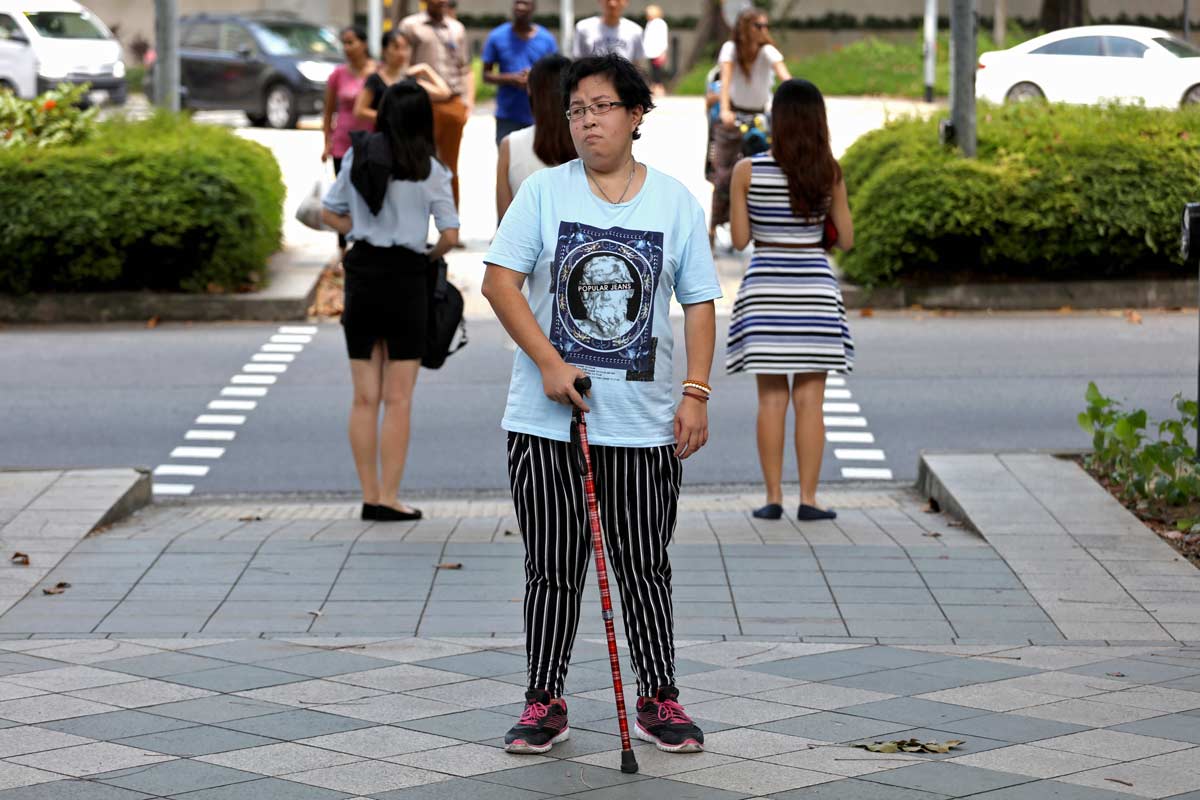

Image: 
Publication Date: 
Monday, August 22, 2016 – 13:14
Send to mobile app: 
Source: 


Story Type: 
Others

Source link

Fancy a pair of used undies?

0

It is a sale like no other.

Used panties, which sex acts are performed in, are being sold here through social media.

For the right price, they are also hand-delivered by the girls who allegedly wear them.

One seller, who calls herself Joyce, claims to be an 18-year-old girl “fresh out of JC (Junior College)”, and sells each pair for a starting price of $20.

Prices increase depending on how long they are worn and whether sex acts are performed in them.

Pages selling these items appeared on social media recently, with pictures of the undergarments as well as various obscene photos of the alleged sellers.

A post on one page claimed that they are “guaranteed to satisfy your school girl fetishes and much more”.

The goods were also usually sold out within a week.

Posing as a buyer, The New Paper contacted the user who set up one of the pages and was offered a pair from one of the girls for $80, after it had been worn for 12 hours and soiled from a sex act.

The seller added that it would be freshly soiled.

She then offered to do a meet-up at Bugis the following day for an additional sum of $70.

After agreeing, the seller sent over pictures of different panties and said to pick one, as though browsing through a catalogue.

She also asked for a down payment of $50, which was to be transferred to a POSB savings account before the meet-up, while the remaining amount was to be paid in cash.

TNP did not go through with the transaction.

RECRUITED

The page also featured recruitment posts, asking “like-minded girls” to sell their panties as well.

Posing as a girl interested in joining the venture, we contacted the same user and were told to wear panties and perform sex acts in them.

She also claimed that each pair could be sold for more than $200 on average.

The user then said to record videos of the sex acts to sell with the soiled panties for an additional $30.

This was followed with questions about body type and education background, as well as requests for nude photos to be sent over.

When TNP identified ourselves, asking why she is selling panties, how many have been sold and if she knew posting obscene photos was a crime, the user stopped replying.

The page was also taken down shortly after.

Trade in used underwear a legal grey area

When contacted, lawyers said that the selling and buying of used panties online is not illegal, but the posting of nude or obscene photos online is a crime.

Criminal lawyer Ravinderpal Singh of Kalco Law said: “On the face of it, there appears to be no offence committed unless there is more to it.

“There can be an offence if it’s the posting of obscene material, but it would be difficult to prosecute.”

Another criminal lawyer, Mr T.M. Sinnadurai of Regent Law, said that used panties would be considered used clothing, and selling them would not be a crime.

“But if it is attached with an obscene photo or video, then, yes, it is a crime,” he said.

“Whether you sell or buy, the possession of obscene photos or videos is illegal and considered obscene publications.”

Dr Brian Yeo, a consultant psychiatrist at Mount Elizabeth Hospital, said that the selling of used panties is purely a commercial transaction.

“They are selling a fantasy and it’s just to make money,” he said.

“There’s nothing special about it and it happens in Japan.”

For buyers, Dr Yeo said the fetish might become a problem.

“There are more acceptable fetishes, like liking lingerie or high heels, which is fine so long as it doesn’t take over one’s life,” he said.

“But there is a fine line between fetish disorder and preference. Purchasing used underwear is taking a leap from just having a fetish for underwear.”

He said that the next step for buyers would be to steal underwear, at which point it becomes a problem.

“Buying used underwear creates a higher sexual tension, but the seller is still anonymous,” he said.

“The next step is to steal underwear from acquaintances, people they can identify. Usually, people steal from neighbours or places like university hostels – it’s common.”

As for the possible demographic of buyers, Dr Yeo said there is no one type of person.

“We see all sorts who develop a disorder and it takes all kinds,” he said. “It is not just the sad and lonely. It usually is just individuals who are vulnerable.”


This article was first published on August 22, 2016.
Get The New Paper for more stories.

Image: 
Category: 
Publication Date: 
Monday, August 22, 2016 – 14:00
Send to mobile app: 
Source: 


Story Type: 
Others

Source link

Earn and Learn Programme launched for energy and chemicals sector

0

The 18-month programme will offer participants a minimum starting salary of between S$1,400 and S$2,000. 

Source link

China to strengthen Communist Party's role in non-govt bodies

0

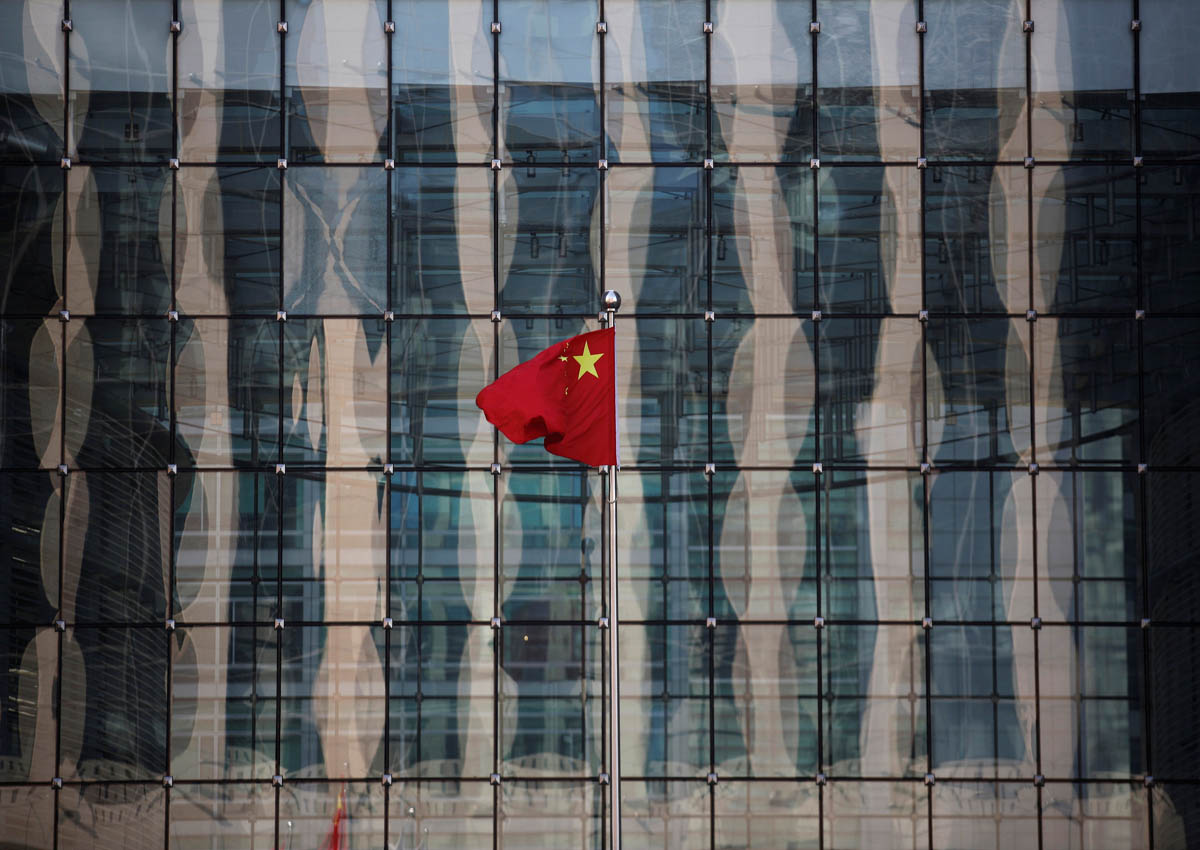
BEIJING – China has issued new rules demanding the establishment of Communist Party panels in non-government bodies, aiming to beef up the ruling party’s role in such social groups, amid a broad crackdown on civil society.

Western governments and rights groups have already lambasted a law passed in April, saying it treats foreign non-governmental organisations (NGOs) as a criminal threat and would effectively force many out of the country.

The new guidelines, released late on Sunday by the general office of the party’s central committee and the State Council, or cabinet, say party committees must be set up to ensure”effective cover” in all NGOs. “Strengthen political thought education for responsible people at social groups, and guide them to actively support party building,” the guidelines said.

“Promote the place of party building in the social group’s charters.” Supervision of the groups must also be placed high among the daily tasks of local party committees, whose performance will be judged on how well they manage the groups, the guidelines added.

Party committees can also assign their own representatives to run party activities in groups judged sufficiently large, the guidelines say.

The Civil Affairs Ministry will have a role in rooting out bad or illegal behaviour, including banning groups.

The ministry this month released its own proposals for new rules on NGOs, among them a demand that they publicise details such as funding and membership or face bans.

China had about 329,000 registered social groups by the end of 2015, state media say.

Chinese officials have defended the foreign NGO law, saying only a few law-breaking groups would be punished and there was no reason to fear the police.

The government also says it has been trying to bring order to a sector that has been plagued by scandals in recent years, including the embezzlement of funds meant for charities.

But rights groups say ambiguous language in the foreign NGO law banning activities that threaten national security or social stability could push out groups the party does not like.

The curbs on Chinese NGOs come as President Xi Jinping reins in civil society, including rights lawyers and the press, a step critics say is meant to quash dissent.

Image: 
Category: 
Publication Date: 
Monday, August 22, 2016 – 12:39
Send to mobile app: 
Source: 


Story Type: 
Others

Source link

Olympics: Groundbreaking Games for women in Rio

0

RIO DE JANEIRO, Aug 22, 2016 (AFP) – From the dizzying gymnastics heights of African-American Simone Biles to Indian wrestler Sakshi Malik and Brazilian golden girl Rafaela Silva in judo – Rio proved a groundbreaking Games for women.

Usain Bolt and Michael Phelps had already arrived in Rio as global superstars of men’s track and field and swimming.

But newcomer Biles’s amazing acrobatic skills also won star billing with her record-equalling four women’s gold and a bronze at her first Games.

The 19-year-old became the second African-American after Gabby Douglas in 2012 to win the all-around title, ending her Olympics in the spotlight by carrying the United States flag at the closing ceremony.

“I’m not the next Usain Bolt or Michael Phelps,” the Texan had said. “I’m the first Simone Biles.” Despite the shining success of Biles, a gender gap remains with 169 events for men staged in Rio compared to 137 for women.

Nevertheless, the Games still had many firsts with judoka Majlinda Kelmendi winning Kosovo a gold at its maiden Games, as Monica Puig gave Puerto Rico tennis gold.

“I just proved that even after we survived a war, if they (kids in Kosovo) want something they can have it,” said Kelmendi.

Silva, 24, who grew up in Rio’s violent, poverty stricken ‘City of God’ slum, won special mention from IOC president Thomas Bach as the Games drew to a close.

“Rising from the favela to become Olympic champion, when you look at her childhood and what she had to overcome, she’s an inspiration across the world,” Bach said.

Malik also told how she had to overcome prejudice to become India’s first medallist with freestyle wrestling bronze.

The 23-year-old from Rohtak, 76km northwest of New Dehli, said her parents had been criticised by local people when she started wrestling.

“I want to say that girls can also do a lot if you give them confidence,” said Malik, who carried the Indian flag at the closing ceremony.

Women from the Middle East were more represented than ever before in Rio.

Weightlifter Sara Ahmed, wearing a sports hijab, blazed a trail by becoming the first woman from Egypt to stand on the podium, lifting 255kg to finish third.

Ines Boubakri won the Arab world’s first ever women’s Olympic fencing medal, dedicating her bronze to “the Tunisian women, the Arab woman… who has her place in society”.

US fencer Ibtihaj Muhammad succeeded in her ambition to show the world that Muslim-American women could compete in elite sports.

The 30-year-old from New Jersey, the first US Olympian to wear a hijab – a headscarf worn by Muslim women – during competition, came away with a bronze in the women’s team sabre event.

Saudi Arabia’s Kariman Abuljadayel – one of four women athletes sent by the conservative Gulf kingdom to Rio – competed in the 100m sprint.

Emirati swimmer Nada Al Badwawi, who carried her country’s flag in the opening ceremony, said: “We are slowly starting to change the mentality.

“My main goal is to break down these gender barriers and pave the way for other female swimmers.” Forty five per cent of the 11,444 athletes – 5,175 – in Rio were women, slightly higher than in London 2012.

“Every National Olympic Committee has now sent female athletes to the Games,” an IOC spokesman said.

New sports such as weightlifting were added to the women’s programme in 2000, wrestling in 2004, and boxing in 2012.

The target in Tokyo in 2020 will be to make even more events open.

Yuriko Koike, governor of the Japanese host city, said, however, it was also hard to change mentalities in Japan.

“Women are doing fantastic performances in the world of sports, in the world of politics, unfortunately the percentage of women parliamentarians is lower in Japan than in other major places,” the 64-year-old said.

“Hillary Clinton talked of a glass ceiling, I think we have got an iron ceiling.

“Along with Olympic athletes, Japan’s female politicians will also take up the challenge and strive to become good role models.

Image: 
Category: 
Publication Date: 
Monday, August 22, 2016 – 12:23
Keywords: 
Send to mobile app: 
Source: 


Story Type: 
Others

Source link

PM Lee's stumble highlights importance of leadership succession

0

What if… Two simple words that preface the speculative.The Prime Minister’s prime-time physical stumble last night raised the spectre of uncertainty – and the critical importance of leadership succession.

The incident turned the rally into one that showed, more dramatically than any speech, no matter how well crafted, the need for contingency.

When he tilted to his right, our collective hearts leapt into our throats. We feared for his well-being. We saw, in disbelief, how Mr Lee Hsien Loong, so calm, so capable, so authoritative, could be as fragile as the least of us.

Then, after the excruciatingly tight tension of worry and fears for the worst, sweet relief.

“Thank you for waiting for me,” he said to roaring approval from the audience at ITE College Central.

“I gave everyone a scare. The last time I did this, I was on a parade square in Safti and fainted.

“I think that’s what happened. I never had so many doctors looking at me all at once.

“They think I’m all right, but anyway I’m going to have a full check-up after this.”

The 80 minutes between his stumble and his return seemed an eternity.

Was it a stroke? A heart attack? No, said the PMO categorically.

It was unprecedented. And we were unprepared.

It underscored ministerial mortality, coming four months after Finance Minister Heng Swee Kiat’s stroke.

For Singaporeans watching the rally, it was a bolt out of the blue; a reality check on a rally speech focused on getting real.

As Mr Lee said when he returned, referring to his resolve on the urgency and importance of preparing for succession: “Sui yue bu liu ren (time waits for no man). You cannot wait.”

Thankfully the fright was a false alarm. But it was a startling example of how anything can go awry so suddenly, shockingly, frighteningly if, as the PM emphasised, we are unprepared for a future fraught with what ifs…


This article was first published on August 22, 2016.
Get The New Paper for more stories.

Image: 
Publication Date: 
Monday, August 22, 2016 – 14:01
Send to mobile app: 
Source: 


Story Type: 
Others

Source link

Olympics: a TV show for five billion people

0

Rio de Janeiro – If you tuned into the Olympics, whether on television or your smartphone, then you belong to a multi-billion dollar club of five billon people.

As the International Olympic Committee launches its Olympic Channel, here are five things to know about the biggest broadcasting operation on the planet, a combination of technology and business being raised by the digital revolution to ever new levels.

From New York to Tokyo and Buenos Aires to London people all over the world tuned in for the few seconds it took Jamaica’s Usain Bolt to run the 100 meters.

To make that happen, the signal was sent by the Olympic Broadcasting Services, which is under control of the International Olympic Committee, and sent to four satellites, then beamed back down.

More than 7,000 technicians in blue T-shirts work in a centre resembling mission control, with the walls covered in screens, to deliver footage from the Games filmed by 1,200 camera operators. More than 7,000 hours of content were beamed around the world.

The Olympics is about money as much as sport and one major exchange of money is in selling broadcast rights.

The rights-holders, as they are known, pay a premium for exclusive transmission of the Games. Non rights-holders are not even allowed to bring cameras into Olympic competition sites.


Although this exclusivity is shared among many different outlets, each tailors the content to its local market.

TV channels in Brazil or China or Jamaica provide a very different experience, focusing on their own country’s athletes and favoured sports to ensure a maximum audience – and maximum price tag for commercials run alongside.

“Revenue for transmission rights keeps going up. At Rio, it came to more than $3.5 billion,” said Yiannis Exarchos, CEO of Olympic broadcasting.

That business, plus sponsorship, oils the financial wheels of the huge sporting extravaganza. About nine per cent of the rights revenues go to the IOC and the rest to international sporting federations and national Olympic committees.
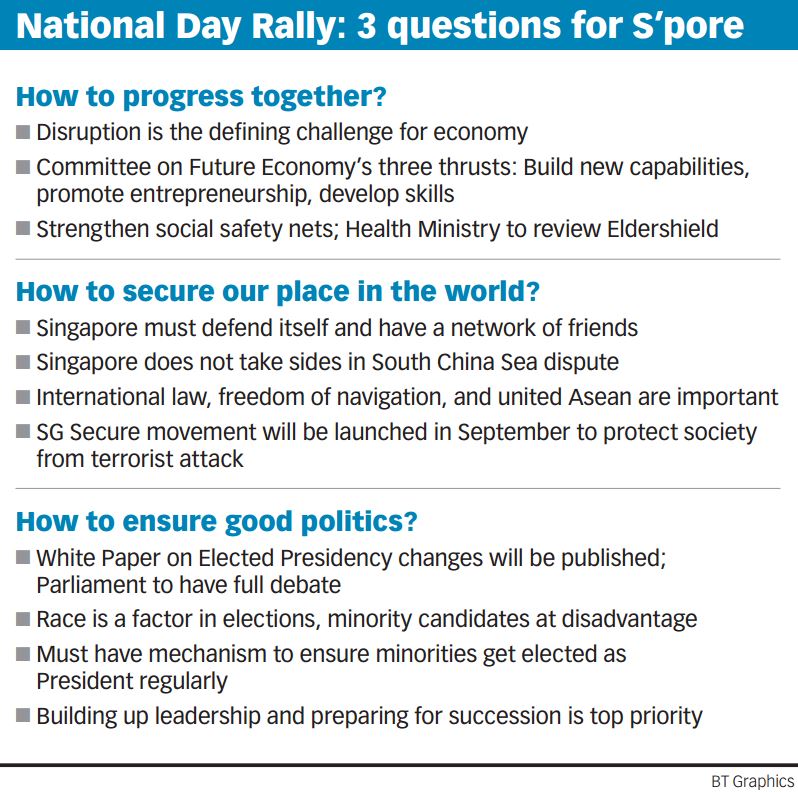
“The world of sport, other than in a few very profitable disciplines, would have a lot of difficulty to survive without this,” Exarchos told AFP.

Exarchos said Rio was the first Internet Games, where online viewership has been “as big a factor as television.” After four days of competition in Rio, more people had watched Olympic images online than during the entire Olympics in London four years ago.

IOC president Thomas Bach said that NBC, which has the US rights, had recorded more than 2.25 billion live stream minutes on its website.

The digital revolution, in which tablets, cellphones and computers take on television, once seemed a big threat to the traditional broadcasters.

However, Exarchos said that things are settling down.
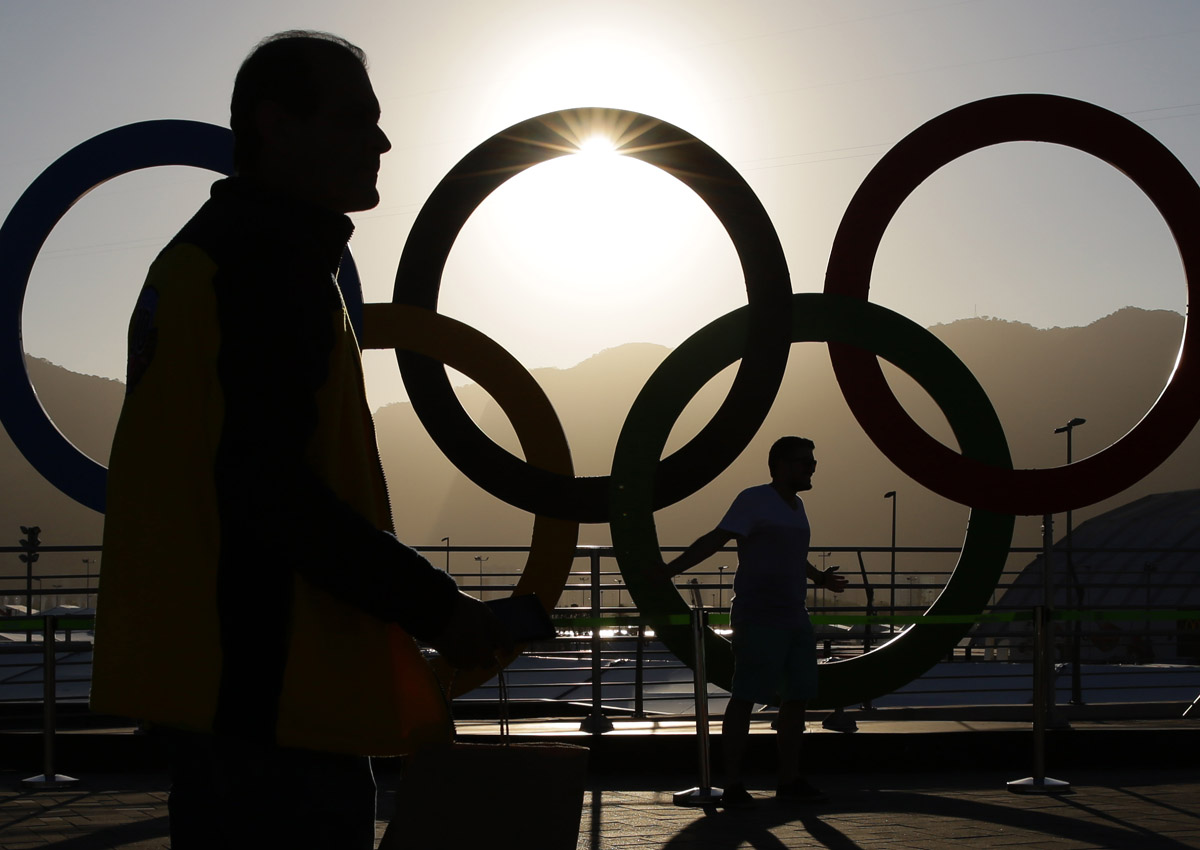
“Today, most (broadcasters) have their own digital platforms and we see that they’re using these to bring the public to their traditional channels. Digital feeds traditional TV and vice versa,” he said.

The newer factor is the “very aggressive emergence of some media, especially on social networks, that are completely changing the environment and represent a risk to traditional media,” he said.

Rio is already being used as a test ground for future Olympics.

Japan’s NHK channel has run tests in the 8K format, which is 16 times clearer than today’s HD images. On a cinema screen the 100 meters race appears in incredibly sharp definition, giving the viewer the sensation of being there.

There is also virtual reality technology under development. A prototype in which special glasses are linked to a network of cameras in the Olympic swimming pool gives the viewer the ability to see something different with a turn of the head, as if he were seated in the arena.

In a few years it is expected that the goggles will put the viewer into the centre of the action without leaving his sofa.

If broadcast technology gets that good, who will go through the expense and hassle of taking a plane and buying tickets to attend the Games? Will athletes of the future compete in empty stadiums?

“No,” says Exarchos. “Nothing replaces the emotion of being there.” In fact television viewers also want spectators in the shot – they are part of the show.

“The half empty stadiums we saw at times in Rio are the worst thing you can have on screen,” Exarchos said. “I’m in favour of smaller but completely filled stadiums.” 

Image: 
Category: 
Publication Date: 
Monday, August 22, 2016 – 12:04
Keywords: 
Send to mobile app: 
Source: 


Story Type: 
Others

Source link

Popeyes: Dine-in Discount Coupon Deals from 22 Aug – 25 Sep 2016

0

POPEYES: Dine-in discount coupon deals – save up to $12.80! (till 25 Sep)

Popeyes: Dine-in Discount Coupon Deals from 22 Aug – 25 Sep 2016

Save up to $12.80 with these Saver Deals coupon offers at Popeyes, valid till 25 Sep 2016. Based on previous promo, you need to print and present to redeem Saver Deal at your nearest Popeyes restaurant.

Source

Rio 2016's tops and flops

0

Rio de Janeiro, Aug 22, 2016 (AFP) – Who hit, who missed at the Rio Olympics:

HITS

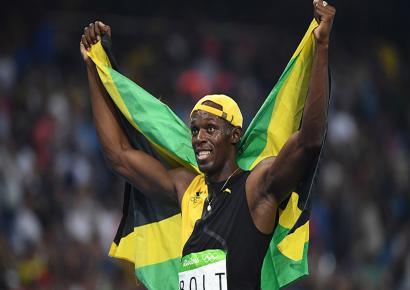
USAIN BOLT – Despite coming into Rio with concerns over his fitness, the superstar crowd pleaser romped to a “triple triple” of gold in the 100m, 200m and 4x100m. The Jamaican also sealed his status as track and field’s greatest showman, posing for numerous selfies while even trying his hand at javelin in an eerily quiet Olympic Stadium once the crowds had left.

“There you go. I’m the greatest,” said Bolt, who kissed the finish line on the Olympic Stadium track on his final Games appearance. In a perfect finish, Sunday was also his 31st birthday.

MICHAEL PHELPS – The US swimmer also had his doubters on the eve of Rio, but left with five more golds to take his total to a stunning 23. “I don’t think you’re going to see another Michael,” said coach Bob Bowman.

Phelps, watched by fiancee Nicole and baby son Boomer, ended his career with no regrets after flirting with retirement coming away from the London Games four years ago. “It definitely was a lot more emotional than I was in 2012,” said the 31-year-old.

MO FARAH – Britain’s Mo Farah, born in Somalia but nurtured in London, captured a “double double” of 5,000m and 10,000m golds to emulate Finland’s Lasse Viren, who did the same double at the 1972 and 1976 Games.

Farah, 33, last lost a race at a major competition when he was beaten by Ethiopia’s Ibrahim Jeilan in the 10,000m at the 2011 world championships in Daegu, South Korea.

SIMONE BILES – American gymnast Simone Biles marked her Olympic debut with a record-equalling four golds but just short of the record five she sought.

“It’s been a long journey, but I’ve enjoyed every moment,” said the 19-year-old Texan whose early life struggles had not set her out as the future face of women’s gymnastics.

The only blip standing between her and history was a slip on the beam on the penultimate day of competition, which gave her bronze.

She was the fifth woman to win four gold at the same Games after Hungarian Agnes Keleti (1956), Soviet Larissa Latynina (1956), Czech Vera Caslavska (1968) and Romanian Ecaterina Szabo (1984).

NEYMAR – The Barcelona superstar scored in the 1-1 draw in the final against Germany and then converted the winning penalty to give the hosts a first ever football gold.

With Bolt looking on from the stands at the Maracana, Neymar marked his wonderful free-kick opener by mimicking the sprinter’s ‘Lightning Bolt’ pose in front of the delighted Jamaican.

Neymar then stood down as captain. “This is one of the best things that has happened in my life…now the critics have to swallow what they said,” said Neymar.

FLOPS

NOVAK DJOKOVIC – World tennis number one Djokovic, looking to complete a career ‘Golden Slam’ of Olympic gold and the four majors, was knocked out in the first round by a rejuvenated Juan Martin del Potro who went onto make the final.

Djokovic left the arena in tears and at 29 years old, his Olympic haul remains a modest bronze from Beijing in 2008.

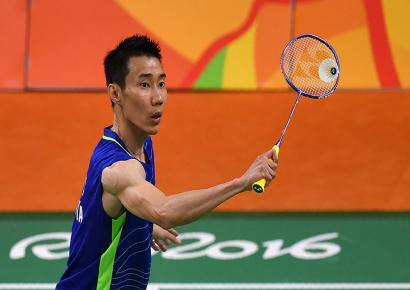
LEE CHONG WEI – Malaysia’s Lee suffered a third consecutive badminton final defeat after China’s Chen Long beat the world number one in straight games.

“Today leaves me with some regrets,” said Lee, putting on a brave face following his defeat to second-ranked Chen, who became Olympic champion for the first time.

The Malaysian has never won a world or Olympic title and will retire without that elusive gold medal. His country is also still waiting for a first gold medal in any sport.

CAMERON MCEVOY/CATE CAMPBELL – Double Australian swim disappointment for McEvoy and Campbell, the overwhelming favourites in the 100m freestyle.

McEvoy was the man widely tipped to seize gold after posting a world-leading 47.04sec in April but was relegated to seventh – failing to break 48 seconds. In the women’s event, world record holder Campbell faded to finish sixth after leading the field at the turn.

AARON COOK – The former British number one in taekwondo represented Moldova and was seeded second in the welterweight competition.

But he crashed out in the first round. It was his first Olympics since Beijing in 2008 after being controversially overlooked by British selectors for London 2012.

“I’m absolutely devastated – all that hard work and sacrifice by myself and my parents, I just feel I’ve let everyone down,” he shrugged.

RENAUD LAVILLENIE – Defending champion and world record holder in pole vault, the Frenchman slumped to a shock loss to Brazilian Thiago Braz da Silva. He was booed when he competed and booed when he stood on the podium holding the consolation of a silver medal.

He didn’t help his case by comparing the Rio jeers to the treatment received by Jesse Owens at Hitler’s 1936 Olympics in Berlin.

Image: 
Category: 
Publication Date: 
Monday, August 22, 2016 – 11:43
Keywords: 
Send to mobile app: 
Source: 


Story Type: 
Others

Source link

Singapore to amend Constitution so minority race president elected from time to time

0

CONSTITUTIONAL amendments will soon be tabled in Singapore to ensure the post of president is given to the island state’s ethnic minorities every now and then.

During his National Day Rally speech at the ITE College Central yesterday, Prime Minister Lee Hsien Loong announced that his government has accepted in principle recommendations on the matter proposed by a high-level panel to review the Elected Presidency.

“Previously, when the president was elected by Parliament, we could ensure that all groups of Singaporeans could become president from time to time. So we had Encik Yusof Ishak, Prof Benjamin Sheares, Mr Devan Nair and Mr Wee Kim Wee,” he was quoted as saying in Straits Times.

The late Yusof was Singapore’s first and only Malay president. Since the Elected Presidency system was introduced in 1991, the country has not had a Malay president. It had an Indian president – S.R. Nathan – who served from 1999 to 2011.

SEE ALSO: Brief scare as Singapore PM falls ill mid-speech at National Day Rally

“But now that the president is elected in a national election, it is harder for a non-Chinese to get elected as president,” Lee pointed out in the report.

“If it happens naturally, like it did with (former) president S. R. Nathan (who was elected unopposed), that is good. But if it does not happen for a long time, minorities will feel disappointment, and rightly so.

“The issue can be politicised and manipulated to provoke ill-feelings in minority communities and divide us in future. We must make the changes now and take action while it is peaceful and the society is united,” he added.

According to another report on Straits Times, following the proposed amendments, those who want to run for presidency will also be bound by stricter requirements.

The daily also quoted Lee as saying that a report by the six-month-old Constitutional Commission is currently being deliberated by the government and will be released “soon”.

He added that the government will later publish a policy White Paper detailing the amendments before a Bill is tabled in Parliament.

For approval, however, the Bill must receive votes from two-thirds of the republic’s 89 elected MPs.

SEE ALSO: Lee Hsien Loong says Singapore will allow more opposition lawmakers

According to an April report by Channel News Asia, the review panel that was set up in January was looking at three aspects of the Elected Presidency system: Reassessing the qualifying criteria for presidential candidates; Giving more weight to the Council of Presidential Advisers; and Safeguarding minority representation in the presidency.

The last aspect was reportedly the most contentious during deliberations with stakeholders.

Straits Times said during public hearings, some experts said minority representation was necessary while others expressed concern that this would be akin to affirmative action.

Singapore’s 5.5 million-strong population is Chinese dominated, with the race making up 74.2 per cent of the populace following by the Malays at 13.3 per cent and the Indians at 9.2 per cent, according to data from 2013.

The post Singapore to amend Constitution so minority race president elected from time to time appeared first on Asian Correspondent.

Source link