Home Blog Page 3064

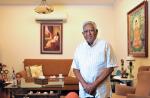
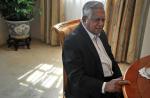
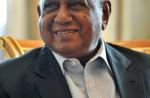
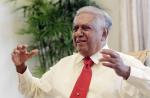
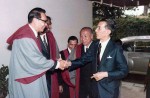
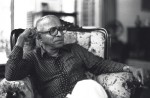
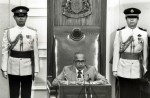
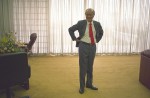
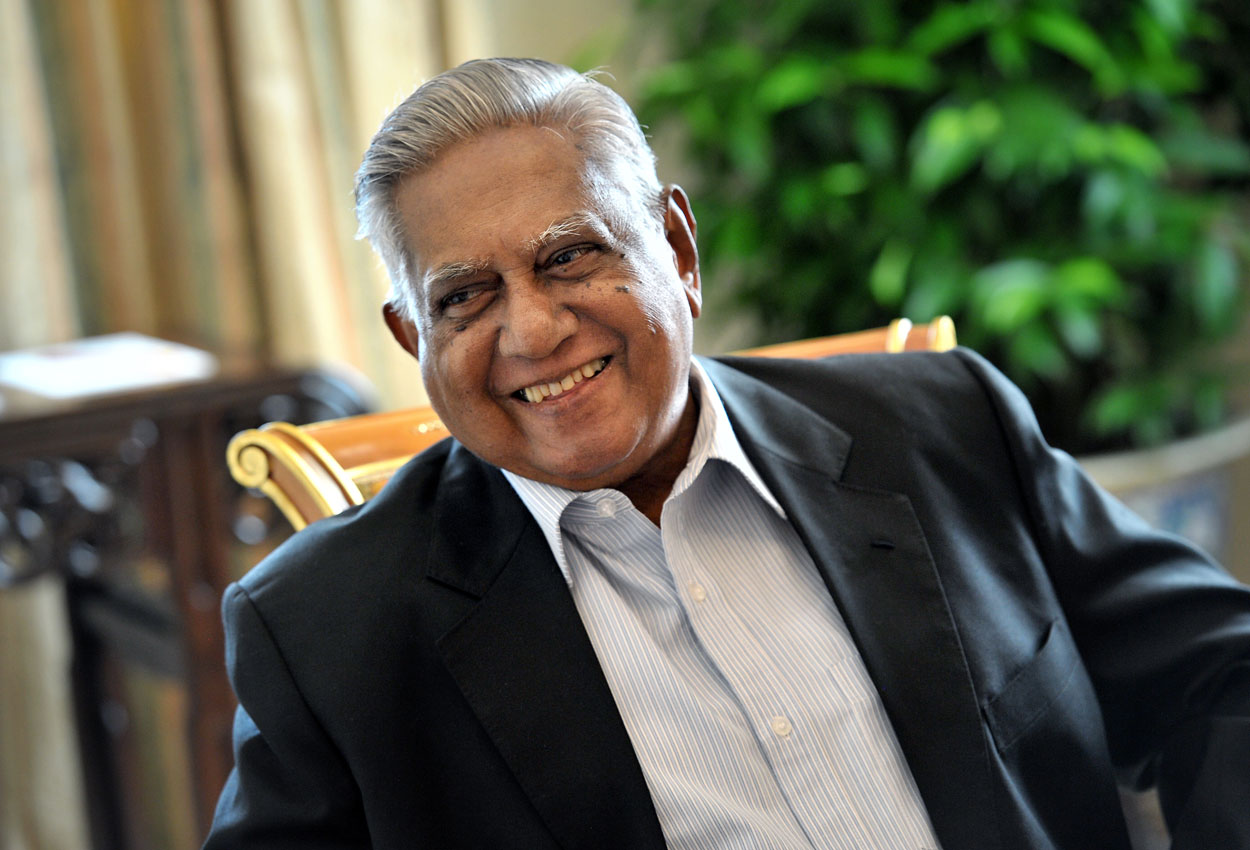
In memory of S R Nathan: An exceptional life spurred on by call of duty

0

SINGAPORE – Stature and fame may have defined the last decades of the life of former president S R Nathan.

But it was the grinding desperation of his early years that shaped the man.

Mr Nathan, who died Monday aged 92, led an extraordinary and “improbable” life of a teenage runaway who rose to the highest office in the land.

In his 92 years, he was, above all, a survivor – overcoming a troubled childhood and a wartime adolescence to become the safe pair of hands in which Singapore’s founding leaders placed challenge after challenge.

Whether marshalling the intelligence service, winning over a cynical newsroom or steadying volatile diplomatic relationships with Malaysia and the United States, Mr Nathan answered every call, spurred on by the simple code he said defined his life: duty.

Through it all, he remained markedly unfazed, perhaps because his early years required him to have stores of courage and grit that would make later, more public challenges appear to be less daunting.

His greatest achievements were a product of sustained pressure and patience, and came long after others would have given up: He married Urmila Nandey after a 16-year courtship, during which the objections of her higher-born family were overcome; he entered university at age 28; the President’s Office at 75.

“From the adversities of childhood and youth, I learnt never to shun the rough and tumble of life,” he said on his 80th birthday in 2004. “I learnt to look at life in the face.”

His was a life both marred by tragedy and blessed by charm.
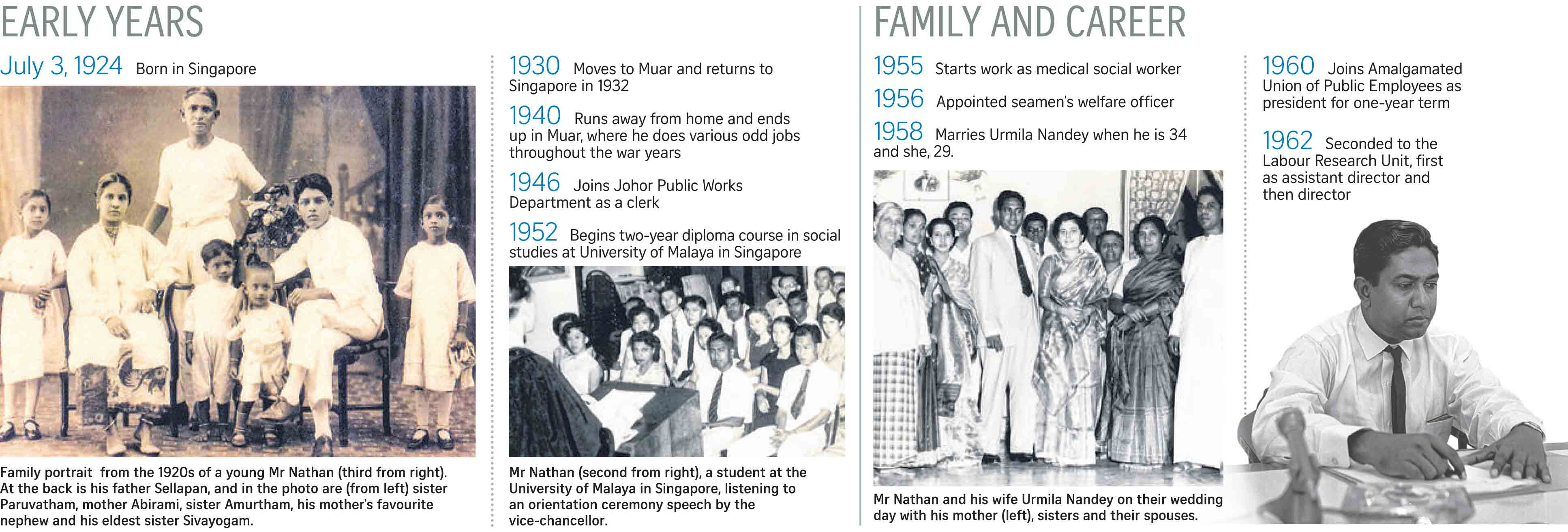
Sellapan Ramanathan was born in 1924 in Singapore. His mother had him only after she went on a pilgrimage to Rameswaram in India’s Tamil Nadu state. His three older brothers died when they were very young.

His early years in Muar, Johor, were happy ones, but they turned on a dime. His father lost his job as a lawyer’s clerk and committed suicide when Mr Nathan was eight years old. At age 16, after being thrown out of school for a second time, and quarrelling with his mother over it, he ran away from home.

When war came to then Malaya in 1942, he was sleeping on the streets – uneducated, jobless, all alone and surrounded by wanton violence and deprivation. But the hard knocks built in him resilience and, regardless of the regime in power, he knew how to survive.

Just as he had learnt English at a young age to earn his keep, he learnt Japanese during the Occupation and soon rose to become assistant and interpreter to the head of the Japanese civilian police in Johor.

He had mentors, too, among the colonial British, who ultimately found him a job after the war in the civil service, where he would stay for 40 years.

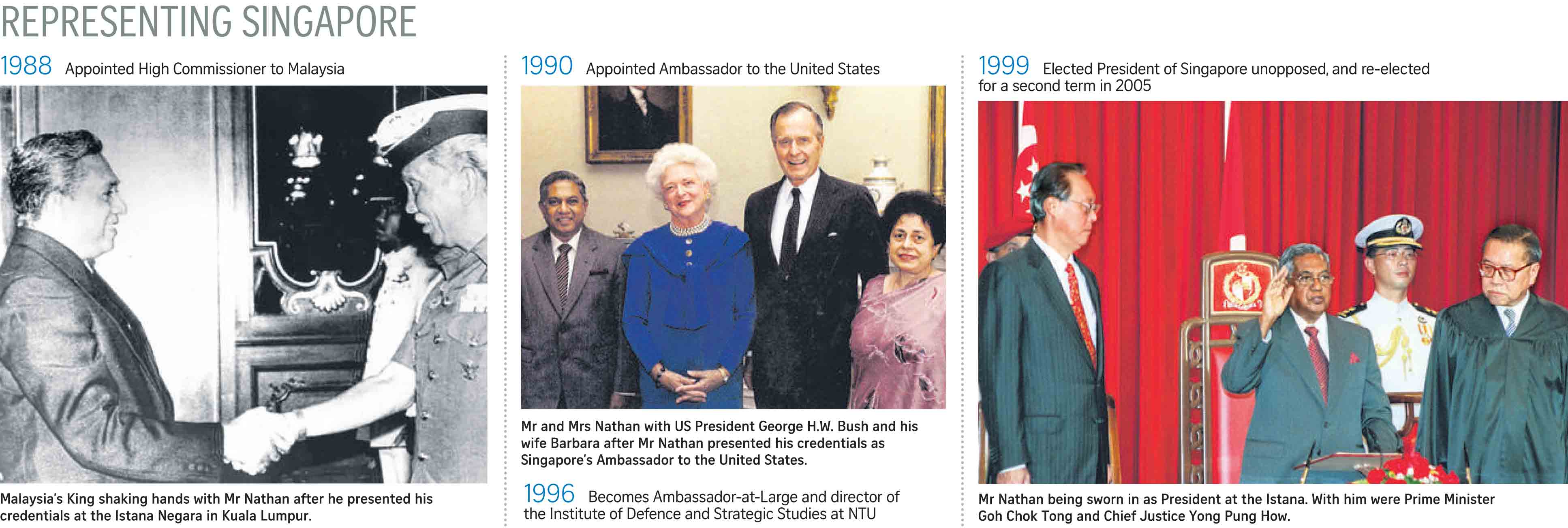
The turning point of Mr Nathan’s professional life came in 1964, when as a government officer seconded to the National Trades Union Congress, he was given the task of travelling to Algiers and negotiating Singapore’s acceptance into the Afro-Asian People’s Solidarity Organisation.

The grouping of newly independent African and Asian nations was dominated by radical political groups that were sympathetic to communist parties in their countries. Armed with a basic brief from then Deputy Prime Minister Goh Keng Swee – delivered at the Istana while then Prime Minister Lee Kuan Yew practised his golf swing nearby – Mr Nathan outperformed expectations by succeeding against the agitations of leftist elements trying to torpedo Singapore’s membership.

He was initially jeered by some who accused him of being a neo-colonial stooge. Eventually, he won over delegates by telling jokes and buying drinks and got the grouping to consider Singapore’s application the following year.

With characteristic understatement, Mr Nathan wrote in his memoirs of the incident: “I think this may have led our leaders to see my potential.”

From then on, he grew to become what Mr Lee heralded, at Mr Nathan’s 80th birthday, as “an indispensable man for all seasons”.

“Every time there was a tricky task which required a steady hand, someone dependable and who could get things done, his name would pop up,” said Mr Lee.

In 1982, after leaving the foreign service, Mr Nathan was asked by Mr Lee to head The Straits Times Press (1975) as executive chairman at a time when relations between the Government and The Straits Times were strained.

His appointment was greeted with suspicion by journalists, who interpreted it as a move by the Government to restrict press freedom and wore black armbands in protest.

But he did not turn to administrative clean-ups, arbitrary disciplinary measures or dismissals, and instead took time to understand the concerns of journalists and newsmakers alike.

Recalling this “complex” episode years later at an interview in 2010, he said with his trademark unflappability: “I had seen bigger strikes than that! They were only wearing black armbands and jumping about. But when they saw I was not doing what they expected me to do, they began to have confidence.”

Later, at age 72, as Mr Nathan looked forward to retirement with his wife Urmila after a six-year stint as Singapore’s Ambassador to the US, Mr Lee called again.

This time, the challenge would take the boy who expected to remain a hawker’s assistant all his life, to the Istana as Singapore’s second Elected President.

Mr Nathan would stay in this role for 12 years, and while he never met an electoral contest as no candidate was found eligible to run against him in either of his two terms, he played a leading role in shaping the young and evolving institution into what it is today.

In 2009, after 11 days of deliberation, he exercised its chief function by turning the second key to the national reserves, releasing $4.9 billion to the Government to fund anti-recession measures during the global financial crisis.

Less dramatically, over the years, he moulded the office in the image of the medical social worker he started out as after his university studies.

He became a champion of the poor, needy and disabled, and turned the presidency into one of the most powerful charity fund-raising operations in the country.

Only once in his career did Mr Nathan acknowledge despair.


This article was first published on August 23, 2016.
Get a copy of The Straits Times or go to straitstimes.com for more stories.

Image: 
Category: 
Publication Date: 
Tuesday, August 23, 2016 – 11:31
Keywords: 
Send to mobile app: 
Source: 


Story Type: 
Others

Source link

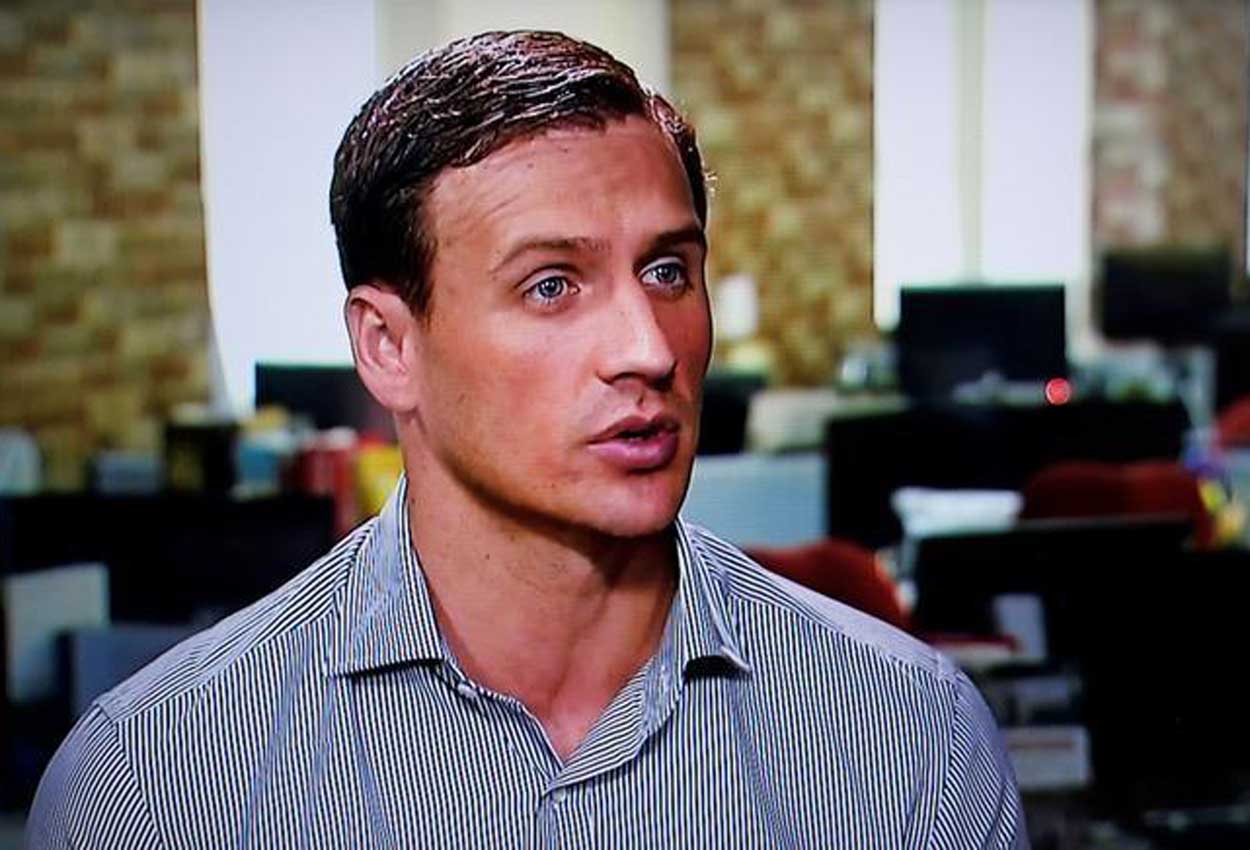
US swimmer Lochte loses all major sponsors after Rio 'robbery' incident

0

US Olympic swimmer Ryan Lochte lost all four of his major sponsors on Monday, including Speedo USA and Ralph Lauren Corp, following his apology for an “exaggerated” story about being robbed at gunpoint at the Rio Games.

Lochte’s version of the incident embarrassed the host city, angered local officials and further revelations about it – casting doubt on Lochte’s story – dominated news coverage of South America’s first Olympics.

The US Olympic Committee issued an apology on Thursday, and Lochte, a 12-time Olympic medalist, made his own apology on Saturday in an interview with Brazil’s largest broadcaster, Globo TV. “I wasn’t lying to a certain extent,” he said.

“I over-exaggerated what was happening to me.”

Read also: Brazil police arrest US swimmers at airport in Lochte ‘robbery’ case

Within hours of the Games coming to a close on Sunday night, swimwear maker Speedo USA issued a statement saying it would drop Lochte as one of its endorsers, while luxury retailer Ralph Lauren said it would not be renewing its contract with the swimmer.

Hair removal company Syneron Candela also ended its partnership with Lochte, four months after naming him its global brand ambassador for one of its products.

Japanese mattress maker Airweave, which last week had said it would stand by Lochte, on Monday said it had decided it would not renew the endorsement, which had been made for the Rio 2016 Olympic games.

Sponsorship and endorsement deals typically include “morals clauses” that allow sponsors to terminate deals early if they feel the athlete has behaved poorly in public.

Nottingham, UK-based Speedo’s US unit said on Monday it would donate $50,000 of Lochte’s fee to Save The Children, a global charity partner of Speedo.

Lochte said in an email that he respected Speedo’s decision.

“I was immature and I made a stupid mistake. I’m human. I made a mistake and I definitely learned from this,” Lochte said in an interview on the Today show.

“They (the people of Rio) put on a great Games… And my immature, intoxicated behaviour tarnished that a little,” Lochte said.

Ralph Lauren had taken down references to the gold medalist from its website last week, and on Monday it said it would not renew the Olympic-specific deal, which featured Lochte and other Olympic athletes wearing Ralph Lauren-branded Olympic merchandise.

“We are transitioning out all Olympic visual as the games ended yesterday, and we are moving into our fall fashion message,” Macy’s spokeswoman Holly Thomas said in an e-mail.

Lochte, 32, won one gold medal at the Rio Olympics. He was the breakout star of the 2012 London Olympics, landing a short-lived reality TV series called “What Would Ryan Lochte Do?” and appearing, as himself, on top shows such as “30 Rock” and “90210”.

Image: 
Category: 
Publication Date: 
Tuesday, August 23, 2016 – 11:40
Send to mobile app: 
Source: 


Story Type: 
Others

Source link

A 'people's President': Politicians pay tribute to S R Nathan

0

“I will remember him as a witty person, always speaking to me with a twinkle in his eyes on the occasions we met.” 

Source link

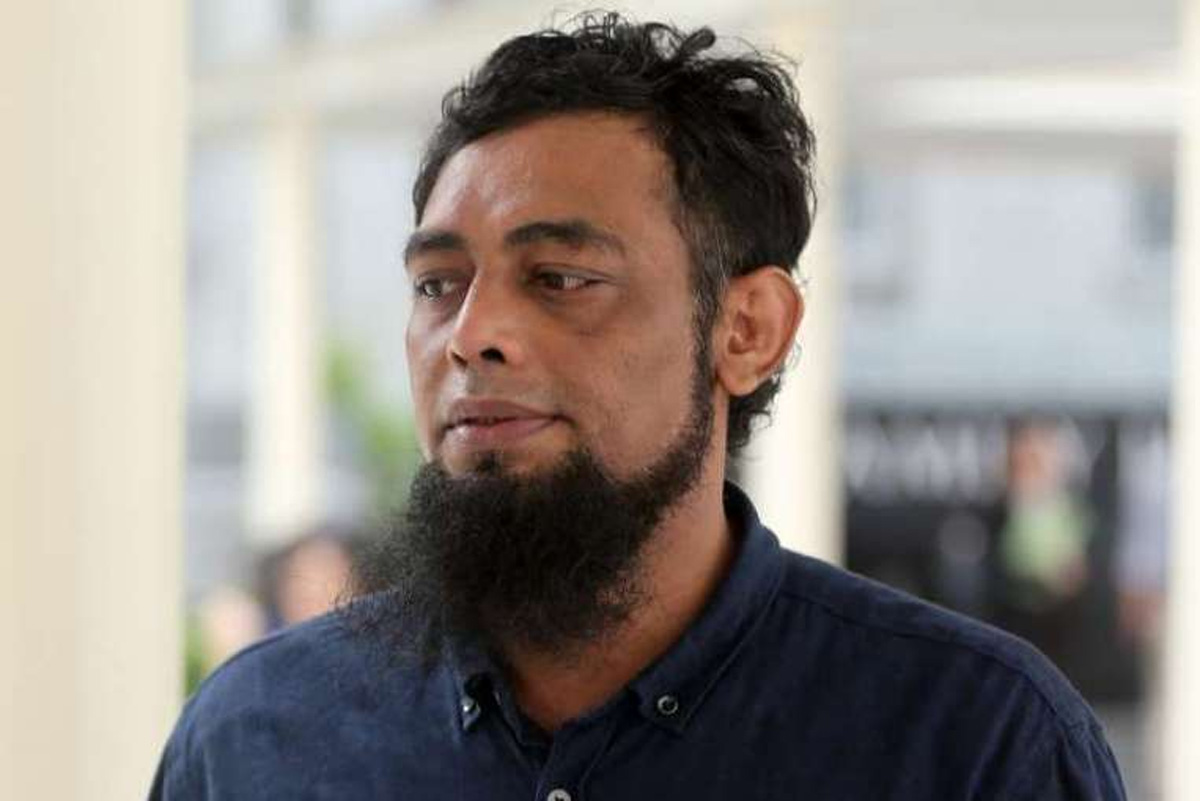
Jail for man who sped off from Tuas checkpoint with 'Ramly' beef patties

0

Singapore – The owner of a struggling car grooming company turned to importing traditional cakes and pastries from Malaysia to help support his 10 children during the Muslim fasting month of Ramadan, a court heard on Monday (Aug 22).

Mohamed Dawood R.M. Abdul Sukkur, 48, who also owns a food distribution company, even worked part-time as a driver with ride-hailing service Uber to make ends meet.

But afraid that he would get caught for unlawfully importing nearly 40kg of “Ramly” beef patties without a licence, the businessman sped off from an inspection pit at Tuas Checkpoint in June 2015 – during the first week of Ramadan – sparking off a two-hour manhunt.

On Monday (Aug 22), Dawood was jailed for nine months and fined $8,000 for a spate of crimes. He will also be barred from driving for three years after his release from prison.

He pleaded guilty to four charges: obstructing a customs officer, perverting the course of justice, importing a meat product without a licence and dangerous driving.

Four other charges were taken into consideration in sentencing: one count of failing to make a declaration on dutiable goods, one charge of importing processed food without registration, and two counts of having cigarettes that had not passed through customs.

A district court heard that on June 23, 2015, Dawood drove to Malaysia at about 7am in a rented black BMW car to collect traditional cakes and pastries to supply to shops in Singapore.

He also went to a supermarket in Bandar Baru, Johor, to buy 105 packets of Ramly beef patties, weighing about 37.8kg in total, for RM400. He wanted to sell them to night market shops in Woodlands for a profit.

Dawood hid the beef patties in the spare tire compartment of the car and reached Tuas Checkpoint at about 11.35am.

After he had cleared immigration, however, ICA officers found discrepancies in Dawood’s goods import permit and directed him to a full inspection pit for further checks.

He nodded his head to acknowledge this instruction. However, as he was driving towards the pit, he realised officers would discover that he had brought in the beef patties without a licence, the court heard.

“(Dawood) thus decided not to comply …. Instead, he stepped hard on the car accelerator and sped off out of Tuas Checkpoint,” said Deputy Public Prosecutor (DPP) Mansoor Amir.

After he left the checkpoint, Dawood travelled at about 142kmh along Jalan Ahmad Ibrahim towards Ayer Rajah Expressway (AYE), and then at about 172kmh along the AYE towards the slip road to the Pan-Island Expressway (PIE).

Dawood drove at about 88kmh on the slip road, and at about 140kmh on the PIE from Tuas Road to Pasir Laba Flyover towards the East Coast Parkway, and then at about 90kmh from the flyover to PIE exit 38.

The car broke down at about 12.20pm along the PIE towards Changi Airport, near Pioneer Road North exit 38 and the entrance of Nanyang Technological University.

“Aware that the police would soon catch up to him and that the Ramly beef patties would incriminate him, (Dawood) thus disposed of the 105 packets of Ramly beef patties after his vehicle had broken down, before the police arrived,” said DPP Mansoor.

The businessman threw them away into an open drain along the PIE towards Changi Airport before PIE exit 38.

Policemen arrested Dawood when they arrived. Among other things, they found 145 boxes or packets of assorted traditional cakes and pastries weighing a total of 200kg, some of which were on the grass verge next to the car while others were inside the vehicle.

Dawood later led officers to the open drain where he had thrown the beef patties.

DPP Mansoor asked for eight to 10 months’ jail and a fine of about $10,000. He also asked for a five-year driving ban.

Defence lawyer Noor Mohamed Marican asked for “a minimal fine” instead.

He said: “(Dawood) has realised his mistake and is remorseful. … He is the sole breadwinner of his family and single-handedly maintaining 10 children.

“He is self-employed in the car grooming business and earns a low income because his business is struggling to survive amidst heavy competition. During the Muslim fasting month of Ramadan, he usually imports traditional cakes and pastries to sell in Singapore, and makes a small profit to help sustain his family,” said Mr Marican.

The lawyer added that Dawood panicked and drove out of the checkpoint in “a momentary lapse of judgment”.

In sentencing, District Judge Lee Poh Choo said: “Entrepreneurship is encouraged but this is certainly not the way to go about it. From start to end, you contravened the law. The manner you kept the (patties) – hiding them in the spare tyre – would have caused health problems.”

For obstructing a customs officer, Dawood could have been fined $10,000 and jailed for 18 months.

For perverting the course of justice, he could have been jailed for seven years and fined.

The maximum penalty for importing a meat product without a licence is a $50,000 fine and two years’ jail for a first conviction, and subsequently, a $100,000 fine and three years’ jail.

The maximum punishment for dangerous driving is a $3,000 and 12 months’ jail for a first conviction, and subsequently, a $5,000 fine and two years’ jail.


This article was first published on Aug 22, 2016.
Get a copy of The Straits Times or go to straitstimes.com for more stories.

Image: 
Publication Date: 
Tuesday, August 23, 2016 – 11:25
Send to mobile app: 
Source: 


Story Type: 
Others

Source link

Philippines drug war deaths climb to 1,800; US 'deeply concerned'

0

MANILA – The Philippines has recorded about 1,800 drug-related killings since President Rodrigo Duterte took office seven weeks ago and launched a war on narcotics, far higher than previously believed, according to police figures.

Philippine National Police Chief Ronald Dela Rosa told a Senate committee on Monday that 712 drug traffickers and users had been killed in police operations since July 1.

Police were also investigating 1,067 other drug-related killings, Dela Rosa said, without giving details. On Sunday, Duterte railed against the United Nations for criticising the wave of deaths.

The United States, a close ally of the Philippines, said it was “deeply concerned” by the reports, and US State Department spokesman Mark Toner urged Duterte’s government to ensure that law-enforcement authorities abided by human rights norms.

The drug trafficking crackdown and some strongly worded criticisms Duterte has made of the United States since coming to power present a dilemma for Washington, which has been seeking to forge unity among allies and partners in Asia in the face of an increasingly assertive China, especially in the strategic South China Sea.

Toner made the dilemma clear in responses to questions at a regular State Department briefing in Washington, in which he referred to Duterte as “a plain-speaking politician.”

“We continue to make clear to the Philippines government … our concern about human rights, extrajudicial killings, but we are also committed to our bilateral relationship and strengthening that bilateral relationship,” he said.

Toner said there was no question of the United States turning a blind eye to rights abuses and that the relationship with Manila, while good, was “frank and candid.”

As recently as Sunday, the number of suspected drug traffickers killed in Duterte’s war on drugs had been put at about 900 by Philippine officials. But this number included people who died since Duterte won the May 9 presidential election.

Duterte said in a strongly worded late-night news conference on Sunday the Philippines might leave the United Nations and invite China and others to form a new global forum, accusing it of failing to fulfil its mandate.

His foreign minister, Perfecto Yasay, said on Monday the Philippines would remain a UN member and described the president’s comments as expressions of “profound disappointment and frustration”.

“We are committed to the UN despite our numerous frustrations and disappointments with the international agency,” Yasay told a news conference.

US officials declined comment on Duterte’s UN remarks.

Last week, two UN human rights experts urged Manila to stop the extra-judicial executions and killings.

Yasay said Duterte has promised to uphold human rights in the fight against drugs and has ordered the police to investigate and prosecute offenders.

He criticised the UN rapporteurs for “jumping to an arbitrary conclusion that we have violated human rights of people”.

“It is highly irresponsible on their part to solely rely on such allegations based on information from unnamed sources without proper substantiation,” he said of the United Nations.

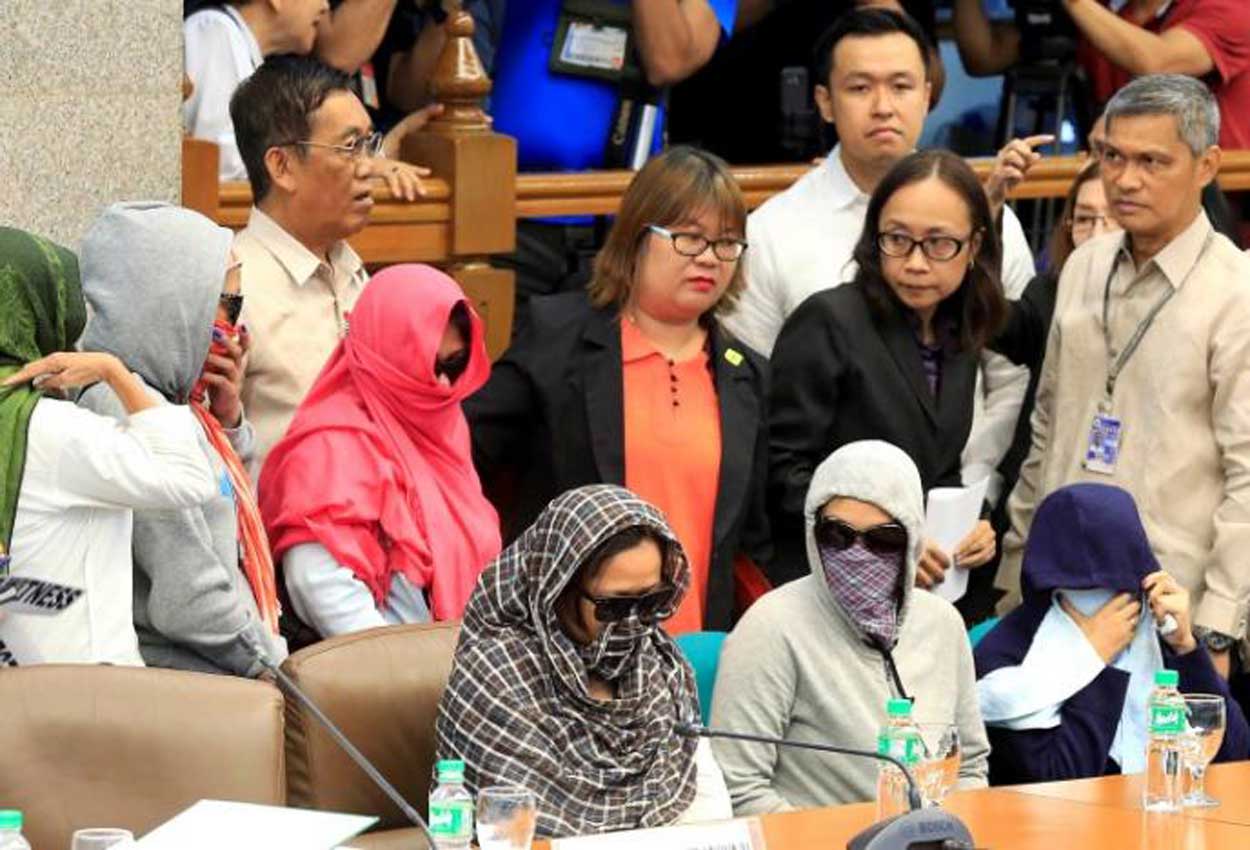
Senator Leila de Lima, a staunch critic of the president, started a two-day congressional inquiry into the killings on Monday, questioning top police and anti-narcotics officials to explain the “unprecedented” rise in killings.

“I am disturbed that we have killings left and right as breakfast every morning,” she said.

“My concern does not only revolve around the growing tally of killings reported by the police. What is particularly worrisome is that the campaign against drugs seems to be an excuse for some law enforcers and other elements like vigilantes to commit murder with impunity,” De Lima said.

Image: 
Category: 
Publication Date: 
Tuesday, August 23, 2016 – 10:54
Send to mobile app: 
Source: 


Story Type: 
Others

Source link

'A strong proponent of inter-religious harmony': Religious groups pay tribute to S R Nathan

0

Religious groups in Singapore paid tribute to the late former President S R Nathan, who died on Monday (Aug 22) at the age of 92.

Source link

S R Nathan remembered as champion of ‘inter-religious harmony’

0

SINGAPORE – The late former President S R Nathan was a strong proponent of inter-religious harmony and always had a heart for the less privileged, said religious groups in tributes on Tuesday (Aug 23).
Archbishop William Goh said the Roman Catholic…

Source link

'Ben-Hur' left in the dust at American box office

0

LOS ANGELES – Paramount’s US$100 million ($135 million) remake of “Ben-Hur” bombed in its opening weekend at the North American box office, industry data showed Monday, putting it on course to become the summer’s biggest flop.

The chariot racing epic brought in just US$11.2 million, said box office monitor Exhibitor Relations, making it the highest-profile casualty in a season which has seen several big studio movies crash and burn.

Critics gave Timur Bekmambetov’s reboot of the Biblical fable – starring Jack Huston, Toby Kebbell and Morgan Freeman – the thumbs down across the board, with several dubbing it “Chariots of Misfire.”

“How do you fight an idea? By filming a remake that has too few of its own, and tries to cover it up with choppy editing and CGI,” was the critical consensus on review aggregation website Rotten Tomatoes, which gave it a woeful 28 per cent rating.

It is the fourth big screen iteration of Lew Wallace’s best-selling 1880 novel “Ben-Hur: A Tale of the Christ,” following silent versions in 1907 and 1925, and William Wyler’s 1959 opus, which won 11 Oscars.

“The ‘Ben-Hur’ remake was always going to be an uphill battle as Paramount is up against not only reboot fatigue, but the fact that the 1959 version swept the Oscars and is still considered a classic,” Jeff Bock of Exhibitor Relations told AFP ahead of its release.

“Suicide Squad,” which has been a commercial hit despite poor reviews, held on for a third straight week as the top money-maker, pulling in US$20.9 million.

Since it opened three weeks ago, the movie has earned US$262.4 million.

“Sausage Party,” the raunchy animated comedy with Seth Rogan as the leading voice, continued its strong performance, sealing the number two spot for a second week running with a US$15.5 million take.

“War Dogs,” a new comedy starring Jonah Hill and Miles Teller as arms dealers in over their heads, opened in third place with US$14.7 million, followed by “Kubo and the Two Strings,” another debutant, which took $12.6 million.

Praised as visually stunning, the 3-D stop motion adventure fantasy set in ancient Japan is about a one-eyed boy on a quest who must battle the gods with a magical instrument.

“Pete’s Dragon,” Disney’s remake of its 1977 tale of an orphan boy and his dragon friend, just squeezed “Ben-Hur” out of the top five with an $11.3 million take.

Rounding out the top ten films of the weekend are:

– “Jason Bourne” (US$8 million)

– “Bad Moms” (US$7.9 million)

– “The Secret Life of Pets” (US$5.9 million)

– “Florence Foster Jenkins” (US$4.4 million)

Image: 
Category: 
Publication Date: 
Tuesday, August 23, 2016 – 10:48
Keywords: 
Send to mobile app: 
Source: 


Story Type: 
Others

Source link

Beyond war on drugs, Philippines' Duterte seen setting up economic boom

0

MANILA – Less than two months in office, Philippines President Rodrigo Duterte is getting high marks from the business community for policies that could engineer an economic surge and companies say they are making new investments as a result.

While Duterte may be getting headlines for a bloody war against drug dealers and users, less attention has been paid to one of Asia’s few economic success stories.

The groundwork was laid by Duterte’s predecessor, President Benigno Aquino, who took growth above 6 per cent over his six-year term , but executives are also cheering the new administration’s focus on building new infrastructure and say it could spell the start of a long-term boom.

Some even see Duterte’s violent and highly controversial anti-drugs campaign as potentially positive.

“We are in a very good spot,” said Antonio Moncupa Jr., president and CEO of East-West Banking Corp, one of the top 10 lenders in the country.

“The pronouncement of government prioritising infrastructure spending, accelerating it and cutting red tape, solving peace and order, I think all point to very good prospects ahead.”

Last week, the government announced that the Philippines’economy grew at 7 per cent in the second quarter from a year earlier, its highest level in three years. It makes the Philippines the fastest growing among all countries that have reported so far for the second quarter.

When Duterte won the May presidential election, there were questions marks over how he would handle the economy – Duterte, who is nicknamed “the Punisher”, has been unapologetic over unleashing the police on drug users and dealers. Philippine National Police Chief Ronald Dela Rosa said on Monday that there have been 1,800 drug-related deaths since Duterte took over as president, with 712 of those at the hands of the police.

The new president has launched a crackdown on online gambling, vowed to destroy oligarchs, warned that the country could live without a mining industry if environmental standards were not met and called the US ambassador a “gay son of a whore”.

But Duterte has a 91 per cent approval rating in the latest public survey and businesses are lining up to announce expansion plans. The mainstays of the economy – remittances and the outsourcing sector – are flourishing and boosting domestic consumption.

DOMESTIC EXPANSION

Jollibee Foods Corp, the biggest fastfood chain in the country, plans to open 200 more domestic stores this year. So does Robinsons Retail, taking its total to over 1,500. BDO Unibank Inc, the country’s biggest lender, plans to open 50-100 new branches this year.

“We are supportive and encouraged by the new administration’s socio-economic agenda, which has a holistic approach for the benefit of all, including JFC,” said Jollibee investor relations officer Cossette Palomar.

However, the Philippines has a worrying precedent of a strongman leader.

In the 1960s, when the country had one of the highest per capita incomes in Asia, Ferdinand Marcos took over as president. Two decades of dictatorship, corruption and plunder by Marcos left the Philippines in a shambles.

“Business will be good under this administration,” BDO Unibank executive vice-president Luis Reyes said of Duterte.

“Concerns centre more on the extra-judicial killings.”

Supporters of Duterte say even as the long-term mayor of the southern city of Davao, where he earned his reputation for busting crime, he created the conditions for business to flourish.

Government data show that the Davao region’s economy grew by 6.6 per cent on average in 2010-14 compared with 6.3 per cent for the whole country.

According to one estimate, there were more than 20,000 people in outsourcing jobs in the city in 2013, and this sector was growing at more than 20 per cent a year.
Duterte’s reputation of carrying out his promises has given businesses plenty to look forward to – for instance his vow to make spending on infrastructure a priority.

“I believe infrastructure is going to grow very fast and it will have a double or triple effect,” said Henry Schumacher of the European Chamber of Commerce in the Philippines.

“Money will be available. An iron fist is going to be behind it.”

SPEED UP, OR ELSE

In May, Duterte told the country’s main telecom providers to speed up the internet, or he would junk laws that prohibit foreign competition.

Duterte’s economic plan also includes lowering corporate and income taxes and a commitment to invest in education, to reap the demographic dividend of the country’s young population.

About two-thirds of the Philippines’ 100 million people are of working age, between 15 and 64, rising from about 56 per cent of the population in 1990. In 2030, about 70 per cent of the 125 million people will be of working age, the government has projected.

“This is another advantage given other neighbours in the region, most of Northeast Asia and some in Southeast Asia, have populations that are ageing and are therefore facing labour supply constraints,” said Euben Paracuelles, an economist at Nomura.

Still, Joanne Burgonio, a 27-year-old software analyst in Manila, said it was too early to say what a Duterte presidency would bring.

“My concern is transportation,” she said, adding that she waited two hours for a bus home the previous evening.

“His focus now is (on) drug pushers, hopefully the focus will be on infrastructure. I am optimistic because whatever he promised before he was elected, he is doing.”

Image: 
Category: 
Publication Date: 
Tuesday, August 23, 2016 – 10:15
Send to mobile app: 
Source: 


Story Type: 
Others

Source link

Japan's Shinkansen stations to get better info centres for tourists

0

The transport ministry aims to make tourist information centres capable of assisting foreign tourists available at all Shinkansen stations nationwide by fiscal 2019, as part of efforts to boost the number of visitors from overseas.

The Land, Infrastructure, Transport and Tourism Ministry plans to provide subsidies to local governments and other entities when the tourist information centres they operate meet certain criteria, such as always having English-speaking guides available.

The ministry will request necessary funds in the government’s budget for fiscal 2017 for more than 100 Shinkansen stations to open tourist information centres or upgrade their current ones by fiscal 2019.

Tourist information centres are usually run by local governments or tourism associations. According to the ministry, there is no tourist information centre at 13 Shinkansen stations, including Tokaido Shinkansen’s Gifu-Hashima Station in Gifu Prefecture and Joetsu Shinkansen’s Honjo-Waseda Station in Saitama Prefecture.


Many existing centres also fail to fully meet the need of foreign tourists, as English-speaking staff are not available all the time or wireless LAN is not provided.

The ministry therefore plans to offer subsidies to local governments and tourism associations to cover part of the costs of setting up wireless LAN that can be used free of charge and providing foreign-language training for those working at information centres, as long as they meet certain criteria.

The ministry aims to make it easier for foreign tourists to travel in many parts of Japan by helping information centres provide better services at Shinkansen stations, which will likely be used by many such visitors.

Under a strategy compiled in March for promoting tourism, the government aims to double the annual number of foreign visitors to 40 million in 2020 when Tokyo hosts the Olympics and Paralympics, up from nearly 20 million in 2015.

One of the keys to achieving this target will be to encourage foreign tourists to travel in non-urban areas, as most of them currently visit the nation’s three biggest urban areas in the Kanto, Chubu and Kinki regions.

Image: 
Category: 
Publication Date: 
Tuesday, August 23, 2016 – 09:57
Send to mobile app: 
Source: 


Story Type: 
Others

Source link