There are now 46 active dengue clusters in Singapore – up from 43 the previous week – including 11 classified as high-risk.
Source link
Dengue cases rise again after two-week decline
North Korea fires submarine-launched ballistic missile towards Japan

SEOUL – North Korea fired a submarine-launched missile on Wednesday that flew about 500 km (311 miles) towards Japan, a show of improving technological capability for the isolated country that has conducted a series of launches in defiance of UN sanctions.
The missile was fired at around 5:30 a.m. (2030 GMT) from near the coastal city of Sinpo, where satellite imagery shows a submarine base is located, officials at South Korea’s Joint Chiefs of Staff and the Defence Ministry told Reuters.
The projectile reached Japan’s air defence identification zone (ADIZ), an area of control designated by countries to help maintain air security, South Korea’s Yonhap News Agency reported.
The distance of the flight indicated the North’s push to develop a submarine-launched missile system was paying off, officials and rocketry experts said.
North Korea’s “SLBM (submarine-launched ballistic missile) technology appears to have progressed,” a South Korean military official told Reuters.
The launch comes two days after rival South Korea and the United States began annual military exercises in the South that North Korea condemns as a preparation for invasion, and has threatened retaliation. “I think it was probably successful,” said Jeffrey Lewis of the California-based Middlebury Institute of International Studies.
“We don’t know the full range, but 500 km is either full range or a full range on a lofted trajectory. Either way, that missile works.”
The US Strategic Command said it had tracked what it believed to be a KN-11 submarine-launched ballistic missile and confirmed it flew about 300 miles.
Joshua Pollack, editor of the US-based Nonproliferation Review, said a claim to having mastered the SLBM technology is as much about prestige as a military breakthrough, a status enjoyed only by six countries including the United States, Russia and China.
“I think it’s meant foremost as a demonstration of sheer technical capability and a demand for status and respect,” Pollack said.
The launch came on the same day that the foreign ministers of China, Japan and South Korea were scheduled to meet in Tokyo.
“This poses a grave threat to Japan’s security, and is an unforgivable act that damages regional peace and stability markedly,” Japanese Prime Minister Shinzo Abe told reporters, adding that Japan had lodged a stern protest.
GROWING ISOLATION
North Korea has become further isolated after a January nuclear test, its fourth, and the launch of a long-range rocket in February which brought tightened UN sanctions.
It has launched numerous missiles of various types this year, including one this month that landed in or near Japanese-controlled waters.
The next step for the North would be to acquire a fleet of submarines large and quiet enough and with a longer range to evade surveillance, experts said.
“They keep conducting nuclear tests and SLBMs together which means they are showing they can arm SLBMs with miniaturised nuclear warheads,” said Moon Keun-sik, a retired South Korean navy officer and an expert in submarine warfare.
North Korea has claimed this year to have miniaturised a nuclear warhead to fit on a ballistic missile but outside experts have said there is yet to be firm evidence to back up the claim.
Tensions on the Korean peninsula were exacerbated by the recent defection of North Korea’s deputy ambassador in London to South Korea, an embarrassing setback to the regime of North Korean leader Kim Jong Un.
The North’s missile tests this year include a launch from a submarine last month that appeared to have failed, according to South Korea’s military.
The July launch came a day after South Korea and the United States announced plans for the South to host a sophisticated US anti-missile system.
Image:

Publication Date:
Wednesday, August 24, 2016 – 09:19
Keywords:
Send to mobile app:
Source:
Story Type:
Others
King's Potong ice cream voluntarily recalled by importer after metal nut found in one: AVA
SINGAPORE – A range of King’s Ice Confection products has been voluntarily recalled by its importer after a customer reported finding a metal nut in one bar.
The Agri-Food and Veterinary Authority (AVA) said in a statement on Tuesday (Aug 23) that it has been working with the importer to investigate the matter after a member of the public reported finding the foreign object in a King’s Potong Red Bean Ice Confection bar last Thursday (Aug 18).
The importer has voluntarily recalled King’s Ice Confection products with expiry dates before July 22, 2018, as a precautionary measure.
The affected products have Malaysia listed as their country of origin.
Customers are advised not to consume the recalled Potong range, which includes red bean, black glutinous rice/yam, durian, red bean & cempedak, and teh tarik flavours. King’s Fruity Lime Surprise is also part of the recall.
Those who have enquiries or wish to exchange products in their possession should contact F&N Creameries Singapore by phone at 6261-3133 or e-mail at icecream-sg@fnnfoods.com.

This article was first published on Aug 23, 2016.
Get a copy of The Straits Times or go to straitstimes.com for more stories.
Image:

Publication Date:
Wednesday, August 24, 2016 – 09:17
Send to mobile app:
Source:
Story Type:
Others
Olympics: Psychopaths share similarities with athletes

UNITED KINGDOM – Psychopaths and elite sportspeople share certain characteristics including pushing life to the limit, Britain’s most decorated female Olympic athlete Katherine Grainger told AFP.
The 40-year-old Scotswoman – who defied the sceptics to take silver in the women’s double sculls in Rio to medal for the fifth successive Games – came to this conclusion when she wrote her dissertation on psychopaths for a Masters in medical law and ethics, to add to her degree in law and another in homicide.
Grainger, who tumultuously won gold in the London Games and then took two years out before returning to the sport, emphasised the similarities only went so far.
“My masters was in psychopaths and I try not to link it directly to rowing and my team-mates,” she told AFP after arriving back from Rio with many of her team-mates who had also contributed to the record 67 medals.
“It is not a direct comparison in any way. But it is quite an extreme part of human behaviour and the mental side of people and actions and thoughts and deeds, to a certain extent sport is like that.
“People who are very passionate, very driven at what they do and take it right to the limit of human performance.
“It is always interesting seeing human beings experiencing life at the limit, whatever that limit is.” Grainger, who also won silver in Sydney (2000), Athens (2004) and Beijing (2008), said despite her academic qualifications in legal matters she wasn’t sure what career she would choose.
“I’m lucky there are a lot of doors I can open and choose what to do next,” said Grainger.
“The hard thing is knowing which direction to take next.
“I’ve got loads of interests and lots of things that excite me about the future.” Grainger, who at one point looked as if she wouldn’t make the Games as she and sculls partner Victoria Thornley struggled for form, said the last 20 years had been extraordinary but it was time to move on.
“I know I’ll never replace this and I wouldn’t try to replace this as its been an exceptional part of my life,” she said.
“I wouldn’t change any of it but at the same time I’ve got the next part of my life and I really want to be excited about that,” she added.
Now, however, the immediate future belongs with her family, to whom she acknowledges she owes a huge debt.
“They miss out on seeing you,” she said.
“There are so many weddings, birthdays, anniversaries, and christenings you just don’t get to go to. However, my family have been wonderful because they’ve accepted it over the past 20 years.
“Just like any parent they want their child to be happy, whether successful or not. It is very, very hard for a parent or a loved one watching an athlete go through the emotional highs and lows and then enter the intense pressure of delivering when the event comes up every four years.
“I know how hard it has been for my mum and dad, they’ve been incredible, always very supportive of me coming back and doing it again.
“But I think they need a break from it now.” Grainger is especially looking forward to seeing her two-year-old nephew, who screamed her home watching her on television.
“Yeah I got photos through from my sister and he knew it was me on the TV,” said Grainger.
“I don’t think he could work out what I was doing on the TV, he doesn’t speak masses but he knows my name and shouts at the TV with the rest of the family.
“He is one of the first people I want to go back and see as I haven’t spent a lot of time with him in the past two years. My nephew will not know what the medal is for and he doesn’t know what the five rings are but that is quite refreshing.” From a professional point of view Grainger says as she looks back there is no resemblance between Team GB and the one she first competed for in Sydney.
“The whole ethos surrounding Team GB has changed,” she said.
“There is much more expectation of success.
“When I won my first medal in Sydney it was the first women’s rowing medal of any colour in the Olympic Games.
“There was huge surprise, but we didn’t know if it would change things or not.
“Now it is kind of expected to deliver medals across almost all sports categories.
“That is such a different mindset to when I started. Back then it was have a go and lets see if we can make a bit of history.
“Now it is all this responsibility, we have to deliver as this is what we do. It is breeding success.”
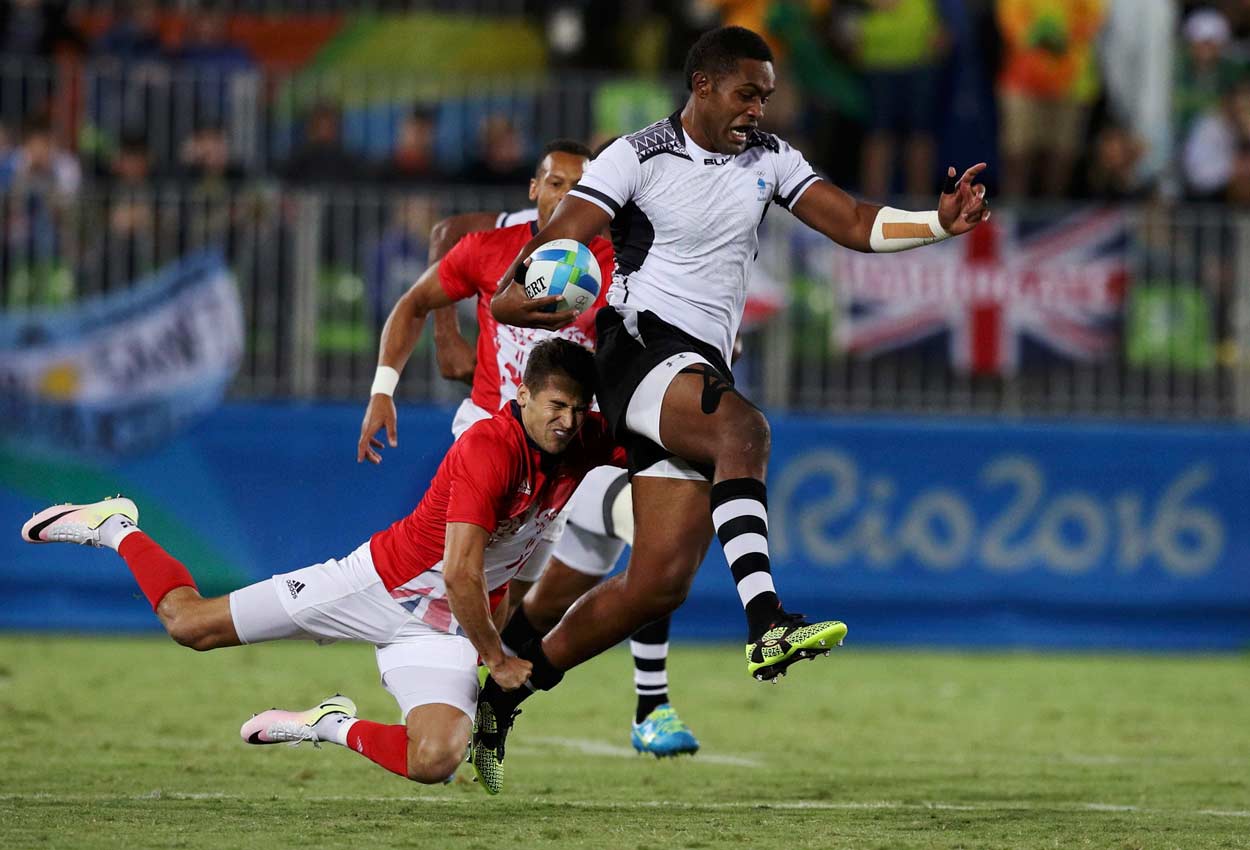
Rio Olympics 2016 Closing Ceremony
Click on thumbnail to view photos. Source:
Reuters, AFP, The Straits Times




































































Image:
Publication Date:
Wednesday, August 24, 2016 – 08:54
Keywords:
Send to mobile app:
Source:
Story Type:
Others
Student care centre made wrongful claims for government fee subsidies: MSF
SINGAPORE – The Ministry of Social and Family Development (MSF) has discovered “multiple instances” of wrongful claims for government fee subsidies by a student care centre.
The wrongful claims by Impresario Learning Lab were discovered during a recent audit, MSF said in a press release on Tuesday (Aug 23).
“MSF takes a serious view of this matter and has since referred the matter to the Commercial Affairs Department of the Singapore Police Force,” said the statement.
Impresario Learning Lab, which is in Havelock Road, has 14 days to provide MSF with a satisfactory explanation of the claims.
Failing that, the centre’s status as a Student Care Fee Assistance (SCFA) administrator will be revoked.
In the meantime, the centre has been told that it cannot administer the fee assistance for any new students enrolled.
“MSF has sent letters to the parents whose children are enrolled in Impresario Learning Lab to explain the situation, and to provide them our support and assistance,” said the statement.
Of the 14 children who were enrolled at Impresario Learning Lab in June, 12 are current recipients of SCFA.
Impresario Learning Lab has been disbursing SCFA subsidies since 2013.
The Government’s SCFA scheme is meant to help subsidise student care centre fees for low-income families.
According to the MSF website, monthly fees at Impresario Learning Lab are $300.
MSF said that it carries out regular audits to guard against student care centres making fraudulent claims.
This article was first published on Aug 23, 2016.
Get a copy of The Straits Times or go to straitstimes.com for more stories.
Image:

Publication Date:
Wednesday, August 24, 2016 – 09:09
Keywords:
Send to mobile app:
Source:
Story Type:
Others
Malaysian bronze medallist targets Tokyo gold

PETALING JAYA – Age is just a number for Olympic bronze medallist track cyclist Azizulhasni Awang.
With Britain’s Chris Hoy riding to the keirin gold at age 36 in London four years ago, it is a good reminder for the Malaysian that another bid in Tokyo 2020 is not out of reach.
“I intend to go for my fourth Olympics outing in Tokyo.
“In my first Olympics in 2008, I finished 10th. In London four years ago, I made the final and ended up sixth.
“Now, I’ve got the bronze.
“I am improving and I will try for the middle spot in the podium in Tokyo,” said Azizul, who added his focus next year will be on completing his university studies.
The 28-year-old deferred his final year of sports science studies at Victoria University in Melbourne for his Olympic exploits.
Azizul will be 32 by the time Tokyo 2020 comes but he is confident of maintaining his competitive edge.
“I don’t see any sign of me getting slower or weaker.
“In fact, I get better and stronger each year,” he added.
Azizul became the country’s first Olympic medallist in track cycling when he romped to the bronze in the keirin final behind Dutchman Matthijs Buchli and Britain’s Jason Kenny in Rio last week.
Highlights from Olympics 2016
Click on thumbnail to view photos. Source:
AFP, Reuters, The Straits Times












































































6.jpg)























Image:

Publication Date:
Wednesday, August 24, 2016 – 08:59
Keywords:
Send to mobile app:
Source:
Story Type:
Others
Amos Yee does U-turn and pleads guilty to two of his eight charges
SINGAPORE – Teenage blogger Amos Yee, who had earlier denied six charges of wounding religious feelings and two of failing to turn up at a police station, has thrown in the towel on the latter two charges.
On the third day of his trial on Tuesday (Aug 23), Yee, 17, pleaded guilty to failing to show up at Jurong Police Division at 9am on Dec 14, 2015, despite being served with a notice by a police officer to do so.
He also admitted to failing to turn up at the same police station at 9am on May 10, despite a Magistrate’s order to do so.
Principal District Judge Ong Hian Sun will sentence Yee for the two contempt of lawful authority charges at later date, after his trial on the remaining six charges.
The maximum penalty for each charge is one month’s jail and a $1,500 fine.
The court heard that the police notice was served to Yee at his Shunfu Road home, with his mother present, on Dec 12, 2015.
Three police officers who handed him the notice also told him that he was required to attend an interview at the police station.
However, Yee took a flight to Hong Kong at about 4.35am on Dec 13.
“While (Yee) was away from Singapore, he made various online postings acknowledging that he had been served the notice,” said Deputy Public Prosecutor Andre Chong.
“He also stated in these posts that he was on the run from police, and that he had no intention of turning up for the aforesaid interview.”
Yee returned to Singapore at about 10.45pm on April 20.
On May 3, a Magistrate issued a warrant requiring that Yee attend an interview at Jurong Police Division at 9am on May 10. The police had requested the warrant.
Three police officers handed Yee the warrant at his home, with his parents present, on May 4.
The officers also asked him to give his signature, to acknowledge receiving it, but he refused.
On May 9, Yee again tried to leave Singapore for Hong Kong.
However, he was stopped at Changi Airport and ordered to surrender his passport.
Still, Yee did not turn up for his police interview the next day.
On May 11, he was arrested and then bailed out by his mother.
Yee was charged in May with eight counts – including six for intending to wound the feelings of Muslims or Christians.
He had allegedly posted a photo and five videos, some of which show him insulting the Bible and the Quran.
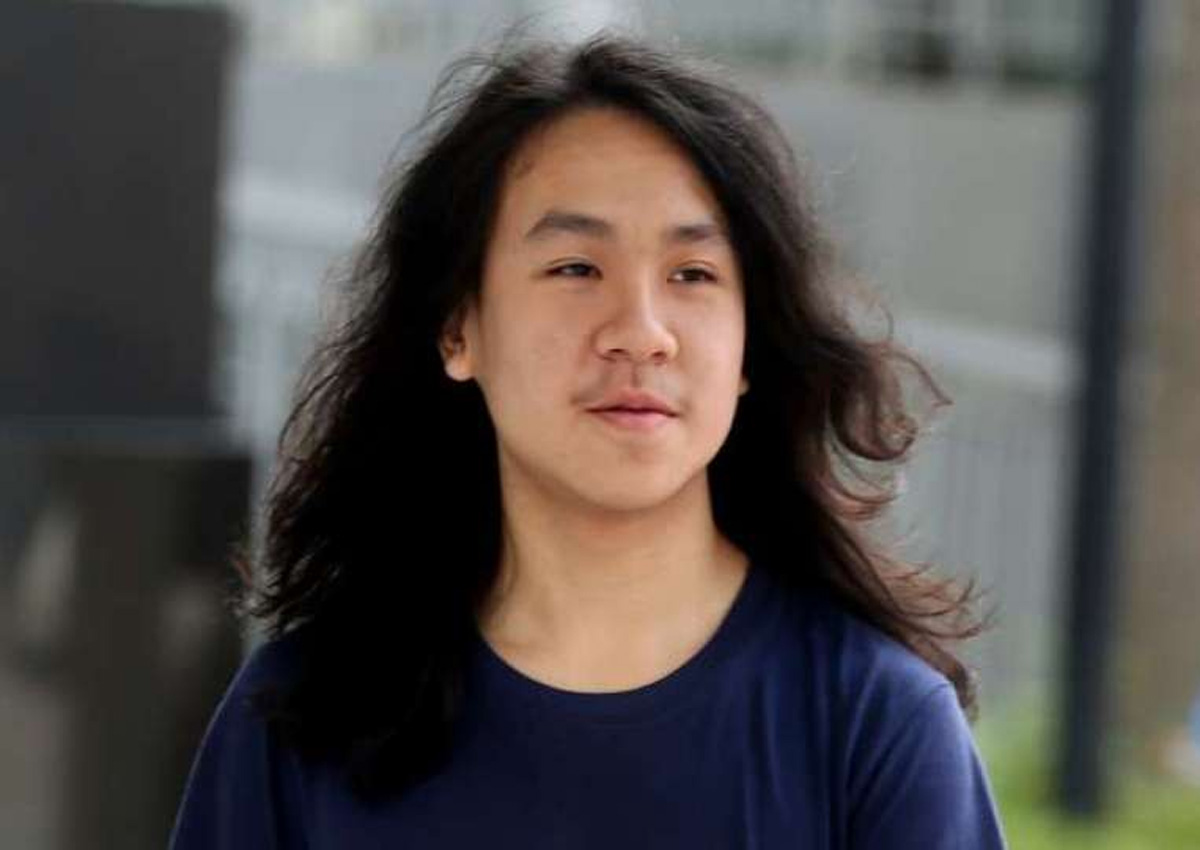
Police arrest Amos Yee, the teen behind anti-Lee Kuan Yew video
Click on thumbnail to view photos. Source:
YouTube screengrabs










































At the start of his trial last Wednesday (Aug 17), Yee opted to contest all his eight charges .
The teen, who has no lawyer, also said he wanted to cross-examine the prosecution’s witnesses.
But shortly after the start of the trial, and before the first witness was called, he told District Judge Lim Tse Haw he wanted “to take a certain course”, which is legal parlance indicating that he was considering pleading guilty.
Yee said he recently found out about the Criminal Case Resolution (CCR) process, an avenue for resolving a case without trial.
The judge fixed the case for a CCR, in which the accused can ask for an indication of his possible sentences.
But with no resolution at the closed-door CCR session, the case was sent back for the trial to continue on Thursday (Aug 18).
So far, three police forensic technology officers have testified in the trial.
The officers extracted data from webpages such as blogs and social media sites and analysed Yee’s laptop and phone.
The prosecution will call seven witnesses, all police officers, in total.
The maximum penalty for deliberately wounding the religious feelings of any person is three years’ jail and a fine.
Yee first came to the attention of the authorities when he uploaded an expletive-laden video on March 27, 2015, four days after the death of founding prime minister Lee Kuan Yew. Yee later also posted an obscene image on his blog.
He was convicted on May 12, 2015, and sentenced on July 6 to four weeks’ jail.
He was released the same day as the punishment was backdated to include his time in remand. He had spent about 50 days in prison after repeatedly breaching bail conditions.
Amos Yee sentenced to 4 weeks in jail
Click on thumbnail to view photos. Source:
The Straits Times, The New Paper, Reuters, AFP, Lianhe Zaobao






























This article was first published on Aug 23, 2016.
Get a copy of The Straits Times or go to straitstimes.com for more stories.
Image:
Publication Date:
Wednesday, August 24, 2016 – 08:52
Keywords:
Send to mobile app:
Source:
Story Type:
Others
ASEAN now has sporting chance at Games
After two weeks of intense competitions among the world’s finest athletes, the Rio Games have ended.
Rio Olympics 2016 Closing Ceremony
Click on thumbnail to view photos. Source:
Reuters, AFP, The Straits Times
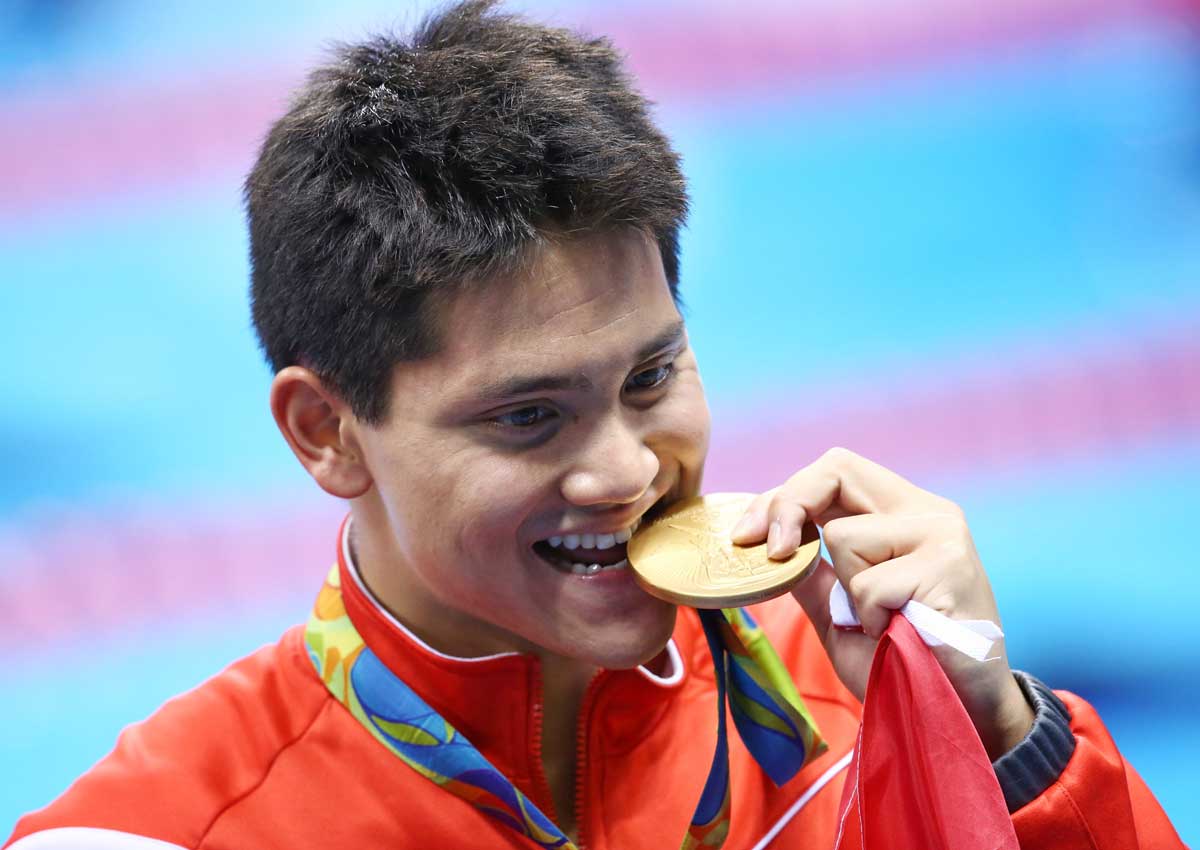
New records were set and new heroes were born, among them Singapore’s young swimmer Joseph Schooling, who staged one of the greatest upsets of the Olympics.
As defined by Daniel Goffenberg of CBC Sports, for a great upset to happen, “you need an overwhelming favourite, a gutsy underdog and a stage big enough for the outcome to matter.”
Schooling’s victory over Michael Phelps fit the bill perfectly. He was the underdog from a tiny country that had never won an Olympic gold while Phelps was the mightiest, most decorated Olympian in history with 23 gold medals.
Not only that, Schooling set an impressive new record of 50.39sec for the 100m butterfly event.
Click on thumbnail to view photos. Source:
The Straits Times, Reuters, AFP














































When news of Singapore’s first gold medal broke, it quickly overtook other stories emanating from Rio, eclipsing its ASEAN neighbours’ own Olympic gold successes: Vietnam’s shooter Hoang Xuan Vinh in the 10m air pistol and Thailand’s weightlifters Sopita Tanasan and Sukanya Srisurat in their individual weight classes.
It certainly overtook Malaysian diving duo Pandelela Rinong and Cheong Jun Hoong’s silver in the women’s synchronised 10m platform diving.
All are no small feats, but there is a total of 28 sports in the Games, not counting those with multiple disciplines, and the most popular ones for a global audience are gymnastics, track and field and swimming, according to topendsports.com.
Among Asian nations competing in the Games, China and Japan have been traditionally the strong contenders in gymnastics and swimming.
For most other Asian competitors, the sports they excel in tend to be the ones with less mass appeal like archery, shooting, judo, badminton and, for some strange reason, women’s weightlifting.
Apart from the Thais, Taiwanese, Filipina and Indonesian female weightlifters have also won medals for their countries.
Highlights from Olympics 2016
Click on thumbnail to view photos. Source:
AFP, Reuters, The Straits Times

















In the glamorous track-and-field events, however, there does not seem to be any Asian athlete who can challenge the likes of Usain Bolt.
China remains the sporting powerhouse of Asia, sending its largest delegation of 416 athletes to Rio.
But this outing has been a disappointment for the Chinese. Their medal haul, although ranked third after the United States and Britain, is far below what they got at the 2012 London Games.
Meanwhile, the other Asian powerhouse, India, with the second-largest population in the world, has never done well at the Olympics which has been the subject of intense debate among Indian and foreign sports pundits.
Sadly, its fortunes did not change, despite sending its biggest-ever contingent of 118 sportsmen and women.
Its one silver and one bronze fall very short of the hoped-for 10 to 14 medals, as reported by The Statesman newspaper.
CAN MONEY BUY MEDALS?
Winning an Olympic gold medal is the Holy Grail of sports.
The pomp that surrounds the Games gives the gold medallists unparalleled honour and prestige.
And the nations they represent go into collective convulsions of ecstasy and nationalistic joy, which make their governments equally happy and proud.
That is why many governments pour millions into sports programmes to nurture and train promising talents and offer great financial rewards to successful Olympians.
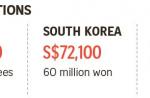
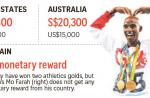
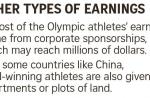
Schooling will get $1 million for his gold medal.
Vietnam’s Hoang reportedly will receive US$100,000 (S$134,760), a figure, according to Agence France-Presse, that is nearly 50 times greater than the country’s average national income of around US$2,100.
How much Olympic athletes get for their gold medals
Click on thumbnail to view photos. Source:
Straits Times Graphics



Several Western countries have the same financial bait – including the United States, France, Russia and Germany – but at a lower rate.
Does it work?
The Technology Policy Institute looked for a correlation and was mindful of variables like country size and income, “since those are surely the biggest predictor of how many medals a country will win”.
“More populous countries are more likely to have that rare human who is physically built and mentally able to become an Olympic athlete, while richer countries are more likely to be able to invest in training those people”.
The researchers found no correlation between monetary payments and medals and said it was not surprising in some countries.
In the US, for example, a US$25,000 cash award would be dwarfed by million-dollar endorsements the sportsperson could get.
The researchers also set out to see if the results are different for countries with lower opportunities for endorsements.
Their conclusion: “Overall the evidence suggests that these payments don’t increase the medal count” either.
Rather, countries that do well are those with a longstanding sporting culture that values and nurtures their athletes long before they qualify for the Olympics.
That is evident in Western societies where sportsmen, even at the college level, are feted and idolised. In Asia, however, the emphasis is more on book-learning and earning prestigious degrees.
That attitude, however, is surely changing as more Asian sportsmen and women go professional and are able to make a good living.
For now, it is still the Western countries that dominate the Olympic medal tally table.
But it is only a matter of time before more Asian nations, once no-hopers at the Games, rise up the charts.
It has already started.
The Rio Games will go down in history as a watershed for ASEAN, with two member states – Singapore and Vietnam – winning their first gold medals.
For Malaysia, even though this was its most successful Olympic outing with three silver and one bronze, the gold medal remained painfully elusive.
So it did not happen for its athletes at Rio but it can in Tokyo in 2020. After all, the Little Red Dot has shown the wildest dream can be a reality.
Image:
Category:
Publication Date:
Wednesday, August 24, 2016 – 08:49
Send to mobile app:
Source:
Story Type:
Others
One dead, dozens wounded in Thai deep south car bomb: Police
1.jpg "thailandbomb11.jpg")
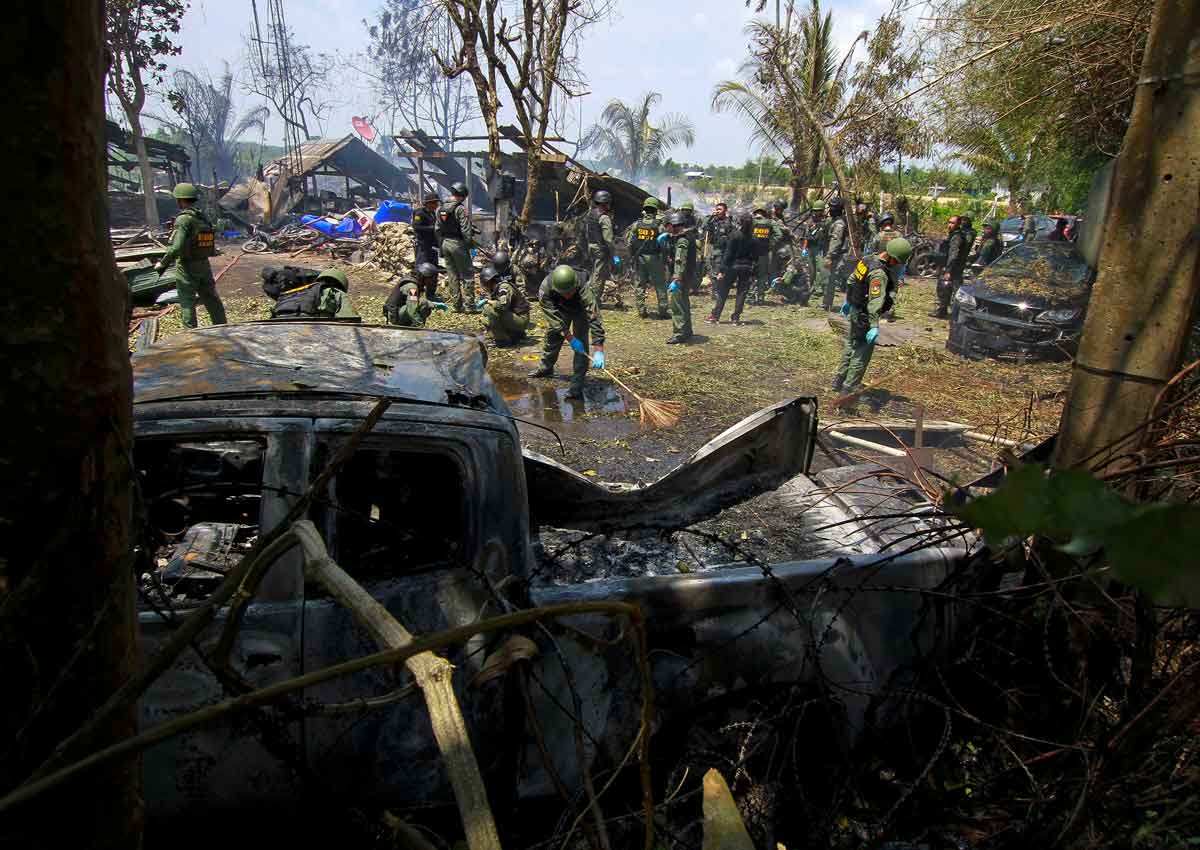
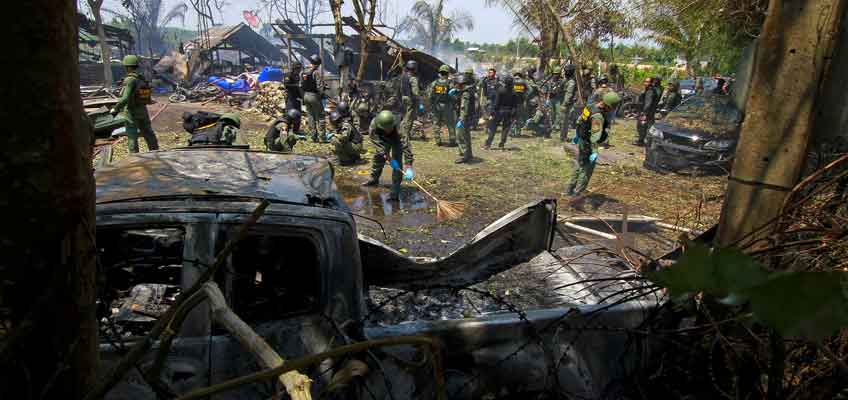
Bangkok – A large car bomb blew up outside a hotel in Thailand’s insurgency-plagued southern region late Tuesday, killing one and wounding more than 30 people, some of them critically, police said.
Although the area is not popular with tourists, the country has been on edge since a string of small but coordinated explosions earlier this month struck resort towns further north, heightening concerns that Thailand’s southern insurgency may have spread after years of stalled peace talks.
The latest bomb struck shortly before midnight outside a hotel on the outskirts of Pattani, one of three Muslim majority southern provinces that have been battered by the 12-year insurgency.
“So far there is one killed and more than 30 injured,” Major General Thanongsak Wangsupa, Pattani provincial police commander, told AFP.
“The hotel building was considerably damaged,” he added.
A staff member at the town’s hospital said 32 people were injured, five of them critically. All are Thai nationals, the worker added, asking not to be named.
Click on thumbnail to view photos. Source:
AFP









Most embassies warn nationals against all travel to Pattani because of the long-running conflict between the Buddhist-majority state and shadowy Muslim rebels seeking greater autonomy.
Near-daily shootings and roadside bombs have left more than 6,500 dead since 2004, most of them civilians.
But the violence has largely remained local with militants loathe to spark international outrage by targeting Western tourists.
The kingdom’s junta leadership has been keen to downplay suggestions that the insurgency may have spread.
However the police investigation into the attacks earlier this month is increasingly pointing southwards with Thailand’s top officer on Monday saying most of those behind the blasts were believed to be Muslims who hailed from the deep south.
The rebels never claim their attacks but factions are known to be frustrated with their lack of progress after more than a decade of fighting.
Image:
Publication Date:
Wednesday, August 24, 2016 – 08:57
Send to mobile app:
Source:
Rotator Image:
Hermes ID:
2 545 123
Hermes ID String:
24082016_THAIBOMB
Story Type:
Others
Singapore's succession planning takes on new urgency
Oh no, not again.
Those were the first words that raced through Foreign Minister Vivian Balakrishnan’s mind, he wrote in a Facebook post, as he witnessed Prime Minister Lee Hsien Loong’s dizzy spell on stage during the National Day Rally on Sunday.
It was a heart-in-mouth moment for the 1,400 in the audience, and the thousands more watching the live broadcast.
Almost immediately, the cameras cut away from Mr Lee as Cabinet ministers and security officers scrambled to his aid and helped him off the stage for medical attention.
Thankfully, the Prime Minister’s condition was deemed not serious. He returned, after more than an hour’s rest, to finish delivering his annual address to the nation.
PM Lee speaks at National Day Rally 2016
Click on thumbnail to view photos. Source:
The Straits Times, Twitter screengrabs











































It could well have been more than just a near-fainting spell. Many will recall that just three months ago, Finance Minister Heng Swee Keat, a key member of the fourth-generation leadership, collapsed from a stroke at the Istana; a spell in intensive care had followed.
Mr Lee, himself diagnosed with prostate cancer last year, underwent surgery to remove his prostate gland.
Singaporeans heaved a sigh of relief when he came through what was his second brush with cancer; he had recovered from lymphoma in 1993.
There was another collective sigh of relief when it was announced that Mr Heng has since been pronounced fit enough to return to work.
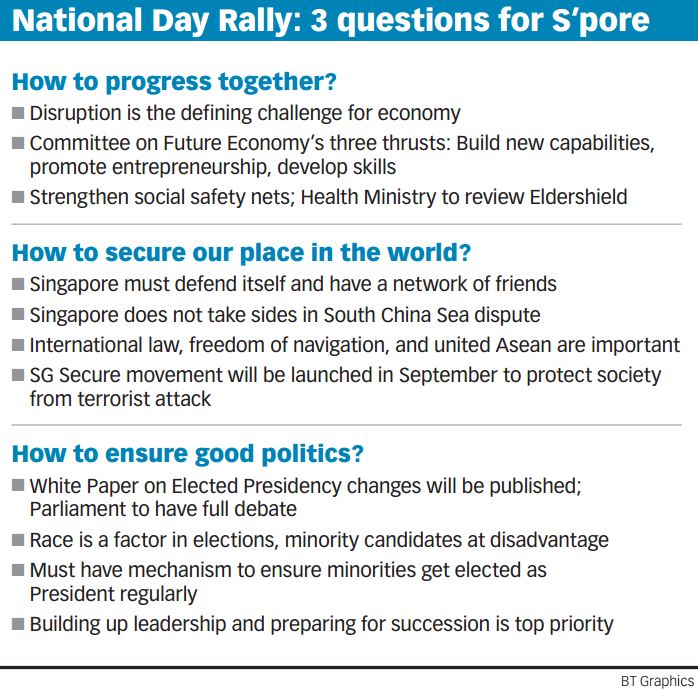
It was telling that when Mr Lee resumed his rally, he decided not to continue where he left off on the upcoming changes to the elected presidency system.
Instead, he chose to reiterate that one of the most urgent tasks on his must-do list is leadership succession; that he wants to assemble and put in place the next team to take over from him and his other senior colleagues is a point he has returned to several times before – before and during campaigning at the 2011 and 2015 general elections, at the May Day Rally, at ministerial dialogues and many other events.
At Sunday’s National Day Rally, he stressed that nothing had changed his timetable or resolve to press on with succession. His goal is to reinforce his team again at the next polls, with his successor ready to take over soon after.
Mr Lee, Singapore’s third prime minister who took office in 2004, doesn’t have the luxury of time. He is 64 this year and will be 68 or so by the time he sends the nation to the ballot boxes again.
The late Lee Kuan Yew was at the helm for 31 years and was 67 when he passed the baton to Goh Chok Tong, who stepped down at 63 after 14 years in charge.
It is still anyone’s guess who Singapore’s fourth leader will be, but the challenges ahead are clear. The pressing task for the new leadership is to deal with the ongoing impact of disruption, which Mr Lee singled out as the “defining challenge” for the economy in the years to come.
Of all the economic issues on the table – slower growth, helping people upgrade and strengthening safety nets – he warned that technological change and globalisation would be fast and relentless, and disruption would take place repeatedly.
All eyes will be on the work of the Committee on the Future Economy, which is busy piecing together a strategy to respond to successive disruptions, beef up the resilience of companies and prepare people to do different or new jobs.
Singapore needs a confluence of many factors to come together to remain ahead of the curve: a highly skilled workforce, entrepreneurs with fire in their belly, a society that is both united and resilient, and above all, a team of capable leaders ready and willing to steer the ship in the right direction.
It may seem an awful lot to ask for but that is the harsh reality of the competitive and unpredictable world we now live in.
THE BUSINESS TIMES
This article by The Business Times was published in MyPaper, a free, bilingual newspaper published by Singapore Press Holdings.
Image:
Category:
Publication Date:
Wednesday, August 24, 2016 – 08:37
Keywords:
Send to mobile app:
Source:
Story Type:
Others


