30.8 C
Singapore, SG
Wednesday, September 9, 2026
Home Blog Page 3033

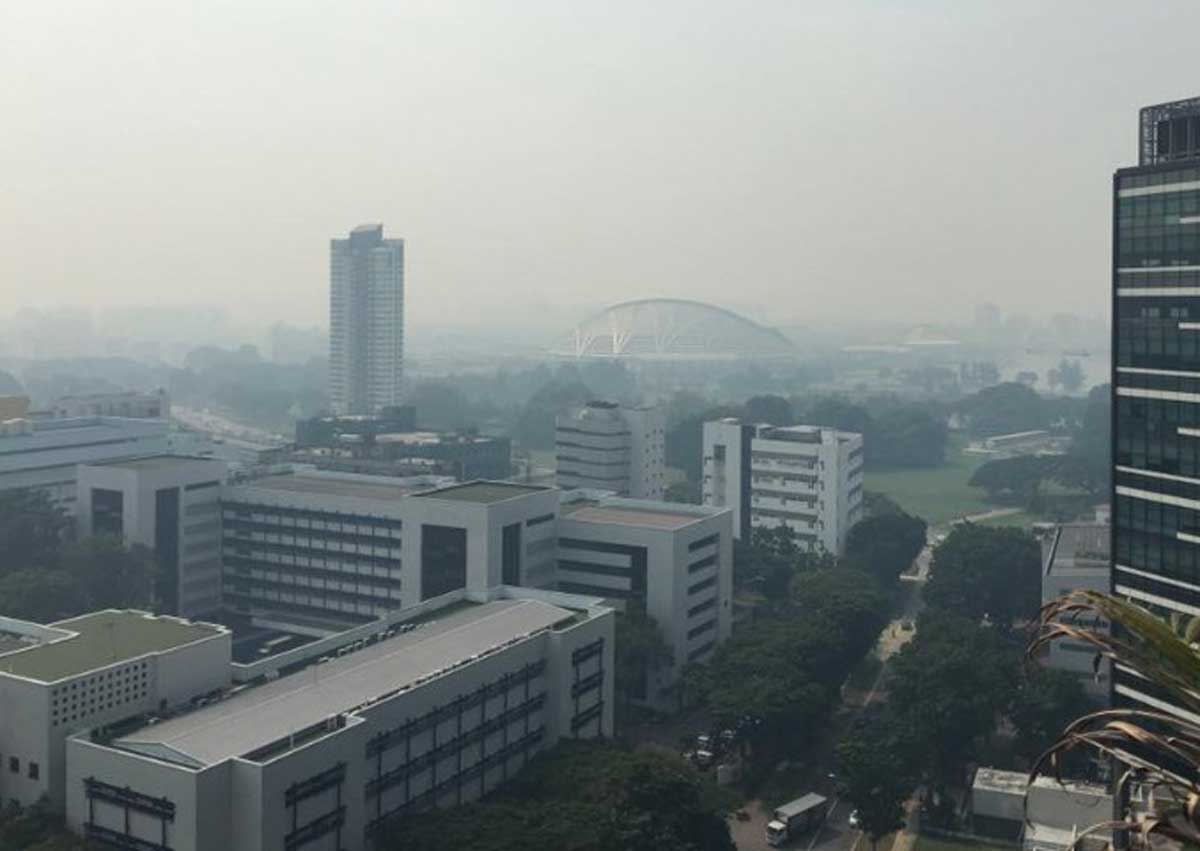
Singapore braces for "airpocalypse" as fires rage in Indonesia

0

Southeast Asia is bracing itself for its annual, uncomfortable tryst with haze as raging fires at Indonesian plantations worsen pollution in the region.

On Friday, Singapore woke up to a deterioration in air quality overnight, as a thin cloak of haze hung over the city-state. The country’s environment agency said that its 3-hour Pollution Standards Index hit the unhealthy level at 10am SIN.

Neighbouring Malaysia had already been feeling the effects of the drifting smog since mid-August, local media reported.

The latest bout of pollution comes even as Indonesia steps up efforts against the ‘slash-and-burn’ technique of cutting down vegetation on a patch of land, then burning off the undergrowth to make space for new plantations.

The country has arrested 454 individuals in connection with forest fires so far this year, more than double the 196 arrests made in 2015, Reuters reported, citing police data released on Thursday.

The ‘slash-and-burn’ method is prevalent in Indonesia as it the easiest, fastest and most cost-effective way to clear land. According to the World Bank, about 35 per cent of the Indonesian workforce is employed in agriculture, with palm oil and pulp-and-paper industries key contributors.

The use of fire has been deemed illegal by the Indonesian government due to its detrimental environmental impact.

Earlier in August, a sago plantation company was fined 1.07 trillion Indonesian rupiah (S$109.55 million) for its link to widespread fires last year– the biggest fine imposed on a plantation business so far.

In 2015, the pollution cost Southeast Asia economic powerhouse S$700 million, the country’s environment and water resources minister said in March.

The smog got so bad it led to school closures as well as air and sea traffic disruptions.

Indonesia, where most of the thick cloud originated, suffered even more economically, with the World Bank estimating damages at US$16.1 billion (S$21.8 billion) in 2015.

It is “difficult and tricky” to put a dollar value on damages this year, as what is at stake is often intangible, such as loss in productivity, delayed construction activities and sovereign risk reputation to tourists, said ANZ economist Ng Weiwen.

Singapore hosts the Formula One Grand Prix night time motorsport event in September yearly and concerns have surfaced in previous years over visibility.

There’s hope that the pollution will not be as bad as last year in terms of duration and intensity as the weather forecast for the rest of the year points to a La Nina weather phenomenon, which is likely to result in increased rainfall, said a weather expert.

“Of course, this assumes the non-meteorological factors like land clearing through burning by humans don’t increase in significance,” said Winston Chow, a professor at the National University of Singapore’s geography department.

According to the ASEAN Specialized Meteorological Centre based in Singapore, the number of hotspots (locations with active fires) in Indonesia hit a high of 184 on August 18 due to the ongoing dry spell, but that figure has since eased as rains doused the fires.

On Thursday, there were 17 hotspots in Indonesia.

Image: 
Publication Date: 
Friday, August 26, 2016 – 13:52
Keywords: 
Send to mobile app: 
Source: 


Story Type: 
Others

Source link

Schoolings in no hurry to pick next course of action

0

Joseph Schooling might be in for more schooling once he completes his degree at the University of Texas at Austin (UT) in two years’ time.

The 21-year-old, who began his junior year this week, is exploring the idea of a post-graduate degree, revealed his mother, May, at a meet-the-media session yesterday.

Some media had reported that he had declared an intention to swim professionally after completing his studies at UT, where he trains with renowned coach Eddie Reese. But May, 60, told The Straits Times: “He hopes to train with Eddie leading up to (the Olympics in) 2020.

“But as for turning pro, it’s a big question mark.”

What is less of a question is what May and her husband Colin hope for their son.

As speedily as Schooling won the 100m butterfly at the Olympics nearly two weeks ago, a line of talent management agencies has just as quickly formed at their door.

The Schoolings have received multiple offers of representation from local and international agencies.

They include global giants IMG and Octagon, who boast an honour roll of star athletes such as top men’s tennis player Novak Djokovic, Golden State Warriors sharpshooter Stephen Curry and swim legend Michael Phelps, the man their son beat to Olympic gold.

But they made it clear that they are in no hurry to sign off on a decision about who manages their son, with Colin reiterating that the most important consideration lies in making sure “the person who handles Joseph has a heart”.

He added: “Have a heart meaning not just throw him to the wolves, but also guide him and look after him, and just treasure him.”

It was the same thing the 68-year-old had asked of Sergio Lopez, the then-head swimming coach and aquatics director at the Bolles School, before deciding to send his only child to the Florida-based school in 2009.

Lopez, who just left his post as Singapore’s national swimming head coach, told the media last week: “He told me the most important thing is that Joseph needs to be a gentleman and a scholar.”

May added: “Everyone has been kind enough to offer their advice, but we are viewing all the options before we decide what to do.” For now, what the couple are sure of, however, is that their son must complete his education.

Said Colin: “I just sent Joseph a text saying, ‘No matter what it is, whoever wants to market you, I only ask that you promise me you will graduate.'”

Not that they should have much to worry about Joseph, an economics major with a Grade Point Average of 3.75 out of 4.

Colin explained that Joseph’s swimming ambition and good results in academia had always been pursued on the latter’s own accord.

“It’s all about Joseph, not what we want. We aspire that he goes in the right direction and we will guide him,” he said.

“It’s not him living our dream; our dream is for him to be happy.”

While studies had “always been a concern” for May, what was more important was that her son grew up to be a well-rounded person. She said: “I pushed for studies, but I’m not the kind of parent who said, ‘You must get A’.

“I wanted a well-rounded kid, and we have to balance both studies and sports.”

Colin agreed, citing the example of bushido, the traditional samurai code of honour. The code holds that, apart from values like loyalty and compassion, an appreciation and respect of life is also essential for adding balance to the character of samurai.

He added: “To be a complete samurai, apart from the martial arts, you also have to aspire towards doing something like writing poems, calligraphy or painting – that is a complete human being.

“That is what we want for Joseph.”

cnicole@sph.com.sg


This article was first published on August 26, 2016.
Get a copy of The Straits Times or go to straitstimes.com for more stories.

Image: 
Category: 
Publication Date: 
Friday, August 26, 2016 – 17:00
Keywords: 
Send to mobile app: 
Source: 


Story Type: 
Others

Source link

People from all walks of life line up for final bow

0


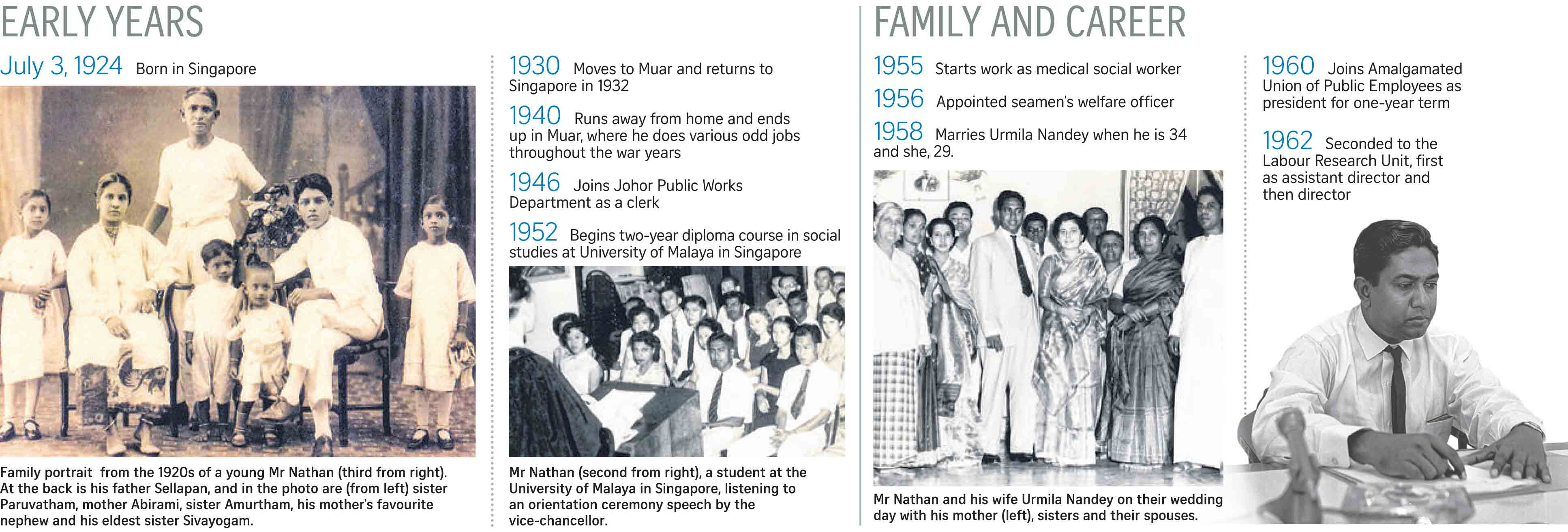
Mr S R Nathan spent his early years in a long and distinguished career in public service fighting for the rights of workers.

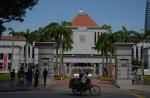
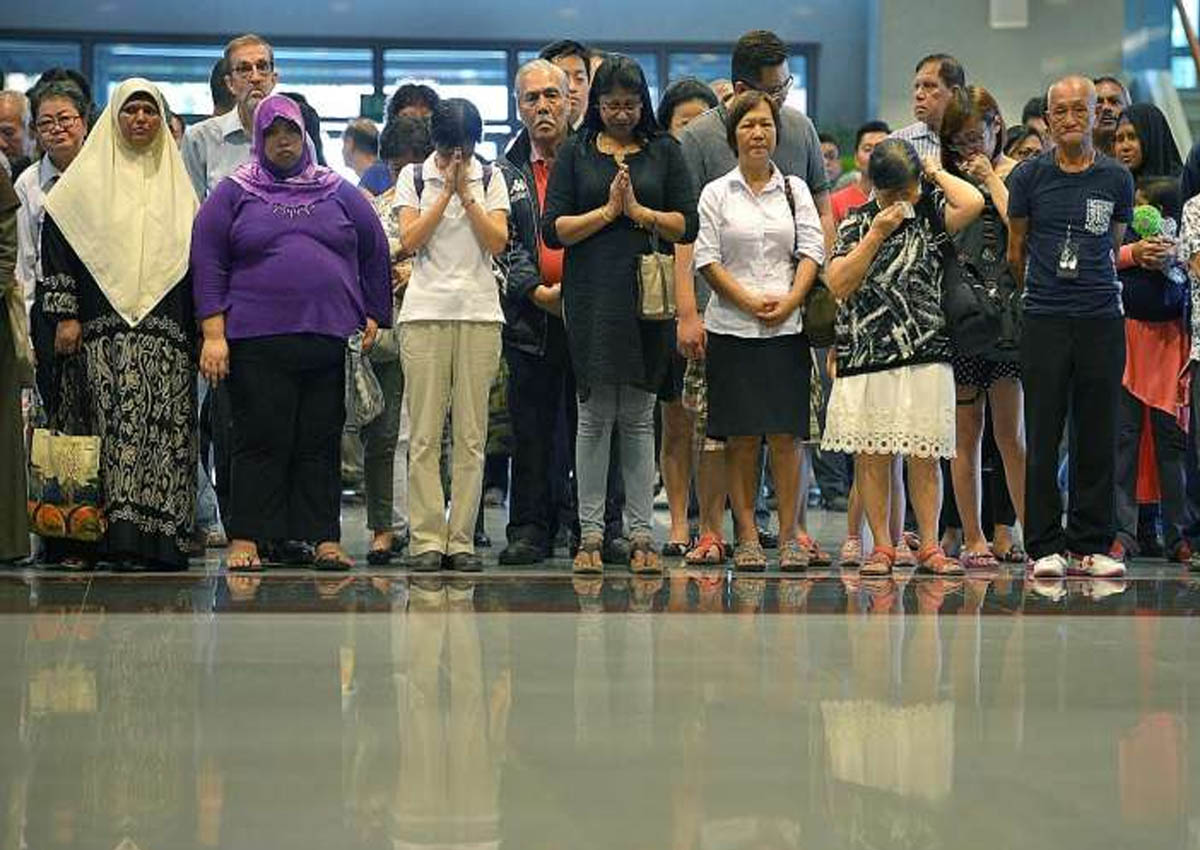
It was fitting then that 700 unionists from the labour movement were among the first out of more than 20,000 people who waited in line to bid Singapore’s sixth and longest- serving president a final farewell as he lay in state at Parliament House.

With the unionists were several labour MPs as well as labour chief Chan Chun Sing, who said that Mr Nathan was “an integral part of our labour movement”.

He built a strong foundation for unions, Mr Chan said, adding: “We will dearly miss him. But what he has left us will be with us for a long time, for many generations to come.”

Foreign Minister Vivian Balakrishnan led a group from the Ministry of Foreign Affairs.

Mr Nathan spent years in the world of diplomacy and was, among other appointments, First Permanent Secretary in the ministry, High Commissioner to Malaysia and Ambassador to the United States.

Head of civil service Peter Ong, who was with a delegation of civil servants, described Mr Nathan as a “civil servant exemplar” who placed the interests of the nation above self.

He cited the hijacking of the Laju ferry by terrorists in 1974 – when Mr Nathan helped secure the release of hostages by accompanying the terrorists on a flight to Kuwait to guarantee their safe passage.

Various religious groups also headed to Parliament House to acknowledge Mr Nathan’s contributions not just to their communities but also to a multi-religious society.

Mufti Fatris Bakaram said Mr Nathan never failed to keep abreast of concerns and developments in the Malay-Muslim community.

“This leadership style is what struck me the most and is the most endearing trait of Mr Nathan.”

Mr Chung Kwang Tong, an administrator at the Taoist Federation, said: “He would always remind us of the importance of the trust we must have between the different religious groups. This is something we will always bear in mind.”

Others who came to pay tribute included Prime Minister Lee Hsien Loong and Mrs Lee, Health Minister Gan Kim Yong and Acting Minister for Education (Higher Education and Skills) Ong Ye Kung.

Mr Lee later received Japan’s Prime Minister Shinzo Abe and his wife, who made a brief stopover in Singapore en route to Kenya.

It was a day that transcended politics as opposition politicians turned up to honour Mr Nathan.

Former MP Chiam See Tong, who was in a wheelchair, was helped to his feet by his wife, former Non-Constituency MP Lina Chiam, to pay his respects. Later, a group of Workers’ Party MPs led by party chief Low Thia Khiang and party chairman Sylvia Lim arrived and bowed before the casket.

The former president’s final journey to Parliament House began at about 8.40am yesterday when the casket bearing his body left his Ceylon Road home. It arrived at 9am and was received by Speaker of Parliament Halimah Yacob.

President Tony Tan Keng Yam and his wife, Mrs Mary Tan, arrived shortly after and were the first to pay their respects after nine officers transferred the casket onto the bier.

The public then began streaming into Parliament House.

Among them was undergraduate Jorden Karma Senapati, 23. He had been too early to secure a place, having arrived with a friend at 11pm on Wednesday, and had to wait outside Parliament House.

They lost their position at the head of the queue yesterday morning after leaving the line for a short while.

But they returned and still managed to be among the first 10 to file past the casket when Parliament House’s doors opened at 10am.

Mr Senapati said he wanted to queue early in order to avoid a repeat of the long wait he faced last year, when he lined up to pay his respects to the late founding prime minister Lee Kuan Yew.

“Last year, I started queueing at 8pm and by the time I got home it was 10am the next day,” he said.

Administrator Alice Tan, 60, felt that the organisers were better prepared after last year’s experience.

“I was prepared to wait for up to three hours, but the queues were very smooth-going, and we were in and out in less than half an hour.”

Indeed, tentage was set up at the Padang to shelter waiting crowds, umbrellas were kept at the start of the queue in case of rain and bottles of water were offered at various points of the line.

Wheelchairs were also available. One of those who made use of that facility was Madam Yeo Kheng Neo, 94.

But when she reached the bier, she stood up in a mark of respect to Mr Nathan.

Her son, Mr Tay Kheng Hee, 62, said: “When deciding to come, I asked myself, does he make me feel proud to be a Singaporean? I felt proud, so I came.”


This article was first published on Aug 26, 2016.
Get a copy of The Straits Times or go to straitstimes.com for more stories.

Image: 
Category: 
Publication Date: 
Friday, August 26, 2016 – 14:00
Keywords: 
Send to mobile app: 
Source: 


Story Type: 
Others

Source link

Dog believed to have fallen to death from HDB block

0

It was close to midnight on Wednesday and she was watching television at home when she heard soft whimpering sounds coming from the foot of her block.

The sounds went on for about five minutes before they stopped.

Curious, Madam Fidah Adnan, 32, glanced out of her window, and was surprised to see a large dog, seemingly hurt, lying on the ground.

“Suddenly, all the other dogs in my block started barking, as if they had sensed something and were trying to tell the people around them,” she said.

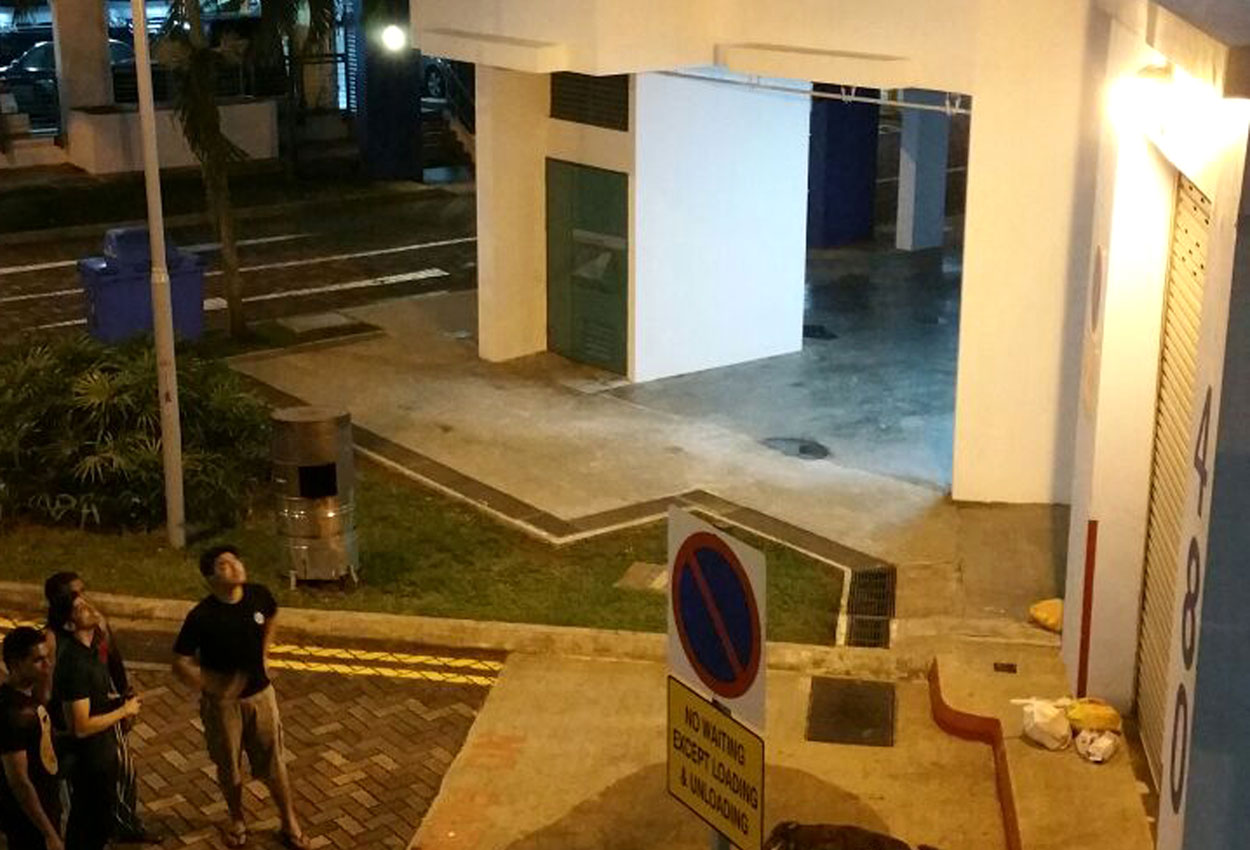
The dark brown dog, believed to be a labrador cross, was later found to have died after apparently falling from height at Block 480, Segar Road, in Bukit Panjang.

The New Paper was alerted to the incident by reader Erik Loy, 32, a human resource executive, who heard a loud commotion as well as police sirens just as he was going to bed at around midnight.

When TNP went to the block yesterday afternoon, Madam Fidah, a housewife, said she had heard some loud cracking noises before the whimpering sounds.

COUPLE

“The whimpers sounded like an animal in pain,” she said.

When she looked out of her window, some of her neighbours had already gathered round the dog.

Madam Fidah said a couple in their late 20s, whom she had previously seen walking the dog, then showed up.

“They were crying and grieving over their dog,” she said.

She added that she overheard that the dog had jumped from their flat.

The male owner declined to comment when approached by TNP yesterday.

Other residents in the block whom TNP approached said they were unaware of the incident.

When TNP showed a picture of the dog to Action for Singapore Dogs president Ricky Yeo, he said it resembled a labrador cross.

Mr Yeo added that it was unlikely the breed would climb or leap out of a window unless it was in a state of panic.

An Agri-Food & Veterinary Authority of Singapore spokesman told TNP that investigations did not turn up any evidence that the dog was thrown from height.


This article was first published on August 26, 2016.
Get The New Paper for more stories.

Image: 
Category: 
Publication Date: 
Friday, August 26, 2016 – 14:00
Keywords: 
Send to mobile app: 
Source: 


Story Type: 
Others

Source link

Swimming: Joseph Schooling has many female friends, says his mum

0

SINGAPORE – Mrs May Schooling, mother of Singapore swim star Joseph Schooling, reiterated that her son has “many female friends”, in response to speculation over whether the 21-year-old Olympic champion has a girlfriend.

The 60-year-old was speaking to The Straits Times at a press event on Thursday (Aug 25).

Schooling has been in the spotlight since his sensational triumph in the 100m butterfly at the recent Olympic Games in Rio and all aspects of his life, including his purported romantic liaisons, have been heavily scrutinised.

A user on dating app Tinder had even claimed she was matched with Schooling before the Olympics.

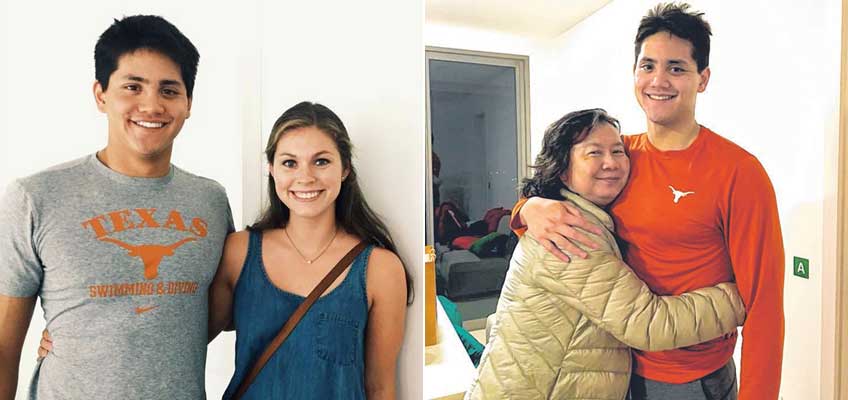
More recently, Ms Casey Shomaker, an American who is reportedly studying for a doctorate in law at the University of Texas, who has been linked with him, posted a photo on Instagram of the both of them at the airport upon his return to the United States last week.

They posed with a sign that read “Joe Schooling, Olympic Champion”.

Ms Shomaker captioned the photo: “So good to have this one back! Thanks for taking care of him, Singapore!”

But Mrs Schooling said her son was welcomed at the airport in Texas by “one of his friends”, adding: “And let me tell you, I’m happy he has female friends, if he doesn’t, I’ll be worried. He has many female friends.”

Schooling, 21, is resuming his training and studies at the University of Texas in Austin after winning Singapore’s first gold medal at the Olympic Games.

He had an event-filled homecoming after he arrived in Singapore, just two days after edging out American legend Michael Phelps and reigning 100m butterfly world champion Chad le Clos to win the Olympic 100m fly final.

He then made an appearance in Parliament, where he was formally congratulated by the House for his achievements. He also received news that his national service deferment will be extended till after the Tokyo 2020 Olympics.

He also visited his alma mater, Anglo-Chinese School (Junior) at Winstedt Road, where 1,607 pupils gave him a rousing reception.

An open-top bus parade in his honour on August 18 rounded off the four-day celebrations. Schooling returned to the US on Friday, August 19.

Read More:

Schooling’s ‘girlfriend’ is brainy and sporty


This article was first published on Aug 26, 2016.
Get a copy of The Straits Times or go to straitstimes.com for more stories.

Image: 
Publication Date: 
Friday, August 26, 2016 – 14:00
Keywords: 
Send to mobile app: 
Source: 


Rotator Headline: 
Joseph Schooling has many female friends, says mum
Rotator Image: 
Story Type: 
Others

Source link

Man on a mission to lure players to real-life Pokemon

0

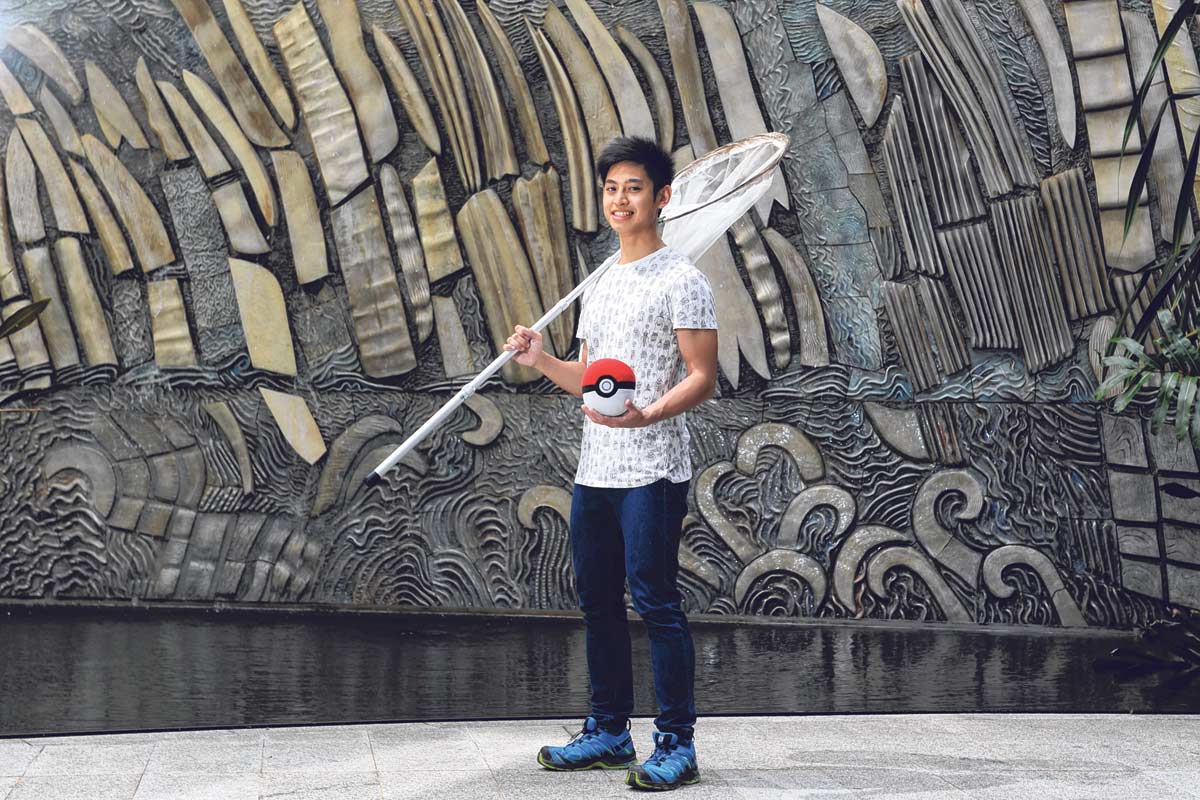
Like many Pokemon Go players, National University of Singapore life sciences undergraduate Sean Yap, 24, goes out as often as possible.

But, unlike such gamers whose eyes are glued to their phones in an effort to catch the virtual characters, Mr Yap looks up and around – at plants, birds and, especially, insects.

The insect researcher is now on a mission to get others to do the same and learn to appreciate local biodiversity, and his strategy is to ride on the current popularity of the mobile game.

He has produced a Facebook album – called Real Life Pokemon of Singapore – that shows the similarities between Pokemon characters and native plants and animals.

The water Pokemon Staryu, for example, resembles the knobbly sea stars that dot Singapore’s shores, and the plant Pokemon Victreebel looks like the Raffles pitcher plant.

Mr Yap’s comparisons include a tongue-in-cheek write-up about the native plant or animal.

He says, for instance: “Like Victreebel, pitcher plants are living toilet bowls, complete with a lid and a disgusting rim/seat… Except (they) eat bugs. Some species of pitcher plants even have symbiotic, resistant insects that live in the liquid and feed on the drowned bugs, and the pitchers get the nutrients from their excrement, so they are actually toilet bowls.”

He points out that numerous Pokemon are based on real plants and animals, many of which can be found in Singapore. City dwellers often do not realise this, he says, and he hopes his project will enlighten them and prompt them to look out for these plants and animals.

“If Pokemon Go can be used as a marketing tool for shopping malls to attract customers, then it can probably do the same for science and biodiversity,” Mr Yap said.

Besides raising awareness of Singapore’s native biodiversity, he wants to highlight the plight of wildlife too. For example, in writing about Sandslash, a Pokemon which resembles the critically endangered Sunda pangolin – which is native to Singapore – he says: “Unlike Sandslash, the pangolin’s large claws are not used for combat but for digging into ant or termite nests.

And while Sandslash’s signature move, Defence Curl, may work against predators like tigers (before they went extinct here), humans can just pick them up. “It is humans that make the pangolin such a rare Pokemon worldwide: Poaching is the No. 1 threat to their existence.”

Project manager Adriane Lee, 41, said he never knew that real animals were the inspiration for Pokemon until he saw Mr Yap’s album.

“Sean’s project is a refreshing take on educating a person on local biodiversity, as Pokemon is the latest craze and the game draws audiences normally not knowledgable of or interested in nature to have a more intimate knowledge of the topic,” he said.

Nature groups such as the Herpetological Society of Singapore, which studies reptiles and amphibians, also plan to use Mr Yap’s project at the upcoming Festival of Biodiversity educational fair to be held at the Singapore Botanic Gardens next weekend.

The society’s co-founder Sankar Ananthanarayanan said: “We want to show that Singapore has biodiversity that is pretty cool too, and that appreciating wildlife is just as fun and interesting as playing the game.”

Mr Yap has so far matched about 40 out of the 721 characters in the Pokemon universe with native flora and fauna. He hopes to do so for as many Pokemon as possible.

But unlike the Pokemon Go game in which the aim is to catch them all, he stressed that handling and capturing wild animals in Singapore is illegal.

He cautioned: “Do not try to catch them. Do observe and marvel from a respectful distance. You can join guided walks, many of which are free, for a higher chance of seeing these real-life Pokemon.”

Although he has been a fan of the Pokemon universe since he was a boy, Mr Yap does not play Pokemon Go. In fact, he deleted the app barely four hours after he first downloaded it on the day of its launch.

“I realised I was walking in the forest and constantly checking my phone instead of looking out for wildlife,” he explained.

During a recent visit to Pasir Ris Park for a glimpse of a rare spotted wood owl, Mr Yap said he saw many people who missed the majestic bird because they were busy catching Pokemon.

But getting people out in the open is a first step, he pointed out.

“Some people may not visit the parks in the first place, and completely miss the opportunity to see our native wildlife, but having them outside presents us the opportunity to reach out to them.”

Pokemon creator inspired undergraduate

Undergraduate Sean Yap, 24, is on a mission to raise awareness of local biodiversity by showing how similar Pokemon characters are to native plants and animals.

His inspiration? Pokemon creator Satoshi Tajiri, who in 1990 came up with the idea for the game of collecting virtual monsters based on his childhood interest in insect collecting.

Mr Yap said: “I was inspired by Mr Tajiri, who created Pokemon to share his childhood joy of nature with the new generation of city kids who spent a lot of time indoors.

“A lot of the Pokemon were based on real-world animals and plants, and many of them can be found in Singapore.”

Mr Yap likewise hopes to get others to appreciate local biodiversity by riding on the current popularity of the mobile game. His project, Real Life Pokemon of Singapore, can be found on his Facebook profile.

Mr Tajiri, now 51, grew up in Machida, a suburb in western Tokyo that gradually underwent urbanisaton. “There were rice paddies, rivers, forests. It was full of nature. Then development started taking place and, as it grew, all the insects were driven away,” said Mr Tajiri in an interview with Time magazine back in 1999, when Pokemon mania was sweeping the globe.

Urbanisation meant there were fewer places to catch insects. Mr Tajiri added: “Kids play inside their homes… and a lot had forgotten about catching insects. So had I. When I was making games, something clicked and I decided to make a game with that concept.”

Mr Yap has so far matched about 40 out of the 721 characters in the Pokemon universe with native flora and fauna. He hopes to do so for as many Pokemon as possible.

He points out: “There are certainly more than 700 species of plants and animals in Singapore, and while it is a daunting task, scientists here are trying their best to compile a comprehensive list of local species, complete with images, DNA sequences and other information.”

Native animals and their Pokemon equivalents

COMMON MORMON

Papilio polytes

This butterfly can be found in the forests and urban areas of Singapore, according to butterflycircle.com. Its caterpillar (top) and pupa (above) stages resemble the Pokemons Caterpie (top) and Metapod (above). And just like its virtual avatar, the caterpillar has two red “horns” (actually a fleshy organ called osmeterium) which it can shoot out if it is threatened.

STAG BEETLE (above)

Aegus sp.

The Pokemon Pinsir (above right) looks like a stag beetle, which beetle researcher Sean Yap has seen in Singapore’s nature reserves. There are about 400,000 described beetle species worldwide but, as they are relatively understudied here, a figure is not yet available for Singapore. However, Mr Yap is trying to establish a baseline of local beetles for his final-year project at the National University of Singapore.

SUNDA PANGOLIN (above)

Manis javanica

Like the Pokemon Sandslash (above right), the Sunda pangolin – which is native to Singapore – has formidable claws, but these are not used for battle. Pangolins use their claws to dig for food and create burrows, which aerate the soil in the process. This introduces oxygen and nutrients to the soil and benefits the roots of plants and animals that live underground. While scales are commonly found on reptiles and fish, pangolins are the only mammals in the world that have them. They use their scales as a defence mechanism. When attacked by predators, such as leopards, they curl up into a ball so that the hard keratin envelops all of their soft parts. Unfortunately, this does not protect them from humans, who can simply pick them up.

ASIAN GIANT MANTIS (above)

Hierodula patellifera

This mantis, similar to the Pokemon Scyther (above right), is one of the more common mantids in Asia. Females are larger than males as “they need extra booty space to carry the eggs”, says Mr Yap. In the game, the females have larger abdomens too.

GIANT CLAMS (above)

Tridacna sp.

The Pokemon Clamperl (above right) looks like the giant clam that can be found here. For more about these animals, read researcher Neo Mei Lin’s blog post at www.meilin5giantclam. wordpress.com/factsheet-on- giant-clams/


This article was first published on August 26, 2016.
Get a copy of The Straits Times or go to straitstimes.com for more stories.


Image: 
Publication Date: 
Friday, August 26, 2016 – 17:00
Keywords: 
Send to mobile app: 
Source: 


Story Type: 
Others

Source link

Faster rides on East-West Line by year end

0

Commuters will have smoother and faster rides on the entire East-West Line (EWL) by year end, when a 1½-year-long project to upgrade rail sleepers is finally completed.

Worn timber sleepers – some as old as 28 years – which had meant a rougher ride for commuters are being replaced by concrete ones.

Temporary speed restrictions – to allow the new sleepers to settle on the ballast bed when freshly installed – will also be fully removed.

Currently, 75 per cent of the upgrading programme is completed, train operator SMRT told The Straits Times.

The entire project will be finished by the end of the year. This is after the deadline was pushed back to early next year following a massive breakdown in July last year.

SMRT has been replacing timber sleepers on the line with longer- lasting concrete ones since May last year. The work has caused speed restrictions to be placed on the line for four- to six-week periods to allow the sleepers time to settle on the ballast bed.

SMRT said that since February, it has been closing stretches of the EWL earlier to allow more work to be done during off-service hours in a bid to make up for lost time. Since June, selected stations have also opened later on Sundays.

Gantry cranes have been used near the Pasir Ris and Chinese Garden MRT stations to allow the faster deployment of engineering vehicles and materials by hoisting them directly onto the tracks.

Previously, the vehicles could be deployed only from depots close to the ground level at Ulu Pandan and Bishan, or from temporary work sites near Kallang and Redhill.

When the project is done, trains will run at normal speeds of up to 80kmh instead of between 40kmh and 60kmh, which has been the case on certain stretches of the line.

Sleepers help to hold the rails in place and there are more than 92,000 on the EWL. The remaining 25 per cent to be replaced are mainly in the western part of the line. Worn sleepers can result in bumpier rides and, in extreme cases, pose a safety risk. Concrete sleepers have a lifespan of 50 years, more than twice that of the timber ones.

“Commuters can look forward to smoother and more comfortable rides,” an SMRT spokesman said.

Some 96,000 sleepers on the North-South Line (NSL) were replaced in a separate project which was completed in April last year.

Meanwhile, SMRT said it is also replacing the power-supplying third-rail. The project is 36 per cent complete on the NSL and 42 per cent on the EWL.

A re-signalling project – which will allow trains to run at shorter intervals of 100 seconds instead of 120 seconds now – is also under way. It is 98 per cent complete on the NSL and 76 per cent on the EWL.

Commuter Margaret Tan, 56, a housewife, said: “The trains have been travelling more slowly. A trip from Lakeside to Raffles Place station takes about 10 minutes more.

“But I think during the peak hour, speeds are slower because there are more trains on the line and they have to maintain a safe distance apart.”


This article was first published on Aug 26, 2016.
Get a copy of The Straits Times or go to straitstimes.com for more stories.

Image: 
Publication Date: 
Friday, August 26, 2016 – 14:00
Send to mobile app: 
Source: 


Story Type: 
Others

Source link

Battle of words over review of VPN access

0

A war of words has broken out between technologists and copyright holders following news that the local authorities are reviewing the legality of virtual private network (VPN) technology.

The contention centres on the use of VPNs by consumers in Singapore to access blocked content meant for overseas markets.

The Internet Society (Singapore), which promotes the use of the Internet, said that VPN is a critical technology for securing corporate access to information over the Web.

“We need to ensure that we do not throw the baby out with the bathwater,” said Mr Bryan Tan, president of the non-profit organisation and also a lawyer from Pinsent Masons MPillay.

On Tuesday, the Ministry of Law called for public feedback, hoping to update the Copyright Act, which was last updated significantly in 2004.

It wants to know whether laws governing the circumvention of digital locks on copyrighted work need to be updated. These restrict access to or use of the content, and can be circumvented by technologies, including VPN.

The existing Copyright Act is silent on whether using VPN technology to access blocked content is legal, even though the law principally prohibits circumvention.

The International Federation of the Phonographic Industry, which represents more than 1,000 producers and distributors of sound recordings, argued that VPN users should not be allowed to circumvent geographical blocks.

“Content is licensed at a different price for different regions due to different business conditions and issues like censorship,” said Mr Ang Kwee Tiang, its regional director for Asia. “Moreover, VPN is also the gateway to unlicensed content from overseas.”

Some technologists pointed to the need for old business models to be changed instead.

Straits Times reader John Hunter wrote in to say: “The idea that technology to protect people’s information should be restricted in order to make it easier for huge companies to keep old business models in place should be ridiculed.”

Mr Michael Tan, 45, a market observer and director of an IT company, said that copyright holders can already enforce their rights based on existing laws.

For instance, if video streaming service provider Netflix lacks the licence to provide certain content in Singapore, copyright holders can sue Netflix for selling unlicensed content to Singapore viewers.

“Why even consider banning VPN if remedies are available? To help save legal costs for copyright holders at huge public cost for Singapore?” said Mr Tan.

ViewQwest chief executive Vignesa Moorthy said that if piracy is a concern, lawmakers here can make downloading blocked pirated content a criminal offence – as is the case in India.

Earlier this month, Internet service providers in India warned subscribers that downloading content blocked by the Indian government could attract a three-year jail term.


This article was first published on August 26, 2016.
Get a copy of The Straits Times or go to straitstimes.com for more stories.

Image: 
Publication Date: 
Friday, August 26, 2016 – 16:00
Send to mobile app: 
Source: 


Story Type: 
Others

Source link

Defying Najib, Malaysian students plan rally calling for 1MDB arrest

0

KUALA LUMPUR – Defying Malaysian Prime Minister Najib Razak’s crackdown on dissent, student activists made plans for a mass rally on Saturday to call for the arrest of an unnamed official who US investigators say received $700 million skimmed from a sovereign fund.

A source familiar with the US investigations has told Reuters that the unnamed official is Najib, though he has denied any wrongdoing in the scandal that first erupted over 1Malaysia Development Bhd (1MDB) last year.

The planned protest in Kuala Lumpur comes at a time when Najib has tightened his grip on the ruling party, and wielded draconian security and sedition laws to cow critics in the mainstream political opposition and stifle free speech by suspending media groups and blogs.

Najib’s government was jolted in July, when US prosecutors filed several civil lawsuits over money allegedly defrauded from 1MDB. The lawsuits repeatedly referred to a high ranking official, only identified as “Malaysian Official 1”, who received more than $700 million of the misappropriated funds.

The organisers of the planned rally have seized on that description to call the government to account. “To Malaysian Official 1, you will not be able to run away from the people’s power. Wherever you hide, the people’s power will catch you and drag you to face justice,” Anis Syafiqah Md Yusof, a student representative, said at a press conference earlier this week.

The students plan to gather at Dataran Merdeka, or Independence Square, defying warnings from the country’s police chief to stay away from the square, where Najib supporters also plan to hold a counter-rally, raising the risk of clashes. “Let this rally be the starting point for us to reignite our spirits,” the organisers said in a statement on Friday.

Earlier this month, a new National Security Council Act came into force, giving Najib sweeping security powers that some critics say could be used to disallow protests.

The last time students held mass rallies was in 2014, when a lecturer with the law faculty of the University of Malaya (UM) – the country’s oldest university – was charged with sedition.

Opposition parties and civil society groups, including democracy watchdog Bersih 2.0., have voiced support for Saturday’s student protest.

Tens of thousands of protesters joined a rally organised by Bersih last year, demanding Najib’s resignation over 1MDB. Earlier this month, the group said it plans another rally, but has still to say where and when.

Image: 
Category: 
Publication Date: 
Friday, August 26, 2016 – 12:49
Keywords: 
Send to mobile app: 
Source: 


Story Type: 
Others

Source link

Yudhoyono describes Nathan as a great friend of Indonesia

0

Former Indonesian president Susilo Bambang Yudhoyono called Mr S R Nathan “a great friend of Indonesia” when he visited the Singapore Embassy in Jakarta yesterday to pay his last respects to former president Nathan, who died on Monday, aged 92.

“For me, President Nathan was a great son of Singapore, a great educator, leader and statesman. He was also a great friend of Indonesia,” Dr Yudhoyono said after he signed the condolence book.

The two former heads of state met on many occasions, including during Dr Yudhoyono’s first state visit to Singapore in early 2005, four months after he was elected Indonesia’s sixth president.

The former general in the Indonesian military (TNI) yesterday recalled the first time he met Mr Nathan in 1998, when Mr Nathan was Singapore’s Ambassador-at- Large and director of the Institute of Defence and Strategic Studies (IDSS) at the Nanyang Technological University.

“When he was head of the IDSS, he invited me, as the TNI chief of staff for political and social affairs, to speak on Indonesia’s reforms… and I praised his deep understanding of the situation that was faced by Indonesia at that time. Since then, we have had a close relationship.”

Dr Yudhoyono added that their friendship grew after he and Mr Nathan became president and they continued to have regular discussions on issues relevant to the region, including ASEAN, East Asia, and the South China Sea, as well as Singapore-Indonesia co-operation.

“I understood his strong spirit to build a close and better partnership, friendship with Indonesia,” said Dr Yudhoyono, who served two five-year terms as president before stepping down in 2014.

Indonesia’s Foreign Affairs Minister Retno Marsudi will represent her country at the state funeral for Mr Nathan today.


This article was first published on August 26, 2016.
Get a copy of The Straits Times or go to straitstimes.com for more stories.

Image: 
Category: 
Publication Date: 
Friday, August 26, 2016 – 15:00
Send to mobile app: 
Source: 


Story Type: 
Others

Source link