30.8 C
Singapore, SG
Wednesday, September 9, 2026
Home Blog Page 3032

Grilles to keep kids safe? Condo says no

0

When he bought a $2 million double-storey penthouse at 19 Shelford condominium, off Adam Road, in February, he thought he had secured a good future for his two children because good schools are nearby.

Then, Mr Zou Xiang, 41, a software engineer, realised that the balcony of his fourth-storey unit did not have grilles.

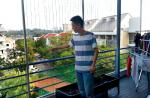
Instead of a low wall, it has horizontal railings, which makes it easy for young children to climb up or slip through the gaps between the railings.
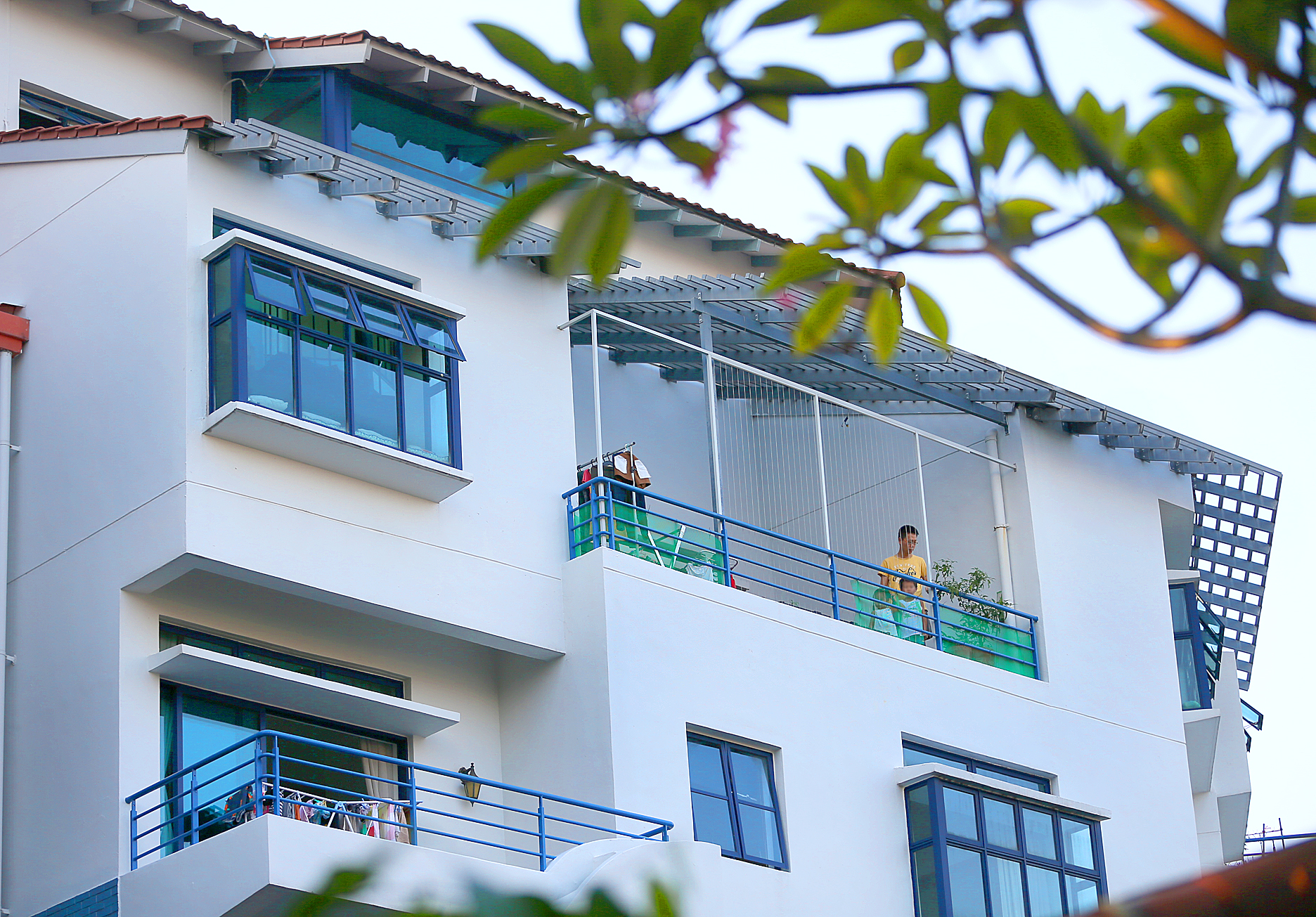
Realising the danger, he tried to protect his son, four, and daughter, three, by installing grilles on the balcony.

But the condo’s management committee (MC) rejected his application and subsequent appeal.

When he tried to go ahead with the installation, the MC stopped the workers and even called the police.

At 5.30pm yesterday, the dispute took a surreal turn when the MC sent him a letter to tell him that his balcony has been classified as a “roof garden”.

This came after Mr Zou wrote to the Building and Construction Authority (BCA) and was told that he should be allowed to install the grilles because his children’s safety takes priority over design.

According to the MC’s letter, since the balcony is a roof garden, the BCA by-law that structures and devices can be built on windows and balconies for the safety of children does not apply.

A shocked Mr Zou questioned how the 16 sq m balcony could be classified as a “roof garden” when it is on the lower floor of his two-storey unit, which has no access to the roof.

“I feel like they are playing a word game with me,” he told The New Paper yesterday.

“Over the past two months, the term ‘roof garden’ has not once been mentioned to me. How can they be so unsympathetic towards the safety of children? This is too much.”

When TNP checked with the BCA, its spokesman said: “Safety is important, especially where young children are involved.

“Therefore, owners shall not be prevented from installing any structure or device to prevent harm to children under the prescribed by-laws of the Building Maintenance (Strata Management) Regulations 2005.”

Mr Zou first wrote to the MC on May 23, about a month before he moved into his new home, to seek approval to install the grilles.

What followed were several exchanges between them without approval being granted.

In July, the family had a close call when their domestic helper caught their son leaning precariously over the balcony’s ledge while waiting for his father to return from work.

His horrified parents cable-tied sheets of green plastic mesh over the railings to prevent the children from climbing up.

Mr Zou said: “But it was not foolproof as my children could still fall over any time.”

Then, on Aug 3, they read about a three-year-old girl who died about a month after falling from the balcony window of a fourth-storey flat in January.

That was the last straw for them. They decided to go ahead and install the grilles.

Mr Zou said: “We knew we were risking it by going ahead without permission. But we couldn’t wait any more. While we wait, tragedy could strike at any time.”

They hired a contractor to install four panels of “invisible” grilles across the balcony on Aug 17.

But that afternoon, after two panels had been installed, council members entered their apartment and stopped the workers. They confiscated the workers’ visitor passes and called the police.

When TNP approached the condo’s MC on Tuesday, the managing agent said that only council members could comment and he would try to get a response from them.

But there was no response by press time last night.

LOST SLEEP

Mr Zou said he has lost sleep over the dispute and will rush home after work to make sure his children are safe.

His wife also calls their helper at least three times a day to ensure the children stay away from the balcony.

Mr Zou said: “Previously, I could work peacefully, but now I am constantly worried about my children while at work.”

Mr Zou has contacted his Member of Parliament, Ms Sim Ann (Holland-Bukit Timah GRC), for help and was told that he should raise the matter again at the next general meeting and try to settle the dispute amicably.

When contacted by TNP, Ms Sim said: “At times, condo residents approach me concerning disagreements with their MCs.

“In such cases, we would speak with the MC to understand their side of the story and see if the issue can be resolved.

“If both sides think we can be of help in facilitating further discussion, we are always glad to try.”

Timeline:

February Family buys a $2 million two-storey penthouse at 19 Shelford condominium.

May 23 Mr Zou Xiang sends an e-mail to the management committee (MC) under the Management Corporation Strata Title (MCST) about installing grilles on his balcony.

May 25 The MC rejects his request without offering alternative measures. When he appeals, the MC tells him to seek approval from council members of the condo. His e-mail is forwarded to them.

May 27 The MC requests detailed drawings of the installation for consideration. Mr Zou submits the drawings a day later.

June 18 Mr Zou moves in with his family and is told by the MC that his appeal will be brought up at a general meeting on June 23.

June 24 The MC says the council members need to seek approval from the relevant authorities.

July 4 Mr Zou does not receive approval and writes to the Building and Construction Authority (BCA).

July 8 BCA advises him to check with the MC for its reasons for the rejection. BCA also informs him that he can seek legal help to apply to the Strata Titles Board, but he opts not to do so.

Aug 17 Mr Zou tries to install the grilles, but the MCST stops the workers.

Aug 20 The MC issues a warning letter notifying Mr Zou that he had not received permission to begin renovation works, and seeks his co-operation to remove any installation done to the balcony on Aug 17.

Aug 25 The MC issues a letter notifying Mr Zou that his balcony is classified as a “roof garden”.


CHILDREN’S SAFETY TAKES PRIORITY OVER DESIGN: BCA

The safety of children is paramount, especially where young children are involved, says the Building and Construction Authority (BCA).

Its spokesman told The New Paper yesterday: “A subsidiary proprietor or occupier of a lot shall not be prevented from installing any structure or device to prevent harm to children under the prescribed by-laws of the Building Maintenance (Strata Management) Regulations.”

Lawyer Toh Kok Seng from the Lee & Lee law firm said that management committees (MC) of condominiums that are under the Management Corporation Strata Title (MCST) cannot overrule the Building Maintenance and Strata Management Act (BMSMA).

“MCST cannot make decisions that are contrary to the BMSMA prescribed by-laws,” he said.

But he added that they are allowed to prescribe a certain style or design to achieve some uniformity of facade in the condos.

Guidelines

A BCA spokesman said: “The MC should put in place a set of design guidelines, which could be passed as a by-law at a general meeting, and subsequently adopted by the residents.

“If there are no design guidelines, the MC should consider requests for the installation of such structures or devices on a case-by-case basis by taking into account the safety of the residents, especially children, which must take priority over other considerations such as design and aesthetics.”

Earlier this year, The Straits Times reported on a family who won a legal case to install grilles in their condominium unit.

Dr Sujit Singh Gill was twice refused permission by the management corporation of One North Residences to install grilles in his 13th-storey unit.

When he applied to the Strata Titles Boards (STB), it ruled in favour of his family on the grounds that children’s safety must be paramount, even if the grilles may affect the appearance of the building.

Mr Toh and his colleague, Mr Daniel Chen, who represented Dr Singh, said that owners who have problems getting approval to install grilles in their homes should seek legal help to apply to the STB.

Mr Chen said: “It may take some time for the owner to get the outcome they desire through the legal process, but if the council of the condominium is resolute in its refusal to permit the installation of grilles, this is the only way to compel them to allow the installation.”


This article was first published on August 26, 2016.
Get The New Paper for more stories.
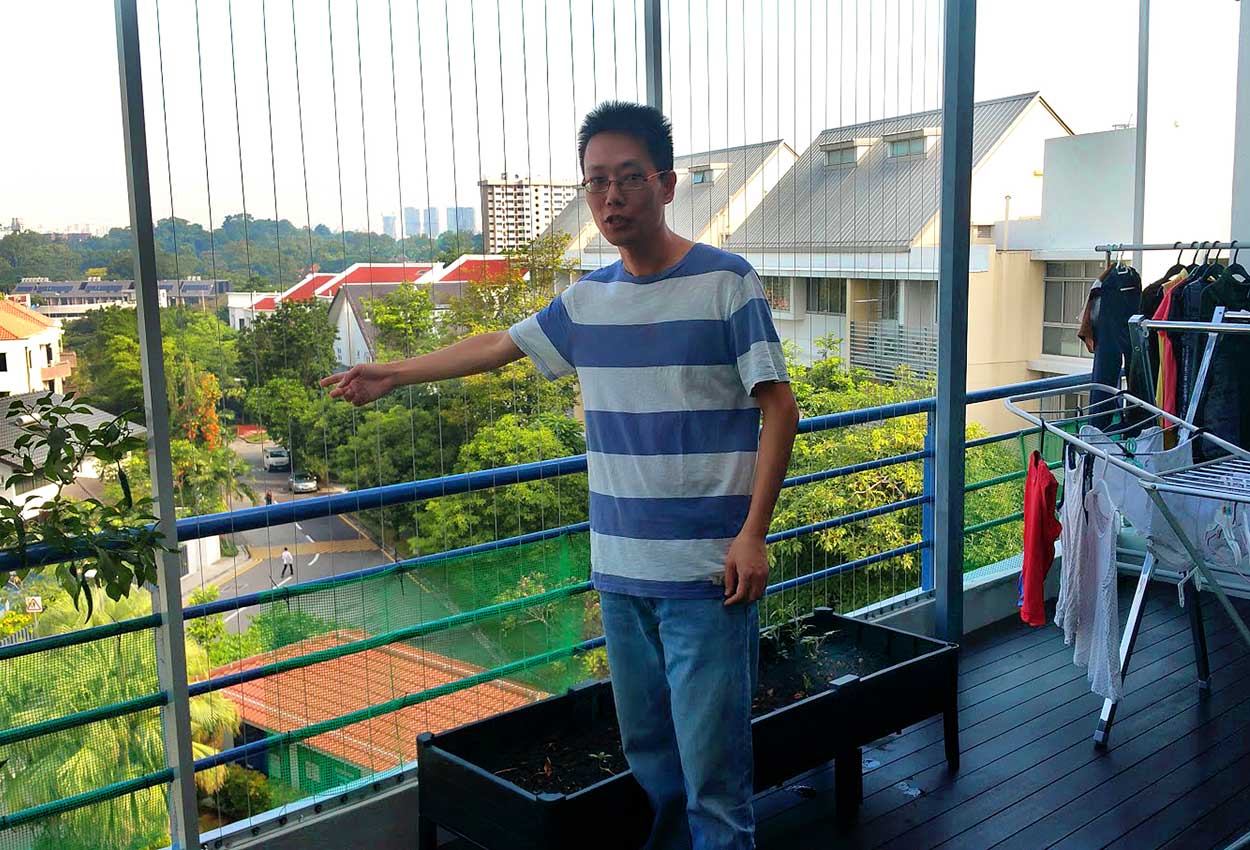
Image: 
Category: 
Publication Date: 
Friday, August 26, 2016 – 17:00
Send to mobile app: 
Source: 


Rotator Headline: 
Father wants to install grilles to keep kids safe, but condo says no and calls it a roof garden
Rotator Image: 
Story Type: 
Others

Source link

SGHaze: NEA advises reduced outdoor activities that are prolonged, strenuous

0

SINGAPORE –  The National Environment Agency (NEA) has advised residents to reduce, minimize or avoid prolonged and strenuous outdoor physical activity.
In a health advisory issued at 2pm on Friday (Aug 26), NEA noted that with the westerly winds continuing…

Source link

Distant Worlds: music from FINAL FANTASY Singapore 2016

0

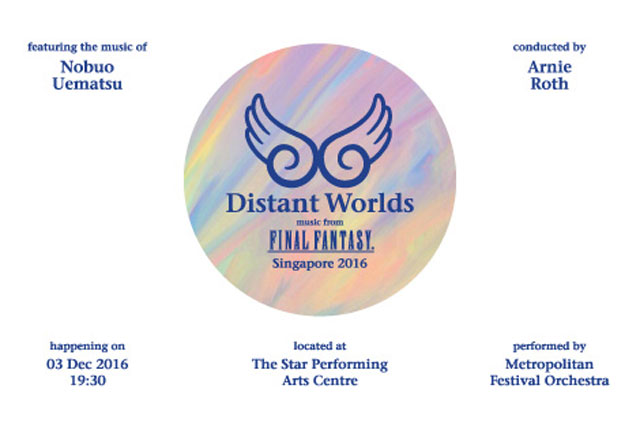
Avex Asia Presents Distant Worlds, the symphony concert featuring music from FINAL FANTASY in Singapore after 7 years! Get your tickets through SISTIC at http://www.sistic.com.sg/events/final1216 now!

Distant Worlds: music from FINAL FANTASY Singapore 2016

Avex Asia Presents Distant Worlds, the symphony concert featuring music from FINAL FANTASY in Singapore after 7 years! Showcasing the music of Japanese video game composer Nobuo Uematsu, the concert is conducted by Grammy Award-winning conductor Arnie Roth. With exclusive HD video content from legen…

Source

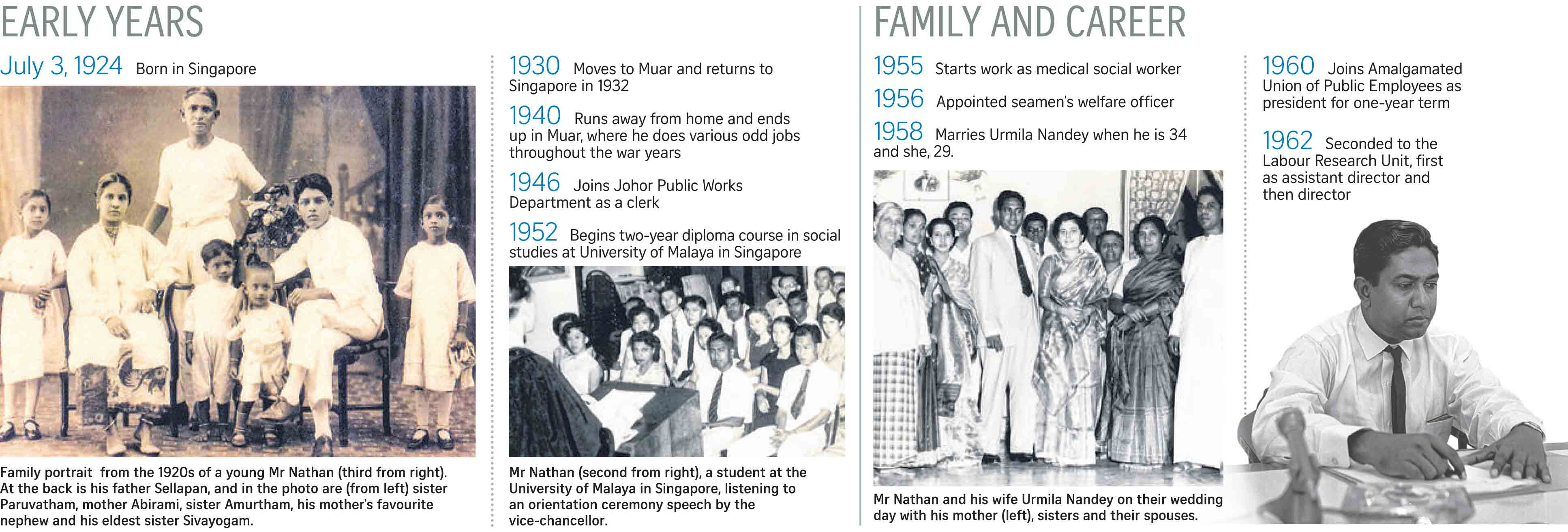
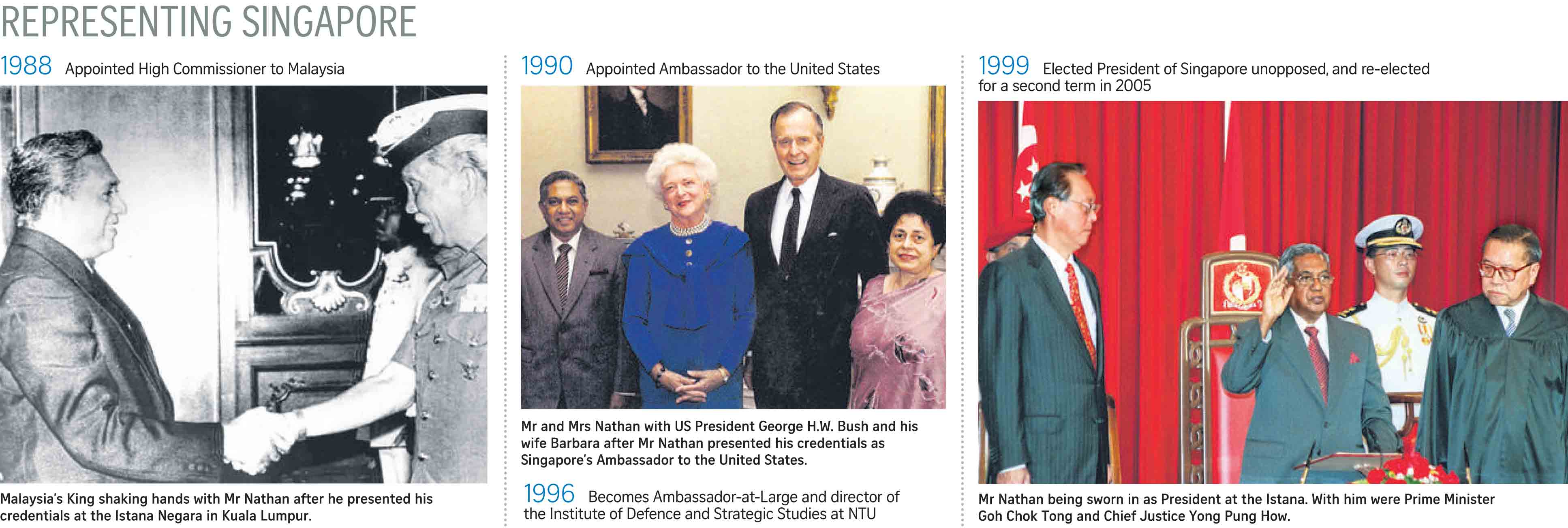
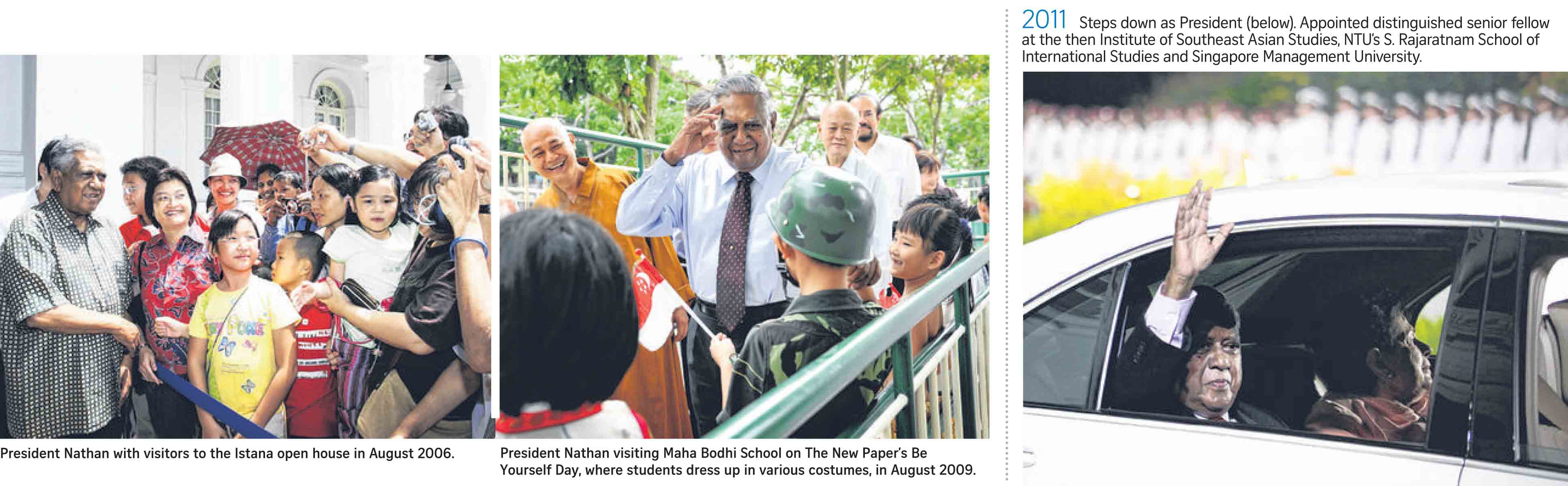
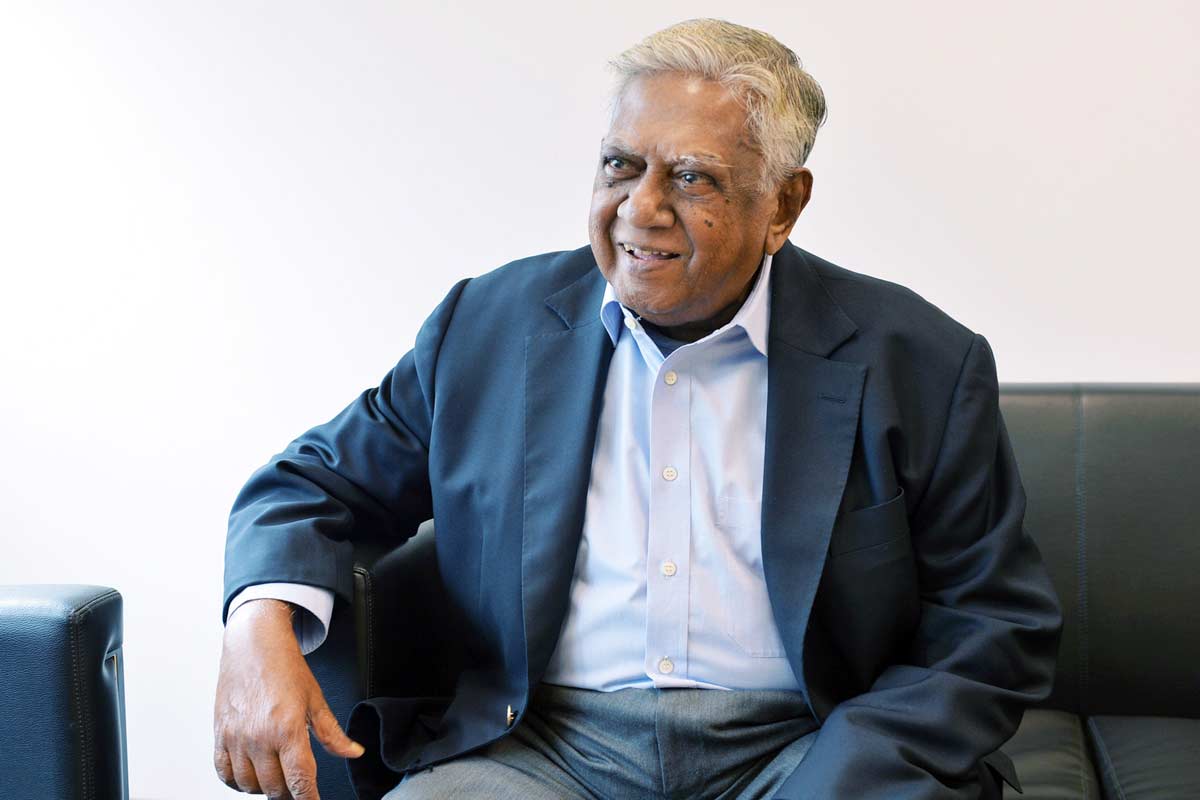
Former President Nathan never gave up on Singapore football

0

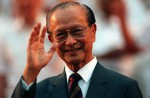
He loved his football, especially when it came to his “home team”, the Lions.

Not only would former president S R Nathan turn up for finals, but he also made it a point to encourage teams and players through tough times.

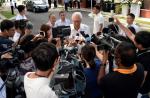
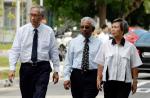
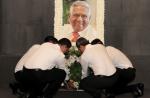
Yesterday, Singapore’s football fraternity – comprising players, coaches and managers from the national football team and S.League – turned up in full force at Parliament House to pay its last respects to one of local football’s biggest supporters.

“It was emotional. He was a true supporter of not just football but sports in general,” said national team and Warriors Football Club defender Madhu Mohana, 25.

“The nation has lost a true gem.”

Madhu was among the many players from various S.League clubs who turned up at City Hall at 10.30am before the Singapore football contingent joined the queue at the Padang to bid Mr Nathan farewell at Parliament House.

Former international Lim Tong Hai told reporters that Mr Nathan was always supportive and had a warm personality.

“When he turned up for matches (as part of the S R Nathan Challenge Trophy), he was always encouraging,” he said.

“He would even go to the losing team and tell them: ‘What matters most is that you’ve put in your best and you can try again next time’.”

Managers and back-room staff were equally sad.

Former national team manager Eugene Loo, 43, said he was left with a heavy heart after he heard the news of Mr Nathan’s death on Monday night.

Loo, who was the Lions team manager from 2004 to early 2013, recalled a celebration he and the team had with Mr Nathan after they lifted the trophy for the 2004 AFF Championship, then known as Tiger Cup.

“We were invited to the Istana for a reception,” he said.

“I remember Mr Nathan reminding the team that they had to support one another through thick and thin, no matter how bad it got.” But it was not all rainbows and butterflies before that.

Mr Nathan’s encouragement came after the team was at the centre of criticism when it was ignominiously defeated by Malaysia in the 2002 Tiger Cup, losing 0-4.

“Fans were upset and some were even angry after that match,” said Loo.

Even though the national squad went through a revamp before Singapore went into the same tournament in 2004, fans still had doubts because of the team’s inept performance previously.

FAITH

Morale was low, Loo explained, but the players continued to persevere – especially after seeing Mr Nathan’s continuous faith in them. “He never gave up on us,” he said.

“Even though we had quite a young team then, if the President didn’t give up on us, who were we to give up on ourselves?

“I think that propelled the team to continue to press on.”

The team beat Indonesia 5-2 on aggregate in the final that took place in early January 2005.

Former national team goalkeeper Lionel Lewis, who was the most valuable player for that tournament, could not agree more. “Mr Nathan definitely was a big source of motivation,” he said.

“To see him go all the way to the National Stadium was endearing.

“He didn’t just come to watch the finals, he also came to a semi-final match and that, I remember, was pure encouragement.

“It showed the belief he had in the team and for us players, that kind of support makes a huge difference.

“And he certainly made that difference.”


This article was first published on August 26, 2016.
Get The New Paper for more stories.

Image: 
Category: 
Publication Date: 
Saturday, August 27, 2016 – 08:00
Send to mobile app: 
Source: 


Story Type: 
Others

Source link

State Funeral Service for S R Nathan begins

0

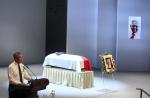
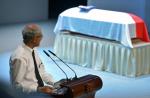
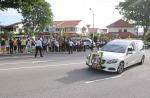
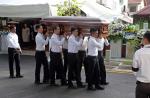
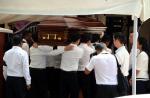
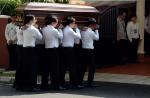
SINGAPORE – After a final, symbolic journey across the Republic, the cortege of late former President S R Nathan arrived at the University Cultural Centre (UCC) for a solemn State Funeral Service on Friday (Aug 26).
Watch a live stream of the funeral…

Source link

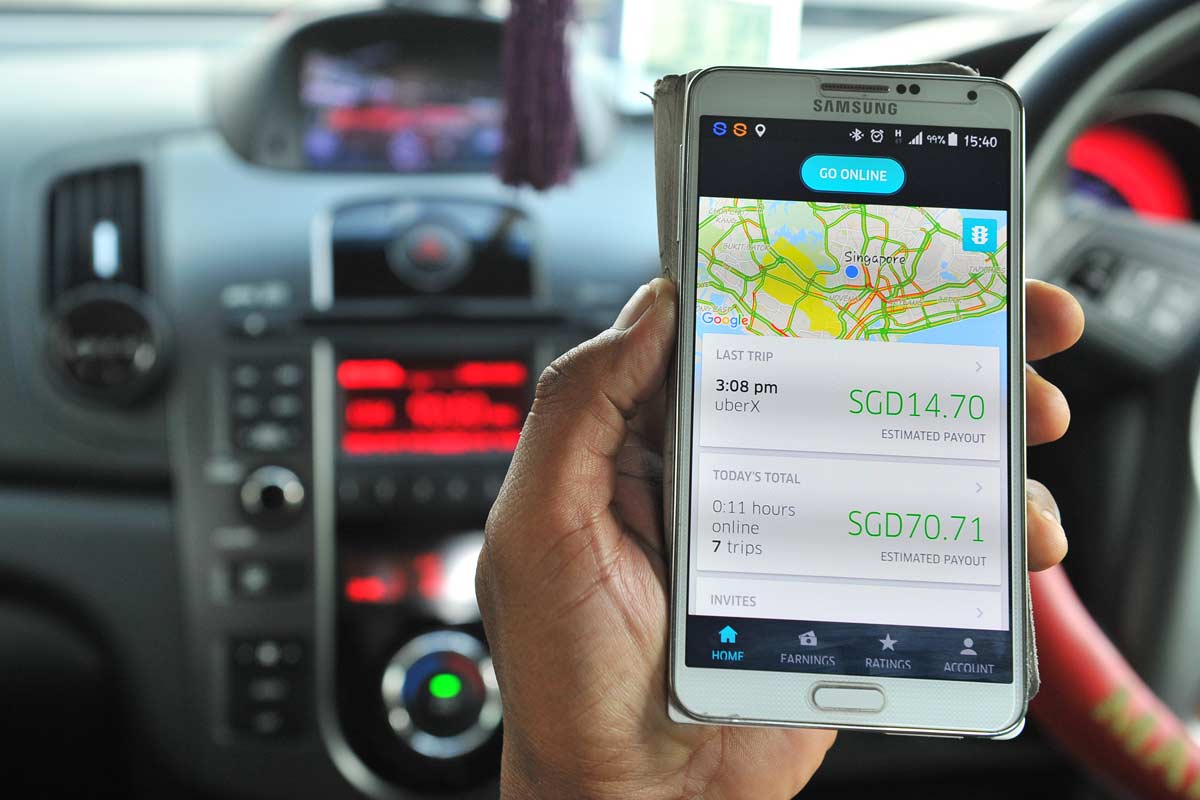
Problems, but I still prefer Uber

0

He looked like he was barely out of national service and he had no idea where or what Chijmes was.

So when the wonky GPS could not direct the Uber driver to the main entrance of the complex, we had to spend another five minutes going around in circles.

Young drivers who are too reliant on the sometimes-not-very-accurate GPS to get them to their destination is the bane of my Uber experience. When I book one from my condominium, I always have to follow up with a call because there is a 50-50 chance that the driver will end up in the neighbouring estate.

Despite these problems, I am still using Uber regularly.

Why? It comes down to technology.

Now, if I want a driver who knows his roads, a better solution might be to book a taxi – most cab drivers I’ve encountered are real experts when it comes to our roads.

LONGER

The problem for me is that it takes much longer to get a booking confirmation.

Now, the new ComfortDelgro app is slick and easy-to-use, but it can take as long as five or more minutes before it tells you that it can’t hook you up to a taxi.

Uber drivers don’t get to see the destination. Which means they aren’t choosy. This also means the drivers are in the frame of mind that they are there to service the traveller.

It is a stark difference in attitude to many cab drivers, who often act like the world owes them a living.

That is the reason I go for Uber, even though their GPS system and inexperienced drivers can be a pain.

If you are in a hurry, like I am most times in a workday, the peace of mind that a ride is on the way is the main reason I choose Uber.

Sometimes, that even means forking out double or triple the price of the ride during peak hours, when the Uber Surge pricing kicks into pocket-burning action.

Another cool thing about modern ride-sharing and cab-booking apps is that you can now contact the driver directly and vice versa.

For some strange reason, some cab drivers refuse to pick up my calls when I am trying to assure them that I am on my way to the pick-up point. This happened again this week when I was late because my youngest daughter had to make a last-minute nature call. I called him twice and he refused to answer my call. The next minute, I noticed he had cancelled my booking, claiming that it was a “no show” case.

The only plausible reason I can figure out why this is happening is because cab drivers do not like to wait for passengers and would rather rush off to get the next job, even if it means that they had wasted 10 minutes to get to the pick-up point.

With Uber drivers, often, they are the ones calling because they can’t find me.


This article was first published on August 26, 2016.
Get The New Paper for more stories.

Image: 
Category: 
Publication Date: 
Saturday, August 27, 2016 – 08:00
Keywords: 
Send to mobile app: 
Source: 


Story Type: 
Others

Source link

Leading the Laju mission was one of S R Nathan's key contributions

0


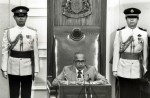
In the long and remarkable career of S R Nathan, the Laju hijack of 1974 had all the ingredients of a thriller movie, with the future president of Singapore playing a starring role.

The young today may find it hard to reconcile the jocular grandfather figure with the steely hero of Singapore’s hostage drama.

When he boarded the Japan Airlines plane at Paya Lebar Airport with Singapore government officials and commandos to guarantee the safe passage of four terrorists bound for Kuwait, Singapore and his family did not know if he and his team would make it home alive.

The drama was played out at a time when there was no Twitter, no Facebook and no live blog to give a blow-by-blow account of what happened.

What the Singaporean team had was guts and gumption.

Mr Saraj Din, 71, a former officer in the Internal Security Department (ISD), who was on the Feb 8 flight, said of Mr Nathan: “He managed to save all our lives when we were all very uncertain of the outcome.”

The drama had started on Jan 31, when four terrorists equipped with sub-machine guns and explosives landed on Pulau Bukom.

Their plan was to blow up the Shell oil refinery on the island to disrupt the oil supply from Singapore to South Vietnam to show their support for communist North Vietnam during the Vietnam War.

Two were Arabs from the Popular Front for the Liberation of Palestine and two were Japanese nationals from the communist militant group Japanese Red Army. The two groups believed in changing the world through revolution, and trained together in guerilla warfare in the Middle East.

On Bukom, they planted explosives at three oil tanks but the blasts caused little damage, and the rest of the explosives failed to go off.

Chased by the police, the terrorists hijacked a ferry at Bukom jetty called Laju, or “fast” in Malay – and held five crew members hostage.

After six days of protracted negotiations, the bombers agreed to release the hostages in exchange for safe passage out of Singapore.

Their destination: an Arab country. But no one would take in the terrorists until another group of terrorists stormed the Japanese Embassy in Kuwait, taking hostages and demanding that the Japanese government send a plane to Singapore to take the Laju terrorists to Kuwait.

On Feb 7, the bombers were taken to Paya Lebar Airport, where they surrendered their weapons and released the remaining three hostages. Two hostages had escaped earlier.

The terrorists were to board a special flight to Kuwait on a plane loaned from Japan. But they had one condition: They demanded a group of guarantors to accompany them on the flight.

Then Deputy Prime Minister and Defence Minister Goh Keng Swee needed a man who would not buckle under pressure to lead the dangerous mission.

He turned to Mr Nathan, then 49, and the director of Singapore’s external intelligence agency, the Security and Intelligence Division (SID) in the Ministry of Defence.

Mr Nathan had been involved in the negotiations with the hijackers from the start.

The other 12 members of the team were drawn from government units handling the crisis: the ISD, police, Singapore Armed Forces commandos, and translators: Mr S. Rajagopal, Mr Saraj Din, Mr Tee Tua Ba, Mr Yoong Siew Wah, Mr Seah Wai Toh, Mr Andrew Tan, Mr Tan Kim Peng, Mr Gwee Peng Hong, Mr Teo Ah Bah, Mr Tan Lye Kwee, Haji Abu Bakar and Haji Rahman.

If Mr Nathan was afraid, he did not show it.

In separate interviews with The Straits Times and The New Paper decades after the incident, he recounted how he broke the news of the mission to his wife Urmila. Their children were then 15 and 11.

“I just looked at her and told her, ‘I’m going’,” Mr Nathan said.

“I knew it’d be very emotional for her and for my children… I had to display some confidence.”

When he left for the airport, he avoided looking at any of his family members in the eye.

In an interview with The Straits Times, former ISD officer Rajagopal, 76, recalled then Minister for Home Affairs Chua Sian Chin telling the group at the airport on Feb 8: “Thanks for your service. If anything happens, we will take care of your family.”

During the 13-hour flight, the thoughts swirling in Mr Nathan’s head veered from the personal – Would he see his wife and children again? – to the practical – Would the plane be allowed to land in Kuwait or would they be forced to refuel and sent off elsewhere?

Would the hijackers refuse to let the Singaporeans go and use them as bargaining chips? Everything was up in the air. But Mr Nathan steadied himself with these words: “Have faith and do your duty.”

Demonstrating the diplomatic skills that he showed in the foreign service, he chatted with the terrorists and tried to win their trust.

Mr Tee, who was then 31 years old and the officer-in-charge of the Marine Police, recalled: “In the plane, Mr Nathan asked me to engage them, talk to them, and as I was talking to them he would join in.”

Mr Tee, 74, later became Commissioner of Police.

“Mr Nathan was quite relaxed, because by that time the terrorists had surrendered their guns. He cracked some jokes, tried to break the ice.”

Mr Nathan’s goal was to establish rapport with the terrorists, in case negotiations soured and endangered the lives of the Singaporeans on board the plane.

When they landed in Kuwait before sunrise, they were greeted by a wall of tanks, armoured vehicles and soldiers.

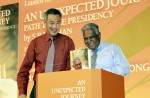
It “looked like the middle of a war zone”, Mr Nathan wrote in his 2011 memoirs, An Unexpected Journey: Path To The Presidency.

It became clear that getting the Singapore team off the plane was not one of the Kuwaitis’ priorities. It seemed likely that the group of terrorists in the country would be bundled onto the plane and flown to a new destination with the Singaporeans on board.

But Mr Nathan had a plan, said Mr Tee. He told the air traffic controllers he had an important message from Singapore’s Prime Minister and needed to speak to “somebody high up”.

Tense hours passed. The group could not do anything but wait on the tarmac.

“For four to five hours, we were eating instant noodles in the plane and just waiting, so you can imagine our frame of mind,” Mr Tee recalled.

Then a fleet of cars approached with lights flashing and sirens blaring. One of the cars, a Cadillac, carried the Kuwaiti Defence Minister, who had finally arrived to negotiate.

Mr Nathan pressed Singapore’s position, which was that the team had done their part in bringing the hijackers to Kuwait. Subsequent negotiations were between the Kuwaiti and Japanese governments, and the Singaporeans should be allowed to return home. He stressed that the Singapore team was on Kuwait soil and thus came under the protection of the Kuwaiti government.

The Kuwaiti Defence Minister rebuffed him several times and told him to shut up.

At one point, he threatened to arrest Mr Nathan.

“Mr Nathan was very calm but very determined… It was not an easy situation to handle, how much can you push the line?” said Mr Tee.

The hours ticked by. Mr Nathan left the plane several times to negotiate with the Kuwaitis and the Japanese ambassador.

The breakthrough came with the arrival of Kuwait’s Foreign Minister. After more talking, he finally told Mr Nathan: “All of you get down and get lost.”

The Singapore delegation did as they were told.

The Kuwaiti Foreign Minister told Mr Nathan that the Singaporeans should make themselves scarce until their flight home was due, in case the hijackers demanded they be put back on the plane if negotiations with the Kuwaitis did not go well.

So the team did what Singaporeans do best – they went shopping. Mr Nathan gave each member of the team US$100 and they disappeared into a bazaar.

They met later that day to catch a Kuwaiti Airlines flight to Bahrain. From there, they boarded a Singapore Airlines flight home. They arrived in Singapore around sunset on Feb 9.

Mr Rajagopal described how Mr Nathan rose to the occasion: “He was a good negotiator, a brave man in a foreign country. He took care of us, comforted us, and gave us direction.”

But the man of the hour did not make a big deal of the fraught situation. He told The New Paper: “It was a job I did. It was an episode we all wanted to forget.”

A month before Mr Nathan stepped down as president in 2011, he invited the group involved in the Laju incident to tea at the Istana.

Mr Saraj said they talked about Singapore’s tense formative years: battling the communists, racial unrest and other security problems.

“Young people these days see Mr Nathan as a father figure, but they don’t know him in his younger days. The situation in Singapore then was entirely different.”

It was a time for a generation of “pragmatic leaders” like Mr Nathan, who could handle these situations, said Mr Saraj.

“With the passing of Mr Nathan and Mr Lee Kuan Yew, that generation of leaders is largely gone.”


This article was first published on Aug 26, 2016.
Get a copy of The Straits Times or go to straitstimes.com for more stories.

Image: 
Category: 
Publication Date: 
Friday, August 26, 2016 – 14:10
Keywords: 
Send to mobile app: 
Source: 


Story Type: 
Others

Source link

Michelle Chia has the jitters on TV show

0

Singapore host Michelle Chia co-owns an investment firm, dabbles in property and is well-versed in her personal finances.

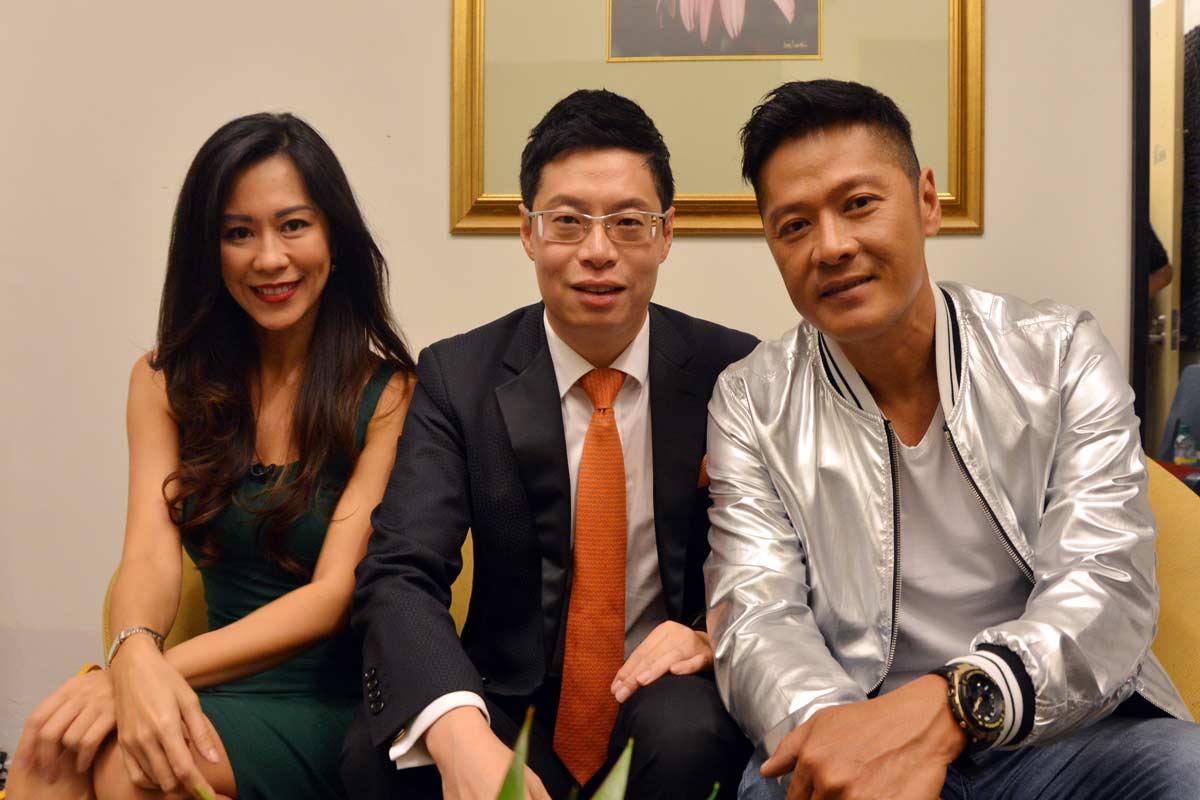
Despite that, the 40-year-old felt the pressure when taking on her latest television gig – hosting financial infotainment show BrainStorm in Mandarin, alongside Chinese financial guru, Dr Ma Hong Man.

She says: “It was extremely stressful because he is a finance professional… and Mandarin is his mother tongue. He is not only strong in the language, but also strong in financial language.”

Adds the bilingual Chia, who was speaking to the media on Wednesday during the filming of the show’s Singapore edition at a studio in Kallang Way: “I had to check the dictionary to make sure I was getting the terms right – the financial terms and the lingo.”

She need not have worried because the Singapore and China production teams chose the “household name” to add a local flavour to the show.

BrainStorm Singapore Edition is co-produced by Singapore-based media company MyChinaChannel and China Business Network, a channel that has been airing the series in China for more than a decade.

Mr Eugene Lee, chief operating officer of MyChinaChannel, says of Chia: “She makes it easier for the Singapore audience to connect with the show and the topics discussed.”

Meanwhile, seasoned financial commentator Dr Ma, who hosts BrainStorm in China, has his secret to making complex financial knowledge digestible for audiences.

“The man in the street is not concerned about the statistics, charts or analysis reports. He is concerned only about whether he can make money.

“I will have to keep that in mind when talking about finance,” says Dr Ma, 40, who hosts Chinese shows such as lifestyle and business talk show Life Of Pure Pleasure.

The Singapore version of Brain-Storm will feature a panel of guests – ranging from influencers to working adults – exploring topics such as the media landscape, housing and job prospects of fresh graduates.

Celebrity businessman Li Nanxing gives his two cents’ worth in the first episode on entrepreneurship.

His advice to budding entrepreneurs is gleaned from his own experience in failed business ventures, such as a piano bar and a discotheque set up in the 1990s.

He owns talent agency LNX Global and movie company Cornerstone Pictures. He also invests in property.

Li, 51, says: “Don’t take short cuts. I wanted to make quick money previously, but now, I have learnt to take things slow and steady. It was a painful lesson, but I picked myself up.”

He also recommends tapping the expertise of experienced businessmen, saying: “Find out not only the pros of the business, but also the risks associated with it.”

Far from being scarred from his business missteps, he is estimated by the Taiwanese media to be worth NT$2.7 billion (S$120 million) because of his multiple ventures.

Li laughs in protest: “They are overestimating (my fortune).”

nggwen@sph.com.sg


This article was first published on August 26, 2016.
Get a copy of The Straits Times or go to straitstimes.com for more stories.

Image: 
Category: 
Publication Date: 
Friday, August 26, 2016 – 17:00
Send to mobile app: 
Source: 


Story Type: 
Others

Source link

Local musicians pay tribute to S R Nathan with a video

0

Sonia Yeo
soniayeosj@mediacorp.com.sg

SINGAPORE – For singer-songwriter Clement Chow (who’s behind National Day theme song Count On Singapore), the passing of Former President S R Nathan on Monday night has greatly saddened him. But because of his busy…

Source link

A president with the personal touch

0

It was 12.30pm. The temperature outside, according to Siri on my iPhone, was 32 deg C.

An elderly Chinese busker stood outside exit B of City Hall MRT station, a black tote slung around his neck. He held a grey umbrella and a FairPrice Finest carrier bag in his right hand, and a harmonica in his left.

He was playing Auld Lang Syne, perhaps to bid farewell to former president SR Nathan, whose body was lying in state in Parliament House several hundred metres away.

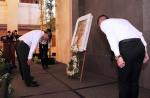
I approached one of several men wearing white shirts, dark slacks and black bands around their left arm. If I wanted to pay my respects, the young man said helpfully, I should make my way to the Padang and join the queue.

Under the searing mid-day sun, I joined a steady stream of people as they headed for the open field in front of The National Gallery.

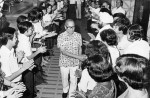
Some were striding purposefully, others strolling languidly. Men in starched shirts and cuff-links, women in smart suits and high heels, uncles in polos and bermudas, students in their uniforms, Chinese, Malay, Indian, Eurasian, young, old and middle-aged – they were all there, alone or with friends and colleagues. By then, more than 3,000 people, I was told, had already paid their respects.

Near the entrance of a makeshift passageway covered with white tent fabric and lined with pots of white orchids, several volunteers were distributing bottled water. A man with a crew cut kept hollering: “Please make sure you drink some water. The weather’s very hot.”

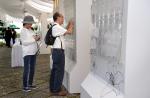
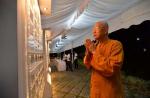
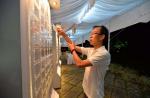
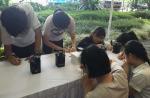
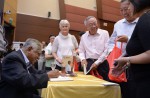
Many people stopped at four tables set up for them to pen their condolences on white cards with white orchid motifs. Next to the tables were stands displaying messages to one of the pioneer nation-builders who died on Monday, aged 92.

Some were short: “I feel very sad, Mr Nathan. Thank you,” wrote LKH.

Others were intimate: “Dearest President, My heart broke when I heard of your passing. It seemed like you spoke to us about the philosophy of life and social work so recently. Your life story is a lesson that I will keep in my heart. Your legacy in social work will be continued by this generation you have inspired,” wrote Vijayalakshmi.

The handwritten notes were a fitting tribute to a man who, I have learnt, had a penchant for picking up pen and paper to express thanks, delight and encouragement.

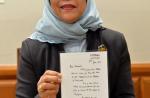
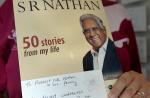
He certainly made my day when I came into the office this January to find a letter from him. In beautiful cursive handwriting, he told me how much he enjoyed my book, It Changed My Life, which contains interviews with Singaporeans who overcame the odds to turn their lives around.

He cited several stories and said they reminded him of his own life. It was such a touching gesture from a man who once held the highest office in the land, one who, unfortunately, I never had the privilege to meet.

He ended the letter with this line: “Thank you for your short stories. I know it will inspire others.”

He certainly inspired Singaporeans, judging from the crowd which swelled considerably as the afternoon wore on.

Member of Parliament and lawyer Christopher de Souza, who was behind me in the queue, remembered being on a state visit to Turkey with him in 2009.

“We were 30,000 feet up in the air. SQ dimmed the cabin lights, everyone was asleep and I was just going through the briefs given by the Ministry of Foreign Affairs. Suddenly President Nathan came, sat on my armrest and started talking about Singapore and perseverance with such interest and insight.

“His work ethic and his dedication to Singapore were inspiring,” Mr de Souza said.

Like him, many yesterday had personal encounters with the late former president. Among them was Mrs Maz Mindi, 68, who came with three Girl Guides. The former deputy chief of Girl Guides Singapore recalled how Mr Nathan – who was Chief Scout during his presidency – would go out of his way to talk to Girl Guides and their parents during prize presentation ceremonies.

Most yesterday also went to pay their respects because they recognised that he served Singapore and Singaporeans well.

Housewife Jayasree Nair, 44, was there with her daughters Jaishwini, 12, and Yashiniya, nine, to bid farewell to a great man who did much for the country.

Her father Jayaraman Krishnan Nair, 64, who is with the Infantry Training Institute, agreed, and said that was why he volunteered to help out at the funeral.

The wait to get into Parliament House took over an hour but it was pleasant, orderly and angst-free.

My turn came. I could discern his nose as he lay in his casket, draped with the state flag.

“Thank you Mr President. Rest in peace,” I said silently. And as I walked out into the mid-day sun, I wondered if that old busker was still playing Auld Lang Syne.


This article was first published on Aug 26, 2016.
Get a copy of The Straits Times or go to straitstimes.com for more stories.
Image: 
Category: 
Publication Date: 
Friday, August 26, 2016 – 13:54
Keywords: 
Send to mobile app: 
Source: 


Story Type: 
Others

Source link