SINGAPORE – The Health Ministry has announced 41 cases of locally transmitted Zika virus infection in Singapore. These are the profiles of the 41 cases, according to a statement from the ministry on Sunday (Aug 28).
A 47-year-old female Malaysian had…
Source link
Profiles of 4 S'poreans, 1 M'sian and 36 foreign workers infected with Zika
Japan-made passenger jet aborts 2 test flights to US in 2 days
Tokyo – Japan’s new passenger jet on Sunday aborted a test flight to the United States for the second time in two days because of an air conditioning defect, its maker said.
On Saturday a Mitsubishi Regional Jet (MRJ) left Nagoya airport in central Japan for the US but soon turned back due to air conditioning problems.
The plane took off again on Sunday but problems “in the same air conditioning monitoring system” caused it to return, Mitsubishi Heavy and its subsidiary Mitsubishi Aircraft said in a joint statement.
“After the jet returned yesterday, we checked the system and changed parts. After confirming that there was no problem in a test on the ground, today we launched the flight again, but the same problem occurred,” company spokesman Yuji Sawamura told AFP.
The development of the MRJ, Japan’s first domestically produced passenger jet for over half a century, has suffered a series of delays.
In December Mitsubishi Heavy said it was postponing delivery of the planes by one year to the second quarter of 2018 for system software upgrades and other design changes.
The twin-engine MRJ marks a new chapter in the country’s aviation sector, which last built a commercial airliner in 1962 – the YS-11 turboprop that was discontinued about a decade later.
Japan’s MRJ will compete with other regional passenger jet manufacturers such as Brazil’s Embraer and Canada’s Bombardier.
Mitsubishi Heavy unveiled the jet – which is about 35m long and seats about 80 passengers – in October last year and has received more than 400 orders.
See also: Tokyo shares rise as domestic jet’s maiden flight lifts mood
Air quality in Singapore improves, returns to 'Moderate' range
Air quality in Singapore has improved with the 24-hour PSI returning to the Moderate range at 70-100 on Sunday (Aug 28) at 9am.
Source link
41 confirmed cases of locally-transmitted Zika in Singapore: MOH
SINGAPORE – There have been 41 cases of locally-transmitted Zika virus infection, according to the Ministry of Health (MOH) and the National Environment Agency (NEA).
All of the infected are residents or workers in the Aljunied Crescent and Sims Drive area, including 36 foreign workers.
34 have fully recovered while seven are recovering at Tan Tock Seng Hospital, said MOH and NEA in a joint statement on Aug 28.
A total of 124 people were tested on Aug 27, after Singapore’s first locally-transmitted case of the virus was reported.
The 47-year-old Malaysian woman resides at Block 102 Aljunied Crescent.
None of the cases travelled to Zika-affected areas recently, which suggests that the virus was transmitted locally.
candicec@sph.com.sg

41 cases of locally-transmitted Zika cases in Singapore: MOH, NEA
34 patients have fully recovered while the other seven, who are still symptomatic and potentially infectious, are recovering at Tan Tock Seng Hospital. All are residents or workers in the Aljunied Crescent/Sims Drive area.
Source link
41 Zika cases in Aljunied Crescent-Sims Drive area: MOH
SINGAPORE – A day after confirming the first locally transmitted case of Zika, the Ministry of Health (MOH) announced that 41 Zika patients have been confirmed in the Aljunied Crescent-Sims Drive area.
More cases are to emerge, MOH added at a press…
Source link
Eating disorders rising among the young
Most people in Singapore enjoy their food but for a growing number of people afflicted with an eating disorder, some as young as nine, eating has become the bane of their lives.
The Singapore General Hospital (SGH) Eating Disorders Programme, the national centre for treating such illnesses, saw 170 new patients last year. This was quadruple the 40 patients when the programme started in 2003 and about 42 per cent more than the 120 new patients in 2010. Up to three in four patients are under 21.
Dr Alakananda Gudi, an associate consultant psychiatrist at SGH, said: “Our clinics are booked up all the time but I feel we are just seeing the tip of the iceberg.”
Over at the KK Women’s and Children’s Hospital (KKH), the number of children and teenagers – from as young as nine or 10 years old – with an eating disorder has increased by an average of 10 per cent a year since 2008 when such patients were treated there. Last year, the hospital saw 65 new cases.
Dr Lee Ee Lian, a psychiatrist at the Better Life Clinic who specialises in treating eating disorders, saw 110 patients last year, up from 90 in 2014. Dr Lee went into private practice in 2013, and more than half of her patients with eating disorders are teens.
Doctors interviewed say the social media has a part to play in fuelling the ever-growing desire to be thin, especially among the young.
Youth share pictures of themselves endlessly. There is a lot of body-praising and body-shaming online. Then there is also the incessant chatter on looks and trends.
What can make things worse are viral online fads such as the A4 waist challenge, where women in China compete to see if their waists are smaller than the width of an A4 sheet of paper, or the craze to achieve a “thigh gap” – a gap between the inner thighs when one’s legs are pressed together.
With the growing emphasis on healthy eating, some children perceive being fat as more of a social stigma these days, said Dr Celine Wong, a consultant at the Psychological Medicine Department at the National University Hospital.
She said: “They associate being overweight or obese as being less attractive, less diligent and less likeable. Coupled with a low self-esteem, a negative body image and bullying in school, some adolescents fall into the trap of developing eating disorders.”
The three most common eating disorders doctors see are anorexia nervosa, bulimia nervosa and binge eating disorder. People suffering from anorexia starve themselves as they are intensely fearful of becoming fat, while those with bulimia binge eat before purging what they have eaten through self-induced vomiting or laxatives.
The youngest patient Dr Ken Ung, a psychiatrist at the Adam Road Medical Centre, has seen is about nine. The girl, who is in the healthy weight range, felt she could do better in gymnastics if she was thinner. So she started eating less and less, and only boiled vegetables at one point. She suffered from anorexia, and was so underweight that she had to be hospitalised.
But most patients that the doctors see are teenagers, as puberty is a time when they put on weight. It is also a challenging period when teens struggle with school, peer pressure and finding their identity.
Girls are among the most afflicted. Doctors interviewed say less than 10 per cent of their patients are male.
As Dr Wong described it: “Girls are under constant pressure to fit a certain ideal of beauty. More and more, girls feel the pressure to have a perfect body as they are exposed to widespread media images of those with perfectly thin bodies.”
Eating disorders are serious illnesses and about one in three patients the SGH doctors see are so ill that they have to be hospitalised.
Doctors say those suffering from anorexia have the highest mortality rate among all psychiatric conditions. They could be so malnourished that their hearts may stop suddenly or their kidneys could fail. Or they could be so depressed, they could take their own lives.
Some doctors interviewed have had anorexic patients who have died from medical complications or suicide.
Worldwide, studies have found that between 5 per cent and 20 per cent of those with anorexia that is not treated may die, Dr Gudi said.
She added: “As long as society keeps focusing on looks and the body, this problem will get worse. We have to shift the teens’ focus away from their bodies.”
170
Number of new cases at SGH last year – quadruple that in 2003.
65
Number of new cases involving children at KKH last year.

This article was first published on Aug 28, 2016.
Get a copy of The Straits Times or go to straitstimes.com for more stories.

Myanmar's Suu Kyi faces test at ethnic peace conference
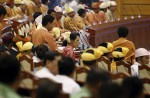
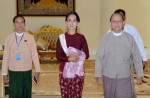
Yangon – Myanmar’s Aung San Suu Kyi faces what could be the toughest test of her leadership yet when she opens a major ethnic peace conference Wednesday aimed at ending wars that have blighted the country since its independence.
The five-day talks will bring hundreds of ethnic minority rebel leaders to the capital, along with military top brass and international delegates such as UN Secretary-General Ban Ki-Moon.
The conference is Suu Kyi’s flagship effort to quell the long-running rebellions rumbling across Myanmar’s impoverished frontier states, fuelled in part by the illegal drugs, jade and timber trades.
Myanmar is home to more than 100 ethnic groups and many minorities harbour deep seated historical suspicions of the Bamar majority group – which includes Suu Kyi – complaining that they have endured decades of discrimination.
Suu Kyi,a Nobel Peace Prize winner, has made ending the nearly 70 years of fighting the first priority of her newly minted government, which took over from the military in March after sweeping the first free election in generations.
“If you ask me what my most important aim is for my country, that is to achieve peace and unity among the different peoples of our union,” she said during a recent visit to China.
“Without peace, there can be no sustained development.” The 71-year-old is hoping to expand a shaky ceasefire signed last year between some rebel armies and the military-backed government.
This week’s conference will include both signatories to the ceasefire agreement and non-signatories, although some groups are still locked in intense fighting with government forces and their role in the talks remains unclear.
Success also depends heavily on the military, which controls key levers of government and whose leaders are thought to have made billions from the vast natural resources of Myanmar’s borderlands.
“Anyone who is suggesting there could be any sort of agreement in the coming days or weeks is dreaming,” said Anthony Davis, a security analyst and writer for IHS-Jane’s, predicting the negotiations could take “many years”.
The conference has nevertheless been hailed as an important first step and one loaded with symbolism in a nation emerging from a dark military past.
It is dubbed the ’21st Century Panglong’ – a reference to a 1947 agreement signed by Suu Kyi’s independence hero father that granted a level of autonomy to major ethnic groups.
The deal collapsed after Aung San was assassinated months later, precipitating half a century of brutal junta rule.
Suu Kyi has followed in her father’s footsteps with similar pledges to form a federalist state – though she has never spelt out the details.
A spokesman for the UNFC, one of the rebel coalitions attending the talks whose 11 ethnic groups include both ceasefire signatories and non-signatories, said the conference would be “like a grand opening ceremony”.
Ethnic groups will be allowed to give brief speeches, but there will be no time for follow-up debates and plans are already in the works to hold more talks every six months.
One rebel leader, who asked not to be named, put it more frankly.
“We will not get a solution from this conference because there will be no discussion or debate,” he told AFP, adding that it will however be a rare chance to “talk openly” with the government.
Myanmar’s Muslim minority Rohingya population, who are subject to state-sponsored discrimination, have never taken up arms against the state and therefore are not included in Suu Kyi’s peace process.
The country’s diverse patchwork of ethnic groups make up a third of the population, but the government and military have long been dominated by members of the majority Bamar ethnicity.
Suu Kyi’s National League for Democracy (NLD) – also mostly Bamar – surprised observers when it won a strong support from ethnic minority voters in November’s polls.
Yet distrust of the military runs deep in rebel regions where there have been many documented cases of torture, rape and forced labour by state troops.
Hundreds of thousands have fled to Thailand and China, while those that remain live in communities devastated by drugs, forbidden from teaching in their own language and stigmatised for not being Buddhist.
Experts say the military’s limited ceasefire pact has also driven a wedge between groups that signed and those that did not.
Richard Dolan, an independent researcher who works with the Karen people, warned minorities outside the peace process could start to see the NLD and military as forming a “united Burman front”, using another term for the Bamar.
“If it is not careful in how it proceeds, the NLD risks fuelling suspicion that it is a Burman-Buddhist party which does not understand the sufferings of non-Burman people,” he said.


Lukewarm response to paralegal option as way to soak up oversupply
SINGAPORE – Getting fresh law graduates to remain in the profession as paralegals for a few years if they fail to secure employment contracts might not be an attractive option to the young entrants, said undergraduates and lawyers that TODAY spoke to.


At the…
Source link
Indonesian priest injured in church attack
Medan, Indonesia – A knife-wielding man stabbed a Catholic priest and tried to set off an explosive device at a church in Indonesia on Sunday, police said, the latest attack on religious minorities in the mainly Muslim country.
Priest Albert Pandiangan was holding a mass in the city of Medan on the western island of Sumatra when a young man approached him and stabbed him in his left arm, said local chief detective Nur Fallah.
The attacker was carrying a homemade explosive device, said Fallah.
“Somebody tried to kill the priest by pretending to attend the church service and at that time tried to explode something, like a firecracker, but the firecracker didn’t explode, it only fumed,” Fallah told reporters.
The priest suffered slight injuries and has been taken to hospital for treatment.
A picture of the attacker’s ID card circulating online said he was Muslim.
In recent years there have been a number of attacks on religious minorities and others in Indonesia, the world’s most populous Muslim-majority country.
A suicide attack in the Indonesian capital in January killed four attackers and four civilians, including a Westerner, and injured 19.
In July a suicide bomber linked to the Islamic State group blew himself up outside a police station in Central Java.
Churchgoers on Sunday quickly caught the attacker and called the police.
An eyewitness, Markus Harianto Manullan, said the assailant wore a jacket and carried a bag.
“He sat in the same row as I did… I saw him fiddling with something in his jacket, and then I heard a small explosion and he immediately ran to the podium,” Manullan said.
Police are still investigating the man’s motive.