We love having a fun time with our family and friends, and creating different themes and exciting activities for our kids, Yugan, 5, and Avyaan, 2.
This year, we were going to have a BBQ party at East Coast Park for my eldest son Yugan’s fifth birthday. But with Covid-19 – and then the circuit breaker – that plan quickly went down the drain.
Fortunately, Yugan understood the reason why we could not have a celebration as usual. And we told him we would do something after all of this was “over” (whenever that is).
But I kept thinking of how we could make the most of this situation and celebrate it meaningfully – still with friends and family, while also practicing social distancing.
At first, Navin and I just figured we would get a cake, cut it virtually with family and that would be that. Somehow, I just felt that we could do more, and not let Covid dampen the party.
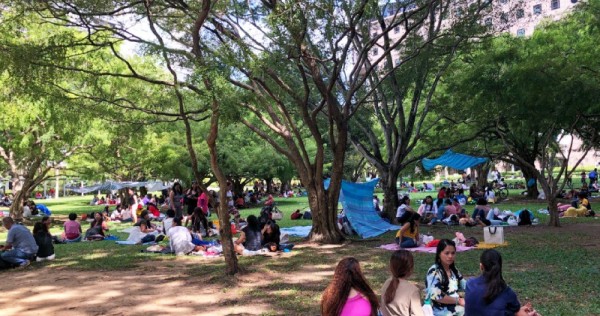
Singapore is set to start reopening its economy from Tuesday as it eases the partial lockdown measures imposed to combat the coronavirus pandemic. But for the city state’s foreign domestic workers, life will take a little longer to return to normal.
Earlier this month, Singapore’s Manpower Ministry urged domestic helpers to stay at home on their days off, unless they were running essential errands or buying meals. This was in keeping with the rules for the rest of the city state’s residents, authorities said, as they called on employers to allow domestic workers to have their rest day at home.
Singapore has an estimated 255,000 domestic helpers, many of whom come from Indonesia, the Philippines and Myanmar. Most helpers would be living with their employers in flats ranging from about 430 sq ft to 1,400 sq ft – this is the size of Singapore’s public housing apartments that are home to about 80 per cent of the 5.6 million population.
A total of $13 billion in investment commitments has been secured in the first four months of 2020 – among the highest in recent years, which will create thousands of jobs in areas such as electronics and chemicals.
They include tech firm Micron, which intends to add 1,500 jobs here over the next few years, and ExxonMobil’s expansion of its refining and petrochemical complex on Jurong Island, which will create 135 new jobs upon completion.
The investment commitment secured by the Economic Development Board (EDB) is higher than the yearly amount secured from 2013 to 2018, and exceeds the $8 to $10 billion initially projected for the whole of 2020. EDB secured $15.2 billion in investment commitments over the whole of last year.
Announcing the figures at a virtual press briefing on Saturday, Trade and Industry Minister Chan Chun Sing also unrolled a roadmap for how the government intends to generate investments and jobs to manage the fallout of the pandemic as the economy is forecast to shrink by as much as 7 per cent.
This ranges from helping companies hire ahead of demand, to initiating projects to encourage innovation.
SINGAPORE: Malaysian student Koh Ji Sen is in a hurry for school to start on Tuesday.
For more than two months, this 14-year-old has been living on his own in Singapore, isolated from his family in Tebrau, a suburb of Johor Bahru.
More than anything, he misses the social interaction with others.
“I feel lonely sometimes because of a lack of support and human contact,” said Ji Sen, who studies at a school in Yishun. “I’m just happy for school to start; it’ll be easier to pass the time.”
When Malaysia declared a nationwide movement control order on Mar 16 — during the school holidays — his parents decided that he would have to move to Singapore as soon as possible.
His father, Koh Choon Meng had reservations about leaving his son without adult supervision, but he did not want Ji Sen to miss out on school.
“We were a bit nervous … We didn’t know if he could do it (live alone),” Koh said. “He’s been dependent on my wife all along. If he can’t cope, we’d have to bring him back.”
The 51-year-old scrambled to sort out accommodation for the boy, making calls to relatives and friends in Singapore before his uncle offered the use of his place.
Koh’s uncle had temporarily moved in with his daughter to help take care of his grandchild, so his flat was vacant.
“I initially said no … I’d be alone. I’d be separated from them (my family),” said Ji Sen. “(But) I was also worried that if I didn’t go to Singapore, I’d miss my lessons.”
CNA Insider has changed his name and that of his father in this story, for his safety as a minor living alone.
On Mar 17, the Secondary Two student packed a small bag of clothes, his school backpack and came to Singapore.
HE HAD TO GROW UP FAST
When his parents dropped him off at his great-uncle’s place, after having dinner together at a nearby shopping centre, Ji Sen’s mother was teary-eyed and his father gave him a long hug.
“(My mother) was scared that we wouldn’t be able to meet until the end of this year,” said the teenager.
He, on the other hand, began to feel “excited”. “I thought I could be independent — no one to control me, to tell me what time to sleep.”
With his newfound freedom, he frequently stayed up till past midnight and watched documentaries on YouTube.
But while on his own, this boy realised he had to grow up quickly — and learn to do housework such as mopping the floor and balance his S$400 monthly allowance. Previously his mother did all the chores.
“Suddenly, I had to be an adult. I have to manage money and household chores … buy groceries by myself and choose the vegetables,” said Ji Sen, who has an elder sister studying in Malaysia. “I appreciate my mother more now.”
For the first time in his life, he also had to learn how to cook.
His first few attempts did not go too well; for example, he overcooked some frozen dumplings, causing the skin to break. He also burned the scallion pancakes he was pan-frying on another occasion.
The frozen dumplings he cooked.
But these days, his cooking is getting better, he reckoned. He can make spaghetti with tomato sauce or heat up frozen Chinese glutinous rice balls on days when he is sick of his usual takeaway food.
Initially, however, he was reluctant to spend money on groceries. He called home frequently to complain that everything in the supermarket was three times more expensive than in Malaysia because of the exchange rate.
“I told him to stop comparing the prices and just buy what he needed,” said Koh, who owns a factory in Johor Bahru.
Thrifty by nature, Ji Sen budgets S$12 daily for his meals, which usually would be cai png (economy rice) from a nearby coffee shop. And he keeps a ledger listing his daily expenditure, he said.
The tang yuan, or Chinese glutinous rice balls, he made.
He does grocery shopping once a month, he added, and tries not to spend more than S$20 each time on frozen food, milk and snacks.
He also had to buy more clothes as the weeks became months with Malaysia’s movement control order being extended four times, now until June 9. When he left home in March, he had packed only a week’s worth of clothes.
MISSING HOME
Because of the “circuit breaker”, Ji Sen spends most of his day at home revising his schoolwork, watching YouTube videos and napping. Fearful of contracting COVID-19, he leaves the house only to buy his meals and groceries.
Without fail, he calls his family every night, and his father also makes frequent video calls to him to ensure that he is safe.
But with every passing week, he has grown homesick and has struggled with feelings of loneliness, especially during the school holidays this month. Previously he had been attending school with a handful of students and was kept busy.
It does not help that he can see the Johor Bahru skyline from his bedroom window.
“(The view) makes me miss my parents … Sometimes I’d just look (at Johor Bahru) because I have nobody to talk to and engage (with),” he said.
The view from his window of Johor Bahru in the background.
He misses playing basketball with his friends, he added, as well as going to the water and adventure park near his home in Tebrau.
His father said that when Ji Sen initially called home, he complained that he was homesick and lonely.
“I encouraged him … and I saw that he was slowly adjusting … He could even cook his own breakfast,” said Koh. “He took this opportunity to grow and has become more independent.”
To stave off loneliness, Ji Sen made friends with a neighbour who, upon finding out that he was living alone, offered to help if he needed anything — and also passed him a bowl of home-made green bean soup once.
His great-uncle also visits him regularly to check on his well-being.
“When (the movement control order) was extended, I felt quite sad. I didn’t expect it to be so long,” said the boy. “But school is opening on Tuesday. I feel very good. (There’s) more time to spend in school.”
Since Primary One, he had been commuting by bus to Singapore, waking up at 4am every weekday to reach school on time, like some other students he knows from Johor — until now.
MONEY FOR ONLY ONE SON
Ji Sen’s childhood friend and fellow Malaysian, Kenan Chan, wants to continue his studies in Singapore too, but it may be too expensive for him.
Kenan and his elder brother were attending schools here, but they returned home for the March holidays. Both of them were doing home-based learning last month.
“Going to school is better than doing home-based learning. I can interact with my friends and ask (them) questions in class,” said the 14-year-old.
The brothers are unable to commute to school for the new term because of the current travel restrictions. Moving to Singapore temporarily would mean incurring rental costs, said their mother Wong Kaye.
She calculated that renting a room for one child would cost about S$300, plus an allowance of S$400, or about RM$2,150 a month.
“For two boys, (the financial cost) would be too much,” said Wong, who is planning to send only her eldest son to Singapore, as he is taking his N Levels this year.
She is in the midst of applying for approvals from both governments so that he can travel out of Malaysia. She is still sorting out his accommodation, as they have no relatives in Singapore.
“It’s a major decision. Once he goes to Singapore, I won’t know when I can see him. This lockdown could drag till next year. As a mother, I’ll miss him like crazy,” she said.
SINGAPORE: Located off Upper East Coast Road, Jalan Hajijah is a quiet road, the home to several condominiums and landed properties.
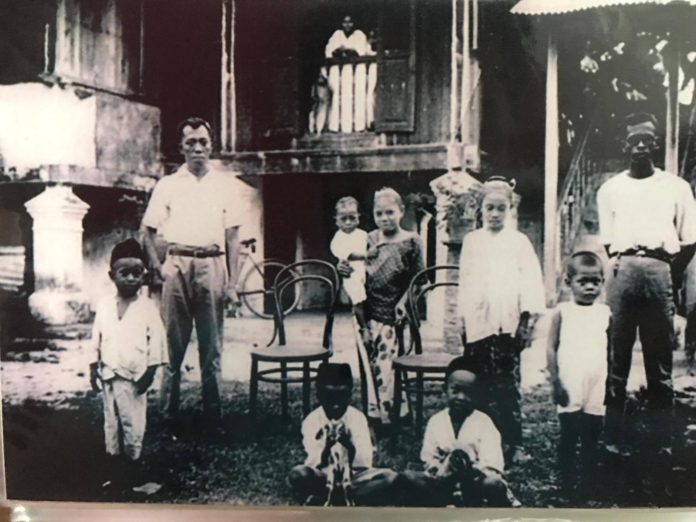
For most of the last century, however, the area was home to Masjid Kampong Hajijah – a modest mosque serving the 300 residents of Kampong Hajijah, a village that stood by the sea before land reclamation extended the shoreline outwards.
Dating back to 1900, the mosque and the village surrounding it were torn down to make way for newer developments in the mid-1980s.
Independent heritage researcher Sarafian Salleh told CNA that Masjid Kampong Hajijah may have been just one of as many as 120 mosques that dotted the island in the mid-20th century, prior to the establishment of the Mosque Building Fund in 1975.
The mosque and the village were named for Madam Hajijah Cemat, a wealthy Malay landowner who founded the village and mosque, as well as donated the land for nearby Masjid Kampung Siglap, which still stands today.
Residents of Kampong Hajijah circa 1986, before the village was redeveloped. (Photo: Sarafian Salleh)
His experience documenting Masjid Kampong Hajijah in 1986, when he was just 16, sparked Mr Sarafian’s passion for heritage photography.
This passion slowly faded after he furthered his studies, got married and had children, he noted.
“The photos that I had amassed over the years were eventually forgotten and lost,” he said.
EVERY MOSQUE HAS A STORY TO TELL
His passion was ignited once again in 2007, when he dug out old photos and started sharing them on social media.
“My postings of old photos of Kampong Hajijah caught the attention of Ms Hanizah Abdul Ghani who was the great-granddaughter of Mdm Hajijah, the lady who built Masjid Hajijah in 1900,” he said.
Ms Hanizah shared stories about her great-grandmother, and this spurred Mr Sarafian to “think that every mosque has a great story to tell”, he added.
The 50-year-old – a mechanical engineer by trade, who also volunteers as a tour guide with non-profit organisation My Community – said the number of such “lost mosques” in Singapore is not well-documented.
Heritage researcher and volunteer tour guide Sarafian Salleh (Photo: Zaili Mohama Din)
However, his own research – together with that of his friend Mr Zaini Kassim – has helped plug this gap, locating and cataloging such forgotten mosques, working with information from archives as well as contributions from friends.
“Mr Zaini Kassim has been consolidating the names of existing and lost mosque in Singapore and we have consistently updated the information on social media,” Mr Sarafian said.
Mr Zaini, 56, said his own work documenting mosques began in the 1980s, when he realised such “kampong mosques” were slowly disappearing.
Mr Zaini noted that one such kampong mosque, Masjid Kampong Holland, closed in 2014 after having been around since the 1950s – first as a surau (small prayer hall) before being upgraded to a 500-congregant mosque in 1975.
Only a handful of kampong mosques remain here, on temporary occupation licences issued by the Singapore Land Authority – such as Masjid Petempatan Melayu Sembawang, nestled away in a forested area on the outskirts of Sembawang, a stone’s throw away from the Johor Straits.
Another is the 68-year-old Masjid Hang Jebat in Queenstown, which sits at the end of a row of colonial era terraced houses on Jalan Hang Jebat, next to where the KTM (Malayan Railway) train tracks ran before services ended nine years ago.
Mr Sarafian and Mr Zaini are not alone.
A Facebook group, called Lost Mosques of Singapore, has about 2,400 members, with almost daily posts on long-gone mosques – such as the Paya Goyang and Angullia Park mosques off Orchard Road, and Masjid Aminah in Geylang, where a block of Housing Board flats now stands.
The foundation of the two men’s research goes back to a book from the early 1980s entitled Masjid-Masjid di Singapore 1982 (Mosques in Singapore 1982), a slim volume by Syed Abu Bakar Alsagoff which catalogued the mosques in the country at the time.
Despite the “exhaustive documentation” found in the book, the two men, as well as others online, have been able to identify mosques not recorded.
Mr Sarafian hopes to be able to put together a book, documenting the mosques as well as the stories from villagers who used to live around them.
For his part, Mr Zaini hopes more of such books will be written to create a record of mosques and villages that are now forgotten.
With Islam having come to the region centuries ago, Mr Sarafian said mosques here likely predated Masjid Omar Kampong Melaka – built in 1820 by Arab philanthropist Syed Omar Aljunied – which is often acknowledged as the oldest mosque in Singapore, though information about these early mosques have been lost to history.
PRESERVING SINGAPORE’S HISTORY
Mosques of the past were generally found along Singapore’s coastal areas and riverine networks, Mr Sarafian said.
There were mosques found further inland, but these were fewer than those found along coastal areas, he added.
These included Masjid Haji Osman in Seranggong Kechil (now Serangoon), and Masjid Wak Sumang at Kampong Punggol (now Punggol Point), he said, noting various sources point to Kampong Punggol as one of the earliest settlements prior to the arrival of Stamford Raffles.
Named for the Javanese warrior said to have founded Kampong Punggol, Masjid Wak Sumang was demolished in 1995 to make way for developments in the area, though it lives on in the name of an LRT station as well as several roads in the Punggol area.
Masjid Wak Sumang at Punggol Point, circa 1985. (Photo: Sarafian Salleh)
“These mosques were generally constructed in the middle of a Muslim community that lived and traded in the respective district and serve as a place to pray, kampong meetings and teachings of religious knowledge,” said Mr Sarafian.
They often lacked the minarets and domes associated with mosques, he said, and instead the architecture of these houses of worship were designed to adapt to Southeast Asia’s tropical climate.
“These mosques were built on stilts, which allow cross-ventilating breeze beneath the dwelling to cool the space whilst mitigating the effects of the occasional flood,” he noted.
“The roofs were steeply pitched to facilitate storm water and excessively overhung to offer shade and reduce glare from the sun.”
Mr Sarafian added that these mosques were often sited together with community wells, where villagers could draw water to perform wudhu – the Muslim ritual washing before prayer.
A communal well at Masjid Kampong Hajijah. (Photo: Sarafian Salleh)
Older mosques also had percussion instruments called the bedok and the kentong, which were sounded to call residents for the five daily prayers.
These mosques were smaller and often served no more than 300 people each, he said, compared with up to 5,000 worshippers today as with Masjid Darul Ghufran in Tampines.
While newer mosques are generally given Arab names, Mr Sarafian said older mosques had “Malay names”, associated with known personalities or historical locations.
Documenting these forgotten mosques is an important process in preserving Singapore’s history, he said.
“Keeping the original names of the mosques helps to retain the history of the folks living there who were the building blocks of the nation.”
SINGAPORE: Gardens by the Bay horticulturist Irene Chong, 32, crouched as she snipped off stalk after stalk of cat’s whiskers plant. Then she stood to throw the stalks into a big white bag beside. Then she crouched again.
With the sun blazing overhead and sweat trickling down her forehead, Irene, a gardens operations manager, might as well have been doing burpees.
Irene wasn’t exercising but pruning a patch of plants adorning the giant floral clock in the gardens. The key is to keep the plants to a short and uniform height, so they look easy on the eye and don’t block what’s behind.
To achieve this, workers first go in with a large pair of shears to level off tall stalks. Then they step back to check the height, before going in again for further trimming.
After that’s done, they use smaller cutters to snip off stalks just above the leaf nodes, which is where the leaves grow out. This is the proper way to prune plants and encourage new growth.
Earlier this month, CNA got the opportunity to work alongside staff who maintain Gardens by the Bay to see what goes into keeping such popular attractions in prime condition despite the drop in visitor numbers during the “circuit breaker”.
This involved clearing fallen leaves, shearing overgrown shrubs and pruning plants.
The latter task is mundane, repetitive and done in sweltering heat, but Irene didn’t seem to mind. “It can be quite therapeutic,” she told me.
Barely 10 minutes into the pruning, I threw my tools aside after what I thought was a job well done. I had amassed a fistful of pentas plant stalks, and so I patted myself on my wet back.
The truth is I was thirsty and exhausted, and the blue surgical mask I had on didn’t help. On a normal day, Irene said this regular-sized patch would have taken two workers about two hours to finish.
But these are not normal days at the gardens.
In Singapore, the COVID-19 pandemic has forced most people to work from home. At the park, which is not possible to maintain from home, authorities have capped the number of workers on the ground each day.
Gardens operations senior director Andy Kwek said this means his 39-strong team, half made up of foreign workers, has been reduced to about 11 people.
“It is not something that we can avoid,” the 49-year-old said. “Given that all of them have passion for the plants, they’re very willing to step up and do some of the more laborious things that they don’t typically do as horticulturists.”
Andy said maintenance has to continue even with fewer daily visitors – 2,000 down from 14,000 before the circuit breaker – to “keep things in order” and uphold the park’s image.
So staff like Irene, whose primary roles include deciding how to landscape the gardens and checking that flowers and trees are neat and healthy, are themselves getting down and dirty.
“I think we enjoy it,” she said, when I asked about the additional work. “We work as a team, you see. We also learn to know each other better.
“We didn’t work together like this; we have individual areas to take care of. So in a way, you have to find fun in what you’re doing. Definitely, it’s very exhausting.”
Andy, towel draped around his neck, teased her and drew laughter. “Wow, can sign extra,” he said, referring to punishing someone with extra duties.
CLEARING LEAVES
The boss sat in the shade after a particularly taxing shift clearing leaves from a main visitor walkway, one of the “high-touch points” in the park. This involves using a blower to first gather leaves in a long pile, then a motorised cart to pick them up.
He showed me how to start the blower up: Flick a switch and tug at a string three times. The 6kg handheld device sputtered and groaned into life. It was probably the closest I would get to operating a chainsaw.
The leaf blower is not exactly the lightest of tools. (Photo: Jeremy Long)
The blower was light enough to be carried with one hand, but heavy enough to be tricky to manoeuvre. I wandered among the Supertrees with this bad boy in hand, searching for some leaves to shove around.
The thing is, the blower ejects a faint gust even while idle, so you could inadvertently blow leaves away while walking, making things messier. The correct method is to walk with the nozzle pointed upwards. Therein lies the difficulty.
The satisfaction of pushing the trigger, hearing the loud roar and seeing the leaves scurry was not enough to soothe my aching biceps. The sun wasn’t getting cooler either. I used both hands to swing the blower, as the leaves went places I did not want them to.
Grace and Irene doing some leaf blowing. (Photo: Jeremy Long)
Thankfully it was soon time to pick them up using the motorised cart. It is essentially a single-seat buggy fitted with a huge vacuum, not unlike the mechanical sweepers you see on the roads.
Inside there are buttons to control the nozzle elevation and suction strength. Andy advised me to always go full power, with the nozzle just high enough to suck up the leaves.
While the cart was easy to drive, the picking up was less than straightforward. I drove over the long lines of leaves expecting to leave a clean trail, but what I saw in the rear view mirror were haphazard leftovers on either side.
Driving among the Supertrees in the litter vacuum. (Photo: Jeremy Long)
Andy assured me that I didn’t mess up. But the wise thing to do, he said, is to mentally divide the piles in half and go over each section. If you drive through the middle from the start, the engine exhaust could scatter the leaves.
I made a U-turn to try his strategy and got better results, but the cart still didn’t pick everything up. The suction just didn’t seem strong enough. Andy said workers usually use a rake to sweep up what’s left. It’s faster that way.
DEALING WITH PUBLIC FEEDBACK
Regardless of speed, plant pruning and leaf clearing are daily tasks. Some spots see more shedding, and thus require clearing twice a day. With plants growing at different rates in different nooks of the 0.54-sq km park, there is no fixed timetable.
Andy said his colleagues would walk in their designated areas each morning to see what needs trimming and attending to. They would also work on feedback from visitors.
“Sometimes they will say the plants are overgrown and are covering some of the nice scenery,” Irene said. Added Andy: “During two weeks of hot weather, some complained about the pond being dry.”
Weeding along a track popular with joggers. (Photo: Jeremy Long)
While the staff admitted this scrutiny is one of the challenges of the job, they don’t shy away from putting in effort to ensure the park lives up to expectations.
“We also want to be prepared for after the circuit breaker, we want to have the gardens ready,” said fellow horticulturist and gardens operations assistant manager Grace Yang, 30. “I don’t know when, but eventually visitors will come back.”
GAINING AN APPRECIATION
This drive was something I was interested to find out more about. How does someone fall in love with gardening?
Both Irene and Grace have diplomas in horticulture. They studied plant structures, how plants grow and even their scientific names. For Irene, the hobby runs deeper.
“It’s in the family,” she said, adding that her father loves gardening and being in nature. In his free time, he would go out to the Sungei Buloh wetland reserve. Now that he’s semi-retired, he grows orchids at home.
“He’s actually very good at it,” she added with a laugh. “Out of his three children, only I inherited his interest.”
Irene pulling out some weeds. (Photo: Jeremy Long)
Indeed, it takes a certain level of interest and skill to do their jobs.
Landscaping, for instance, is not just about deciding what plants and flowers complement the park’s aesthetics. It’s also about knowing whether the plant thrives in heat, how quickly it grows and the type of soil and fertiliser it needs.
I left Gardens by the Bay with a new appreciation for the hard work that goes in to keep it nice and tidy. It’s one of those things where you really only notice the end product.
What delights staff the most is seeing the fruits – or flowers – of their labour, often in vibrant hues of pink and white.
“If the landscaping turns out to be nice, and people actually enjoy it and take photos, then you also feel very satisfied,” Irene said.
Added Grace: “The trees we have in the gardens are a bit special, they are not your typical roadside trees. So when they bloom or fruit in surprise, we are very happy.”
LIVERPOOL: The global lockdown has forced individuals and families to shelter at home, only going out for food, exercise, and to catch others breaking lockdown.
Those who guai-guai (Chinese slang for obediently) stay indoors have developed multiple strategies to fill their time: Baking (if you’re lucky enough to find flour, anywhere in the world), television, computer gaming, dislocating your hip while trying to emulate some Tik-Tok dance, and of course, clearing out cupboards of old stuff.
Social media is awash with individuals posting old photographs and other memorabilia from their past.
We do so because we probably need to justify to our mom/significant other why we have to keep it for another 20 years and because it reminds us of a simpler, rose-tinted, romanticised time.
For Gen X-ers like me, that was a time before Facebook, Twitter and the internet. A time when making a silly mistake or saying the wrong thing would not be publicised and channeled to everyone and their grandmother. We were idiots, but we could be idiots in relative privacy.
Not so much anymore: A combination of smartphone cameras, mobile broadband and social media has meant that anyone with these things can become an online vigilante.
See something you don’t like? Photograph and post it, reap the likes, and hope the same thing does not happen to you.
PUBLIC SHAMING IN A TIME OF COVID-19
The act of public shaming, defined here as calling out an individual, group or institution for violating a norm or committing some kind of wrong, is nothing new. Individuals do it, groups do it, even the state does it.
In Singapore, the use of Correctional Work Orders for litterers, made to wear high-visibility vests, clean public areas and sometimes photographed by the media, is a highly performative exercise in inculcating and enforcing social norms.
The number of CWOs issued to offenders rose by 30 per cent in 2018. (Photo: National Environment Agency)
Public shaming is also highly apparent on an everyday basis, whether that is photographing someone not giving up their seat for another on the train, or filming (and posting) poor driving etiquette, the violation (not following society’s “rules”) and the intended effect (humiliate the perpetrator) are often the same.
It is not surprising that public shaming in lockdown or circuit breaker mode is on the rise. Some may point to increased stress levels (we’re all a little edgy) but I would propose it is also because we are actively negotiating new social norms, which in themselves are fluid and in flux, thanks to an evolving virus.
These shifting norms means that what one person thinks is or might be acceptable may be construed as wholly unacceptable by another.
If we simply consider the act of wearing face masks, even face shields, we can see how much the “rules” have changed, sometimes over a period of days.
TURBOCHARGING THE SHAME BY GOING ONLINE
If public shaming was “publicised” in pre-Internet days, such publicity is now turbocharged through social media and algorithms. Through the use of images and narratives, individuals and groups are transformed into single-issue topics. Oftentimes, all we know about a perpetrator is their supposed act of deviance.
In sociology, these acts of online shaming can be compared to what Simon Garfinkel would call a “degradation ceremony” – a ritual in which an individual has their social identity or status lowered in a particular group or society’s hierarchy.
To cite a violation of a social norm is thus to punish the perpetrator for stepping outside the boundaries of acceptability. To do this online is to accentuate that transgression to as many individuals as possible, so as to magnify “sin and shame”.
The woman is seen arguing with people in videos circulating online.
For the more cynical among us, we might speculate that the reason for so much shaming, both online and offline, is in part a way of establishing social dominance over another party, by becoming the arbitrator of society’s rules.
If you cannot beat them, and you cannot join them, then shame them or even scold them (but that’s a topic for another commentary).
ONLINE SHAMING IS NOT HARMLESS
Scholars have long pointed out that the online realm offers various affordances that encourage poor behaviour – anonymity, physical distance and lack of physical retribution allow individuals to troll and dox without fear of immediate consequences to themselves.
The problem is further compounded when one takes “online comments” into consideration. An individual does not even have to cite an infraction to engage in online shaming, they simply need to find a story or incident someone else has posted and join what is colloquially called “the Internet lynch mob”.
When this happens, any initial intentions of regulating social norms is now replaced by a desire to do harm.
Rather than helping to correct an individual’s behaviour (assuming there was even behaviour that had to be corrected), the focus shifts to a model of a swift reckoning and maximum social harm – to make the individual lose their job, get deported, or even face jail time.
Inevitably, such harm ignores the perceived infraction and focusses on traits unrelated to the initial incident – ethnicity, nationality and gender are common targets because such traits are easy and convenient ways for individuals to discriminate and marginalise.
These actions are what we call “othering” – the social construction of an identity that is “different” from the majority, and thus acts as a justification for physical and symbolic violence. We have seen such actions around the world, targeted at both individuals and groups.
At its most extreme, othering leads to de-humanisation, where an individual or group is no longer seen as human, and thus can be treated as an object to be discarded and destroyed.
THINK TWICE BEFORE YOU RAGE
It is very tempting to call out bad behaviour online – tapping “share” on your mobile device followed by an angry-face emoticon appears to do nothing more than act as an outlet for your anger and frustration at things you cannot control.
File photo of a mobile phone user. (Photo: Xabryna Kek)
Likewise, adding fuel to an Internet fire with angry comments becomes a way for us to belong to the cool group, the “right” side of history. That is why many tabloid newspapers write headlines and stories the way they do, to stir up emotions and comments, all in the name of online engagement numbers.
But all actions have consequences, even if those consequences appear to be miles away from us. We need to see that society (both online and offline) is not some structure that we inhabit and have no control over.
What we do builds society, for better or worse. If we allow raging and shaming to be the default actions in our personal, everyday lives, then we would have created a world that knows only rage and shame.
SINGAPORE: We are now forced online to learn, work, live and stay connected.
Yet due to the lack of internet connectivity, requisite devices or digital literacy, there are many who are cut-off from such access.
They are not digital natives nor immigrants, they are digital outcasts.
COVID-19 has exposed and deepened the digital divide in our society. Given the speed at which most of society is moving ahead, closing this gnawing digital divide must be an urgent priority if we are to have a Smart Nation that is also united.
I will address three questions: How deep is the digital divide? What factors contribute to the divide? And what solutions can we consider?
HOW DEEP IS THE DIGITAL DIVIDE IN SINGAPORE?
The latest Household Expenditure Survey 2017/2018 tells us that only 81 per cent of resident households have a personal computer, and only 87 per cent have internet access.
This suggests that at least one in 10 households in Singapore are not plugged into our digital world.
Only 45 per cent of households residing in 1- and 2-room HDB flats have internet access, compared to 96 per cent of households living in private condominiums and other apartments.
Only 31 per cent of the 1-2 room HDB households have a personal computer, in contrast with 95 per cent of households in private condominiums and other apartments.
These numbers mean that some of us are almost guaranteed to have internet connectivity and a personal computer, while more than 5 in 10 households living in 1-and 2-room HDB flats have no internet access or personal computer.
This is also reflected in the ground realities exposed by home-based learning (HBL).
The Ministry of Education (MOE) has loaned out an estimated 20,000 devices, including laptops and tablets.
A few community groups I personally know and supported, including Engineering Good, have given out more than 2,600 laptops in total. They have also provided Wi-Fi dongles or SIM cards to several families.
The bleak picture does not end at infrastructure. Stories from the ground reveal significant struggle in terms of digital literacy and skills, particularly among low-income households, the differently-abled, and seniors.
ReadAble, a community organisation supporting families in rental flat communities, shared the many struggles of parents using laptops donated – whether with Zoom or even in-app functions, resulting in their children’s education being compromised.
An intergenerational IT bootcamp, March 2015. (Photo: CNA)
According to Society Staples, a social enterprise working with the persons with disabilities (PWD) and the Disabled Persons Association, many PWDs have difficulty working from home due to a lack of equipment and Internet access.
Some do not have the skills-set to take their work online especially when their previous work was done face-to-face.
This can mean loss of income and opportunities to retrain or learn new skills.
They also miss out on maintaining or even expanding connections with family and friends, which increases mental stress and strains existing coping mechanisms, especially for those with psycho-social disabilities.
Cassia Resettlement Team, a community organisation, has had to support many low-income individuals, particularly seniors, who struggle with the digitisation of government services.
For example, SingPass is required to access many such services including checking Central Provident Fund (CPF) accounts, which are regularly required to apply for welfare schemes, checking medical appointments or medical tests results and prescriptions.
In 2006, the Government’s iN2015 Masterplan pledged that every household with a school-going child would own a personal computer by 2015.
I remember this clearly as I was running my own education technology company then and was very energised by this vision of a digital future which my company also participated in.
Sadly, despite this iN2015 ambition, our efforts to become a Smart Nation since 2014 and the Digital Readiness Blueprint released in 2018, we continue to struggle with a deep digital divide in Singapore.
STRUCTURAL ISSUES PERPETUATING THE DIGITAL DIVIDE
One of the structural issues that stand out as perpetuating the digital divide is the gaps in government intervention.
Volunteers from ReadAble teaching beneficiaries prior to the ‘circuit breaker’ measures. (Photo: ReadAble)
Market forces are the key driver of this divide. Although internet connectivity and personal computers are necessities in today’s world, they are still priced beyond the reach of the low-income in our society.
This disparity in turn perpetuates further inequality.
The Government intervened by introducing the NEU-PC Plus Scheme in 2006, offering students and PWDs from low-income households a new personal computer bundled with three years of free internet connectivity.
While it has benefitted more than 40,000 households, the scheme falls short in several ways.
First, it only permitted one laptop per eligible household regardless of household size, increasing to two only last month due to HBL.
Second, the application process is complex and bureaucratic.
Third, it is limited in scope, excluding pre-school, home-schooled and university students.
Fourth, it disadvantages against PWDs, who only receive a 50 per cent subsidy as compared to 75 per cent for students.
Fifth, under the Home Access scheme, adults have no option to apply for a personal computer, only a tablet or smartphone.the
I commend MOE and the Infocomm Media Development Authority (IMDA) for working hard to resolve digital access issues during this circuit breaker period.
IMDA enhanced the NEU-PC scheme. MOE worked with schools to loan out personal learning devices and kept schools open for those who struggled with digital access.
But gaps persist. The device loan programme came with conditions and liability provisions.
Community organisation 6th Sense shared that there were families who were too scared to bring those devices home as they would not be able to afford to pay the schools if the devices got lost or broken.
File photo of a laptop showing online tools used by schools for home-based learning.
Further, the families were rightly worried about going to school and risking COVID-19 infection. One teenage student I know developed severe anxiety when she had to go to school every day before HBL began.
Why should any child be required to go to school to use IT facilities at the height of a pandemic?
Given these gaps, community organisations found that it made more sense to give every family good internet connection and every child a personal computer.
The Minister for Education has said that, by 2024, every Secondary 1 student will have a tablet, a laptop, or a chromebook.
I propose a broader Digital Adequacy Framework, which I will elaborate later.
The Ministry of Communications and Information (MCI) has boldly committed in its Digital Readiness Blueprint that all Singaporeans will be digitally ready, no matter their income or current IT abilities.
I would like to offer some suggestions from the ground regarding enhancements to existing schemes and structural changes.
The NEU-PC Plus Scheme’s application process could be further streamlined, for instance, by allowing beneficiaries of the various financial assistance schemes to automatically qualify.
Can the Ministry of Social and Family Development (MSF) and MOE work together to ensure that every family with a child on MOE’s Financial Assistance Scheme (FAS), or every family supported by ComCare who has a child in school, automatically gains adequate access to a fully subsidised personal computer?
IT subsidy schemes should include device replacement and customer care.
Adults supported under ComCare or residing in HDB rental flats should also have the option of receiving a partially or fully subsidised digital device, depending on their income.
The scheme should also be broadened immediately to permit applications to benefit all children whether preschool, home-schooled or university students, and adults from low-income families.
PWDs must be better supported given the changing nature of work post COVID-19.
To reduce the time and resources required to deliver digital devices to families, we may need a Digital Empowerment Voucher (DEV) scheme that combines aspects of the existing Public Transport Voucher and Innovation & Capability Voucher schemes.
The vouchers could be stipulated for use only with local SMEs which would directly assist our local enterprises in these trying times.
To realise the Digital Readiness commitment to provide digital connectivity and devices for those with limited resources adequately, a Digital Adequacy Framework should be considered.
File photo: Students using tablet computers. (Photo: AFP/Damien Meyer)
Because it’s not enough to just be digitally ready or included, this digital participation must adequately support their learning, work and social connections meaningfully.
Under this Framework, tablets must be decoupled from the definition of “personal computer” across the board for learning and work purposes.
We should also view the amount of hardware deemed adequate for each household to be based on the needs of each member in it.
For instance, should every student in Primary 5 and above not have their own laptop, considering the MOE’s digital literacy plans for upper primary students?
The Framework should also fold internet speed, hardware functionality and digital literacy into its analysis to enable meaningful digital participation.
Within this Framework, universal internet access should be provided as a public utility especially for low income households.
Can IMDA and HDB work with commercial providers and town councils to ensure that all low-income households have adequate internet connection?
For instance, can Wireless@SG be expanded to cover all rental flats in Singapore, and enhanced for sufficient speed much like the ubiquitous Wi-Fi access available in shopping malls?
Finally, the Digital Adequacy Framework should underpin the Digital Readiness Blueprint.
Much public policy has been characterised by efficiency, effectiveness and economy, with emphasis on outcome measures that can be determined more by what can be easily measured than by what might be most helpful to measure.
Meaningful statistics and metrics across all vulnerable groups should be gathered regularly to inform policy design and updates.
In the UK, for example, the Office for National Statistics studies the digital divide across locations, gender, age, income, disability, ethnic groups/language, education and other social and economic determinants of digital inequality.
COVID-19 has spotlighted our deep digital divide and the digital outcasts in our midst.
Our clarion call for SGUnited must surely be a Singapore that is digitally resilient and united.
Download our app or subscribe to our Telegram channel for the latest updates on the coronavirus outbreak: https://cna.asia/telegram
Anthea Ong is a Nominated Member of Parliament, a social entrepreneur (founder of Hush TeaBar, A Good Space, WorkWell Leaders Workgroup), leadership coach and author of 50 Shades of Love. www.antheaong.com.
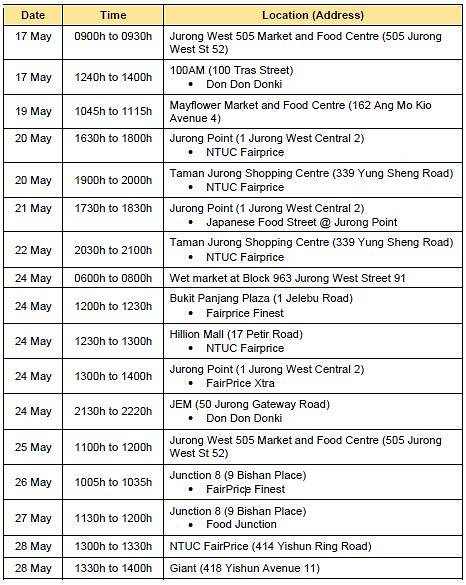
SINGAPORE:Two Don Don Donki outlets, three supermarkets, a food court, and a market were on Saturday (May 30) added to a list of public places visited by COVID-19 cases during their infectious period.
As part of its daily update, the Ministry of Health (MOH) has been providing information on the places COVID-19 cases had gone to while infectious.
Among the new places added to the list on Saturday were the Don Don Donki outlets at 100AM mall and JEM shopping centre.
Two places at Junction 8 shopping centre – the FairPrice Finest store and Food Junction food court – were added to the list on Saturday as well.
MOH also included the NTUC FairPrice at 414 Yishun Ring Road and the Giant supermarket at Yishun Avenue 11 to the list. The Mayflower Market and Food Centre at 162 Ang Mo Kio Avenue 4 was also added on Saturday.
The updated list is as follows:
(Table: Ministry of Health)
MOH said on Monday – the first time it released such a list – that these were public places visited by COVID-19 cases for more than 30 minutes while they were infectious.
“As a precautionary measure, persons who had been at these locations during the specified timings should monitor their health closely for 14 days from their date of visit,” MOH said.
“They should see a doctor promptly if they develop symptoms of acute respiratory infection (such as cough, sore throat and runny nose), as well as fever and loss of taste or smell, and inform the doctor of their exposure history.”
Those identified as close contacts of confirmed cases would already have been notified by MOH.
The list will be updated on a rolling 14-day basis, which covers one incubation period, and as epidemiological investigations progress, said MOH.
The cases’ residences, workplaces, healthcare facilities visited and public transport activities are excluded from the list.
Singapore reported 506 COVID-19 cases as of noon on Saturday, bringing the total number of cases in the country to 34,366.
Five new community cases were reported on Saturday. One of the new community cases is a Singaporean, one is a permanent resident, two are work permit holders, and the remaining one is a work pass holder.
The Ministry of Health has confirmed 506 new coronavirus cases in Singapore today (May 30).
Out of these, there are five community cases while the remaining cases come from Work Permit holders living in dormitories.
Of the five community cases, two are Singaporeans/Permanent Residents. One is a non-teaching preschool staff who was picked up as a result of proactive screening to prepare for the phased reopening of preschools. A serological test will be conducted to determine if this was a past or current infection.
Of the three other community cases, one is a Work Pass holder and two are Work Permit holders. According to MOH, one of them tested positive right before he was due to start work on a plumbing project at a preschool.
Overall, the number of new cases in the community has decreased from an average of seven cases per day in the week before to an average of 4 per day in the past week. The number of unlinked cases in the community has remained stable at an average of two per day in the past two weeks.