SINGAPORE: In the span of about a month, they almost went from honeymoon to homeless.
With the prospect of no roof over their heads and with only S$20 to hand, Sri Lankan couple Brahim Casseem and Dilka Dilukshi were bracing themselves to sleep rough.
“That was a difficult situation, because we didn’t have any other way,” said Mr Casseem, 30.”We didn’t even know who was going to help us. So we didn’t have any choice, we (had) chosen to sleep on the road.”
But it wasn’t supposed to be this.
The couple had arrived on Mar 11 in Singapore for a two week honeymoon. Back then, there was a total of fewer than 200 COVID-19 cases in Singapore.
“We chose Singapore because we didn’t need the tourist visa to come here,” said Mr Casseem. “We decided to go to Indonesia but (then) we thought that Singapore would be better. That’s why we came here.”
The couple had heard about the coronavirus spreading in China, but that was about the extent of their knowledge of COVID-19, said Mr Casseem.
“We knew about coronavirus, but we didn’t think it would get this bad. In Sri Lanka there was no news about the virus then, we heard the news only about one Chinese woman in Sri Lanka.”
The couple had saved up a considerable amount of money for the two week trip – the return tickets for a flight had cost about 80,000 Sri Lankan rupees in total (S$611) and they’d also brought along about S$1000 for further expenses.
Upon arriving in Singapore, Mr Casseem and Ms Dilukshi realised that things were not as rosy as they’d thought. They were advised by the person they were staying with to limit their travel around the island given the COVID-19 situation.
“We didn’t know anyone … because he is a Sri Lankan, so what he said, we did,” said Brahim. “He said don’t go anywhere far … don’t go out on Saturday and Sunday.”
They heeded that advice and limited their activities. “We felt bad, but more than that we thought about staying without getting infected by the virus … We felt disappointed but what could we do? We needed our lives, more than (anything).”
Towards the end of their original stay in Singapore, the couple received the news that Sri Lanka had implemented a lockdown. Their flight back home scheduled for a few days later had been cancelled.
But Mr Casseem and Ms Dilukshi maintained a positive outlook – they still had some spare cash which could help support them. They had also another 50,000 (S$380) in Sri Lankan rupees in savings to supplement this.
Said Brahim: “We thought within one month we would be able to leave … Within one month, it would be okay in Sri Lanka, the airports would be open, all would be working and we can go.”
But as the days ticked by, the couple realised they might be stuck in Singapore for longer than originally expected. They sent out a distress call for help to various official Sri Lankan entities, hoping to receive some help.
And back home, the couple’s family grew concerned but were limited in how they could help. “My father had stopped work (due to the lockdown), for more than one month, he cannot do anything,” explained Mr Casseem, who works as a musician back in Sri Lanka.
‘IT WAS A MIRACLE’
Alerted to Mr Casseem and Ms Dilukshi’s situation, local charity Project Providence stepped in.
The group, which calls itself a “temporary COVID-19 crisis response initiative” was set up in April to support the needs of migrant workers living outside dormitories and temporary construction quarters. They have also been helping other groups of foreigners in Singapore.
“Project Providence volunteers hold the fundamental belief that we should reach out to offer guests assistance in their time of need. This is core to our identity as Singaporeans and the kampung spirit that we have long cherished. It is also central to our beliefs as a faith-based relief organization; we are reminded to house, feed, clothe and love the strangers in our midst,” it said in response to queries from CNA.
Mr Brahim Casseem and Ms Dilka Dilukshi pose for a photograph on the MRT. (Photo: Brahim Casseem)
“We understood how scary it must be to be stranded in a foreign land without strong community support or adequate financial resources (having used up all savings over two months of stranding) during COVID-19. This applies to displaced guests, working or otherwise, here in Singapore.”
Project Providence was alerted to the couple’s case by charity organisation Homeless Hearts of Singapore and offered them an overnight stay with one of its partner hotels.
This was a godsend for Mr Casseem and Ms Dilukshi.
“We had to move to another place because we couldn’t pay the room rent any more,” said Mr Casseem. “He (the landlord) didn’t have to help but it was about humanity … There was no flight back home and (we thought) everybody understood that.”
The couple were put up for the night at a hotel in Little India and were supplied with meals by Project Providence.
“We kept our stuff and we were sitting down at the carpark. It was less than half an hour and they called and sent a vehicle,” said Mr Casseem. “For us, it was a miracle. Because we were planning to sleep on the road and there was someone calling us to help.”
The next day, they were moved to another hotel in Clarke Quay by the Sri Lankan High Commission.
The couple currently reside at a Hotel 81 in Geylang, as they wait for a flight back home. The funds for their tickets have been raised by members of the local Sri Lankan community and Ms Dilukshi’s friends back in Sri Lanka, said Mr Casseem.
They continue to keep in touch with members of Project Providence, whom Mr Casseem describes as “angels”. Just last week, they sent a cake for Ms Dilukshi for a belated 29th birthday celebration.
“It is priceless, I used to say that they are angels from the sky on earth,” he added. “They didn’t have to help us, we are nothing for them but they are doing. They are doing everything, more than we are thinking, more than expected.”
There have been a number of false dawns for the couple – earlier this month, they were told there would be a flight home, only for it to be cancelled on the day of departure.
“We planned everything. What would happen after we went to Sri Lanka, what we are doing, where we are going,” recalled Mr Casseem. (When we were told it was cancelled), all our hopes were finished. After that we didn’t hope much.”
After another cancelled flight put paid to their plans to return, the couple are now hoping to return home on a flight on Tuesday (Jun 2). But they are not getting carried away just yet.
“Only after we get into the flight and we land in Sri Lanka, then we will be happy,” said Mr Casseem. “I was telling my friend, I will step down from the flight and I will be rolling on the floor (in happiness)”
For now, all Mr Caseem and Ms Dilka can do is wait. Mr Casseem spends much of his time playing his guitar – which he calls an extension of himself, while Ms Dilka busies herself on a Facebook group on homemade cooking.
“Sometimes we get bored but there’s no choice,’ Mr Casseem said. “Sometimes we used to regret coming to Singapore at this situation. Maybe this is something which has to happen, we cant change it. There is no point getting worried about the past.”
When asked what he misses most about home, Mr Casseem has a one word answer.
SINGAPORE: After nearly two months, the circuit breaker that was imposed on Apr 7 to curb the COVID-19 outbreak is set to be eased on Tuesday (Jun 2).
But hold the champagne. Singapore residents who have been largely confined within their homes during this period will still have to wait before they can indulge in retail therapy, dine out or just watch a movie.
Instead, Jun 2 will mark the start of a three-phase gradual resumption of activities, with the initial phase allowing economic activities that “do not pose high risk of transmission” of the coronavirus to resume.
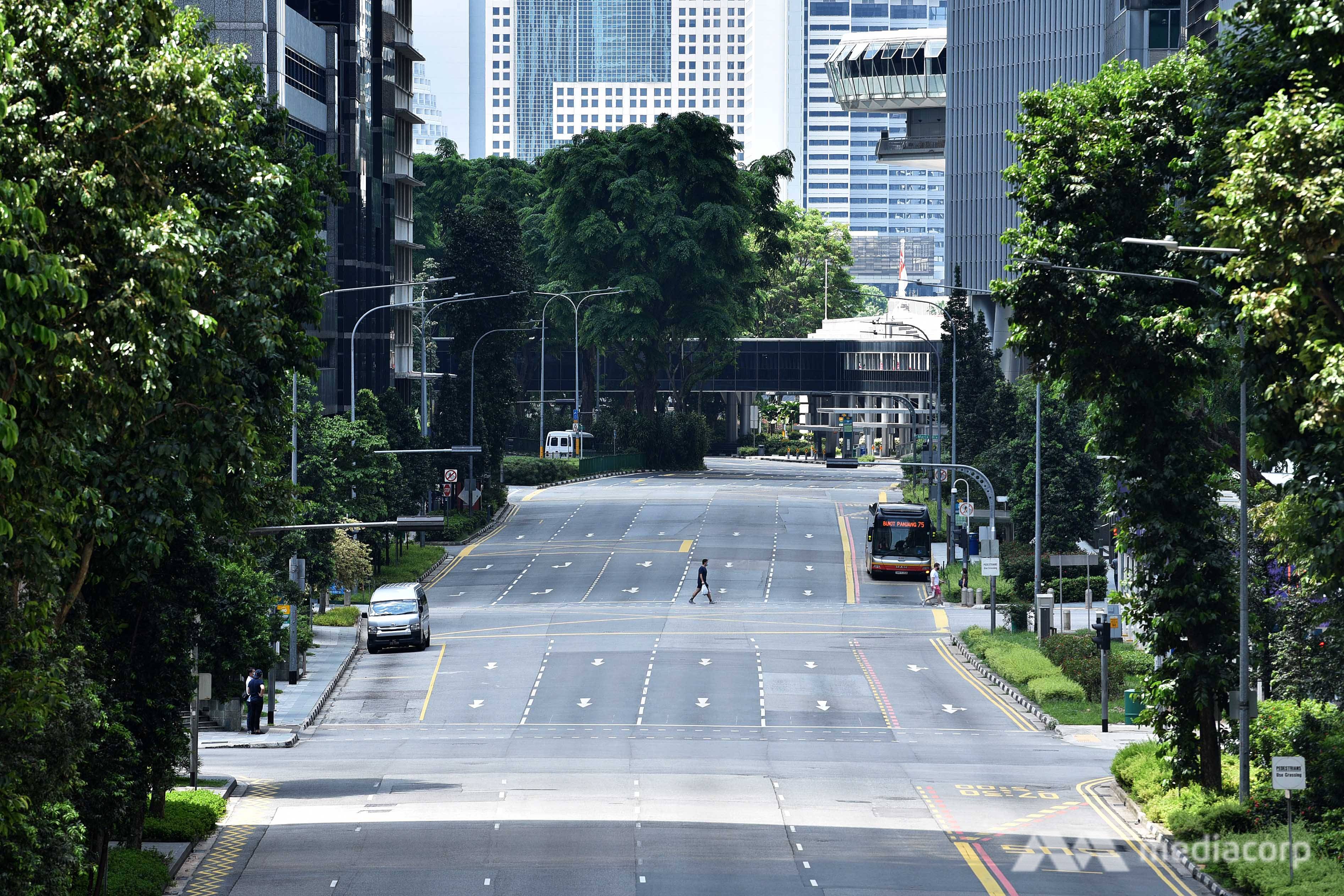
An almost deserted Shenton Way, which is situated in the Central Business District, usually sees heavy traffic during the day. (Photo: Jeremy Long)
These refer to those in manufacturing and production facilities, businesses with employees working in offices or selected services such as motor vehicle servicing, air-conditioner servicing and basic pet services.
Phase 2 will see the resumption of more activities such as social pursuits in small groups.
It will also see dining-in options at food-and-beverage establishments being allowed, as well as the reopening of retail outlets, gyms and fitness studios.
The chance to catch the next blockbuster or get a massage, however, will have to wait till Phase 3. Only then will the authorities allow for the reopening of businesses that involve significant prolonged close contact such as spas, and those that have a significant crowd management risk in an enclosed space, such as cinemas and nightclubs.
While it may take several months for Singapore to reach the last phase, it is possible that Phase 2 may be no more than a few weeks away.
Phase Two will see the resumption of more activities such as social pursuits in small groups. (Photo: TODAY/ Raj Nadarajan)
On Thursday, National Development Minister Lawrence Wong said that if infection rates remain low and stable, the further easing of circuit breaker measures under the second phase could take place before Jun 30.
While there is still some uncertainty as to when Singapore will progress to the later phases, businesses in the retail, entertainment and leisure sectors — such as chain stores, cinemas, gyms, massage and nail parlours — are already preparing to attract customers back by tweaking or changing their modus operandi.
RETAILERS: RISE OF THE OMNICHANNEL MODEL
Just as the pandemic has compelled white-collar companies to overcome their inertia and fully embrace the idea of telecommuting, the virus has similarly been the push that some retailers needed to go digital.
Mr Desmond Sim, head of Southeast Asia research at real estate firm CBRE, said despite the Government’s exhortations for businesses to go digital over the years, the rate of adoption had been rather slow.
An empty food hall at Orchard ION during the circuit breaker period. (Photo: Marcus Mark Ramos)
“COVID-19 has basically been the catalyst to kick (business owners) off the fence if they have still been sitting on it,” he said. “It’s changed the way people consume things, it’s changed the way people occupy space and it’s changed the way we communicate.”
Some merchants, such as Japanese casual wear retailer Uniqlo, said the transition has been a smooth one for them, considering that they already have an established digital presence.
Others are starting to beef up their online presence, such as the Popular bookstore chain, which recently took its offerings of books, stationery and gadgets online to LazMall, a curated selection of international and local brands by e-commerce platform Lazada.
A Popular spokesperson said that since the homegrown brand went on LazMall on May 14, it has been able to extend its retail presence and continue to “serve the community in providing essential needs in this trying time”.
Over at Robinsons department store, a spokesperson for the 162-year-old company said it will be ramping up its online shopping in light of COVID-19.
Still, the company has “always believed in the power of the personal touch”. “The brick-and-mortar store allows us to express premium service in a way that the digital store cannot,” said the spokesperson.
Commuters wear face masks on an MRT train in Singapore on Mar 18, 2020. (Photo: AFP/Roslan Rahman)
This was a sentiment shared by Mrs Helen Khoo, executive director of Wing Tai Retail.
“While many people are shopping online, shopping in stores provides better experience and touchpoints on practical needs,” said Mrs Khoo, whose firm counts brands such as Fox Kids & Baby, Dorothy Perkins and Topshop in its portfolio.
To gear up for Phase 2, she said the firm has taken appropriate steps to ensure a safe retail environment, which includes implementing appropriate safe-distancing measures and training store employees on health and safety protocols.
Mrs Khoo said that while physical stores have their benefits, she believes online and offline shopping can coexist and complement each other.
“An omnichannel model is the way to go to offer customers added value that makes their shopping experiences richer and more connected,” she said.
Wing Tai Retail will be allowing customers to reserve products online and book an appointment for collection when stores reopen to speed up the transaction.
“We are also looking at doing live streaming of new arrivals on our social media platforms to reach out to our customers,” said Mrs Khoo.
Public benches at Orchard Gateway mall marked for safe distancing on Thursday (March 26) (Photo: Jeremy Long)
Others, such as cosmetic chain Sephora, plan to push tools to allow customers to try their products virtually, even if they are physically present in the store.
A Sephora spokesperson said that as a precaution, it will not be allowing the testing of cosmetics or offering makeover services.
For patrons who are still not keen to enter the store but want to consult the chain’s beauty advisers, the spokesperson said it has launched a Virtual Consultation Service where customers can call in regarding any of their make-up, skincare, haircare or fragrance queries.
A Sephora spokesperson said that as a precaution, it will not be allowing the testing of cosmetics or offering makeover services. (Photo: TODAY/Raj Nadarajan)
Experts said that while Singaporeans want to return to the malls post-circuit breaker, it may not necessarily translate to foot traffic for retailers if they are not offering anything unique.
Mr Lucas Tok, a lecturer in retail at the Singapore Polytechnic, said the circuit breaker has altered the consumption habits of Singaporeans.
“If you have formed a habit of getting a certain product online (during the circuit breaker), you might just walk past a store selling it,” said Mr Tok. “The real test for them (businesses) is, how are you going to make consumers walk into your store?”
One possibility, said the experts, is to sell an experience.
According to Adobe’s Digital Trends 2020 Report, 40 per cent of businesses that were leading in customer experience exceeded their 2019 business goals compared with only 13 per cent who did not lead in that metric.
Citing Jo Malone as an example, CBRE’s Mr Sim said the perfume and scented candle brand allows customers to create a bespoke perfume fragrance.
“You can’t do that online because you need to smell it,” he said. “But once your mix is ready, you can purchase (your subsequent bottles) online.”
He suggested that physical shop fronts can be a way businesses can “hook” new customers by offering them something experiential, while the online stores allow for recurring income due to the convenience they afford.
Other changes afoot could see retailers scaling down their offline stores. Alternatively, retail space could be transformed for more “experiential and lifestyle offerings” such as digital kiosks to check on stock or for a chance to win vouchers, or even a snack bar with self-service coffee or tea offerings, said Mrs Khoo.
F&B, NIGHTLIFE: NEW EXPERIENCES
Like their retail counterparts, food and beverage (F&B) operators said that it will be a challenge to lure customers back, and even if they return, safe-distancing measures could effectively halve the outlets’ seating capacity.
For Mrs Christina Keilthy, who co-owns the Godmama Peranakan restaurant with its chef Fred Goh, that could mean pivoting towards more takeaways and deliveries.
Mrs Christina Keilthy, co-founder of Peranakan restaurant Godmama, has designed items on the menu with delivery in mind. (Photo: TODAY/Raj Nadarajan)
This is because when the Funan-based restaurant reopens, it is likely that its small dining-area — whose capacity would be reduced further by safe-distancing measures — will just not be able to seat enough diners to turn a sufficient profit.
Deliveries will similarly continue to play a key role for Mr Marcus Foo, the chief executive officer of PPP Coffee, as he believes footfall will not return to the same level as before.
“If you cut out the deliveries, our sales have dropped by almost 70 per cent,” he said.
Mr Foo’s company manages the popular Chye Seng Huat Hardware cafe along Tyrwhitt Road, and has a business arm selling wholesale coffee beans and related brewing equipment.
“If we are just going to be looking at a purely dining-in model, the low footfall is going to be very challenging,” he said. “So we definitely need to encourage more takeaways and deliveries from customers.”
Mr Marcus Foo’s company manages the popular Chye Seng Huat Hardware cafe along Tyrwhitt Road, and has a business arm selling wholesale coffee beans and related brewing equipment. (Photo: TODAY/Nuria Ling)
However, he has a plan which he hopes will draw customers back — by offering the ultimate coffee experience.
Mr Foo said that aside from the regular cafe menu, there will be a retail space where customers can replenish their pantries with all things caffeine-related such as coffee beans, drip bags and even chocolate to go with their coffee.
Having a retail space is something in the works for restaurant chain Tung Lok Group as well, said its chief executive officer Andrew Tjioe, who did not share the details.
While providing deliveries and takeaways may help to make up for the drop in dining-in capacity, it will not be enough, he reiterated.
Offering a retail space, for example, would not only “enhance customer experience” but also give the restaurant an opportunity to sell something, he added.
One thing is for sure, the business owners said they have no intention of raising their prices to recoup their losses or make up for the reduced seating capacity.
“Everyone’s pay cheque has been impacted in one way or another,” said Mrs Keilthy. “The last thing you want to do is to raise your prices.”
A jogger runs through an empty Clarke Quay in Singapore where most bars and restaurants are closed amid circuit breaker measures to stem the spread of COVID-19. (Marcus Mark Ramos)
While restaurants and cafes can rely on delivery services to make up for the lack of walk-in customers, the same cannot be said of those in the nightlife scene.
People patronise bars, pubs and clubs for the atmosphere, said Mr Dennis Foo, adviser to the Singapore Nightlife Business Association.
Part of this atmosphere relies on the presence of crowds, added Mr Dennis Foo, who is also director of special projects for the Singapore River One — an organisation that manages the Singapore River precinct.
“The more people there are, the better. That was the selling point,” he said, “But today, that has changed and the atmosphere just won’t be there because customers will only feel comfortable if there are less people around (in a confined space).”
To get around this, Mr Dennis Foo suggested that the authorities look into allowing the use of al fresco spaces within certain precincts.
This would mean that patrons would no longer have to be confined within an establishment. Instead, they could be outdoors while maintaining a safe distance from one another.
Workers of eateries along Arab street attempt to attract passing drivers to order take-away from their shop. Dining in restaurants is not allowed during the circuit breaker period to stem spread of COVID-19. (Photo: Marcus Mark Ramos)
“With fresh air and better circulation, it will mitigate the risks of getting infected and provide comfort to customers,” said Mr Dennis Foo, who has built and led some of Singapore’s most popular night spots such as the now-defunct St James Power Station.
For the suggestion to work, he said, the open area will have to be organised at a precinct or along a street where movement is controlled through gated entrances and exits. This could provide a real-time count of the number of people in the designated area, screen out anyone with a fever through thermal scanners and even make it easier for contact tracing, he said.
But Mr Dennis Foo added: “All these without some form of attraction will be fruitless as optimum patronage cannot be achieved without it.
“I suggest some form of light entertainment located centrally in the precinct or street so that it can be enjoyed by most if not all customers. A two to three-piece acoustic ensemble playing chill music will be ideal.”
Going to the movies, when this is allowed to resume under Phase 3, may not need to be a lonely affair.
At Singapore’s largest cinema chain Golden Village (GV), which operates 14 cinemas, seats will remain reconfigured in checkerboard style in pairs, similar to what was observed shortly before the circuit breaker kicked in.
The Projector has already launched its home delivery F&B service where customers are able to order their popcorn, chilli dogs and custom craft beers to recreate the Projector experience right at home. (Photo: TODAY/Ili Nadhirah Mansor)
However, these seating arrangements, which were in line with the Government’s social-distancing guidelines at the time, are subject to change and can only be confirmed at a later date, a GV spokesperson said.
‘If social gatherings are still not allowed by the time we reopen … only patrons from the same household will be allowed to sit together in pairs,” the spokesperson said. This would mean dating couples who are not living together would have to be kept apart in the cinema.
At Shaw Theatres, a similar arrangement of a two-seat gap was implemented prior to the circuit breaker taking effect. A spokesperson said the cinema operator is waiting on directions from the authorities.
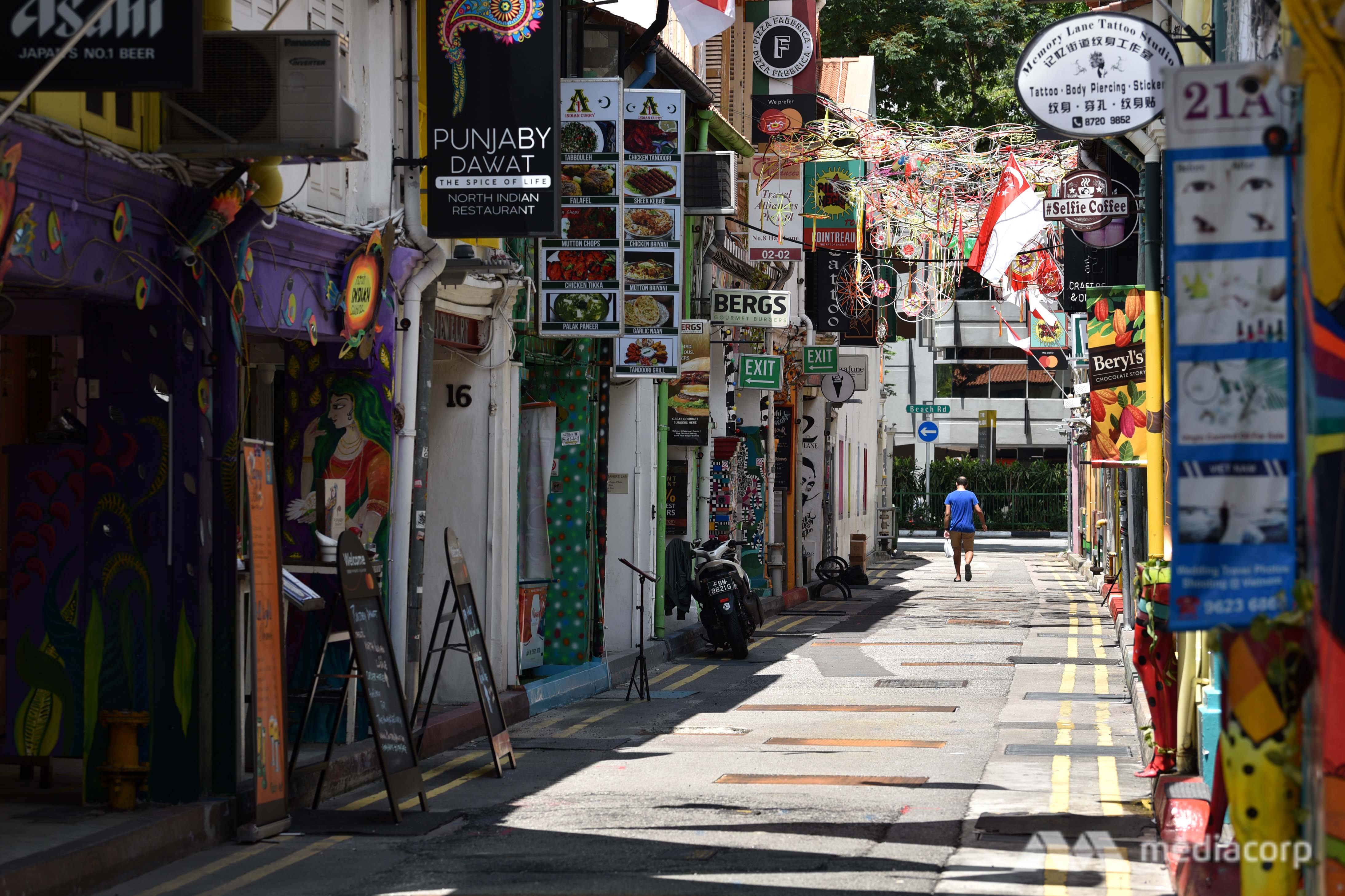
The popular tourist alley in Arab Street remain empty on Tuesday (May 5), amidst the circuit breaker period (Photo: Jeremy Long)
Over at The Projector, an independent cinema in Beach Road, the capacity in its cinema halls was slashed by 50 per cent pre-circuit breaker to abide by safe-distancing measures, but people still had the option of choosing where they wanted to sit.
“We’ll have a similar approach, depending on the prevailing social-distancing norms when we reopen. As possibly the only free-seating cinema in Singapore, we’ll have to scrutinise the spirit of the social-distancing measures for groups and adapt accordingly,” said general manager Mr Prashant Somosundram.
“We will best advise them (patrons) what is considered safe, but it will be absurd to ask a couple who sleep on the same bed to sit two seats apart to watch a movie.”
The GV spokesperson said that with the seat gaps, there will be a reduction in capacity by at least 50 per cent.
But this does not mean it will reduce its manpower. In fact, GV expects to increase manpower by 30 per cent to facilitate temperature screenings, verify patrons’ check-in, step up cleaning and disinfecting of cinema premises and ensure all other safe-distancing measures are adhered to.
A man wearing a face mask carries a bag of groceries as he walks past a closed retail mall along the Orchard Road shopping belt in Singapore on May 6, 2020. (Photo: AFP/Roslan Rahman)
Similarly, Mr Prashant said that he will be looking to hire four part-time staff to assist his 14 full-timers with these tasks.
Despite the prospect of lower revenues and higher costs, both GV and The Projector do not have any plans to increase their ticket prices.
Instead, GV will be selling merchandise. It is also exploring expanding its F&B business by working with food delivery platforms.
The Projector has already launched its home delivery F&B service where customers are able to order their popcorn, chilli dogs and custom craft beers to recreate the Projector experience right at home.
“We are also forging ahead with the development of a video-on-demand platform to offer pay-per-view movies for our community to stream at home,” said Mr Prashant. The movies, which are priced at US$9.99 (S$14) each, can be rented for 24 hours.
As for theatre groups and practitioners, the artistic directors of local theatre company Pangdemonium, Tracie and Adrian Pang, said that the situation seems “bleak”.
“But we have to hold on to hope. At the end of the day, theatre will always be a group of people gathering in a communal space to share stories, no matter the number of people or the size of the space. At the same time, any live performance feeds off the energy of the audience,” they said in an email response.
While they are looking into the possibility of two to three new projects that may be viable to do under social-distancing rules, these are still in the early stages of discussion and viability research, the husband and wife team said.
In the meantime, they have streamed four of their past works — Falling, Late Company, Dragonflies, and Chinglish — for free, with the reception being “far greater” than they had expected, reaching over 91 countries.
Forced to postpone or cancel some shows, Dream Academy, another local theatre company, decided to launch its 50 Days of Laughter series on YouTube on Mar 30.
Clips from Dream Academy’s past shows by Dim Sum Dollies, comedian Kumar and Broadway Beng, are being released every weekday over 10 weeks, ending on Jun 5. New content, which the team is working on, will be subsequently rolled out.
A Dream Academy spokesperson said: “We put out this content when we observed that more than 90 per cent of those who bought tickets for Kumar (which had to be postponed) did not request a refund and they’re still holding on to their tickets to see him in October.
“They’re hopeful about returning to the theatre. We wanted to thank them for their support by giving them a platform to watch our past shows while we look forward to returning to the theatre together.”
HEALTH & WELLNESS: GYMS, MASSAGE & NAIL PARLOURS ADAPT TO NEW NORM
With gyms set to open in Phase 2, those eager to get back into their usual fitness routines can expect some changes — such as plastic dividers between treadmills.
That is one safe-distancing measure that Gymboxx is considering, the gym’s spokesperson said. Other measures include marking rest benches to accommodate only one person per bench and restricting the number of users who are able to use the shower room at any one time.
At Fitness First, members will also be encouraged to bring their own boxing gloves and mat toppers when they attend group fitness classes, which gyms will have to downsize to abide by the one person per 16 sqm of usable space rule previously enforced before the circuit breaker took effect.
“We are currently also looking to introduce off-peak slots for group fitness classes. Putting in more class timings throughout the day will help offset the limited entry for the time being and give members more options at clubs,” said Mr Anil Chugani, country manager of Fitness First Singapore.
To spread out the crowd, Gymboxx is also exploring changing its membership structure to provide a plan to customers who would like to use the gym during off-peak hours.
Signs placed over gym equipment at TFX gym at Funan on Apr 27, 2020. (Photo: TODAY/ Raj Nadarajan)
The gym, which offers memberships as well as per-entry customers, will stop accepting the latter to prioritise their members’ use of the gym. The duration of members’ use of the gym will also be capped at two hours.
“We will share a (URL) link with our members where they can track and view the number of members at the respective outlets at any given time to help them in planning when to head down to the gym,” the spokesperson said.
Mr Ken Mok, the chief executive officer of True Group, which owns True Fitness and TFX gyms, said that it will have a similar web-based club capacity tracker. Users will also be able to make gym entry bookings via their mobile application.
“We will also structurally divide our studios into smaller studios so that more classes can be made available. In addition, we are launching more 30-minute classes instead of 60-minute classes so that we could put out more classes,” he added.
UFit customers will be offered the option of taking their workouts outdoors to avoid overcrowding the gym floor.
“Outdoors has always been popular with group training but we will now have outdoor options for personal training clients who don’t want to come into the gym just yet,” said Ms Wendy Riddell, director of Bootcamps at UFit.
To meet the demand of customers who do not feel safe returning to gyms and for those who are unable to get a slot to enter when they are crowded, gyms such as Fitness First and Virgin Active will continue to roll out free online content, which started during the circuit breaker.
On top of the free content, some gyms are monetising online classes to make up for the losses incurred during the period that they had to close.
Gymboxx is working with ClassPass, a membership-based mobile application that allows users to use their credits to book classes at gyms and fitness studios, to roll out virtual group classes.
Virgin Active also launched paid programmes on May 11 for digital coaching and virtual personal training.
Mr Julien Bera, Virgin Active Singapore’s country director, said: “Digital coaching provides support and accountability, ensuring that members feel always encouraged and motivated to stay on track. For virtual personal training, members will receive a personalised training programme catered to whatever equipment they have access to.
While the gyms — occupying relatively large premises — have some flexibility to adapt their business, the nail salons will literally have a smaller wriggle room.
Bugis Street market (Photo: Marcus Mark Ramos)
Ms Joanna Lee, the owner of Princess’s Cottage: The Nails Story, said that each of her three outlets will have a limit of 10 people at any one time. With an average of six staff in each outlet, that leaves space for only four customers, she said.
“We will require the customer’s understanding that fewer appointments will be available. This will also cause a drop in revenue and inevitably affect the performance of business,” she said.
Ms Lee added that it will be a challenge to continue paying rent while dealing with increased costs of disposable masks, aprons and gloves that will be made compulsory for all staff.
Ms Zoe Lim, the owner of Nails & Good Company, which opened in 2018, is similarly worried about the lower occupancy rate which she said will have an impact on profitability.
“We will not be able to take in group bookings as much as we used to due to limited spaces. In addition, more time will also have to be added in between services to allow for in-depth cleaning,” she said.
Meanwhile, a massage parlour chain is hoping that customers would be understanding of the additional hassle and possible price hikes.
Mr Joseph Loy, director of massage parlour Han Dynasty, said that while the services offered will be the same, the process might not be as seamless, which could impact customers’ view of the overall experience, thereby affecting the brand.
“Before COVID-19, customers would come in, write down their names and details, pay up and they are ready to be brought to their massage rooms. Now we have to take their temperature, travel history and key in their details for them. And avoid contact when paying by using PayNow or PayLah!,” he said.
The increased costs of buying hygiene products for his three outlets will inevitably have to be shared with the customers if the measures are prolonged, Mr Loy added.
“But we believe if we do all things right, customers will understand. Customers will pay for service and peace of mind,” he said.
SINGAPORE: The impact of the coronavirus pandemic has rippled across the globe and disrupted most forms of business activity. Quarantines and movement restrictions imposed in many countries have halted trade, tourism and retail.
Real estate hasn’t been spared either. Singapore’s implementation of circuit breaker measures in April has impacted the private residential property market, as show flats shuttered and house viewings were discontinued.
Strict safe distancing measures have also disrupted the home purchase process for potential buyers, who have to rely on virtual house tours to assess properties.
According to data from the Urban Redevelopment Authority (URA), the overall price index of private homes slipped 1.0 per cent quarter-on-quarter in the first quarter of 2020, after rising for three consecutive quarters.
But this decline is still not as severe compared to initial price falls observed in past crises.
A first quarterly price decline of 1.9 per cent was recorded in 1996 at the start of the Asian financial crisis, while the global financial crisis saw an initial drop of 2.4 per cent in the third quarter of 2008.
(Graphic: OrangeTee & Tie)
How much prices will decline further will depend on the duration of the pandemic. Other factors include the unemployment rate and financial health of home owners.
As of now, we have not seen significant numbers of homeowners defaulting on mortgages, likely because of several past cooling measures such as the TDSR (Total Debt Servicing Ratio) and Mortgage Servicing Ratio (MSR). These instil financial prudence in buyers by capping a borrower’s gross monthly income used to service their housing loans.
These limits will also not apply to the principal and interest for deferred payments on mortgages, as part of the Singapore Government’s package to aid homeowners during this challenging period.
Investors should take a long-term view in any property investment. Singapore will continue to be a top investment destination and a safe haven for investors.
Despite the current economic slowdown, basic fundamentals that have attracted foreign investors all these years – such as the ease of doing business, transparency, safety and political stability – will likely remain unchanged.
A silver lining in the COVID-19 cloud lies in Singapore’s track record, where the private property market regularly recovers after every economic crisis.
Private properties have generally yielded positive capital appreciation over the past 30 years. Based on URA’s price index, prices of properties have risen across all market segments and weathered through some of the toughest crises including SARS, the Asian financial crisis and the global financial crisis.
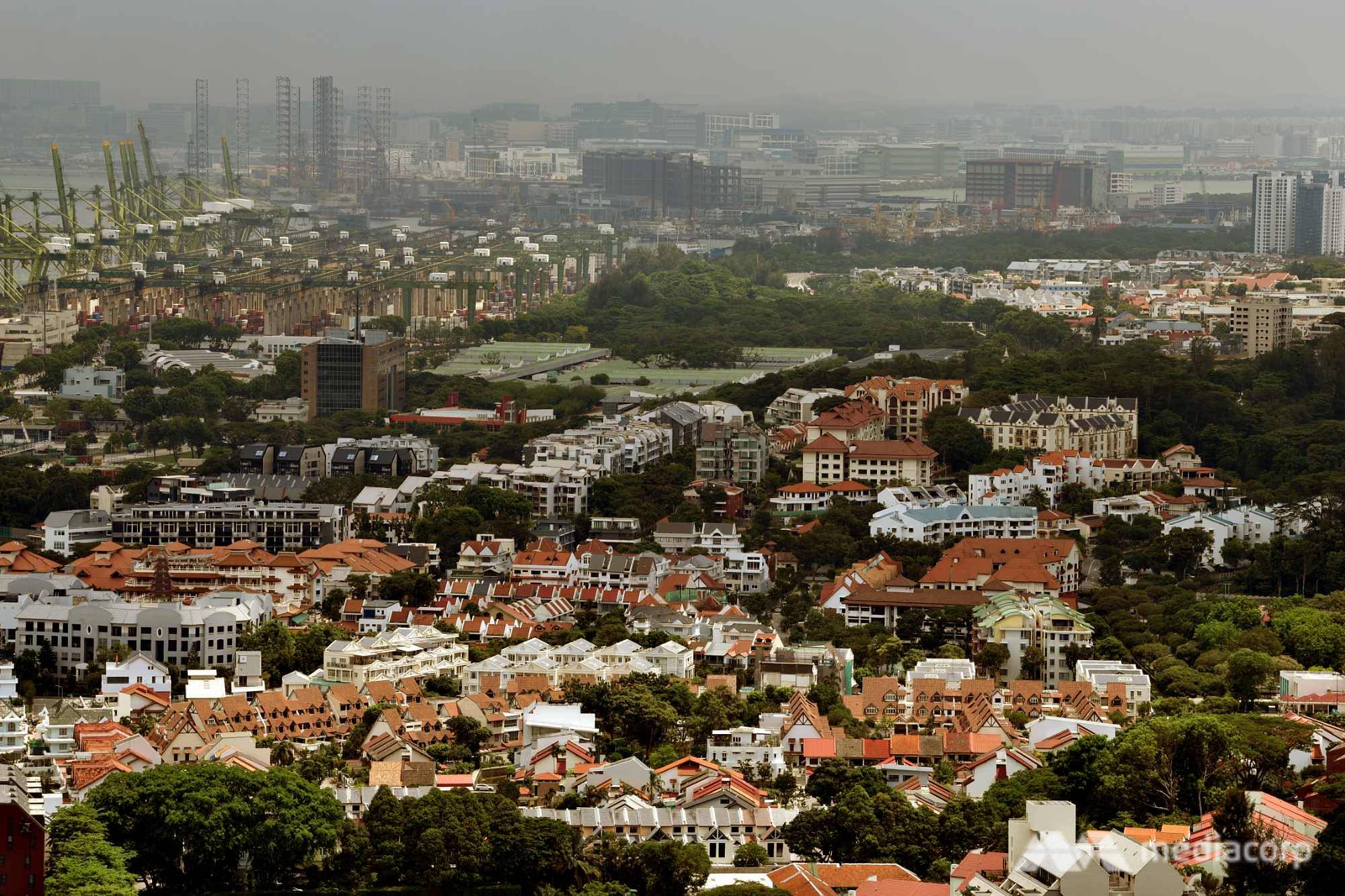
File photo of private houses in Singapore (Photo: Jeremy Long)
For those who intend to buy properties for rental income, the leasing market has remained strong.
After years of being in the doldrums, the rental market staged a remarkable performance in 2019 with higher transaction volume and occupancy rates amid a tightening of new inventory supply and depleting stock. The number of transactions rose 4.5 per cent to 93,960 units in 2019 from 89,904 units in 2018, reaching an 11-year high.
Despite the pandemic, rental demand remains strong, with more leasing transactions and rental renewals recorded last quarter.
Resale volumes increased by 2.4 per cent from 20,703 units in the fourth quarter of 2019 to 21,191 units in the first quarter of 2020.
Rents rose across all market segments, as the overall rental index increased 1.1 per cent quarter-on-quarter and 1.4 per cent year-on-year in the first quarter of this year, possibly because many tenants were reluctant to scout around for alternate housing. Some required immediate lodging to serve stay-home notices after returning from overseas.
(Graphic: OrangeTee & Tie)
(Graphic: OrangeTee & Tie)
MORE BUYERS ARE ENTERING A MARKET
We have seen signs of investors streaming into the market to pick up some value buys. The number of luxury home sales in the Core Central Region (CCR) have been rising over the past few months.
The number of non-landed transactions rose from 666 units in the third quarter of 2019, to 951 units in the fourth quarter and 1,032 units in the first quarter of 2020.
In April, slightly more than a third (36.8 per cent of 277 units) or 102 new home sales were from the Core Central Region.
The highest priced private home transacted was a super-luxury condominium (477 sqm) at 15 Holland Hill for S$13.8 million or $2,692 per square foot in April. This is the third priciest new condominium unit transacted over the past 12 months.
Well-located private homes with attractive pricing also continue to draw buying interest. Properties like Treasure at Tampines, Jadescape, Parc Esta, Stirling Residences, Parc Clematis and Kopar at Newton continue to see steady sales over the past few weeks before the circuit breaker. Many are located near amenities, MRT stations or near the downtown core.
(Graphic: OrangeTee & Tie)
Historical data on private property housing has shown that while sales volume and prices usually dip during a crisis, sales demand typically recovers shortly after.
As sales volume tends to rebound within three to four quarters, the window of opportunity for buying a property during a price correction is quite small.
Our study analysing the profitability of private property over the years also reveals that many who bought new private homes during a downturn and resold them subsequently have made attractive profits. On average, home buyers during the financial crisis in 2008 made the highest gross profits over the last 17 years compared to other buyers who bought properties during other periods of time.
For instance, buyers who bought a mass market home – that is, a non-landed private home – in the Outside of Central Region or suburban areas made an average gross profit of about S$300,000 in the first quarter of 2009, compared to $50,000 to $200,000 for the average buyer outside this time period.
(Photo: OrangeTee & Tie)
We expect to see a decline in the supply of private homes after 2023 for three reasons.
First, collective sales have slowed since cooling measures were slapped in 2018.
Second, most of the projected mega developments above 1,000 units, such as Treasure at Tampines, Jadescape, Parc Clematis, Parc Esta, Riverfront Residences, Stirling Residences, The Florence Residences and Affinity at Serangoon, have already been launched.
Third, many launched projects have sold more than 30 to 50 per cent of their entire project.
We expect developers to continue to pare down outstanding stock and take a measured approach to land acquisition in this coronavirus climate.
The number of new project launches will decline after 2020 as the last collective sales cycle has ended in 2018 while government land sales have generally been on the decline for the last eight years.
As fewer private homes are slated for completion after 2023, we predict that prices and rents of private homes will likely remain strong in the long term.
(Photo: OrangeTee & Tie)
THE MARKET OUTLOOK
Many economists have differing views of the global economic outlook though there is a growing consensus of a protracted slowdown, with recovery gradual in the months ahead.
For the real estate market in Singapore, however, buying activities may rebound in some locations when circuit breaker measures ease, given pent-up demand.
After travel restrictions are lifted, some foreign buyers may return.
Over the last past two years, Chinese buyers have formed the biggest foreign buyer group with 2,637 or 7.3 per cent non-landed private home purchases, followed by Malaysians at 4.3 per cent, Indians at 1.9 per cent and Indonesians at 1.6 per cent.
(Photo: OrangeTee & Tie)
Mainland Chinese buyers may continue to be the biggest group. While China’s economy will experience a slowdown this year, this country will likely see pockets of growth across specific sectors, especially IT, biomedicine and healthcare.
The recent global lockdowns have also seen an exponential increase in production and consumption of e-commerce goods, with China being the powerhouse in this space.
For these reasons, we expect Chinese buyers from thriving sectors to buy homes here. Some may also divert their funds overseas as their currency continues to depreciate.
Notwithstanding the positive long-term outlook for the Singapore private residential market, the year will likely see some weakness in prices and home demand as a result of circuit breaker measures and global economic uncertainties.
Private home prices may fall up to 5 per cent if the pandemic drags on. We project sales of around 13,000 to 14,000 private homes this year, of which 6,500 to 7,500 are new home sales.
(Photo: OrangeTee & Tie)
Christine Sun is Head of Research & Consultancy at OrangeTee & Tie.
With safe distance measures in place due to the Covid-19 pandemic, much of the service sector continues to bear the financial brunt of a declining customer base.
Food delivery and online ordering have become more essential than ever, but not everyone in Singapore can afford to live this way, especially with the poor, current-day state of the economy.
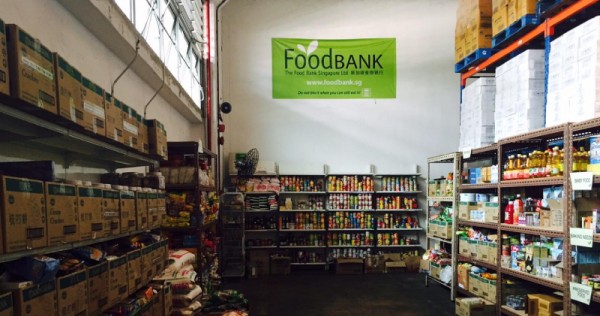
To alleviate the hardships of homebound Singaporeans in need, the local teams of Amazon Singapore and The Food Bank will be working together to provide and deliver meals and grocery staples.
The new donation initiative, Community Flex, sees the delivery partners of Amazon Flex collecting food packages prepared by The Food Bank Singapore, and bringing them directly to the doorsteps of recipients via “no-contact” deliveries.
A total of 10,000 packages are expected by end-June, with both organisations on track to meet the 5000-package milestone in May alone.
A Singaporean woman diagnosed with Stage 4 breast cancer while in the United States arrived in Singapore on Saturday (May 30) night after the public raised about $373,000 to fund her trip home.
The flight back to Seletar Airport by air ambulance was the only option for Ms Lerine Liu as commercial flights had been cancelled due to the pandemic.
The Straits Times highlighted the fundraising campaign to fund Ms Liu’s flight home last Monday and the following day her family raised about $373,000 from 3,886 donors – well in excess of the goal of $330,000.
Ms Liu, 42, was accompanied by a medical crew on the flight operated by International SOS that departed Newark, New Jersey, on Friday.
The flight was postponed from Thursday as Ms Liu’s condition had to be stabilised before she could board the plane.
It made several refuelling stops before arriving in Singapore on Saturday at around 6.30pm.
Ms Liu will now be quarantined for 14 days as part of Covid-19 measures before her family will be able to visit her.
SINGAPORE:Parkway Paradewas on Sunday (May 31) added to a list of public places visited by COVID-19 cases during their infectious period.
As part of its daily update, the Ministry of Health (MOH) has been providing information on the places COVID-19 cases had gone to while infectious.
Parkway Parade was the only addition to the list on Sunday. The ministry did not provide a specific location in the mall that the COVID-19 case visited.
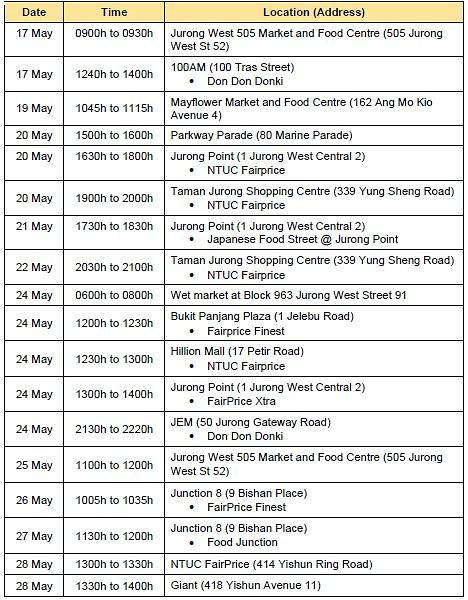
The updated list is as follows:
MOH said on Monday – the first time it released such a list – that these were public places visited by COVID-19 cases for more than 30 minutes while they were infectious.
“As a precautionary measure, persons who had been at these locations during the specified timings should monitor their health closely for 14 days from their date of visit,” MOH said.
“They should see a doctor promptly if they develop symptoms of acute respiratory infection (such as cough, sore throat and runny nose), as well as fever and loss of taste or smell, and inform the doctor of their exposure history.”
Those identified as close contacts of confirmed cases would already have been notified by MOH.
The list will be updated on a rolling 14-day basis, which covers one incubation period, and as epidemiological investigations progress, said MOH.
The cases’ residences, workplaces, healthcare facilities visited and public transport activities are excluded from the list.
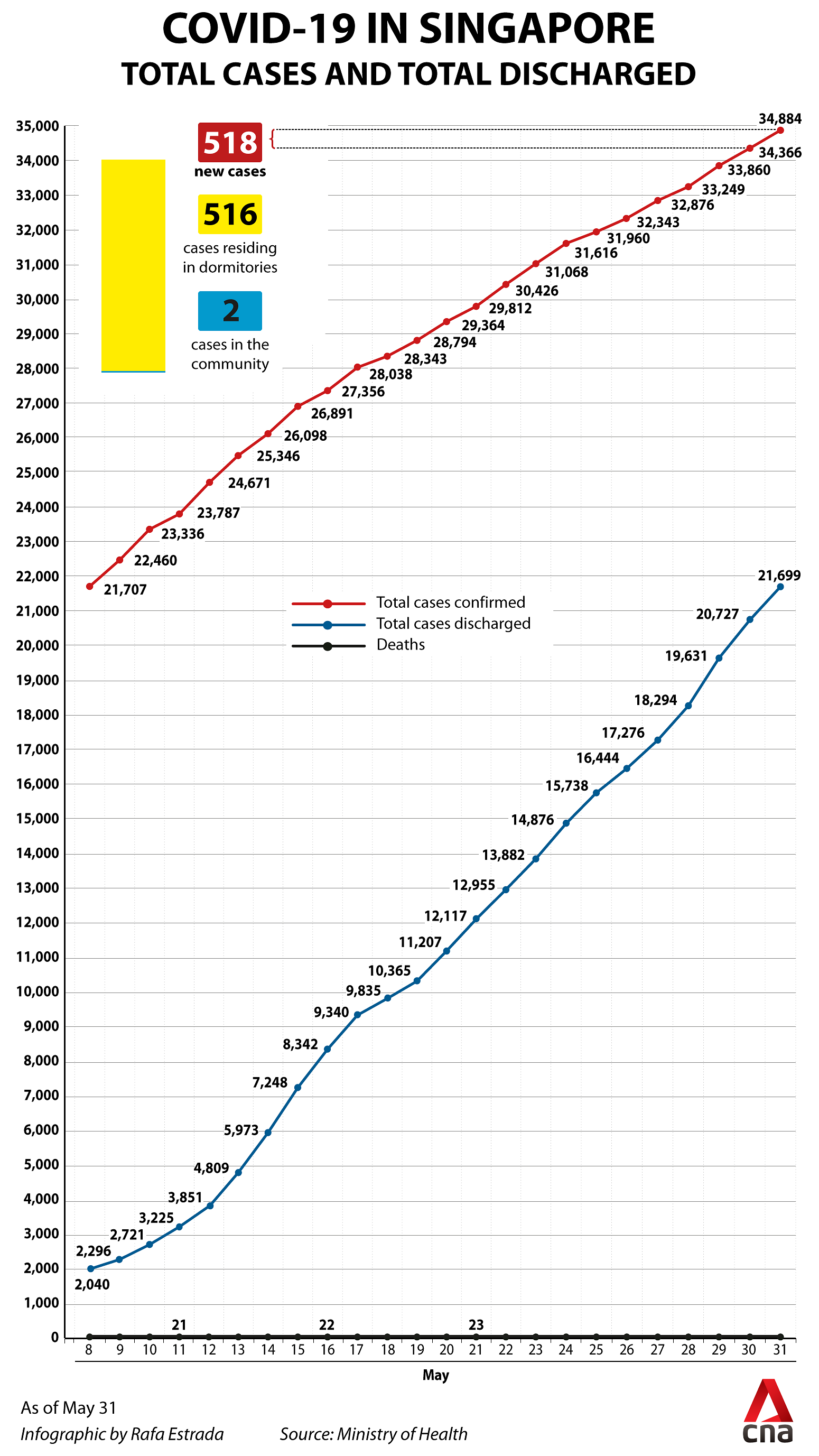
Singapore reported 518 new cases of COVID-19 as of noon on Sunday, bringing the national total to 34,884.
Of the new cases, 516 are linked to foreign worker dormitories, while the remaining two are community cases.
One of the community cases is an 18-year-old male permanent resident and the other is a 73-year-old Singaporean woman. Both cases are currently unlinked.
The Ministry of Health has preliminarily confirmed an additional 518 cases of Covid-19 infection in Singapore on Sunday (May 31), with the majority being Work Permit holders residing in foreign worker dormitories.
There are also three cases in the community, all of whom are Singaporeans/Permanent Residents.
More details will be provided tonight.
For the latest updates on the coronavirus, visit here.
Monday (June 1) will be the last day of Singapore’s eight-week Covid-19 circuit breaker shutdown. Restrictions will be progressively eased in three phases.
Here’s a list of what is allowed under Phase 1 which starts on Tuesday. The government will review in mid-June to see when Phase 2 can begin.
Workplace
– The default mode of working for all companies – including those allowed to resume operations in Phase 1 and later Phase 2 – is working from home, says the Manpower Ministry (MOM).
– Employees now working from home must continue to do so. They should go to the office only where there is no alternative, like if they need specialised equipment that can’t be assessed from home. Checks will be conducted, says MOM.
– Safe distancing measures must be implemented in the workplace for those who are there.
– For offices, this includes the wearing of masks inside the premises, no gatherings with colleagues during meals or breaks, and no cross-deployment of workers.
– For manufacturing, cleaning and disinfection of all equipment must be stepped up, among other things.
The police are looking into a dispute between two families at Block 234 Toa Payoh Lorong 8 over the past four years.
Stomp contributor Woon shared with Stomp that their next-door neighbours have repeatedly shouted at his own family, stalked them and recorded them on their phones.
“Over the past four years, we have been mentally tortured,” said Woon.
“The family of four accused us of hacking into their Internet and blocking it.
“They said we hacked into their Facebook accounts and chatted with their friends.
“One of their sons said we shot lasers at them so they cannot work.
“They have even called the police on us many times, accusing us of making a lot of noise all day and night.”
Woon said the familiy’s allegations are false and that the father and one of his sons has been shouting at them every day.
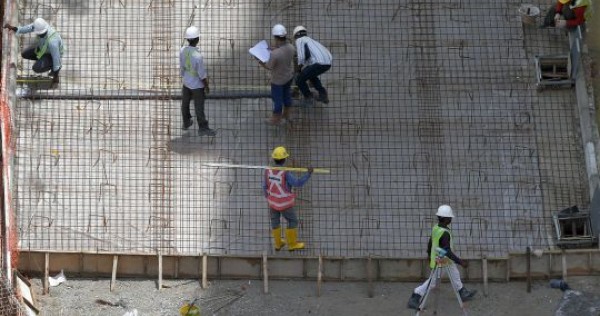
Is Singapore prepared to have 2,500 babies born here every year grow up to be construction workers?
Trade and Industry Minister Chan Chun Sing gave this stark number – which works out to around 8 per cent of the 33,000 babies born every year – to show what has to happen if Singapore were to cut down on foreign workers.
Elaborating on this hypothetical scenario during a virtual press conference on Saturday (May 30), he sketched a scene in which Singapore has 300,000 foreign construction workers, and where each Singaporean is thrice as productive as a foreign worker.
In theory, this would mean the 300,000 foreign workers could be replaced with 100,000 Singaporeans, who could each be paid thrice as much as a foreign worker.
Assuming every worker works for 40 years without dropping out, this would mean that every year, 2,500 babies would have to be designated as construction workers.
“Do you think you’ll be recruiting, at every cohort of Singaporean babies, about 6 to 8 per cent of them into the construction industry?” asked Mr Chan.