Home Blog Page 2941

US ramps up bomb clearance money to Laos during Obama visit

0

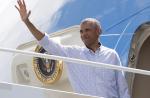
VIENTIANE – The United States will intensify efforts to help Laos rid itself of unexploded bombs, the White House said Tuesday during a historic visit by Barack Obama to a nation once carpet-bombed by Washington.

Laos became the world’s most-bombed country per capita from 1964 to 1973 as Washington launched a secret CIA-led war to cut supplies flowing to communist fighters during the Vietnam War.

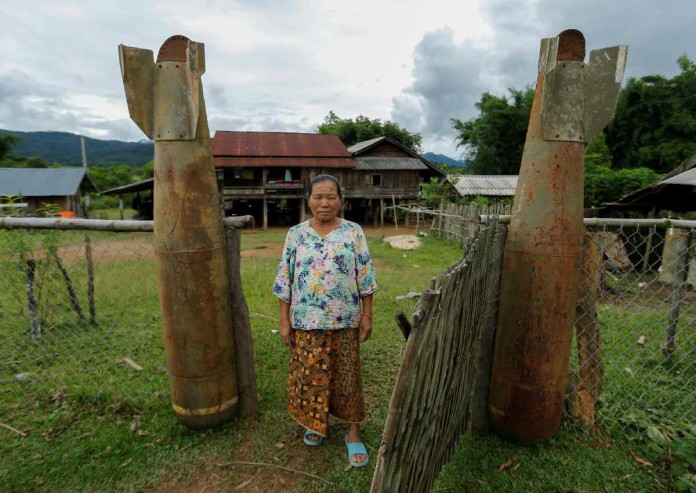
Much of the country is still littered with ordnance, including millions of cluster munition “bomblets” that still maim and kill to this day.

The issue has long dogged relations between the United States and Laos, a cloistered and impoverished communist nation.

But both sides have moved closer in recent years and Obama’s visit – the first by a US president to Laos – is being hailed as a landmark opportunity to reset ties.

In a statement the White House said it was earmarking $90 million for Laos over the next three years “to address the impact caused by unexploded ordnance”.

The figure dwarves Washington’s previous commitments to Laos – in the last 20 years it had given a total of $100 million.

But it mirrors what happened in Vietnam as ties warmed between the two former foes during the early 2000s.

The presidential visit to Laos is laden with symbolism.

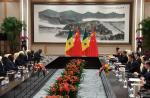
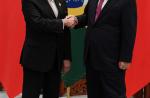
Under pouring rain on Tuesday Obama, the first US president to hail from the post-Vietnam war generation, met his Lao counterpart Bounnhang Vorachith at the presidential palace in Vientiane.

Bounnhang, 78, is a former revolutionary of the communist Pathet Lao movement that successfully faced down Washington’s bombing campaign to emerge victorious.

He was anointed the country’s top leader earlier this year.

Laos’ ageing communist leadership has ruled with an iron fist since 1975, tolerating little dissent and only gradually opening the country to outsiders.

Laos has had one of Asia’s fastest growth rates over the last decade, but critics say little has trickled down to the rural poor majority.

As it did in Vietnam, Washington has also been pushing the Laos authorities for help in locating the remains of missing servicemen.

The White House said the remains of 273 personnel have been located and identified from the Laos war years but 301 Americans are still listed as missing.

More than two million tonnes of bombs were dropped by the United States on Laos. About 30 percent did not explode, including an estimated 80 million cluster munition “bomblets”.

Some 50,000 people were killed or injured by bombs between the start of the war and 2008, according to Laos government data.

Bomb clearances and education campaigns have since reduced the casualty rate to around 40 people a year. But only one percent of contaminated land has so far been restored.
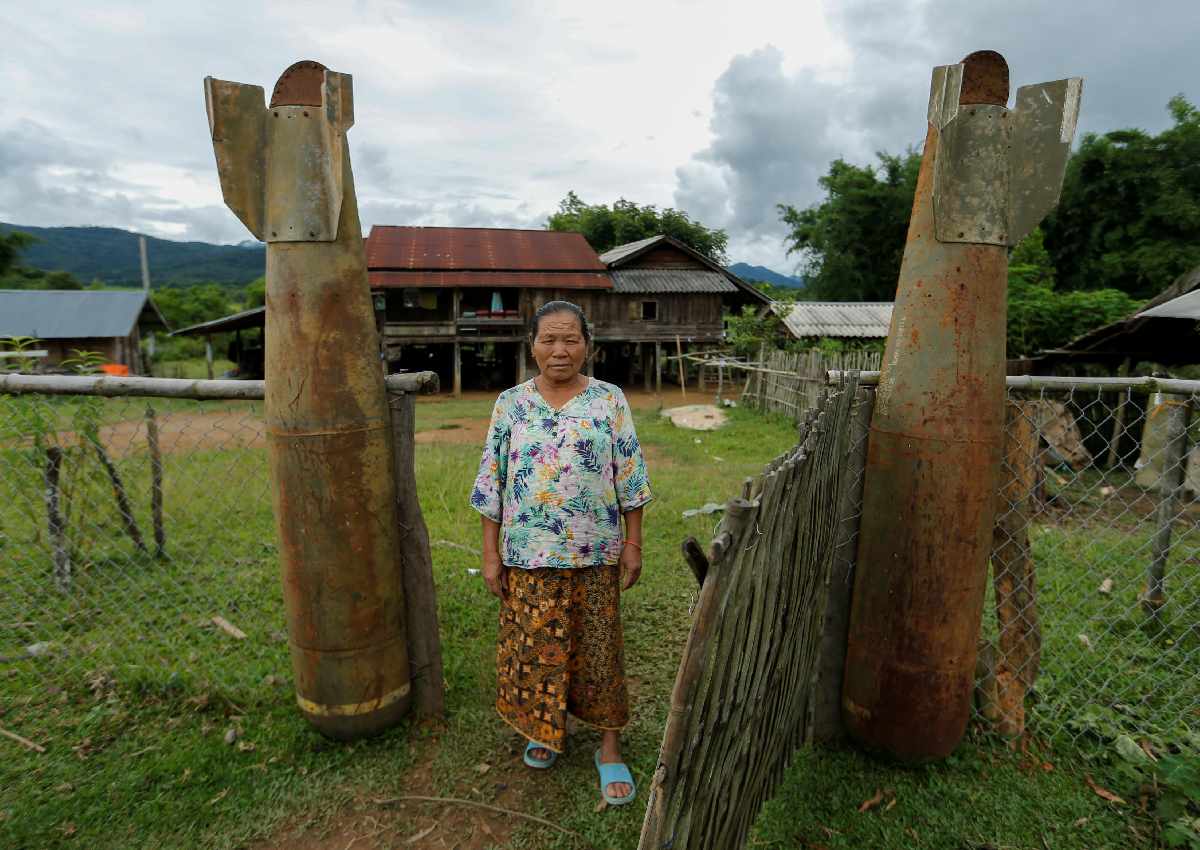

Image: 
Category: 
Publication Date: 
Tuesday, September 6, 2016 – 14:48
Send to mobile app: 
Source: 


Hermes ID: 
2 576 425
Hermes ID String: 
VLLAOS6
Hermes Author: 
GRONGLOH
Story Type: 
Others

Source link

MAS chief says 'early indications' Zika could have small economic impact

0

SINGAPORE – Singapore’s central bank chief said on Tuesday (Sept 6) there were early indications that an outbreak of the Zika virus in the city state could have a small impact on the economy.
Mr Ravi Menon, managing director of the Monetary Authority of…

Source link

Yip Pin Xiu: Winning so much more than medals

0

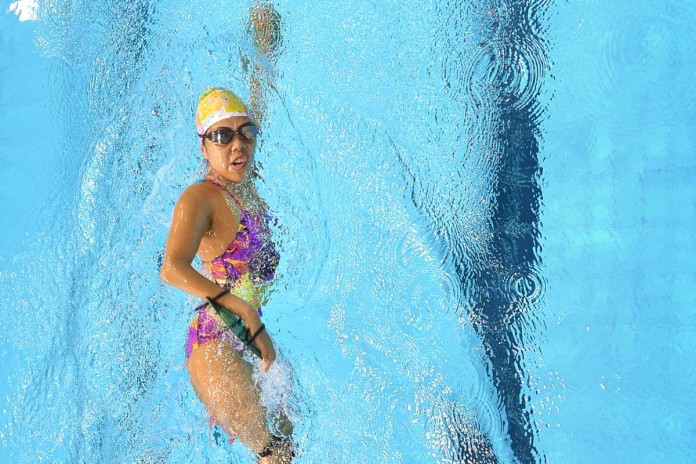
The pool transformed Yip Pin Xiu in such a profound way that even after taking a year off, she found her focus again

Every time Yip Pin Xiu’s coach Mick Massey lowers her into the pool before a race, she knows she is swimming for something greater than herself.

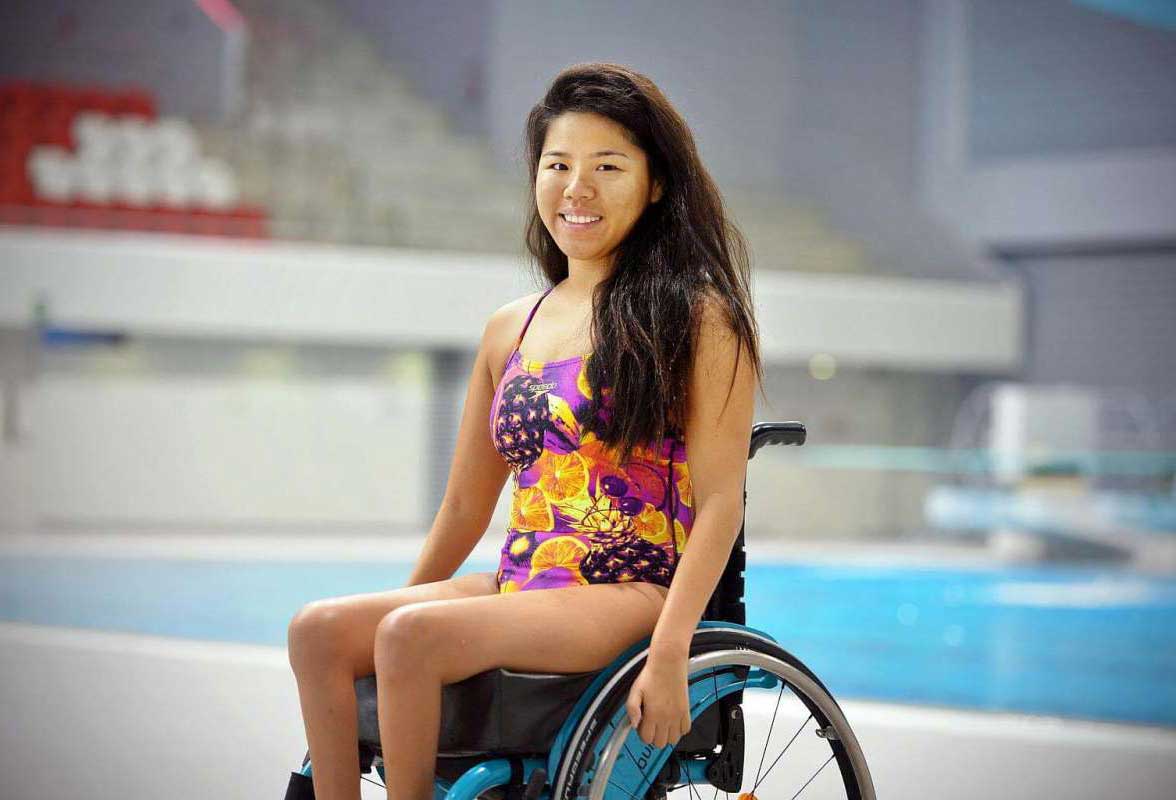
Once upon a time, swimming changed her. Competing all over the globe transformed her into a poised and outgoing woman, a world away from the shy schoolgirl in leg braces who had staples thrown at her because she looked different.

But now Yip, who has muscular dystrophy, is changing her sport instead, shifting mindsets with her feats in the water.

“If I were doing it for myself, I wouldn’t have continued this long,” the 24-year-old told The Straits Times.

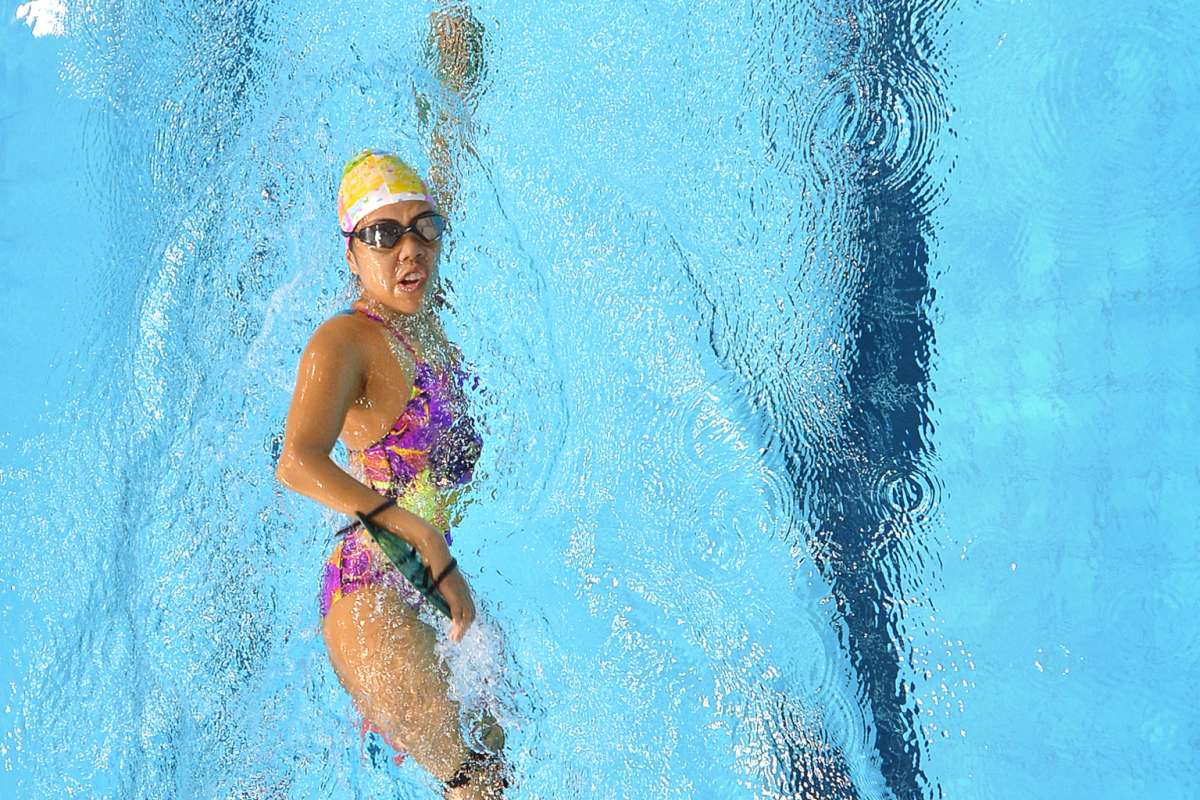
Yip Pin Xiu, who won gold and silver at the 2008 Beijing Paralympics but finished fourth in both her events in London, is Singapore’s brightest medal prospect in Rio. “I don’t think I’m extraordinary,” she said. “I’m just like every normal Singaporean.” Credits: The Straits Times

“But I want to show Singaporeans that as long as you set your mind on something, regardless of your circumstances, you can find opportunities along the way and you can reach your goal.

“I don’t think I’m extraordinary. I’m just like every normal Singaporean.”

Yet, normal Singaporeans do not break world records twice in three days, as Yip did in May at the International Paralympic Council Swimming European Open Championships.

Normal Singaporeans do not win a gold and a silver medal on their Paralympics debut, as she did in 2008.

By parting water faster than most, she set in motion ripples that still reverberate today.

In 2008, her performances in Beijing ignited a debate about cash prizes for para athletes, which led to the rewards being doubled eventually.

At last year’s ASEAN Para Games, she made Singaporeans rethink the idea of disadvantage when, thrown into a race with competitors more mobile than her, she decimated the world record while winning the race.

But what makes Yip, currently The Straits Times Athlete of the Year, shrug off her achievements with typical self-deprecation was the manner in which competitive swimming nearly slipped from her grasp – ironically, when she was on top of the world.

After the high of her Beijing triumphs, she took a year off racing to focus on school, to live a life she had given up, one where she had more time to spend with family and friends. She trained only four times a week, compared with the 12 she was clocking previously.

Her grades went up but so did her times. Personal bests were beyond reach. The early morning training sessions, routine for elite swimmers who train twice daily, became a slog she loathed.

“It was really hard to get back (into the pool) because after you experience not having to wake up at 5am, it’s difficult to want to put yourself back into the routine,” said Yip, who was previously coached by former Singapore swim star Ang Peng Siong.

“That’s why I feel like my struggles are very real, that any other Singaporean can face this. It’s not like a struggle that only a Paralympian or an Olympian can face.”

She wondered if swimming was worth the trouble. Four years ago, she could grip the backstroke start bar. Now, she has to be anchored by Massey. Her body, ravaged by her condition, would be sapped by training. Before, she would still have energy at night. Now, she just wants to sleep.

In the end, it was Yip’s competitive drive that saw her claw her way back into the game.

“I don’t like losing. Maybe you can call it a need for speed. It can be about the stupidest things, like wanting to be the first to press the lift button. I just have a competitive streak in me, and as long as I set my mind on something, I want it,” she said.

“I know that I cannot snooze, go back to bed and say I don’t want to do this, because training is part of the journey and with every single session I know it brings me nearer to my goal.”

She made her comeback late in 2010, resuming training at least 12 times a week. She qualified for the London Paralympics after only a year of training, but, agonisingly, finished fourth in both her events.

Which is why this year’s Games in Rio de Janeiro, which come after a full four years of preparation, mean more to Yip, especially since she is unsure whether she will attempt to qualify for the next edition in Tokyo.

Medals are definitely on her agenda but she wants more. “From a kid who didn’t know much about para sports, to eventually becoming a Paralympian… I want to tell people that if you want it bad enough you can get there somehow,” said Yip.

“I just hope that my actions are able to (inspire) other Singaporeans.”

Few would dispute that they already have.

SWIMMING

Facts on the sport

Swimming, one of eight sports competed at the inaugural Paralympics at Rome 1960, is also the sport which gave Singapore its first Paralympic gold, when Yip Pin Xiu won the the 50m backstroke S3 at Beijing 2008. She also won a silver (50m freestyle S3).

For the Rio Games, there are 152 medal events with 620 participating athletes.

Classification

Physical (1-10), visual (11-13) and intellectual (14) – the lower the number, the more severe the impairment.

Team Singapore at Rio Games

Yip Pin Xiu (50m, 100m backstroke S2)

Theresa Goh (50m, 100m, 200m freestyle S5, 100m breaststroke SB4).


This article was first published on Sep 06, 2016.
Get a copy of The Straits Times or go to straitstimes.com for more stories.

Image: 
Category: 
Publication Date: 
Tuesday, September 6, 2016 – 17:00
Send to mobile app: 
Source: 


Story Type: 
Others

Source link

G20 Summit: S'pore, China collaborating on many fronts, says PM Lee

0

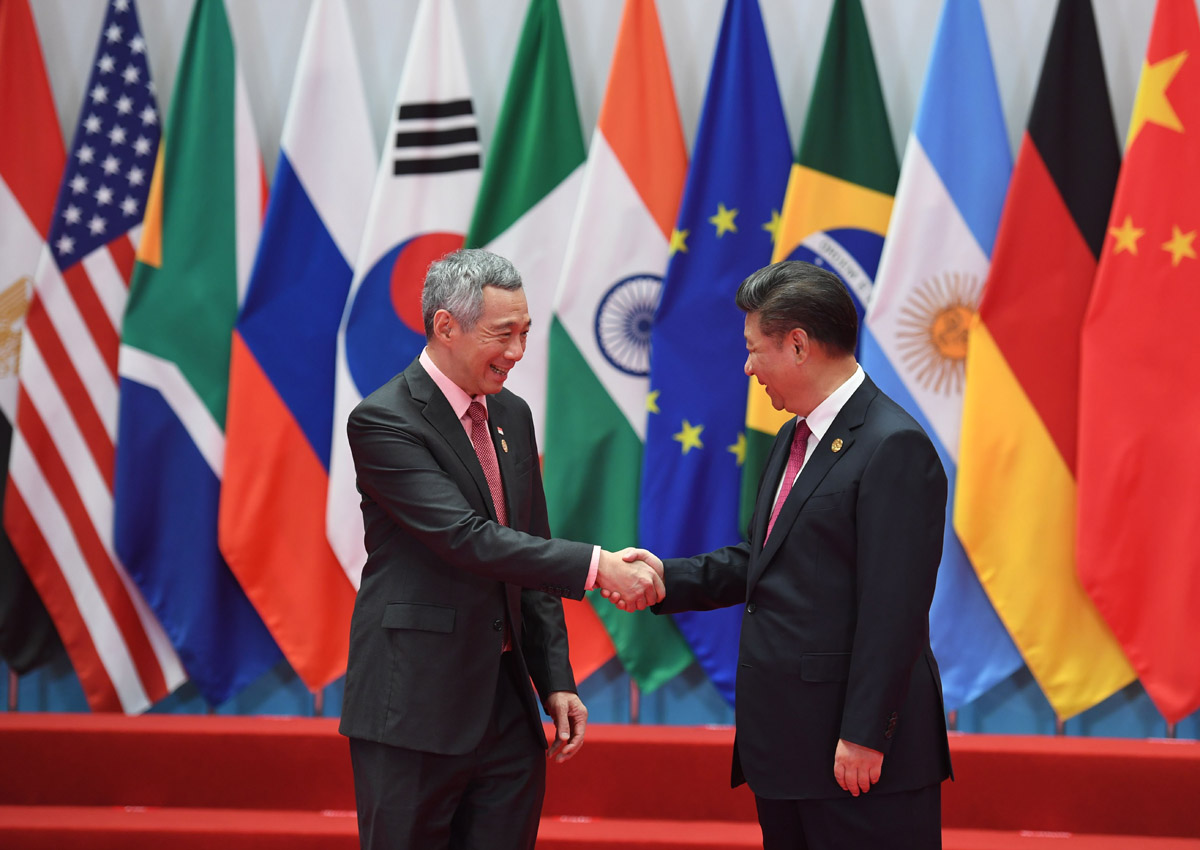
While there might be differences of views on some issues, bilateral co-operation between Singapore and China is progressing on many fronts, said Prime Minister Lee Hsien Loong .

Both countries, being different, will naturally have different perspectives on some issues, Mr Lee said yesterday in response to a question on perceived tensions over the Republic’s role as country-coordinator for ASEAN-China relations.

He added the key is to manage and accept the different perspectives and not allow them to affect the overall relationship, which he said was in “working shape”.

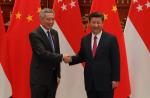
“We accept that sometimes there will be issues and things may take time. This is normal between any two countries, particularly two with a very close relationship,” Mr Lee told Singapore media at the end of a four-day working visit that included meetings with Chinese President Xi Jinping and Chongqing party boss Sun Zhengcai.

He pointed out that Mr Xi, in their meeting in Hangzhou last Friday, had urged both sides to respect each other’s perspectives and to work towards greater understanding when they disagree.

Mr Lee, in turn, told Mr Xi that Singapore hoped to act as an honest broker in bringing people closer together through its three-year stint as ASEAN-China relations coordinator, which began in August last year.

Last month, a Chinese Foreign Ministry spokesman urged Singapore to respect China’s position on the South China Sea issue and to advance ASEAN-China relations on the condition of not interfering in the maritime dispute between Beijing and several ASEAN nations.

The remarks, coming after China rejected an arbitral tribunal ruling on July 12 against its maritime claims in the South China Sea, were seen as a veiled criticism of Sing- apore’s friendship with the United States and support of the US’ continued presence in the region.

In his National Day Rally speech on Aug 21, Mr Lee outlined Singa- pore’s foreign policy principle of acting independently and in its own national interests, such as ensuring freedom of navigation in the South China Sea.

Yesterday, Mr Lee said Singapore and China are cooperating in many areas that are win-win in nature and it “would be a pity” for both sides if these were to slow down.

He cited how the Chongqing Connectivity Initiative (CCI) – the third government-led project between both sides – has made progress in its priority sectors in finance, telecommunications, aviation and logistics.

For instance, Mr Lee said both sides are exploring a new logistical route southwards of Chongqing into the Beibu Bay through Guangxi’s Qinzhou port city, in anticipation of transportation capacity on the Yangtze River reaching saturation.

Also, both sides are looking at using the CCI, which aims to promote connectivity within China and with other states, to test bed new policies or new emphasis in its development strategies, he added.

Promising ideas can be put up at the upcoming meeting of the Joint Council for Bilateral Cooperation, a high-level mechanism overseeing bilateral ties, said Mr Lee, who visited Chongqing last Saturday.

KEY G-20 OUTCOMES

  • A G-20 blueprint on innovative growth to harness new drivers for the global economy.
  • A pledge to use multiple policy tools – fiscal, monetary and structural reforms – to tackle short-term risks while exploring longer-term growth.
  • A commitment to help the Paris Agreement on cutting global warming emissions go into force early.
  • An action plan to facilitate implementation of the United Nations 2030 Agenda for Sustainable Development.
  • Combat global tax evasion and build up taxation mechanisms in less developed economies. Global taxation research centre to be set up in China.
  • Boost anti-graft efforts, including setting up a research centre on fugitive repatriation and asset recovery.


This article was first published on September 6, 2016.
Get a copy of The Straits Times or go to straitstimes.com for more stories.

Image: 
Publication Date: 
Tuesday, September 6, 2016 – 15:00
Keywords: 
Send to mobile app: 
Source: 


Story Type: 
Others

Source link

G20 Summit: S'pore, China collaborating on many fronts: PM Lee

0

While there might be differences of views on some issues, bilateral co-operation between Singapore and China is progressing on many fronts, said Prime Minister Lee Hsien Loong .

Both countries, being different, will naturally have different perspectives on some issues, Mr Lee said yesterday in response to a question on perceived tensions over the Republic’s role as country-coordinator for ASEAN-China relations.

He added the key is to manage and accept the different perspectives and not allow them to affect the overall relationship, which he said was in “working shape”.

“We accept that sometimes there will be issues and things may take time. This is normal between any two countries, particularly two with a very close relationship,” Mr Lee told Singapore media at the end of a four-day working visit that included meetings with Chinese President Xi Jinping and Chongqing party boss Sun Zhengcai.

He pointed out that Mr Xi, in their meeting in Hangzhou last Friday, had urged both sides to respect each other’s perspectives and to work towards greater understanding when they disagree.

Mr Lee, in turn, told Mr Xi that Singapore hoped to act as an honest broker in bringing people closer together through its three-year stint as ASEAN-China relations coordinator, which began in August last year.

Last month, a Chinese Foreign Ministry spokesman urged Singapore to respect China’s position on the South China Sea issue and to advance ASEAN-China relations on the condition of not interfering in the maritime dispute between Beijing and several ASEAN nations.

The remarks, coming after China rejected an arbitral tribunal ruling on July 12 against its maritime claims in the South China Sea, were seen as a veiled criticism of Sing- apore’s friendship with the United States and support of the US’ continued presence in the region.

In his National Day Rally speech on Aug 21, Mr Lee outlined Singa- pore’s foreign policy principle of acting independently and in its own national interests, such as ensuring freedom of navigation in the South China Sea.

Yesterday, Mr Lee said Singapore and China are cooperating in many areas that are win-win in nature and it “would be a pity” for both sides if these were to slow down.

He cited how the Chongqing Connectivity Initiative (CCI) – the third government-led project between both sides – has made progress in its priority sectors in finance, telecommunications, aviation and logistics.

For instance, Mr Lee said both sides are exploring a new logistical route southwards of Chongqing into the Beibu Bay through Guangxi’s Qinzhou port city, in anticipation of transportation capacity on the Yangtze River reaching saturation.

Also, both sides are looking at using the CCI, which aims to promote connectivity within China and with other states, to test bed new policies or new emphasis in its development strategies, he added.

Promising ideas can be put up at the upcoming meeting of the Joint Council for Bilateral Cooperation, a high-level mechanism overseeing bilateral ties, said Mr Lee, who visited Chongqing last Saturday.

KEY G-20 OUTCOMES

  • A G-20 blueprint on innovative growth to harness new drivers for the global economy.
  • A pledge to use multiple policy tools – fiscal, monetary and structural reforms – to tackle short-term risks while exploring longer-term growth.
  • A commitment to help the Paris Agreement on cutting global warming emissions go into force early.
  • An action plan to facilitate implementation of the United Nations 2030 Agenda for Sustainable Development.
  • Combat global tax evasion and build up taxation mechanisms in less developed economies. Global taxation research centre to be set up in China.
  • Boost anti-graft efforts, including setting up a research centre on fugitive repatriation and asset recovery.


This article was first published on September 6, 2016.
Get a copy of The Straits Times or go to straitstimes.com for more stories.

Image: 
Publication Date: 
Tuesday, September 6, 2016 – 15:00
Keywords: 
Send to mobile app: 
Source: 


Story Type: 
Others

Source link

NEA widens anti-mozzie ops around biggest Zika cluster

0

Anti-mosquito operations are being extended around Singapore’s biggest Zika cluster.

The National Environment Agency (NEA) said yesterday it is taking these measures in Circuit Road, Geylang East Central and Geylang East Avenue 1.

These areas are located on the periphery of the Aljunied Crescent, Sims Drive, Paya Lebar Way and Kallang Way cluster, which accounts for more than 200 of the current 258 Zika cases islandwide. The NEA had been conducting vector control operations in these areas, and will continue to do so.

It said that as of Sunday, 63 breeding habitats had been detected and destroyed. Thirty-seven of these were in homes, while the other 26 were in common areas and other premises.

The NEA is also continuing with vector control operations and outreach efforts in Bedok North Avenue, another cluster, together with mosquito control measures. As of Sunday, 52 breeding habitats had been detected and destroyed, with 42 of them in homes and 10 in common areas and other premises.

The same efforts took place in Joo Seng Road, where no breeding habitats have been detected so far.

Meanwhile, in the Sims Drive and Aljunied Crescent cluster where it all began, shops said business has suffered. An owner of a mobile- phone shop at Block 47, Sims Place, who wanted to be known only as Miss Kristina, 23, said the area has been a “ghost town” since the news of the virus broke two weeks ago.

Barber Ahmad Ali, 56, said he has also seen fewer customers. “People avoid this place now. The market is also very empty. But what to do? I still have to run my business, life has to go on,” he said.

For drinks stall owner Tan See Foo, 62, this is “one of the worst periods” he has been through since opening the stall at the market and food centre at Block 49, Sims Place in 1976.

“Business has fallen by about 30 per cent. Every night, fewer people come here to drink. Now is the school holiday period, but there is no one here,” he said. “The mosquitos have really sabotaged us. Right now, my business is all right, but if this goes on for a month or two longer, it will get tough.”


This article was first published on September 06, 2016.
Get a copy of The Straits Times or go to straitstimes.com for more stories.

Image: 
Category: 
Publication Date: 
Tuesday, September 6, 2016 – 14:23
Send to mobile app: 
Source: 


Story Type: 
Others

Source link

NUS, NTU in top 20 of university list again

0

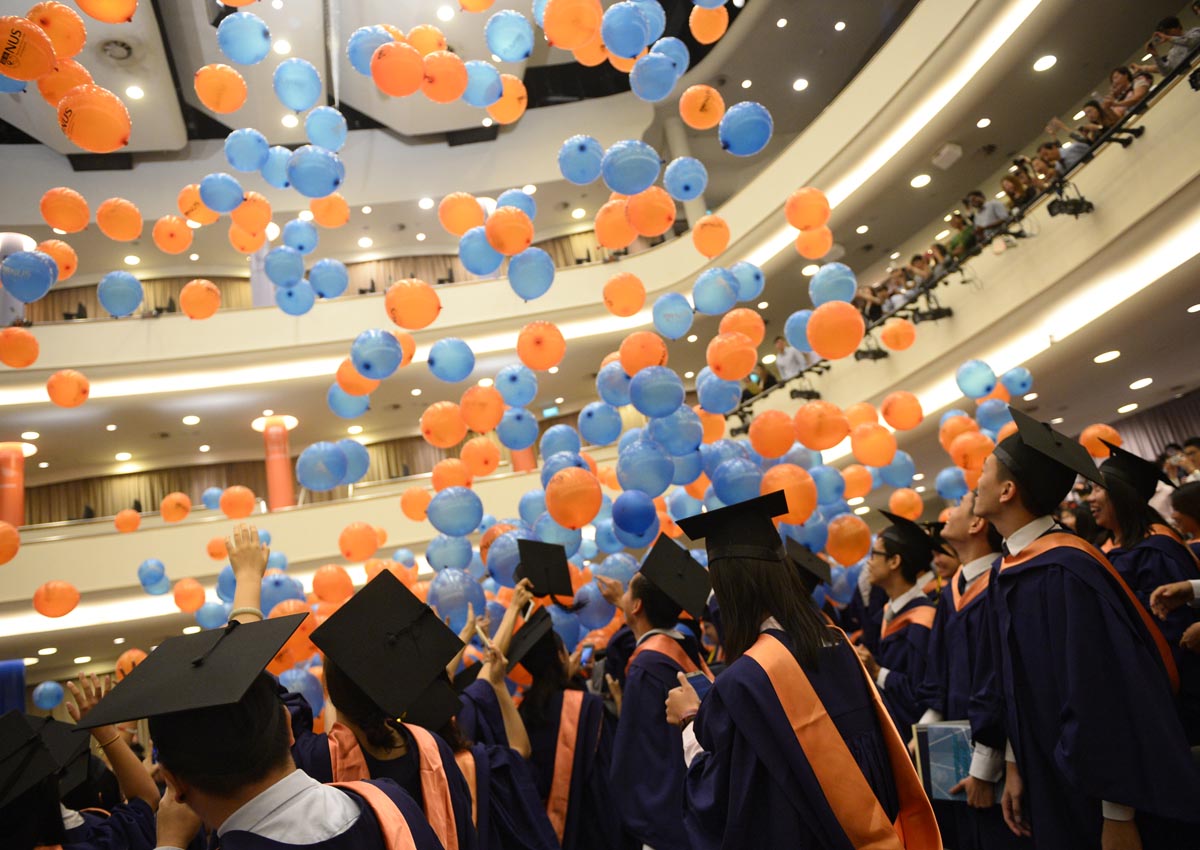
Two Singapore universities have kept their top 20 positions in the latest World University Rankings, making the Republic the only Asian nation represented among the best of the world’s top universities for the second year in a row.

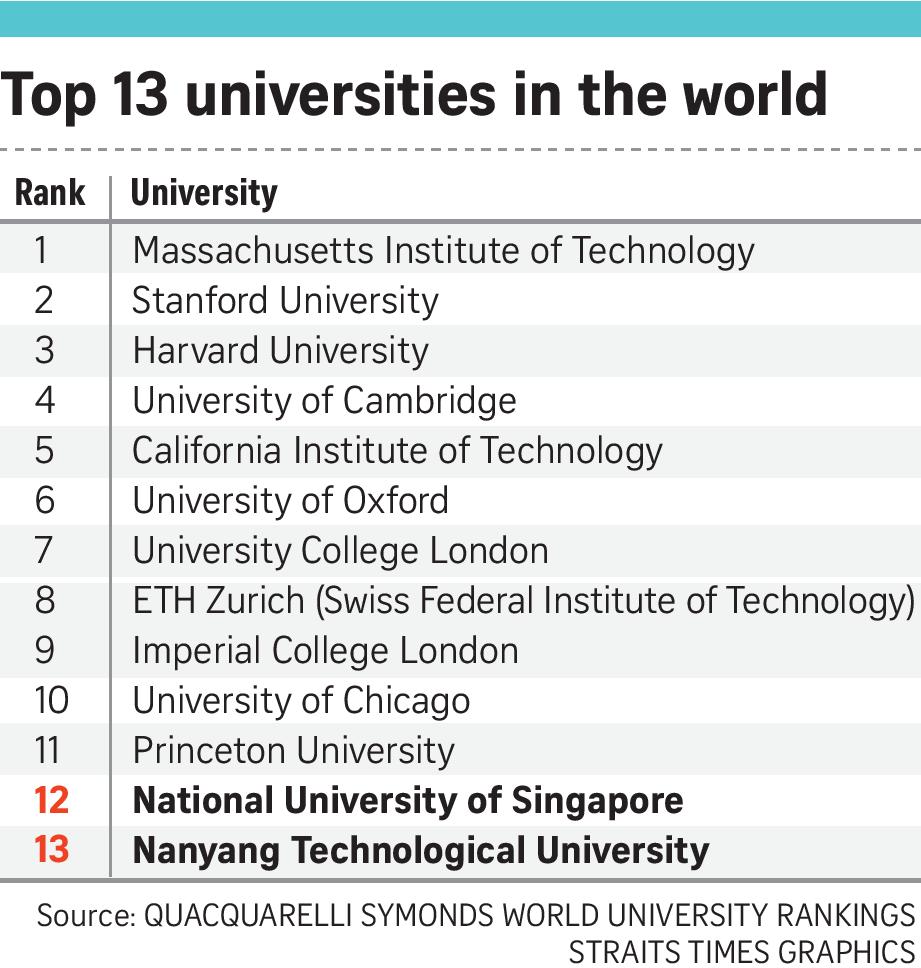
The National University of Singapore (NUS) and Nanyang Technological University (NTU) kept their 12th and 13th positions respectively in this year’s Quacquarelli Symonds (QS) World University Rankings.

The two universities had shot up in the rankings last year, partly due to a change in how research citation was evaluated, with NUS moving up from 22nd to 12th place and NTU moving up from 39th to 13th.

Singapore Management University made its debut in the rankings this year in the 431-440 band. It scored most highly for its international faculty ratio.

London-based education consultancy QS said NTU stood out in research, ranking 64th in the world for citations per faculty while NUS was placed 9th and 11th globally, for employer and academic reputation respectively, having received perfect scores in both metrics.

“In featuring two universities in the global top 20, Singapore remains the only Asian nation to place among the very highest echelons of the QS World University Rankings,” said the consultancy.

The third best-ranked Asian university was China’s Tsinghua University, which rose one place to 24th this year.

QS head of research Ben Sowter said: “Singapore’s continued strong performance stems from excellence across our spectrum of measures. In most aspects, there are institutions elsewhere that can lay claim to a more spectacular indicator performance but very few that can compete across the board.”

NUS president Tan Chorh Chuan said the university has continued to focus on preparing future-ready graduates who can thrive and contribute in a much more volatile environment.

“We are happy that these efforts have been recognised by our ranking among the world’s top universities, and Asia’s best,” Professor Tan said.

NTU president Bertil Anderson said: “Last year, we surprised ourselves a little when we jumped 26 places to the 13th position. But we have been working very hard in the last few years for this ‘surprise’. This year, we are happy that this high standing has been reaffirmed by QS.”

Professor Anderson added: “Of course, now that we are competing in the global top tier, the competition is much more intense, compared to the type of quantum leaps that we have been making since 2011.”

The QS rankings use six indicators – academic reputation, employer reputation, faculty student ratio, citations per faculty, international students and international faculty.

Mr Sowter said the rankings “imply” that investments in higher education affect rankings.

“Institutions in countries that provide high levels of targeted funding, whether from endowments or from the public purse, are rising.

“On the other hand, Western European nations making or proposing cuts to public research spending are losing ground to their US and Asian counterparts.”

For example, Britain’s Cambridge University lost its third placing this year. This means American institutions hold all top three places for the first time since the ranking started in 2004.

The Massachusetts Institute of Technology topped the list for the fifth consecutive year. Stanford was second and Harvard third.


This article was first published on September 6, 2016.
Get a copy of The Straits Times or go to straitstimes.com for more stories.

Image: 
Category: 
Publication Date: 
Tuesday, September 6, 2016 – 15:00
Send to mobile app: 
Source: 


Story Type: 
Others

Source link

Help, where's the nearest payphone?

0

Mr Hassan Melan wanted to call his family to tell them they wouldn’t be able to reach him as his phone battery had run out.

The 57-year-old F&B worker looked in vain for a payphone at the Dhoby Ghaut MRT station. In the end, he hopped on a train to where he knew he would find one.

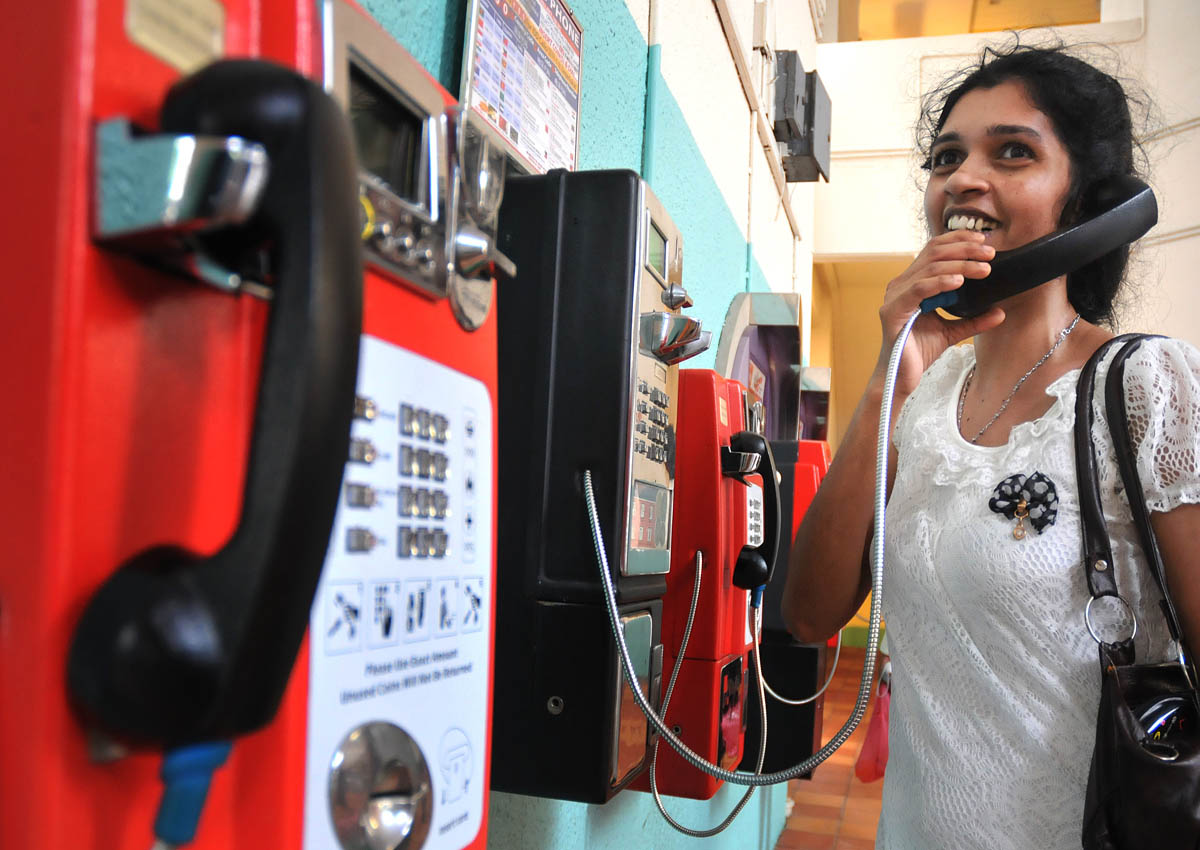
“I felt bad asking a stranger to lend me his phone,” Mr Hassan told The Straits Times, as he finished his call from a payphone in Tekka Centre in Little India, about 1.2km from his original location.

Mr Hassan’s story would ring true with anyone who remembers how ubiquitous payphones used to be, when there were at least 20,000 all over the island. Today, with the mobile population penetration rate reaching 148.4 per cent as of December last year, their number has fallen just over 2,000.

They are run by 14 operators, including Singtel and StarHub, and can be found in places like HDB estates and tourist attractions, said the Infocomm Development Authority (IDA).

The number of phones operated by Singtel has not changed in the past few years, and it has no plans to discontinue its payphone service. “Payphones serve to connect users without mobile phones and are useful in emergency situations,” said its spokesman.

Indeed, in five hours, The Straits Times counted about 25 people using the payphones in Tekka Centre.

Almost all owned mobile phones.

Some needed a payphone because the batteries in their own phones had run out, while others had forgotten to take them along that day.

Yet others, like Indian construction worker Panneerselvam Veeramani, 31, had run out of funds on his prepaid mobile card, and was waiting for his pay to arrive so he could top it up. He was telephoning an uncle in Singapore.

But there are also a few who choose to use payphones instead of a mobile phone.

Hostel security manager Chua Choon San, 63, uses payphones about eight times a month to save money.

Calls are charged at 10 cents for every two minutes on a Singtel phone and every three minutes on a StarHub phone – less than those made through his prepaid card, explained Mr Chua, who has two children, aged nine and 11. He earns about $4,000 a month.

“My wife doesn’t work very much, so I don’t want to spend money on unnecessary things,” he said.


This article was first published on September 6, 2016.
Get a copy of The Straits Times or go to straitstimes.com for more stories.

Image: 
Category: 
Publication Date: 
Tuesday, September 6, 2016 – 16:00
Send to mobile app: 
Source: 


Story Type: 
Others

Source link

Famous Tai Seng Warehouse Sale: Up to 90% Off Travel Goods, Prices from $1 & More from 8 – 11 Sep

0

THIS WEEKEND: Famous Tai Seng travel goods warehouse sale is BACK! Up to 90% off, prices from $1 & more (8 – 11 Sep)

Famous Tai Seng Warehouse Sale: Up to 90% Off Travel Goods, Prices from $1 & More from 8 – 11 Sep

The Famous Tai Seng travel goods warehouse sale is back and will be happening from 8 September to 11 September 2016 featuring surplus stocks of samples and branded apparel from $1

Source

Provision for minority president welcome but be wary of tokenism

0

Singapore should have a Malay or other minority president from time to time to assure minorities they have a place here, and reduce the risk of some feeling marginalised, community leaders said yesterday.

“The president represents the nation, so having a head of state from a minority race from time to time gives a clear signal that we are multiracial and all-inclusive,” said Association of Muslim Professionals chairman Abdul Hamid Abdullah.

But Nominated MP Azmoon Ahmad feels the office need not be rotated rigidly among the main races.

“Whether the president is Chinese, Malay, Indian or none of these is a secondary concern. He must first and foremost speak for every Singaporean,” he said.

Read also: Reviewing elected presidency: ‘Restore former system’

Their comments reflect the mixed feelings of many Malays towards impending changes to the elected presidency to ensure it is representative of Singapore’s multiracial society.

On the one hand, they note the country has not had a Malay president since Mr Yusof Ishak, who held the post from 1965 to 1970. It has had two Indian presidents, Mr Devan Nair from 1981 to 1985, and Mr S R Nathan from 1999 to 2011.

But on the other hand, they do not want a situation that could lead to the election of a Malay president being seen as an act of tokenism.

In a TV interview with Mediacorp broadcast on Sunday, Prime Minister Lee Hsien Loong said the changes are needed as in a close election, a Malay or Indian candidate would find it harder to get elected.

Environment and Water Resources Minister Masagos Zulkifli said in a roundtable interview with Berita Minggu on Sunday that the changes had to be made now, when society is united, to avoid problems in future.

Read also: Participants agree on need for minority president.

“If Muslims feel they are deliberately marginalised, have no stake in the country, and feel left out – these are things that could be exploited and if it gains momentum, it could be a big problem,” he said.

PM Lee had, in his interview, said there could be a provision to reserve an election for candidates from a minority race if there has been no president from that race for, say, four, five or six terms.

They must also meet qualifying criteria stated in the Constitution, no different than for other candidates.

Mr Lee noted the pool of qualified minority candidates is not as big as that of Chinese candidates, but said over time, it will grow.

Said former NMP Imram Mohamed: “We have people who would qualify, like Speaker Halimah Yacob and several CEOs. It’s a matter of whether they want to run.”

Former MP Inderjit Singh felt the Indian community would welcome the new rules too, given the difficulty of getting elected in an open election. Mr Nathan was unopposed in both the 1999 and 2005 elections.

Singapore Federation of Chinese Clan Associations council member Thomas Pek said it was vital to take steps to ensure a minority president occasionally: “Between equally capable Malay and Chinese candidates, most Chinese will pick the Chinese.

“We should not deny minorities such a chance as it goes against our goal of being a multiracial society.”


This article was first published on September 06, 2016.
Get a copy of The Straits Times or go to straitstimes.com for more stories.

Image: 
Category: 
Publication Date: 
Tuesday, September 6, 2016 – 14:03
Send to mobile app: 
Source: 


Story Type: 
Others

Source link