Home Blog Page 2845

Shortage of iPhone 7s put buyers on hold

0

Not all iPhone 7 buyers in Singapore will receive their handsets today as Apple has been hit by global supply delays, especially for the model called jet black.

The three local telcos – Singtel, StarHub and M1 – started contacting consumers yesterday to notify them of the handset delay.

Meanwhile, many customers who had ordered and paid for the new phone started flooding the telcos’ Facebook pages and online forums like Hardwarezone with complaints.

This is the first time that the telcos are flagging a shortage even before a phone has been officially launched here. A Singapore-based Apple spokesman said: “During the online pre-order period, initial quantities of iPhone 7 Plus in all finishes and iPhone 7 in jet black sold out and will not be available for walk-in customers.”

All three telcos acknowledged the squeeze. A Singtel spokesman said: “We have been informed that stock for iPhone 7 and iPhone 7 Plus in jet black in all capacities will not be arriving on Sept 16 as planned.”

Due to technical issues on Singtel’s website on Wednesday, customers could order the new iPhone only at 10am yesterday. By then, the telco had already informed customers they could not order certain models.

StarHub and M1 – which had taken most of their customers’ orders by Wednesday – apologised for the delays.

A StarHub spokesman put the blame on a “last-minute change in iPhone 7 availability at the supplier’s end”.

Customers who had ordered the affected jet black and silver models were offered another colour. They could also choose to wait but it is not clear when their choice would become available.

An M1 spokesman said the telco will contact customers when there is stock for the unavailable models. “Please be assured that we are working with Apple to fulfil these outstanding orders as quickly as possible,” he added.

Some customers asked for a refund, while others wondered when they could get their handset.

One M1 customer going by the moniker James Koh JL, who had paid for a 256GB silver iPhone 7 Plus, said: “Can I know what is the point of the pre-order?”

Project manager Raymond Cheng, 29, who ordered a 128GB jet black iPhone 7 Plus from Apple’s online store, understands that he would have to wait two or three weeks for his phone. “I’m disappointed with the delay. But I can wait two to three weeks.”

Neither Apple nor the telcos would say how many customers were affected and when they would get their handsets.

Mr Clement Teo, principal analyst at market research firm Ovum, said: “Everyone along the supply chain underestimated the demand for the new iPhone, especially the new jet black model.”

itham@sph.com.sg


This article was first published on September 16, 2016.
Get a copy of The Straits Times or go to straitstimes.com for more stories.


Image: 
Publication Date: 
Friday, September 16, 2016 – 15:00
Keywords: 
Send to mobile app: 
Source: 


Story Type: 
Others

Source link

F1 star Kimi Raikkonen changes gear to talk concept cars with Singapore students

0

The 2016 Singapore Grand Prix takes place this weekend, but the Scuderia Ferrari driver took time off from the race track to exchange ideas with young local concept car designers participating in the Shell Eco-Marathon competition.

Source link

Duterte ordered murders over 20 years, claims hitman

0

A self-confessed hitman has linked Philippine President Rodrigo Duterte to a death squad that slaughtered more than a thousand people over two decades in gruesome murders that included feeding a man to a crocodile alive.

He said he saw Mr Duterte himself pump more than 200 bullets into a Justice Ministry agent.

In explosive allegations before the Senate yesterday, Mr Edgar Matobato, 57, testified that he and a couple of policemen and former communist guerillas took part in the killings as part of a “death squad” formed by Mr Duterte after he became mayor of Davao in 1988 “to kill criminals, drug pushers, snatchers, rapists”.

The squad disembowelled, strangled, torched or hacked their victims to pieces, or weighed down their bodies with sand and concrete to sink to the bottom of a bay “for the fish to feed on”, he claimed.

In one particularly harrowing incident in 2007, they nabbed a suspected kidnapper and fed him alive to a crocodile.

Mr Matobato identified the agent allegedly responsible for that gruesome murder as lawyer Dante Gierran, who now heads the agency that is the equivalent of the US Federal Bureau of Investigation.

“The officers told us ordinary killings won’t do,” said Mr Matobato. “They are sadists.”

Justice Minister Vitaliano Aguirre responded to the allegations, flatly calling Mr Matobato “a coached witness… a lying witness”.

The Senate inquiry began about a month ago and is led by Senator Leila de Lima, a critic of Mr Duterte’s anti-crime push that has left another 3,000 dead since Mr Duterte took office on June 30.

Mr Duterte has accused Ms de Lima of initiating the probe to derail his campaign, saying she has been coddling drug kingpins. In earlier hearings, the committee heard from the families of drug suspects killed by lawmen or vigilantes.

Mr Matobato was the first to link Mr Duterte to extrajudicial killings in Davao, saying he took part as a member of a “team” that came to be known as the “Lambada boys”, after the Brazilian ballroom dance craze of the mid-1980s.

In his testimony, Mr Matobato said Mr Duterte himself or active-duty Davao police officers assigned to his office as mayor would give the orders to kill.

Though their orders were to go after criminals, Mr Matobato said he and his squad were also ordered to kill a dance instructor who taught Mr Duterte’s sister, Jocelyn, in 2013; a man who had an altercation at a petrol station with Mr Duterte’s son Paolo, now Davao’s vice-mayor; and a fixer at a transport agency in 2002.

The squad also went after people associated with Mr Duterte’s opponents, he said. In 2003, they gunned down Mr Jun Pala, a radio commentator critical of Mr Duterte’s alleged communist ties.

Mr Matobato told the Senate that he saw Mr Duterte himself unload two magazine clips of an Uzi submachine gun on a government agent who figured in a shootout with his men in Davao in 2007.

Mr Duterte “probably pumped over 200 bullets into the man”, he said.

Mr Matobato said he was also told Mr Paolo Duterte ordered the killing of Mr Richard King, a wealthy businessman, in 2014 because of a feud over a woman.

He also accused the younger Mr Duterte of using drugs. “He’d sometimes run amok when he was high,” he said.

Mr Matobato testified to participating in more than 1,000 killings, shooting, garroting or stabbing 50 people himself. Most of the bodies were buried at a quarry owned by a Davao policeman as well as an empty plot of land elsewhere, he said.

He admitted strangling a man he was told was an Islamist terrorist in 2002, then hacking the man’s body to pieces.

Mr Matobato also said he hurled a grenade at a mosque in 1993 after militants bombed the Davao cathedral. He said he was in the same room when Mr Duterte supposedly ordered a certain officer to “massacre Muslims in that mosque”.

Mr Matobato said Mr Duterte and his son “had people killed in Davao like they were chickens”.

Mr Paolo Duterte called Mr Matobato’s testimony “bare allegations and, in the absence of proof, are mere hearsay”. He added: “I will not dignify the accusations of a madman.”


This article was first published on September 16, 2016.
Get a copy of The Straits Times or go to straitstimes.com for more stories.

 

Image: 
Category: 
Publication Date: 
Friday, September 16, 2016 – 14:00
Keywords: 
Send to mobile app: 
Source: 


Story Type: 
Others

Source link

Prayut claims to have returned 'Thai smiles'

0

Prime minister Prayut Chan-o-cha and deputy prime ministers yesterday announced the government’s achievements over the past two years. In the presentation, they claimed that Thailand was once again a “land of smiles” as the administration had been devoted to a people-centred approach and long-term strategies that previous governments had neglected.

“Long-term national strategies and integrity of all sectors are essential to fixing long-standing problems,” Prayut said. “The strategies are drawn up by us, so future governments can also follow them if they want.”

Prayut was speaking at a press briefing on the government’s two-year performance report at Government House, where he distanced the junta from other governments |that had allegedly caused “problems for decades”.

“National development was slow. There was no thorough economic reform. The society was unsettled. People also had insufficient access to a fair justice system,” Prayut said. “As the country has no long-term strategy, it needs reform to keep up with the fast-changing global trends.”

Of the claimed successes, Prayut cited an improvement in political stability due to the government’s ability to lessen “confrontations so Thais can dwell in peace”.

He also mentioned the concept of Pracha Rat, or “state of the people, which is a scheme to encourage the co-operation between the private and public sectors, several times.

The concept has been used by the government to address issues ranging from security to the economy and the integration of bureaucratic government offices to change conventional top-down administrative approach to a bottom-up one.

The premier also addressed an improvement in legal affairs as the government has tried to “modernise laws to offer justice to all sectors without affecting the national interest”.

He added that his government had also managed to enact a record number of laws under these special circumstances.

The government has also met its international commitments, he said, citing Thailand’s upgrade in the Trafficking in Persons Report. He added that the government had cracked down on ivory trafficking after Thailand ratified the Convention on International Trade in Endangered Species of Wild Fauna and Flora.

On the economic front, Prayut pointed to an improvement in regional connectivity via new infrastructure, special economic zones, support for young entrepreneurs and SMEs via innovation, the technology-enhanced agricultural industry, water management, the ease of doing business, and a push towards a digital economy.

He also mentioned several figures – some not attributed – apparently indicating the country’s enhanced stability, governance and economic competitiveness.

As for foreign affairs, Prayut mentioned Thailand’s leadership in developing the Group of 77 and other diplomacy. The country is also committed to helping to tackle international concerns, such as illegal fishing and below-standard aviation, he said.

With the country moving towards the second phase of the junta’s “roadmap to democracy”, Prayut said the country needed to focus on human-resource development via lifetime learning, the public healthcare system, logistics development, a drive toward potential industrial groups and Thailand 4.0, the |new digital-based economic development concept.

Prayut wrapped up his speech by asking people to have courage and understand his performance, especially when it comes to using absolute power under the interim charter’s Article 44.

“I’ve used this power to solve problems. You know, I can be upset too if you accuse me of abusing others,” he said. “Don’t apply what previous governments have done to us, because we are not here for the benefit of any other group, but have come here to serve all Thais.”

Image: 
Category: 
Publication Date: 
Friday, September 16, 2016 – 12:53
Send to mobile app: 
Source: 


Story Type: 
Others

Source link

Thai govt a failure: Analysts

0

Analysts yesterday slammed the post-coup junta-backed government over its two-year performance report card, giving it a “fail” grade as it did not address some key issues and lacked concrete achievements and vision.

The analysts were critical of the content and presentation of yesterday’s report by Prime Minister Prayut Chan-o-cha and six deputy premiers, that lasted about five hours at Government House.

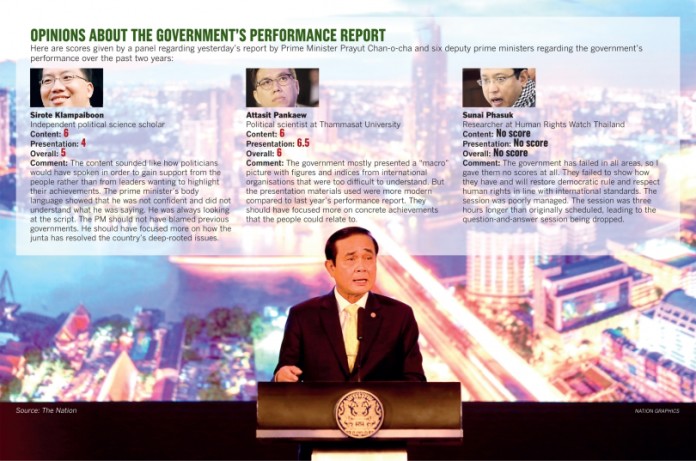
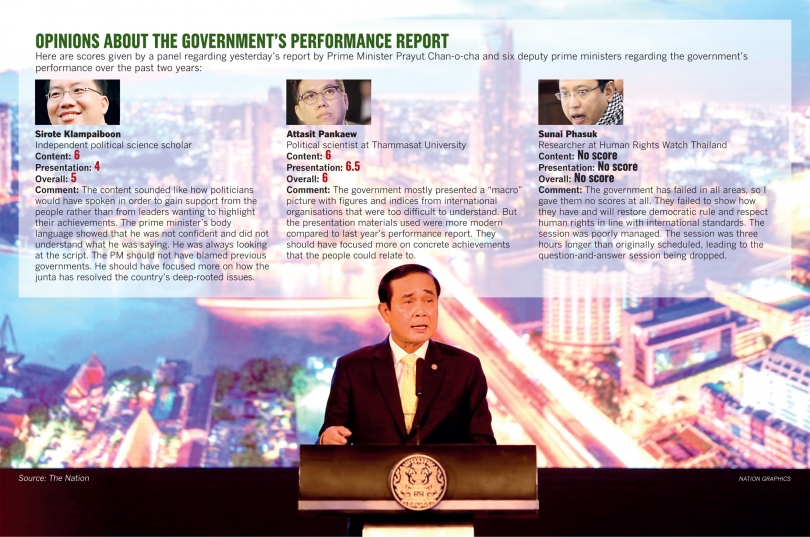
Sirote Klampaiboon, an independent political science scholar, said the government had exploited the press conference to make political points by blaming previous civilian governments for “causing damage to the country” and projecting itself as being heroic for staging a coup to end the country’s political turmoil.

“They sounded like politicians trying to gain support from the people rather than leaders who had some achievements to show or a vision to share,” the scholar said.

Sirote said Prayut had made great efforts to point out that it had become necessary for the junta to take control of the country because previous governments had caused many problems such as economic disparity and poverty, the law and order situation and corruption.

The scholar argued that the pre-coup situation had not been that bad, as there had been signs of improvement in terms of the economy, the quality of life of the people, and public administration.

Photo: The Nation/ Asia News Network

“The previous governments did not only cause damage to the country. They also contributed to the country to some extent. Over the last 10 years, wages and the unemployment rate have improved. However, in recent years, the country’s unemployment situation has worsened,” he said.

Sirote said the junta should have focused on concrete achievements such as the unemployment figure and wages as measures of its success, as those would have been better indicators of how it had improved the country.

He also criticised Prayut’s body language during the presentation, saying the PM rarely made eye contact with the audience. “It seemed as if he was not confident and did not understand what he was saying. He always looked at his script.”

Attasit Pankaew, a political scientist at Thammasat University, said the junta mostly presented a “macro” picture with figures and indices from international organisations, which are difficult to understand for the common man. He said the junta should have focused more on data about wages, agricultural products, and import-export figures.

However, Attasit gave the thumbs up to the quality of the presentation materials. He said infographics and trendy icons were used and they were more up to date than the material used when they made public their first performance report last year.

Sunai Phasuk, a researcher at Human Rights Watch in Thailand, said he was disappointed with yesterday’s session. He said the junta had failed in all areas.

In terms of content, he said, the government had failed to address how it has and would restore democratic rule and respect and the people’s political rights, which have deteriorated since the coup.

He also suggested that the government issue a written report to show how it would restore democracy to meet international standards.

Sunai said the session was poorly managed, lasting some five hours, three hours longer than originally scheduled. As a result, the question-and-answer session had to be dropped, he added.

“The Q&A session is an opportunity for Thai and foreign media to raise the concerns of the public,” he said.

Meanwhile, Thanavath Phonvichai, director of the University of the Thai Chamber of Commerce’s (UTCC) Economic and Business Forecasting Centre, gave the government’s economic team 8 out of 10 for its attempts to stimulate economic growth amidst the sluggish global situation.

Pheu Thai Party politician Nattawut Saikua said yesterday that the immediate task for the government was to tackle the economic problems, which he said were still serious.

He added that the government had no concrete accomplishments in that area.

He also disputed the government’s claim of restoring peace in the country. Nattawut, a leader of the red shirts’ United Front for Democracy against Dictatorship, said the government was simply suppressing dissidence.

Image: 
Category: 
Publication Date: 
Friday, September 16, 2016 – 12:48
Keywords: 
Send to mobile app: 
Source: 


Story Type: 
Others

Source link

Hong Kong SAR chief: Most back 'one country'

0

Chief Executive Leung Chun-ying said the majority of Hong Kong people support the “One Country, Two Systems” principle – and only a small minority are advocating “independence” for the special administrative region.

He also dismissed the suggestion by some young people that Hong Kong should prepare for a “second negotiation” for the SAR’s future beyond 2047.

“As far as the ‘One Country’ aspect is concerned, 2047 is a non-event,” he said.

In an exclusive interview with China Daily, Leung noted that Article 1 of the Basic Law states that Hong Kong is an inalienable part of China. Therefore, he said, calling for Hong Kong to be detached from the rest of the country is totally unacceptable.

To help people better understand the Basic Law, the government will do more to educate the public to make sure people understand not just one or two articles of the Basic Law, but all its articles, he said.

The SAR’s chief executive said that although Hong Kong cherishes freedom of expression, there is no room for “pro-independence” discussions. If students want to discuss this aspect of the Basic Law, teachers should guide such discussions within the context of the law, he added.

“We shouldn’t be complacent. If we do not tackle this well, this (separatist idea) could spread,” he said.

As to whether the Education Bureau should issue guidelines to schools, he said these are not necessary regarding this simple, clear provision of the Basic Law.

He also commented on a reader’s letter to a local newspaper on Sept 15. The reader suggested the possibility of amendments to the Basic Law and changes to Hong Kong’s status under a mechanism provided in Article 159 of the Basic Law.

“Paragraph 4 of Article 159 says that no amendment to the Basic Law shall contravene the basic policy of the People’s Republic of China regarding Hong Kong. And the basic policy is Hong Kong is an inalienable part of China,” Leung added.

Leung also said he was not worried about Hong Kong after 2047.

“My view is that we don’t have to change that (capitalist system and way of life), because this ‘One Country, Two Systems’ serves Hong Kong well today, and in 2047 and thereafter,” he said.

Leung noted that the Lands Department is granting leases for 50 years, referring to a land lease granted for a site in Sha Tin. The lease will expire in 2066.

Image: 
Category: 
Publication Date: 
Friday, September 16, 2016 – 12:41
Send to mobile app: 
Source: 


Story Type: 
Others

Source link

Teen suspect arrested for Ultra Music Festival tickets scam

0

Police said they received multiple reports between Aug 23 and Sep 5 from victims who were purportedly cheated by a seller who offered discounted tickets to the Ultra Music Festival.

Source link

PM Lee, President Tony Tan hail Yip Pin Xiu for her tenacity and resilience

0

SINGAPORE – Prime Minister Lee Hsien Loong and President Tony Tan Keng Yam have taken to Facebook once again to congratulate Yip Pin Xiu on her second gold-medal win at the Rio Paralympics.
In his post, PM Lee congratulated Yip for setting a new sporting…

Source link

Pointing lasers at aircraft expected to be prohibited in Japan

0

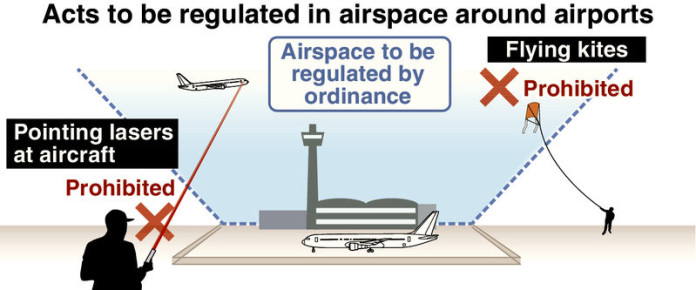
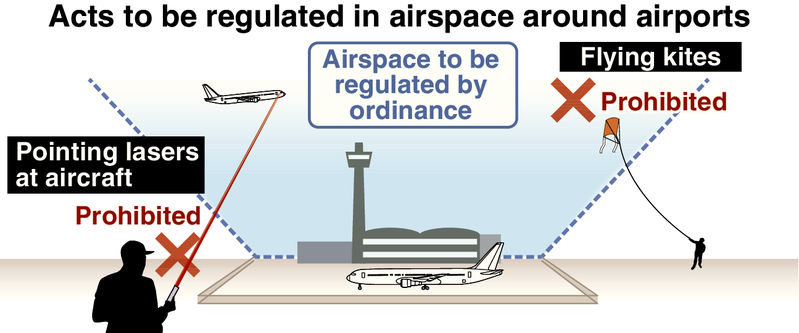
The government is planning to prohibit pointing laser beams at aircraft operating in airspace around airports, with violators facing a fine of up to ¥500,000 (S$6,685).

The Land, Infrastructure, Transport and Tourism Ministry plans to revise the ordinance of the Civil Aeronautics Law to implement the legal regulations, in response to a series of incidents at airports nationwide in which laser beams were directed toward aircraft, including passenger jets.

The ministry aims to enforce the law by the end of this year at the earliest. Pointing laser beams at US military planes is also likely to be forbidden, as is the flying of kites around airports.

Photo: The Japan News/ Asia News Network

The ministry said it was aware of 194 laser-pointing incidents solely targeting private jets from July 2010 to the end of June this year. Most planes were hit by laser beams when they approached for landing.

Self-Defence Forces aircraft and US military planes have also been the target of similar incidents at Atsugi Air Base in Kanagawa Prefecture and the US Marine Corps Futenma Air Station in Okinawa Prefecture, among others.

In December, a man who directed a laser at a US military aircraft in Okinawa Prefecture was arrested on suspicion of forcible obstruction of business. Authorities assume that such actions obstruct the operations of the pilot who is exposed to the laser beam.

As the use of laser pointers targeting aircraft has not been prohibited, the ministry concluded that it has to take stronger measures by imposing legal restrictions against such acts.

In the provisions of the Civil Aeronautics Law, the ministry plans to add pointing lasers to “the case of committing any act which might adversely affect the flights of an aircraft as may be specified by ordinances of the Land, Infrastructure, Transport and Tourism Ministry.”

The ministry will also prohibit flying a kite in airspace around airports, as there has been a spate of incidents that obstructed US military plane flights by flying a kite near US military bases in Okinawa Prefecture.

Pilots’ level of stress is highest during takeoff and landing, so pointing lasers at their aircraft could cause serious accidents. Many airline companies have urged the government to take prompt measures.

As the ministry will apply the ordinance to US military planes as well, it also plans to revise the ordinance of a law for special cases in accordance with the Japan-US Status of Forces Agreement.

Image: 
Category: 
Publication Date: 
Friday, September 16, 2016 – 12:34
Send to mobile app: 
Source: 


Story Type: 
Others

Source link

Japan's granny 'Dreamgirls' bitten by cheerleading bug

0

Chiba, Japan – Strutting her stuff in a gold-hemmed mini-skirt, white leather boots and shaking silver pom-poms, octogenarian Fumie Takino has discovered her elixir of youth – cheerleading.

Takino and her troupe of spirited grannies tweak the nose of old age, even if their rambunctious routine to the song “Dreamgirls” leaves them painfully out of breath and their pink tank tops dripping with sweat.

Takino, 84, has spearheaded the group of more than 20 bubbly seniors for some two decades, founding the “Japan Pom-Pom” squad after being bitten by the cheerleading bug – despite it traditionally being the preserve of teenage girls – in her sixties.

“You have to be 55 or older,” Takino told AFP, referring to the qualification for joining her team, the average age of which is 70.

“Once you hit the age of 70, you have to admit it’s downhill,” she said with a smile, before adding: “We’ve come a long way in 20 years!” Japan is renowned for its spritely pensioners: women live for an average of 87 years and men to 80.

But the average “healthy” lifespan is 10 years less for both sexes, meaning many suffer physical and mental ailments in the final decade of life.

Takino, however, insists that her glamorous hobby has helped mitigate the effects of ageing – making her feel mentally and physically more agile.

She took up the activity when her relationship with her husband began to falter.

She explained: “My marriage was not going well. I put up with it until my children got married.” Takino added that she would not have had the confidence to pick up the pom-poms in her youth, explaining that she became emboldened by changes she made in middle age.

The first came at the age of 53 – when she packed up and flew to Texas to study. It was against the wishes of her ageing mother, but she says her children supported her decision.

After completing a master’s degree in gerontology at the University of North Texas and a work placement in New York, she returned home with a new-found sense of freedom.

But it was actually in Japan that she encountered the quintessentially American activity of cheerleading with its eye-popping array of moves, from human towers, somersaults and back flips.

It took off in Japan around 30 years ago, though remains rare outside school and university environments.

“It blew my mind,” said Takino, who immediately rounded up five friends to start her own troupe after first hearing about cheerleading.

Two decades later, the grannies gather each week for intense training – and while they don’t overdo the acrobatics, they take practice seriously, even analysing videos of themselves to improve.

Earlier this year, the team celebrated its 20th anniversary by performing as guests at Japan’s annual United Spirit Association (USA) Nationals competition, where mostly high school and university teams compete.

Given their age, some members have to drop out for health issues or to care for ageing spouses, but new recruits are easy to find.

Shinko Kusajima, in her late sixties, says forging new personal bonds is a huge attraction.

“When you get old, you keep losing friends,” she said at a practice where she hoped to become a new member.

“But you always have mates here to share a good time.”

Image: 
Category: 
Publication Date: 
Friday, September 16, 2016 – 12:34
Send to mobile app: 
Source: 


Story Type: 
Others

Source link