Nico Rosberg won the 2016 Formula 1 Singapore Airline Singapore Grand Prix on Sunday (Sep 18) as Mercedes just about scraped home in a race decided on tyre strategy.
Source link
Formula 1: Nico Rosberg wins Singapore GP
Ex-hostage tells of terror as friends beheaded in Philippines
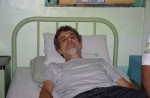
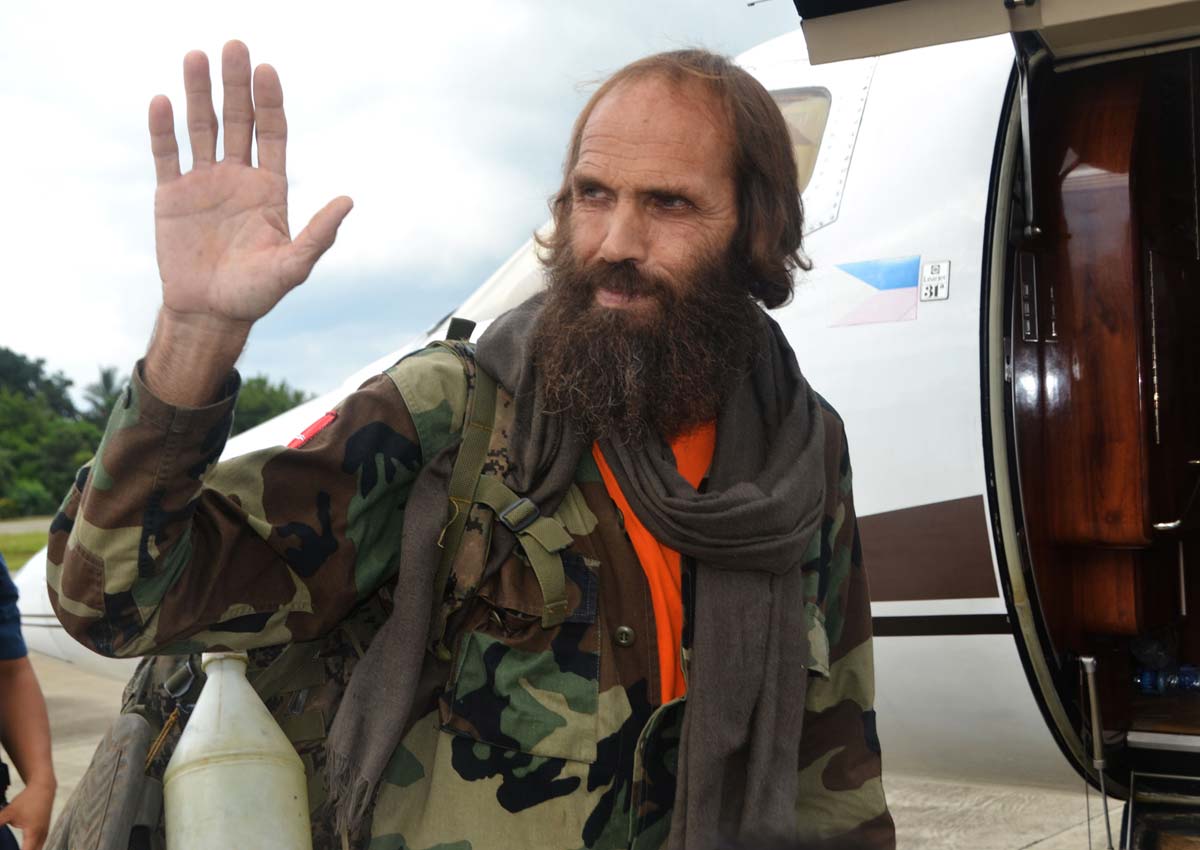
A Norwegian former hostage on Sunday described his psychological torture as he heard his friends being beheaded by Islamic militants during a year-long captivity in the southern Philippines.
A heavily bearded and gaunt Kjartan Sekkingstad, who was released on Saturday by the feared Abu Sayyaf group, also said he narrowly survived military attacks against his captors, with a bullet piercing his backpack.
“Basically, I’ve been treated like a slave, carrying their stuff around, time to time abused,” a frail-looking Sekkingstad said as he was received by a government envoy in the town of Indanan on the forested island of Jolo.
Also released were three Indonesians held by the group, who were also turned over to envoy Jesus Dureza.
Sekkingstad told reporters he endured “psychological pressure”, with the Abu Sayyaf threatening several times to behead him.
Sekkingstad, then aged 56, was abducted in September 2015 from the high-end Philippine tourist resort which he managed and was taken to Jolo by the Abu Sayyaf.
Two Canadian resort guests captured with him, John Ridsdel and Robert Hall, were later beheaded by the group after a ransom demand of about 300 million pesos (S$8.5 million) was not met.
Sekkingstad said that during the separate killings in April and June, the two handcuffed Canadians were escorted out of sight, “but still close enough that you could hear their cries when it happened.” “It was devastating,” the visibly shaken Norwegian said.
Italian hostage released by Abu Sayyaf in the Philippines
Click on thumbnail to view photos. Source:
The Star/ANN, AFP










Sekkingstad said he also survived numerous military attacks on his captors and even saved as a souvenir a bullet that went through his backpack.
The Abu Sayyaf handed the Norwegian over to another Muslim rebel leader Nur Misuari, whose group assisted in the release and at whose camp he spent the night, according to the government.
Escorted by a small contingent of Jolo police on Sunday, Misuari handed him and the Indonesians over to Dureza at a meeting guarded by hundreds of Misuari’s fighters from the Moro National Liberation Front.
Sekkingstad and Dureza then flew to the southern city of Davao to meet Philippine President Rodrigo Duterte. The three Indonesians were taken to the nearby city of Zamboanga where a retired Indonesian general was waiting to pick them up.
It was still unclear if they were the same Indonesian seamen kidnapped by armed men off a fishing trawler in Malaysian waters in July.
At a press forum with Duterte later, a now-clean shaven Sekkingstad thanked the president and all those who helped obtain his freedom.
It was unclear if any ransom was paid and, if so, by whom.
A spokesman for the Abu Sayyaf was quoted in a local newspaper on Sunday as saying the group received 30 million pesos (about $625,000) for the Norwegian.
Norwegian foreign affairs communications chief Frode Andersen told AFP by phone that “the Norwegian government does not pay ransom in this case or any other case”.
And Duterte’s spokesman Martin Andanar also said in Manila that “the (Philippine) government maintains the no-ransom policy”.
“Now, if there is a third party like family that paid, we do not know anything about that,” he told reporters.
The Abu Sayyaf was formed in the 1990s with seed money from Osama bin Laden’s Al-Qaeda network.
Based in remote Muslim-populated southern islands of the mainly Catholic Philippines, its kidnappings for ransom – often of foreigners – have earned it millions.
While its leaders have in recent years pledged allegiance to the Islamic State group, analysts say the Abu Sayyaf is mainly focused on crime rather than religious ideology.
The group is blamed for the worst terror attacks in Philippine history and is listed by the United States as a terrorist organisation.
Image:
Publication Date:
Sunday, September 18, 2016 – 21:37
Keywords:
Send to mobile app:
Source:
Story Type:
Others
‘Mum, I’ve got this’: Joseph Schooling’s message to mother before Olympic win
The Singaporean swimmer’s parents reflect on a month elapsed since their son’s history-making gold medal at Rio 2016.
Source link
Mosquito fogging has ‘severe limitation’: NEA
The chairman of Singapore’s National Environment Agency explains how fogging kills not only mosquitoes, but also its natural predators.
Source link
Can you think yourself young again? Seniors live like they were 20 years younger
Five seniors are spending a week living in the bubble of 1977, for a documentary exploring the mind’s effect on ageing.
Source link
Singapore Foreign Minister Vivian Balakrishnan to speak at UN General Assembly
Dr Balakrishnan will attend the 71st Session of the United Nations General Assembly in New York from Sep 18-26.
Source link
Manhattan explosion: No reports of Singaporeans directly affected, says MFA
No Singaporeans were directly affected by the blast in New York City on Saturday (Sep 17), the MFA said in a statement.
Source link
Mediacorp Urban Wheels challenge returns for second round
The Urban Wheels Challenge is a cycling competition with a challenging course designed to mimic the terrain of a mountain biking trail, but in an urban setting.
Source link
Elected Presidency changes not targeted at individuals: Shanmugam
Singapore’s Home Affairs and Law Minister says the Government accepted the changes as part of reviewing the EP system.
Source link
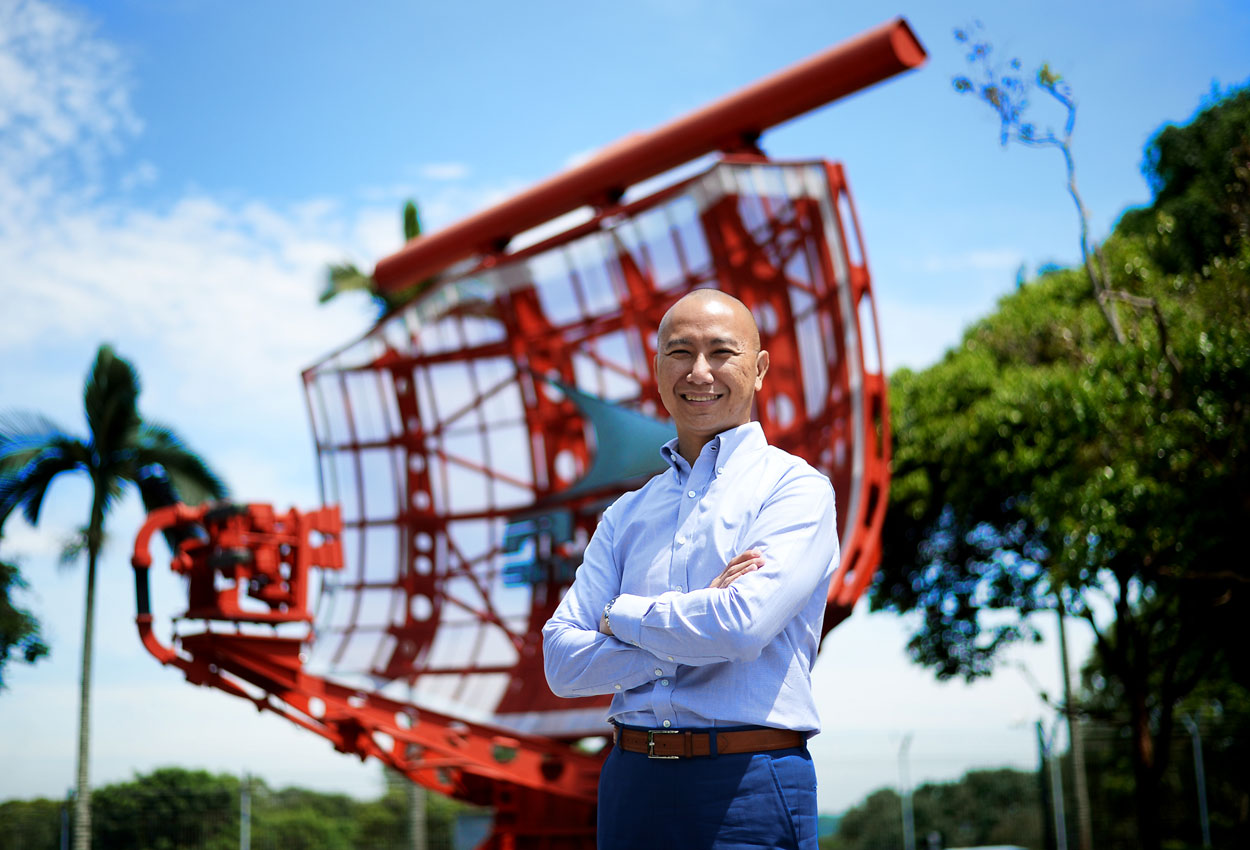
Job of an air traffic controller: 'Absolutely no room for error'
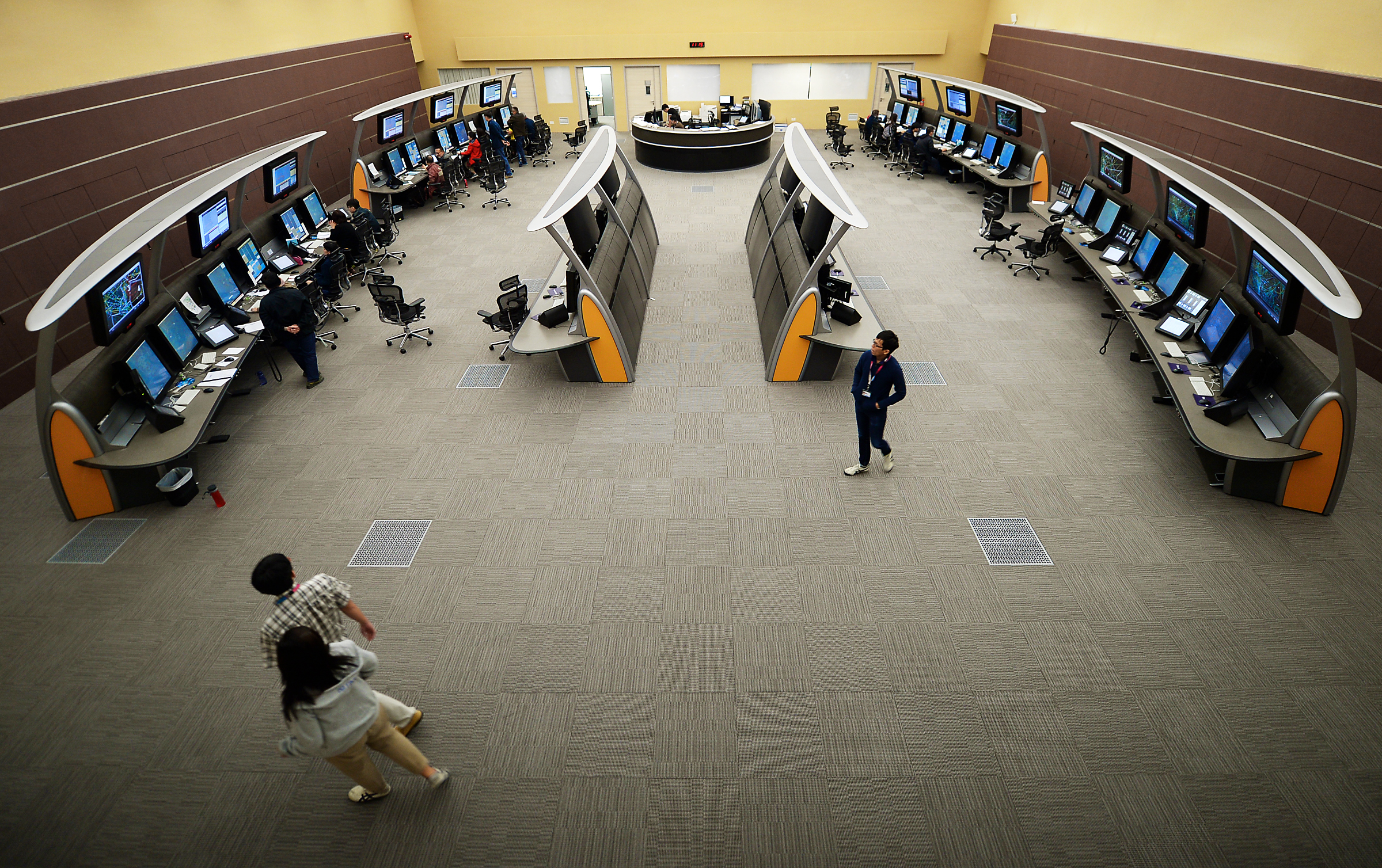
His work station is alive with blinking lights, multiple computer screens and buttons in every colour.
Through it all, Mr Jason Lie Chin Ann, must remain focused.
If he is distracted, he might make a mistake. And air traffic control officers (ATCOs) cannot afford a mistake.
Using radar technology and navigational systems, Mr Lie, 41, and his colleagues guide and monitor planes going in and out of Singapore’s airspace.
It is people like Mr Lie who give pilots the clearance to ascend, descend and land.
With a laugh, Mr Lie tells The New Paper on Sunday: “Contrary to what some believe, we don’t just hold up ping pong paddles to wave at pilots to land.”
NO IDLE CHIT-CHAT
Last year, ATCOs oversaw more than 650,000 air-traffic movements in Singapore’s flight information region (FIR) – a number that looks poised to hit a million by 2025.
Being responsible for people’s lives might seem stressful, but Mr Lie says it is “all in a day’s job”.
He says: “There is no idle chit-chat and no loud sounds. We can’t even use our phones while we are on shift.
“When we’re on duty, all of us are focused, and there are no distractions.”
Each shift lasts nine hours. There are three shifts – morning, afternoon and night – in a five-day work week. But the controllers do not spend all nine hours working.
Every two hours, Mr Lie gets a half-hour break, which is important for “decompression and to centre oneself”.
Some ATCOs use the time to grab a quick bite or drink coffee, while others watch television in the pantry or play games like foosball.
Mr Lie says: “It is time for you to let go for a bit and do whatever you want before you return, ready to be 100 per cent focused.”
At any given time at the air traffic control tower at Changi Airport, Mr Lie says there are about nine ATCOs monitoring the airspace and providing the go-ahead for planes.
BREAK
“Having people around means we can still go for a toilet break, as long as it is quick,” he chortles.
But ATCOs do not just work at Changi Airport.
They also watch the FIR from the Seletar Airport control tower and the Singapore Air Traffic Control Centre (SATCC) near Loyang Avenue.
Although there are no windows in the SATCC, all eyes are constantly on the sky. When TNPS paid a visit to the control centre on Friday, there were more than 20 terminals feeding information about the goings-on in Singapore’s FIR.
“Not many people know that Singapore’s airspace approaches 800,000 sq km, it is not just what is going on directly above,” explains Mr Lie.
“It is a big area, and we’ve got to make sure we keep watch.”
In addition to their duties in the control rooms, some, like Mr Lie, also instruct trainees at the SATCC.
In order to get selected as an ATCO, applicants must be Singapore citizens, possess a tertiary qualification and pass a series of aptitude and voice tests.
Recruits are trained for around four years before they are deemed fit for operation.
“Anything can happen in the skies,” says Mr Lie.
Their rigorous training includes procedures on what to do during disasters, medical complications and even emergencies like fires.
He shares that ATCOs call the shots when it comes to landings and can exercise their power should an emergency situation arise.
For instance, if a pregnant passenger goes into labour, the ATCO can bump up the plane’s queue number for landing and give it priority.
Although Mr Lie has not experienced many of these situations yet, he shares that his job is most challenging when there is bad weather like heavy rain or strong winds.
He says: “There is absolutely no room for error because people’s lives are on the line.”
“Winds and rain can cause the planes to be unpredictable, so we’re trained to always be adaptable.”
And the perks?
Mr Lie says: “When you’re up in the control tower, it is really a great view. We get the best sunrise of Singapore.”
Shortage of controllers globally
The shortage of air traffic controllers is being felt not only in Singapore but globally. It is a big enough problem to cause the United Nations (UN) some concern.
The worry is that the current number of controllers will not be enough to handle the soaring number of passengers.
In 2011, the UN’s civil aviation arm, the International Civil Aviation Organisation (ICAO), estimated that over 40,000 air traffic controllers will be needed worldwide by 2030.
And in that time, it is expected that the number of people flying will double in the next two decades to a whopping 7 billion, says the International Air Transport Association.
While Asia is the fastest growing travel market, there are so few training facilities in the region that ICAO estimates there will be a deficit of more than 1,000 controllers.
There are 390 ATCOs here and the number will hit about 600 by 2020, says the Civil Aviation Authority of Singapore (CAAS).
But with two new airport terminals set to open at Changi Airport by 2025, there is a need for even more air traffic controllers.
By then, more than a million flights each year are likely to come through the airspace here, nearly double the 650,000 air traffic movements recorded last year.
CAAS says the number of planes moving in and out of Changi Airport will increase from 68 now to more than 100 flights “in the coming years”.
Currently, any Singaporean with a tertiary qualification can apply to be an ATCO and CAAS provides the training.
DEMAND
But an academic course may be needed to meet impending demand, says Mr Abbas Ismail, course manager for the diploma in aviation management & services, School of Engineering at Temasek Polytechnic.
He says a specific ATC course can provide a steady pipeline of candidates for the CAAS.
“One way the industry could overcome this (shortage) is by teaming up with educational institutions to develop a specialised training programme for ATC, providing them (the candidates) with a job and sponsoring their university education after a few years,” he adds.
ATCOs must also be provided with a more structured career path, says Mr Abbas.
Says a CAAS spokesman: “CAAS conducts regular reviews of ATCO work, career progression and benefits to ensure that it continues to offer an attractive career value proposition and competitive remuneration.”

This article was first published on September 18, 2016, 2016.
Get The New Paper for more stories.
Image:
Publication Date:
Monday, September 19, 2016 – 06:00
Keywords:
Send to mobile app:
Source:
Story Type:
Others


