 SINGAPORE – In a rare move, the Intellectual Property Office of Singapore (IPOS) and the Attorney-General’s Chambers (AGC) are looking to intervene to ensure a fair process in the court proceedings involving rights owners of two Hollywood movies which are…
Source link
IPOS, AGC seek to intervene in court proceedings in alleged illegal movie downloading case

SIA rewards Yip Pin Xiu with 1 million KrisFlyer miles after double gold at Paralympics

SINGAPORE – National flag carrier Singapore Airlines (SIA) has awarded swimmer Yip Pin Xiu one million KrisFlyer miles after she won two gold medals at the Paralympic Games, breaking world records in the process.
In a Facebook post by the Singapore Disability…
Source link
Controversial Malaysian DJ: I'm proud of my Facebook hate page

They are basking in the limelight today, spinning music in glitzy, glamorous clubs and parties around the world.
But not everyone knows that The Leng Sisters, as this pair of Malaysian siblings call themselves, have humble family beginnings, back in Penang where they were born.
Their father died when they were very young and they were raised by their mother and their grandmother.
Mum is a hardware shop owner, while grandma now runs a popular laksa stall in Sungai Petani in Kedah, according to Malaysian news website The Coverage.
And even though the sisters may be living it up at parties like FashionTV Club’s Pitstop Party at Clarke Quay during the Formula 1 weekend in Singapore, they still help sell laksa at their grandmother’s stall whenever they are back in Malaysia.
Younger sibling Leng Sean, 28, said: “Growing up without a father strengthened our family bond. Our family is filled with very strong women, they all have their own businesses.”
The siblings formed their sister act only over a year ago, but they have been close since they were young.
Older sister Leng Yein, 31, settles the technical stuff and spins the records, while Leng Sean emcees and works the crowd.
The pair spoke to The New Paper on Saturday night before their performance at FashionTV Club.
Sisters

During the interview, Leng Yein was straightforward, almost aggressive, whereas Leng Sean appeared gentler in manner and more approachable.
Leng Yein said: “(Whenever people or companies) want something, they will always go to her (Leng Sean) because when they come to me, it’s a no.
“But if they go to her (Leng Sean), she will say, ‘Okay, I will try to talk to my sister’.
“And when she says, ‘I will try to talk to my sister’, it means it’s a yes, because I listen to her 100 per cent.”
Leng Yein, a former beauty queen who has been touted as one of Asia’s hottest DJs, said of her sister: “Since young, we’ve been best friends. We never ever argue.
“Even when people say things like my sister is prettier than me, I would agree because she’s the ‘original’ one and I’m the fake one – I am the one who has had more plastic surgery.
“Basically, I don’t have any friends. My sister is my only friend.
“We do not believe in friendship because friends will get married and be busy with their own lives. But we know family will always be family, we believe in family values.”
A “beauty ambassador” for several Korean plastic surgery clinics, Leng Yein is no stranger to controversy. She was slammed for openly supporting plastic surgery, having done procedures on her nose, breasts and eyes.
At the same time, some young fans see her as a role model for being outspoken and “daring”.
Leng Yein also made headlines in 2014 for her online spat with Singapore model-DJ Tenashar.
DJ Tenashar had accused her of sabotaging her console at a concert at Sunway Lagoon in Kuala Lumpur.
She also accused her of trying to “copy” her “in so many ways”, a charge that Leng Yein vigorously denies.
Being criticised on social media is also not new to the sisters.
Leng Yein has almost three million likes on Facebook and half a million followers on Instagram, while Leng Sean has more than 300,000 likes on Facebook and over 173,000 followers on Instagram.
The haters comment mainly about their plastic surgery procedures, but the sisters just laugh it off.
In July, Leng Yein’s relationship with a Malaysian law student eight years her junior created a stir because of their age gap.
Not that she cares – she is actually proud that she has a Facebook hate page with over 60,000 “likes” created just for her.
Said Leng Sean: “There will always be mean comments about my sister and me, but we don’t really care.”
Leng Yein added: “Everyone faces hate on social media. But because we are more popular, we have to take more s*** than other people.
“If a comment really makes me upset, I will just block it.”
The duo are also immune to receiving provocative and obscene images from male, and even female fans.
Said Leng Yein: “You want it in whatever shape, or size, or colour, we’ve probably received (a photo of) it before.”
Leng Sean added: “Even when we go out, people have said things like, ‘Be careful, we are going to hurt you’.”

This article was first published on September 19, 2016.
Get The New Paper for more stories.
Image:

Publication Date:
Tuesday, September 20, 2016 – 15:31
Keywords:
Send to mobile app:
Source:
Story Type:
Others
Air pollution levels about 3.5 times higher at bus stops: Study
Commuters waiting at bus stops in Singapore could be breathing in three-and-a-half times more toxic gases and particles than at ambient levels, researchers from the Singapore-MIT Alliance for Research and Technology and NUS found.
Source link
10-minute dengue test kit to hit market in 3 years
The test kit, jointly developed by Tan Tock Seng Hospital and Singapore Polytechnic students, will also be able to determine the dengue serotype among the four known strains of the virus.
Source link
Court throws out woman's negligence claim against doc
She had sued a surgeon over nerve injuries suffered after undergoing laser treatment on her legs, claiming her mobility was affected and that her legs hurt when they came into contact with clothes.
But video surveillance carried out by a private investigator hired by lawyers for the vascular surgeon being sued showed the 50-year-old woman walking and climbing stairs without difficulty or signs of pain.
During one journey, she was seen choosing to walk up a flight of stairs at Orchard MRT station instead of looking for a lift or escalator.
Yesterday, Madam Rathanamalah Shunmugam, a financial services director at an insurance company, lost her medical negligence suit in the High Court.
She sought at least $2 million for medical expenses incurred, future medical expenses, income losses suffered and future income losses.
Madam Rathanamalah alleged that Dr Chia Kok Hoong, who has a private practice at Mount Elizabeth Medical Centre, had not advised her about the risks and complications of the treatment, known as endovenous laser therapy.
She insisted that she saw Dr Chia to treat pigmentation on her legs and would not have agreed to undergo the procedure – used to treat varicose veins – had she been warned that she risked nerve injuries.
She claimed the constant pain and hypersensitivity in her legs have curtailed her ability to provide sound financial advice to clients. This has led to her clients being disappointed with her service and her being unable to grow her customer base.
Dr Chia, who was represented by Mr Christopher Chong, contended that he had told her of the risks, including possible nerve injuries, before carrying out the procedure to treat her varicose veins in July 2010.
Yesterday, Judicial Commissioner Aedit Abdullah dismissed Madam Rathanamalah’s claim.
He found that while Dr Chia did not maintain a complete contemporaneous record of his consultations with the patient, she had signed the consent form acknowledging that the risks had been explained to her.
There was also evidence from Dr Chia’s witnesses, including the doctor who had referred her to the surgeon, that he had given her advice and obtained her consent.
The judicial commissioner commented that based on video surveillance, the extent of her injuries may not be as bad as she claims. He also noted that she had tried to claim for medical expenses which were already covered by her insurers.

This article was first published on September 20, 2016.
Get a copy of The Straits Times or go to straitstimes.com for more stories.
Image:

Category:
Publication Date:
Tuesday, September 20, 2016 – 16:00
Keywords:
Send to mobile app:
Source:
Story Type:
Others
Bus stops have 3.5 times higher air pollution levels: Study
Commuters waiting at bus stops in Singapore could be breathing in three and a half times more toxic gases and particles than at ambient levels.
Source link
Tibet boon in tourism

Finance professional Zhang Liang, 26, and his fiancee tend to shun high-altitude places in picking their holiday destinations, fearing the effects of acute mountain sickness.
But Tibet’s exotic culture and stunning landscape, despite its average altitude of 4,000m, proved too much to resist and they took a two-week holiday in the autonomous region earlier this month.
The couple, who live in northern Hebei province’s Tangshan city, travelled some 42 hours this month from Beijing to Lhasa via the Qinghai-Tibet railway.
“We really wanted to experience the Tibetan culture and understand this mysterious region that is an integral part of China. It helps that we could travel here by train to help adjust to the high altitude,” Mr Zhang told The Straits Times at a square opposite the Potala Palace in Tibet’s capital city Lhasa.

The couple are part of a tourism boom in Tibet, which is expected to register 24 million tourist arrivals this year, up six times from four million in 2007.
A key factor accounting for this spike is Tibet’s improved transport system, such as an expanding network of highways and an increase in flight links, with five airports across the region now operating more than 310 flights per week to nearly 40 cities.
But the biggest stimulus was the 1,965km Qinghai-Tibet railway that opened in July 2006, the first to connect one of China’s most isolated regions to another province.
Tibetan officials told foreign journalists on a recent visit organised by the Chinese Foreign Ministry that by 2020 tourist arrivals are projected to hit 35 million while tourist revenue is set to rise from the current 20 billion yuan (S$4 billion) to an estimated 50 billion yuan.
They also shared plans to boost the tourism sector, which already accounts for more than 27 per cent of the region’s economy.
For instance, plans are afoot to build a new railway from Lhasa to Sichuan province’s capital city Chengdu via Nyingchi city located in Tibet’s south.
A new 450km-long highway is also being built between Lhasa and Nyingchi, which will halve the travel time to around four hours.
To cater to more affluent tourists, Tibet, which has attracted international hotel chains such as Intercontinental and St Regis, is seeking to build 10 more five-star hotels by 2020, said Mr Wang Songping, deputy director of the Tibet Tourism Development Commission.

“We will provide better tourism resources as more tourists visit Tibet,” he said at a briefing.
Tourism has helped Tibet achieve strong economic expansion, with a 10.6 per cent growth rate in the first half of this year, the highest of the country’s provinces and regions. It has also registered double-digit growth rate for the past 23 years.
But tourism development in Tibet remains a controversial topic.
Analysts say Beijing is using tourism to improve livelihoods and to dispel international criticism over its rule in Tibet, which is still viewed by some as unlawful occupation after the Chinese military overran the region in 1951.
Another aim is to reduce the ethnic Tibetans’ support for the exiled Dalai Lama, whom Beijing has accused of stoking independence sentiments in Tibet.
Tourism development became a more pressing need after the ethnic riots in March 2008 that killed 22 – including Han Chinese and Tibetans – based on official figures, though rights groups say more than 140 died. The violence broke out after hundreds of Tibetan monks gathering in Lhasa – to mark the 49th anniversary of an uprising against Beijing rule and to celebrate an American award given to the Dalai Lama – began to demand the release of detained monks.

These days, however, Chinese holidaymakers feel at ease visiting Tibet as they perceive relations to have stabilised. “We trust that the central government has stabilised the situation and that the ethnic Tibetans know we’re all Chinese,” Sichuan native Chen Wei, 33, told The Straits Times while on a visit to the Potala Palace.
The vice-chairman of Tibet’s government, Mr Bianba Zhaxi, gave a briefing to the visiting journalists on the region’s history that skipped over the March 2008 riots as he hailed Tibet as a positive example of ethnic unity in China.
“Everyone in Tibet is joining hands. Without ethnic unity, the achievements in Tibet would not have been possible,” he said.
But interviews with ethnic Tibetans seemed to suggest a different picture. A Tibetan man, who gave his name as Sanchul and was travelling with a group of Tibetan friends, told The Straits Times that he wasn’t bothered by the deluge of domestic tourists. “We rarely interact with them anyway,” said the 40-year-old man.
A Tibetan monk in the Jokhang Temple in Lhasa was overheard telling one of the visiting journalists that he liked former French president Nicolas Sarkozy as the latter had met the Dalai Lama.
Concerns that foreigners may report on the support among the ethnic Tibetans for the Dalai Lama or on rights abuses against them are believed to be reasons for the restrictions on foreign tourists – including journalists – seeking to visit Tibet. Reflecting such concerns, some of the visiting journalists were stopped by the local authorities in Nyingchi from going into a monastery there though there were no similar restrictions on reporting activities in Lhasa.
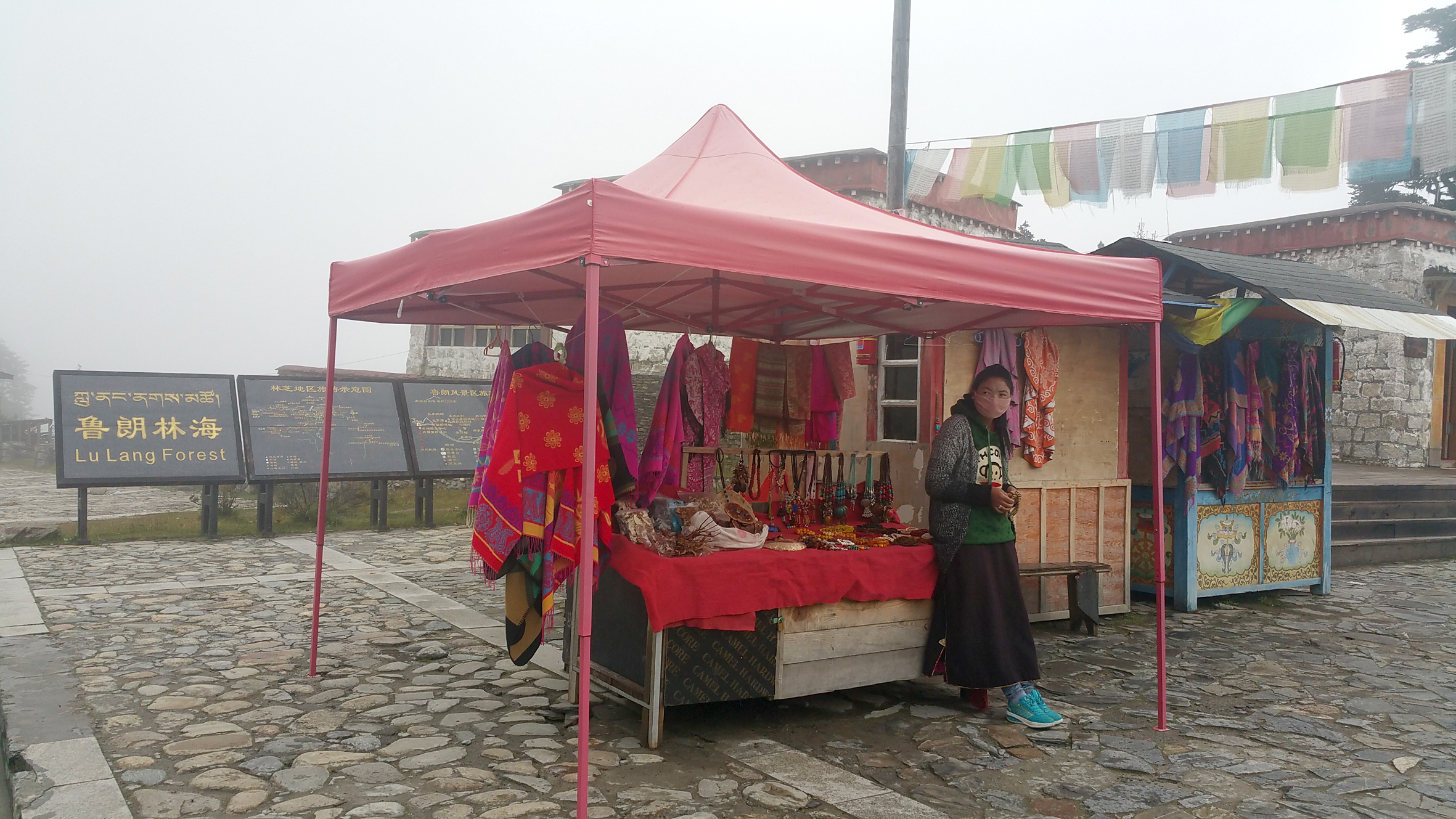
There are also questions over whether Tibet can cope with a massive tourist influx that dwarfs its 3.18 million population, of which some 90 per cent are ethnic Tibetans.
Tibet’s officials were quick to stress that they placed high emphasis on environmental protection and that the tourism boom has benefited ethnic Tibetans largely.
Mr Wang said some 97,000 ethnic Tibetans are employed in the tourism industry and their average incomes have risen from 5,000 yuan in 2006 to 8,100 yuan now.
He added that the government has provided subsidies averaging 50,000 yuan per household to help Tibetans retrofit their homes into family inns, which number over 800 across Tibet now.
Despite the debate, some Tibetans say they are happy to be part of the tourism sector.
One of them is Ms Baima Cizuo, a 17-year-old student working as a housekeeping intern at a hotel in the Lulang town in Nyingchi city.
She is thrilled that she is now getting some 1,000 yuan monthly and could be earning 4,500 yuan if she becomes a full-time employee.
“I’m hoping that my experience here will allow me to work in other provinces,” she told reporters.
This article was first published on September 20, 2016.
Get a copy of The Straits Times or go to straitstimes.com for more stories.
Image:

Publication Date:
Tuesday, September 20, 2016 – 16:00
Keywords:
Send to mobile app:
Source:
Story Type:
Others
Duterte not man of one word: Bishop

A Catholic bishop on Monday proposed that President Duterte implement a stronger antipoverty drive as well as an effective rehabilitation programme for drug dependents instead of extending his antidrug campaign.
Manila Auxiliary Bishop Broderick Pabillo offered this piece of advice as he urged the President to also train his sights on eliminating corruption in government.
Duterte sworn in as Philippines’ 16th president
Click on thumbnail to view photos. Source:
AFP, Reuters









Pabillo issued the statement in reaction to Duterte’s pronouncement that he would need six more months to conduct the war against illegal drugs.
Pabillo, chair of the Catholic Bishops Conference of the Philippines’ Episcopal Commission on the Laity, said that Duterte was “not a man of one word.”
“In the campaign, he categorically said the drug problem would be solved in six months or he would step down. But he is not a man of one word. His words cannot be trusted and he gives a lot of excuses,” Pabillo said.
For his part, Lipa Bishop Ramon Arguelles expressed concern about more extrajudicial killings as the bloody campaign that promises a crackdown on illegal drugs continues.
“I am worried the anti-illegal drug campaign will fail. But I am also worried about more extrajudicial killings,” he said. Arguelles said the weak anti-narcotics campaign of past administrations and the people’s apathy led to this situation.
Pray the rosary drive
Meanwhile, the CBCP urged the faithful to pray the rosary as it prepares to launch a three-month campaign to say a prayer for each of the country’s 81 provinces through the contemplative prayer.
The “Million Roses for the World: Filipinos in Prayer for the Nation” will be led by CBCP president Archbishop Socrates Villegas on Tuesday at the Letran Chapel in Intramuros.
In a statement, the CBCP said the 95-day prayer drive is in solidarity with the call of Pope Francis for prayers at a recent interfaith summit in Assisi, Italy.
Hate and lies
Villegas, who is also archbishop of Lingayen-Dagupan, said the Philippines has been torn apart by sociocultural and political issues, hate and lies.
“We have forgotten to pray. We have neglected to pray. We have been too busy with ourselves building our towers of Babel.
Let us pray for the whole nation. Let us pray as a united nation,” he said. From Sept. 20 to Dec. 23, the rosary will be prayed for one of the country’s 81 provinces each day.
Anti-crime blitz sweeps Philippines as Duterte comes into power
Click on thumbnail to view photos. Source:
AFP, Reuters


























Each mystery of the rosary will be prayed for an end to violence, for continued peace, the overseas Filipino workers, persecuted Christians and the special intention of the particular province.
The drive is led by the CBCP, along with Aid to the Church in Need Philippines, Catholic Educators Association of the Philippines, Family Rosary Crusade and Mother Butler Mission Guild.
The province to be prayed for each day will be posted daily on the Facebook page “A Million Roses for the World: Filipinos at Prayer for the Nation.”
“We must reverse the tide of hate and confusion and fill the air again with words of peace, truth and love. Let us the resist the culture of terror and fear with the balm of prayer and mercy,” he said.
Image:

Publication Date:
Tuesday, September 20, 2016 – 14:45
Keywords:
Send to mobile app:
Source:
Story Type:
Others
Bali tourist boat blast not caused by explosives: Police

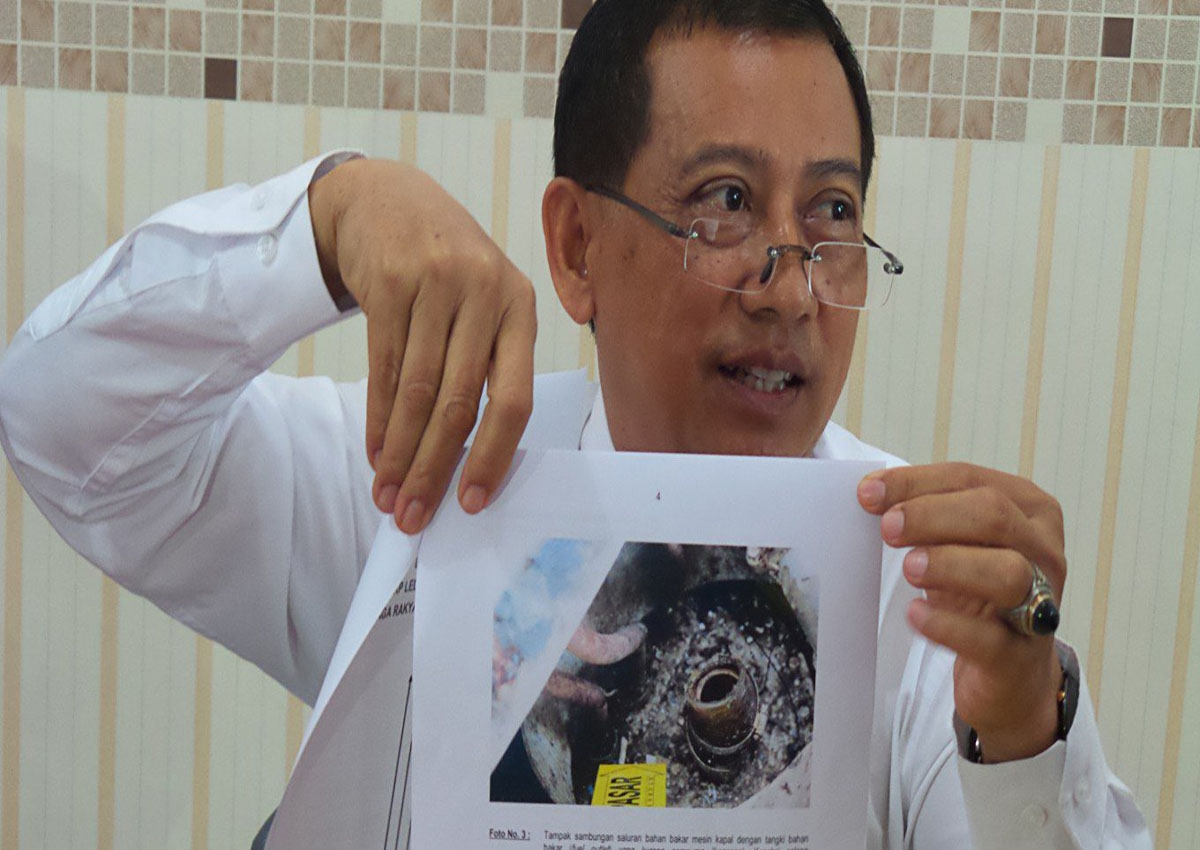
The National Police’s forensic laboratory has concluded an investigation into a blast on the Gili Cat 2 near Padangbai Harbor in Karangasem regency, Bali, on Thursday, saying no explosives were found on the fast boat.
“The explosion was not triggered by explosive material,” head of the police’s Denpasar forensic laboratory, Koesnadi, told a press conference on Monday.
He said the blast was caused by a leak from the boat’s fuel tank, which was connected to its three engines. The fuel, he said, leaked out of the tank and filled an area under the deck that housed an electricity system channel.
Sparks were then triggered below deck. “It was the electrical disturbance that caused sparks that eventually led to the explosion,” said Koesnadi.
Bali tourist boat blast kills 2 foreigners, injures 18
Click on thumbnail to view photos. Source:
Reuters





He explained that during the investigation, the forensic team found a broken 3-inch piece of PVC pipe where the boat’s electricity was channeled from the engine to a storage battery.
“When the boat sailed, maybe there was a shock that further weakened the electricity channel, causing electrical sparks that triggered the explosion,” Koesnadi said.
The blast killed two tourists and injured 19 others. The boat, which was carrying 35 foreign tourists, was en route to the Gili Islands in Lombok, West Nusa Tenggara. The incident occurred around 200 meters from Padangbai.
Bali Police spokesperson Sr. Comr. Anak Agung Made Sudana said the police’s investigation into the accident was ongoing.
“As of now, we haven’t named any suspects in the case,” Sudana said. (ebf)
Image:
Publication Date:
Tuesday, September 20, 2016 – 14:25
Send to mobile app:
Source:
Story Type:
Others


